Gravity
The phenomenon that binds the cosmos: Newton's universal law of gravitation, the measurement of the gravitational constant, Einstein's curved spacetime, and the detection of gravitational waves.
Gravity is the mutual attraction of all masses, described by Isaac Newton in 1687 as a universal inverse-square force and re-imagined by Albert Einstein in 1915 as the curvature of spacetime. Its strength at Earth's surface was long a target of precision measurement, while orbits and tides are its most familiar consequences. In 2015 the LIGO observatories made the first direct detection of gravitational waves, and gravity remains central to cosmology, shaping the large-scale structure of the universe.
In this article
- 1Overview
- 2Newton's Law of Universal Gravitation
- 3The Gravitational Constant and the Value of g
- 4Early Investigations: Galileo and Kepler
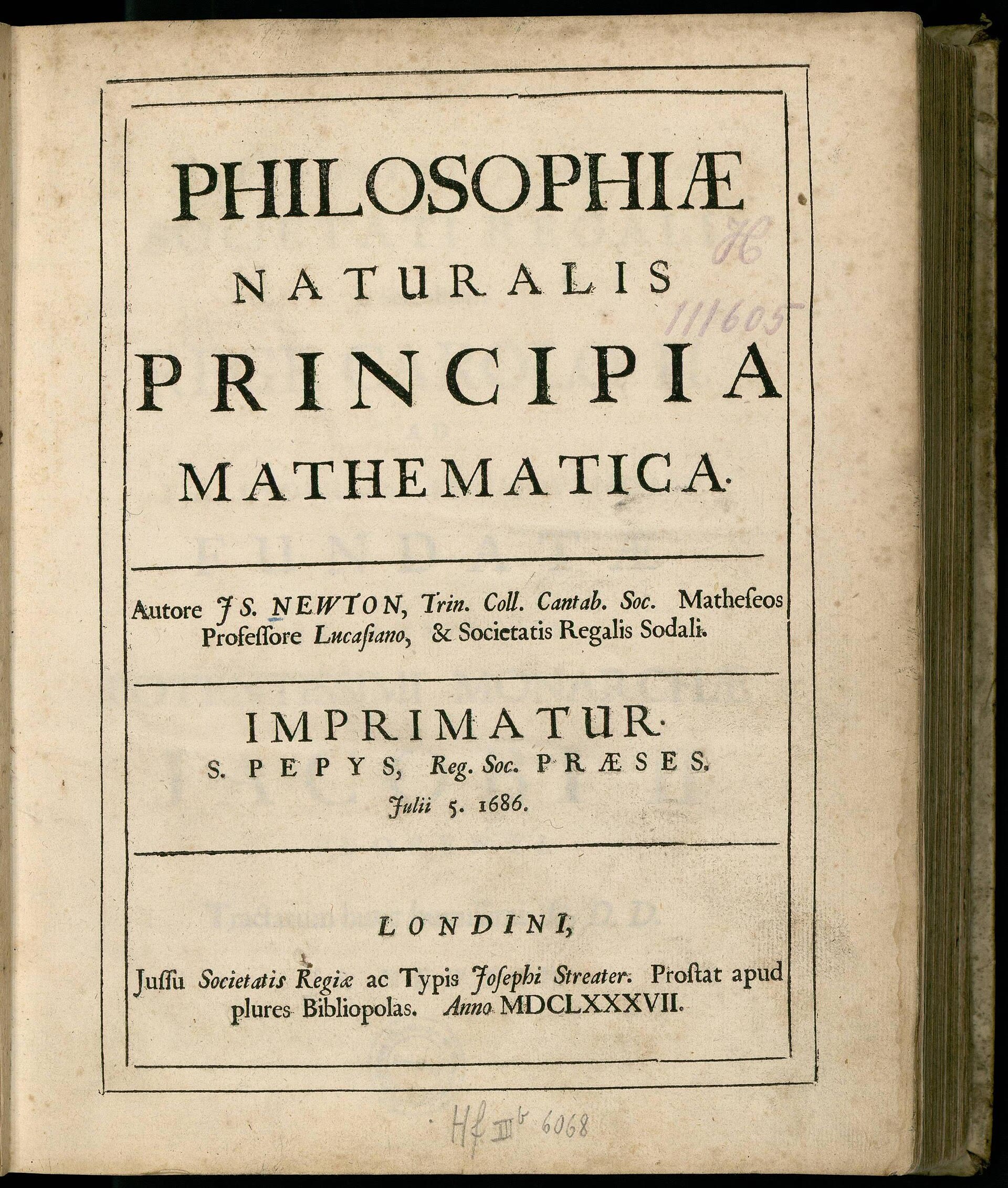
- 5The Principia and Its Publication
- 6Cavendish and the First Laboratory Measurement
- 7Orbits and Free Fall
- 8Tides and the Gravity Gradient
- 9General Relativity and the Curvature of Spacetime
- 10The 1919 Eclipse Expeditions
- 11Gravitational Waves
- 12Gravity, Dark Energy and the Universe
- 13Timeline: from Galileo to gravitational waves
- 14Knowledge graph
Overview
Gravitation is the mutual attraction of all masses in the universe. Gravity is the weakest of the four fundamental forces, yet it is the dominant force in the universe for shaping the large-scale structure of galaxies, stars and other structures.
Gravity is described by Newton's law of universal gravitation and by Einstein's general relativity of 1915. Its familiar consequences include falling bodies, orbits, ocean tides and the expansion history of the universe. While the force of gravity is weak compared with other forces in nature such as electricity and magnetism, its effects are the most far-reaching and dramatic, controlling everything from the motion of the ocean tides to the expansion of the entire universe.
1. Newton's Law of Universal Gravitation
At the heart of the law lies an inverse-square relationship: the force is proportional to the product of the two masses and inversely proportional to the square of the distance between them. The force is purely attractive, generated by any object with mass. It acts along the line joining the centres of mass, and the forces on the two masses are equal in size but opposite in direction, obeying Newton's third law. Because the effect decreases in proportion to distance squared, it never quite disappears completely and applies to some extent regardless of the sizes of the masses or their distance apart.
The concepts of planetary motion developed by Johannes Kepler (1571-1630) describe the positions and motions of objects in the solar system, and Isaac Newton (1643-1727) later explained why Kepler's laws worked by showing they depend on gravitation.
One observation Newton's work could not explain was that Mercury's elliptical orbit gradually moves around the Sun, a phenomenon known as precession.
2. The Gravitational Constant and the Value of g
| Quantity | Value | Notes |
|---|---|---|
| Newtonian constant of gravitation G (CODATA 2022) | 6.674 30 x 10^-11 m3 kg-1 s-2 | Recommended value |
| Relative standard uncertainty of G | 2.2 x 10^-5 | Concise form 6.674 30(15) x 10^-11 m3 kg-1 s-2 |
| Standard acceleration of gravity g at Earth's surface | 9.806 65 m s-2 | Exact CODATA value |
| Everyday value of g | About 9.8 meters per second squared | Result of an experiment calculating the acceleration due to gravity of a falling object on Earth |
The Newtonian constant of gravitation stands among the least precisely known of the fundamental constants. Its 2022 CODATA recommended value is 6.674 30 x 10^-11 m3 kg-1 s-2, carrying a relative standard uncertainty of 2.2 x 10^-5, a concise form written as 6.674 30(15) x 10^-11 m3 kg-1 s-2 5CODATA Value: Newtonian constant of gravitation · NIST (Physics.nist.gov) ↗. Newton had published his law of gravitation in 1687 but he had not made any attempt to determine the constant G or the mass of Earth 6June 1798: Cavendish weighs the world · American Physical Society (APS News) ↗.
The acceleration due to gravity at the Earth's surface is far better known than the constant that produces it. The standard acceleration of gravity has the exact CODATA value 9.806 65 m s-2, conventionally written 9.80665 m/s2 7CODATA Value: standard acceleration of gravity · NIST (Physics.nist.gov) ↗. For over two centuries before Einstein, gravity was described by Newton's law of universal gravitation 8100 Years of General Relativity · NASA Goddard Space Flight Center (Blueshift) ↗. The precision of such determinations has advanced considerably: instrumental capabilities for both relative and absolute gravity measurements can be made at the parts in 10^9 level of precision, and large but still portable absolute gravimeters have also reached that level of accuracy 9The Measurement of the Acceleration Due to Gravity · NIST ↗.
3. Early Investigations: Galileo and Kepler
Galileo's inclined plane was a simple board with a groove down which he rolled a small metal ball, and he used it to examine Aristotelian ideas about motion, concentrating on acceleration, a stage of motion that Aristotle and most of his followers had ignored. He described the apparatus in his 1638 book Discourses on Two New Sciences, telling how a wooden moulding about 12 cubits long had a channel cut along its edge, lined with parchment, down which he rolled a hard and very round bronze ball.
The replication pointed clearly to the concept of acceleration: the ball travels down one quarter of the plane in half the time it takes to traverse the entire plane.
Kepler's laws of planetary motion state that the orbit of every planet is an ellipse with the Sun at one of the two foci, and that the square of the orbital period of a planet is directly proportional to the cube of the semi-major axis of its orbit.
4. The Principia and Its Publication
The text of Book I of the Principia reached the Royal Society on 28 April 1686, and on 19 May the Society resolved that Newton's work should be published. Edmond Halley, the Society's Clerk, was placed in charge of the printing, and he warned Newton that Robert Hooke claimed the rule of the decrease of gravity, being reciprocally as the squares of the distances from the centre. Halley took the costs of publication upon himself, since the Royal Society was at the time as good as bankrupt, reduced to paying its officers in unsold copies of the History of Fishes.
The manuscript was sent in sheets to the printer Joseph Streater and published under the auspices of the Royal Society in 1687, and it is still held in the library of the Royal Society of London. In that year Newton published his Universal Law of Gravitation, providing mathematical expressions that would precisely describe the way objects moved in a gravitational field, and these expressions worked both for objects falling to the ground on Earth and for explaining how the planets moved through the night sky. The law of universal gravitation is accordingly dated to 1687.
5. Cavendish and the First Laboratory Measurement
More than a hundred years elapsed between Newton's publication of his law of universal gravitation in the Principia Mathematica and its experimental verification in the laboratory.
Cavendish built a large dumbbell with two-inch lead spheres at the ends of a six-foot long wooden rod suspended from a wire, and brought near it a second dumbbell with two twelve-inch lead spheres weighing 350 pounds each, the slight torque on the suspended rod measuring the gravitational force. The Cavendish torsion balance can be used to determine the weight of the Earth by comparing the attraction of the tiny test mass first to the Earth and then to an external mass.
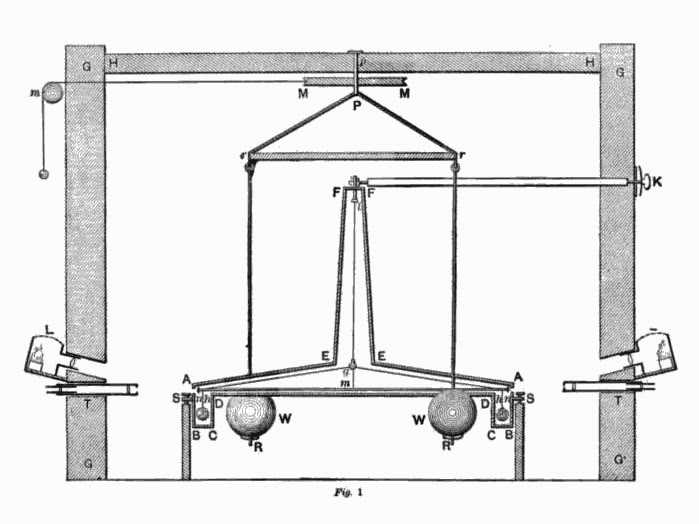
In June 1798 Henry Cavendish reported his famous measurement of Earth's density in a 57-page paper in the Transactions of the Royal Society entitled Experiments to Determine the Density of the Earth. He reported that the density of Earth was 5.48 times the density of water, the currently accepted value being 5.52. He measured the gravitational constant to within about 1% of its modern accepted value.
Because gravity is so weak, the attractive force between two lead balls each a foot in diameter and weighing nearly 400 pounds is only about two one hundred thousandths of an ounce when the centres of the balls are two feet apart.
6. Orbits and Free Fall
An orbit is a regular, repeating path that one object in space takes around another one, and an object in an orbit is called a satellite. A satellite can be natural like the Moon or man-made like the International Space Station. Orbits come in different shapes, and all orbits are elliptical. For the planets the orbits are almost circular, while the orbits of comets look like thin ellipses rather than circles.
Newton's thought experiment with a cannon on a very tall mountain showed that with enough gunpowder a cannonball travels so far that it never has a chance to touch down, falling completely around Earth: it has achieved orbit. To get a spacecraft into orbit you raise it up and accelerate it to the neighborhood of 30,000 km/hr (about 19,000 mph). Once done, the spacecraft continues falling around Earth with no more propulsion necessary except for occasional minor adjustments.
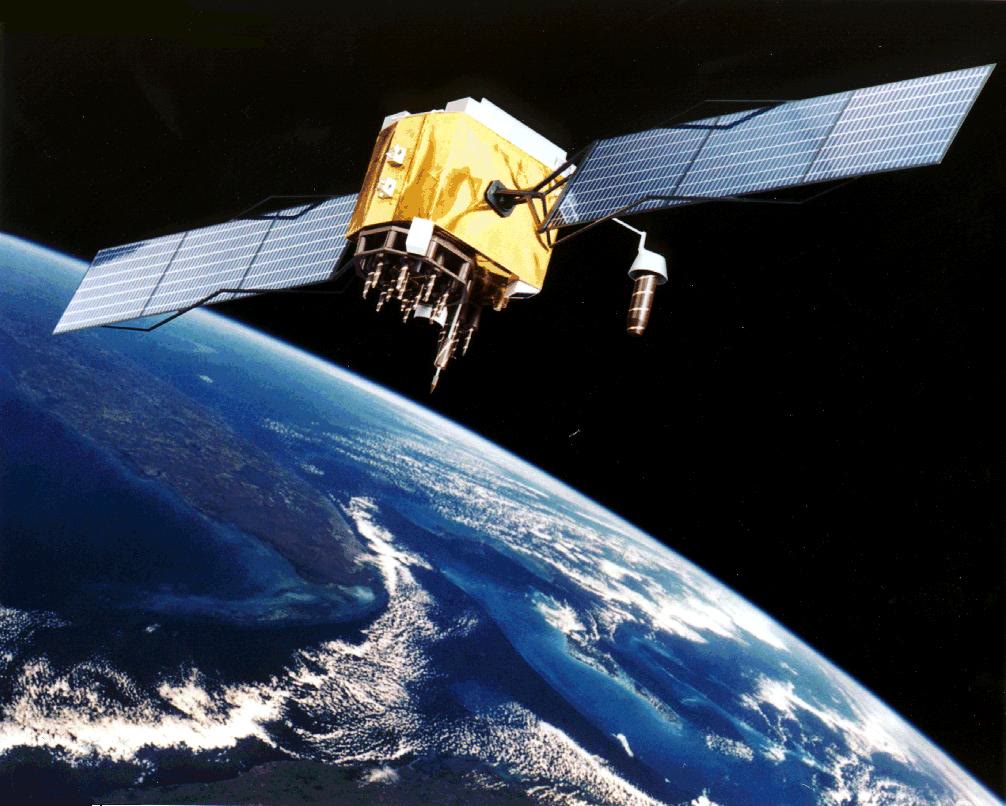
Without gravity an Earth-orbiting satellite would go off into space along a straight line; with gravity it is pulled back toward Earth, and a constant tug-of-war takes place between the satellite's momentum and the pull of gravity. An object's momentum and the force of gravity have to be balanced for an orbit to happen. When these forces are balanced the object is always falling toward the planet, but because it is moving sideways fast enough it never hits the planet.
In free fall aboard an orbiting spacecraft you feel as if you are falling, and in fact you are: the spacecraft would appear to be floating there beside you, and you would just never hit the ground. An orbiting spacecraft has not escaped Earth's gravity, which is very much present and giving the mass the centripetal acceleration it needs to stay in orbit.
7. Tides and the Gravity Gradient
For an object in orbit about a planet, the parts closer to the planet feel a slightly stronger gravitational attraction than parts on the other side, a difference known as the gravity gradient.
The Moon's gravitation acts upon the Earth's oceans and atmosphere, causing two bulges to form: the near-side bulge is caused by the proximity of the Moon and its relatively stronger gravitational pull. The far-side bulge results from that side of Earth being attracted toward the Moon less strongly than is the central part of Earth. The gravitational attraction between the Earth and the Moon is strongest on the side of the Earth that happens to be facing the Moon, simply because it is closer, and this attraction causes the water on this near side of Earth to be pulled toward the Moon. On the far side of the Earth the Moon's gravitational attraction is less because it is farther away, so inertia exceeds the gravitational force and the water tries to keep going in a straight line, moving away from the Earth and also forming a bulge.
The Sun also plays a major role, affecting the size and position of the two tidal bulges, and the interaction of the forces generated by the Moon and the Sun can be quite complex. Because water is fluid, the two tidal bulges stay aligned with the Moon as the Earth rotates.
8. General Relativity and the Curvature of Spacetime
Albert Einstein (1879-1955) posed an explanation of how gravitation works in his General Theory of Relativity. He described gravity as a deformation in space caused by the presence of massive objects, similar to the way a heavy ball would warp a sheet of rubber. This deformation tells smaller things how to move through space, so they either go into orbit or fall onto the larger celestial object.
Einstein's general relativity equations were first published on 25 November 1915 in the Proceedings of the Royal Prussian Academy of Science. He had articulated his equivalence principle in 1907 by positing the indistinguishability of physics in gravitational fields and accelerating reference frames.
General relativity predicted that light passing by a massive object would be deflected from its original path and that light escaping from a gravitational field would lose energy, an effect that satellite-based navigation systems such as GPS have to take into account. GPS satellites' clocks tick faster by about 38 microseconds each day because of relativity's combined effects, and unless these effects are accounted for the errors would accumulate at about 10 km per day.
Massive objects produce dents in the fabric of spacetime, and other objects move in this curved spacetime taking the shortest path, like billiard balls on a springy surface.
9. The 1919 Eclipse Expeditions
On 29 May 1919 the astronomer Sir Arthur Eddington verified Einstein's General Theory of Relativity by observing the apparent deflection of stars from their normal positions during a solar eclipse. The observation rested on a simple physical premise: the path of light is bent by gravity when it travels close to a massive object like the Sun.The solar eclipse on May 29 comprised the first empirical test of Einstein's general theory of relativity.
The result was based on measurements taken by two UK-led expeditions, one to the island of Principe off the west coast of Africa and the other to Sobral in Brazil, with two sites chosen to increase the chances of success. The expeditions were jointly funded by the Royal Astronomical Society, the Royal Society and the Royal Irish Academy, and organised by the Royal Observatory Greenwich.
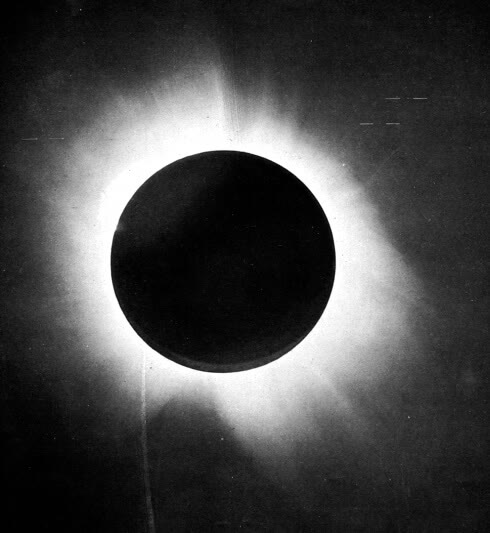
Lengthy data analysis over the summer had shown that within acceptable margin of error, light from distant stars passing near the solar surface had been displaced by the tiny amount of 1.75 arcseconds predicted by Einstein's gravitational theory of curved spacetime. When the results were announced at a joint meeting of the RAS and Royal Society in November 1919, they made Einstein world famous within days.
Albert Einstein first catapulted to fame in 1919 when expeditions led by Arthur Eddington and Frank Dyson recorded the bending of starlight around the Sun during an eclipse, confirming predictions he had worked out a few years earlier. The theory also explained the mysterious precession of Mercury's perihelion.
10. Gravitational Waves
Gravitational waves are ripples in the fabric of space-time set off by extremely violent cosmic cataclysms. Almost 100 years before their detection, Albert Einstein predicted gravitational waves, assuming that with the technology available in 1916 such ripples would be vanishingly small and nearly impossible to detect. Gravitational waves spread at the speed of light, filling the universe, and are always created when a mass accelerates, like when a pair of black holes rotate around each other.
The existence of gravitational waves was first demonstrated in the 1970s and 80s by Joseph Taylor, Jr. and colleagues, who found in 1982 that the orbit of a binary pulsar was slowly shrinking over time because of the release of energy in the form of gravitational waves. The first evidence for gravitational waves came in 1974 when Russell Hulse and Joseph Taylor discovered a pair of neutron stars 21,000 light years from Earth losing energy in the form of gravitational waves, work honoured by the Nobel Prize in physics in 1993 for the discovery.
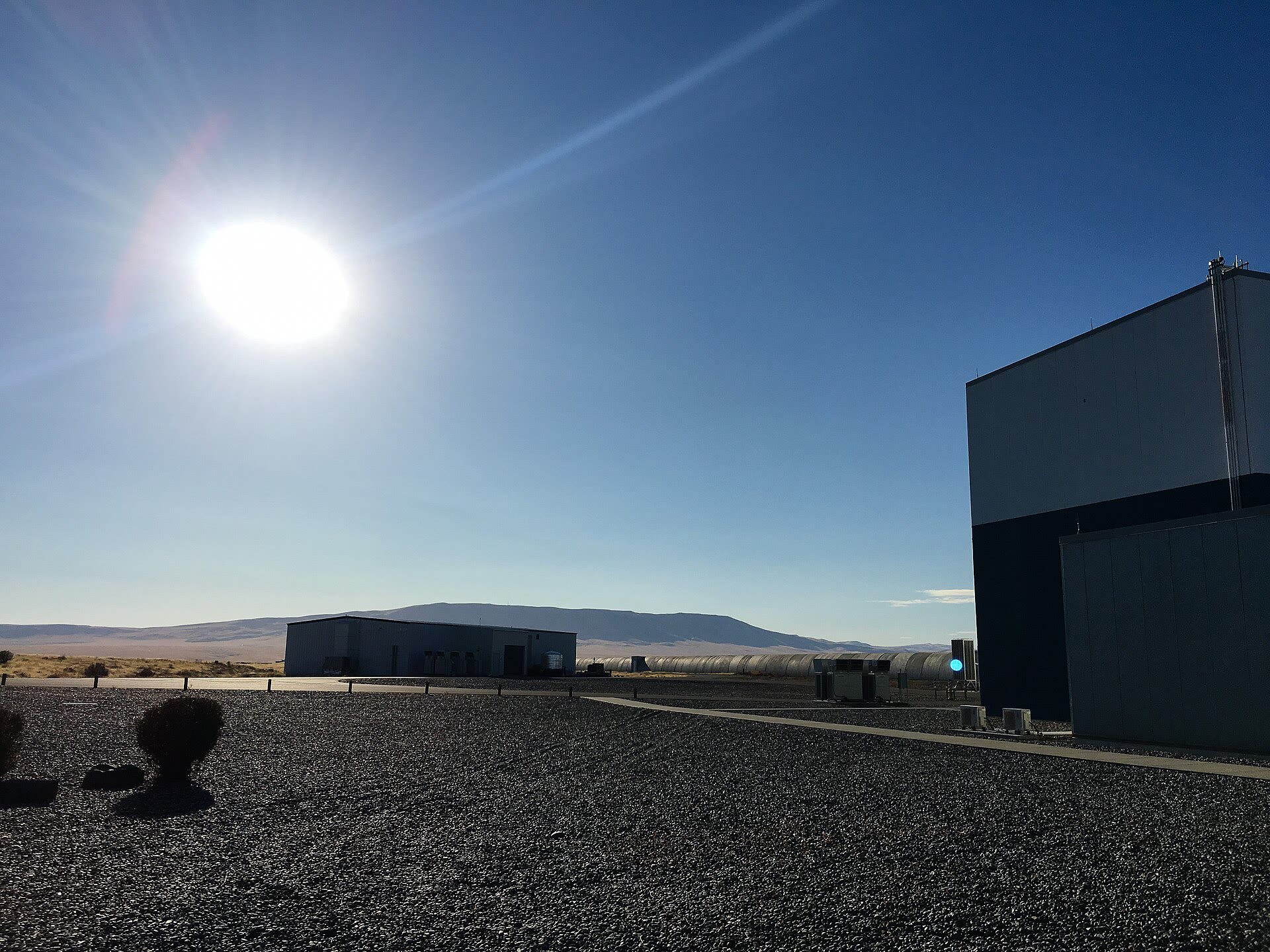
The gravitational waves were detected on 14 September 2015 at 5:51 a.m. Eastern Daylight Time by both of the twin LIGO detectors, located in Livingston, Louisiana, and Hanford, Washington. The signals came from two merging black holes, each about 30 times the mass of our sun, lying 1.3 billion light-years away. LIGO scientists estimate that the black holes were about 29 and 36 times the mass of the sun, the event took place 1.3 billion years ago, and about 3 times the mass of the sun was converted into gravitational waves in a fraction of a second, with a peak power output about 50 times that of the whole visible universe.
On 11 February 2016 the LIGO Scientific Collaboration and Virgo Collaboration announced the first confirmed observation of gravitational waves from colliding black holes, signals observed by LIGO's twin observatories on 14 September 2015 confirming a key prediction of Einstein's theory of general relativity. The 2017 Nobel Prize in Physics was awarded with one half to Rainer Weiss and the other half jointly to Barry C. Barish and Kip S. Thorne for decisive contributions to the LIGO detector and the observation of gravitational waves.
11. Gravity, Dark Energy and the Universe
Some 13.8 billion years ago the universe began with a rapid expansion called the big bang. After this initial expansion gravity started to slow the universe down. Nine billion years after the universe began, however, its expansion started to speed up, driven by an unknown force scientists have named dark energy.
In 1998 two teams of astronomers observing far-off supernovae noticed that at a certain redshift the stellar explosions were dimmer than expected. The groups were led by Adam Riess, Saul Perlmutter and Brian Schmidt, who shared the 2011 Nobel Prize in Physics. Approximately 68.3 to 70 percent of the universe is dark energy, making the universe expand at an accelerating rate.
12. Timeline: from Galileo to gravitational waves
- 1638Galileo's inclined planeIn his Discourses on Two New Sciences Galileo described rolling a bronze ball down a polished inclined plane; the distances travelled were proportional to the squares of the times, revealing acceleration.
- 1687Newton's Principia publishedThe Royal Society published Newton's Philosophiae Naturalis Principia Mathematica, sent in sheets to the printer Joseph Streater; it contained the law of universal gravitation and the inverse-square rule.
- June 1798Cavendish weighs the EarthHenry Cavendish reported his measurement of Earth's density using a torsion balance, determining the gravitational constant to within about 1% of the modern value.
- 1907Einstein states the equivalence principleEinstein posited the indistinguishability of physics in gravitational fields and accelerating reference frames, the starting point of his decade-long path to general relativity.
- 25 November 1915Einstein's field equations publishedEinstein published the field equations of gravity, the heart of general relativity, in the Proceedings of the Royal Prussian Academy of Science.
- 1916Gravitational waves predictedAlmost a century before their detection Einstein predicted gravitational waves, but assumed that with the technology of 1916 such ripples would be vanishingly small and nearly impossible to detect.
- 29 May 1919Eddington's eclipse expeditionsTwo UK-led expeditions observed the deflection of starlight during a solar eclipse; the results announced in November 1919 made Einstein world famous within days.
- 1974Binary pulsar evidenceHulse and Taylor discovered a pulsar orbiting a neutron star whose orbit was slowly shrinking through energy loss in gravitational waves, work recognized with the 1993 Nobel Prize in Physics.
- 1998Accelerating universe discoveredTwo teams found distant supernovae dimmer than expected, concluding that the expansion of the universe is speeding up, evidence for what became known as dark energy.
- 17 March 2002GRACE launchedNASA launched the Gravity Recovery and Climate Experiment to map Earth's gravity field from space by monitoring the distance between two satellites.
- 14 September 2015First direct detection of gravitational wavesBoth LIGO detectors observed the signal GW150914 from two merging black holes, confirming a key prediction of Einstein's theory of general relativity.
- 11 February 2016GW150914 announcedThe LIGO Scientific Collaboration and Virgo Collaboration announced the first confirmed observation of gravitational waves from colliding black holes, observed the previous September.
- 3 October 2017Nobel Prize for LIGOThe 2017 Nobel Prize in Physics went to Rainer Weiss, Barry C. Barish and Kip S. Thorne for decisive contributions to the LIGO detector and the observation of gravitational waves.
References (25)
- 1Chapter 3: Gravity & Mechanics — NASA Science WebView source
- 2Gravity Concepts and Applications — Georgia State University (HyperPhysics) WebView source
- 3What is gravity? — European Space Agency WebView source
- 4GRACE Fact Sheet — NASA Earth Observatory WebView source
- 5CODATA Value: Newtonian constant of gravitation — NIST (Physics.nist.gov) Web↩View source
- 6June 1798: Cavendish weighs the world — American Physical Society (APS News) 1798 Web↩View source
- 7CODATA Value: standard acceleration of gravity — NIST (Physics.nist.gov) Web↩View source
- 8100 Years of General Relativity — NASA Goddard Space Flight Center (Blueshift) 2015 Web↩View source
- 9The Measurement of the Acceleration Due to Gravity — NIST Web↩View source
- 10Galileo's Inclined Plane Experiment — Rice University (The Galileo Project) WebView source
- 11Chapter 3: Gravity & Mechanics — Kepler's Laws; Gravity Gradients & Tidal Forces — NASA Science WebView source
- 12Newton Papers: Philosophiæ Naturalis Principia Mathematica — Cambridge University Library Digital Library BookView source
- 13Weighing the Earth — University of Alaska Fairbanks, Geophysical Institute WebView source
- 14What Is an Orbit? — NASA Space Place (NASA Science) WebView source
- 15Chapter 3: Gravity & Mechanics — How Orbits Work; Freefall — NASA Science WebView source
- 16Gravity, Inertia, and the Two Bulges — NOAA National Ocean Service WebView source
- 17Book spotlight: Testing Einstein — American Institute of Physics WebView source
- 18Gravitational waves: 'dents' in spacetime — European Space Agency WebView source
- 19World celebrates centenary of confirmation of relativity — Royal Astronomical Society WebView source
- 20Early Philosophical Interpretations of General Relativity — Stanford Encyclopedia of Philosophy WebView source
- 21Scientists make first direct detection of gravitational waves — MIT News 2016 WebView source
- 22Press release: The 2017 Nobel Prize in Physics — NobelPrize.org (Royal Swedish Academy of Sciences) 2017 WebView source
- 23GW150914 Press Release — LIGO Lab, Caltech WebView source
- 24GW150914 — LIGO Scientific Collaboration WebView source
- 25What is Dark Energy? Inside Our Accelerating, Expanding Universe — NASA Science WebView source
 World Wide Web
 YouTube
 Google