From a Stanford dorm-room project called BackRub to the world's dominant search engine — PageRank, the AdWords and AdSense advertising engine, YouTube, Android and Alphabet, and the antitrust cases in Washington and Brussels
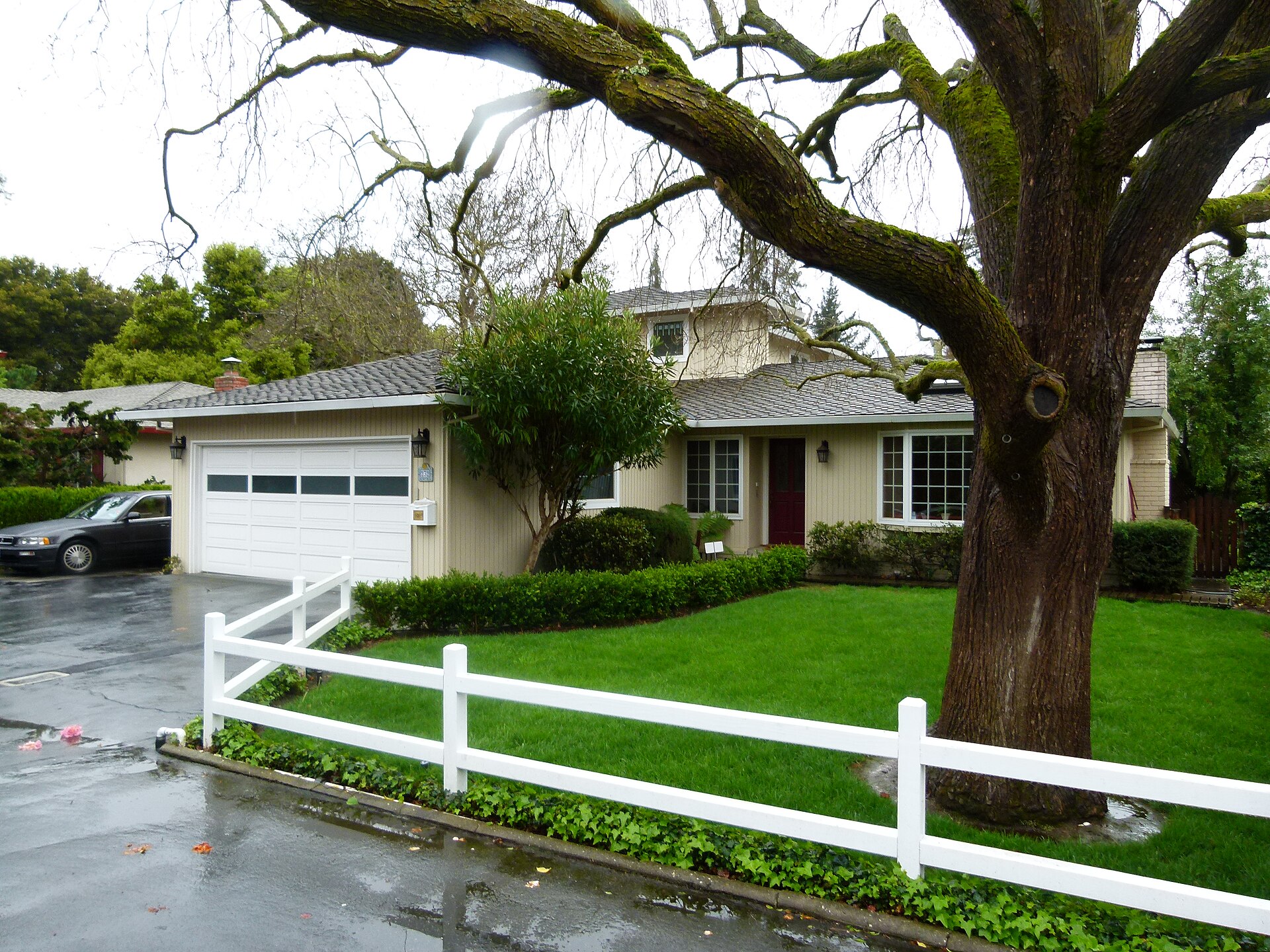
Google is an American search engine company founded in 1998 by Stanford doctoral students Larry Page and Sergey Brin, and since 2015 the flagship subsidiary of the holding company Alphabet Inc. Its rise began with a research project called BackRub that ranked web pages by their links: PageRank, the algorithm described in Brin and Page's 1998 Stanford paper, which treated a link as a citation and let the web itself vote on what mattered. A prototype indexing at least 24 million pages grew into a company that earned money by pairing its search engine with keyword advertising — AdWords opened to self-service advertisers in 2000 and AdSense put ads on third-party sites in 2003 — a model that by 2025 still produced more than 70% of its revenues. Google expanded by acquisition and invention: Blogger, Gmail, Maps, Chrome, YouTube (2006, $1.65 billion), Android (unveiled in 2007 with the Open Handset Alliance) and the AI lab DeepMind (2014). In 2015 Google Inc. was restructured under Alphabet, with Sundar Pichai as Google's CEO. Scale brought scrutiny: the FTC closed a search-bias probe with voluntary commitments in 2013; the European Commission fined Google €2.42 billion (2017, comparison shopping), €4.34 billion (2018, Android) and €1.49 billion (2019, AdSense); the US Department of Justice sued in 2020, won a landmark ruling in August 2024 that 'Google is a monopolist', and secured behavioural remedies in September 2025; a second DOJ case over the advertising-technology stack succeeded in April 2025. In FY2025 Alphabet reported $402.8 billion in revenues and 190,820 employees.
What Google is
Google is an American search engine company founded in 1998 by Sergey Brin and Larry Page, and a subsidiary of the holding company Alphabet Inc.1. More than 70 percent of worldwide online search requests are handled by Google, placing the company at the heart of most internet users' experience1. Its principal executive offices are at 1600 Amphitheatre Parkway, Mountain View, California2.
The place inside Alphabet dates from 2015, when Alphabet Inc. replaced Google Inc. as the publicly traded entity and Google became a wholly-owned subsidiary of the new holding company3. By its own account, Google makes hundreds of products — YouTube and Android, Gmail and, of course, Google Search among them — used by billions of people across the globe4.
The scale is recorded in Alphabet's most recent annual report: consolidated revenues of $402,836 million for fiscal year 2025, up $52,818 million, or 15%, from $350,018 million in 2024, with operating income of $129,039 million2. More than 70% of those revenues came from online advertising2. Alphabet had 190,820 employees as of December 31, 20252.
Origins: BackRub, PageRank, and the Stanford prototype
The Google story begins in 1995 at Stanford University, where Larry Page was considering Stanford for graduate school and Sergey Brin, a student there, was assigned to show him around4. By the following year they had struck a partnership and, working from their dorm rooms, built a search engine that used links to determine the importance of individual pages on the World Wide Web — they called it Backrub4. Britannica records the same founding insight in plainer terms: the pair tracked each site's incoming links, the number of other pages pointing to it, so that web users' own linking choices would rank the web1. The project was soon renamed Google, a play on the mathematical expression for the number 1 followed by 100 zeros, reflecting the founders' mission to organize the world's information and make it universally accessible and useful4.
The system was presented to the research world in the 1998 Stanford paper by Sergey Brin and Lawrence Page, which described Google as a prototype of a large-scale search engine making heavy use of the structure present in hypertext5. The prototype, served at google.stanford.edu, carried a full-text and hyperlink database of at least 24 million pages5. The paper credited two features with the engine's precision: a quality ranking calculated from the web's link structure, called PageRank, and the way the engine used link information5. That ranking was defined as an objective measure of a page's citation importance, one that corresponded well with people's subjective idea of importance5.
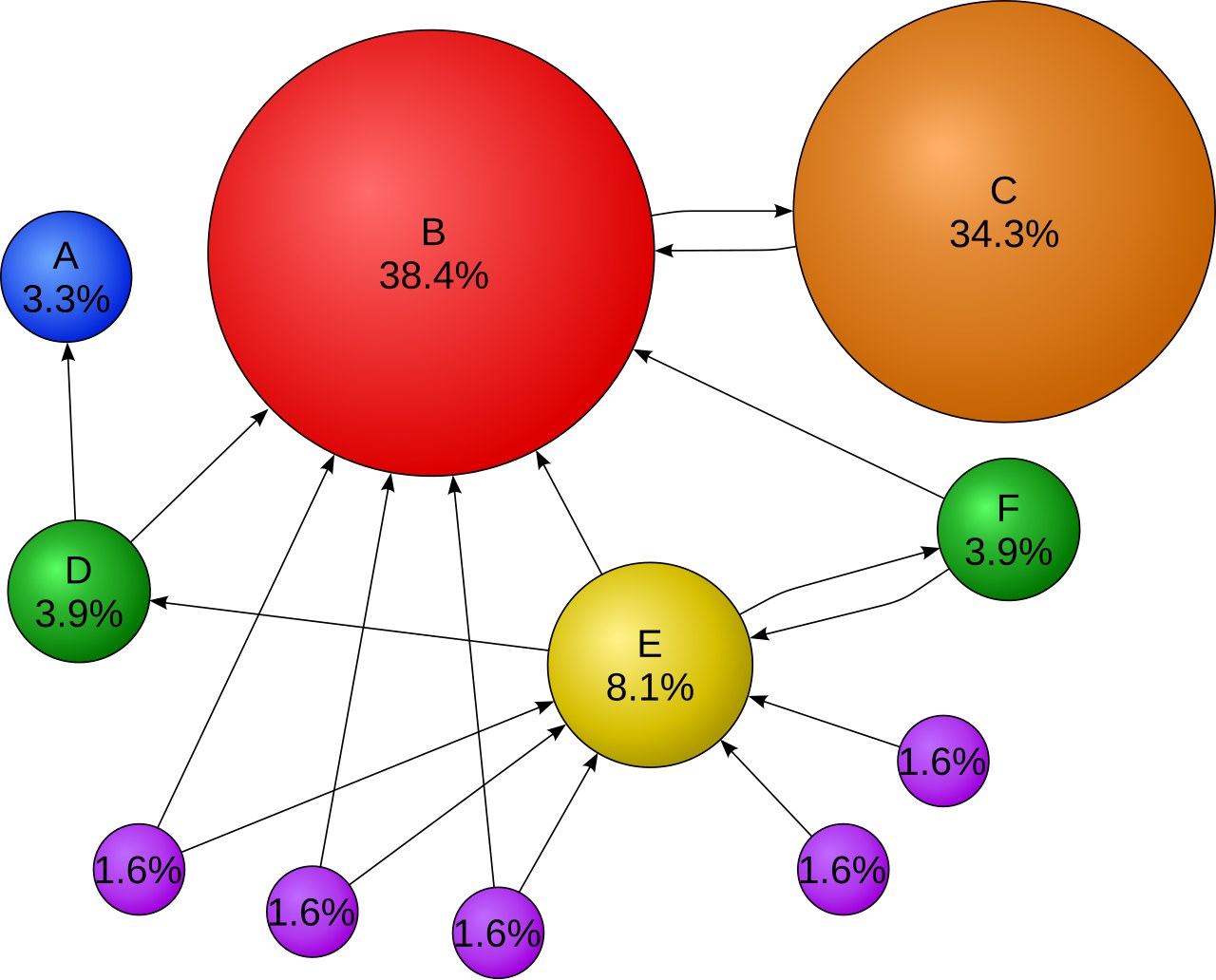
Formally, the PageRank of a page A is given as PR(A) = (1-d) + d (PR(T1)/C(T1) + ... + PR(Tn)/C(Tn)), where T1 through Tn are the pages citing A and C(A) is the number of links going out of page A5. The parameter d is a damping factor that can be set between 0 and 1 and was usually set to 0.85; the PageRanks form a probability distribution over web pages, so the sum of all pages' PageRanks is one5. The model reads as a description of user behaviour: a hypothetical random surfer who is handed a web page at random and keeps clicking on links, never hitting back, until boredom sends the surfer to another random page5.
a page has high rank if the sum of the ranks of its backlinks is high
“The PageRank Citation Ranking: Bringing Order to the Web” — Lawrence Page, Sergey Brin, Rajeev Motwani and Terry Winograd
We assume there is a “random surfer” who is given a web page at random and keeps clicking on links, never hitting “back” but eventually gets bored and starts on another random page.
“The Anatomy of a Large-Scale Hypertextual Web Search Engine” — Sergey Brin and Lawrence Page, 1998
we expect that advertising funded search engines will be inherently biased towards the advertisers and away from the needs of the consumers
“The Anatomy of a Large-Scale Hypertextual Web Search Engine” — Sergey Brin and Lawrence Page, 1998
By early 1998 the team had created maps containing as many as 518 million of the web's hyperlinks — a citation graph that existing search engines had largely left unused5. The work was conducted as part of the Stanford Integrated Digital Library Project, supported by the National Science Foundation under Cooperative Agreement IRI-94113065. The PageRank method itself was left to a companion manuscript, “The PageRank Citation Ranking: Bringing Order to the Web”, credited to Lawrence Page, Sergey Brin, Rajeev Motwani and Terry Winograd5; that manuscript carries the date January 29, 19986.
Inside the 1998 search engine
Most of the system was written in C or C++ for efficiency, and it could run on either Solaris or Linux5. Crawling was done by several distributed crawlers fed lists of URLs by a URLserver; a storeserver compressed the fetched pages into a repository, while an indexer and a sorter built the barrels of the index, whose entries were keyed by anonymous document identifiers5.
Every hit carried position information, so the engine made extensive use of the proximity of query words; it also tracked visual presentation details such as font size, weighting words set in a larger or bolder font more heavily than others5. Link text was treated as data about the destination page, since anchors often provide more accurate descriptions of a page than the page itself, and in the 24-million-page crawl the team indexed over 259 million anchors5. The final ordering combined a classical information-retrieval score with PageRank5.
In total it took roughly nine days to download the 26-million-page crawl, including errors5. Once the system was running smoothly it moved much faster, downloading the last 11 million pages in just 63 hours — averaging just over 4 million pages per day5. The compressed repository was about 53 GB, just over one third of the total data it stored5. The 1998 engine answered most queries in between 1 and 10 seconds, against a target of several hundred queries per second5.
The advertising model: AdWords and AdSense
On October 23, 2000, Google announced the immediate availability of AdWords, a program that enabled any advertiser to purchase individualized and affordable keyword advertising appearing instantly on the google.com search results page7. An ad appeared only if a user entered the same keywords or phrase the advertiser had purchased, ensuring a prequalified visitor and sparing advertisers the cost of off-target impressions7. The launch price list was quoted in impressions: CPMs of $15, $12 and $10 — 1.5, 1.2 and 1 cent per impression — for the top, middle and bottom ad unit positions7.
On June 18, 2003, Google announced a new self-service option for AdSense, a program enabling website publishers to serve ads precisely targeted to the specific content of their individual web pages8. Publishers served text-based AdWords ads on their own sites and were paid for clicks on them, gaining instant access to Google's network of more than 100,000 advertisers, from large global brands to small and local businesses8.
Expansion: YouTube, Android, DeepMind
On October 9, 2006, Google announced it had agreed to acquire YouTube — the consumer media company for people to watch and share original videos — for $1.65 billion in a stock-for-stock transaction9. Following the acquisition YouTube would operate independently to preserve its brand and community, remain based in San Bruno, California, and keep all of its employees9. At the time YouTube delivered more than 100 million video views every day, with 65,000 new videos uploaded daily9.
On November 5, 2007, a broad alliance of leading technology and wireless companies announced the development of Android, describing it as the first truly open and comprehensive platform for mobile devices10. Thirty-four companies formed the Open Handset Alliance, which aimed to develop technologies that would significantly lower the cost of developing and distributing mobile devices and services10. Consumers were told to expect the first phones based on Android in the second half of 200810. Google chairman Eric Schmidt called the announcement more ambitious than any single “Google Phone” the press had been speculating about, with a vision that the platform would power thousands of different phone models10.
DeepMind was founded in London in 2010 and, having been acquired by Google in 2014, became part of the Alphabet group11. Google's AI efforts now sit in Google DeepMind, which brings together Google Brain and DeepMind into a single team led by CEO Demis Hassabis11. The lab's record includes AlphaGo, unveiled in 2015 as the first computer program to defeat a Go world champion, and AlphaFold, launched in 2020 to predict 3D models of protein structures accurately11.
The same period brought other landmark deals: the online advertising firm DoubleClick, bought in 2007 for $3.1 billion as Google's largest acquisition to that point1. Two years later the company acquired the mobile advertising network AdMob for $750 million1. In 2012 Google paid about $12.5 billion for Motorola Mobility, including a patent portfolio of over 24,000 patents and patent applications12.
From Google to Alphabet
On August 10, 2015, Larry Page announced the creation of a new company, called Alphabet, which he would run as CEO with Sergey Brin as President3. Alphabet Inc. would replace Google Inc. as the publicly traded entity, with all shares of Google automatically converting into the same number of shares of Alphabet, and Google becoming a wholly-owned subsidiary3. Sundar Pichai became CEO of the company Page described as the slightly slimmed down Google3. Alphabet was mostly a collection of companies, the largest of which was Google, and segment reporting was set to begin with the Q4 results3.
Page opened by quoting the founders' original letter from 11 years earlier: Google is not a conventional company, and the founders did not intend to become one3. He noted that many of those crazy things now had over a billion users, like Google Maps, YouTube, Chrome and Android3.
Under the new structure Google is reported in two segments — Google Services and Google Cloud — with all non-Google businesses grouped collectively as Other Bets2. The company's AI and productivity story runs through the same reporting line: Gemini for Google Workspace brings Google's AI-powered agents into Gmail, Docs, Sheets and more to help users write, organize, visualize, accelerate workflows and have more productive meetings2.
Google's flagship products
Breadth is the point: by its own count, Google's hundreds of products — from YouTube and Android to Gmail and, of course, Google Search — are used by billions of people across the globe4.
| Product | What it is | Scale / inception |
|---|---|---|
| Google Search | The founding product — the search engine that ranks web pages by their links and text | more than 70 percent of worldwide online search requests1 |
| YouTube | Video platform acquired by Google in 2006 and operated independently to preserve its brand | more than 100 million video views a day at acquisition9 |
| Android | Open mobile platform unveiled in November 2007 with the Open Handset Alliance | first phones based on it expected in the second half of 200810 |
| Chrome and Google Maps | Browser and mapping services, listed among the company's landmark products | over a billion users each by 20153 |
| Gmail and Google Workspace | Email service and productivity suite; Gemini for Workspace brings AI agents into Gmail, Docs and Sheets | $48,030 million in FY2025 across subscriptions, platforms and devices2 |
| Google Cloud | The cloud computing business, reported as one of Google's two segments | $58,705 million in revenue in FY20252 |
| Pixel | Google's line of consumer devices | grouped with subscriptions and platforms in Alphabet's revenue reporting2 |
| Gemini and Google DeepMind | AI models and assistant, with Google Brain and DeepMind combined into a single team | led by CEO Demis Hassabis11 |
Antitrust: Washington and Brussels
On January 3, 2013, Google agreed to change some of its business practices to resolve Federal Trade Commission concerns that those practices could stifle competition in the markets for popular devices such as smart phones, tablets and gaming consoles, as well as the market for online search advertising12. Under the commitments, Google removed restrictions on the use of its AdWords platform that made it more difficult for advertisers to coordinate campaigns across multiple platforms, and promised all websites the option to keep their content out of Google's vertical search offerings while still having it appear in general, or organic, search results12. The FTC also closed its search-bias investigation: it concluded that the introduction of Universal Search, and later algorithm changes even where they may have harmed individual competitors, could be plausibly justified as innovations that improved Google's product and the experience of its users12.
The European Commission fined Google €2.42 billion on June 27, 2017, for abusing its market dominance as a search engine by giving an illegal advantage to its own comparison shopping service, ordering the conduct ended within 90 days or facing penalty payments of up to 5% of the average daily worldwide turnover of Alphabet, Google's parent company13. The decision dated the strategy change to 2008, when Google began to implement in European markets a fundamental change of approach to push its comparison shopping service13. A second decision, on July 18, 2018, fined Google €4.34 billion over restrictions imposed since 2011 on Android device manufacturers and mobile network operators: requiring pre-installation of Search and Chrome as a condition for licensing the Play Store, paying large manufacturers and operators for exclusive pre-installation of the Search app, and preventing manufacturers of unapproved Android forks from selling devices running them14. A third fine, €1.49 billion on March 20, 2019, concerned restrictive clauses in contracts with third-party websites which prevented Google's rivals from placing their search adverts on those sites15. On September 10, 2024, the Court of Justice, sitting as Grand Chamber, dismissed Google's appeal and ordered Google and Alphabet to bear their own costs and to pay the costs incurred by the European Commission16.
The US case began on October 20, 2020, when the Department of Justice, along with eleven state Attorneys General, filed a civil antitrust lawsuit in the U.S. District Court for the District of Columbia to stop Google from unlawfully maintaining monopolies through anticompetitive and exclusionary practices in the search and search advertising markets17. At filing the government described Google as the monopoly gatekeeper to the internet, worth $1 trillion and accounting for almost 90 percent of all search queries in the United States; among the exclusionary agreements alleged was a long-term Apple deal requiring Google to be the default — and de facto exclusive — general search engine on Apple's Safari browser17.
In August 2024 the U.S. District Court for the District of Columbia released a 277-page opinion concluding that Google is a monopolist, and that it acted as one to maintain its monopoly, in violation of Section 2 of the Sherman Act18. On September 2, 2025, the court ordered remedies: Google was prohibited from entering or maintaining exclusive contracts relating to the distribution of Google Search, Chrome, Google Assistant and the Gemini app, ordered to make certain search index and user-interaction data available to rivals and potential rivals, and ordered to offer search and search text ads syndication services18. The court framed the remedies as a way to pry open the market for general search services, which it described as frozen in place for over a decade, and they were written to reach generative-AI technologies and companies18. A parallel case over the ad tech stack, filed in January 2023, was decided against Google on April 17, 2025, when the U.S. District Court for the Eastern District of Virginia held that Google violated antitrust law by monopolizing open-web digital advertising markets; the court found that Google had harmed its publishing customers, the competitive process and, ultimately, consumers of information on the open web19. By the remedy stage, the United States was joined in pursuing the remedies ordered by 49 states, two territories and the District of Columbia18.
Major antitrust actions at a glance
The record below runs from the FTC's commitments of January 3, 2013, through the European Commission fines, to the remedies ordered in Washington on September 2, 202518.
| Authority | Date | Decision / outcome |
|---|---|---|
| US Federal Trade Commission | January 3, 2013 | Commitments on standard-essential patents, the AdWords API and a content opt-out; the search-bias investigation was closed12 |
| European Commission | June 27, 2017 | €2.42 billion fine over the favouring of Google's comparison shopping service13 |
| European Commission | July 18, 2018 | €4.34 billion fine over Android restrictions imposed since 201114 |
| European Commission | March 20, 2019 | €1.49 billion fine over restrictive clauses in search advertising contracts15 |
| Court of Justice of the European Union | September 10, 2024 | Google's appeal dismissed; Google and Alphabet ordered to pay the Commission's costs16 |
| US Department of Justice and 11 states | October 20, 2020 | Civil antitrust suit filed in the District of Columbia over search and search advertising17 |
| US District Court (D.D.C.) | August 2024 | 277-page opinion: Google is a monopolist in violation of Section 2 of the Sherman Act18 |
| US District Court (D.D.C.) | September 2, 2025 | Remedies ordered: no exclusive distribution contracts for Search, Chrome, Assistant and Gemini; data sharing and ad syndication required18 |
| US District Court (E.D. Va.) | April 17, 2025 | Ad-tech liability ruling: Google violated antitrust law by monopolizing open-web digital advertising19 |
Google today: the numbers
The fiscal 2025 scoreboard: advertising revenue of $294,691 million — more than 70% of total revenues — within consolidated revenues of $402,836 million and operating income of $129,039 million2. Google Cloud produced $58,705 million, while capital expenditures, primarily investments in technical infrastructure, were $91.4 billion for the year ended December 31, 20252. Alphabet counted 190,820 employees as of December 31, 20252.
Within advertising, Google Search & other contributed $224,532 million, YouTube ads $40,367 million and the Google Network $29,792 million2. Beyond ads, subscriptions, platforms and devices brought in $48,030 million2. By segment, Google Services totalled $342,721 million, Google Cloud $58,705 million and Other Bets $1,537 million2.
The mix still leans on the engine that started it all: more than 70 percent of worldwide online search requests are handled by Google, placing it at the heart of most internet users' experience1. Alphabet describes Gemini for Google Workspace as bringing its AI-powered agents into Gmail, Docs, Sheets and more to help users write, organize, visualize, accelerate workflows and have more productive meetings2.
Timeline of Google milestones
BackRub takes shape at Stanford
The Google story begins at Stanford University in 1995, when Larry Page was considering Stanford for graduate school and Sergey Brin, a student there, was assigned to show him around. By the following year they had struck a partnership and, working from their dorm rooms, built a search engine that used links to determine the importance of individual pages on the World Wide Web — they called it Backrub.
Google Inc. is born — with a $100,000 check and a garage
Backrub was renamed Google — a play on the mathematical expression for the number 1 followed by 100 zeros — reflecting the founders' mission 'to organize the world's information and make it universally accessible and useful.' In August 1998, Sun co-founder Andy Bechtolsheim wrote Larry and Sergey a check for $100,000, and Google Inc. was officially born, moving from the dorms to its first office: a garage in suburban Menlo Park, California.
AdWords opens to every advertiser
Google announced the immediate availability of AdWords, a self-service program enabling any advertiser to purchase individualized keyword advertising that appears instantly on the google.com search results page. Since the beta debut earlier that month, about 350 businesses and agencies had adopted the program; ads were designed to appear only when a user entered the same keywords the advertiser had purchased, and were priced at launch at $15, $12 and $10 CPM for the top, middle and bottom ad positions.
AdSense brings Google ads to other websites
Google announced a new self-service option for AdSense, a program enabling website publishers to serve ads precisely targeted to the specific content of their individual web pages. Publishers serve text-based Google AdWords ads and are paid for clicks, gaining access to Google's network of more than 100,000 advertisers; the program was available for English-language websites worldwide.
Google prices its initial public offering at $85.00 a share
Google announced the initial public offering of 19,605,052 shares of Class A common stock — 14,142,135 sold by Google and 5,462,917 by existing stockholders — at a price of $85.00 per share, through an underwriting syndicate led by Morgan Stanley and Credit Suisse First Boston. The unusual public-auction format was designed to put the average investor on an equal footing with financial professionals, and the offering raised $1.66 billion for the company.
Google agrees to buy YouTube for $1.65 billion
Google announced it had agreed to acquire YouTube, the consumer media company for watching and sharing original videos, for $1.65 billion in a stock-for-stock transaction. YouTube would operate independently to preserve its brand and community, remain based in San Bruno, California, and keep all its employees; at the time it delivered more than 100 million video views every day with 65,000 new videos uploaded daily.
Android unveiled with the Open Handset Alliance
A broad alliance of leading technology and wireless companies announced the development of Android, 'the first truly open and comprehensive platform for mobile devices,' alongside Google, T-Mobile, HTC, Qualcomm, Motorola and others. Thirty-four companies formed the Open Handset Alliance; the platform — an operating system, middleware, interface and applications under a developer-friendly open-source license — was expected to reach its first phones in the second half of 2008, with an early-access SDK released the following week.
DeepMind joins Google
DeepMind — founded in London in 2010 — announced that it had been 'acquired by Google', and would continue to be based in its hometown of London as an autonomous company. The lab went on to be combined with Google Brain as Google DeepMind, led by CEO Demis Hassabis; its AlphaGo (2015) became the first computer program to defeat a Go world champion, and AlphaFold (2020) accurately predicted 3D models of protein structures.
Alphabet is announced; Google becomes its subsidiary
Larry Page announced the creation of Alphabet, 'a collection of companies,' with Google as its largest. Alphabet Inc. would replace Google Inc. as the publicly traded entity, with all Google shares automatically converting into Alphabet shares as Google became a wholly-owned subsidiary; Sundar Pichai became CEO of Google, while Page ran Alphabet as CEO and Sergey Brin served as President. 'Many of those crazy things now have over a billion users, like Google Maps, YouTube, Chrome, and Android,' Page wrote.
EU antitrust fine No. 1: comparison shopping (EUR 2.42 billion)
The European Commission fined Google 2.42 billion euros for breaching EU antitrust rules, concluding that the company had abused its market dominance as a search engine by giving an illegal advantage to another Google product, its comparison shopping service. Google was ordered to end the conduct within 90 days or face penalty payments of up to 5% of the average daily worldwide turnover of its parent Alphabet; the decision concerned Google's strategy, from 2008, of pushing its own comparison shopping service — Froogle, later renamed Google Product Search and then Google Shopping — at the expense of rivals.
The US Justice Department sues Google for monopolization
The Department of Justice, together with eleven state Attorneys General, filed a civil antitrust lawsuit in the U.S. District Court for the District of Columbia to stop Google from unlawfully maintaining monopolies in the search and search advertising markets. At the time Google, described by the DOJ as 'the monopoly gatekeeper to the internet,' had a market value of $1 trillion and accounted for almost 90 percent of all search queries in the United States.
'Google is a monopolist': the liability ruling
After a nine-week bench trial that began in September 2023, the U.S. District Court for the District of Columbia released a 277-page opinion concluding that 'Google is a monopolist, and it has acted as one to maintain its monopoly' in violation of Section 2 of the Sherman Act. The court found Google had entered into a series of exclusionary agreements that locked up the primary avenues through which users access online search, requiring that Google be the preset default general search engine on billions of mobile devices and computers.
Frequently asked questions
When was Google founded, and by whom?
Google was founded in 1998 by Sergey Brin and Larry Page, both Stanford doctoral students who met at the university in 19954. It is a subsidiary of the holding company Alphabet Inc.1
What was BackRub, and what happened to it?
Backrub was the search engine Brin and Page built from their dorm rooms, using links to determine the importance of individual pages on the World Wide Web4. It was soon renamed Google, a play on the mathematical expression for the number 1 followed by 100 zeros4.
How did PageRank decide which web pages mattered?
In the PageRank model, a page has high rank if the sum of the ranks of its backlinks is high6. The damping factor was usually set to 0.85, and the PageRanks form a probability distribution over web pages, so the sum of all pages' PageRanks is one5.
How does Google make its money?
AdWords, announced on October 23, 2000, let any advertiser purchase individualized keyword advertising that appears instantly on the google.com search results page7. AdSense extended the model to third-party websites from June 2003, paying publishers for clicks on text-based AdWords ads8. In 2025, more than 70% of Alphabet's total revenues still came from online advertising2.
How much did Google pay for YouTube?
Google agreed to acquire YouTube for $1.65 billion in a stock-for-stock transaction, with YouTube to operate independently to preserve its brand and community and to remain based in San Bruno, California9. At the time YouTube delivered more than 100 million video views every day, with 65,000 new videos uploaded daily9.
What is Alphabet, and when did it become Google's parent?
Larry Page announced Alphabet on August 10, 2015, with himself as CEO and Sergey Brin as President3. Alphabet Inc. replaced Google Inc. as the publicly traded entity, Google became a wholly-owned subsidiary, and Sundar Pichai became CEO of Google3.
What fines has the European Commission imposed on Google?
The Commission fined Google €2.42 billion on June 27, 2017, over the illegal advantage given to its comparison shopping service13. A second fine of €4.34 billion followed on July 18, 2018, over restrictions on Android device manufacturers and mobile network operators in place since 201114, and a third of €1.49 billion on March 20, 2019, over restrictive clauses in search advertising contracts15. On September 10, 2024, the Court of Justice dismissed Google's appeal and ordered it to pay the Commission's costs16.
What have the US courts decided in the DOJ cases against Google?
In August 2024, a 277-page opinion from the U.S. District Court for the District of Columbia concluded that Google is a monopolist, and that it acted as one to maintain its monopoly, in violation of Section 2 of the Sherman Act18. On September 2, 2025, the court barred exclusive distribution contracts for Search, Chrome, Assistant and Gemini and required data sharing and ad syndication18. In a separate case over the ad tech stack, the Eastern District of Virginia held on April 17, 2025, that Google violated antitrust law by monopolizing open-web digital advertising markets19.
Key numbers at a glance
Sources & citations
Every factual claim in this article is drawn from the sources below. Bracketed numbers in the text link to the corresponding source.
- 1
- 2
- 3
- 4
- 5
- 6
- 7
- 8
- 9
- 10
- 11
- 12
- 13
- 14
- 15
- 16
- 17
- 18
- 19
- 20