YouTube
From a 19-second clip at the San Diego Zoo to the world's largest video platform — the founding story, the $1.65 billion Google deal, the Partner Program, Content ID, and how the recommendation system actually works.
YouTube is the video-sharing platform and social media site registered on 14 February 2005 by Steve Chen, Chad Hurley and Jawed Karim, three former PayPal employees. Its first video, “Me at the zoo”, was uploaded by co-founder Jawed Karim on 23 April 2005; the site opened as a public beta in May 2005 and launched officially on 15 December 2005, serving more than two million views a day. Google announced it would acquire YouTube for $1.65 billion in stock on 9 October 2006 and closed the deal on 13 November 2006, letting the platform operate independently. Advertising and the YouTube Partner Program followed in 2007, and copyright management — today anchored by the automated Content ID system — reshaped both the platform and the music and media industries. Recommendations, powered by more than 80 billion signals a day, drive more viewership than subscriptions or search, and are subject to demotion rules for borderline content introduced in 2019. By the mid-2020s YouTube was a dominant force in television streaming, with Shorts averaging around 200 billion daily views in early 2026 and YouTube advertising revenue reaching $40.4 billion in 2025.
Overview: what YouTube is
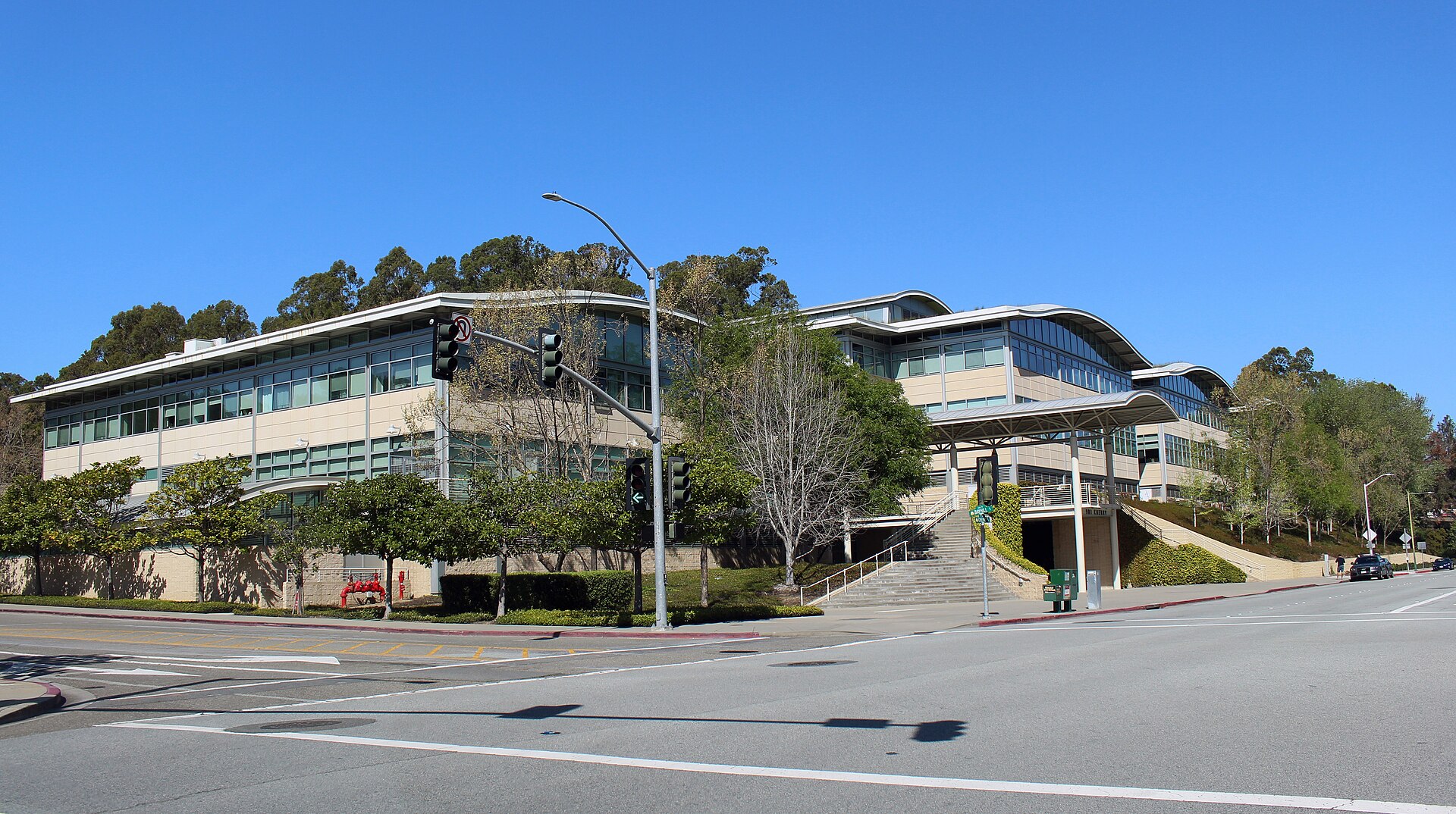
YouTube is a social media platform and video-sharing website registered on 14 February 2005 by Steve Chen, Chad Hurley and Jawed Karim — three former PayPal employees — and headquartered in San Bruno, California1. It began as an experiment among three former colleagues and grew into the world's largest video-sharing service1.
Users can like or dislike videos, comment and respond to other comments in threads, share videos and channels, subscribe to creators, and organise content into playlists1. The platform supports several formats: conventional long-form videos, short vertical clips published as YouTube Shorts, and live feeds with real-time audience interaction1. Creators manage their channels through YouTube Studio, which provides tools for uploading videos, editing titles and thumbnails, reviewing audience statistics, moderating comments, and controlling whether content is public, private or unlisted1.
YouTube describes its mission simply: to give everyone a voice and show them the world2. The service is available through its website and through apps for mobile devices, tablets, smart televisions, streaming devices and video game consoles1. Alongside the main platform it operates specialised services, including YouTube TV, a standalone subscription-based streaming service available in the United States; YouTube Kids, providing content exclusively intended for younger viewers; YouTube Premium, which removes advertisements and allows background and offline playback; and YouTube Music for songs, albums and music videos1.
Founding: three PayPal alumni and “Me at the zoo”
YouTube initially operated out of Hurley's garage in California as a video-based dating website, with its logo and trademark fittingly registered on Valentine's Day 20051. It struggled to attract users, and the founders changed the direction of the fledgling platform about two months later1.
The pivot found its symbol on 23 April 2005, when Jawed Karim uploaded an experimental video as part of a test run for the platform's new functions1. The clip, 19 seconds long, showed Karim in front of an elephant enclosure at the San Diego Zoo and was titled “Me at the zoo”; it became the first video ever uploaded to YouTube1. The video remains on the platform today, published by the channel “jawed”3.
Shortly after the site opened on a limited “beta” basis in May 2005, it was attracting some 30,000 visitors per day1. By the time YouTube officially launched on 15 December 2005, it was serving more than 2 million video views each day1. By January 2006 the number had increased to more than 25 million views a day1.
Growth kept compounding through 20061. More than 25 million videos were available on the site by March 2006, with over 20,000 new videos uploaded daily1. By the summer of 2006 YouTube was serving more than 100 million videos per day, and the pace of uploads showed no sign of slowing1.
The $1.65 billion Google acquisition
YouTube's quick growth made the platform increasingly expensive to operate1. The company needed additional computer equipment, broadband capacity and funds to address possible copyright lawsuits, yet it had achieved only limited success in generating revenue1. Meanwhile Google's own video-sharing service had failed to attract substantial traffic — prompting Google to acquire YouTube for $1.65 billion in stock in November 2006, its largest acquisition at that time1.
The deal was announced on 9 October 2006: Google said it had agreed to acquire YouTube for $1.65 billion in a stock-for-stock transaction4. Google described the acquisition as combining one of the largest and fastest-growing online video entertainment communities with its own expertise in organising information and creating new advertising models4. After the acquisition, the company said, YouTube would operate independently to preserve its successful brand and passionate community4.
Google closed the acquisition on 13 November 20065. In connection with the deal Google issued an aggregate of 3,217,560 Class A shares, plus restricted stock units, options and a warrant exercisable for or convertible into a further 442,210 shares5. A 12.5% slice of the equity was held in escrow for one year5.
Rather than merging the two websites, Google continued YouTube's operation as before1. To reduce the risk of copyright-infringement lawsuits, it negotiated deals with entertainment companies that allowed copyrighted material to appear on the platform and gave users the right to include certain copyrighted songs in their videos, and it agreed to remove tens of thousands of copyrighted files1. In November 2008 Google reached an agreement with Metro-Goldwyn-Mayer to show some of the studio's full-length movies and television shows free to watch, with advertisements running alongside1.
Scale: YouTube by the numbers
The dated figures below trace the platform's course from its first experimental upload to its 2025 revenues, each keeping the date given in its source1.
| Metric | Figure | As of / source |
|---|---|---|
| First video | “Me at the zoo”, a 19-second clip | 23 April 20051 |
| Public beta | opened on a limited “beta” basis; some 30,000 visitors a day | May 20051 |
| Official launch | more than 2 million video views per day | 15 December 20051 |
| Videos watched per day | more than 100 million | summer 20061 |
| Daily watch time | more than 1 billion hours (milestone reached 2016, announced February 2017) | February 20176 |
| Shorts daily views | 200 billion (average) | January 20267 |
| New uploads | more than 20 million per day | as of 20251 |
| YouTube advertising revenue | $40.4 billion | FY20258 |
| Revenue across ads and subscriptions | over $60 billion | FY20259 |
| U.S. adults who use YouTube | 85% | 202410 |
The Partner Program and creator monetisation
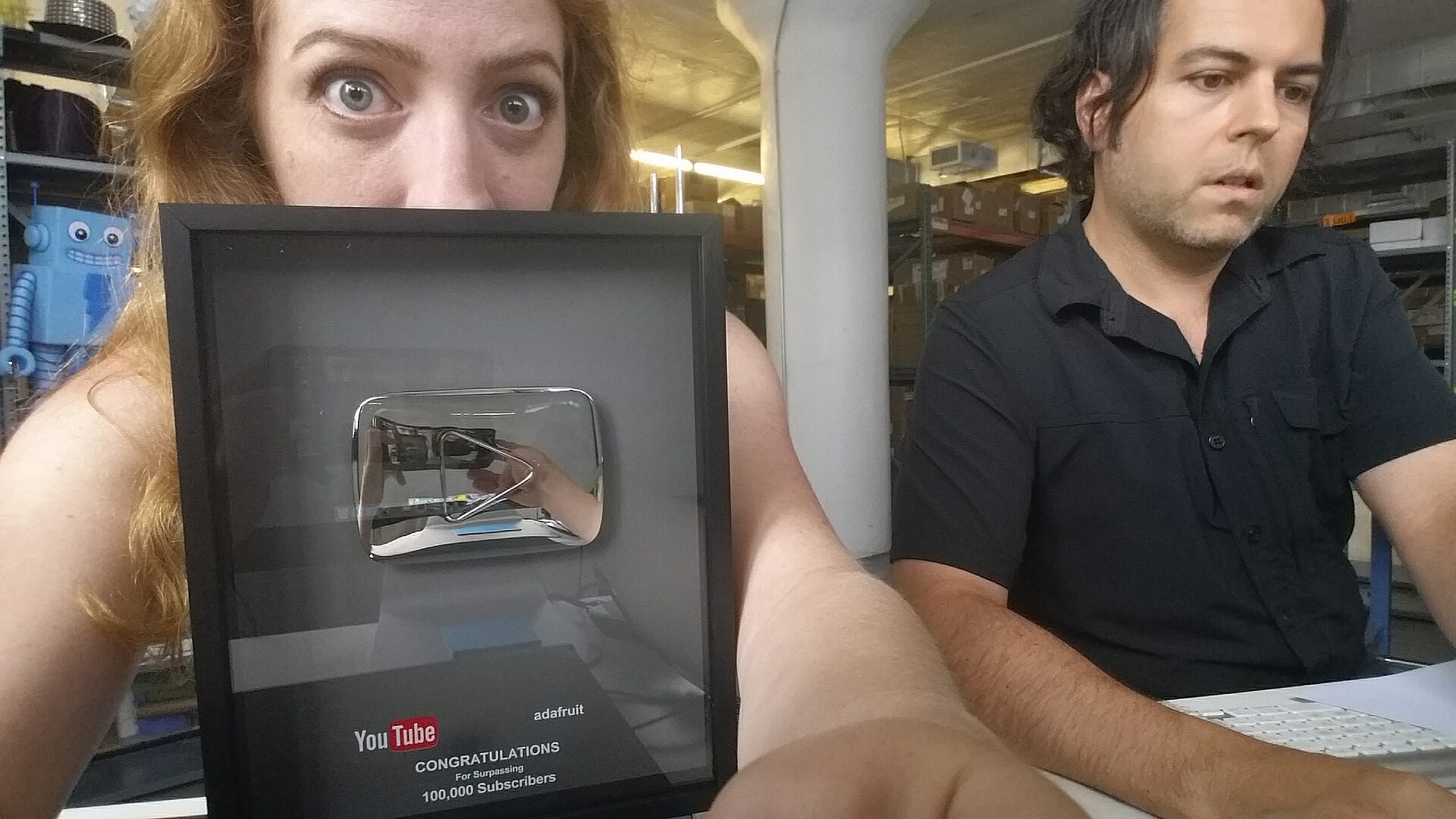
In 2007 YouTube introduced advertisements on the platform, followed by the YouTube Partner Program, which allowed content creators to earn a share of advertisement revenue for each ad shown with their videos1. Creators earn 55% of the revenue generated from each advertisement aired on their channel1. The platform also recognises major subscriber milestones with Creator Awards: a play button design in silver for 100,000 subscribers and gold for 1 million, with Diamond and Red Diamond awards for 10 million and 100 million respectively1.
The Partner Program gives creators greater access to YouTube resources and monetisation features, including Creator Support teams, as well as revenue sharing from ads served on their content11. To become eligible, a channel needs 1,000 subscribers with 4,000 qualified watch hours in the last 12 months, or 1,000 subscribers with 10 million qualified Shorts views in the last 90 days11. One nuance matters for short-form creators: qualified watch hours from Shorts views in the Shorts Feed do not count towards the 4,000 qualified public watch hours threshold11.
Once accepted, creators can monetise through modules such as Watch Page Ads, Shorts Feed Ads, Memberships and Supers11. Activity is expected: YouTube may turn off monetisation on channels that have not uploaded a video or posted to the Posts tab for six months or more11.
The creator economy built on the platform is now measured in the tens of billions. Over the four years to January 2026, YouTube paid more than $100 billion to creators, artists and media companies7. In 2024 YouTube's ecosystem contributed $55 billion to U.S. GDP and supported more than 490,000 full-time jobs7.
Content ID and the copyright system
YouTube's copyright system rests on three tools in its Copyright Management Suite12. A webform, available in more than 80 languages, gives all rightsholders a streamlined way to submit copyright removal requests; the Copyright Match Tool automatically finds videos that are the same as, or very similar to, ones previously uploaded; and Content ID serves rightsholders with the most complex rights-management needs, such as movie studios and music labels12.
Content ID is YouTube's automated content identification system, which copyright owners use to identify and manage their copyright-protected content on the platform13. It identifies matches using a database of audio and visual files submitted by copyright owners, and every video uploaded to YouTube is automatically scanned by the system13. Depending on the copyright owner's settings, a match can block a video from being viewed, monetise it by running ads — sometimes sharing revenue with the uploader — or track the video's viewership statistics13.
The volume of automated enforcement is vast. Of the more than 2 billion Content ID claims made in 2024, fewer than 1% were disputed — and over 70% of those disputes succeeded, because claimants either voluntarily released the claim or did not respond within the 30-day window12. The majority of copyright claims and removal requests on YouTube come from the platform's automatic detection technology12.
The rules for handling matches are set in advance through rightsholders' own Content ID settings, so the same detection machinery can be tuned to block, monetise or merely track13. The commercial layer around it has been built partly through deal-making: after the acquisition, Google negotiated agreements with entertainment companies, and in November 2008 it reached a deal with Metro-Goldwyn-Mayer to show full-length movies and television shows free to watch, with advertisements alongside1.
Inside the recommendation system
YouTube's recommendation system is built on a simple principle: helping people find the videos they want to watch and that will give them value2. At the highest level, it is designed to anticipate and meet a user's needs through relevant and satisfying viewing experiences14. The stakes are considerable, because recommendations drive a significant amount of the overall viewership on YouTube — even more than channel subscriptions or search2.
The system has travelled a long way from 2008, when the homepage ranked videos by popularity to create one big “Trending” page and most viewership came from searches or shared links off the platform2. Today it sorts through billions of videos to recommend content tailored to each viewer's specific interests2. In its 2021 explanation of the system, YouTube describes it as learning every day from over 80 billion pieces of information — signals such as clicks, watchtime, survey responses, sharing, likes and dislikes2.
Two findings reshaped how the system measures success. YouTube learned back in 2011 that clicking on a video did not mean the viewer actually watched it, and it added watchtime to its recommendations in 20122. When watchtime was first incorporated, the company saw an immediate 20% drop in views — a trade-off it accepted because delivering more value to viewers mattered more2. To keep quality high, YouTube measures “valued watchtime” through user surveys: only videos rated four or five stars count2.
Under the hood, the system is a deep-learning pipeline: the RecSys '16 paper by Google researchers describes a two-stage architecture of a deep candidate generation model followed by a separate deep ranking model15. YouTube stresses that recommendations do not run through a social network; instead, their success depends on accurately predicting the videos a viewer wants to watch2. Logged-in viewers see a mixture of personalised recommendations, subscriptions and the latest news and information on their homepage14, and users can pause, edit or delete their search and watch history at any time14.
Responsible recommendations and the radicalisation debate
Empirical work on the question offers a more nuanced picture16. A study of more than 300,000 Americans, tracking their browsing behaviour on and off YouTube from January 2016 through December 2019, described the platform as arguably the largest and most engaging online media consumption platform in the world and noted that its scale had fueled concerns about radicalisation via biased recommendations16. Using a labeled set of political news channels, the study found that news consumption on YouTube is dominated by mainstream and largely centrist sources16. Consumers of far-right content, while more engaged than average, represent a small and stable percentage of YouTube news consumers16.
In 2019 we first began demoting borderline content in recommendations, resulting in a 70% drop in watchtime on non-subscribed, recommended borderline content in the U.S.
Cristos Goodrow, VP Engineering, YouTube — “On YouTube's recommendation system”, 2021
Our goal is to have views of borderline content from recommendations below 0.5% of overall views on YouTube.
Cristos Goodrow, VP Engineering, YouTube — “On YouTube's recommendation system”, 2021
Media, culture, and education
Cultural milestones on YouTube have doubled as milestones for online video as a whole1. In December 2012, “Gangnam Style” by South Korean musician PSY became the first YouTube video to reach one billion views1. As of 2026, Pinkfong's “Baby Shark Dance” was the platform's most-viewed video, and the creator MrBeast's channel was its most subscribed, with more than 500 million subscribers1.
For a growing share of Americans, YouTube is also a news source. The share of Americans who get news on YouTube rose from 23% in 2020 to 32% in 202410.
For many users, it is also a classroom. In a 2018 Pew Research Center survey, roughly half of YouTube users said the platform was very important for helping them figure out how to do things they had never done before — equal to 35% of all U.S. adults17. Later surveys underlined the pattern: in 2025, 93% of U.S. viewers aged 18–27 agreed that YouTube helps them learn new skills, according to a Kantar survey, while 79% of U.S. teachers who use YouTube agreed that it helps students learn, according to an Oxford Economics survey7.
Television has become a core surface for the platform. As of January 2026, YouTube had been No. 1 in streaming watchtime in the U.S. for nearly three years, according to Nielsen7. By 2026, viewers were watching more than one billion hours of YouTube content on television screens each day1.
The audience is extraordinarily broad. As of 2024, 85% of U.S. adults said they ever use YouTube — more than the share who use Facebook (70%), Instagram (50%) or other social media sites and apps10. It is the most widely used of all the online platforms Pew Research Center has asked about in the United States10, and nine-in-ten U.S. teens aged 13 to 17 use it, most of them daily (73%)10.
Money, Shorts and AI: YouTube today
YouTube advertising revenue was $40.4 billion in 2025, up from $36.1 billion in 20248. The $4.2 billion increase was driven by direct-response advertising followed by brand advertising, both of which benefited from increased spending by advertisers8. Across ads and subscriptions together, revenue exceeded $60 billion for the full year 20259, and in its fourth-quarter and full-year 2025 results Alphabet reported more than 325 million paid subscriptions across its consumer services, led by Google One and YouTube Premium9. The company's annual report describes YouTube as providing people with entertainment, information and opportunities to learn something new, and as helping support the creator economy through the Partner Program8.
Shorts, the platform's short-form format, has deep roots: as the company notes, user-generated short videos were born on YouTube starting with its first upload18. By January 2026 the format averaged 200 billion daily views7. Subscriptions are growing alongside it: Alphabet attributed growth in paid subscriptions primarily to YouTube services and Google One8.
The platform's scale keeps compounding. By 2025, more than 20 billion videos had been uploaded to YouTube, with more than 20 million new uploads each day, and about three million channels had joined its Partner Program1. By 2026 the service had localised versions in more than 100 countries and supported 80 languages1.
Artificial intelligence is now part of the machinery. On average, more than a million channels used YouTube's AI creation tools daily in December7, and in December alone more than 20 million users learned more about the content they watched through the company's Ask tool7. YouTube says it is building on the foundation of Content ID — a system its partners have trusted for well over a decade — to equip creators with new tools to manage the use of their likeness in AI-generated content7.
Key dates
The sequence below follows the platform's turning points, each dated as its source dates it1.
| Date | Event | Source |
|---|---|---|
| 14 February 2005 | YouTube is registered; the logo and trademark are filed on Valentine's Day | Britannica1 |
| 23 April 2005 | Jawed Karim uploads “Me at the zoo”, the first video on the platform | Britannica1 |
| May 2005 | public beta opens; the site draws some 30,000 visitors a day | Britannica1 |
| 15 December 2005 | official launch; more than 2 million views a day | Britannica1 |
| 9 October 2006 | Google announces it will acquire YouTube for $1.65 billion in stock | Google press release (SEC)4 |
| 13 November 2006 | the acquisition closes | Google press release (SEC)5 |
| 2007 | advertising introduced, followed by the YouTube Partner Program | Britannica1 |
| November 2008 | Google reaches a deal with MGM for full-length movies and TV shows | Britannica1 |
| December 2012 | “Gangnam Style” becomes the first video to reach one billion views | Britannica1 |
| February 2017 | YouTube announces a billion hours watched per day (milestone reached 2016) | YouTube blog6 |
| 14 September 2020 | Shorts is announced, with an early beta launching in India within days | YouTube blog18 |
| 15 September 2021 | YouTube publishes its recommendation-system explainer | YouTube blog2 |
| 21 January 2026 | Shorts averages 200 billion daily views, per the CEO's annual letter | YouTube blog7 |
| 4 February 2026 | Alphabet reports YouTube revenue above $60 billion for 2025 | Alphabet results9 |
Timeline: from “Me at the zoo” to 200 billion Shorts views a day
YouTube is registered
Chad Hurley, Steve Chen and Jawed Karim, three former PayPal employees, registered YouTube — the logo and trademark fittingly filed on Valentine's Day — and initially ran it out of Hurley's garage as a video-based dating website.1
The first video: “Me at the zoo”
Jawed Karim uploaded an experimental 19-second clip of himself in front of an elephant enclosure at the San Diego Zoo — it became the first video ever uploaded to YouTube.1
Public beta, then official launch
YouTube opened on a limited “beta” basis in May 2005, drawing some 30,000 visitors a day, and officially launched on 15 December 2005 while serving more than two million video views daily.1
Growth goes vertical
By the summer of 2006 the site was serving more than 100 million videos per day, after the number of videos available surpassed 25 million in March 2006 with over 20,000 new uploads daily.1
Google agrees to buy YouTube
Google announced it had agreed to acquire YouTube for $1.65 billion in a stock-for-stock transaction, saying the platform would operate independently to preserve its brand and community.4
The acquisition closes
Google closed the acquisition, issuing 3,217,560 Class A shares plus instruments for 442,210 more, with 12.5% of the equity held in escrow for one year.5
Ads, the Partner Program, and mobile
YouTube introduced advertising and then the YouTube Partner Program, which let creators earn a share of the ad revenue shown with their videos; Google also launched a mobile version and Apple put a YouTube app on the first iPhone.1
MGM deal brings full-length shows
Google reached an agreement with Metro-Goldwyn-Mayer to show some of the studio's full-length movies and television shows free to watch, with advertisements running alongside the programs.1
“Gangnam Style” reaches a billion views
“Gangnam Style” by South Korean musician PSY became the first YouTube video to reach one billion views.1
A billion hours a day
YouTube announced that people around the world were watching a billion hours of its content every single day — a milestone reached the previous year, after the company began optimising for watch time rather than views.6
Shorts is announced
YouTube announced Shorts, a short-form video experience built for mobile phones, launching an early beta in India within days; the company noted that user-generated short videos had begun on YouTube with the very first upload.18
Explaining the recommendation system
YouTube published a detailed explainer on its recommendation system and its evolution — from popularity-ranked pages in 2008 to a system learning every day from more than 80 billion signals.2
Shorts averages 200 billion daily views
In his annual letter, CEO Neal Mohan said Shorts now averages 200 billion daily views and that YouTube had been No. 1 in U.S. streaming watchtime for nearly three years, according to Nielsen.7
YouTube's revenue passes $60 billion
Alphabet's fourth-quarter and full-year 2025 results reported that YouTube revenue across ads and subscriptions exceeded $60 billion for the year, with more than 325 million paid subscriptions across consumer services.9
Frequently asked questions
What is YouTube?
YouTube is a social media platform and video-sharing website registered on 14 February 2005 by Steve Chen, Chad Hurley and Jawed Karim — three former PayPal employees — and headquartered in San Bruno, California1. It describes its mission as giving everyone a voice and showing them the world2.
When was YouTube created, and by whom?
The platform was registered on 14 February 2005 by Steve Chen, Chad Hurley and Jawed Karim1. It initially ran out of Chad Hurley's garage as a video-based dating website before the founders changed direction about two months later1. It opened as a public beta in May 2005 and launched officially on 15 December 2005, serving more than 2 million video views a day1.
What was the first video on YouTube?
Jawed Karim uploaded a 19-second clip titled “Me at the zoo” on 23 April 2005, filmed in front of the elephant enclosure at the San Diego Zoo — the first video ever uploaded to the platform1. It remains online today under the channel “jawed”3.
How much did Google pay for YouTube?
Google announced on 9 October 2006 that it had agreed to acquire YouTube for $1.65 billion in a stock-for-stock transaction4, and it closed the deal on 13 November 20065. Completing the purchase, Google issued 3,217,560 Class A shares plus instruments for a further 442,210 shares5.
How do creators earn money on YouTube?
YouTube introduced advertisements in 2007 and then the Partner Program, which lets creators earn a share of the revenue from each ad shown with their videos — a 55% share1. Eligibility requires 1,000 subscribers with 4,000 qualified watch hours in 12 months, or 1,000 subscribers with 10 million qualified Shorts views in 90 days11. Partners can monetise through Watch Page Ads, Shorts Feed Ads, Memberships and Supers11.
What is Content ID?
Content ID is YouTube's automated content identification system, which scans every uploaded video against a database of audio and visual files submitted by copyright owners13. Depending on the owner's settings, matches can block a video, monetise it — sometimes sharing revenue with the uploader — or track its viewership statistics13. In 2024 YouTube saw more than 2 billion Content ID claims, fewer than 1% of which were disputed12.
How does YouTube's recommendation system work?
According to YouTube's 2021 explanation of the system, it learns every day from over 80 billion signals — clicks, watchtime, survey responses, sharing, likes and dislikes — to predict what a viewer wants to watch2. Watchtime was added to recommendations in 2012, after the company learned in 2011 that clicking on a video did not mean it was actually watched2. The RecSys '16 paper by Google researchers describes a two-stage deep-learning architecture of candidate generation followed by ranking15.
Do YouTube's recommendations push viewers toward radical content?
YouTube's scale has fueled concerns that users are being radicalised via biased recommendations16. YouTube says it has demoted borderline content in recommendations since 2019, cutting watchtime on non-subscribed, recommended borderline content by 70% in the United States2. A study of more than 300,000 Americans found news consumption on YouTube dominated by mainstream, largely centrist sources, with far-right consumers a small and stable share16.
Knowledge graph
Sources & citations
Every factual claim in this article is drawn from the sources below. Bracketed numbers in the text link to the corresponding source.
- 1
- 2
- 3
- 4
- 5
- 6
- 7
- 8
- 9
- 10
- 11
- 12
- 13
- 14
- 15
- 16
- 17
- 18