Gunpowder
The Chinese discovery of the explosive mixture of saltpetre, sulfur and charcoal, and how it travelled the Silk Road to reshape weapons, fortifications and warfare from the fire lance to smokeless powder.
Gunpowder, or black powder, is the earliest chemical explosive: a mixture of potassium nitrate, sulfur and charcoal first recorded in Daoist texts of Tang-dynasty China in the 9th century, where alchemists seeking an elixir of life burned themselves by accident. Chinese armies weaponised it in fire arrows, bombs, the fire lance and hand cannons; knowledge of it spread across Eurasia with the Mongols and the Silk Road to the Islamic world and Europe, where cannons cast from the 1320s and used at Crecy in 1346 ended the dominance of the knight and the castle. Gunpowder powered fireworks, mining and the Gunpowder Plot of 1605 until nitrocellulose and smokeless powder replaced it in firearms from the 1860s.
In this article
- 1Overview
- 2Composition and Properties
- 3Origins in China
- 4Military Adoption in China
- 5Spread Across Eurasia
- 6Artillery and the Transformation of War
- 7Industrial Production
- 8The Gunpowder Plot
- 9Cultural and Literary Impact
- 10Timeline of Key Dates
- 11Timeline: from Tang-dynasty alchemy to smokeless powder
- 12Knowledge graph
Overview
Gunpowder is the name for a class of low-explosive mixtures used as propelling charges in guns and as blasting agents in mining. The first such explosive was black powder, a mixture of saltpetre (potassium nitrate), sulfur, and charcoal. Black powder is relatively insensitive to shock and friction and must be ignited by flame or heat.
Although smokeless powder has largely supplanted black powder as a propellant in guns, black powder is still widely used for ignition charges, primers, fuses, and blank-fire charges in military ammunition. Its history reaches back to China, where it was used in fireworks and signals by the 10th century.
1. Composition and Properties
Black powder is a mechanical mixture rather than a chemical compound, and its behaviour depends on the balance of its three ingredients. The standard proportions are 75 percent saltpetre, 15 percent charcoal and 10 percent sulfur. On combustion the charge yields about 40 percent gaseous and 60 percent solid products, the latter mostly whitish smoke.
Because the burning of black powder is a surface phenomenon, a fine granulation burns faster than a coarse one. In the 1850s Thomas J. Rodman of the U.S. Army developed black powder grains shaped to provide a progressively greater burning surface as combustion progressed.
2. Origins in China
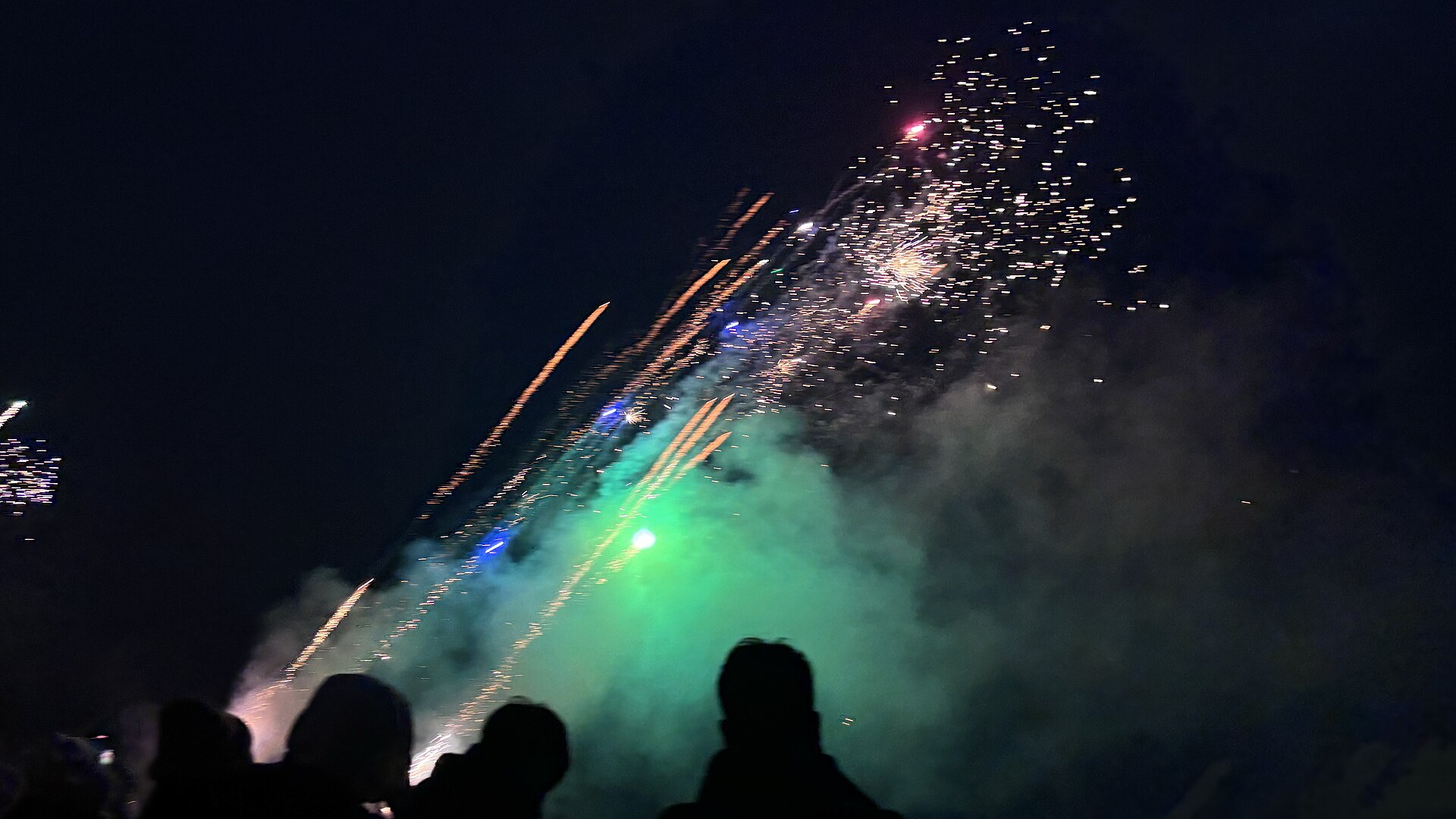
Gunpowder is commonly counted among the Four Great Inventions of China, and its invention is placed in the late Tang dynasty in the 9th century; the Chinese called it huoyao, meaning fire medicine. The Chinese had unintentionally invented firecrackers around 200 BC by tossing bamboo into fire. When the powder was packed into bamboo or paper tubes and lit on fire, history had its first fireworks.
3. Military Adoption in China
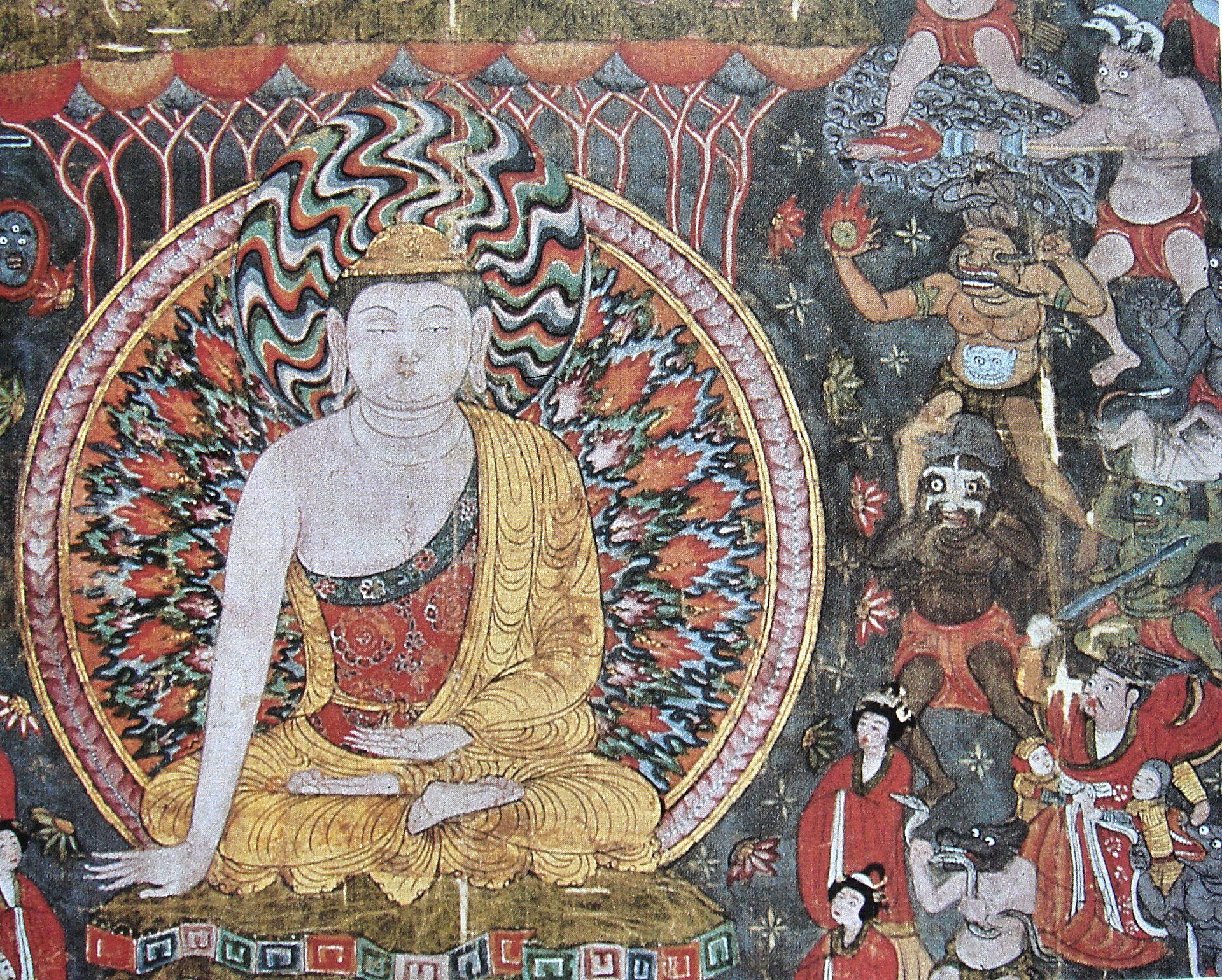
Gunpowder entered warfare first as an incendiary compound rather than a propellant. Small packages of it, wrapped in paper or bamboo, were fastened to arrows and lit with a fuse, while bombs combining gunpowder with scrap iron were launched from catapults. A further device, the fire-spurting lance, used bamboo or metal tubes to direct the burning mixture. The earliest surviving chemical formula appears in the Wujing Zongyao, the Song military manual of 1044, which records the first true gunpowder formula and describes its large-scale production. Song military engineers went on to develop early rockets, cannons, bombs, and mines.
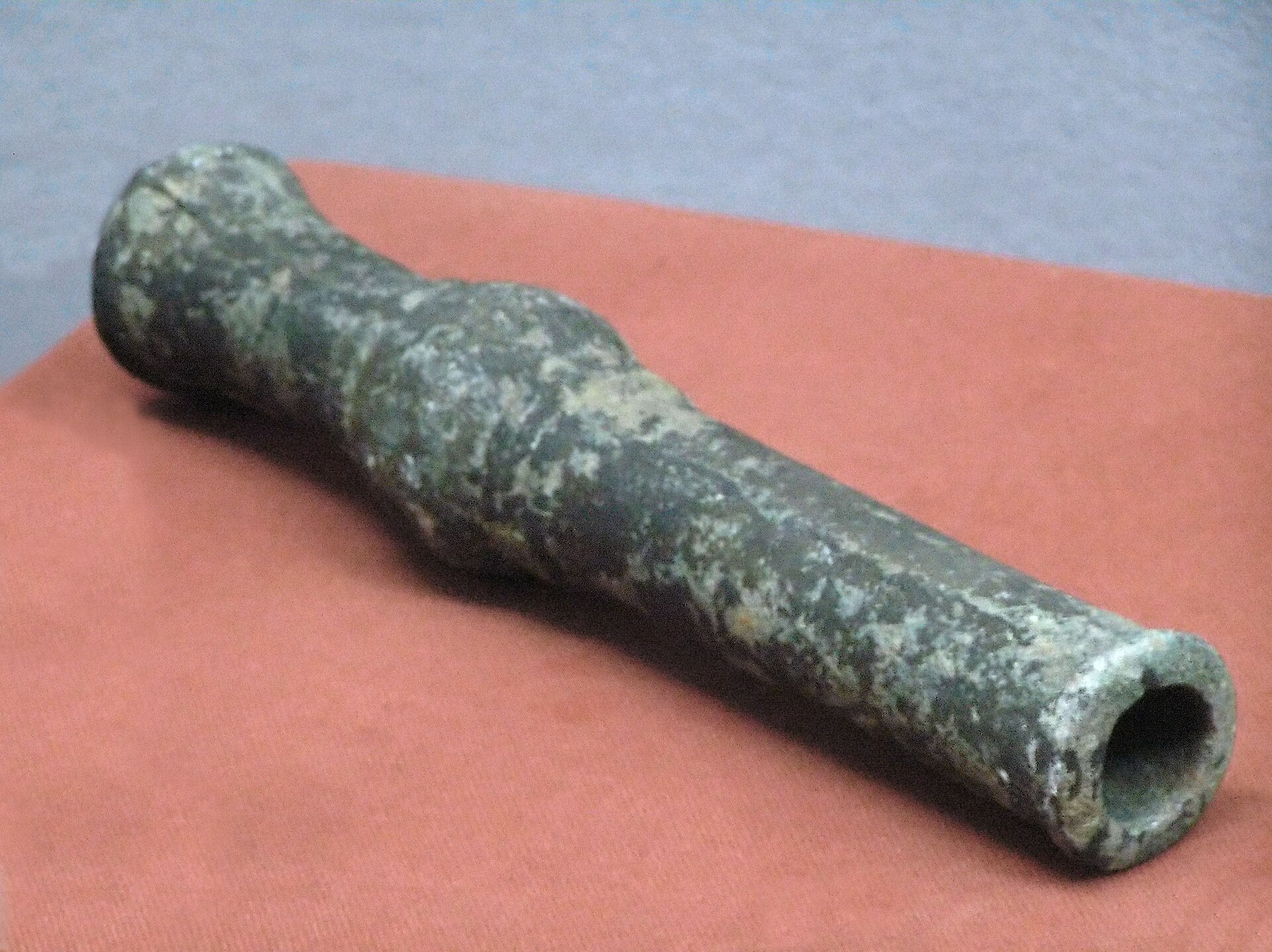
The first recorded military use of gunpowder came as fire arrows at the siege of Yuzhang in 904. The fire lance is first confirmed at the siege of De'an in 1132, in modern Hubei. Between the 10th and 12th centuries the huo qiang emerged as a short-range proto-gun that channeled explosive power through a cylinder, initially a bamboo tube. By the late 13th century, true guns were being made of cast brass or iron.
4. Spread Across Eurasia
Knowledge of gunpowder travelled quickly across Eurasia, carried in part by the Mongol conquests of the thirteenth century. The Mongols were ready adopters of new military technology, and they captured Chinese engineers and gunners to secure the skills they needed. Chinese and Mongol forces alike made extensive use of gunpowder weapons during that century. In the Muslim world the formula was acquired between 1240 and 1280, the period in which Hasan al-Rammah set down Arabic recipes and instructions for purifying saltpetre.
The earliest European reference appears in Roger Bacon's Opus Majus of 1267, which mentions a firecracker toy found in various parts of the world. Guns had reached the West by 1304, when the Arabs produced a bamboo tube reinforced with iron to shoot an arrow. The earliest known European depiction of a gun follows in a manuscript associated with Walter de Milemete in 1326.
5. Artillery and the Transformation of War
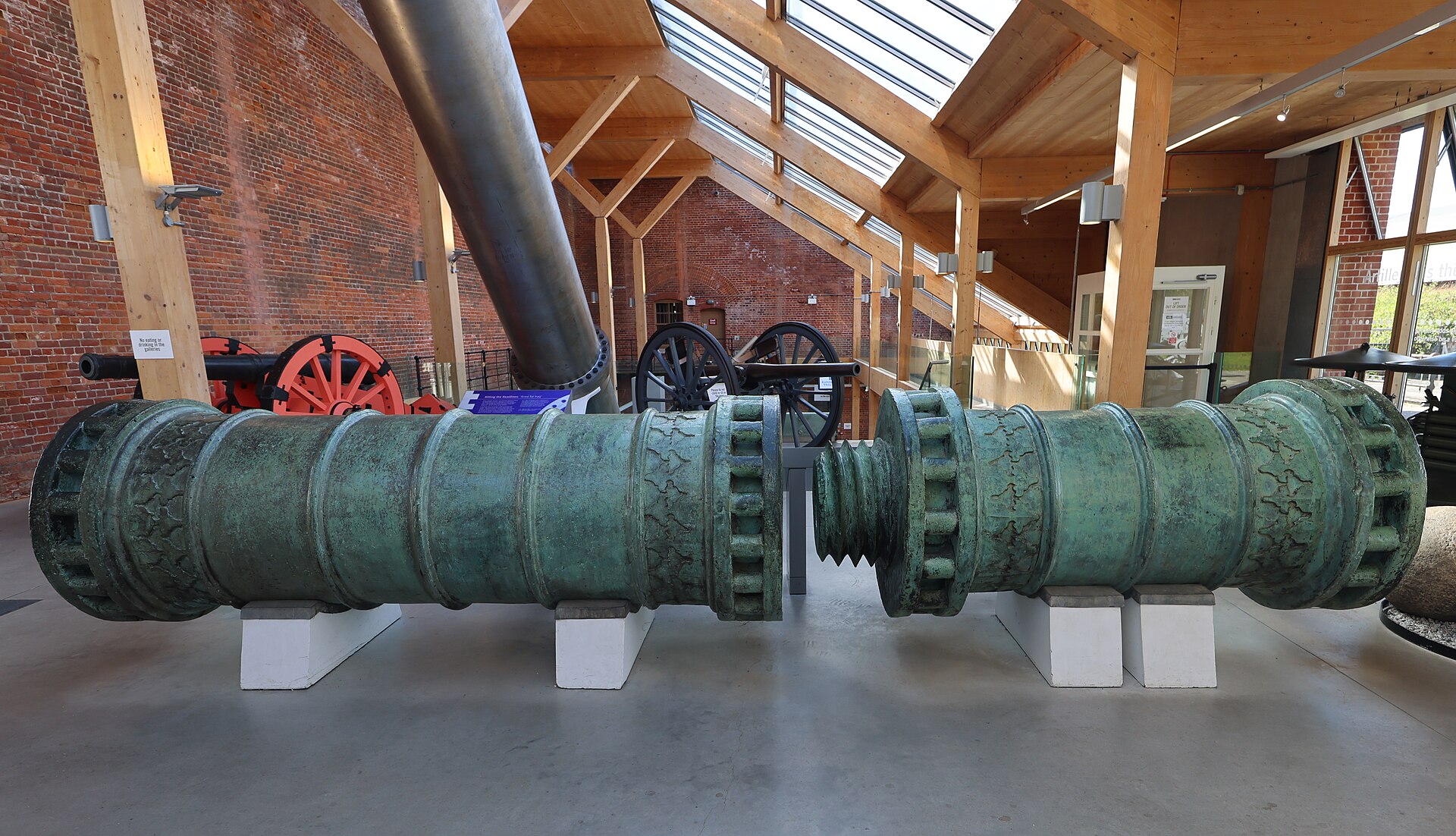
During the 15th century, guns evolved into large artillery pieces known as bombards, a development pioneered by states such as the Duchy of Burgundy. Cannons had been in use from the 13th century, dangerous and inaccurate at first but dramatically improved by the 15th century. Two brass cannons were cast in Florence in 1326, and the Tower of London possessed cannons in 1338. The first recorded European battle where cannons were used was the Battle of Crecy in 1346 CE, where they helped the English defeat a larger French and Genovese army. One of the largest cannons produced was Mons Meg, made for James II of Scotland in 1449 CE, which could fire stone balls weighing 180 kilos over a distance of around 250 metres.
The Ottoman artillery at Constantinople demonstrated the new power of the bombard. The army of Mehmed II fielded 62 cannons in 1453, the largest so mammoth it could be fired only seven times a day. The Hungarian engineer Urban offered his cannons first to the Byzantines before selling his expertise to the Sultan. The Theodosian Walls were blasted into rubble and the city was conquered on 29 May 1453. From the 15th century, cast iron balls came into use, and when batteries of huge cannons firing balls weighing over 100 kilos came into wider use in the 15th century CE, the days of static siege warfare effectively came to an end. In response, walls were thickened and heightened, and defenders' windows were altered.
The broader military transformation saw gunpowder-projected missiles become the norm, ending the knight's and bowmen's domination of the medieval battlefield. The star fort or bastion fort, popular in Europe during the 16th century, was a response to artillery. Small handheld cannons weighing up to 15 kilos were used from the 14th century, probably introduced by Arab armies. More accurate handguns known as arquebus or hackbut appeared from the 15th century, and matchlock, wheel lock and flintlock weapons were developed in Europe.
6. Industrial Production
Grinding the ingredients became a mechanized operation when water-driven wooden stamp mills came into use beginning in the 15th century; these were in turn replaced by power-driven metallic crushing devices in the 19th century. Black powder served as a useful explosive for breaking up coal and rock deposits until the early 20th century, when dynamite gradually replaced it for most mining purposes.
Sicilian sulfur found uses in vineyard pest control and in gunpowder, helping exports increase about sixfold between 1840 and 1900 and beyond.
7. The Gunpowder Plot
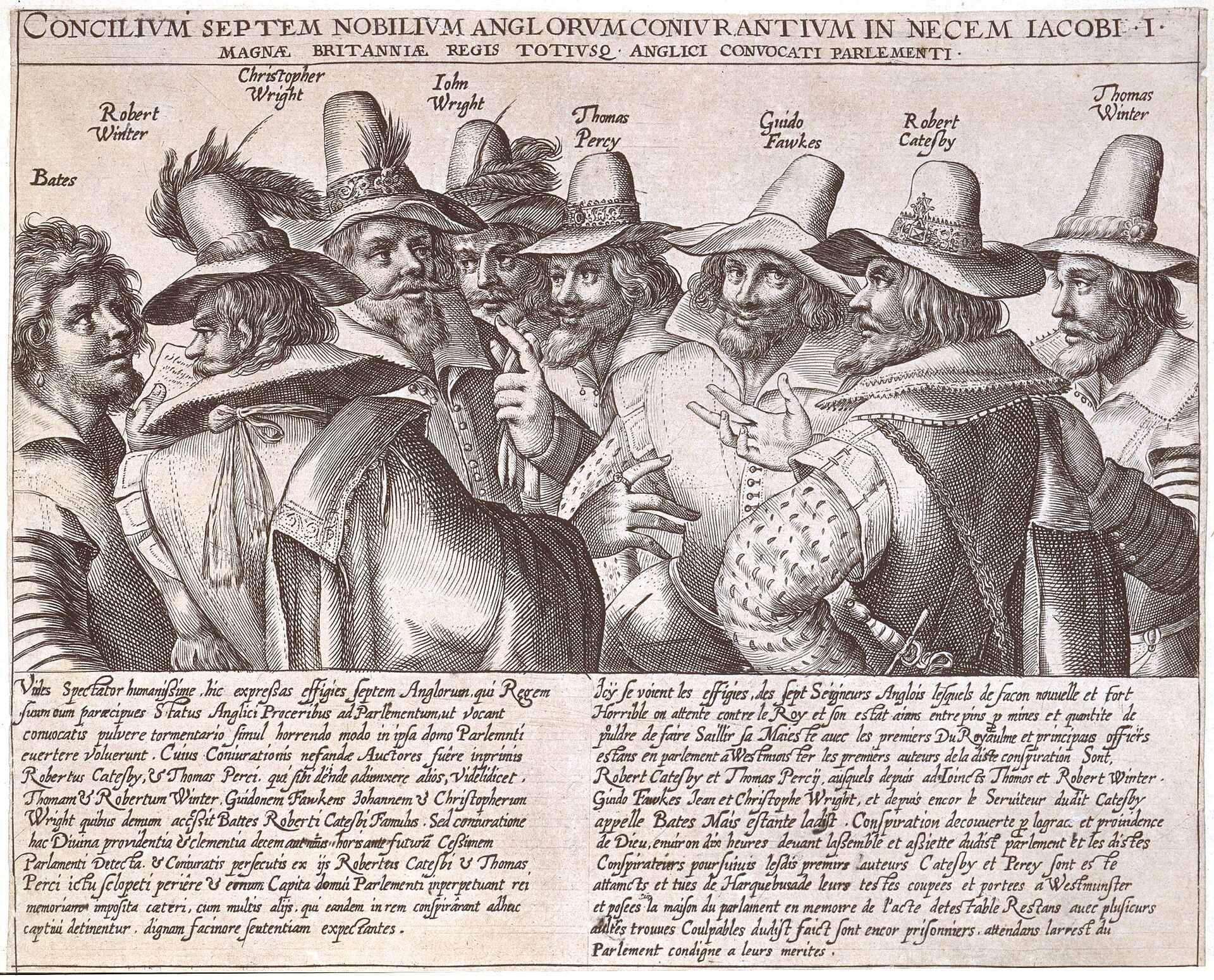
The plot was organized by Robert Catesby to end the persecution of Roman Catholics by the English government, intending to blow up the entire English Parliament at the state opening of 1605 and kill King James I. The conspirators believed that in the chaos of an incinerated House of Parliament they could replace the dead King James with his daughter, the nine-year-old Princess Elizabeth. Around midnight on 4 November 1605 one of the conspirators, Guy Fawkes, was discovered in the cellar of the Parliament building with barrels of gunpowder.
Fawkes died on 31 January 1606 when he jumped from a ladder while climbing to the gallows and broke his neck. Parliament established November 5 as a day of public thanksgiving in 1606, and the first celebration of Gunpowder Treason Day followed in November 1606, a custom that continued. The authorities encouraged bonfires on the evening of the 5th of November, starting a tradition that continues. A tradition that originated from the Gunpowder Plot is the ceremonial search of the Palace of Westminster by the Yeomen of the Guard before the State Opening of Parliament.
8. Cultural and Literary Impact
Gunpowder irrevocably changed warfare in Europe during the sixteenth century, but literature lagged behind. Face-to-face combat between knights became obsolete, yet nostalgia for that older mode of fighting held on in writing. Gunpowder culture meant shot, cannons, muskets, harquebusiers, a turn to siege warfare, massed infantry tactics, and a radically different sort of naval battle. Even jousting carried on as the wheel-lock pistol made actual cavalry charges suicidal.
Gunpowder, together with paper, printing, and the compass, became familiar in Europe. Paper and gunpowder, both Chinese inventions, had a much greater impact on culture than silk. The nation-states with access to gunpowder had obvious advantages in war, and the export of gunpowder had an enormous impact on the political history of Europe.
9. Timeline of Key Dates
-
c. 200 BCFirecrackers from bambooBamboo thrown into fire produced the earliest firecrackers.
-
808Earliest recorded formulaThe earliest recorded gunpowder formula appears in a Daoist text.
-
904Fire arrows at YuzhangFire arrows were used at the siege of Yuzhang.
-
1044Wujing ZongyaoThe Wujing Zongyao records gunpowder formulas.
-
1132Fire lance at De'anA fire lance was used at the siege of De'an.
-
1240–1280Hasan al-Rammah's treatiseWritten formulas appeared in the Middle East in a treatise by Hasan al-Rammah. 8History of gunpowder · Wikipedia ↗
-
1267Roger Bacon's Opus MajusThe earliest European references to gunpowder appear in Roger Bacon's Opus Majus, which mentions a firecracker toy found in various parts of the world. 8
-
1326Walter de Milemete manuscript and Florence cannonsThe Walter de Milemete manuscript depicts a cannon, and two brass cannons were being cast in Florence. 9Artillery in Medieval Europe · World History Encyclopedia ↗
-
1338Tower of London cannonsThe Tower of London had its own cannons. 9
-
1346Battle of CrecyGunpowder weapons were used at the Battle of Crecy.
-
1449Mons MegMons Meg, a large bombard, was built.
-
1453Ottoman cannons at ConstantinopleOttoman cannons were used at the siege of Constantinople.
-
1605Gunpowder PlotThe Gunpowder Plot attempted to blow up the Houses of Parliament.
-
1662Waltham Abbey millsThe Waltham Abbey mills were first recorded.
-
1787Crown purchase of Waltham AbbeyThe Crown purchased the Waltham Abbey mills.
-
1816Britain's Sicilian sulfur treatyBritain secured a treaty for Sicilian sulfur.
10. Timeline: from Tang-dynasty alchemy to smokeless powder
- 808Earliest gunpowder formula recordedA Daoist text, the Taishang Shengzu Jindan Mijue, records a formula of six parts sulfur, six parts saltpetre and one part birthwort herb — the first known reference to what can be considered gunpowder.
- c. 850Tang alchemists stumble on gunpowderSeeking an elixir of life, alchemists in China mix potassium nitrate, sulfur and charcoal, discovering the explosive properties of the mixture by accident.
- 904First recorded military useAt the siege of Yuzhang, forces of the Southern Wu use fire arrows — arrows carrying packages of gunpowder — in warfare for the first recorded time.
- 1044Wujing Zongyao records gunpowder formulasThe Song military manual records the earliest surviving chemical formula for gunpowder and describes how to produce it on a large scale.
- 1132Fire lance first used in battleSong forces employ the fire lance — a bamboo tube that spews flame and projectiles — against the Jin at the siege of De'an in modern Hubei.
- 1233Mongols take Kaifeng after a siegeKaifeng, capital of the Jurchen Jin state, falls after a lengthy siege by the Mongols in a campaign fought with gunpowder weapons.
- 1240-1280Arabic recipes for gunpowderHasan al-Rammah writes in Arabic recipes for gunpowder and instructions for purifying saltpetre, evidence that the formula reached the Muslim world after 1240.
- 1267Roger Bacon describes gunpowder in EuropeThe earliest European reference to gunpowder appears in Roger Bacon's Opus Majus, which mentions a firecracker toy found in various parts of the world.
- 1287-1288Hand cannons in Mongol serviceSoldiers under the Jurchen commander Li Ting use hand cannons against a rebel prince, and the Heilongjiang hand cannon — the earliest surviving gun — is dated to about this time.
- 1304Guns appear in the WestThe Arabs produce a bamboo tube reinforced with iron that uses a charge of black powder to shoot an arrow, the first appearance of a gun in the West.
- 1326First European cannon depictionsTwo brass cannons are cast in Florence and the earliest depiction of gunpowder artillery in European literature appears in an English manuscript.
- 1346Cannons at the Battle of CrecyThe first recorded European battle where cannons were used was Crecy, where they helped the English defeat a larger French and Genovese army.
- 29 May 1453Constantinople falls to Ottoman artilleryMehmed II's cannons, including a colossal piece that could be fired only seven times a day, blast the Theodosian Walls and the city is captured.
- 4-5 November 1605The Gunpowder Plot is foiledGuy Fawkes is found beneath the Palace of Westminster with 36 barrels of gunpowder meant to blow up King James I and the assembled Parliament.
- 1662First gunpowder mills at Waltham AbbeyThe first gunpowder mills on the Millhead stream at Waltham Abbey are recorded, on the site of older water-driven flour mills.
- 1860sBlack powder gives way to nitrocelluloseGuncotton and other, more stable forms of nitrocellulose begin to supplant black powder for use in firearms, leading to smokeless powder.
References (15)
- 1Gunpowder | Facts, History, & Definition — Encyclopaedia Britannica WebView source
- 2The Evolution of Fireworks — Smithsonian Science Education Center WebView source
- 3How Sicilian Sulfur Fueled the Industrial Revolution — JSTOR Daily JournalView source
- 4The Gunpowder Plot, Redux — JSTOR Daily JournalView source
- 5Gunpowder Plot — HISTORY (A&E Television Networks) WebView source
- 6Chivalric Romance, Meet Gunpowder Reality — JSTOR Daily JournalView source
- 7Silk Road — HISTORY (A&E Television Networks) WebView source
- 8History of gunpowder — Wikipedia Web↩View source
- 9Artillery in Medieval Europe — World History Encyclopedia Web↩View source
- 10Gunpowder (Song Dynasty China) — Asia for Educators, Columbia University WebView source
- 11The Gunpowder Plot (teaching resource) — The National Archives (UK) WebView source
- 12An Explosive History (Royal Gunpowder Mills, Waltham Abbey) — Royal Gunpowder Mills Charitable Foundation WebView source
- 13Firearms — HISTORY (A&E Television Networks) WebView source
- 14Mongol Empire — World History Encyclopedia WebView source
- 151453: The Fall of Constantinople — World History Encyclopedia WebView source
 Marco Polo
 Airplane

