Airplane
The invention, technology, and global impact of the airplane — from the Wright brothers' first powered flight through the jet age to the modern airliner.
The airplane is a fixed-wing aircraft heavier than air, propelled by a propeller or jet and supported by the dynamic reaction of the air on its wings. Wilbur and Orville Wright achieved the first powered, sustained, and controlled flight on December 17, 1903 at Kitty Hawk, North Carolina, and their method of wind-tunnel research and flight testing founded modern aeronautical engineering. Aviation then grew from open-cockpit machines to jet airliners that today carry billions of passengers a year and support a large share of world trade.
In this article
Definition and Fundamental Principles
An airplane is a fixed-wing aircraft heavier than air, propelled by a propeller or a jet and supported by the dynamic reaction of air on its wings. In straight-and-level unaccelerated flight, four forces act on such an aircraft: lift, an upward-acting force; drag, a retarding force of resistance to lift and friction; weight, the downward effect of gravity; and thrust, the forward-acting force.
Lift arises from the behaviour of air moving over the wing's airfoil: the flow over the curved top surface moves faster than the flow beneath, decreasing the pressure on top, so that the higher pressure from below pushes the wing up. Air deflected downward adds an equal and opposite reaction. Formally, lift is the component of the net aerodynamic force perpendicular to the flow direction, and drag is the component along the flow direction. This net force acts through the average location of the pressure variation, known as the center of pressure.
Thrust is obtained by accelerating a mass of ambient air to a velocity greater than the speed of the aircraft, with the equal and opposite reaction moving the aircraft forward. In a jet engine, rotating turbine blades compress air that is then expanded by combustion and exhausted. The speed at which compressibility affects an aircraft is expressed as a ratio of the speed of the aircraft to the speed of sound, called the Mach number in honour of the physicist Ernst Mach; the critical Mach number is that at which airflow first reaches sound speed somewhere on the aircraft. Independent studies in Germany and the United States showed that sweeping the wings back delayed the critical Mach number, a change central to the Messerschmitt Me 262 — the first operational jet fighter — and to postwar fighters such as the North American F-86 Sabre and the Soviet MiG-15 fighter.
1. Aircraft Components and Control
The wings are the airplane's principal lift-generating surfaces, and on turbine-powered aircraft the engines are mounted beneath them to supply thrust. Many modern airliners carry winglets at the wingtips, small vertical extensions that reduce drag.
Stability about the other two axes is provided by the tail surfaces: the vertical stabilizer keeps the nose from swinging side to side, a motion called yaw, while the horizontal stabilizer prevents the up-and-down motion of the nose known as pitch. On the Wright brothers' first aircraft, the horizontal stabilizer was positioned in front of the wings rather than behind them.
Each stabilizer carries a hinged control surface. The hinged portion of the vertical stabilizer is the rudder, the hinged portion of the horizontal stabilizer is the elevator, and the outboard hinged section of the wing is the aileron, which rolls the wings from side to side.
High-lift devices modify the wing's behavior at low speed: flaps and slats increase the force produced by the wing during takeoff and landing. Spoilers work in the opposite direction, disrupting the flow of air over the wing to decrease lift and slow the airplane.
2. The Wright Brothers and the First Powered Flight
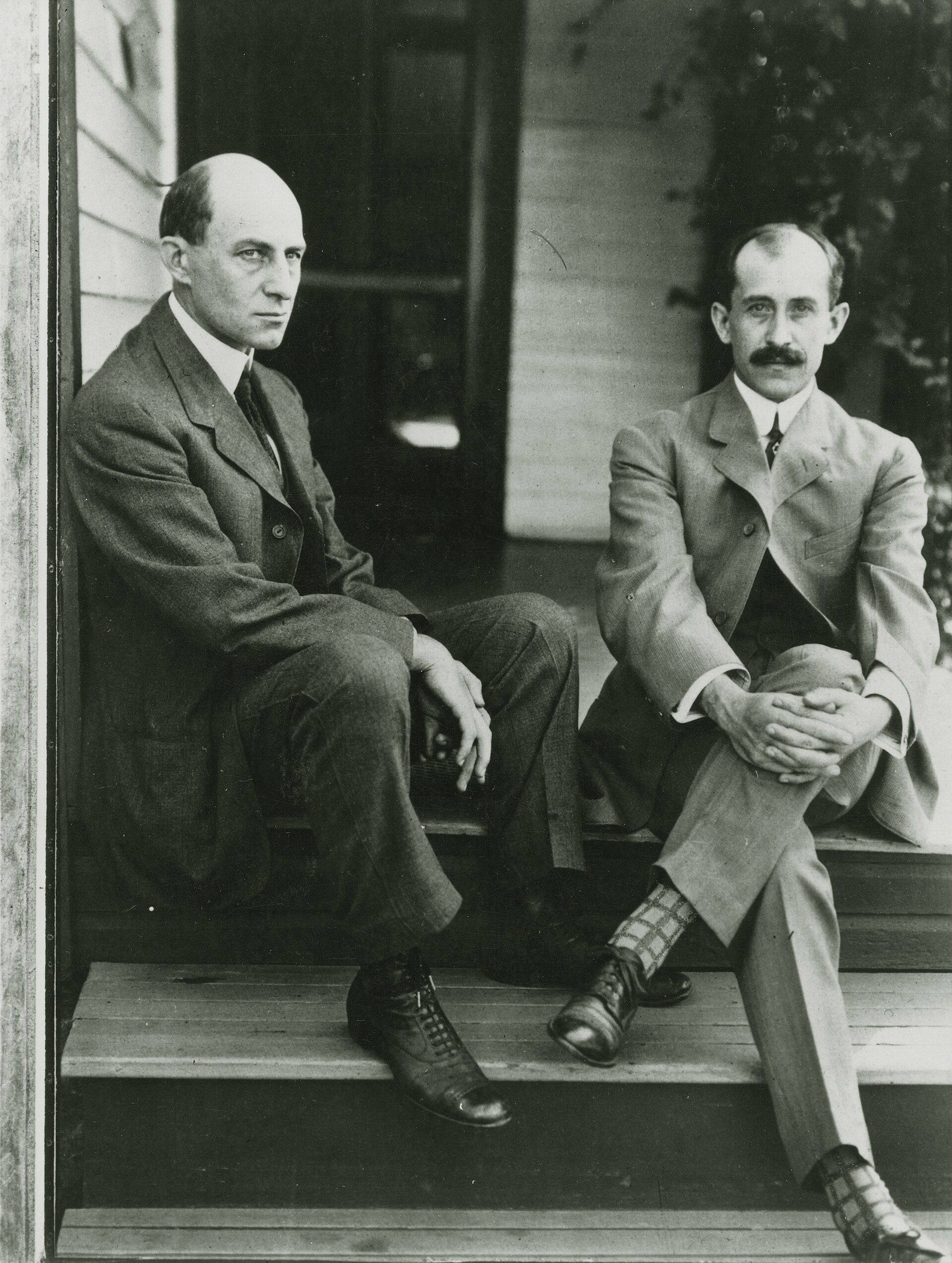
On 30 May 1899 Wilbur Wright wrote to the Smithsonian declaring his belief that human flight was possible and asking for publications that could help his research. That letter opened a program of inquiry that the brothers pursued together, and by the evening of 18 September 1901 Wilbur, a 33-year-old businessman from Dayton, Ohio, was addressing a group of Chicago engineers on the aeronautical experiments he had conducted with his brother Orville over the previous two years. Their work was documented as it proceeded: by 1902 the brothers were using a Korona-V camera made by the Gundlach Optical Company, one of the best cameras on the market, to record their flight research.
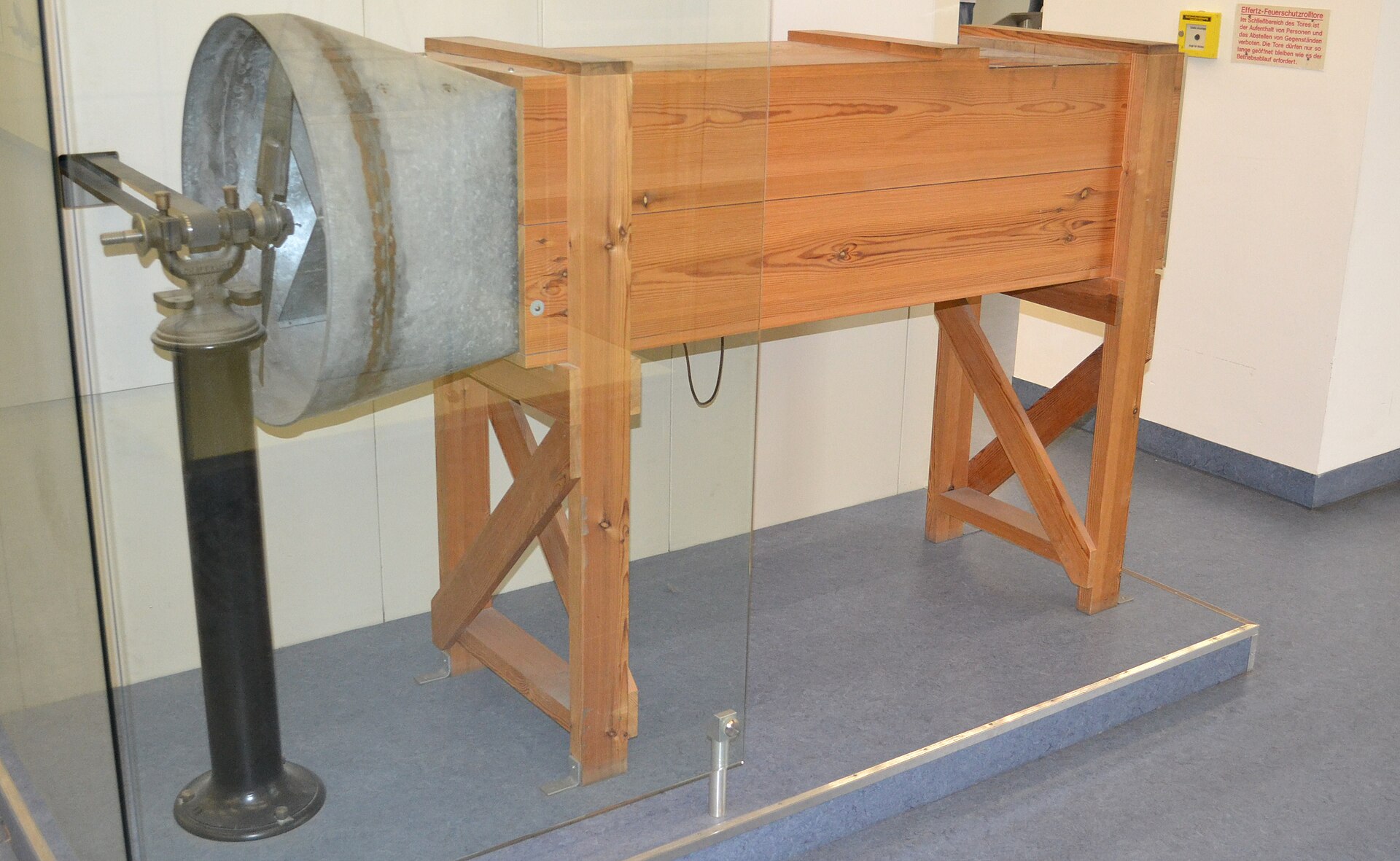
Following Sir George Cayley, the Wrights reduced the obstacles to flight to three categories: wings, power, and balancing and control. Their earliest instrument in this program was a five-foot wingspan biplane kite of 1899, which combined wing-warping with the structural design of Octave Chanute and Augustus Herring's 1896 glider. To settle questions the existing literature could not answer, they built a wind tunnel, the first used to generate specific data for aircraft design; in it they tested dozens of wing shapes and recorded formal data on nearly 50, selecting the most effective wing. They also calculated Smeaton's coefficient at 0.0033, a figure modern aerodynamicists have confirmed as very accurate.
The 1902 glider was the first fully controllable aircraft, with pitch, roll, and yaw control, and that three-axis control system was the brothers' most important design breakthrough. The glider carried a movable vertical tail, and in 1902 the Wrights made between seven hundred and one thousand flights, the best of them covering 191.5 meters in twenty-six seconds. Through over a thousand glides from Big Kill Devil Hill they made themselves the first true pilots, and those flying skills were a crucial component of their invention.
For propulsion they turned to a twelve-horsepower gasoline engine built with their mechanic Charlie Taylor, whose crankcase was of aluminum — the first use of that lightweight material in airplane construction. Their propellers were conceived innovatively as rotary wings producing thrust aerodynamically. The resulting 1903 Flyer was a canard biplane with one 12-horsepower four-cylinder engine driving two pusher propellers through sprocket-and-chain transmission, and with non-wheeled linear skids as landing gear. The 1903 Flyer's wings spanned 12.3 m (40 ft 4 in), and the machine weighed 274 kg (605 lb) empty and 341 kg (750 lb) loaded. Because the powered airplane was too heavy for hand launching, the brothers built a 60-foot wooden launching rail on which it rode on a small wheeled dolly for take-off.
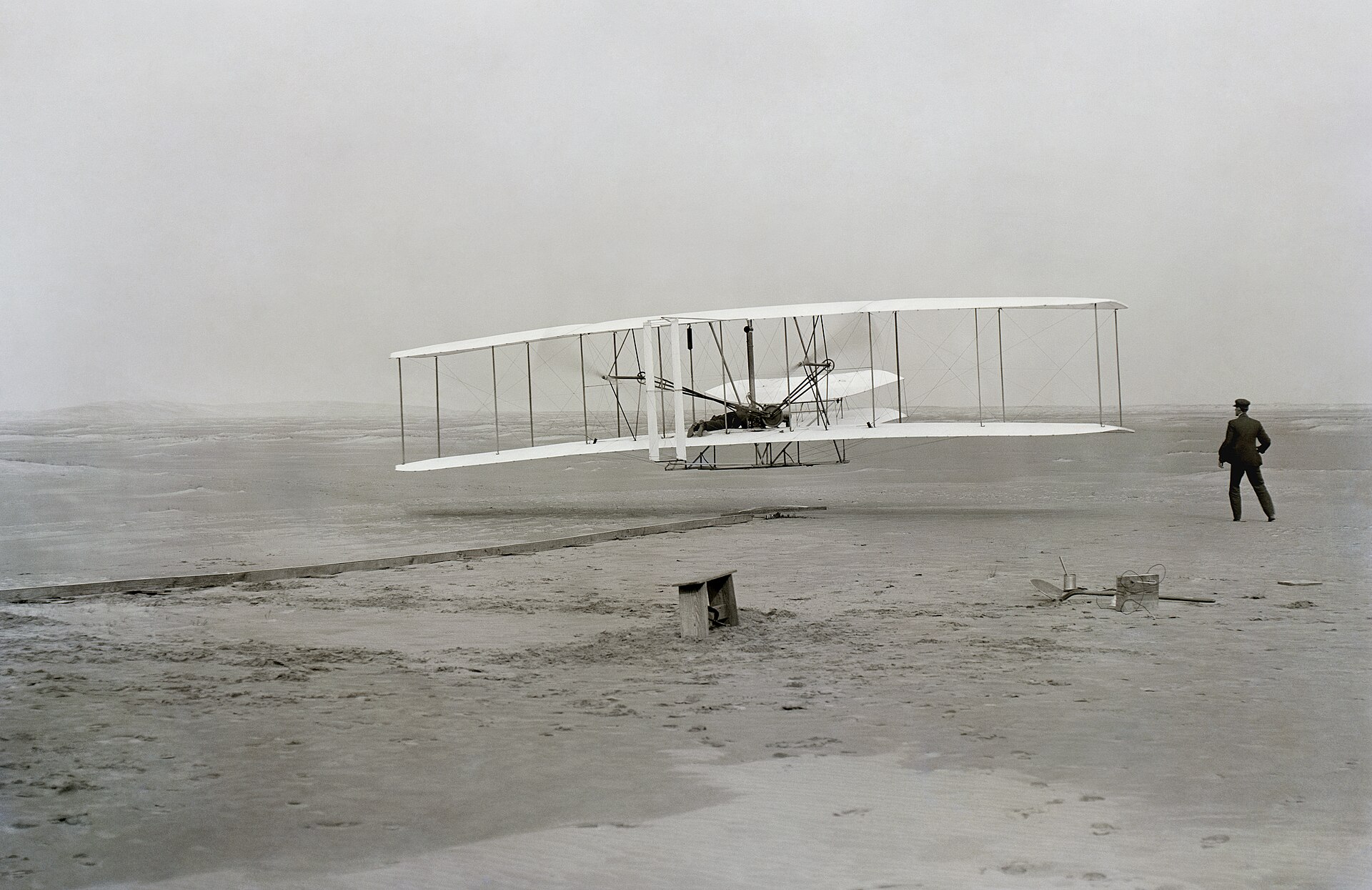
The brothers tossed a coin to decide who would fly first; Wilbur won, but his attempt on 14 December 1903 stalled and dove into the sand, so the first flight waited on repairs.8 mph and a total airspeed of 34 mph. Flying into a 24- to 27-mph headwind, Orville covered only 120 feet over the ground, but the true distance through the air was calculated at 540 feet, well beyond the 300 feet the brothers considered a sustained flight.
The telegram announcing the flights contained two errors: Orville's name was misspelled and the time of the longest flight was given as fifty-seven instead of fifty-nine seconds. In his diary Orville described how the wind-tossed machine nearly killed John T. Daniels, who had become tangled in its engine and chains. The best flight of that day lasted 59 seconds and covered 255.6 m (852 ft), with Wilbur piloting.
On 5 October 1905 Wilbur made a 39-minute flight covering 39.2 km (24.5 miles) over a closed course. At the start of the 20th century the Wright brothers demonstrated that the basic technical problems of heavier-than-air flight had been overcome, and military and civil aviation developed quickly afterward.
The 1909 Wright Military Flyer became the world's first military airplane, purchased by the U.S. Army for $30,000 after trials at Fort Myer.
3. Development and Patent
The 1905 Wright Flyer III is recognized as the world's first airplane capable of sustained, maneuverable flight. It featured a stronger structure, a larger engine, and greater control-surface area than its predecessors.
The Flyer III incorporated a dual canard elevator, dual pusher propellers, and a dual vertical tail. Its engine was designed by the Wrights and built by Charlie Taylor.
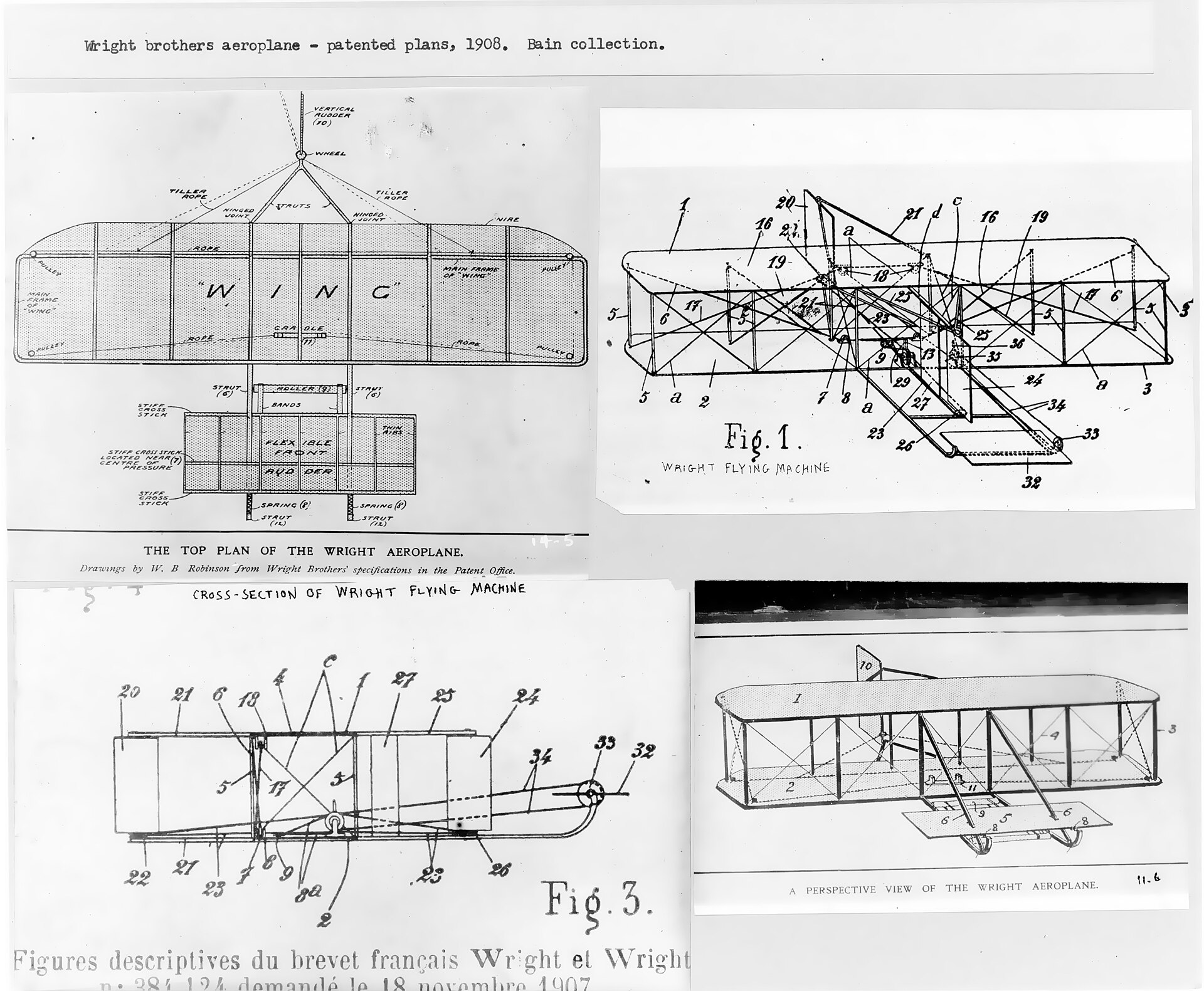
Patent US 821,393 was filed on 23 March 1903 and granted on 22 May 1906, naming Orville and Wilbur Wright as inventors.
The Wrights pursued patent infringement suits in the United States and Europe against aviators including Louis Paulhan and Claude Grahame-White.
During their flying hiatus of 1906 to 1907, while negotiating sales, the Wrights let no one witness a flight until a signed contract was in place. Aeronautical activity picked up as rivals entered the field.
The public flights of 1908 in Europe and America brought the invention to the masses.
4. Propulsion: From Pistons to Jets
The gas turbine, or jet, engine was developed independently in Germany and England during World War II. Unlike a rocket, it draws the oxygen it needs from the surrounding air, and for that reason it cannot operate in outer space.
Most modern high-speed passenger aircraft and military aircraft are powered by gas turbine engines, in which accelerated jet exhaust serves as the working fluid.
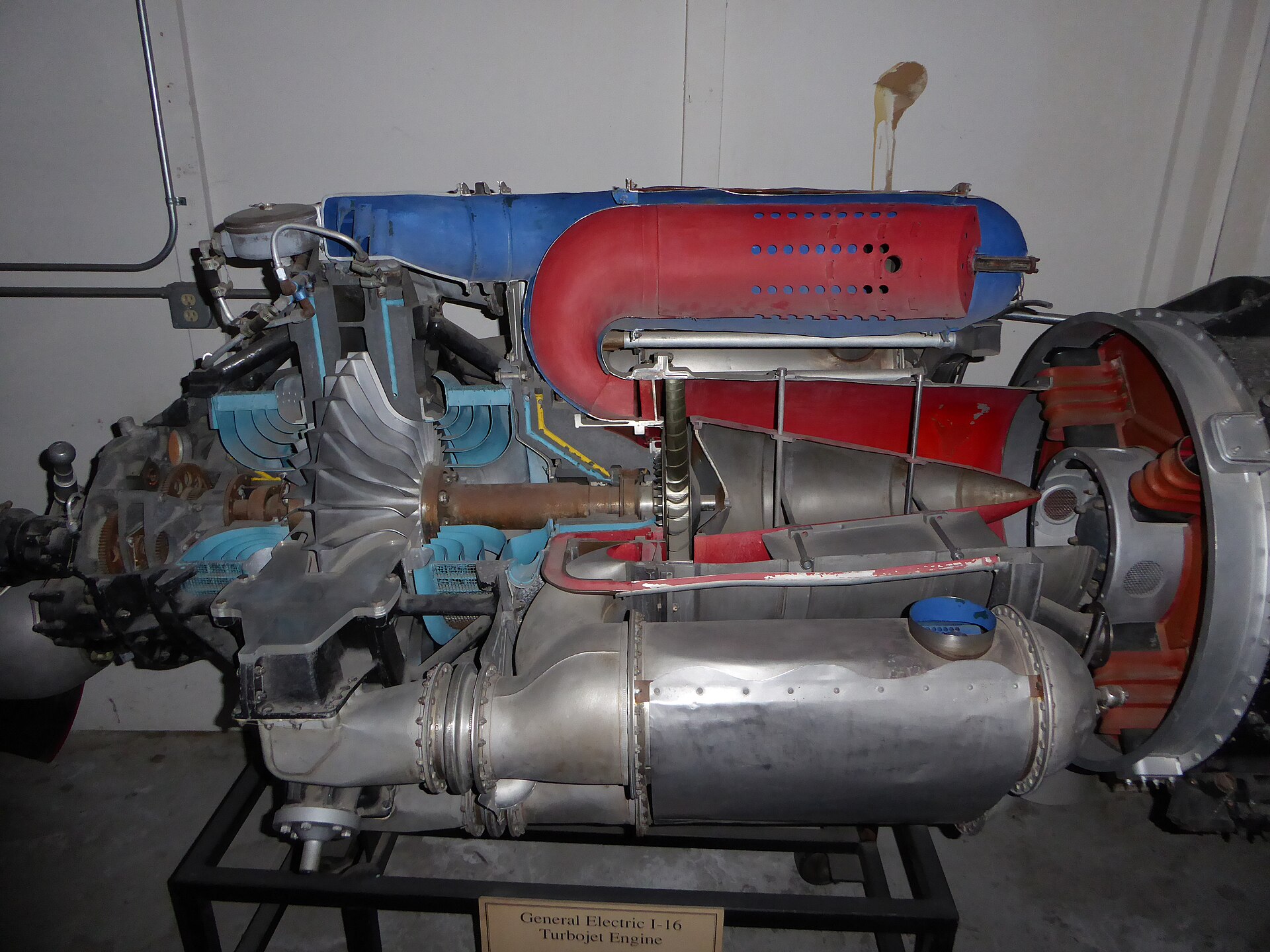
Frank Whittle conceived the idea of a jet engine in 1928 and had a laboratory demonstration working by 1937. The Royal Air Force flew its first jet aircraft, the Gloster E.28/39 prototype, in 1941.
Hans von Ohain beat the English to the achievement in 1939 with the He-178 experimental model.
Early jet aircraft, used principally as fighters, offered a tremendous speed advantage but suffered from limited range and difficult handling. Though too few in number to affect the war, they redirected the course of military and commercial aviation development.
The turboprop engine, invented around 1938 and first used in 1950 for commercial aircraft, drives a conventional propeller and suits helicopters and slower aircraft such as cargo transports.
The turbofan, first used in 1960, combines features of propeller-driven aircraft and pure turbojets, and is now found on most commercial airliners and military fighters.
The first ramjet-based missile was the German V1 of World War II, which used a pulse jet that burned fuel in short spurts.
5. The Jet Age and Commercial Aviation
Lindbergh took off for Paris alone on the morning of 20 May 1927 and, 33 hours and 30 minutes and 3,610 miles later, landed at Le Bourget Field near Paris, greeted by a wildly enthusiastic crowd. On 14 October 1947 the Bell X-1 became the first airplane to fly faster than the speed of sound, piloted by U.S. The British Overseas Aircraft Corporation introduced the first commercial jet service in 1952 with the 36-seat Comet, which flew at 480 miles per hour.
The Boeing 707-120 first flew on 20 December 1957. Its wing span measured 130 feet 10 inches, and its gross weight reached 248,000 pounds. The aircraft cruised at 600 mph and could accommodate up to 181 passengers.
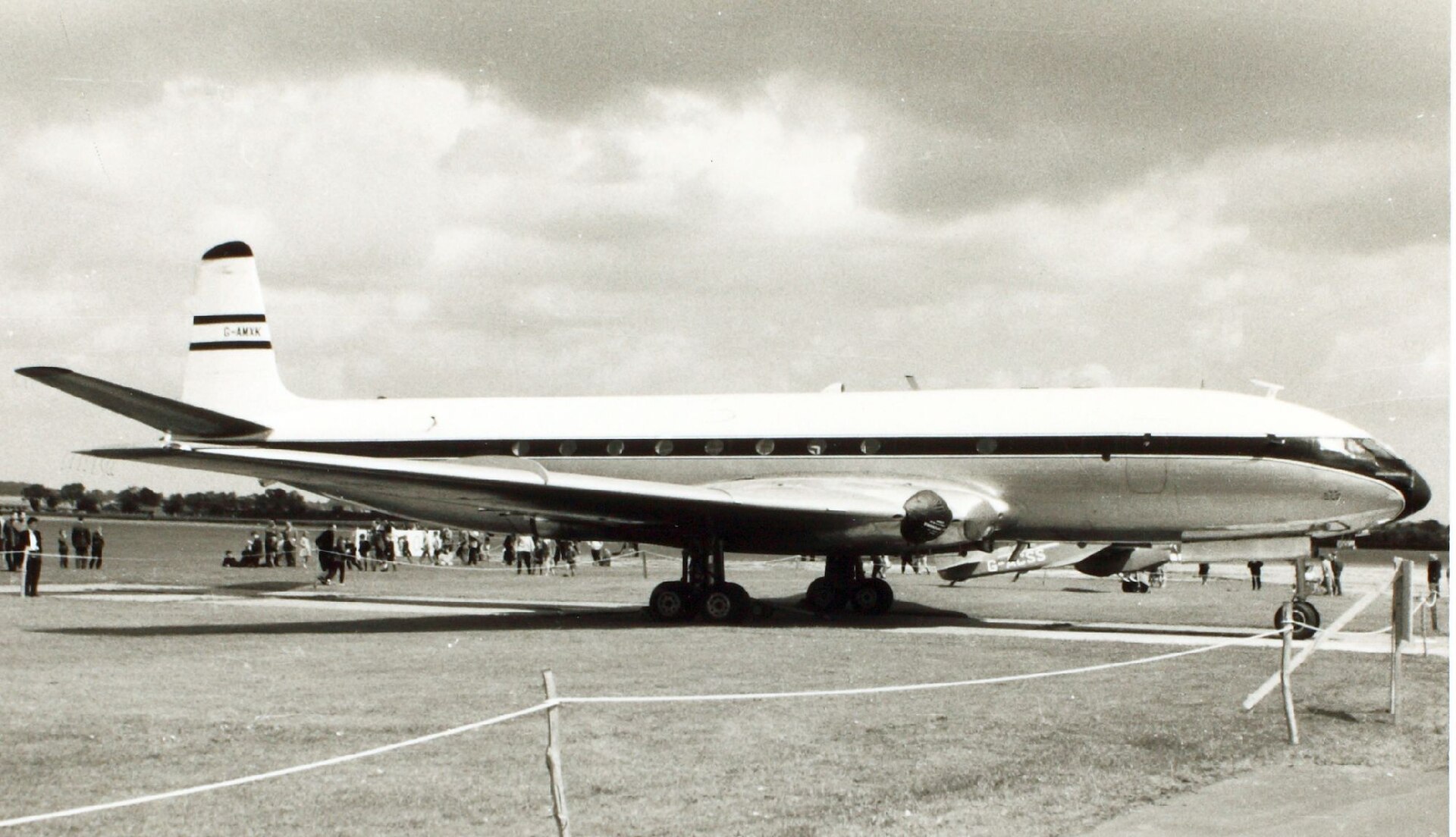
In just two years the 707 helped change world travel, with air travel eclipsing rail and sea.
Boeing delivered 856 Model 707s in all versions between 1957 and 1994, of which 725 were for commercial use.
The Boeing 747-100 and 747-200 had a span of 195 feet 8 inches and a gross weight of 735,000 pounds. They cruised at 640 mph and carried between 374 and 490 passengers.
The 747 was built by some 50,000 Boeing people in roughly 16 months and was the largest civilian airplane in the world.
Its first commercial flight carried passengers from New York to London for Pan American World Airways.
The Boeing 787-8 Dreamliner accommodates 210 to 250 passengers and has a range of 7,650 to 8,200 nautical miles.
The 787 was the fastest selling wide-body airplane in history.
The Boeing Model 247 was the first modern airliner: a low-wing two-engine monoplane with all-metal semimonocoque construction and retractable landing gear.
Regulatory milestones shaped the industry. The Air Mail Act of 1925 facilitated the commercial airline industry and Pan American Airways scheduled service, while the Air Commerce Act of 1926 charged the Secretary of Commerce with fostering air commerce, issuing air traffic rules, licensing pilots, and certifying aircraft. The Civil Aeronautics Act of 1938, signed by President Franklin Roosevelt, established the independent Civil Aeronautics Authority with a three-member Air Safety Board. The Airline Deregulation Act, signed 24 October 1978, created a highly competitive industry.
The Chicago Conference of 1944 gave birth to the Chicago Convention, but who flies where was resolved on a bilateral basis. The Bermuda Agreement of 1946 between the United States and Britain was the first of almost 4,000 bilateral air transport agreements registered with ICAO.
The first worldwide IATA Traffic Conference, held in Rio de Janeiro in 1947, reached unanimous agreement on nearly 400 resolutions covering all aspects of air travel.
The IATA Clearing House began operations in January 1947; during its first year, 17 airlines cleared US $26 million.
Technical innovation drove the growth of air travel: turbo-propeller aircraft in the early 1950s, transatlantic jets in 1958, and wide-bodied aircraft with high by-pass engines from 1970 onward lowered real fares and helped produce an explosion in demand.
Until 1955 there was a complete embargo on air transport of toxic, flammable, or corrosive materials; IATA then developed its Dangerous Goods Regulations.
The aviation industry supports 86.5 million jobs around the world, and aviation accounts for about a third of world trade by value. Aviation supports US $4.1 trillion, about 3.9 percent, of the world's gross domestic product; if aviation were a country it would rank twentieth in size by GDP.
6. Timeline: from the first powered flight to the Dreamliner
- December 17, 1903First powered flightAt 10:35 a.m. Orville Wright flew the Wright Flyer about 120 feet in 12 seconds at Kitty Hawk, North Carolina; Wilbur flew the best flight of the day, 852 feet in 59 seconds.
- October 5, 1905The first practical airplaneWith their third powered airplane, the Wright Flyer III, Wilbur circled the field 30 times in 39 minutes for a total distance of 24½ miles, earning the machine recognition as the world's first airplane capable of sustained, maneuverable flight.
- May 22, 1906Flying-machine patent grantedThe U.S. Patent Office granted patent US 821,393, filed on March 23, 1903, to Orville and Wilbur Wright for their flying machine.
- 1908First public flightsThe Wright brothers made their first public flights in Europe and America, bringing the airplane to the masses and making celebrity aviators of exhibition pilots.
- 1909World's first military airplaneAfter completing trials at Fort Myer begun in 1908, the Wrights sold the Wright Military Flyer to the U.S. Army for $30,000; it was the world's first military airplane.
- May 20, 1926The Air Commerce ActThe Air Commerce Act charged the Secretary of Commerce with fostering air commerce, issuing air traffic rules, licensing pilots, certifying aircraft, and maintaining aids to air navigation.
- May 20–21, 1927Lindbergh crosses the AtlanticCharles A. Lindbergh flew his Ryan NYP Spirit of St. Louis on the first solo, nonstop flight across the Atlantic, covering 3,610 miles to Le Bourget Field near Paris in 33 hours 30 minutes.
- 1933First modern airlinerThe Boeing Model 247 made its first flight — a low-wing, two-engine monoplane with all-metal semimonocoque construction and retractable landing gear, the first modern airliner.
- 1939First jet aircraft fliesHans von Ohain beat the English in the race to build the world's first jet aircraft, flying his He-178 experimental model; Frank Whittle's engine had been demonstrated in the laboratory in 1937.
- 1944Chicago ConventionThe Chicago Conference of 1944 gave birth to the Chicago Convention, the treaty that still governs international civil aviation, though who may fly where was resolved bilaterally.
- October 14, 1947Sound barrier brokenFlying the rocket-powered Bell X-1, U.S. Air Force Capt. Charles E. "Chuck" Yeager became the first pilot to fly faster than sound, reaching Mach 1.06, about 700 mph, at 43,000 feet.
- 1952First commercial jet serviceThe British Overseas Aircraft Corporation introduced the first commercial jet service; the 36-seat Comet cruised at 480 miles per hour, far above the 180 mph of piston airliners like the DC-3.
- August 23, 1958The Federal Aviation ActThe President signed the Federal Aviation Act, transferring civil aviation safety functions to a new independent Federal Aviation Agency — the FAA — amid the arrival of transatlantic jets.
- February 9, 1969The 747 fliesThe Boeing 747-100, the first wide-bodied jumbo jet, made its first flight, the result of the work of some 50,000 Boeing people who built the largest civilian airplane in the world in roughly 16 months.
- January 1970Jumbo jet enters serviceThe Boeing 747 made its first commercial flight from New York to London for Pan American World Airways.
- December 15, 2009Dreamliner first flightThe 787 Dreamliner made its first flight from Paine Field in Everett, Washington; it was the fastest selling wide-body airplane in history and was delivered to launch customer ANA in 2011.
References (24)
- 1Airplane — Encyclopaedia Britannica WebView source
- 2Aerodynamic Forces — NASA Glenn Research Center (Beginner's Guide to Aeronautics) WebView source
- 3Airplane Parts and Function — NASA Glenn Research Center (Beginner's Guide to Aeronautics) WebView source
- 4Researching the Wright Way — National Air and Space Museum, Smithsonian Institution WebView source
- 5History of Flight — Encyclopaedia Britannica WebView source
- 6The Wright Brothers' First Flight Photo, Annotated — Smithsonian Magazine (Air & Space) WebView source
- 7The Wright Brothers Made History at Kitty Hawk — National Air and Space Museum, Smithsonian Institution WebView source
- 81903 Wright Flyer — National Air and Space Museum, Smithsonian Institution 1903 WebView source
- 91903 — The First Flight — U.S. National Park Service (Wright Brothers National Memorial) 1903 WebView source
- 10First Flight — Wilbur and Orville Wright Papers — Library of Congress WebView source
- 11ASME-Landmark: Wright Flyer III — Engineering and Technology History Wiki (ETHW) WebView source
- 12US821393A — Flying-Machine (Wright brothers) — Google Patents (U.S. Patent Office document) WebView source
- 13Wright Brothers Collection (MS-1) — Wright State University Libraries, Special Collections and Archives WebView source
- 14The Wright Brothers — National Air and Space Museum, Smithsonian Institution WebView source
- 15Turbine Engines — NASA Glenn Research Center (Beginner's Guide to Aeronautics) WebView source
- 16Jet Engine — Engineering and Technology History Wiki (ETHW) WebView source
- 17Ryan NYP Spirit of St. Louis — National Air and Space Museum, Smithsonian Institution WebView source
- 18Bell X-1 Glamorous Glennis — National Air and Space Museum, Smithsonian Institution WebView source
- 19A Brief History of the FAA — Federal Aviation Administration WebView source
- 20Select Products in Boeing History (PDF) — The Boeing Company WebView source
- 21Boeing Chronology (PDF) — The Boeing Company WebView source
- 22IATA History: Early Days — International Air Transport Association (IATA) WebView source
- 23IATA History: Growth and Development — International Air Transport Association (IATA) WebView source
- 24Aviation: Economic Benefits — Air Transport Action Group (ATAG) WebView source
 Dubai
 Great Wall of China
 The Industrial Revolution