Great Wall of China
The largest military structure ever built — from Warring States earthworks and Qin Shi Huang's "10,000-Li Long Wall" to the brick-and-stone ramparts of the Ming, and the straight answer to the "visible from space" myth.
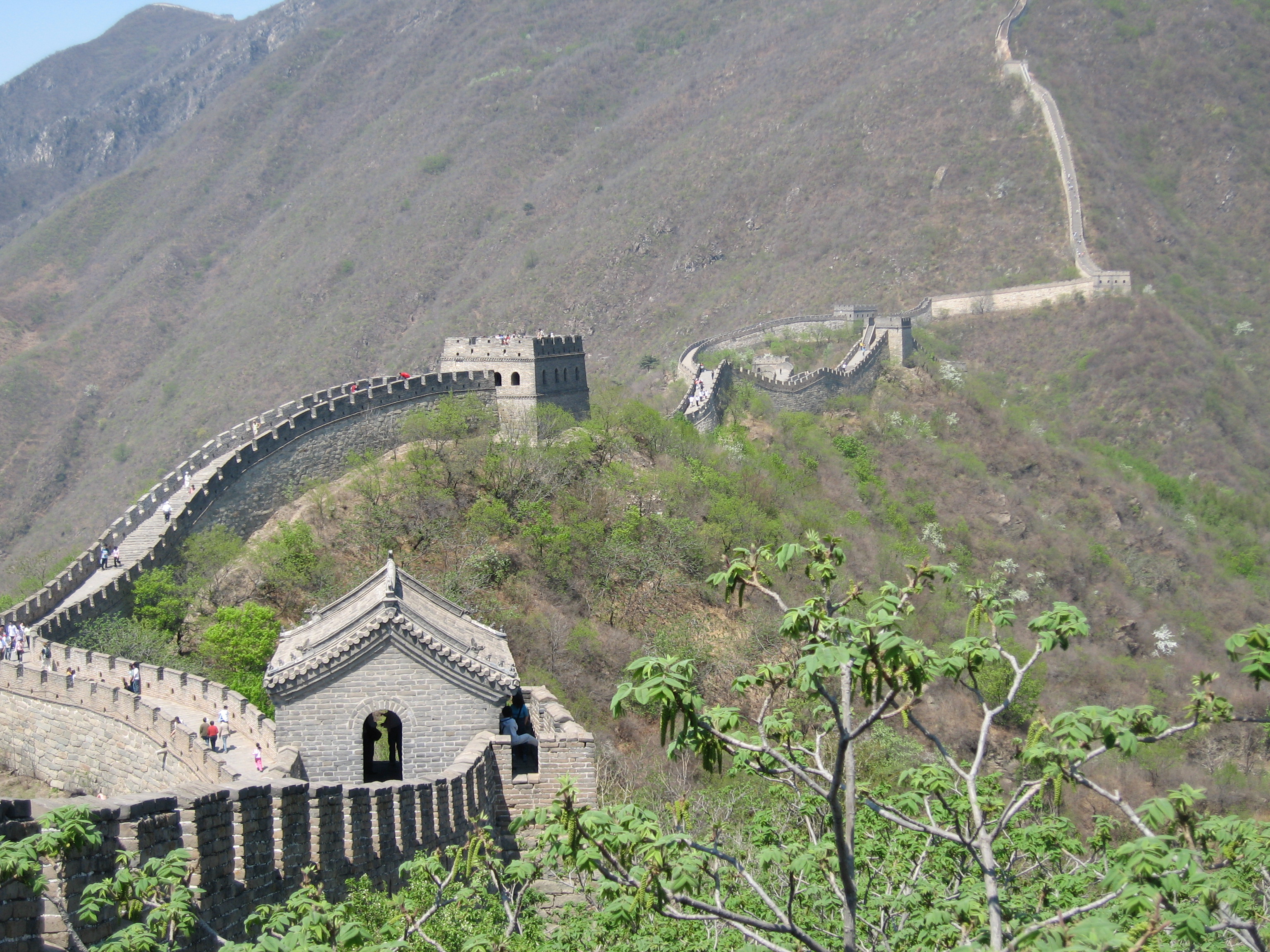
The Great Wall of China is not one wall but a mosaic of fortifications built, rebuilt and abandoned over some two millennia along China's northern frontier. Its earliest sections date to the 7th–4th century BCE, in the Spring and Autumn and Warring States periods; in 221 BCE Qin Shi Huang connected existing walls into a single system, and later dynasties — most famously the Ming (1368–1644) — extended and faced the line with brick and stone. The most authoritative modern figure comes from a state survey conducted since 2007: the State Administration of Cultural Heritage announced in June 2012 that all sections of the wall total 21,196.18 kilometres; the Ming wall alone is about 8,850 km, per Britannica, running from Mount Hu near Dandong to Jiayu Pass in Gansu. UNESCO inscribed the Great Wall as a World Heritage site in 1987 and calls it an absolute masterpiece of military architecture; protection today rests on the 2006 Regulations on the Protection of the Great Wall, a 2019 conservation plan, the national cultural park programme, and provincial laws such as Shanxi's 2026 regulations. The popular claim that the wall is visible from space — or from the Moon — is a myth: NASA, National Geographic and Britannica all state it is not visible to the naked eye from the Moon and is difficult or impossible to see from Earth orbit without high-powered lenses.
Overview
The Great Wall of China is not a single wall: Britannica describes it as consisting of numerous walls — many of them parallel to each other — built over some two millennia across northern China and southern Mongolia.1 UNESCO presents it as a single great military defence project, continuously built from the 3rd century BC to the 17th century AD on the country's northern border by successive Chinese empires.2 Its first sections are older still: historians usually consider the defensive walls built during the Spring and Autumn period (770–476 BCE) and the Warring States period (475–221 BCE) to be the first parts of what became the Great Wall, which puts the structure at almost 3,000 years old.1
China's State Administration of Cultural Heritage announced in June 2012 that the Great Wall is 21,196.18 kilometres long, the first time such a figure had been released.3 An earlier preliminary survey had shown only the Ming-dynasty structures, extending more than 8,850 kilometres.3 In Britannica's account the Ming wall — the most extensive and best-preserved version — runs some 5,500 miles (8,850 kilometres) from Mount Hu near Dandong in Liaoning to Jiayu Pass in Gansu.1 Across all periods, about one-fourth of the measured length consists solely of natural barriers such as rivers and mountain ridges, about 70 per cent is actual constructed wall, and the small remainder consists of ditches or moats.1
UNESCO's criterion (iv) calls the property an outstanding and unique example of a military architectural ensemble that served a single strategic purpose for 2,000 years.2 Criterion (i) judges the Ming wall an absolute masterpiece, both for the ambition of the undertaking and for the perfection of its construction.2 Construction continued up to the Ming dynasty, when the Great Wall became the world's largest military structure.2 It has retained its importance as a symbol of Chinese identity and culture4, along with a mythology of its own — including the persistent claim that it is visible from space.4
What the Great Wall is
Its main body consists of walls, horse tracks, watch towers and shelters on the wall, and it includes fortresses and passes along its route.2 The complete route of the Great Wall extends over 20,000 kilometres, and the elements constructed in different historical periods — walls, fortresses, passes and beacon towers — have been preserved to the present day.2 UNESCO adds that the wall reflects collision and exchanges between agricultural civilizations and nomadic civilizations in ancient China.2
At the time of the Qin unification around 220 BCE, rammed earth and wood made up most of the wall.4 In some places the wall was later constructed of brick, and elsewhere quarried granite or even marble blocks were used.4 One surviving section of an ancient wall, in Shandong province, is made of hard-packed soil called rammed earth and is estimated to be 2,500 years old.4 UNESCO singles out the admirable and universally acclaimed masonry of the Ming period, alongside the rammed-earth sections of Western Han fortifications conserved in Gansu province.2
Traditionally its eastern terminus was considered to be Shanhai Pass on the coast of Bo Hai, and its length — without its branches and other secondary sections — was thought to extend for some 4,160 miles (6,700 km).1 Government-sponsored investigations that began in the 1990s revealed sections of wall in Liaoning, and aerial and satellite surveillance eventually proved that this wall stretched continuously through much of the province.1 An archaeological survey conducted since 2007 found a total of 43,721 heritage sites, including stretches of the wall, defence works and passes, as well as other related facilities and ruins.3 The headline length of about 21,196 kilometres (13,171 miles) counts overlapping sections that were rebuilt.1
Early walls and the Qin unification
About the 7th century BCE the state of Chu started to construct a permanent defensive system, known as the 'Square Wall', in the northern part of its capital province.1 In the southern part of Qi an extensive perimeter wall was gradually created using existing river dikes, newly constructed bulwarks and areas of impassable mountain terrain; it was made mainly of earth and stone and terminated at the shores of the Yellow Sea.1 The Hexi Wall was a fortification against the Qin state and western nomads, built during the reign of King Hui (370–335 BCE).1 In 290 BCE the Yan state built the Northern Wall along the Yan Mountains, from the area of Zhangjiakou in Hebei past the Liao River to the ancient city of Xiangping, modern Liaoyang.1
In 221 BCE Shihuangdi, the first Qin emperor, completed his annexation of Qi and unified China.1 He ordered the removal of the fortifications set up between the previous states, because they served only as obstacles to internal movements and administration.1 He then sent General Meng Tian to garrison the northern border against incursions of the nomadic Xiongnu and to link the existing wall segments in Qin, Yan and Zhao into the so-called '10,000-Li Long Wall'.1 UNESCO describes the same moment from the outside: in about 220 BC, under Qin Shi Huang, sections of earlier fortifications were joined together to form a united defence system against invasions from the north.2 The Chinese name Wanli Changcheng means '10,000-Li Long Wall', a scale expressed in the li, the traditional unit of distance.1
This period of construction began about 214 BCE and lasted a decade.1 Hundreds of thousands of soldiers and conscripted workers laboured on the project.1 With the fall of the Qin dynasty after Shihuangdi's death, however, the wall was left largely ungarrisoned and fell into disrepair.1
The Han wall and the empire's frontiers
Rammed-earth sections of fortifications dating from the Western Han are conserved in Gansu province to this day.2 A remote-sensing study describes the Han Dynasty Great Wall as one of the largest and most significant ancient defence projects in the whole of northern China — and as a cultural and national symbol of modern China as well as a valuable archaeological monument.5
A study used Gaofen-1 satellite remote-sensing imagery and the Hough transform to identify linear traces of the Han-dynasty wall in Dunhuang, reporting an accuracy of 80 per cent for the homogenous background — results that could be used to map and evaluate the wall's preservation state there.5 Related work applied an improved DeepLabv3+ model to very high-resolution aerial imagery of the Great Wall of the Han dynasty in northwest China, achieving an accuracy of 98.37 per cent and an intersection over union of 97.32 per cent.6
The Ming wall
Zhu Yuanzhang, who became the Hongwu Emperor, took power in 1368 and founded the Ming dynasty.4 The Ming emperors improved the wall with watchtowers and platforms, and most of the familiar images of the wall show Ming-era construction in stone.4 UNESCO records that construction continued up to the Ming dynasty (1368–1644), when the Great Wall became the world's largest military structure.2
The most extensive and best-preserved version of the wall dates from the Ming dynasty and runs for some 5,500 miles (8,850 kilometres) east to west, from Mount Hu near Dandong in southeastern Liaoning province to Jiayu Pass west of Jiuquan in northwestern Gansu province.1 Britannica gives the most well-preserved section's length as about 8,850 kilometres (5,499 miles).1 The condition of that celebrated line is sobering: only 8.2 per cent of the wall built during the Ming dynasty remains intact, 74.1 per cent is in poor condition, and in some sections only a foundation remains.3
In the 17th century the Manchu emperors extended Chinese rule into Inner Mongolia, making the wall less important as a defence.4 It has nevertheless retained its importance as a symbol of Chinese identity and culture.4
Sections and dynasties in figures
The wall's story is a sequence of dated building campaigns, from the state walls of the 7th–4th century BCE to the Qin link-up of 221 BCE and the Ming masonry of 1368–1644.1 China's 2012 national survey counted 43,721 heritage sites and 21,196.18 kilometres of wall across every dynasty.3
| Period or dynasty | Dates | What the record shows |
|---|---|---|
| Spring and Autumn / Warring States | 7th–4th century BCE1 | First sections: Chu's 'Square Wall' from about the 7th century BCE; the Qi perimeter wall of earth and stone; Yan's Northern Wall of 290 BCE1 |
| Qin | 221–206 BCE7 | Shihuangdi unifies China in 221 BCE and links existing walls into a single system; General Meng Tian's '10,000-Li Long Wall' effort begins about 214 BCE and lasts a decade1 |
| Han | 206 BCE – 220 CE7 | Western Han rammed-earth fortifications are conserved in Gansu2; the Han wall in the Dunhuang region has been identified from satellite imagery5 |
| Ming | 1368–16442 | About 8,850 km (5,499 mi) of brick and stone from Mount Hu near Dandong to Jiayu Pass1; 8.2% intact and 74.1% in poor condition3 |
| All dynasties combined | 3rd century BC – 17th century AD2 | 21,196.18 km of all sections ever built, per the June 2012 state survey; 43,721 heritage sites recorded since 20073 |
The myth audit: can you see it from space?
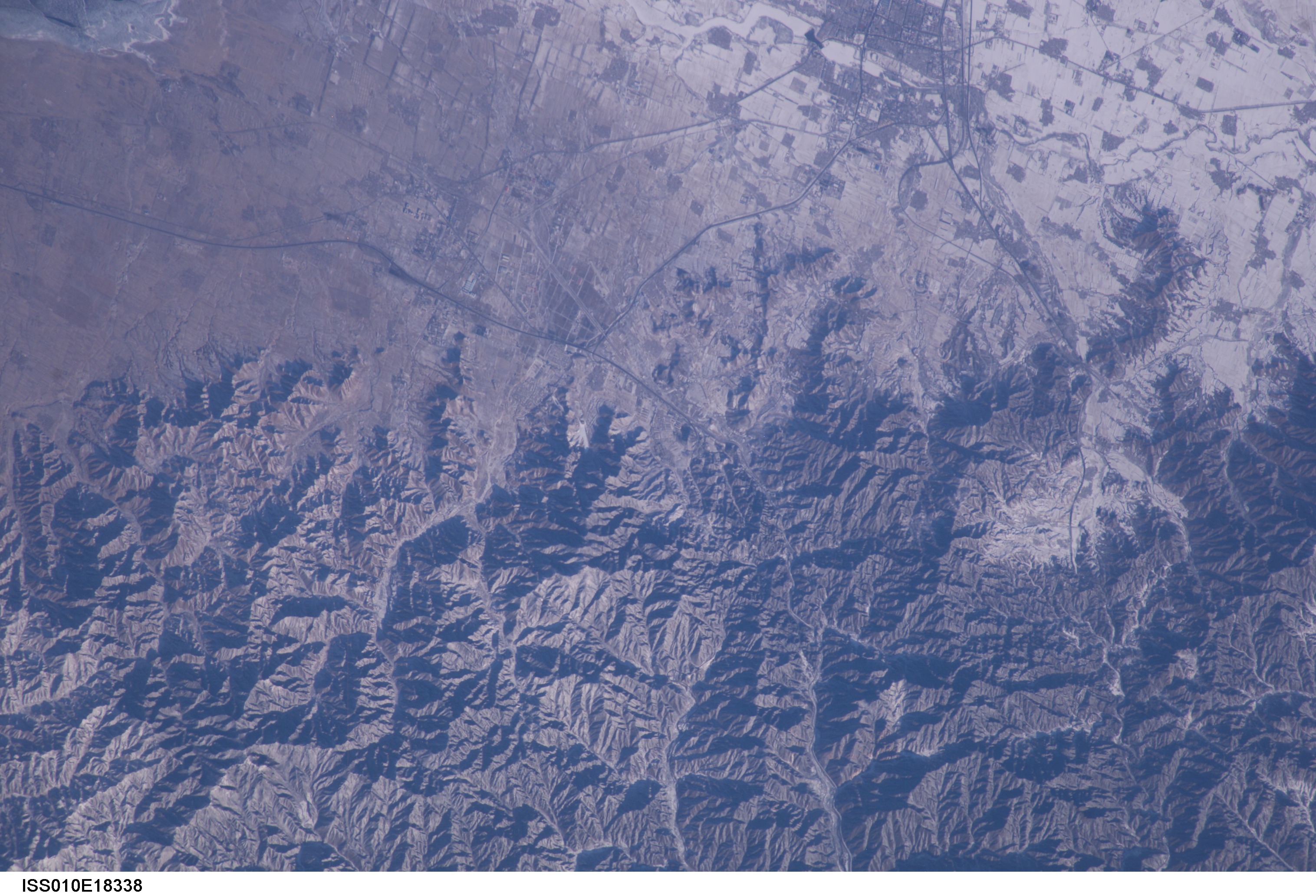
The claim that the Great Wall is the only man-made object visible from space — or from the Moon — is the most persistent myth attached to the structure.4 UNESCO's own criterion (i) text still repeats a version of it, describing the wall as the only work built by human hands on this planet that can be seen from the moon.2 Britannica answers plainly that you typically can't see the Great Wall from space, and that the popular claim was disproved when astronauts stated it was not visible with the naked eye from the Moon.1
Passes and landmarks
The termini define the wall's span: in UNESCO's description it begins in the east at Shanhaiguan in Hebei province and ends at Jiayuguan in Gansu province to the west.2 Traditionally, that eastern terminus was considered to be Shanhai Pass on the coast of Bo Hai.1
Jiankou, in Huairou County 73 km north of Beijing, connects with Mutianyu 10 km to the east and Huanghuacheng to the west, and was built in 1368, during the Ming dynasty, of large white hill rocks that make it prominent from a distance.3 Badaling's visual integrity, UNESCO notes, has been impacted negatively by the construction of tourist facilities and a cable car.2
Shanxi's section spans 1,401.23 kilometres — 9.74 per cent of the wall's total recorded length of 21,196 km — ranking third nationally.11 It is spread across 39 counties in eight cities and stretches from the Warring States Period (475–221 BC) to the Ming Dynasty (1368–1644).11 Five of the wall's most famous 13 passes lie within the province, forming a unique geographical pattern and cultural panorama.11 During the Northern Song Dynasty (960–1127), the female generals of the Yang family were stationed at Yanmen Pass and repeatedly repelled the southward invasion of nomadic Khitan tribes.11
Protection and conservation
The Regulations on the Protection of the Great Wall promulgated in 2006 are the specific legal document for the conservation and management of the Great Wall2, and in 2006 the State Council, China's Cabinet, established a national baseline for Great Wall protection.11 China's national administration on cultural heritage, and the provincial cultural heritage administrations where sections of the wall are located, are responsible for guiding local governments on the implementation of conservation and management measures.2 In January 2019 a comprehensive conservation plan was released to establish a long-term mechanism for the conservation and utilization of the Great Wall.7
The archaeological survey conducted since 2007 found a total of 43,721 heritage sites, including stretches of wall, defence works and passes, as well as other related facilities and ruins.3 In recent years the state invested nearly 520 million yuan (about 73.3 million US dollars), supporting Gansu in more than 90 projects for the protection and maintenance of the Great Wall.12 A team from Tianjin University has completed surveys of Great Wall sections exceeding 6,000 kilometres in total and obtained over 3 million images of the wall with centimetre-level resolution.12 Liu Yuzhu, head of the State Administration of Cultural Heritage, said sections built during the Qin (221–206 BC), Han (206 BC–AD 220) and Ming (1368–1644) dynasties were the key areas to be conserved.7
China's Great Wall national cultural park started in 2019 and is ongoing12, spanning 15 provincial-level regions including Beijing, Hebei and Inner Mongolia in the north and Gansu and Xinjiang in the northwest.12 Inner Mongolia, which boasts one-third of the country's Great Wall-related resources, rolled out a regional construction and conservation plan in January 2022.12 In 2021 Shanxi's provincial government created a system of designated wall protectors and complete monitoring coverage for important sections11, and in June 2026 it passed regulations consisting of six chapters and 47 articles covering the protection, research, utilization, supervision and management of its stretch of the wall.11
The wall in culture and literature
UNESCO's criterion (vi) states that the Great Wall has an incomparable symbolic significance in the history of China — that its purpose was to protect China from outside aggression, but also to preserve its culture from the customs of foreign barbarians, and that because its construction implied suffering it is one of the essential references in Chinese literature.2 Travel writing remembered the wall as masonry that fought time: by an 1885 account, the towers placed at intervals along it were more solidly constructed than the rest and had more effectively resisted the wear of time.13 In official Chinese rhetoric the wall is a tangible embodiment of the virtues ingrained in the Chinese nation — solidarity, patriotism, tenacity, support for peace, openness and inclusiveness.12
It is along this peaked crest that the Great Wall of China runs. … But the true Great Wall that separates, in the first place, Mongolia from China proper, is built of stones laid over each other without cement.13
Victor Meignan, From Paris to Pekin over Siberian Snows (1885)
Towers, placed at certain distances from each other, are more solidly constructed, and have thus more effectually resisted the wear of time.13
Victor Meignan, From Paris to Pekin over Siberian Snows (1885)
The Great Wall has an incomparable symbolic significance in the history of China.2
UNESCO World Heritage Centre, criterion (vi)
a tangible embodiment of the virtues ingrained in the Chinese nation12
Xinhua, quoted by the State Council of the People's Republic of China
The wall today
China Daily notes that it is a symbol of China known throughout the world, yet few people know how long it is.14 Shan Jixiang, former director of the Palace Museum, researched the Great Wall in 2011 when he was head of the National Cultural Heritage Administration.14 On the visitor side, a themed park at the Great Wall received more than 100,000 visits in three months after a night tour programme was launched.12
On the 2012 survey's figures, only 8.2 per cent of the Ming wall is intact and 74.1 per cent is in poor condition.3 The literature that surrounds the wall now reads it against its own legend: Arthur Waldron's The Great Wall of China: From History to Myth (1990) examines why and when the wall was actually built15, while Daniel Schwartz's The Great Wall of China (1990) collects 159 duotone photographs with essays by Jorge Luis Borges and Luo Zhewen.15 UNESCO's account closes the circle: the existing elements of the Great Wall retain their original location, material, form, technology and structure.2
Timeline of the Great Wall
The first walls: Chu's 'Square Wall'
About the 7th century bce the state of Chu started to construct a permanent defensive system, known as the "Square Wall," in the northern part of its capital province.1
Other states follow with their own walls
From the 6th to the 4th century other states followed Chu's example.1
Yan builds the Northern Wall
In 290 bce the Yan state built the Northern Wall along the Yan Mountains, from the area of Zhangjiakou in Hebei past the Liao River to the ancient city of Xiangping (modern Liaoyang).1
Qin Shi Huang unifies China and links the walls
In 221 bce Shihuangdi, the first Qin emperor, completed his annexation of Qi and unified China; he ordered removal of the fortifications set up between the previous states because they served only as obstacles to internal movements and administration.1
Meng Tian and the '10,000-Li Long Wall'
In about 214 bce Gen. Meng Tian was sent to garrison the northern border against the Xiongnu and to link existing wall segments into the so-called "10,000-Li Long Wall"; construction lasted a decade and hundreds of thousands of soldiers and conscripted workers laboured on it.1
The Han dynasty pushes the wall west
Rammed-earth sections of fortifications dating from the Western Han are conserved in Gansu province to this day.2
The Ming dynasty and the wall we know
Zhu Yuanzhang, who became the Hongwu Emperor, took power in 1368 C.E. and founded the Ming Dynasty; the Ming emperors improved the wall with watchtowers and platforms, and most of the familiar images of the wall show Ming-era construction in stone.4
Manchu expansion ends the wall's defensive role
In the 17th century the Manchu emperors extended Chinese rule into Inner Mongolia, making the wall less important as a defense; it has nevertheless retained its importance as a symbol of Chinese identity and culture.4
UNESCO World Heritage listing
The Great Wall, which consists of many interconnected walls built between the seventh century BC and the Ming Dynasty, was listed as a World Heritage Site by UNESCO in 1987.7
National protection regulations
The Regulations on the Protection of the Great Wall promulgated in 2006 are the specific legal document for the conservation and management of the Great Wall.2
A full archaeological survey begins
An archaeological survey conducted since 2007 found a total of 43,721 heritage sites, including stretches of the wall, defense works and passes, as well as other related Great Wall facilities and ruins.3
The precise figure: 21,196.18 kilometres
China's Great Wall, one of the country's signature relics, is 21,196.18 kilometers long, according to the latest survey results released by the State Administration of Cultural Heritage; this was the first time such a figure had been released.3
A comprehensive conservation plan
A comprehensive conservation plan was released to establish a long-term mechanism for the conservation and utilization of the Great Wall, jointly publicized by the Ministry of Culture and Tourism and the State Administration of Cultural Heritage.7
Inner Mongolia pioneers the cultural park plan
Boasting one-third of the country's Great Wall-related resources, Inner Mongolia rolled out a regional construction and conservation plan concerning the Great Wall cultural park in January 2022.12
Shanxi passes its own Great Wall law
Shanxi province passed new legislation to protect and sustainably manage its stretch of the Great Wall — regulations of six chapters and 47 articles covering protection, research, utilization, supervision, and management.11
Frequently asked questions
How long is the Great Wall of China?
According to the survey results released by China's State Administration of Cultural Heritage in June 2012, the Great Wall is 21,196.18 kilometres long.3 The figure counts all sections ever built, including overlapping sections that were rebuilt.1
Can you really see the Great Wall from space?
No — NASA states that the wall isn't visible from the moon and is difficult or impossible to see from Earth orbit without high-powered lenses.8 National Geographic likewise says the story that it is one of the only man-made structures visible from space is not actually true.4
When was the Great Wall built?
It was continuously built from the 3rd century BC to the 17th century AD as the great military defence project of successive Chinese empires.2 Its earliest sections, the walls of the Spring and Autumn and Warring States periods, date from the 7th–4th century BCE.1
Is the Great Wall one wall or many?
It actually consists of numerous walls, many of them parallel to each other, built across northern China and southern Mongolia.1 Its main body takes in walls, horse tracks, watch towers and shelters, together with fortresses and passes along the route.2
Who built the Great Wall?
Rival states of the Spring and Autumn and Warring States periods raised the earliest sections, and in 221 BCE the first Qin emperor linked existing walls into a single system.1 The wall most people picture is Ming work: Zhu Yuanzhang founded the Ming dynasty in 1368, and the Ming emperors improved the wall with watchtowers and platforms.4
How much of the Great Wall still stands?
For the Ming wall, only 8.2 per cent remains intact and 74.1 per cent is in poor condition, with some sections reduced to a foundation, according to the survey report.3 UNESCO states that the existing elements retain their original location, material, form, technology and structure.2
Is the Great Wall a UNESCO World Heritage site?
Yes — it was listed as a World Heritage Site by UNESCO in 1987.7 UNESCO's criterion (i) judges the Ming wall an absolute masterpiece, for the ambition of the undertaking and the perfection of its construction.2
Where does the Great Wall start and end?
UNESCO's description has the wall beginning in the east at Shanhaiguan in Hebei province and ending at Jiayuguan in Gansu province to the west.2 Britannica's account of the Ming line runs from Mount Hu near Dandong in Liaoning to Jiayu Pass west of Jiuquan in Gansu.1
Knowledge graph
Sources & citations
Every factual claim in this article is drawn from the sources below. Bracketed numbers in the text link to the corresponding source.
- 1
- 2
- 3
- 4
- 5
- 6
- 7
- 8
- 9
- 10
- 11
- 12
- 13
- 14
- 15