Japan
An archipelago of 14,125 islands on the Pacific Rim of Fire — home to the world's oldest continuous imperial line, the first non-Western industrial power, and an economy and society now navigating population decline and ageing.
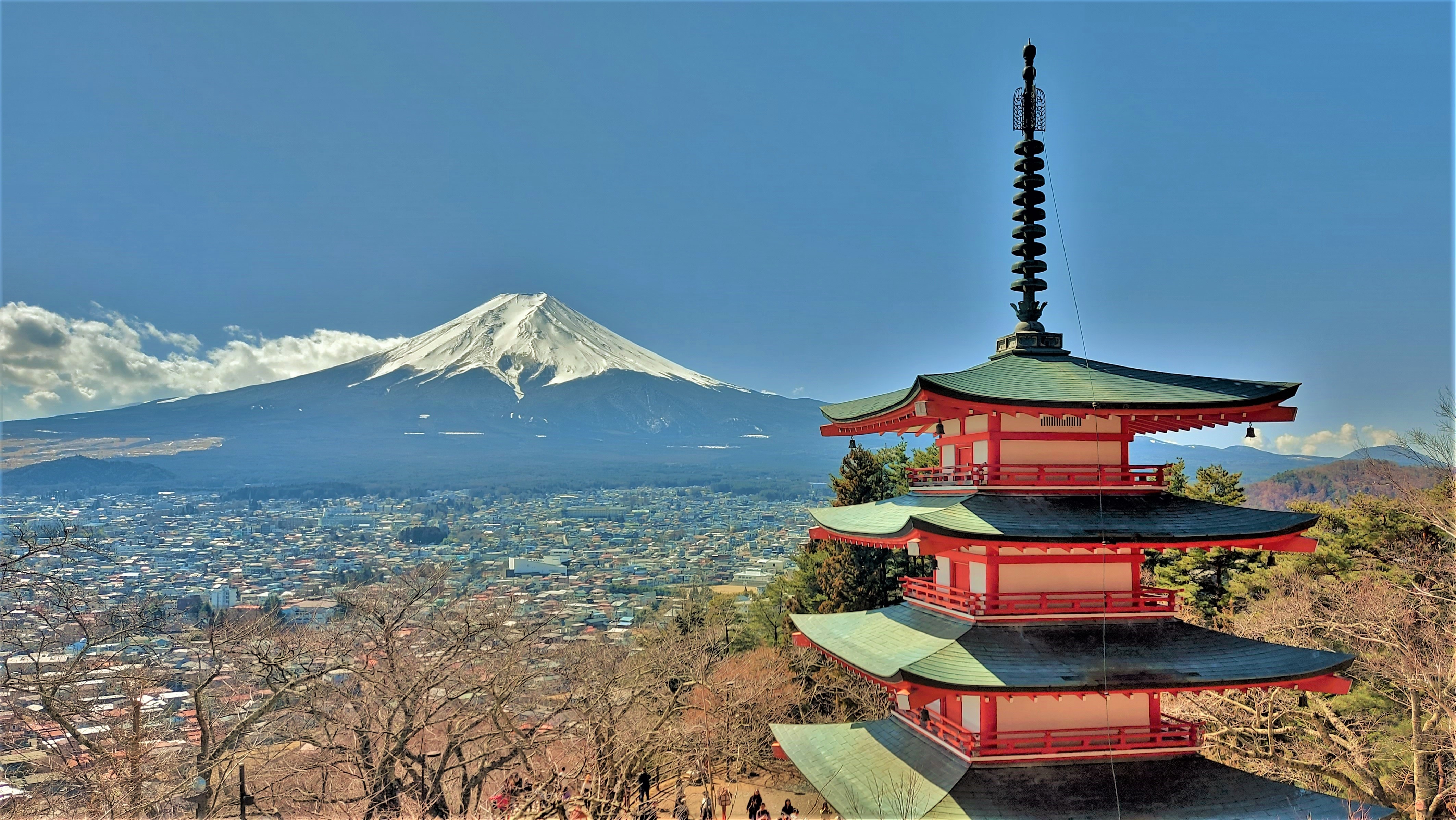
Japan is an island country off the eastern coast of Asia whose crescent-shaped archipelago stretches some 2,400 kilometres from Hokkaido to the Ryukyus; an official recount in 2023 put the number of its islands at 14,125. Its 123.8 million people — 29.3 per cent of them aged 65 or over, and falling in number since 2008 — live mostly in the great metropolitan belts of the Pacific coast, above all Greater Tokyo. Under Emperor Naruhito, the 126th of a line traditionally traced to 660 BCE, Japan is a constitutional monarchy with a parliamentary Diet; its 1947 constitution renounces war. Industrialisation after the 1868 Meiji Restoration and reconstruction after 1945 made Japan one of the world's largest economies — a position now measured in the yen's terms, a government debt above 200 per cent of GDP, and a technological and cultural reach that includes 27 World Heritage properties and UNESCO-listed cuisine and theatre.
Overview
Japan — Nihon, or Nippon in its own official rendering — is an island country lying off the eastern coast of the Eurasian landmass, in the northern hemisphere12. Its crescent-shaped archipelago runs some 2,400 kilometres from Hokkaido to the Ryukyus, parallel to the continental coastline, with the Sea of Japan in between1. The national territory totals 377,976 square kilometres across the five main islands — Hokkaido, Honshu, Shikoku, Kyushu and Okinawa — and more than 14,000 smaller ones1. A re-count completed in 2023 raised the official count of islands to 14,1253.
Emperor Naruhito is the 126th occupant of the throne, having acceded on 1 May 20194. Japan is a constitutional monarchy with a national Diet of two legislative houses2. Its constitution, enacted on 3 May 1947, forever renounces war as a sovereign right of the nation56.
The country's 123.8 million people were 92.2 per cent urban in 202478. The three major metropolitan areas of Kanto, Kinki and Chukyo held 66.4 million people, or 52.6 per cent of the national total, in 20201. Its general government gross debt stood at 214.5 per cent of GDP in 2024, a ratio particularly high even compared with other major industrialized countries91.
The archipelago: land and climate
For decades the standard tally of Japan's islands was 6,852, a figure published by the Japan Coast Guard in 19873. When the Geospatial Information Authority of Japan re-counted them using its detailed digital basic map, the total came to 14,125 — more than double the count long in use3. The authority attributed the difference largely to the greater detail of modern mapping3. Under the counting rule, an island was a landmass drawn on the map, judged to have been naturally formed, with a shoreline of at least 0.1 km; the criterion follows the United Nations Convention on the Law of the Sea's definition of an island3.
Mountainous regions, including hilly terrain, account for about three-quarters of Japan's land area, and the mountains are steep, intricately carved by ravines1. Forestland and fields covered 25.34 million hectares — 67 per cent of the surface — as of 2020, with a further 4.37 million hectares, or 11.6 per cent, under farmland1. Mount Fuji, at 3,776 metres, is the highest mountain of them all; the next peaks all fall below 3,200 metres1. Among the inland waters, the Shinano river runs 367 kilometres and Lake Biwa covers 669.3 square kilometres1.
The archipelago has a temperate marine climate, varying by region under the influence of seasonal winds and ocean currents1. Two long rainy seasons shape the year — one in early summer, when the southeast monsoon begins to blow, and one in autumn, when the winds cease — and from summer to autumn typhoons born over the Pacific strike the country, sometimes causing storm and flood damage1. In recent years the weather has tended toward extremes, with record-breaking summer heat waves and frequent damage from localized torrential rain1.
Earthquakes, volcanoes and the 2011 Tohoku disaster
Japan lies in one of the most active seismic and volcanic zones in the world, and earthquakes and volcanic disasters strike it frequently10. Because the archipelago sits in the world's newest mobile belt, earthquakes are numerous and the proportion of active volcanoes is high1. Roughly 1,000 tremors are recorded each year, most of them minor, but major quakes — such as those at Tokyo-Yokohama in 1923 and Kobe in 1995 — have brought considerable loss of life and widespread destruction2.
Along the Nankai Trough, megathrust earthquakes of magnitude 8 or more occur repeatedly on a roughly 100 to 150 year cycle, though with varying intervals and source regions10. Violent eruptions are frequent, and at least 60 volcanoes have been active within historical time2. The national catalogue of active volcanoes lists the country's volcanoes individually; its numbering reaches 11111.
Monitoring is dense: the Japan Meteorological Agency runs an earthquake observation network of about 200 seismographs and 600 seismic intensity meters10. When an earthquake occurs, its Earthquake Early Warning system issues advance announcement of the estimated seismic intensity and the expected arrival time of principal motion10. On 11 March 2011, a magnitude 9.1 earthquake struck off the east coast of Honshu12.
The imperial line and the constitution
The head of state is Emperor Naruhito, the 126th Emperor, who acceded to the throne on 1 May 20194. Under Article 1 of the constitution, the Emperor is the symbol of the State and of the unity of the people, his position deriving from the will of the people, with whom sovereign power resides5. In matters of state he acts on the advice and approval of the Cabinet, appointing the Prime Minister and the Chief Justice, convoking the National Diet, and promulgating laws and treaties13.
The constitution's Article 9 provides that the Japanese people forever renounce war as a sovereign right of the nation and the threat or use of force as means of settling international disputes5. The preamble proclaims that sovereign power resides with the people and resolves that never again shall they be visited with the horrors of war through the action of government5. Naruhito's accession followed the reign of Emperor Akihito, the 125th Emperor, who acceded on 7 January 1989 upon the demise of Emperor Hirohito, posthumously Emperor Showa13.
The Emperor shall be the symbol of the State and of the unity of the people, deriving his position from the will of the people with whom resides sovereign power.
The Constitution of Japan, Article 1 (promulgated 3 November 1946)
and resolved that never again shall we be visited with the horrors of war through the action of government, do proclaim that sovereign power resides with the people and do firmly establish this Constitution
The Constitution of Japan, preamble (promulgated 3 November 1946)
The Meiji transformation
Japan's recorded history begins only in the 1st century BCE, with mentions in Chinese sources2. The first steps toward political unification came in the late 4th and early 5th centuries CE under the Yamato court2. A great civilization developed first at Nara in the 8th century and then at Heian-kyō — today's Kyoto — from the late 8th to the late 12th century2. The seven centuries that followed were dominated by military rulers, ending in near isolation from the outside world from the early 17th to the mid-19th century2.
The reopening came under foreign pressure: after more than two centuries of near isolation, a United States naval expedition under Commodore Matthew Perry forced Japan to allow entry to foreigners in 1853–542. Contact with the West brought unprecedented change, and the country set out to become a modern industrialized nation2. The Meiji Restoration of 1868 marked the starting point of Japanese industrialisation1.
After 1868 Japan's population and economy expanded in tandem with the drive to build a modern nation-state1. The population, steady at about 30 million from the 18th century through the first half of the 19th, reached 50 million in 1912 and surpassed 100 million in 19671. The rising state also reached outward, assembling an overseas empire in the decades that followed2.
From empire to defeat, 1895-1945
The modernizing state pursued the acquisition of a large overseas empire, initially in Korea and China2. By late 1941, that policy of empire had caused direct confrontation with the United States and its allies2. Defeat in the Second World War (1939–45) followed2.
On 26 July 1945 the United States, the United Kingdom and China issued the Potsdam Declaration, demanding Japan's surrender6. The surrender was announced by imperial broadcast on 15 August 19456. On 2 September 1945 the Instrument of Surrender was signed on the deck of the USS Missouri, formally ending the Second World War in the Pacific6.
Reconstruction and the economic miracle
The postwar years brought occupation reforms and a new constitution, promulgated on 3 November 1946 and in force from 3 May 194756. Growth followed at a pace matched by few nations: through the 1960s the Japanese economy expanded by more than 10 percent per annum1. It was carried by private investment in plant and equipment, financed by high personal savings; by a large shift of workers from primary to secondary industries and an abundant labour force; and by productivity gains from adopting and improving foreign technologies1.
In December 1971 Japan revalued the yen from 360 to the U.S. dollar — a rate it had kept for 22 years — to 308 yen, and in February 1973 it moved to a floating exchange-rate system1. In October 1973 the fourth Middle East War set off the first oil crisis and high inflation1. Japan recorded negative economic growth in 1974 for the first time in the postwar period1.
At the end of 1980 the nation's net wealth stood at 1,363 trillion yen, 5.6 times GDP; by the end of 1990 it had reached 3,531 trillion yen, 8.0 times GDP, lifted by rising land and stock prices1. At the beginning of 1990 stock prices plummeted, followed by sharp declines in land prices — the start of the bubble economy's collapse1. In 1997 large banks began to fail, and in 1998 and 1999 the government injected public money into the banking sector to stabilize the financial system1.
The bankruptcy of Lehman Brothers in September 2008 triggered a serious financial crisis, and Japan was affected by the yen's rise and the sudden contraction in the United States and other economies1. The Great East Japan Earthquake of 11 March 2011, and the nuclear power plant accident it caused, weakened the economic recovery1. In January 2013, seeking an early end to deflation and escape from stagnation, the government set out its ‘three-arrows’ strategy, known as Abenomics1.
The economy today
By value added, the tertiary sector climbed from 50.9 per cent of Japan's output in 1970 to 73.0 per cent in 2020, while the primary sector shrank from 5.9 per cent to 1.1 per cent1. Employment moved the same way: in 2020 the tertiary industry accounted for 73.4 per cent of employed persons, against 46.6 per cent in 19701. On World Bank data, Japan's GDP stood at about 4.19 trillion current US dollars in 2024, down from about 4.38 trillion in 2023, with GDP per capita of 33,797 current US dollars in 20248.
The urban share of the population reached 92.19 per cent in 20248. Inflation ran at 2.74 per cent in 2024, down from 3.27 per cent in 2023, and unemployment held at 2.5 per cent of the labour force in 20248. After modest growth in 2023, the economy contracted slightly in 20248. The heavy item is sovereign debt: the IMF put Japan's general government gross debt at 214.5 per cent of GDP in 2024, a burden particularly high even compared with other major industrialized countries91.
| Indicator | Value | Source |
|---|---|---|
| Population (as of 1 October 2024) | 123,802 thousand | 7 |
| GDP, nominal (2024) | 4.19 trillion US$ | 8 |
| GDP per capita (2024) | 33,797 US$ | 8 |
| Real GDP growth (2024) | -0.2 per cent | 8 |
| Inflation (2024) | 2.7 per cent | 8 |
| Unemployment (2024) | 2.5 per cent | 8 |
| Government debt (2024) | 214.5 per cent of GDP | 9 |
| Currency | Yen (¥) | 2 |
Population: decline, ageing and the pull of Tokyo
The total population was 123,802 thousand as of 1 October 2024 — down 550 thousand from the previous year, a rate of decrease of 0.44 per cent, and the fourteenth consecutive year of decline7. The total fertility rate fell below 2.00 in 1975, reached 1.26 in 2005, and then set a record low of 1.20 in 2023, after eight consecutive years of decline1. Deaths stood at 13.0 per 1,0001.
Japan is ageing fast: the population aged 65 and over was 36,243 thousand in 2024, or 29.3 per cent of the total, while those under 15 made up only 11.2 per cent7. Life expectancy at birth in 2023 was 87.1 years for women and 81.1 years for men, up for both from the previous year1. Under the universal health insurance regime, life expectancy and healthcare standards sit at the highest level in the world1. In 2024 the population ranked 12th in the world, 1.5 per cent of the global total1.
Tokyo dominates the map: in 2020 Tokyo Metropolis counted 14.05 million residents, and the Kanto major metropolitan area 38.0 million1. In 2024 Tokyo-to alone held 11.5 per cent of the national population, and the five most populous prefectures accounted for 37.9 per cent of the total7. Population fell in 45 of the 47 prefectures, with Akita-ken declining fastest7. In 2018 Tokyo was the world's largest city, home to 37,468 thousand people; UN projections show Delhi overtaking it as the world's largest city by 2030, with Tokyo's population declining by almost 900,000 between 2018 and 203014.
Cultural heritage
Japan has 27 properties inscribed on the UNESCO World Heritage List — 22 cultural and 5 natural15. The first four inscriptions all date from 1993: the Buddhist Monuments in the Horyu-ji Area and Himeji-jo castle among the cultural sites, and Shirakami-Sanchi and Yakushima among the natural1. Kyoto shows what depth the list protects: built in AD 794 on the model of the capitals of ancient China, it was the imperial capital until the middle of the 19th century and the centre of Japanese culture for more than 1,000 years16.
Fujisan — Mount Fuji — was inscribed for the sacred and artistic landscape that has drawn pilgrims, artists and poets to the lone, often snow-capped stratovolcano; the inscribed property consists of 25 sites17. In the 12th century the mountain became a centre of training for ascetic Buddhism that included Shinto elements, and its upper 1,500-metre tier carries pilgrim routes and crater shrines alongside sites around the base17. The Hiroshima Peace Memorial (Genbaku Dome) preserves the only structure left standing where the first atomic bomb exploded on 6 August 194518. In July 2024 Sado Island Gold Mines were inscribed as Japan's 26th World Heritage Site; in the 17th century the complex ranked as the leading gold producer in the world1.
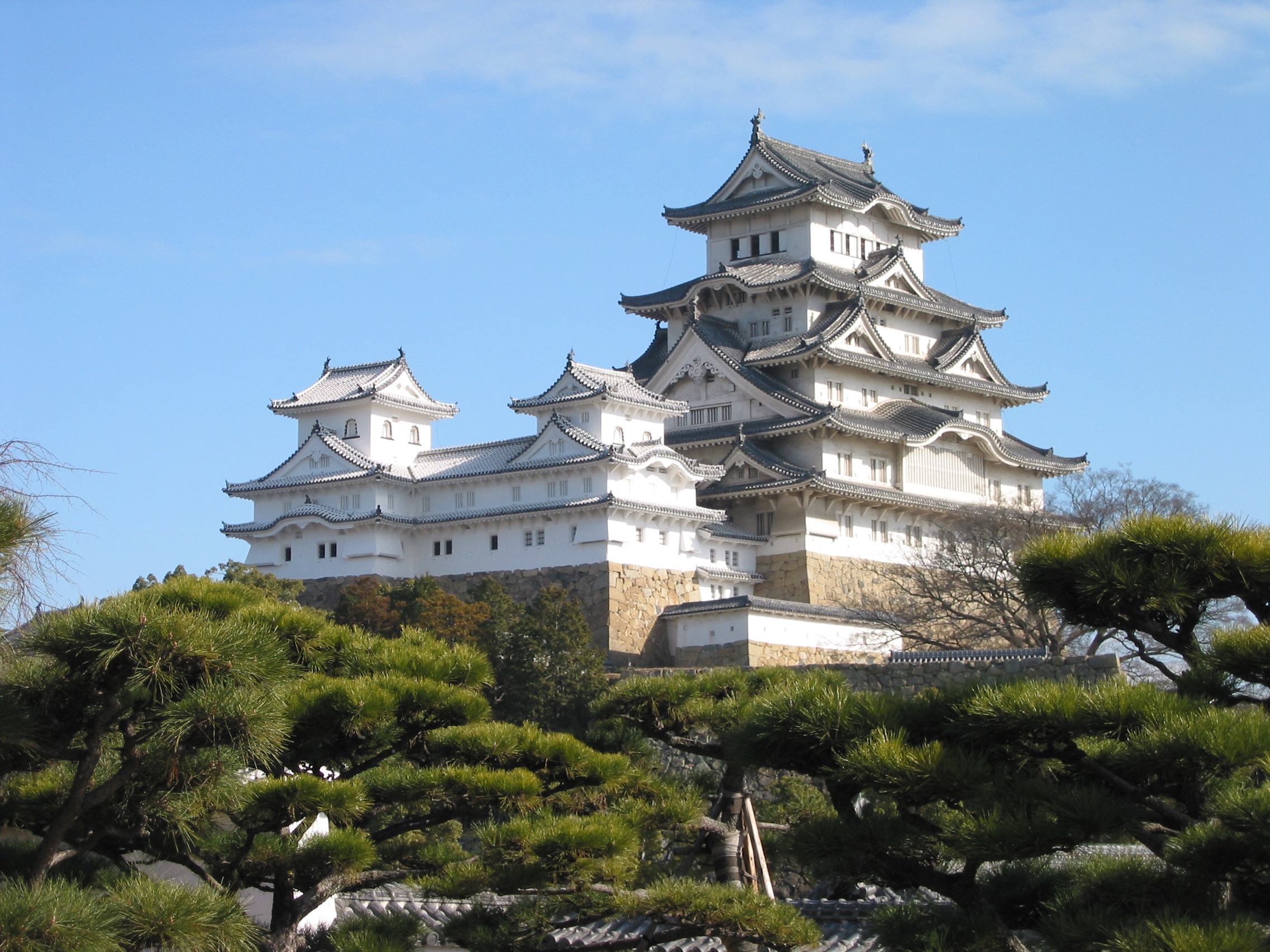

Washoku — the traditional dietary culture of the Japanese — was inscribed in 2013 on UNESCO's Representative List of the Intangible Cultural Heritage of Humanity19. Inside the country the register is vast: as of 1 April 2025, 13,498 items stood designated as important cultural properties, 1,144 of them classified as national treasures1. In 2021 the Jomon Prehistoric Sites in Northern Japan joined the World Heritage List — 17 sites that present the life and spiritual culture of people who lived in the region for more than 10,000 years by hunting, gathering and fishing1.
Japan in the world
Since the Second World War, Japan's economic growth — one of the greatest of any nation in that period — brought the country to the forefront of the world economy2. Its 2023 trade balance with the United States showed a surplus of 8.7 trillion yen, up 34.0 per cent and a third consecutive annual increase, with exports of 20.3 trillion yen1. Its ratio of outstanding general government debt to GDP is particularly high even compared with other major industrialized countries1.
Japan thus faces the world with formidable industrial reach and a distinctive fragility: a population that has fallen for fourteen consecutive years, more than a quarter of its people aged 65 or over, and a government debt burden above twice its annual output79.
Timeline
Commodore Perry forces Japan open
After more than two centuries of near isolation under Tokugawa rule, a U.S. naval expedition under Commodore Matthew Perry forced Japan to allow entry to foreigners in 1853-54, beginning the country's contact with the West.
The Meiji Restoration
Following the Meiji Restoration in 1868, Japan began to expand its population and economy in tandem with the drive to build a modern nation-state — the starting point of its industrialisation.
The Great Kanto earthquake
The Tokyo-Yokohama earthquake of 1923 was one of the major quakes that caused considerable loss of life and widespread destruction in Japan.
The Potsdam Declaration
On 26 July 1945 the United States, the United Kingdom, and China announced the 'Potsdam Declaration' demanding Japan's surrender.
Japan signs the Instrument of Surrender
The Instrument of Surrender was signed on the deck of the USS Missouri on 2 September 1945, formally ending the Second World War in the Pacific.
The new Constitution takes effect
The Constitution of Japan, promulgated on 3 November 1946 in the 21st year of Showa, came into effect on 3 May 1947, establishing the Emperor as the symbol of the State and sovereignty in the people.
Population passes 100 million
Japan's population, steady at about 30 million from the 18th through the first half of the 19th century, reached 50 million in 1912 and surpassed the 100 million mark in 1967.
The yen is revalued
In 1971, after the United States ended the convertibility of the dollar into gold, Japan revalued the yen from 360 yen against the U.S. dollar, maintained for 22 years, to 308 yen.
Floating exchange rate and the first oil crisis
In February 1973 Japan adopted a floating exchange-rate system; in October 1973 the fourth Middle East War led to the first oil crisis, triggering high inflation and negative economic growth in 1974 for the first time in the post-war period.
Emperor Akihito accedes
On 7 January 1989, upon the demise of Emperor Hirohito (posthumously Emperor Showa), His Majesty Emperor Akihito acceded to the throne as the 125th Emperor of Japan; the Ceremony of Enthronement was held at the Imperial Palace on 12 November 1990.
The Great Hanshin (Kobe) earthquake
The Kobe earthquake of 1995 was one of the major quakes — alongside Tokyo-Yokohama in 1923 — that caused considerable loss of life and widespread destruction.
The Tohoku earthquake and tsunami
On 11 March 2011 a magnitude 9.1 earthquake struck off the east coast of Honshu, sending a tsunami with a maximum run-up height of 37.88 m at Miyako; at least 15,703 people were killed and 4,647 went missing, with the total economic loss in Japan estimated at 309 billion US dollars.
Abenomics is launched
In January 2013, in order to achieve an early end to deflation and break free of economic stagnation, the government set forth its 'three-arrows' strategy, also known as 'Abenomics'.
Emperor Naruhito accedes as the 126th Emperor
His Majesty the Emperor Naruhito (The 126th Emperor), born 23 February 1960, acceded to the throne on 1 May 2019.
Japan's islands re-counted at 14,125
Using its digital basic map, the Geospatial Information Authority of Japan counted the country's islands under fixed conditions and announced on 28 February 2023 that the number came to 14,125 — far above the 6,852 long in use, a difference attributed largely to the greater detail of modern mapping.
Sado Island Gold Mines inscribed
In July 2024, Sado Island Gold Mines were inscribed on the World Heritage List as Japan's 26th World Heritage Site; in the 17th century the complex ranked as the leading gold producer in the world.
Frequently asked questions
How many islands does Japan have?
An official re-count completed by the Geospatial Information Authority of Japan in 2023 put the number of the country's islands at 14,1253. That is far more than the 6,852 islands long used as the count, a figure published by the Japan Coast Guard in 1987; the difference is attributed largely to the greater detail of modern mapping3.
Where is Japan located and how large is it?
Japan is an island country off the eastern seaboard of the Eurasian continent in the northern hemisphere, lying between approximately 20 to 45 degrees north latitude1. It consists of the five main islands — Hokkaido, Honshu, Shikoku, Kyushu and Okinawa — and more than 14,000 smaller islands, with a total surface area of 377,976 square kilometers1.
Who is the Emperor of Japan?
Emperor Naruhito is the 126th Emperor of Japan, having acceded to the throne on 1 May 20194. Under the constitution he is the symbol of the State and of the unity of the people, and in matters of state he acts on the advice and approval of the Cabinet513.
What was the Meiji Restoration?
The Meiji Restoration of 1868 marked the start of Japan's industrialisation and of its drive to build a modern nation-state, after which its population and economy expanded in tandem with that effort1. The modernizing state went on to acquire a large overseas empire, initially in Korea and China2.
How did Japan's economy grow after the Second World War?
During the 1960s the Japanese economy grew at a rapid pace of more than 10 percent per annum, supported by high personal savings, a shift of workers into secondary industries and the adoption of foreign technologies1. That growth brought the country to the forefront of the world economy, though the 1973 oil crisis helped produce the first postwar year of negative growth in 197412.
How old is Japan's population?
The population aged 65 and over was 29.3 per cent of the total in 2024, while those under 15 made up just 11.2 per cent7. Life expectancy at birth in 2023 was 87.1 years for women and 81.1 years for men, up for both from the previous year1.
What happened in the 2011 Tohoku earthquake and tsunami?
A magnitude 9.1 earthquake struck off the east coast of Honshu on 11 March 2011, sending a tsunami with a maximum run-up height of 37.88 m at Miyako12. At least 15,703 people were killed and 4,647 went missing, with the total economic loss in Japan estimated at 309 billion US dollars12.
Knowledge graph
Sources & citations
Every factual claim in this article is drawn from the sources below. Bracketed numbers in the text link to the corresponding source.
- 1
- 2
- 3
- 4
- 5
- 6
- 7
- 8
- 9
- 10
- 11
- 12
- 13
- 14
- 15
- 16
- 17
- 18
- 19