Marine Chronometer
The marine chronometer, the precision timekeeper that solved the problem of finding longitude at sea: John Harrison's sea clocks, the 1714 Longitude Act, the rival lunar-distance method, and the instrument's long career in navigation.
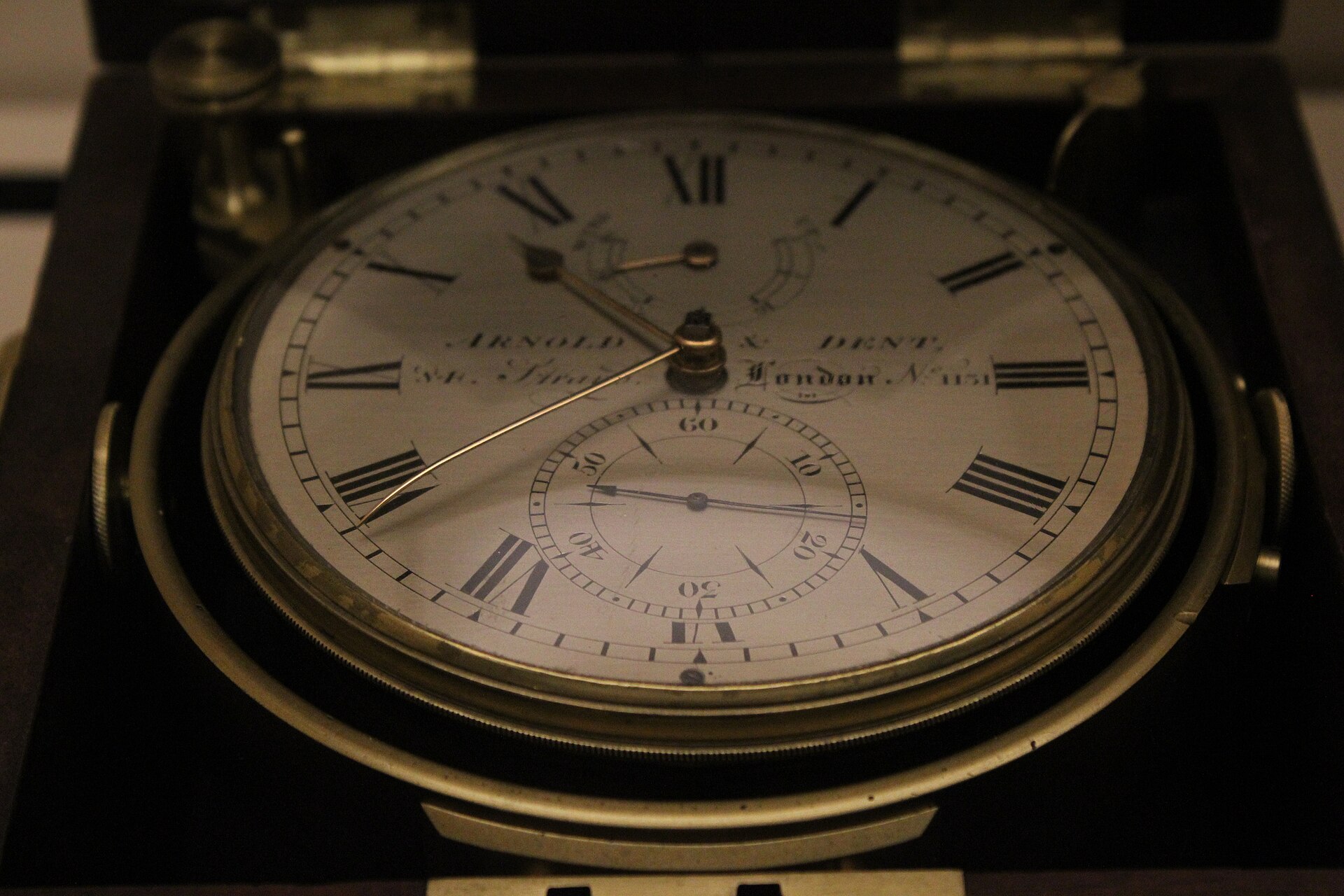
A marine chronometer is a precision timekeeper accurate enough to be used as a portable reference for finding longitude at sea. The problem was urgent by the early eighteenth century, and in 1714 the British Parliament offered a £ 20,000 reward for a practical solution. John Harrison, a self-taught carpenter and clockmaker, built a series of sea clocks culminating in H4, which kept time within the limits of the Act on voyages to Jamaica and Barbados. Rival astronomical methods, the lunar distance tables of the Nautical Almanac, and makers such as Kendall, Arnold and Earnshaw turned the chronometer into a standard tool of navigation during the nineteenth century.
In this article
- 1Overview
- 2The Longitude Problem
- 3Early Incentives and the 1714 Longitude Act
- 4John Harrison and the Marine Timekeepers
- 5Trials and Reward
- 6The Lunar Method and the Nautical Almanac
- 7Later Development and Adoption
- 8Legacy and Archives
- 9Timeline: from the 1714 Longitude Act to the age of the chronometer
- 10Knowledge graph
Overview
A marine chronometer is a precision timepiece carried on a ship and employed in the determination of the ship's position by celestial navigation. The instrument determines longitude by comparing Greenwich Mean Time with the time at the current location. The first true chronometer was the life work of John Harrison, spanning 31 years of persistent experimentation.
1. The Longitude Problem
Longitude measures distance east or west of the prime meridian, and it is measured in degrees, minutes, and seconds. By 1700 skilled seamen could find their position north or south, their latitude, but still lacked accurate instruments or methods to calculate their east-west position, known as longitude. Navigators had measured latitude with basic tools for thousands of years, yet longitude demanded more advanced tools and calculations, and the best and simplest way to measure it from a ship was with an accurate clock.
Each hour of difference between local noon and the time in Greenwich equals 15 degrees of longitude, because the Earth rotates 360 degrees in 24 hours. For every four seconds that the time source is in error, the east-west position may be off by up to just over one nautical mile.
Aboard a swaying ship in varying temperatures and salty air even the most accurate clocks of the age kept time poorly, until marine chronometers were invented in the 18th century. For generations the longitude problem taxed the world's greatest scientific minds, including Galileo Galilei and Isaac Newton, and led to the foundation of the Royal Observatory. The Royal Society of London and the French Académie des sciences were founded in 1660 and 1666, while observatories were established in Paris in 1667 and at Greenwich in 1675 on government and royal initiative.
2. Early Incentives and the 1714 Longitude Act
Spain established the first known incentive scheme for determining longitude in 1567; the States of Holland and other governments followed the Spanish example by offering rewards. The lunar distance method was initially proposed by Johannes Werner in 1514, while the Dutch scientist Gemma Frisius was the first to suggest in 1530 that a chronometer could determine longitude at sea.
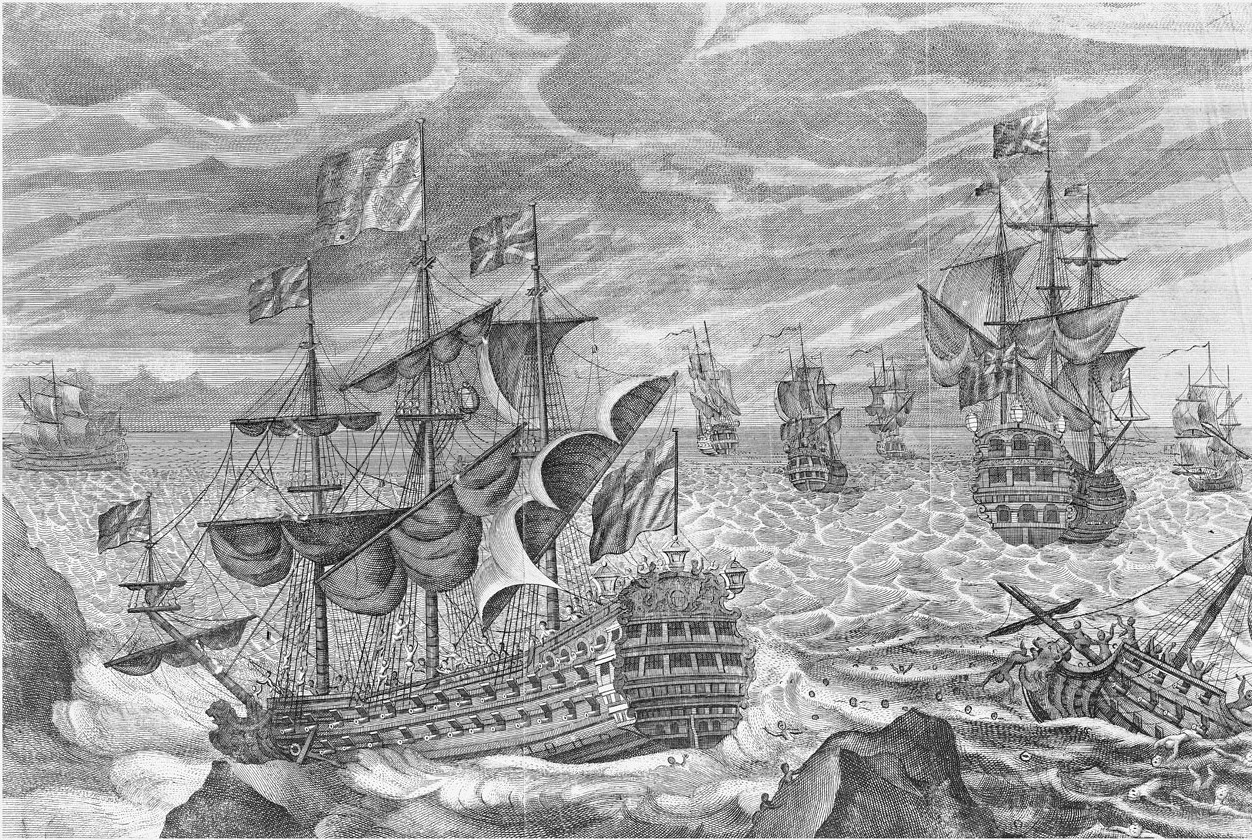
Five of the Admiral's ships struck the rocks off the Isles of Scilly on 22 October 1707, and more than 1400 men perished, including the Admiral. There is no evidence of a public outcry urging government action after the Scilly disaster; instead the Longitude Act appears to have resulted from lobbying by mathematicians such as William Whiston.
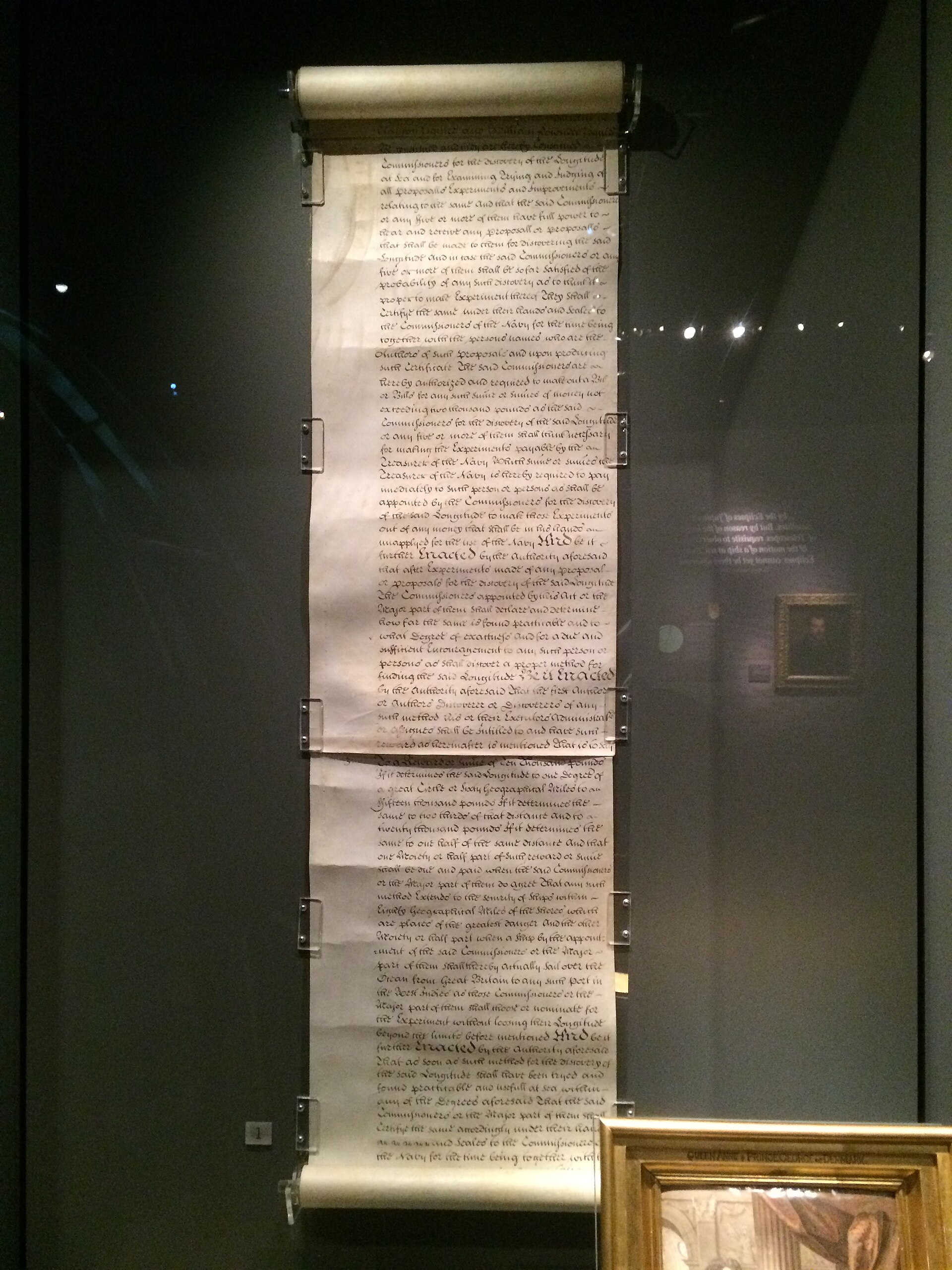
The original Longitude Prize established in 1714 offered a £20,000 reward for a reliable method to determine a ship's longitude at sea. The British government created a Board of Longitude empowered to award £20,000 to the first man who developed a chronometer with which longitude could be calculated within half a degree at the end of a voyage to the West Indies. The 1714 act was first added to in 1741 and amended, repealed and replaced on numerous occasions.
3. John Harrison and the Marine Timekeepers
John Harrison was born in March 1693 at Foulby in Yorkshire and died in London on 24 March 1776. John Harrison was a carpenter by trade who taught himself clock making, and his precision longcase clocks of the mid-1720s achieved an accuracy of one second in a month.
Harrison's first experimental marine timekeeper, H1, was made at Barrow-on-Humber between 1730 and 1735 and brought to London in 1735. It carried two interconnected swinging balances, an arrangement that kept it unaffected by the motion of a ship.
In the trial of 1736 Harrison and H1 were taken aboard HM ship Centurion for a voyage to Lisbon. On the return passage he correctly announced that a headland the officers took for the Start was in fact the Lizard, meaning the ship was 60 miles off course and in danger, and that H1 was working correctly.
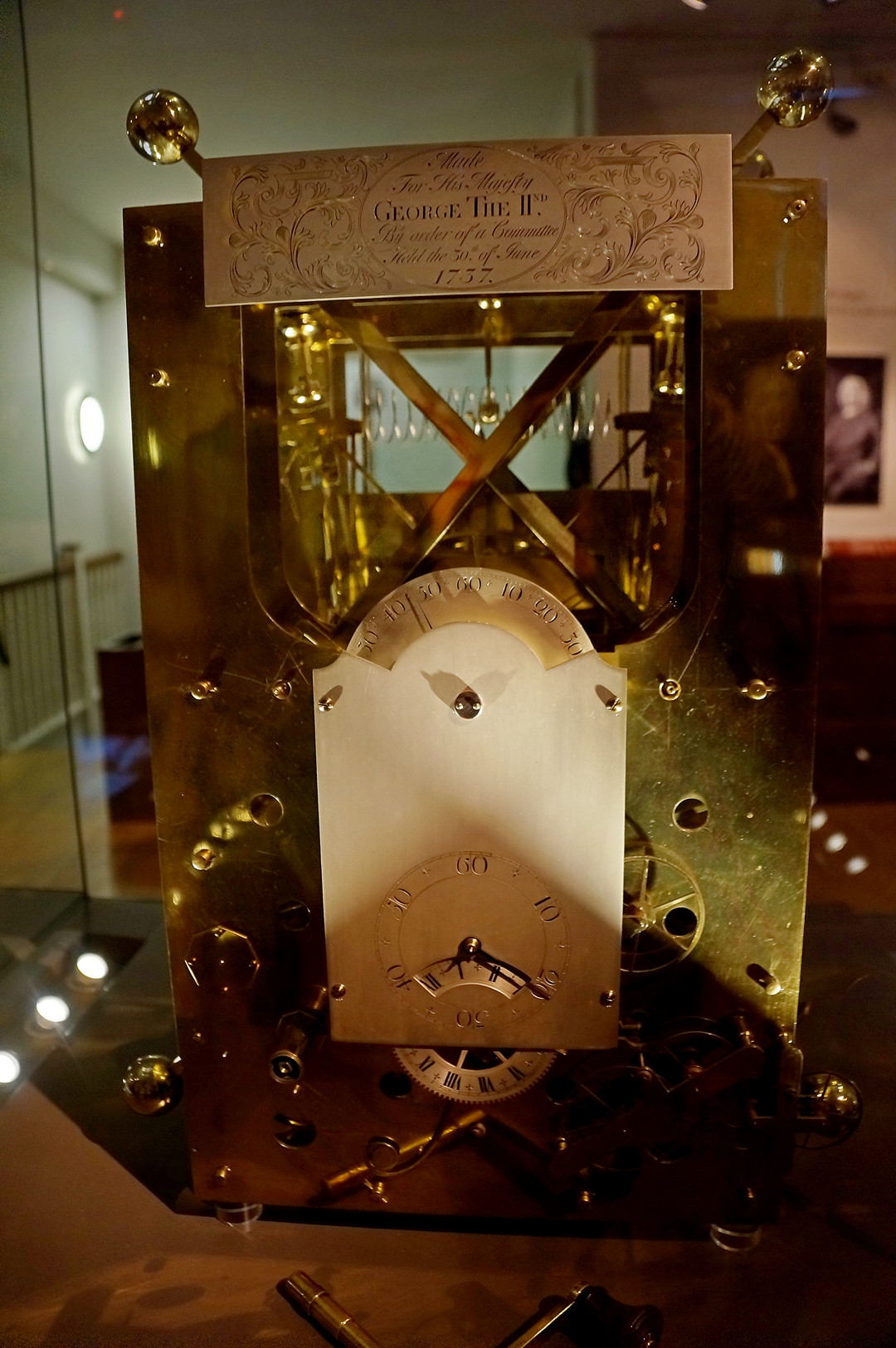
Eight Commissioners of Longitude assembled on 30 June 1737 and agreed on a payment of £500 with half paid up front so that Harrison could build an improved clock within two years. Made between 1737 and 1739 H2 is a larger and more solidly built version of H1 with the additional refinement of a remontoire, a device to keep the drive to the two balances as uniform as possible. It was never tested at sea because Harrison found a fundamental flaw in it, and it was taken from him in 1766 by the Astronomer Royal under the conditions of the longitude prize.
H3 was begun in 1740 and took nearly 19 years to build and adjust, yet its two large, heavy, circular balances could not keep time well enough to win the prize. Two of its inventions remain relevant today: the bimetallic strip and the caged roller bearing.
Around 1751-52 Harrison commissioned John Jefferys to make a pocket watch with a radically new type of balance, completed in 1753, and it worked so well that he incorporated it into H4, which was completed in 1759. Its high-energy watch balance was less affected by the movement of a ship, and it ticks five times a second. The H4 watch has a dial diameter of 102 mm and an overall weight of 1.45 kg, and its materials include brass, steel, silver, diamond, ruby, enamel, copper and glass.
4. Trials and Reward
In 1761 the Commissioners gave permission for Harrison's son William to prepare a voyage to Jamaica to trial H4, and on the way out he used the watch to predict an earlier landfall at Madeira than the crew were expecting. Before departure the watch was tested by Robertson, Master of the Academy at Portsmouth, who reported that on 6 November 1761 at noon it was 3 seconds slow.
H4 kept time on board a rolling ship to about one-fifth of a second a day, ten times better than required to win the government prize. 4 timekeeper was in error by only five seconds after the voyage to Jamaica.
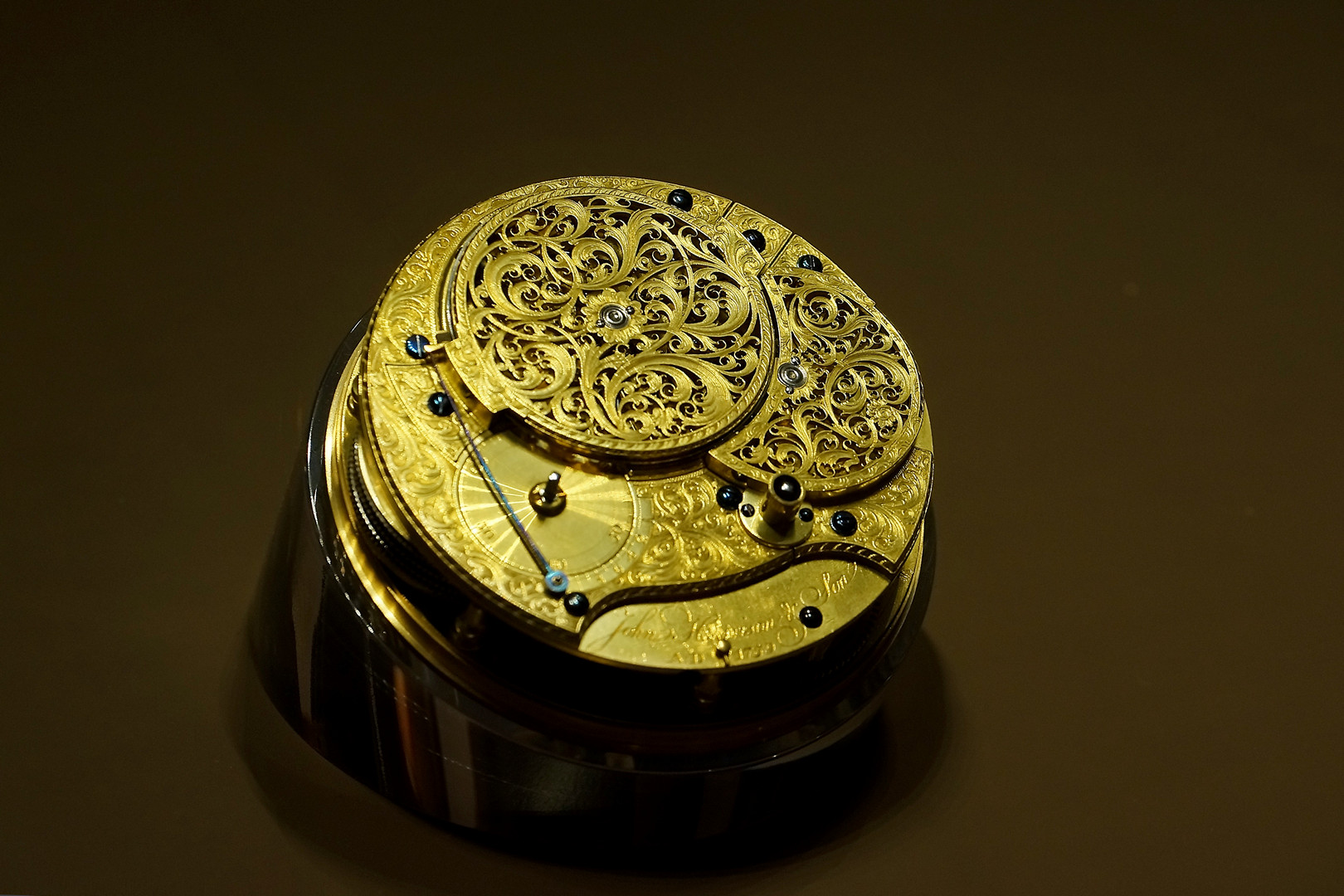
The new trial was to be held at Barbados with Nevil Maskelyne appointed as the astronomer in charge, determining the island's longitude by observations of Jupiter's satellites. Maskelyne departed England in September 1763 while Harrison sailed with H4 in March 1764 and arrived two months later.
When the Board met in February 1765 it confirmed that Harrison's timekeeper had kept time within the most stringent limits of the 1714 Act and recommended an award of £10,000 once he demonstrated the principles of his watch H4 to the Board. The Harrisons felt the full reward was already due, and the recommendations became law in the new Longitude Act of 10 May 1765 despite their objections.
On 5 May 1766 Astronomer Royal Nevil Maskelyne received Harrison's timekeeper from the Board of Longitude, locked up in a box sealed with three seals. Testing lasted 10 months and the dispute rekindled when Maskelyne published the results.
Although his chronometers all met the standards set up by the Board of Longitude, Harrison was not awarded any money until 1763 and was paid in full only in 1773 after further appeals. His rewards totalled £23,065 in all: £4,315 in increments from the Board of Longitude, £10,000 as an interim payment for H4 in 1765 and £8,750 from Parliament in 1773 which settled his claims.
5. The Lunar Method and the Nautical Almanac
Galileo Galilei discovered the moons of Jupiter in 1610 and they offered a celestial timekeeper visible at the same time from different points on Earth, though he failed to persuade the Spanish or the Dutch to invest in the method. Isaac Newton's theories in his book Principia failed to describe the Moon's motions well enough to find longitude accurately, and this flaw stimulated some of the finest mathematicians of the eighteenth century. The idea itself was not new: as long ago as 1514 it had been proposed that the Moon could be used to measure longitude at sea, and the Royal Observatory was founded to put this theory into practice.
Tobias Mayer, a brilliant astronomer in Hanover, believed part of the problem lay in the astronomical observations the theories were based on, and by the end of 1754 discussions of his ideas were taking place in England. James Bradley commissioned the London instrument maker John Bird to make a brass copy of Mayer's repeating circle, which after sea trials became the first marine sextant; Mayer's tables could then determine a ship's longitude to within 1°.
Nevil Maskelyne, a mathematics graduate from Cambridge who was ordained a minister in 1755 and admitted to the Royal Society in 1758, tested Mayer's ideas on the voyage to St Helena for the 1761 transit of Venus and found his longitude by lunars was only 1½° in error, against errors of up to 10° from dead reckoning; his interest in astronomy traced back to the eclipse of 25 July 1748, which he observed as a boy. Within months of his arrival at Greenwich in March 1765 Maskelyne had established the layout of the Nautical Almanac.
The work of successive Astronomers Royal culminated in 1766 when Nevil Maskelyne published the first Nautical Almanac, containing tables predicting the position of the Moon during 1767 relative to nearby bright stars. Maskelyne succeeded Nathaniel Bliss as astronomer royal in 1765 and continued the supervision of the almanac until his death.
6. Later Development and Adoption
In France in 1748 Pierre Le Roy invented the detent escapement characteristic of modern chronometers, and his 1766 chronometer with a temperature-compensated balance is considered by Rupert Gould to be the foundation of the modern chronometer. Thomas Earnshaw and John Arnold made the greatest strides toward practicality, developing and patenting simplified, detached spring detent escapements in 1780 while moving the temperature compensation to the balance.
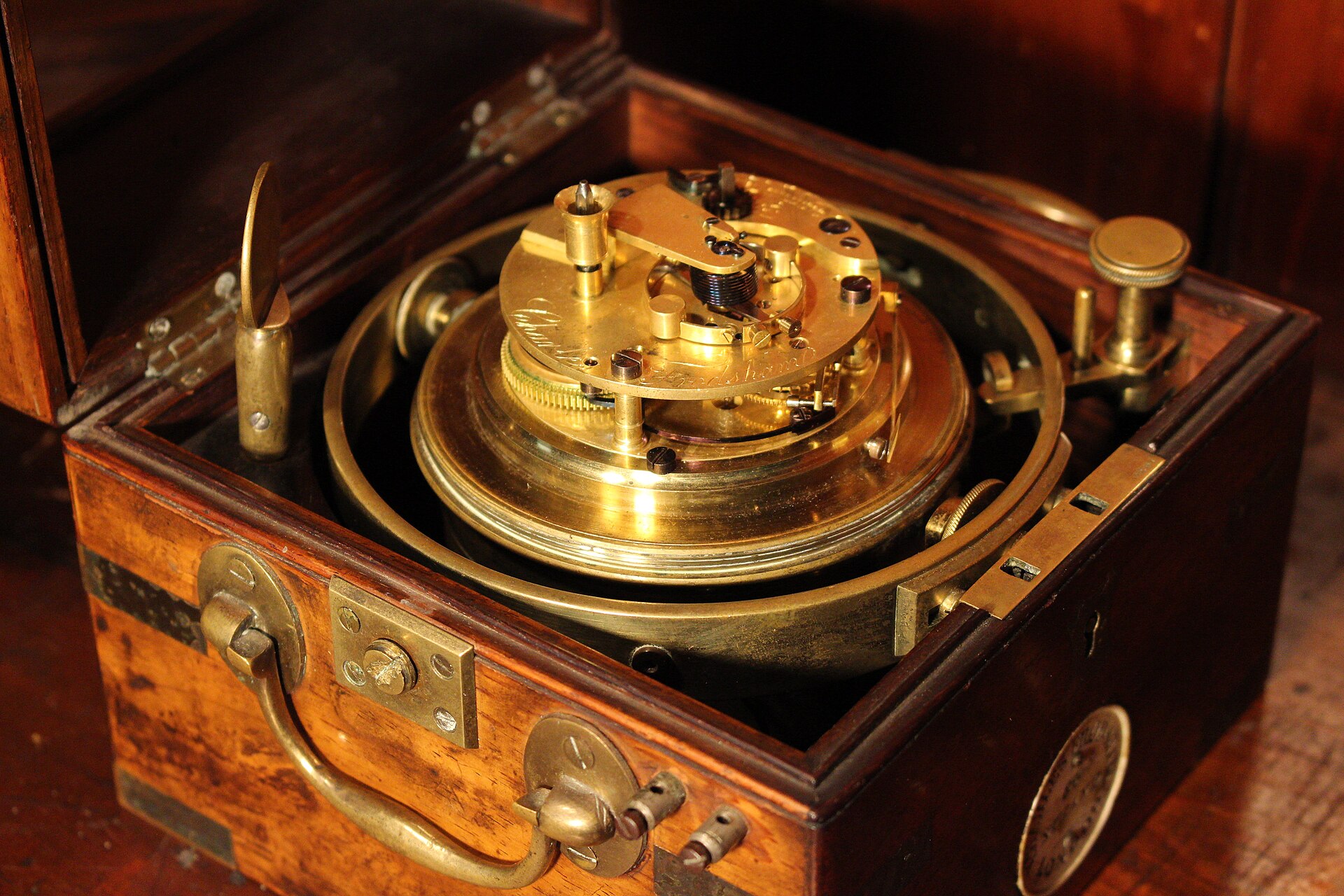
The word chronometer was originally employed in 1779 by the English clock maker John Arnold. Ordinary clocks were useless at sea due to temperature changes and the ship's motion. Captain James Cook used K1, a copy of H4 made by Larcum Kendall, on his second and third voyages, having used the lunar distance method on his first. Chronometers were not regularly supplied to the Royal Navy until about 1825.
7. Legacy and Archives
The marine chronometer quickly became a vital tool of maritime trade, revolutionizing sea travel and saving countless lives.
The Royal Greenwich Observatory Archives at Cambridge University Library include the complete run of the surviving papers of the Board of Longitude covering the eighteenth century until its abolition in 1828 by Act of Parliament. These papers throw a vivid light on the role of the British state in encouraging invention and discovery and on the culture of technical ingenuity in the long eighteenth century. The site transcribes 23 acts in total, beginning with the 1714 act for providing a public reward for such person or persons as shall discover the longitude at sea.
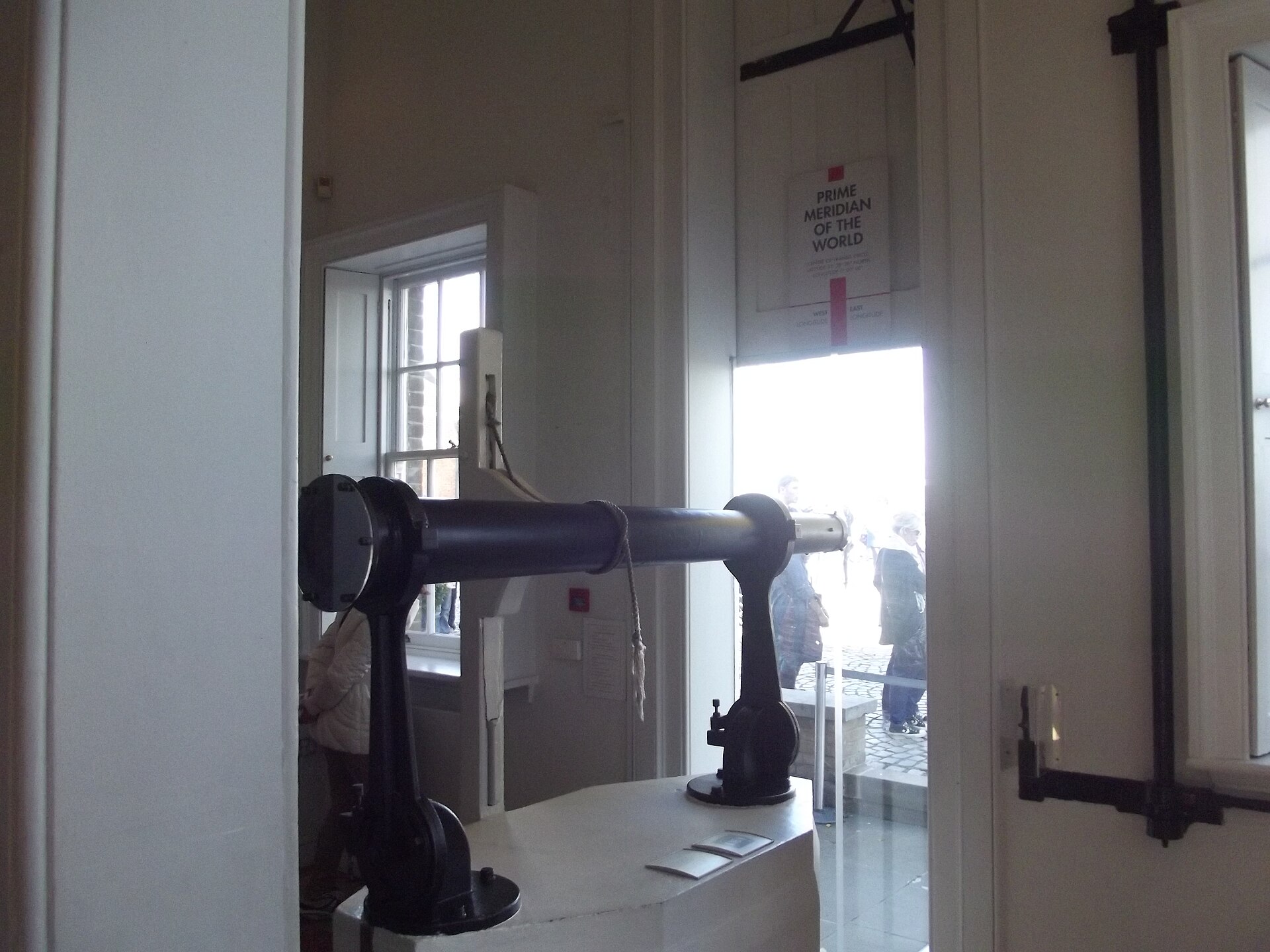
The bulk of the digitised collection was produced as part of a partnership between Cambridge University Library, the National Maritime Museum and the AHRC-funded Board of Longitude Project. Challenge Works has reimagined the original Longitude Prize as a series of multi-million-pound challenge prizes. In 1884 representatives at the International Meridian Conference in Washington met to define the meridian representing zero degrees longitude and chose a line through the telescope at the Royal Observatory in Greenwich.
8. Timeline: from the 1714 Longitude Act to the age of the chronometer
- 1675Royal Observatory founded at GreenwichKing Charles II ordered a small observatory at Greenwich for finding out the longitude of places; John Flamsteed was appointed astronomical observator on 4 March 1675 and laid the foundation stone on 10 August the same year.
- 22 October 1707The Scilly naval disasterFive of Admiral Sir Cloudesley Shovell's ships struck the rocks off the Isles of Scilly on the evening of 22 October 1707; within hours four ships went down and more than 1400 men including the Admiral perished.
- 9 July 1714Royal assent to the Longitude ActThe call for a British scheme was answered on 9 July 1714 when Queen Anne gave her royal assent to an Act for Providing a Publick Reward for such Person or Persons as Shall Discover the Longitude at Sea; the £20,000 reward would be worth at least £1,500,000 today.
- 1735H1 unveiled in LondonHarrison brought his first marine timekeeper H1 to London in 1735 after testing it on the River Humber; it was the first relatively successful marine timekeeper of any kind and was the toast of London.
- May 1736The Lisbon trial of H1Harrison and H1 were taken aboard HM ship Centurion in May 1736 for a trial voyage to Lisbon; on the return passage aboard the Orford he correctly announced that a headland the officers thought was the Start was in fact the Lizard, some 60 miles off course.
- 30 June 1737The Commissioners award £500Eight Commissioners of Longitude assembled on 30 June 1737 and agreed on a payment of £500 to be half paid up front so that Harrison could build an improved clock within two years.
- 1740Harrison begins H3Harrison began his third marine timekeeper H3 in 1740 and would continue to work on it for 19 years; its two large heavy circular balances could not be persuaded to keep time well enough to win the prize.
- 1759H4 completedHarrison's prize-winning longitude watch H4 was completed in 1759 following a pocket watch made to his design by John Jefferys in 1753 which showed him that the solution lay in smaller watches.
- 18 November 1761The Jamaica voyageThe watch was placed aboard the 50-gun HMS Deptford, which set sail from Portsmouth on 18 November 1761; Harrison's son William carried it and returned in March 1762 to report the successful outcome.
- 1763-1764The Barbados trialThe Harrisons were obliged to make another trip to Bridgetown on the island of Barbados to settle the matter; the watch kept time to within 39 seconds, an error of less than 10 miles in the longitude of Bridgetown.
- 1765Act for the encouragement of John HarrisonParliament passed an Act for the Encouragement of John Harrison, to publish and make known his Invention of a Machine or Watch, for the Discovery of the Longitude at Sea.
- 5 May 1766H4 handed over for testingOn 5 May 1766 Astronomer Royal Nevil Maskelyne received Harrison's timekeeper from the Board of Longitude, locked up in a box sealed with three seals; testing lasted 10 months and the dispute rekindled when Maskelyne published the results.
- 1766-1767First Nautical AlmanacWithin months of his arrival at Greenwich Maskelyne had established the layout of the Nautical Almanac, and the data for 1767 were ready to be printed by the end of 1766 for navigators to use the following year.
- 1772-1773Harrison's final rewardAfter ten weeks of daily observations between May and July in 1772 King George found the watch accurate to within one third of one second per day; in 1773 Harrison received £8,750 from Parliament as final settlement.
- 24 March 1776Death of John HarrisonHarrison died on 24 March 1776 at the age of eighty-two, just shy of his eighty-third birthday; he was buried at St John's Church, Hampstead.
- 1828Board of Longitude abolishedThe Board of Longitude was dissolved by Act of Parliament in 1828 and its surviving papers from the eighteenth century are held in the Royal Greenwich Observatory Archives at Cambridge University Library.
References (21)
- 1Marine chronometer — Wikipedia WebView source
- 2What is longitude? — NOAA National Ocean Service WebView source
- 3Time and Longitude gallery — Royal Museums Greenwich WebView source
- 4What made the search for longitude so important? — Royal Museums Greenwich WebView source
- 5About the Longitude Prize — Challenge Works (Nesta) WebView source
- 6The Longitude Acts — transcriptions (article 1311) — The Royal Observatory Greenwich WebView source
- 7John Harrison — British horologist — Encyclopaedia Britannica WebView source
- 8Longitude found: the story of Harrison's timekeepers — Royal Museums Greenwich WebView source
- 9Marine timekeeper H1 (object ZAA0034) — Royal Museums Greenwich WebView source
- 10Marine timekeeper H2 (object ZAA0035) — Royal Museums Greenwich WebView source
- 11Marine timekeeper H3 (object ZAA0036) — Royal Museums Greenwich WebView source
- 12Marine timekeeper H4 (object ZAA0037) — Royal Museums Greenwich WebView source
- 13John Harrison — Wikipedia WebView source
- 14A Walk Through Time — A Revolution in Timekeeping — National Institute of Standards and Technology (NIST) WebView source
- 15Longitude found: Nevil Maskelyne and the lunar method — Royal Museums Greenwich WebView source
- 16History of the Royal Observatory — Royal Museums Greenwich WebView source
- 17Nevil Maskelyne — Encyclopaedia Britannica WebView source
- 18Chronometer — Encyclopaedia Britannica WebView source
- 19John Harrison and the quest for longitude / Jonathan Betts (library record) — Royal Museums Greenwich WebView source
- 20Royal Greenwich Observatory Archives — Papers of the Board of Longitude — Cambridge University Library (Cambridge Digital Library) BookView source
- 21John Harrison's marine timekeepers — Royal Museums Greenwich WebView source