Spain
The kingdom that fills five-sixths of the Iberian Peninsula — heir to al-Andalus, founder of a world empire, and today one of Europe's largest economies and the world's second-most visited country.
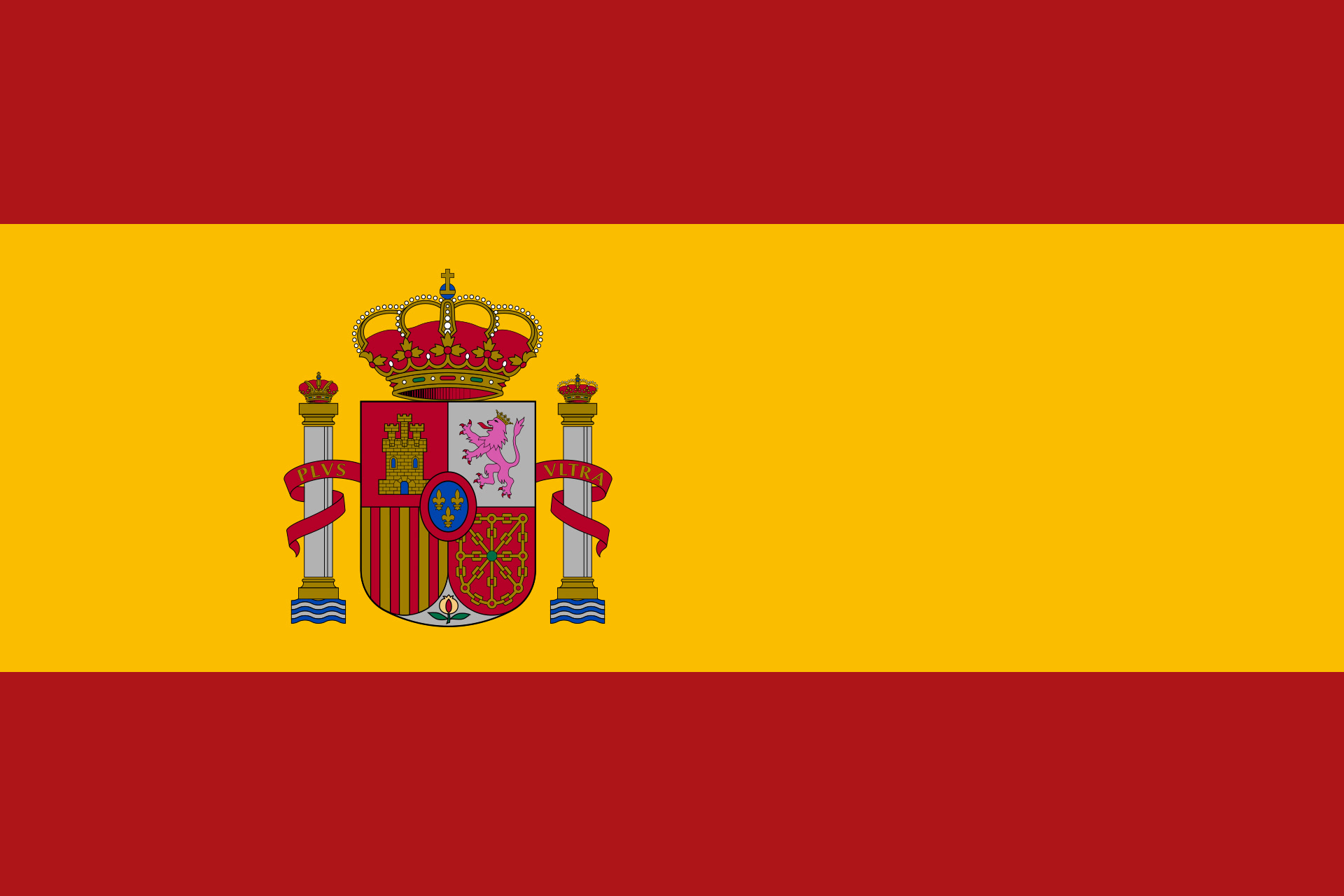
Spain (España) occupies about five-sixths of the Iberian Peninsula in southwestern Europe, with the Balearic Islands in the Mediterranean and the volcanic Canary Islands in the Atlantic. A Roman and Visigothic land, it became al-Andalus after the Muslim conquest of 711, and medieval Córdoba grew into one of Europe's largest and most cultured cities before the Reconquista ended in 1492 with the fall of Granada and the first voyages to the Americas. Habsburg Spain built a global empire under Charles I and Philip II; after the loss of its last New World colonies in 1898, the 20th century brought the Second Republic, a devastating civil war (1936–39), four decades of Franco's dictatorship, and a negotiated transition crowned by the 1978 Constitution. Today Spain is a parliamentary monarchy and a member of the EU since 1986 whose economy — olive oil, automobiles, and the world's second-most-visited tourism industry — ranks among the largest in the European Union, while Cervantes, flamenco, its four co-official languages and La Roja's football titles remain its global signature.
In this article
- 1Overview
- 2Geography and Climate
- 3History: Al-Andalus and the Reconquista
- 4The Alhambra and Granada
- 5Empire and Exploration
- 6Civil War and Franco Era
- 7Transition to Democracy and Modern Politics
- 8Languages
- 9Economy
- 10Tourism and Culture
- 11Sports
- 12Timeline: from al-Andalus to the European Union
- 13Frequently asked questions
- 14Knowledge graph
Overview
Spain occupies about five-sixths of the Iberian Peninsula, the southwestern tip of Europe that separates the Mediterranean Sea from the Atlantic Ocean. It is the largest country in Southern Europe and the fourth-most populous EU member state. The Iberian Peninsula is occupied by Spain and Portugal, and its name comes from its ancient inhabitants, whom the Greeks called Iberians.
Spain is a unitary parliamentary constitutional monarchy. King Felipe VI has been head of state since June 2014, while Prime Minister Pedro Sánchez serves as head of government. The country is a unitary state composed of 17 autonomous communities and 2 autonomous cities with varying degrees of autonomy.
The official language is Spanish (Castilian), while Catalan, Galician, Basque and Aranese are co-official in their regions. Spanish is used by about 99% of the population as a first or second language. The currency is the euro, adopted on 1 January 1999. Spain has been an EU member state since 1 January 1986 and joined NATO on 30 May 1982.
1. Geography and Climate
Spain occupies about five-sixths of the Iberian Peninsula, the southwestern tip of Europe that separates the Mediterranean Sea from the Atlantic Ocean. The peninsula is shared with Portugal, and its name derives from its ancient inhabitants, whom the Greeks called Iberians, probably after the Ebro, the peninsula's second-longest river after the Tagus. In the northeast the Pyrenees form an effective land barrier separating the peninsula from the rest of Europe, while in the south the narrow Strait of Gibraltar separates it from North Africa. The Pyrenees also form the natural border between France and Spain, with the principality of Andorra nestled among their peaks. Aneto Peak, at 11,169 feet (about 3,404 m), is the highest point of the Pyrenees, in the Maladeta massif of the Central Pyrenees.
The Canary Islands are a Spanish autonomous community, an archipelago in the Atlantic Ocean whose closest island lies 67 miles (108 km) off the northwest African mainland. The islands divide into a western group — Tenerife, Gran Canaria, La Palma, La Gomera and Ferro — and an eastern group comprising Lanzarote, Fuerteventura and six islets. Formed by volcanic eruptions millions of years ago, the islands have a subtropical climate with warm temperatures and little seasonal variation. Teide Peak on Tenerife rises to 12,198 feet (3,718 m), the highest point in Spain.
The peninsula has a dense network of streams, three of which rank among Europe's longest: the Tagus at 626 miles (1,007 km), the Ebro at 565 miles (909 km) and the Douro at 556 miles (895 km). The Tagus is the longest river in Spain. Spain borders Portugal to the west and France to the northeast, separated from France by the tiny principality of Andorra and by the great wall of the Pyrenees.
2. History: Al-Andalus and the Reconquista
Al-Andalus was the name of the territories of the Iberian Peninsula governed by Muslims from 711 until the collapse of the Spanish Umayyad dynasty in the early 11th century. The Moors crossed the Strait of Gibraltar from Tangier in 711, ending Visigothic rule over the peninsula. Tariq ibn Ziyad, the Muslim ruler of Tangier, routed the Visigothic king in 711 and within a few years controlled all of Spain. From 711 to 756 al-Andalus was a dependent emirate of the Umayyad Caliphate of Damascus; in 756 Abd al-Rahman I established an independent Umayyad emirate at Córdoba. In 929 Abd al-Rahman III proclaimed himself caliph, founding the Caliphate of Córdoba.
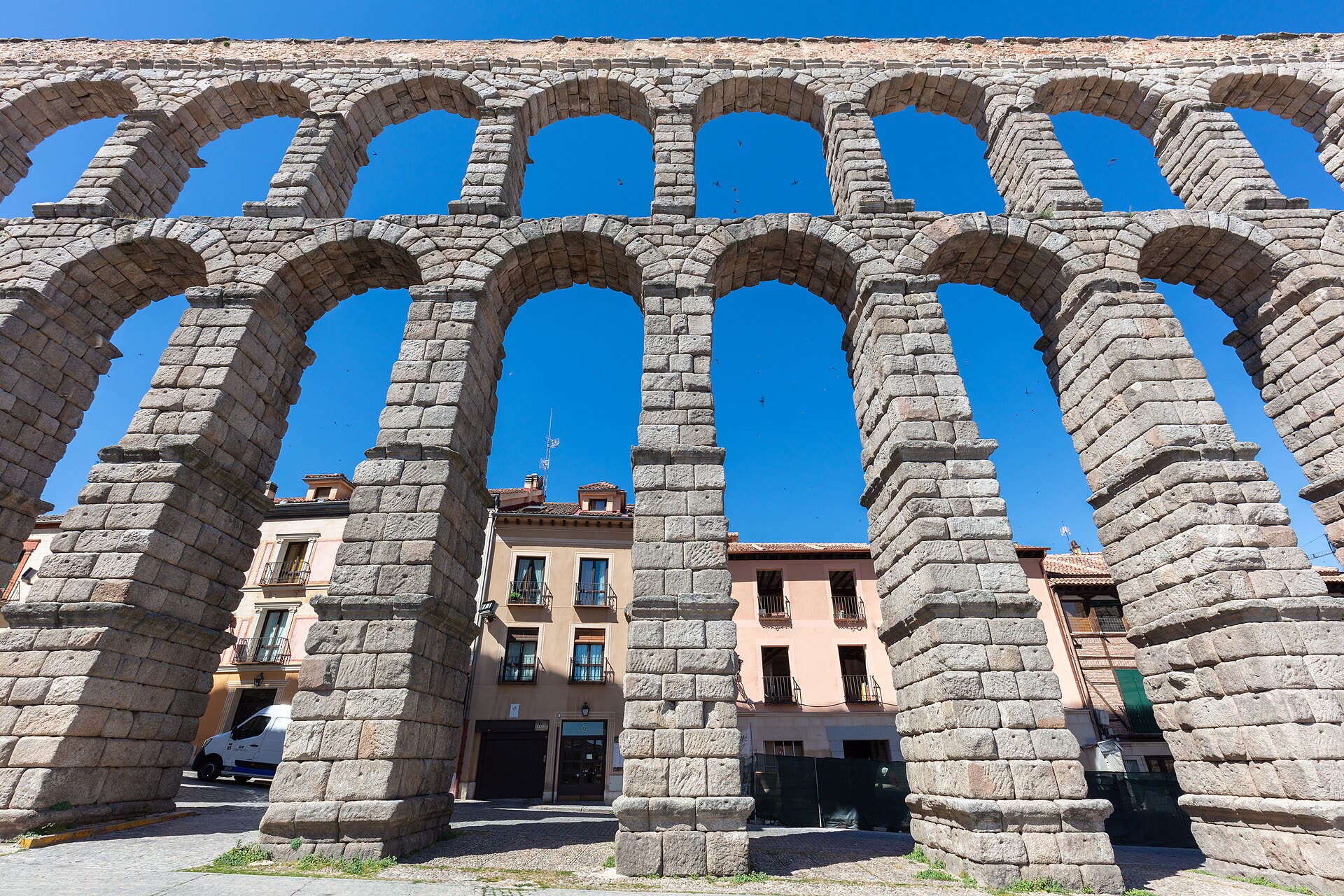
After Abd al-Rahman III proclaimed himself caliph in 929, Córdoba became the largest and probably the most cultured city in Europe, with some 100,000 inhabitants around the year 1000. The Great Mosque of Córdoba is an irreplaceable testimony of the Caliphate of Córdoba and the most emblematic monument of Islamic religious architecture. In the 13th century, under Ferdinand III, the Great Mosque was turned into a cathedral, and new defensive structures such as the Alcázar de los Reyes Cristianos were erected. Córdoba fell to the Castilian king Ferdinand III in 1236 and became part of Christian Spain.
The Reconquista was a series of campaigns by Christian states to recapture territory from the Muslims, who had occupied most of the Iberian Peninsula since the early 8th century. It began with the Battle of Covadonga around 718, when Asturias engaged the Moors, and ended in 1492 with the conquest of Granada by Ferdinand and Isabella, the Catholic Monarchs. The most active phase of the Reconquista ran through the 11th–13th centuries, and by 1250 most of Spain was under Christian control. At Las Navas de Tolosa (16 July 1212), Castilian forces backed by Aragon, Navarre and Portugal routed the Almohads, removing the last serious Islamic threat to Christian hegemony in Spain. Ferdinand III’s campaigns in Andalusia began with the capture of Córdoba in 1236 and culminated in the surrender of Sevilla (Seville) in 1248.
The marriage of Ferdinand II of Aragon and Isabella I of Castile in 1469 united the Spanish crown. Many historians believe the crusading spirit of the Reconquista survived in Spain’s later emphasis on religious uniformity, seen in the influence of the Inquisition and the expulsion of people of Moorish and Jewish descent.
3. The Alhambra and Granada
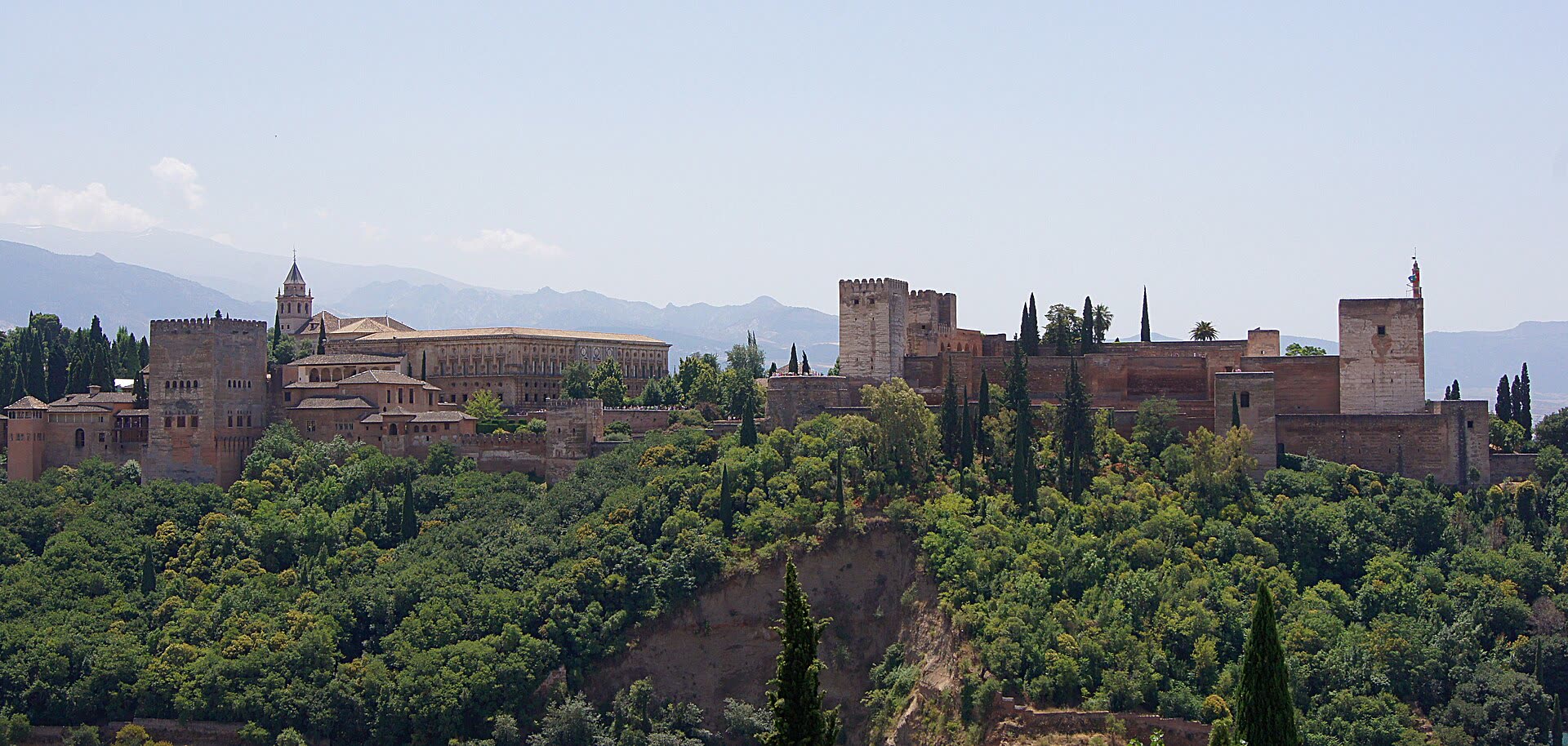
The Alhambra and the Albayzín, on two adjacent hills, form the medieval part of Granada, rising above the modern lower town. East of the Alhambra fortress and residence lie the magnificent gardens of the Generalife, the former country residence of the emirs who ruled this part of Spain in the 13th and 14th centuries. The Alhambra is the only preserved palatine city of the Islamic period and the finest example of Nasrid art in architecture and decoration.
Construction of the Alhambra began in 1238 under Muhammad I Ibn al-Ahmar, first Nasrid emir and founder of the Emirate of Granada — the last Muslim state of al-Andalus. After the Reconquista concluded in 1492, the Alhambra became the Royal Court of Ferdinand and Isabella — where Columbus received royal endorsement for his expedition — and the palaces were partially altered. The Alhambra was designated a UNESCO World Heritage Site in 1984, in the inscription “Alhambra, Generalife and Albayzín, Granada” (reference no.
4. Empire and Exploration
Charles V inherited a vast empire that stretched from one end of Europe to the other. He abdicated in 1556 without achieving his goal of a universal empire. Under Philip II the Spanish empire prospered, attaining its greatest power, extent and influence.
Christopher Columbus was a navigator who explored the Americas under the flag of Spain, making four transatlantic voyages between 1492 and 1504. After at least two rejections, Columbus finally obtained royal support for his expedition in January 1492. The Spanish-American War was a conflict between the United States and Spain that effectively ended Spain’s role as a colonial power in the New World.
5. Civil War and Franco Era
The Spanish Civil War (1936–39) began as a military revolt against the Republican government of Spain, supported by conservative elements within the country; when the coup failed to win control of the entire country, a bloody civil war ensued, fought with great ferocity on both sides. The Nationalist rebels received aid from Fascist Italy and Nazi Germany, while the Republicans were aided by the Soviet Union and by the International Brigades of volunteers from Europe and the United States. A well-planned military uprising began on 17 July 1936 in garrison towns throughout Spain. Franco became head of state of the new Nationalist regime on 1 October 1936. On 28 March 1939, some 200,000 Nationalist troops entered Madrid unopposed.
Casualty figures can only be roughly estimated: Nationalist forces put the figure at 1,000,000, and more recent estimates have been closer to 500,000 or less. Franco’s regime became an institutionalized authoritarian system, differing in this respect from the fascist party-states of the German and Italian models. The tens of thousands of executions carried out by the Nationalist regime, continuing into the first years after the war ended, earned Franco more reproach than any other single aspect of his rule.
6. Transition to Democracy and Modern Politics
Following Franco's death in 1975, a Bourbon king, Juan Carlos, returned to the throne and established a constitutional monarchy; since then Spain has been ruled by a succession of elected governments, some socialist, some conservative, but all devoted to democracy. Spain's new democratic constitution was ratified by referendum on 6 December 1978. Suárez resigned as prime minister on 29 January 1981, and on 23 February 1981 an attempted coup d'état known as 23-F took place. Spain has been an EU member state since 1 January 1986, part of the euro area since 1 January 1999 and of the Schengen area since 26 March 1995.
Spain is a unitary state composed of 17 autonomous communities and 2 autonomous cities with varying degrees of autonomy. Spain is a constitutional monarchy with a parliamentary system: the monarch is head of state, and the bicameral Cortes Generales is composed of the Congress of Deputies and the Senate. The 1978 Constitution defines Spain as a social and democratic state governed by law, upholding liberty, justice, equality and political pluralism as the highest values of its legal order. National sovereignty resides in the Spanish people, from whom the powers of the state emanate.
The Constitution is founded on the indissoluble unity of the Spanish nation, and recognises and guarantees the right to autonomy of the nationalities and regions that compose it, and solidarity among them all.
7. Languages
The official language of Spain is Spanish, or Castilian, while Catalan, Galician, Basque and Aranese hold co-official status in their respective regions. The constitution states that “Castilian is the Spanish official language of the State,” but that “all other Spanish languages (including Euskera [Basque], Catalan, and Galician) will also be official in the corresponding autonomous communities”. Castilian is the official Spanish language of the state; all Spaniards have the duty to know it and the right to use it.
Spanish is used by about 99% of the population as a first or second language; Catalan/Valencian is the first language of 10.5%, followed by Galician at 3.8% and Basque at 1.4%. Alongside Spanish, Galician, Basque and the Aranese standard of Occitan are co-official in their territories, while Aragonese, Asturian and Leonese are legally protected but not co-official.
Spanish has 519 million native speakers and 117 million second-language speakers — about 636 million speakers in total in 2025.
8. Economy
Spain's economy is the world's 14th-largest by nominal GDP, the fourth-largest in the EU and the sixth-largest in Europe. Its GDP stands at $2.042 trillion nominal (2026 est.) — 14th worldwide. GDP per capita of €34,500 ranks below the EU average of €38,100, and the country accounts for 8.7% of the EU's total GDP.
The boom of the 2000s was reversed, leaving over a quarter of Spain's workforce unemployed by 2012; in aggregate, GDP fell almost 9% during 2009–2013. By 2012 Spain was by far the world's biggest producer of olive oil, accounting for 50% of total worldwide production. The country is the 8th-largest automobile producer in the world and 2nd in Europe after Germany (2015).
9. Tourism and Culture
In 2025 Spain was the world’s second-most visited country, recording around 97 million international tourists — an eighth consecutive record year. In 2024 domestic and international tourism together accounted for 12.6% of Spain’s GDP — about €200.7 billion. In 2024 Spain was again the EU’s most visited destination for international tourists, with 322 million nights spent in tourist accommodation establishments. Spain has 50 UNESCO World Heritage properties.
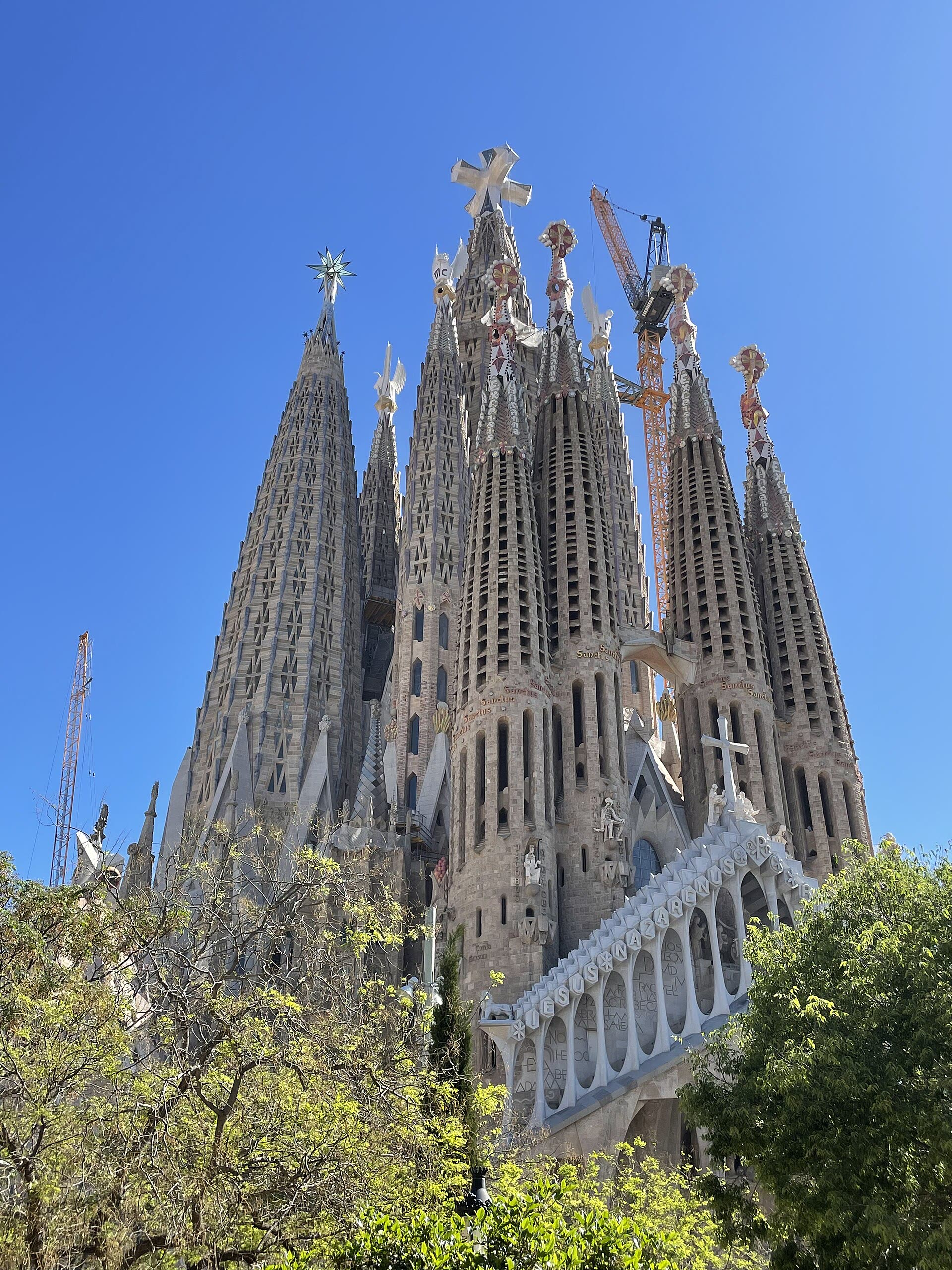
Seven properties built by the architect Antoni Gaudí (1852–1926) in or near Barcelona testify to his exceptional creative contribution to the development of architecture and building technology in the late 19th and early 20th centuries. Miguel de Cervantes is the most important and celebrated figure in Spanish literature, best known as the author of Don Quixote (1605, 1615). Don Quixote has been translated, in full or in part, into more than 60 languages.
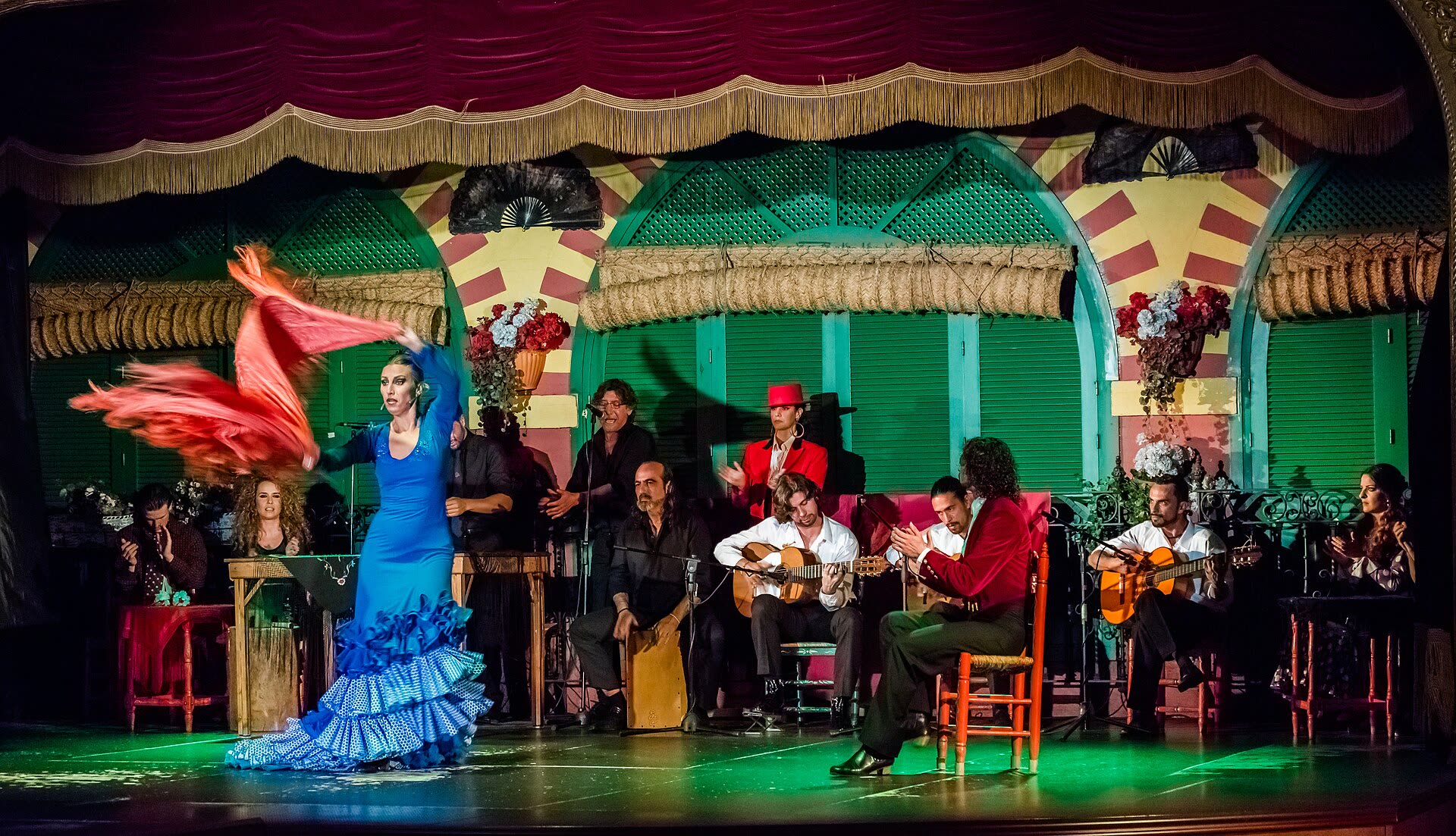
Flamenco is an artistic expression fusing song (cante), dance (baile) and musicianship (toque); Andalusia in southern Spain is its heartland, though it also has roots in regions such as Murcia and Extremadura. Flamenco was inscribed in 2010 on UNESCO’s Representative List of the Intangible Cultural Heritage of Humanity. Flamenco is a badge of identity for numerous communities and groups, in particular the Gitano (Roma) community, which has played an essential role in its development.
10. Sports
Spain has been a major world sports power especially since the 1992 Summer Olympics and Paralympics hosted in Barcelona, which stimulated great interest in sport in the country. The national football team became the first national team to win three consecutive major titles — the 2010 World Cup and the European Championships of 2008 and 2012. Spain won 2–1 in Berlin to clinch a record fourth European Championship title. After winning the 2026 World Cup, Spain became the first national team to hold the men’s and women’s World Cup titles simultaneously.
11. Timeline: from al-Andalus to the European Union
- 711The Muslim conquest beginsTariq ibn Ziyad, the Muslim ruler of Tangier, routes the Visigothic ruler and within a few years Muslims control all of Spain — the beginning of al-Andalus.
- c. 718Battle of CovadongaThe Reconquista traditionally begins about 718, when Asturias engages the Moors at Covadonga.
- 929Caliphate of Córdoba proclaimedAbd al-Rahman III proclaims himself caliph of the West; Córdoba grows into the largest and probably the most cultured city in Europe, with a population of some 100,000 around the year 1000.
- 16 July 1212Battle of Las Navas de TolosaCastilian forces backed by Aragon, Navarre and Portugal rout the Almohads, removing the last serious Islamic threat to Christian hegemony in Spain.
- 1236Córdoba falls to CastileFerdinand III captures Córdoba; his campaigns culminate in the surrender of Sevilla in 1248.
- 1469Ferdinand and Isabella unite the crownsThe marriage of Ferdinand II of Aragon and Isabella I of Castile unites the Spanish crown.
- 2 January 1492Granada falls — the Reconquista endsFerdinand and Isabella, the Catholic Monarchs, conquer Granada, and in the same year Columbus obtains royal support for his Atlantic expedition.
- 1588The Invincible ArmadaUnder Philip II, whose empire attained its greatest power, extent and influence, the Invincible Armada sails against England in 1588.
- 1898The Spanish-American WarSpain’s defeat in the war with the United States effectively ends its role as a colonial power in the New World.
- 17 July 1936 – 1 April 1939The Spanish Civil WarA military uprising against the Republic escalates into a civil war; Franco becomes head of state of the Nationalist regime on 1 October 1936, and Nationalist troops enter Madrid in March 1939.
- 20 November 1975Franco dies; Juan Carlos takes the throneAfter four decades in power, Franco dies; a Bourbon king, Juan Carlos, returns to the throne and establishes a constitutional monarchy.
- 6 December 1978Democratic constitution ratifiedSpaniards ratify a new democratic constitution by referendum on 6 December 1978.
- 1 January 1986Spain joins the European CommunitySpain becomes a member state of the European Communities, deepening its integration into Western Europe.
- 2010World Cup glorySpain become the first national team to win three consecutive major titles: the 2010 World Cup and the European Championships of 2008 and 2012.
- 2026World champions againSpain win the 2026 World Cup, becoming the first national team to hold the men’s and women’s World Cup titles simultaneously; they had clinched a record fourth European title in 2024.
12. Frequently asked questions
What is the capital of Spain, and how is the country governed?
Spain's capital is Madrid 4Spain — EU country profile · European Union ↗. The country is a unitary parliamentary constitutional monarchy 2Spain · Wikipedia ↗, with King Felipe VI as head of state since June 2014 2 and Prime Minister Pedro Sánchez as head of government 1Spain · Encyclopædia Britannica ↗.
How many people live in Spain, and how large is the country?
What language or languages are spoken in Spain?
When did Spain join the European Union and NATO, and what currency does it use?
What are Spain's most notable geographical features?
Spain's highest peak is Teide Peak on Tenerife, rising to 3,718 m (12,198 ft) 8Canary Islands · Encyclopædia Britannica ↗, and its longest river is the Tagus (Tajo), which runs 1,007 km 1. The country also counts 50 UNESCO World Heritage properties 26Spain — World Heritage Convention (state page) · UNESCO World Heritage Centre ↗.
How important is tourism to Spain, and how strong is its economy?
References (30)
- 1Spain — Encyclopædia Britannica Web↩View source
- 2Spain — Wikipedia Web↩View source
- 3Iberian Peninsula — Encyclopædia Britannica WebView source
- 4Spain — EU country profile — European Union Web↩View source
- 5Languages of Spain — Wikipedia Web↩View source
- 6Spanish transition to democracy — Wikipedia Web↩View source
- 7Pyrenees — Encyclopædia Britannica WebView source
- 8Canary Islands — Encyclopædia Britannica Web↩View source
- 9Al-Andalus — Encyclopædia Britannica WebView source
- 10Reconquista — Encyclopædia Britannica WebView source
- 11Cordoba — Encyclopaedia Britannica WebView source
- 12Historic Centre of Cordoba — UNESCO World Heritage Centre WebView source
- 13Alhambra, Generalife and Albayzin, Granada — UNESCO World Heritage Centre WebView source
- 14Alhambra — Wikipedia WebView source
- 15Charles V — Encyclopædia Britannica WebView source
- 16Philip II — Encyclopædia Britannica WebView source
- 17Christopher Columbus | Biography, Nationality, Voyages, Ships, Route, & Facts — Encyclopaedia Britannica WebView source
- 18Spanish-American War — Encyclopædia Britannica WebView source
- 19Spanish Civil War — Encyclopædia Britannica WebView source
- 20Francisco Franco — Encyclopædia Britannica WebView source
- 21Constitución Española (BOE-A-1978-31229) — Boletín Oficial del Estado (BOE) 1978 WebView source
- 22Spanish language — Wikipedia WebView source
- 23Economy of Spain — Wikipedia Web↩View source
- 24Tourism in Spain — Wikipedia Web↩View source
- 25Tourism statistics — Statistics Explained — Eurostat (European Commission) WebView source
- 26Spain — World Heritage Convention (state page) — UNESCO World Heritage Centre Web↩View source
- 27Works of Antoni Gaudí — UNESCO World Heritage Centre WebView source
- 28Miguel de Cervantes — Encyclopædia Britannica WebView source
- 29Flamenco — UNESCO Intangible Cultural Heritage WebView source
- 30Spain national football team — Wikipedia Web↩View source
 Albert Einstein
 Black Holes