Al-Andalus
Muslim Iberia from the conquest of 711 to the fall of Granada in 1492 - the emirate and caliphate of Cordoba, the taifas, the Almoravids and Almohads, and the Nasrid Alhambra.
Al-Andalus was the Muslim name for the Iberian territories ruled from North Africa's edge from 711 until 1492. Its centre was Cordoba, capital of the Umayyad emirate founded in 756 and of the caliphate proclaimed in 929, when the city became one of the largest and most cultured in Europe; after the caliphate's abolition in 1031 the peninsula fragmented into taifa kingdoms, then passed under the Berber Almoravid and Almohad empires, and finally under the Nasrid sultans of Granada, whose Alhambra is the best surviving example of Nasrid art. Granada surrendered on 2 January 1492, ending nearly eight centuries of Islamic rule in Iberia.
In this article
- 1Overview
- 2Conquest and the Making of al-Andalus
- 3The Umayyad Emirate and Caliphate of Cordoba
- 4Monuments of Umayyad Cordoba
- 5Taifa Kingdoms and the North African Dynasties
- 6The Nasrid Emirate of Granada
- 7The Reconquista and the End of Muslim Rule
- 8World Heritage Listings
- 9Frequently Asked Questions
- 10Timeline: from the conquest of 711 to the fall of Granada
- 11Knowledge graph
Overview
Al-Andalus is the name given to the territory of the Iberian Peninsula under Muslim rule, a presence that extended from 711 to 1492. Its heartland lay in southern Spain, and the modern name Andalusia descends from the term al-Andalus used by the Arabs. The Islamic chapter of Spanish history opened in 711, when Umayyad armies crossed from North Africa into Visigothic Spain and soon conquered most of the peninsula as al-Andalus.
1. Conquest and the Making of al-Andalus
Musa ibn Nusayr, the governor of Ifriqiya, reinforced Tariq with more troops and together they had conquered most of al-Andalus by 714 CE. The peninsula was thus brought under Islamic control within seven years.
2. The Umayyad Emirate and Caliphate of Cordoba
The Umayyad dynasty in the east collapsed when the Abbasids overthrew it in 750, seizing the caliphate for themselves. A young prince, Abd al-Rahman, escaped the slaughter of almost his entire family and fled toward the Euphrates, abandoning relatives including an infant son before pressing further afield. He landed at Almuñécar in 755 CE, rallied Syrians loyal to the Umayyad name, took Málaga and Seville, and marched on Cordoba in 756 CE. The emirate he founded there in 756 made Cordoba its capital.
Abd al-Rahman III proclaimed himself caliph in 929, a direct challenge to the Abbasids in Baghdad and the Fatimids in North Africa. Under his rule Cordoba grew into the largest and most cultured city of Europe, the seat of Europe's first academy of medicine and a centre for geographers, architects, craftsmen, artists and scholars of every kind. He built Madinat al-Zahra.
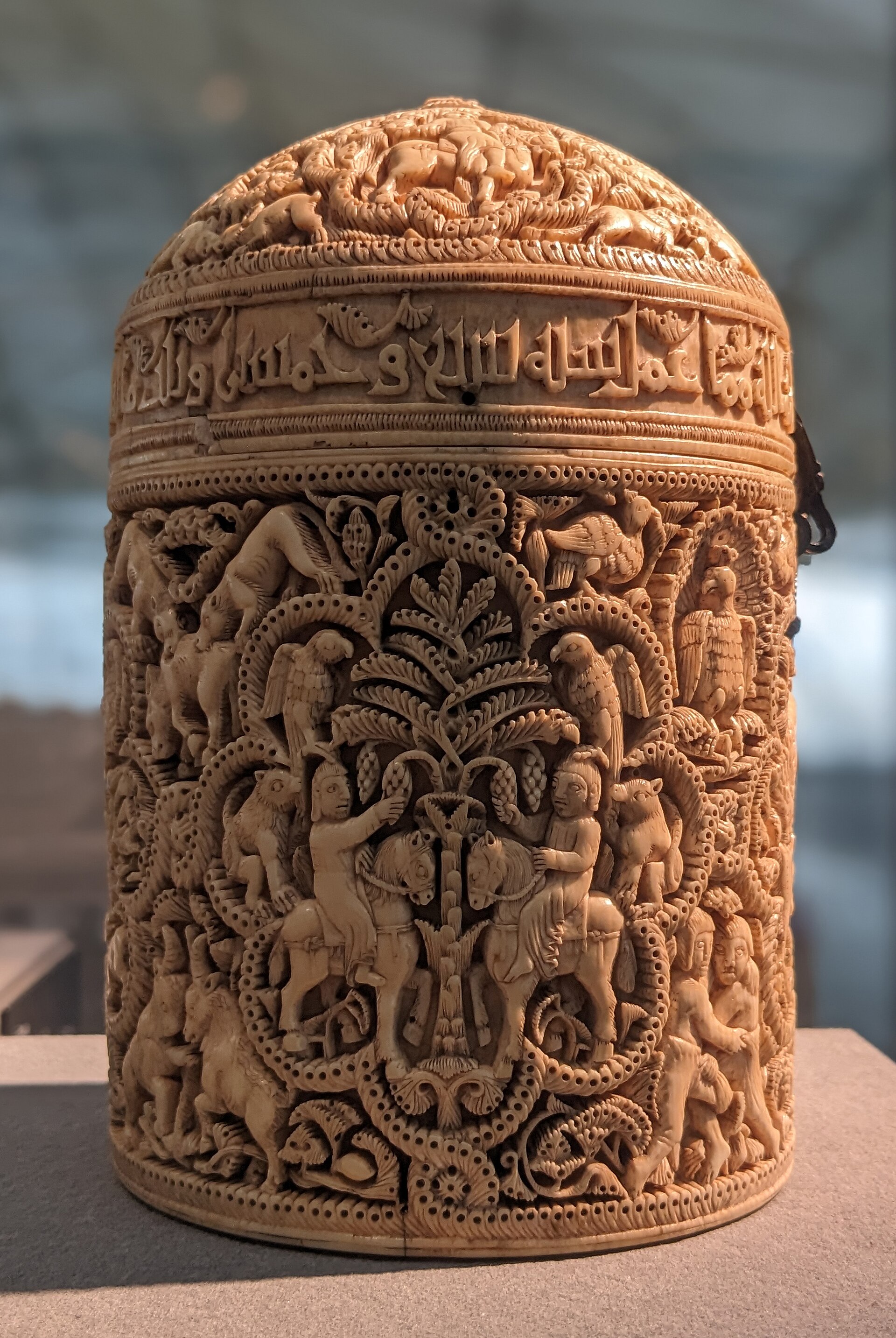
Cordoba, the Umayyad capital, was said to hold half a million inhabitants in 113,000 houses, with 700 mosques, 300 public baths and more than seventy libraries. Under Umayyad rule the city was enlarged and filled with palaces and mosques, and its woven silks, elaborate brocades, leatherwork and jewelry were prized throughout Europe and the East. The caliphs commissioned luxury objects such as carved ivory boxes and figured silks.
The caliphate came to an end in 1031, when the leading families of Cordoba abolished it. Medina Azahara, built in the mid-10th century by the Umayyad dynasty as the seat of the Caliphate of Cordoba, was laid to waste in the civil war of 1009-1010 that ended the Caliphate.
3. Monuments of Umayyad Cordoba
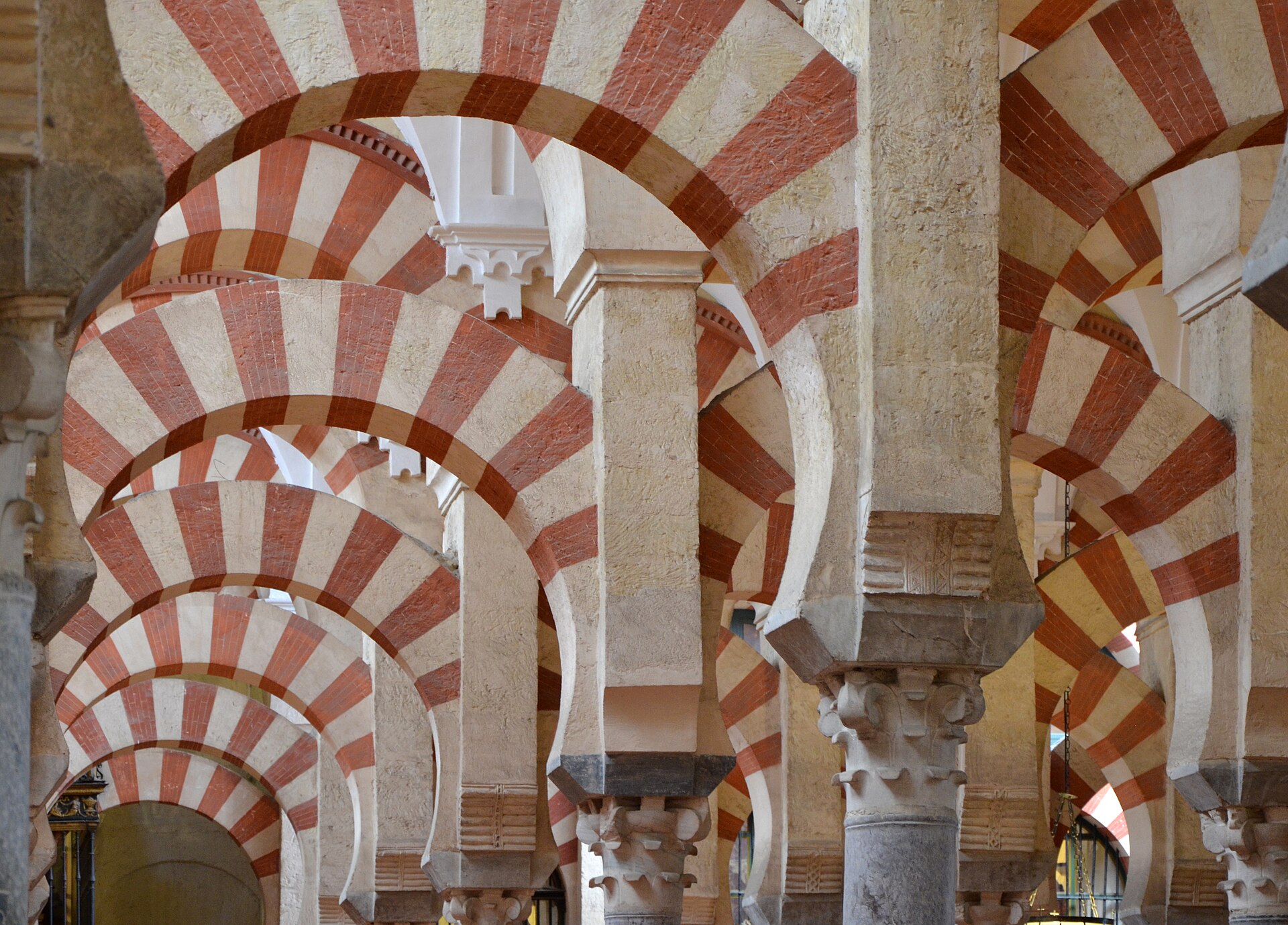
The Great Mosque of Cordoba stands as the most emblematic monument of Islamic religious architecture. Its core is defined by red-striped horseshoe arches, the distinctive contribution of Abd al-Rahman I's own building campaign. Later extensions followed under Abd al-Rahman II, al-Hakam II and the vizier al-Mansur, with the structure completed about 976. The forest of stone of its columned prayer hall finds an echo in the orange trees of its courtyard. Its double arches had forerunners in the Los Milagros Aqueduct, and its ribbed vault with intertwined arches preceded the ribbed vault in France.
Madinat al-Zahra was an opulent palace city begun in 936 about 5 miles west of Cordoba, housing the royal family, administrators and soldiers. It set the standard for artistic taste throughout the caliphate. After the unrest that consumed the caliphate, the site was abandoned, and its ruins remained undiscovered until the early 20th century. It was later designated a UNESCO World Heritage site.
4. Taifa Kingdoms and the North African Dynasties
When the Umayyad caliphate of Cordoba lost central authority, petty kings known as the taifas appeared across al-Andalus, forming at least 23 states between 1009 and 1091 under Berber, Andalusian Arab and Slav factions such as the Aftasids of Badajoz and the Abbadids of Sevilla. These rulers pretended to be hajibs of a caliphate that no longer existed, and in the absence of political legitimacy or Umayyad bloodline they turned to patronage of the arts and sciences to attract poets and scholars.
Almoravid intervention followed Alfonso VI's capture of Toledo in 1085, when Yusuf ibn Tashufin won at Zallaqah near Badajoz in 1086 and the party kingdoms were dissolved. The Almoravids were a Berber power from North Africa that had conquered Morocco and founded Marrakesh, and they assumed control over al-Andalus in 1090 with Marrakesh as seat of government. Their rule left the minbar commissioned in 1137 by Ali ibn Yusuf for the Kutubiyya Mosque, along with the mosques of Algiers, Tlemcen and Fez.
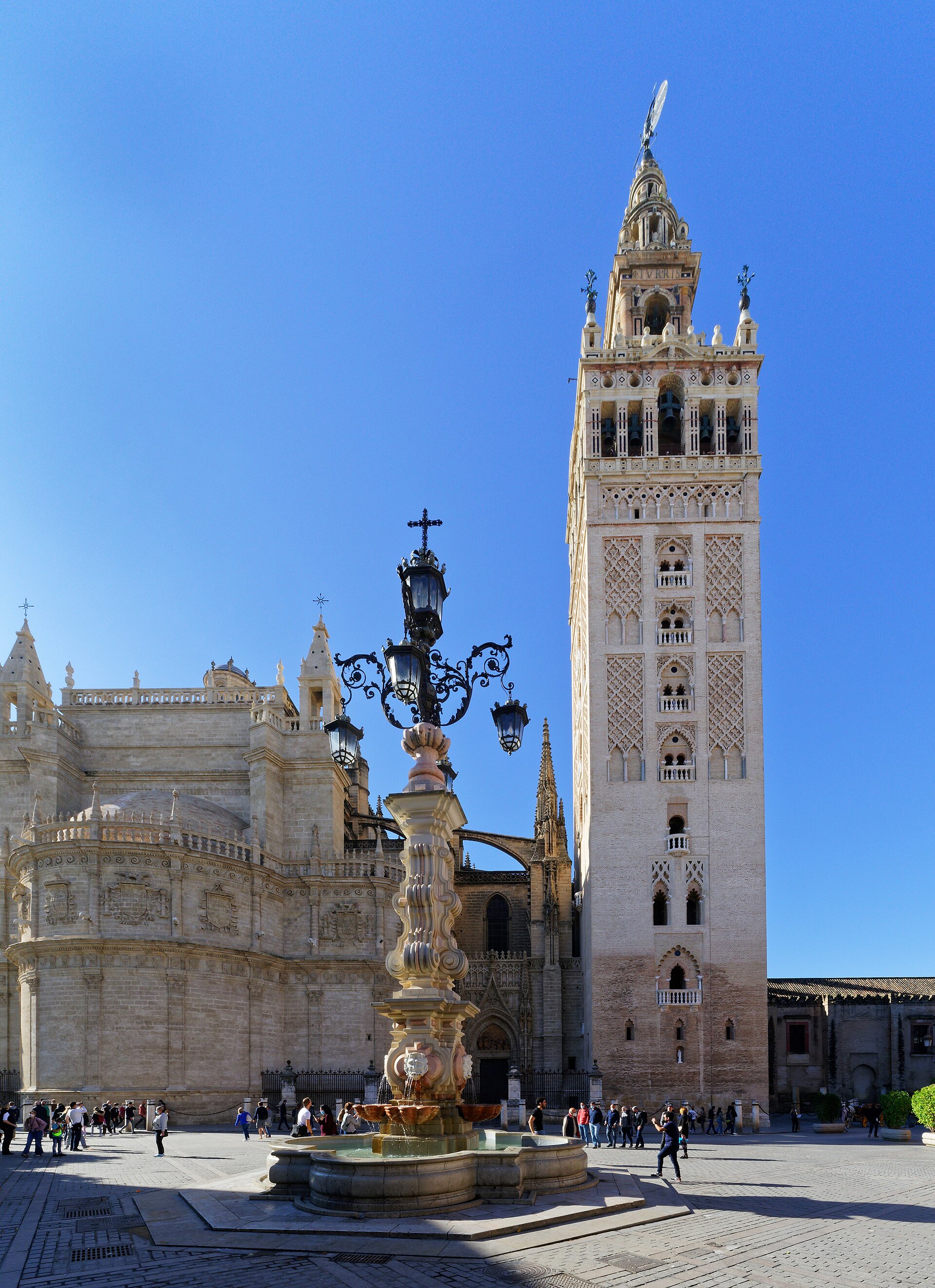
The Almohads replaced the Almoravids in the mid-twelfth century, established their capital at Seville, and were defeated at Las Navas de Tolosa in 1212, from which their power in Spain never recovered.
5. The Nasrid Emirate of Granada
The Nasrid dynasty was founded by Muhammad I ibn Nasr of Arjona, who ruled Granada and the neighboring cities of Jaén, Almería and Málaga from 1232 until 1492. Muhammad I settled in the old Alcazaba of the Albayzin and rebuilt the ruined hill site of the Alhambra as his court.
The Alhambra, the only preserved palatine city of the Islamic period, is a fortified city on a hill overlooking Granada, its name meaning 'the red', probably from the reddish rammed earth of its outer walls. It was built chiefly between 1238 and 1358 under Ibn al-Ahmar, founder of the Nasrid dynasty, and his successors Isma'il I, Yusuf I and Muhammad V; its splendid interior decorations are ascribed to Yusuf I, and it reached its greatest splendour in the second half of the fourteenth century. The palaces are famous for carved stucco, glazed tile dadoes, muqarnas vaults and poetic inscriptions, and their architectural and decorative programmes have survived largely intact since the fourteenth century.
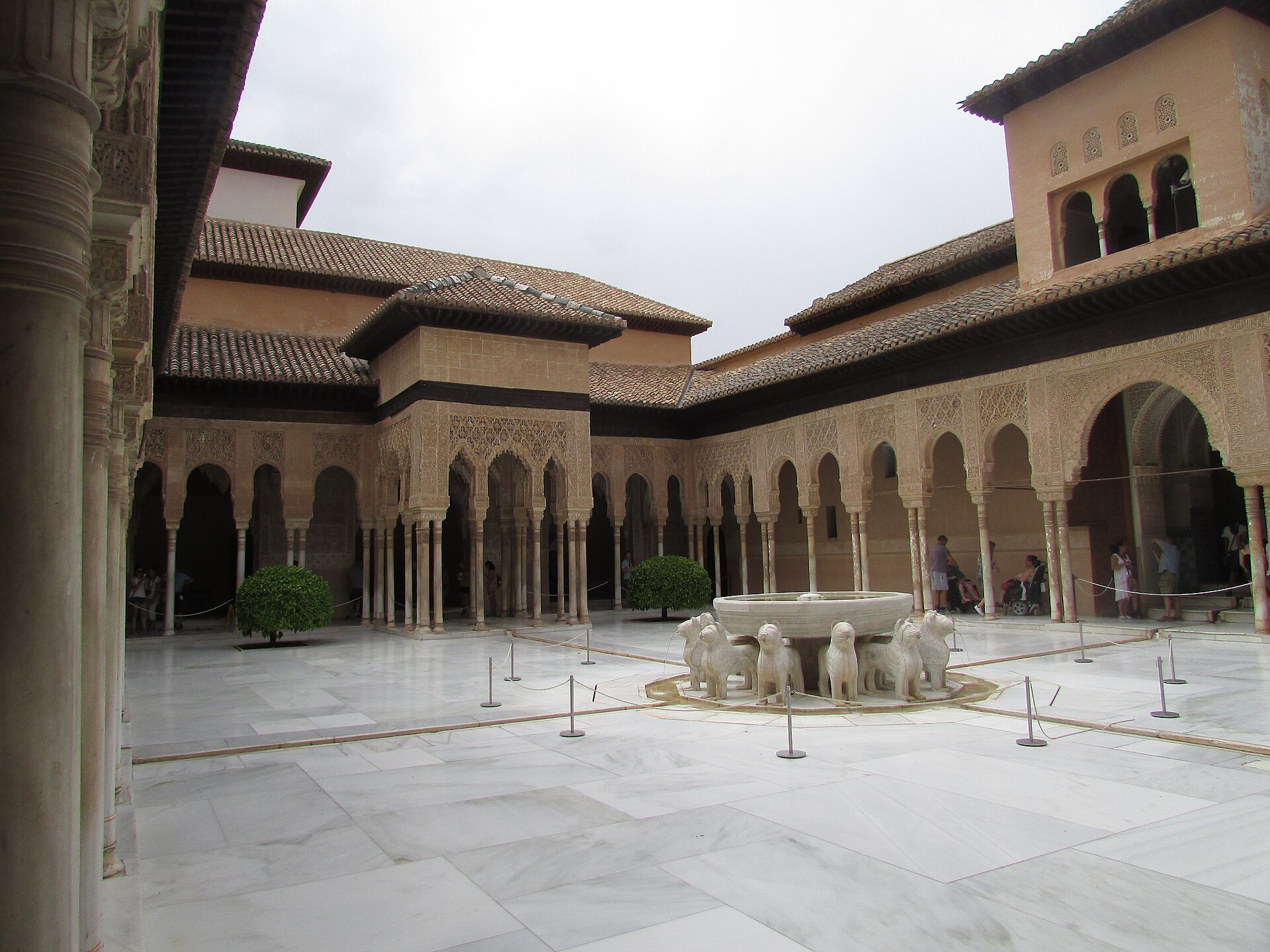
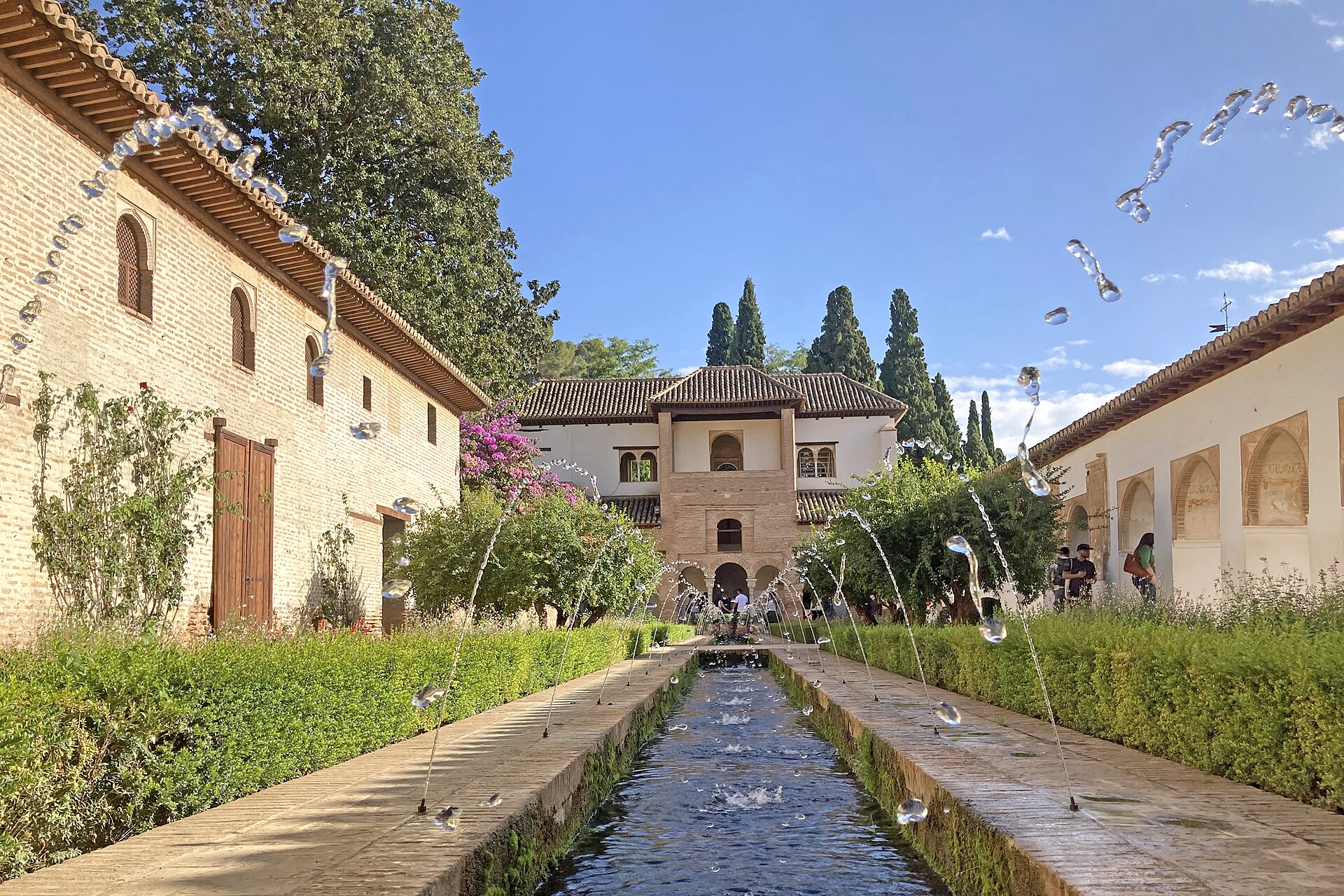
The Generalife was built during the reign of Muhammad III as a Nasrid summer retreat. Separated from the Alhambra by a gorge, it is laid out as terraces on a hillside with pavilions overlooking gardens and the palatine city. The Acequía Court on the lowest terrace is divided into four quadrants by water channels, and a water-channel stairway links the highest terrace to the lower levels.
The Albayzin, origin of the city and a legacy of Moorish town planning, is separated from the Alhambra by the river Darro and forms the oldest section of Granada. The Cuarto Real de Santo Domingo and the fourteenth-century Alcázar were built as a palace for Moorish queens. Nasrid arts grew from Almohad traditions with greater variety and splendour, and Spanish lusterware of Málaga and later Manises gave rise to Italian maiolica.
6. The Reconquista and the End of Muslim Rule
Muslim forces from North Africa had taken most of the Iberian peninsula from the Visigoths in the early eighth century, but by the eleventh century the Christian kingdoms of the north were strong enough to begin retaking territory. The long campaign reached its conclusion when Granada surrendered on January 2 1492 to Isabella of Castile and Ferdinand of Aragon, ending 275 years of Nasrid independence and the near-800-year saga of al-Andalus. The last Nasrid ruler, Muhammad XII, called Boabdil by Spanish historians, was exiled to the Maghrib.
7. World Heritage Listings
Three Andalusian properties appear on the World Heritage List, each reflecting a distinct phase of the region's architectural and urban history. The earliest inscriptions date from 1984, when both the Historic Centre of Cordoba and the Alhambra, Generalife and Albayzin were added, and both entries were subsequently revised through boundary modifications in 1994.12Historic Centre of Cordoba · UNESCO World Heritage Centre ↗13Alhambra, Generalife and Albayzin, Granada · UNESCO World Heritage Centre ↗ The most recent addition, the Caliphate City of Medina Azahara, was inscribed in 2018.9Caliphate City of Medina Azahara · UNESCO World Heritage Centre ↗
| Property | Inscription year | Criteria | Area | Buffer zone |
|---|---|---|---|---|
| Historic Centre of Cordoba | 1984 | criteria (i) to (iv) | 80.28 ha | — |
| Alhambra, Generalife and Albayzin | 1984 | — | 450 ha | 67 ha |
| Caliphate City of Medina Azahara | 2018 | criteria (iii) and (iv) | 111 ha | 2,186 ha |
8. Frequently Asked Questions
What is the legacy of al-Andalus?
Muslims, Jews and Christians lived side by side in the Hispano-Arab era, a period of relative tolerance, until the caliphate fragmented around the year 1100 and Christian armies began the Reconquista.2From Fabled Palaces to Ancient Medinas, a Journey Through Spain's Islamic History · Smithsonian Magazine ↗
Who first led the Muslim landing on the Iberian Peninsula?
Tariq ibn Ziyad landed in Spain with a Berber army after Witiza's heirs ceded Ceuta, and King Roderick, who had succeeded Witiza, was killed in battle in July 711 near Arcos de la Frontera.7Al-Andalus · Encyclopaedia Britannica ↗ On July 19 711 an army of Arabs and Berbers unified under the Umayyad caliphate landed on the Iberian Peninsula.5The Art of the Umayyad Period in Spain (711-1031) · The Metropolitan Museum of Art, Heilbrunn Timeline of Art History ↗
How far north did Muslim armies advance before being stopped?
Muslim governors carried their advance into Gothic Gaul and deep into France, but Charles Martel's victory at the Battle of Tours in 732 and the great Berber rebellion of 739 halted further expansion north of the Pyrenees.7
Who ruled al-Andalus between the fall of the caliphate and the Almoravids?
Hisham II succeeded to the caliphate as a boy of twelve and spent his reign as a puppet while Abu Amir al-Mansur, a courtier descended from the first Muslim conquerors, established himself as the de facto ruler of the caliphate.7
What did the taifa kings do for culture?
Taifa rulers patronized the arts and sciences to attract poets and scholars, since as warlords and Arab or Berber upstarts they had little political legitimacy or Umayyad bloodline to justify their rule.14Taifa · World History Encyclopedia ↗
What happened to the Great Mosque of Cordoba after the Christian conquest?
After Ferdinand III of Castile conquered Cordoba in 1236 the Great Mosque was consecrated as the city's cathedral, and a Gothic cathedral was later inserted into its heart.15Mezquita de Cordoba · Archnet, Aga Khan Trust for Culture ↗
What survives of the Alhambra's later history under Christian rulers?
After 1492 the Alhambra became the Royal Household under the Catholic Monarchs, who ordered extensive repairs, and in 1526 Emperor Carlos V began building his Renaissance palace there.16History of the Alhambra · Patronato de la Alhambra y Generalife ↗
9. Timeline: from the conquest of 711 to the fall of Granada
- 19 July 711Arabs and Berbers land in IberiaOn 19 July 711 an army of Arabs and Berbers unified under the aegis of the Umayyad caliphate landed on the Iberian Peninsula. Over the next seven years they brought nearly the whole peninsula under Islamic control.
- 714 CEMost of the peninsula conqueredMusa ibn Nusayr reinforced Tariq ibn Ziyad with more troops, and together they had brought most of al-Andalus under Muslim control by 714.
- 750 CEThe Abbasids overthrow the UmayyadsInternal divisions and civil wars weakened the Umayyad empire, and in 750 the Abbasids overthrew the dynasty and took the caliphate for themselves.
- 756 CEEmirate of Cordoba foundedAbd al-Rahman I landed at Almuñécar in 755, rallied support among the Syrian troops, took Malaga and Seville and marched on Cordoba in 756, where he defeated the forces of Al-Fihri and declared himself emir.
- 784-786 CEThe Great Mosque of Cordoba is begunConstruction of the Great Mosque of Cordoba began between 784 and 786 under Abd al-Rahman I, on a Visigothic site that probably held an earlier Roman temple.
- 929 CECaliphate of Cordoba proclaimedAbd al-Rahman III declared himself the rightful caliph in 929, a direct challenge to the Abbasids in Baghdad and the Fatimids in North Africa.
- 936 CEMadinat al-Zahra begunThe jewel of Abd al-Rahman III's capital was Madinat al-Zahra, a vast imperial palace complex begun in 936 outside Cordoba to house the royal family, administrators and soldiers.
- 1009-1010Medina Azahara laid to wasteThe caliphate city of Medina Azahara prospered only briefly before it was laid to waste during the civil war that put an end to the Caliphate of Cordoba in 1009-1010.
- 1031The caliphate is abolishedThe leading families of Cordoba abolished the caliphate and declared a republic in 1031, and the provinces of al-Andalus became independent taifa kingdoms.
- 1085 CEToledo falls to the ChristiansThe Reconquista won its first major success when Alfonso VI of Leon and Castile captured Toledo in 1085.
- 1090 CEAlmoravids take control of al-AndalusLed by Yusuf ibn Tashfin, the Almoravids entered al-Andalus after the fall of Toledo in 1085 and assumed control of the region in 1090, keeping Marrakesh as their seat of government.
- 1212 CEBattle of Las Navas de TolosaA coalition of Christian kings inflicted a defeat on the Muslims at Las Navas de Tolosa in 1212 from which they never recovered; Almohad power in Spain fractured soon afterwards.
- 1236 CECordoba falls to CastileCordoba fell to the Castilian king Ferdinand III in 1236 and became part of Christian Spain; its Great Mosque was consecrated as the city's cathedral.
- 1238 CENasrid building at the Alhambra beginsThe Alhambra was built chiefly between 1238 and 1358 under Ibn al-Ahmar, founder of the Nasrid dynasty, and his successors; its splendid interior decorations are ascribed to Yusuf I.
- 2 January 1492Granada surrenders; Muslim rule endsGranada surrendered to Isabella of Castile and Ferdinand of Aragon on 2 January 1492, ending 275 years of Nasrid independence and the near-800-year presence of Islam in Iberia.
- 1526Carlos V builds a Renaissance palace in the AlhambraAfter 1492 the Alhambra became the Royal Household under the Catholic Monarchs, and in 1526 Emperor Carlos V began building his Renaissance palace within its walls.
References (20)
- 1Muslim Spain (711-1492) — BBC WebView source
- 2From Fabled Palaces to Ancient Medinas, a Journey Through Spain's Islamic History — Smithsonian Magazine Web↩View source
- 3Umayyad Dynasty — World History Encyclopedia WebView source
- 4Abd al-Rahman I — World History Encyclopedia WebView source
- 5The Art of the Umayyad Period in Spain (711-1031) — The Metropolitan Museum of Art, Heilbrunn Timeline of Art History Web↩View source
- 6Abd al-Rahman III — World History Encyclopedia WebView source
- 7Al-Andalus — Encyclopaedia Britannica Web↩View source
- 8Cordoba — Encyclopaedia Britannica WebView source
- 9Caliphate City of Medina Azahara — UNESCO World Heritage Centre 1560 Web↩View source
- 10Reconquista — World History Encyclopedia WebView source
- 11The Art of the Nasrid Period (1232-1492) — The Metropolitan Museum of Art, Heilbrunn Timeline of Art History WebView source
- 12Historic Centre of Cordoba — UNESCO World Heritage Centre Web↩View source
- 13Alhambra, Generalife and Albayzin, Granada — UNESCO World Heritage Centre Web↩View source
- 14Taifa — World History Encyclopedia Web↩View source
- 15Mezquita de Cordoba — Archnet, Aga Khan Trust for Culture Web↩View source
- 16History of the Alhambra — Patronato de la Alhambra y Generalife Web↩View source
- 17Taifa — Encyclopaedia Britannica WebView source
- 18The Art of the Almoravid and Almohad Periods (ca. 1062-1269) — The Metropolitan Museum of Art, Heilbrunn Timeline of Art History WebView source
- 19Alhambra — Archnet, Aga Khan Trust for Culture WebView source
- 20Alhambra — Encyclopaedia Britannica WebView source