Lighthouse of Alexandria
The Pharos of Alexandria, one of the Seven Wonders of the Ancient World: its construction under the early Ptolemies, its three-tiered form, its place in Greek, Latin and Arabic texts, its slow destruction by earthquakes, and the underwater archaeology that has mapped its remains.
The Lighthouse of Alexandria, also called the Pharos, was built on the island of Pharos at the entrance to the city's Great Harbour, begun under Ptolemy I Soter in 297 BCE and finished under his son Ptolemy II. Ancient authors from Posidippus and Strabo to Pliny, Josephus and Caesar described a white stone tower of several stories crowned by a fire that guided ships along a dangerous coast, and it became the model for lighthouses across the Mediterranean. Damaged by earthquakes and abandoned after the tsunami of 1303, its ruins supplied stone for the Mamluk fort of Qaitbay begun in 1477, and since 1994 the Centre d'Etudes Alexandrines has excavated the submerged remains, which now anchor plans for an underwater museum.
In this article
- 1Overview
- 2Construction and Date
- 3Design and Structure
- 4Function and Beacon
- 5Ancient Testimony and Reputation
- 6Sostratus and the Question of Authorship
- 7Posidippus and the Literary Record
- 8Medieval Arabic Accounts
- 9Decline, Earthquakes and Destruction
- 10The Citadel of Qaitbay
- 11Submerged Remains and Underwater Archaeology
- 12Legacy and Influence
- 13Protection and Future Museum
- 14Timeline
- 15Timeline: from the Pharos of the Ptolemies to the submerged site
- 16Frequently asked questions
- 17Knowledge graph
Overview
The Lighthouse of Alexandria stood on the island of Pharos in the harbour of Alexandria, built on the orders of the early Ptolemaic kings around 280 BCE. It ranked among the tallest man-made structures on earth for most of its history, and it served Alexandria for almost 1500 years before earthquakes brought it down in the 14th century CE. Its remains were later identified in the eastern harbour by French underwater excavations.
1. Construction and Date
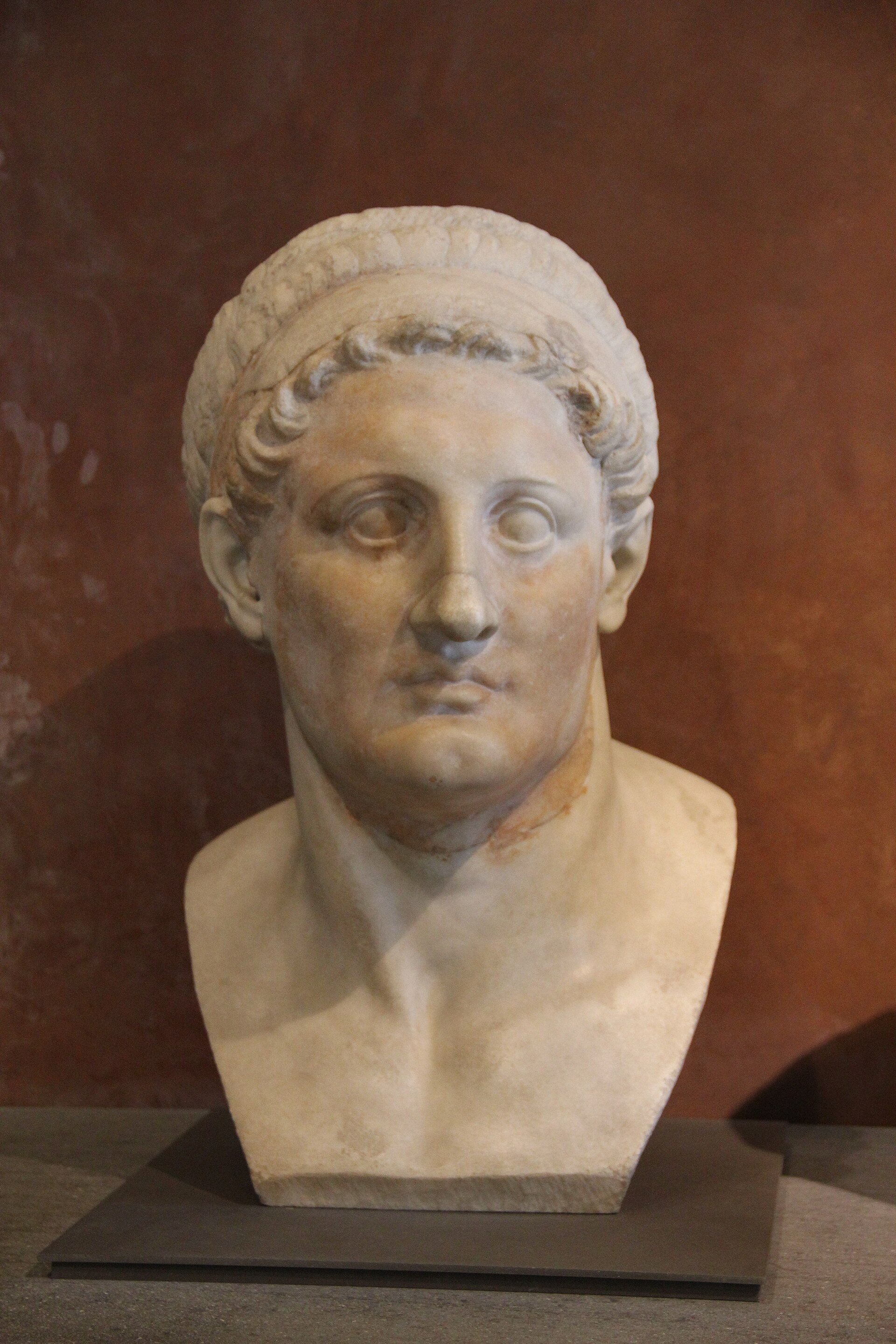
Construction of the Lighthouse of Alexandria began in 297 BCE, when Ptolemy I Soter ordered the work to proceed. The Souda lexicon gives that same date for the start of building, and records that the tower was completed under Ptolemy II in the 124th Olympiad. The project rose in record time, taking only about fifteen years to stand at the harbour entrance as a landmark visible from afar.
Pliny the Elder reported that the construction cost 800 talents, equivalent to about 17 tons of silver. He further affirmed that the cost of erecting the Pharos was equal, at the present value, to about 390,000 pounds.
2. Design and Structure
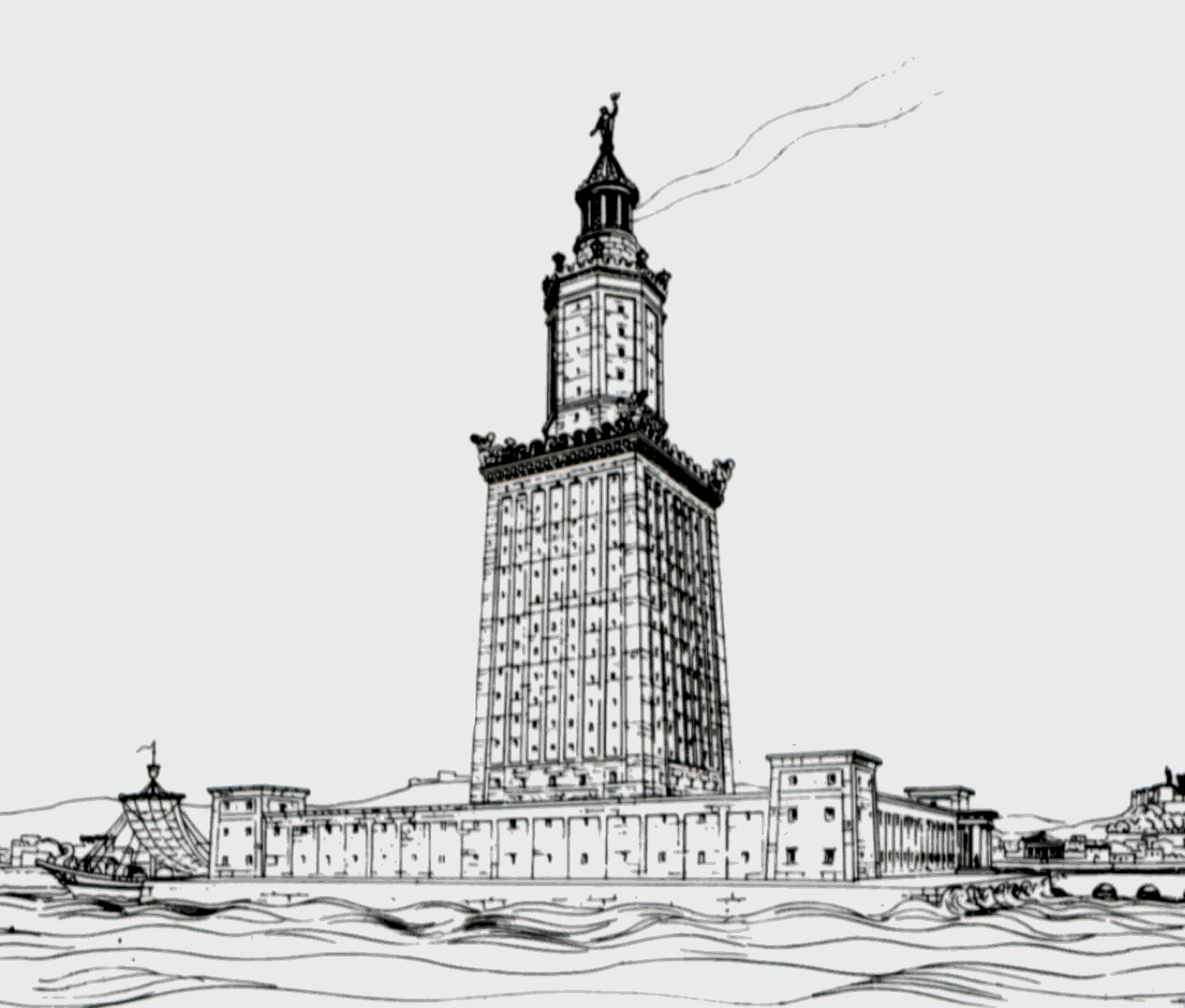
The tower rose in three stages: a square lowest section, an octagonal middle section, and a cylindrical top, each sloping slightly inward. Most sources agree that it was white. Its height exceeded 350 feet (110 metres), and a broad spiral ramp led to the fire burning at night on the summit.
Inside, the Pharos was ascended by a staircase as broad as those ordinarily erected in towers, terminating about half-way, above which the building became much narrower. From the gallery the ascent continued by a flight of steps much narrower than the lower staircase and pierced with windows to give light to those making use of it.
3. Function and Beacon
A fire was kept at the top of the tower to make it visible at night, and it is likely that oil was burned because wood was scarce. The beacon warned ships of shoals and marked the harbour entrance as vessels moved at night. Josephus credits the fire with a visibility of about 300 stades, roughly 55 km. Strabo describes the tower as indicating the path to reach the coast, serving as a landmark at night, and pointing toward the ports while avoiding the main coastal dangers.
Pliny notes that similar beacons burned at Ostia and Ravenna and that an uninterrupted flame risked being mistaken for a star. The construction established a lasting architectural and functional model for maritime signaling structures. The common noun pharos, meaning a tower that guides sailors, appears in Greek only from the first century CE, and the term came to designate a maritime signaling device only from the end of the first century CE.
4. Ancient Testimony and Reputation
Greek and Latin texts designate the lighthouse by the word tower. It stood on the island of Pharos, joined to the mainland by a causeway named the Heptastade. Pharos is an oblong island lying close to the mainland, forming with it a harbour with two mouths. The Heptastadium served as a bridge and also as an aqueduct while Pharos was inhabited. Entering the Great Harbour, the island and tower lay on the right and the promontory Lochias with its royal palace on the other side.
Strabo describes a tower of white marble with many stories on the rocky tip of the island, bearing the island's name, an offering by Sostratus of Cnidus, a friend of the kings, for the safety of mariners. Pliny extols the towering structure on Pharos, the island commanding the harbour of Alexandria, and says Ptolemy allowed the architect Sostratus of Cnidus to inscribe his name on the building.
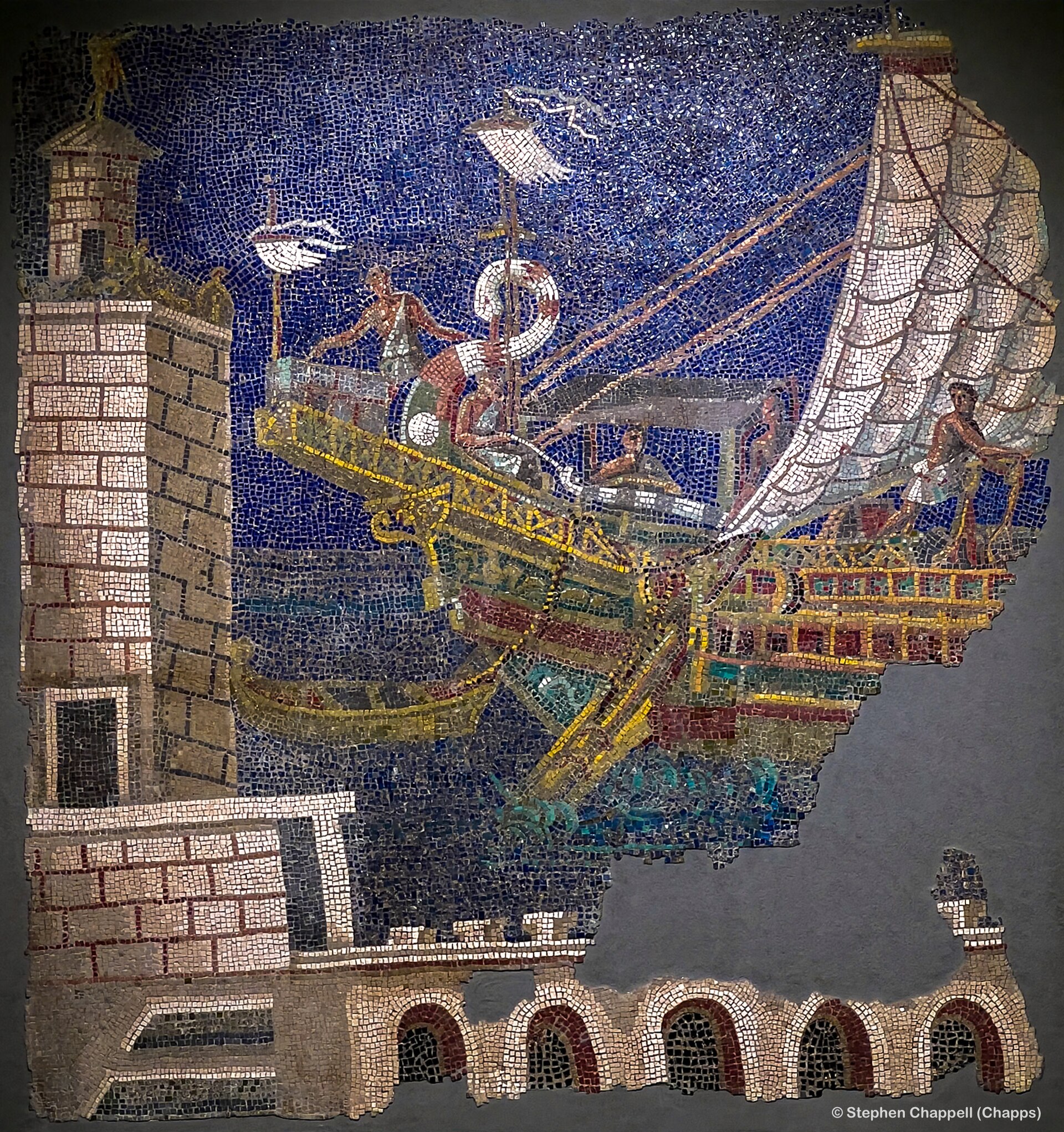
Lucian of Samosata called it the greatest and most beautiful of all works of architecture. Achilles Tatius likened the tower to a mountain set in the middle of the sea that touched the clouds. A medieval description praised it as singularly remarkable for height and massiveness and of exceeding utility, its fire burning night and day for the guidance of navigators.
Coins struck from the reign of Domitian to that of Commodus show a three-section tower topped by a statue and form the most important documentary evidence for its appearance. Writers from Julius Caesar to the Arab traveller el-Balawi described the illuminated tower, whose image also appears on coinage and mosaics.
5. Sostratus and the Question of Authorship
The identity of the mind behind the Pharos has never been settled beyond dispute. Several ancient sources name the architect Sostratus of Cnidus as the builder of the lighthouse, though he may instead have been its financial backer. A competing reading of the evidence holds that Sostratus of Knidos most plausibly financed the tower rather than serving as its architect, and that he dedicated the monument as a friend of kings. The two positions are not easily reconciled, and the record leaves the question of authorship open.
6. Posidippus and the Literary Record
Posidippus makes a watcher of Pharos, the savior of the Greeks, the true subject of his epigram and names him Zeus Saviour at the end.
One epigram by Posidippus tells sailors about to cross the sea to salute Arsinoe Euploia at the temple that the Samian admiral Callicrates, son of Boiskos, dedicated for them when he was nauarch. An omen epigram by the same poet wishes that the Thracian crane lead the halyards for those about to travel the Egyptian sea, as a favorable sign for the helmsman.
7. Medieval Arabic Accounts
A number of twelfth-century Andalusian travellers, among them Ibn Jubair, Abu Hamid al-Gharnati and Ibn al-Shaikh al-Balawi, left remarkable accounts of the lighthouse.
Abu Hamid al-Gharnati described three tiers of hewn stone: a square lower stage on a platform, an octagonal middle stage and a round top.
Some accounts described the Pharos mirror as made of finely wrought glass or transparent stone, so that a man sitting under it could see ships at sea that were invisible to the naked eye.
The final section carried a wooden dome built by Ahmed Ibn Touloun, serving as the highest mosque in the Muslim world and as an observatory whose four doors faced the cardinal points.
8. Decline, Earthquakes and Destruction
Earthquakes in 796 and 950 and again in 1303 and 1323 badly damaged the lighthouse, yet records attest regular repairs and extensions. Al-Maqrizi records that Sultan Baybars restored one of the fallen corners in 1274 and reinstalled the mosque dome that the earthquake of 1303 later destroyed. Maqrizi reported that the earthquake destroyed the lighthouse completely, the restoration attempts begun in 1304 came to nothing, and the tower served as a quarry before sinking beneath the sea.
9. The Citadel of Qaitbay
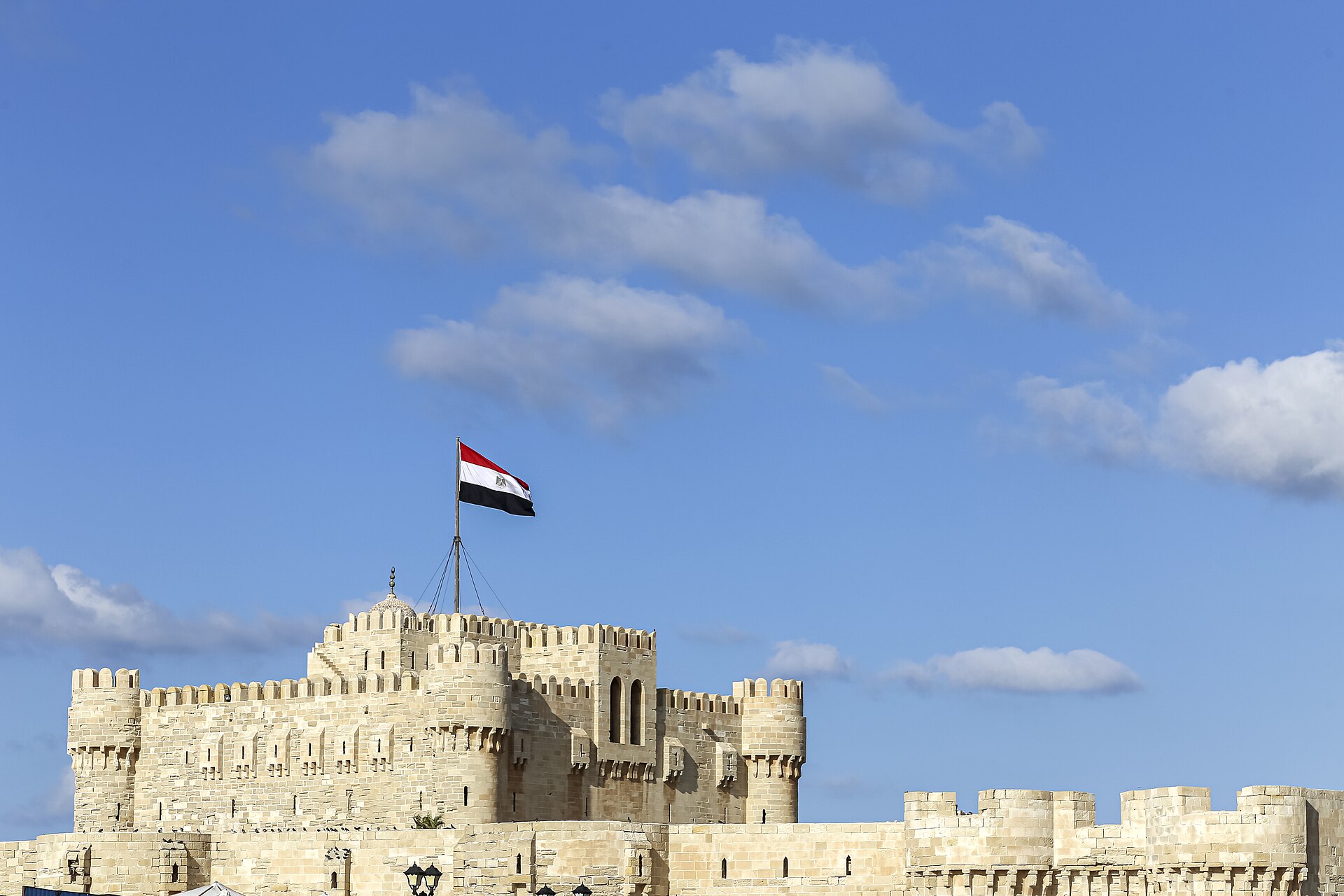
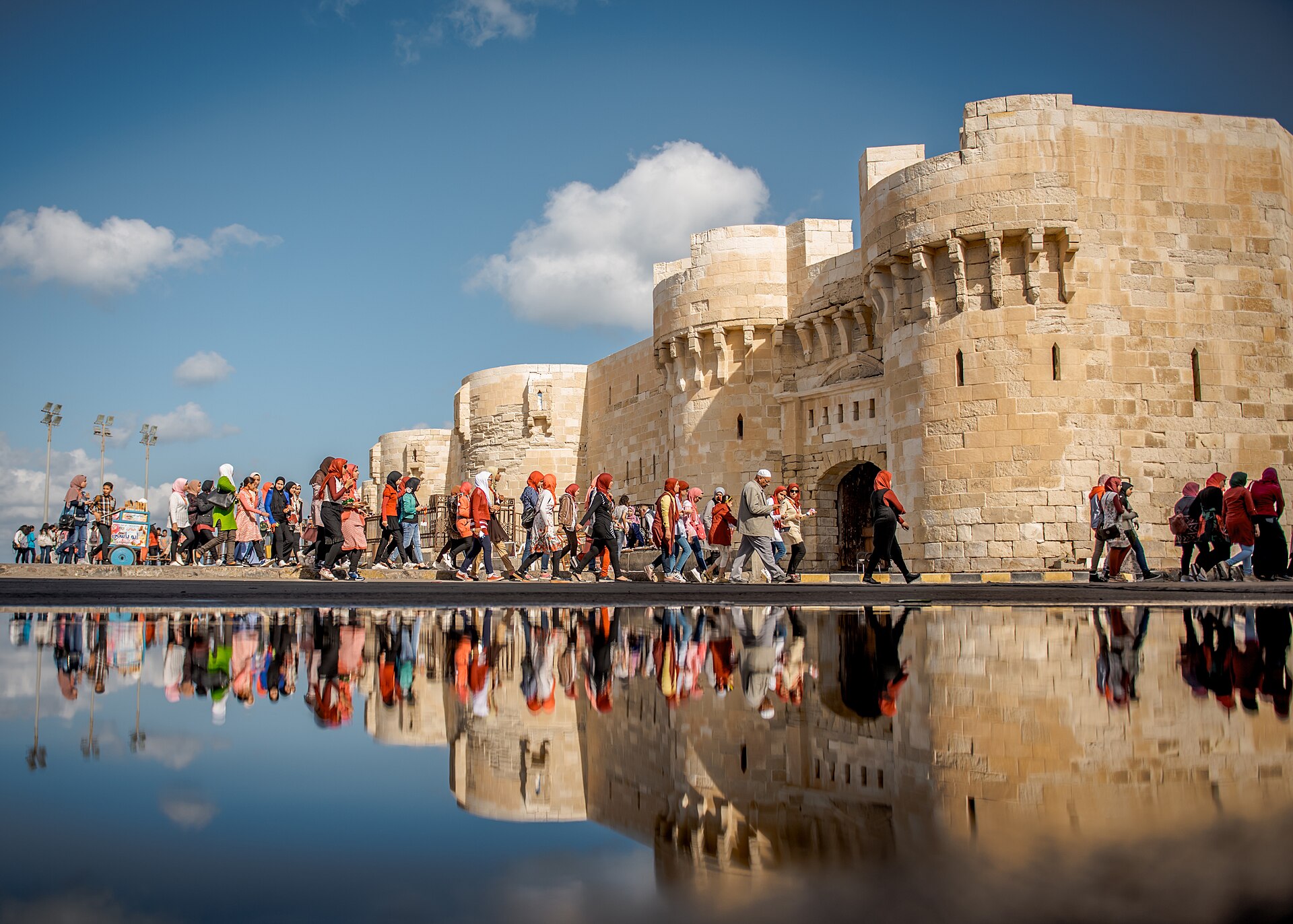
The Citadel of Qaitbay was built by Sultan al-Ashraf Abu al-Nasr Qaitbay between 1477 and 1479, raised directly over the ruins of the Alexandria lighthouse. Its purpose was defensive: it served as Alexandria's protection against naval attacks. The structure was built of limestone and covered an area of roughly 17550 square metres.
The main tower occupies the northwest of the courtyard and takes the form of a massive three-floored square fort. Half-circular corner towers carry balconies for defence.
10. Submerged Remains and Underwater Archaeology
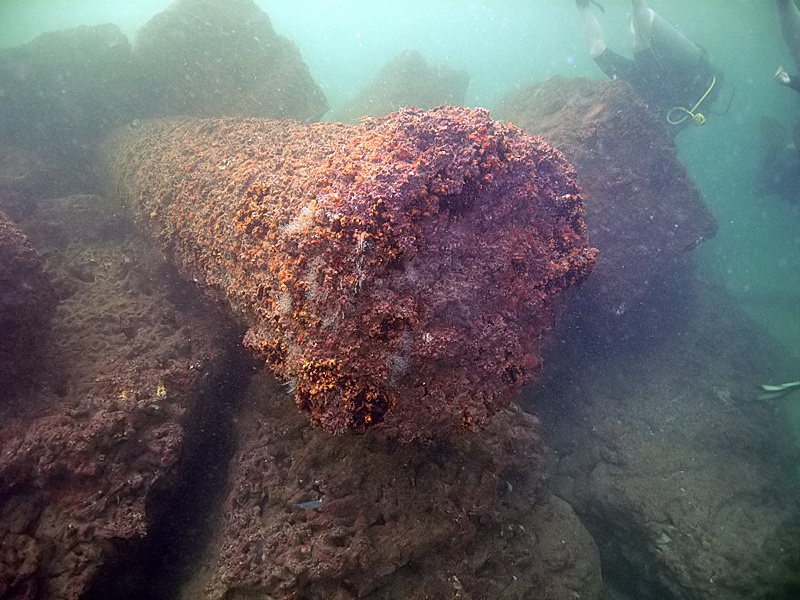
Analysis of the submerged site led to the identification of the ruins of three different structures: the lighthouse in the north-western part, a Roman-era structure in the north-east and a seawall built of re-cut granite columns. The largest fragments recovered include colossal statues and blocks weighing up to 40 tonnes.
Since 1994 the CEAlex has carried out one or two excavation campaigns per year, with each campaign's duration depending on the weather and the state of the sea. Since 2012 the CEAlex has run a major photogrammetry programme to digitise the site's surface, and by January 2020 the digital surface model covered roughly 10,250 square metres, around 65 per cent of the site, with 3040 blocks recorded in the database.
A bronze signet ring engraved with an image of the Lighthouse of Alexandria was recovered from the submerged island of Antirhodos in Alexandria's Eastern Harbor by a team from Egypt's Supreme Council of Antiquities and the European Institute for Underwater Archaeology.
11. Legacy and Influence
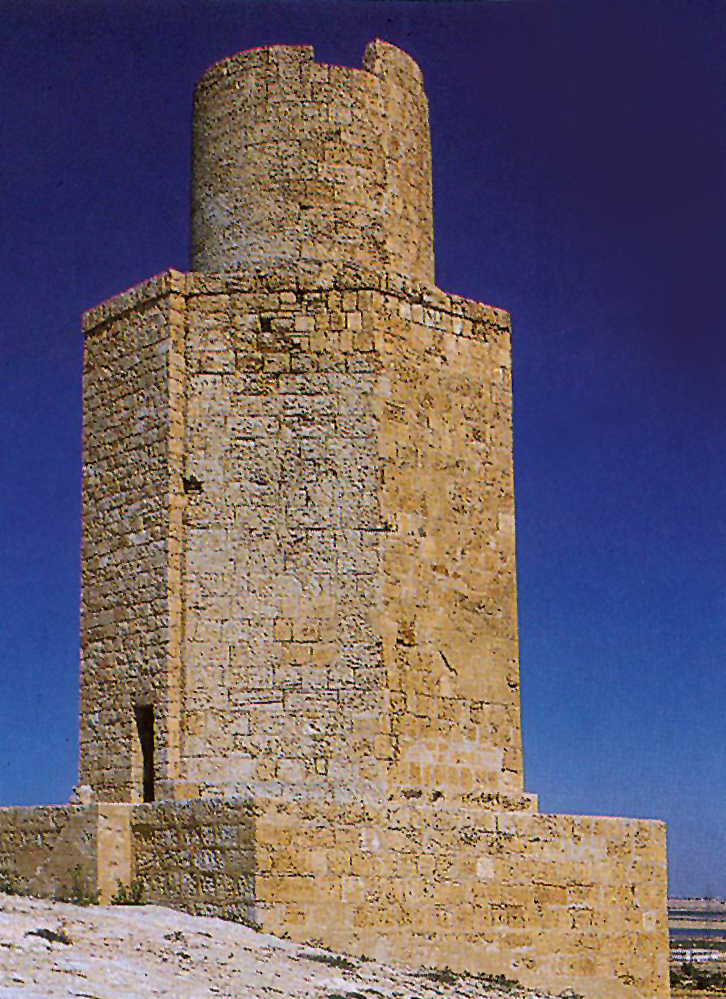
After the pyramids of Giza, the lighthouse stood as the tallest structure built by human hands. It may have influenced later Arab minaret architecture, and it inspired copycat towers in harbours around the Mediterranean. The lighthouse of Taposiris Magna, about thirty meters tall, is considered a smaller-scale replica.
12. Protection and Future Museum
The UN cultural agency announced it would help Egypt build an innovative underwater museum in the Bay of Alexandria on a site of archaeological remains thousands of years old. The planned museum would be partly above water and partly submerged, allowing visitors to see archaeological artefacts lying on the seabed.
The Convention on the Protection of the Underwater Cultural Heritage was adopted on 2 November 2001 at UNESCO's 31st General Conference and urges states to take all appropriate measures to protect underwater heritage. The 2001 Convention provides a common legally binding framework for states on how to identify, research and protect their underwater heritage while ensuring its preservation and sustainability.
13. Timeline
-
around 280 BCEConstructionThe Pharos was built on the orders of the early Ptolemaic kings.1Great Wonders: The Lighthouse at Alexandria: The Pharos in the Land of the Pharaoh · Penn Museum, University of Pennsylvania ↗
-
1477Qaitbay's towerIbn Iyas reports that Sultan Ashraf Qaitbay ordered a tower built on the old foundations of the lighthouse.11The Lighthouse of Alexandria in Medieval Arabic Texts · Centre d'Etudes Alexandrines (CEAlex), Pharos Project ↗
-
2012Photogrammetry programmeThe CEAlex began a major photogrammetry programme to digitise the site's surface.13Underwater Excavations at the Lighthouse Site · Centre d'Etudes Alexandrines (CEAlex), Pharos Project ↗
-
January 2020Digital surface modelThe digital surface model covered roughly 10,250 square metres, around 65 per cent of the site, with 3040 blocks recorded in the database.13
14. Timeline: from the Pharos of the Ptolemies to the submerged site
- 297 BCEConstruction begins under Ptolemy IPtolemy I Soter ordered the construction of the Lighthouse of Alexandria, on the date carried by the Souda, a Greek lexicon of the 10th century.
- 283 to 281 BCEThe tower is completed under Ptolemy IIAccording to the chronology of Eusebius the lighthouse was finished under Ptolemy II in the 124th Olympiad, between 283 and 281 BCE.
- around 160 BCEPosidippus' epigram is copied at MemphisEpigram 115 of Posidippus was copied during the reign of Ptolemy VI on the Louvre papyrus 7172 known as the Didot papyrus.
- 47 BCECaesar is besieged on PharosDuring the civil war between Cleopatra VII and Ptolemy XIII, Julius Caesar found himself in a precarious position on the island of Pharos, where he described a tower of great height.
- 25 to 24 BCEStrabo visits AlexandriaThe Greek geographer Strabo visited Egypt and left in his Geography the most detailed ancient description of the tower, a multistoried structure of white stone.
- 641 CEAlexandria passes to the ArabsAfter the conquest of Alexandria by Amr Ibn al-'As, many Muslim travelers en route to Mecca visited the city and some left precise descriptions of the lighthouse.
- before 956Al-Mas'udi sets the model for Arabic accountsThe Baghdad-born historian Al-Mas'udi wrote a description of the lighthouse whose structure served as a model for later authors, covering its builder, function, dimensions, restorations and the earthquake.
- 1274Baybars restores a fallen cornerAl-Maqrizi records that in 1274 Sultan Baybars restored one of the corners of the structure that had fallen and reinstalled the dome of the mosque.
- 8 August 1303A tsunami brings down the lighthouseThe consular annals of 1304 record in a marginal note the tsunami of 8 August 1303 which led to the collapse of the Lighthouse of Alexandria.
- 1304Restoration is ordered and abandonedAccording to Ibn Taghribirdi princes began a restoration in 1304 and Emir Baybars al-Dawadar ordered the tower rebuilt, but the efforts never materialized.
- 1349Ibn Battuta finds the tower impassableIbn Battuta wrote that in 1349 the building was in such bad condition that it was impossible to reach the door and enter it.
- 1477Qaitbay builds his fort on the old foundationsIbn Iyas reports that in 1477 Sultan Ashraf Qaitbay ordered a tower built on the old foundations of the lighthouse, on which the donjon that still exists was raised.
- 1992IEASM begins exploring the eastern harbourThe European Institute for Underwater Archaeology began underwater explorations in Alexandria under the supervision of Franck Goddio and in cooperation with the Egyptian Supreme Council of Antiquities.
- from 1994Systematic excavation of the lighthouse site beginsSince 1994 the Centre d'Etudes Alexandrines has carried out one or two excavation campaigns per year on the submerged lighthouse site.
- 2 November 2001UNESCO adopts the underwater heritage conventionThe Convention on the Protection of the Underwater Cultural Heritage was adopted at the 31st General Conference of UNESCO, giving states a legally binding framework for submerged sites.
- 2026A bronze ring engraved with the lighthouse is recoveredA bronze signet ring engraved with an image of the Lighthouse of Alexandria was recovered from the submerged island of Antirhodos in the eastern harbour of Alexandria.
15. Frequently asked questions
How tall did medieval Arab writers say the lighthouse was?
Tenth-century travellers al-Idrisi and Yusuf Ibn al-Shaikh give the lighthouse a height of 300 cubits, which could mean about 140 to 183 metres.9Lighthouse of Alexandria in the Sources from Islamic Civilisation · Muslim Heritage (Foundation for Science, Technology and Civilisation) ↗ Arab descriptions are remarkably consistent, giving a height between about 103 and 118 metres above a square base for a tower of three tapering tiers.9
What stood at the very top of the tower?
What did the burning mirror supposedly do?
The burning mirror on top of the lighthouse was credited with warning of approaching ships and with focusing the sun's rays to set hostile vessels alight at sea.9
How much of the submerged site has been mapped?
By 2016 only about 7200 square metres of the submerged site, which exceeds 13000 square metres, had been covered by the photogrammetry project.17Underwater Photogrammetry Digital Surface Model (DSM) of the Submerged Site of the Ancient Lighthouse near Qaitbay Fort in Alexandria, Egypt · ISPRS Archives (International Archives of the Photogrammetry, Remote Sensing and Spatial Information Sciences) ↗ The underwater site of the lighthouse covers almost 1.6 hectares of the seabed, within a wider submerged zone of around 3 hectares.13
What was found at the site besides the lighthouse itself?
Underwater photogrammetry was applied for the first time in Egypt on the submerged lighthouse site, which lies at the foot of Qaitbay Fort at a depth of 2 to 9 metres.17 Thirty-six pieces lifted from the sea in 1995 and 1996 are displayed in the open-air museum at the Roman Theatre and in front of the Bibliotheca Alexandrina.13
What does the name al-manara mean?
Medieval Arabic texts call the lighthouse al-manar or al-manara, a name that literally means the place of the fire.11
References (18)
- 1Great Wonders: The Lighthouse at Alexandria: The Pharos in the Land of the Pharaoh — Penn Museum, University of Pennsylvania Web↩View source
- 2From Early Fire Towers to the Great Lighthouses of Antiquity — Centre d'Etudes Alexandrines (CEAlex), Pharos Project WebView source
- 3The Lighthouse of Alexandria — Centre d'Etudes Alexandrines (CEAlex), Pharos Project WebView source
- 4The Pharos of Alexandria — United States Lighthouse Society WebView source
- 5Lighthouse of Alexandria — Encyclopaedia Britannica Web↩View source
- 6Lighthouse of Alexandria — World History Encyclopedia WebView source
- 7The Lighthouse of Alexandria: Evidence from Ancient Texts — Centre d'Etudes Alexandrines (CEAlex), Pharos Project WebView source
- 8Posidippus, Epigrams: Collected English Translations — Center for Hellenic Studies, Harvard University (Classics@) 2021 BookView source
- 9Lighthouse of Alexandria in the Sources from Islamic Civilisation — Muslim Heritage (Foundation for Science, Technology and Civilisation) Web↩View source
- 10Beacon Across the Ages — Saudi Aramco World WebView source
- 11The Lighthouse of Alexandria in Medieval Arabic Texts — Centre d'Etudes Alexandrines (CEAlex), Pharos Project Web↩View source
- 12Qaitbay Fort — Ministry of Tourism and Antiquities, Egypt WebView source
- 13Underwater Excavations at the Lighthouse Site — Centre d'Etudes Alexandrines (CEAlex), Pharos Project Web↩View source
- 14Ring with Lighthouse of Alexandria Image Recovered — Archaeological Institute of America (Archaeology Magazine) 2026 WebView source
- 15UNESCO Backs Plan to Build Underwater Museum in Alexandria, Egypt — UN News 2008 WebView source
- 16The 2001 Convention for the Protection of the Underwater Cultural Heritage — UNESCO 2001 WebView source
- 17Underwater Photogrammetry Digital Surface Model (DSM) of the Submerged Site of the Ancient Lighthouse near Qaitbay Fort in Alexandria, Egypt — ISPRS Archives (International Archives of the Photogrammetry, Remote Sensing and Spatial Information Sciences) 2019 Web↩View source
- 18Alexandria: The Ancient Portus Magnus — Franck Goddio / European Institute for Underwater Archaeology (IEASM) WebView source