Roman Aqueducts
How Rome moved its water — the aqueducts of the capital and the provinces, their surveying, channels, siphons and arcades, and the surviving monuments at the Pont du Gard and Segovia.
Roman aqueducts were gravity-fed water-supply systems that carried spring water into cities across the empire, most famously the eleven aqueducts of Rome, whose combined daily delivery supplied the city's baths, fountains and neighbourhoods. Sextus Julius Frontinus, curator aquarum in 97 CE, left a first-hand account of their capacities, pipe standards and the frauds committed against them. The monumental arcades that survive — the Pont du Gard in southern France and the aqueduct of Segovia in Spain — are both UNESCO World Heritage sites.
In this article
- 1Overview
- 2Origins and Precedents
- 3Chronology of Rome's Aqueducts
- 4The Aqueducts of Rome
- 5Engineering and Construction
- 6Distribution Within the City
- 7Administration, Frontinus and Water Theft
- 8Water Supply and Measurement
- 9Aqueducts of the Empire
- 10Legacy and Modern Continuity
- 11Key Structures and Dimensions
- 12Timeline: from the Aqua Appia to the UNESCO listings
- 13Frequently asked questions
- 14Knowledge graph
Overview
The aqueducts of Rome were a gravity-fed water system that served the capital and, in various forms, the wider Roman world. Water flowed to the city by the force of gravity alone and usually went through a series of distribution tanks within the city, and Rome's famous fountains and baths were supplied in that way. Aqueducts were built throughout the Roman empire, and their arches may still be seen in Greece, Italy, France, Spain, North Africa, and Asia Minor.
1. Origins and Precedents
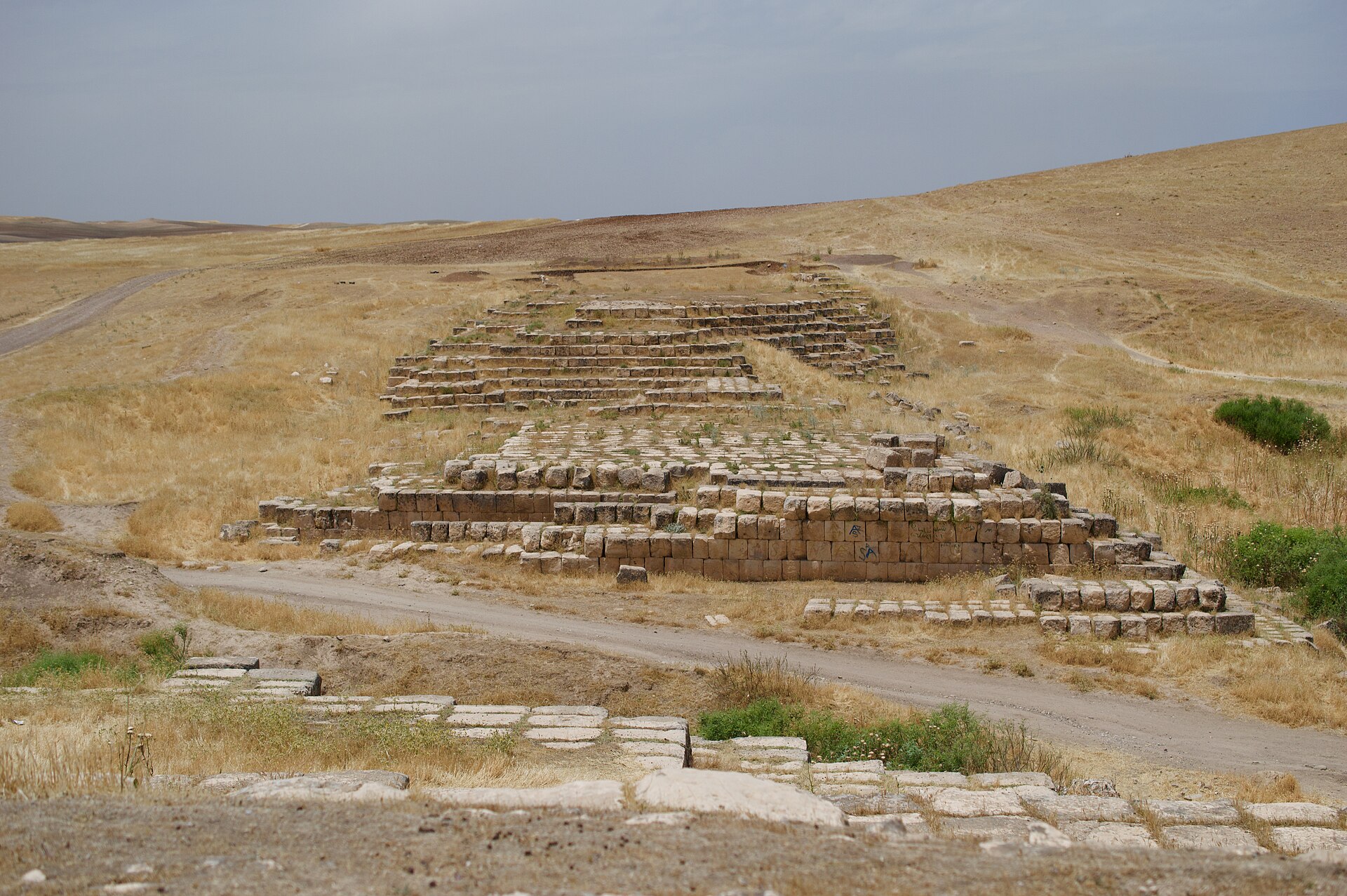
Frontinus notes that for four hundred and forty-one years from the foundation of the City, the Romans were satisfied with the water they drew from the Tiber, from wells, or from springs. Earlier civilizations in Egypt and India also built aqueducts, but the Romans improved on the structure and built an extensive and complex network of aqueducts across their territories. The first sophisticated long-distance canal systems for water supply were built in the Assyrian Empire in the 9th century BCE, incorporating tunnels several kilometres in length. A limestone aqueduct built by the Assyrians about 691 bce to bring fresh water to the city of Nineveh used approximately two million large blocks to make a water channel 10 metres (30 feet) high and 275 metres (900 feet) long across a valley. In the 7th century BCE a wide canal crossed a 280 m long bridge to bring water to Nineveh, and a 537-metre tunnel was used to supply Jerusalem.
Qanats, which probably originated in Persia or Arabia, were large underground galleries that collected groundwater and channelled it away through tunnels several kilometres long using the force of gravity. Both Samos and Athens were supplied by long-distance aqueducts from the 6th century BCE; the Samos aqueduct was 2.5 km long and included a famous 1 km tunnel designed by Eupalinus of Megara. The invention of the arch allowed large-span aqueduct structures to be built from materials such as concrete and waterproof cement that could ignore unfavourable land features and carry water along the straightest possible route.
2. Chronology of Rome's Aqueducts
-
312 BCAqua AppiaRome's first aqueduct, built by the censors Appius Claudius Caecus and C. Plautius; it ran 16 kilometers from eastern springs and lay mostly underground, with an approximate 4.8 kilometers on arches. 5Aqueducts in Rome · Engineering Rome, University of Washington ↗
-
226 CEAqua AlexandrinaThe last of the 11 aqueducts of ancient Rome. 6The Aqueducts and Water Supply of Ancient Rome · PubMed Central, U.S. National Library of Medicine ↗
3. The Aqueducts of Rome
The intake of the Appian aqueduct lay on the Lucullan estate between the seventh and eighth milestones on the Praenestine Way, and its channel ran 11,190 paces to the Salinae at the Porta Trigemina, of which 11,130 paces ran underground. The Appian aqueduct was brought into the City by Appius Claudius Crassus, the censor who afterwards received the surname of 'the Blind', while his colleague Gaius Plautius was given the name of 'the Hunter' for having discovered the springs of this water. Appius Claudius suffered blindness in old age, hence his surname Caecus, which means 'the blind'. The Aqua Appia was one of two major public projects of its time; the other was a military road between Rome and Capua that formed the first leg of the Appian Way.
The Aqua Alsietina was commissioned by Augustus in 2 BC and was also known as the Aqua Augusta. 38-52 Caligula began a new aqueduct to meet increased demand from baths, and Claudius finished the work and called it Aqua Claudia. 109 Trajan built the Aqua Traiana, which brought water from near Lake Bracciano to supply Rome's new suburbs, known today as Trastevere.
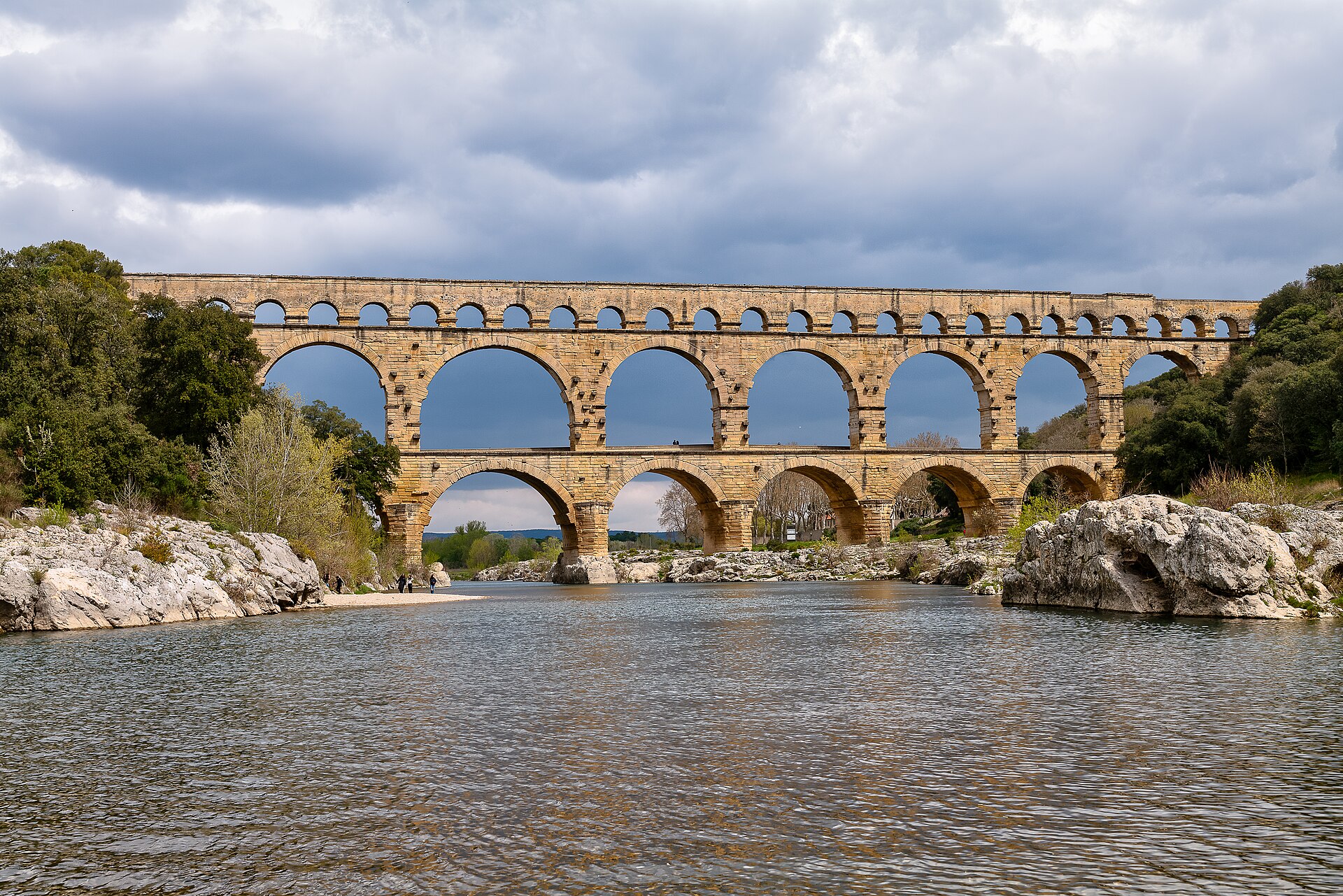
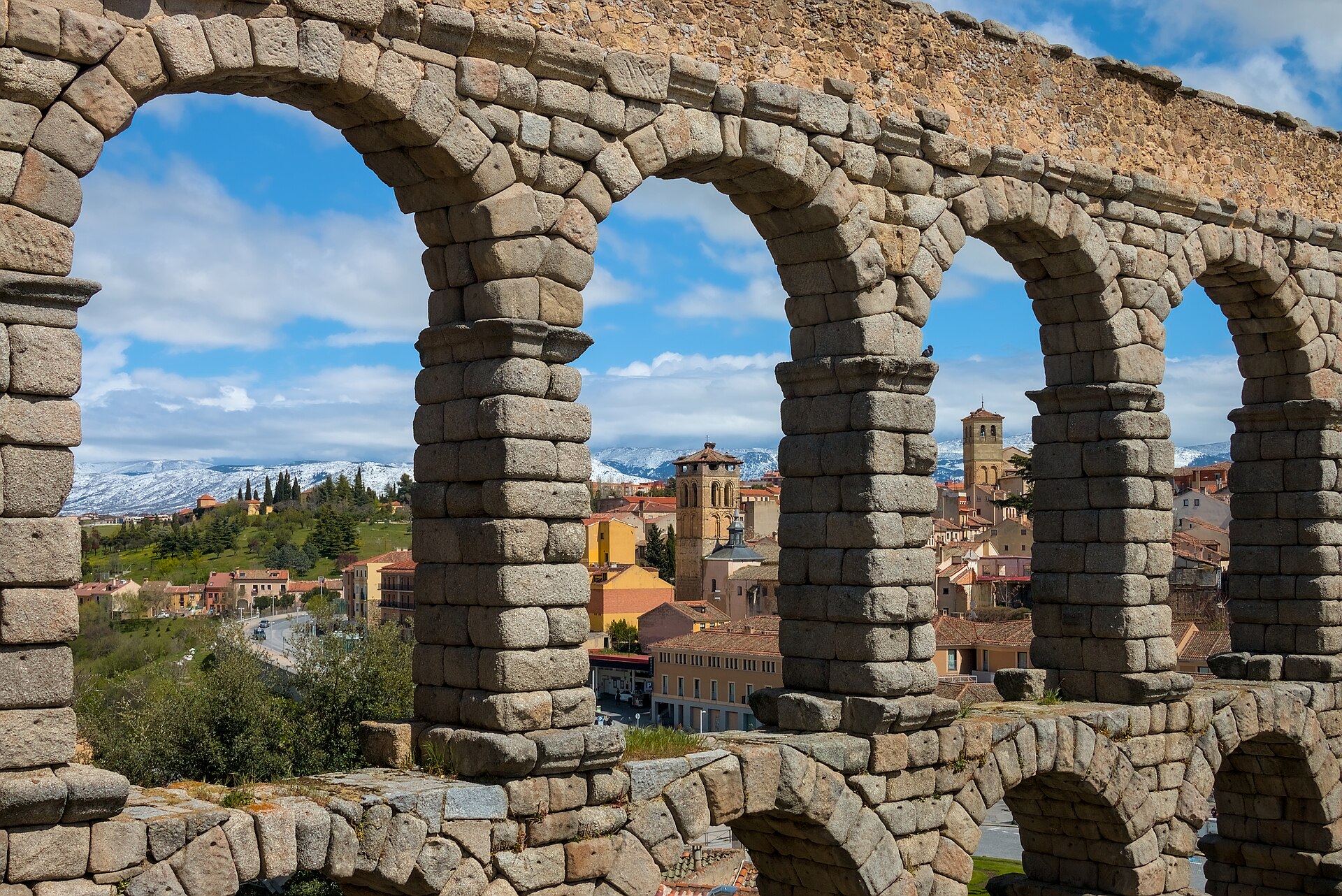
The monuments that survive in Mérida, Tarragona and Segovia illustrate the political determination that greatly increased the number of aqueducts, which Frontinus described as the most solemn testimony of the Empire. The three-storey Pont du Gard, rising to nearly 48.77 m, enabled the water conduit to cross the Gardon River, and its longest floor measured 360 m. It could transport up to 40000 m3 of water a day. At the lowest point of the valley, the Aqueduct of Segovia stands at a height of 28.5 m above ground.
Castellums improved water quality and distributed water within the city, acting as holding and settling tanks that filtered sediment and debris as well as reservoirs of water. Water entered the castellum divisorium from the single aqueduct pipe and exited through many separate branches that led to sub-castella, where it was divided further into individual pipes serving public drinking fountains and private houses. The middle compartment of the distribution basin served the public drinking fountains, which guaranteed the citizens of Rome first priority in meeting their water needs; no citizen had to walk further than 50 meters to reach the nearest public fountain. Frontinus enumerated 591 public water basins, called lacus, in first century Rome.
One quinaria was a pipe 2.3125 cm in diameter; supply pipes were made in 25 different standardised diameters and were fitted with bronze stopcocks. The records credited Appia with 841 quinariae, but a gauging at The Twins below Spes Vetus found 1,825 quinariae, while the aqueduct was delivering only 704 quinariae, a considerable part of the difference being lost through leaks in its deeply buried conduit. The imperial records set down 12,755 quinariae in the aggregate, but 14,018 quinariae were actually delivered, and Frontinus' own measurements of the intakes found a total supply greater than the records by about 10,000 quinariae.
Two gangs of slaves were kept for the maintenance of the conduits, one belonging to the State and numbering about 240 men, the other belonging to Caesar, numbering 460 men and organized by Claudius at the time he brought his aqueduct into the City. No one was to draw water from the public supply without an authorisation from Caesar or to draw more than had been granted, and the quantity regained was to be distributed to new fountains and used for new grants. A resolution of the Senate directed that the water-commissioners appointed by Caesar Augustus should take pains that the public fountains might deliver water as continuously as possible for the use of the people day and night.
4. Engineering and Construction
Roman aqueducts moved water through gravity alone, along a slight overall downward gradient within conduits of stone, brick, concrete or lead; the steeper the gradient, the faster the water flowed. Because the system depended on gravity, engineers kept the channel at a certain height and built an arcade or a bridge when it came to a dip in the landscape. A Roman water engineer used a surveying instrument called a chorobates to project a gently sloping line from the water source to the city, so that the water, pulled by gravity, made its way gradually downhill. Vitruvius recommends a low gradient of not less than 1 in 4800 for the channel; the gradient of the Pont du Gard is only 34 cm per km. The Assyrian engineers obtained a remarkably constant gradient of a fall in elevation of about 12.5 m/km, appreciably steeper than the gradients found in Roman aqueducts, which tend to vary between 1.5 and 3.0 m/km.
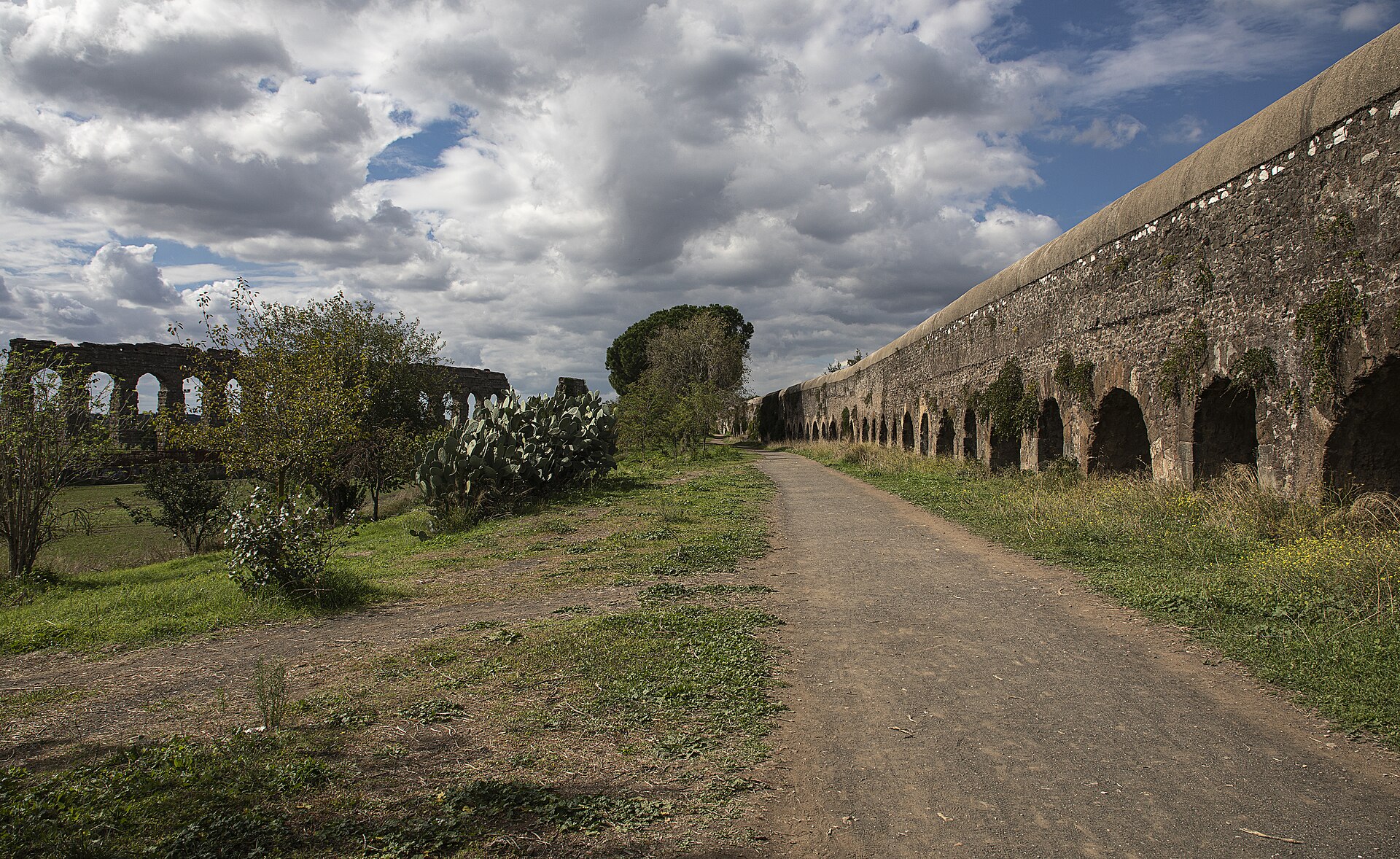
Roughly four of every five miles of Rome's aqueducts run underground, many in covered trenches that were used when the aqueduct followed the contours of the land and required neither arches nor tunnels. Roman aqueduct builders dug a series of shafts called putei at intervals of around 230 feet, following an ancient Persian technique known as qanat; construction of the channel or specus began when the planned depth was reached. Since a small slope was not always possible, other measures were taken such as bridges and siphons to accommodate unavoidable steep slopes and to keep the gradient of the aqueduct constant, with convenience and cost deciding between the two.
Where a deep valley had to be crossed, water travelled down one side in watertight pipes and pressure forced it up the other side, exiting at nearly the same height; the pipes were usually built of lead. Analysis of a siphon in a Roman aqueduct shows that pipes at its bottom, with an elevation loss of around 400 feet, withstood pressures of 1700 psi, and because such pipes had to be thick, strong, and very heavy, bridges were often used in place of siphons. The Roman aqueduct at Lyon includes a siphon consisting of nine lead pipes laid side by side extending over a combined length of 16.6 km, and the typical Roman lead pipe was about 0.27 m in external diameter. Most of the pipes in Rome were made of lead, though in Germany, where there was a lot of wood, pipes were made of wood, and elsewhere they might be terra-cotta. Much of the water in Rome's aqueducts was hard water whose minerals would encrust and coat the inside of the pipes, and that layer of minerals served as a buffer.
Aqueducts often failed because of soft building materials, erosion, and poor construction techniques, and the Aqua Claudia was continually under repair due to breaches; access doors and diversion tunnels were used along with sluice gates and holding tanks to divert or store water while repairs could be made. In hot and dry climates a certain portion of the water flowing in an aqueduct is bound to evaporate, and covering the aqueduct would stop that loss, but the cost must be weighed against the value of the evaporated water.
5. Distribution Within the City
When aqueduct water reached the city it entered a large tank or water tower called a castellum, typically placed at a high spot, and from there it was transported through an underground system of pipes beneath the streets to public fountains, baths or drinking basins.
Aqueduct water in Rome supplied public baths, latrines, fountains and private households, and it also supported mining operations, milling, farms and gardens. By the 3rd century AD, the city of Rome had eleven aqueducts sustaining a population of over a million, and most of the water supplied the city's many public baths. Forbes calculates that up to 17% of the total water supply of Rome went to the baths.
By keeping drinking water free of human waste and other contamination, aqueducts greatly improved public health in cities with primitive sewerage systems. The Romans could not have built cities as large as they did without aqueducts, and they sometimes built cities on dry plains and brought in water from mountain springs.
6. Administration, Frontinus and Water Theft
Frontinus was appointed curator aquarum in 97 AD and wrote a short treatise describing his activities as supervisor of the aqueduct system. He was a professional civil servant who had served as one of the generals who reduced Britain to a Roman province, and he held the consulship three times. Called on to administer the water of the city, he methodically set out to discover and put an end to the endemic theft of the resource and to prevent it in the future. In the first century A.D. the senator Sextus Julius Frontinus mentioned water theft in his treatise De aquaeductu as fraus aquariorum, and some Romans drained water from the aqueduct or bribed the aquarii to do so.
When he assumed the post of water commissioner in 97 AD, Frontinus discovered that illegal diversions from the aqueducts were substantial; theft could occur through unauthorized hookups in the city or by diversions in the countryside, and he reported finding illicit pipes within the city as well as farmers who tapped the conduits where their fields bordered on them. He charged that the water-men stole water by diminishing the 20-pipe through which they constantly delivered and enlarging the 100-pipe and 120-pipe through which they received, a fraud worth 27 quinariae on the 100-pipe and 86 quinariae on the 120-pipe.
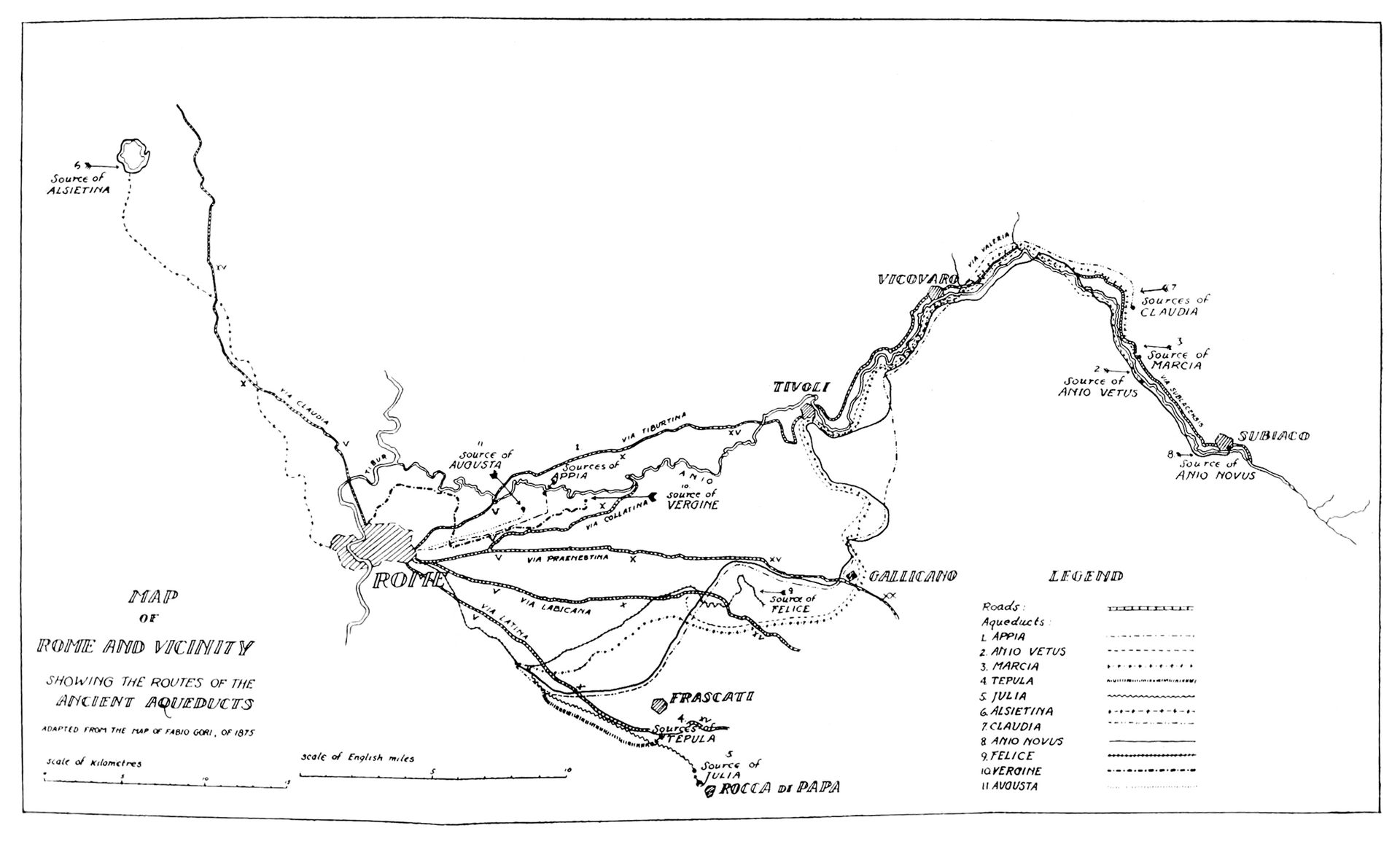
Of the water delivered, 4,063 quinariae went to points outside the City, and the remaining 9,955 were distributed within the City to 247 reservoirs, among them thirty-nine ornamental fountains and five hundred and ninety-one water-basins. He found even the Marcia, so charming in its brilliancy and coldness, serving baths and fullers, and it was therefore determined to separate the waters, with Marcia reserved wholly for drinking purposes and Old Anio assigned to watering the gardens and the meaner uses of the City.
Frontinus' book on the water supply proved accurate and sober, and it remains a mine of information for modern archaeologists and historians.
7. Water Supply and Measurement
Using an average of about 6,000 gallons a day for a single quinaria, the 14,018 quinaria delivered daily work out to roughly 84 million gallons a day for the supply of Rome, a little less than half of Frontinus' first estimate of 200 million gallons a day.
The Anio Novus was the most ambitious of all the aqueducts, delivering just under 200,000 cubic meters per day from the highest source, and it took its water 87 kilometers from the muddy, turbulent Anio River, which created a need for settlement tanks to remove sediment.
8. Aqueducts of the Empire
The Pont du Gard is a giant bridge-aqueduct constructed about 19 bce to carry water to the city of Nîmes over the Gard River in southern France; Augustus Caesar's son-in-law and aide, Marcus Vipsanius Agrippa, is credited with its conception. Three tiers of arches rise to a height of 47 metres (155 feet): the first tier is composed of 6 arches from 15 to 24 metres (51 to 80 feet) wide, the largest spanning the river, the second of 11 arches of the same dimensions, and the third, which carries the conduit, of 35 smaller arches of 4.6 metres (15 feet).
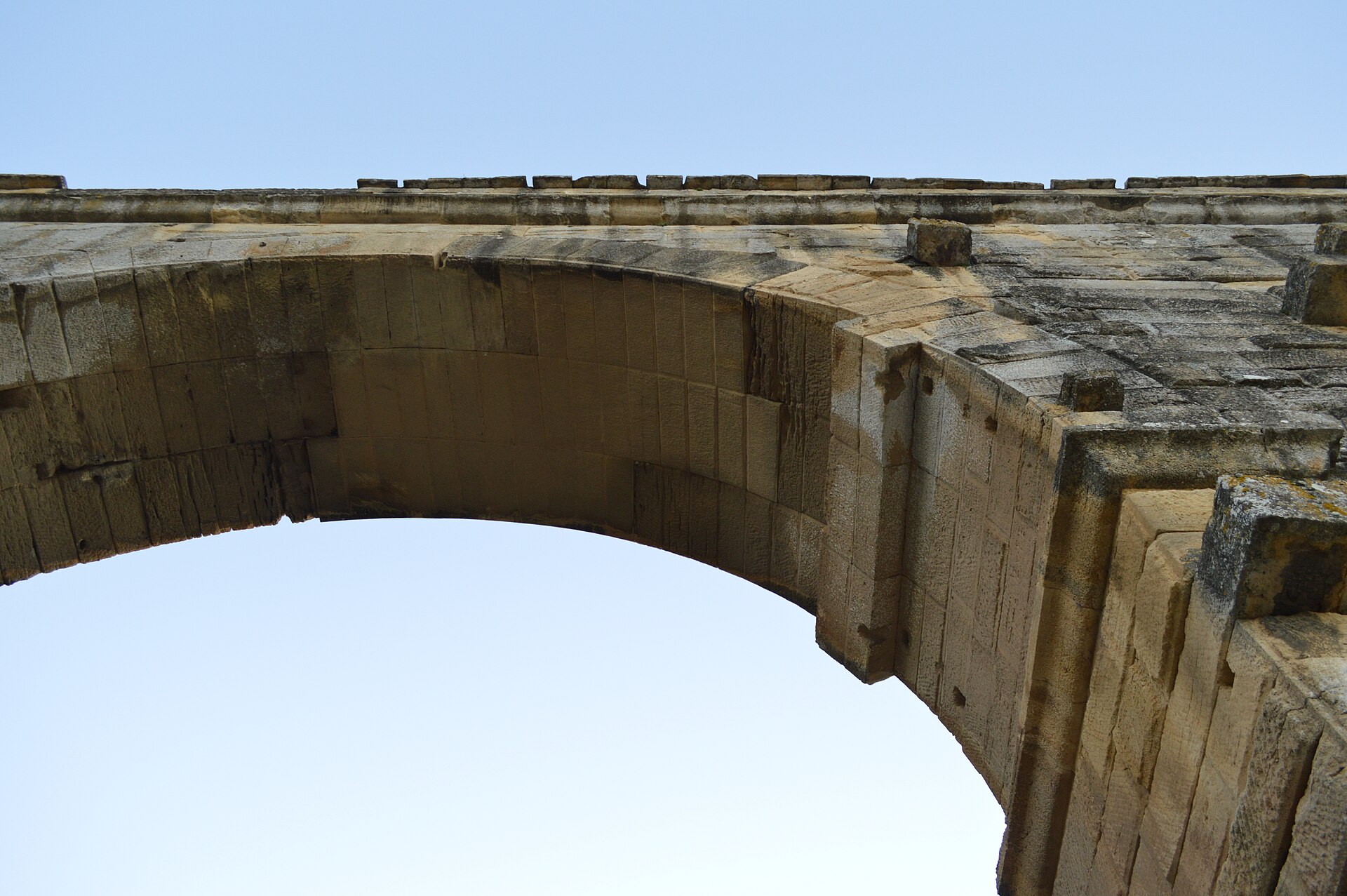
The Pont du Gard is the major element of a 50.02 km aqueduct built in the middle of the 1st century to supply the city of Nîmes, the ancient Roman colony of Nemausus, from the Eure source near Uzès. The lips installed in front of the piers of the Pont du Gard are designed to resist high water, and the opening of its principal lower arch measures 24.52 m instead of 21.87 m for the arches at the extremes.
In the years 1699-1702 the piers of the Pont du Gard were repaired, and in 1746 the engineer Henri Pitot was entrusted with building a road bridge attached to the first level of the Roman bridge. The aqueduct of Nîmes ceased to function around the beginning of the 6th century and the Pont du Gard never regained its original use; since the end of the 17th century it has been the subject of numerous restoration campaigns. Like many of the best Roman constructions, the Pont du Gard was built without mortar, and it was restored in 1743 after being severely damaged in the 5th century.
The Roman Aqueduct of Segovia has two tiers of arches and is an enormous construction of masonry 813 m in length, consisting of four straight segments and two superimposed arcades borne by 128 pillars. 5 m above ground. The inscribed property of the Old Town of Segovia and its Aqueduct covers 134 ha and contains the features needed to express its Outstanding Universal Value, including the Roman Aqueduct and the more humble domestic architecture.
9. Legacy and Modern Continuity
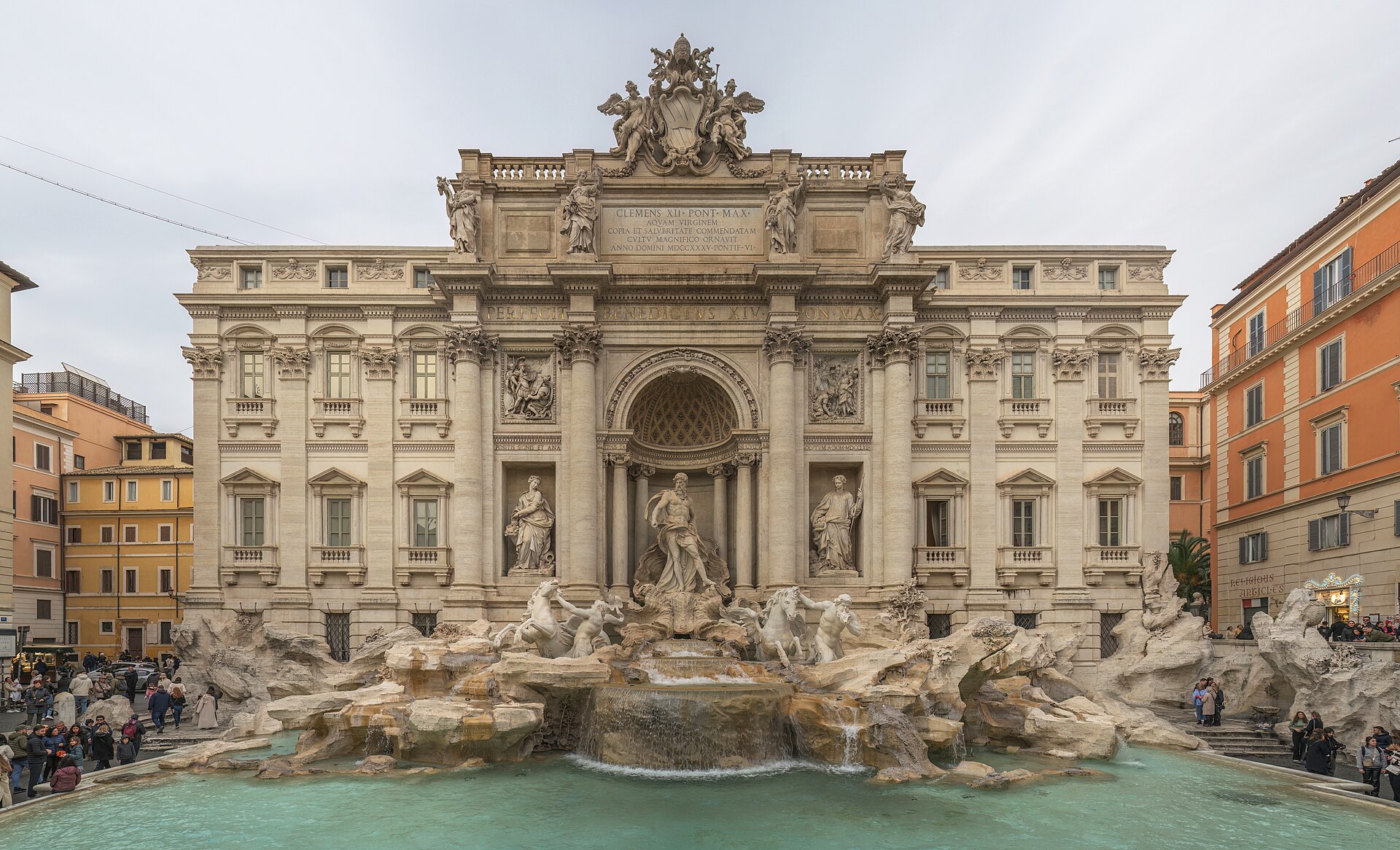
The Aqua Virgo, an aqueduct constructed by Agrippa in 19 B.C.E. during the reign of Augustus and called in modern times the Acqua Vergine, has been restored several times and still supplies water to Rome's famous Trevi Fountain in the heart of the city, living on as a functioning Roman aqueduct. Aqueducts were essential in ancient Rome and remain essential today in places such as California, moving water from where it exists in ample supply to where it is scarce.
10. Key Structures and Dimensions
At Rome itself, over a period of 500 years, from 312 bce to 226 ce, 11 aqueducts were built to bring water to the city from as far away as 92 km (57 miles), though only a portion of the system crossed over valleys on stone arches, some 50 km out of a total of about 420 km 1Aqueduct | Definition, History, & Facts · Encyclopaedia Britannica ↗.
| Structure | Location | Date | Length | Height | Notes |
|---|---|---|---|---|---|
| Pont du Gard | Nîmes, France | Middle of the 1st century | 50.02 km (aqueduct) | Nearly 48.77 m; longest tier 275 m | Three-storey bridge; site inscribed by UNESCO in 1985 11Pont du Gard (Roman Aqueduct) · UNESCO World Heritage Centre ↗ |
| Aqueduct of Segovia | Segovia, Spain | Probably c. A.D. 50 | 813 m | 28.5 m above ground at the lowest point of the valley | Two tiers of arches; four straight segments and two superimposed arcades borne by 128 pillars; city and aqueduct inscribed by UNESCO in 1985 10Old Town of Segovia and its Aqueduct · UNESCO World Heritage Centre ↗ |
| Aqua Claudia | Rome | Completed 52 CE under Claudius | 69 km | — | Gave good quality water 8Roman aqueduct · Wikipedia ↗ |
| Aqua Anio Novus | Rome | Completed 52 CE under Claudius | — | Highest of all Rome's aqueducts | — 8 |
| Aqua Traiana | Rome | 109 CE | 56 km | Enough height to supply water to all 14 districts of Rome | Built by the emperor Trajan 5 |
| Aqua Alexandrina | Rome | 226 CE | 23 km | — | 16 km on arches 5 |
| Aqua Marcia | Rome | 144–140 BCE | 91 km | — | — 4Aqueduct · World History Encyclopedia ↗ |
11. Timeline: from the Aqua Appia to the UNESCO listings
- 312 BCERome's first aqueduct, the Aqua AppiaRome's first aqueduct, the 16 km long Aqua Appia, was constructed; it began the series of aqueducts that would serve the city for the next five centuries.
- 272–269 BCEThe Aqua Anio VetusRome's second aqueduct, the Anio Vetus, was constructed, tapping the Anio River east of Rome; its flow was more than twice that of the Aqua Appia.
- 144 to 140 BCThe Aqua MarciaThe Aqua Marcia, Rome's longest aqueduct and high enough to supply the Capitoline Hill, was built in this period; the praetor Quintus Marcius Rex introduced its more wholesome supply.
- 126 BCEThe Aqua TepulaThe Aqua Tepula was built in 126 BCE; little is known about the original, other than that it contained warm water at 16 degrees Celsius and was later completely redone with a new path by Agrippa.
- 33 BCEThe Aqua JuliaThe Aqua Julia was built in 33 BCE by Agrippa; it mixed with the Tepula's water before completing its journey on top of the Aqua Marcia.
- 19 BCEThe Aqua VirgoThe Aqua Virgo was built in 19 BCE by Agrippa; it is the only one of Rome's ancient aqueducts that remains functional in the city today.
- 2 BCEThe Aqua AlsietinaAugustus commissioned the Aqua Alsietina in 2 BCE; it supplied Trastevere with non-potable water for its gardens and was used to create an artificial lake for staged sea-fights.
- Middle of the 1st century CE (c. 50 CE)Pont du Gard built for the Nîmes aqueductThe Pont du Gard was built as the major element of a 50.02 km aqueduct to supply the city of Nîmes, the ancient Roman colony of Nemausus, from the Eure source located near Uzès.
- c. A.D. 50The Aqueduct of SegoviaThe Roman aqueduct of Segovia, probably built c. A.D. 50, is remarkably well preserved, with its two tiers of arches still forming part of the historic city.
- 52 CEThe Aqua Claudia and Aqua Anio Novus completedThe Aqua Claudia, first commissioned by Caligula, was completed by Claudius after his death; the Anio Novus, built in the same year, carried water from the highest source of all Rome's aqueducts.
- 97 CEFrontinus appointed curator aquarumWhen he assumed the post of water commissioner in 97 AD, Frontinus discovered that illegal diversions from the aqueducts were substantial; he wrote a short treatise describing his activities as supervisor of the aqueduct system.
- 109 CEThe Aqua Traiana brings clean water to TrastevereThe emperor Trajan built the Aqua Traiana in 109 AD, bringing clean water directly to Trastevere from aquifers around Lake Bracciano.
- 226 CEThe Aqua Alexandrina, the last Roman aqueductThe Aqua Alexandrina was completed in 226 AD, the last of the eleven aqueducts built to supply the city of Rome; it entered the city at ground level.
- 5th century CEThe Pont du Gard severely damagedThe structure was severely damaged in the 5th century; the aqueduct of Nîmes ceased to function around the beginning of the 6th century and the Pont du Gard never regained its original use.
- 1743Restoration of the Pont du GardThe Pont du Gard was restored in 1743, part of the numerous restoration campaigns which have consecrated it as an insignia monument and a witness of the Roman civilization.
- 1985UNESCO inscribes the Pont du Gard and SegoviaThe Pont du Gard was inscribed on the UNESCO World Heritage List in 1985 under criteria (i)(iii)(iv); the Old Town of Segovia and its Aqueduct was inscribed the same year.
12. Frequently asked questions
How much water did Rome's aqueducts deliver each day?
Estimates range from a high of 1,000,000 m3 per day to a more conservative 520,000–635,000 m3 per day, supplying an estimated population of 1,000,000 8. By the late 3rd century AD the city was supplied by eleven state-funded aqueducts whose combined conduit length is estimated between 780 and 800 km, with approximately 47 km carried above ground level on masonry supports 8.
What did the aqueducts of the provinces supply, and how much water did they carry?
The Nimes aqueduct is estimated to have supplied the city with around 200,000,000 liters of water a day 16Aqueducts Move Water in the Past and Today · U.S. Geological Survey ↗. Although the water of the Nîmes aqueduct ended up in the baths and homes of Nîmes, it originated about 12 miles away in higher elevations to the north, and the total length of the aqueduct was about 31 miles considering its winding journey 16.
References (18)
- 1Aqueduct | Definition, History, & Facts — Encyclopaedia Britannica Web↩View source
- 2Frontinus, The Aqueducts of Rome, Book I (Bennett translation) — LacusCurtius, University of Chicago BookView source
- 3Roman Aqueducts (encyclopedic entry) — National Geographic Education WebView source
- 4Aqueduct — World History Encyclopedia Web↩View source
- 5Aqueducts in Rome — Engineering Rome, University of Washington Web↩View source
- 6The Aqueducts and Water Supply of Ancient Rome — PubMed Central, U.S. National Library of Medicine Web↩View source
- 7Appius Claudius Caecus | Roman Statesman, Aqua Appia & Appian Way — Encyclopaedia Britannica WebView source
- 8Roman aqueduct — Wikipedia Web↩View source
- 9Aqueducts: Quenching Rome's Thirst — National Geographic WebView source
- 10Old Town of Segovia and its Aqueduct — UNESCO World Heritage Centre Web↩View source
- 11Pont du Gard (Roman Aqueduct) — UNESCO World Heritage Centre Web↩View source
- 12Water Supply and Urban Development in Ancient Rome and Modern Cities — Engineering Rome, University of Washington WebView source
- 13Frontinus, The Aqueducts of Rome, Book II (Bennett translation) — LacusCurtius, University of Chicago BookView source
- 14Watering Ancient Rome — PBS NOVA WebView source
- 15Construct an Aqueduct: Roman Aqueduct Manual — PBS NOVA WebView source
- 16Aqueducts Move Water in the Past and Today — U.S. Geological Survey Web↩View source
- 17Frontinus Online (introduction to the man and the works) — LacusCurtius, University of Chicago WebView source
- 18Pont du Gard | History, Architecture, Construction — Encyclopaedia Britannica WebView source