Ancient Egypt
Three thousand years on the Nile — the pharaohs, the pyramids, the hieroglyphs and the civilization that grew from the flood: what the monuments, the museums and modern archaeology say about ancient Egypt.
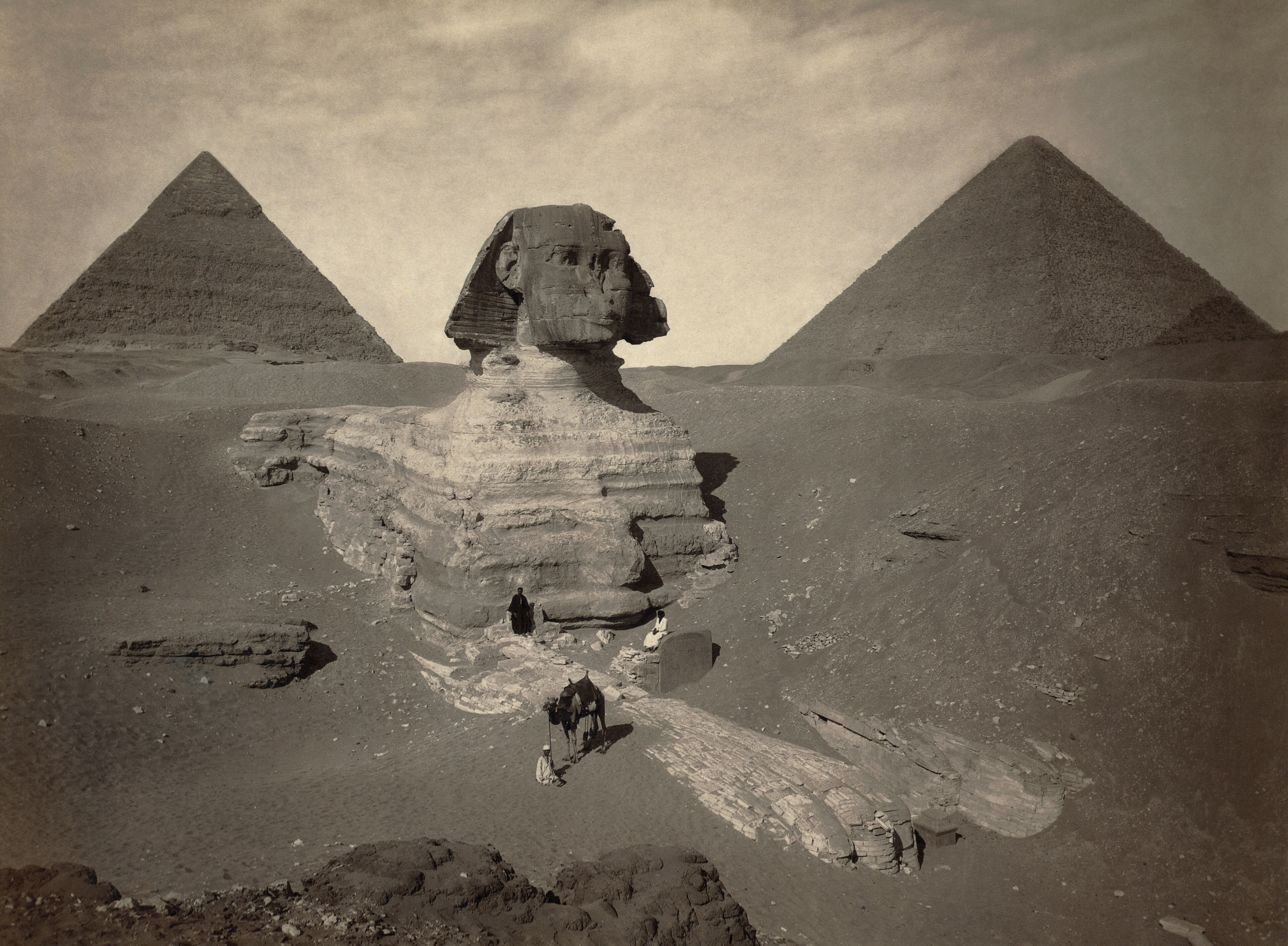
A verified fact base on ancient Egypt: the Nile setting, the unification, the pyramid age, the New Kingdom and its kings, hieroglyphs and the Rosetta Stone, society and the afterlife, the late periods, and the museums and World Heritage sites that keep the story.
The gift of the river
Ancient Egypt was a civilization in northeastern Africa that dates from the 4th millennium BCE.1 Ancient Egypt was, in effect, an oasis in the desert of northeastern Africa, dependent on the annual inundation of the Nile to support its agricultural population.1 Nothing moved without the river: the Nile was the country's sole transportation artery.1 The First Cataract at Aswan, where a belt of granite turned the riverbed into rapids, was the only well-defined boundary within a populated area.1
Massive stone building, the Egyptians' most striking technical achievement, exploited a centralized state's power to mobilize the huge labour force made available by efficient agriculture.1 The civilization arose in the fourth millennium BC and only waned in the first four centuries AD, after Egypt was annexed into the Roman empire, which makes it one of the world's most enduring civilizations.2
From villages to a united kingdom
The arc begins in prehistory: the Nile Valley was first inhabited in the Lower Paleolithic Period, and Neolithic people created stone tools and exploited domesticated plants and animals between 7000 and 4500 BC.3 At the site of Merimde Beni Salama in the Delta, a representation of a human face is the earliest known example of sculpture from ancient Egypt.3 The Badarian cemeteries reveal a formal burial programme: constructing a tomb, positioning the body and supplying the deceased with equipment for an afterlife.3 Around 3300 to 3100 BC, the scenes on large ceremonial slate palettes indicate that one individual held significant power, and the palettes and ivory labels display the first stages of hieroglyphic writing.3 Hierakonpolis in the south, the largest Predynastic settlement known, was the centre of political control.3
Tradition then hands the story to a single name: Menes, the legendary first king, is credited with joining Upper and Lower Egypt in a centralized monarchy, founding the first dynasty and establishing the capital at Memphis.1 In the Early Dynastic Period, about 3100 to 2686 BC, Egypt became a unified kingdom with a highly centralised administration, built on the invention of hieroglyphic writing.2 Memphis stood in the centre of the floodplain on the western side of the Nile, and its position at the Delta entrance made it the natural capital for any ruler of both Upper and Lower Egypt.4 Traditionally believed to have been founded in 3000 BC as the capital of a politically unified Egypt, Memphis served as the effective administrative capital during the Old Kingdom and beyond.4
The pyramid age
The necropolis of Memphis documents the first complex monumental stone buildings in Egyptian history and the development of the royal tomb from the early mastaba shape to the pyramid.4 The limestone step pyramid of Djoser is the oldest pyramid ever built.4 The Great Pyramid of Giza is the largest of the three pyramids of Giza, built by Khufu (Cheops), the second king of Egypt's 4th dynasty, and completed in the early 25th century BCE.5 It originally stood about 482 feet (147 metres) tall, and erosion and the removal of most of the polished limestone casing stones have lowered it to 449 feet (137 metres).5 Approximately 2.3 million blocks were cut, transported and assembled into the 5.75-million-ton structure, a masterpiece of technical skill and engineering ability.5 How the blocks went up remains an engineering debate: the most plausible theory is that the Egyptians used a sloping and encircling embankment of brick, earth and sand, raised as the pyramid rose, and hauled the blocks up with sledges, rollers and levers.5 The ancient numbers are reported as tradition rather than settled fact: according to Herodotus, the Great Pyramid took 20 years to construct and required the labour of 100,000 men, while by the late 20th century archaeologists found evidence of a more limited workforce and suggested that as few as 20,000 workers would have been adequate for the task.5 The ancient Greek historian Herodotus reports a hundred thousand men working in three-month shifts.6 Writing in the 19th century, Maspero noted that the pyramids were supposed to face the four cardinal points, but that most are not oriented exactly and many vary distinctly from true north.7 Maspero gave the Great Pyramid as 481 feet high and 755 feet wide, reduced by the injuries of time to 454 and 750.7
The long view belongs to the necropolis: more than thirty-eight pyramids lie within the Memphis property, among them the three pyramids of Giza and the Great Sphinx.4 The Great Pyramid is the only surviving wonder of the ancient world, and scientists continue to research how it was constructed.4 The pyramids of Giza are often collectively considered one of the Seven Wonders of the World, and they are the last still standing.5 Beyond the pyramids, the necropolis holds more than nine thousand rock-cut tombs, from the First to the Thirtieth Dynasty and extending to the Graeco-Roman Period.4 Over the 500 years of the Old Kingdom, the Egyptians mastered the art of building in stone and established artistic canons that would last for more than 3,000 years.3
Kingdoms and periods: the frame of Egyptian history
Dates in that table follow the convention used throughout this article: BC or BCE for dates before the common era and CE for dates after it.2 Every figure is approximate, and the reference works disagree by decades: the British Museum dates the Early Dynastic Period to about 3100–2686 BC, the Old Kingdom to about 2686–2181 BC and the Middle Kingdom to about 2025–1795 BC.2 The Met gives the Old Kingdom as about 2649–2150 BC and the Middle Kingdom as about 2030–1640 BC.8 The Middle Kingdom is where the two chronologies openly conflict.2
| Period | Dates as given by the sources | What defines it | Source of the dating |
|---|---|---|---|
| Early Dynastic Period | About 3100–2686 BC.2 | Egypt becomes a unified kingdom with a highly centralised administration, built on the invention of hieroglyphic writing.2 | The British Museum.2 |
| Old Kingdom | About 2686–2181 BC.2 | The first great period of Egyptian history, when its kings, the pharaohs, are buried in monumental pyramids.2 | The British Museum.2 |
| Old Kingdom, Met dating | About 2649–2150 BC.3 | The pyramids of Giza and Saqqara arise in one of the most dynamic and innovative periods of Egyptian culture.3 | The Metropolitan Museum of Art.3 |
| First Intermediate Period | The interval between the Old and Middle Kingdoms.2 | A break in the sequence, placed between the Old Kingdom and the Theban reunification of about 2030 BC.8 | The British Museum and the Met.2 |
| Middle Kingdom, British Museum | About 2025–1795 BC.2 | Egypt is reunited under a long succession of powerful kings, who bring a golden age long remembered by later generations.2 | The British Museum.2 |
| Middle Kingdom, Met dating | About 2030–1640 BC.8 | The Theban king Nebhepetre Mentuhotep II reunites Upper and Lower Egypt and establishes the capital at Thebes.8 | The Metropolitan Museum of Art.8 |
| Second Intermediate Period | About 1650–1550 BCE.9 | The north is controlled by the Hyksos, in alliance with the rulers of Kerma in Nubia against the Theban dynasty.8 | UNESCO and the Met.9 |
| New Kingdom | About 1550–1070 BC.8 | Ahmose I reunites Egypt and founds Dynasty 18, and Egypt controls Nubia as far south as the fourth cataract.8 | The Metropolitan Museum of Art.8 |
| Late Period | Assyrian invasions about 671–663 BC; Persian control 525–404 and 343–332 BC.10 | Assyrian pressure followed by Achaemenid Persian rule, ended by Alexander the Great.10 | The Metropolitan Museum of Art.10 |
| Ptolemaic and Roman Egypt | Alexander the Great in 332 BC; Octavian in 31 and 30 BC.10 | A Macedonian capital at Alexandria, then annexation as a Roman province.10 | The Metropolitan Museum of Art.10 |
Gods, temples and the journey to the afterlife
Ancient Thebes was the city of the god Amun and the capital of Egypt during the Middle and New Kingdoms, lying about 700 km south of Cairo on the banks of the Nile.9 Its temple estate at Karnak contains the Hypostyle Hall begun by Seti I and completed by Ramses II, covering 5,000 square metres and supported by 134 columns, those of the central nave standing 20.4 metres high.9 With the temples and palaces of Karnak and Luxor, Thebes testifies to Egyptian civilization at its height, when the city ruled an empire from the Euphrates to northern Sudan.9 Far to the south, the final bastion of ancient Egyptian religion was Philae, where the rites of the cult of Isis persisted until the 9th century CE.11
The beliefs behind these buildings survive in a literature of the dead: the Book of the Dead is the title now commonly given to the great collection of funerary texts composed for the benefit of the dead.12 They consist of spells and incantations, hymns and litanies, magical formulae and names, words of power and prayers, cut or painted on the walls of pyramids and tombs and on coffins, sarcophagi and papyri.12 The oldest religious texts suggest that the Egyptians always associated the Last Judgment with the weighing of the heart in a pair of scales, and the heart, called ab, was the symbol of the emotions and passions out of which proceeded the issues of life.12 Mummification served the same beliefs: Herodotus describes how embalmers offered three ways of embalming at three prices, showing relatives wooden models of corpses.6 In the costliest method the brain was drawn out through the nostrils with a crooked iron tool, the body was cleansed with palm-wine and spices, and the corpse was kept covered in natron for seventy days.6 The art served the belief: the monuments of the Egyptian sculpture gallery were created for eternity, meant as vehicles for the spirits of deities, kings and privileged officials.2
Kings and queens of the New Kingdom
The New Kingdom was forged in war: in the Second Intermediate Period the Hyksos, descendants of settlers from western Asia in the eastern Delta, controlled the north of Egypt and allied with the rulers of Kerma in Nubia against the Theban dynasty.8 The Theban king Ahmose I reunited Egypt around 1550 BC and founded Dynasty 18, and Egypt went on to control Nubia as far south as the fourth cataract.8 Through military campaigns, trade, diplomatic gifts and tribute, Egypt attained a level of wealth previously unknown — a catalyst for the third great flowering of Egyptian culture, with building campaigns unequalled since the pyramids.8 Hatshepsut, the most powerful female ruler of pharaonic history, built her unique funerary temple in western Thebes.8 At Deir el-Bahari the temple stands with immense porticoes, terraces flanking the mountain, and frescoes tracing her journey to the country of Punt.9
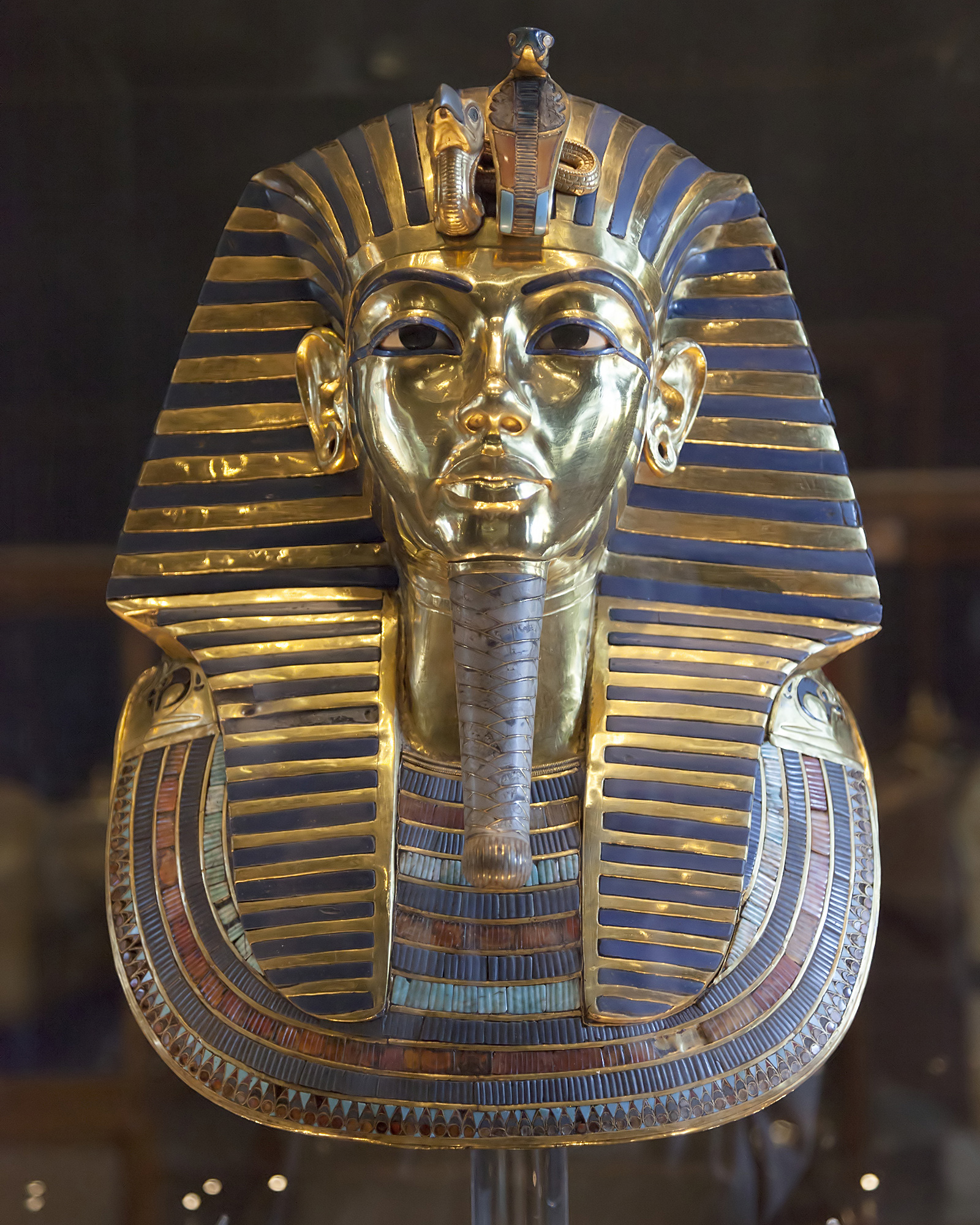
Near the end of the 18th dynasty Akhenaten broke with tradition by establishing the first monotheistic religion, and although it ended with his death, the artistic innovations of his reign continued into the next dynasty.8 His young successor Tutankhamun changed his name and issued a decree restoring the temples, images, personnel and privileges of the old gods.13 Tutankhamun reigned around 1333 to 1324 BCE and is known chiefly for his intact tomb, KV 62, found in the Valley of the Kings in 1922.13 At the time of Carter's discovery the tomb was still largely intact and held what he called a strange and wonderful medley of extraordinary and beautiful objects, and Carter spent the next 10 years clearing it.13 Inside the small tomb the mummy lay within a nest of three coffins, the innermost of solid gold, and on the king's head was a magnificent golden portrait mask.13 Tutankhamun unexpectedly died in his 19th year, and in 2010 scientists found traces of malaria parasites in his mummified remains and suggested malaria combined with degenerative bone disease may have been the cause of death.13 Its memory was carried by its later kings: Ramesses II, most famous of the Ramesside kings, reasserted Egyptian hegemony over the Levant and Nubia.8 The Ramesside Period is best known for its monumental structures — the temple of Osiris built by Seti I at Abydos, the rock-cut temple of Ramesses II at Abu Simbel and Medinet Habu in western Thebes.8 In the British Museum, the largest Egyptian sculpture represents Ramesses II, ruler of rulers, who reigned through most of the 13th century BC.2
Writing and the key to reading it
Writing was there from the beginning of the state: the Early Dynastic kingdom's centralised administration was built on the invention of hieroglyphic writing.2 Its earliest stages are older still: around 3300 to 3100 BC, palettes and small ivory labels display the first stages of hieroglyphic writing.3 Then the script fell silent: after hieroglyphs went out of use at the end of the fourth century AD, the knowledge of how to read and write them disappeared.14 In the early years of the nineteenth century, some 1400 years later, scholars used the Greek inscription on the stone as the key to decipher them.14 The stone itself is part of a grey and pink granodiorite stela carrying a priestly decree concerning Ptolemy V in three blocks of text: hieroglyphic with 14 lines, demotic with 32 and Greek with 54.14 The inscription is a decree passed by a council of priests, one of a series affirming the royal cult of the 13-year-old Ptolemy V on the first anniversary of his coronation.14 The decree is inscribed on the stone three times: in hieroglyphic for a priestly decree, in demotic for daily purposes, and in Greek, the language of the administration.14 Soldiers in Napoleon's army discovered the stone in 1799 while digging the foundations of an addition to a fort near el-Rashid, known as Rosetta.14 It has been exhibited in the British Museum since 1802, with only one break.14
Two scholars turned the key: Thomas Young first showed that some of the hieroglyphs on the stone wrote the sounds of a royal name, that of Ptolemy, and Jean-François Champollion then realised that hieroglyphs recorded the sound of the Egyptian language, laying the foundations of knowledge of the ancient Egyptian language and culture.14 The find belongs to a wider beginning: modern Egyptology began with a French scientific expedition accompanying Napoleon's invasion of Egypt in 1798.2
Society, land and daily life
The title pharaoh derives from the Egyptian per ʿaa, meaning great estate, and was used increasingly from about 1400 BCE for the living king.1 Women had a legal status only marginally inferior to that of men: they could own and dispose of property in their own right, and initiate divorce and other legal proceedings.1 Above the household stood the power of the state to mobilize a huge labour force made available by efficient agricultural practices — the foundation of the most striking technical achievement of the Egyptians, massive stone building.1 The burial tradition runs deep: the Badarian cemeteries reveal a formal burial programme with constructed tombs, positioned bodies and equipment supplied for an afterlife.3 The record is uneven: village archaeology preserves far less than tombs and temples, and the everyday life of most Egyptians is the hardest part of the story to recover.15
The last pharaohs and the coming of Rome
In the Late Period the Assyrians invaded Egypt repeatedly between about 671 and 663 BC, and the Achaemenid Persians controlled the country from 525 to 404 BC and again from 343 to 332 BC.10 Egypt, under Persian rule since 343 BC, was conquered by Alexander the Great in 332 BC, who built a new capital, Alexandria, oriented toward the Mediterranean and the Hellenistic world.10 The Ptolemaic court that followed produced the decree behind the Rosetta Stone, issued by a council of priests in 196 BC.14 The end of native kingship survives in one object: the sarcophagus of Nectanebo II, Egypt's last true pharaoh, whose reign was cut short by a Persian invasion and whose fate remains unknown.2 The final act belongs to Rome: in 31 BC Octavian conquered Antony and Cleopatra in a sea battle off Actium, and in 30 BC he took control of Egypt after their suicides and the death of Caesarion.10
Monuments, museums and World Heritage
The past is kept in place as well as in museums: the UNESCO property at Thebes covers the temples of Karnak and Luxor on the east bank and a large archaeological area on the west bank, 7,390 ha with a buffer zone of 444 ha.9 The Nubian Monuments are a serial property of ten component parts covering 374.48 ha, from Abu Simbel and Amada to Philae, the Elephantine ruins and the Aswan stone quarries.11 The first five component parts contain temples moved during the UNESCO International Campaign from 1960 to 1980 to save them from flooding by the Nile and Lake Nasser.11 Among them is the Great Temple at Abu Simbel, carved out of an escarpment of solid rock, whose design allows the rays of the sun to penetrate to the innermost chamber twice annually on the equinoxes.11 The stone quarries at Aswan, with an unfinished obelisk left behind, are the basis of knowledge of ancient Egyptian quarrying technology.11
How the story is dated
The dates in this article are a modern reconstruction, assembled from king lists, inscriptions and datable objects rather than from a single ancient chronicle.2
In their own words
The story of Egypt has been told by many voices, and these are four of them: Herodotus on the men who built the pyramids, Maspero on their orientation, Petrie on the sphinx he offered a museum, and Budge on the judgment of the dead.6
he shut up all the temples, and having first kept them from sacrifices there, he then bade all the Egyptians work for him
Herodotus, The Histories, Book II
they worked by a hundred thousand men at a time, for each three months continually
Herodotus, The Histories, Book II
For the making of the pyramid itself there passed a period of twenty years; and the pyramid is square, each side measuring eight hundred feet
Herodotus, The Histories, Book II
they keep it for embalming covered up in natron for seventy days
Herodotus, The Histories, Book II
The pyramids were supposed to have their four faces to the four cardinal points, like the mastabas; but, either from bad management or neglect, the greater part are not oriented exactly
Maspero, Manual of Egyptian Archaeology
We have had raised at Memphis a colossal sphinx of Rameses II about 11 feet long, 11 ton weight.
Flinders Petrie, letter on the Memphis sphinx
The oldest religious texts suggest that the Egyptians always associated the Last Judgment with the weighing of the heart in a pair of scales
Wallis Budge, The Book of the Dead
scholars were able to use the Greek inscription on this stone as the key to decipher them
The British Museum, on the Rosetta Stone
Timeline
Egypt becomes a unified kingdom
In the Early Dynastic Period, about 3100 to 2686 BC, Egypt becomes a unified kingdom with a highly centralised administration, built on the invention of hieroglyphic writing.
Memphis, the first capital
Traditionally believed to have been founded in 3000 BC as the capital of a politically unified Egypt, Memphis serves as the effective administrative capital of the country during the Old Kingdom.
The Old Kingdom and the pyramid age
The pyramids of Giza and Saqqara arise in the Old Kingdom, one of the most dynamic and innovative periods in Egyptian culture; over 500 years the Egyptians establish artistic canons that will last for more than 3,000 years.
Khufu’s Great Pyramid rises at Giza
Khufu (Cheops), second king of the 4th dynasty, builds the Great Pyramid, completed in the early 25th century BCE — about 2.3 million blocks assembled into a 5.75-million-ton structure.
Mentuhotep II reunites Egypt
The Theban king Nebhepetre Mentuhotep II reunites Upper and Lower Egypt, establishes the capital at Thebes and ushers in the Middle Kingdom.
The Hyksos rule the north
Following the invasion of the Hyksos, local Egyptian dynasties (16 and 17) rule from Thebes while the north of Egypt is controlled from Avaris in the eastern Delta.
Ahmose I founds the New Kingdom
The Theban king Ahmose I reunites Egypt around 1550 B.C. and founds Dynasty 18; Egypt goes on to control Nubia as far south as the fourth cataract.
Tutankhamun restores the old gods
Tutankhamun abandons Akhetaton, moves his residence to Memphis and issues a decree restoring the temples, images, personnel and privileges of the old gods.
Ramesses II, “ruler of rulers”
Ramesses II reasserts Egyptian hegemony over the Levant and Nubia, and his colossal image becomes the largest Egyptian sculpture in the British Museum.
Persia controls Egypt
The Achaemenid Persians control Egypt from 525 to 404 B.C. and again from 343 to 332 B.C., after Assyrian invasions between about 671 and 663 B.C.
Alexander the Great takes Egypt
Egypt is conquered by Alexander the Great in 332 B.C., who builds a new capital, Alexandria, oriented toward the Mediterranean and the Hellenistic world.
The Rosetta Stone decree is carved
A council of priests issues the decree inscribed on the Rosetta Stone, affirming the royal cult of the 13-year-old Ptolemy V on the first anniversary of his coronation.
Rome annexes Egypt
After defeating Antony and Cleopatra at Actium in 31 B.C., Octavian takes control of Egypt in 30 B.C. following their suicides and the death of Caesarion.
The Rosetta Stone is found — and later read
Soldiers of Napoleon’s army discover the Rosetta Stone in 1799; in the early nineteenth century Thomas Young and Jean-François Champollion use it to decipher hieroglyphs.
Carter finds Tutankhamun’s tomb
Howard Carter finds the largely intact tomb of Tutankhamun, KV 62, in the Valley of the Kings; for the next 10 years he supervises the removal of its contents.
UNESCO saves the Nubian temples
Temples including Abu Simbel and Philae are moved during the UNESCO International Campaign to save them from flooding by the Nile and Lake Nasser.
Frequently asked questions
What was ancient Egypt?
Ancient Egypt was a civilization in northeastern Africa dating from the 4th millennium BCE.1 It can be seen as an oasis in the desert, dependent on the annual inundation of the Nile to support its agricultural population.1
Why was the Nile so important?
The Nile was the country's sole transportation artery, and the First Cataract at Aswan was its only well-defined boundary within a populated area.1 The annual inundation of the river supported the agricultural population of what was, in effect, an oasis in the desert.1
When was Egypt unified?
In the Early Dynastic Period, about 3100 to 2686 BC, Egypt became a unified kingdom with a highly centralised administration, built on the invention of hieroglyphic writing.2 Tradition credits Menes, the legendary first king, with joining Upper and Lower Egypt and with founding the capital at Memphis.1
How tall is the Great Pyramid of Giza?
It originally stood about 482 feet (147 metres) tall, and erosion and the removal of most of the polished limestone casing stones have lowered its height to 449 feet (137 metres).5 Approximately 2.3 million blocks were assembled to create the 5.75-million-ton structure.5
Who was Tutankhamun?
He was a king of ancient Egypt who reigned around 1333 to 1324 BCE, known chiefly for his intact tomb, KV 62, discovered in the Valley of the Kings in 1922.13 He had earlier changed his name and issued a decree restoring the temples, images, personnel and privileges of the old gods.13
Why is the Rosetta Stone so important?
After hieroglyphs went out of use at the end of the fourth century AD, the knowledge of how to read and write them disappeared, and some 1400 years later scholars were able to use the Greek inscription on the stone as the key to decipher them.14 The stone has been exhibited in the British Museum since 1802, with only one break.14
What was the Book of the Dead?
It is the title now commonly given to the great collection of funerary texts which ancient Egyptian scribes composed for the benefit of the dead — spells and incantations, hymns and litanies, magical formulae and names, words of power and prayers.12 The oldest religious texts associate the Last Judgment with the weighing of the heart in a pair of scales.12
How did ancient Egypt end?
In the Late Period the Assyrians invaded repeatedly between about 671 and 663 BC, and the Achaemenid Persians controlled the country from 525 to 404 BC and again from 343 to 332 BC.10 After Alexander the Great and the Ptolemaic court, Octavian conquered Antony and Cleopatra at Actium in 31 BC and assumed control of Egypt in 30 BC.10
Knowledge graph
Sources & citations
Every factual claim in this article is drawn from the sources below. Bracketed numbers in the text link to the corresponding source.
- 1
- 2
- 3
- 4
- 5
- 6
- 7
- 8
- 9
- 10
- 11
- 12
- 13
- 14
- 15
- 16
- 17
- 18
- 19