Glass
From Bronze Age beads and Roman blown vessels to Venetian cristallo, Gothic windows and the float process that made flat glass universal.
Glass was first made in Mesopotamia and Egypt in the third and second millennia BCE, when sand, plant ash and lime were fused into opaque coloured beads and core-formed vessels. Glassblowing, invented in the Syro-Palestinian region in the first century BCE, turned glass into a cheap everyday material across the Roman Empire, and medieval artisans used coloured glass for the great cathedral windows of Europe. Venice's Murano workshops perfected cristallo and filigree before Crystal and Bohemian glass displaced them, and in 1959 Pilkington's float process made perfectly flat glass the world standard. Modern glass is endlessly recyclable, and ultrapure oxide glasses now carry the world's telecommunications.
In this article
- 1Overview
- 2Composition and Melting
- 3Origins and Early Glass
- 4Roman Glass and the Invention of Blowing
- 5Venice, Murano and the European Tradition
- 6Stained Glass
- 7Float Glass and Modern Manufacture
- 8Recycling and Sustainability
- 9Optical Fibres and the Nobel Prize
- 10Key Dates
- 11Timeline: from the first glass beads to fibre optics
- 12Knowledge graph
Overview
Glass is an inorganic solid material that is usually transparent or translucent, and it is characteristically hard, brittle and impervious to the natural elements. Commercial glass is ordinarily produced from sand, limestone and sodium carbonate, which are raised in temperature until molten and then cooled quickly so that visible crystals do not form. The material is formed when sand as silica, soda as alkali and lime are fused at high temperatures.
1. Composition and Melting
Glass begins as a fusion of silica sand, limestone and sodium carbonate brought together at high temperature. Crystalline silica on its own melts only above 1,700 °C (3,092 °F). Introducing soda as a flux lowers that threshold sharply, and the lime contributed by limestone gives the finished material its resistance to water. The classic soda-lime recipe settles at roughly 75 percent silica, 10 percent lime and 15 percent soda.
Not every glass follows the soda-lime formula. Borosilicate glass, the material of domestic cookware, has an expansion coefficient only one-third that of ordinary glass. Lead crystal tableware substitutes lead monoxide as the principal flux in place of much of the sodium oxide.
2. Origins and Early Glass
The earliest glass objects known to archaeology are Egyptian glass beads dating from about 2500 BCE. Glass use expanded sharply in the Late Bronze Age between 1600 and 1200 BCE in Egypt, Mycenaean Greece and Mesopotamia, where it was often opaque and coloured. Core-formed and cast glass vessels were first produced in Egypt and Mesopotamia as early as the fifteenth century B.C., but only later became common on the Italian peninsula.
The earliest glass vessels were core-formed, with opaque dark molten glass wound around a clay core attached to a metal rod. The Uluburun shipwreck off the coast of Turkey yielded 175 unfinished glass blocks called ingots, most of them cobalt-coloured deep blue with some purple and turquoise. Fragments chipped from three Uluburun ingots were reported in 2010 to be Egyptian in origin, based on the concentration of trace metals.
The Amarna Letters, cuneiform tablets excavated at Tell el-Amarna in Egypt, include references to glass among the correspondence of ancient kings. Kings shipped materials to other rulers expecting goods or loyalty in return, and Late Bronze Age inventories record the exchange of ivory, gems, wood, animals and people.
Crucible evidence suggests raw materials were melted at around 900 degrees Celsius, while finishing and even colouring required at least 1,000 degrees Celsius. Analysis of Late Bronze Age glass beads unearthed in Greece found Near Eastern or Egyptian chemical signatures, indicating that Greece imported glass from both regions. Isotope work reported in 2020 traced antimony in the earliest glass to stibnite ores from present-day Georgia in the Caucasus.
In the Bronze Age hierarchy of materials, glass sat slightly beneath silver and gold and was valued as much as precious stones were; King Tutankhamen's tomb contained a decorative writing palette, two blue-hued headrests made of solid glass and a funerary mask carrying blue glass inlays alternating with gold. Colour was imparted to ancient glass with materials such as cobalt for dark blue and lead antimonate for yellow, while crucibles excavated at Amarna, Qantir and Lisht — holding cobalt blue, predominantly red and mainly turquoise glass fragments respectively — suggest that these workshops specialised in one colour.
3. Roman Glass and the Invention of Blowing
Glassblowing developed in the Syro-Palestinian region in the early first century B.C. and is thought to have come to Rome after the area's annexation in 64 B.C. Rome asserted control over the two dominant glassmaking centres of the late first millennium, Syro-Palestine and Egypt, in 62 and 30 B.C.
Ancient glass served for personal adornment, for inlays on wooden and ivory furniture, for architectural embellishment and as containers for scented oils and perfumes.
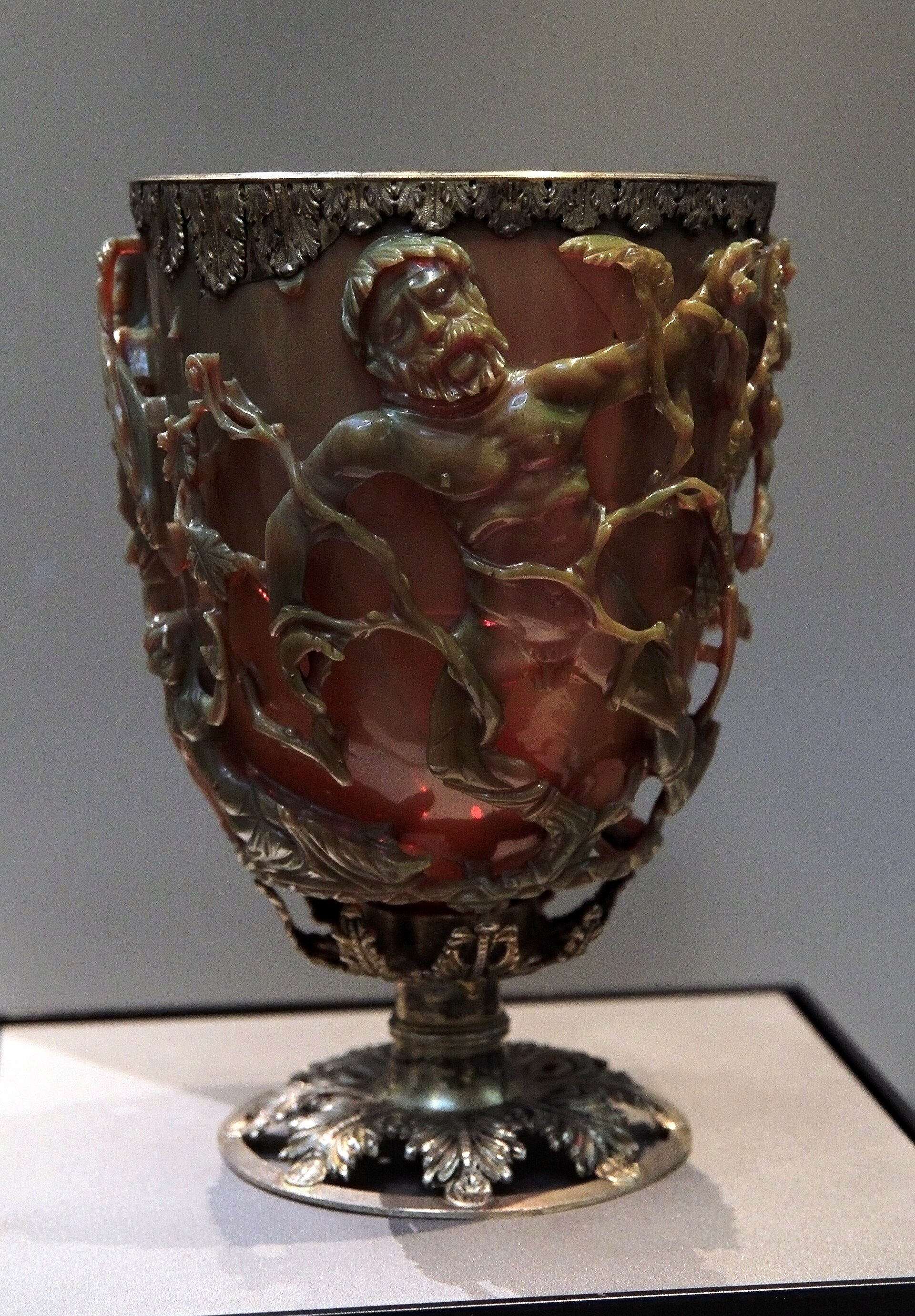
Beyond tableware, the Romans used glass for mosaics and decorative panels, windows, jewellery, mirrors, game pieces, magnifying glasses and even medicine and toothpaste. The Portland Vase, made during the reign of Augustus, depicts the marriage of Peleus and Thetis from Greek mythology and is the most famous example of cameo glass. By the 4th century CE the art of glass cutting reached its zenith with the diatreta or cage-cups, including the Lycurgus Cup carved from green and red glass. Colourless glass first appeared in the Roman glassmaker's repertoire in the late 1st century CE and became highly sought after by Roman households.
4. Venice, Murano and the European Tradition
A glassblowers' guild existed in Venice from 1224, and in 1291 the glasshouses moved across the lagoon to Murano, where they have remained. The capture of Constantinople by the crusaders in 1204 and by the Ottomans in 1453 brought an influx of Byzantine glassworkers. Venetian glass grew out of close ties with Syria and the Middle East, and by the fourteenth century at least twelve glassworks were producing everyday objects.
In the 15th century Venetian efforts concentrated on perfecting cristallo, clear glass approximating rock crystal, and by the 16th century colouring and decolourizing techniques were mastered. Angelo Barovier's invention of clear glass made Murano the unrivalled leader by the middle of the fourteenth century. Techniques included millefiori, calcedonio and latticinio. Filigree was invented around 1527 by Filippo Catani della Sirena, incorporating rods with threads of milk glass into the crystal. Murano reached its high point in the 16th century.
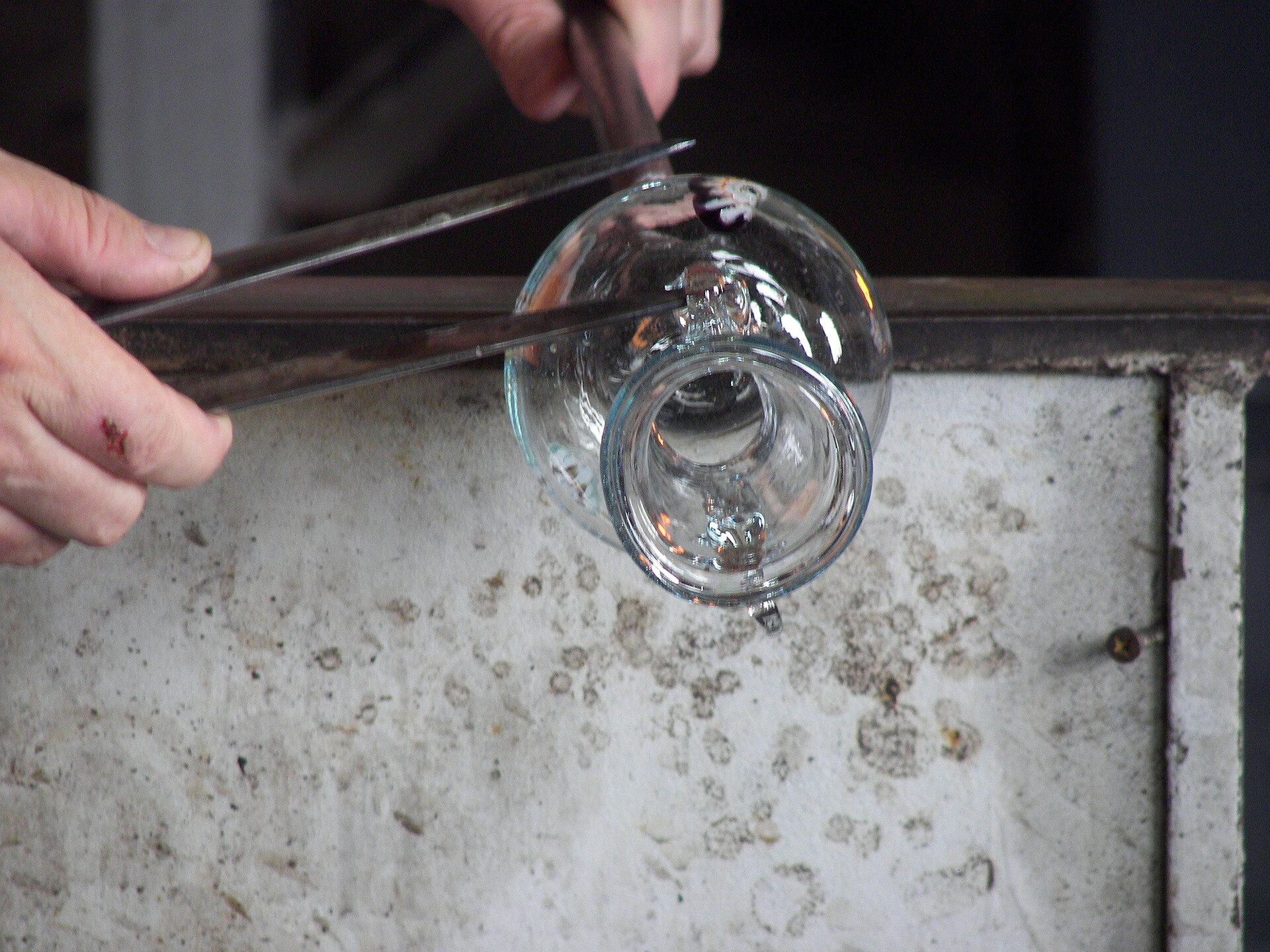
Despite restrictions on the migration of workmen, many Venetian glassmakers defected, notably to Altare near Genoa, and their guarded techniques became common knowledge across Europe.
Two regions became noted for the quality of their glass, the Belus River in Phoenicia and the Volturnus River in Campania. Isidore of Seville preserved the legend that natron merchants shipwrecked by the Bellus River cooked on lumps of natron, whose fusion with shore sand produced the first glass. At the time of the Arab conquest in the seventh century A.D., glassmaking had flourished in Egypt and western Asia for more than two millennia, and Islamic production from the seventh through the fourteenth century was greatly innovative, witnessing glorious phases such as superb relief-cut glass and spectacular gilded and enameled glass. About 1675 the English glassmaker George Ravenscroft discovered that adding lead oxide to Venetian-type glass produced a solid, heavier glass that became a favourite for fine tableware, and English lead crystal and Bohemian glass later displaced Venetian glass in the European tradition.
5. Stained Glass
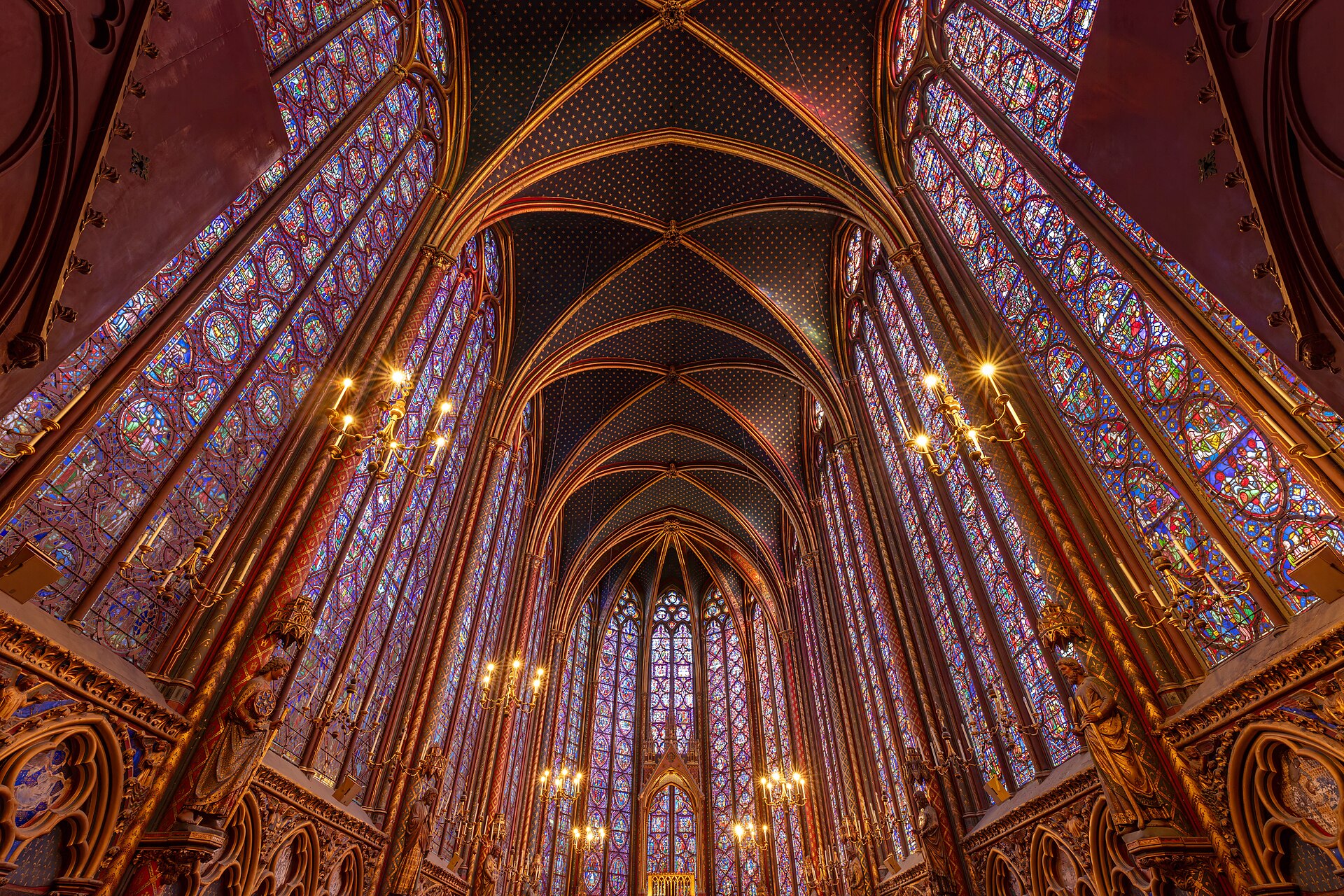
Stained glass is coloured glass used for decorative windows and other objects through which light passes, coloured by metallic oxides while the glass is molten. Medieval sheets of glass were coloured with metallic oxides — copper for ruby, cobalt for blue, manganese for purple, antimony for yellow and iron for green — then annealed slowly in a kiln. The 167 stained glass windows of Chartres Cathedral, built between 1190 and 1220 CE, are the most complete group surviving anywhere from the Middle Ages.
The Gothic Revivalists of the mid-19th century returned to earlier methods and developed so-called antique glass, which remains the basic material of stained-glass windows today.
6. Float Glass and Modern Manufacture
In 1952 Sir Alastair Pilkington came up with the idea of the float glass process, and on 20th January 1959 it was announced to the glass-making world. The process pours molten glass onto a bed of molten tin in a float bath to create a perfectly flat sheet of uniform thickness.
There are now around 500 glass float lines in the world and the float process is considered the world standard for high quality glass manufacture. Approximately 90 percent of all plate glass is made by float.

7. Recycling and Sustainability
Glass can be recycled endlessly with no loss in quality or purity. In 2018 US glass generation was 12.3 million tons, 4.2 percent of municipal solid waste, while the container recycling rate was 31.3 percent, or 3.1 million tons of glass containers recycled. Furnace energy needs fall by nearly 3 percent for each 10 percent increase in cullet.
8. Optical Fibres and the Nobel Prize
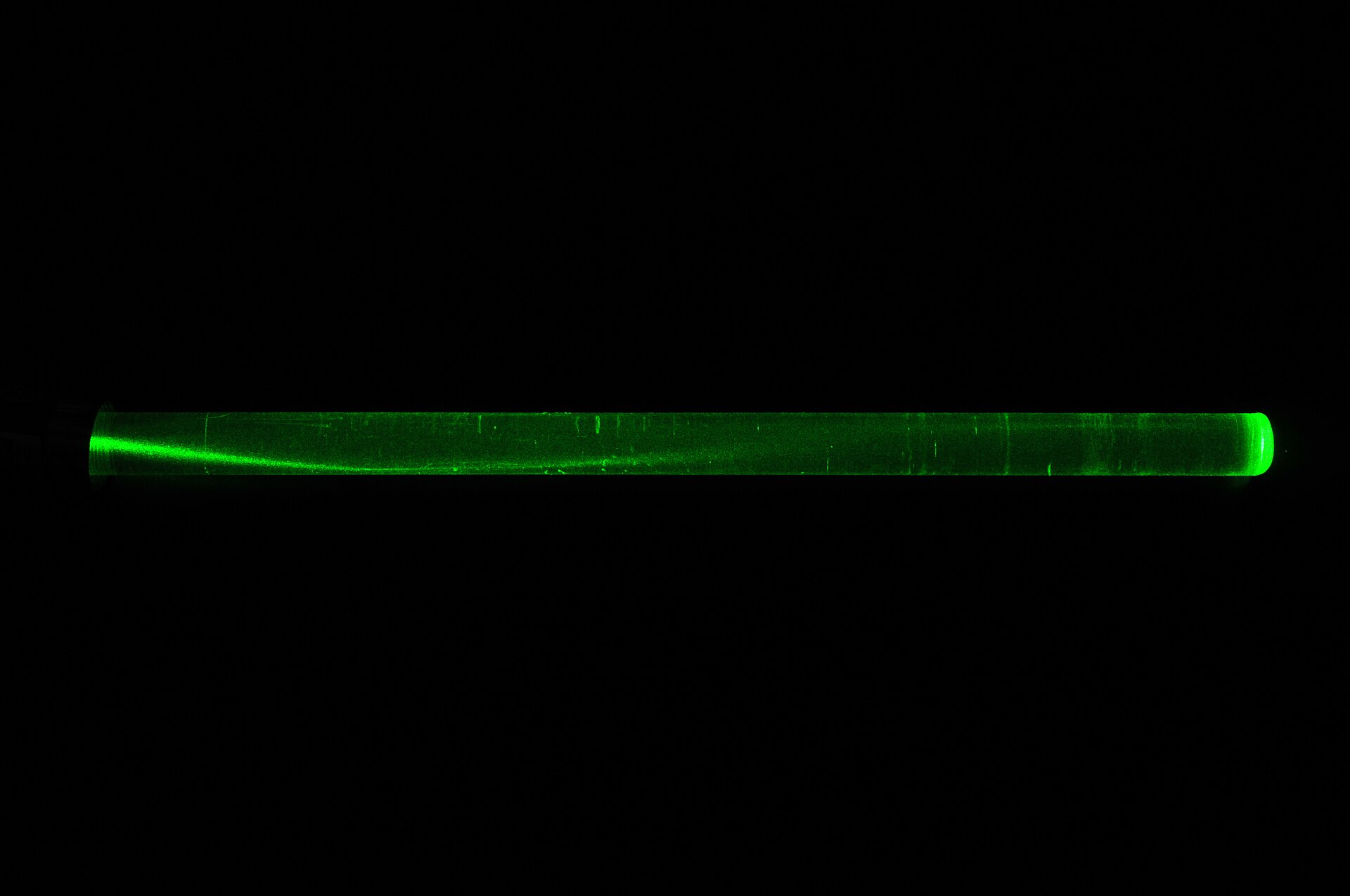
One half of the 2009 Nobel Prize in Physics was awarded to Charles K. Kao for transmitting light in optical fibres. The achievement rests on a class of materials that had to be made with extraordinary care: high-purity, ultratransparent oxide glasses developed for fibre-optic telecommunications systems.
9. Key Dates
-
1600–1200 BCELate Bronze Age expansionGlass use expanded sharply in Egypt, Mycenaean Greece and Mesopotamia, where it was often opaque and coloured.3A Brief Scientific History of Glass · Smithsonian Magazine ↗
-
62 and 30 B.C.Rome takes the glassmaking centresRome asserted control over the two dominant glassmaking centres of the late first millennium, Syro-Palestine and Egypt.2Wondrous Glass: Roman Glass-Making · Kelsey Museum of Archaeology, University of Michigan ↗
10. Timeline: from the first glass beads to fibre optics
- c. 2500 BCEEarliest known glass objectsEgyptian glass beads of about this date are the earliest glass objects known. Glass first appears as a rare luxury material in Mesopotamia and Egypt, used for beads, seals and inlays.
- 15th century BCECore-formed vessels in Egypt and MesopotamiaCore-formed and cast glass vessels were first produced in Egypt and Mesopotamia, made by winding molten glass around a clay core. Glass remained a luxury reserved for the upper classes.
- 1300s BCEUluburun glass cargoA ship wrecked off the coast of Turkey carried 175 unfinished glass ingots, most of them deep blue, proof of an international trade in raw glass between Bronze Age kingdoms.
- 64 B.C.Glassblowing reaches RomeAfter the annexation of the Syro-Palestinian region, glassblowing came to Rome with craftsmen and slaves and revolutionised the Italian glass industry.
- Around 50 B.C.Invention of free-blowingFree-blowing, in which a gather of molten glass is inflated on the end of a metal pipe, appeared in Syro-Palestine. The technique allowed faster production and a far wider range of shapes.
- 7th century CEStained glass in Byzantine churchesThe technique of staining glass for windows with metal oxides dates back at least to this period. The craft became a refined art in the 12th and 13th centuries.
- 1190–1220Chartres Cathedral glassThe 167 stained glass windows of Chartres Cathedral were built in these decades and form the most complete surviving group from the Middle Ages, with a decor conserved almost intact.
- 1224Venetian glassblowers' guildA glassblowers' guild already existed in Venice, though the earliest specimens that can be dated with certainty are from the mid-15th century.
- 1291Glasshouses move to MuranoVenice moved its glass furnaces across the lagoon to the island of Murano, where they have remained. Murano became the manufacturing centre of Venetian glass, exported across Europe.
- mid-15th centuryCristallo and clear glassVenetian glassmakers perfected cristallo, clear glass approximating rock crystal, a decisive factor being Angelo Barovier's invention of transparent, pure glass on Murano.
- around 1527Filigree invented in MuranoFilippo Catani della Sirena invented filigree, made by incorporating glass rods with threads of milk glass or coloured glass into the clear crystal.
- about 1675Lead crystal in EnglandThe English glassmaker George Ravenscroft discovered that adding lead oxide to Venetian-type glass produced a solid, heavier glass, which became a favourite for fine tableware.
- mid-19th centuryGothic Revival and antique glassGothic Revivalists returned to earlier methods of making glass and developed so-called antique glass, remarkably similar to 12th- and 13th-century window glass and still the basic material of stained-glass windows.
- 1952Pilkington conceives float glassSir Alastair Pilkington came up with the idea of floating molten glass on a bath of molten metal while working as production manager in the plate glass department. He began experimenting in December.
- 20 January 1959Float process announcedAfter seven years of experimentation and heavy investment, Pilkington announced the float glass process to the glass-making world and licensed it widely; the process became the world standard.
- 2009Nobel Prize for optical fibresThe Nobel Prize in Physics was divided, one half awarded to Charles K. Kao for groundbreaking achievements concerning the transmission of light in fibres for optical communication.
References (19)
- 1Glass — Encyclopaedia Britannica WebView source
- 2Wondrous Glass: Roman Glass-Making — Kelsey Museum of Archaeology, University of Michigan Web↩View source
- 3A Brief Scientific History of Glass — Smithsonian Magazine Web↩View source
- 4Roman Glass — The Metropolitan Museum of Art, Heilbrunn Timeline of Art History WebView source
- 5Origins of Glassmaking — Corning Museum of Glass WebView source
- 6Roman Glass — World History Encyclopedia WebView source
- 7From the fourteenth to the seventeenth century: the Golden Age — Museo del Vetro, Fondazione Musei Civici di Venezia WebView source
- 8Venetian glass — Encyclopaedia Britannica WebView source
- 9Glass from Islamic Lands — The Metropolitan Museum of Art, Heilbrunn Timeline of Art History WebView source
- 10Stained glass — Encyclopaedia Britannica WebView source
- 11The Stained Glass Windows of Chartres Cathedral — World History Encyclopedia WebView source
- 12Invention of Float Glass — Pilkington (NSG Group) WebView source
- 13Story 2: Invention of the Float Process — NSG Group 100th Anniversary WebView source
- 14A Ribbon of Glass on a River of Tin — MRS Bulletin (Cambridge University Press) BookView source
- 15Facts About Glass Recycling — Glass Packaging Institute WebView source
- 16Murano — Encyclopaedia Britannica WebView source
- 17Canterbury Cathedral, St Augustine's Abbey, and St Martin's Church — UNESCO World Heritage Centre WebView source
- 18Glass: Material-Specific Data — U.S. Environmental Protection Agency WebView source
- 19The Nobel Prize in Physics 2009 — Nobel Foundation 2009 WebView source