Julius Caesar
The Roman general and statesman whose conquest of Gaul, civil-war victory and dictatorship transformed the Republic — until his assassination on the Ides of March.
Julius Caesar (100–44 BCE) was a Roman general and statesman who conquered Gaul between 58 and 50 BCE and fought a civil war against Pompey after crossing the Rubicon in 49 BCE. Victories at Pharsalus, Thapsus and Munda left him dictator of Rome, where he reformed the calendar and the state before a conspiracy of senators led by Cassius and Brutus stabbed him to death on 15 March 44 BCE. His death ended any hope of restoring the Republic and set his heir Octavian on the path to becoming the emperor Augustus.
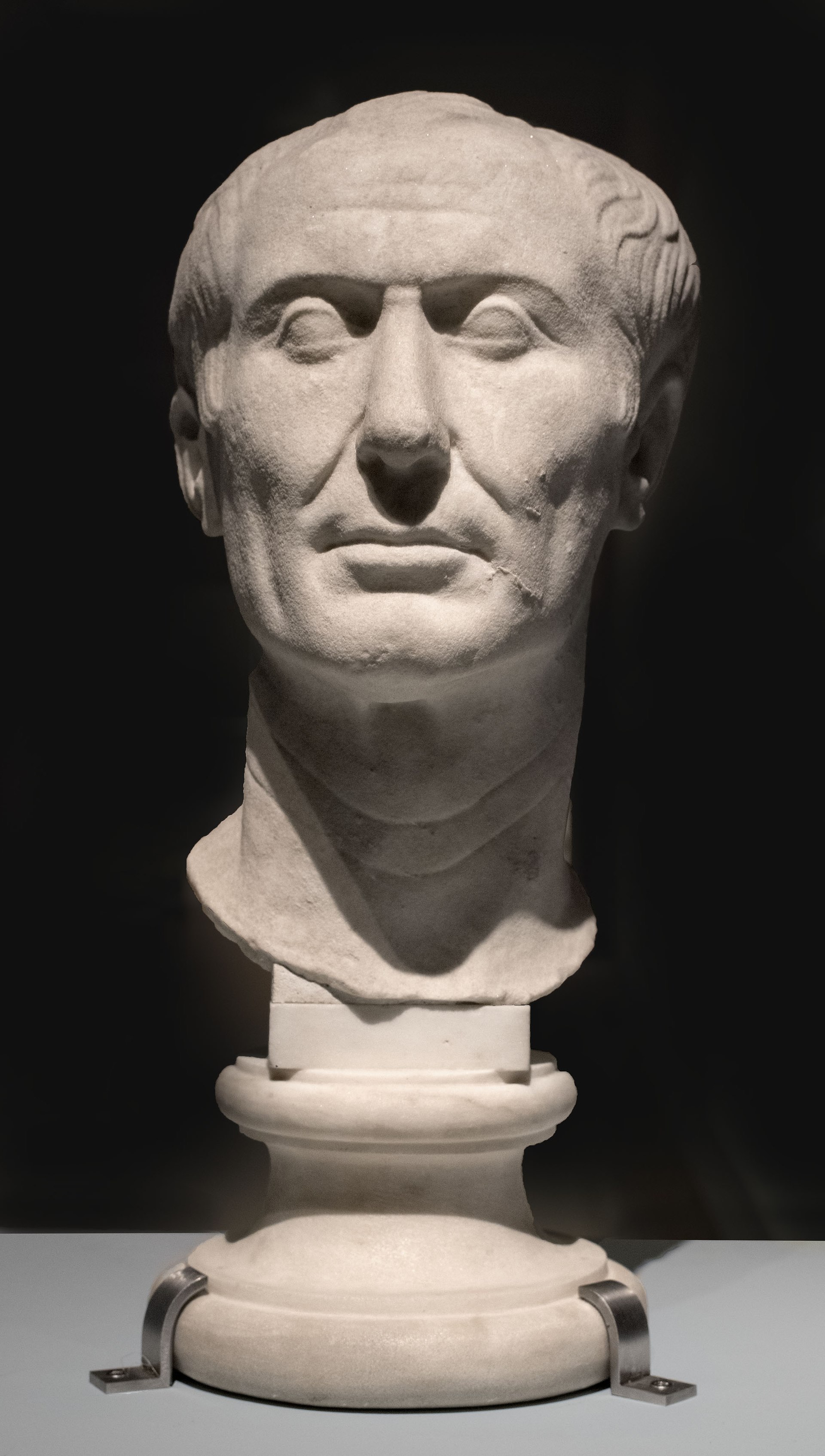
Early Life and Family
Gaius Julius Caesar belonged by birth to the patrician gens Julia, a clan counted among Rome's original aristocracy. By Caesar's own time, however, the family was neither rich nor influential nor even distinguished. His full name was Gaius Julius Caesar.
The date of his birth has long been disputed. The day was July 12 or 13, and the traditional year is 100 BCE. Some sources, however, cite 102 as his birth year.
His father, Gaius, died when Caesar was but sixteen. In the course of his sixteenth year Caesar lost his father; having been nominated priest of Jupiter, he broke his engagement with Cossutia. His mother, Aurelia, was a notable woman.
In 84 BCE Caesar committed himself publicly to the radical side by marrying Cornelia, daughter of Lucius Cornelius Cinna. Ordered by Sulla to divorce her, he refused. He then removed himself from Italy to do military service in Asia and afterward in Cilicia.
1. Early Career and Military Service
Captured by pirates on his way to Rhodes, Caesar was ransomed for fifty talents of silver. He immediately launched a fleet, pursued the departing pirates, and inflicted on them the punishment he had often threatened while joking with them. Having raised his ransom, he raised a naval force, captured his captors, and had them crucified — all as a private individual holding no public office.
In 74 BCE, when Mithradates VI Eupator renewed war on the Romans, Caesar raised a private army to combat him. He was elected pontifex maximus in 63 BCE by a political dodge. After the suppression of Catiline's conspiracy, he proposed in the Senate a more merciful alternative to the death penalty.
Before leaving for Hispania, Caesar held a funeral speech for Marius' widow Julia, praising his aunt and her family — a way of claiming Marius' inheritance. In Gades he saw a statue of Alexander the Great and lamented that he had as yet performed no memorable act, whereas Alexander had already conquered the whole world by the same age.
2. Political Rise and the First Triumvirate
Gaius Julius Caesar advanced through the sequence of Roman magistracies that defined a public career: quaestor, curule aedile, praetor, and consul in 59 BCE.
Returning to Rome with high honors, Caesar entered a political agreement with Pompey and Crassus in 60 BCE, an arrangement that modern scholars have dubbed the First Triumvirate. To cement their arrangements, he married his daughter Julia to Pompey.
While Caesar organized the conquered territories of Gaul, Pompey was elected consul without colleague in 52, and Crassus was killed by the Parthians at Carrhae in 53 BCE.
3. Conquest of Gaul
The decisive moment came at the Battle of Alesia in 52 bce, where Caesar defeated the Gallic leader Vercingetorix and completed the conquest of Gaul.
Caesar's seven-year campaign in Gaul ended triumphantly in 51 BCE. The Gallic leader Vercingetorix was paraded in chains through Rome before being ritually strangled, and the campaign killed or enslaved more than a million Gauls.
4. Civil War and Dictatorship
In January 49 BCE the Senate demanded that Caesar hand over his ten well-trained legions; choosing rebellion over prosecution, he crossed the Rubicon with the Thirteenth legion in the night of 10 to 11 January, invading Italy and provoking the Second Civil War.
With a sort of passion, uttering the phrase with which men prelude their plunge into desperate fortunes — 'Let the die be cast' — Caesar hastened to cross the river and dashed into Ariminum before daybreak.
Though Pompey had assembled an army twice the size of Caesar's, Caesar defeated him decisively at Pharsalus in 48 BCE. At Pharsalus Caesar's more experienced men overcame Pompey's larger army; almost 6,000 Roman soldiers were killed.
Arriving in Egypt in pursuit of Pompey, Caesar learned that Pompey had been murdered by soldiers of the ten-year-old king Ptolemy XIII, who hoped to gain Caesar's support in his quarrel with his older sister Cleopatra VII. Caesar did not marry Cleopatra, though the couple had a romantic relationship; after defeating Pompey in 48 BCE he wintered at Alexandria, helped return Cleopatra to power, and in 47 BCE she gave birth to Ptolemy Caesar, also called Caesarion.
At Zela Caesar defeated Pharnaces II in a rapid campaign, commemorated by the words veni, vidi, vici — I came, I saw, I conquered. Caesar overcame the republicans at Thapsus in Africa on April 6 in 46 BCE, and in September he celebrated four triumphs over Vercingetorix, Ptolemy, Pharnaces of Pontus and Juba of Numidia.
Caesar was made dictator after his return from Ilerda, was appointed again in 48 BCE, and became dictator for ten years in 46 BCE. A year before his death Caesar was proclaimed Father of his Country and consul for ten years, and his person was declared sacred and inviolable.
Although dictatorship had always been regarded as a temporary position, Caesar took it for life, and many regarded the title as equivalent to kingship.
Caesar was the first living Roman ever to appear on the coinage, an honour normally reserved for deities.
Caesar was the victor in the civil war of 49 to 45 BCE.
5. Reforms and Policies
As master of Rome, Caesar carried out much-needed reform, relieving debt, enlarging the senate and building the Forum Iulium. His time as dictator is generally regarded as a prosperous one for Rome.
The Roman month Quintilis, in which Caesar was born, was renamed July in his honour. His calendar reform survives, for the Julian calendar is still partially in force and the Gregorian calendar now in use in the West is the Julian slightly corrected by Pope Gregory XIII.
Caesar's most important policy was the lavish granting of citizenship. He extended the privilege first to the Gauls along the Po and later to some Gauls he had subdued, and he even recruited new senators from outside Italy. Alongside this widening of the citizen body, he enlarged the senate.
The city itself was remade in stone and marble. Caesar rebuilt the speaker's platform, the court house and the Senate building in Rome. The Senate building was renamed the Curia Julia. He also built the Forum Iulium.
Caesar used the symbols of oriental kings to show his power. His statue was placed among those of the legendary Roman kings, he wore a purple robe, was given the surname 'the country's parent', and sat on a golden throne in the Senate. Such displays fed the fears of senators who dreaded that he was becoming too powerful and could soon abolish the senate entirely to rule as king.
6. Assassination
More than sixty men joined the conspiracy against Caesar, a plot led by Gaius Cassius Longinus and Marcus Junius Brutus. The conspirators decided to kill the dictator when the Senate met on 15 March 44 BCE.
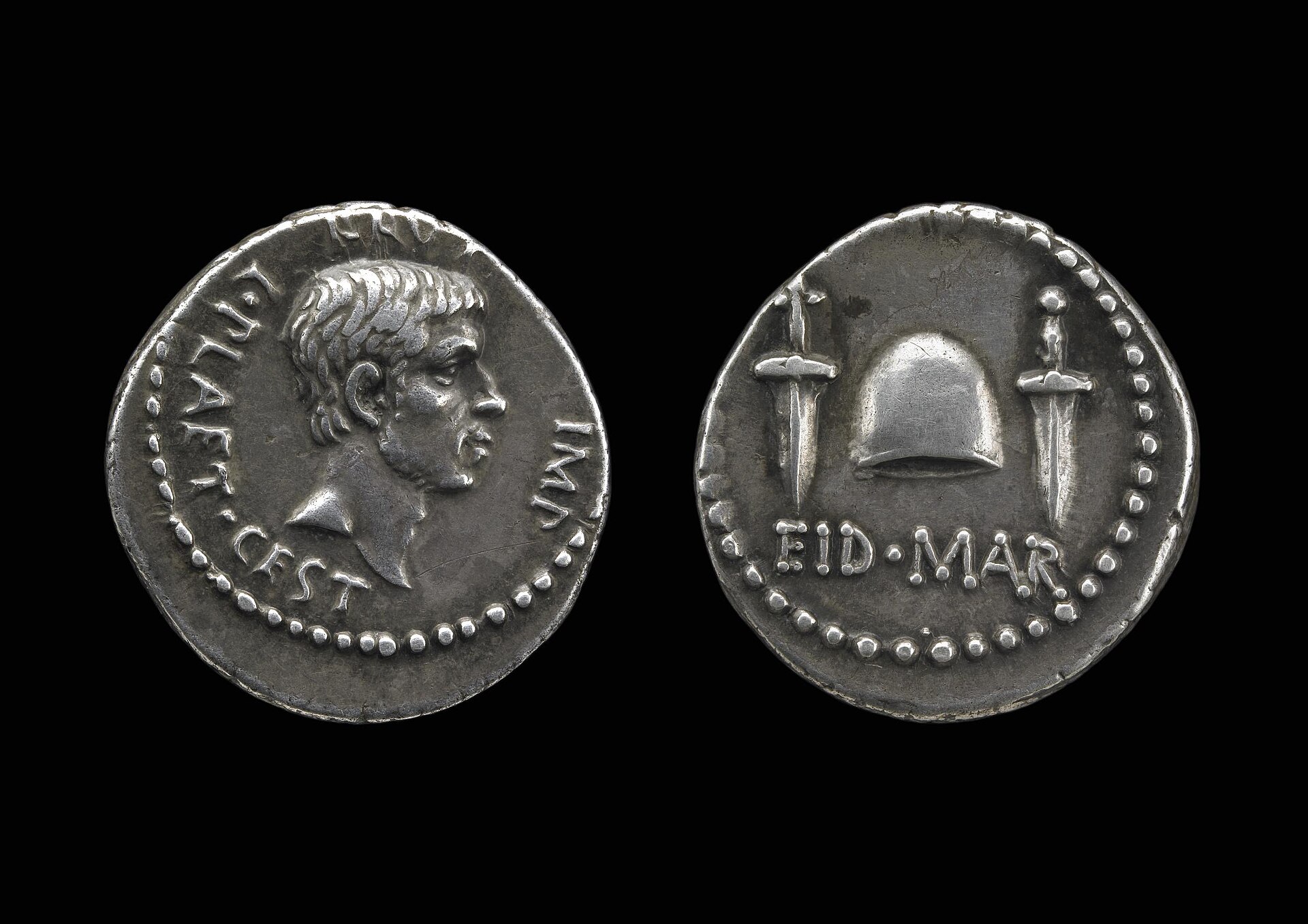
The conspirators, who termed themselves 'the liberators', had to move quickly because Caesar planned to leave Rome for a campaign against the Parthians. Two days before his departure he was summoned to the Senate.

Calpurnia dreamed that night of Caesar's body streaming with blood and tried to prevent him from leaving the house. The priests found the omens unfavorable. In Shakespeare's play Julius Caesar a soothsayer warns Caesar to 'beware the Ides of March', and the phrase has become a widely recognized warning of impending danger or doom.
As Caesar took his seat the conspirators gathered around him on the pretext of presenting a petition. One ripped his purple toga from his neck, and a dagger thrust at his throat missed and only wounded him.
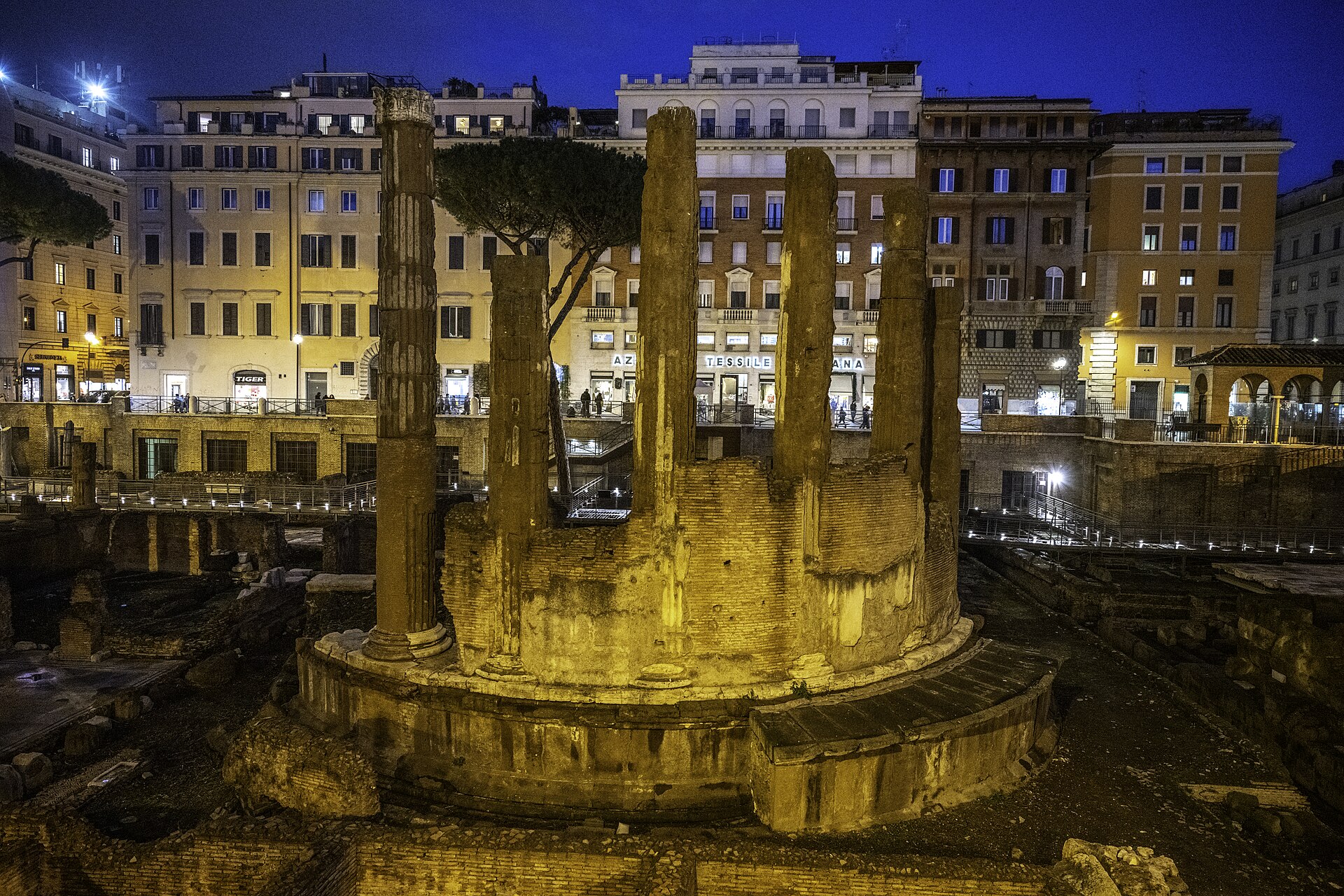
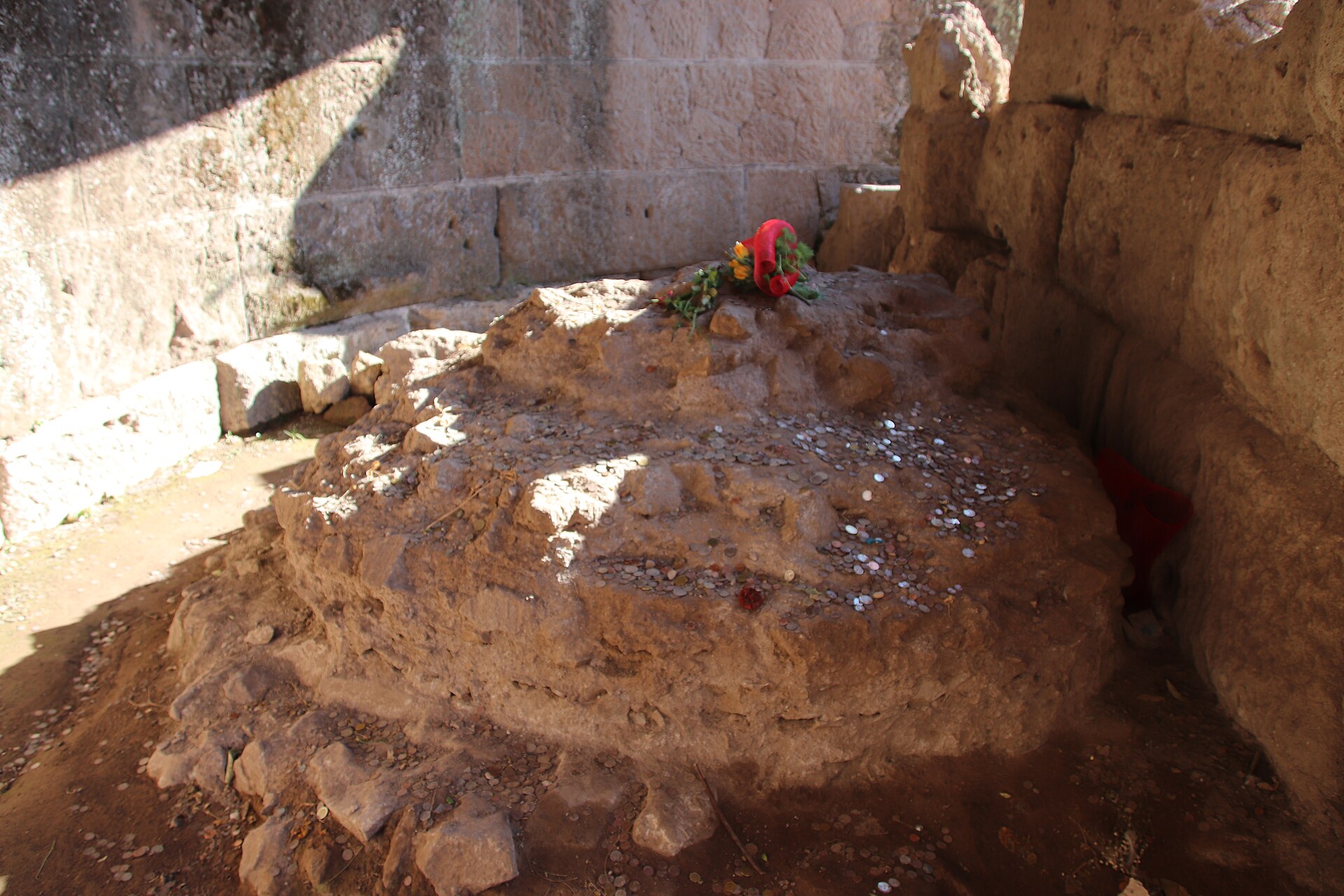
Following Caesar's murder in the Curia of Pompey in 44 BCE, the emperor Augustus condemned the scene of the crime as a locus sceleratus, a cursed place, and historians lost track of the area for centuries before rediscovering it in the early 20th century.
The Senate posthumously granted Caesar the title Divine Julius, making him the first historical Roman to be deified.
At the games his heir Augustus gave in honour of Caesar's apotheosis, a comet shone for seven successive days and was believed to be the soul of Caesar taken to heaven.
According to a physician's report, only one of the wounds was fatal.
He was 55 years old at the time of his death.
7. Timeline: from 100 BCE to the Ides of March
- July 12/13, 100 BCEBirth of Julius CaesarGaius Julius Caesar was born in Rome on July 12 or 13, the traditional year being 100 BCE, into the patrician Julian clan.
- c. 85 BCECaesar loses his fatherIn the course of his sixteenth year Caesar lost his father; having been nominated priest of Jupiter, he broke his engagement with Cossutia.
- 75 BCEKidnapped by piratesWhile sailing to Greece, Caesar was kidnapped by Cilician pirates and held for ransom; upon his release he hunted them down and had them crucified.
- 63 BCEElected pontifex maximusCaesar was elected pontifex maximus by a political dodge, becoming a controversial political figure around the time of Catiline's conspiracy.
- 60 BCEThe First TriumvirateBack in Rome, Caesar made a pact with Pompey and Crassus, who helped him to get elected as consul for 59 BC.
- 59 BCEConsulshipCaesar was elected consul for 59 BCE; the following year he was appointed governor of Roman Gaul.
- 58–50 BCEThe Gallic WarsCaesar conducted the campaigns that conquered Gaul between 58 and 50 BCE.
- 55 and 54 BCEExpeditions to BritainCaesar made two expeditions to Britain, in 55 BC and 54 BC.
- 52 BCEVercingetorix defeated at AlesiaAt the Battle of Alesia, Caesar defeated the Gallic leader Vercingetorix and completed the conquest of Gaul.
- January 10–11, 49 BCECrossing the RubiconFaced with the Senate's demand that he lay down his command, Caesar crossed the Rubicon with the 13th Legion, a decision that led to civil war.
- 9 August 48 BCEBattle of PharsalusCaesar's more experienced men overcame Pompey's larger army at Pharsalus; almost 6,000 Roman soldiers were killed, and Pompey escaped to Egypt, where he was murdered.
- 47 BCEVeni, vidi, viciAfter pacifying Egypt, Caesar defeated Pharnaces II at Zela in a rapid campaign: 'I came, I saw, I conquered.'
- 46 BCEThapsus and the quadruple triumphCaesar overcame the republicans at Thapsus in Africa on April 6 in 46 BCE, and in September he celebrated four triumphs.
- 15 March 44 BCEThe Ides of MarchJulius Caesar was assassinated on the Ides of March in 44 BCE, a date that became associated with misfortune and doom.
References (16)
- 1Julius Caesar | Conquests, Death, Assassination, Cleopatra, & Facts — Encyclopaedia Britannica WebView source
- 2Julius Caesar — World History Encyclopedia WebView source
- 3Suetonius: De Vita Caesarum, Divus Iulius (The Deified Julius) — Internet Ancient History Sourcebook, Fordham University WebView source
- 4The Life of Julius Caesar (Divus Julius), The Lives of the Caesars — LacusCurtius, University of Chicago (trans. J. C. Rolfe) WebView source
- 5Gaius Julius Caesar: Early career — Livius.org (Jona Lendering) WebView source
- 6Gaius Julius Caesar: Civil War — Livius.org (Jona Lendering) WebView source
- 7Who was Julius Caesar? — National Geographic WebView source
- 8The Life of Julius Caesar, The Parallel Lives — LacusCurtius, University of Chicago (trans. Bernadotte Perrin) WebView source
- 9Gaius Julius Caesar: Domestic policy — Livius.org (Jona Lendering) WebView source
- 10Gaius Julius Caesar: Constitutional problems — Livius.org (Jona Lendering) WebView source
- 11Ides of March: The Death of Caesar — Encyclopaedia Romana (James Grout) WebView source
- 12BBC - History - Julius Caesar — BBC WebView source
- 13The Ides of March—a day of murder that forever changed history — National Geographic WebView source
- 14Ides of March | Meaning, Date, Shakespeare, Julius Caesar, & Facts — Encyclopaedia Britannica WebView source
- 15You Can Now Visit the Site Where Julius Caesar Was Stabbed — Smithsonian Magazine WebView source
- 16How Julius Caesar Started a Big War by Crossing a Small Stream — National Geographic WebView source