Islamic Golden Age
The Abbasid-era flowering of science, philosophy and culture — Baghdad's House of Wisdom and the Graeco-Arabic translation movement, algebra and the Hindu-Arabic numerals, optics and medicine, the philosophers al-Kindi, al-Farabi, Ibn Sina and Ibn Rushd, and the Mongol sack of Baghdad in 1258.
The Islamic Golden Age was the period, broadly from the 8th to the 13th century, in which the Abbasid caliphate and its rival Islamic dynasties sustained an unprecedented programme of translation, science and philosophy. Baghdad's House of Wisdom and a wider Graeco-Arabic translation movement carried Greek, Persian and Indian learning into Arabic, where al-Khwarizmi founded algebra, Ibn al-Haytham rewrote optics and Ibn Sina's Canon of Medicine became a standard text for centuries. In the east the tradition ended with the Mongol sack of Baghdad in 1258, while in al-Andalus Cordoba and other cities carried the same learning west into Latin Europe.
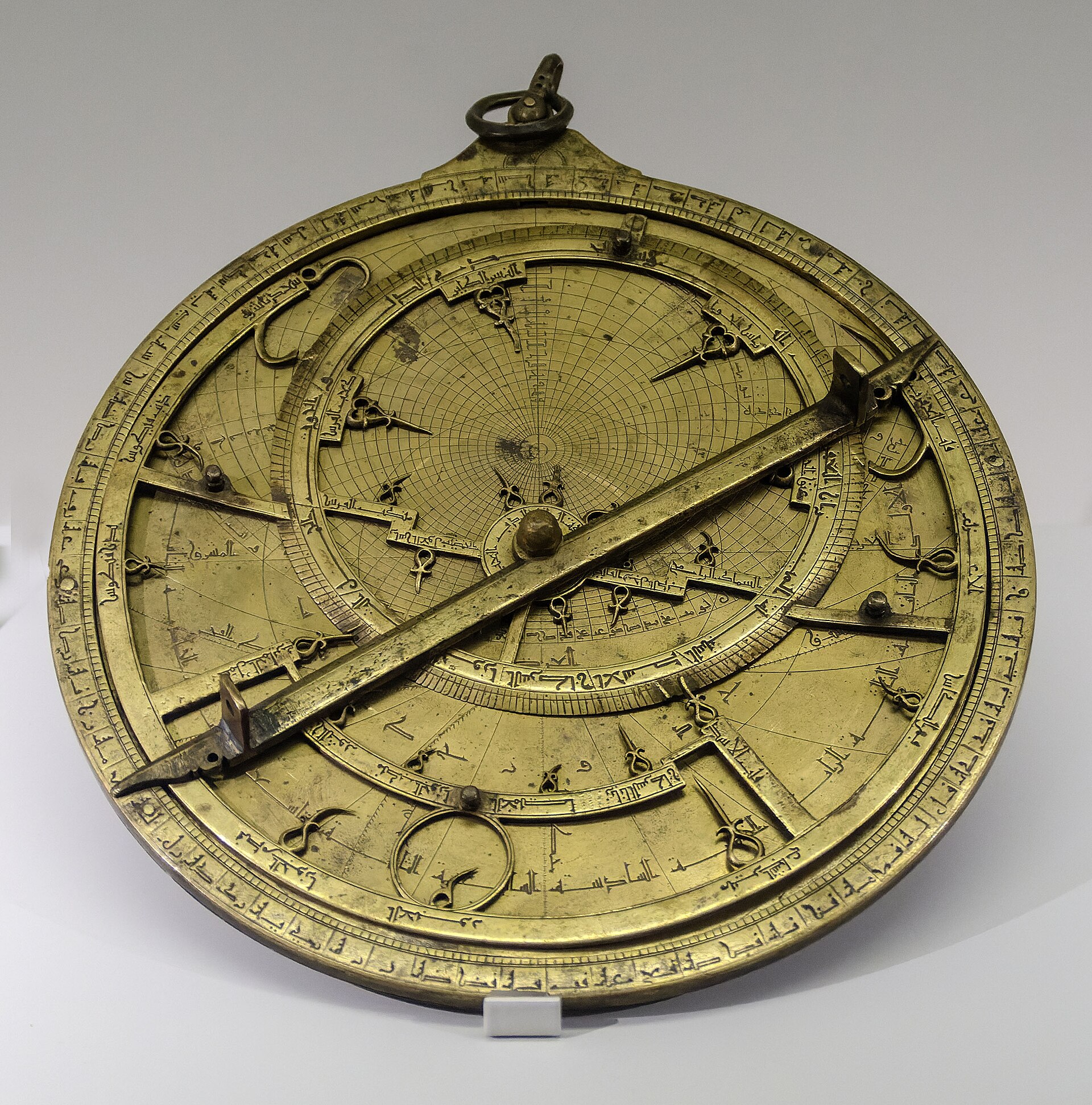
In this article
- 1Overview
- 2Political Setting: The Abbasid Caliphate
- 3The House of Wisdom and the Translation Movement
- 4Mathematics: Algebra, Numerals and Calculation
- 5Astronomy, Optics and Measurement
- 6Medicine and the Canon
- 7Philosophy and the Andalusian Tradition
- 8Materials and the Spread of Knowledge
- 9Timeline
- 10Timeline: from the Abbasid revolution to the Mongol sack of Baghdad
- 11Frequently asked questions
- 12Knowledge graph
Overview
The Islamic Golden Age is the era of the Abbasid caliphate. Its intellectual life centred on Baghdad, the capital the Abbasids created near the former Sasanian capital of Ctesiphon.
The emblematic institution of that world was the House of Wisdom. Harun al-Rashid was a patron of arts and learning who wished Muslims to lead the world.
1. Political Setting: The Abbasid Caliphate
The Abbasids were an Arabic dynasty that took the caliphate in 750 CE and retained spiritual supremacy as caliphs until 1258 CE. They inherited the hereditary principle that the Umayyads had introduced, and replaced that dynasty as rulers. The founding of Baghdad by al-Mansur, near the former Sasanian capital of Ctesiphon, was intended to replace Damascus as the seat of government.
Caliphal power was later eroded by the Buyids, who captured Baghdad in 945 CE and reduced the caliphs to figureheads until the Seljuks overthrew them in 1055 CE, while a rival Shia caliphate appeared in western North Africa under the Fatimids in 909 CE.
Abd al-Rahman I escaped the slaughter and raced across the Abbasid realm to Spain, where he founded the Emirate of Cordoba in 756 CE.
2. The House of Wisdom and the Translation Movement
The Bayt al-Hikma, the House of Wisdom, was a royal library in Baghdad that reached its zenith under Harun al-Rashid and al-Ma'mun, and it played a central role in acquiring and translating scientific and philosophical treatises, particularly Greek ones. The translation movement that grew up around Baghdad placed the entire Aristotelian corpus at the disposal of learned Muslims, together with translations of Galen's medical works, through the work of Hunayn, Ishaq and the other translators associated with them. Most scholars hold that this movement of translation from Greek gave rise to the intellectual tradition of falsafa.
Al-Ma'mun supplied the intellectual weaponry of his inquisition by importing Hellenistic thought and sponsoring the translation of Greek philosophy into Arabic. The simultaneous translation of Aristotle's Metaphysics and De Caelo, of certain writings of Alexander of Aphrodisias, of Plotinus' Enneads and of Proclus' Elements of Theology was of momentous importance for the development of falsafa.
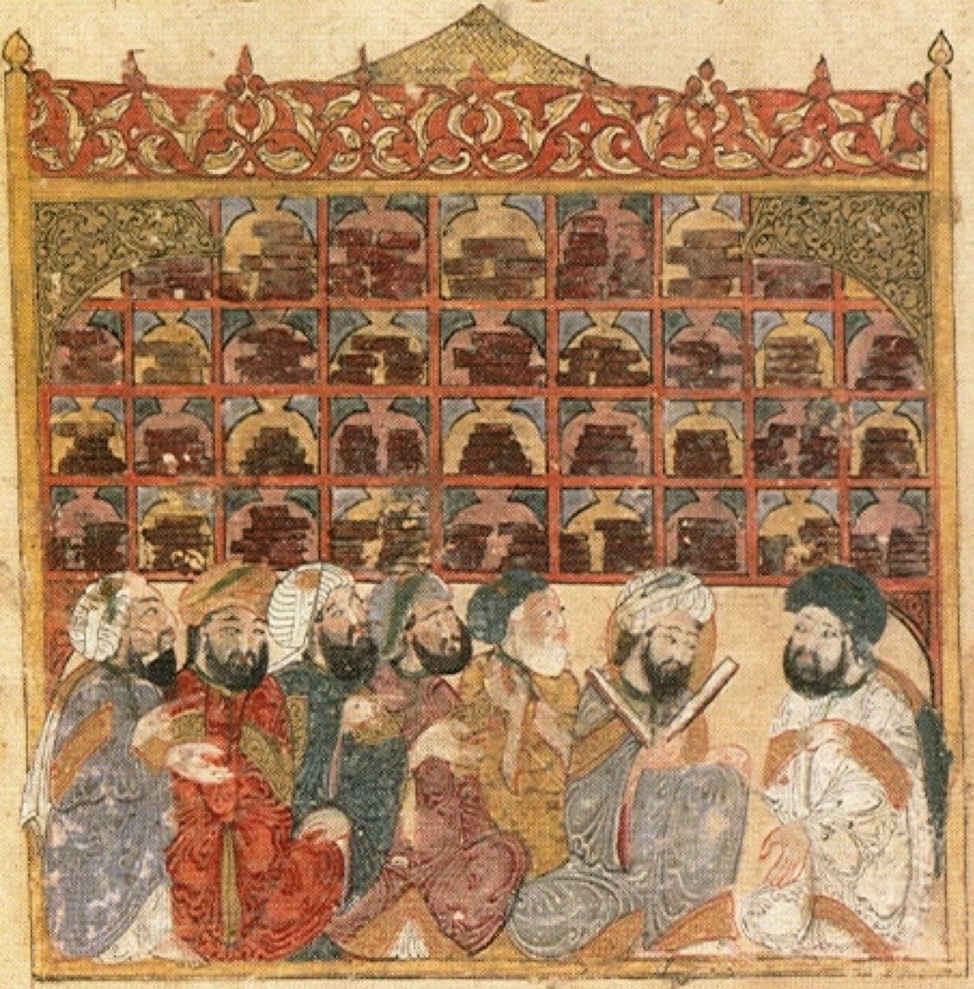
Islamic medicine was built on Greek and Roman tradition, and for Islamic scholars Galen and Hippocrates were the pre-eminent authorities.
3. Mathematics: Algebra, Numerals and Calculation
The word algorithm descends from Algoritmi, the Latin rendering of al-Khwarizmi's name. The earliest known text offering a direct treatment of decimal fractions is al-Uqlidisi's arithmetic. Al-Kashi contributed to the development of decimal fractions for approximating algebraic numbers and also for real numbers such as pi, and his contribution was so major that for many years he was considered their inventor.
Algebra was a unifying theory that allowed rational numbers, irrational numbers and geometrical magnitudes to all be treated as algebraic objects, and it gave mathematics a development path much broader in concept than that which had existed before. Khayyam's Treatise on Demonstration of Problems of Algebra contained a complete classification of cubic equations with geometric solutions obtained by intersecting conic sections.
4. Astronomy, Optics and Measurement
Omar Khayyam directed the work of the astronomers of the Observatory of Esfahan for eighteen years, and within that tenure he contributed to the reform of the calendar in 1079.
Al-Biruni introduced techniques to measure the earth and distances on it using triangulation, and he found the radius of the earth to be 6339.6 km, a value not obtained in the West until the sixteenth century.
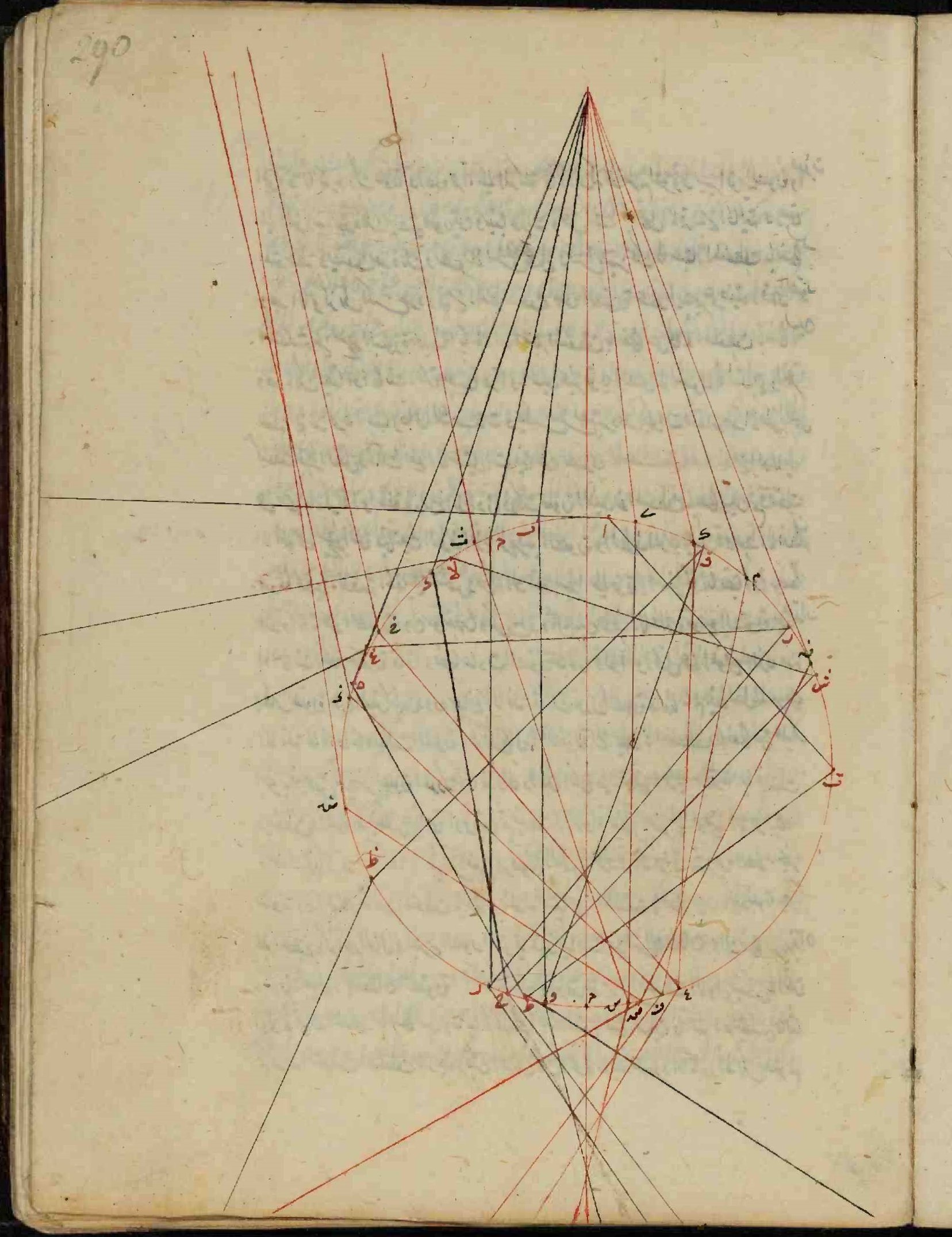
With the support of Abu'l Abbas Ma'mun, al-Biruni built an instrument at Jurjaniyya for observing solar meridian transits, and in 1016 he made fifteen observations with it.
5. Medicine and the Canon
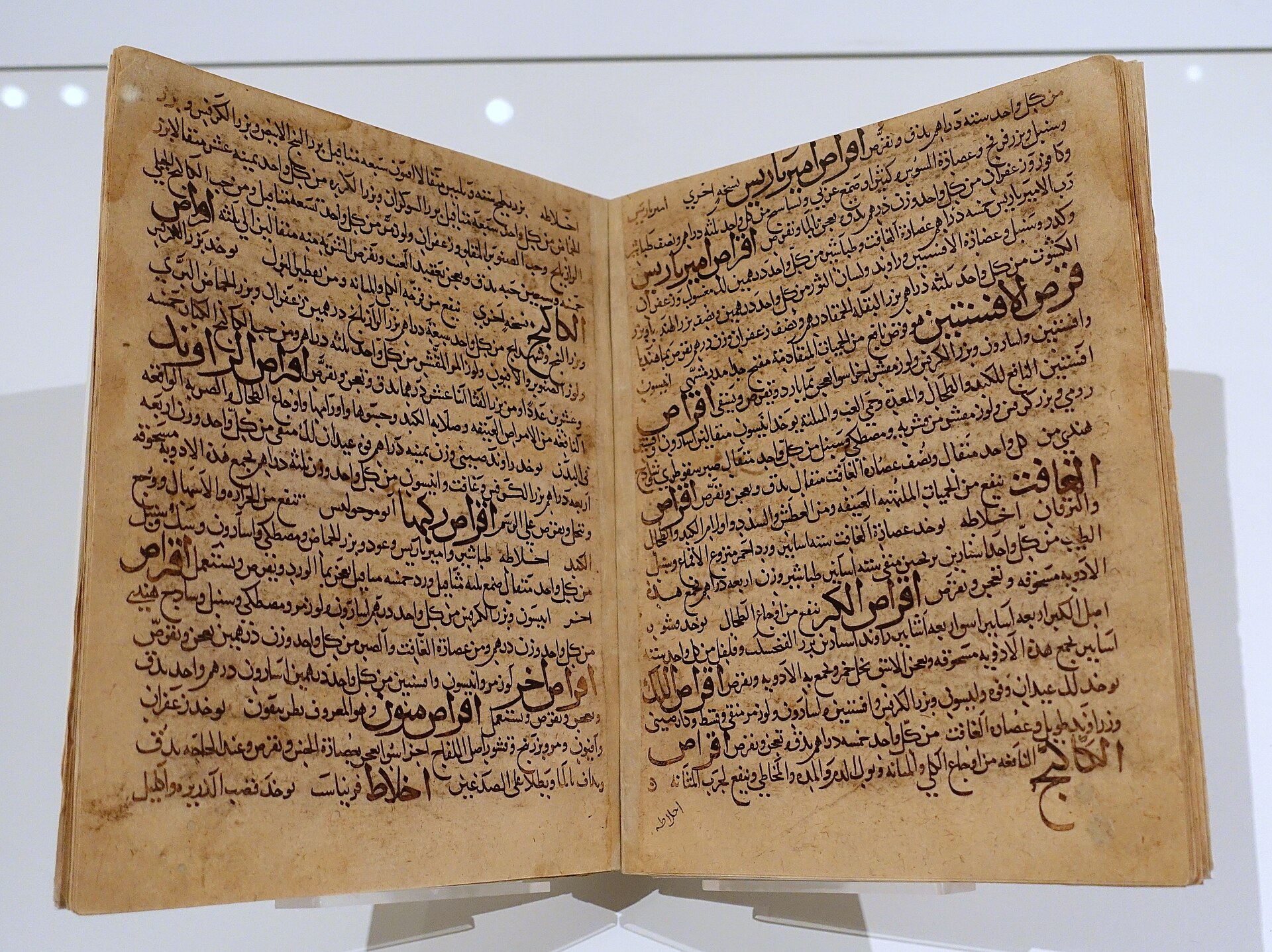
Ibn Sina, known in the Latin West as Avicenna, is remembered above all as a polymath and physician whose Canon of Medicine defined the field of medicine from Europe to India for six hundred years. The work was translated into Latin and disseminated throughout Europe, where it was published more than thirty-five times during the fifteenth and sixteenth centuries alone. Its authority was not confined to one civilization: the Canon continued to be taught as a medical textbook in Europe and in the Islamic world until the early modern period.
6. Philosophy and the Andalusian Tradition
Ibn Rushd was born in Cordova in 1126 into an influential Andalusian family that was famous for its judicial power and for its scholarship in the religious sciences. His commentaries on Aristotle carried the Greek philosopher's thought into the Latin West, where his reception shaped the scholastic tradition.
Ibn Sina's thoughts on God and philosophy influenced Muslims, Jews and Christians, including Thomas Aquinas.
The Great Mosque of Cordoba is a unique artistic achievement and an irreplaceable testimony to the Caliphate of Cordoba, and it is the most emblematic monument of Islamic religious architecture.
Al-Kindi, who lived around the period from the year 800 to about 870 of the common era, was the first self-identified philosopher in the Arabic tradition.
By the 1260s the label Averroist was used in a pejorative sense in Latin Europe, particularly in connection with Ibn Rushd's teaching on the unicity of the intellect, the eternity of the world, and determinism.
Cordoba became the capital of an emirate depending on Damascus and in 929 the headquarters of the independent Caliphate established by Abderraman III, and its period of greatest glory saw some 300 mosques and innumerable palaces and public buildings built.
7. Materials and the Spread of Knowledge
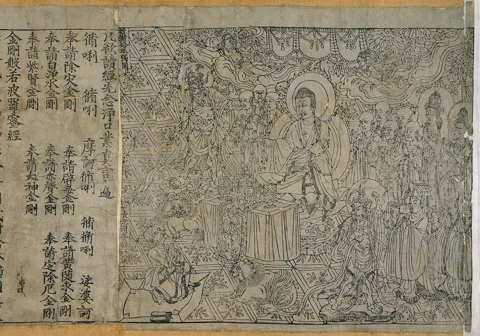
Paper reached the Islamic world through knowledge learned from China, though the craft was adapted: linen served as the raw material in place of mulberry bark.
8. Timeline
-
750 CEAbbasid accessionThe Abbasid dynasty came to power.
-
786–809Caliphate of Harun al-RashidA patron of arts and learning who wished Muslims to lead the world, he presided over the establishment of the Bayt al Hikma, or House of Wisdom, in Baghdad, where classic Greek works were translated into Arabic.1Abbasid Dynasty · World History Encyclopedia ↗
-
813–833Caliphate of al-Ma'munHis reign is dated to this span.
-
980Birth of Ibn SinaIbn Sina was born near Bukhara.
-
1037Death of Ibn SinaIbn Sina died in this year.
-
1079Calendar reform at EsfahanA calendar reform was undertaken at Esfahan.
-
1126Birth of Ibn RushdIbn Rushd was born in Cordova.
-
1198Death of Ibn RushdIbn Rushd died in Marrakesh.
-
1270Latin translation of the Kitab al-ManazirThe seven-volume Kitab al-Manazir, considered by many to be Ibn al-Haytham's most important contribution to optics, was rendered into Latin as the Opticae thesaurus Alhazeni.16Abu Ali al-Hasan ibn al-Haytham · MacTutor History of Mathematics Archive, University of St Andrews ↗
9. Timeline: from the Abbasid revolution to the Mongol sack of Baghdad
- 750 CEThe Abbasids overthrow the UmayyadsAbbasid forces defeated the army of the last Umayyad caliph near the Greater Zab river, and Abu Abbas was declared caliph in Kufa. One Umayyad prince, Abd al-Rahman, escaped the massacre that followed.
- 756 CEAn Umayyad emirate is founded in CordobaAbd al-Rahman I reached Spain after fleeing the Abbasids and established the Emirate of Cordoba, beginning nearly three centuries of Umayyad rule in al-Andalus.
- 786 CEHarun al-Rashid becomes caliphHis reign marks the start of the golden age of learning, and it was under him that the Grand Library of Baghdad, the Bayt al-Hikma or House of Wisdom, was established.
- 813 CEal-Ma'mun takes the caliphateAfter defeating and killing his brother al-Amin in the civil war between Harun al-Rashid's sons, al-Ma'mun became caliph and ruled the empire from Baghdad.
- 833 CEDeath of al-Ma'munAl-Ma'mun had expanded the activities of the House of Wisdom and the scholars associated with it, and had sponsored the translation of Greek philosophy into Arabic; after his death the library's significance declined.
- 861 CEA palace coup begins the Abbasid declineCaliph al-Mutawakkil was assassinated by his Turkish bodyguards, and the Abbasids entered a prolonged period of moral and temporal decline.
- 929 CECordoba declares itself a caliphateThe Umayyad emirate in Spain assumed the title of caliphate, asserting its independence from the Abbasid caliph in Baghdad.
- 1037 CEDeath of Ibn SinaAvicenna died at Hamadan; his medical Canon was translated into Latin and remained a medical textbook into the early modern period.
- 1040 CEDeath of Ibn al-HaythamThe author of the Book of Optics died in Cairo, where he had been confined to his house until after the death of the Fatimid caliph al-Hakim in 1021.
- 1048 CEBirth of Omar KhayyamBorn in Nishapur, Khayyam became an astronomer and mathematician who later worked on cubic equations and calendar reform.
- 1079 CECalendar reform under the SeljuqsWorking at the observatory of Esfahan for the Seljuq ruler Malik-Shah, Khayyam contributed to a calendar reform whose result was the Jalali era.
- 1126 CEBirth of Ibn Rushd in CordovaAbu al-Walid Muhammad ibn Ahmad Ibn Rushd, known in Latin Europe as Averroes, was born in Cordova.
- 1131 CEDeath of Omar KhayyamKhayyam died in Nishapur; funding for the Esfahan observatory had already ceased and his calendar reform was put on hold.
- 1198 CEDeath of Ibn RushdAccording to one account his death took place while he was confined to a residence in Marrakesh, after he had fallen out of favour with the Almohads.
- 1258 CEThe Mongols sack BaghdadHulegu Khan's forces besieged and destroyed Baghdad, ending the Abbasid caliphate and whatever remained of the House of Wisdom collection.
- 1270 CEIbn al-Haytham's Optics reaches Latin EuropeThe Book of Optics was translated into Latin as Opticae thesaurus Alhazeni, carrying Islamic optical theory into European universities.
10. Frequently asked questions
What do scholars debate about the Bayt al-hikma?
Some scholars caution that the Bayt al-hikma cannot be regarded as an institutional center for translating Greek works into Arabic, although the first group of translators worked in close relationship with the court 4Greek Sources in Arabic and Islamic Philosophy · Stanford Encyclopedia of Philosophy ↗.
Who was al-Khwarizmi, and what did he write?
He worked at the House of Wisdom under the caliphate of al-Ma'mun, at an institution that acquired and translated scientific and philosophic treatises, particularly Greek ones 6al-Khwārizmī · Encyclopaedia Britannica ↗. His Hisab al-jabr w'al-muqabala is considered the first book written on algebra 17Al-Khwarizmi · MacTutor History of Mathematics Archive, University of St Andrews ↗, and a second work of his introduced Hindu-Arabic numerals to Western mathematicians in the 12th century 6.
What did Ibn al-Haytham contribute to optics?
He gave the first correct explanation of vision by showing that light is reflected from an object into the eye, and he proposed the use of a camera obscura, the first person to mention such a device 16.
How was the size of the Earth measured?
Al-Ma'mun's project measured the length of a degree of a meridian through the plain of Sinjar in Iraq 6.
What was the fate of the House of Wisdom?
Who was al-Biruni?
He wrote treatises on the astrolabe and on the decimal system, and described a mechanical calendar 10Al-Biruni · MacTutor History of Mathematics Archive, University of St Andrews ↗. Scholars credit him with inventing the concept of specific gravity and with weighing minerals to a degree of accuracy not surpassed until modern times 11Ibn Sina, Biruni, and the Lost Enlightenment · World History Encyclopedia ↗.
References (17)
- 1Abbasid Dynasty — World History Encyclopedia Web↩View source
- 2Bayt al-Hikmah (House of Wisdom) — Encyclopaedia Britannica Web↩View source
- 3Islamic Caliphates — World History Encyclopedia Web↩View source
- 4Greek Sources in Arabic and Islamic Philosophy — Stanford Encyclopedia of Philosophy Web↩View source
- 5Medieval Islam (Islamic Culture and the Medical Arts) — U.S. National Library of Medicine WebView source
- 6al-Khwārizmī — Encyclopaedia Britannica Web↩View source
- 7The Arabic numeral system — MacTutor History of Mathematics Archive, University of St Andrews WebView source
- 8Arabic mathematics: forgotten brilliance? — MacTutor History of Mathematics Archive, University of St Andrews WebView source
- 9Omar Khayyam — MacTutor History of Mathematics Archive, University of St Andrews WebView source
- 10Al-Biruni — MacTutor History of Mathematics Archive, University of St Andrews Web↩View source
- 11Ibn Sina, Biruni, and the Lost Enlightenment — World History Encyclopedia Web↩View source
- 12Avicenna (Ibn Sina) — Internet Encyclopedia of Philosophy WebView source
- 13Ibn Rushd [Averroes] — Stanford Encyclopedia of Philosophy WebView source
- 14Historic Centre of Cordoba — UNESCO World Heritage Centre WebView source
- 15Al-Kindi — Stanford Encyclopedia of Philosophy WebView source
- 16Abu Ali al-Hasan ibn al-Haytham — MacTutor History of Mathematics Archive, University of St Andrews Web↩View source
- 17Al-Khwarizmi — MacTutor History of Mathematics Archive, University of St Andrews Web↩View source
 History of Paper