Abbasid Caliphate
The Abbasid dynasty that ruled the Islamic world from Baghdad and Samarra — its revolution, administration, golden age of science and letters, and its end at the Mongol conquest.
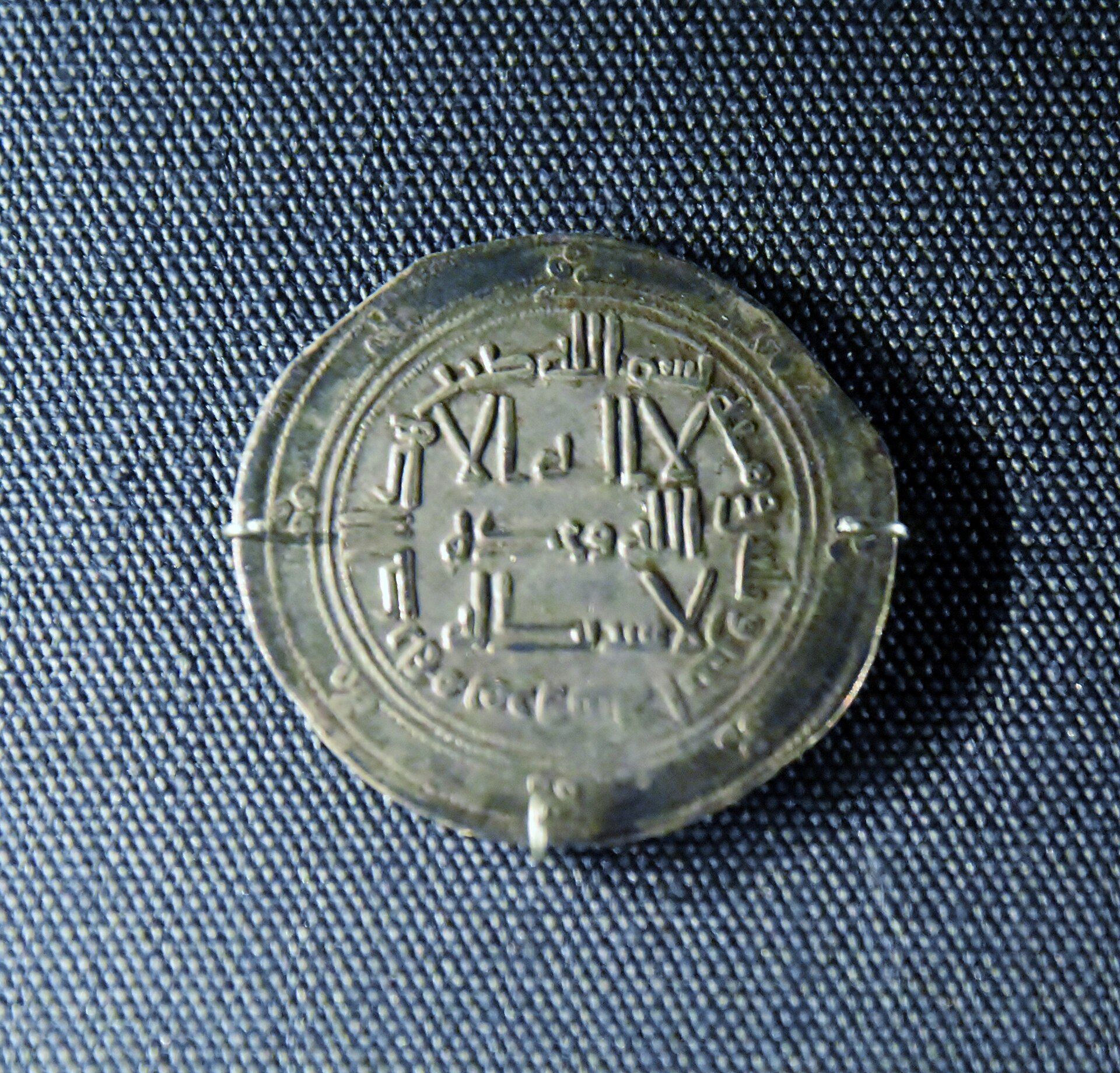
The Abbasid Caliphate was the dynasty that replaced the Umayyads in 750 CE and ruled the Islamic world from its new capital at Baghdad, founded by al-Mansur in 762, and for a period from Samarra between 836 and 892. Under caliphs such as Harun al-Rashid and al-Ma'mun the court at Baghdad became the richest and most cultivated in the world, supporting the Bayt al-Hikmah (House of Wisdom), the translation of Greek, Persian and Indian learning into Arabic, and lasting work in algebra, astronomy and medicine. Political authority fragmented from the ninth century onward, and the caliphate ended when the Mongols sacked Baghdad in 1258, after which shadow caliphs continued in Cairo under the Mamluks.
In this article
- 1Overview
- 2Foundation and the Fall of the Umayyads
- 3Baghdad: The New Capital
- 4Harun al-Rashid and the Barmakids
- 5Al-Ma'mun, Civil War, and the Patronage of Learning
- 6The House of Wisdom and the Sciences
- 7Samarra: The Second Capital
- 8Decline, Foreign Domination, and the End of the Caliphate
- 9Government and Administration
- 10Territorial Reach and Cultural Legacy
- 11Key Dates
- 12Frequently Asked Questions
- 13Timeline: from the revolution of 747 to the fall of Baghdad
- 14Knowledge graph
Overview
The Abbasid Caliphate was a semi-religious political system of governance in Islam, in which a supreme leader called the caliph, meaning successor, ruled the empire. It was founded in 750 CE, with the overthrow of the Umayyad Caliphate.
1. Foundation and the Fall of the Umayyads
The town and oasis of Marv in northern Khorasan, far from the bases of Omayyad power in Syria and from the garrison cities of Iraq, was the epicenter of ʿAbbasid propaganda, and it was from there that the victorious forces of Abū Moslem marched westward via Ray and Jebāl to the plains of Iraq and the defeat of the Omayyad forces. Al-Mansur commissioned the creation of a new capital in the Fertile Crescent near the Tigris River, Baghdad, a bustling metropolis that humbled all European cities of the time in every standard.
Harun al-Rashid became caliph in September 786 after the death of al-Hadi, which rumor attributed to al-Khayzuran because he had resisted her domination. The fabulous descriptions of Harun and his court in The Thousand and One Nights are idealized and romanticized, but they had a considerable basis in fact: untold wealth flowed into Baghdad since its foundation, and conspicuous consumption by the empire's leading men and their wives reached unprecedented levels in his reign.
The Khorasanian guards were eclipsed only when Moʿtaṣem expanded the recruitment of professional soldiers and slaves from the Turkish steppes and from North Africa.
2. Baghdad: The New Capital
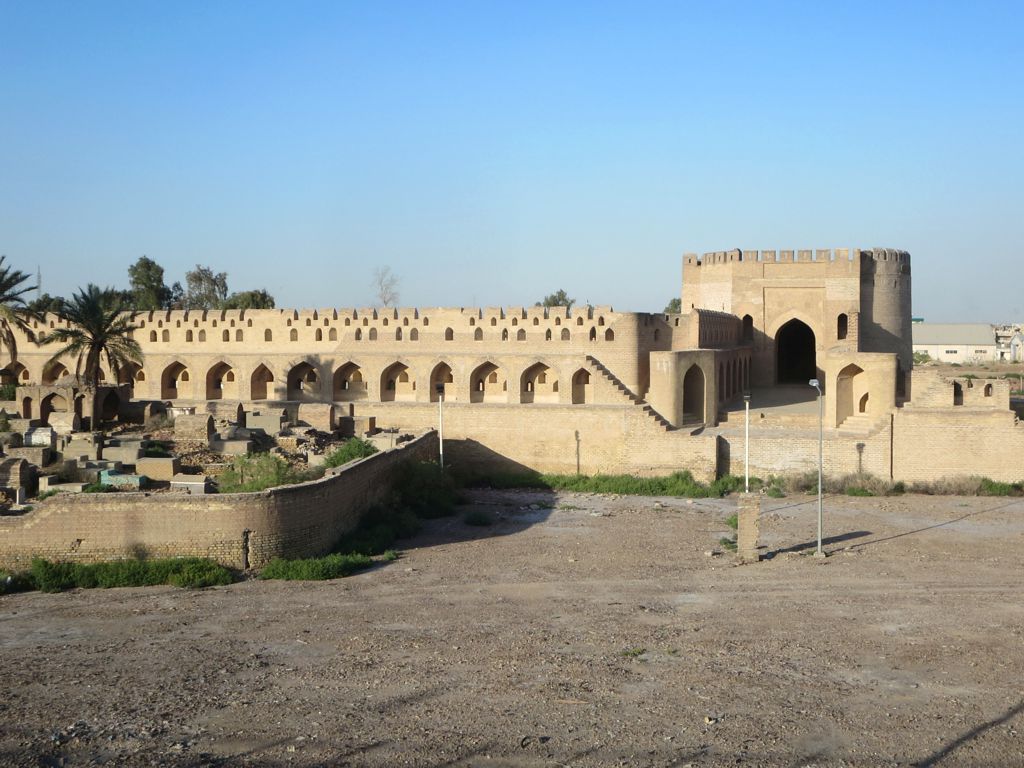
Baghdad was in its prime about 800 CE during the reign of the caliph Harun al-Rashid, the city forming two vast semi-circles on the right and left banks of the Tigris, twelve miles in diameter. Its population, together with that of its suburbs, amounted to over two million. Although Baghdad remained an Arabic-speaking city, its metropolitan status and its geographical position meant that its population and urban environment contained considerable Persian elements.
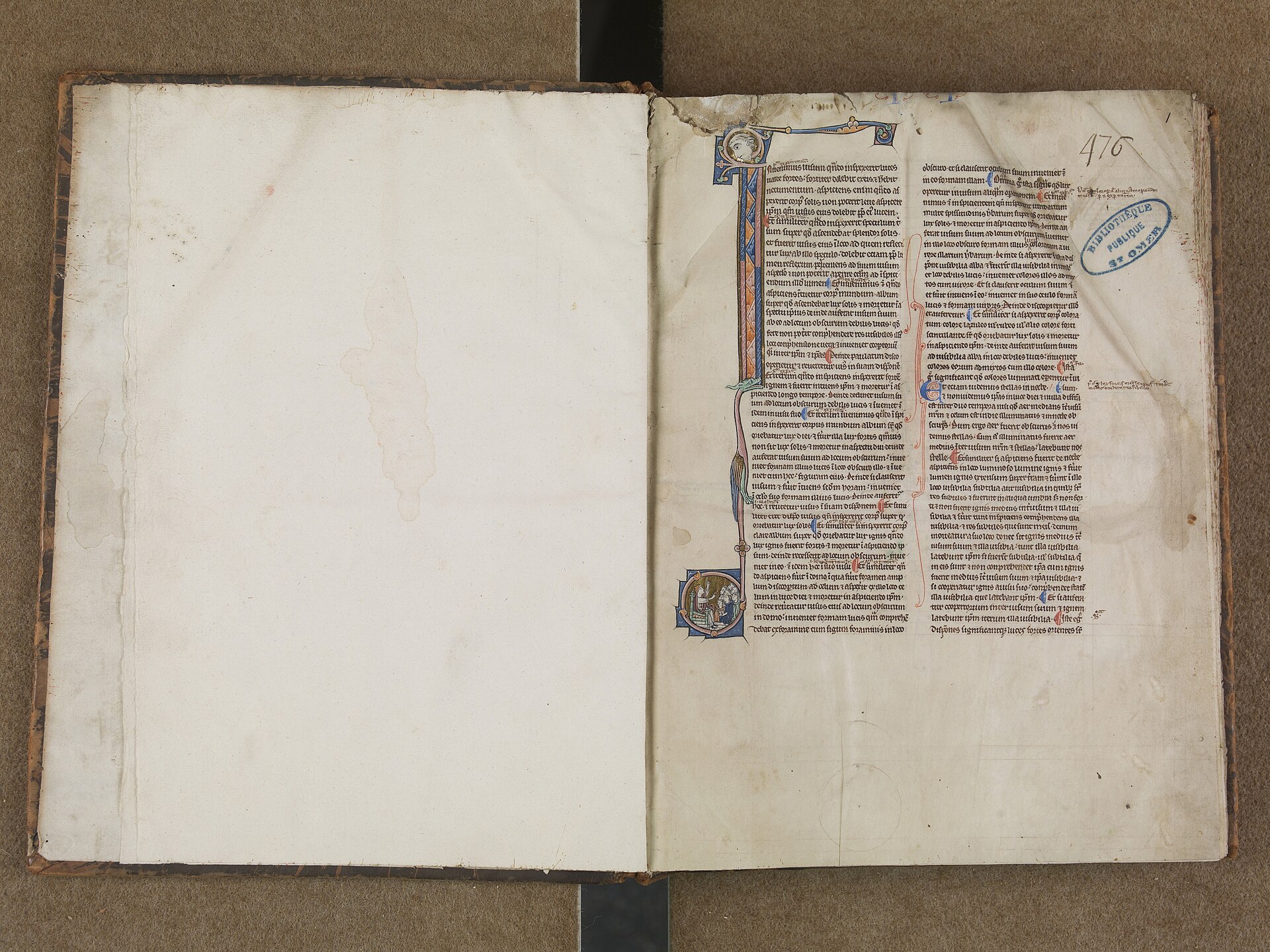
Harun al-Rashid encouraged scholarship, and the first translations of Greek texts into Arabic, such as Euclid's Elements by al-Hajjaj, were made in his reign. The next caliph, al-Ma'mun, encouraged learning even more strongly and set up the House of Wisdom in Baghdad, which became the centre for both the work of translating and of research. Al-Khwarizmi and his colleagues the Banu Musa were scholars at the House of Wisdom, where they translated Greek scientific manuscripts and wrote on algebra, geometry and astronomy, and he worked under the patronage of al-Mamun, dedicating his treatises on algebra and on astronomy to him.
Thabit ibn Qurra, whose skills in languages were matched by great mathematical skills, translated and revised many of the important Greek works, at a time when patrons employed talented scientists to translate Greek texts into Arabic.
3. Harun al-Rashid and the Barmakids
Harun al-Rashid, the fifth caliph of the dynasty, reigned from 786 to 809 and made Yahya the Barmakid his vizier, inheriting an empire that stretched from the western Mediterranean to India. The Barmak family traced its origin to the region of Balkh, where its ancestor Barmak served, according to early Muslim authors, as high priest of the Zoroastrian fire temple of Nowbahar; the name Nowbahar likely derives from the Buddhist Sanskrit nava-vihara, meaning "new monastery," and the eponym Barmak may come from the Sanskrit pramukha, "chief." Khalid b. Barmak was commissioned in 158/774 to suppress a revolt in Mosul and governed the city until al-Mansur's death a few months later, and under al-Mahdi he received Shammasiya as a fief, where he built residential quarters later known as Sowayqat Khalid.
Khalid's son Yahya rose first as an assistant to his father in governing Ray, then as tutor to the prince Harun, and then as secretary and treasurer to Harun during the latter's campaign against Byzantium; in 163/779, as deputy governor of Fars, he managed to abolish the taxes paid on trees, and Khalid died in 165/781-82 shortly after Harun returned from his campaign. The Barmakids were influential during the first Abbasid reigns and held the substance of power for seventeen years of Harun al-Rashid's reign, leaving after their sudden fall a semilegendary reputation as Maecenases and as furtherers of Persian domination within the state.
What passed between 183/799 and the caliph's pilgrimage in 186/802 to turn Harun against his viziers is not clear, but he ordered Ja'far killed in 187/803; Fadl and his brothers were arrested, Yahya was put under surveillance, and the property of all the Barmakids except Muhammad b. Among the reported causes of the reversal were his sense of being dominated by the family and his coveting of their wealth.
Harun divided the empire between his sons al-Amin and al-Ma'mun, an arrangement that later led to war between them after his death and contributed to the empire's disintegration; he died in March 809 at Tus in Iran.
4. Al-Ma'mun, Civil War, and the Patronage of Learning
Al-Ma'mun, caliph from 813 to 833, commanded the human and material resources of Persia from his governorate in Marv and defeated his brother al-Amin in 198/813, while the latter's cause was identified with the Arabs of Iraq and Syria. Al-Amin was besieged in Baghdad in April 812 and the city taken only in September 813; already declared deposed as caliph in Iraq and Arabia, he was killed while trying to surrender, contrary to al-Ma'mun's orders, in one of the most merciless civil wars known to the Islamic East.
Al-Ma'mun proved a judicious sovereign who kept his ministers under close control and did not appoint another all-powerful vizier; though he tried to maintain strict control over provincial governors, he had to allow a degree of autonomy to his former general Tahir as governor of Khurasan. His love of arts and learning surpassed even his father's, but his decision to rationalize his society in opposition to the basic beliefs of his Muslim population, including debate over whether the Quran could be rewritten or altered, led to his falling from the favour of many Islamic historians.
He encouraged the translation of Greek philosophical and scientific works, founded an academy called the House of Wisdom to which translators, most often Christians, were attached, and imported important manuscripts from Byzantium. Ahmad ibn Hanbal, founder of the Hanbali school of Islamic law, was to be sent under heavy guard before al-Ma'mun but was spared by the caliph's sudden death at Tarsus in 833; traditionalists called the episode the mihna, which showed that part of public opinion resisted the beliefs the caliph wished to impose.
Al-Kindi moved to Baghdad to complete his studies after beginning his education in Kufah, quickly achieved fame for his scholarship, and came to the attention of al-Ma'mun, who was at that time setting up the House of Wisdom in Baghdad; after al-Ma'mun's death al-Kindi continued to enjoy favour under al-Mu'tasim, who employed him to tutor his son Ahmad, but fared less well under the later caliphs al-Wathiq and al-Mutawakkil. Al-Kindi became known as the philosopher of the Arabs, the only notable philosopher of pure Arabian blood and the first in Islam, held unique among his contemporaries in knowledge of the totality of the ancient scientists, embracing logic, philosophy, geometry, mathematics, music and astrology.
5. The House of Wisdom and the Sciences
The Graeco-Hellenistic heritage was carried into Islamic science by translators such as Hunain ibn Ishaq and Thabit ibn Qurrah, who worked from Syriac or Greek, with Greek authors rendered into Arabic in nearly every domain of knowledge.
Many of the ideas previously thought to have been brilliant new conceptions due to European mathematicians of the sixteenth, seventeenth and eighteenth centuries are now known to have been developed by Arabic or Islamic mathematicians around four centuries earlier. The mathematics studied today is in many respects closer in style to that of the Arabic or Islamic contribution than to that of the Greeks.
6. Samarra: The Second Capital
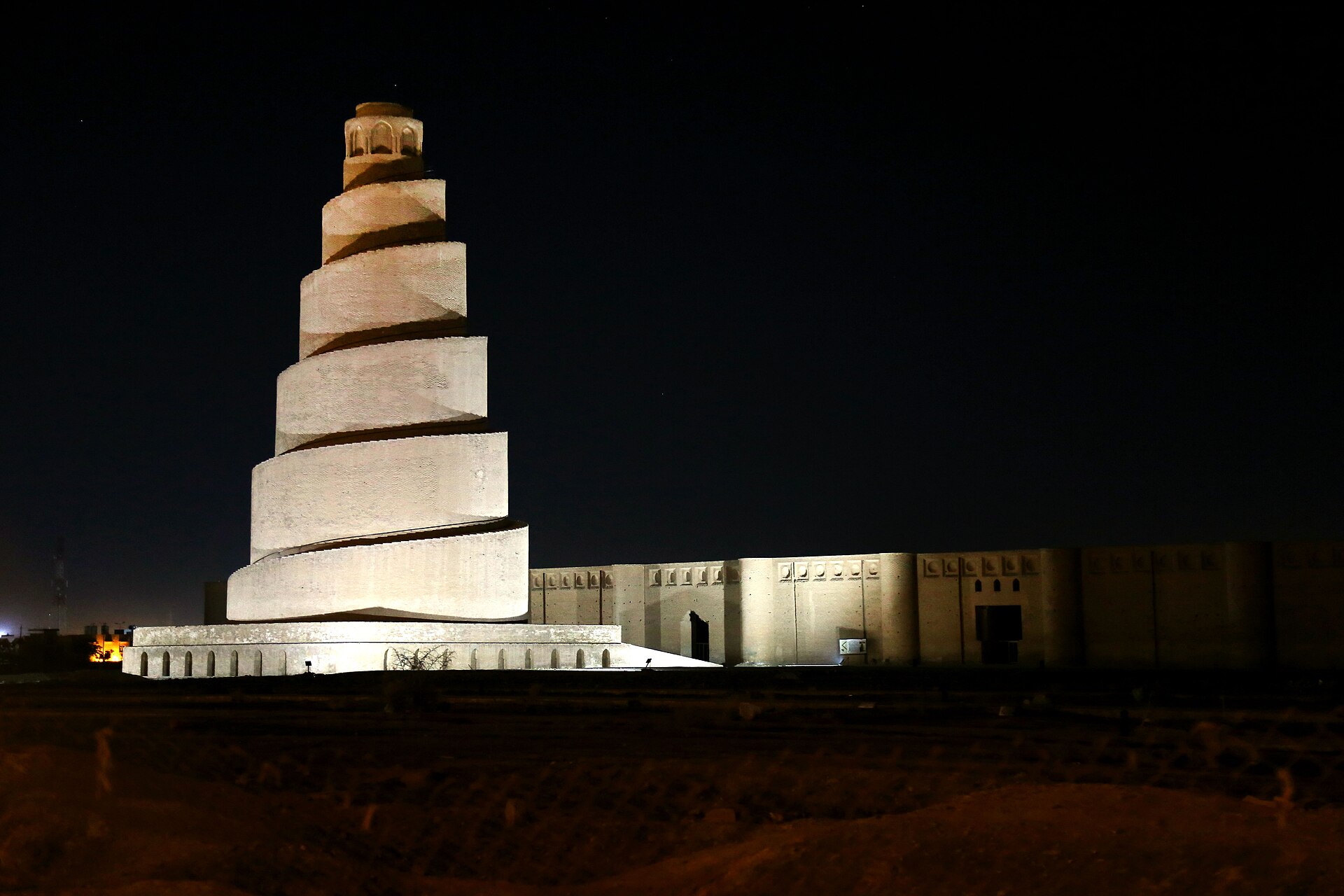
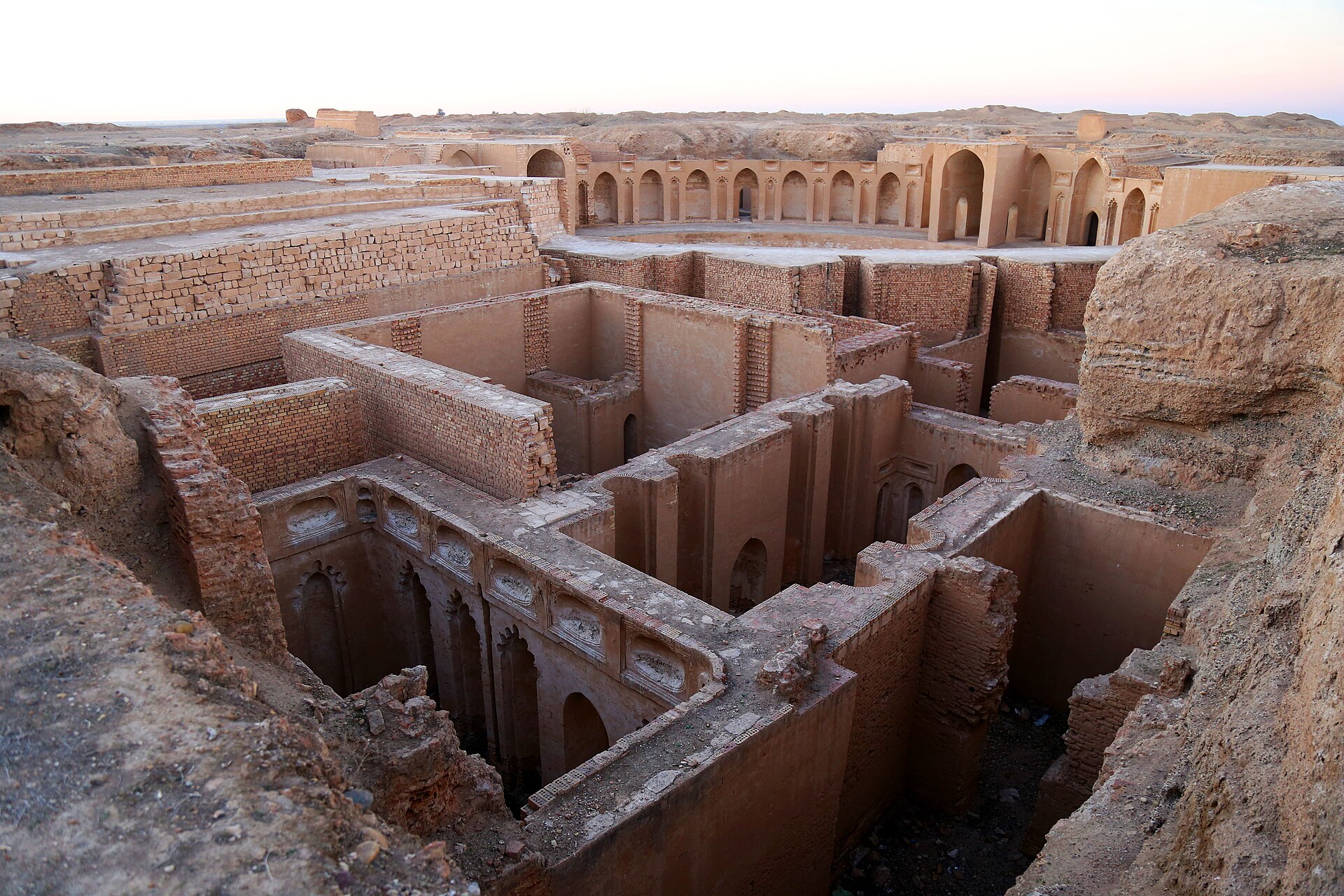
Samarra preserves two of the largest mosques, Al-Malwiya and Abu Dulaf, with the most unusual minarets and the largest palaces in the Islamic world, including the Caliphal Palace Qasr al-Khalifa; the carved stucco known as the Samarra style developed there spread to other parts of the Islamic world. In Samarra a new way of carving surfaces, the so-called beveled style, and a repetition of abstract geometric or pseudo-vegetal forms later known in the West as arabesque, were widely used as wall decoration and became popular in other media such as wood, metalwork, and pottery.
The Main Caliphal Palace at Samarra, known in Arabic as Dar al-Khilafa or Qasr al-Khalifa, served as the primary residence of al-Mu'tasim and several of his successors, with construction beginning circa 836/221 AH. Northedge interpreted the axially arranged buildings at the southern end of the Dar al-Khilafa as the Dar al-'Amma, halls of public audience where the court conducted its public ceremonies, while the northern enclosure served as the caliphs' private residence.
7. Decline, Foreign Domination, and the End of the Caliphate
After al-Ma'mun, the Abbasids' immediate successors failed to live up to their responsibilities and let their private Turkish bodyguards extend their influence over the court, and Abbasid dominance was finally broken when al-Mutawakkil was assassinated in a court coup instigated by the Turks. With the domination in Baghdad of a series of Turkish commanders bearing the title of amīr-al-omarāʾ, and the installation of the Buyids in west and central Persia and then in Iraq, the ʿAbbasids' direct political power was restricted to the Sawad, the agricultural region around Baghdad, and they possessed no authority over Persia itself.
In 1258 the Mongols conquered the Abbasid Caliphate and sacked Baghdad, murdering the caliph; their advance into the heartland of Islam was halted at Ain Jalut in 1260 and Abbasid shadow caliphs were kept in Cairo by their Mamluk overlords until 1517 CE.
8. Government and Administration
The caliphs were initially the sole sovereigns of the empire left behind by Muhammad and added vast territories of surrounding rival empires to it. Under the ʿAbbasids the Khorasanian guards of the caliphs held the dominant place in the army, while Persian officials and secretaries, as well as military commanders, played an increased role in shaping and guiding the state apparatus, and prominent Persian families filled the vizierate and the chief secretarial posts for long periods. The chief executives whom the first ʿAbbasids appointed naturally tended to come from the ranks of the adherents to their cause in the revolutionary period, such as the Barmakī family, or else from socially obscure personal freedmen of the caliphs such as Manṣūr's mawlā Rabīʿ b. Yūnos, and it is in this period that the specific office of the vizierate develops under the explicit name vezāra.
9. Territorial Reach and Cultural Legacy
At its height the caliphate extended from Tunisia to Central Asia, and Samarra Archaeological City preserves the site of a powerful Islamic capital that ruled the provinces of the Abbasid Empire across that same span, lying on both sides of the River Tigris 130 km north of Baghdad and running 41. 5 km from north to south. Under the Abbasids the first three centuries of their rule were a golden age, with Baghdad and Samarra functioning as the cultural and commercial capitals of the Islamic world.
10. Key Dates
-
750 CEFounding of the caliphateThe Abbasid Caliphate is established with the overthrow of the Umayyad Caliphate.
-
750–754Reign of Abu Abbas as-SaffahAbu Abbas as-Saffah rules as caliph.
-
751 CEBattle of TalasThe Battle of Talas is fought.
-
762Founding of BaghdadBaghdad, officially Madinat al-Salam, the City of Peace, is founded by the second Abbasid caliph, Abu Ja'far al-Mansur, as his official capital. 6BAGHDAD i. The Iranian Connection: Before the Mongol Invasion · Encyclopaedia Iranica (Columbia University) ↗
-
786–809Reign of Harun al-RashidHarun al-Rashid rules as caliph.
-
803Execution of Ja'far the BarmakidJa'far the Barmakid is executed.
-
813–833Caliphate of al-Ma'munAl-Ma'mun rules as caliph.
-
836–892Samarra as seat of the caliphateThe ancient capital at Samarra dates from 836 to 892 and provides outstanding evidence of the Abbasid Caliphate; it is the only surviving Islamic capital to retain its original plan, architecture and arts. 12Samarra Archaeological City · UNESCO World Heritage Centre ↗
-
1258Mongol conquest of BaghdadThe Mongols conquer the Abbasid Caliphate and sack Baghdad, murdering the caliph. 2Abbasid Dynasty · World History Encyclopedia ↗
-
1250–1517Mamluk Sultanate and the shadow caliphate in CairoAbbasid shadow caliphs are kept in Cairo by their Mamluk overlords until 1517 CE. 2
-
2007UNESCO World Heritage inscription of SamarraSamarra is inscribed as a UNESCO World Heritage site.
11. Frequently Asked Questions
What is the extent of the Samarra site?
Samarra is one of the largest archaeological ruins in the world, and much of the site remains open to excavation. 15Samarra · Archnet (Aga Khan Trust for Culture) ↗
Who was the first Abbasid caliph, and how long did he reign?
The first caliph was Abu Abbas as-Saffah, who reigned from 750 to 754 2. In 750 CE the bulk of the Abbasid forces under Abu Abbas defeated Caliph Marwan's army near the Greater Zab river; Marwan fled to Egypt, where he was found and killed, and Abu Abbas as-Saffah was then declared caliph in Kufa 2.
What was Baghdad's most important early architectural feature?
Baghdad's most important early architectural feature was the celebrated round city, whose walls encircled the caliph's official residence and the first great mosque, a design possibly inspired by round cities of pre-Islamic Persia 6.
What happened at the Battle of Talas?
The battle was fought at Talas in 751 CE, where the Abbasids checked the expansion of the Chinese Tang Dynasty 2.
What is the Great Mosque of Samarra, and how large is it?
The Abbasid caliph al-Mutawakkil commissioned a new congregational mosque for Samarra after his succession in the mid-ninth century, replacing the one built by his predecessor al-Mu'tasim 16Jami' al-Mutawakkil (Samarra) · Archnet (Aga Khan Trust for Culture) ↗. The complex consisted of a rectangular building measuring 239 x 156 m inside an outer enclosure of 374 x 443 m, and at the time of its construction it was the world's largest mosque 16.
12. Timeline: from the revolution of 747 to the fall of Baghdad
- 747 (129 AH)Abbasid revolution beginsIn Khurasan Abu Muslim unfurled the Abbasid black banners, opening the revolt that ended Umayyad rule.
- 750 (132 AH)Fall of the UmayyadsThe Abbasid dynasty was established and Abu Abbas as-Saffah was declared caliph in Kufa.
- 751 CEBattle of TalasAbbasid forces checked the expansion of the Chinese Tang Dynasty in Central Asia.
- 754 (137 AH)Al-Mansur becomes caliphThe second Abbasid caliph took up the office after the death of his brother as-Saffah and consolidated the dynasty.
- 762 (145 AH)Foundation of BaghdadAl-Mansur founded Madinat al-Salam, the City of Peace, as his official capital on the Tigris.
- 786 (170 AH)Harun al-Rashid accedesThe fifth caliph of the dynasty began a reign remembered for luxury, patronage of the arts and the power of his Barmakid viziers.
- 803 (187 AH)Fall of the BarmakidsJa'far the Barmakid was executed and the family was stripped of its offices and property.
- March 809 (193 AH)Death of Harun al-RashidThe caliph died at Ṭūs in Iran, and the division of the empire between his sons al-Amin and al-Ma'mun soon led to war.
- September 813 (198 AH)Al-Ma'mun takes BaghdadAfter the siege of Baghdad that began in April 812, the city fell and al-Ma'mun became caliph of the whole empire.
- August 833 (218 AH)Death of al-Ma'munThe caliph died at Tarsus in Cilicia after a reign marked by the promotion of rationalist Muslim creed and the patronage of learning.
- 836 (221 AH)Samarra founded as the new capitalThe caliph al-Mu'tasim moved his court and army north from Baghdad and built Samarra, which served as the imperial capital for nearly fifty years.
- circa 860 (245 AH)Great Mosque of Samarra completedAl-Mutawakkil's congregational mosque, with its spiral minaret, was completed as the largest mosque in the world.
- 861 (247 AH)Assassination of al-MutawakkilThe caliph was killed in a court coup instigated by Turkish soldiers, opening a period of political disintegration.
- 892 (279 AH)The capital returns to BaghdadThe caliph al-Mu'tamid transferred the capital back to Baghdad and Samarra was subsequently abandoned.
- 945 (334 AH)Buyids take BaghdadThe Buyid capture of the capital left the caliphs with little more than moral and spiritual influence.
- 1258 (656 AH)Mongol sack of BaghdadHülegü's army conquered the city and the Abbasid caliphate in Baghdad came to an end.
References (20)
- 1Islamic Caliphates — World History Encyclopedia WebView source
- 2Abbasid Dynasty — World History Encyclopedia Web↩View source
- 3ʿABBASID CALIPHATE — Encyclopaedia Iranica (Columbia University) WebView source
- 4Harun al-Rashid — Encyclopædia Britannica WebView source
- 5Baghdad under the Abbasids, c. 1000 CE — Internet Medieval Sourcebook, Fordham University WebView source
- 6BAGHDAD i. The Iranian Connection: Before the Mongol Invasion — Encyclopaedia Iranica (Columbia University) Web↩View source
- 7Arabic mathematics: forgotten brilliance? — MacTutor History of Mathematics Archive, University of St Andrews WebView source
- 8Al-Khwarizmi — MacTutor History of Mathematics Archive, University of St Andrews WebView source
- 9Al-Sabi Thabit ibn Qurra al-Harrani — MacTutor History of Mathematics Archive, University of St Andrews WebView source
- 10BARMAKIDS — Encyclopaedia Iranica (Columbia University) WebView source
- 11Science and Civilization in Islam (Seyyed Hossein Nasr) — Internet Medieval Sourcebook, Fordham University WebView source
- 12Samarra Archaeological City — UNESCO World Heritage Centre Web↩View source
- 13The Art of the Abbasid Period (750–1258) — The Metropolitan Museum of Art, Heilbrunn Timeline of Art History WebView source
- 14Dar al-Khilafa (Samarra) — Archnet (Aga Khan Trust for Culture) WebView source
- 15Samarra — Archnet (Aga Khan Trust for Culture) Web↩View source
- 16Jami' al-Mutawakkil (Samarra) — Archnet (Aga Khan Trust for Culture) Web↩View source
- 17Sāmarrāʾ — Encyclopædia Britannica WebView source
- 18al-Ma'mun — Encyclopædia Britannica WebView source
- 19Baghdad — Encyclopædia Britannica WebView source
- 20Bayt al-Hikmah — Encyclopædia Britannica WebView source