Arabic Language
The Semitic language of the Qur'an and the Arab world — its classification and dialects, its script and calligraphy, the grammarians and lexicographers who codified it, its spread with Islam, and its place in the modern world.
Arabic is a Central Semitic language of the Afro-Asiatic family, spoken across North Africa, the Arabian Peninsula and the Middle East and used daily by more than 400 million people. Its written form was fixed by the Qur'an and codified by the grammarians and lexicographers of Basra and Baghdad, while its alphabet — descended from the Nabataean script — carried the language of religion, administration and learning from the Atlantic to Central Asia and was adapted for Persian, Turkish, Urdu and Swahili. Modern Arabic lives in a state of diglossia, with a written standard shared by some 25 countries and a wide range of spoken dialects.
In this article
- 1Overview
- 2Classification and Linguistic Character
- 3Standard Forms and Dialects
- 4Script and Alphabet
- 5Calligraphic Traditions
- 6Qur'anic Transmission and the Written Word
- 7Literary and Scholarly Tradition
- 8Grammar, Lexicography and the Sciences
- 9Historical Diffusion and the Golden Age
- 10Contemporary Status and Global Presence
- 11Key Dates
- 12Timeline: from the Nabataean script to World Arabic Language Day
- 13Knowledge graph
Overview
Arabic is a Semitic language of the Afro-Asiatic phylum. Its speech area covers North Africa, most of the Arabian Peninsula, and other parts of the Middle East. More than 450 million people speak it, and it holds official status in nearly 25 countries.
1. Classification and Linguistic Character
Arabic belongs to the Semitic branch of the Afro-Asiatic phylum, the family of languages spread across North Africa and Southwest Asia. Within that branch it is the most widely spoken language. Its classification as a macrolanguage in the ISO 639 standard reflects the fact that a single code may stand for one language in some usage contexts and for two or more individual languages in others; the standard assigns Arabic the three-letter code ara. Under that macrolanguage fall many individual languages, each with its own code, among them Egyptian Arabic, Gulf Arabic, Hijazi Arabic, Algerian Arabic, Chadian Arabic, Cypriot Arabic and Standard Arabic.
An Arabic word combines a root of generally three consonants with a pattern of vowels, so that the root k-t-b yields kitab, "book," under one pattern and katib, "one who writes," under another. Verbs are regular in conjugation, with a perfect and an imperfect tense, and are inflected for three persons, three numbers — singular, dual, and plural — and two genders. The alphabet consists of 28 letters, all representing consonants, and is written from right to left. Its 17 characters, with dots added above or below, provide those 28 letters, while short vowels are indicated by signs rather than letters. Short vowels are generally left unmarked in the alphabet; diacritical marks for short vowels and grammatical endings developed in the 8th century CE.
2. Standard Forms and Dialects
Classical Arabic is the language of the Qur'an and of most pre-modern literary works, and it stands as the base of Arabic syntactic and grammatical norms. The written language of Islamic scholarship took the language of the Qur'an as its inimitable yardstick, a belief that developed into the critical doctrine of the inimitability of the Qur'an and produced a literary language that has changed remarkably little over the centuries. Modern Standard Arabic is similar to but easier than Classical Arabic; it is understood across the Arab world and used by television presenters and politicians, in newspapers and in works of modern Arabic literature.
The spoken varieties of Arabic differ significantly from one another, and roughly four major regional dialect groups have been identified — Maghreb, Egyptian, Levantine and Iraqi/Gulf — which can differ greatly to the point of mutual unintelligibility. An Arabic speaker from Iraq can find it almost impossible to understand a local Algerian, and vice versa, but both are able to communicate in Modern Standard Arabic. The result is a diglossic situation in which a primarily written, formal register coexists with purely spoken forms.
3. Script and Alphabet
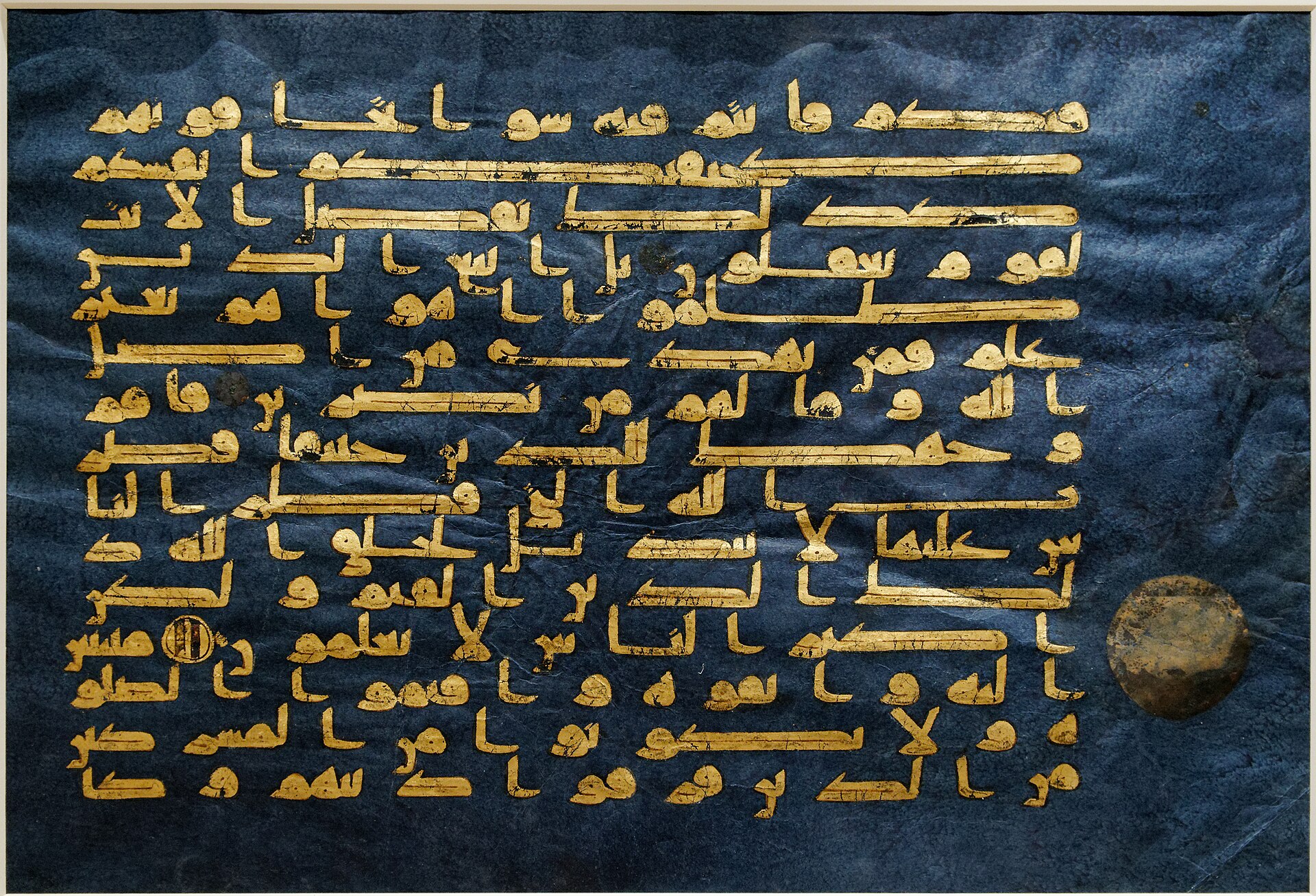
Together these make up the six cursive scripts naskh, thuluth, muhaqqaq, rayhani, tawqi', and riqa'. With the official recension of the Qur'an completed during the reign of the third caliph 'Uthman (r. 644-56), the written circulation of the Holy Book complemented and facilitated its oral transmission.
By the late 19th century reproduction of the text by mechanical printing techniques was permitted, but even then the text to be printed was written out by a scribe working in the traditional manner.
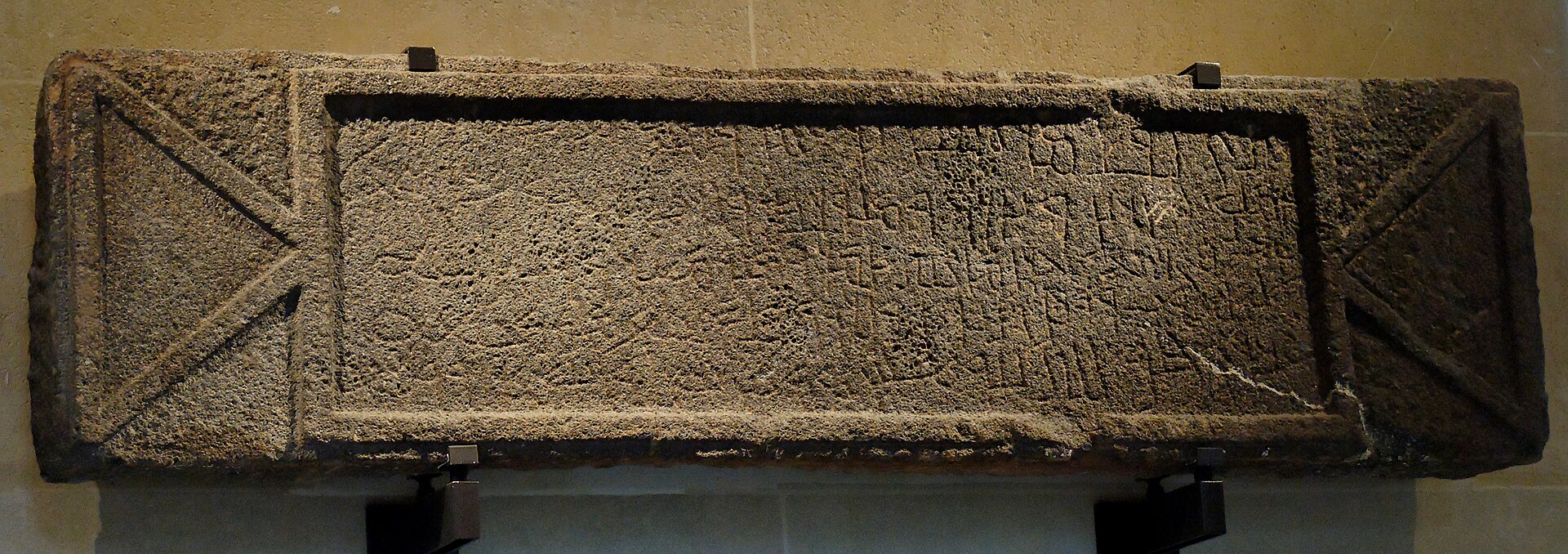

The Arabic script is a North Semitic script that is likely descended from the Nabataean alphabet and was adapted to the sound system of Arabic. Although it probably developed in the 4th century CE as a direct descendant of the Nabataean alphabet, its origins and early history are vague: some scholars take the earliest extant example to be a royal Nabataean funerary inscription of 328 CE, while others hold that the earliest extant example of Arabic is a trilingual inscription in Greek, Syriac and Arabic dating from 512 CE. The Nabataean script in turn gave rise to the neo-Sinaitic alphabet, the ancestor of the Arabic alphabet.
4. Calligraphic Traditions
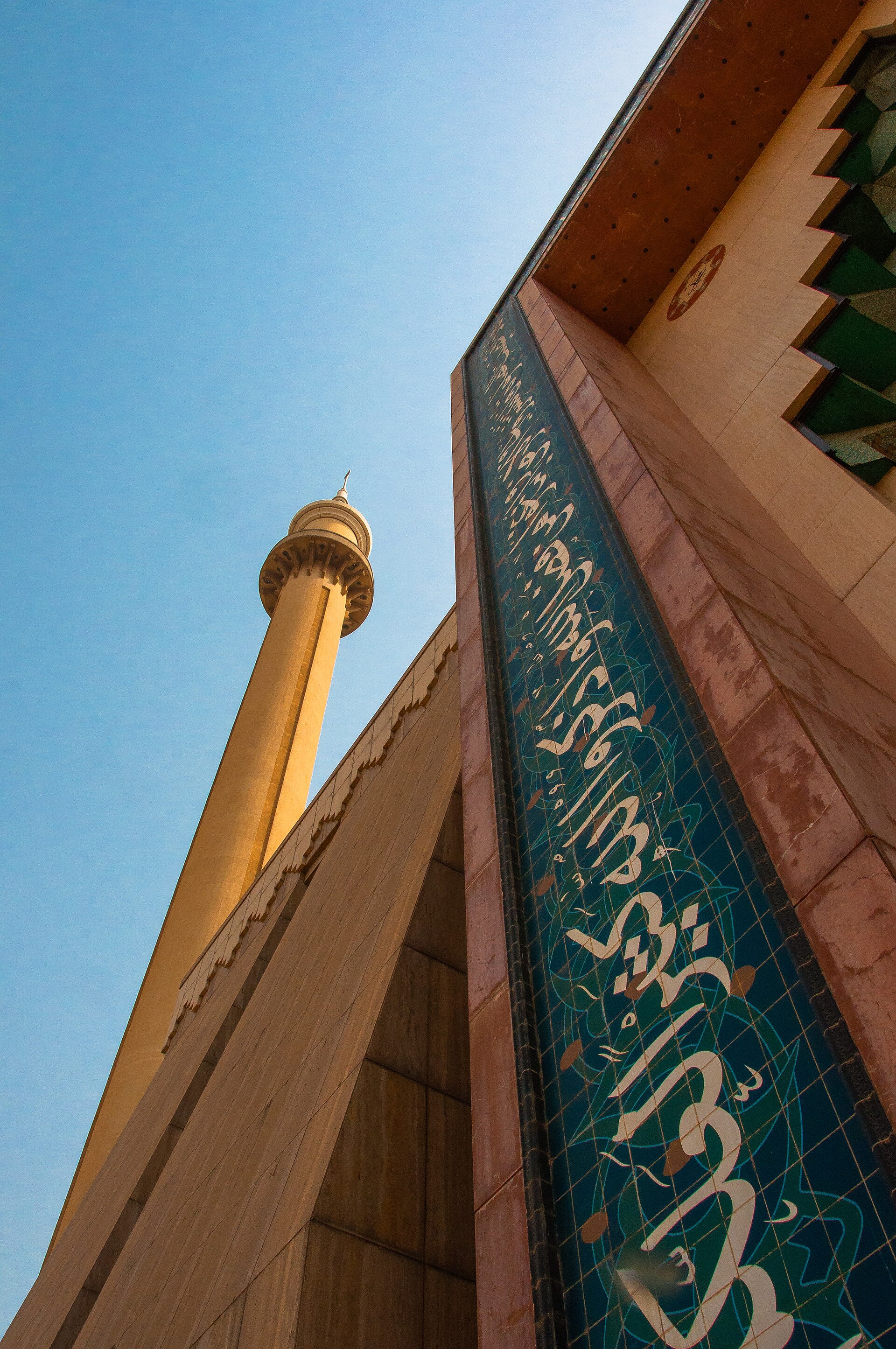
Calligraphy occupies the most elevated position among the arts of the Islamic world, a standing bound to the transmission of the Qur'an in Arabic and to the script's own capacity for ornamental variation. Even at its most decorative, it remains principally a means of conveying a text, and its use as ornament carried a talismanic dimension beneath its aesthetic appeal. The craft was never confined to religious purposes: inscriptions record poems, praise for rulers and aphorisms, and the calligrapher's pen on paper was imitated across a wide range of materials.
Two scripts dominated the early period. Kufic, a thick and bold monumental style, took shape in Kufah in Iraq toward the end of the 7th century CE, while Naskhi, a flowing script suited to papyrus and paper, emerged in Mecca and Medina and stands as the direct ancestor of modern Arabic writing. Kufic fell out of general use about the 11th century. By about 1000 the cursive naskhi had been established for copying the Qur'an and became the most popular script in the Arab world.
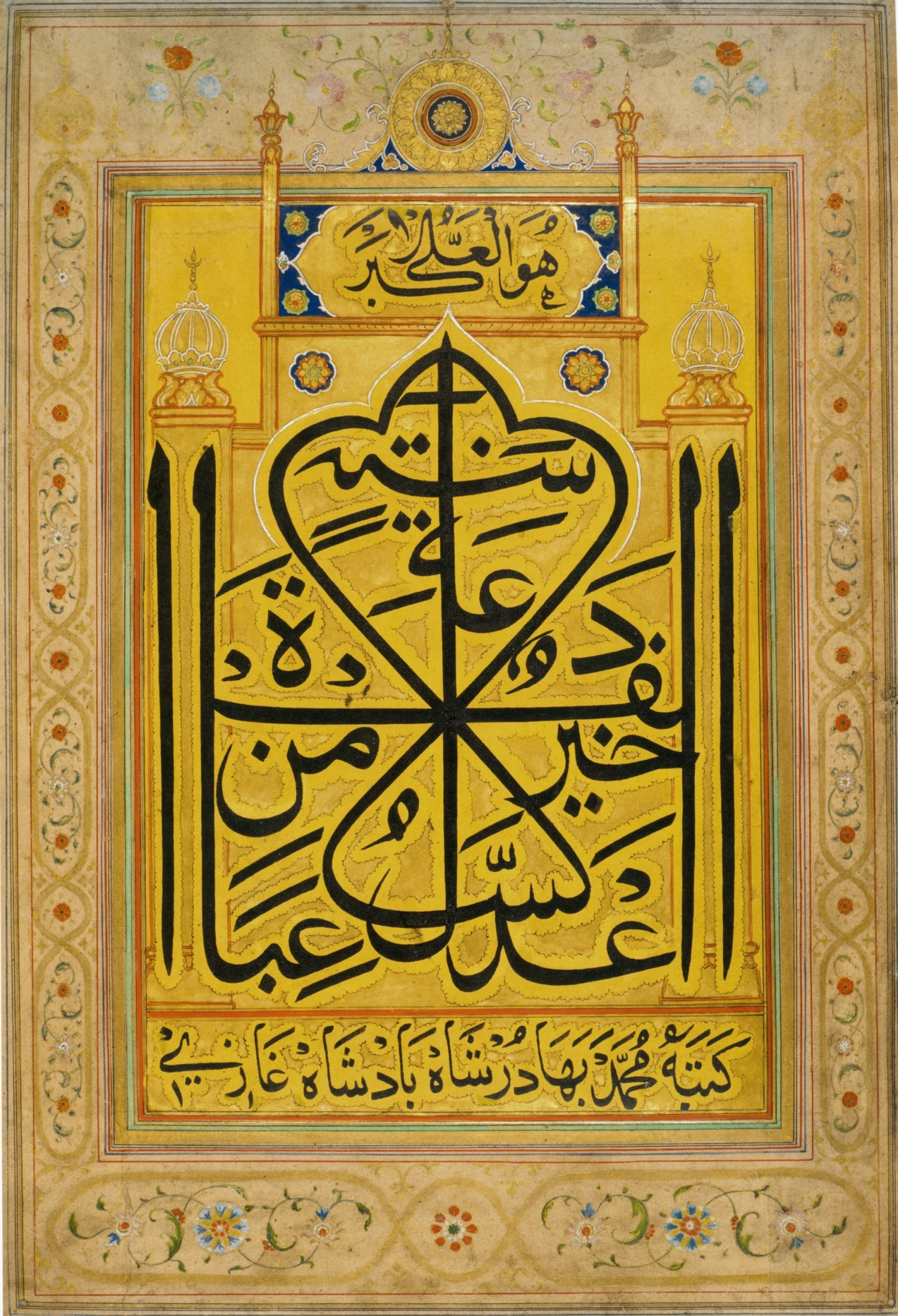

From the 10th century calligraphers set aside the primitive and defective Kufi script in favour of the cursive scripts pioneered by Ibn Muqla and refined by Ibn al-Bawwab and Yaqut al-Musta'simi. Further styles followed: Thuluth and Maghribi, Diwani as adapted by the Ottomans for official documents, and Taliq with its descendant Nastaliq, the primary style for Persian, Dari, Pashto and Urdu in modern times.
Nasta'liq developed on Persian grounds at the hands of Persian calligraphers, its invention attributed to Mir' Ali Tabrizi. First called naskh ta'liq, it was formed from the properties of naskh and ta'liq. In the 15th century it was carried from Western Iran to the Ottoman capital, where it was known as ta'liq, and to India for writing Urdu. Its elegance, balance and beauty earned it the name bride of Islamic calligraphy.
5. Qur'anic Transmission and the Written Word
During the Prophet's lifetime close companions wrote down verses he had recited, but the transmission of the Qur'an among the early Muslim community was by recitation and spoken word until the caliph Uthman ibn Affan collected the verses into the book's current form. Presenting the words of the Qur'an with precision and clarity is of great importance to Muslims.
For most of Islamic history the Qur'an has been preserved in manuscript; a distinctive form established by the 8th century, exemplified by pages written in Kufic script, continued until the 10th century, when changes in materials, script and format made copies of the Qur'an more like other fine manuscripts. From about the same time more fluid styles of script were developed, and by the 13th century these had replaced the older hands in Qur'an production, while a gradual process of refinement gave rise to distinctive regional or dynastic styles.
6. Literary and Scholarly Tradition
The earliest surviving examples of Arabic literary composition consist of a highly elaborate system of poetry and a series of oratorical and often homiletic utterances whose elevated language was later reflected in the style of the Qur'anic revelations.
After the rapid spread of the Islamic faith across Africa and into Asia, written and spoken Arabic came to inhabit opposite ends of a linguistic spectrum, and the spoken language displayed enormous variety from Spain and Morocco in the west to the Arabian Gulf and Iraq in the east.
Standard Arabic remains almost exclusively the only recognized language of literacy across the Arabic-speaking world and is the language of a large body of texts from the golden age of Islamic civilization, including major medieval scholarly works in fields such as science, medicine, astronomy, mathematics and sociology.
7. Grammar, Lexicography and the Sciences
The caliph al-Mamun founded an academy in Baghdad called the House of Wisdom, where al-Khwarizmi and his colleagues the Banu Musa translated Greek scientific manuscripts and studied algebra, geometry and astronomy. Al-Khwarizmi compiled astronomical tables covering calendars and the positions of the sun, moon and planets, and a geographical work giving latitudes and longitudes for 2402 localities as the basis for a world map. The Latin translation Algoritmi de numero Indorum describes the Hindu place-value system based on the nine digits and zero and gave rise to the word algorithm from al-Khwarizmi's name in its title.
Al-Khalil ibn Ahmad, an Arab philologist born about 718 in Oman and died about 791 in Basra, compiled the first Arabic dictionary and is credited with formulating the rules of Arabic prosody; his Kitab al-ayn is arranged according to a novel alphabetical order based on a letter's place of articulation in the mouth. Al-Kitab fi an-nahw by Sibawayh of Basra was long used by later scholars of Arabic. Al-Khwarizmi's Hisab al-jabr w'al-muqabala, dedicated to the caliph al-Mamun, was the first book written on the subject. The Indian numerals did not pass directly from India to Europe but came first to the Arabic and Islamic peoples and reached Europe through the western Arabic lands by way of Spain.
8. Historical Diffusion and the Golden Age
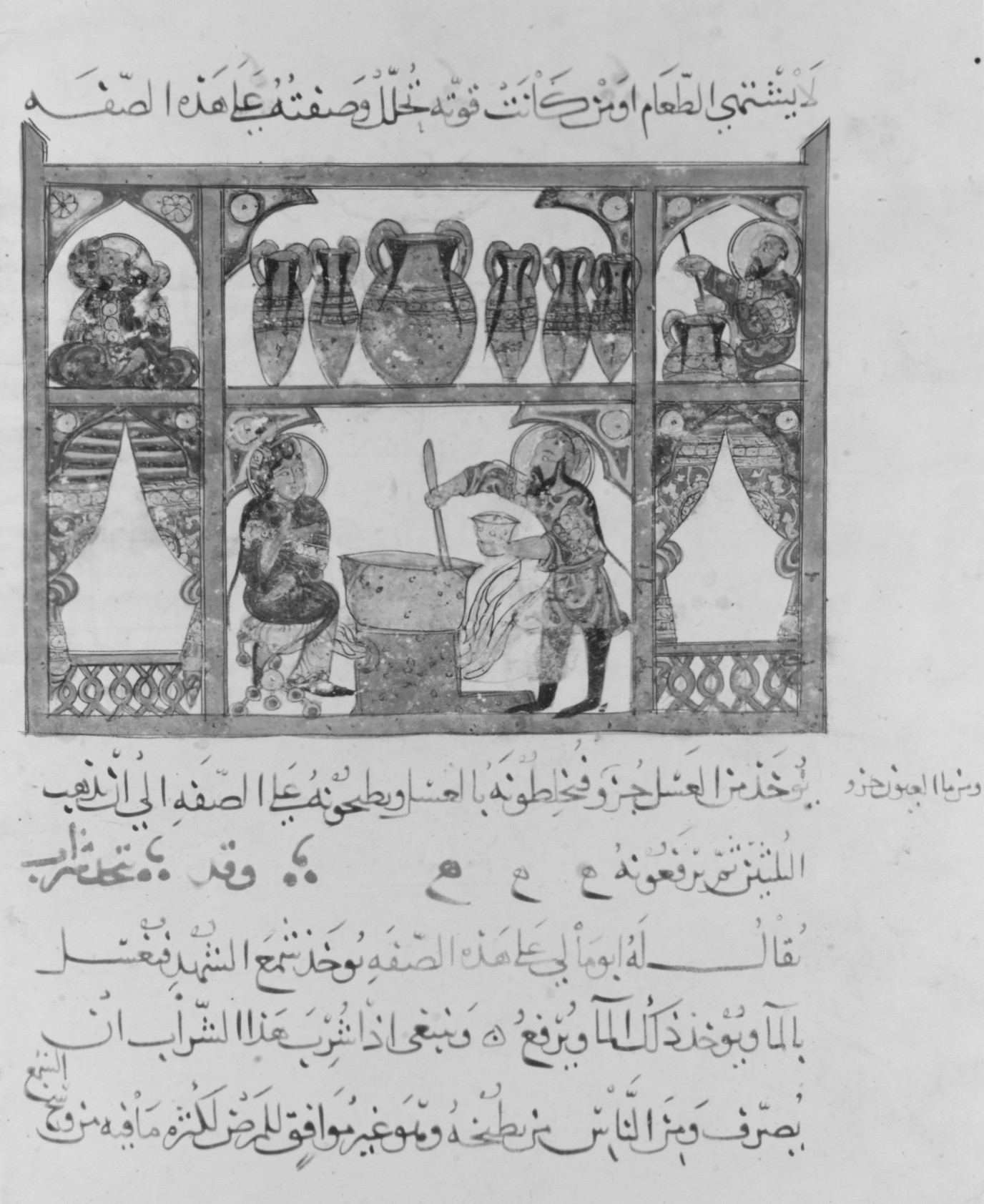
In the 7th and 8th centuries the Arab followers of Muhammad conquered territories from the Atlantic to Sindh, spreading written and spoken Arabic, which became the official language of administration and the language of religion and learning. Arabic belongs to the Semitic family of languages, and the Arab Conquests beginning in the 7th century CE carried it across the Middle East and North Africa, where it became the prominent language while older tongues such as Aramaic and Coptic shrank. In turn many languages, among them Persian, Turkish, Swahili, Spanish and Portuguese, borrowed words from Arabic.
In time the scholarship of the Islamic world served to fuel the greatest minds of Europe and the rebirth of learning known as the Renaissance.
9. Contemporary Status and Global Presence
Arabic is the official language of the 22 countries which form the Arab League and is the native language of over 200 million people in a region stretching from Southwest Asia to Northwest Africa. It is spoken today by over 250 million people in the Middle East and North Africa, and it also serves the world's Muslims, around one billion people, as a religious and liturgical language.
The 2025 World Arabic Language Day event took place at UNESCO headquarters in Paris under the theme Innovative Pathways for Arabic with support from the Sultan Bin Abdulaziz Al Saud Foundation. The 2024 World Arabic Language Day programme included sessions on Arabic AI innovation, cultural and linguistic preservation and digital empowerment. The UNESCO Director-General described Arabic as a language of profound history and boundless creativity that will remain a source of inspiration and a bridge between cultures.
10. Key Dates
-
7th–8th centuryArab conquestsThe Arab conquests spread the script.6Calligraphy: Arabic calligraphy · Encyclopaedia Britannica ↗
-
8th–10th centuryEarliest surviving Qur'ansThe earliest surviving Qur'ans, written on parchment.6
-
13th centuryFluid stylesFluid styles replaced older hands.11Calligraphy in Islamic art · Victoria and Albert Museum ↗
-
15th centuryNasta'liq travelsNasta'liq was taken to the Ottoman capital and India.14Nasta'liq · World History Encyclopedia ↗
-
18 December 1973UN resolution 3190 (XXVIII)United Nations resolution 3190 (XXVIII).21World Arabic Language Day · United Nations ↗
-
18 December, since 2012World Arabic Language DayWorld Arabic Language Day celebrated every year.21
-
1202Fibonacci's Liber abaciFibonacci's Liber abaci.19The Arabic numeral system · MacTutor History of Mathematics Archive, University of St Andrews ↗
11. Timeline: from the Nabataean script to World Arabic Language Day
- c. 150 BCE to 150 CENabataean script in useThe Nabataean alphabet, used in the Nabataean kingdom of Petra and written from right to left, had 22 consonant letters and gave rise to the neo-Sinaitic alphabet, the ancestor of the Arabic alphabet.
- 328 CEOldest claimed example of Arabic scriptA royal funerary inscription of the Nabataeans dating from 328 CE is treated by some scholars as the earliest extant example of Arabic script; others see it as essentially Aramaic.
- c. 610 to 632 CEThe Qur'an revealed in ArabicThe verses of the Qur'an were revealed in the Arabic language to the Prophet Muhammad over about 22 years, from approximately 610 to 632 CE.
- around 650 CEThe Qur'an assembled into book formApproximately 18 years after the death of the Prophet Muhammad, the verses of the Qur'an were collected and assembled into the book's current form by the third caliph, Uthman ibn Affan.
- c. 718 to 791Al-Khalil ibn Ahmad compiles the first Arabic dictionaryAl-Khalil ibn Ahmad, born in Oman and teaching in Basra, compiled the first Arabic dictionary, the Kitab al-ayn, arranged by the place of articulation of each letter, and is credited with the formulation of the rules of Arabic prosody.
- 750 CEThe Abbasids assume the caliphateThe Abbasids, an Arabic dynasty, took the caliphate in 750 CE and ruled over most of the Islamic empire, retaining spiritual supremacy as caliphs until 1258 CE.
- c. 760 to 793Sibawayh and the first great Arabic grammarSibawayh, born about 760 in al-Bayda in Iran and dead about 793 in Shiraz, composed al-Kitab fi an-nahw, the monumental grammar that later scholars of Arabic used as their foundation.
- reign of al-MamunThe House of Wisdom in BaghdadThe caliph al-Mamun founded an academy in Baghdad called the House of Wisdom, where al-Khwarizmi and his colleagues translated Greek scientific manuscripts and studied algebra, geometry and astronomy.
- early 9th centuryAl-Khwarizmi's treatise on algebraAl-Khwarizmi's Hisab al-jabr w'al-muqabala, dedicated to the caliph al-Mamun, was the first book written on algebra and gave the English language the word algebra.
- about 1000 CENaskhi becomes the script of the Qur'anAbout the year 1000 the cursive naskhi script was established for copying the Qur'an and became the most popular script in the Arab world, with Ibn Muqla and Ibn al-Bawwab associated with its development.
- 1202Liber abaci brings the Indian numerals to EuropeFibonacci's Liber abaci, published in Pisa in 1202, records that he had been introduced as a child to the art of the Indians' nine symbols, the numerals that reached Europe through the Arabic-speaking world.
- 1258 CEEnd of the Abbasid caliphateIn 1258 CE the rule of the Abbasids came to an end after the Mongols destroyed Baghdad, the capital they had built on the Tigris.
- late 19th centuryMechanical printing of the Qur'anBy the late 19th century reproduction of the text of the Qur'an by mechanical printing techniques was permitted, though the text to be printed was still written out by a scribe in the traditional manner.
- 18 December 1973Arabic becomes an official language of the United NationsGeneral Assembly resolution 3190 (XXVIII) of 18 December 1973 included Arabic among the official and working languages of the United Nations, making it the sixth official language of the Organization.
- 2012World Arabic Language Day establishedWorld Arabic Language Day has been celebrated every year on 18 December since 2012, on the anniversary of the 1973 resolution that brought Arabic into the United Nations.
References (22)
- 1Semitic languages — Encyclopaedia Britannica WebView source
- 2Arabic language — Encyclopaedia Britannica WebView source
- 3Celebration of World Arabic Language Day 2024 — UNESCO 2024 WebView source
- 4Arabic (ISO 639 code ara) — Ethnologue: Languages of the World (SIL Global) WebView source
- 5Arabic alphabet — Encyclopaedia Britannica WebView source
- 6Calligraphy: Arabic calligraphy — Encyclopaedia Britannica Web↩View source
- 7Arabic literature — Encyclopaedia Britannica WebView source
- 8A Guide to Arabic: 10 facts about the Arabic language — BBC Languages WebView source
- 9History of the Arabic Language — Arabic Without Walls, UC Davis (UC Consortium for Language Learning and Teaching) WebView source
- 10Quranic Fragments (Selections of Arabic, Persian, and Ottoman Calligraphy) — Library of Congress WebView source
- 11Calligraphy in Islamic art — Victoria and Albert Museum Web↩View source
- 12Nabataean alphabet — Encyclopaedia Britannica WebView source
- 13Calligraphy in Islamic Art — The Metropolitan Museum of Art, Heilbrunn Timeline of Art History WebView source
- 14Nasta'liq — World History Encyclopedia Web↩View source
- 15Qur'an — World History Encyclopedia WebView source
- 16Al-Khwarizmi — MacTutor History of Mathematics Archive, University of St Andrews WebView source
- 17al-Khalil ibn Ahmad — Encyclopaedia Britannica WebView source
- 18Sibawayh — Encyclopaedia Britannica WebView source
- 19The Arabic numeral system — MacTutor History of Mathematics Archive, University of St Andrews Web↩View source
- 20Abbasid Dynasty — World History Encyclopedia WebView source
- 21World Arabic Language Day — United Nations Web↩View source
- 22World Arabic Language Day — UNESCO WebView source