Mesopotamia
The land between the Tigris and Euphrates — where the first cities, the first kings and the first writing took shape, from Sumerian Uruk and Ur to Babylon and Nineveh.
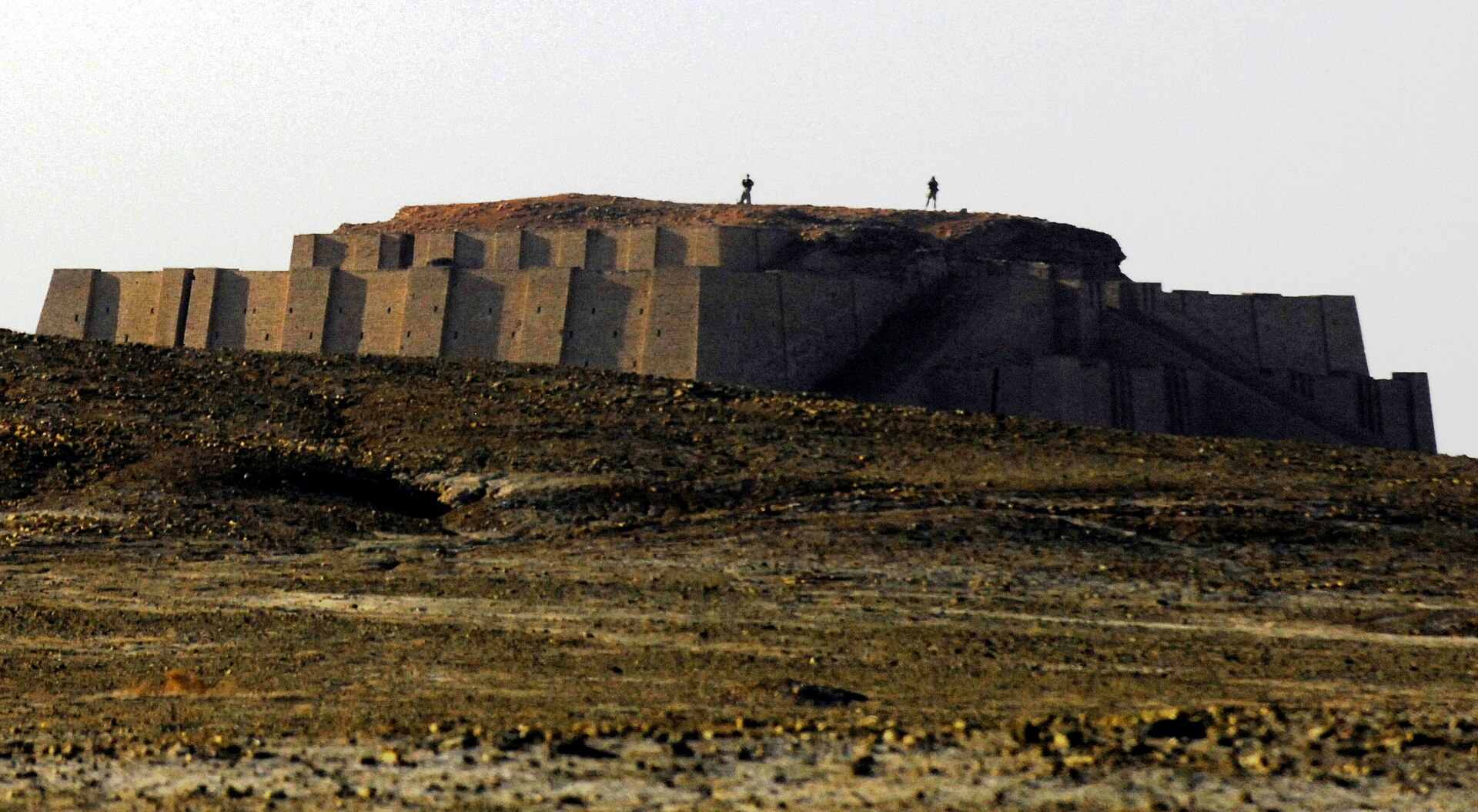

Mesopotamia, the 'land between the rivers' in modern Iraq and its neighbours, is where the world's earliest civilization developed. Its people invented cuneiform writing, built the first cities and ziggurats, produced the Code of Hammurabi and the Epic of Gilgamesh, and created empires whose influence reached Egypt, the Indus valley and the Mediterranean. This fact file follows the story from Ubaid villages and Sumerian city-states through Akkad, Ur III, Assyria and Babylon to the last cuneiform tablets of the first century CE — and to the excavations and museum galleries that recovered it. Evidence comes from the British Museum, the Louvre, the Penn Museum and the Institute for the Study of Ancient Cultures in Chicago, from UNESCO's World Heritage records for Babylon, Ashur and the Ahwar, from the Oxford ETCSL corpus of Sumerian literature, from Britannica, and from public-domain texts and peer-reviewed research.
The land between the rivers
Mesopotamia is the historical region of southwestern Asia between the Tigris and Euphrates, and its name — Greek for 'between rivers' — describes that setting exactly.1 The word joins meso, 'middle', and potamos, 'river or stream'.2 Today it covers most of Iraq with eastern Syria, south-eastern Turkey and parts of western Iran.1 The plain is almost completely flat: from Baghdad to the mouth of the Shatt al-Arab it drops only about 100 feet (30 metres).1
Slow-flowing rivers deposit heavy silt and raise their own beds, so they often overflow — and may even change course — unless high dikes hold them.1 The extreme south is a region of extensive marshes and reed swamps, the hawrs, a refuge since early times for oppressed and displaced peoples.1 With very low rainfall and ground hard and dry for at least eight months a year, farming in the heartland began only after artificial irrigation was invented, watering the land through a widely branching network of canals.1
Water made the land fertile: grain, vegetables, meat, leather, wool, horn, fish, dates and reed products were produced beyond home needs and exported.1 Timber, stone and metal, by contrast, were scarce — stone is mostly lacking in the south — so southern Mesopotamia was destined to be a land of trade from the start.1 And there was always clay, the raw material that epitomizes the civilization, from its mud-brick architecture to the tablets that carried its records.1
From Ubaid villages to Sumerian city-states
Early Mesopotamia was home to many different civilizations reaching back to the 6th millennium BCE — Sumerian, Akkadian, Babylonian and Assyrian.3 The Ubaid period (6500–4000 BCE) is named after a distinctive pottery found at Ubaid; at Ur, fragments of it in the deepest levels show the site's earliest occupation.3 Once writing recorded historical events, periods were named after dominant political institutions — hence the Early Dynastic period (2900–2250 BCE), documented by cylinder and stamp seals.3 Beneath the royal tombs at Ur, Leonard Woolley found 375 cuneiform tablets he dubbed 'archaic text' and nearly 800 seal impressions from Early Dynastic I (2900–2750 BCE).3 Sumerian and Akkadian were both spoken in the south, and inscriptions in both lie in Ur's royal cemetery.3
By the 3rd millennium BCE the south held twenty to thirty city-states, each with a principal guardian deity; Ur's patron was Nanna, the moon god.4 Officially the city-state was the deity's property, and the gods chose and nurtured its ruler, one of whose titles was lugal, literally 'big man'.4 The best-documented interstate conflict of the age is the long dispute between Lagash and Umma over their border and water.4 The Standard of Ur, a trapezoidal box 8.5 by 19.5 inches inlaid with shell, lapis lazuli and red limestone, came from grave PG779 and was more likely a musical instrument's sound box than the pole-borne emblem Woolley imagined.4 Its sides 'War' and 'Peace' show the ruler's double role: the warrior who protects his people and secures water and resources, and the intermediary with the gods.4
One of the ruler's major duties was to build and maintain the city gods' temples and provision their cults, thereby guaranteeing the fertility of the land.4 The Royal Cemetery at Ur yielded tombs, skeletons, jewellery, pottery and musical instruments, excavated for the British Museum and the University of Pennsylvania Museum.2 Mourning rituals were elaborate and extended; sources describe music and feasting lasting over days.5 The tombs' wealth — animals and attendants buried with kings and queens — testifies to the power, or pretensions to power, of these elites.5 Sites such as Kish and Abu Salabikh yielded important evidence too, but the Royal Cemetery remains unparalleled for early elite funerary customs.5
Clay and the invention of writing
Cuneiform can be traced back approximately to the end of the 4th millennium BCE, when the Sumerians — a people of unknown ethnic and linguistic affinities — inhabited southern Mesopotamia.6 Its earliest records are pictographic tablets from Uruk: lists or ledgers of commodities with numerals and personal names.6 Word writing of this kind expressed only basic ideas of concrete objects, while numerical notions were rendered by strokes or circles.6 Proper names forced the rebus principle — shapes used for sound rather than meaning — beginning the transition from pure word writing to a partial phonetic script.6 The picture of a hand came to stand for the word šu, 'hand', and the syllable šu in any context; with Sumerian largely monosyllabic, the signs denoted syllables, and the mixture is called a word-syllabic script.6
Before these developments were complete, the Akkadians adopted the Sumerian system, keeping the logograms but pronouncing them as Akkadian words.6 The earliest Semitic cuneiform is Old Akkadian, seen in the inscriptions of Sargon of Akkad (died c. 2279 BCE).6 Sumer remained a loose agglomeration of independent city-states until Gudea of Lagash (died c. 2124 BCE) briefly united it.6 Hammurabi of Babylon (died 1750 BCE) then unified the whole south, making Babylonia the great cultural centre; his Code is written in Old Babylonian cuneiform.6 The Assyrian stream of the script survives from the Cappadocian tablets of about 1950 BCE and culminates in the library of Ashurbanipal at Nineveh (c. 650 BCE).6
Law, kingship, and society
The Hammurabi stele's top carries a relief of the sun god Shamash meeting Hammurabi, king of Babylon, legitimizing the king's sovereignty and the judgements engraved below.8 The stele is basalt, 225 cm high, 79 cm wide and 47 cm thick, inscribed in cuneiform in Old Babylonian with a text of laws.8 It belongs to the 1st dynasty of Babylon under Hammurabi (1792–1750 BCE), was discovered at Susa in 1901–1902, and is held by the Louvre's Department of Near Eastern Antiquities.8
The code's clauses of talion are stated without softening in C. H. W. Johns's translation: an eye lost is answered with an eye, a shattered limb with a shattered limb.9 The final provision, 282, concerns a slave who denies his master: he is put to account as a slave, and his master cuts off his ear.9 The collection closes with an epilogue presenting the laws as judgements of righteousness confirmed by Hammurabi the mighty king.9
If a man has caused the loss of a gentleman's eye, his eye one shall cause to be lost.
Code of Hammurabi, law 196 — trans. C. H. W. Johns (1903)
If he has shattered a gentleman's limb, one shall shatter his limb.
Code of Hammurabi, law 197 — trans. C. H. W. Johns (1903)
If a slave has said to his master 'Thou art not my master,' as his slave one shall put him to account and his master shall cut off his ear.
Code of Hammurabi, law 282 — trans. C. H. W. Johns (1903)
Cities and periods at a glance
| City / site | River or region | Leading period(s) | What it is known for | Source |
|---|---|---|---|---|
| Eridu (Eridug) | Southern Iraq, freshwater marshes | Earliest kingship in the Sumerian king list | Site of the first kingship in the king list and of Alulim's 28,800-year reign10; Tell Eridu is one of the three archaeological cities of the Ahwar World Heritage property11 | etcsl-king-list; unesco-ahwar |
| Uruk (Erech) | Southern Iraq, marsh delta | 4th millennium BCE onward | Pictographic tablets — the earliest written records in Sumerian6; an Ahwar World Heritage component together with Ur and Tell Eridu11; source of the 79/80 CE almanac, the latest datable cuneiform text7 | britannica-cuneiform; unesco-ahwar; openalex-hunger-almanac |
| Ur | Southern Iraq, near modern Al-Nasiriyyah | Ubaid occupation; Early Dynastic; 3rd dynasty of Ur (2112–2095 BCE) | Royal Cemetery with tombs, jewellery, pottery and musical instruments excavated for the British Museum and Penn2; the ziggurat of Nanna, earliest bricks c. 2100 BCE12 | british-museum-room56; britannica-ziggurat-ur |
| Nippur | Sumer, central southern Iraq | Excavated by ISAC since 1948 (Nippur Expedition) | One of the three expeditions that built the Chicago museum's Mesopotamian collection13 | isac-mesopotamian-gallery |
| Kish and Abu Salabikh | Southern Mesopotamia | Early Dynastic | Sites that yielded important evidence alongside the Royal Cemetery at Ur for early elite funerary customs5 | penn-museum-royal-cemetery |
| Babylon | 85 km south of Baghdad | Neo-Babylonian capital, 626–539 BCE | Outer and inner city walls, gates, palaces and temples form a unique testimony to the empire14; Hammurabi's unification made Babylonia the great centre of Mesopotamian culture6; traces of Etemenanki and Nebuchadnezzar's palatial complex survive at the site14 | unesco-babylon; britannica-cuneiform |
| Ashur (Qal'at Sherqat) | Tigris river, northern Mesopotamia | 3rd millennium BC; first Assyrian capital, 14th–9th centuries BC | First capital and religious centre of Assyria, associated with the god Ashur15; three mud-brick ziggurats and the temple of the national god, whose ziggurat still stands as a landmark15 | unesco-ashur |
| Nineveh | Tigris river, northern Mesopotamia | c. 700 BCE under Sennacherib; sacked 612 BCE | Sennacherib's 'palace without a rival', about 600 × 630 ft with at least 80 rooms16; the library of Ashurbanipal, whose tablets carry the fullest text of the Gilgamesh epic17 | britannica-nineveh; britannica-gilgamesh |
| Nimrud | Northern Mesopotamia | Assyrian period | One of the significant Assyrian cities, mentioned together with Nineveh and Ashur1 | britannica-mesopotamia |
The sequence runs from Ubaid villages and the first cities of the fourth millennium BCE18 through the Early Dynastic city-states to Sargon — the gardener's son who became king of Agade and built it10 — and to the 3rd dynasty of Ur, whose king Ur-Nammu raised the ziggurat of Nanna.12 Hammurabi then made Babylonia the great centre of its culture6, before the Assyrian and Neo-Babylonian empires carried Mesopotamian power to its height from Nineveh, Ashur and Babylon.1 UNESCO's Ahwar property binds Uruk, Ur and Eridu to the marsh landscape that shaped them11, and Babylon's own inscription recalls a capital of 626–539 BCE whose remains are a unique testimony.14
Gods, temples, and the ziggurat
Ziggurats are pyramidal stepped temple towers built by the Sumerians, Babylonians and Assyrians; about 25 survive, and the ziggurat at Ur is among the best preserved.12 It stands near Al-Nasiriyyah in southern Iraq, its earliest bricks dating to about 2100 BCE.12 Its core used several million sun-dried mud-and-reed bricks, strengthened with reed matting and sandy soil every six layers and clad in glazed bricks mortared with bitumen, with 'weeper holes' for drainage.12 Many facing bricks bear the name of Ur-Nammu (r. 2112–2095 BCE), first king of the 3rd dynasty of Ur, who built it with three tiers and a temple of the moon god Nanna (Sin) on top.12 Continuous repair kept it important for at least 2,000 years, and four more tiers made it seven stories in the 6th century BCE; only two survive, the tower partly rebuilt in the 1980s and damaged in the 1991 Gulf War before its designation within the UNESCO Ahwar site in 2016.12
In Sumerian tradition An, Enlil, Enki and Ninhursaja fashioned the black-headed people, then made animals multiply and herds exist on the plains.19 The same texts imagine a god asking for cities laid with bricks in pure places, so that he can refresh himself in their shade, and for divination places and irrigation.19 They also record the divine assembly's decision to destroy the seed of mankind with a sweeping flood.19 Afterwards An and Enlil granted Zi-ud-sura life like a god, settling the king in Dilmun, where the sun rises.19
The deluge pattern recurs in the Gilgamesh epic, where Utnapishtim tells Gilgamesh the story of the Flood.17
Let them build many cities so that I can refresh myself in their shade.
The Flood story (ETCSL 1.7.4), University of Oxford
A flood will sweep over the ...... in all the ....... A decision that the seed of mankind is to be destroyed has been made.
The Flood story (ETCSL 1.7.4), University of Oxford
Empires of the plain: Akkad to Assyria and Babylon
The Sumerian king list opens with kingship descending from heaven to Eridug, where Alulim ruled for 28,800 years.10 Five cities and eight kings ruled 241,200 years before the flood swept over — the deluge dividing the antediluvian dynasties from the rest.10 It remembers Etana the shepherd, said to have ascended to heaven and consolidated the foreign countries, and Gilgamec of Kulaba, credited with 126 years.10 Sargon — whose father was a gardener and who was cupbearer of Ur-Zababa — became king of Agade and built Agade.10 When Urim fell, Sumer's very foundation was torn out and kingship passed to Isin, where Icbi-Erra became king.10
Sennacherib made Nineveh truly magnificent around 700 BCE, with fresh streets and squares and the 'palace without a rival' — about 600 by 630 feet, at least 80 rooms, many lined with sculpture.16 The city covered about 1,800 acres within 15 great gates, and 18 canals with an aqueduct at Jerwan brought water from the hills.16 Fourteen years after Ashurbanipal's death, Babylonians, Scythians and Medes sacked it in 612 BCE, leaving ash across the acropolis; the city never recovered.16 Excavation came later: Rich was the first to survey and map the site, Felix Jones published the work in 1854, Layard found Sennacherib's palace in 1845–51 and sent thousands of tablets to England, Rassam continued in 1852, and Campbell Thompson dug the temple of Nabu in 1929–32.16
Ashur, on the Tigris in northern Mesopotamia, dates to the 3rd millennium BC and from the 14th to the 9th centuries BC was the first capital of the Assyrian Empire — a city-state and trading platform of international importance.15 It was also the religious capital, associated with the god Ashur, and land, god and city shared the name.15 Its three mud-brick ziggurats, two double temples and the temple of the national god survive in exceptional density, the god's ziggurat still a visible landmark.15 Abandoned at the end of the Parthian period in the 2nd century BC with no later occupation, its authenticity is called unquestionable.15
Babylon, 85 km south of Baghdad, was the capital of the Neo-Babylonian Empire between 626 and 539 BCE; its walls, gates, palaces and temples are a unique testimony to that empire.14 UNESCO notes that it served as a model, parable and symbol of ancient power for over two thousand years, and that the tales of Babel find reference in the religious texts of the three Abrahamic religions.14 The Hanging Gardens and Tower of Babel traditions rest on real ancient structures whose traces survive — the ziggurat Etemenanki and Nebuchadnezzar's palatial complex.14 The city also radiated political, technical and artistic influence and left a considerable scientific legacy in mathematics and astronomy.14 Eighty-five per cent of the property remains unexcavated, a reserve UNESCO calls of primary importance for further research.14
The literature of clay: Gilgamesh and the flood
The Epic of Gilgamesh is an ancient Mesopotamian odyssey, recorded in Akkadian, about Gilgamesh, king of the city-state of Uruk.17 Its fullest text survives on 12 incomplete Akkadian tablets found in the mid-19th century by Hormuzd Rassam at Nineveh, in the library of King Ashurbanipal (r. 668–627 BCE).17 Five short Sumerian poems from the first half of the 2nd millennium BCE tell related stories, among them 'Gilgamesh and Huwawa', 'Gilgamesh and the Bull of Heaven' and 'The Death of Gilgamesh'.17 The plot runs from Enkidu's creation — made by the god Anu to curb Gilgamesh's harsh rule — through the expedition against Huwawa, guardian of a cedar forest, and the killing of the divine bull, to Enkidu's death and Gilgamesh's search for Utnapishtim, survivor of the Babylonian Flood.17
In Tablet XI Gilgamesh reaches Utnapishtim, hears the story of the Flood and is shown a plant that can renew youth; a serpent seizes and eats it, and Gilgamesh returns to Uruk still mortal.17 Tablet XII, an appendage, relates the loss of the pukku and mikku — perhaps 'drum' and 'drumstick' — given to Gilgamesh by Ishtar.17 Early 20th-century scholars called the epic the most notable literary product of Babylonia yet discovered in the mounds of Mesopotamia.20
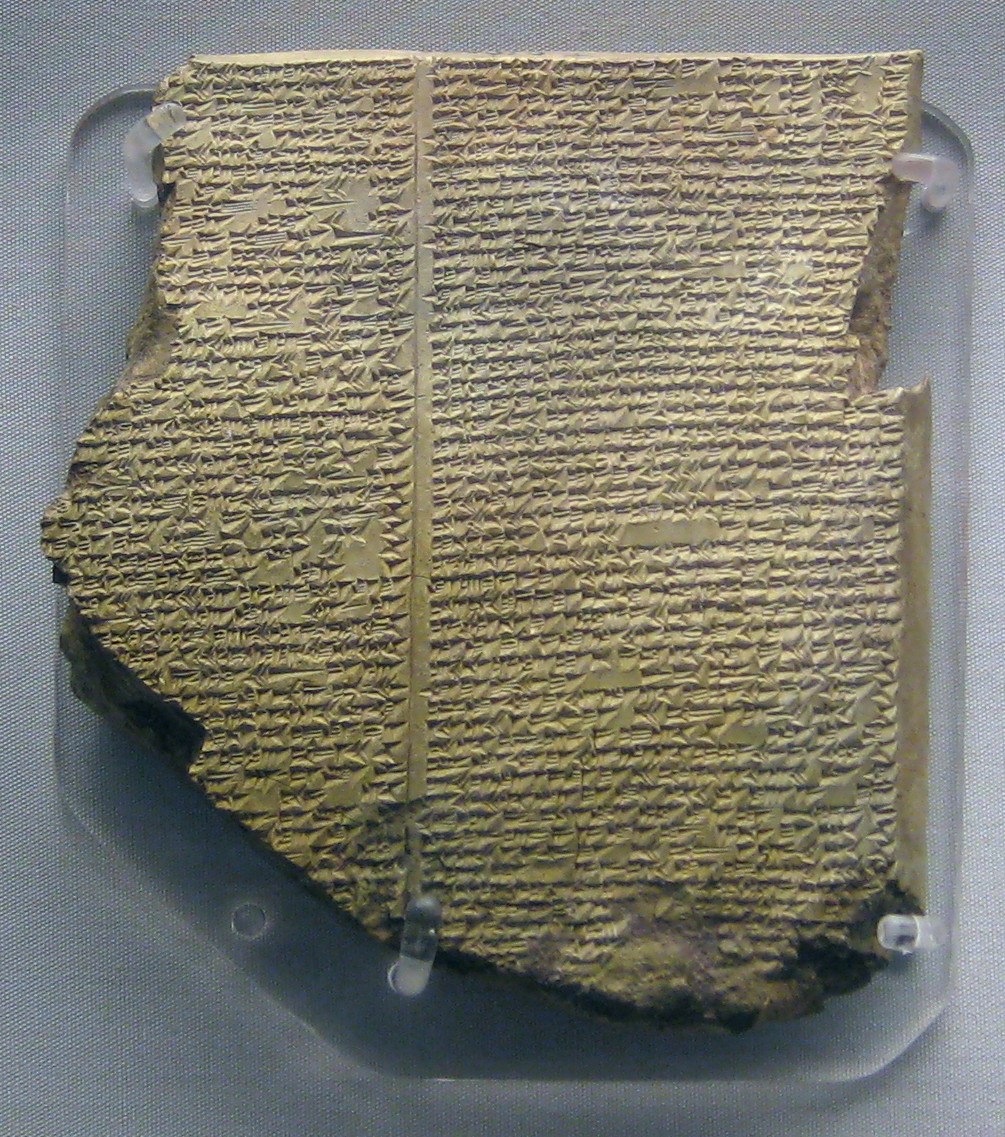
The Flood Tablet — Tablet XI — comes from the Library of Ashurbanipal at Nineveh.17 Its Sumerian ancestor survives in the ETCSL Flood story, where the assembly resolves to destroy the seed of mankind and Zi-ud-sura is granted life like a god and settled in Dilmun.19 In Chicago, the ISAC museum's Jannotta gallery displays tablets recording the epic of Gilgamesh among one of the largest and most comprehensive collections of Mesopotamian material culture.13
Counting the stars: science and the last tablets
Mesopotamian mathematics used the sexagesimal system, base-60, and its influence continues in the measurement of time and angles.1 Babylon, at the height of its power, radiated political, technical and artistic influence and left a considerable scientific legacy in mathematics and astronomy.14
The world's first cities emerged on the plains of Mesopotamia — in modern Iraq and Syria — in the fourth millennium BCE.18 The cuneiform tradition born beside them has a precisely dated endpoint: Almanac W22340a from Uruk, whose astronomical predictions place it in 79/80 CE, is the latest datable cuneiform text yet uncovered.7 That dating confirms cuneiform writing and astronomical scholarship persisted in Mesopotamia during the Arsacid period, far into the first century CE — not only in Babylon but in Uruk as well.7
Rediscovery and heritage today
The recovery of Mesopotamia is largely a museum story: the tombs, skeletons, jewellery, pottery and musical instruments of the Royal Cemetery at Ur were excavated for the British Museum and the University of Pennsylvania Museum.2 The Louvre holds Hammurabi's stele, discovered at Susa in 1901–1902, its relief of the king before Shamash still at the top.8 In Chicago, the ISAC museum's Jannotta gallery presents one of the largest and most comprehensive displays of Mesopotamian material culture, from the Prehistoric through the Islamic periods, including Sumerian votive statues, glazed-brick striding lions from the Processional Way at Babylon, and tablets recording Gilgamesh.13 Most of its artifacts come from three expeditions: the University of Chicago Expedition to Bismaya (1903–05), ISAC's Iraq Expedition (1930–37) and the Nippur Expedition, at work since 1948.13
Babylon, inscribed for its walls, gates, palaces and temples, remains the test of an empire that held the city between 626 and 539 BCE; 85 per cent of the property is still unexcavated.14 Ashur, first capital and religious centre of Assyria, was never reoccupied after the Parthian period, and its authenticity is described as unquestionable.15 The Ahwar of southern Iraq brings the story back to the marshes: seven components — three archaeological cities, Uruk, Ur and Tell Eridu, and four wetland marsh areas — together one of the world's largest inland delta systems, in an extremely hot and arid environment.11 Its ruins of Uruk, Ur and Eridu, today in the desert but originally near freshwater marshes, are cited as the clearest example of how the unstable deltaic landscape governed the rise and fall of large urban centres.11 The property is inscribed for natural values too: marshes showing internationally significant ecological succession in one of the most arid inland deltas, conserving species such as the Basra Reed Warbler and the Euphrates Soft-shell Turtle.11
Why Mesopotamia still matters
What Mesopotamia left behind is a chain of firsts. Cuneiform, devised for the ledgers of Uruk, was adopted by the Akkadians and carried forward by Babylonian and Assyrian scribes.6 Its final datable record, an almanac from Uruk, places the tradition's end at 79/80 CE.7 The legal tradition is equally long-lived: the judgements of righteousness confirmed by Hammurabi gave the ancient Near East a written model of law.9 The sexagesimal mathematics of base-60 still governs the measurement of time and angles.1
On the ground the heritage map is just as vivid: the ziggurat at Ur, part of the Ahwar World Heritage site since 201612; Nineveh, sacked in 612 BCE and never again important16; Babylon, 85 km south of Baghdad, a symbol of ancient power for over two thousand years14; and the first cities of the fourth millennium BCE, whose plains UNESCO still reads through the marshes of southern Iraq.1811 Mesopotamia, in short, is where the 'cradle of civilization' stops being a slogan: the land between the rivers is where cities, writing and states begin.11811
Timeline
The Ubaid period begins in southern Mesopotamia
Distinctive painted pottery gives its name to the Ubaid period (6500–4000 BCE); at Ur, fragments of this pottery in the deepest excavation levels show the site's earliest occupation fell in these centuries.
The first cuneiform: pictographic tablets at Uruk
At the end of the 4th millennium BCE the earliest written records in Sumerian — pictographic tablets from Uruk, evidently lists or ledgers of commodities with numerals and personal names — mark the beginnings of cuneiform.
The Royal Cemetery of Ur and the Standard of Ur
During the later Early Dynastic period the rulers of Ur were buried with extraordinary wealth; the "Standard of Ur", a small box inlaid with shell, lapis lazuli and red limestone, comes from grave PG779 and depicts war and peace in early Mesopotamia.
Sargon of Akkad and the first Semitic cuneiform
The earliest Semitic cuneiform is Old Akkadian, seen in the inscriptions of the ruler Sargon of Akkad (died c. 2279 BCE); the Sumerian king list remembers him as the cupbearer of Ur-Zababa who became king of Agade.
Ur-Nammu builds the ziggurat at Ur
Millions of mud bricks, many stamped with the name of Ur-Nammu, raised the ziggurat of the moon god Nanna at Ur; in the king's reign it had three tiers, three buttressed staircases and a temple on top.
Hammurabi unifies southern Mesopotamia
King Hammurabi of Babylon (died 1750 BCE) unified all of southern Mesopotamia and made Babylonia the great centre of Mesopotamian culture; his laws are written in Old Babylonian cuneiform on a basalt stele topped by a relief of Hammurabi before the sun god Shamash.
Ashur, first capital of the Assyrian Empire
The city of Ashur on the Tigris, occupied since the 3rd millennium BC, served as the first capital of the Assyrian Empire and as the religious capital where Assyrian kings were crowned and buried.
Sennacherib transforms Nineveh
King Sennacherib laid out fresh streets and squares and built the "palace without a rival", some 600 by 630 feet with at least 80 rooms; an elaborate system of 18 canals and an aqueduct at Jerwan brought water to the city.
The library of Ashurbanipal at Nineveh
Under Ashurbanipal (r. 668–627 BCE) the writing of cuneiform culminated in the extensive records of the royal library at Nineveh, from which the fullest text of the Epic of Gilgamesh and the "Flood Tablet" come.
Babylon, capital of the Neo-Babylonian Empire
Between 626 and 539 BCE Babylon was the capital of the Neo-Babylonian Empire under rulers such as Nebuchadnezzar; its walls, gates, palaces and temples — including the ziggurat Etemenanki — remain the best testimony to the empire at its height.
The sack of Nineveh
Fourteen years after Ashurbanipal's death, Nineveh was sacked by Babylonians, Scythians and Medes; extensive traces of ash lie in the acropolis, and the city never recovered, though Xenophon later recorded its ruins as "Mespila".
The last datable cuneiform tablet
Almanac W22340a from Uruk, dated by its astronomical predictions to 326 of the Arsacid Era (79/80 CE), is the latest datable cuneiform text yet found — evidence that cuneiform scholarship continued in Mesopotamia well into the first century CE.
Nineveh is surveyed and mapped
Claudius J. Rich became the first person to survey and map Nineveh; Felix Jones completed the work and published it in 1854, opening the era of systematic excavation of Iraq's tells.
The Hammurabi stele is found at Susa
The basalt stele bearing Hammurabi's laws was discovered in 1901–1902 during excavations at Susa led by Jacques de Morgan; it has been in the Louvre, in the Département des Antiquités orientales, since the finds were divided.
Excavation of the ziggurat at Ur
The excavation of the ziggurat at Ur in 1922 sparked a brief craze for tiered buildings; only the first two tiers now survive, and the tower was partially reconstructed in the 1980s.
The Ahwar of Southern Iraq is inscribed by UNESCO
The ziggurat at Ur was designated part of the UNESCO World Heritage site "The Ahwar of Southern Iraq: Refuge of Biodiversity and the Relict Landscape of the Mesopotamian Cities", adding the ancient cities of Uruk, Ur and Eridu to the World Heritage List.
Frequently asked questions
What does the name Mesopotamia mean?
It comes from the ancient words meso, 'middle', and potamos, 'river or stream' — the land between the Tigris and Euphrates.2
Which modern countries does Mesopotamia cover?
Most of Iraq, together with eastern Syria, south-eastern Turkey and parts of western Iran.1
When and how was writing invented in Mesopotamia?
Cuneiform can be traced back approximately to the end of the 4th millennium BCE, when the Sumerians inhabited southern Mesopotamia.6 The earliest records are pictographic tablets from Uruk — commodity ledgers with numerals and personal names.6
What is in the Code of Hammurabi?
It is a collection of 282 numbered laws inscribed in Old Babylonian cuneiform on a basalt stele.9 The stele is 225 cm high and topped by a relief of Hammurabi before the sun god Shamash.8
Who was Gilgamesh?
He is the king of the city-state of Uruk in the ancient Mesopotamian epic recorded in the Akkadian language.17 The Sumerian king list credits him with 126 years of rule as lord of Kulaba.10
What is a ziggurat?
A pyramidal stepped temple tower built by the Sumerians, Babylonians and Assyrians; about 25 survive, and the ziggurat at Ur is among the best preserved.12
When was the last cuneiform tablet written?
The latest datable cuneiform text yet found is Almanac W22340a from Uruk, dated by its astronomical predictions to 79/80 CE.7
Knowledge graph
Sources & citations
Every factual claim in this article is drawn from the sources below. Bracketed numbers in the text link to the corresponding source.
- 1
- 2
- 3
- 4
- 5
- 6
- 7
- 8
- 9
- 10
- 11
- 12
- 13
- 14
- 15
- 16
- 17
- 18
- 19
- 20