Hammurabi
The Babylonian king who united Mesopotamia and issued the Code of Hammurabi — 282 case laws carved on the basalt stele now in the Louvre.
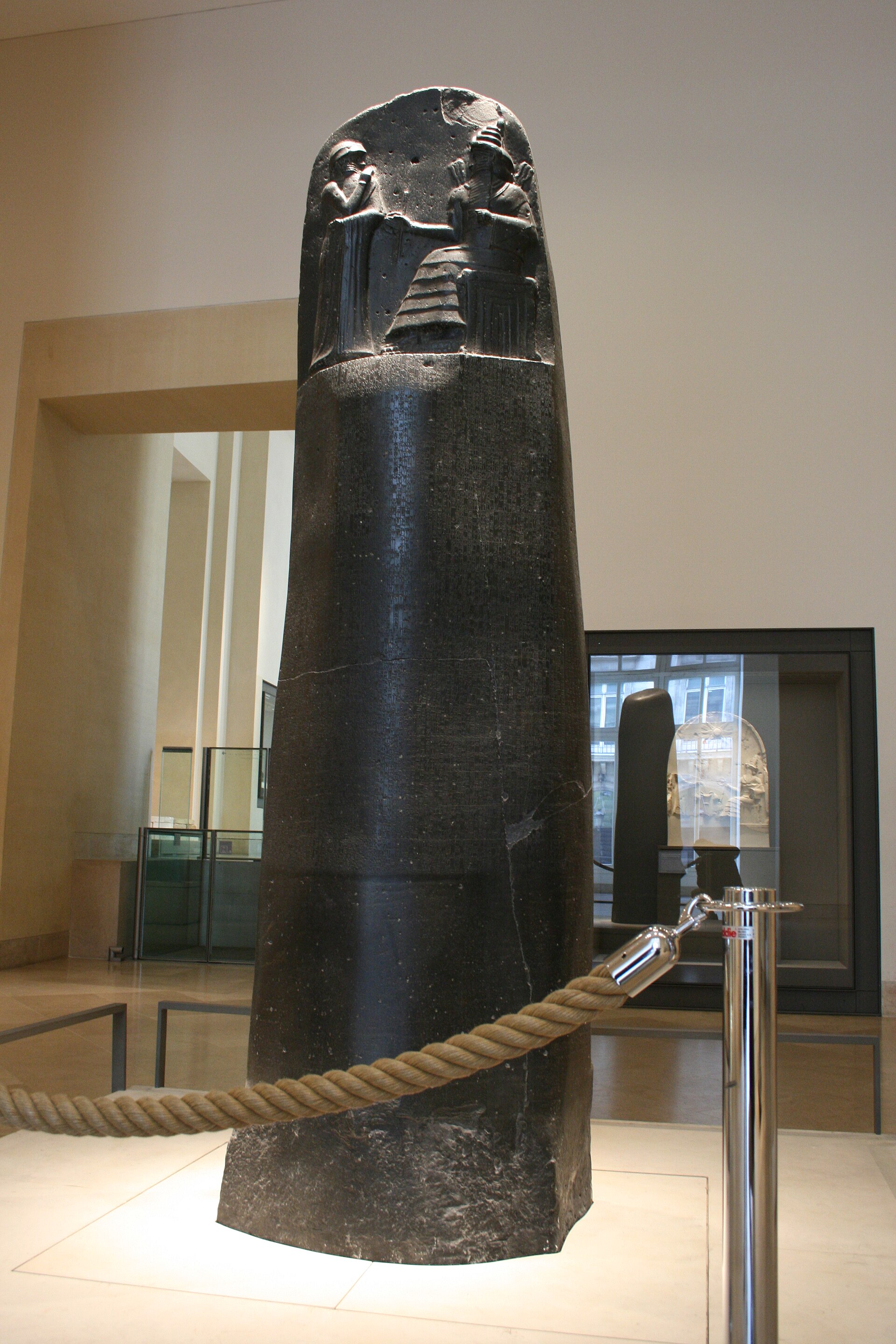
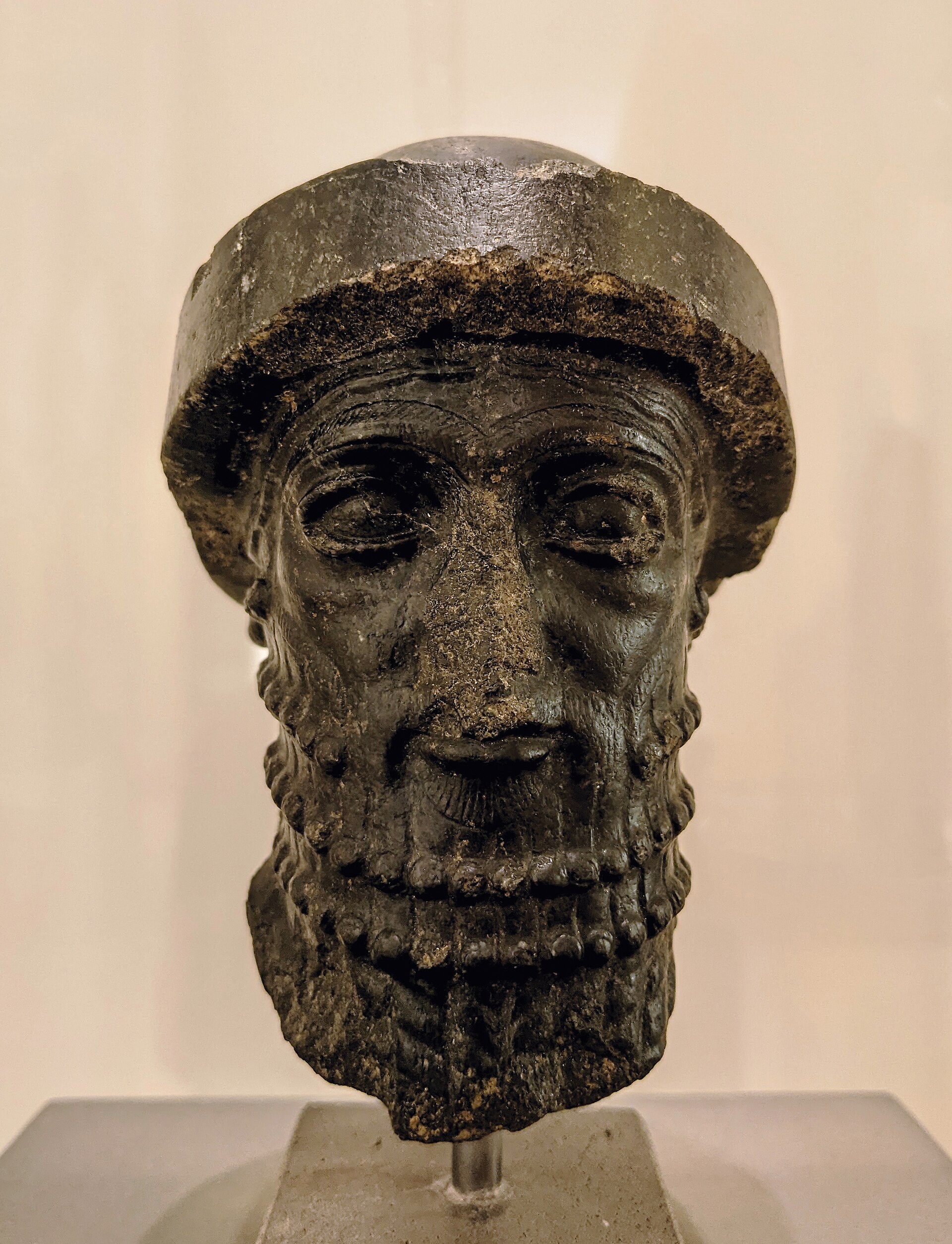
Hammurabi, sixth king of the Amorite First Dynasty of Babylon, reigned from about 1792 to 1750 BCE and made Babylon the centre of a Mesopotamian empire that reached from the Persian Gulf to the middle Euphrates. Near the end of his reign his scribes compiled the 282 case laws known as the Code of Hammurabi, which circulated on clay tablets and on a monumental basalt stele. That stele, carried off to Susa as war booty and found there in 1901, is the principal source of the code and has been displayed in the Louvre since the early twentieth century.
In this article
- 1Overview
- 2Reign and Empire
- 3Babylon as Capital
- 4The Code of Hammurabi
- 5Provisions and Procedure
- 6Prologue and Epilogue
- 7The Stele: Description and Inscription
- 8Discovery, Publication and Display
- 9Legacy and Influence
- 10Key Dates
- 11Timeline: from Hammurabi's accession to the stele in the Louvre
- 12Frequently asked questions
- 13Knowledge graph
Overview
Hammurabi was the sixth king of the Amorite First Dynasty of Babylon, ruling from around 1792 to around 1750 BC according to the middle chronology. He is the best-known ruler of that dynasty and is remembered for his surviving set of laws, once considered the oldest promulgation of laws in human history. His reign also saw the transformation of Babylon from a city of little importance into the political and later religious capital of Mesopotamia.
1. Reign and Empire
Hammurabi inherited a small kingdom in central Mesopotamia and intensified its slow amassing of territory, so that in some thirty short years he gained control over the territory of Rim-Sin in the south and dismantled centers of power to the west, north and east. His conquest of southern Babylonia transformed a small city-state into a large territorial state and shifted the balance of power in Mesopotamia from the south to the north.
As part of his expansionist policy, Hammurabi destroyed the palace of King Zimri-Lim at Mari on the Euphrates River in Syria; the palace was decorated with wall paintings and stone statuary, and its archive of cuneiform tablets illuminates contemporary political events.
Hammurabi failed to set up an effective bureaucracy, and his son lost much of the territory he had conquered. The empire declined under his successors and was brought to an end in a raid by the Hittites from Anatolia circa 1595 B.C.
2. Babylon as Capital
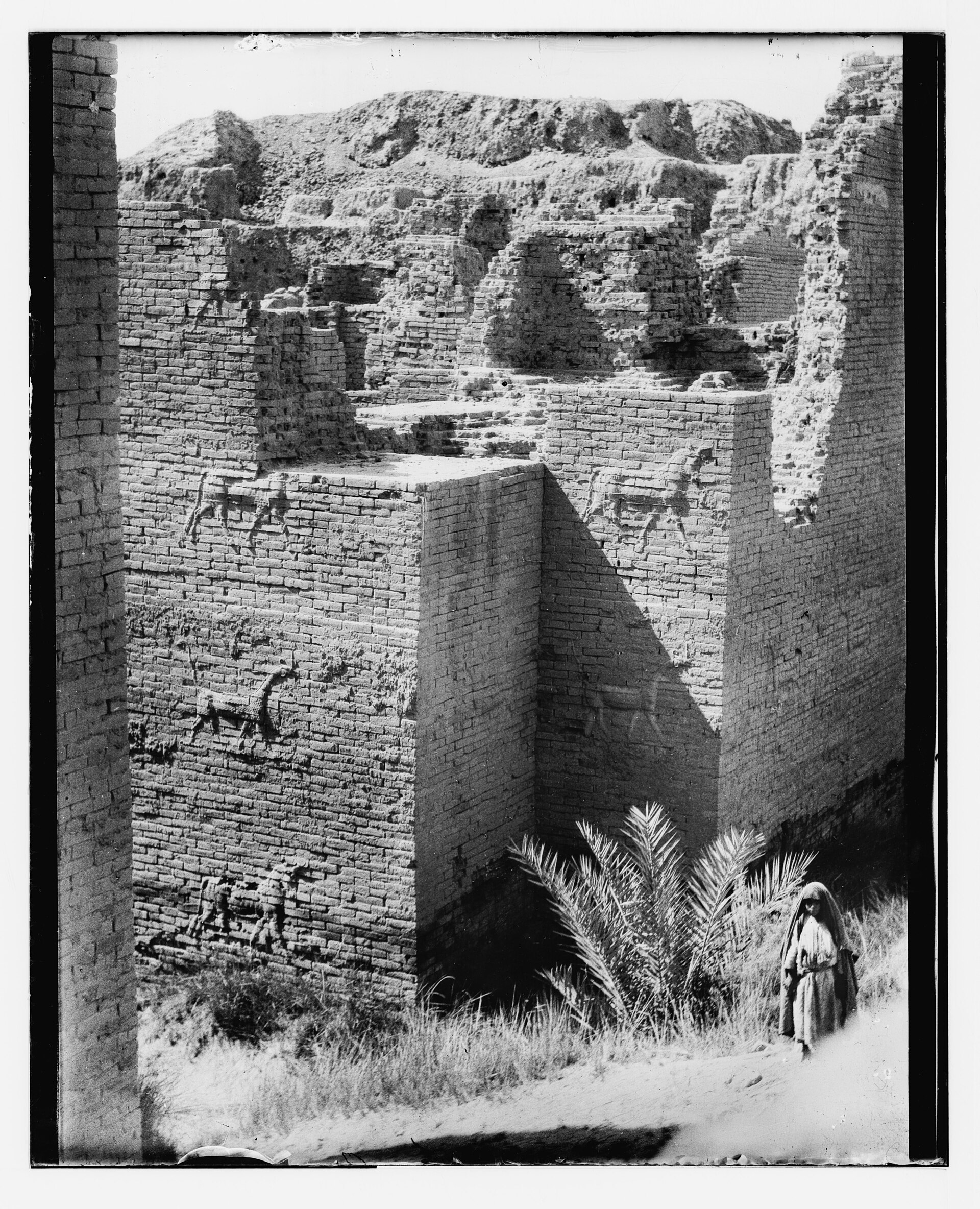
Babylon rose to prominence in the eighteenth century BCE when, through political alliances and military campaigns, Hammurabi was able to unite a large state under his rule. The city that gave its name to that state had previously held little importance; its transformation into a capital was the work of the king's campaigns and the alliances that accompanied them.
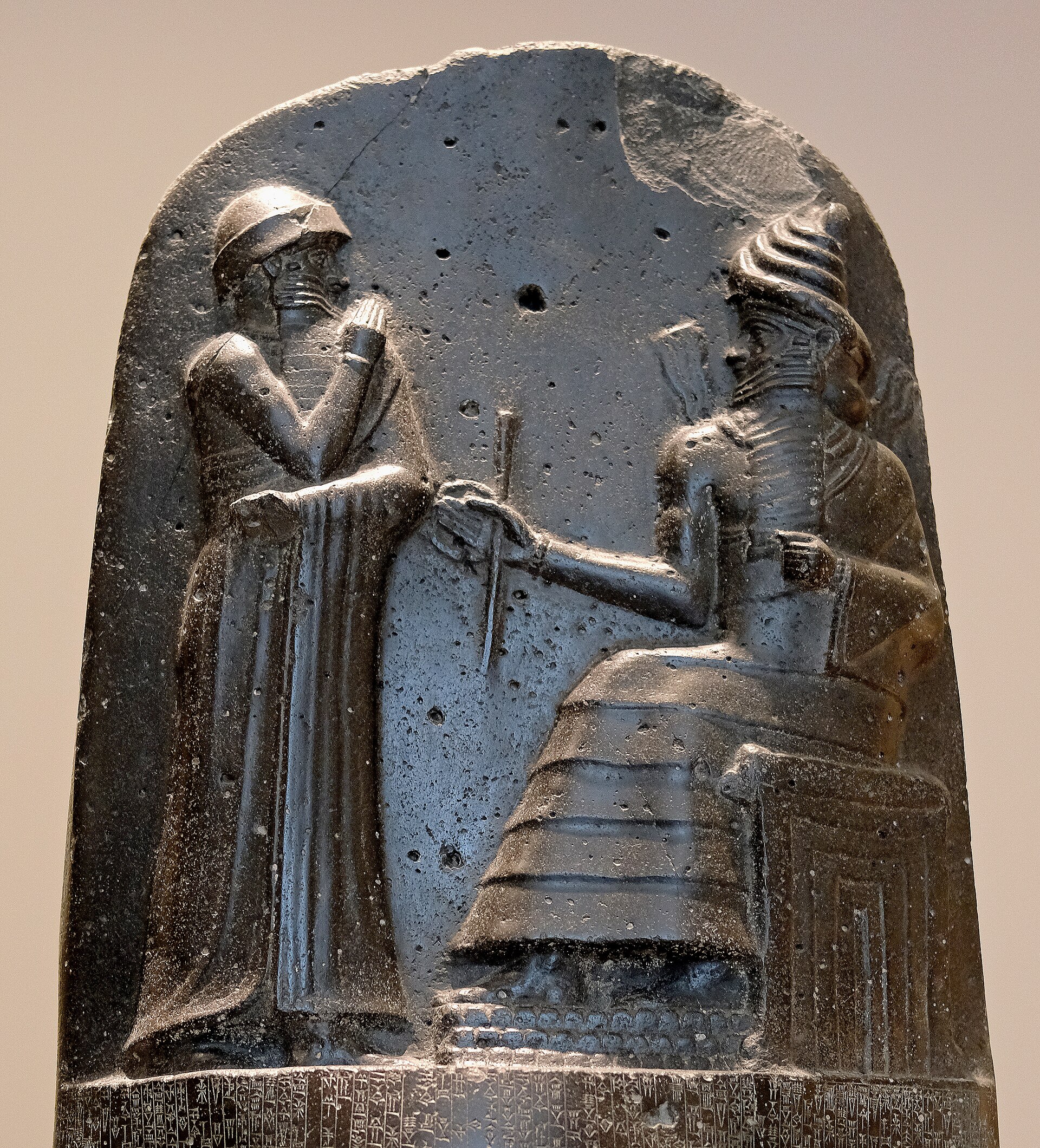
Although Shamash appears at the top of the monument, the prologue of the text attests to the new importance of the god Marduk, who was tied to Babylon as its chief deity for the rest of the city's history.
3. The Code of Hammurabi
The Code of Hammurabi is a collection of 282 rules that established standards for commercial interactions and set fines and punishments to meet the requirements of justice. Hammurabi allowed justice to prevail in the land by collecting together 282 laws dealing with commercial, family and property matters, preserved on a stele showing him receiving the rod and ring from the sun god Shamash. The text engraved on the stela is not a legal code in the modern sense of the term but a sweeping collection of jurisprudence, or case law, and scholars believe the laws on the stele were not so much written by the king as listed from judgments that had already been meted out.
The code contemplates the whole population as falling into three classes: the amelu, the muskinu and the ardu. The ardu was a slave, his master's chattel, and formed a very numerous class, though he could acquire property and even hold other slaves. Despite a few primitive survivals such as trial by ordeal and the lex talionis the code was advanced far beyond tribal custom and recognized no blood feud, private retribution, or marriage by capture.
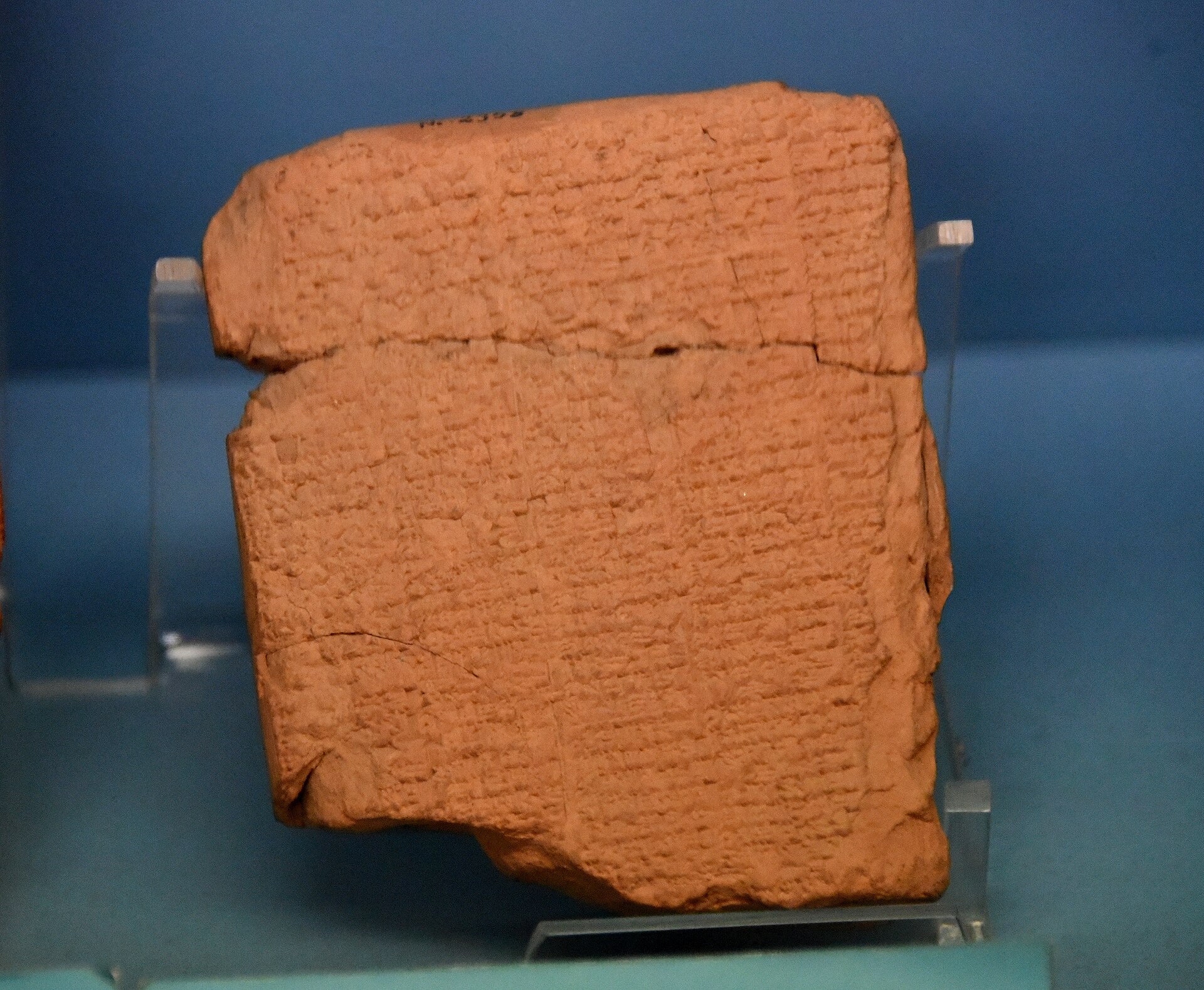
Hammurabi's Code exemplifies the law of retributive justice known as Lex Talionis, defined by the concept of an eye for an eye and a tooth for a tooth. Law 196 declares that if a man puts out the eye of another man his own eye shall be put out, the basis for what is known today as lex talionis, or the law of retaliation; law 197 provides that if he break another man's bone, his bone shall be broken. Yet this law is far from a call for vengeance and stipulates that a punishment must be proportional to the damages suffered.
The judges are strictly supervised and appeal is allowed, the whole land is covered with feudal holdings, and there is a regular postal system.
4. Provisions and Procedure
The provisions of Hammurabi's code address the physician's work in precise terms: a fee of ten shekels in money is fixed for the practitioner who makes a large incision with an operating knife and cures it, or who opens a tumor over the eye and saves the eye. Where a man wishes to separate from a wife who has borne him no children, the code obliges him to give her the amount of her purchase money together with the dowry she brought from her father's house.
5. Prologue and Epilogue
The code opens with a statement of divine commission: in the prologue Hammurabi says that the gods Anu and Bel called him to bring about the rule of righteousness in the land so that the strong should not harm the weak. The epilogue answers the prologue by turning the monument toward those it was meant to protect, inviting the oppressed person who has a case at law to come and stand before his image and read the inscription, which will explain his case.
The closing text also looks beyond the present reign, invoking Shamash to lengthen the reign of a succeeding ruler who considers the words of the inscription and does not annul the law or change the monument.
6. The Stele: Description and Inscription
The monument is a basalt stele standing over 2.25 metres tall, carved from a single four-ton slab of black volcanic stone. At its top sits a two-and-a-half-foot relief of Hammurabi receiving the law from the seated Shamash, while the remainder of the stone is covered with columns of chiseled cuneiform script.
Below the relief, about 4,130 lines of cuneiform text fill the stele, one fifth of them holding a prologue and epilogue in poetic style and the remaining four fifths the laws themselves. Near the bottom, seven columns of the laws, each with more than eighty lines, were polished and erased in antiquity. The stele was found in three large fragments and reconstructed.

7. Discovery, Publication and Display
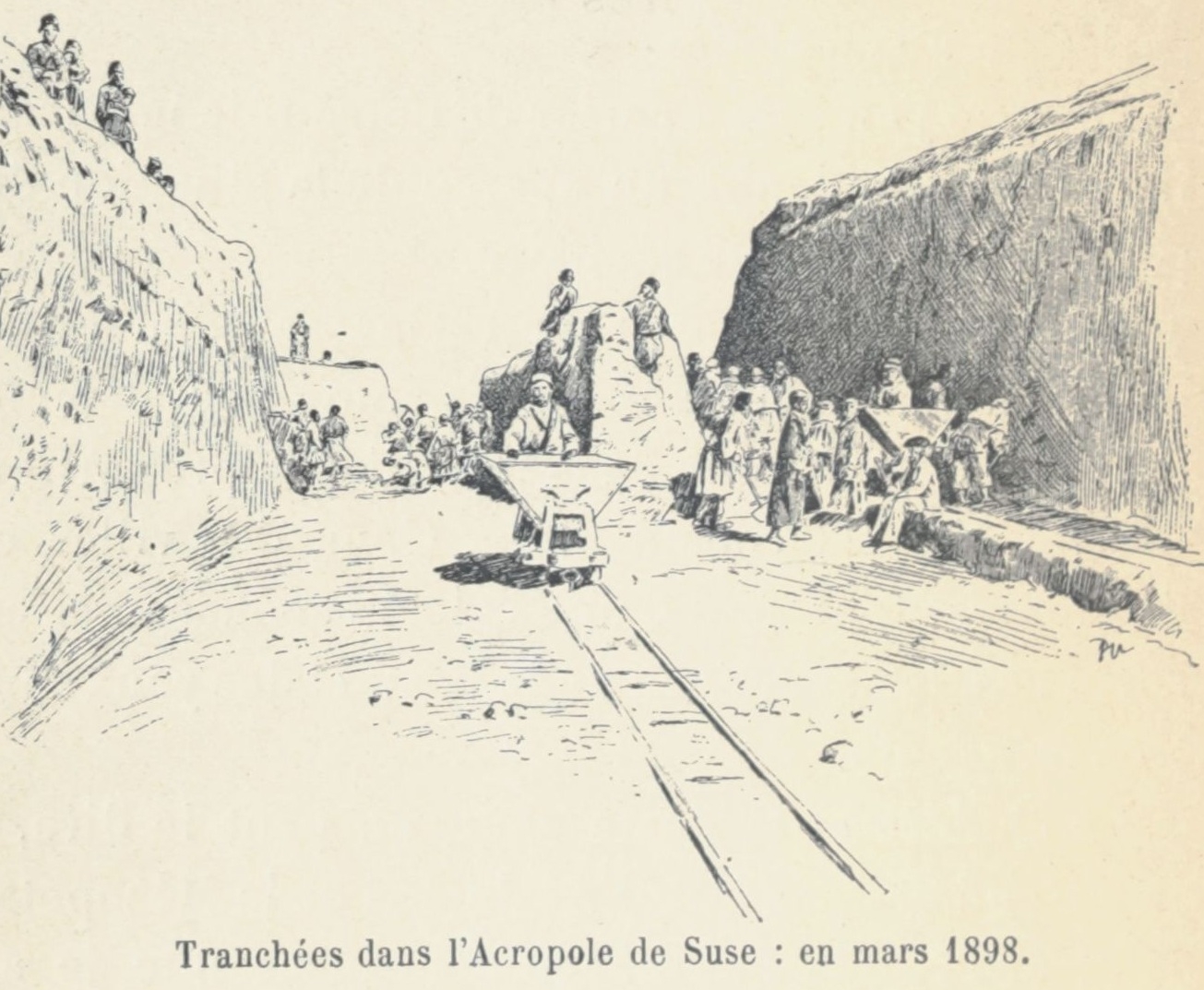
The stele of Hammurabi did not remain in Babylonia. Around 1150 BCE Shutruk Nakhunte, King of Elam, sacked the city of Sippar near Babylon and is thought to have taken the Code of Hammurabi along with the statue of the god Marduk back to Elam as spoils of war. It was at Susa that the monument was eventually uncovered, broken into three pieces, during an archaeological expedition led by Jacques de Morgan in 1901. The stele was shipped to the Louvre in Paris, and within a year it had been translated and widely publicized as the earliest known example of a written legal code.
In the Louvre's collections the stele carries the principal inventory number Sb 8, with AS 6064 and PEZARD ET POTTIER 8 as further numbers. Its arrival in Paris did not close the story of early law: three earlier law collections were rediscovered afterwards, among them the Code of Lipit-Ishtar in 1947 and the Code of Ur-Nammu in 1952, both shorter than Hammurabi's.
8. Legacy and Influence
The Code was studied and recopied for fifteen hundred years or more, and much of it remained in force through the Persian, Greek and Parthian conquests, surviving to influence Syro-Roman and later Mahommedan law in Mesopotamia. Its influence is notable in later law codes such as the Middle Assyrian Laws, the Neo-Babylonian Laws and the Mosaic Law of the Bible, which follow its model of an objective, universal directive on how to treat others.
Because of the many building projects and canals he ordered constructed throughout the region, Hammurabi was popularly titled bani matim, builder of the land.
9. Key Dates
-
1792–1750 B.C.E.Law Code Stele of King HammurabiThe Babylonian stele of basalt is dated to this span.14Law Code Stele of King Hammurabi (detail) · Smarthistory ↗
-
1902Editio princepsFather Jean-Vincent Scheil published the editio princeps of the Code of Hammurabi.1Code of Hammurabi · Wikipedia ↗
-
1947Code of Lipit-Ishtar rediscoveredOne of three earlier law collections rediscovered afterwards; shorter than Hammurabi's.1
-
1952Code of Ur-Nammu rediscoveredAnother of the three earlier collections, also shorter than Hammurabi's.1
10. Timeline: from Hammurabi's accession to the stele in the Louvre
- about 1792 BCEHammurabi succeeds Sin-muballit at BabylonHammurabi succeeds his father on the throne of Babylon while still young, having probably already been entrusted with official duties in the administration of the realm.
- 1787 BCEConquest of Uruk and IsinContinuing a policy begun by his great-grandfather and father, Hammurabi conquers the cities Uruk (Erech) and Isin, held by Rim-Sin, and clashes with Rim-Sin again the year after.
- 1763 BCEConquest of LarsaHammurabi takes the initiative in moving against his chief rival Rim-Sin of Larsa; the final siege of Rim-Sin's last stronghold lasts several months.
- 1761 BCEConquest of MariHammurabi turns against his longtime ally Zimrilim, king of Mari, 250 miles (400 km) upstream from Babylon on the Euphrates; his motives remain enigmatic.
- 1757 — 1755 BCEDestruction of EshnunnaHammurabi directs his armies eastward for a third time and destroys Eshnunna, removing a buffer zone between Babylonia proper and the peoples of the east.
- c. 1750 BCE (end of the reign)The laws are compiled near the end of the reignThe Code is compiled near the end of Hammurabi's reign, a dating deduced partly from the list of his achievements in its prologue.
- c. 1750 BCEDeath of HammurabiBy this time he was a sick man, and he died about 1750 BCE, with the burden of government already being carried by his son Samsuiluna.
- circa 1595 B.C.End of Hammurabi's empireThe empire declines under succeeding kings and is brought to an end in a raid by the Hittites from Anatolia circa 1595 B.C.
- around 1150 BCEThe stele is carried away to ElamShutruk Nakhunte, King of Elam, sacks the city of Sippar near Babylon and is thought to have taken the Code of Hammurabi along with the statue of the god Marduk back to Elam as spoils of war.
- 1897 — 1898Excavation of the Susa acropolis beginsFrench excavators open the Susa acropolis, the site where the stele of the Code of Hammurabi would later be found.
- December 1901 — January 1902Discovery of the stele at SusaThe stele's fragments are found on the tell of the Susa acropolis between December 1901 and January 1902.
- 1902Publication of the editio princepsFather Jean-Vincent Scheil publishes the editio princeps of the Code in the fourth volume of the Reports of the Delegation to Persia.
- 1902The stele is shipped to the LouvreThe stele is packed up and shipped to the Louvre in Paris, and within a year it had been translated and widely publicized as the earliest known example of a written legal code.
- 1902 — 1903Editions in other languagesEditions in other languages follow the French editio princeps: German by Hugo Winckler in 1902, English by Claude Johns in 1903, and Italian by Pietro Bonfante, also in 1903.
- 1904Harper's English edition published in ChicagoRobert Francis Harper's edition, The Code of Hammurabi, King of Babylon about 2250 B.C., is published in Chicago.
- 1904The stele goes on display at the LouvreThe stele has been on display at the Louvre since 1904, where it is one of the key pieces in the Department of Near Eastern Antiquities.
11. Frequently asked questions
How did the stele end up in Elam rather than in Babylon?
It was brought to Susa as a spoil of war by the Elamite king Shutruk-Nahhunte, who reigned around 1185 — 1160 BC.7The Code of Hammurabi · Musée du Louvre ↗ The upper part of the monument was thus taken from Babylon to Susa and excavated in what is now Iran.17Paris, Louvre (Near Eastern collections) · Livius.org ↗
What does the relief at the top of the stela show?
Were the laws applied equally to everyone?
How was an accused person sometimes judged?
An accused person was allowed to cast himself into the Euphrates, and if the current bore him to the shore alive he was declared innocent while if he drowned he was guilty.12The Code of Hammurabi (translation) · Internet History Sourcebooks Project, Fordham University ↗
What happened to a judge who decided a case wrongly?
Under the code a judge who reaches a wrong decision through his own fault must pay twelve times the fine he set and is publicly removed from the judge's bench forever.13The Code of Hammurabi (Avalon Project) · Yale Law School ↗
What building liability did the code impose?
Even if a man builds a house badly and it falls and kills the owner the builder is to be slain, and if the owner's son was killed then the builder's son is slain.12
References (17)
- 1Code of Hammurabi — Wikipedia Web↩View source
- 2Hammurabi | Biography, Code, Importance, & Facts — Encyclopaedia Britannica WebView source
- 3The Isin-Larsa and Old Babylonian Periods (2004-1595 B.C.) — The Metropolitan Museum of Art 2004 WebView source
- 4Mesopotamia, 2000-1000 B.C. (chronology) — The Metropolitan Museum of Art 2000 WebView source
- 5Babylon (Heilbrunn Timeline of Art History) — The Metropolitan Museum of Art WebView source
- 6Code of Hammurabi: Babylon, Laws & Legacy — HISTORY Web↩View source
- 7The Code of Hammurabi — Musée du Louvre Web↩View source
- 8Law Code Stele of King Hammurabi — Smarthistory WebView source
- 9Babylonian Law: The Code of Hammurabi (introduction) — Yale Law School WebView source
- 10Code of Hammurabi | Summary & History — Encyclopaedia Britannica WebView source
- 11Code of Hammurabi: The Most Influential Law Code of the Ancient World — World History Encyclopedia WebView source
- 12The Code of Hammurabi (translation) — Internet History Sourcebooks Project, Fordham University Web↩View source
- 13The Code of Hammurabi (Avalon Project) — Yale Law School Web↩View source
- 14Law Code Stele of King Hammurabi (detail) — Smarthistory Web↩View source
- 15Code de Hammurabi (Sb 8), Louvre Collections — Musée du Louvre WebView source
- 16Hammurabi: Conqueror, King, and Law-Giver — World History Encyclopedia WebView source
- 17Paris, Louvre (Near Eastern collections) — Livius.org Web↩View source