Spice Trade
The long history of the spice trade, from the monsoon crossings of the ancient Indian Ocean and the caravans of Arabia to the Portuguese sea route, the Dutch monopoly in the Moluccas, and the plantations and smuggling that finally broke it.
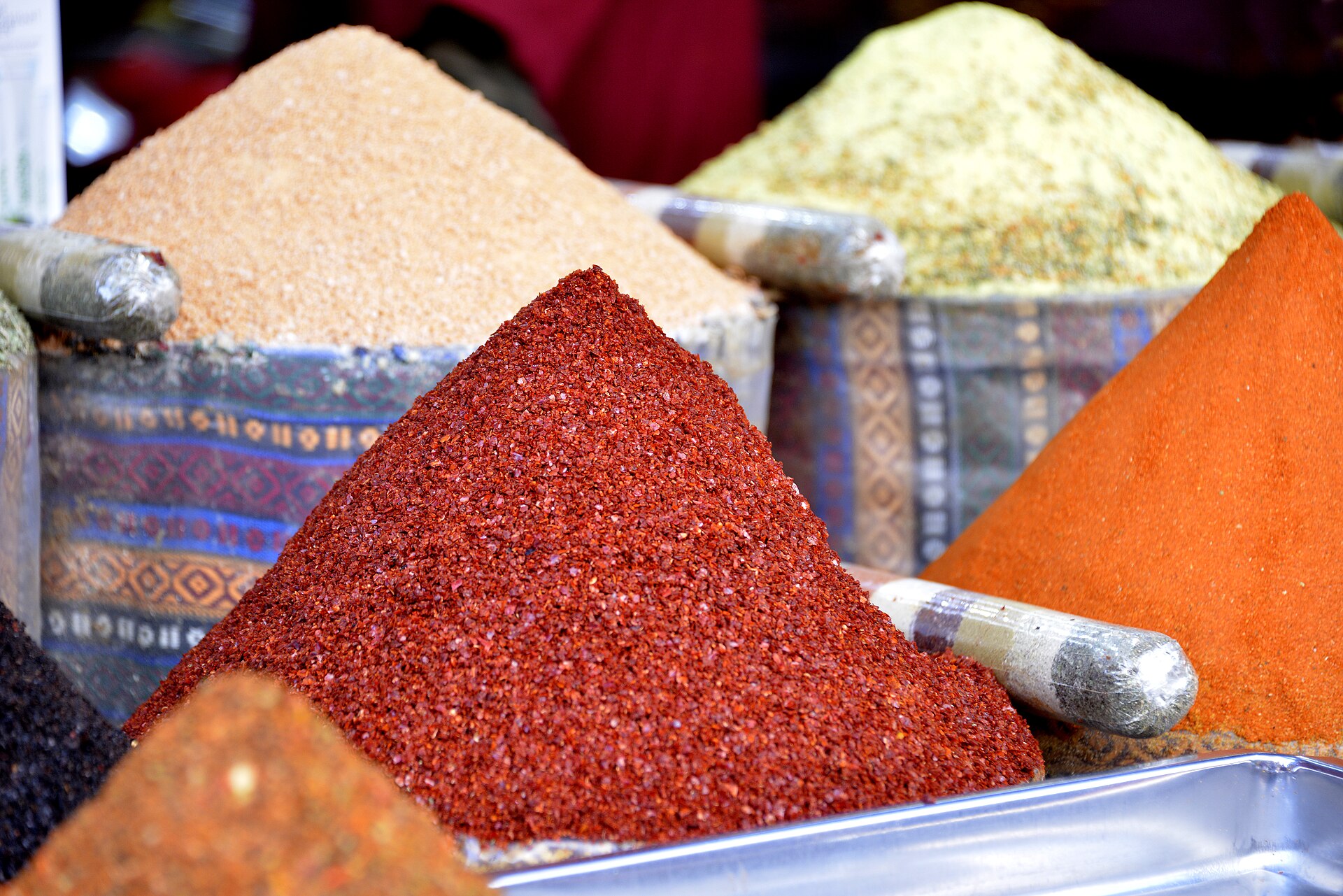
The spice trade moved pepper from the Malabar Coast, cinnamon from Ceylon and cloves, nutmeg and mace from a handful of tiny Moluccan islands to consumers across Asia and Europe. Arab, Persian, Gujarati and Indian merchants carried the goods across the Indian Ocean and up the Red Sea and Persian Gulf, while Venice and Genoa grew rich on the Levantine end of the routes. After Vasco da Gama reached Calicut in 1498, Portugal tried to monopolise the sea lanes with cartazes and convoys, and the Dutch East India Company then took the Spice Islands themselves, enforcing a nutmeg and clove monopoly by conquest and extirpation. Smuggled seedlings, transplanted plantations and the rise of tea, coffee and sugar turned spices into an ordinary commodity, and the trade's monopoly era ended with the VOC's dissolution in 1799.
In this article
- 1Overview
- 2Origins and the Ancient Routes
- 3The Periplus and the Malabar Trade
- 4Pepper, Prices and the Middle East Routes
- 5The Spice Islands and the First Sea Route
- 6Portuguese Monopoly and Its Limits
- 7The Dutch East India Company
- 8Conquest, Monopoly and the Banda Islands
- 9Rival Companies and the Breaking of Monopolies
- 10Spices in the European Economy and Kitchen
- 11Legacy: The Straits of Malacca
- 12Timeline of Key Dates
- 13Timeline: from the Periplus to the Zanzibar clove plantations
- 14Frequently asked questions
- 15Knowledge graph
Overview
The spice trade is the cultivation, preparation, transport and merchandising of spices and herbs — an enterprise of ancient origins and great cultural and economic significance. Spices were obtained principally from South Asia, while China supplied West Asia and the Mediterranean with silk. Such goods moved over vast distances by pack animal or by sea along the Silk and Spice Routes, described as the main arteries of contact between the ancient empires.
1. Origins and the Ancient Routes
By the beginning of the first century CE, merchants and travellers could in theory cross the ancient world from Britain and Spain to China and Japan. Southern Arabia had long served as a trading centre for frankincense and myrrh, and Arab traders deliberately concealed the true sources of the spices they sold.
Frankincense and myrrh could only be obtained from trees growing in southern Arabia, Ethiopia and Somalia, and Arab merchants carried them to Roman markets by camel caravan. The Incense Route ran from Shabwah in Hadhramaut to Gaza on the Mediterranean, about 100 miles inland from the Red Sea coast. South Arabian merchants used the Incense Route to move spices, gold, ivory, pearls and textiles that had arrived at their ports from Africa, India and the Far East.
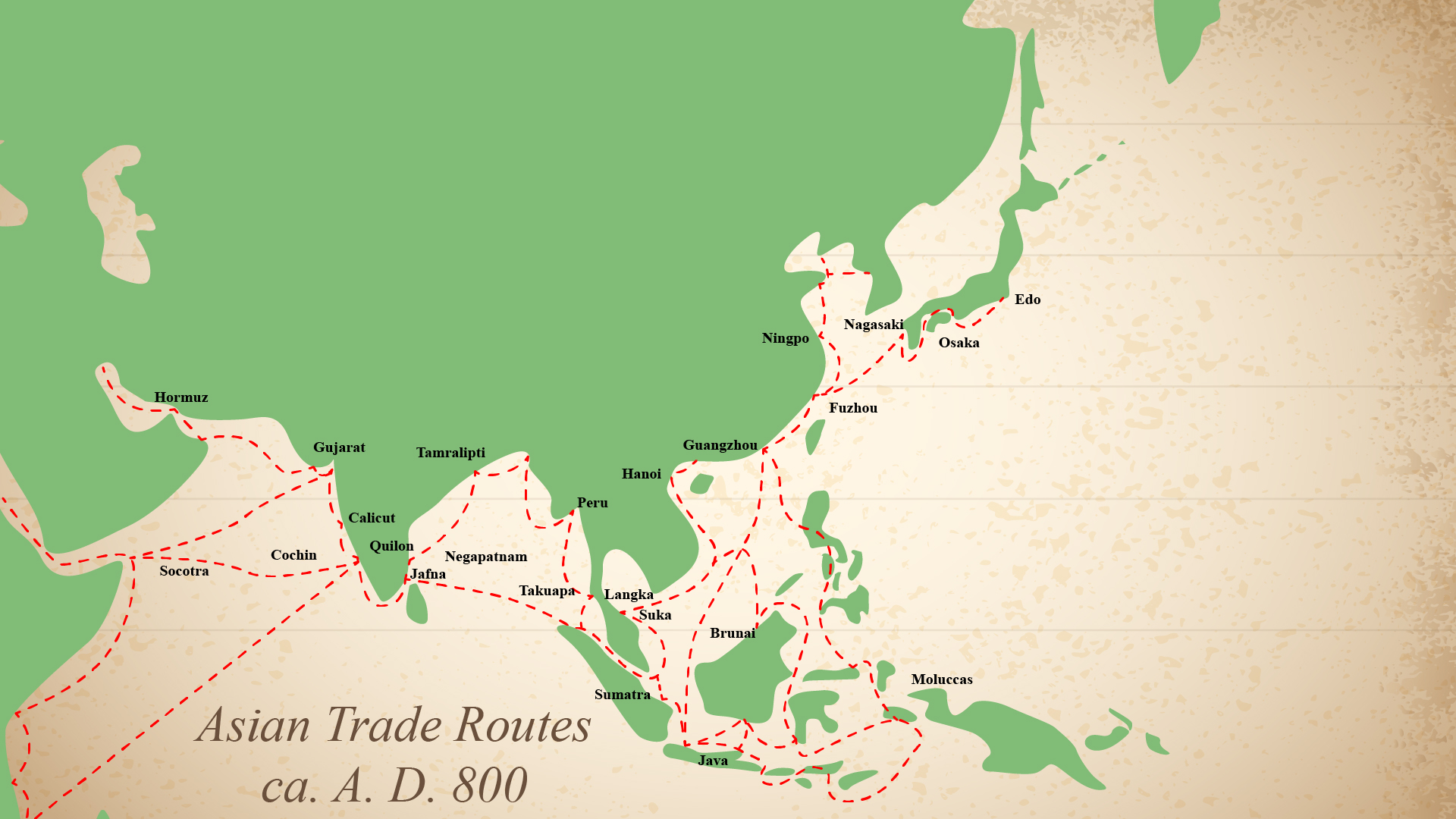
The Romans began sending voyages from Egypt to India, and under their rule Alexandria became the leading emporium for Indian spices reaching Greece and the Roman Empire.
2. The Periplus and the Malabar Trade
The Periplus of the Erythraean Sea is an anonymous merchant's handbook of the mid-first century CE that maps sea routes from Egypt down East Africa and on to the west coast of India. Hippalus is named in it as the pilot who first worked out how to lay a course straight across the ocean, and the south-west wind itself took his name. It records the spice trade and Muziris, described as a river port that received ships carrying cargoes from Arabia and from Greek traders. Only one district near the Malabar market towns, called Cottonara, produced pepper in quantity, and the same harbours shipped pearls, ivory, silk cloth, diamonds and sapphires.
Merchants dispatched large ships to the Malabar market towns for a single practical reason: the great bulk of pepper and malabathrum that could be obtained there. At those ports the first import listed was coin, followed by coral, copper, tin, lead and a little wine.
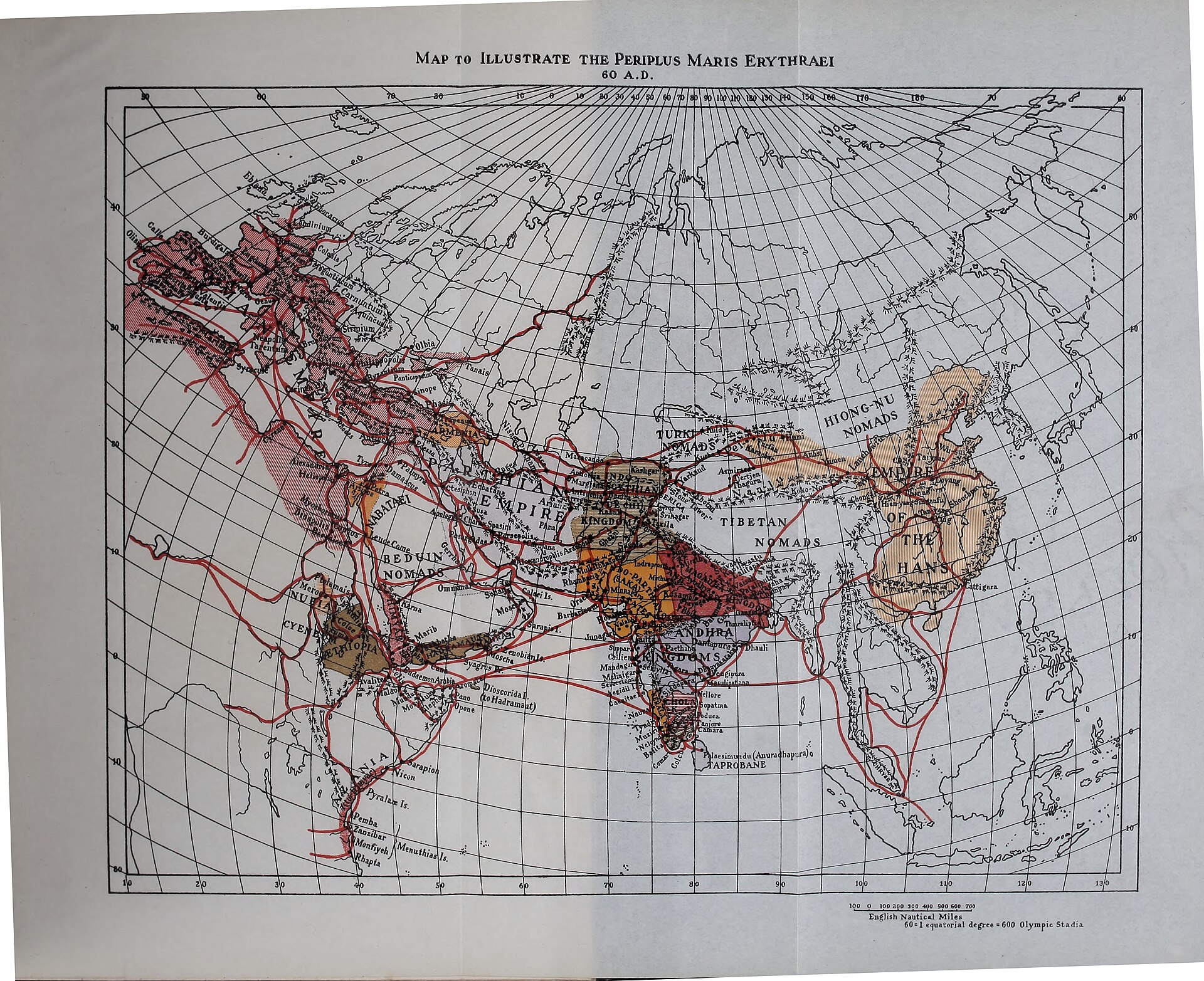
The scale of the pepper traffic in Malabar struck outside observers centuries later. Ibn Battuta, travelling in the region in the fourteenth century, was astonished to see pepper measured out by the bushel like millet in his own country.
3. Pepper, Prices and the Middle East Routes
Pepper was the most profitable commodity of the Indian Ocean trade, and Arab Muslim merchants came to dominate it. Pliny the Elder was puzzled that pepper commanded a high price even though its berry was pleasant neither to the tongue nor to the eye. Pepper also served as medicine: chemists claimed it treated coughs and asthma, healed superficial wounds and even acted against some poisons. European kitchens used pepper, ginger, cloves, nutmeg, mace, cinnamon and saffron, and even poorer households bought pepper when they could get it.
By the Middle Ages Europeans knew where spices came from, yet no ruler proved capable of breaking the Venetian hold on the trade routes. Venice and Genoa both prospered from Levantine trade, and after Venice defeated Genoa in the naval war of Chioggia it held a monopoly of Middle East trade for a century.
The Middle East land and sea routes were never entirely replaced by the Cape route and revived in the second half of the sixteenth century as European demand grew.
4. The Spice Islands and the First Sea Route
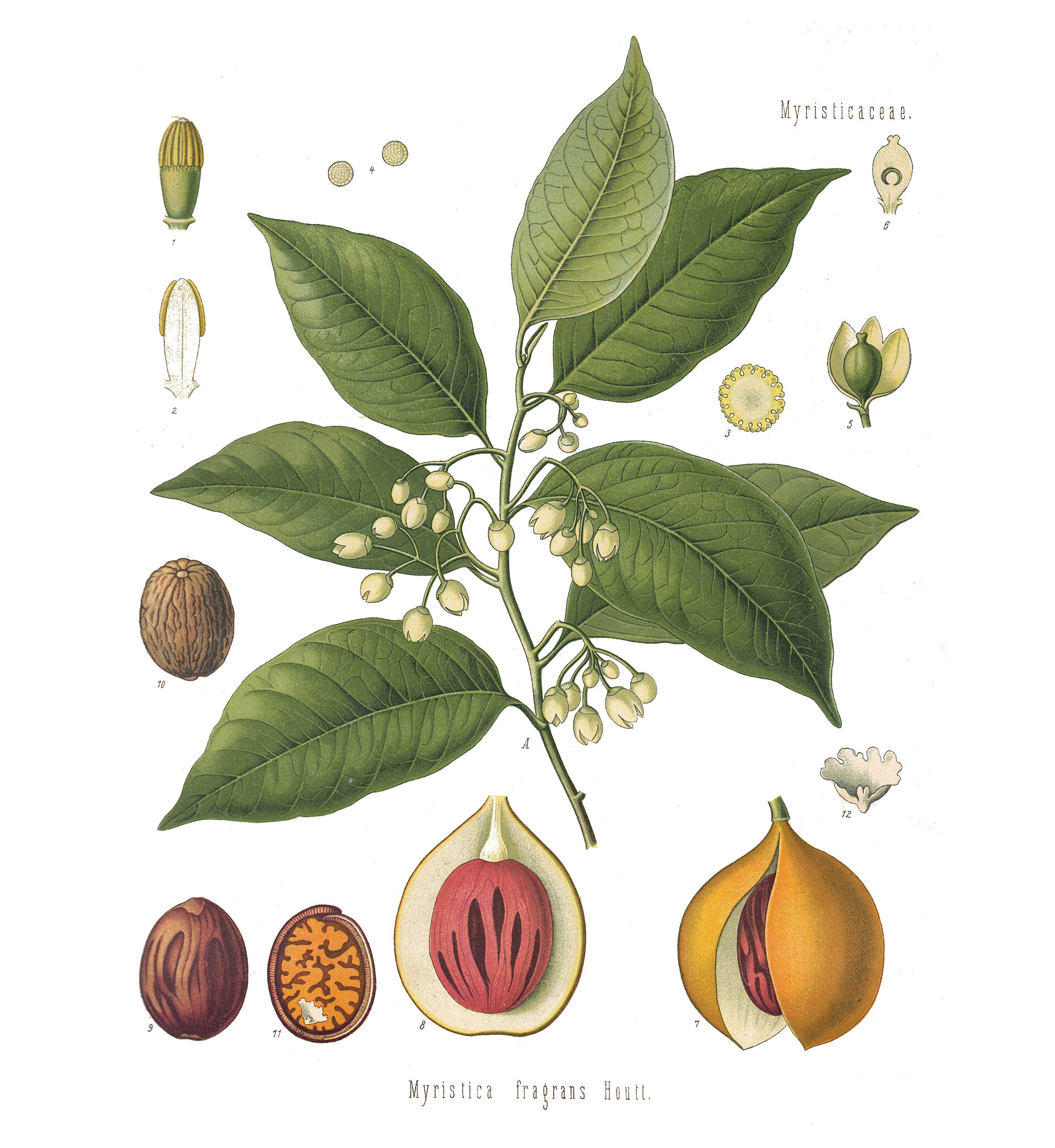
For more than a thousand years the arrival of clove, nutmeg and mace in world trade depended on Indonesian sailors who carried them westward. The Moluccas comprise more than a thousand islands, but only a few produced cloves and nutmeg, while Java and Sumatra supplied pepper. The merchants, perhaps Persian or Arab traders, who brought cloves to Europe around the second century had no idea where the spice came from, and that remained true until about the twelfth century.
Vasco da Gama's voyage of 1497 to 1499 was the first direct sea passage from Portugal to India and let Europeans cut into the immensely lucrative eastern spice trade. At Malindi da Gama obtained a pilot and a chart for the crossing to India; the fleet left Malindi on 24 April 1498 bound for India. Da Gama's ships loaded pepper, ginger, cloves and cinnamon at Calicut, though only a sample compared with later expeditions.
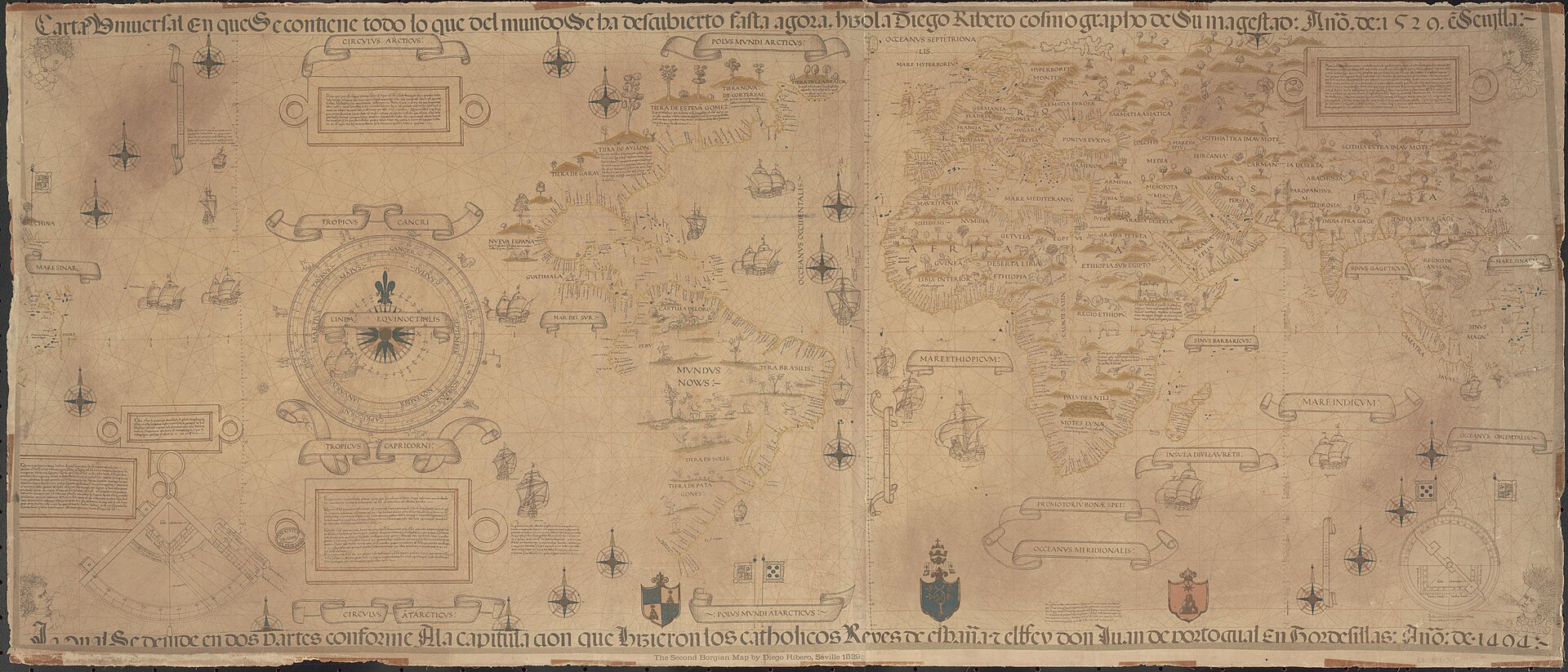
Pedro Alvares Cabral led a second expedition of thirteen ships and 1500 men in March 1500 which, sailing too far west, accidentally reached Brazil. The loss of the Levantine trade after the Portuguese found a sea route to India in 1498 was a severe blow to Alexandria and to the Mamluk state.
5. Portuguese Monopoly and Its Limits
Portugal's aim was direct maritime access to the spice trade, and pepper, ginger, cloves, nutmeg and cinnamon fetched high prices from England to China. Most spices from the Moluccas were shipped through Malacca, which controlled the strait between the Indian Ocean and the South China Sea, until Albuquerque's fleet took the city in 1511 and Portugal acquired sandalwood from Timor. The Portuguese used superior ships and cannon to take over the Indian Ocean trade network by force, enforcing a royal monopoly on the spice trade and selling permits to ships that wished to trade on the coast.
Once the Portuguese realised their monopoly could not be enforced everywhere, some local traders were permitted to trade spices in limited quantities, most commonly pepper. Trade went on regardless between other states, and the Portuguese eventually accepted that a strict monopoly was detrimental to the duties they collected.
The Estado da India was the administrative apparatus established in 1505 to govern the Portuguese empire and its trade network from Goa. Albuquerque established Portuguese Goa in 1510. The Portuguese reached the Banda Islands in 1512 and filled their hulls with cloves, nutmeg and mace. In 1530 Goa replaced Cochin as the capital of the Estado da India, with the viceroy of India residing there.
6. The Dutch East India Company
The Dutch government granted the VOC a trade monopoly in the waters between the Cape of Good Hope and the Straits of Magellan, with the right to conclude treaties, build forts and maintain armed forces. The VOC received a charter of twenty-one years giving it exclusive rights to trade in Asia and to buy nutmeg, mace and cloves, and it eventually held a monopoly on spices. The charter had 46 articles, and its Article 10 let members of the public buy shares.
The initial public offering of VOC shares in August 1602 drew 1,143 investors.
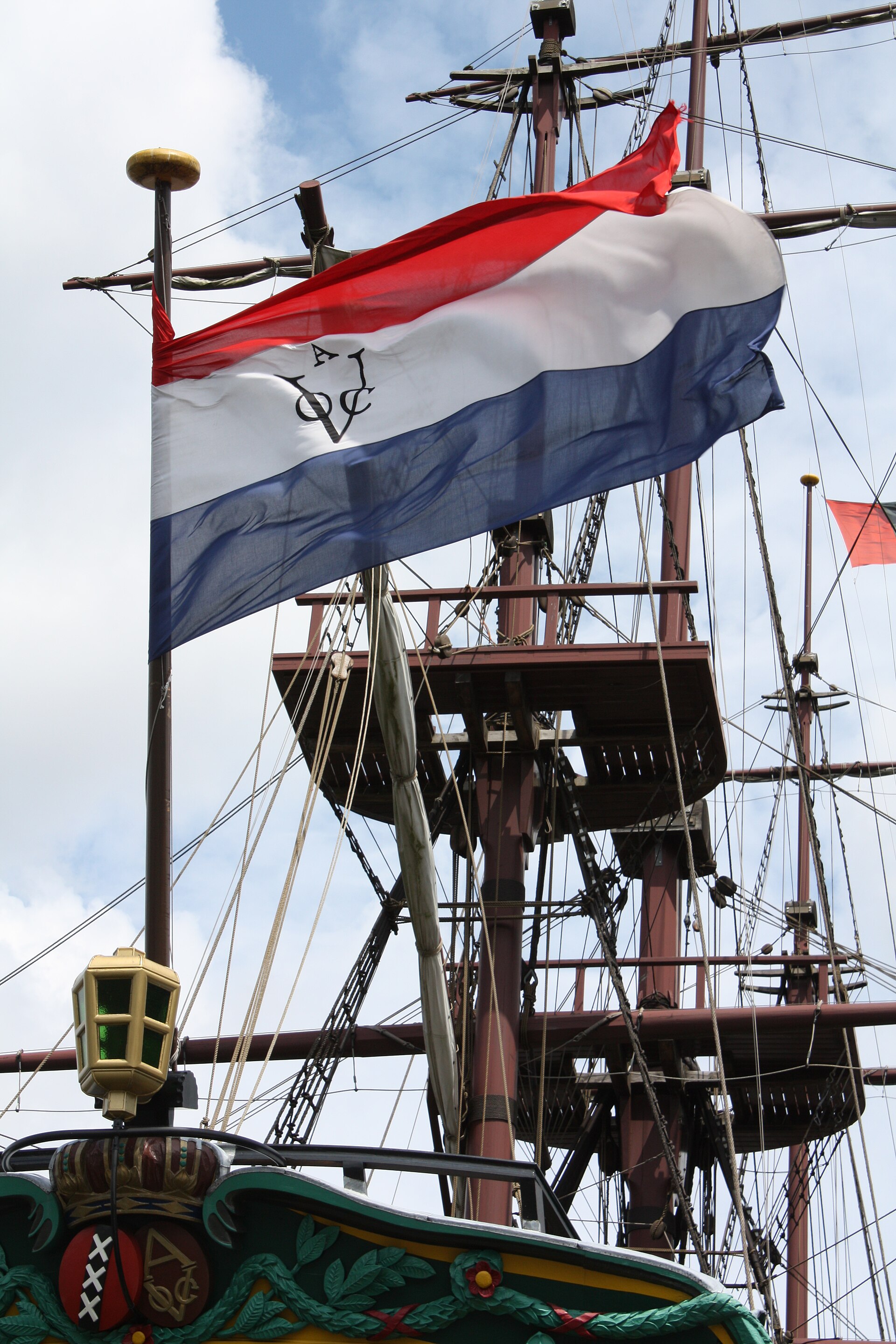
Dutch merchants had first sent Cornelis de Houtman to Portugal in 1592 to investigate Portuguese trade and gather information about the Spice Islands. In April 1595 the Compagnie van Verre sent four ships to the East Indies with orders to trade for spices. That first Dutch expedition returned with a disappointingly small cargo of pepper, nutmeg and mace, and the merchants only just broke even.
The Dutch arrived in Southeast Asia in 1596 and steadily took over Portuguese centres such as Malacca, Colombo and Cochin, although besieged Goa held out.
In 1762 ten VOC ships left the Netherlands with 2,653 people aboard, and 1,095 of them died on the passage to the Cape of Good Hope.
By the late eighteenth century the VOC was bankrupt, and the Dutch government formally dissolved it at the close of 1799 after nearly two centuries of trade.
7. Conquest, Monopoly and the Banda Islands
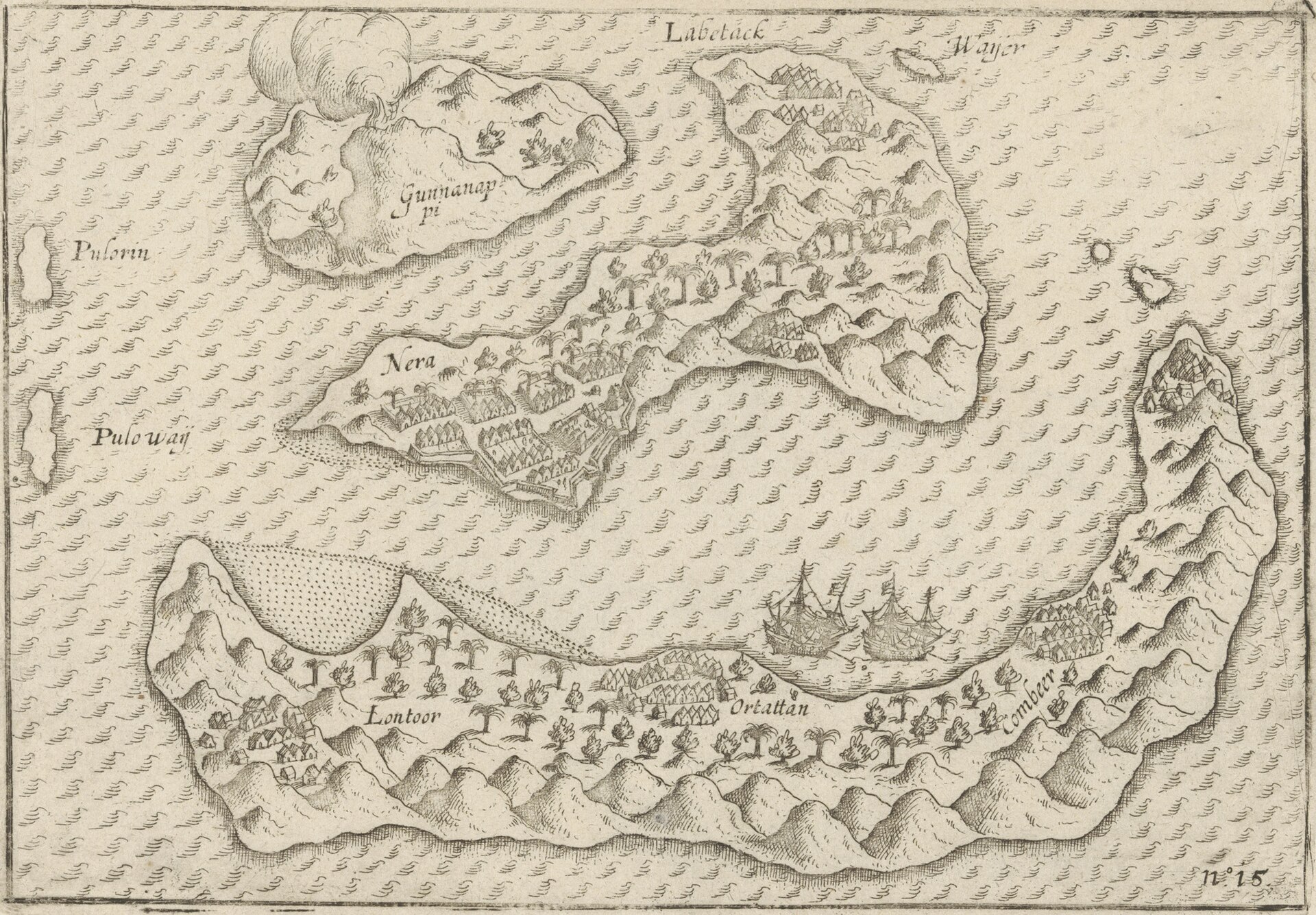
In January 1621 Coen launched a full-scale conquest of the Banda Islands, and the Dutch massacred thousands of inhabitants, replacing them with slaves from other islands. Under forceful governors-general such as Jan Pieterszoon Coen the company displaced the Portuguese in the East Indies, and in 1619 it renamed Jacatra as Batavia.
By the mid-seventeenth century the VOC had some 150 merchant ships, 50,000 employees, a private army of 10,000 soldiers and trading posts from the Persian Gulf to Japan.
In 1611 the VOC skipper Hendrik Brouwer tried a new route running east on the westerly winds south of latitude 35 degrees before turning north for Sunda Strait, and the company formally adopted it in August 1616 for its ships.
8. Rival Companies and the Breaking of Monopolies
The English East India Company was incorporated by royal charter on 31 December 1600 as a monopolistic trading body so that England could join the East Indian spice trade. The National Archives records that the royal charter was granted to the governor and company of merchants of London trading to the East Indies. A series of later charters gave the company exclusive rights to trade to the Indies, and for some 250 years it changed functions until its commercial role was largely replaced by the 1830s.
The East Indian trade had been a monopoly of Spain and Portugal until England's defeat of the Spanish Armada gave the English a chance to break it. The company settled into a trade in cotton and silk piece goods, indigo and saltpetre, with spices from South India. In 1813 its commercial monopoly was broken, and from 1834 it served merely as a managing agency for the British government of India; it ceased to exist as a legal entity in 1873.
On the French side, Pierre Poivre, the son of a wealthy silk merchant, reached the Orient in 1740 as a missionary and in 1748 proposed to the Compagnie des Indes Orientales that he collect spices in different parts of the world. In 1770 he broke the clove monopoly, and in 1812 cloves were transplanted to Zanzibar; he later became intendant of the Mascarene Islands.
9. Spices in the European Economy and Kitchen
On the traditional Middle East routes pepper that cost 1 or 2 grammes of silver at the point of production sold for 14 to 18 grammes in Venice and 20 to 30 in the consumer countries of Europe. The Portuguese mark-up was even steeper: a quintal of pepper bought for 6 cruzados was sold in Europe for at least 20 cruzados.
10. Legacy: The Straits of Malacca
The Straits of Malacca carried the spice trade for centuries, and Melaka and George Town are its most complete surviving historic trading towns: their government buildings, churches, squares and fortifications record a history running from a fifteenth-century Malay sultanate through the Portuguese and Dutch periods, and UNESCO describes them as exceptional examples of multicultural trading towns formed by the trade routes that linked Europe, the Middle East, India and China.
11. Timeline of Key Dates
-
1497–1499Vasco da Gama's first voyageThe first direct sea passage from Portugal to India, which let Europeans cut into the immensely lucrative eastern spice trade.19Vasco da Gama · World History Encyclopedia ↗
-
24 April 1498Fleet leaves MalindiThe fleet departed Malindi.19
-
18 May 1498Malabar coast reachedThe fleet reached the Malabar coast near Calicut, the direct route from Portugal to India having taken ten months.19
-
1611Brouwer route triedThe VOC skipper Hendrik Brouwer tried a new route running east on the westerly winds south of latitude 35 degrees before turning north for Sunda Strait.13VOC — United Dutch East India Company · Western Australian Museum ↗
-
August 1616Brouwer route formally adoptedThe company formally adopted the route for its ships.13
12. Timeline: from the Periplus to the Zanzibar clove plantations
- about 70 CEThe Periplus describes the spice routeAn anonymous merchant's guide written around 70 CE records the spice trade and the Indian port of Muziris, whose exact site is still debated.
- about the 2nd centuryCloves reach EuropePersian or Arab merchants introduced cloves to Europe, though neither they nor their customers knew where the spice grew.
- 10th centuryVenice and Genoa prosperBoth cities began to prosper through trade in the Levant, a rivalry that ended with Venice holding a monopoly of Middle East trade.
- 1453Fall of ConstantinopleThe Ottoman conquest of Constantinople closed one of the principal land routes by which spices reached Europe.
- 1488Dias rounds the CapeBartolomeu Dias sailed down the coast of West Africa and made the first voyage around the Cape of Good Hope.
- 18 May 1498Da Gama reaches CalicutAfter leaving Malindi the fleet crossed the Indian Ocean and arrived near Calicut on the Malabar coast, ten months out from Portugal.
- 1501First spices by the Cape routeA Portuguese expedition under Pedro Alvares Cabral brought the first cargo of spices from India to Europe by way of the Cape of Good Hope.
- 1511Malacca takenAlbuquerque's fleet took Malacca, the port that controlled the strait between the Indian Ocean and the South China Sea.
- 1529Treaty of ZaragozaSpain sold its rights to the Maluku Islands to Portugal for 350,000 ducats, ending the first Spanish claim to the Spice Islands.
- 31 December 1600English East India Company charteredA royal charter of 31 December 1600 created the company so that England could take part in the East Indian spice trade.
- 20 March 1602Dutch East India Company foundedThe States-General granted the VOC a 21-year charter with 6.4 million guilders of capital raised from public share issues.
- August 1616Brouwer route adoptedThe VOC formally adopted Hendrik Brouwer's route east on the westerly winds, which cut months off the voyage to Java.
- January 1621Banda Islands conqueredCoen's fleet took Lontor and the Dutch massacred thousands of islanders, securing the nutmeg and mace monopoly.
- 1770Poivre breaks the clove monopolyThe French finally broke the Dutch clove monopoly when Pierre Poivre smuggled seedlings out of the Spice Islands to Mauritius and Reunion.
- 31 December 1799The VOC is dissolvedBankrupt and in debt, the Dutch East India Company was formally dissolved by the Dutch government.
- 1812Cloves transplanted to ZanzibarHarmali bin Saleh transplanted cloves from Reunion to Zanzibar, where the plantations eventually took over the bulk of world production.
13. Frequently asked questions
Where did the spices themselves actually come from?
The Moluccas — cloves and nutmeg — and Java and Sumatra, which supplied pepper, were the archipelago's spice centres 13.
How did the Portuguese try to control shipping once they held the sea route?
Ships trading in Portuguese waters had to carry a Portuguese passport called a cartaz and were often obliged to sail in protected convoys known as cafilas 7Portuguese Empire · World History Encyclopedia ↗. Any private trader caught with a cargo of spices without a Portuguese licence or cartaz was arrested, and many Muslim traders were simply executed 8Estado da India · World History Encyclopedia ↗.
How much did the Dutch company's monopoly actually earn?
What did the Dutch do to keep clove production under control?
In 1652 the leaders of Tidore and Ternate agreed to a spice eradication programme under which all clove trees not owned by the VOC were removed for an annual payment 9European Discovery & Conquest of the Spice Islands · World History Encyclopedia ↗.
How did the Spanish and Portuguese divide their claims in the East?
How did the French eventually get nutmeg of their own?
Landing at the island of Timor, Pierre Poivre smuggled more than 3,000 nutmeg plants and other fruit trees and spices out to the French islands of Mauritius and Reunion 16Pierre Poivre · Encyclopaedia Britannica ↗. He had reached the Moluccas in the Dutch East Indies despite the deceptive maps the Dutch drafted to mislead foreign navigators 16.
References (19)
- 1Spice trade — Encyclopaedia Britannica WebView source
- 2Trade Routes between Europe and Asia during Antiquity — The Metropolitan Museum of Art, Heilbrunn Timeline of Art History WebView source
- 3Trade between Arabia and the Empires of Rome and Asia — The Metropolitan Museum of Art, Heilbrunn Timeline of Art History WebView source
- 4The Voyage around the Erythraean Sea (Periplus Maris Erythraei) — Silk Road Seattle, University of Washington WebView source
- 5Where the Pepper Grows — Saudi Aramco World (Aramco Services Company) WebView source
- 6The Spice Trade & the Age of Exploration — World History Encyclopedia 1777 WebView source
- 7Portuguese Empire — World History Encyclopedia Web↩View source
- 8Estado da India — World History Encyclopedia Web↩View source
- 9European Discovery & Conquest of the Spice Islands — World History Encyclopedia 1872 Web↩View source
- 10Dutch East India Company — Encyclopaedia Britannica WebView source
- 11Dutch East India Company — World History Encyclopedia Web↩View source
- 12Spices and Spying: How the Dutch Found Their Way to the East Indies — New Netherland Institute WebView source
- 13VOC — United Dutch East India Company — Western Australian Museum Web↩View source
- 14East India Company — Encyclopaedia Britannica WebView source
- 15East India Company (record creator description) — The National Archives (UK), Discovery WebView source
- 16Pierre Poivre — Encyclopaedia Britannica Web↩View source
- 17A Pepper acquiring Nutmeg: Pierre Poivre, The French Spice Quest and the Role of Mediators in Southeast Asia, 1740s to 1770s — Michigan Journal of History (University of Michigan Library) WebView source
- 18Melaka and George Town, Historic Cities of the Straits of Malacca — UNESCO World Heritage Centre WebView source
- 19Vasco da Gama — World History Encyclopedia Web↩View source