Sapphire
The story of sapphire, the gem variety of corundum: the mineralogy of aluminium oxide, the trace elements that colour it, the Kashmir and Ceylon sources that set the standard for blue, the padparadscha and fancy colours, silk and star stones, treatments and synthetics, and the famous gems in the world's museums.
Sapphire is the gem variety of corundum, aluminium oxide, and the hardest natural mineral after diamond. Trace elements colour it: iron and titanium together give blue, chromium gives ruby red and pink sapphire pink, and every colour of corundum except red is called sapphire. Fine blue sapphires have been mined for centuries in Sri Lanka, Myanmar and, briefly and famously, in the high Himalayas of Kashmir, whose velvety stones remain the trade's benchmark, while Madagascar, Tanzania, Australia, Montana and Nigeria are important modern sources. Inclusions of rutile silk create the six-ray star that makes star sapphires, heat treatment and lattice diffusion are standard or controversial market practices, and the Verneuil flame-fusion process has supplied synthetic corundum since 1902 for bearings, optics and windows as well as for jewellery.
In this article
- 1Overview
- 2Mineralogy and Physical Properties
- 3Colour Varieties and Phenomena
- 4Geological Formation and Occurrence
- 5Sources and Provenance
- 6History of Discovery and Mining
- 7Notable Sapphires
- 8Synthetic and Treated Sapphire
- 9Cultural Significance and Symbolism
- 10Timeline: from the first synthetic ruby to the museum stones
- 11Frequently asked questions
- 12Knowledge graph
Overview
Sapphire and ruby are gem varieties of the mineral corundum, which is aluminium oxide (Al2O3). On the Mohs scale it has a hardness of 9, making it harder than every natural mineral except diamond.
1. Mineralogy and Physical Properties
Corundum is so hard and resistant to weathering that it can also be found in sedimentary deposits and sedimentary rocks, and the mineral is known for a high density that is unusual for a transparent mineral. Sapphires contain traces of iron, titanium and nickel, which give them a range of colours that includes green, yellow, blue, orange, black and pink. Sapphire and ruby crystals can grow to large sizes, and crystals weighing more than a kilogram have been found. According to the Australian Museum, sapphire and ruby have a refractive index between 1.76 and 1.78 and a specific gravity between 3.90 and 4.00.
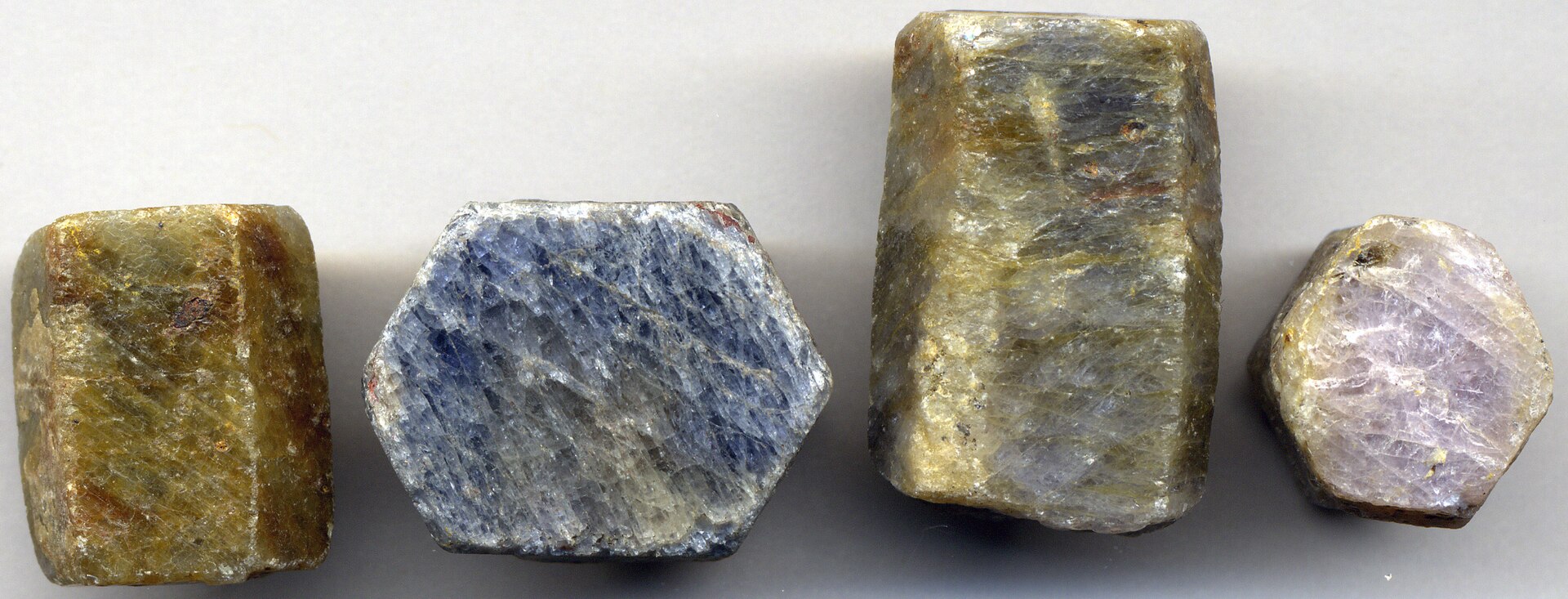
The most common crystal form of rough sapphire is a barrel-shaped or spindle-shaped hexagonal pyramid, and the shape of the rough crystal influences the shape and size of the finished stone. Pleochroism means that a gem shows different bodycolors when viewed from different crystal directions, and blue sapphires often show greenish blue and violetish blue pleochroism. The star effect in corundum is called asterism, and it is caused by reflections from tiny, needle-like inclusions that are oriented in several specific directions.
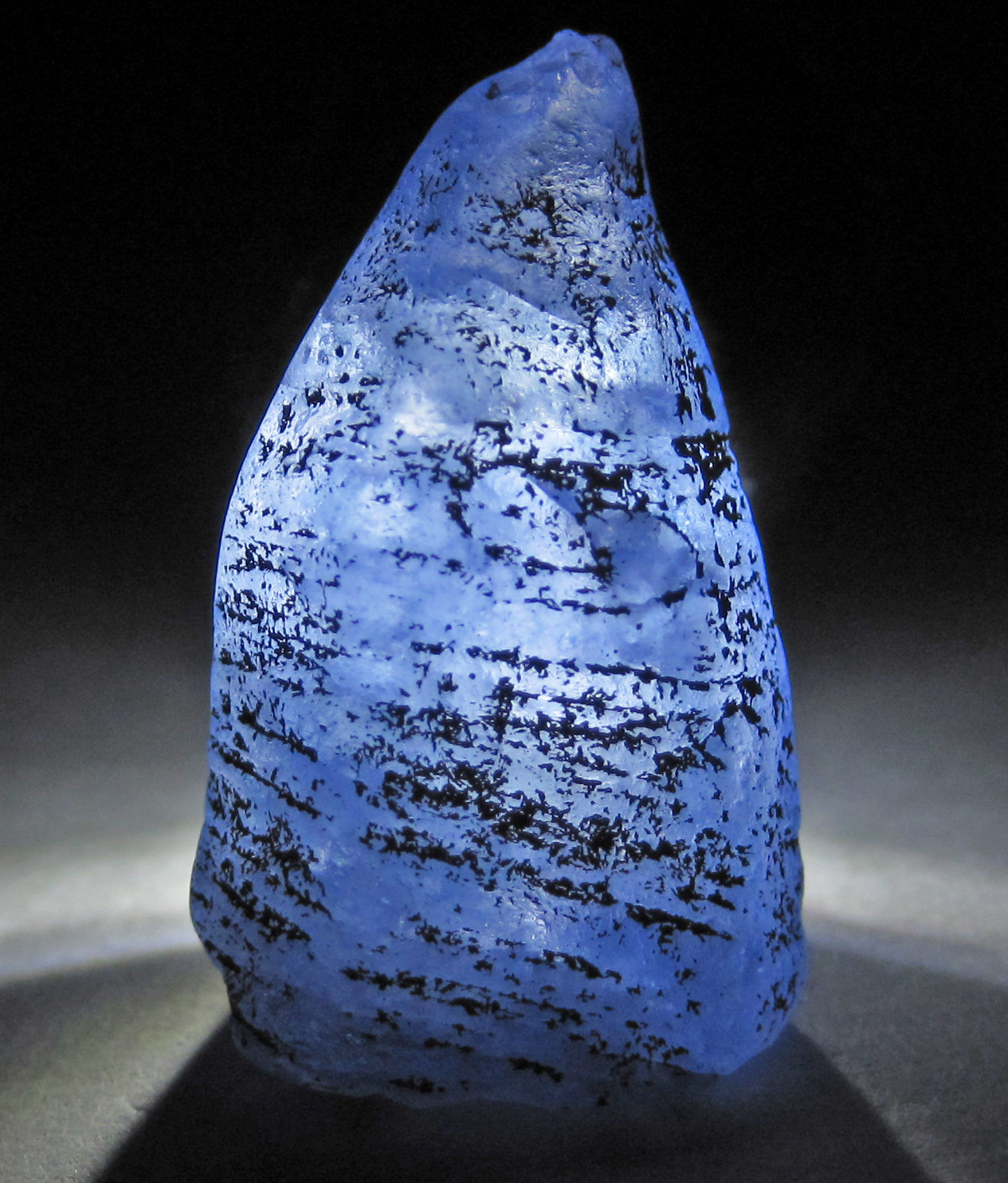
The inclusions most commonly encountered in sapphire are rutile silk and particle clouds, and in some stones the silk or clouds take on a distinct appearance that allows the origin to be accurately determined. The hallmark inclusion of Sri Lankan sapphires is long, slender rutile needles, and this silk is often relatively sparse and evenly distributed, with single needles sometimes traversing an entire stone. Many of the most valuable Kashmir sapphires contain tiny inclusions that scatter light and give the stone a velvety appearance without negatively affecting its transparency.
The Star of India has a milky grey-blue appearance caused by the presence of rutile inclusions, and it is these needle-like rutile inclusions, orientated in several specific directions, that result in stars with four, six or 12 rays. A platinum ring features a round cabochon star sapphire as its centerpiece, and this large Sri Lankan stone displays a rare 12-rayed star probably caused by two sets of mineral inclusions oriented at 30° from each other, while the very dark blue gem weighs 70.79 carats.
| Property | Value |
|---|---|
| Refractive index | 1.762 to 1.770 |
| Specific gravity | 4.00 |
2. Colour Varieties and Phenomena
Corundum that is red is called ruby, so sapphire is the name given to corundum in every other colour. Alongside blue sapphire and ruby, the corundum family includes the so-called fancy sapphires, which come in violet, green, yellow, orange, pink, purple and intermediate hues, as well as parti-coloured sapphires that show combinations of different colours. Preferred sapphires have strong to vivid colour saturation, regardless of which hue they show.
Some sapphires show the phenomenon called colour change, most often shifting from blue in daylight or fluorescent lighting to purple under incandescent light. Corundum can show a phenomenon called asterism, or the star effect, which usually appears as a six-ray star pattern across the curved surface of a cabochon-cut stone; it can be seen in ruby or any colour of sapphire. Star corundum must be cut as a cabochon to display asterism, and a finished stone's attractiveness depends on the star's orientation and on the cabochon's symmetry, proportions, and finish.
Padparadscha is a rare and valuable pinkish-orange sapphire whose name comes from the Sinhalese word for lotus blossom. The definition of padparadscha has always been debated, and GIA indicates on a Colored Stone Identification and Origin Report when a sapphire meets the criteria to be described as padparadscha.
3. Geological Formation and Occurrence
Sapphire occurs in settings whose character is determined by the deep geological history of the terrains that host them. Nearly nine-tenths of Sri Lanka, one of the classic sapphire sources, is underlain by high-grade metamorphic rocks of Precambrian age, and neodymium and rubidium-strontium dating places that basement between 1,000 and 3,000 million years old. Most of the island's gem deposits are sedimentary in nature, though some primary deposits are related to metamorphic and magmatic rock.
The Ratnapura and Balangoda gem deposits lie within the Highland Complex of Sri Lanka, which forms part of an extensive Precambrian granulite belt of the ancient Gondwana continent related to the Pan-African evolution. That belt also comprises the Kerala Khondalite Belt in southern India, Madagascar, Mozambique, and Tanzania, as well as the Lutz-Holm Bay area in Antarctica.
Almost all of Sri Lanka's gem sources are alluvial and contain rich concentrations of gem-bearing gravels known locally as illam. Gem recovery there takes three main forms: pit mining with narrow pits and galleries or small open-cast workings, mechanized mining in open pits using backhoes or bulldozers and sluices, and traditional river mining.
Occurrence can also be sharply limited in quantity. Each year only a limited amount of new Kashmir sapphire material is found, and just a few pieces reach the market. Many in the gem trade believe that the best available Kashmir sapphire material dates back to five productive years in the 1880s.
4. Sources and Provenance
Zircon inclusions in sapphires from the Ratnapura and Balangoda placer deposits were dated by laser ablation inductively coupled plasma mass spectrometry and yielded U-Pb ages of approximately 549 million years, suggesting that the zircon formed in a high-temperature event at the end of the Precambrian granulite facies metamorphism of the ancient Gondwana continent and that this event coincides with the crystallization of the sapphires.
Uranium-lead geochronology shows that zircons from Sri Lanka's high-grade metamorphic rocks lost significant lead (Pb) at 550 Ma, with new growth of zircon, monazite, rutile, and garnet between 539 and 608 Ma, the dates of the near-peak metamorphism that created the gemstones in that country.
5. History of Discovery and Mining
Sapphire recovery in Australia began with gold miners working the Cudgegong and Macquarie rivers in New South Wales in 1851, though commercial mining in the New England area of that state did not begin until 1919, and production in eastern Australia remained limited until mechanised mining was introduced in the late 1950s.
In the United States, the first sapphires were found in the gravels of the Missouri River in Lewis and Clark County, Montana, in 1865, with later discoveries made on Dry Cottonwood Creek and on Rock Creek and in Yogo Gulch.
Mining of Yogo Gulch sapphires began within a year of their discovery in 1895 and continued for 39 years, until rain damaged the mine so badly that it could not economically recover.
-
1851First Australian recoveryGold miners extract sapphires on the Cudgegong and Macquarie rivers in New South Wales.3Sapphire and Ruby — Australian mineral facts · Geoscience Australia (Australian Government) ↗
-
1865First United States findSapphires are found in the gravels of the Missouri River in Lewis and Clark County, Montana.13Gemstones · U.S. Geological Survey (USGS), Minerals Information Archives ↗
-
1895Yogo GulchDiscovery of Yogo Gulch sapphires; mining begins within a year and continues for 39 years.13
-
1907Blue Giant of the OrientA 466 ct blue sapphire, the Blue Giant of the Orient, was supposedly mined from the Ratnapura area of Sri Lanka.10Sri Lanka: Expedition to the Island of Jewels · GIA — Gems & Gemology, Fall 2014 ↗
-
1919New England commercial miningCommercial mining begins in the New England area of New South Wales.3
-
1926Blue Belle of AsiaA 400 ct sapphire said to have been found in a paddy field in the Ratnapura district, the Blue Belle of Asia, was described as having the desirable cornflower blue colour.10
-
late 1950sMechanised miningMechanised mining is introduced in eastern Australia.3
-
June 1998The Pride of Sri LankaAn 850 ct blue sapphire, the Pride of Sri Lanka, was found in Ratnapura.10
-
2012A primary deposit at KataragamaA primary sapphire deposit was found by accident during road construction near Kataragama in Sri Lanka, and the government auctioned surrounding plots of land for mining.10
6. Notable Sapphires
The Star of India, at 563.35 carats, was discovered more than 300 years ago in Sri Lanka, but formed about two billion years ago.7Famous Gemstones: The Star of India Sapphire · Gem-A, the Gemmological Association of Great Britain ↗ In October 1964 the Star of India was stolen from the American Museum of Natural History along with more than 20 other precious gemstones and diamonds, but within two days the perpetrators were arrested and one of the three men later led police to a bus locker in Miami where the Star of India and some of the other stolen stones were being stored.7
The Bismarck Sapphire necklace takes its name from its donor, Countess Mona von Bismarck, an American socialite who married German Count Eduard von Bismarck in the late 1930s.14Bismarck Sapphire Necklace · Smithsonian National Museum of Natural History — GeoGallery ↗ She gave the necklace to the Smithsonian in 1967 for display in the Gem Gallery at the National Museum of Natural History.14 The 98.57-carat Bismarck Sapphire is mounted in a platinum necklace designed by Cartier that is set with 312 baguette and round brilliant cut diamonds and accented with 8 square-cut sapphires.14
| Name | Weight | Description | Location |
|---|---|---|---|
| Star of India | 563.35 ct | World's largest gem-quality blue star sapphire | American Museum of Natural History |
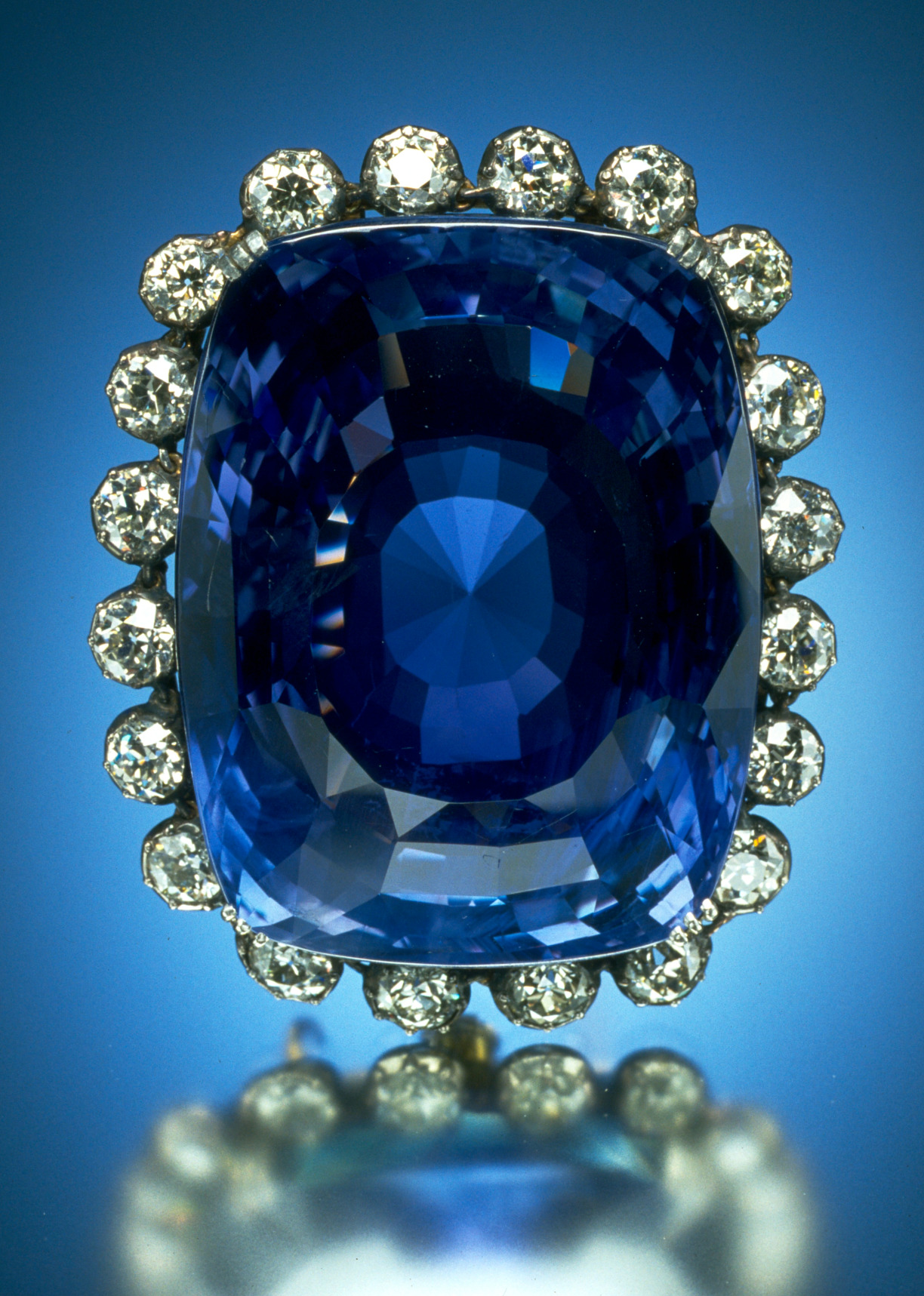
| Logan Sapphire | 423 ct | Cushion-cut Sri Lankan sapphire pendant | Smithsonian National Gem Collection |
| Bismarck Sapphire | 98.57 ct | Cartier necklace given to the Smithsonian in 1967 | Smithsonian |
| Star of Asia | 330 ct | National Museum of Natural History |
7. Synthetic and Treated Sapphire
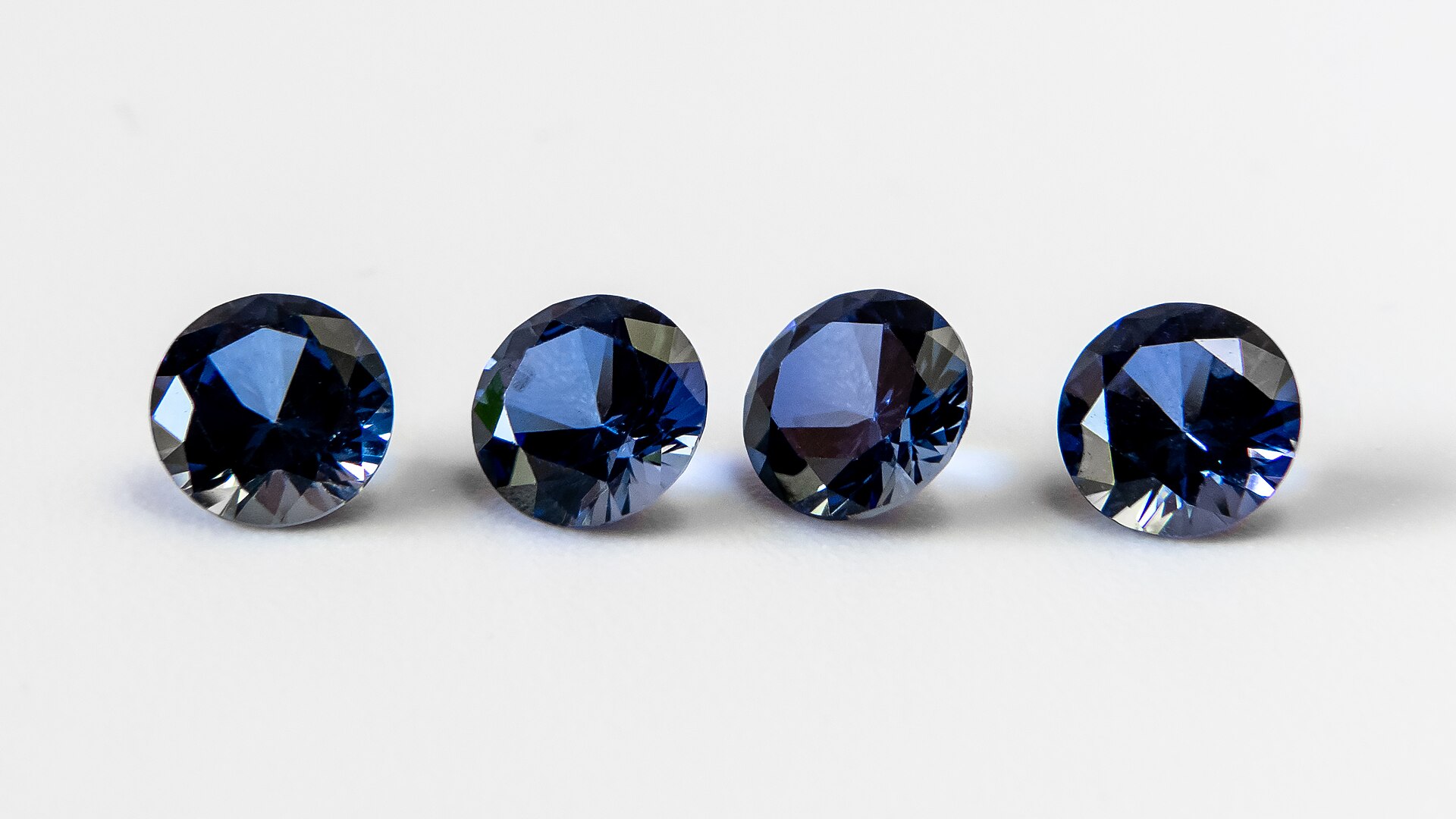
Marc Antoine Gaudin synthesised the first rubies by fusing alumina with chromium in 1837, and ten years later Jacques-Joseph Ebelmen made artificial sapphires by fusing alumina with boric acid. The Verneuil process was developed in 1902 by the French chemist Auguste Verneuil and produces a boule of synthetic corundum from finely ground alumina that oxygen carries into an oxyhydrogen flame, where the particles fuse and fall as droplets onto the molten upper surface of the boule. Some residual strain left in a half-boule after splitting is not disadvantageous for gem and most industrial uses, and before 1940 all synthetic corundum was made in Switzerland, Germany, and France, while for several years after the process was discovered all of the production was used for gemstones. The Verneuil flame-fusion process has supplied synthetic corundum since 1902 for mechanical bearings, laser components, optics and windows as well as for jewellery. Synthetic corundum is contained in lasers, which are used in barcode scanners, rangefinders, and printers, for cutting tough materials, and for hair and tattoo removal and in surgery.
8. Cultural Significance and Symbolism
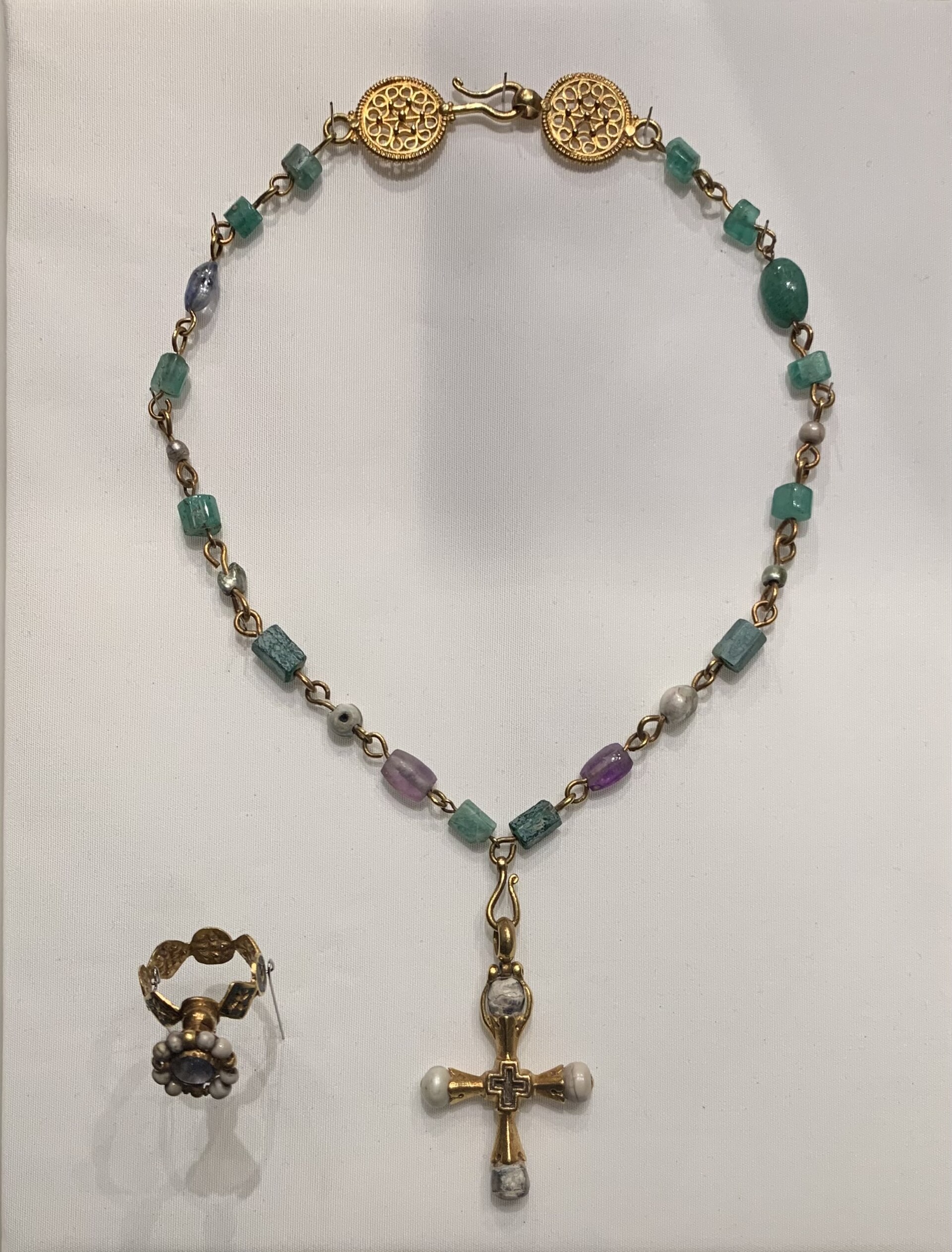
Sapphire has traditionally symbolized nobility, truth, sincerity and faithfulness. For centuries sapphire has been associated with royalty and romance, an association reinforced in 1981 when Britain's Prince Charles gave a blue sapphire engagement ring to Lady Diana Spencer. During the Middle Ages the clergy wore blue sapphires to symbolize Heaven, and ordinary people believed the gem attracted heavenly blessings.
In folklore, history, art and consumer awareness sapphire has always been associated with the colour blue, and its name comes from the Greek word sappheiros, which probably referred to lapis lazuli. Sapphire is the birthstone for September and the gem associated with the fifth and forty-fifth wedding anniversaries.
9. Timeline: from the first synthetic ruby to the museum stones
- 1837First synthetic rubyMarc Antoine Gaudin fused alumina with chromium to synthesise the first rubies, an early laboratory attempt to reproduce corundum.
- 1851First Australian sapphiresGold miners on the Cudgegong and Macquarie rivers in New South Wales extracted the first Australian sapphires.
- 1865First sapphires in the United StatesThe first sapphires found in the United States came from the gravels of the Missouri River in Lewis and Clark County, Montana.
- the 1880sKashmir's productive yearsKashmir's sapphire mines, in the Himalayan territory between India and Pakistan, yielded the finest-quality sapphires during about five productive years in the 1880s.
- 1895Yogo Gulch discoveredSapphires were discovered in Yogo Gulch in Montana, and mining began within a year and continued for 39 years.
- 1902Auguste Verneuil's flame-fusion processThe French chemist Auguste Verneuil developed the flame-fusion process for producing synthetic ruby and sapphire, the method that still bears his name.
- 1907Blue Giant of the OrientA 466 ct blue sapphire, the Blue Giant of the Orient, was supposedly mined from the Ratnapura area of Sri Lanka.
- 1926Blue Belle of AsiaA 400 ct sapphire said to have been found in a paddy field in the Ratnapura district, the Blue Belle of Asia, was described as having the desirable cornflower blue colour.
- 1927The Bismarck necklace is createdThe Bismarck Sapphire, a 98.57 ct stone, was originally set horizontally in a necklace designed by Cartier.
- October 1964The Star of India is stolenThe Star of India and more than 20 other stones were stolen from the American Museum of Natural History, and within two days the perpetrators were arrested.
- 1967The Bismarck necklace enters the SmithsonianCountess Mona von Bismarck gave the Cartier necklace to the Smithsonian for display in the Gem Gallery of the National Museum of Natural History.
- 1981A sapphire engagement ring for Lady Diana SpencerBritain's Prince Charles gave a blue sapphire engagement ring to Lady Diana Spencer, reinforcing the gem's association with royalty and romance.
- the 1990sFancy sapphires reach the marketDiscoveries in East Africa and Madagascar brought fancy sapphires widespread recognition and increased the availability of yellows, oranges, pinks and purples.
- June 1998The Pride of Sri LankaAn 850 ct blue sapphire, the Pride of Sri Lanka, was found in Ratnapura.
- 2004A sapphire ring bequeathed to the Australian MuseumA lifelong museum visitor bequeathed her sapphire ring, a 33.39 carat Sri Lankan stone, to the Australian Museum, where it joined the mineralogy collection.
- 2012A primary deposit at KataragamaA primary sapphire deposit was found by accident during road construction near Kataragama in Sri Lanka, and the government auctioned surrounding plots of land for mining.
10. Frequently asked questions
What exactly is sapphire made of, and why is natural corundum relatively uncommon?
The mineral corundum is composed only of aluminum and oxygen, and it requires a growth environment free of silicon, which makes natural corundum relatively uncommon since silicon is a very common element 1Sapphire Description · Gemological Institute of America (GIA) ↗. In its purest state corundum is colorless, and while colorless sapphires were once popular as diamond imitations, such material is rare because most corundum contains color-causing trace elements 1.
How do sapphire and ruby differ chemically if they are the same mineral?
Ruby owes its colour to traces of chromium in its structure, while sapphires derive their colour from trace elements such as iron, titanium and nickel 4Sapphire and Ruby · Australian Museum, Sydney ↗. When the trace elements present are iron and titanium the corundum is blue sapphire, and as little as a few hundredths of a percent of these elements can produce the colour, while more iron makes the blue darker 1.
What is the difference between metamorphic and basalt-related blue sapphire?
Blue sapphire can be broadly separated into two groups based on the geological conditions under which it formed: metamorphic sapphire and basalt-related sapphire 6Geographic Origin Determination of Blue Sapphire · GIA — Gems & Gemology, Winter 2019 ↗. Basalt-related blue sapphires are crystals that were brought up from great depths as xenocrysts in volcanic eruptions of alkali basalts and related rocks 6, while metamorphic sapphires formed through solid-state recrystallization of preexisting rocks during cataclysmic tectonic events in which the earth's continents collided and built massive mountainous terranes of high-grade metamorphic rocks 6.
Why is Kashmir sapphire so prized, and how are its stones identified?
For sapphire, Kashmir receives the highest premium, even though Myanmar, Sri Lanka and Madagascar also produce top-quality gems 17Sapphire Buyer's Guide · Gemological Institute of America (GIA) ↗. Inclusions of tourmaline, pargasite or hornblende, and elongate but often corroded zircon can generally be taken as evidence of a Kashmir provenance 6, and dense milky clouds arranged in well-defined hexagonal patterns are a helpful indicator of a Kashmir origin, with these milky bands causing the sleepy, velvety texture admired in fine Kashmir sapphires 6.
Does heat treatment affect a sapphire's inclusions or its origin determination?
Deepening the blue colour of sapphire essentially destroys rutile silk, which in many stones is the only internal feature that can support a geographic origin determination, because as the rutile inclusions dissolve, titanium diffuses into the corundum lattice and produces Fe-Ti pairs and blue coloration 6. Heat treatment has dissolved the rutile silk in a Sri Lankan sapphire, nearly destroying the inclusion feature that would otherwise indicate the stone's provenance 6.
What is sapphire used for beyond jewellery?
Besides serving as a precious gem, corundum has an industrial role as an abrasive thanks to its extreme hardness of nine on the Mohs scale, and it is used for grinding optical glass and polishing metals, has been made into sandpapers and grinding wheels, and has also been used in refractories because of its high melting point 18Corundum · Encyclopaedia Britannica ↗.
References (20)
- 1Sapphire Description — Gemological Institute of America (GIA) Web↩View source
- 2Sapphire Gemstone — Gemological Institute of America (GIA) WebView source
- 3Sapphire and Ruby — Australian mineral facts — Geoscience Australia (Australian Government) Web↩View source
- 4Sapphire and Ruby — Australian Museum, Sydney Web↩View source
- 5Sapphire Quality Factors — Gemological Institute of America (GIA) WebView source
- 6Geographic Origin Determination of Blue Sapphire — GIA — Gems & Gemology, Winter 2019 2019 Web↩View source
- 7Famous Gemstones: The Star of India Sapphire — Gem-A, the Gemmological Association of Great Britain Web↩View source
- 8Corundum (var. star sapphire) — Smithsonian National Museum of Natural History — GeoGallery WebView source
- 9How do I know that a sapphire is a real padparadscha? — Gemological Institute of America (GIA) WebView source
- 10Sri Lanka: Expedition to the Island of Jewels — GIA — Gems & Gemology, Fall 2014 2014 Web↩View source
- 11U-Pb Ages of Zircon Inclusions in Sapphires from Ratnapura and Balangoda (Sri Lanka) — GIA — Gems & Gemology, Spring 2019 2019 WebView source
- 12New Sapphire Material from Kashmir — GIA — Gems & Gemology, Spring 2024 Gem News 2024 WebView source
- 13Gemstones — U.S. Geological Survey (USGS), Minerals Information Archives Web↩View source
- 14Bismarck Sapphire Necklace — Smithsonian National Museum of Natural History — GeoGallery Web↩View source
- 15Verneuil process — Encyclopaedia Britannica ArchiveView source
- 16Sapphire History and Lore — Gemological Institute of America (GIA) WebView source
- 17Sapphire Buyer's Guide — Gemological Institute of America (GIA) Web↩View source
- 18Corundum — Encyclopaedia Britannica Archive↩View source
- 19Logan Sapphire — Smithsonian Institution, National Museum of Natural History WebView source
- 20Corundum (sapphire) with diamonds in a platinum ring — Australian Museum, Sydney WebView source