Saffron
The history, biology and trade of saffron, the stigmas of the autumn crocus: a sterile triploid flower propagated by corm, hand-picked in Minoan Thera and Knossos, in Persia, Rome and Islamic medicine, in Kashmir, La Mancha, Kozani and Taliouine, and graded today under ISO 3632.
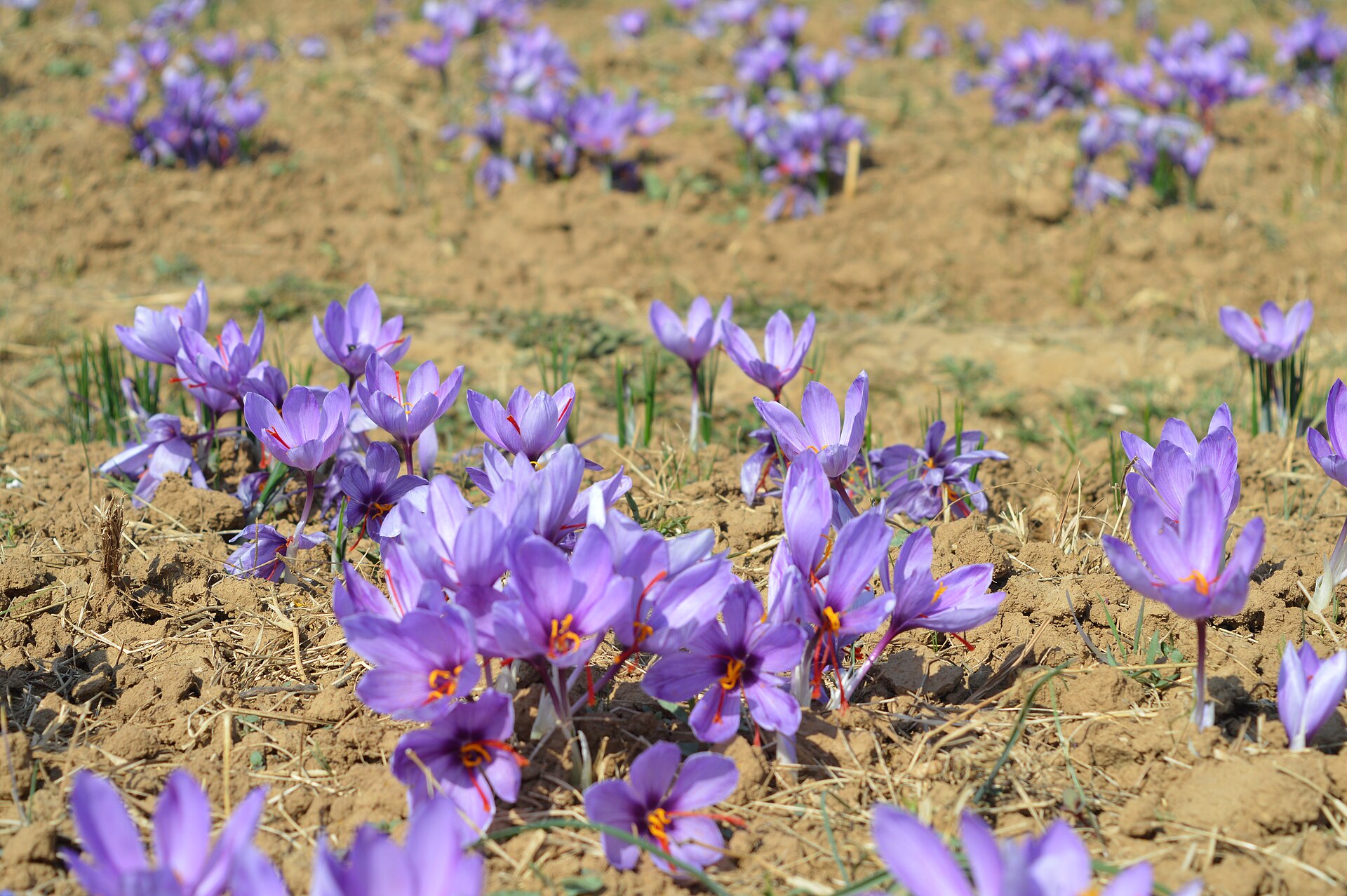
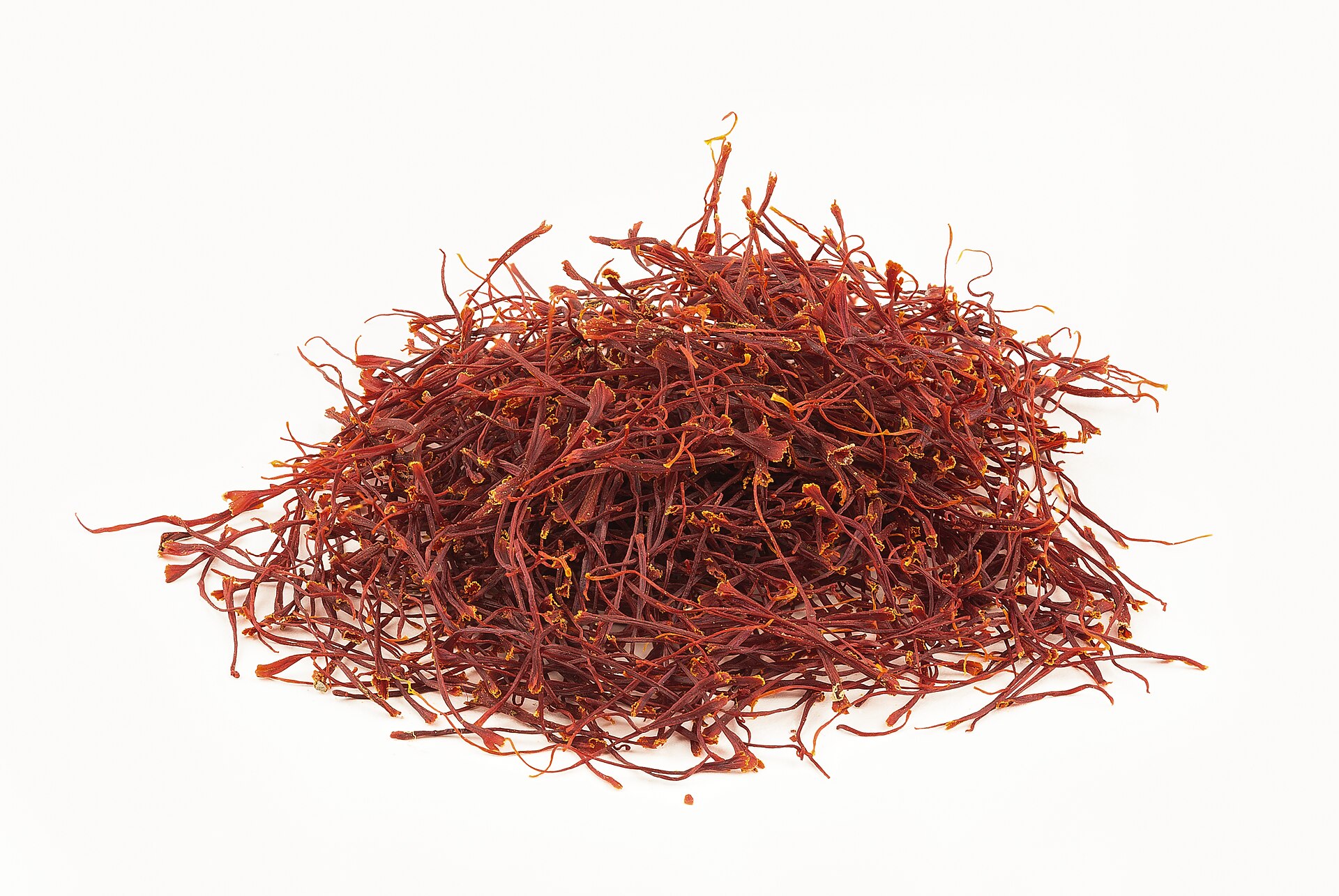
Saffron is the dried stigmas of Crocus sativus, an autumn-flowering sterile triploid crocus that no longer exists in the wild and is propagated only by replanting its corms. Three hand-picked stigmas per flower, roughly 150,000 blossoms for a kilogram, make it the most expensive spice in the world, coloured by crocin and scented by safranal formed during drying. It appears in the written record by 2300 BCE, in Minoan frescoes at Knossos and Thera, in Pliny and in Razi's Al-Hawi, and it was carried by Arab agriculture to Spain. Today Iran grows about 90 percent of world output, while Kashmir, La Mancha, Kozani and Taliouine hold protected designations, and laboratories fight substitution with safflower and turmeric.
In this article
- 1Overview
- 2Botany and Biology
- 3Chemistry and Composition
- 4Harvest Yield and Labour
- 5Quality Standards and Grading
- 6Adulteration and Fraud
- 7Production and Trade
- 8Geographical Indications and Regional Production
- 9Historical and Cultural Record
- 10Medicinal and Traditional Uses
- 11Cultivation Practice and Regional Conditions
- 12Timeline: from Minoan frescoes to the modern saffron trade
- 13Knowledge graph
Overview
Saffron is the spice made from the dried, golden-colored and pungent stigmas of the autumn crocus Crocus sativus, which are also used as a dye. The plant is a sterile triploid whose chromosome complement is written as 2 n = 3 x = 24 in cytological notation. It is an autumn-flowering corm that blooms in September and October.
Saffron is an exceptionally valuable and expensive spice worldwide. Its high price reflects the long laborious hours of work it demands. The stigmas are spread on trays and dried over charcoal fires before use.
1. Botany and Biology
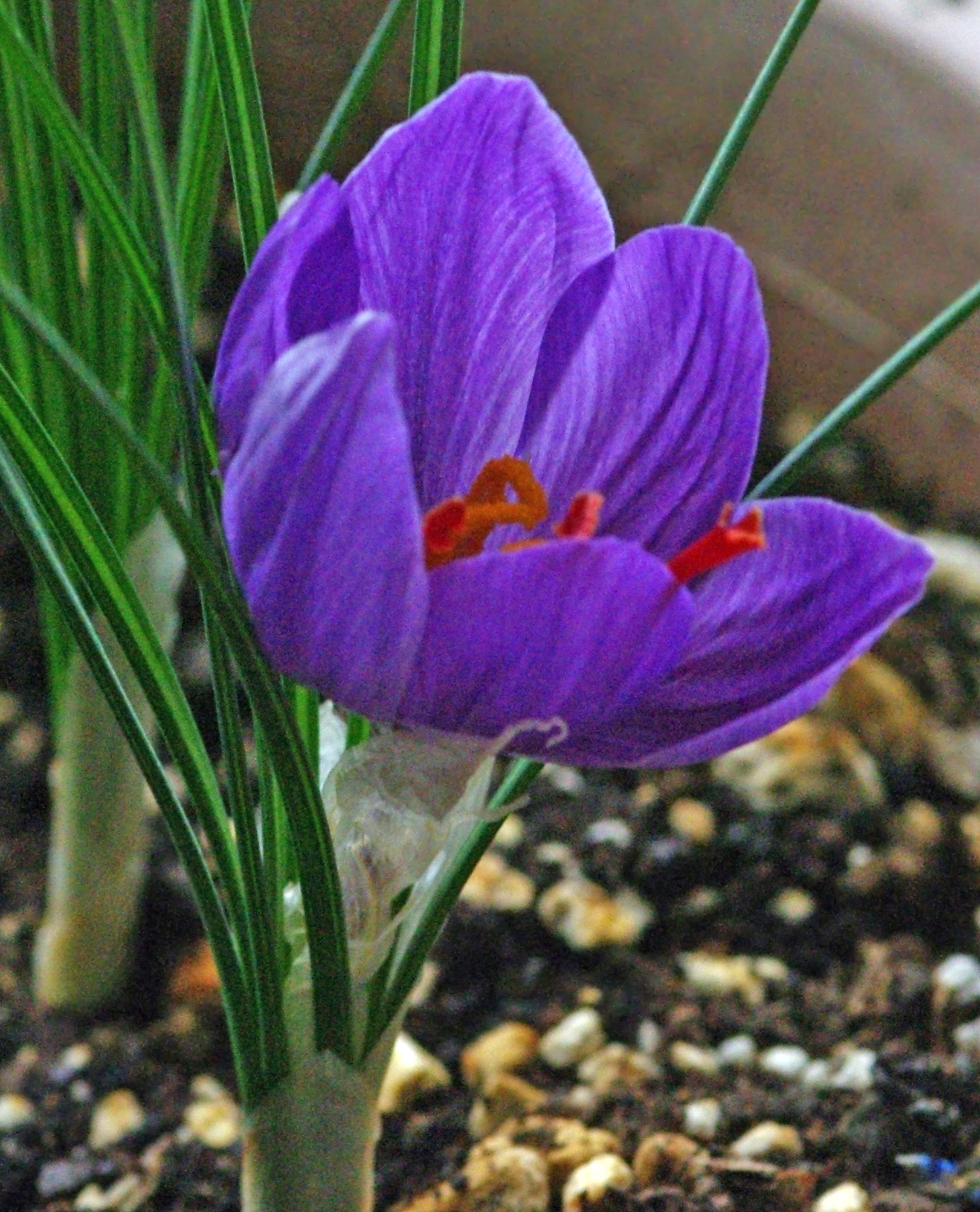
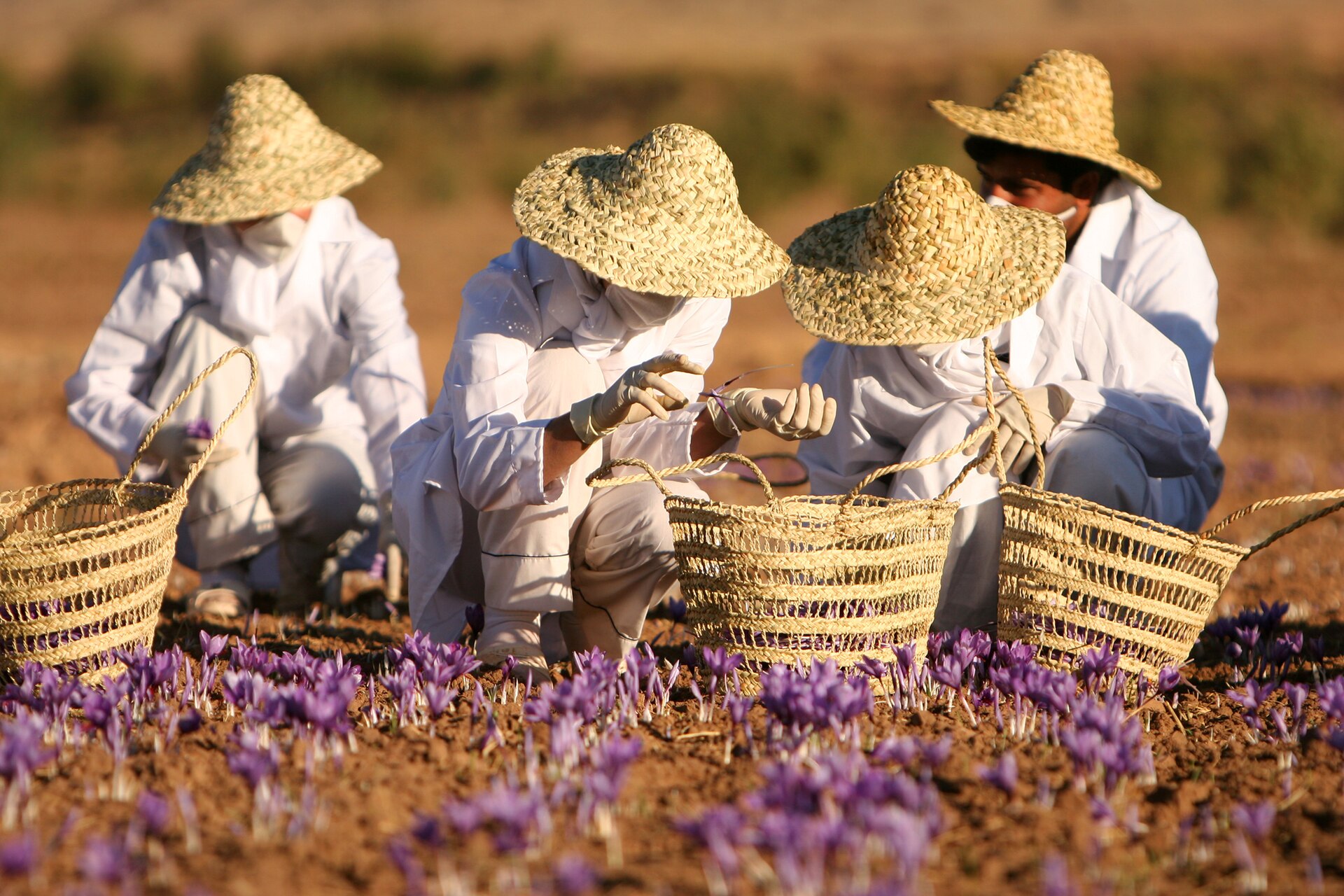
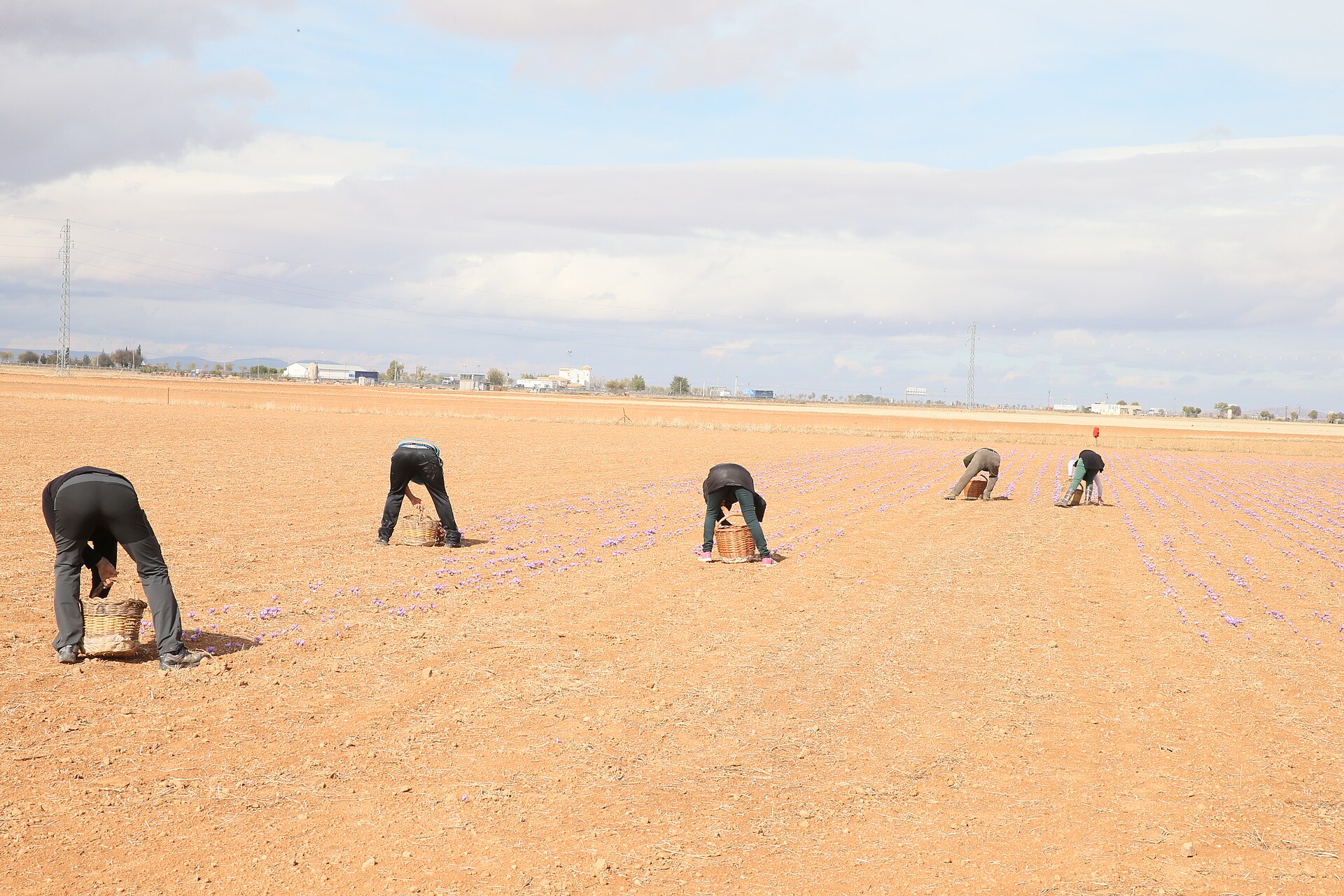
The native habitat of the saffron crocus is unknown despite its long cultivation, and the species most likely first appeared in Greece as an autotriploid selected from wild Crocus cartwrightianus. Saffron is sterile and seedless and is propagated by dividing its corms. In the Kozani region the Krokos flowers begin to appear from mid-October for 20 to 25 days and the harvesting consists of picking the flowers by hand from sunrise almost to sunset.
At the molecular level the crocus-specific CsCCD2 genes related to crocin synthesis originated from the duplication of CsCCD1 genes.
2. Chemistry and Composition
Saffron carries 0.5 to 1 percent essential oil, whose principal component is picrocrocin, while the coloring matter is crocin. The odour of the spice belongs to safranal, the volatile aldehyde responsible for it. Crocin is measured by spectrophotometry at 440 nm.
In saffron apocarotenoid biosynthesis the enzyme CsCCD2 performs a symmetric cleavage on zeaxanthin to form 3-hydroxy-β-cyclocitral and crocetin dialdehyde, which aldehyde dehydrogenase then oxidizes to crocetin.
Picrocrocin is the second most abundant component of saffron dry matter and decreases during drying at 35 to 50 °C over 4 to 7 hours, while safranal is absent before drying. Safranal is formed from picrocrocin during dehydration because of the high temperatures involved, and the same compound can also arise through extreme pH conditions or a two-step enzymatic process. A high temperature in the dehydration process promotes the isomerization of trans crocetin esters into cis forms and simultaneously drives safranal synthesis out of those carotenoids and out of picrocrocin.
3. Harvest Yield and Labour
Saffron is a labor-intensive crop, since the three stigmas are handpicked from each flower.1Saffron · Encyclopaedia Britannica ↗ Around 4,300 blossoms go into one ounce of the finished product9The Saffron Crocus (Crocus sativus) · Saffron Walden Town Council, Tourist Information Centre ↗3Crocus sativus — Plant Finder · Missouri Botanical Garden ↗. The picking and separating behind one kilogram of dried threads likewise take about 370 to 470 hours of work10Saffron: The Story of the World's Most Expensive Spice · JSTOR Daily (Dumbarton Oaks Plant Humanities Initiative) ↗.
| Unit | Blossoms required | Notes |
|---|---|---|
| A pound (0.45 kg) | 75,000 | derived from the per-ounce figure |
| 1 kilogram | about 150,000 | giving some 450,000 stigmas |
In Herat markets saffron was worth between 1600 and 1800 US dollars per kilogram after the 2015 harvest and is seen as a strong income source for small and medium farmers 11National Saffron Development Program · Ministry of Agriculture, Irrigation and Livestock, Islamic Republic of Afghanistan ↗.
4. Quality Standards and Grading
Dried saffron is traded in three forms — filaments, cut filaments and powder — and the international reference for these is the ISO 3632-1 specification for dried saffron obtained from the pistils of Crocus sativus, whose companion part ISO 3632-2 sets out the test methods used to measure colour, bitterness and aroma. The second edition of that standard has been withdrawn, with a new 2025 version available. The withdrawn edition was published in 2011-09, runs to eight pages, and was prepared by committee ISO/TC 34/SC 7.
Grading rests on spectrophotometric readings of one percent aqueous extracts taken at 257 nm for picrocrocin, at 330 nm for safranal, and at 440 nm for crocin colouring strength. Three categories — I, II and III — are judged on moisture, flower residues, foreign material, ash and colouring power. Category I requires at least 200 units at 440 nm, while Category III needs a minimum of 120. The highest category further requires 70 at 257 nm and a 330 nm value between 20 and 50. Category II is the medium-quality grade, between the high-quality first category and the low-quality third.
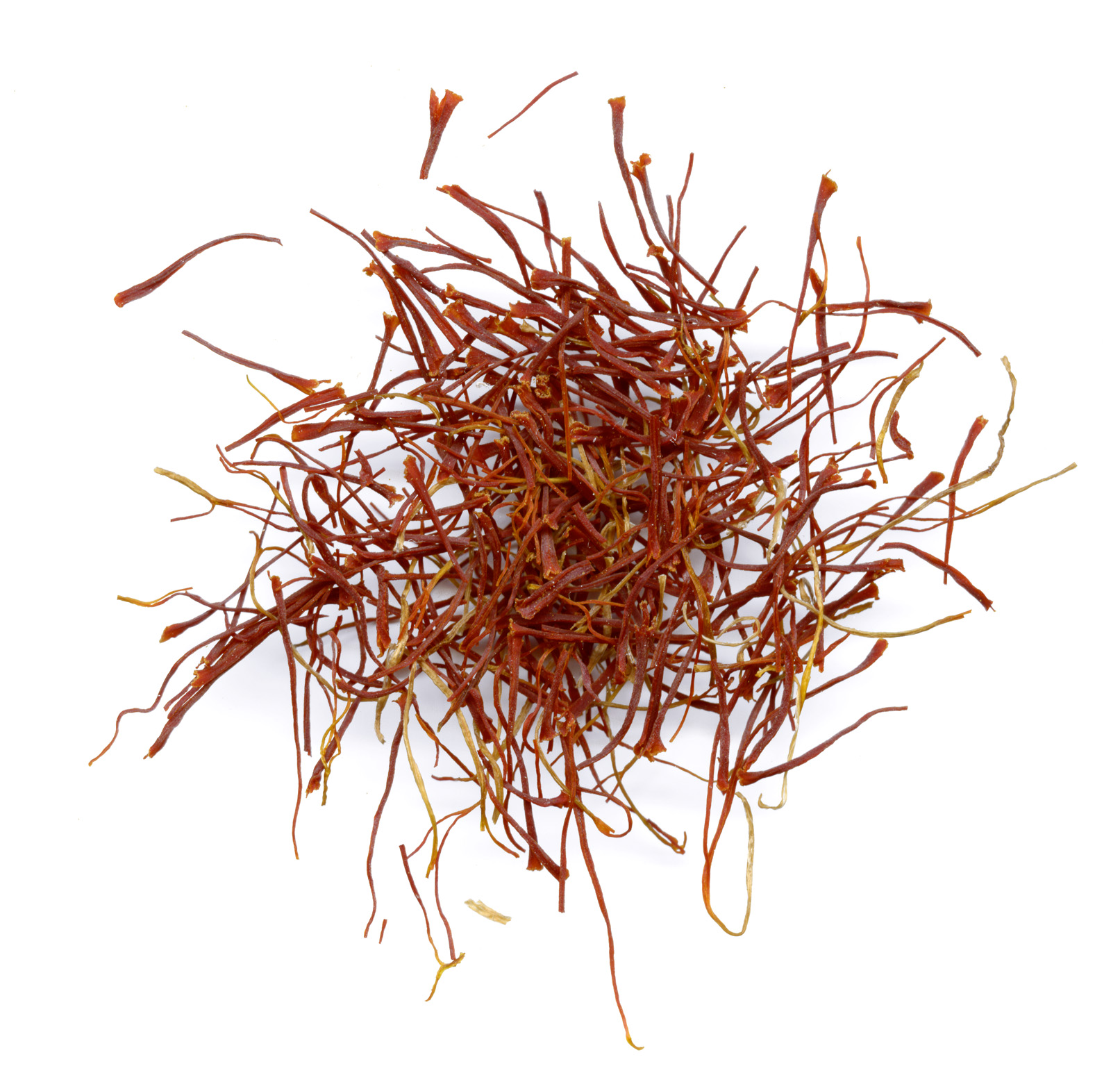
Colour intensity is the most important quality characteristic and sets the market price. Dehydration turns fresh stigmas into the spice, with stigmas losing roughly 80 percent of their weight, while ISO 3632 requires finished moisture below 12 percent. The product is stored in sealed containers away from moisture and light at 5 to 25 °C and marketed as strands or ground powder.
5. Adulteration and Fraud
Pliny held saffron to be the substance most subject to adulteration, and gave as the best proof of its goodness that it snaps under the fingers, while moistened material is limp. Traditional fraud replaces saffron fully or partly with another plant, such as other crocus species, Carthamus tinctorius or turmeric, which saffron experts can detect but which becomes hard to identify visually once the spice is powdered. Safflower resembles saffron closely and shares its aromatic properties, and its cheap stigmas are commonly added to pure saffron to cut costs.
Reports persist of horse hairs, corn silks and shredded paper passed off as saffron. One test measures eugenol with an ion mobility spectrometer to quantify safflower adulteration; the calibration curve had a coefficient of determination of 0.949, and five of twenty market samples proved adulterated. Stable isotope ratios of carbon and hydrogen in safranal, measured by gas chromatography-isotope ratio mass spectrometry together with metabolite concentrations by UHPLC-DAD, separate synthetic from natural material: the mean hydrogen isotope ratio was near 36 per mil for synthetic safranal against minus 210 per mil for natural safranal. A model using the carbon isotope ratio with trans-crocetin, picrocrocin and crocins C2 and C3 discriminated saffron from Iran, Spain or other origins, scoring 100 percent on the classification matrix and 82.5 percent on the prediction matrix.
6. Production and Trade
Iran grows about 90 percent of the world's saffron yet holds only 16 percent of the global market, whose turnover is about 1.1 billion dollars. Some 75 percent of the cultivated saffron land in Iran lies in plots of less than one hectare, and yields average between 3.3 and 3.5 kilograms per hectare. Most of the Iranian crop is exported in bulk, with companies in countries such as Spain handling the packaging, marketing and distribution. In 2012 Khorasan Razavi had 65,222 hectares of cultivated saffron land, the largest area in the country, while Khorasan Jonubi had 14,262 hectares, and Torbat heydariye, Kashmar, Gonabad, Ghaen and Ferdos are among the well-functioning saffron centres of the Khorasan provinces.
Iran produced more than 260 tons of saffron in 2013 but exported only 136 tons, worth 200 million dollars, while its 2012 exports of 139 tons were worth 418 million dollars. About 65 tons of Iranian saffron were smuggled abroad in the first nine months of the Iranian year that began in March 2023, and 90 percent of it went to Afghanistan.
The Afghan saffron programme expects at least 20,000 rural families to gain sustainable incomes and farmers' inclination toward opium cultivation to be reduced.
Afghanistan aims to expand saffron cultivation from 1000 hectares to between 3000 and 4000 hectares and to raise output from 3500 kilograms to 14000 kilograms.
The producer Rumi Spice sells a grade higher than ordinary market material at 18 dollars (14 pounds) per gram.
7. Geographical Indications and Regional Production
The protected designation of origin for Krokos Kozanis requires that every part of the production, processing and preparation process take place within the specific region 6Krokos Kozanis PDO · European Commission, Directorate-General for Agriculture and Rural Development ↗. Under the PDO La Mancha the weather conditions of the production area determine the flowering calendar, with blooms appearing between the second fortnight of October and the first fortnight of November 17Azafrán de La Mancha PDO · Consejo Regulador de la Denominación de Origen Protegida Azafrán de La Mancha ↗. Plucking the stigmas from the La Mancha flower is a manual process done by pinching and breaking the style where it is white, after which the three stigmas are placed in a container for drying17.
The Kashmir application was filed on 03-12-2018 in class 30 by the Agriculture Production Department of Jammu and Kashmir, whose registry address is the Directorate of Agriculture in Srinagar, and the authorised users listed for the mark include growers at Samboora, Patalbagh and Pampore18Kashmir Saffron — Geographical Indication application 635 · Intellectual Property India, Government of India ↗.
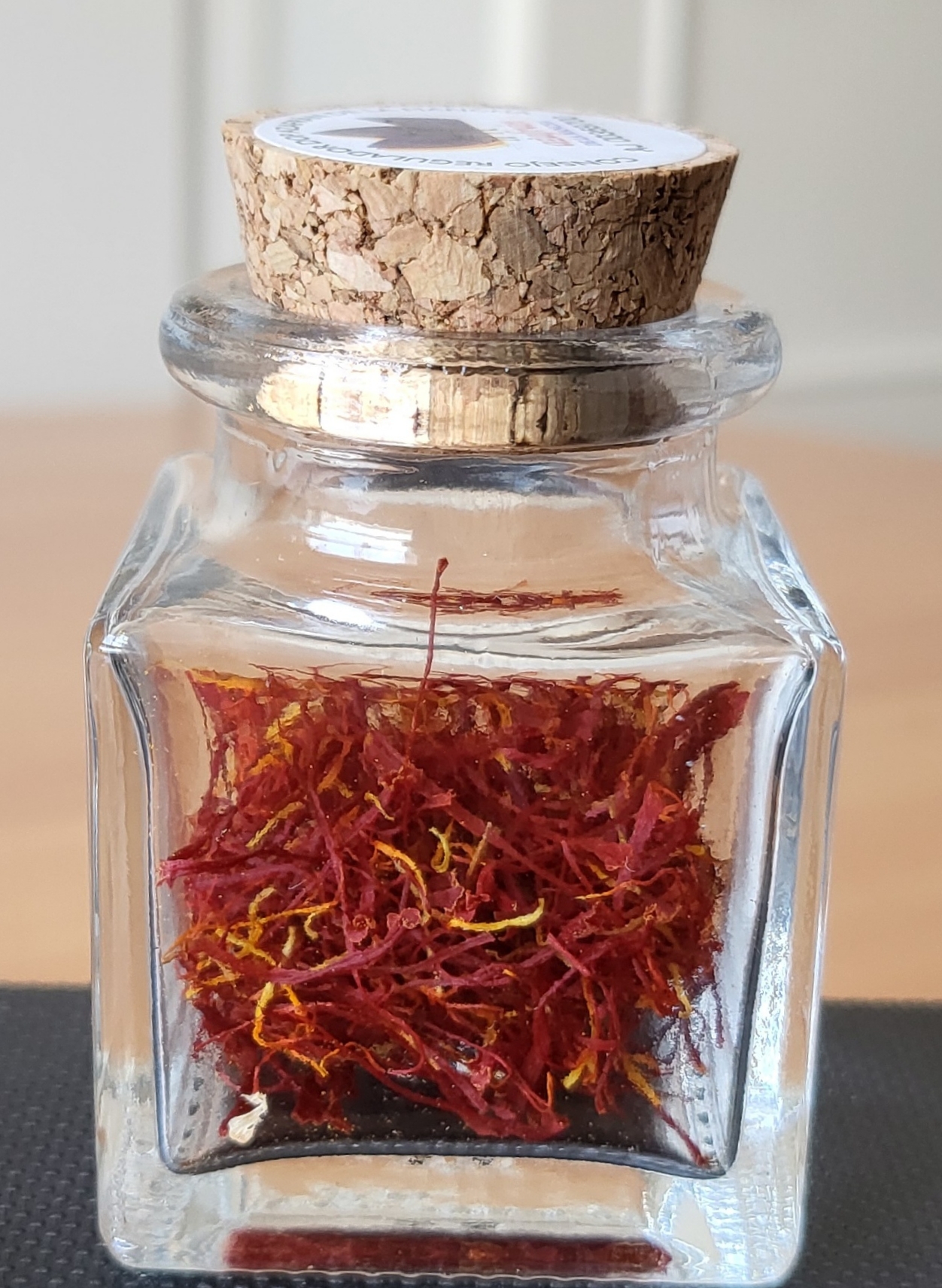
Packaging rules extend the designation beyond the field. Saffron marketed under the PDO La Mancha is sold exclusively and packaged in containers not exceeding a net weight of 100 grams 17.
| Designation | Region | Key conditions |
|---|---|---|
| Kashmir Saffron | Jammu and Kashmir, India | Application 635 in class 30; certificate 366 issued 01-05-2020; valid to 02-12-2028 |
| PDO La Mancha | Castilla-La Mancha, Spain | Manual plucking of the stigmas; drying treated as a critical stage |
| Krokos Kozanis | Kozani, Greece | All production, processing and preparation carried out in the region |
| Taliouine | Souktana plateau, Morocco | Eleven producers; dawn gathering October to November; Protected Geographical Indication |
8. Historical and Cultural Record
The documentary record of saffron reaches back to a Mesopotamian work concerning Sargon of Akkad dated to 2300 BCE. The word itself is traced by etymologists to Medieval Latin safranum, derived from the Arabic az-za'faran. In early times the chief seat of saffron cultivation was Cilicia in Asia Minor. The Arabs cultivated the plant in Spain about 961 and it is mentioned in an English leechbook of the 10th century.
Saffron was first planted in Walden in the time of Edward III. The demand for yellow dye from the woollen industry likely drove the growth of its cultivation on the chalk soil around the town.
Saffron was already harvested in the Minoan period, between 2600 and 1100 BCE, and a painting of about 1600 BCE shows a young woman gathering it. One of the earliest frescoes at the palace of Knossos is the Saffron Gatherer, depicting a monkey picking crocus flowers. Arthur Evans took the figure for a boy and had a child's head given to it in the first reconstruction, although similarities to the blue monkeys of the House of the Frescoes were noted and blue was not used for human skin in Minoan painting.
Greek myth made the flower the memorial of Krokos, a young mortal friend of Hermes who was killed by a discus, three drops of whose blood formed the three stigmas that constitute the spice.
-
2300 BCEMesopotamian referenceA Mesopotamian work about Sargon of Akkad supplies one of the earliest references to saffron10.
-
about 961Cultivation in SpainThe Arabs cultivated saffron in Spain1.
-
10th centuryEnglish leechbookSaffron is mentioned in an English leechbook1.
-
time of Edward IIIPlanting at WaldenSaffron was first planted in Walden9.
9. Medicinal and Traditional Uses
In traditional medicine saffron is described as an enlivening and antidepressant plant. Al-Hawi mentions a variety of saffron properties, including diuretic, analgesic, anti-inflammatory, hepatoprotective, appetite suppressant, hypnotic, antidepressant and bronchodilator effects. Modern science supports its stigma and petal extracts for mild to moderate depression.
The eye trial was designed as a randomized, double-blind, placebo-controlled study and was registered in the Iranian National Registry for Clinical Trials. Participants took two oral capsules a day, each containing 15 mg of saffron extract, for six months. ERG amplitude changes differed significantly between the saffron and placebo groups at three months in dry AMD (P = 0.03) and in wet AMD (P = 0.007), but the differences were no longer significant at six months (P = 0.12 and P = 0.26).
10. Cultivation Practice and Regional Conditions
The PDO La Mancha Saffron constitutes a triple guarantee of Spanish origin saffron, the highest quality colour, flavour and aroma, and a comprehensive control system that eliminates any risk of exposure in the product.
The eleven producers of the Taliouine cooperative, supported by the Moroccan NGO Migrations et Développement, farm small plots of land and gather the flowers at dawn between October and November while the petals are still closed.
11. Timeline: from Minoan frescoes to the modern saffron trade
- about 2300 BCEFirst written reference to saffronOne of the earliest references to saffron dates to 2300 BCE, in The Legend of Sargon of Akkad, a Mesopotamian work that describes the birthplace of the founder of the Akkadian empire as a city of saffron.
- about 1700 BCESaffron crocus domesticated in GreeceResearch published in 2022, using ancient art and genetics, argued that Crocus sativus was first domesticated in Greece in approximately 1700 BCE.
- 1650-1500 BCThe Saffron Gatherer fresco at KnossosThe Saffron Gatherer Fresco from the east wing of the palace of Knossos, one of the earliest examples of pictorial fresco painting there, shows a blue monkey picking crocus flowers.
- about 1600 BCThera's Saffron Gatherer paintingThe European Commission notes that the Saffron Gatherer, a painting dating back to 1600 BC, shows a young woman gathering saffron, reflecting its importance in the Minoan world.
- first century CEPliny the Elder ranks the saffron of CiliciaIn his Natural History Pliny the Elder described where saffron grows best, ranking the saffron of Cilicia and Mount Corycus first, and noted that saffron was already held in high esteem in the time of the Trojan War.
- about 961Arabs cultivate saffron in SpainEncyclopaedia Britannica records that saffron was cultivated by the Arabs in Spain about 961 and is mentioned in an English leechbook, or healing manual, of the 10th century.
- 1327-1377Saffron planted at WaldenSaffron was mentioned as having been first planted in Walden in the time of Edward III, and the demand for yellow dye from the woollen industry probably drove the growth of its cultivation.
- around 1500Chipping Walden becomes Saffron WaldenThe town was first called Walden and then Chipping Walden until around 1500, when the saffron crocus was grown extensively in the area and the saffron trade was at its peak.
- 1552-1578Saffron recorded in a Chinese materia medicaSaffron is mentioned in the Bencao gangmu, a Chinese materia medica compiled between 1552 and 1578.
- 1726Littlebury, the last saffron growerBy 1726 Littlebury was the only place in the area still growing the saffron crocus, as cheaper imported saffron took over the market.
- 1790Saffron disappears from the Essex fieldsBy 1790 saffron had virtually disappeared from the neighbourhood of Saffron Walden.
- April 2014UNIDO diagnostic study of the Iranian saffron chainThe United Nations Industrial Development Organization published its diagnostic study report for the Saffron Industry Value Chain Development Project in Iran.
- 3 December 2018Kashmir saffron GI application filedThe Agriculture Production Department of Jammu and Kashmir filed the geographical indication application for Kashmir Saffron under class 30 for agricultural goods.
- 1 May 2020Kashmir saffron GI registeredThe Indian GI registry records the Kashmir Saffron certificate of registration as issued on 01-05-2020, with the registration valid up to 02-12-2028.
- March-December 2023Smuggling of Iranian saffronAbout 65 tons of saffron were smuggled from Iran in the first nine months of the Iranian year that ran from March to December 2023, with 90 percent of it destined for Afghanistan.
- 2025A new edition of the saffron standardThe ISO catalogue lists ISO 3632-1:2025 as the new version of the saffron specification, replacing the 2011 edition.
References (22)
- 1Saffron — Encyclopaedia Britannica Web↩View source
- 2Crocus genome reveals the evolutionary origin of crocin biosynthesis (Acta Pharmaceutica Sinica B) — PubMed Central (PMC10985130), National Library of Medicine WebView source
- 3Crocus sativus — Plant Finder — Missouri Botanical Garden Web↩View source
- 4Detection of Safflower Adulteration in Saffron Using Ion Mobility Spectroscopy (Journal of Analytical Methods in Chemistry) — PubMed Central (PMC12133364), National Library of Medicine WebView source
- 5The problem for the world's most expensive spice — BBC News WebView source
- 6Krokos Kozanis PDO — European Commission, Directorate-General for Agriculture and Rural Development Web↩View source
- 7Detection of Saffron's Main Bioactive Compounds and Their Relationship with Commercial Quality (Foods) — PubMed Central (PMC9601577), National Library of Medicine WebView source
- 8Effect of Crocus sativus L. Stigmas Microwave Dehydration on Picrocrocin, Safranal and Crocetin Esters (Foods) — PubMed Central (PMC7918863), National Library of Medicine WebView source
- 9The Saffron Crocus (Crocus sativus) — Saffron Walden Town Council, Tourist Information Centre Archive↩View source
- 10Saffron: The Story of the World's Most Expensive Spice — JSTOR Daily (Dumbarton Oaks Plant Humanities Initiative) Journal↩View source
- 11National Saffron Development Program — Ministry of Agriculture, Irrigation and Livestock, Islamic Republic of Afghanistan Web↩View source
- 12ISO 3632-1:2011 Spices — Saffron (Crocus sativus L.) — Part 1: Specification — International Organization for Standardization (ISO) 2011 WebView source
- 13Pliny the Elder, The Natural History, Book 21 — Perseus Digital Library, Tufts University BookView source
- 14Authentication of Iranian Saffron (Crocus sativus) Using Stable Isotopes δ13C and δ2H and Metabolites Quantification (Molecules) — PubMed Central (PMC9607403), National Library of Medicine WebView source
- 1565 tons of Iranian saffron smuggled in nine months — Iran Daily WebView source
- 16Saffron Industry Value Chain Development in Iran — Diagnostic Study Report — United Nations Industrial Development Organization (UNIDO) WebView source
- 17Azafrán de La Mancha PDO — Consejo Regulador de la Denominación de Origen Protegida Azafrán de La Mancha Web↩View source
- 18Kashmir Saffron — Geographical Indication application 635 — Intellectual Property India, Government of India Web↩View source
- 19Saffron Gatherer Fresco (T32A), Palace of Knossos — Heraklion Archaeological Museum WebView source
- 20Razi's Al-Hawi and saffron (Crocus sativus): a review (Iranian Journal of Basic Medical Sciences) — PubMed Central (PMC4744354), National Library of Medicine WebView source
- 21Short-term Outcomes of Saffron Supplementation in Patients with Age-related Macular Degeneration: A Double-blind, Randomized Trial (Medical Hypothesis, Discovery & Innovation Ophthalmology Journal) — PubMed Central (PMC5342880), National Library of Medicine WebView source
- 22Taliouine Saffron — Slow Food Foundation for Biodiversity WebView source