Typewriter
The machine that put writing on a keyboard: how typebars, escapements and shift keys turned handwriting into typescript, how Sholes and Remington built an industry around QWERTY, and how typists, offices and writers remade the working world before the Selectric and the personal computer displaced the mechanical office machine.
The typewriter is a keyboard machine that prints characters by striking type against paper through an inked ribbon, advancing the paper one space with each stroke. English patents for writing machines reach back to Henry Mill in 1714, but the first commercially successful machine was the Sholes and Glidden, manufactured by E. Remington and Sons from 1873 and sold from 1874 with the QWERTY keyboard that still shapes computer keyboards. The shift key, front-stroke visible writing and the Underwood model of 1895 made typing fast and legible; typing schools and typing pools made it women's work and transformed the office. IBM's Selectric of 1961 replaced the typebar with a single spherical element, the Magnetic Tape Selectric Typewriter of 1964 introduced word processing, and personal computers and printers retired the last mass-market machines in the 1980s.
In this article
- 1Overview
- 2Precursors and Early Writing Machines
- 3Sholes and the First Practical Typewriter
- 4The Sholes & Glidden and the QWERTY Keyboard
- 5Design Evolution: From Blind Writers to Visible Machines
- 6Electric Typewriters and the Selectric
- 7Word Processing and the Typewriter's Decline
- 8Typing, Training and the Office Workforce
- 9Typewriters in Culture and Manufacturing
- 10Key Dates
- 11Timeline: from Henry Mill's patent to the last typewriter factory
- 12Knowledge graph
Overview
A typewriter is a machine that prints characters by means of steel types striking paper through an inked ribbon, the types being worked by keys while the paper is held on a moving platen. Although the idea of such a writing machine was pursued for centuries, a working typewriter was not built until the 1870s, some 420 years after Gutenberg's printing press. The instrument that emerged from that long delay became a defining piece of office equipment.
1. Precursors and Early Writing Machines
England's Henry Mill secured the first English patent for a writing machine in 1714, though the surviving description is vague about how the device actually worked. Between 1829 and 1870 inventors in Europe and the United States patented numerous writing machines in a wide range of designs.The first typewriter patents had no lettered keyboards but used piano keys, and their type struck the paper from underneath. Historians place the Sholes machine as the 52nd in a lineage of writing machines stretching back to the mid-1700s.
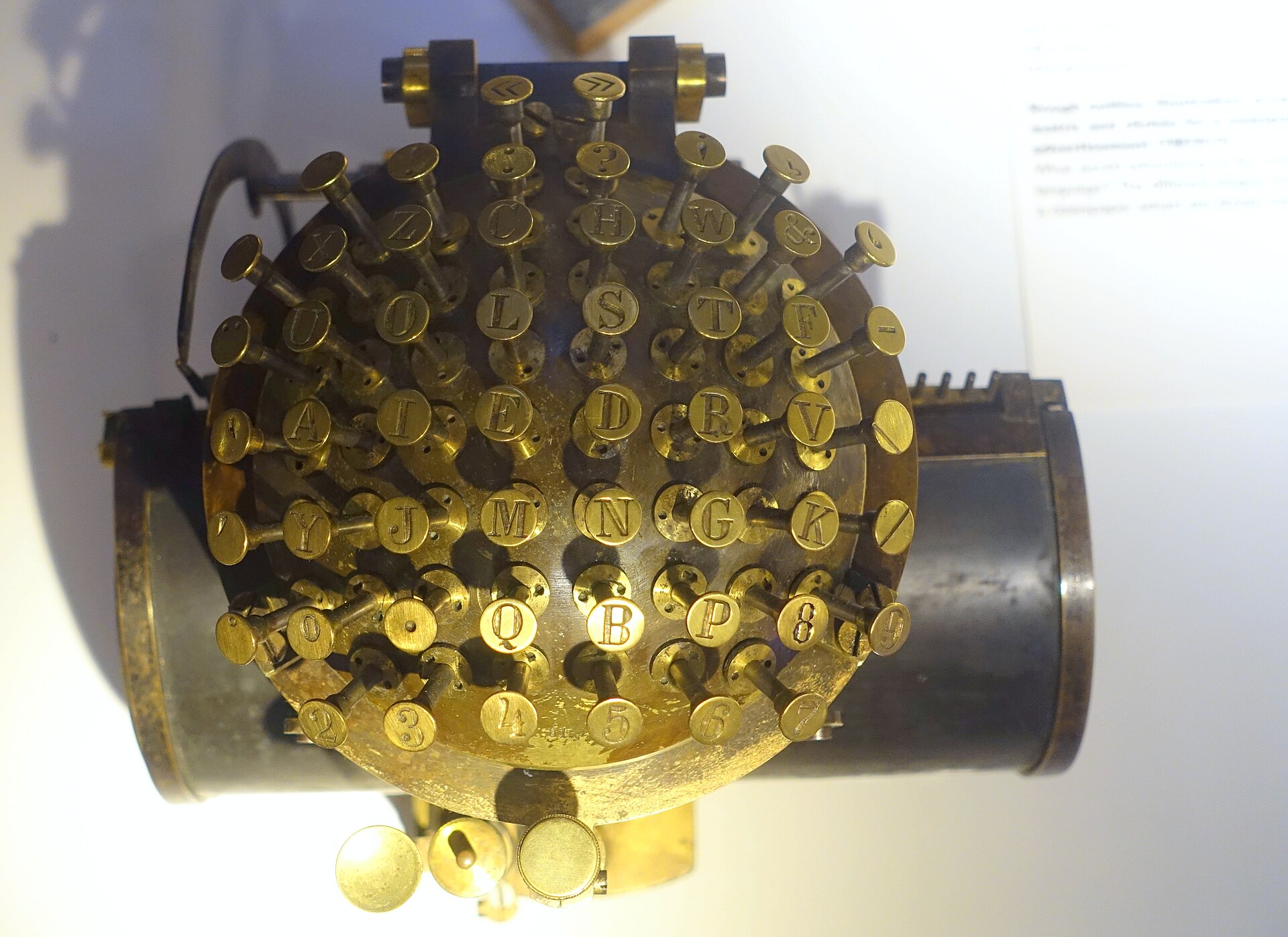
Alfred Ely Beach built a writing-machine prototype in 1847 and a patent model in 1856. Samuel Francis of Rhode Island followed in 1857 with a piano-key machine. Around 1869 Rasmus Malling-Hansen introduced his Writing Ball and in 1870 he received a patent for it, though only about 180 were produced.
2. Sholes and the First Practical Typewriter
The typewriter's practical form emerged from the workshop of Christopher Latham Sholes, who was born near Mooresburg, Pennsylvania, in 1819 and died in Milwaukee in 1890 aged 71. In 1867 he read a Scientific American article about a British writing machine and was inspired by it. Carlos Glidden urged him to rework the device and pointed him toward John Pratt's writing machine.
Sholes, Glidden and Soule filed an application in October 1867, and US Patent 79,265 was published on 23 June 1868 under the title Improvement in type-writing machines. The design arranged typebars of equal length in a circular disk so that they struck a single central point. Its specification calls for a keyboard similar to a piano's, with one more key than the number of types. The patent describes 21 keys while the scale model submitted to the Patent Office has only 11 keys. A second model wrote far faster than a pen.
Several features of the design proved enduring: a line-spacing cylinder, an escapement for letter spacing, typebars striking a common centre, and printing through an inked ribbon. The first typewriter had no shift key and wrote capitals only. Prototypes were sent to court reporters and telegraph operators.
Densmore had 15 machines built in Chicago for $1,000; they proved defective and were junked. In 1873 Densmore signed a contract with Remington for 1,000 typewriters and paid the company $10,000 for the work. That same year Sholes sold the manufacturing rights to Remington, and the layout he handed over had no 1 or 0 keys, using the letters I and O instead to save money. The machine was marketed as the Remington Typewriter.
3. The Sholes & Glidden and the QWERTY Keyboard
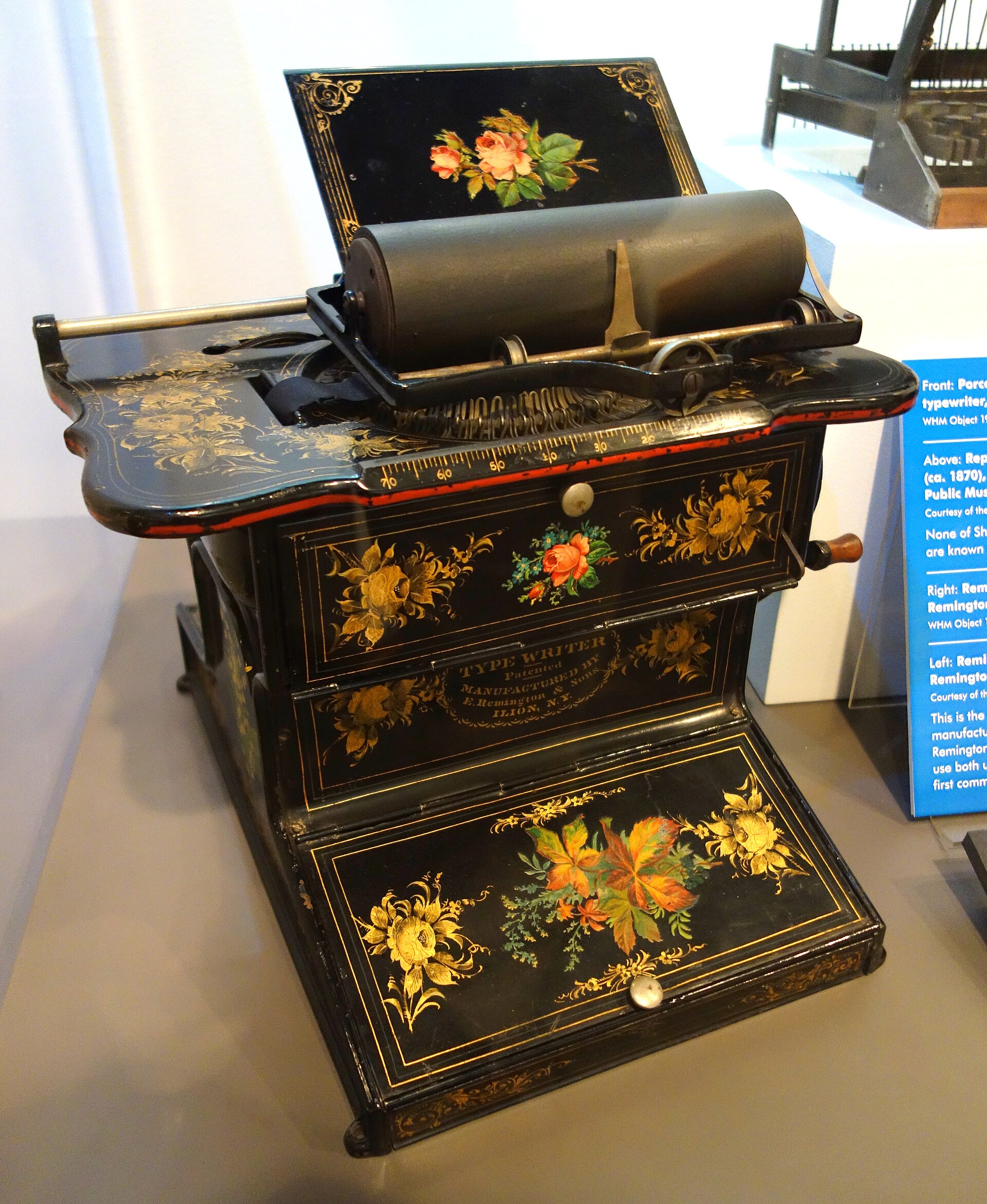
Remington manufactured the Sholes & Glidden from 1873 and it became the first commercially successful typewriter. It was the first typewriter that let operators write significantly faster than by hand. The machine typed only capitals and introduced the QWERTY keyboard, which spaced common letter pairs apart to stop typebars clashing rather than to slow typists.
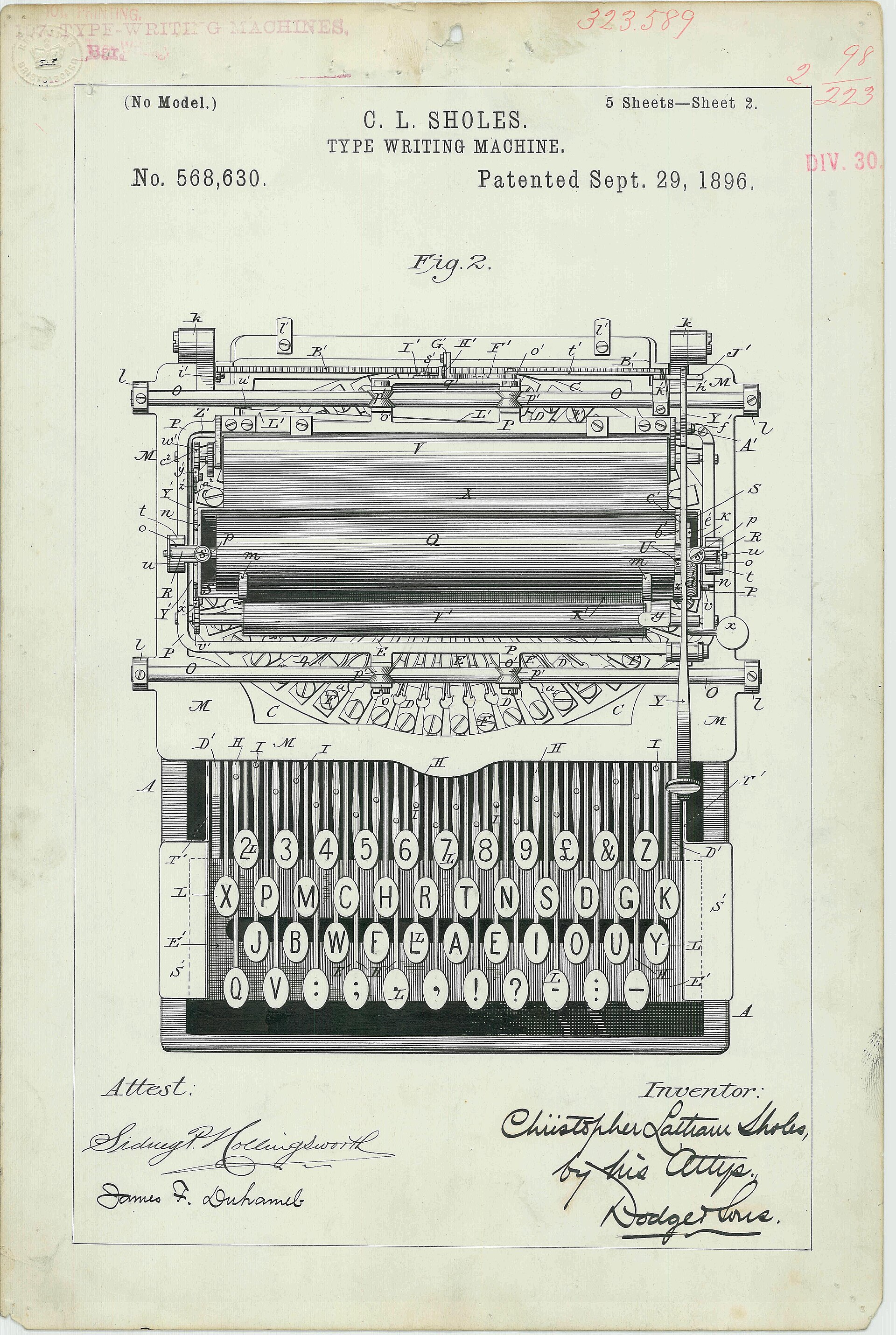
US Patent 207,559 was published on 27 August 1878 under the title Improvement in type-writing machines and contains a diagram of the complete QWERTY keyboard with R in its modern place.
Remington and Sons marketed a later model for $125 a machine. Serial numbers suggest about 5,000 sold between 1874 and 1878 while the machine evolved into several models.
The desk model weighed 30 pounds and measured 14 inches high, 17 inches wide and 12 inches long.
4. Design Evolution: From Blind Writers to Visible Machines
The earliest machines were understroke or blind writers: typebars arranged in a circular basket beneath the platen, with the operator herself confusingly called a typewriter. The upstrike typewriter remained the office standard through the 1880s and 1890s, printing on the underside of the platen so that operators could not see their work as it was produced.
Designers avoided adding keys for capitals and small letters by placing two types on each bar and shifting the cylinder. The Remington Model 2 reached the market in 1878 as the first typewriter fitted with a shift key. Makers went on to add automatic line spacing, automatic ribbon reversal, margin locks and releases and tabulators.
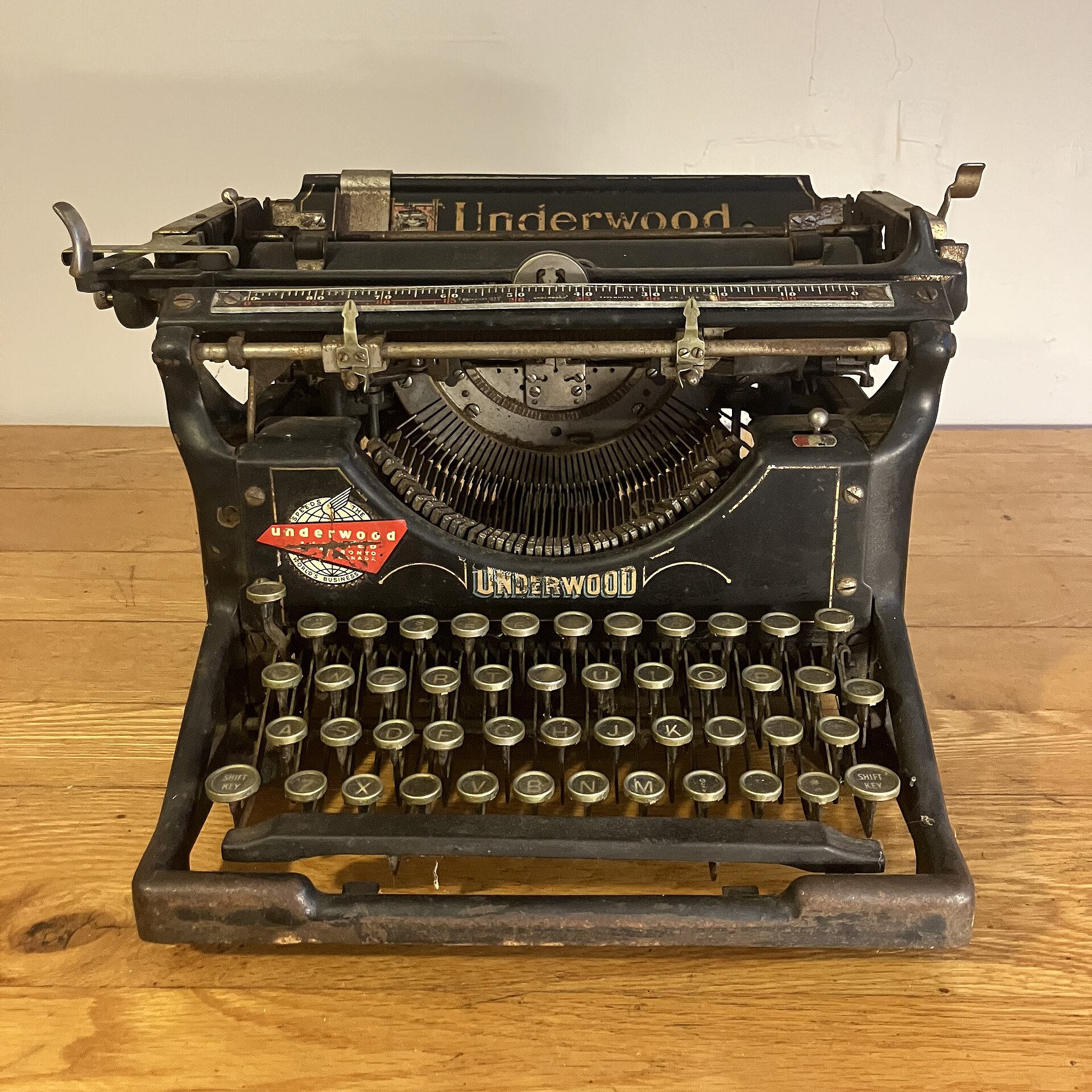
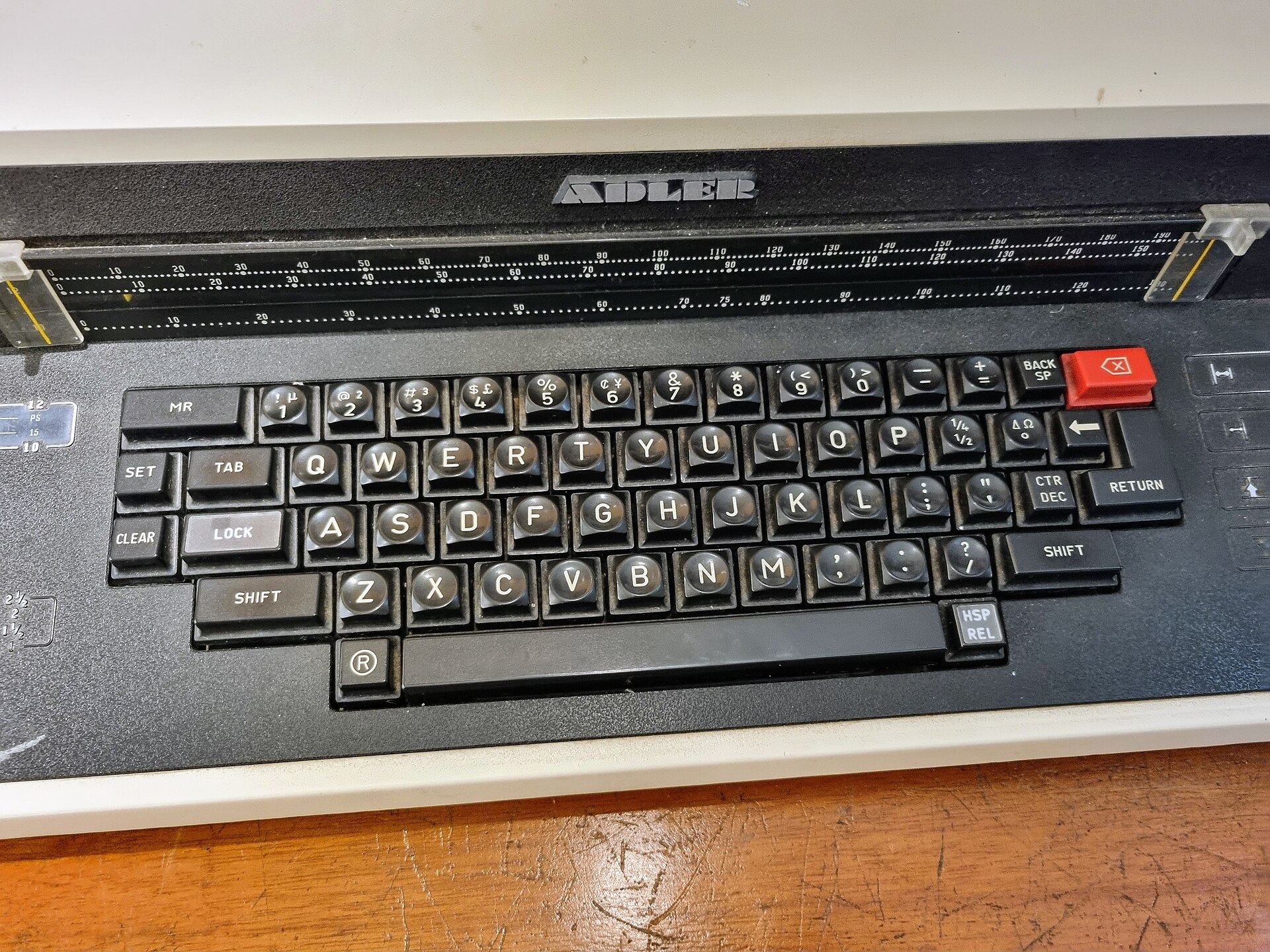
During the first decade of the twentieth century the office standard shifted from upstrike to the front-strike visible typewriter. By the 1920s virtually all typewriters were front-stroke, QWERTY, typebar machines printing through a ribbon with one shift key and four banks of keys. The first successful portable typewriters appeared in 1909.
Underwood sold nearly four million Model 5 and the similar Model 3 and Model 4 machines between 1901 and 1931. Leading keyboard typewriters cost $95 to $100 and offered speed and legibility handwriting could not match. Typewriters did not become common in offices until after the mid-1880s.
Before refillable fountain pens arrived in 1884, handwriting was a laborious process of pens dipped in ink; the typewriter instead produced legible documents and multiple carbon copies.
5. Electric Typewriters and the Selectric
The electric typewriter was pioneered as an office machine by James Smathers in 1920 with motor-driven typing strokes. Even so the average typewriter of 1960 still used the basic architecture introduced in 1873 with a moving carriage and a nest of typebars.
The Selectric debuted on 31 July 1961 and replaced individual typebars with 88 characters around a spherical element 1 3/8 inch in diameter. The design ended jamming and the moving carriage. It contained some 2,800 parts. It could print 186 words a minute with characters striking as little as 20 milliseconds apart.
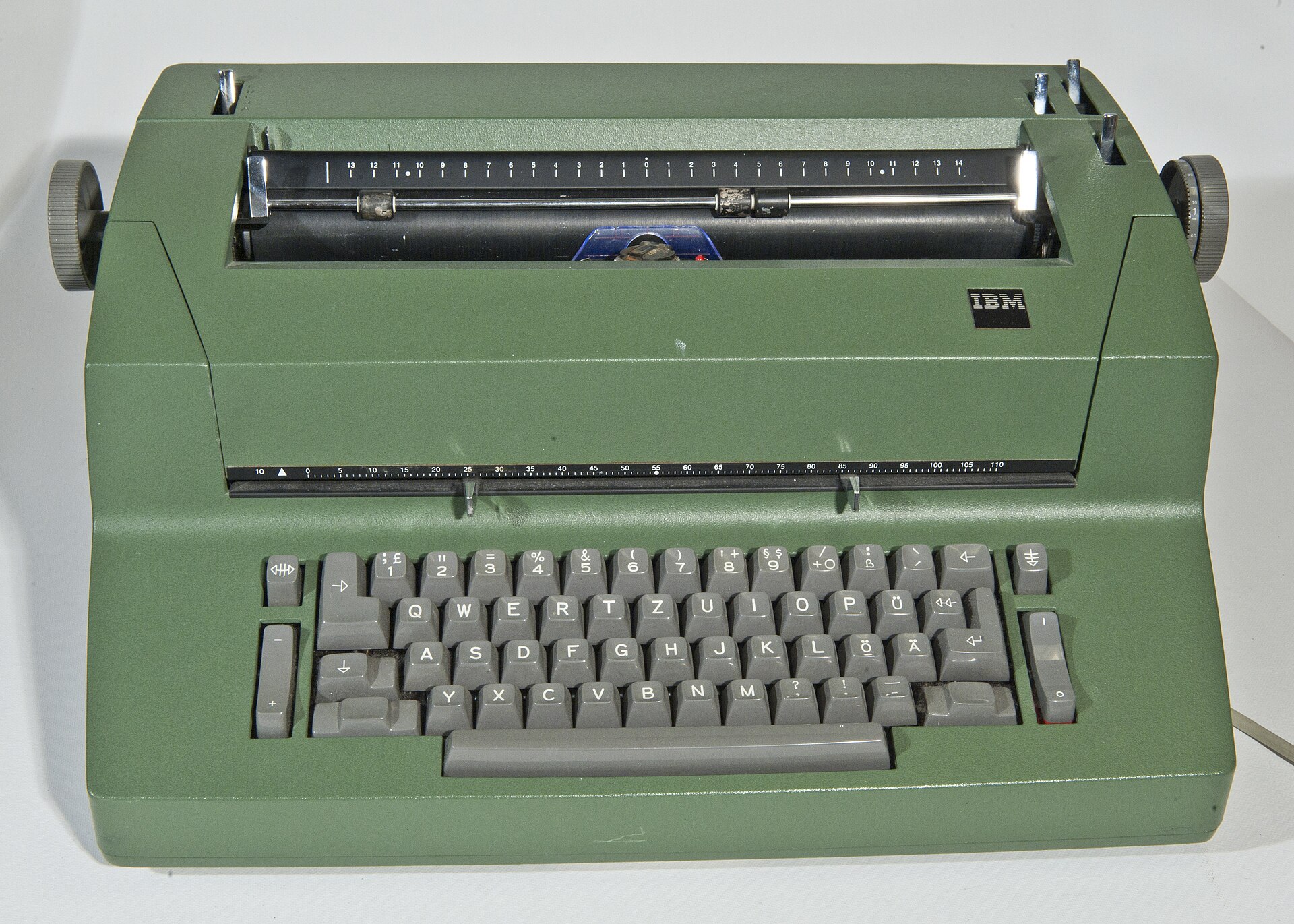
The Computer History Museum's Selectric example weighs 33 pounds and measures 18 1/2 inches wide, 7 1/4 inches high and 16 inches long.
IBM entered the electric typewriter business in 1933. It sold 80,000 Selectrics in the first year, four times its projections, and more than 13 million in total, and by 1978 it held 94 per cent of the electric typewriter market.
A modified Selectric, the IBM 2741 Terminal, served as a keyboard terminal for the System/360 computer. The smaller Model 721 cost $395 and weighed 31 pounds, while the wider Model 725 cost $445 and weighed 37 pounds.
6. Word Processing and the Typewriter's Decline
A magnetic tape system added in 1964 turned the Selectric into the MT/ST, the first word-processing device, though its storage was analog.
The first practical personal computers in 1981 heralded the end of dedicated word processors. Wang Laboratories filed for bankruptcy in 1992 after heavy losses.
Composing typewriters were developed because skilled typesetting labour was costly and the machines needed far less operator training.
In 1979 the Nixdorf 8840 word-processing system reached the market and became widely used in offices. IBM officially retired the Selectric in 1986 as personal computers and printers spread through offices.
In 2011 Godrej and Boyce stopped production at its last typewriter factory in Satara, Maharashtra.
7. Typing, Training and the Office Workforce
The tradition of employing women as telegraph operators helped make typing seem suitable for them, though typists were paid less than male colleagues and were expected to leave when they married. The final decade of the nineteenth century brought a boom in demand as organisations saw the typewriter's value for modernising office work.
A controlled study by Earle Strong for the General Services Administration found that Dvorak typists could match but not surpass their QWERTY speeds.
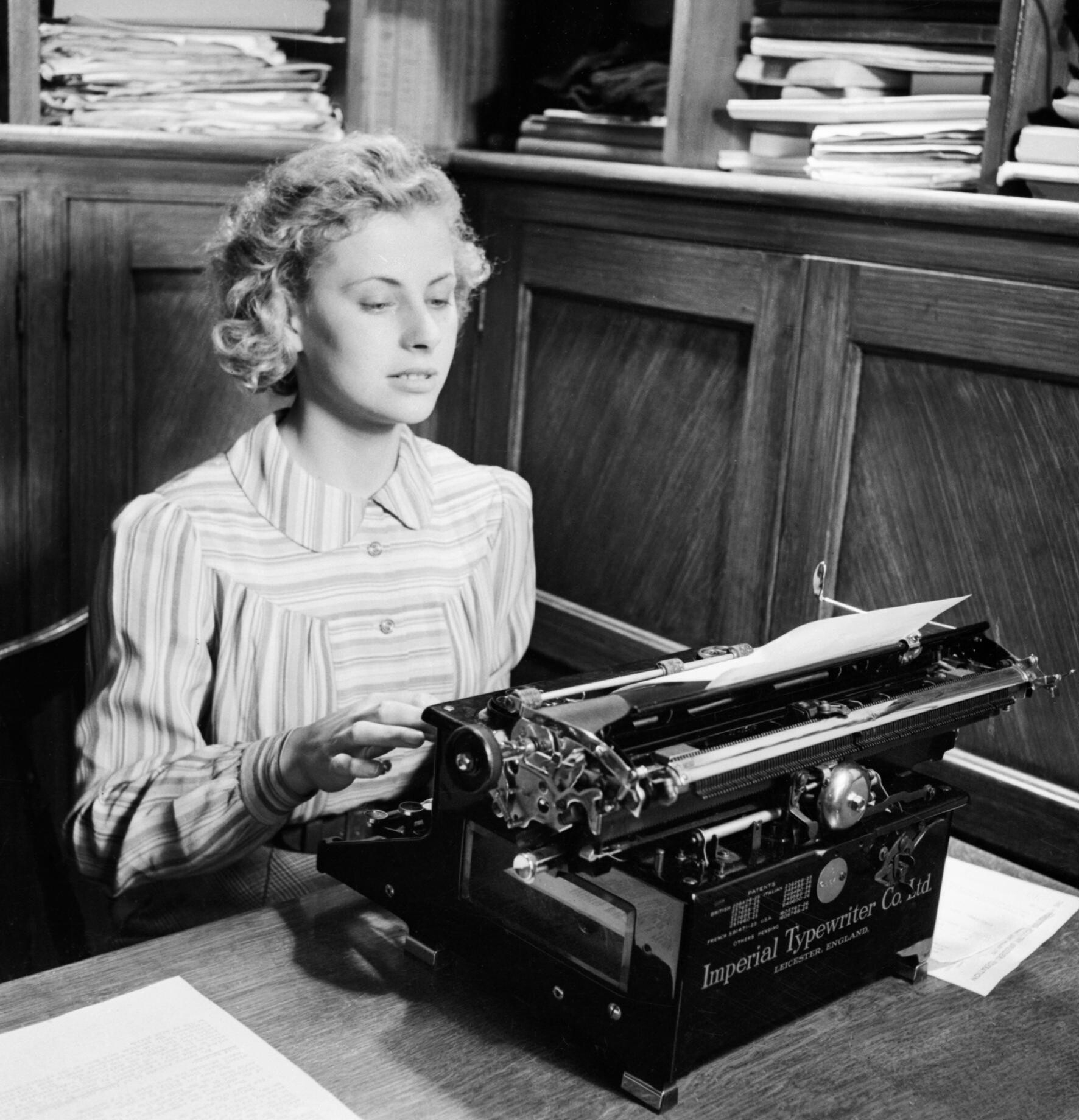
Touch typing spread after a highly publicized contest in 1888 demonstrated its superiority.
Dvorak cited pre-war research that after three years of instruction the average typing student reached 47 net words per minute.
In a 1944 Navy study fourteen typists needed an average of 52 hours to match their QWERTY speeds on the Dvorak layout. Ethelinda Hadwen opened the first typewriting office in Scotland at Edinburgh in 1886 with Elizabeth Fleming, and by 1901 women made up 99 per cent of Scottish typists.
Typewriters reached Scotland in 1876 at a cost equal to half the average annual salary, and until the Equal Pay Act of 1970 women in typing roles were paid far less than men.
8. Typewriters in Culture and Manufacturing
Arthur Conan Doyle put a typist, Mary Sutherland, at the centre of his 1891 story A Case of Identity, possibly the first use of a typewriter as a plot device.
Smith and Corona Typewriters of Syracuse, New York, made the Corona Standard typewriter. Smith Corona became Smith Corona Marchant in 1958 and, after two bankruptcies, returned in 2010 as a thermal paper manufacturer.
9. Key Dates
-
1873Sholes sells patent rightsSholes sold his patent rights to the Remington Arms Company for $12,000 and saw the machine marketed as the Remington Typewriter.16Christopher Latham Sholes · Encyclopaedia Britannica ↗
-
27 August 1878US Patent 207,559 publishedPublished under the title Improvement in type-writing machines.17Improvement in Type-Writing Machines, US Patent 207,559 (1878) · United States Patent and Trademark Office, via Google Patents ↗
-
1920Smathers electric typewriterJames Smathers pioneered the electric typewriter as an office machine with motor-driven typing strokes.1Typewriter · Encyclopaedia Britannica ↗
10. Timeline: from Henry Mill's patent to the last typewriter factory
- 1714Henry Mill patents a writing machineAn English patent was granted for a writing machine, described as an artificial machine or method for impressing letters singly and progressively one after another. It is the earliest documented proposal for a mechanical writing device.
- 1808Turri builds a machine for a blind countessPellegrino Turri built a writing machine for his blind friend Countess Carolina Fantoni da Fivizzano. Letters written on it survive, although the machine itself does not.
- 23 June 1868Sholes, Glidden and Soule patent the typewriterUS Patent 79,265 covered an improvement in type-writing machines, with typebars of equal length radiating in a circular disk and striking a single central point. The named inventors were Sholes, Glidden and Soule of Milwaukee.
- 1873Remington agrees to manufactureJames Densmore signed a contract with the Remington gun factory in Ilion, New York, for 1,000 typewriters at a total of $10,000. Remington's machinists reworked the design for production.
- 1874The Remington Model 1 goes on saleThe machine reached the market as the Remington model 1 at $125, after further modification by Remington machinists and craftsmen. Mark Twain bought one on impulse in Boston.
- 1878The Remington Model 2 adds the shift keyThe first shift-key typewriter put a capital and a small letter on each bar and moved the cylinder to select between them. Double-keyboard machines with twice the keys competed with it for years.
- 27 August 1878Sholes patents the QWERTY keyboardUS Patent 207,559 contains the first diagram of the complete QWERTY layout, with the R key in its modern place in the top row of letters.
- 1888A public contest spreads touch typingA highly publicized speed contest demonstrated the superiority of touch typing, which was consistent with using six or more fingers, over the two-finger methods then common.
- 1895Underwood sets the front-stroke standardWith the Underwood of 1895 the front-stroke typewriter began to gain ascendancy over blind upstrike machines, because the operator could see the paper while typing.
- 1920The electric typewriter becomes an office machineJames Smathers pioneered the electric typewriter as an office writing machine, powering the typing stroke with a motor instead of finger force.
- 1933IBM enters the electric typewriter businessIBM bought the production facilities of Electromatic Typewriters and began developing electric office machines, work that eventually produced the Selectric.
- 31 July 1961IBM launches the SelectricThe Selectric replaced the nest of typebars with a single spherical element carrying 88 characters. It could print 186 words a minute and sold 80,000 units in its first year.
- 1964The MT/ST introduces word processingA magnetic tape unit added to the Selectric let typed text be stored, corrected and retyped automatically. The Magnetic Tape Selectric Typewriter became the first, analog, word processor.
- 1981Personal computers end dedicated word processorsThe first practical personal computers could run several applications and were far more capable than single-purpose word-processing machines. Wang Laboratories filed for bankruptcy in 1992.
- 1986IBM retires the SelectricAs personal computers and printers spread through offices, IBM officially retired the Selectric line after more than 13 million units had been sold.
- 2011The last typewriter factory closesGodrej and Boyce stopped production at its typewriter factory in Satara, Maharashtra, ending the last large-scale manufacture of typewriters.
References (19)
- 1Typewriter — Encyclopaedia Britannica Archive↩View source
- 2Was the Patent Application for the Typewriter Handwritten? — Lemelson Center for the Study of Invention and Innovation, Smithsonian Institution ArchiveView source
- 3A Brief History of Typewriters — The Classic Typewriter Page, Xavier University WebView source
- 4Early Typewriters — Early Office Museum WebView source
- 5Type-writing ahead of time: John Galloway's inventions — National Museums Scotland ArchiveView source
- 6Sholes & Glidden Desk Typewriter, 1874-1876 — The Henry Ford 1874 WebView source
- 7The Typewriter: An Innovation in Writing — SFO Museum, San Francisco International Airport WebView source
- 8The IBM Selectric — IBM WebView source
- 9Selectric typewriter, catalogue number 102667979 — Computer History Museum WebView source
- 10Word processing — Systems to make writing easy — Heinz Nixdorf MuseumsForum 1970 WebView source
- 11Godrej and Boyce to shut typewriter production — India Today 2011 WebView source
- 12History of the typewriter — National Museums Scotland ArchiveView source
- 13The Dvorak Keyboard — Massachusetts Institute of Technology WebView source
- 14Typewriters, women, and the advancement of workplace equality — National Museums Scotland ArchiveView source
- 15Smith and Corona Standard Typewriter — Smithsonian National Museum of American History ArchiveView source
- 16Christopher Latham Sholes — Encyclopaedia Britannica Archive↩View source
- 17Improvement in Type-Writing Machines, US Patent 207,559 (1878) — United States Patent and Trademark Office, via Google Patents 1878 Web↩View source
- 18Improvement in Type-Writing Machines, US Patent 79,265 (1868) — United States Patent and Trademark Office, via Google Patents 1868 WebView source
- 19Christopher Sholes invents QWERTY keyboard — The Centre for Computing History WebView source