Caravanserai
The story of the caravanserai, the roadside inn of the Islamic world and the Silk Roads: its Persian origins, its architecture and services, its spread from Anatolia to Mughal India and Ottoman Damascus, and its inscription on the UNESCO World Heritage List in 2023.
A caravanserai was a fortified roadside inn that gave shelter, food and water to caravans, pilgrims and other travellers from the Achaemenid period to the early 20th century. Spaced a day's journey apart along the trade and pilgrimage routes of Iran, Anatolia, Syria and Arabia, these buildings combined stables, storerooms and lodgings around a courtyard, and served as places where merchants, pilgrims and officials exchanged goods, ideas and knowledge. The Seljuk sultans of Anatolia turned them into a state-run charitable system, Ottoman bazaars grew out of their urban hans, and in 2023 UNESCO inscribed The Persian Caravanserai, a serial property of fifty-four caravanserais in Iran, under criteria (ii) and (iii). Railways and motor roads ended their function, and many surviving buildings are now heritage sites.
In this article
- 1Overview
- 2Etymology and Terminology
- 3Origins and Historical Development
- 4Function and Social Role
- 5Architecture and Typology
- 6Siting, Spacing and Water
- 7Regional Traditions
- 8Named Caravanserais
- 9The Persian Caravanserai World Heritage Property
- 10Key Dates
- 11Frequently Asked Questions
- 12Timeline: from the Achaemenid Royal Road to the 2023 World Heritage inscription
- 13Knowledge graph
Overview
A caravansary is a public building of the Middle East and parts of North Africa and Central Asia used for sheltering caravans and other travelers. Caravanserais were roadside inns that provided shelter, food and water for caravans, pilgrims and other travellers.
1. Etymology and Terminology
The word caravansary, also rendered Caravansarai or Caravansaray, derives from the Persian karvansara or karvansaray, meaning a lodging for caravans; the Persian root carries the sense of "to protect", while the Turkish form kervansarayi means "caravan palace". The castle-like profiles of these caravan-palaces still punctuate the skyline of the Kayseri plain, their richly carved portals standing as symbols of the relief and security they once offered on a long and hazardous journey. The same building was sometimes called a khan, functioning as the inn of the Orient for commercial, pilgrim, postal and especially official travellers.
The khan is best understood as a type of inn that served at once as trading centre and hostel. In the 16th century, under Ottoman rule, khans became one feature of a larger complex that could include a mosque, a fortress, a bath and other amenities. Khans were much smaller than caravansaries and were built within towns rather than on the outskirts, and modern motels and motor inns may be considered descendants of the khan.
2. Origins and Historical Development
From the Achaemenid era onwards, a network of roads was built across Iran, among which one of the most important was the road between Susa and Sardis in Anatolia, running for a distance of about 2,500 kilometres (1,600 miles). This Royal Road was the most famous route of the Persian road network: an all-weather highway from Susa, the Persian capital, across Mesopotamia, Syria and Anatolia to Sardis. Like modern roads it bypassed big cities to avoid delays; camel caravans took some 90 days to make the journey, while relays of royal messengers on fresh steeds, riding between 100 fortified stations, could complete it in nine days.
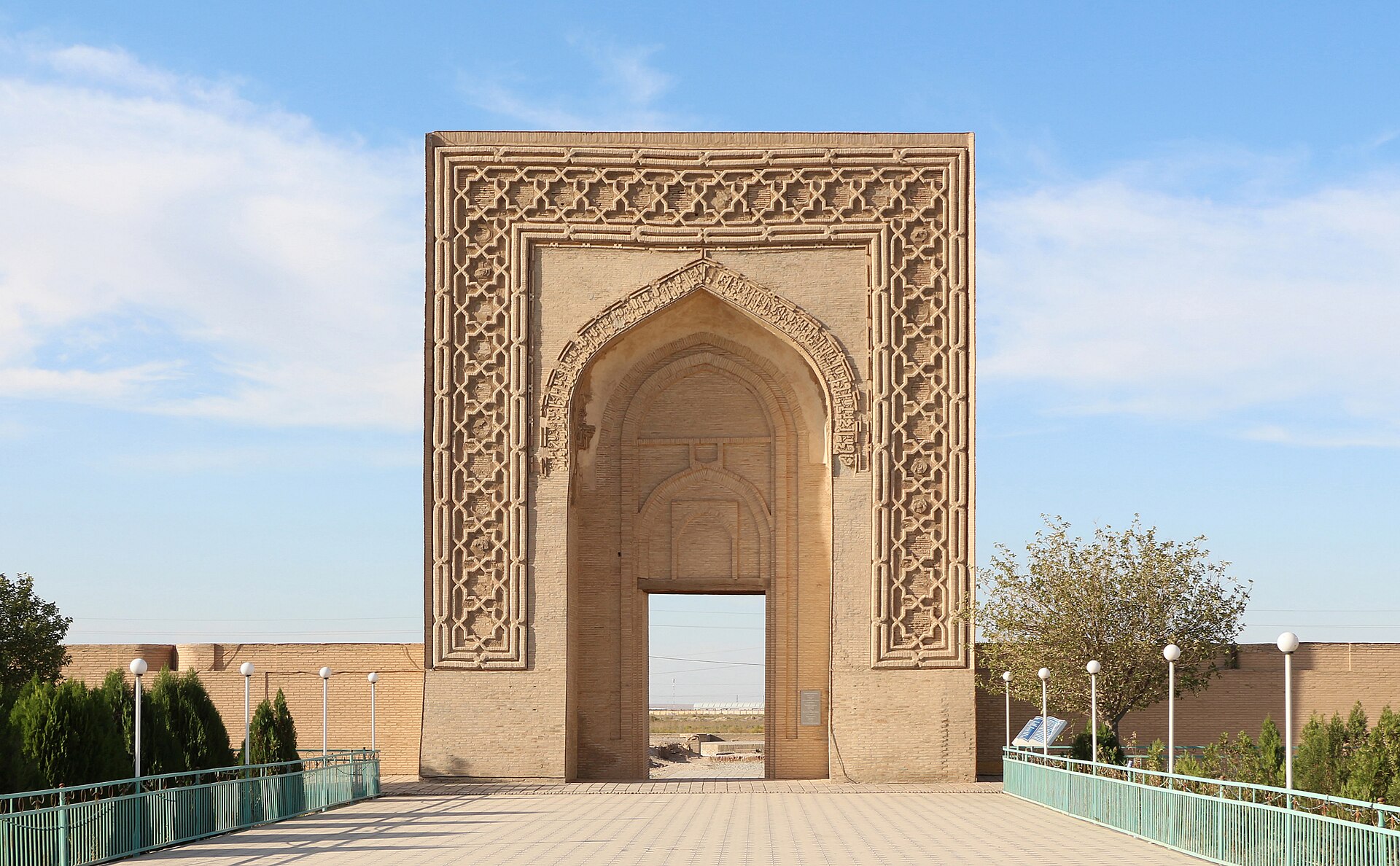
Increased security during the Seljuk era led to further construction of caravanserais, and two examples from this era are included in the nominated property: Parand (Ghalʿe Sangi) and Robāt-e Sharaf. The Persian caravan system reached a high point in the 11th and 12th centuries under the Great Saljuqs, whose first rulers governed Persia, Iraq, Syria, central and eastern Anatolia, much of Transoxania as far as Khwarazm, and much of Afghanistan. In the Safavid period (1501-1722) new connections emerged, new roads were built and old ones were repaired, and this era is considered the golden age of caravanserai construction in Iran. The last caravanserais were built under Naser al-Din Shāh (1848-1896), but the emergence of motorised transportation reduced their relevance, and the trans-Iranian railway network together with large-scale use of motor vehicles led many caravanserais to be gradually abandoned and fall into decay.
3. Function and Social Role
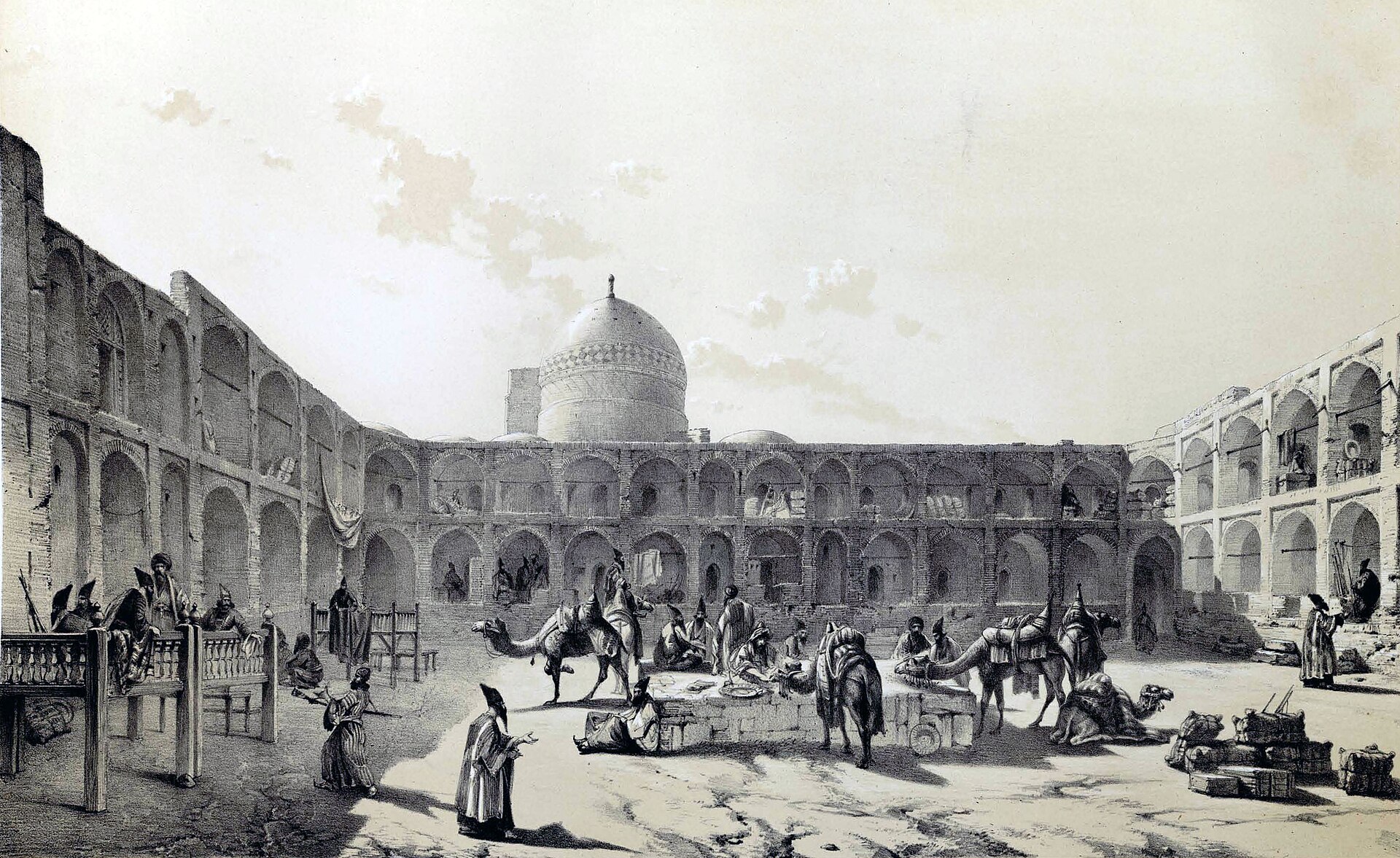
Caravanserais were built to ease the passage of travellers and pilgrims along long or difficult roads that crossed varied geographical conditions, deserts above all. Over the centuries they served as gathering places where people of different ethnicities, languages and religions met, and through this they contributed to the exchange of human values, ideas and knowledge. In this way the caravanserai became a setting for interaction between civilizations across the last three millennia. Political authorities from late antiquity onward took responsibility for establishing and maintaining caravan routes, keeping wells and springs in working order, setting up resting places along the routes and managing the shelters themselves. A traveller who paid an entrance fee could obtain provisions, sleeping quarters and stables under the protection of watchmen.
Such institutions were established by religious foundations on pilgrim routes or by merchants' guilds, and likewise by rulers and notables on commercial routes, which were often identical with the pilgrim routes. The Seljuk caravanserais functioned as charitable foundations that offered three days of free shelter, food and entertainment. In time this charitable function was lost, as caravanserais were absorbed into the urban environment and converted into commercial depots, frequently wholesale centres selling particular goods.
4. Architecture and Typology
The caravanserai is fundamentally a quadrangular enclosure, wrapped in a massive wall pierced by small windows set near the top. Its single gateway is heavy-doored, high and wide enough to admit a loaded camel, and at night it is secured from within by massive iron chains. Inside, the ground floor opens onto a central court ringed by a cloisterlike arcade and cellular storerooms, with broad stone stairways rising to a second story of small rooms. The ground floor serves merchandise or the stabling of camels, while the upper rooms take the lodgers; the court itself is paved with flagstones and is usually large enough to hold three or four hundred crouching camels or tethered mules. No food or provender is supplied, but a porter appointed by the municipal authority guards the building and its goods, and the caravansary remains open from early dawn until late evening.
The normal plan is square or rectangular and centred on a courtyard, with only one entrance and deliberate defensive arrangements, so that the building offers security against beasts of prey and brigands even when it is not fortified. Larger caravansaries added storerooms, latrines, baths and places for prayer, and a prayer niche was sometimes set in one of the iwans according to its orientation toward Mecca. Pavilion caravansaries could stand open on all sides to catch cooling winds, with cisterns beside them that were usually larger than the accommodations themselves. Rebat structures, designed mainly as military guardposts but also sheltering travellers, were considered suitable for large camel caravans.
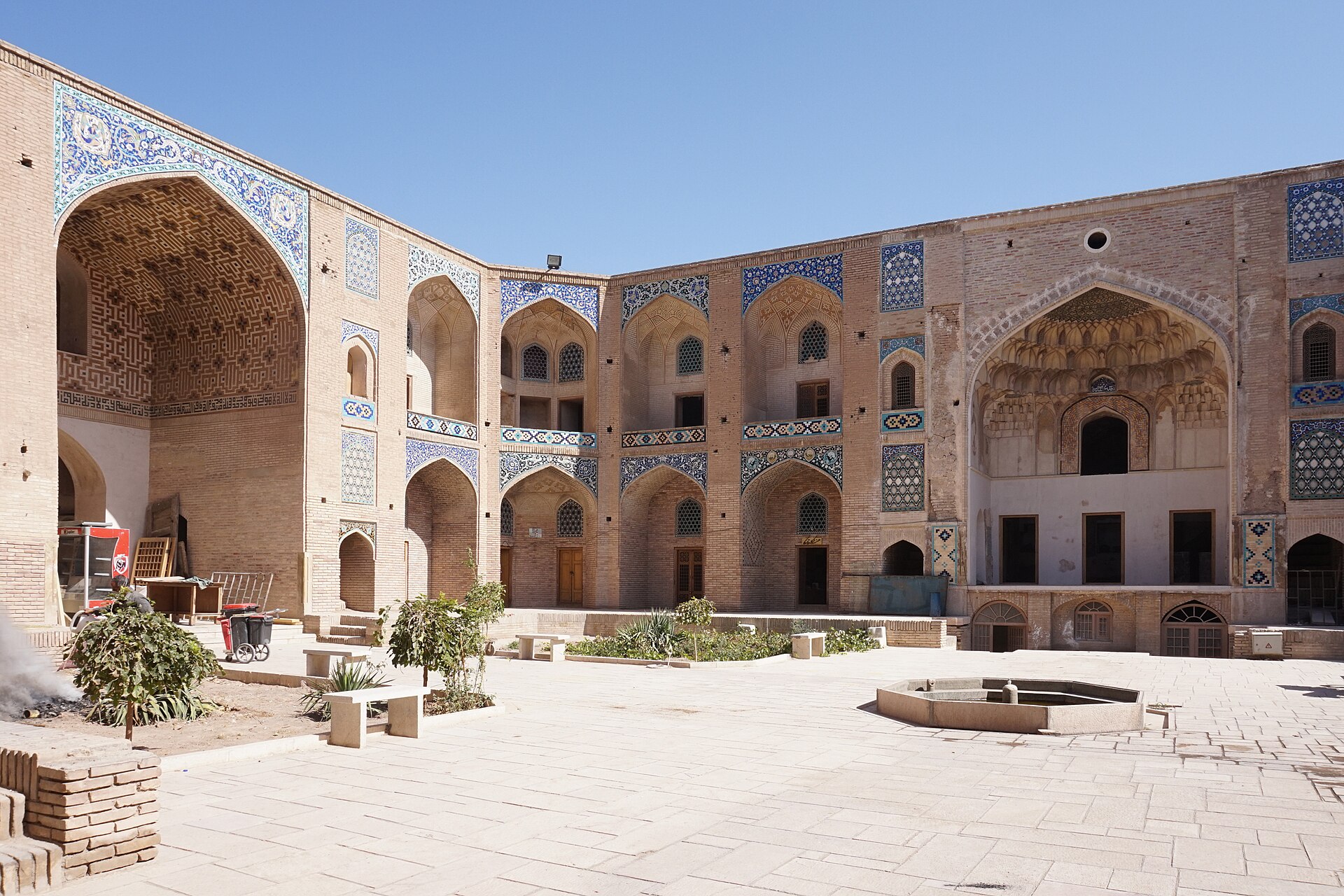
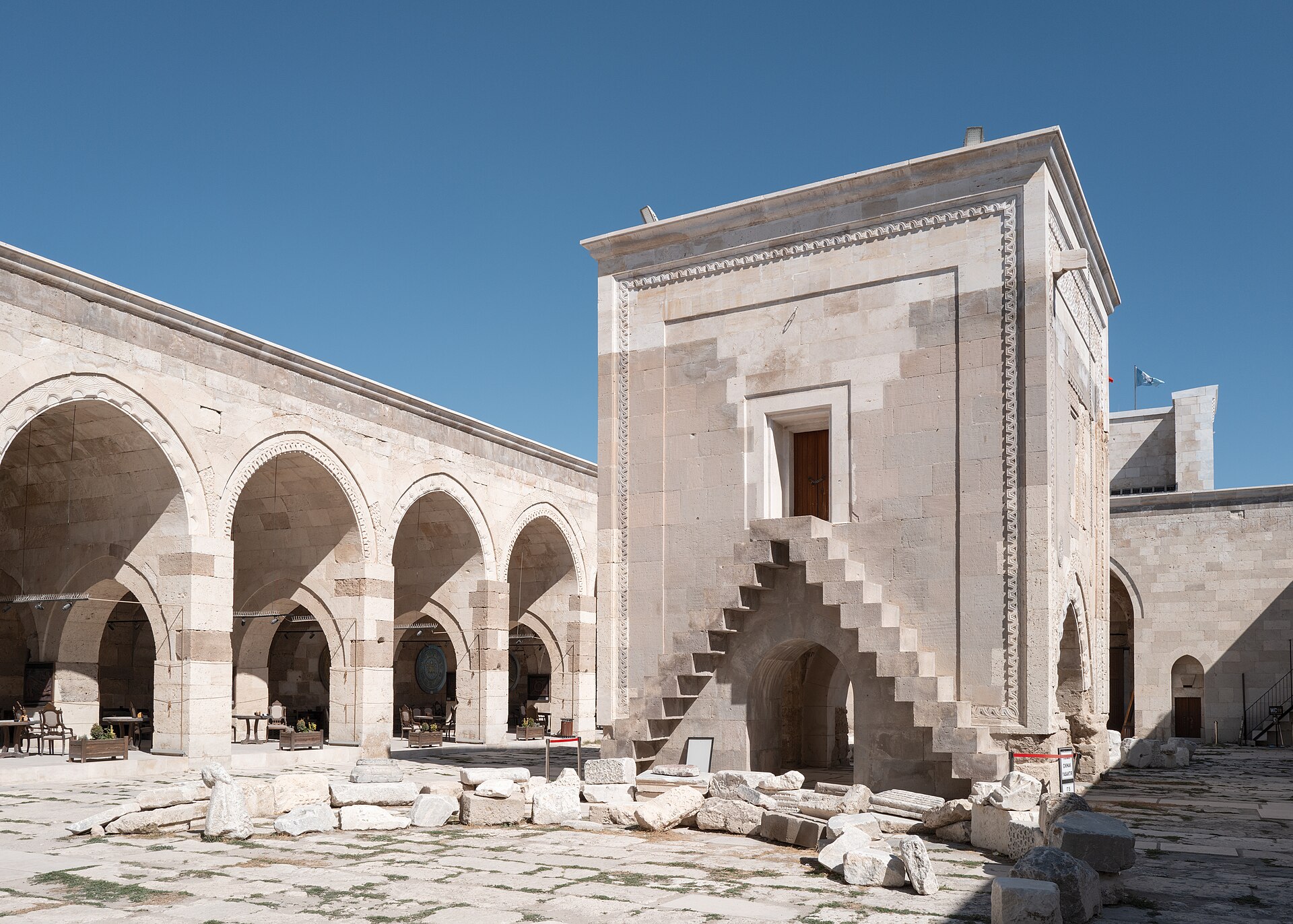
Five main typologies are distinguished according to climatic and geographical conditions: mountain, Persian Gulf (semi-tropical), southern shore of the Caspian Sea, Central Plateau deserts, and plain area types. The majority were built in the plains of the central desert, and these rank among the largest and most magnificent; their dominant plan is a central courtyard with two or four big iwāns, lodgings arranged around the courtyard, and stables set behind the rooms a few steps higher than courtyard level to keep water, mud and dust out. The sahn, or courtyard, is surrounded by one- or two-storey arcades containing rooms for bathing services, storage, stables and staff such as physicians, cooks and musicians. Anatolian Seljuk caravanserais often placed a freestanding kiosk mosque at the centre of the court. Urban and suburban types also belong to the serial property.
In cities, larger multistoried khans developed, some of them architecturally quite sophisticated and offering private rooms with hearths, bathrooms and lavatories. The Buyuk bedesten, built in Istanbul by Al-Fatih in the year 1470, contained 44 shopping cells inside and 64 outside its external walls. The Pirinc Hani (1507), the Fidan Hani, and the Koza Hani (1489), all in Bursa, were mainly markets for grain such as rice.
The Sultanhanı caravanserai was built between 1232 and 1236 in the time of the Seljuk sultan Alaeddin Keykubat I. In the middle of the courtyard of the Sultanhani stands a köşk mescit (kiosk mosque) placed on a substructure of four arches on four piers, with a square prayer hall measuring 8 by 8 meters externally and about 5.30 by 5.30 meters internally.
5. Siting, Spacing and Water
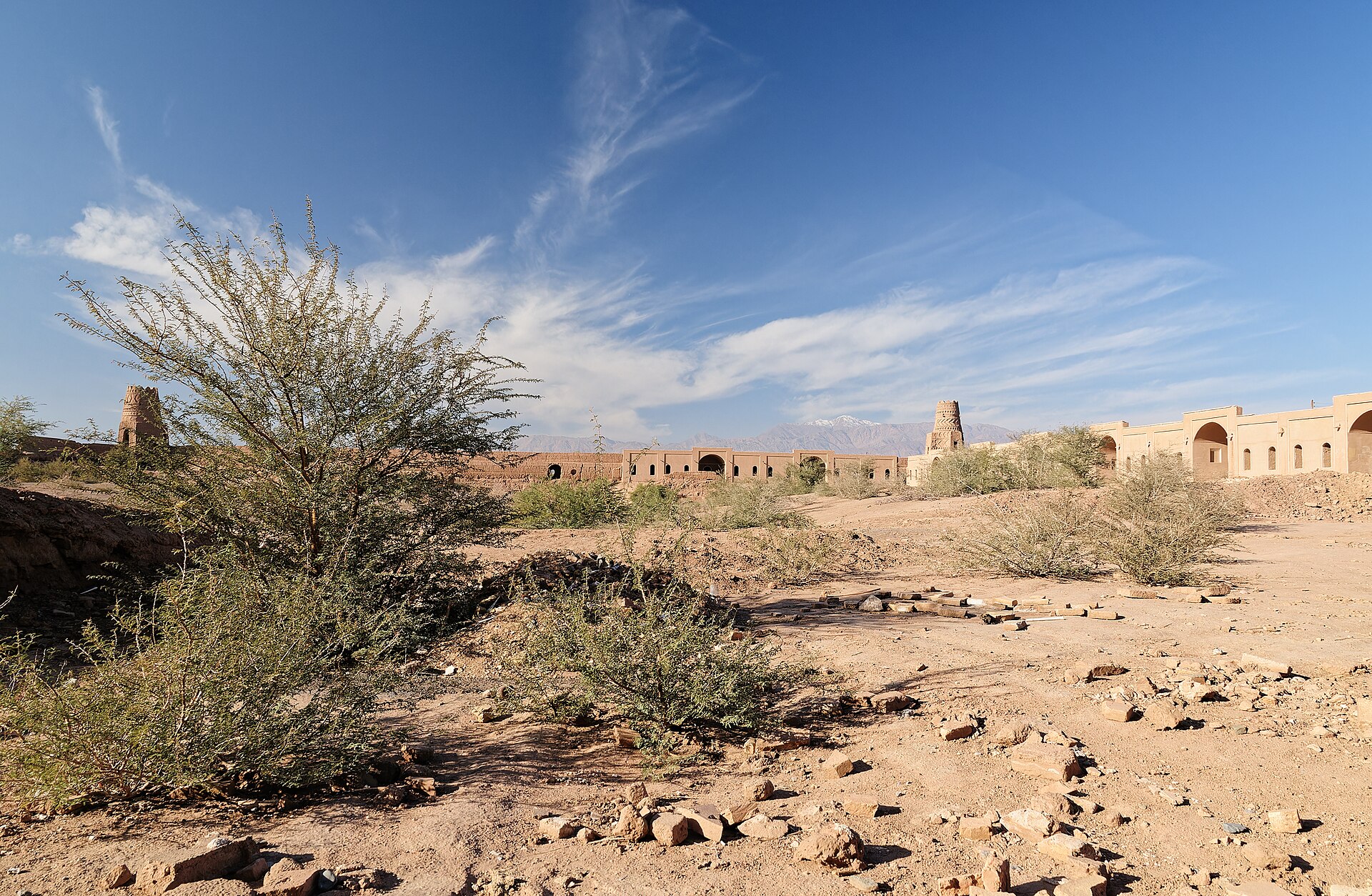
Water scarcity was one of the critical concerns for caravans and travellers, and the locations of caravan halts were determined by the presence of drinking water; cisterns stood at regular distances along the caravan routes, and many caravanserais had cisterns either in the courtyard or outside the building. Roadside khans offered safe, dependable lodging to travelers, pilgrims, merchants and postal convoys — to anyone except soldiers on the march. On level terrain way stations were spaced 30 to 40 km apart, an average of 35 km, a distance that represented a day's caravan journey.
Caravanserais were often built just outside the nearest town or village.
6. Regional Traditions
The caravanserai emerged as a new architectural type with a social function, developed in Central Asia by the Karakhanids and Ghaznavids before passing into Anatolian Turkish architecture, where the institution attained its greatest variety in Seljuk Anatolia through the forms of Anatolian stone architecture. The Seljuk caravanserais on the route from Denizli to Dogubeyazit, a route that cuts Anatolia from west to east, were entered on the UNESCO Tentative List in the year 2000 under criteria (ii), (iii) and (iv). About 250 Anatolian caravanserais are known, of which eight are called sultanhan and were all built in the 13th century.
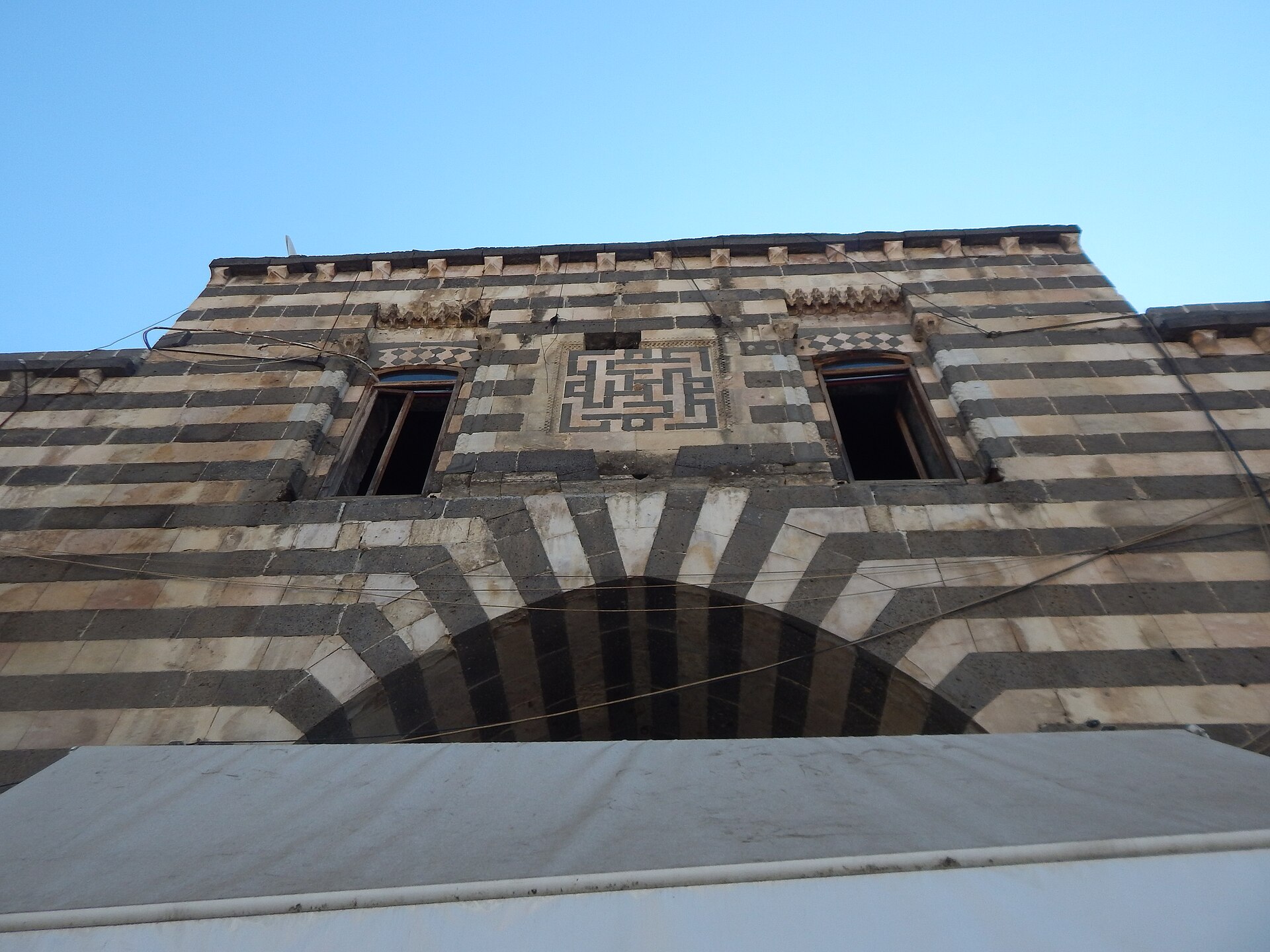
In the Ottoman and Levantine sphere, the han took the form of cells arranged around a courtyard, together with a mosque, shops, stables, a barn and sleeping rooms. Khan al-Harir was constructed in AH 981 (AD 1573 — 4) by order of Darwish Pasha, the Governor of Damascus at the time, as a waqf to benefit the Darwishiyya Mosque; it was first called Qaysariyyat Darwish Basha and later renamed for its function as the silk caravanserai.
7. Named Caravanserais
The surviving names attached to caravanserais record both the patrons who financed them and the routes they served. On the road between Nishapur and Merv stood Rabat Sharaf caravanserai, built between 1114 and 1115, where the plan was altered into two separate functional sections 14The Seljuk Caravanserai (the Khan) · Muslim Heritage (Foundation for Science, Technology and Civilisation) ↗. The same division appears at Akcha Qala of the 11th century, about 80 km northeast of Merv 14.
| Name | Location/Route | Date | Patron/Builder | Notes |
|---|---|---|---|---|
| Rabat-i-Malik | Iran; Bukhara–Samarkand road | 1078–1079 | Sultan Nasr | Typical early Seljuk caravanserai |
| Rabat Sharaf | Road between Nishapur and Merv | 1114–1115 | Plan altered into two separate functional sections | |
| Akcha Qala | About 80 km northeast of Merv | 11th century | Plan altered into two separate functional sections | |
| Ağzıkara Han | Konya–Kayseri route | Covered section Sha'ban 628 (June 1231); courtyard Sha'ban 637 (February 1240) | Commissioned by Hoca Mesud; built by Mesud son of Abdullah | Covered section built in the reign of Sultan Alaaddin Keykubad; courtyard in the reign of Sultan Gıyaseddin Keyhüsrev II |
8. The Persian Caravanserai World Heritage Property
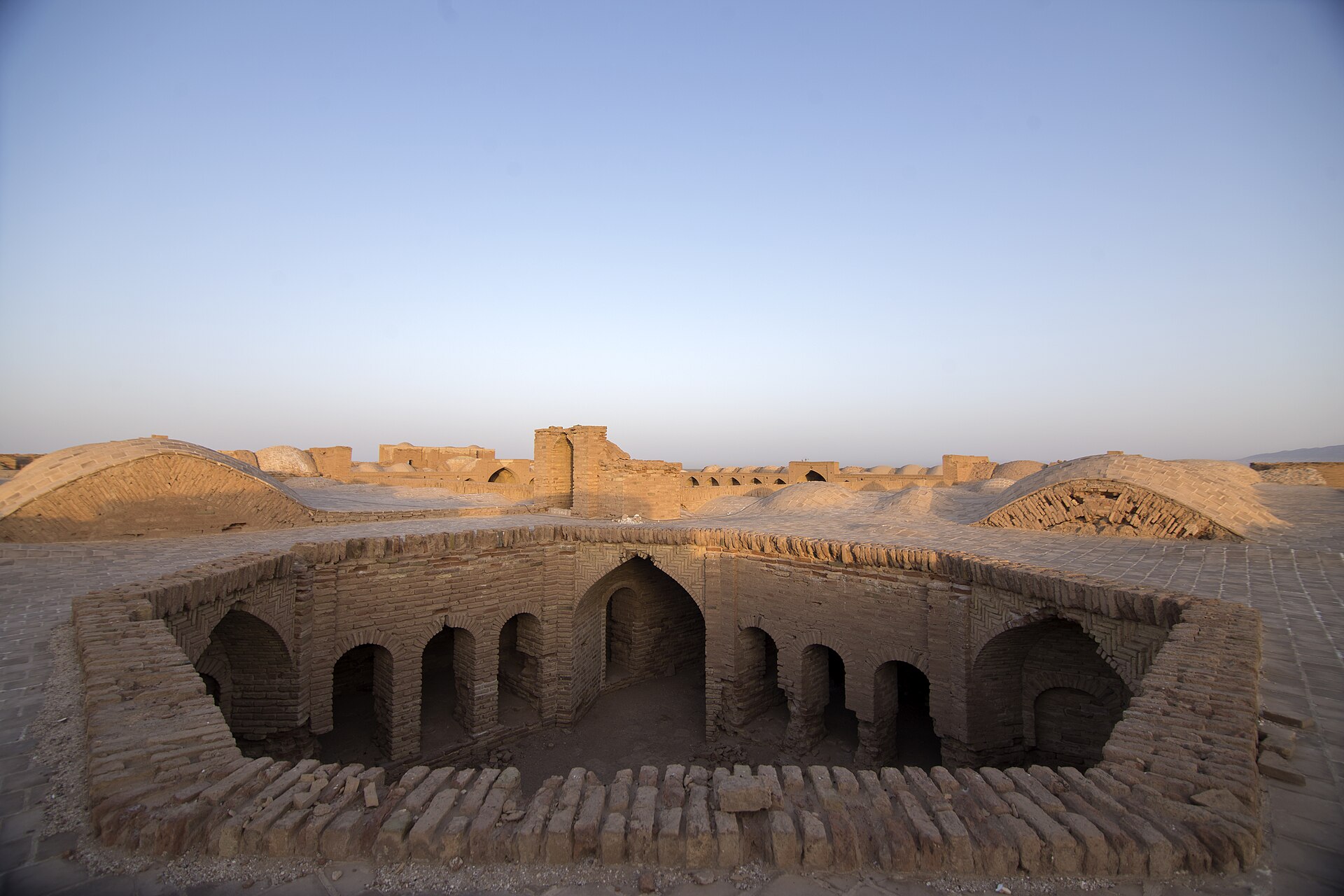
The Persian Caravanserai is a serial World Heritage property of the Islamic Republic of Iran. The 54 caravanserais of the property represent only a small percentage of the numerous caravanserais built along the ancient roads of Iran, and are considered the most influential and valuable examples, revealing a wide range of architectural styles, adaptation to climatic conditions and construction materials, spread across thousands of kilometres and built over many centuries. The property was inscribed on the World Heritage List in 2023, at the 45th session of the World Heritage Committee under Decision 45 COM 8B.11, on the basis of criteria (ii) and (iii). It covers 30.34 ha with a buffer zone of 3,294.58 ha.
The development and evolution of the property from the Achaemenid period (559-330 BC) to the Qajar period (1794-1925) shows the stability and importance of caravanserais in Iranian history.
9. Key Dates
-
247 BCE–224 CEParthian empireTrade between the East and West flourished via the Silk Roads, and numerous stations and caravanserais were built, linking Persia with the East and Central Asian steppes as well as the West and Mesopotamia.5The Persian Caravanserai (Islamic Republic of Iran) No 1668 — ICOMOS evaluation · ICOMOS / UNESCO World Heritage Centre ↗
-
224–651 CESassanid eraAn important period in the development and architecture of pre-Islamic caravanserais, when the flourishing economy of the empire made road construction and the safety of travellers a top priority and led to the construction of many caravanserais on main roads.5
10. Frequently Asked Questions
How did caravans travel to Mecca?
Until the 19th century there were three main caravans to Mecca; the Egyptian caravan set out from Cairo, crossed the Sinai Peninsula and then followed the coastal plain of western Arabia, a journey of 35 to 40 days.17Caravans to Mecca · Saudi Aramco World (Aramco Services Company) ↗
What was the menzil in Anatolia?
The menzil was about 30 kilometres, a six-hour journey plus two hours for arduous travel.12Seljuk Caravanserais on the route from Denizli to Dogubeyazit · UNESCO World Heritage Centre ↗
11. Timeline: from the Achaemenid Royal Road to the 2023 World Heritage inscription
- 559-330 BCAchaemenid road networkThe development of the Persian caravanserai tradition begins with the Achaemenid period and continues, in the assessment of the World Heritage listing, down to the Qajar period.
- 247 BCE-224 CEParthian stations and the Silk RoadsDuring the Parthian empire trade between East and West flourished via the Silk Roads, and numerous stations and caravanserais were built, linking Persia with the Central Asian steppes and with Mesopotamia.
- 224-651 CESassanid road buildingThe Sassanid era was an important period in the development and architecture of pre-Islamic caravanserais, when road construction and the safety of travellers became a priority of the state.
- 1078-1079Rabat-i-Malik builtRabat-i-Malik, a typical early Seljuk caravanserai in Iran, was built between 1078 and 1079 by Sultan Nasr on the road of Bukhara and Samarkand.
- 5th-6th / 11th-12th centuriesHeight of the Persian caravan systemThe Persian caravan system reached a high point in the 11th and 12th centuries CE under the Great Saljuqs, whose rulers governed Persia, Iraq, Syria, much of Anatolia and Transoxania.
- 13th centuryThe eight sultanhans of AnatoliaOf about 250 known Anatolian caravanserais, eight are called sultanhan and were all built in the 13th century, generally following a standard plan of courtyard and enclosed section.
- June 1231Covered section of Ağzıkara HanThe covered section of Ağzıkara Han on the Konya-Kayseri route was built in June 1231 in the reign of the Seljuk sultan Alaaddin Keykubad.
- 1232-1236Sultanhanı on the Kayseri-Sivas roadThe Sultanhanı caravanserai on the Kayseri-Sivas highway was built between 1232 and 1236 in the time of the Seljuk sultan Alaeddin Keykubat I.
- 1470Buyuk bedesten in IstanbulThe Buyuk bedesten was built in Istanbul by Al-Fatih in 1470 with 44 shopping cells inside and 64 outside its external walls, serving as the commercial heart of the Ottoman capital.
- 1501-1722Safavid golden age of caravanserai buildingUnder the Safavid dynasty new road connections emerged, new roads were built and old ones repaired, and the era is considered the golden age of caravanserai construction in Iran.
- AD 1573-4Khan al-Harir in DamascusKhan al-Harir was constructed in AH 981 / AD 1573-4 by order of Darwish Pasha, Governor of Damascus, as the first great caravanserai inside the city walls of Damascus.
- 1848-1896The last caravanserais under Naser al-Din ShāhThe last caravanserais were built under Naser al-Din Shāh, but the emergence of motorised transportation reduced their relevance and many were gradually abandoned.
- 1794-1925End of the Qajar periodThe evolution of the Persian caravanserai from the Achaemenid period to the Qajar period, which ended in 1925, shows the stability and importance of the building type in Iranian history.
- 25 February 2000Seljuk caravanserais on the Turkish Tentative ListThe Seljuk Caravanserais on the route from Denizli to Dogubeyazit, the west-to-east route across Anatolia, were submitted to the UNESCO Tentative List on 25 February 2000 under criteria (ii), (iii) and (iv).
- 2023The Persian Caravanserai inscribedThe World Heritage Committee inscribed The Persian Caravanserai of the Islamic Republic of Iran at its extended 45th session.
- 1 December 2024Report due for review at the 47th sessionThe 2023 decision requested a report on the implementation of its recommendations by 1 December 2024 for review by the Committee at its 47th session.
References (20)
- 1Caravansary — Encyclopaedia Britannica WebView source
- 2The Persian Caravanserai — UNESCO World Heritage Centre 1668 WebView source
- 3The Royal Road — Saudi Aramco World (Aramco Services Company) WebView source
- 4Khan (architecture) — Encyclopaedia Britannica WebView source
- 5The Persian Caravanserai (Islamic Republic of Iran) No 1668 — ICOMOS evaluation — ICOMOS / UNESCO World Heritage Centre 1668 Web↩View source
- 6Caravan — Encyclopaedia Iranica WebView source
- 7From Khans To Khiltons — Saudi Aramco World (Aramco Services Company) WebView source
- 8The Ottoman Han (Caravanserai) and Bazaars — Muslim Heritage (Foundation for Science, Technology and Civilisation) WebView source
- 9Sultanhanı Kervansarayı (Kayseri) — Republic of Türkiye Ministry of Culture and Tourism — Kültür Portalı WebView source
- 10Caravansary — Encyclopaedia Iranica WebView source
- 11Caravanserai — National Geographic Society (Education) WebView source
- 12Seljuk Caravanserais on the route from Denizli to Dogubeyazit — UNESCO World Heritage Centre Web↩View source
- 13Khan al-Harir — Museum With No Frontiers — Discover Islamic Art WebView source
- 14The Seljuk Caravanserai (the Khan) — Muslim Heritage (Foundation for Science, Technology and Civilisation) Web↩View source
- 15Islamic Republic of Iran — the Persian Caravanserai — UNESCO Archives (Multimedia) WebView source
- 16Decision 45 COM 8B.11: The Persian Caravanserai (Islamic Republic of Iran) — UNESCO World Heritage Centre WebView source
- 17Caravans to Mecca — Saudi Aramco World (Aramco Services Company) Web↩View source
- 18Ağzıkara Han (caravanserai) — Museum With No Frontiers — Discover Islamic Art WebView source
- 19Zubaidah Trail Stations in Hail — Saudipedia (Ministry of Media, Saudi Arabia) WebView source
- 20Historical Hajj Routes — Saudipedia (Ministry of Media, Saudi Arabia) WebView source