Telescope
The optical instrument that began as a Dutch spectacle-maker's spyglass, was turned on the heavens by Galileo, and grew into the great reflecting, radio and space telescopes of the modern era.
The telescope is an instrument that gathers light or other radiation and brings it to a focus, extending human vision to objects too faint or too distant for the unaided eye. It was announced in the Netherlands in 1608 by Hans Lipperhey and others, and Galileo's observations with his own instruments from 1609 helped overturn traditional cosmology. Refracting telescopes gave way to Newton's reflecting design of 1668, and the same principle scaled up through the 100-inch Hooker telescope, the 200-inch Hale telescope, the Hubble Space Telescope and the James Webb Space Telescope, while radio and X-ray telescopes opened parts of the spectrum that light alone cannot reach.
In this article
- 1Overview
- 2Optical Principles and Design
- 3Origins and the Galilean Era
- 4The Reflecting Telescope and Speculum Metal
- 5The Great Refractors and the Yerkes Instrument
- 6Mount Wilson and the 100-inch Hooker Telescope
- 7Palomar and the 200-inch Hale Telescope
- 8The Aperture Limit and Its Solution
- 9Radio Astronomy
- 10Optical Observatories on the Ground
- 11Space Observatories
- 12Milestones
- 13Timeline: from the first spyglass to the James Webb Space Telescope
- 14Knowledge graph
Overview
The telescope was the first scientific instrument to extend one of the human senses, and it became one of the central instruments of the Scientific Revolution of the seventeenth century. Its revelations of unsuspected phenomena in the heavens bore directly on the controversy between followers of traditional geocentric cosmology and those who favored the heliocentric system of Copernicus.
The instrument was not the invention of scientists but the product of craftsmen, which is why much of its origin is inaccessible to historians.
1. Optical Principles and Design
A telescope exists to perform two essential tasks: to collect the faint light arriving from an astronomical source, and to focus all of that light into a point or an image. Because its light-gathering ability is set by the area of the device that acts as the light-gathering bucket, instruments are compared by their apertures — the diameters of the opening through which light travels or reflects. The relationship is not linear but geometric: a telescope with a mirror 4 meters in diameter can collect 16 times as much light as one 1 meter in diameter. The aperture of the main mirror or lens is therefore the key characteristic of any telescope, since a larger aperture gathers more light and brings fainter objects within reach of the eye or the photographic plate.
The design that uses a lens as its main optical element to form an image is called a refractor. Galileo's telescopes were refractors, and so are the binoculars and field glasses in use today. The refractor carries a structural burden, however: because light must pass through the lens, the glass has to be perfect all the way through, and producing large pieces of glass free of flaws and bubbles has proven very difficult. A further distortion arises from the material itself, since the optical properties of transparent materials change slightly with the wavelength of light; this is chromatic aberration, in which each wavelength focuses at a slightly different spot and the image is blurred.
Mirrors avoid both of these difficulties. Only the front surface of a mirror must be manufactured to a precise shape, and the body of the mirror can be supported from behind — an arrangement that allows most astronomical telescopes today, whether amateur or professional, to use a mirror rather than a lens.
2. Origins and the Galilean Era
In October 1608 the States General at The Hague took up patent applications for a device for seeing faraway things as though nearby, first from Hans Lipperhey of Middelburg and then from Jacob Metius of Alkmaar; the instrument consisted of a convex and a concave lens in a tube and magnified three or four times. The priority of invention has never been settled beyond dispute, and the historical record leaves the question of who first devised the instrument open.
Until Galileo turned such an instrument on the sky, astronomical observation had been confined to the unaided eye, with all the attendant limits on how faint and how detailed a sighting could be. His own instruments progressed quickly: a three-powered spyglass in June or July 1609, an eight-powered one presented to the Venetian Senate in August, and a twenty-powered one directed at the heavens in October or November. The typical Galilean telescope paired a plano-convex objective of about 30-40 inches focal length with a plano-concave ocular of about 2 inches, yielding a magnification of 15-20 times.
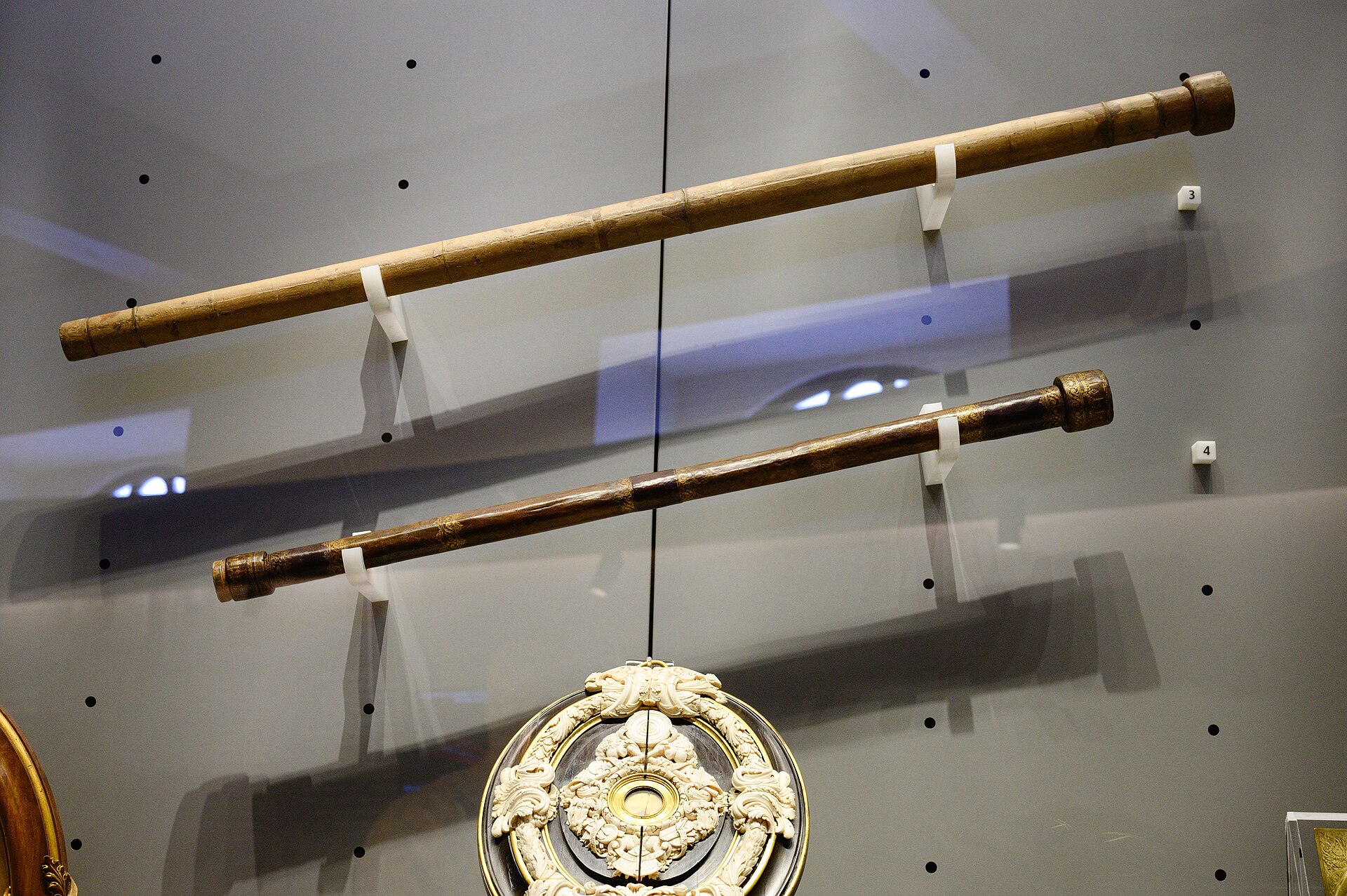
Galileo's observations of lunar mountains, of four moons of Jupiter and of nebular patches resolved into individual stars were published in Sidereus Nuncius in March 1610. The announcement of 1610 placed before readers a body of observation that contradicted many traditional cosmological assumptions. Thomas Harriot had drawn the Moon earlier, on 26 July 1609, in a manner more cartographical than Galileo's.
As early as 1611 Johannes Kepler had shown that a telescope could also be made by combining a convex objective with a convex ocular, and from 1630 Scheiner's Rosa Ursina helped spread this form. The change removed the Galilean telescope's small field-of-view limit and set off a competitive race in instrument making, with tube lengths rising from 5 or 6 feet to 15 or 20 feet by mid-century.
3. The Reflecting Telescope and Speculum Metal
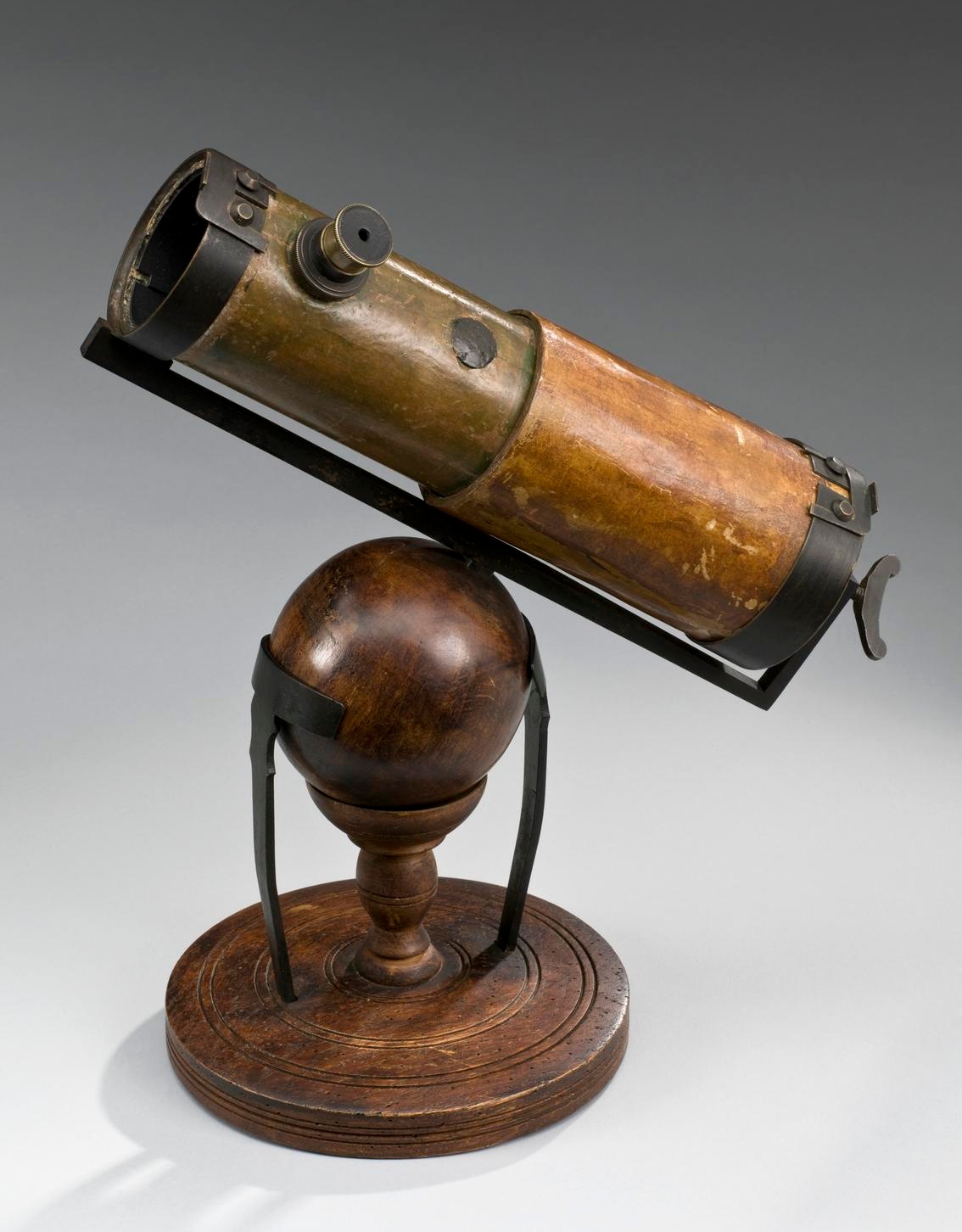
Newton is often credited with inventing the reflecting telescope, but contemporaries like James Gregory were experimenting with similar designs at this time.
4. The Great Refractors and the Yerkes Instrument
The largest refracting telescope ever built was a 49-inch instrument constructed for the Paris 1900 Exposition. It was dismantled after the event.
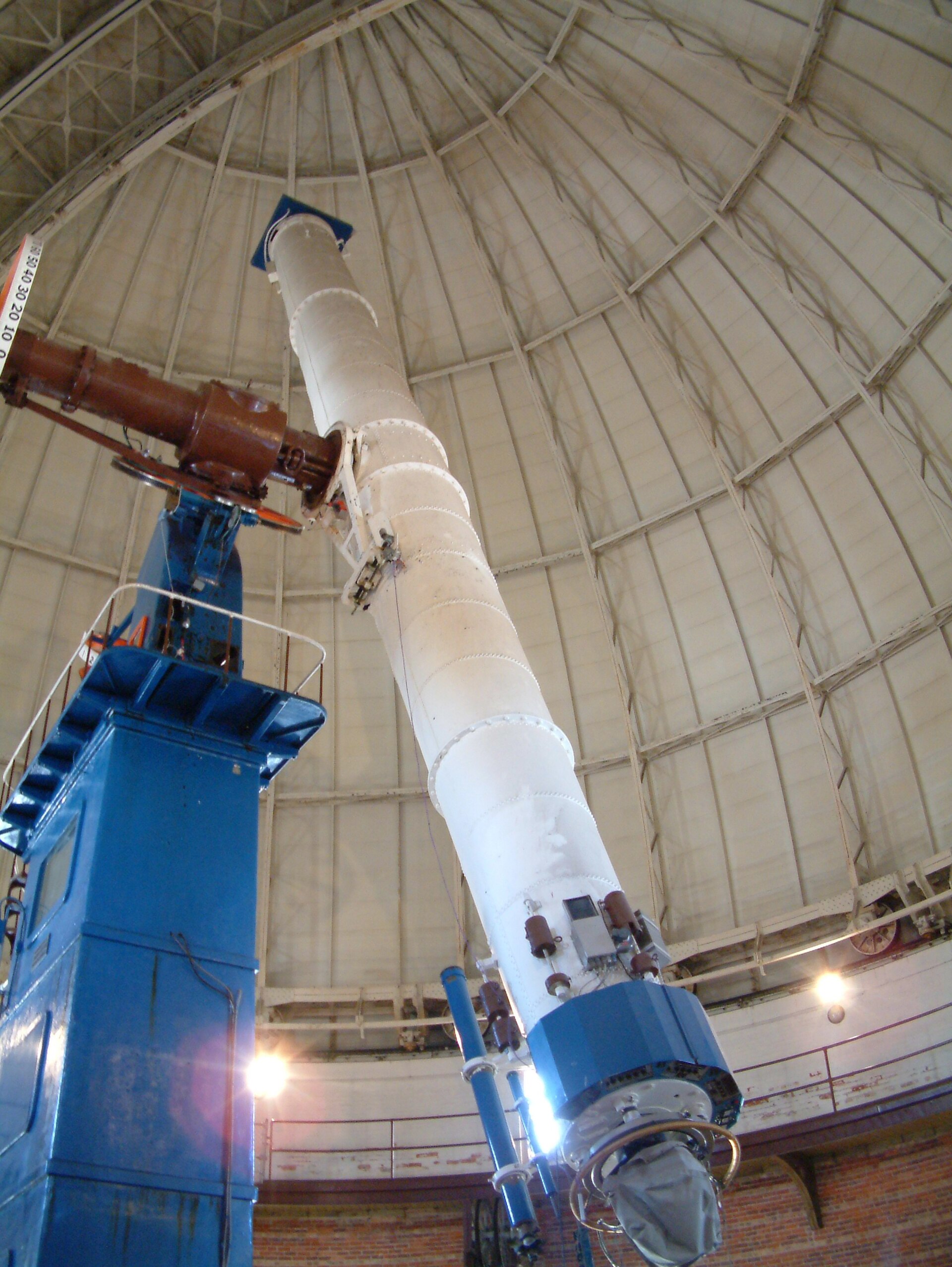
The largest refracting telescope currently in operation is the 40-inch refractor at Yerkes Observatory in Wisconsin.
5. Mount Wilson and the 100-inch Hooker Telescope
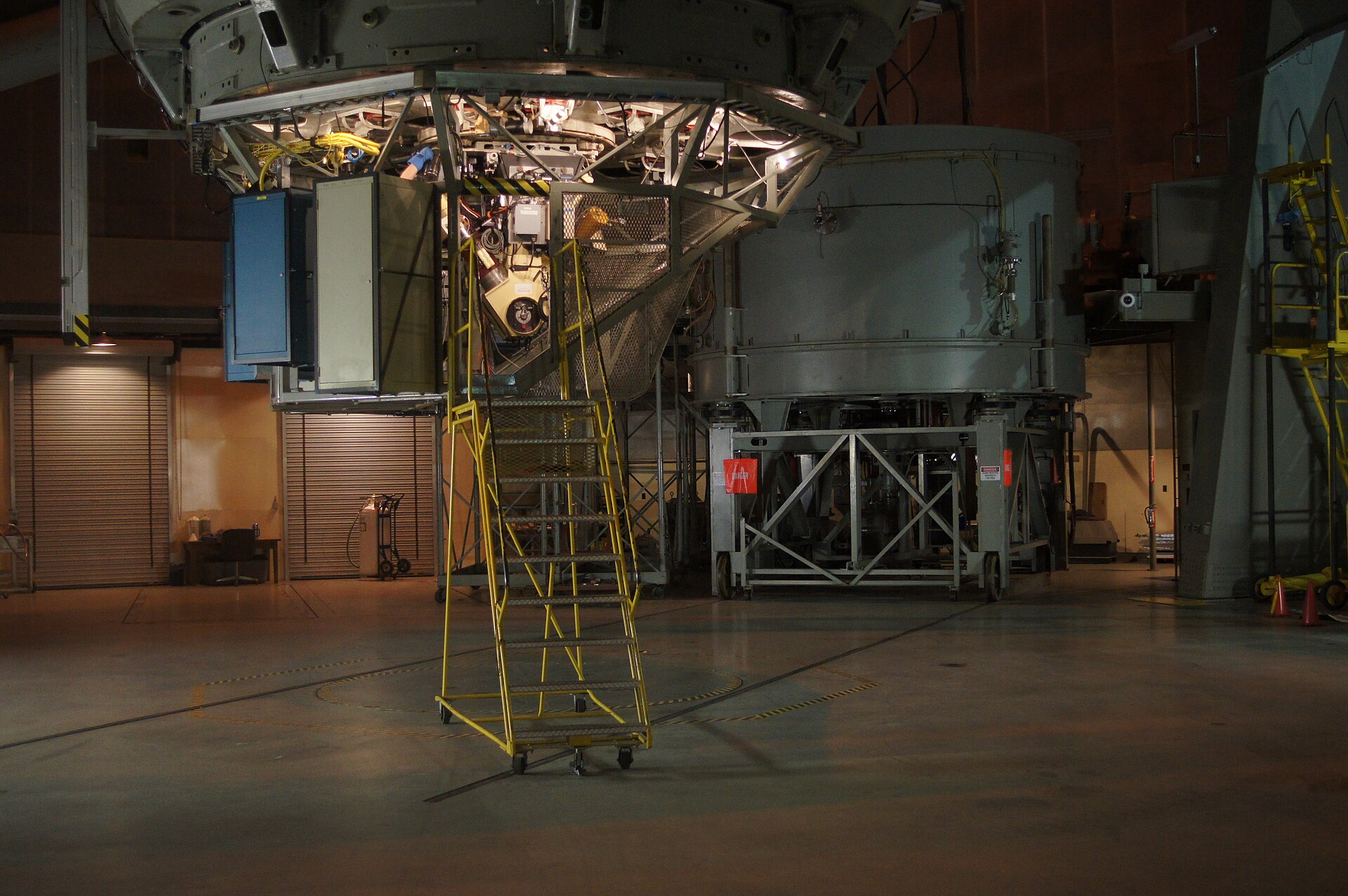
In 1904 George Ellery Hale, seeking clearer skies than existed near his native Chicago, obtained support from the newly formed Carnegie Institution of Washington to found the Mount Wilson Solar Observatory in the San Gabriel mountains near Pasadena, California. The massive glass disk for the 100-inch telescope was ordered from the French Plate Glass Companies in St. Gobain, France, in September 1906; a Hooker building with rooms for grinding and figuring the mirror and a 100-foot-long testing hall was built at the Observatory headquarters in Pasadena.
Edwin Hubble joined the Mount Wilson staff in 1919 and used the 100-inch telescope to attack the spiral nebulae problem, believing them to be island universes and looking for variable stars in the Andromeda nebula.
6. Palomar and the 200-inch Hale Telescope
In 1928, astronomers at Carnegie and Mount Wilson persuaded the Rockefeller Foundation to fund a 200-inch telescope on Palomar Mountain. The instrument saw first light in 1949, and with that it replaced the 100-inch Hooker telescope as the largest in the world. The ambition behind it had deep roots: with the completion of the 60-inch telescope in 1908, Mount Wilson became the home of the largest astronomical instrument in the world, yet George Ellery Hale was already making plans for a much larger instrument of unheard-of dimensions.
7. The Aperture Limit and Its Solution
Before the 1980s, telescope mirrors were limited to diameters of 6 metres (236 inches) because larger mirrors would sag under their own weight, until a solution using a thin mirror whose shape could be controlled was found.
8. Radio Astronomy
Radio astronomy studies celestial objects that give off radio waves, revealing phenomena that are often invisible or hidden in other portions of the electromagnetic spectrum. Radio telescopes are the instruments built to solve these great cosmic mysteries.
Karl Jansky, an engineer at Bell Telephone Laboratories, reported extraterrestrial radio emission in 1933 while searching for the cause of shortwave interference. He not only detected interference from distant thunderstorms but also located a source of radio noise from the centre of the Milky Way Galaxy. That first detection of cosmic radio waves received much public attention but only passing notice from the astronomical community.
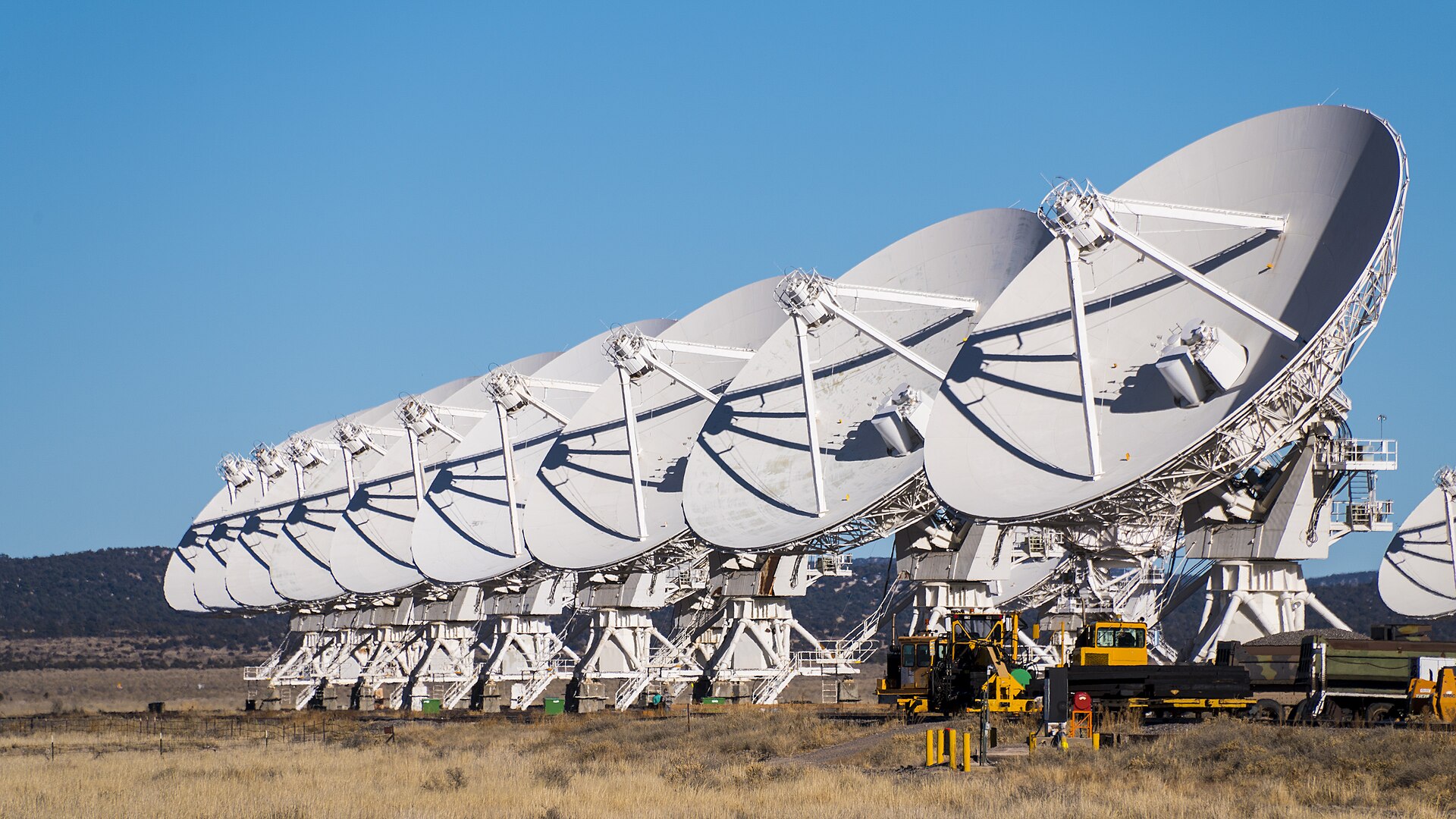
Grote Reber, a radio engineer and amateur radio operator, built a 9.5-metre parabolic reflector in his backyard in Wheaton, Illinois, to continue Jansky's investigation of cosmic radio noise. After World War II ended, the technology that had been developed for military radar was applied to astronomical research. Radio telescopes of increasing size and sophistication were built first in Australia and Great Britain and later in the United States and other countries.
9. Optical Observatories on the Ground
The Very Large Telescope stands among the world's most advanced optical telescopes, built around four Unit Telescopes whose main mirrors measure 8.2m in diameter, accompanied by four movable Auxiliary Telescopes of 1.8m diameter. These instruments can work together to form a giant interferometer, the ESO Very Large Telescope Interferometer, which allows astronomers to pick up much finer details of the cosmos than would be possible with the Auxiliary or Unit Telescopes alone. The facility has stimulated a new age of discoveries with several notable scientific firsts, including the first image of an extrasolar planet and the tracking of individual stars moving around the supermassive black hole at the centre of the Milky Way.
10. Space Observatories
A telescope on Earth must look through a turbulent atmosphere which blurs out the fine cosmic details, so Hubble works high above it, collecting visible light and observing the infrared and ultraviolet wavelengths usually filtered out.
Hubble took the first ultraviolet image of an exoplanet, observing a still-forming, Jupiter-sized planet coalescing from material around a young star, and the first direct image of the surface of a star other than the Sun when it observed the red supergiant Betelgeuse.
The cryogenic telescope assembly was cooled to 5 degrees above absolute zero using 95 gallons (360 liters) of liquid helium, to ensure that the observatory's body heat did not interfere with observations of relatively cold cosmic objects.
11. Milestones
-
1608Lipperhey's announcementThe telescope is announced.
-
October 1608Patent applications at The HaguePatent applications are filed.
-
26 July 1609Harriot's lunar drawingThomas Harriot draws the Moon.
-
June or July 1609Galileo's three-powered spyglassGalileo builds a three-powered spyglass.
-
August 1609Eight-powered instrument to the Venetian SenateAn eight-powered instrument is presented to the Venetian Senate.
-
October or November 1609Twenty-powered observations of the heavensGalileo observes the heavens with a twenty-powered instrument.
-
March 1610Sidereus NunciusSidereus Nuncius is published.
-
1611Kepler's convex-ocular designKepler sets out the convex-ocular design.
-
1630Scheiner's Rosa UrsinaScheiner publishes Rosa Ursina.
-
1668Newton's first reflectorNewton builds his first reflecting telescope. 13Reflecting telescope by Isaac Newton (RS.8462) · The Royal Society Picture Library ↗
-
1671Newton's second instrument shown to the Royal SocietyNewton's second model enters the Society's collection. 13
-
1672Newton elected a Fellow of the Royal SocietyNewton is elected a Fellow. 13
-
1703–1727Newton as President of the Royal SocietyNewton serves as President. 13
-
1766Newton's telescope presented to the SocietyThe telescope is presented to the Society.
-
1781Herschel's discovery of UranusHerschel discovers Uranus.
-
1900Paris Exposition 49-inch refractorA 49-inch refractor is exhibited at the Paris Exposition.
-
1904Founding of Mount Wilson Solar ObservatoryThe Mount Wilson Solar Observatory is founded.
-
September 1906Order for the 100-inch diskThe 100-inch disk is ordered.
-
August 1908Casting of the 100-inch diskThe 100-inch disk is cast.
-
1908First light of the 60-inchThe 60-inch sees first light.
-
1916Completion of the 100-inch mirrorThe 100-inch mirror is completed.
-
1917–1949Hooker telescope as largest in the worldThe Hooker telescope is the largest in the world. 5Observatories History · Carnegie Science ↗
-
1919Hubble joins Mount WilsonHubble joins Mount Wilson.
-
New Year's Day 1925Announcement on the spiral nebulaeAn announcement is made on the spiral nebulae.
-
1928Rockefeller grant for the 200-inchA Rockefeller grant funds the 200-inch.
-
1933Jansky's reportJansky reports.
-
1949First light of the 200-inch Hale telescopeThe 200-inch Hale telescope sees first light. 5
-
August 1972VLA congressional approvalCongress approves the Very Large Array. 14The Very Large Array · National Radio Astronomy Observatory ↗
-
April 1973VLA construction beginsConstruction begins. 14
-
September 1975First VLA antennaThe first antenna is put in place. 14
-
1977Space telescope funding beginsFunding for the space telescope begins.
-
1980VLA dedicationThe array is formally dedicated. 14
-
24 April 1990Hubble launchHubble is launched.
-
December 1993First Hubble servicing missionThe first servicing mission takes place.
-
23 July 1999Chandra launchChandra is launched.
-
July 1999Chandra's place as flagship X-ray missionChandra becomes the flagship X-ray mission.
-
2003Spitzer launchSpitzer is launched.
-
May 2009Final Hubble servicing missionThe final servicing mission takes place.
-
February 2017Spitzer's Trappist-1 announcementSpitzer announces on Trappist-1.
-
25 December 2021Webb launchWebb is launched.
-
January of the following yearWebb reaches L2Webb reaches L2.
12. Timeline: from the first spyglass to the James Webb Space Telescope
- October 1608Telescope patent applications at The HagueThe States General in The Hague discussed patent applications first from Hans Lipperhey of Middelburg and then from Jacob Metius of Alkmaar for a device for seeing faraway things as though nearby.
- October or November 1609Galileo turns his telescope on the heavensAfter building a three-powered spyglass earlier in 1609, Galileo turned a twenty-powered instrument to the sky, observing the Moon and discovering four satellites of Jupiter.
- March 1610Sidereus Nuncius publishedGalileo published Sidereus Nuncius, announcing his telescopic observations of the Moon, the moons of Jupiter and the resolution of nebular patches into stars.
- 1668Newton builds the first reflecting telescopeIsaac Newton built the first successful reflecting telescope, using a mirror rather than a lens to form the image.
- 1671Newton's reflector reaches the Royal SocietyNewton's second reflecting telescope was shown at the Royal Society, where it remained on an informal, permanent loan basis.
- 1908The 60-inch telescope sees first lightWith the completion of the 60-inch telescope, Mount Wilson became the home of the largest astronomical instrument in the world.
- 2 November 1917First light for the 100-inch Hooker telescopeAfter a first test spoiled by the heated mirror, the 100-inch telescope at Mount Wilson showed a brilliant, precisely focused pinpoint of light, and Hale's biggest gamble had paid off.
- 1 January 1925Hubble's Cepheid results announcedHubble's measurements of Cepheid variable stars in the Andromeda nebula were announced to the American Astronomical Society, proving that the nebulae were external galaxies.
- 1933Jansky detects cosmic radio wavesKarl Jansky at the Bell Telephone Laboratories reported extraterrestrial radio emission after locating a source of radio noise from the centre of the Milky Way Galaxy.
- 1949The 200-inch Hale telescope sees first lightThe 200-inch Hale telescope on Palomar Mountain saw first light, replacing the 100-inch Hooker telescope as the largest in the world.
- 24 April 1990Hubble launched aboard DiscoveryThe Hubble Space Telescope was launched into low Earth orbit, becoming the first astronomical observatory in orbit able to record ultraviolet through near-infrared light.
- December 1993Hubble's mirror corrected in orbitA corrective optics package fitted during the first Hubble Servicing Mission repaired the flaw in the main mirror, whose edge was too flat by a fiftieth of the width of a human hair.
- 23 July 1999Chandra X-ray Observatory launchedChandra began its mission as NASA's flagship X-ray observatory, joining Hubble, Compton and Spitzer in the fleet of Great Observatories.
- 2003Spitzer completes the Great ObservatoriesSpitzer launched as the fourth and last of NASA's Great Observatories, scanning the sky in infrared for more than 16 years.
- 25 December 2021James Webb Space Telescope launchedWebb launched on an Ariane 5 from Europe's Spaceport in French Guiana, beginning the journey to the second Lagrange point, L2, 1.5 million kilometres from Earth.
References (18)
- 1The history of the telescope — Royal Museums Greenwich WebView source
- 2The Telescope — The Galileo Project, Rice University WebView source
- 36.1 Telescopes, Astronomy 2e — OpenStax, Rice University WebView source
- 4Looking at the mirror: the craftsmanship of reflecting telescopes — Science Museum Group, London WebView source
- 5Observatories History — Carnegie Science Web↩View source
- 6Building the 100-inch Telescope — Mount Wilson Observatory WebView source
- 7telescope | Definition, History, Types, & Facts — Encyclopaedia Britannica WebView source
- 8radio telescope | Definition, Types, & Facts — Encyclopaedia Britannica WebView source
- 9Very Large Telescope — European Southern Observatory WebView source
- 10Hubble overview — European Space Agency WebView source
- 11Hubble Science — NASA Science WebView source
- 12Spitzer Space Telescope — NASA Science WebView source
- 13Reflecting telescope by Isaac Newton (RS.8462) — The Royal Society Picture Library Web↩View source
- 14The Very Large Array — National Radio Astronomy Observatory Web↩View source
- 15Hubble Observatory — NASA Science WebView source
- 16About Hubble — NASA Science WebView source
- 17Webb overview — European Space Agency WebView source
- 18About Chandra — NASA Chandra X-ray Center, Smithsonian Astrophysical Observatory WebView source
 Mars
 Hubble Space Telescope
 The Sun
