Telephone
The invention and development of the telephone — Bell's 1876 patent and the race with Elisha Gray, the earliest exchanges and transmitters, long-distance and transatlantic cable, the transistor and digital transmission, and the mobile-era milestones.
The telephone is an instrument for the simultaneous transmission and reception of the human voice, converting sound waves into electrical signals and back. Alexander Graham Bell received U.S. patent 174,465 for improvements in telegraphy on 7 March 1876, three days before the first intelligible telephone message, and the Bell Telephone Company commercialized the device from 1877. Telephony then grew through manual and automatic exchanges, long-distance lines and submarine cables, the transistor and digital transmission, and mobile and cellular systems.
Overview
The word telephone, from the Greek roots tele meaning far and phone meaning sound, was applied as early as the late 17th century to the string telephone and refers in modern usage to electrical devices derived from the inventions of Bell and others.
The telephone belongs to the field of telecommunications and serves voice communication over the public switched telephone network.
1. Invention and Patent
The telephone is associated above all with Alexander Graham Bell, who was assisted in his work by Thomas A. Bell filed his application for a patent on 14 February 1876, and the patent was granted on 7 March 1876. The grant, numbered US 174,465, was titled 'Improvement in Telegraphy'. In 1876 Bell successfully received a patent for the telephone, a step that led to a dispute with Elisha Gray.
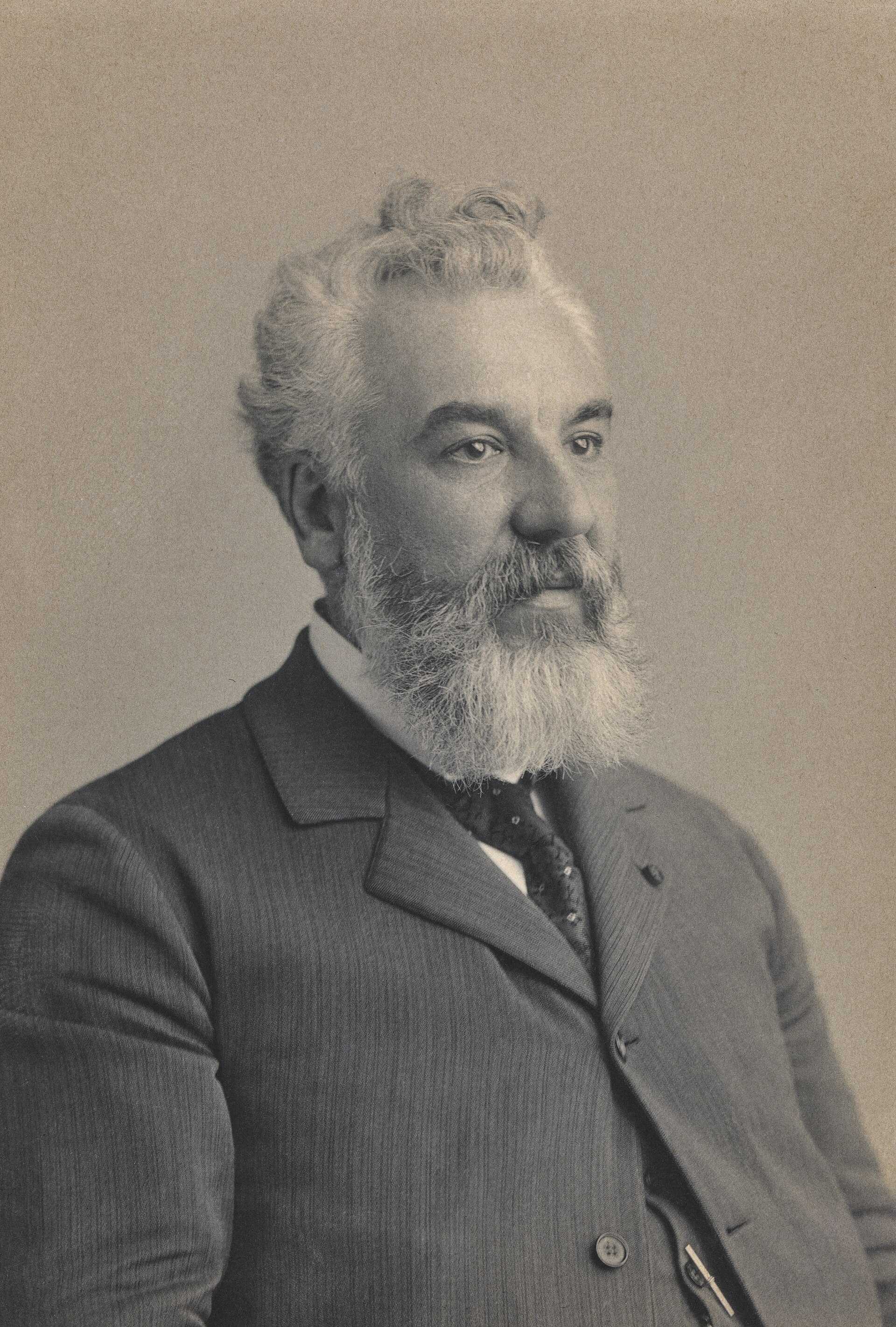
On the same day Bell filed his application, Elisha Gray filed a patent caveat stating that he was working on inventing a telephone and anticipated filing a patent application at a future date. In 1888 the U.S. Supreme Court upheld the priority of Bell's patent over Gray's claim.
Patent 174,465 covered the method of and apparatus for transmitting vocal or other sounds telegraphically by causing electrical undulations similar in form to the vibrations of the air accompanying the sound. Claim 5 of the patent covers the method of and apparatus for transmitting vocal or other sounds telegraphically by causing electrical undulations similar in form to the vibrations of the air accompanying the vocal sound. It is often called the most valuable patent ever issued by the U.S. Patent Office, because it described not only the telephone instrument but also the concept of a telephone system. Bell's key patent 174,465 was awarded on 7 March 1876 and credited his induction transmitter and receiver together with the principle of transmission by undulating current, though other countries did not allow that last claim.
Patent Office then required patent applications to include a model, the requirement was waived for Bell and only a drawing was submitted with his telephone patent application. Gardiner Hubbard, who encouraged Bell's telephone experimentation, applied for the telephone patent issued on 7 March 1876 and became the first president of the Bell Telephone Company. Bell became a naturalized American citizen in 1882 and came to hold 30 patents in total.
2. Early Development and First Speech
On 1 July 1875, Bell succeeded in transmitting speech sounds over a wire, though they were still unintelligible. The decisive advance came on 10 March 1876 in Boston, Massachusetts, when Bell first produced intelligible speech. On that occasion he summoned his laboratory assistant Thomas A. Watson with words transcribed in his lab notes as "Mr.
The apparatus that carried the first telephone message relied on variable resistance, using a liquid transmitter whose needle dipped in acidulated water and a tuned-reed receiver through which Watson heard Bell's voice.
The idea of electrical speech transmission had been anticipated before Bell's achievement. Charles Bourseul in France published a description in 1854 of how speech might be transmitted electrically, and Philipp Reis in Germany built and demonstrated an apparatus for it in 1861 and coined the word telephone for his device. Antonio Meucci first conceived of conveying speech over wires with electricity in 1849 while administering electric shock treatment in Havana, and by 1861 he had built a mechanical telephone connection between his wife's bedroom and his two laboratories.
3. Commercialization and Early Networks
Gardiner Hubbard organized a group that established the Bell Telephone Company in July 1877 to commercialize Bell's telephone. Hubbard had encouraged Bell's telephone experimentation. By the summer of 1877 the telephone had become a business, with the first private lines placed in service, and the first commercial telephone switchboard opened the following year in New Haven, Connecticut.
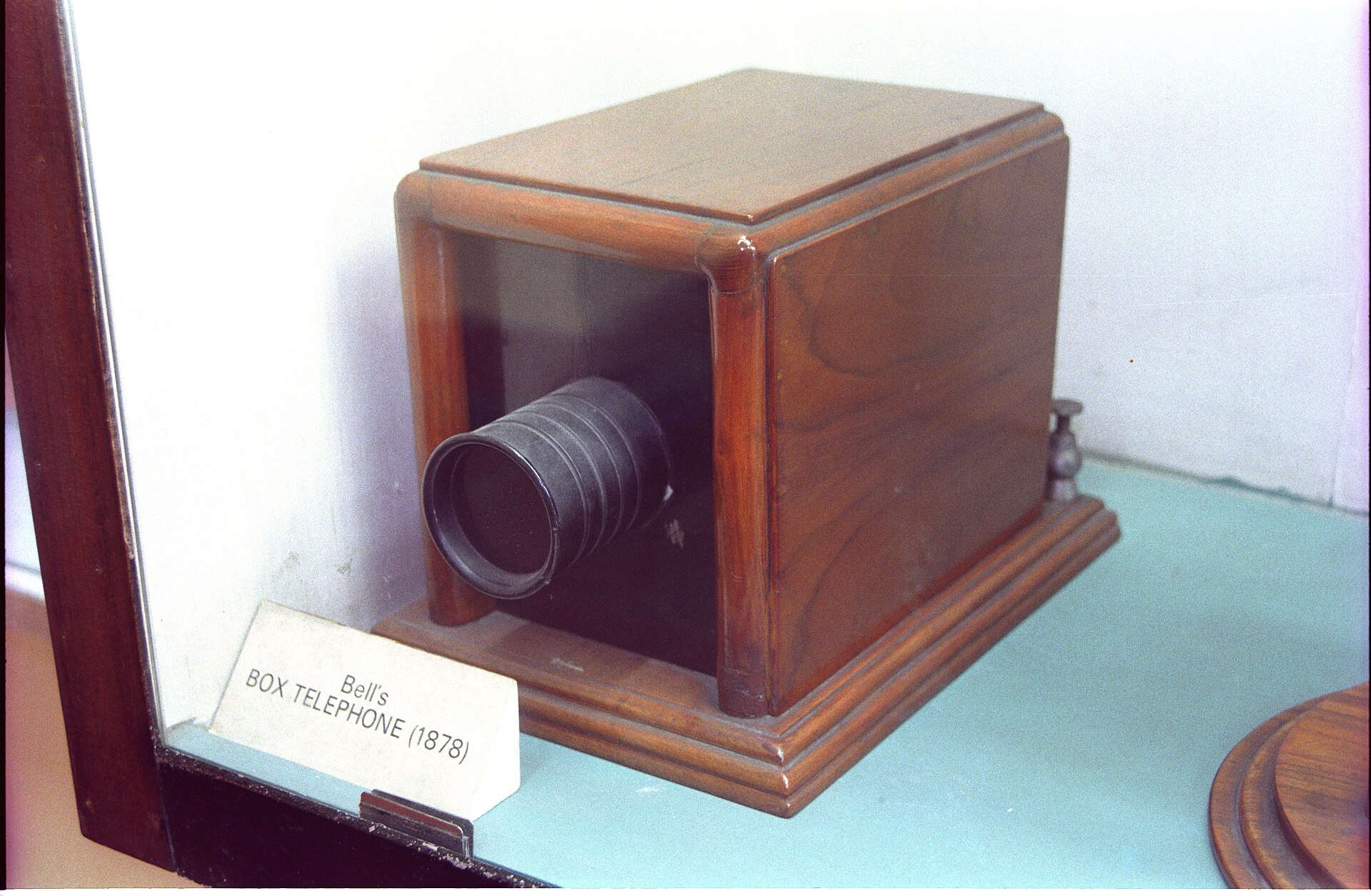
The commercial phones introduced by the Bell Telephone Company in 1878 for the earliest telephone exchange contained two hand-held electromagnetic devices that became known as butter stamps because of their shape. Thomas Watson patented a hand-cranked magneto used to signal the switchboard operator and a two-bell polarized ringer. Hilborne Roosevelt's 1877 switch hook let the calling circuit be opened and closed by lifting and hanging up the receiver.
In 1881 a Bell Telephone subsidiary opened the first commercial long-distance line between Boston and Providence, 43 miles apart, and it worked poorly because of interference and attenuation. Around 1899 George Campbell at AT&T and Michael Pupin at Columbia University independently discovered that inductors, soon known as loading coils, placed at intervals along a line could reduce attenuation.
Within a decade of Bell's demonstration in January 1878 there were over 250,000 telephone sets in use worldwide. On the evening of 14 January 1878 Queen Victoria conversed by telephone with Sir Thomas and Lady Biddulph at Osborne Cottage while the US journalist Kate Field sang songs for the Queen.
4. Technological Evolution
Dial telephones grew out of Almon Strowger's invention of automatic switching as developed by Automatic Electric, the Chicago company formed to exploit his patent. By 1914 over 400,000 dial telephones were in service in independent US exchanges. In 1919 the Bell System installed its first dial telephones in Norfolk, Virginia before converting its exchanges one at a time.
The 302 was the first Bell handset for which aesthetics were explicitly considered, designed with industrial designer Henry Dreyfuss, whose firm designed AT&T's phones through the 1960s. Between 1937 and 1951 Bell placed over 25 million 302 series phones in service.
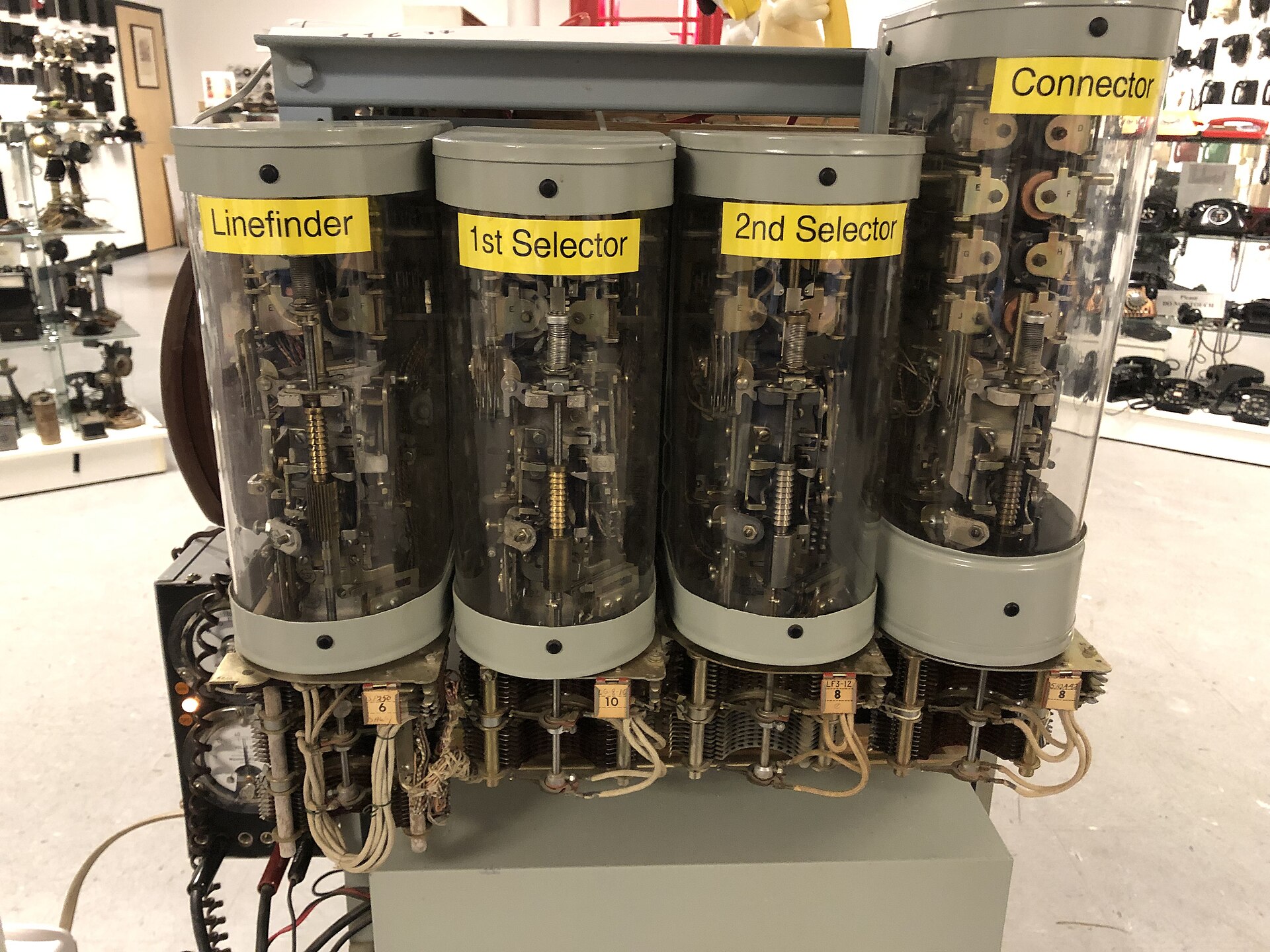
Touch-tone service sent a unique pair of frequencies for each key; introduced from 1963 with two exchanges at first, it reached 70 percent of Bell exchanges by 1976 and gained the * and # keys in 1968 to form the standard 12-button key pad. After the United States Supreme Court ruled in 1975 that subscribers could own their own telephones, telephone sets shifted from rented monopoly equipment to a competitive consumer product.
Developed in 1962 by Gerhard Sessler and Jim West at Bell Laboratories, the foil electret microphone began replacing carbon transmitters in telephones from the late 1970s. The invention of the transistor in 1947 replaced metal wiring and other heavy telephone hardware with lightweight and compact microcircuitry.
5. Transmission and Infrastructure
In 1909 AT&T chief engineer John J. Carty publicly committed the company to opening transcontinental telephone service even though no means of amplification existed at the time. AT&T completed its transcontinental line with three vacuum-tube repeaters in July 1914. Commercial service began in January 1915, when the Panama Pacific Exposition opened in San Francisco.
The first transcontinental telephone call, placed in 1915, connected Alexander Graham Bell in New York and Thomas A. Watson in San Francisco. Bell Labs tested the coaxial cable concept in 1929. In 1936 the laboratory installed a semi-commercial repeatered system between New York and Philadelphia capable of carrying 240 conversations or a single television channel.
In 1938 Alec Reeves developed the theory of pulse code modulation. That theory was finally used in 1962 for AT&T's T-1 digital transmission system over twisted pairs for interoffice trunking. In 1966 Charles Kao showed that a sufficiently pure glass fiber could have low enough attenuation to serve as a medium for light waves bearing information.
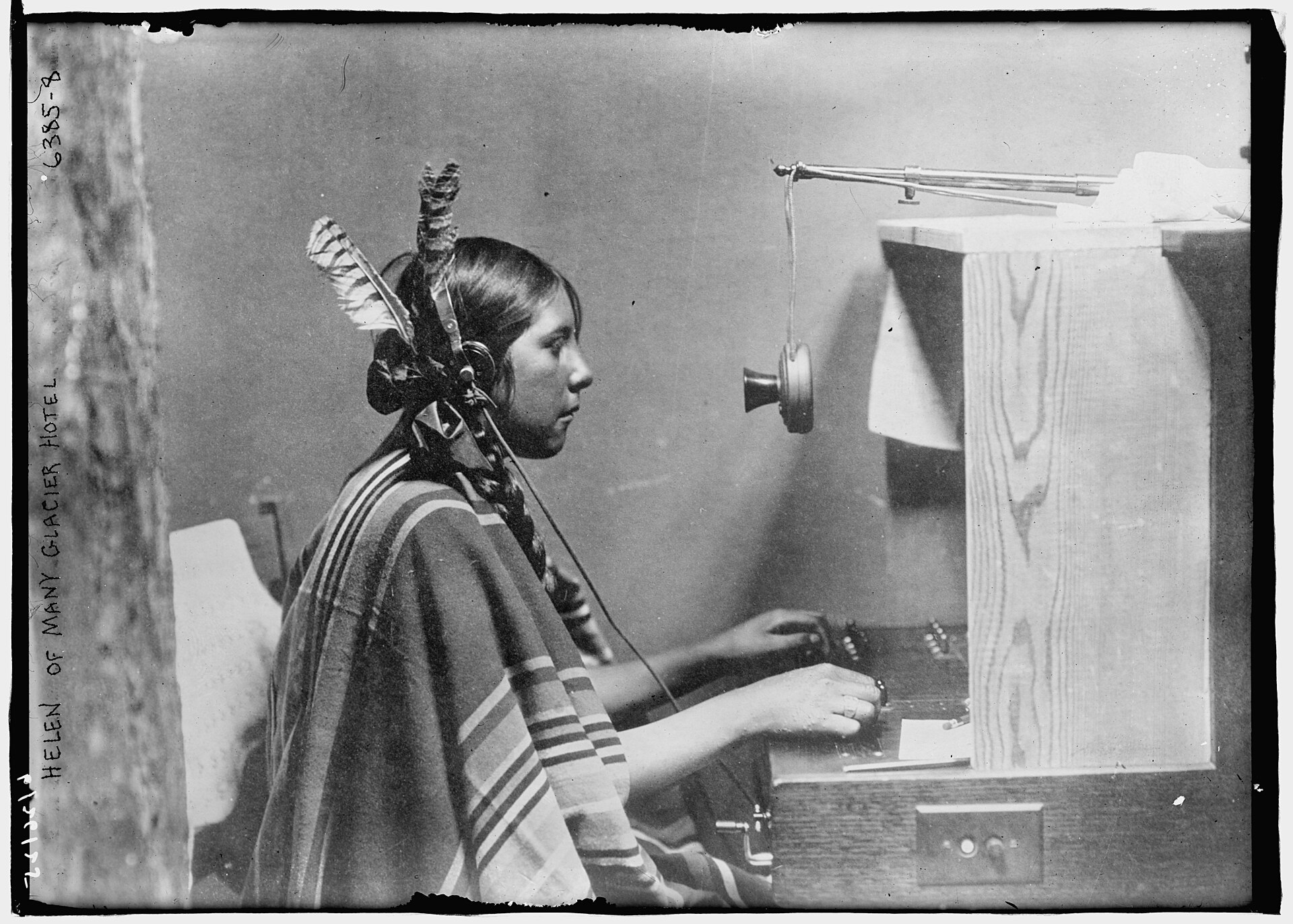
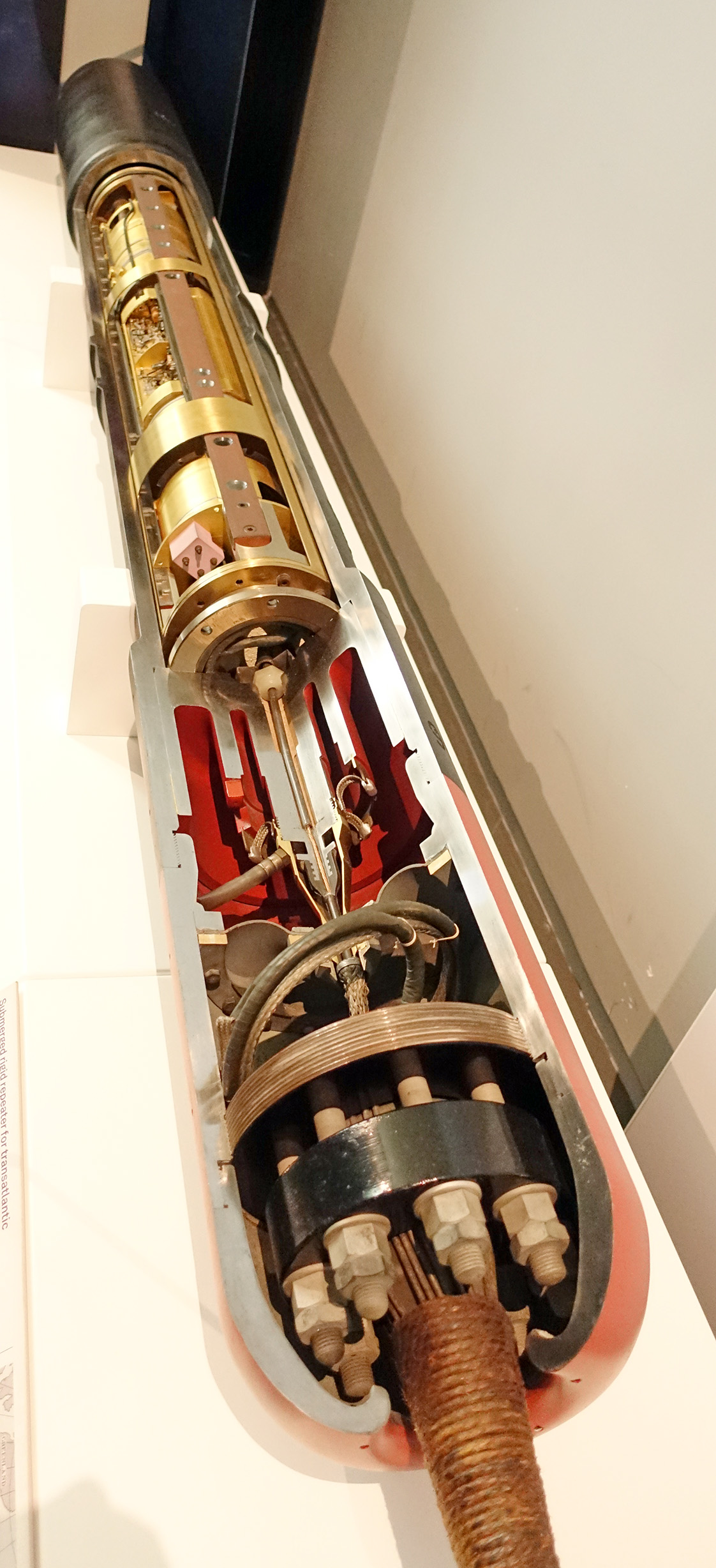
The first transatlantic undersea telephone system, TAT-1, entered service on 25 September 1956 with its eastern terminal at Oban, Scotland, and was retired in 1978 after more than two decades of service. TAT-1 was a joint effort of AT&T Bell Laboratories, the British Post Office Engineering Department, and the Canadian Overseas Telecommunication Corporation, and its flexible repeater was designed to sit two and a half miles beneath the surface of the North Atlantic. Each of the two TAT-1 cables had fifty-one repeaters over approximately 1950 nautical miles. The original vacuum tubes never failed in twenty-two years of continuous service.
The last copper transatlantic cable, TAT-7, opened in 1978 with capacity for 4,000 calls. The first fiber cable, TAT-8, opened in 1988 with about ten times that capacity.
6. Mobile and Cellular Telephony
On 17 June 1946 a driver in St. Louis made the first mobile telephone call on a system inaugurated by Southwestern Bell, one of AT&T's local operating companies. By 1948 wireless telephone service was available in almost one hundred cities and highway corridors. Even so, with only 5,000 customers making 30,000 weekly calls, it was far from commonplace.
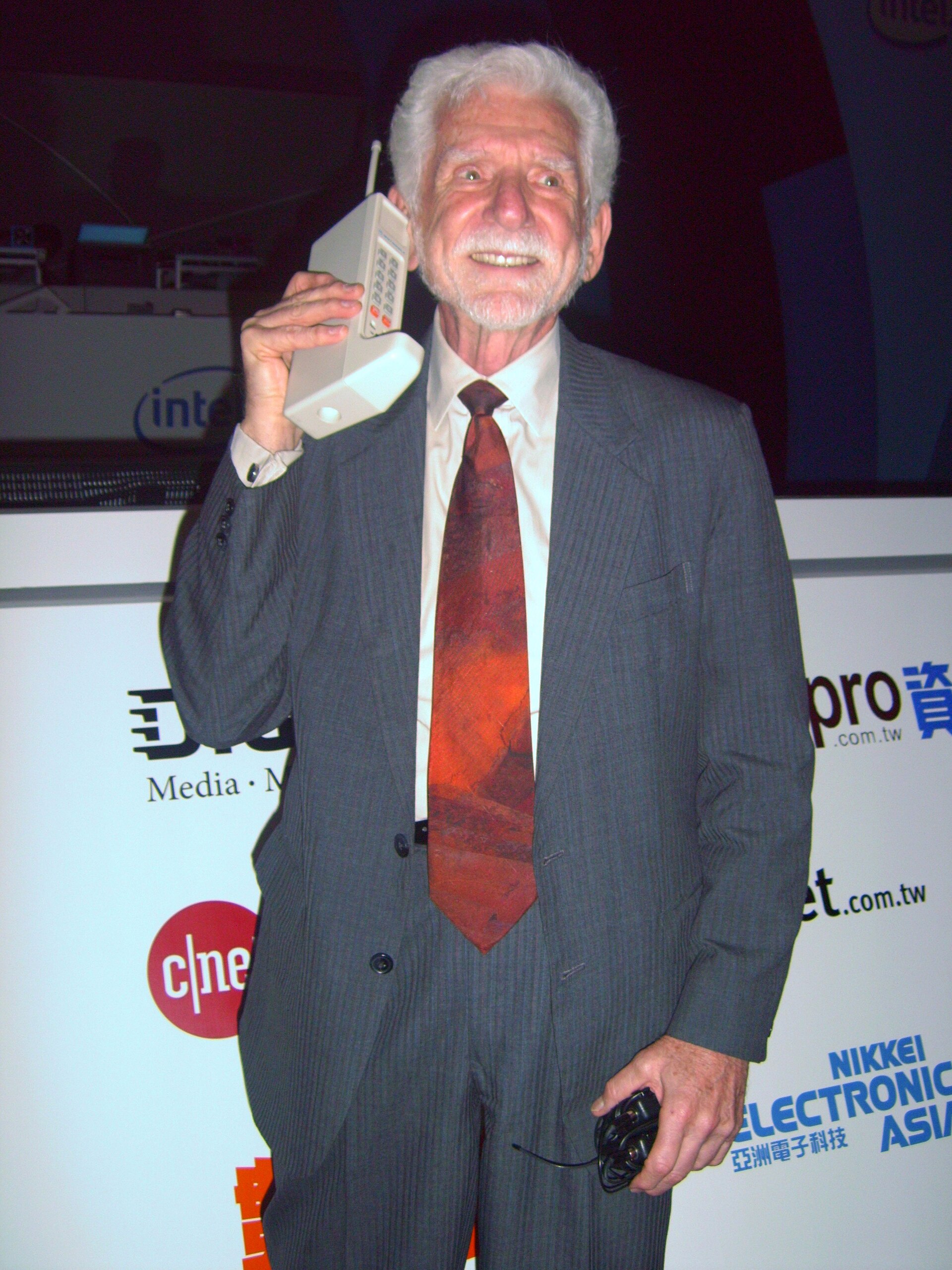
Cellular telephone service was conceived in 1947 by Donald H. Ring at Bell Labs, but the technology to implement it did not yet exist and the needed spectrum was not available. A Motorola team under Marty Cooper demonstrated a working handheld cell phone prototype in April 1973; it weighed 45 ounces and its battery allowed about 30 minutes of calling, and his first call went to Joel Engel at Bell Labs. On 3 April 1973 Marty Cooper, working for Motorola Inc., placed the first portable public cell phone call from the Dyna T-A-C in front of the New York Press Corps at the NYC Hilton Midtown.
After the FCC decided in October 1981 to license two cellular carriers per market, AT&T and Illinois Bell opened the first modern cellular system in Chicago in October 1983, and a Motorola-designed system followed in Washington and Baltimore. With the breakup of the Bell System on 1 January 1984, all of the Bell System cellular licenses passed to the newly divested regional telephone companies.
A 1983 McKinsey study for AT&T predicted 900,000 US cellular subscribers by 2000; that number was reached in 1987, and the actual total in 2000 was 109 million. Martin Cooper invented the first portable cellular phone in 1973 and led the 10-year process of bringing it to market.
7. Legacy and Impact
Court battles over Bell's telephone patents lasted eighteen years, and all of the cases were eventually resolved in his favor. Bell offered Western Union the patent rights to the telephone for $100,000; the telegraph company, content with its telegraph monopoly, turned the offer down. The instrument's applications centered on voice communication over the public switched telephone network.
In 1880 Bell invented and patented the photophone, which transmitted voices over beams of light. Brazilian emperor Dom Pedro II drew attention to Bell's telephone by listening to him recite Shakespeare over it, exclaiming My God, it talks, and the physicist William Thomson carried news of the invention across the ocean.
8. Timeline: from Reis and Meucci to the cellular era
- 1861Reis demonstrates a speaking telephonePhilipp Reis in Germany constructed and demonstrated an apparatus designed to transmit speech electrically and coined the German word fernsprecher and the English word telephone for it; it never became more than a curiosity.
- December 1871Meucci files his Sound Telegraph caveatAntonio Meucci, who had conceived of conveying speech over wires in 1849, filed a caveat for his Sound Telegraph after plans for a full patent application collapsed for lack of funds.
- 7 March 1876Bell receives patent 174,465The U.S. Patent Office issued patent 174,465 to Alexander Graham Bell for improvements in telegraphy covering the transmission of vocal sounds by electrical undulations; the application had been filed on 14 February 1876.
- 10 March 1876First intelligible speech over the telephoneWorking in a Boston attic, Bell transmitted the first intelligible telephone message to his assistant Thomas A. Watson, with words recorded in his notebook as Mr. Watson — come here — I want to see you.
- June 1876Telephone shown at the Centennial ExhibitionThe telephone was exhibited at the Centennial Exhibition in Philadelphia, Pennsylvania.
- July 1877Bell Telephone Company establishedGardiner Hubbard organized a group that established the Bell Telephone Company to commercialize Bell's telephone.
- 1878First commercial telephone switchboardThe first commercial telephone switchboard opened in New Haven, Connecticut, after the first private lines had been placed in service.
- 1888Supreme Court upholds Bell's priorityThe U.S. Supreme Court handed down a decision upholding the priority of Alexander Graham Bell's patent over Elisha Gray's claim.
- 1915First transcontinental telephone callThe first transcontinental call connected Alexander Graham Bell in New York and Thomas A. Watson in San Francisco.
- 17 June 1946First mobile telephone callA driver in St. Louis, Missouri, made the first mobile telephone call on a system inaugurated by Southwestern Bell, an AT&T operating company.
- 25 September 1956TAT-1 opens transatlantic telephone serviceThe first transatlantic undersea telephone cable system went into service between Clarenville, Newfoundland and Oban, Scotland, and operated until 1978.
- 3 April 1973First handheld cell phone callMartin Cooper, heading a Motorola team, made the first public call from a handheld portable cell phone on a New York City street, calling a rival at Bell Labs.
- October 1983First commercial cellular systemAT&T and its subsidiary Illinois Bell opened the first modern cellular system in Chicago, soon followed by a Motorola-designed system in Washington and Baltimore.
- 1988First fiber-optic transatlantic cableThe first fiber-optic transatlantic telephone cable, TAT-8, opened with about ten times the capacity of the last copper cable, TAT-7.
References (16)
- 1Telephone — Encyclopaedia Britannica WebView source
- 2Alexander Graham Bell — Encyclopaedia Britannica WebView source
- 3US174465A — Improvement in Telegraphy (Alexander Graham Bell) — Google Patents (U.S. Patent Office document) WebView source
- 4Invention of the Telephone: Topics in Chronicling America — Library of Congress WebView source
- 5Telephones — Engineering and Technology History Wiki (ETHW) WebView source
- 6Replicas of Alexander Graham Bell's 1879 'Patent Office' telephone, 1959 — Science Museum Group Collection (London) 1879 WebView source
- 7‘Watson, Come Here …’ — Bell Papers Document Experiments, Family Life (Information Bulletin, April 2004) — Library of Congress 2004 WebView source
- 8Remarks by John A. Squires — 150 years of Alexander Graham Bell's telephone patent — U.S. Patent and Trademark Office (USPTO) WebView source
- 9Alexander Graham Bell — Engineering and Technology History Wiki (ETHW) WebView source
- 10Antonio Meucci — Engineering and Technology History Wiki (ETHW) WebView source
- 11Telephone Transmission — Engineering and Technology History Wiki (ETHW) WebView source
- 12Early Bell telephone and terminal panel, 1877/8 — Science Museum Group Collection (London) 1877 WebView source
- 13Milestones: The First Submarine Transatlantic Telephone Cable System (TAT-1), 1956 — Engineering and Technology History Wiki (ETHW) 1956 WebView source
- 14The Foundations of Mobile and Cellular Telephony — Engineering and Technology History Wiki (ETHW) WebView source
- 15First Portable Cell Phone Call — PDC Review, Round 2 (March 2023) — New York City Public Design Commission 2023 WebView source
- 16Martin Cooper — ArrayComm Chairman, CEO and Co-Founder (speaker biography) — National Telecommunications and Information Administration (NTIA), U.S. Department of Commerce WebView source