Amber
The story of amber, the organic gem of fossil tree resin: how it formed in vanished forests, the insects, plants and feathers sealed inside it, its journey from the Baltic along the ancient amber routes into Egypt and Rome, its myths and uses, and the museums that hold it today.
Amber is fossil tree resin, an organic gem formed tens of millions of years ago when resin from ancient trees hardened and polymerised in virtually oxygen-free sediments. It ranges from yellow to rare blue, floats in salt water, and preserves insects, plants and even dinosaur feathers in three-dimensional detail. The richest deposits lie on the Samland peninsula of the Baltic, redeposited by storms and rivers; from there amber travelled along the amber routes to the Mediterranean, was celebrated by Pliny, carved for ancient sanctuaries and buried with women and children. Today it is heated, pressed and imitated, studied from Gdansk to Berkeley, and displayed in great collections from Palanga to the Getty.
In this article
- 1Overview
- 2Composition and Physical Properties
- 3Formation and Fossilisation
- 4Deposits and Sources
- 5Inclusions and Scientific Value
- 6History of Use and Trade
- 7Amber in Ancient Literature and Myth
- 8Value, Treatment and Care
- 9Collections and Museums
- 10Key Dates
- 11Frequently Asked Questions
- 12Timeline: from the first amber routes to the museums of today
- 13Knowledge graph
Overview
Amber is an organic gem, formed when sap from ancient trees hardened and fossilised tens of millions of years ago. It is fossilised tree resin rather than a mineral, with the composition C10H16O. The material is sometimes called the gold of the North.
1. Composition and Physical Properties
Amber reached a stable state after burial, when it lost its volatile components and underwent chemical change; unlike sap, it does not dissolve in water. It derives from resin-bearing trees of dense forests that no longer exist. In the living tree the resin served a protective function, sealing breaks in the bark and, through its antiseptic and sticky properties, defending against disease and burrowing insects.
Its optical and mechanical constants are modest and consistent: a refractive index of 1.540, a specific gravity of 1.08, and a Mohs hardness of 2.0 to 2.5. Hardness is reported to vary from 2 to 3 on the Mohs scale, a relative softness that suits the material to carving and working. Specific gravity lies between 1.04 and 1.10, making amber only slightly heavier than water; it floats in a saturated salt solution but not in ordinary seawater, a property that allows large beads and pendants to be worn comfortably. Amber has a melting-point range of 200 to 380 degrees Celsius, yet it tends to burn rather than melt. It is a poor conductor and feels warm in the cold; when friction is applied it becomes negatively charged and attracts light particles, and the Greek word elektron stands behind the word electricity.
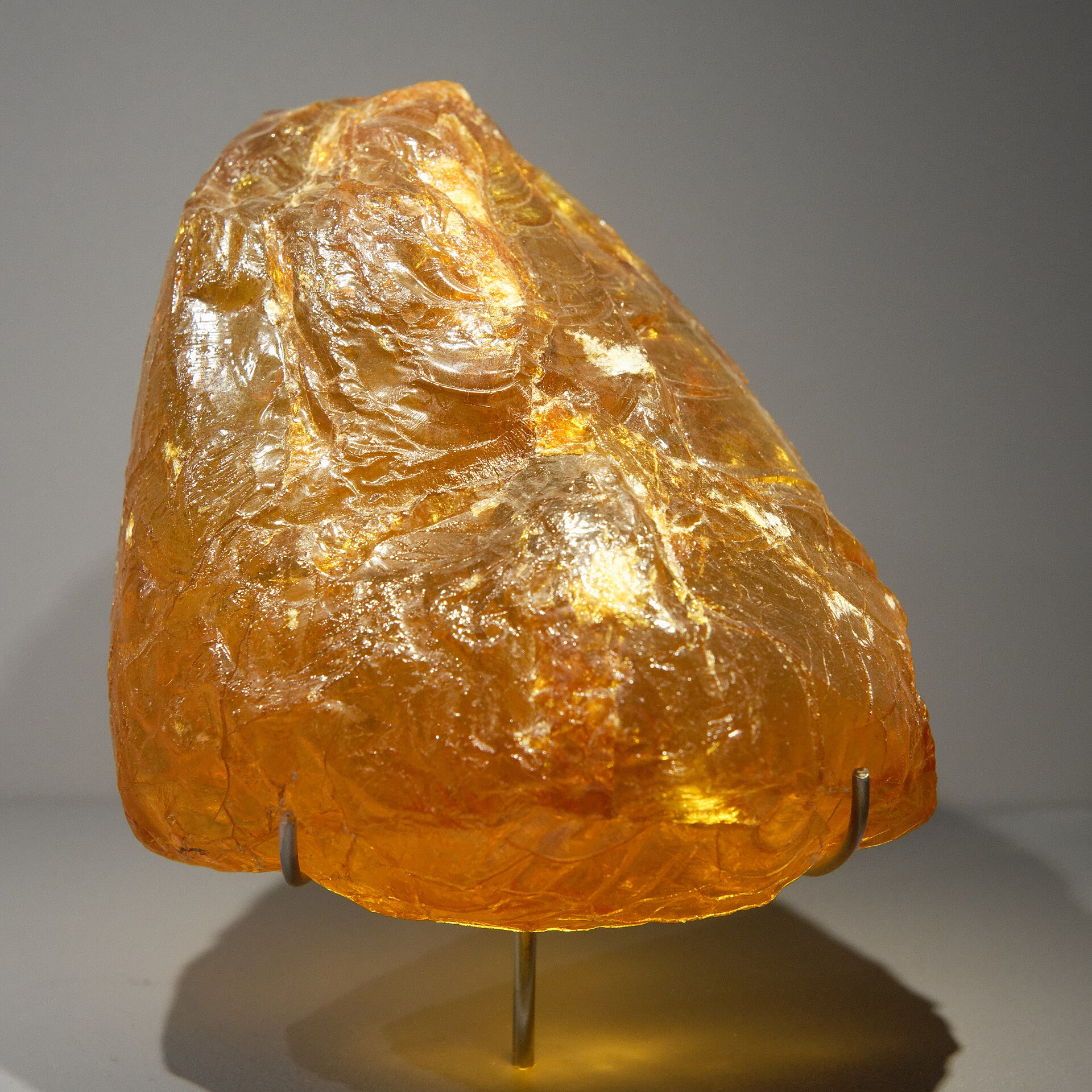
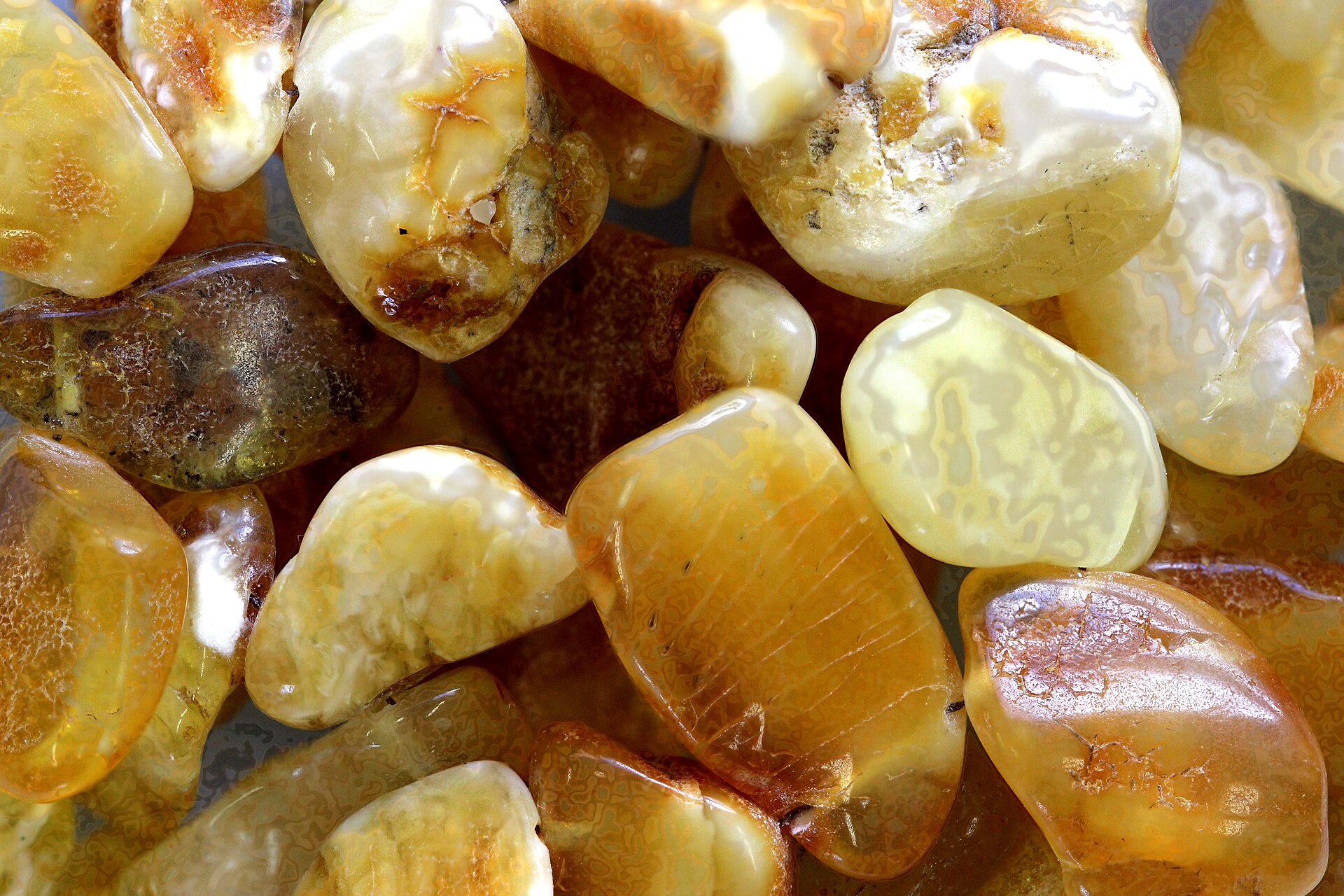
Amber occurs as irregular nodules, rods or droplike shapes in all shades of yellow with orange and brown nuances, and rarely red; milky-white opaque varieties are called bone amber. Microscopic air bubbles let amber float and be carried by rivers or the sea, and white opaque Baltic amber may hold 900,000 minuscule bubbles per square millimeter. Because of those microscopic air bubbles, Baltic amber tends to appear cloudy or milky. Exposed to air, amber darkens as oxygen acts on it: a clear piece becomes yellow, a honey-coloured piece red or red-brown, and the surface progressively grows more opaque.
Succinic acid makes up 3 to 8 per cent of the structure of Baltic amber. Baltic amber, or succinite, is the most plentiful kind found in the Old World and is named for its high concentration of succinic acid. One review describes natural Baltic amber, or succinite, as the most common fossil resin on earth and one of the most common decorative stones. Because of the presence of succinic acid, Baltic and Ukrainian ambers belong to class Ia, one of the five major classes of fossil resin.
Amberoid, or pressed amber, is produced by fusing small pieces of amber under pressure, and its parallel flow bands help distinguish it from natural amber.
2. Formation and Fossilisation
Most amber deposits occur in Tertiary-period sediments of Eocene age, with fewer in the Oligocene and Miocene and fewer still later. Baltic amber comes from early Tertiary beds of the Upper Eocene to Lower Oligocene around the shores of today's Lithuania, Latvia, Kaliningrad, Poland, Sweden, Germany and Denmark. It is never found in its original stratigraphic position, having been redeposited in Eocene glauconitic marine sediments as well as Neogene fluvial and glacigenic deposits.
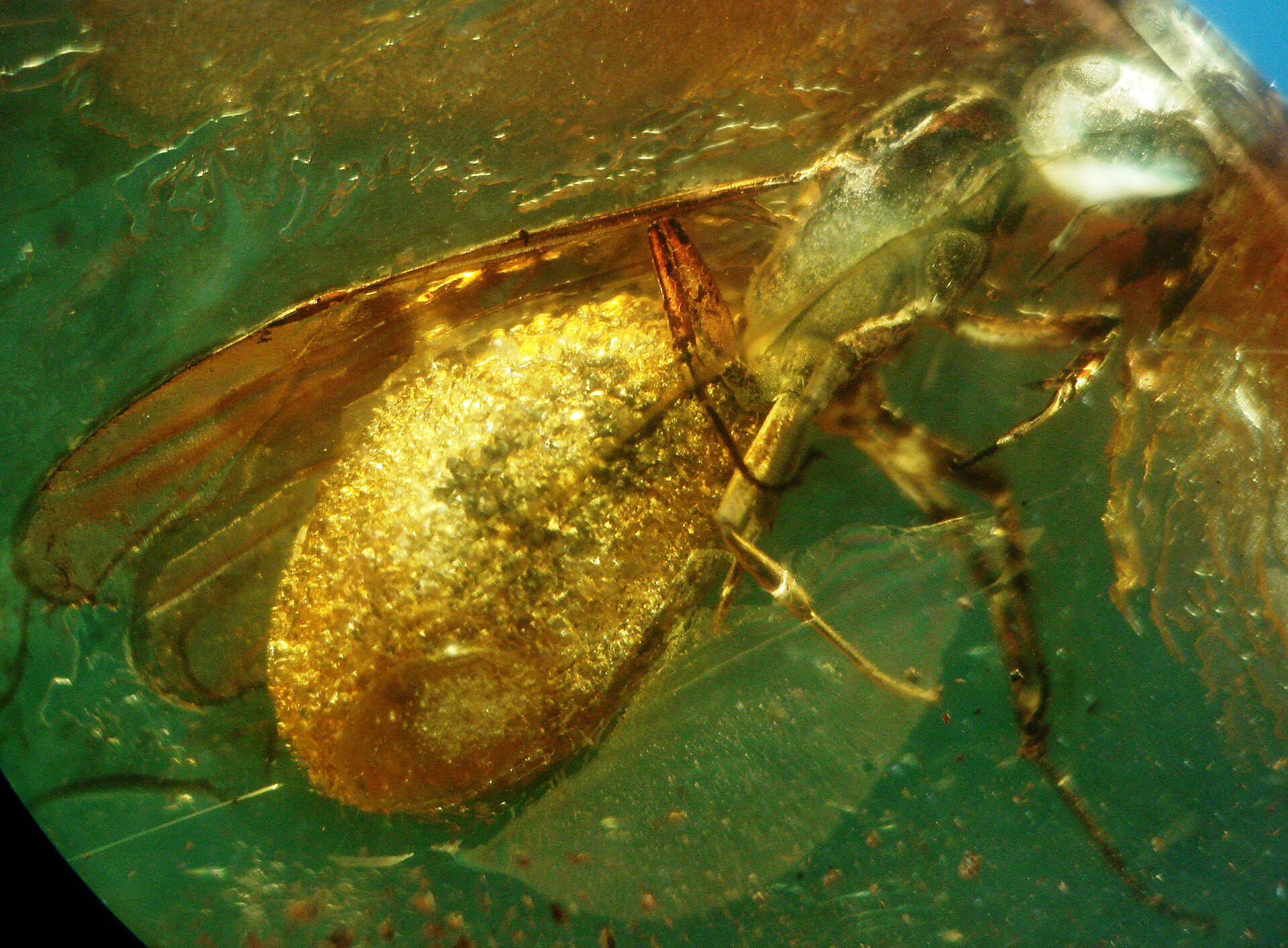
In this type of fossilisation the organism is entrapped in a biologically inert environment and preserved as a whole, so intact insects are often found in amber. Amber containing larger animals such as scorpions, snails, frogs and lizards can be very valuable, especially when the inclusions are preserved intact. A thousand extinct animal species, as well as various types of plant matter, have been identified in amber.
Baltic amber constitutes the largest known deposit of fossil plant resin and the richest repository of fossil insects of any age. Succinite occurs in the Gdańsk Delta, where the world's largest amber mine, Primorskoje, is located, and deposits also occur in Poland, Ukraine and Central Germany. In antiquity most Baltic amber was harvested from beaches and shallow waters after autumn storms, and only in the early modern period did mining begin.
Using microphotography and CT scans, scientists obtained a three-dimensional look inside the ancient feathers and found a thin shaft without the spongy material of modern plumage.
3. Deposits and Sources
The UCMP amber collection is one of the largest in the country, with specimens primarily from the Baltic region, the Dominican Republic, Alaska, the Philippines and Mexico. Its holdings include 2,480 databased specimens and constitute the largest institutional Chiapas collection in the United States. Since 2018 the IMLS team has resin-embedded 1411 type and non-type amber pieces and is imaging the inclusions with a digital microscope.
The most precious specimens are holotypes, the specimens on which species new to science were described, and the collection holds over 50 descriptive types including dipterans, beetles and dragonflies. Nearly 3000 pieces of amber have been digitised for the first time and made available on the Museum's Data Portal as part of the NHM Unlocked programme.
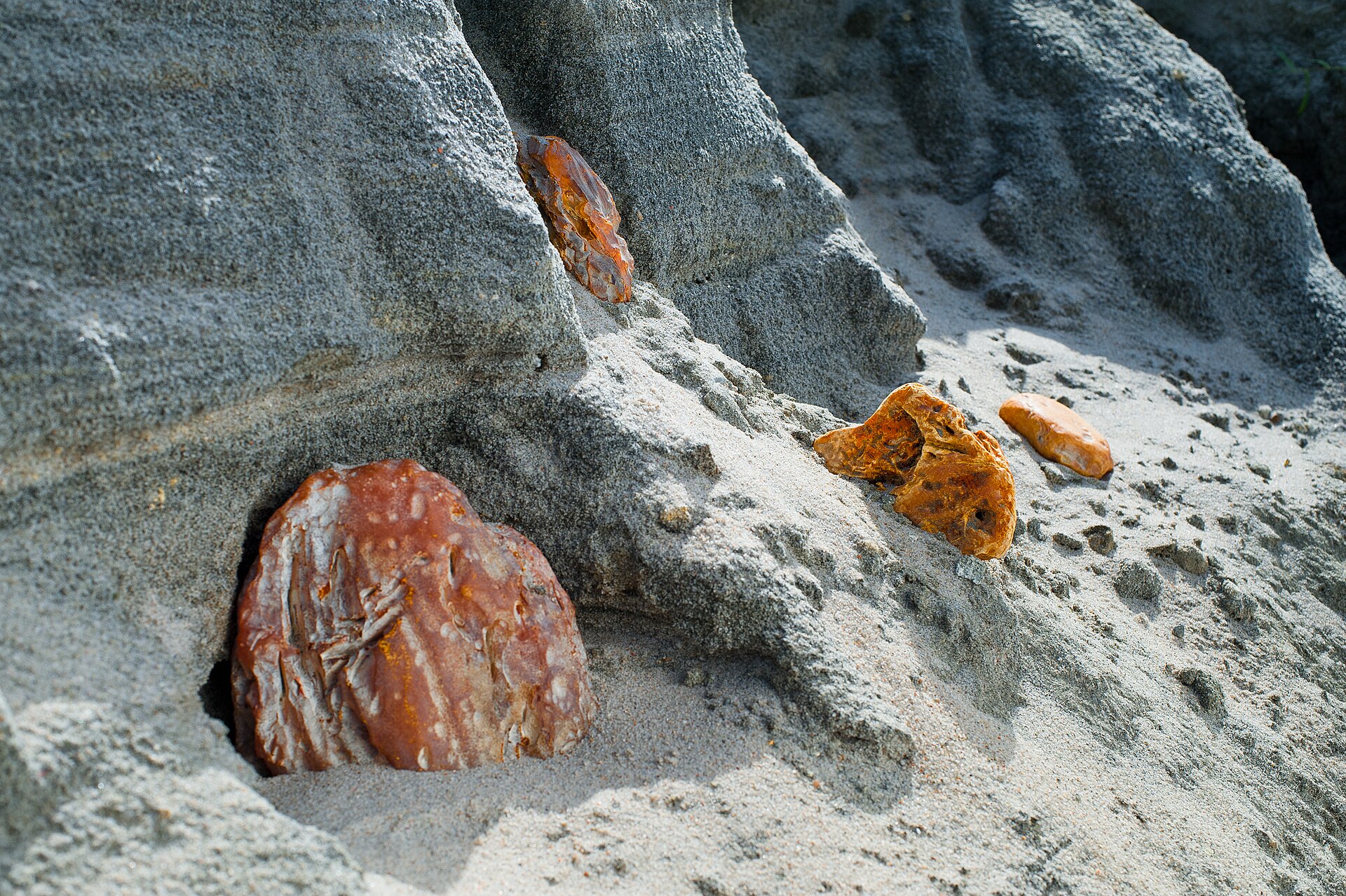
Industrial extraction from the nineteenth century onwards yielded huge amounts, estimated at up to a million pounds a year dug from the blue earth layer of the Samland peninsula in the early twentieth century.
Gdańsk deserves the title of the World Capital of Amber, where jewellery and utensils of amber have been produced for centuries. The Palanga Amber Museum, a branch of the Lithuanian National Museum of Art, was established in 1963 and is housed on the estate of Count Feliksas Tiskevicius, built in 1897 by the architect Franc Schwechten.
4. Inclusions and Scientific Value
Although the film Jurassic Park is fiction, scientists have extracted DNA from insects enclosed in 120-million-year-old amber. Most biologists agree that the Jurassic Park scenario is impossible, since blood carried by an insect would deteriorate rapidly and be contaminated.
5. History of Use and Trade
Raw and worked amber found around the Mediterranean and farther afield, on the Iberian peninsula, in Mesopotamia, in Anatolia, at Ugarit and in Egypt, attests to its value and transmission from the Bronze Age onwards.
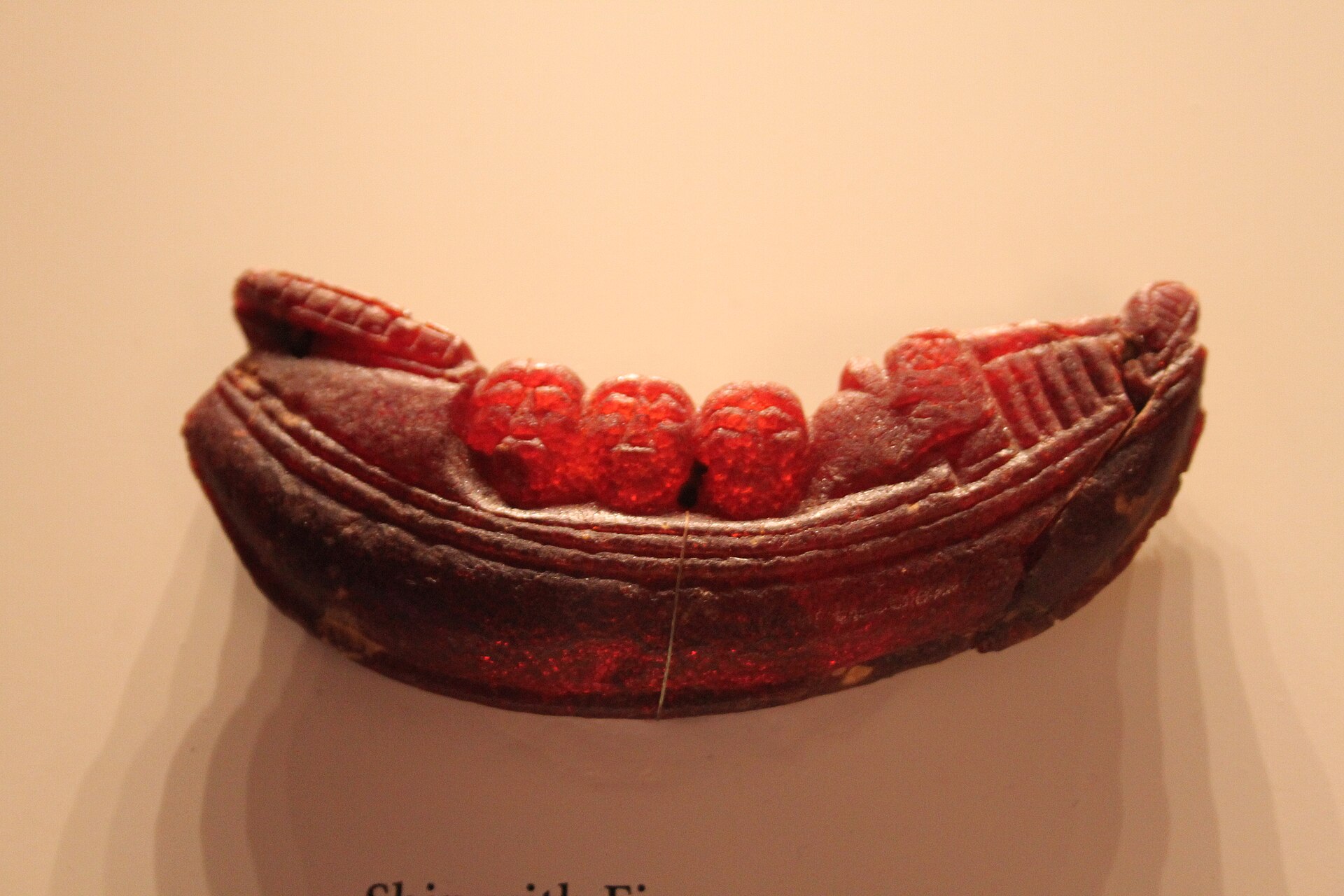
Paul Getty Museum collection of amber antiquities was formed between 1971 and 1984: apart from the Roman Head of Medusa acquired in 1971 with a larger purchase of antiquities, the other ancient amber objects came as gifts.
6. Amber in Ancient Literature and Myth
Pliny saw the ants, gnats and lizards visible inside transparent amber as proof that amber was originally a liquid, since these creatures must have adhered to it while it was soft and remained enclosed when it hardened.
In the myth the Heliades, sisters of Phaethon, were changed into poplars whose tears fell as drops of amber into the river, to be borne off to adorn young wives in Rome. In the Greek story told by many poets, those tears on the banks of the river Eridanus were called electrum, after the Sun, which was called elector.
7. Value, Treatment and Care
Amber's value turns on colour and clarity: rare pieces can be blue or green, inclusions make a piece far more valuable. Buyers should be wary of perfect-looking insect inclusions, because the insects in genuine amber are millions of years old and imitations with modern insects are very common.
Besides beads, carvings and cabochons, amber has been used for cups, bowls, snuff boxes and umbrella handles.
8. Collections and Museums
The Natural History Museum of Los Angeles County holds amber-encased dinosaur feathers from more than 100 million years ago, which its Dinosaur Institute researchers studied. Flies preserved in amber forty million years ago while in the act of copulation are among the treasures that will come to a proposed collections and research centre, the Natural History Museum has said.
9. Key Dates
-
Upper Carboniferous, about 320 million years agoOldest amberThe earliest known amber dates to this period.
-
Palaeolithic eraAmber reaches cave dwellingsRough pieces reached cave dwellings in Britain and northern Europe far from any amber source. 18The Ancient Transport of Amber · J. Paul Getty Museum (Ancient Carved Ambers in the J. Paul Getty Museum) ↗
-
mid-second millennium B.C.Defined long-distance amber trade beginsThe start of organized long-distance exchange in amber.
-
seventh to fourth centuries B.C.Pre-Roman jewelryThe Getty collection includes pre-Roman amber jewelry of this span.
-
third century BCERiver Eridanus of amber mythThe river Eridanus of amber myth was thought to have become a constellation.
-
first century A.D.No literary evidence of direct tradeThere is no literary evidence of direct trade between Italy and the north until this time. 18
-
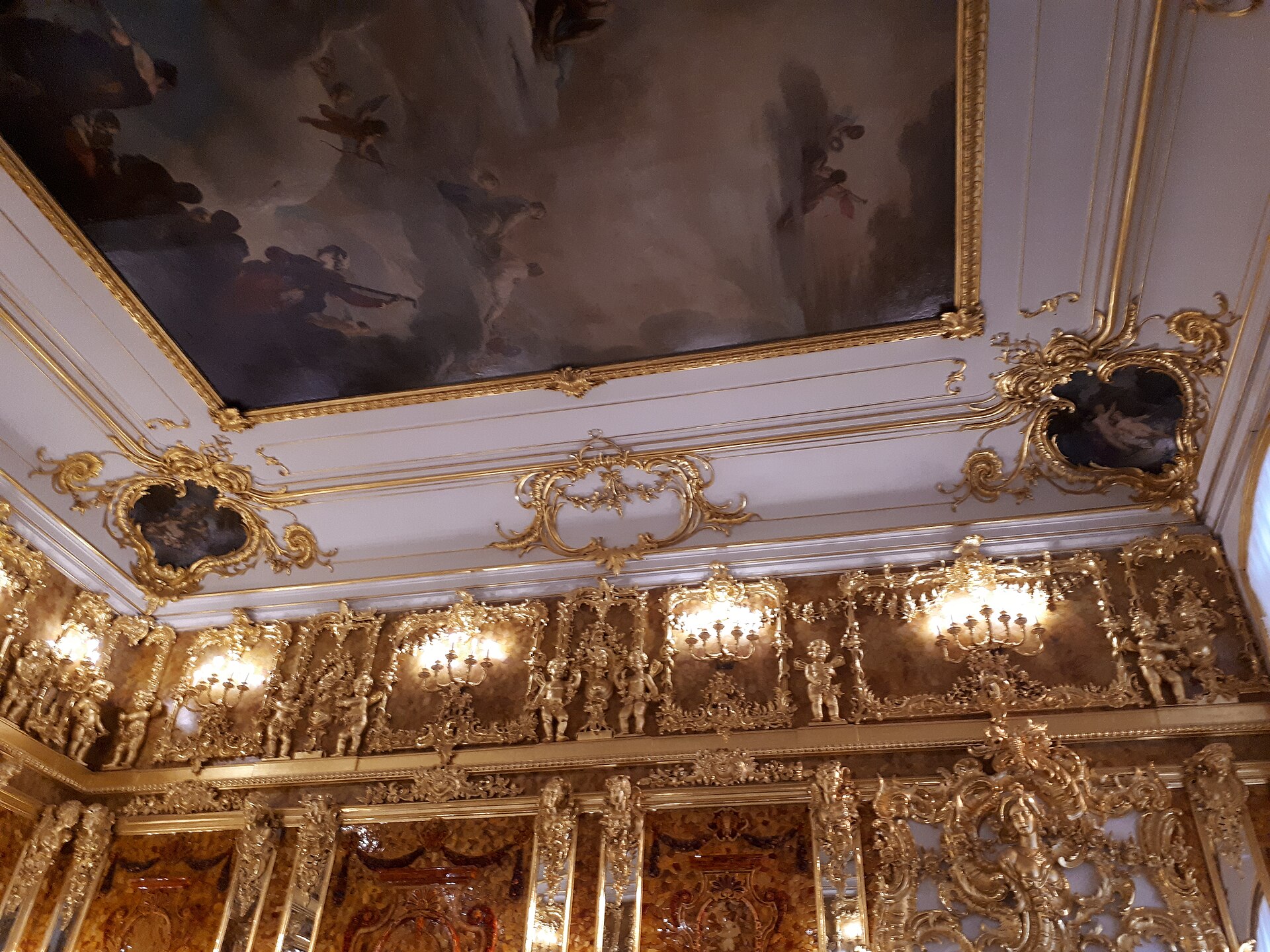
1716Amber Room gift to Peter the GreatThe Amber Room was given to Peter the Great.
-
1897Palanga estate builtThe Palanga estate was built by Franc Schwechten.
-
1963Palanga Amber Museum establishedThe Palanga Amber Museum was established.
-
1971Roman Head of Medusa acquiredThe J. Paul Getty Museum acquired the Roman Head of Medusa. 19Amber and the Ancient World · J. Paul Getty Museum (Ancient Carved Ambers in the J. Paul Getty Museum) ↗
-
1971 to 1984Getty amber antiquities collection formedThe Getty's collection of amber antiquities was formed across this period. 19
-
2018IMLS team begins resin-embedding and imagingAn IMLS team began resin-embedding and imaging work.
10. Frequently Asked Questions
Is amber a mineral?
No. Amber is organic fossilised tree resin, not a mineral.
How hard is amber?
Amber has a Mohs hardness of 2.0 to 2.5.
Why does amber float?
Microscopic air bubbles let amber float and be carried by rivers or the sea.3The Properties of Amber · J. Paul Getty Museum (Ancient Carved Ambers in the J. Paul Getty Museum) ↗
What is copal?
A younger fossil resin, often around a hundred thousand years old.
Can amber be treated?
The color of amber can be modified by heat treatment and by dyeing; green amber's color can be produced by treatment with heat and pressure.
How should amber be stored?
Amber can melt or burn at high temperatures, so it should be kept away from heat, strong light and electronics.4Amber Buyer's Guide · Gemological Institute of America (GIA) ↗
What is bone amber?
Milky-white opaque varieties are called bone amber.
What is the oldest known amber?
The oldest amber is Upper Carboniferous, about 320 million years ago.2Amber (Gem Encyclopedia) · Gemological Institute of America (GIA) ↗
What was the Amber Room?
It was a 1716 gift to Peter the Great, made from six tons of amber.2
How old are the Baltic amber-bearing sands?
The sands along the Baltic Sea are 40,000,000 to 60,000,000 years old.5Amber (fossil resin) · Encyclopaedia Britannica ↗
Where are the richest amber deposits, and what kind of deposit are they?
The richest deposits in the world lie at Samland, but they are a secondary deposition.8Where Is Amber Found? · J. Paul Getty Museum (Ancient Carved Ambers in the J. Paul Getty Museum) ↗
How long was the ancient amber route?
It ran about six hundred miles from Carnuntum in Pannonia to the amber coast.20Pliny the Elder, The Natural History, Book 37, Chapter 11 · Perseus Digital Library, Tufts University ↗
What did Nero's knight bring back?
He brought back a single piece of amber weighing thirteen pounds.20
11. Timeline: from the first amber routes to the museums of today
- mid-second millennium BCEFirst defined long-distance amber tradeEarly on, amber was probably transported to the Mediterranean through a chain of exchange, and there was no defined long-distance trade until the mid-second millennium B.C., when amber was probably acquired in both raw and more finished forms.
- fifth century BCEWaterlogged amber at SpinaTwo female head pendants of the fifth century B.C. excavated at waterlogged Spina are remarkable for their clear, pale yellow color, preserved by the oxygen-free environment in which they were buried.
- about 320 million years agoOldest known amberThe oldest amber dates to the Upper Carboniferous Period, approximately 320 million years ago.
- about 100 million years agoFeathers in Burmese amberAmber-encased dinosaur feathers from the mid-Cretaceous Burmese amber of Myanmar, more than 100 million years old, revealed a feather structure with a thin shaft and no spongy material.
- Upper Eocene — Lower OligoceneBaltic amber formedThe Baltic amber deposits formed in the early Tertiary, from the Upper Eocene to the Lower Oligocene, around the shores of the Baltic Sea.
- first century CEPliny records the amber tradePliny the Elder records that amber was imported by the Germans into Pannonia, and that a Roman knight sent by the manager of Nero's gladiatorial exhibitions brought back so much amber that nets protecting the arena were studded with it.
- 1491Amber in a printed herbalAmber formed on trees, as shown in the hand-coloured woodcut in the Tractatus De lapidus, Ortus sanitatis printed in Mainz by Jacob Meydenbach in 1491.
- 1753Sloane's collection founds the British MuseumSir Hans Sloane's collection, which included amber, was acquired as the founding of the British Museum after his death in 1753, and eventually became part of the Natural History Museum.
- 1897Palanga estate builtThe estate that now houses the Palanga Amber Museum was built in 1897 for Count Feliksas Tiskevicius to designs by the German architect Franc Schwechten.
- 3 August 1963Palanga Amber Museum opensThe Palanga Amber Museum was established on August 3, 1963, as a branch of the Lithuanian National Museum of Art.
- 1971-1984Getty amber collection formedThe J. Paul Getty Museum formed its collection of amber antiquities between 1971 and 1984, beginning with the Roman Head of Medusa acquired in 1971.
- 1998Museum of Amber Inclusions establishedThe Museum of Amber Inclusions of the University of Gdansk was established in 1998 as an integral part of its Laboratory of Evolutionary Entomology.
- 2018UCMP resin-embedding projectSince 2018 the IMLS team at the University of California Museum of Paleontology has resin-embedded 1411 type and non-type amber pieces for imaging.
- 14 February 2024NHM digitises nearly 3000 amber piecesIn time for Valentine's Day 2024 the Natural History Museum digitised nearly 3000 pieces of amber, including heart-shaped pieces and flies preserved in the act of copulation.
- by 2031NHM collections centre plannedThe Natural History Museum plans to build a collections, digitisation and research centre at the University of Reading's Thames Valley Science Park by 2031.
References (21)
- 1Amber Description — Gemological Institute of America (GIA) WebView source
- 2Amber (Gem Encyclopedia) — Gemological Institute of America (GIA) Web↩View source
- 3The Properties of Amber — J. Paul Getty Museum (Ancient Carved Ambers in the J. Paul Getty Museum) Web↩View source
- 4Amber Buyer's Guide — Gemological Institute of America (GIA) Web↩View source
- 5Amber (fossil resin) — Encyclopaedia Britannica Archive↩View source
- 6Amber — University of California Museum of Paleontology (UCMP) WebView source
- 7Spectroscopic Studies of Baltic Amber — Critical Analysis — PubMed Central (PMC12196071), National Library of Medicine WebView source
- 8Where Is Amber Found? — J. Paul Getty Museum (Ancient Carved Ambers in the J. Paul Getty Museum) Web↩View source
- 9What Is Amber? — J. Paul Getty Museum (Ancient Carved Ambers in the J. Paul Getty Museum) WebView source
- 10A new proposal concerning the botanical origin of Baltic amber — Proceedings of the Royal Society B (PMC2817186), PubMed Central WebView source
- 11Amber History and Lore — Gemological Institute of America (GIA) WebView source
- 12A Story in Amber — Natural History Museum of Los Angeles County WebView source
- 13The UCMP Amber Collection — Berkeley Fossil Insects, University of California Museum of Paleontology WebView source
- 14Museum of Amber Inclusions — University of Gdansk, Department of Invertebrate Zoology and Parasitology WebView source
- 15Love in amber to join NHM treasures in Reading — University of Reading 2024 WebView source
- 16Museum of Amber — Museum of Gdansk (Muzeum Gdanska) WebView source
- 17Palanga Amber Museum — Lithuanian National Museum of Art WebView source
- 18The Ancient Transport of Amber — J. Paul Getty Museum (Ancient Carved Ambers in the J. Paul Getty Museum) Web↩View source
- 19Amber and the Ancient World — J. Paul Getty Museum (Ancient Carved Ambers in the J. Paul Getty Museum) Web↩View source
- 20Pliny the Elder, The Natural History, Book 37, Chapter 11 — Perseus Digital Library, Tufts University Book↩View source
- 21Ancient Literary Sources on the Origins of Amber — J. Paul Getty Museum (Ancient Carved Ambers in the J. Paul Getty Museum) WebView source