Coral Reef
Cities built by animals — how coral polyps and their algal partners construct the most biodiverse ecosystems in the sea, why reefs bleach and die when the water warms, and how monitoring, restoration and World Heritage protection are being used to hold the line.
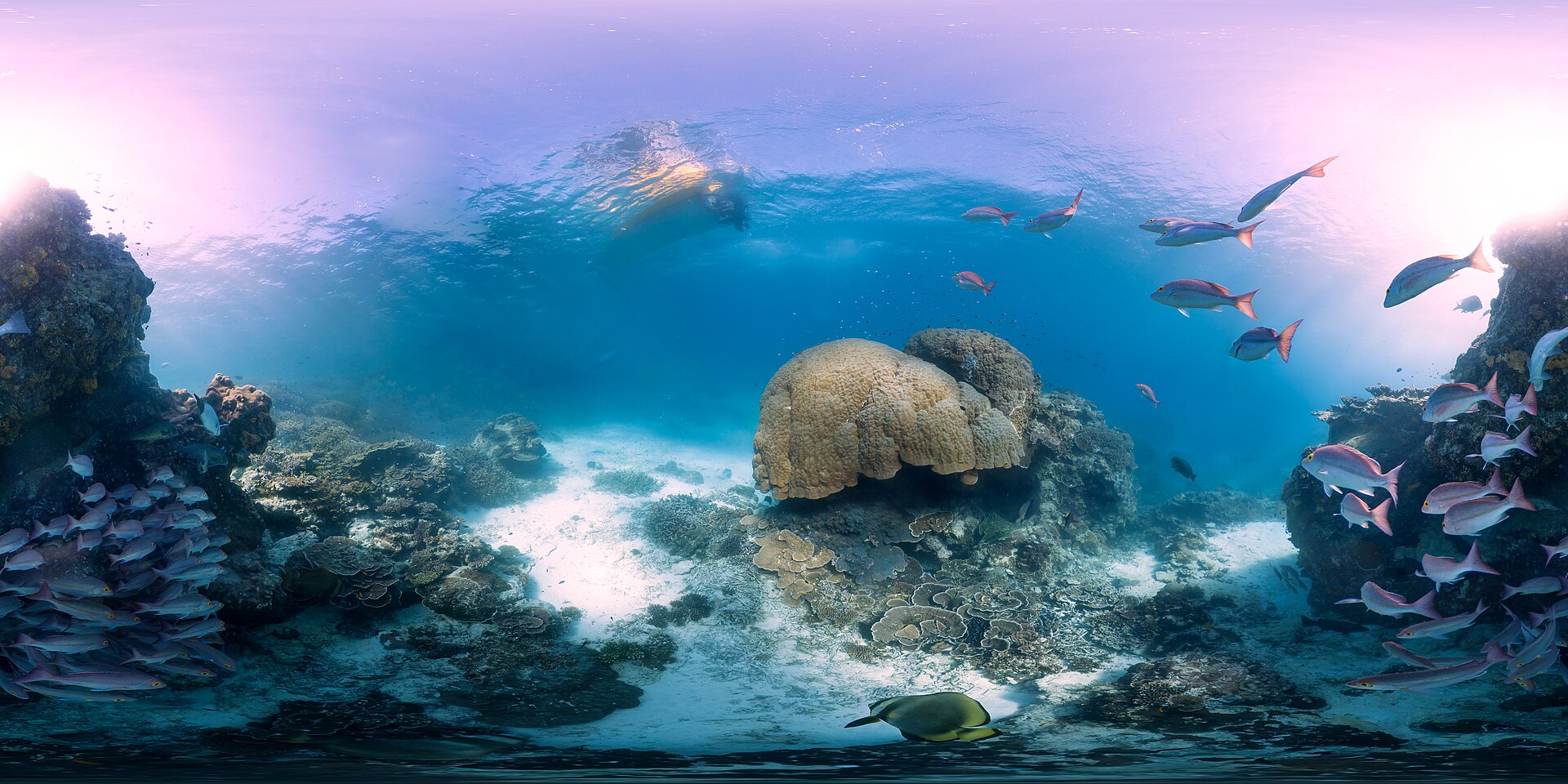
Coral reefs are structures built by colonies of tiny polyps that live in symbiosis with plant-like algae called zooxanthellae and secrete limestone skeletons. Covering less than one per cent of the ocean floor, they shelter roughly a quarter of all marine species and provide fisheries, coastal protection and income worth hundreds of billions of dollars. Warming seas, ocean acidification, pollution, overfishing and disease have driven major losses, including the loss of 14 per cent of the world's coral between 2009 and 2018 and a fourth global bleaching event confirmed in 2023-2024. The Great Barrier Reef, inscribed as World Heritage in 1981, is the largest reef system on Earth and the focus of long-term monitoring, restoration and policy responses.
In this article
- 1Overview
- 2The Coral Animal and Its Symbiosis
- 3Growth, Age and Reef Structure
- 4Biodiversity and Ecological Importance
- 5Ecosystem Services and Economic Value
- 6The Great Barrier Reef
- 7The Coral Triangle
- 8Threats: Bleaching, Disease and Pollution
- 9Monitoring and Early Warning
- 10Restoration and Conservation Practice
- 11Timeline of Major Developments
- 12Timeline: from the 1950s to the 2026 reef surveys
- 13Knowledge graph
Overview
Coral reefs are underwater structures built by tiny sea animals, and their shapes and colours draw divers while offering an excellent home to thousands of marine creatures. They rank as the most biodiverse ecosystems in the ocean and occur in more than 100 countries and territories. Because the partnership between corals and the tiniest ocean plants has endured for some 25 million years, reefs stand as the largest structures of biological origin on Earth.
1. The Coral Animal and Its Symbiosis
The chief builders of reef structure are the polyps, sessile soft-bodied animals that take root on the ocean floor and secrete a limestone skeleton, which most people mistake for plants. They take many forms, from large colonies and fans to small solitary organisms, and thousands of species have been discovered.
Shallow-water reef-building corals live in symbiosis with photosynthetic algae called zooxanthellae, trading a protected environment and nutrients for carbohydrates and oxygen. The partnership is ancient: algae and coral have lived together for over 380 million years, with the date of their first symbiosis pushed back by 170 million years.
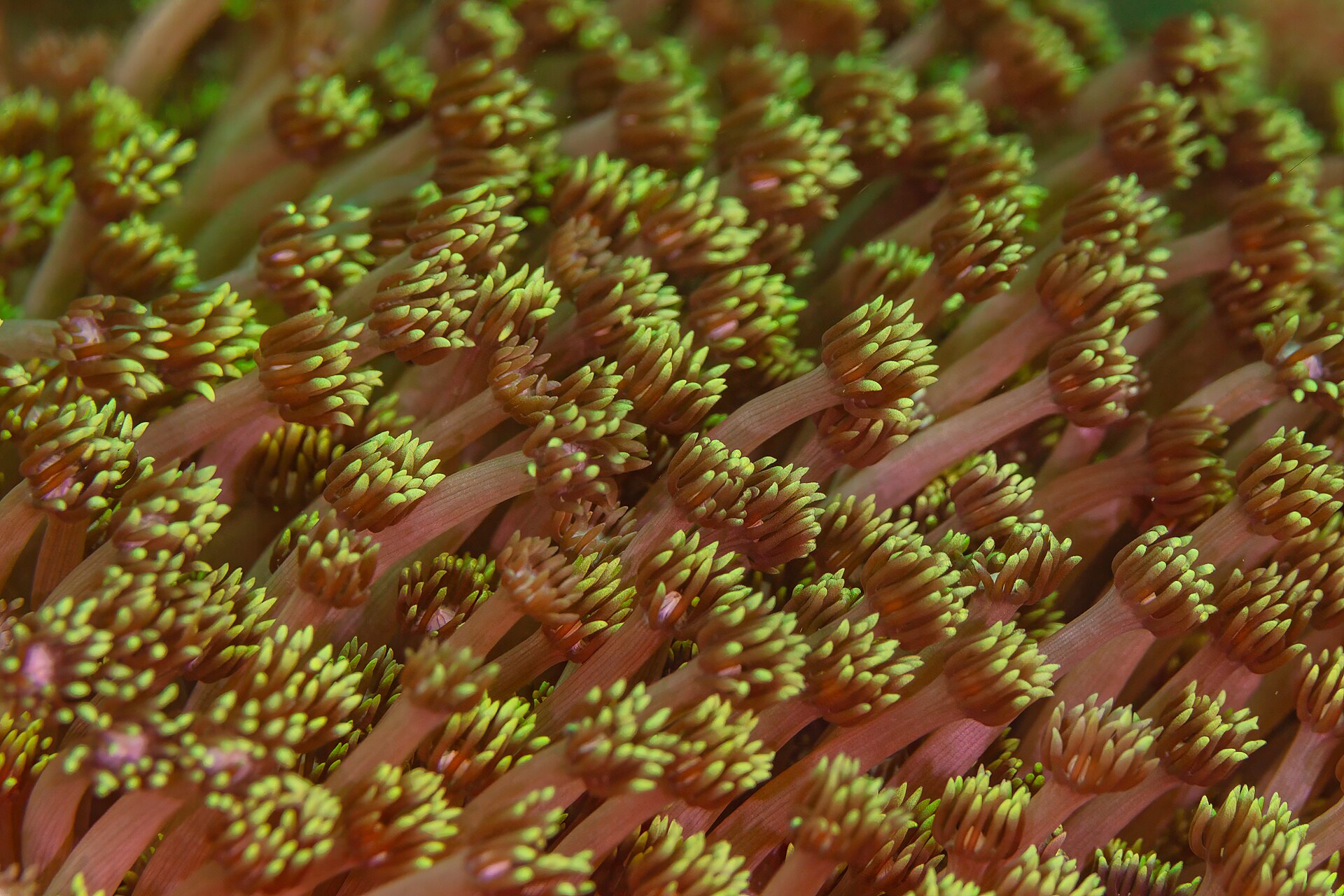
Shallow-water reef-builders carry zooxanthellae and thrive in warm tropical seas, where their symbionts supply the energy that drives skeleton growth. Deep-sea corals occupy deeper or colder waters and lack zooxanthellae, feeding instead on plankton and organic matter.
2. Growth, Age and Reef Structure
Corals have been on earth for at least 400 million years, colonies build reef structure while growing at a typical rate of 0.008 to 0.12 inches per year, and mature reefs can be thousands of years old. The Great Barrier Reef, the world's most extensive coral reef ecosystem, was inscribed as World Heritage in 1981 covering an area of 348,000 square kilometres. Its scale is such that the Great Barrier Reef Marine Park is bigger than Victoria and Tasmania combined and about the same area as Japan, Malaysia or Italy.
Reef framework accumulates through the balance of growth and reproduction against mechanical, chemical and biological breakdown, and a synoptic view of these processes is obtained by overlaying synchronized field work on geochemistry, geology and metabolic processes onto a habitat map of an entire reef. The historical dimension of that framework is reconstructed from the geological record: USGS scientists have compiled all available data on the 71 core records that recovered Holocene reef framework, including radiocarbon and U-series ages. Because reefs are built and eroded over long intervals, their condition is tracked through sustained observation — data collected during manta tow surveys on 121 reefs by Long-Term Monitoring Program scientists between August 2025 and June 2026 were reported as the 2026 survey year.
3. Biodiversity and Ecological Importance
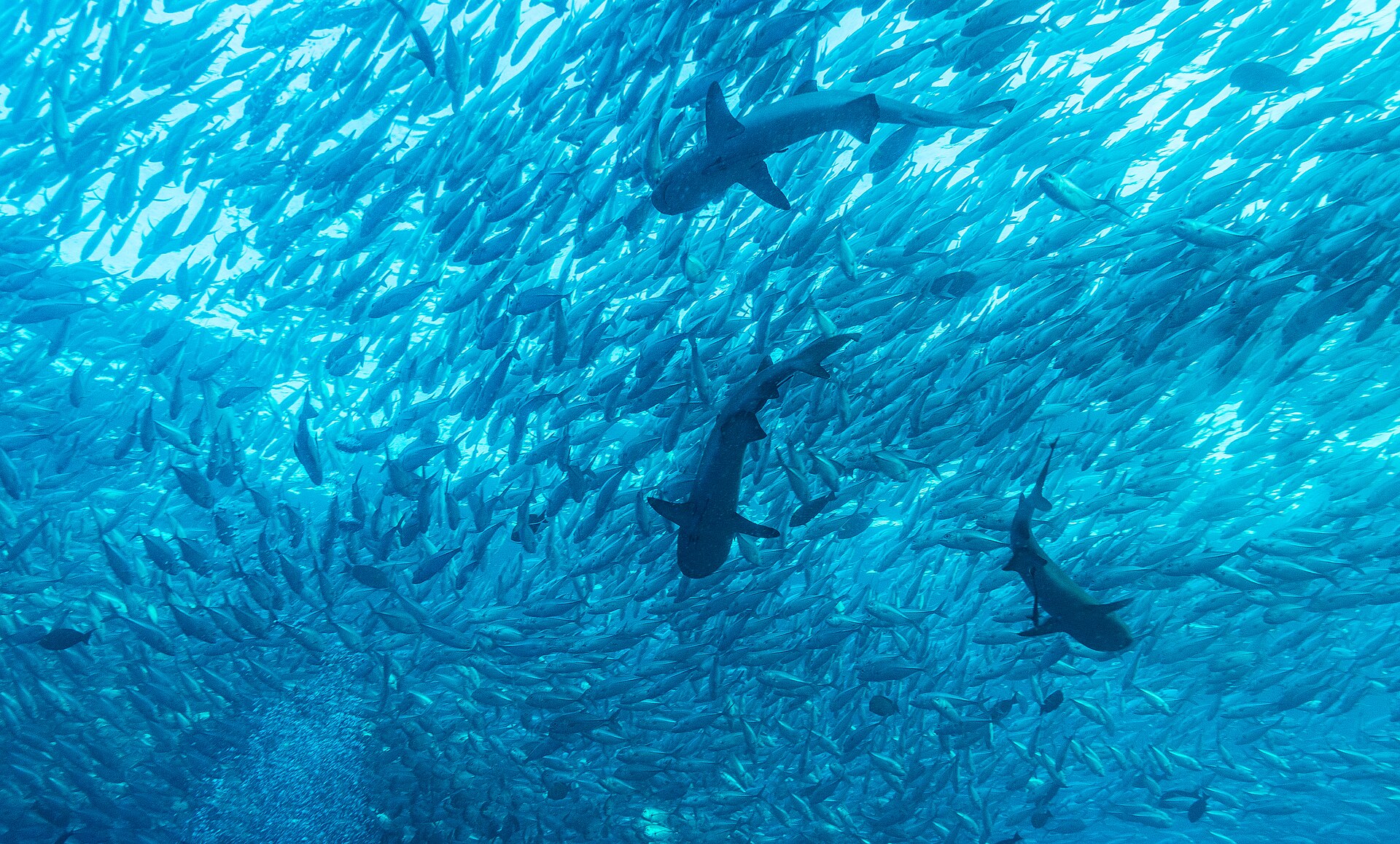
Coral reefs occupy a minute share of the ocean floor, yet they sustain a disproportionate share of its life. A healthy, structurally complex reef serves as habitat for more than 500 species of fishes, invertebrates and plants, and nearshore hardbottom habitat functions as a nursery ground for marine life.
A study spanning the three major oceans used quantitative sampling and DNA barcoding to recover 525 crustacean species from a combined, globally distributed sample area of 6.3 square metres. Extrapolating from that sample, the Chao1 and ACE estimators place the total number of crustacean species at 746 to 781, figures that are themselves likely underestimates given the high numbers of singletons recorded. The gap between observed and estimated diversity reflects the limits of conventional survey practice: traditional methods for assessing reef diversity are not comparable between sites, depend on scarce taxonomic expertise, and leave cryptic species undetected, so real biodiversity is underestimated.
4. Ecosystem Services and Economic Value
Coral reefs function as engines of economic life, generating goods and services valued at an estimated US$2.7 trillion per year. In the United States alone, their total economic value exceeds $3.4 billion annually, a figure that includes $1.8 billion in flood protection. Commercial and recreational reef-dependent fisheries each contribute $100 million per year. Beyond these direct sums, reefs underwrite jobs, recreation, food and new medicines, and more than half a billion people depend on them.
Coral reefs act as natural breakwaters, helping prevent flooding, erosion, and property damage. Healthy reefs absorb up to 97 percent of a wave's energy, their rough surfaces and complex structures dissipating wave force before it reaches shore. This buffering extends to currents, storms and hurricane storm surge, while reefs also stabilize beaches and reduce erosion.
states, territories and marine sanctuaries draw 55 million visitors a year to reef environments. In Hawaii, 60 percent of tourist income comes from reef visitors.
5. The Great Barrier Reef
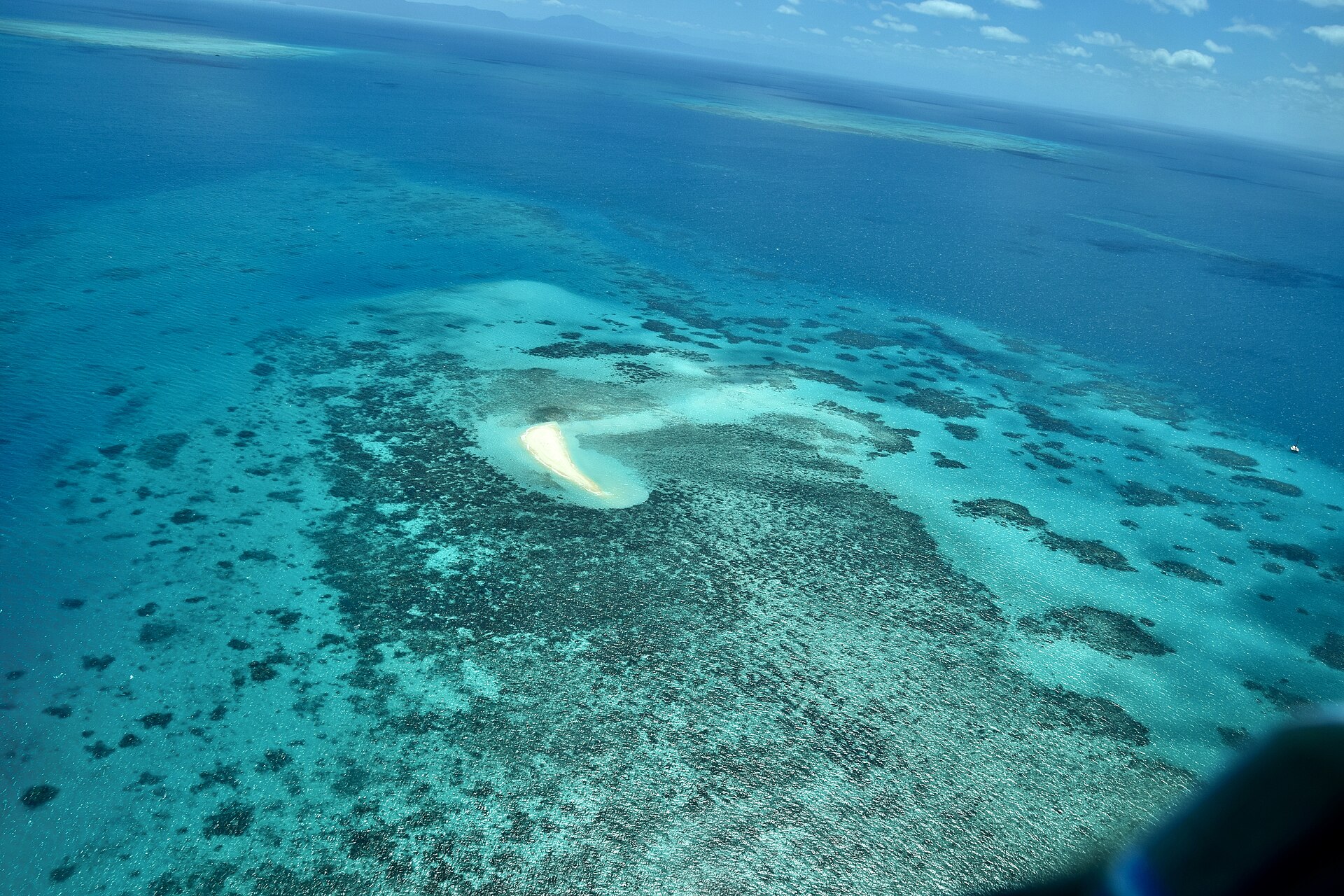
The Great Barrier Reef Marine Park covers 344,400 square kilometres and includes some 3000 coral reefs, 600 continental islands, 300 coral cays and about 150 inshore mangrove islands. Under natural criterion (viii) the Great Barrier Reef, extending 2,000 kilometres along Queensland's coast, is a globally outstanding example of an ecosystem that has evolved over millennia and been exposed and flooded by at least four glacial and interglacial cycles.
Natural pressures on the Great Barrier Reef include cyclones, crown-of-thorns starfish outbreaks and sudden large influxes of freshwater, while human uses include tourism, shipping and coastal developments such as ports. The Great Barrier Reef Coast Marine Park was established under the Queensland Marine Parks Act 2004 to complement the Commonwealth marine park. The Great Barrier Reef Marine Park Authority published its Outlook Report 2019 on the reef's condition and the pressures acting on it.
6. The Coral Triangle
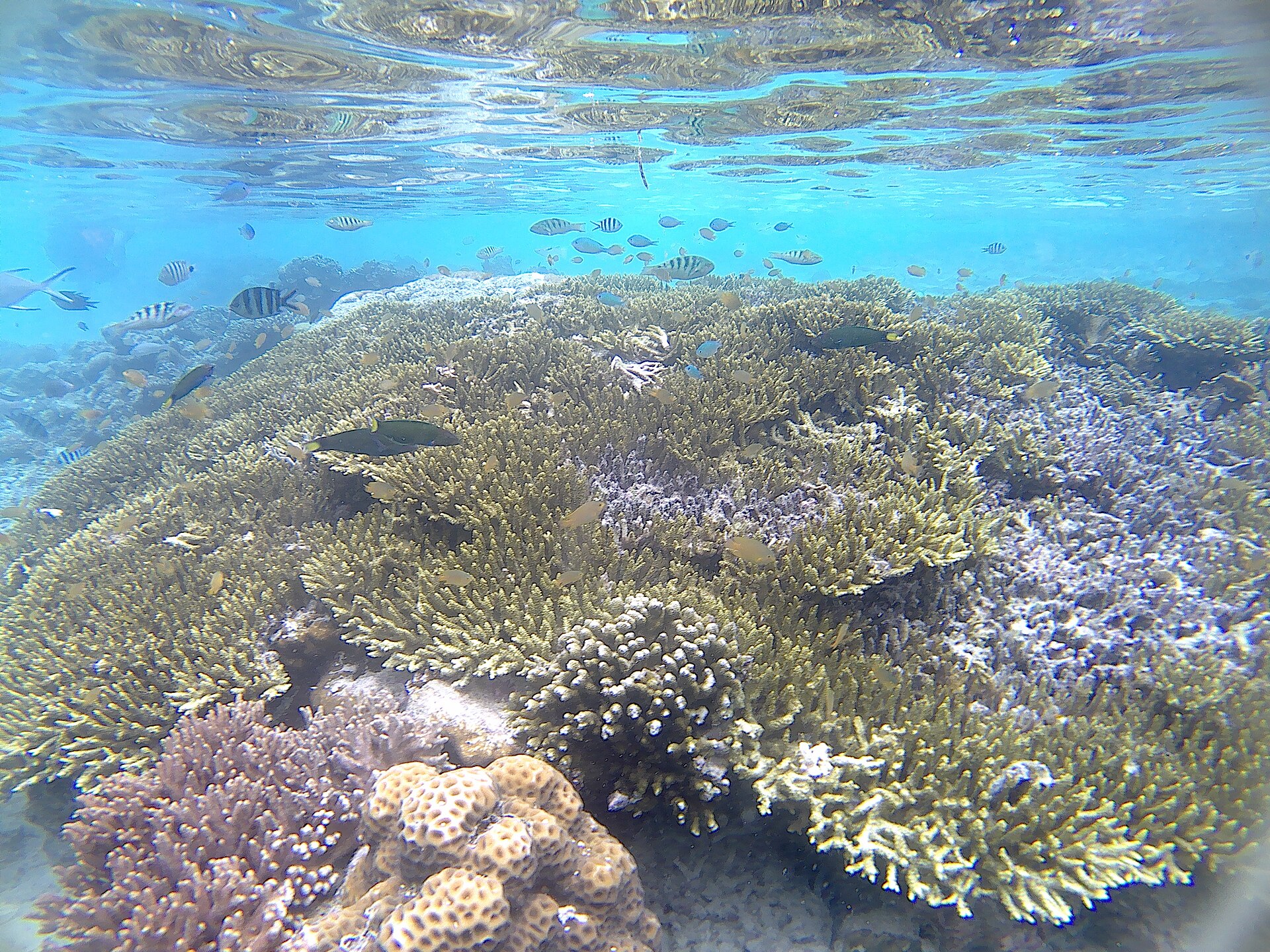
The Coral Triangle spans Indonesia, Malaysia, Papua New Guinea, the Philippines, Solomon Islands and Timor Leste. This six-nation region is credited with unparalleled marine biodiversity. Its stewardship is organized through the Coral Triangle Initiative on Coral Reefs, Fisheries and Food Security, abbreviated as CTI-CFF. The initiative's Regional Plan of Action is referred to by the abbreviation RPOA.
7. Threats: Bleaching, Disease and Pollution
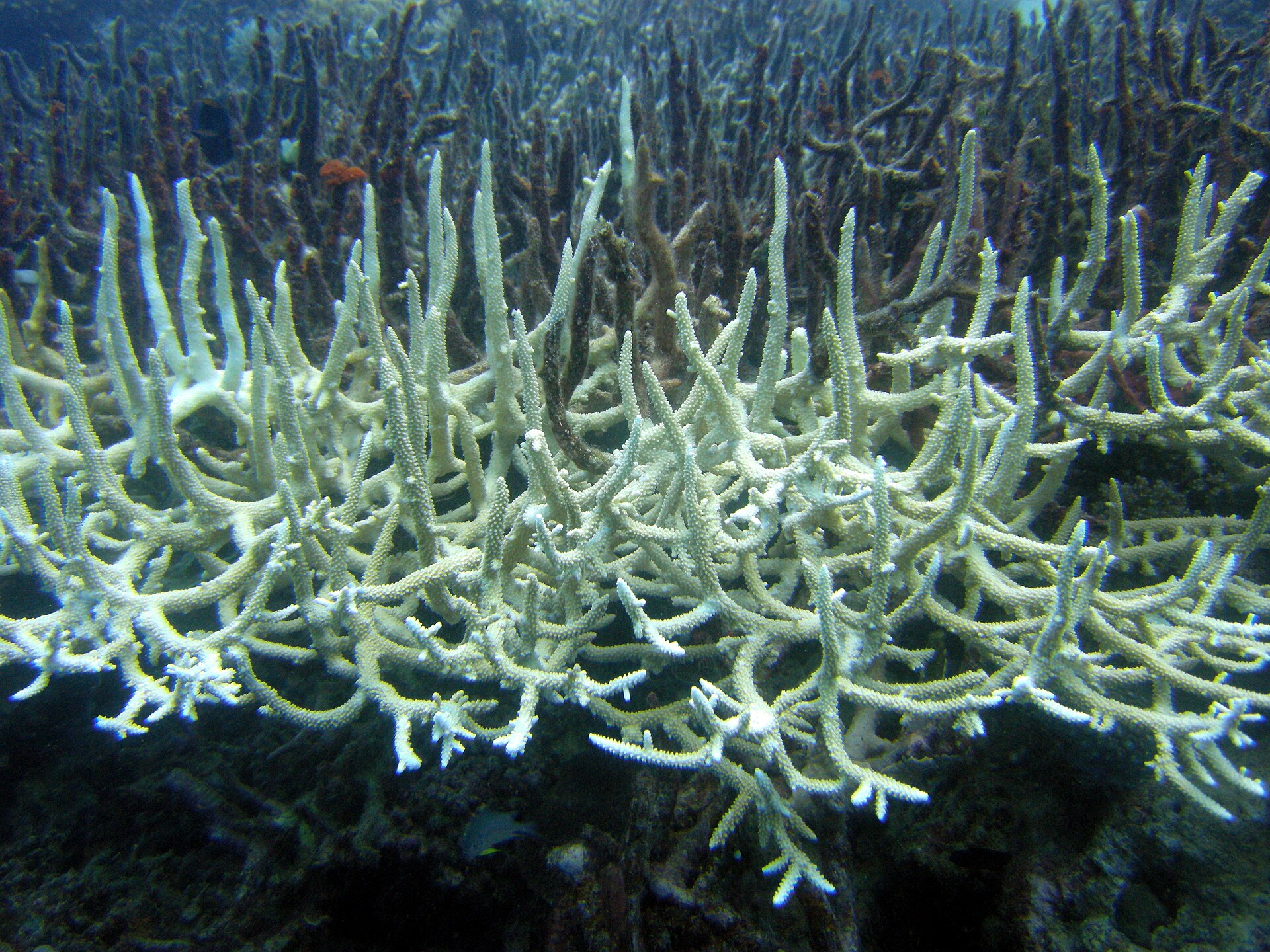
Higher sea surface temperatures are directly correlated with widespread coral bleaching, a condition in which heat stress disrupts the symbiosis between the coral host and its dinoflagellate algae. Stressed corals expel their zooxanthellae and turn pale or white; recovery is possible if the stress is not severe, while prolonged loss of the algae leads to death. Increased ocean temperature from climate change is the leading cause, with runoff, pollution, overexposure to sunlight and extreme low tides also implicated.
In 2005 the United States lost half of its coral reefs in the Caribbean in one year to a massive bleaching event, and satellite data showed thermal stress beyond the previous 20 years combined. In 2016 heat stress covered 51 percent of reefs globally, and the first mass bleaching of the northern and far-northern Great Barrier Reef killed 29 percent of the reef's shallow water corals. During the 2014-2017 event, unusually warm waters affected 70% of coral reef ecosystems worldwide, bleaching hundreds of miles of coral on the Great Barrier Reef. Fourteen per cent of the world's coral was lost between 2009 and 2018 to bleaching and local pressures. Bleaching was documented across both hemispheres of each major ocean basin from February 2023 to April 2024.
Microbiome manipulation alone cannot overcome the impact of climate change, pollution, eutrophication and overfishing on reefs, so local actions are needed alongside climate action.
8. Monitoring and Early Warning
These satellite products and modeled Outlooks have successfully predicted and monitored all major mass coral bleaching events observed globally since 1997, supplying users with critical information during severe ocean heat stress.
The Global Coral Reef Monitoring Network is an operational network of the International Coral Reef Initiative operating through ten regional nodes. The sixth edition of the Status of Coral Reefs of the World report was released in October 2021, the first since 2008, and drew on a global dataset of almost 2 million observations from more than 12,000 sites in 73 reef-bearing countries, contributed by more than 300 members of the network.
9. Restoration and Conservation Practice
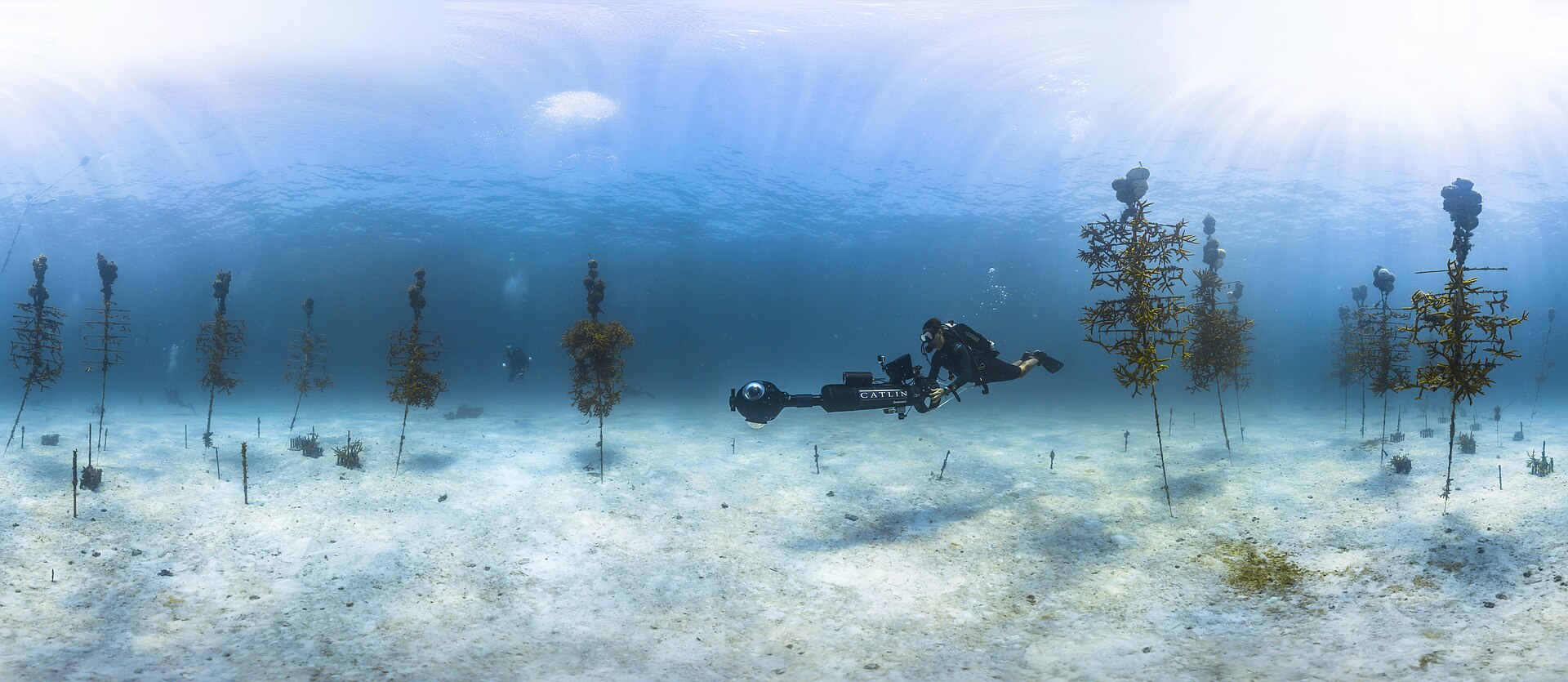
Coral restoration can take many forms, ranging from simple growing, gardening, and outplanting to harvesting naturally-produced eggs and sperm. In practice, this often means collecting detached corals and growing them in dense nurseries before they are reattached to the reef. More than 20 active nurseries across the Caribbean supply more than 40,000 healthy corals each year. Practitioners also explore resilient, genetically diverse populations of key species.
The Coral Restoration Foundation raises all of its corals in situ, out in the ocean, rehomes its reef-ready corals on carefully selected reef sites, develops outplanting techniques for the different species it works with, and invented the Coral Tree, a simple and cost-effective technology now adopted by restoration groups around the world.
Closing the gap in restoration impact requires more resources as well as much greater efficiency of every dollar spent and every minute a diver spends underwater. To gauge potential for restoration in Florida, an assisted migration experiment moved 50 coral fragments of 5 nursery-raised genetic strains from the upper Florida Keys.
10. Timeline of Major Developments
-
1975Marine Park ActThe Great Barrier Reef Marine Park Act 1975 created the legal framework for the marine park and was amended in 2007 and 2008.5Great Barrier Reef · UNESCO World Heritage Centre ↗
-
1998First of six widespread GBR bleaching eventsThe first of six widespread bleaching events on the Great Barrier Reef.
-
2009Great Barrier Reef Outlook ReportThe Great Barrier Reef Outlook Report is published.
-
2024GBR mass bleachingA mass bleaching event on the Great Barrier Reef.
-
2026Survey year coral cover figuresHard coral cover across all three regions of the Great Barrier Reef increases slightly or stays similar to levels recorded in 2025, signalling the start of recovery from the impacts of the 2024 mass bleaching event.
11. Timeline: from the 1950s to the 2026 reef surveys
- since 1950Half of the world's reef cover lostOver half of coral reef cover across the world has been lost since 1950 as reefs suffer from the effects of climate change and local pressures.
- 1975Great Barrier Reef Marine Park ActThe Great Barrier Reef Marine Park Act 1975 created the legal framework for the marine park, the world's largest coral reef ecosystem, and was amended in 2007 and 2008 and remains the foundation of reef management.
- 1981World Heritage inscriptionPractically the entire Great Barrier Reef ecosystem was inscribed as World Heritage in 1981 with an area of 348,000 square kilometres.
- 1997NOAA Coral Reef Watch beginsNOAA Coral Reef Watch began building its satellite monitoring system in 1997 and now issues bleaching alerts worldwide.
- 1998The first widespread mass bleachingThe first widespread mass coral bleaching event on the Great Barrier Reef occurred in 1998 and further events followed over the next two decades.
- 2004Queensland marine parks legislationThe Great Barrier Reef Coast Marine Park was established under the Queensland Marine Parks Act 2004 to complement the Commonwealth marine park.
- 2009 to 2018A decade of global coral lossBetween 2009 and 2018 warming temperatures and climate change, coupled with local pressures, caused the loss of 14 per cent of the coral from the world's coral reefs.
- 2016Heat stress across half the world's reefsIn 2016 heat stress encompassed 51 percent of coral reefs globally and was extremely severe, producing the first mass bleaching of the northern and far-northern Great Barrier Reef.
- 2019Great Barrier Reef Outlook ReportThe Great Barrier Reef Marine Park Authority published its Outlook Report 2019 on the reef's condition and the pressures acting on it.
- 5 October 2021Sixth GCRMN report releasedThe Global Coral Reef Monitoring Network released the Sixth Status of Coral Reefs of the World report on 5 October 2021 after more than a decade without a global assessment.
- April 2022Sixth bleaching event on the Great Barrier ReefNASA Earth Observatory reported the sixth widespread bleaching event on the reef since 1998 and the first ever recorded during La Nina conditions, which are typically cooler.
- March 2022UNESCO reactive monitoring missionUNESCO sent a reactive monitoring mission to the Great Barrier Reef to assess the state of conservation of the World Heritage property.
- February 2023 to April 2024Fourth global coral bleaching eventNOAA confirmed the fourth global coral bleaching event, with significant bleaching documented in both hemispheres of each major ocean basin from February 2023 to April 2024 and throughout the tropics.
- December 2023Bleaching alert levels extendedIn December 2023 NOAA Coral Reef Watch expanded its Bleaching Alert Levels to include levels 3 to 5 in response to the extreme marine heatwaves of that year.
- August 2025 to June 2026AIMS long-term monitoring surveyScientists of the Long-Term Monitoring Program surveyed 121 reefs between August 2025 and June 2026 and found hard coral cover that had increased slightly or held steady.
- 2026Recovery on the northern reefOn the northern Great Barrier Reef the region-wide average hard coral cover rose from 30.0 per cent to 35.1 per cent, above the long-term average of 27.0 per cent.
References (20)
- 1Shallow Coral Reef Habitat — NOAA Fisheries (National Oceanic and Atmospheric Administration) WebView source
- 2Coral reefs — UN Environment Programme WebView source
- 3Are corals animals or plants? — NOAA National Ocean Service WebView source
- 4Coral Reef Ecosystems — National Oceanic and Atmospheric Administration (NOAA) WebView source
- 5Great Barrier Reef — UNESCO World Heritage Centre Web↩View source
- 6Reef facts — Great Barrier Reef Marine Park Authority (Australian Government) WebView source
- 7Coral Reef Ecosystem Studies (CREST) — U.S. Geological Survey (USGS) WebView source
- 8Great Barrier Reef condition summary 2025-26 — Australian Institute of Marine Science (AIMS) 2025 WebView source
- 9The Diversity of Coral Reefs: What Are We Missing? — PLOS ONE (peer-reviewed) JournalView source
- 10Restoring Coral Reefs — NOAA Fisheries (National Oceanic and Atmospheric Administration) WebView source
- 11Coral Triangle Initiative on Coral Reefs, Fisheries and Food Security — CTI-CFF Regional Secretariat WebView source
- 12Coral Reefs: Fast Facts — NOAA Office for Coastal Management WebView source
- 13What is coral bleaching? — NOAA National Ocean Service WebView source
- 14NOAA confirms 4th global coral bleaching event — National Oceanic and Atmospheric Administration (NOAA) WebView source
- 15Defining Coral Bleaching as a Microbial Dysbiosis within the Coral Holobiont — Microorganisms (MDPI) via PubMed Central WebView source
- 16NOAA Coral Reef Watch: Satellite Monitoring and Modeled Outlooks — NOAA Coral Reef Watch (NESDIS/STAR) WebView source
- 17Launch of the Sixth GCRMN Status of Coral Reefs of the World: 2020 Report — International Coral Reef Initiative (ICRI) / Global Coral Reef Monitoring Network 2020 WebView source
- 18Coral Restoration — Coral Restoration Foundation WebView source
- 19Coral reefs — Natural History Museum WebView source
- 20Great Barrier Reef Mass Bleaching Event — NASA Earth Observatory WebView source