Eiffel Tower
The 1889 world's fair landmark on the Champ de Mars — Koechlin and Eiffel's 300-metre iron tower, its construction, its critics, its radio life and its seven million visitors a year.
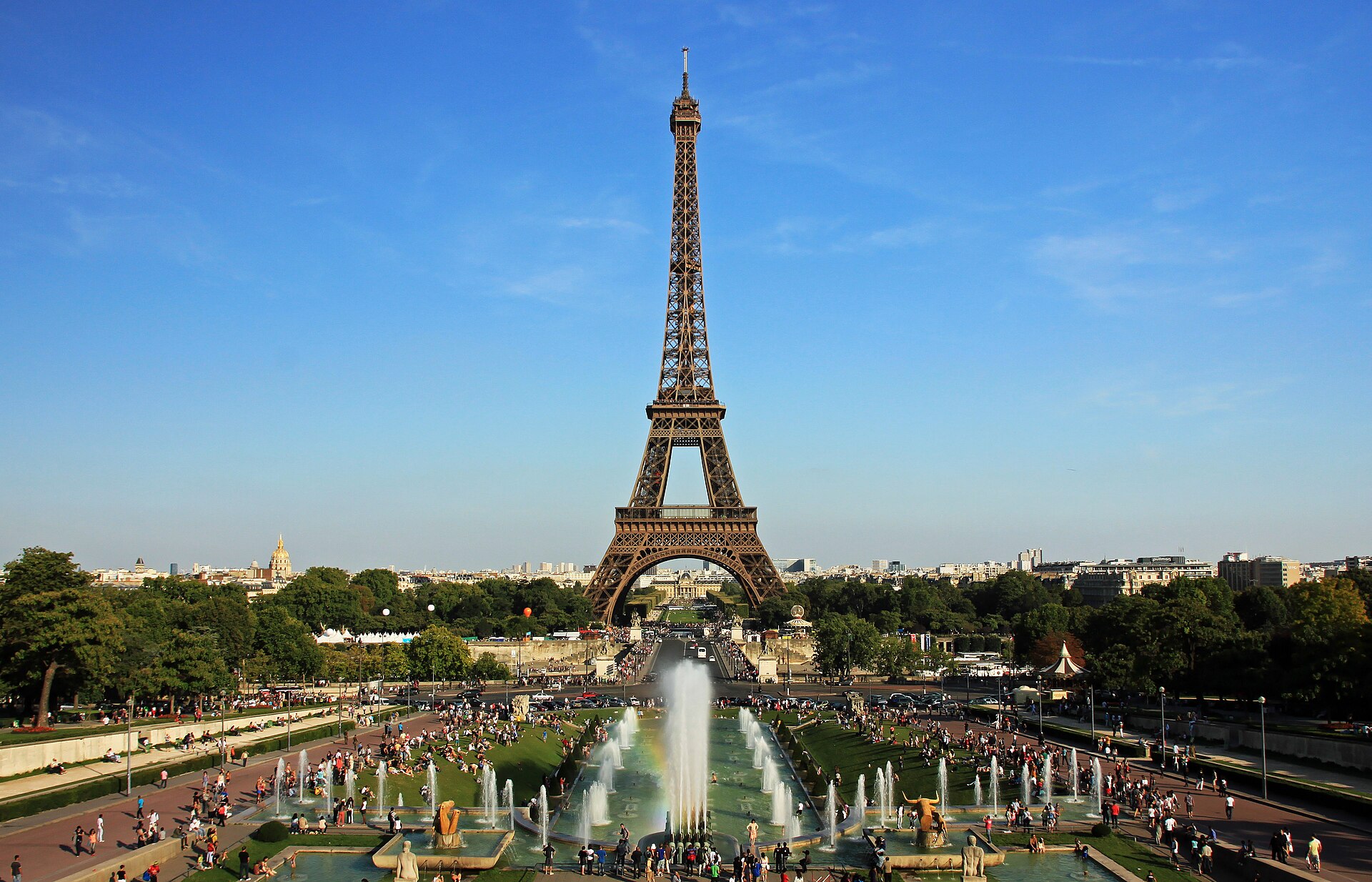
The Eiffel Tower is a wrought-iron lattice tower on the Champ de Mars in Paris, designed by the engineers Maurice Koechlin and Emile Nouguier with the architect Stephen Sauvestre for the company of Gustave Eiffel, and built between 1887 and 1889 as the entrance gateway to the Exposition Universelle. Standing 300 metres high on completion, it was the tallest structure in the world until the Chrysler Building was completed in New York City during 1930, was nearly scrapped when its original 20-year concession ran out, and was saved above all by its use as a giant radio antenna. Repainted 19 times by hand and visited by about seven million people a year, it has become the symbol of Paris and one of the UNESCO-listed monuments of the banks of the Seine.
In this article
- 1Overview
- 2Location and Setting
- 3Dimensions, Materials and Structure
- 4Origins and Design Competition
- 5Construction
- 6The 1889 Exposition Universelle and Early Reception
- 7Lifts and Vertical Access
- 8Scientific and Military Uses
- 9Broadcasting and Television
- 10Painting and Maintenance
- 11Gustave Eiffel: Career and Later Life
- 12Later History and Wartime
- 13Visitors and Cultural Significance
- 14Timeline: from the 1884 patent to the 2022 antenna
- 15Knowledge graph
Overview
The Eiffel Tower is a wrought-iron structure described as a technological masterpiece in building-construction history, designed and built between 1887 and 89 by Gustave Eiffel and named in his honour.
1. Location and Setting
The Eiffel Tower rises on the Champ de Mars at 5 Avenue Anatole France, within the 7th arrondissement of Paris, on the Left Bank south of the Seine. Its position is fixed at 48° 51' 30" N, 2° 17' 40" E.
The tower belongs to the Paris, Banks of the Seine World Heritage property, whose entry heads its list of conserved exhibition buildings with the Eiffel Tower. Together with the Grand and Petit Palais, the Pont Alexandre III and the Palais de Chaillot, it is described as the living testimony of the universal exhibitions. The property was inscribed in 1991 under criteria (i)(ii)(iv), with a core area of 538 ha and a buffer zone of 3,194 ha.
2. Dimensions, Materials and Structure
| Measurement | Value | Source |
|---|---|---|
| Height of the iron structure | 300.65 metres | structurae-eiffel-tower |
| Height with antennas | 330 metres (1,083 feet) | britannica-eiffel-tower |
| Platform heights | 57.63 m, 115.73 m and 276.13 m | structurae-eiffel-tower |
| Weight of the metal frame | 7,300 tons | te-key-figures |
| Total weight | 10,100 tons | britannica-eiffel-tower |
| Iron parts | 18,038 pieces | structurae-eiffel-tower |
| Rivets | 2,500,000, of which 1,050,846 placed on site | structurae-eiffel-tower |
| Steps to the summit | 1,710 | te-exposition |
The tower's uprights are curved according to a mathematical determination made to offer the most efficient wind resistance possible4Origins and Construction of the Eiffel Tower · Societe d'Exploitation de la tour Eiffel (official site) ↗. Because the lacy trusswork gives the wind nothing to push, the wrought iron of the tower weighs less than the column of air that surrounds it5Pictures: Eiffel Tower at 125, Still Lovely After All These Years · National Geographic ↗. The structure is built of puddle iron, a material whose care has shaped the tower's maintenance ever since6Painting the Eiffel Tower · Societe d'Exploitation de la tour Eiffel (official site) ↗.
3. Origins and Design Competition
The 1889 Exposition Universelle was to mark the centenary of the French Revolution, and in 1886, as part of the fair's preparations, a great competition was launched for a suitable monument. The accepted design was a collaboration between Gustave Eiffel the entrepreneur, the engineers Maurice Koechlin and Emile Nouguier, and the architect Stephen Sauvestre, selected from among 107 projects.
The two chief engineers in Eiffel's company, Emile Nouguier and Maurice Koechlin, first had the idea for a very tall tower in June 1884, during early discussions about the exposition centrepiece. On September 18 1884 Eiffel registered a patent for a new configuration allowing the construction of metal supports and pylons capable of exceeding a height of 300 metres.
While Eiffel himself often receives full credit, it was his employee, the structural engineer Maurice Koechlin, who came up with and fine-tuned the concept of the tower. The commission for the fair's centrepiece was granted to Eiffel et Compagnie, Eiffel's consulting and construction firm.
4. Construction
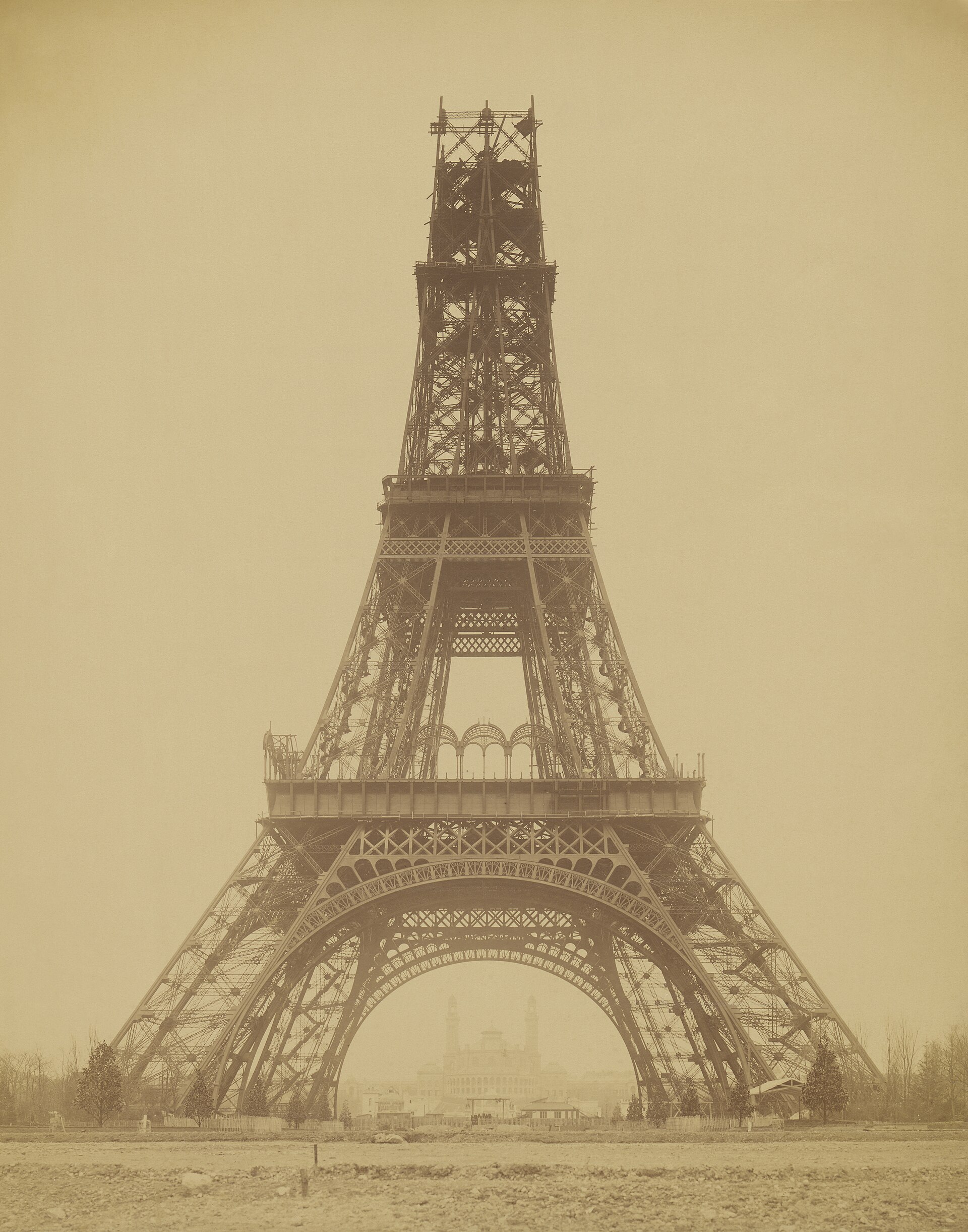
Construction took 2 years, 2 months and 5 days, from January 1887 to March 1889, and the tower was completed on 31 March 1889, a record established as a veritable technical feat. The assembly of the metal supports began on 1 July 1887 and was completed twenty-two months later; all the elements were prepared in Eiffel's factory at Levallois-Perret on the outskirts of Paris.
The cost of construction was 7,400,000 francs; the fees collected during the world's fair of 1889 reached 6,500,000 francs and the city of Paris subsidised the tower with 1,500,000 francs.

5. The 1889 Exposition Universelle and Early Reception
The tenth Exposition Universelle was organised in Paris in 1889 from the 15th May to the 6th November, and it was for this occasion that the Eiffel Tower was built. The tower opened to the public on 15 May 1889 during the fair.
Among the millions of visitors to the fair, 1,953,122 came to see the Eiffel Tower, almost 12,000 a day. In the very first week, though the lifts were not yet in service, almost 30,000 visitors climbed the monument using the staircase, 1,710 steps to the top. Celebrity visitors included the actress Sarah Bernhardt, the Prince of Wales, George I of Greece, the Shah of Persia and Buffalo Bill Cody.
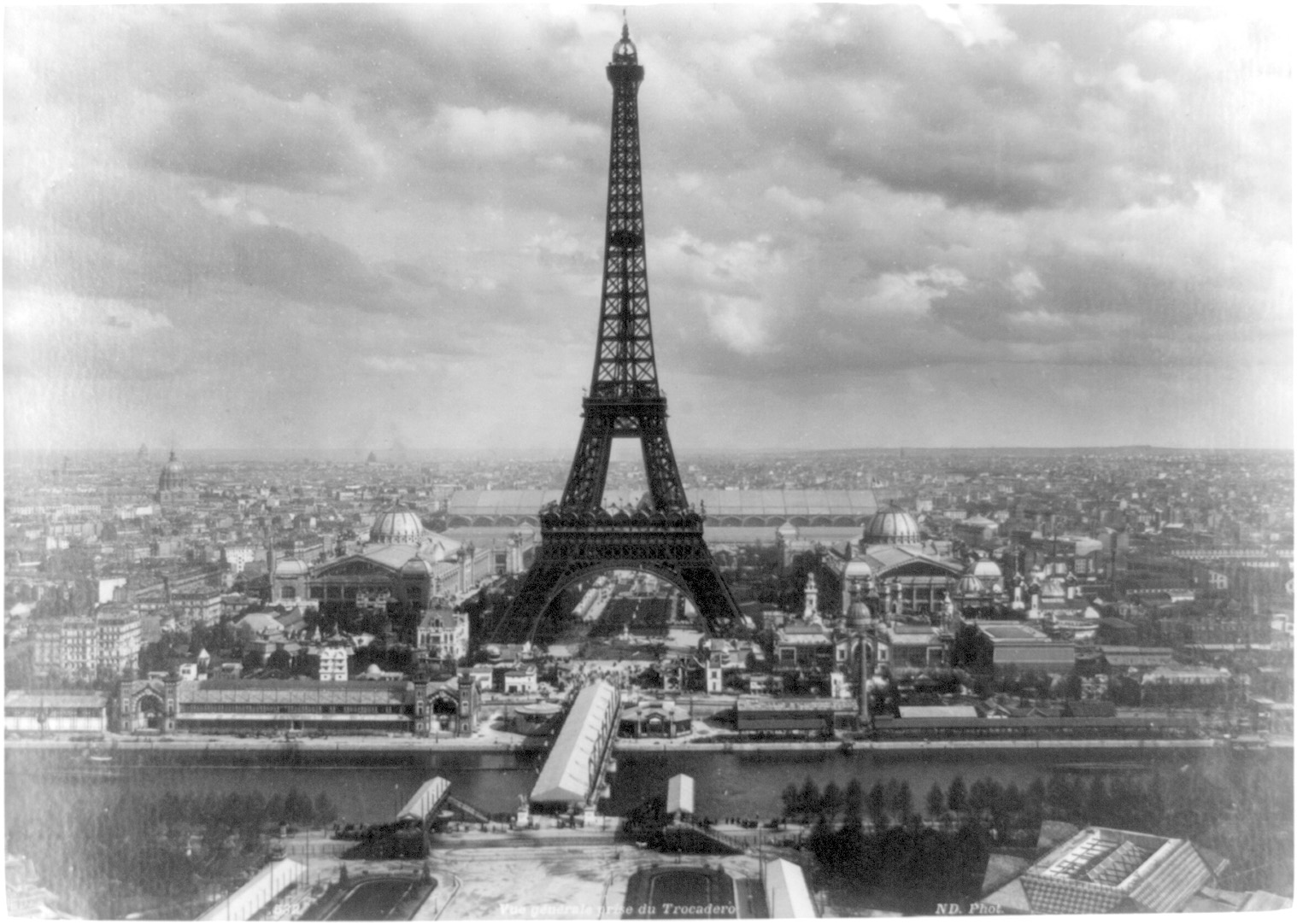

At the top Gustave Eiffel reserved an office in which he received his guests, notably Thomas Edison, who offered him his famous class M type Phonograph. On the second floor Le Figaro set up a printing works and produced a special edition of the daily newspaper on-site every day. The tower lit up every evening with the light of hundreds of gas lamps protected by opal glass cases, and a tricolour beacon housed in the campanile sent out blue, white and red signals over Paris.
The "Protest against the Tower of Monsieur Eiffel", published in the newspaper Le Temps, was addressed to the World's Fair's director of works, Monsieur Alphand. The artists' petition protested against the useless and monstrous Eiffel Tower, which popular ill-feeling had already christened the Tower of Babel. Eiffel replied in Le Temps in February 1887 and argued that the tower would possess its own beauty, with wind resistance his primary design concern.
Many Parisians feared the tower was structurally unsound or considered it an eyesore, and the novelist Guy de Maupassant allegedly ate lunch in its restaurant because it was the only vantage point from which he could avoid seeing it. Gustave Eiffel referred to the structure as the 300-Meter Tower, while the name Eiffel Tower was given by the Parisian critics who were against it and has stuck ever since.
6. Lifts and Vertical Access
Almost from the tower's opening for the 1889 Exposition Universelle, visitors could access the floors by lift, a veritable technical triumph for the time. In June 1889 five hydraulic elevators went into operation, and an Edoux elevator with jacks 80 meters long served the upper section, the only machine of its type in the world.
Otis elevators served the north and south pillars until 1910, while Roux-Combaluzier machines worked the east and west pillars until 1897 and Fives-Lille hydraulic elevators took over in 1899 for the 1900 exposition.
7. Scientific and Military Uses
From the presentation of his project in 1886, Eiffel understood that only the tower's scientific uses could protect it from its adversaries and prolong its lifespan. The tower was initially supposed to be destroyed after 20 years, so Eiffel specified purposes including meteorological and astronomical observations, physics experiments and wind studies.
From 1889 the Eiffel Tower was used as a laboratory of measurements and scientific experiments, with considerable apparatus including barometers, anemometers and lightning conductors. Eiffel had a wind tunnel built at the foot of the tower and from August 1909 to December 1911 carried out five thousand trials. After the 1889 fair closed he added a meteorological station in 1890, a military telegraph station in 1903 and a laboratory for studying aerodynamics in 1909.
In the end it was the tower's role as an enormous antenna that would save it from destruction. Originally intended as a temporary exhibit, the tower was almost torn down and scrapped in 1909, but city officials saved it after recognising its value as a radiotelegraph station.
On the 5th November 1898 Eugene Ducretet carried out the first wireless telegraphy trials between the Eiffel Tower and the Pantheon, a distance of 4 km, with the transmitter installed at the top of the tower. In 1903 Gustave Eiffel suggested that Captain Gustave Ferrie use the tower for military wireless experiments, financed the operation, and enabled transmission and reception over 400 km.
During the Battle of the Marne in 1914 the tower's radiotelegraphic station intercepted information that enabled the French command to organise a victorious counter-attack. During World War I the tower intercepted enemy radio communications, relayed zeppelin alerts and was used to dispatch emergency troop reinforcements.
In 1911 the German physicist Theodor Wulf used an electrometer to detect higher levels of radiation at the tower's top than at its base, observing the effects of what are now called cosmic rays.
The names of 72 scientists are engraved on the borders of each of the four sides of the Eiffel Tower in homage, and they were restored during 1986 and 1987 after disappearing under an earlier painting campaign.
8. Broadcasting and Television
In 1935 a television studio was set up in rue de Grenelle and the Eiffel Tower transmitter began to operate, starting with 60 lines and later passing to a high definition of 180 lines. On the 2nd June 1953 the tower's transmitter showed the whole of France the celebrations for the Queen of England's coronation live, the beginning of Eurovision.
A new antenna in 1957 made the Eiffel Tower reach a height of 320.75 metres. In 2000 a new UHF antenna led to another modification of the tower's height, which was now 324 m.
9. Painting and Maintenance
Built using puddle iron, the tower is protected from oxidation by several coats of paint; in 1900 Eiffel wrote that painting was the essential element in the conservation of metal works. The tower has been repainted 19 times since its construction, an average of once every seven years, passing from red-brown to yellow-ochre, then chestnut brown and finally the bronze of today.
Painters strip, clean, apply rust-proofing and the final coat of paint to the whole 300 metres, and even today they still work with traditional methods dating back to Gustave Eiffel's day, mostly by hand.
10. Gustave Eiffel: Career and Later Life
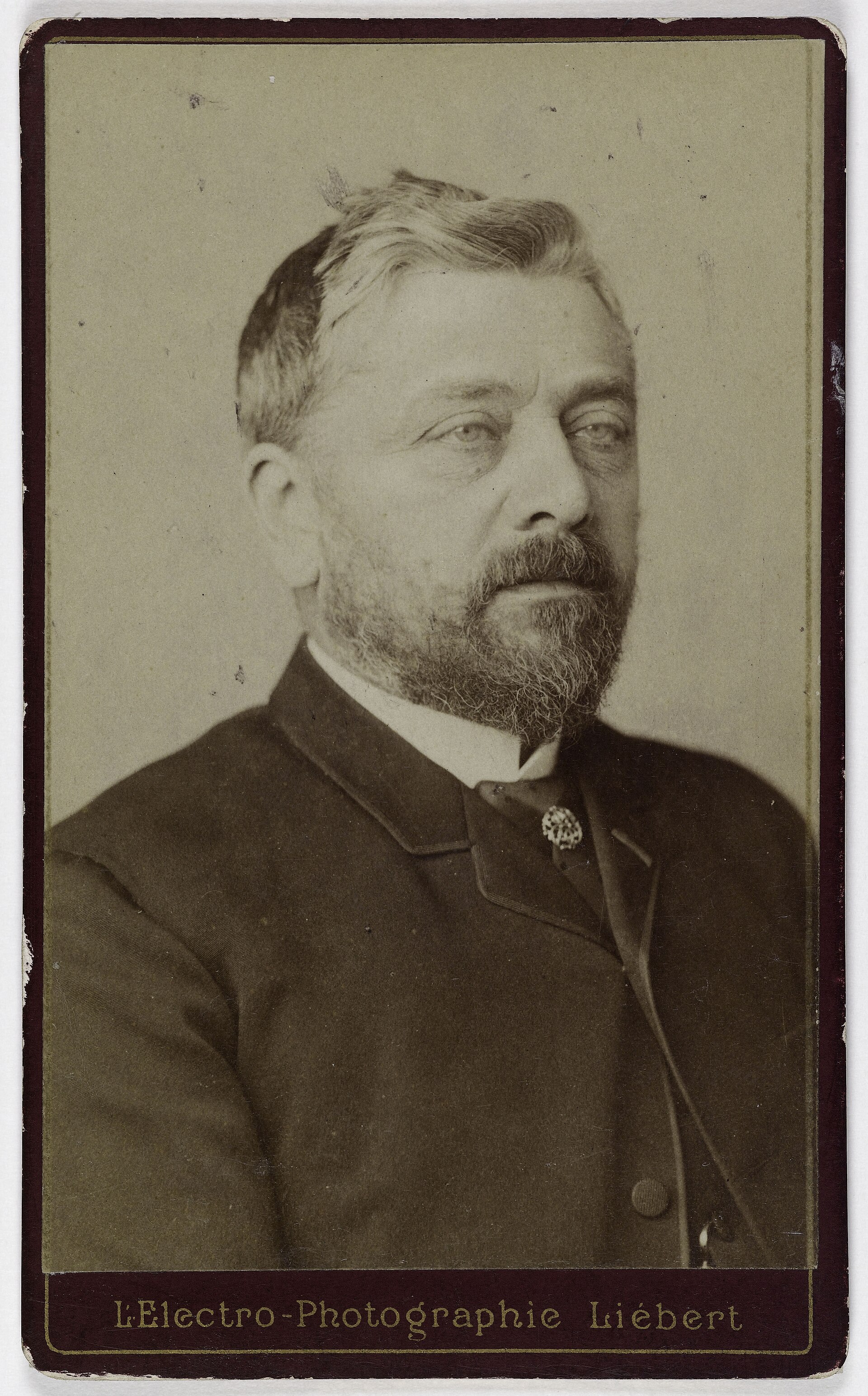
Alexandre-Gustave Eiffel was born in Dijon, France on December 15 in 1832; an engineer by training, he founded and developed a company specialising in metal structural work, whose crowning achievement was the Eiffel Tower. After graduating in 1855 he began to specialise in metal construction, especially bridges. He directed the erection of an iron bridge at Bordeaux in 1858 and went on to design the arched Gallery of Machines for the Paris Exhibition of 1867 and other early metalwork.
Eiffel's career was marked by the Porto viaduct over the Douro in 1876 and by the Garabit viaduct in 1884, along with the Pest railway station in Hungary, the dome of the Nice observatory and the structure of the Statue of Liberty. He bridged the Douro River at Oporto with a 525-foot steel arch in 1877 and later built the 540-foot Garabit viaduct, for many years the highest bridge in the world. He was one of the first engineers to employ compressed-air caissons in bridge building.
When the initial internal designer Eugene Viollet-le-Duc died in 1879, the Franco American Union and Frederic-Auguste Bartholdi hired Eiffel as his replacement. Eiffel designed a 92-foot, or 28-metre, central pylon as the primary support structure of the interior. Four huge iron posts run from the base to the top, forming a pylon which bears the weight of the whole structure.
In 1887 Eiffel agreed to build the locks of the Panama canal, an immense undertaking badly managed by Ferdinand De Lesseps that ended in the biggest financial scandal of the century. A court sentenced Eiffel to two years in prison and a fine of 2000 francs in the Panama Canal case, even though nothing could really be blamed on him personally.
In retirement Eiffel employed the tower in wind resistance experiments, as a meteorological observation post and above all as a giant aerial mast for the new science of radio broadcasting. At Auteuil, outside Paris, he built the first aerodynamic laboratory, where he continued to work throughout World War I, and in 1921 he gave the laboratory to the state. He died in Paris on 27 December 1923 at the age of 91 following three decades of experimental research.
11. Later History and Wartime
At its inauguration in March 1889 the tower stood nearly 1,000 feet high and was the tallest structure in the world, a distinction it held until the Chrysler Building was completed in New York City during 1930 and took the title for itself.
Hitler ordered the demolition of the tower during the Second World War but the command was never carried out, and French resistance fighters cut its elevator cables so that the Nazis had to climb the stairs.
12. Visitors and Cultural Significance
Today the tower welcomes almost 7 million visitors a year, around 75% of whom are foreigners, making it the most visited paid monument in the world.
The tower's beauty emerged from engineering calculations, a new kind of beauty that became the forerunner of the modernist dictum that form follows function.
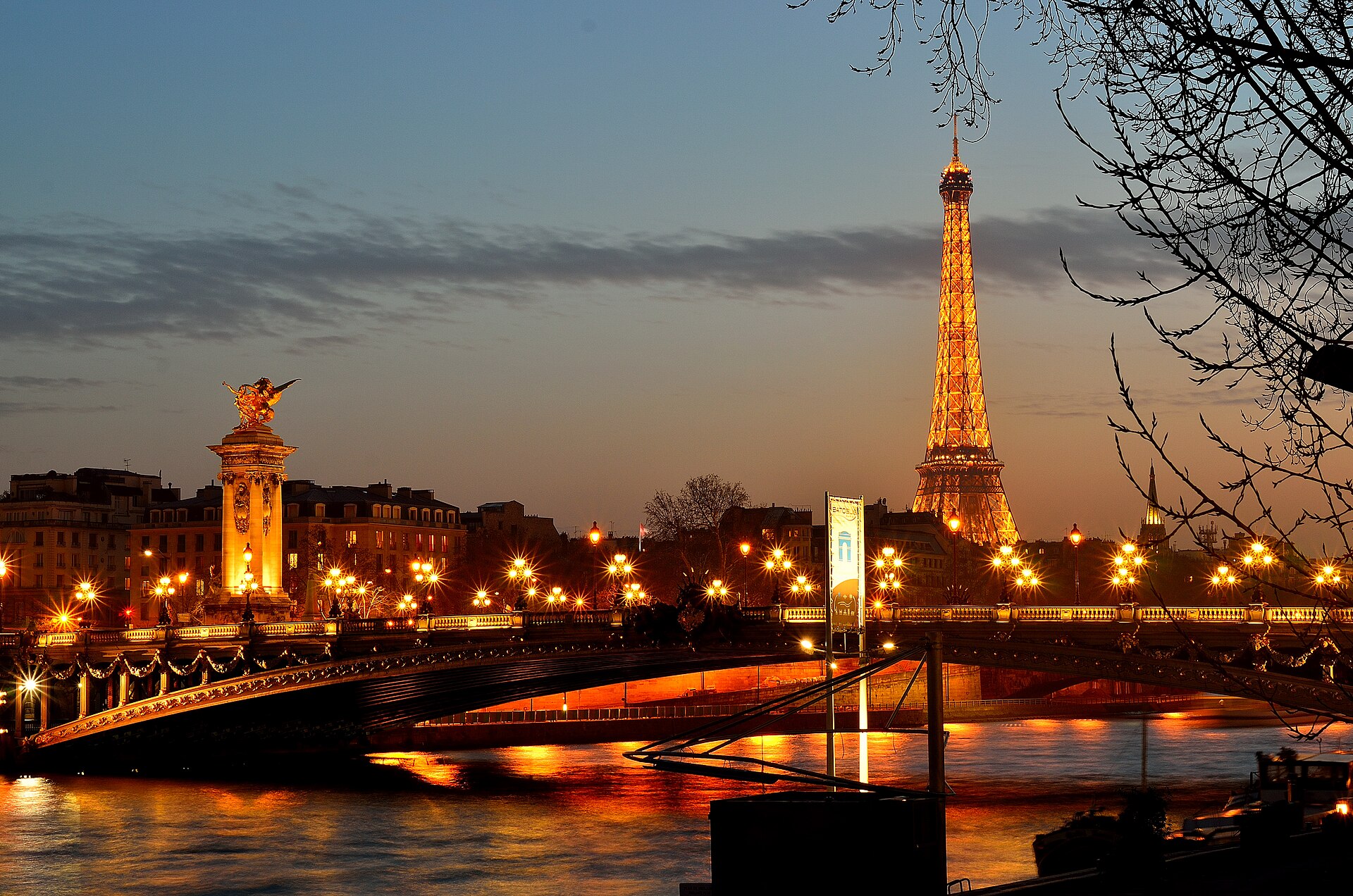
The Eiffel Tower can be seen sparkling every night for five minutes each hour, at the precise start of the hour. Its current lighting system has been in place since 1985, while gaslights lit the tower at its 1889 debut.
13. Timeline: from the 1884 patent to the 2022 antenna
- 18 September 1884Patent registeredGustave Eiffel registers a patent for metal supports and pylons capable of exceeding a height of 300 metres, after Koechlin and Nouguier first sketched a great pylon earlier that year.
- 1886The competition is launchedA great competition is launched for the 1889 Exposition Universelle, and the design by Eiffel, Koechlin, Nouguier and Sauvestre is selected from among 107 projects.
- 26 January 1887Construction beginsThe first digging work starts on the Champ de Mars; the metal supports begin to rise on 1 July 1887 and the major girders reach the first level by 7 December 1887.
- 14 February 1887The artists' protestThe Protest against the Tower of Monsieur Eiffel is published in Le Temps, signed by Charles Gounod, Guy de Maupassant, Alexandre Dumas junior, Charles Garnier and others; Eiffel replies in the same newspaper.
- 1 April 1888The levels are joinedThe first floor is achieved on 1 April 1888 using temporary wooden scaffolds, and the second floor is achieved on 14 August 1888.
- 31 March 1889The tower is finishedEiffel leads officials and reporters to the top and receives his decoration from the Legion of Honour; the work took 2 years, 2 months and 5 days.
- 15 May 1889Opening to the publicThe tenth Exposition Universelle runs to 6 November 1889; 1,953,122 visitors come to see the tower, nearly 12,000 a day, and 30,000 climb the 1,710 steps before the lifts start on 26 May.
- 5 November 1898First wireless trialsEugene Ducretet carries out the first wireless telegraphy trials between the Eiffel Tower and the Pantheon, a distance of 4 km, with the transmitter at the top of the tower.
- 1909The tower is saved by radioThe underground military radiotelegraphy station is set up and the City of Paris renews Gustave Eiffel's concession on 1 January 1910; Eiffel also builds his wind tunnel at the foot of the tower this year.
- 1914The tower at warDuring the Battle of the Marne the tower's radiotelegraphic station intercepts enemy information that helps the French command organise a victorious counter-attack.
- 27 December 1923Death of Gustave EiffelGustave Eiffel dies at the age of 91, thirty-four years after his tower crowned a career of bridges, stations and metal structures.
- 1930The record passes to New YorkThe completion of the Chrysler Building ends the tower's reign as the tallest structure in the world.
- 1935Television transmissions beginA television studio is set up in rue de Grenelle and the Eiffel Tower transmitter starts operating, beginning with 60 lines and later reaching 180 lines.
- 1940War and the cut cablesUnder the German occupation Hitler orders the demolition of the tower but the command is never carried out, and French resistance fighters cut its elevator cables so that the Nazis had to climb the stairs.
- 1957The antenna raises the towerA new antenna makes the Eiffel Tower reach a height of 320.75 metres, taller than the Chrysler Building; further antennas bring it to 324 metres in 2000 and 330 metres in 2022.
References (15)
- 1Eiffel Tower | History, Height, & Facts — Encyclopaedia Britannica WebView source
- 2Eiffel Tower (structure record) — Structurae, International Database and Gallery of Structures WebView source
- 3Paris, Banks of the Seine — UNESCO World Heritage Centre WebView source
- 4Origins and Construction of the Eiffel Tower — Societe d'Exploitation de la tour Eiffel (official site) Web↩View source
- 5Pictures: Eiffel Tower at 125, Still Lovely After All These Years — National Geographic Web↩View source
- 6Painting the Eiffel Tower — Societe d'Exploitation de la tour Eiffel (official site) Web↩View source
- 7Eiffel Tower - Height, Timeline & Facts — HISTORY (A&E Television Networks) WebView source
- 8The Eiffel Tower during the 1889 Exposition Universelle — Societe d'Exploitation de la tour Eiffel (official site) 1889 WebView source
- 9The Eiffel Tower's Lifts — Societe d'Exploitation de la tour Eiffel (official site) WebView source
- 10The Eiffel Tower Laboratory — Societe d'Exploitation de la tour Eiffel (official site) WebView source
- 11Alexandre-Gustave Eiffel — U.S. National Park Service, Statue of Liberty National Monument WebView source
- 12Gustave Eiffel | Biography, Tower, & Facts — Encyclopaedia Britannica WebView source
- 13Gustave Eiffel — Societe d'Exploitation de la tour Eiffel (official site) WebView source
- 14Statue of Liberty National Monument: Construction of the Statue (NPS Historical Handbook) — National Park Service (npshistory.com archive) WebView source
- 15The Eiffel Tower at a glance (key figures) — Societe d'Exploitation de la tour Eiffel (official site) WebView source