Statue of Liberty
The colossal copper figure that France gave the United States — its conception by Laboulaye and Bartholdi, its engineering by Eiffel, its assembly in New York Harbor and its layered meanings as a monument of liberty, immigration and the American nation.
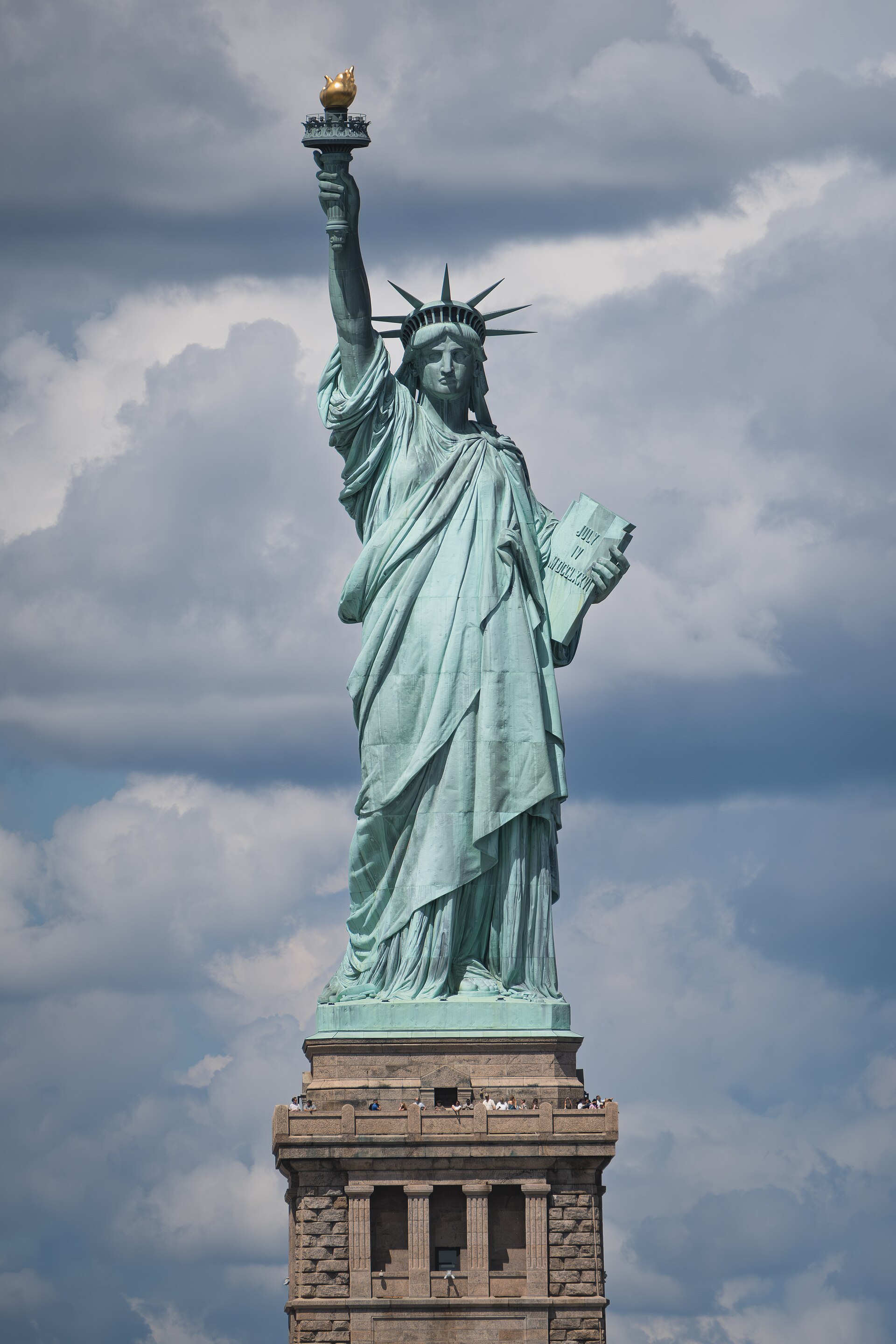
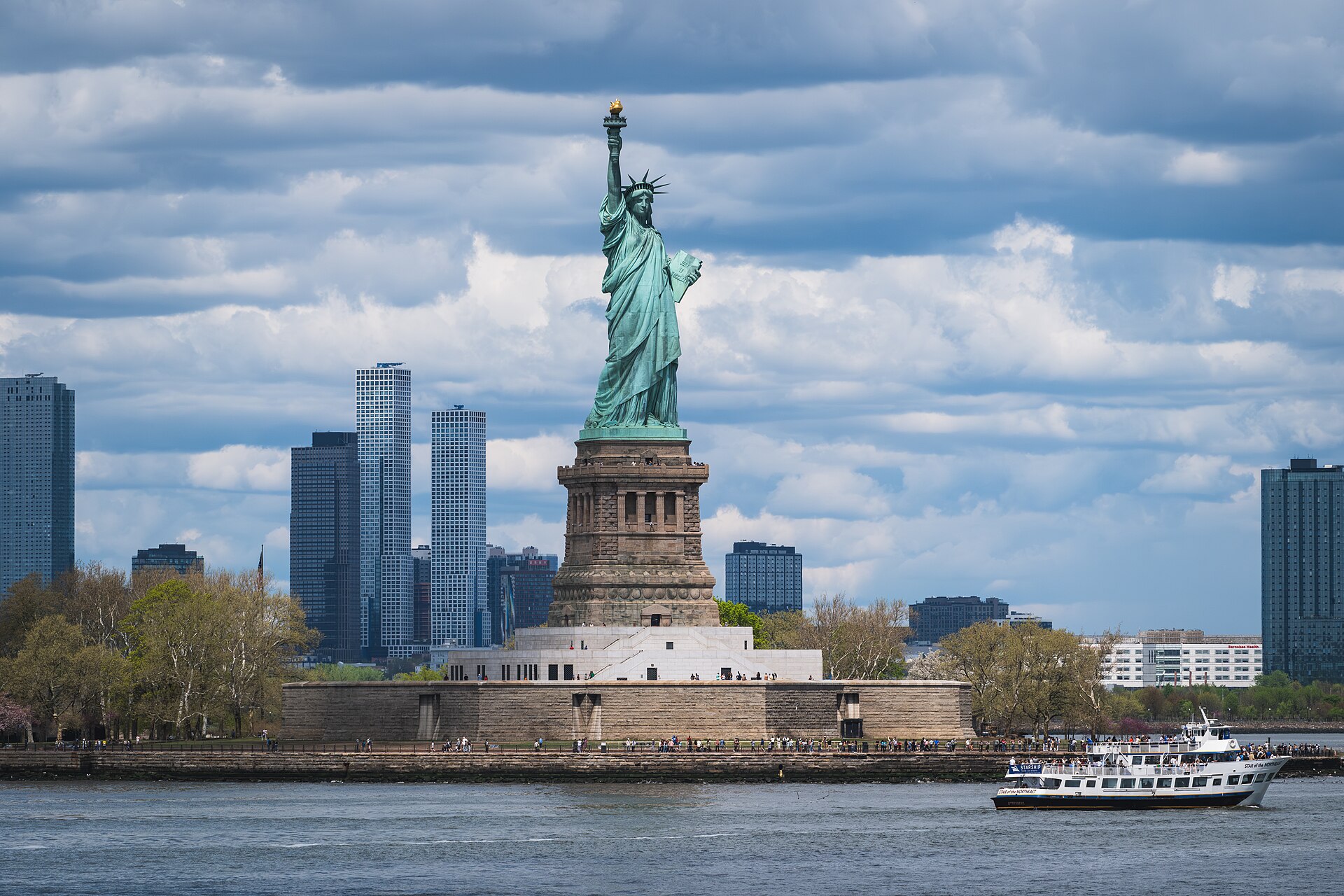
The Statue of Liberty, formally Liberty Enlightening the World, is a hollow copper colossus over a steel framework that stands on Liberty Island at the entrance to New York Harbor. Proposed in 1865 by the French thinker Édouard de Laboulaye, designed by the sculptor Frédéric-Auguste Bartholdi with an internal framework by Gustave Eiffel and a pedestal by the American architect Richard Morris Hunt, it was a gift from the French people, raised by public subscription, and was dedicated on 28 October 1886 by President Grover Cleveland. Measured from the ground to the tip of the torch the monument rises 305 feet (92.99 metres). Long a beacon for immigrants passing Ellis Island, the statue was declared a national monument in 1924, inscribed on the UNESCO World Heritage List in 1984 and restored for its centennial in 1986.
In this article
- 1Overview
- 2Origins and Conception
- 3Design and Construction
- 4Physical Description
- 5Dedication and Early Years
- 6The New Colossus and the Immigrant Symbol
- 7Monument Status and Administration
- 8Restoration and World Heritage
- 9Later Access and Public Life
- 10Chronology
- 11Timeline: from the 1865 proposal to the 1986 centennial
- 12Frequently asked questions
- 13Knowledge graph
Overview
The Statue of Liberty is a personification of liberty in the form of a woman who holds a torch in her raised right hand and clutches a tablet in her left. Its formal name is Liberty Enlightening the World. It stands on Liberty Island in Upper New York Bay, off the coast of New York City, and measures 305 feet 1 inch (92.99 m) from the ground to the tip of the torch.
1. Origins and Conception
The proposal for the monument that became the Statue of Liberty was made in 1865 by the French historian Édouard de Laboulaye, who believed whole-heartedly in the common law of free peoples, an ideal in which every person was born with an inalienable, sacred right to freedom, and who spent much of his political career pushing for the return of democracy to France. The inspiration for the statue emerged at the end of the American Civil War, when Laboulaye proposed a monument to represent America's commitment to freedom and democracy. Laboulaye wanted to change the French government to a democratic government, but he did not want to do it through violence, and after an 1871 uprising by members of the working and middle classes in Paris against the government was brutally crushed, he was criticized by colleagues for supporting the governmental repression of the uprising. The Franco-Prussian War delayed the project for a number of years, but by 1875 Bartholdi started work on the statue's design while Laboulaye worked on fundraising, and after a national fundraising effort France had raised enough money for work to begin. The Franco-American Union was formed in France to oversee fundraising for the statue, and between 1875 and 1880 the French committee raised about 400,000 francs.
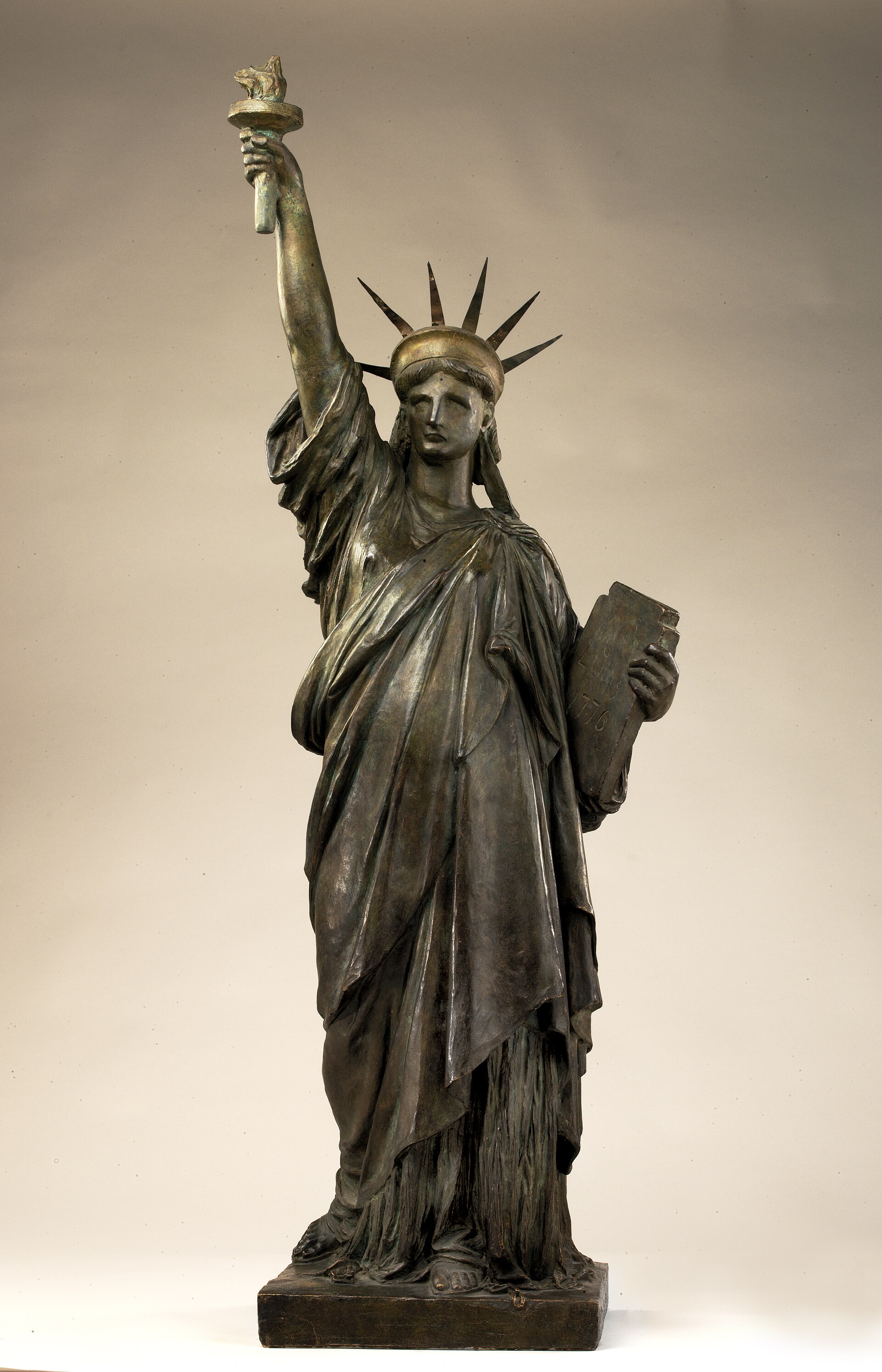
The statue was sculpted between 1875 and 1884 under the direction of the French sculptor Frédéric-Auguste Bartholdi, who began drafting designs in 1870. The legend that the statue was conceived at an 1865 dinner party at the home of Edouard de Laboulaye is traceable to a single source, an 1885 fund-raising pamphlet written by the statue's sculptor, Auguste Bartholdi, after the death of Laboulaye. The statue's design almost certainly evolved from an earlier concept Bartholdi proposed for a colossal monument in Egypt, for which the artist used his drawings of Egyptian women as models, and his preliminary design is consistent with contemporary depictions of Liberty. The Statue of Liberty would never have been conceived or built if its principal French and American advocates had not been active abolitionists who understood slavery as the cause of the Civil War and its end as the realization of the promise of liberty for all, but the statue was not intended entirely as a monument to the end of slavery. References to the Civil War and abolition of slavery occur repeatedly from the statue's first introduction to the United States in 1871 through the dedication celebrations in 1886 and beyond.

2. Design and Construction
The copper skin of the Statue of Liberty was shaped by the repoussé technique developed by Eugène Viollet-le-Duc, and the statue's copper weighs 176,000 pounds (about 80,000 kg). The sheeting itself is 3/32 of an inch thick, the thickness of two pennies placed together, and the finished figure can sway up to 3 inches while the torch sways up to 6 inches. Bartholdi oversaw the construction at the warehouse of Gaget, Gauthier & Co. in Paris, where the colossus was assembled and then taken apart to prepare for shipment to America. The French architect Viollet-le-Duc had been hired to design the framework, but after his death on September 17 in 1879 the French civil engineer Alexandre Gustave Eiffel was brought on to complete it.
For its trans-Atlantic voyage aboard the frigate Isère, the statue was reduced to 350 individual pieces and packed in 214 crates. The first piece to be reconstructed on Bedloe's Island was Eiffel's iron framework, and the remaining elements followed without scaffolding, hoisted by steam-driven cranes and derricks. The statue's highly potent symbolic elements include the United States Declaration of Independence, which she holds in her left hand, as well as the broken shackles from which she steps. The tablet she carries is inscribed JULY IV MDCCLXXVI (July 4, 1776).
3. Physical Description
| Measurement | Dimension | Source note |
|---|---|---|
| Height from top of base to torch | 151 feet 1 inch (46.05 m) | nps-statue-statistics; britannica-statue-of-liberty |
| Height from ground to tip of torch | 305 feet 1 inch (92.99 m) | nps-statue-statistics; britannica-statue-of-liberty |
| Figure height, heel to top of head | 111 feet 1 inch (33.86 m) | nps-statue-statistics; britannica-statue-of-liberty |
| Right arm | 42 feet long | nps-statue-statistics; britannica-statue-of-liberty |
| Hand | 16 feet 5 inches long | nps-statue-statistics; britannica-statue-of-liberty |
| Index finger | 8 feet 0 inches (2.44 m) | nps-statue-statistics; britannica-statue-of-liberty |
| Crown | Seven rays and 25 windows | nps-statue-statistics |
| Copper weight | 176,000 pounds (about 80,000 kg) | nps-statue-statistics; britannica-statue-of-liberty |
| Copper sheeting | 3/32 of an inch (2.37 mm), the thickness of two pennies together | nps-statue-statistics; britannica-statue-of-liberty |
| Wind sway | Up to 3 inches, with the torch swaying up to 6 inches | nps-statue-statistics; britannica-statue-of-liberty |
| Tablet inscription | JULY IV MDCCLXXVI (July 4, 1776) | nps-statue-statistics; britannica-statue-of-liberty |
Its design carries a classical face and drapery that suggest a Roman Goddess of Liberty, and the broken shackles and chains at the feet, hidden from view below, symbolize freedom newly achieved 7Liberty Island Chronology · U.S. National Park Service, Statue of Liberty National Monument ↗. By 1906 the copper surface had developed its sea-green patina through natural oxidation 4Liberty Island Cultural Landscape · U.S. National Park Service ↗.
4. Dedication and Early Years
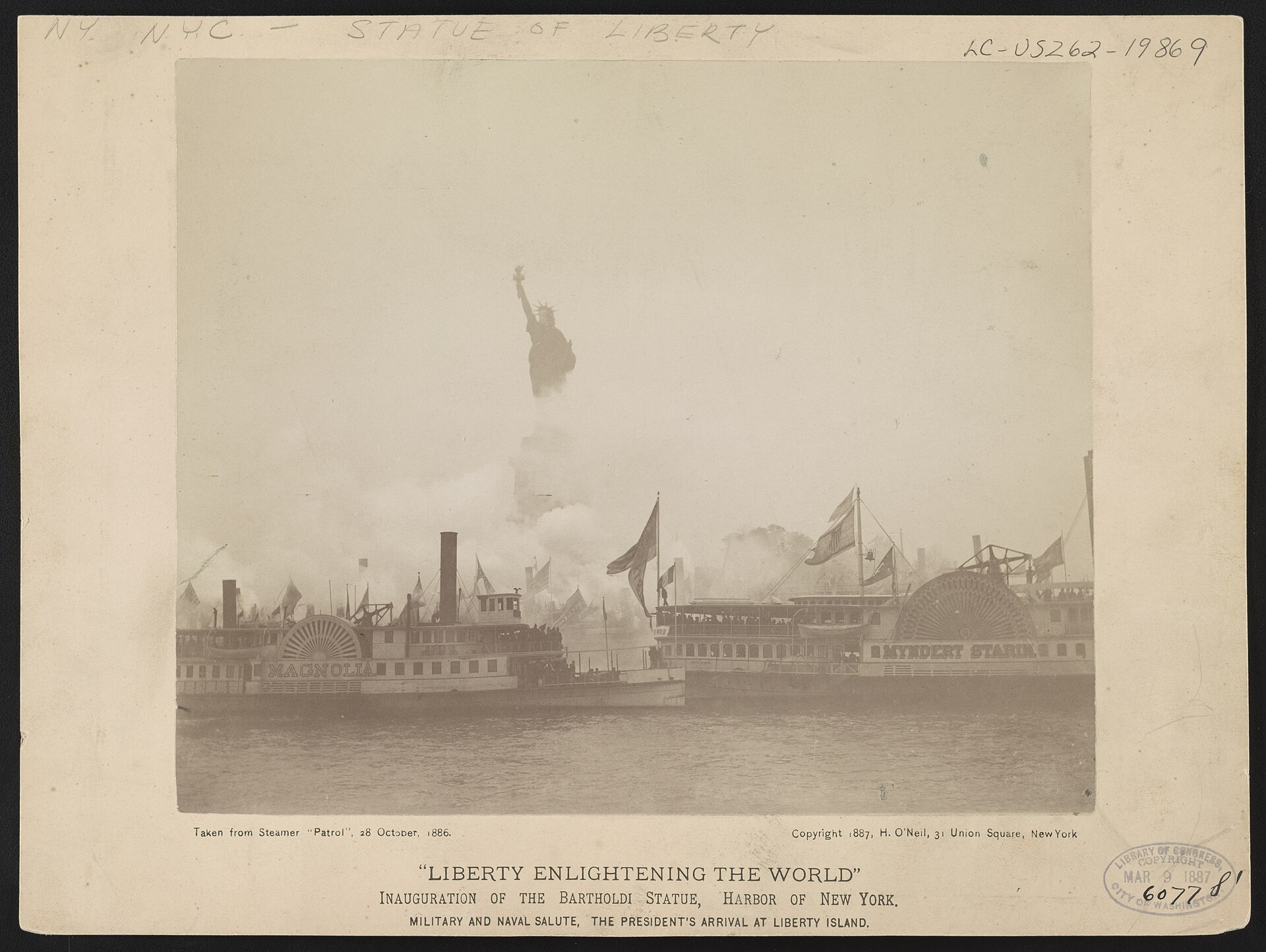
On October 28, New York City held the first ticker-tape parade in honour of the dedication of the statue of Liberty Enlightening the World, an event attended by over one million people. A water parade of approximately 300 vessels passed in front of the statue even though visibility was less than a quarter of a mile due to fog and rain.
Double spiral cast-iron stairs were added to the interior of the statue in 1888. Control passed from the Lighthouse Board to the War Department in 1901. While under the control of the United States Army in the 1920s, the Statue of Liberty was in need of repair, and one of the workers assigned to the project, the craftsman Kenneth Lynch, was asked to repair damage caused by the Black Tom explosion created by German saboteurs during World War I.

5. The New Colossus and the Immigrant Symbol
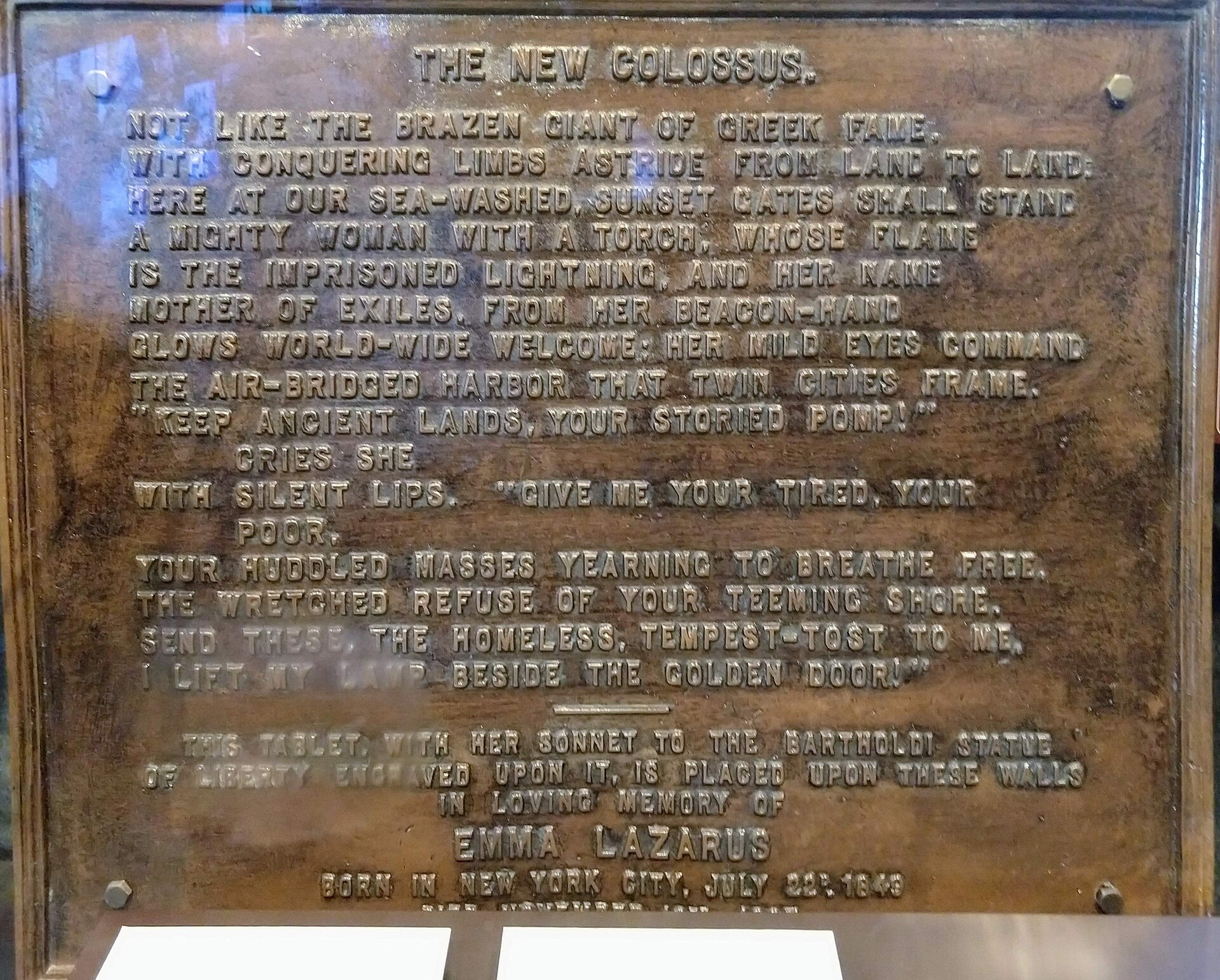
Emma Lazarus wrote The New Colossus in 1883 as part of the fundraising effort for the pedestal, donating the poem to an auction held to raise funds for its construction. Its words include the appeal "Give me your tired, your poor, Your huddled masses yearning to breathe free". The poem was later cast onto a bronze plaque and mounted inside the pedestal's lower level. When money for the pedestal ran out in 1884, Joseph Pulitzer raised the rest of the funds.
Between 1886 and 1924 almost 14 million immigrants entered the United States through New York, and to these anxious newcomers the statue's uplifted torch did not suggest enlightenment as her creators intended but rather welcome. Liberty thus emerged as the Mother of Exiles, a symbol of hope to generations of immigrants. The opening of the immigrant processing station at Ellis Island in 1892, in the shadow of the statue, facilitated an immigrant association, as did the later popularity of Lazarus's poem.
6. Monument Status and Administration
On October 15 in 1924 a Presidential Proclamation declared Fort Wood and the Statue of Liberty within it a National Monument, with the monument's boundary set at the outer edge of Fort Wood. Care and administration of the monument passed to the National Park Service in 1933. Military use of Bedloe's Island ended in 1937, when the Department of War turned the island over to the National Park Service.
A museum dedicated to the history of immigration to the United States was built inside the pedestal, opening in 1972 as the American Museum of Immigration and closing in 1991 after the opening of the Ellis Island Immigration Museum. The monument's museum collection holds approximately 390,000 artifacts and over 1 million archival records. Among the significant items are 1886 models of the Statue of Liberty sold to raise funds for the statue's construction, letters exchanged between Auguste Bartholdi and Joseph Pulitzer, immigration documents such as inspection cards, passports and steamship tickets, and personal items families brought with them through Ellis Island.
7. Restoration and World Heritage
In May of 1982 President Ronald Reagan appointed Lee Iacocca to head a private sector effort to restore the Statue of Liberty, and fundraising began for the $86 million restoration under a public-private partnership between the National Park Service and the Statue of Liberty-Ellis Island Foundation. In the same year the Centennial Commission was formed to perform restoration work as well as renovations and repairs. At the start of the statue's restoration in 1984 the United Nations designated the Statue of Liberty as a World Heritage Site, an inscription resting on criteria (i) and (vi), with the property covering 5.95 hectares and carrying dossier number 307. The newly restored statue opened to the public on July 5 in 1986 during Liberty Weekend, the July 3-6 celebration of her centennial, with President Ronald Reagan presiding over the rededication.
8. Later Access and Public Life
After the terrorist attacks of September 11 in 2001, Liberty Island closed for 100 days, and the Statue of Liberty itself was not reopened to visitor access until August 2004. The statue's crown was again reopened to the public in July 2009. Liberty Island draws more than four million visitors annually, making it one of the most iconic historic sites in the United States.
9. Chronology
-
1876Torch arm completed and exhibitedFrench artisans and craftsmen began constructing the statue in France under Bartholdi's direction; the arm holding the torch was completed that year and shown at the Centennial Exposition in Philadelphia. 12Creating the Statue of Liberty 1865-1886 · U.S. National Park Service, Statue of Liberty National Monument ↗
-
1878Head and shoulders completedThe head and shoulders were completed for the Paris Universal Exposition. 12
-
1881–1884Assembly in ParisThe entire statue was assembled in Paris while construction on the pedestal began in the United States. 12
10. Timeline: from the 1865 proposal to the 1986 centennial
- 1865Laboulaye proposes the monumentÉdouard de Laboulaye, a French political thinker and authority on the U.S. Constitution, proposed that France give a statue representing liberty to the United States for its centennial.
- 1871Bartholdi scouts sites in the United StatesBartholdi travelled to the United States to promote the statue and scout out possible sites, discussing the project with politicians and publishers before selecting Bedloe's Island.
- September 1875The Franco-American Union is formedBartholdi's plaster model was approved by Laboulaye and the Franco-American Union was formed in France to oversee fundraising, with France funding the statue and the United States funding the pedestal.
- 1876The arm and torch are completedThe arm holding the torch was completed and shown at the Centennial Exposition in Philadelphia, where the statue's arm and torch went on public display.
- 1877Bedloe's Island designated as the siteCongress accepted the Statue of Liberty as a gift from the people of France, and President Ulysses S. Grant signed a bill designating Bedloe's Island as the statue's site.
- 17 September 1879Eiffel takes over the frameworkAfter the death of the French architect Eugène Viollet-le-Duc on September 17 in 1879, the French civil engineer Alexandre Gustave Eiffel was brought on to complete the framework.
- 2 November 1883Emma Lazarus writes The New ColossusEmma Lazarus composed The New Colossus for the Art Loan Fund Exhibition in Aid of the Bartholdi Pedestal Fund, a fundraiser for the pedestal of the statue.
- 4 July 1884Presented to the United States in ParisHundreds of people gathered at the feet of the completed statue in Paris to watch as she was formally presented to Levi P. Morton, the U.S. minister to France.
- 17 June 1885The statue arrives in New York HarborThe statue arrived in New York Harbor aboard the French navy ship Isère, disassembled into 350 pieces packed in 214 crates, and was met with great fanfare.
- 28 October 1886Dedication of the Statue of LibertyPresident Grover Cleveland formally accepted the Statue of Liberty on behalf of the United States as a gift of friendship from France, in front of a crowd of thousands.
- 15 October 1924Proclaimed a National MonumentA presidential proclamation declared Fort Wood, and the Statue of Liberty within it, a National Monument, setting the monument's boundary at the outer edge of Fort Wood.
- 1933Transferred to the National Park ServiceThe care and administration of the Statue of Liberty National Monument was transferred to the National Park Service.
- 1956Bedloe's Island renamed Liberty IslandAn act of Congress officially renamed Bedloe's Island to Liberty Island, confirming its significance as a symbol of freedom.
- May 1965Ellis Island joins the monumentEllis Island was transferred to the National Park Service by President Lyndon B. Johnson and became part of the Statue of Liberty National Monument.
- 1984World Heritage designationAt the start of the statue's restoration the United Nations designated the Statue of Liberty as a World Heritage Site.
- 5 July 1986Reopening after the centennial restorationThe newly restored Statue of Liberty opened to the public during Liberty Weekend, which celebrated her centennial and the relighting of her torch.
11. Frequently asked questions
Who designed the pedestal the statue stands on?
The pedestal was designed by the American architect Richard Morris Hunt and built within the walls of Fort Wood on Bedloe's Island 1Statue of Liberty | History, Information, Height, Poem, & Facts · Encyclopaedia Britannica ↗. Since the statue was dedicated it has welcomed millions of immigrants from atop that pedestal 13Statue of Liberty · UNESCO World Heritage Centre ↗.
How did the public pay for the pedestal?
When the American Committee for the Statue of Liberty ran out of funds for the pedestal in 1884, the newspaper publisher Joseph Pulitzer came to the rescue, and through urging the American public to donate in his newspaper New York World he raised over $100,000 in six months 20Joseph Pulitzer · U.S. National Park Service, Statue of Liberty National Monument ↗. Roughly 125,000 people contributed through Pulitzer's crusade, and in thanks the World published the name of each contributor, no matter the size of the gift 20.
Who paid for the statue itself, and how much did it cost?
The making of the statue cost $250,000, paid in by the masses of the French people — the working men, tradesmen, shop girls and artisans, irrespective of class or condition 20. In the United States, funds were raised through benefit theatrical events, art exhibitions, auctions and prizefights 11Statue of Liberty — Overview + History · Statue of Liberty-Ellis Island Foundation, Inc. ↗.
What happened to the original torch?
A newly manufactured torch with copper repoussé work and gold gilding on the flame was installed on 25 November 1985 14History of the Statue of Liberty: Construction, Architecture and Restoration · U.S. National Park Service, Ellis Island ↗. The original torch, with its 250 colored glass plates designed by Gutzon Borglum in 1916 and later replaced, is now on exhibit in the lobby of the pedestal 14.
How many immigrants passed the statue on their way through Ellis Island?
During a period of mass migration between 1892 and 1954, over 12 million immigrants passed by the Statue of Liberty on their way to be processed at nearby Ellis Island before forging their new homes in America 4. In the peak years between 1900 and 1914, some 5,000 to 10,000 people passed through the station every day 19Statue of Liberty · HISTORY.com (A&E Television Networks) ↗.
What does the statue's crown represent?
The radiant crown represents the statue shedding light on the seven seas and continents 7.
References (20)
- 1Statue of Liberty | History, Information, Height, Poem, & Facts — Encyclopaedia Britannica Web↩View source
- 2Statue Statistics — U.S. National Park Service, Statue of Liberty National Monument WebView source
- 3Édouard de Laboulaye — U.S. National Park Service, Statue of Liberty National Monument WebView source
- 4Liberty Island Cultural Landscape — U.S. National Park Service Web↩View source
- 5The French Connection — U.S. National Park Service, Statue of Liberty National Monument WebView source
- 6Body of Iron, Soul of Fire: The Statue of Liberty — U.S. National Archives, Pieces of History (Prologue) 2024 WebView source
- 7Liberty Island Chronology — U.S. National Park Service, Statue of Liberty National Monument Web↩View source
- 8Black Statue of Liberty — Summary Report (Rebecca M. Joseph, 2000) — U.S. National Park Service, Northeast Ethnography Program 2000 WebView source
- 9Frédéric-Auguste Bartholdi — U.S. National Park Service, Statue of Liberty National Monument WebView source
- 10Celebrating Icons of Freedom: The Statue of Liberty, Ellis Island, and Liberty Weekend July 1986 — Ronald Reagan Presidential Library & Museum, U.S. National Archives 1986 WebView source
- 11Statue of Liberty — Overview + History — Statue of Liberty-Ellis Island Foundation, Inc. Web↩View source
- 12Creating the Statue of Liberty 1865-1886 — U.S. National Park Service, Statue of Liberty National Monument 1865 Web↩View source
- 13Statue of Liberty — UNESCO World Heritage Centre Web↩View source
- 14History of the Statue of Liberty: Construction, Architecture and Restoration — U.S. National Park Service, Ellis Island Web↩View source
- 15The Immigrant's Statue — U.S. National Park Service, Statue of Liberty National Monument WebView source
- 16History Continued — U.S. National Park Service, Statue of Liberty National Monument WebView source
- 17Collections — U.S. National Park Service, Statue of Liberty National Monument WebView source
- 18Statue of Liberty Restoration (poster, National Museum of American History) — Smithsonian Institution WebView source
- 19Statue of Liberty — HISTORY.com (A&E Television Networks) Web↩View source
- 20Joseph Pulitzer — U.S. National Park Service, Statue of Liberty National Monument Web↩View source