Horse
The single surviving species of the genus Equus — its evolution from the dawn horse, its domestication on the Eurasian steppes, and its enduring partnership with people.
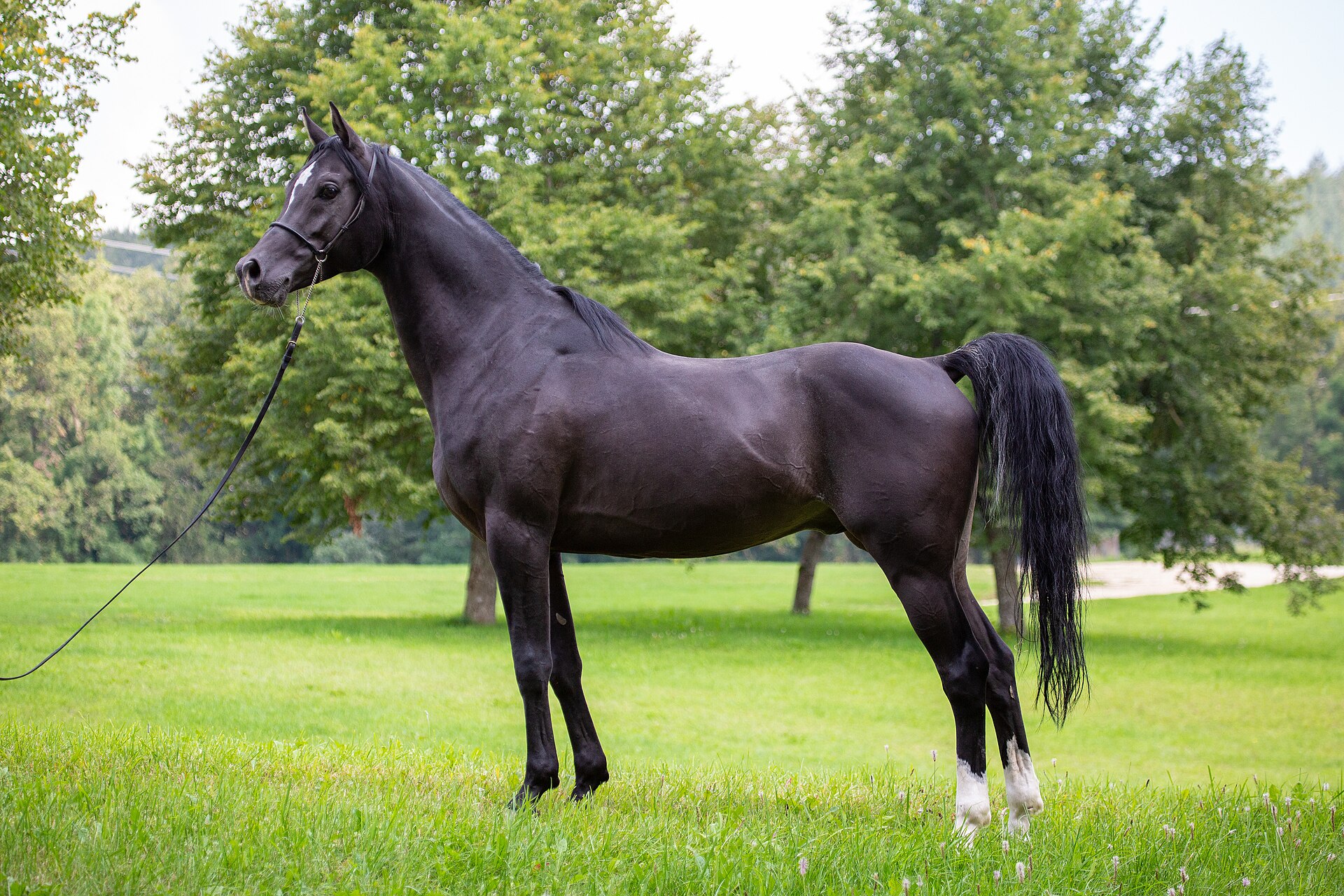
The horse (Equus caballus) is a hoofed, herbivorous mammal of the family Equidae and the only living species of its genus, domesticated about 6000 years ago on the Western Eurasian steppes, where the DOM2 lineage that produced almost all modern breeds spread across Eurasia around 2200 to 2000 BCE. Long used for transport, agriculture, warfare and sport, horses also persist as wild and feral herds, from the free-roaming mustangs managed by the United States on 25.5 million acres of public land to the Przewalski's horse, once extinct in the wild and returned to Mongolia by captive-breeding programmes.
In this article
- 1Overview
- 2Taxonomy and Classification
- 3Anatomy and Physical Characteristics
- 4Senses, Diet, and Social Behaviour
- 5Reproduction and Lifespan
- 6Evolutionary History
- 7Domestication and the DOM2 Lineage
- 8Breeds and Types
- 9Przewalski's Horse
- 10Conservation and Breeding Programmes
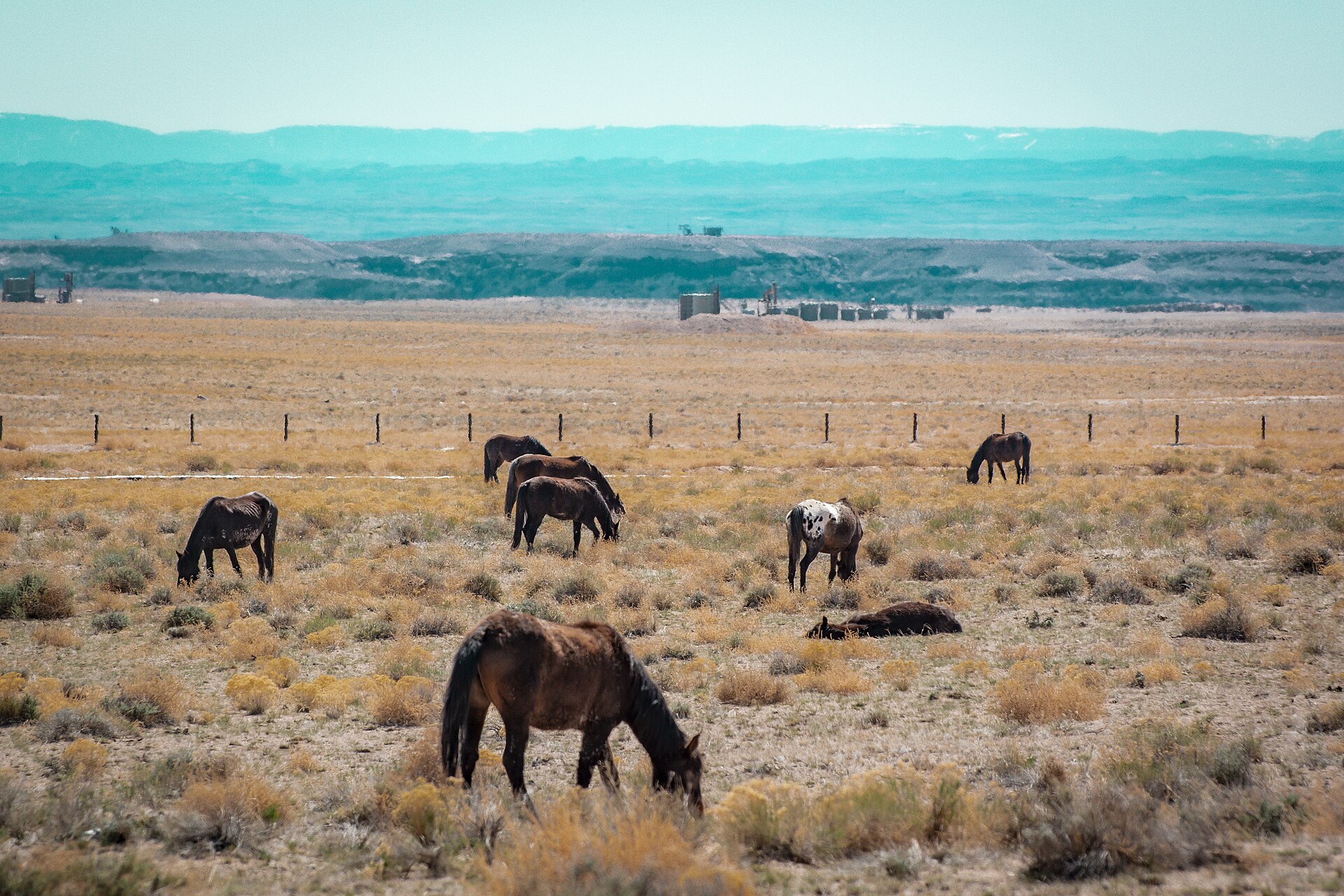
- 11Feral and Wild Horses in North America
- 12Role in Human History and Culture
- 13Timeline of Key Events
- 14Timeline: from the dawn horse to the Przewalski's horse recovery
- 15Frequently asked questions
- 16Knowledge graph
Overview
The horse is a hoofed, herbivorous mammal of the family Equidae, a single species whose numerous varieties are known as breeds; it served widely as a draft animal and as a chief means of transportation before the arrival of mechanized vehicles. Its scientific name is Equus caballus. Equus is the only surviving genus within a family that was once diverse.
1. Taxonomy and Classification
The horse belongs to the family Equidae, the group that also contains the asses and the zebras, and is placed within the order Perissodactyla, the odd-toed ungulates. That ordinal name reflects a structural distinction in the foot: perissodactyls bear their weight on an odd number of toes, whereas the even-toed ungulates do not. The closest living relatives of the horse are not the cattle or the deer but the rhinoceroses and the tapirs, which share the same odd-toed ancestry. Standard reference works treat the living members of the genus Equus as comprising seven species, among them the domestic horse, Przewalski's horse, three species of asses and three species of zebras.
It is a critically endangered species found in Mongolia.
Domestication is placed at approximately 6,000 years ago, while the ancestors of modern horses were domesticated in the northern Caucasus region, in what is now southern Russia, and were bred for their stress tolerance and back strength. Selection in early domestic horses favoured back strength and stress tolerance alongside docility-linked genes such as GSDMC and ZFPM1.
Przewalski's horses became extinct in the wild after harsh winter conditions, inbreeding with local horses and excessive hunting, and the subspecies was last seen in the wild in the late 1960s, though captive breeding programs later reintroduced the horses to some of their former habitats. Zoos have been instrumental in preventing the Przewalski's horse from dying out, and the approximately 1,900 animals alive today are all descended from 14 founders caught in the wild between 1910 and 1960 and bred in captivity.
2. Anatomy and Physical Characteristics
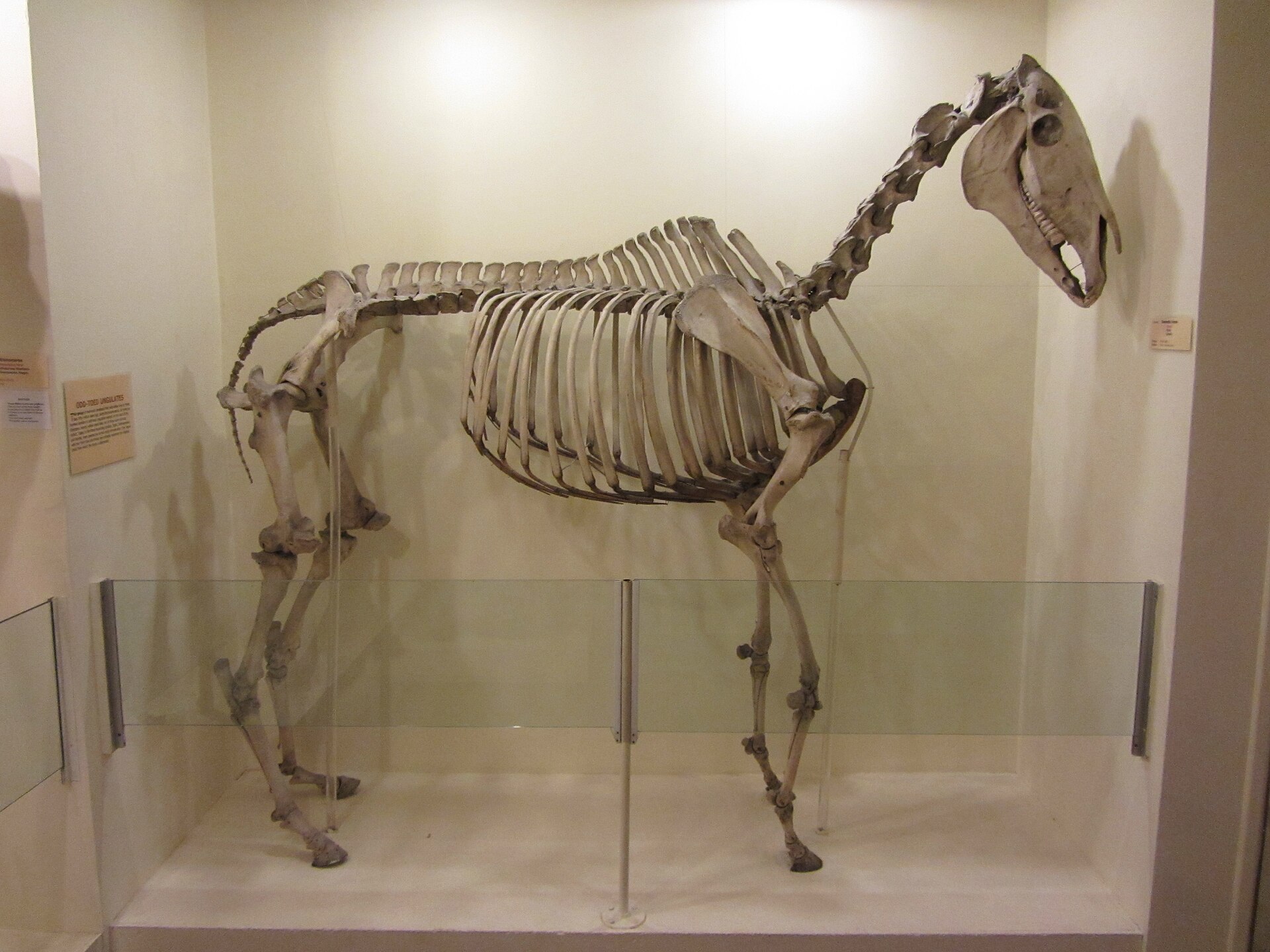
The horse is a large ungulate whose body mass spans 227 to 900 kg (500.00 to 1982.38 lb) and whose height at the withers falls between 0.9 and 1.7 meters. This wide range reflects differences in breed and intended use rather than a single fixed form. The animal stands on long, slender legs and carries a muscular, deep torso, with a long, thick neck completing the profile.
The foot is the most distinctive structural feature: the modern horse bears a single toe, terminating in an oval-shaped hoof. The lineage leading to this condition passed through stages in which most early horses had three full-sized toes touching the ground, while Hyracotherium had four front toes. Later horses stood on three toes, with the middle toe doing most of the work, before the modern single-toed foot emerged.
3. Senses, Diet, and Social Behaviour
The horse relies on vision as its primary sense, and its long, upright ears serve acute hearing. Whiskers on the nostrils, muzzle and cheeks provide tactile sensitivity. As a grazing animal it feeds on true grasses, while domestic horses are given grains including oats, barley, corn, wheat, flax and soybeans. Digestion of fibrous plant material takes place through hindgut fermentation in the cecum, carried out by symbiotic bacteria — a system that contrasts with the foregut fermentation of ruminants.
Horses live in herds or bands organized by social hierarchy. A band may contain up to 26 mares and 5 stallions.
4. Reproduction and Lifespan
The horse's reproductive cycle is long by mammalian standards: gestation averages about 335 days, though it can range from 287 to 419 days. Foals are precocial, able to stand within an hour of birth and to walk within four to five hours. The typical lifespan of a horse is 25 to 30 years, with a maximum recorded longevity of 61 years.
The terminology of the species reflects its long association with human management. A mature male is a stallion, a mature female a mare, and a breeding stallion is called a stud. A castrated stallion is a gelding. The young are known as foals, with males called colts and females called fillies.
5. Evolutionary History
The oldest known horse is Hyracotherium, a small dog-sized animal with a primitive short face, eye sockets set in the middle of the skull, and a short diastema between the front teeth and the cheek teeth. Species of Equus, the genus that includes living horses, asses and zebras, have lived from 5 million years ago until the present, and fossils of the genus have been found on every continent except Australia and Antarctica. The modern horse, Equus caballus, evolved on the North American continent and disappeared from it around 10,000 years ago at the end of the Pleistocene epoch, surviving on the European and Asian continent and later being brought back to North America by the Spanish in the 1500s, when stray horses became known as mustangs.
6. Domestication and the DOM2 Lineage
The modern domestic horse descends from the DOM2 lineage, which arose in the lower Volga-Don region of the Western Eurasian steppes. By around 2200 to 2000 BC the typical DOM2 ancestry profile had appeared outside the Western Eurasian steppes in Bohemia, the lower Danube and central Anatolia, spreading across Eurasia shortly afterwards and eventually replacing all pre-existing lineages.
Przewalski's horses were not the ancestors of today's domestic horse, and horse domestication along with the drinking of horse milk likely began about 1500 kilometers to the west in the Pontic-Caspian steppe.
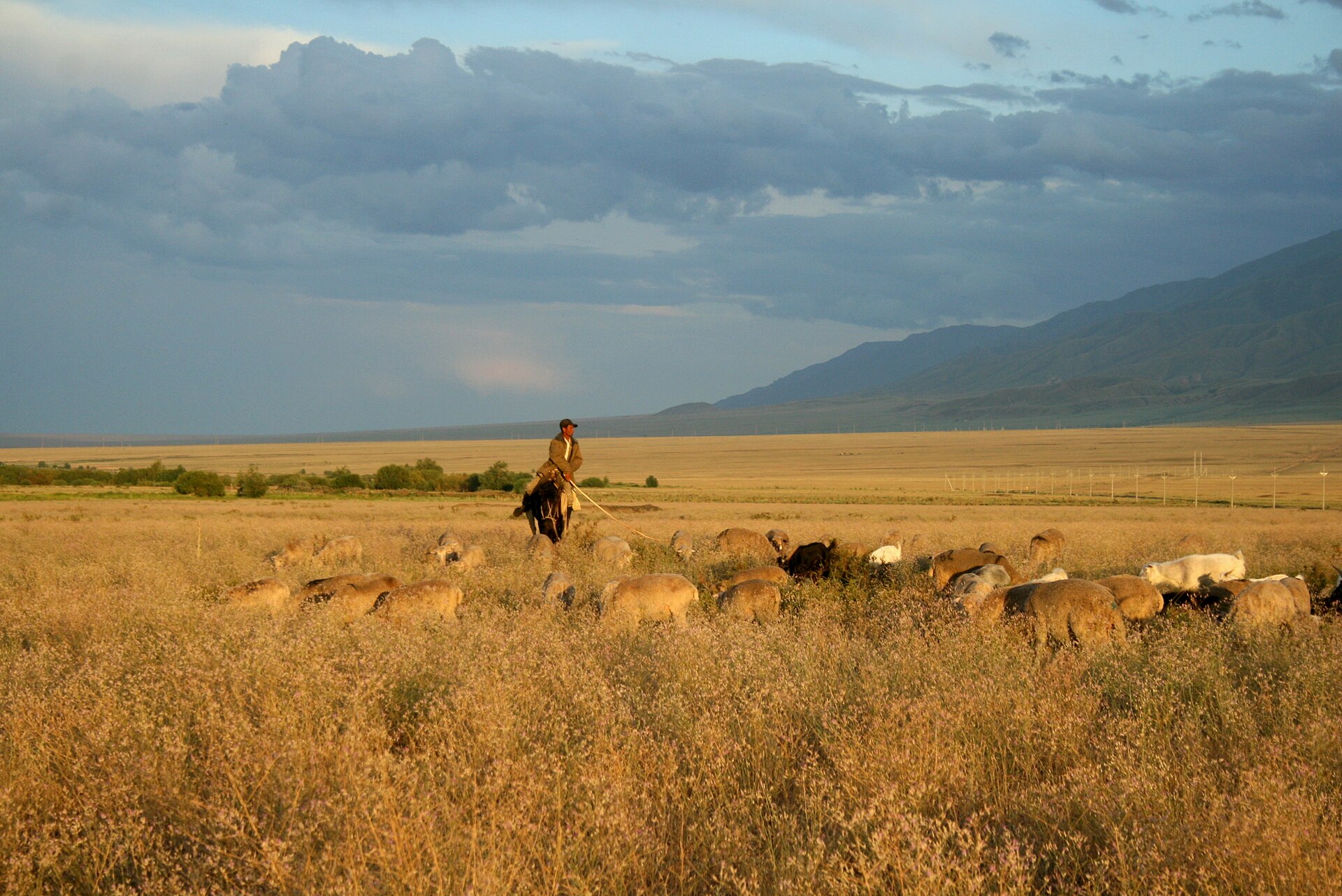
Modern domestic horses expanded rapidly across Eurasia from about 2000 BC and ultimately replaced almost all other local populations, in synchrony with equestrian material culture including Sintashta spoke-wheeled chariots.
7. Breeds and Types
More than 200 breeds of horse are recognized around the world, and however different they may appear, all of them belong to a single species, Equus caballus. These breeds were shaped over thousands of years by mating horses that carried desirable traits.
The Shetland pony of the Shetland Islands in Scotland is thought to have existed since the Bronze Age, and in the 19th century it was used as a pit pony in the mines of Great Britain. It is a very powerful and popular child's mount.
About 200 years ago, English horse breeders mated light, swift Arabians with local riding horses, and this created the Thoroughbred, a lean, leggy, super-speedy breed used in horse racing.
8. Przewalski's Horse
Przewalski's horse is the last truly wild horse, a stocky, short, pot-bellied animal with a spiky mane, dark brown legs, and a long dark dorsal stripe along the back. It stands 48 to 56 inches at the shoulder and weighs 440 to 750 pounds, with a tail about 90 centimeters long. It is listed as Endangered on the IUCN Red List, and only around 2000 of these stocky caramel-colored equines exist today.
The species inhabits Mongolia, Kazakstan, and China, where it has a thick warm coat, a long beard, and neck hair. Its home ranges span 1 to 12 square miles, and bachelor stallions may cover more than 13 miles a day.
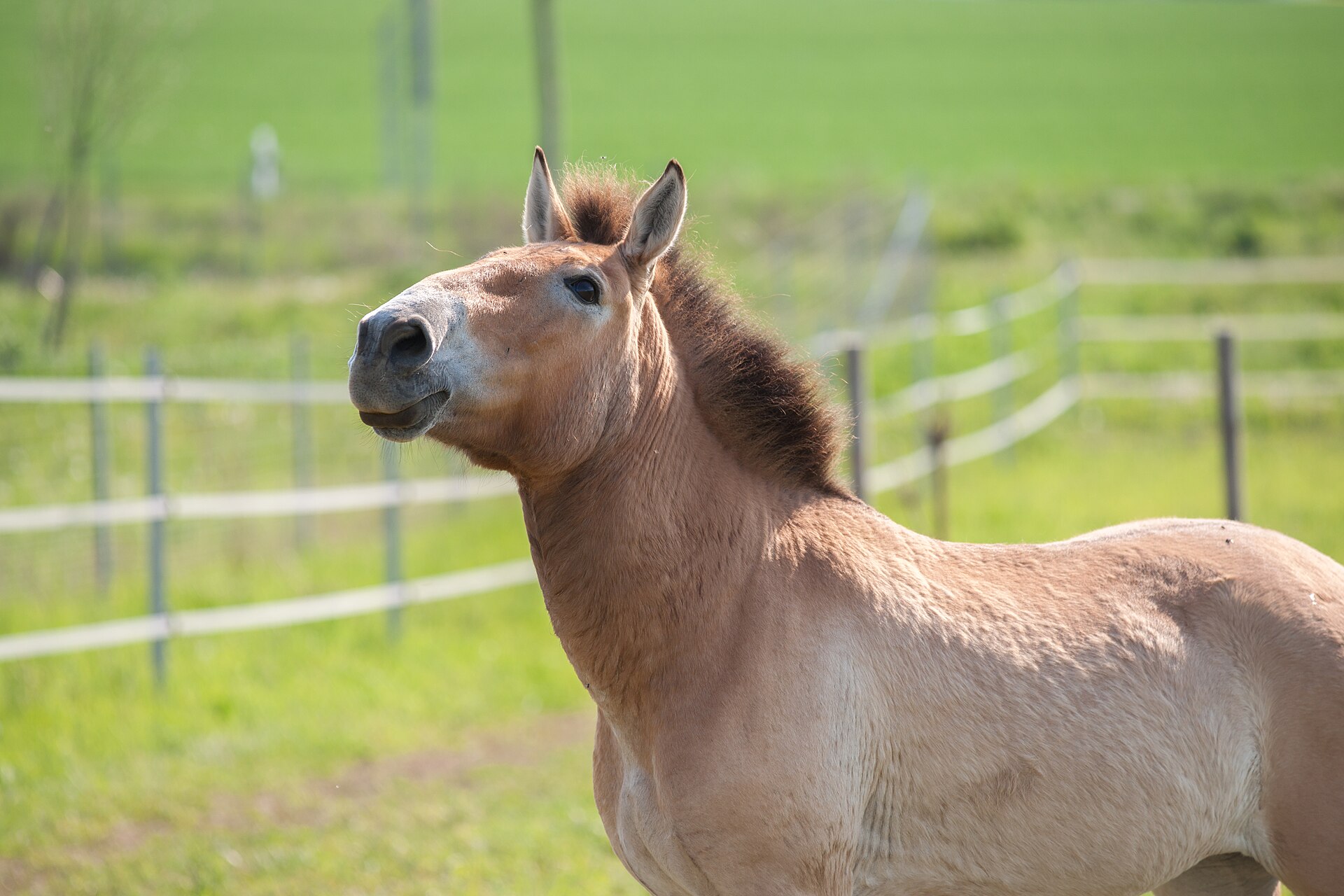
Mitochondrial DNA suggests that Przewalski's horse diverged from a common ancestor 500,000 years ago. A 2018 study found that these horses may actually be descendants of domesticated equines that returned to the wild, which would make them feral rather than wild.
Horses known as the takhi grazed the grasslands of Asia and Europe thousands of years ago, and the animals became known as Przewalski's horses after Russian explorer Nikolai Przewalski described and examined their bones in the late 1800s.
9. Conservation and Breeding Programmes
Prague Zoo has run a breeding programme for Przewalski's horses since 1932, producing more than 250 foals over its first 90 years without interruption, including through the Second World War. In 1998 and 2000 the zoo joined the international reintroduction effort by providing four Przewalski's horses for transports to Takhiin Tal in the Dzungarian Gobi in Mongolia and to Khustain Nuruu in the Mongol Daguur Steppe.
The Colonial Spanish horse, a group of closely related breeds descending from horses brought to the Americas by Spanish explorers, conquistadors and colonists, is listed with a conservation status of critical on The Livestock Conservancy's Conservation Priority List. Adults weigh 700-900 lbs and have an even and gentle temperament, and some are gaited with an unusually long stride.
10. Feral and Wild Horses in North America
The reintroduction of horses changed the social and environmental landscape of the Great Plains, most notably for the Plains Indians, whose acquisition of the horse changed their culture from pedestrian hunter-gatherers to mounted buffalo hunters and warriors.
The Bureau of Land Management manages and protects wild horses and burros on 25.5 million acres of public lands across 10 Western states as part of its mission to administer those lands for a variety of uses.
11. Role in Human History and Culture
The horse reshaped how humans moved, farmed, fought, competed, communicated and travelled. The chariot was the supreme military weapon in Eurasia roughly from 1700 BCE to 500 BCE, and it was also used for hunting and in sporting contests such as the Olympic Games and the Roman Circus Maximus. It was invented in the steppe, perhaps originally as an improved tool for hunting, roughly by 2000 BCE in the area just east of the southern Ural mountains, where the oldest chariots have been unearthed.
Horsemeat is still consumed in parts of Europe and Iceland and is included in many pet foods, while glue is made from horse bones and cartilage and tetanus antitoxin is obtained from the blood serum of horses previously inoculated with tetanus toxoid.
12. Timeline of Key Events
-
around 55 million years ago to around 45 million years agoHyracotherium (eohippus)Hyracotherium (eohippus) lived.
-
5 million years agoEquus species beginEquus species begin.
-
around 3500 BCBotai siteBotai site in Central Asia with bridling, milking and corralling evidence.
-
around 2200 BCDOM2 horses spreadDOM2 horses spread outside the Western Eurasian steppes.
-
around 2000 BCModern domestic horses expandModern domestic horses expand rapidly across Eurasia.
-
around 2000 to 1800 BCSpoke-wheeled chariots emergeSpoke-wheeled chariots emerge in the Trans-Ural Sintashta culture.
-
1294 BCEBattle of KadeshBattle of Kadesh.
-
roughly 1700 BCE to 500 BCEChariot as supreme military weaponChariot as supreme military weapon in Eurasia.
-
1500sSpanish bring horses back to North AmericaSpanish bring horses back to North America.
-
1910 to 1960Przewalski's horse founders caught14 Przewalski's horse founders caught in the wild.
-
1932Prague Zoo breeding programme beginsPrague Zoo breeding programme begins.
-
1971Wild Free-Roaming Horses and Burros Act passedWild Free-Roaming Horses and Burros Act passed.
13. Timeline: from the dawn horse to the Przewalski's horse recovery
- about 55 million years agoThe dawn horse of the EoceneHyracotherium, also called Eohippus or the 'dawn horse', is the earliest-known member of the horse family, living in the early Eocene.
- about 5 million years agoThe genus Equus emergesSpecies of Equus lived from 5 million years ago until the present; fossils of the genus occur on every continent except Australia and Antarctica.
- about 10,000 years agoHorses vanish from North AmericaAfter being abundant for 50 million years in North America, horses became extinct there 10,000 years ago and survived only on the European and Asian continents.
- around 2200 BCEThe DOM2 lineage begins its expansionThe bloodline that gave rise to almost all modern domestic horses, the DOM2 cluster, spread out of the Western Eurasian steppes and replaced local horse populations across Eurasia.
- about 2000 to 1800 BCEChariots enter the archaeological recordLight spoke-wheeled chariots appear in the Trans-Urals shortly after the spread of riding, at sites of the Sintashta culture.
- 1294 BCEChariot battle at KadeshThe most famous chariot battle, Kadesh, was fought between Egypt and Hatti, with some 50 chariots presumed to have participated for each side.
- 578 — 535 BCEServius Tullius expands the Roman cavalryThe sixth king of Rome increased the cavalry corps of equites to 1,800, with mounts and equipment provided by the state.
- the 1500sHorses return to North America with the SpanishHorses were brought back to North America by the Spanish in the 1500s; stray animals became known as mustangs, from the Spanish word mesteño.
- 1881Przewalski's horse is scientifically describedRussian explorer Nikolai Przewalski shared details about the rarely seen wild horse with scientists at a museum in St. Petersburg.
- 1932Prague Zoo begins breeding Przewalski's horsesPrague Zoo's breeding programme for the Przewalski's horse began after the species had been lost in the wild; a first foal followed in 1933.
- the late 1960sThe last wild Przewalski's horses disappearPrzewalski's horses became extinct in the wild following harsh winters, inbreeding with local horses and excessive hunting, and were last seen in the wild in the late 1960s.
- 1971The Wild Free-Roaming Horses and Burros ActThe U.S. Congress passed the Wild-Free Roaming Horses and Burros Act, declaring wild horses 'living symbols of the historic and pioneer spirit of the West' and creating the BLM program that manages them.
- 1998 and 2000Prague Zoo joins the transports to MongoliaPrague Zoo provided four Przewalski's horses for international transports to Takhiin Tal in the Dzungarian Gobi and to Khustain Nuruu on the Mongol Daguur Steppe.
- 2018A genetic study redraws the Przewalski's horse family treeA study found that Przewalski's horses may actually be descendants of domesticated equines that returned to the wild rather than the ancestors of domestic horses.
- 1 November 2021The origin of the domestic horse is pinpointedAncient genomes from across Eurasia identified the Western Eurasian steppes as the homeland of the ancestors of all modern domestic horses.
14. Frequently asked questions
What is the oldest known horse, and what did it look like?
Hyracotherium was a small dog-sized animal representing the oldest known horse, with a primitive short face, eye sockets in the middle of the skull and a short diastema between the front teeth and the cheek teeth 9Hyracotherium · Florida Museum of Natural History ↗. It is better known as eohippus, a name that means the dawn horse and also refers to the fact that this animal lived during the Eocene epoch 9.
Were the horses kept at Botai the ancestors of modern breeds?
Modern domesticated breeds do not descend from the earliest domestic horse lineage, which is associated with archaeological evidence of bridling, milking and corralling at Botai in Central Asia around 3500 BC 6The origins and spread of domestic horses from the Western Eurasian steppes · Nature ↗. Tests of dental calculus from a couple of individuals at the 3500-year-old Botai site in Kazakhstan found no evidence of milk drinking, despite earlier proposals of milk consumption there 11Milk enabled massive steppe migration · Max Planck Society ↗.
How did horses fit into Roman military practice?
The first Roman cavalry were the semi-legendary celeres or trossuli, a 300-man body of riders that the first kings of Rome incorporated into the legion, later increasing their number to 600 men 19Roman Cavalry · World History Encyclopedia ↗. Cavalry never replaced infantry as the mainstay of the Roman army, but it could provide useful cover on the flanks, disrupt enemy infantry formations as a shock tactic, and pursue an enemy during the confusion of retreat 19.
What are the traditional spring festive rites of the Kazakh horse breeders?
The traditional spring festive rites of the Kazakh horse breeders take place in Terisakkan Village in the Ulytau District of Karaganda Oblast and mark the end of the old and the beginning of the new yearly horse-breeding cycle 20Traditional spring festive rites of the Kazakh horse breeders · UNESCO Intangible Cultural Heritage ↗. The main constituents of the practice are 'Biye baylau', literally 'tethering mares', the ancient first milking rite that separates mares and foals from the herds and involves milking the mares and celebration with songs, dances and games; 'Ayghyr kosu', figuratively the 'stallion's marriage', a recent rite for adjoining stallions in herds; and 'Kymyz muryndyk', metaphorically the 'initiation of koumiss', the first koumiss sharing rite that opens the season of its production and sharing 20.
References (20)
- 1Horse — Encyclopaedia Britannica WebView source
- 2Equus — Florida Museum of Natural History WebView source
- 3Equus caballus (horse) — Animal Diversity Web, University of Michigan Museum of Zoology WebView source
- 4Przewalski's Horse — Smithsonian's National Zoo & Conservation Biology Institute WebView source
- 5Origin of domestic horses uncovered in central Asia — Natural History Museum, London 2021 WebView source
- 6The origins and spread of domestic horses from the Western Eurasian steppes — Nature Journal↩View source
- 7Przewalski's horse, facts and information — National Geographic WebView source
- 8Amazing Feets: Tales Told by Toes — Florida Museum of Natural History WebView source
- 9Hyracotherium — Florida Museum of Natural History Web↩View source
- 10Horse Background and History — U.S. National Park Service, Theodore Roosevelt National Park WebView source
- 11Milk enabled massive steppe migration — Max Planck Society Web↩View source
- 12All About Horses — American Museum of Natural History (OLogy) WebView source
- 13Horse breeds — Encyclopaedia Britannica WebView source
- 14Przewalski's Horse — San Diego Zoo Wildlife Alliance WebView source
- 15Saving the Przewalski's horses — Prague Zoo (Zoo Praha) WebView source
- 16Colonial Spanish Horse — The Livestock Conservancy WebView source
- 17Wild Horse and Burro Program — Bureau of Land Management, U.S. Department of the Interior WebView source
- 18Chariot — World History Encyclopedia WebView source
- 19Roman Cavalry — World History Encyclopedia Web↩View source
- 20Traditional spring festive rites of the Kazakh horse breeders — UNESCO Intangible Cultural Heritage Web↩View source