Olympic Games
From the sanctuary of Zeus at Olympia to Paris 2024 - the ancient festival, its 1896 revival and the global movement it became.
The Olympic Games are the world's foremost sports competition, revived in Athens in 1896 after the ancient Greek festival at Olympia, which ran from 776 BCE until the Games were abolished near the end of the 4th century CE. Governed since 1894 by the International Olympic Committee and hosted by a different city every edition, the modern Summer and Winter Games have carried the event through boycotts, tragedy and politics to the gender parity of Paris 2024.
In this article
- 1Overview
- 2Ancient Origins at Olympia
- 3Chronology of the Ancient Games
- 4The Ancient Programme and Competition
- 5Religion, Truce and Politics in the Ancient Games
- 6Women in the Ancient Games
- 7Revival and the Modern Movement
- 8The First Modern Games: Athens 1896
- 9Structure, Cycle and Awards
- 10Women in the Modern Games
- 11Politics, Boycotts and Tragedy
- 12Recent Editions and Global Reach
- 13Timeline: from the first Olympiad to Paris 2024
- 14Knowledge graph
Overview
The Olympic Games are an athletic festival that originated in ancient Greece and were revived in the late 19th century. They are the world's only truly global, multi-sport competition, with more than 200 countries participating in over 400 events across the Summer and Winter Games. Every Olympic medal bears the image of Nike, Goddess of Victory, a design modeled on the pentathlon medal first awarded at the Wenlock Olympian Games in 1868 and used ever since.
1. Ancient Origins at Olympia
Olympia was a sacred sanctuary site dedicated to the worship of Zeus, where the Pan-Hellenic games were held in his honour. The games involved participants and spectators from all over Greece and even beyond.
The Games were held every four years in honour of Zeus. Religion pervaded the ancient Olympics: Zeus was thought to look down on the competitors, favouring some and denying victory to others. The Olympic Games were technically restricted to freeborn Greeks, and many Greek competitors came from the Greek colonies on the Italian peninsula and in Asia Minor and Africa.
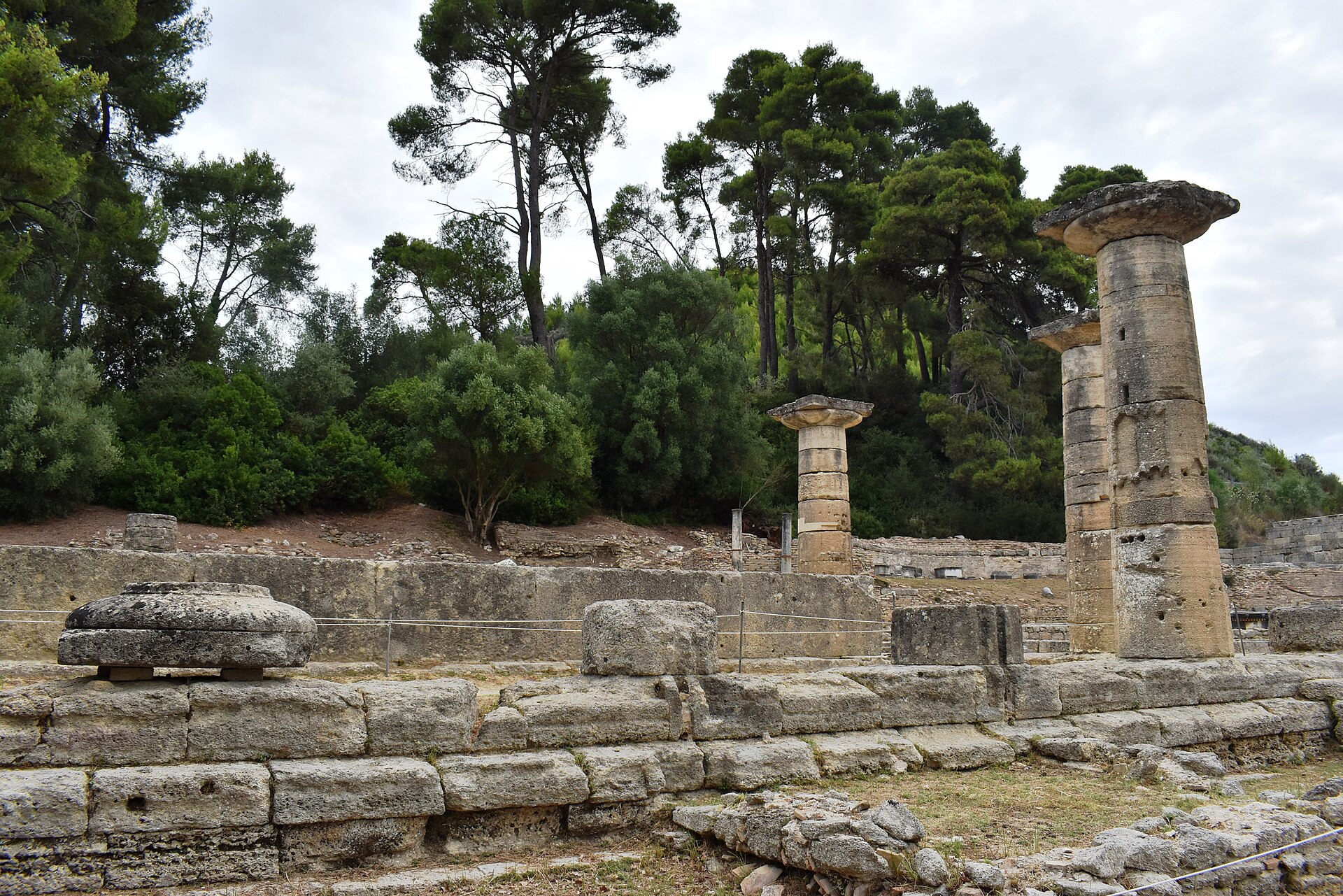
Traditionally the Games started at Olympia in 776 BC, about the time that Homer was born, but for several centuries before that date Olympia had been a cult site for the worship of Zeus, overlooked by a hill with the sacred River Alph flowing through it. The first large building at Olympia was the Heraion, a temple dedicated to Hera built around 650-600 BCE, and in the 5th century BCE the sanctuary reached its peak of prosperity with the great Temple of Zeus completed in 457 BCE.
The statue of Zeus within the temple was made by Phidias and was a 12 m high gold and ivory figure of Zeus seated on a throne, regarded as one of the Seven Wonders of the Ancient World. Strabo describes the image of Zeus made by Pheidias of Athens, made of ivory and so large that although the temple was very large the artist was thought to have missed the proper symmetry, for he showed Zeus seated but almost touching the roof with his head.
Strabo records that the temple at Olympia got its fame first from the oracle of Olympian Zeus, and that after the oracle failed its glory persisted thanks to the festal assembly and the Olympian Games, in which the prize was a crown and which were regarded as sacred, the greatest games in the world.
2. Chronology of the Ancient Games
-
776 BCEFirst recorded Games at OlympiaThe first recorded Games were held at Olympia, with Coroebus of Elis as the first champion.7Ancient Olympic Games · Encyclopaedia Britannica ↗
-
724 BCEThe diaulos added
-
720 BCEThe dolichos addedThe dolichos long-distance race was added.5
-
708 BCEWrestling and pentathlon introducedWrestling was added to the programme.5
-
688 BCEBoxing introducedBoxing was introduced.7
-
Eight years after 688 BCEChariot racing introducedChariot racing was added eight years later.7
-
648 BCEPankration includedThe pankration was included in the programme.7
-
420 BCESpartans bannedThe Spartans violated the Olympic truce and were banned.6The Olympics: Ancient versus Modern · BBC History (Dr Stephen Instone) ↗
-
393 CELast ancient Games
-
522 and 551 CEEarthquakes at OlympiaEarthquakes in 522 and 551 CE destroyed much of the remaining ruins of Olympia.4Olympia · World History Encyclopedia ↗
-
1829Rediscovery of OlympiaSilt from the nearby rivers eventually covered the site until its rediscovery in 1829 by the French Archaeological Mission.4
3. The Ancient Programme and Competition
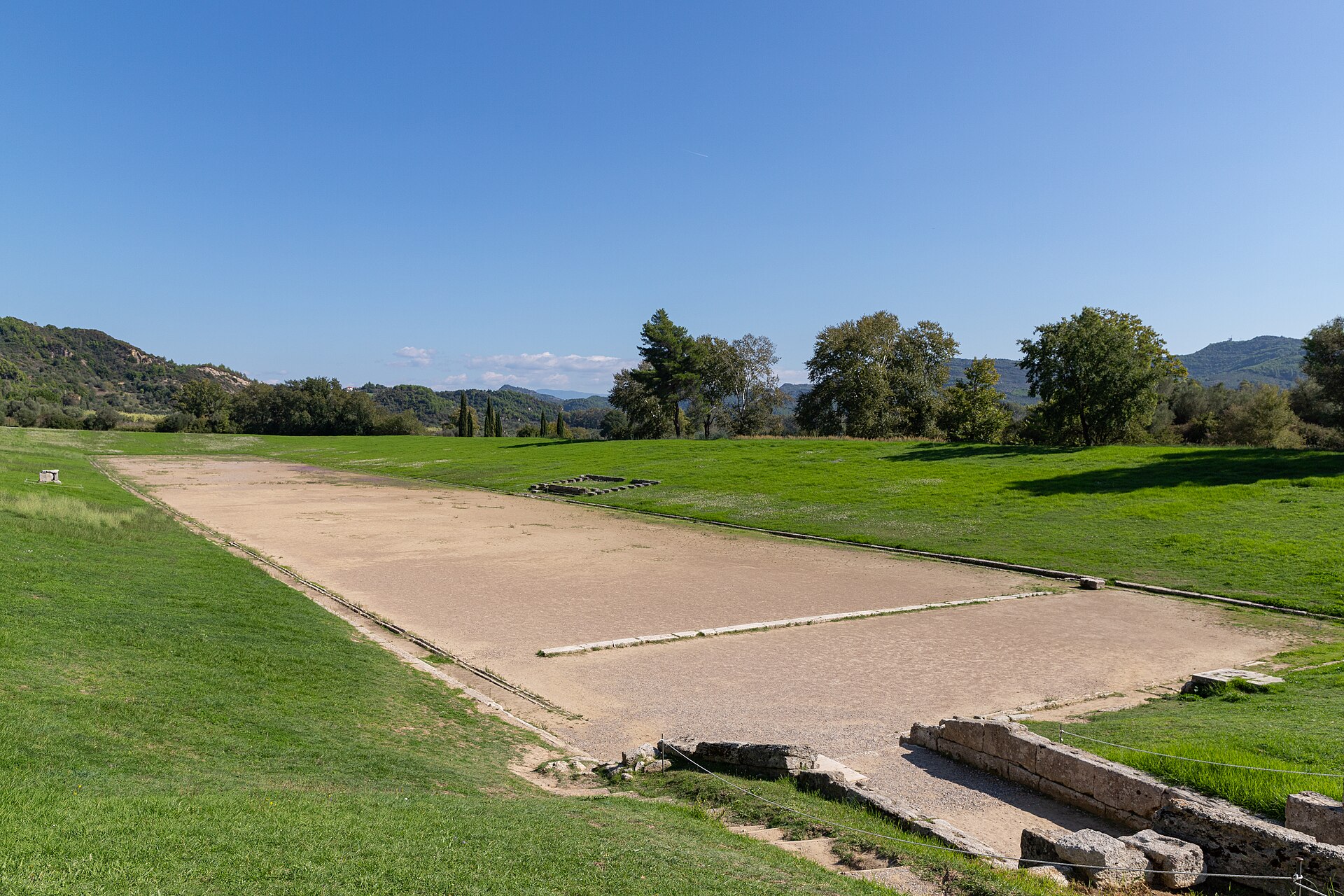
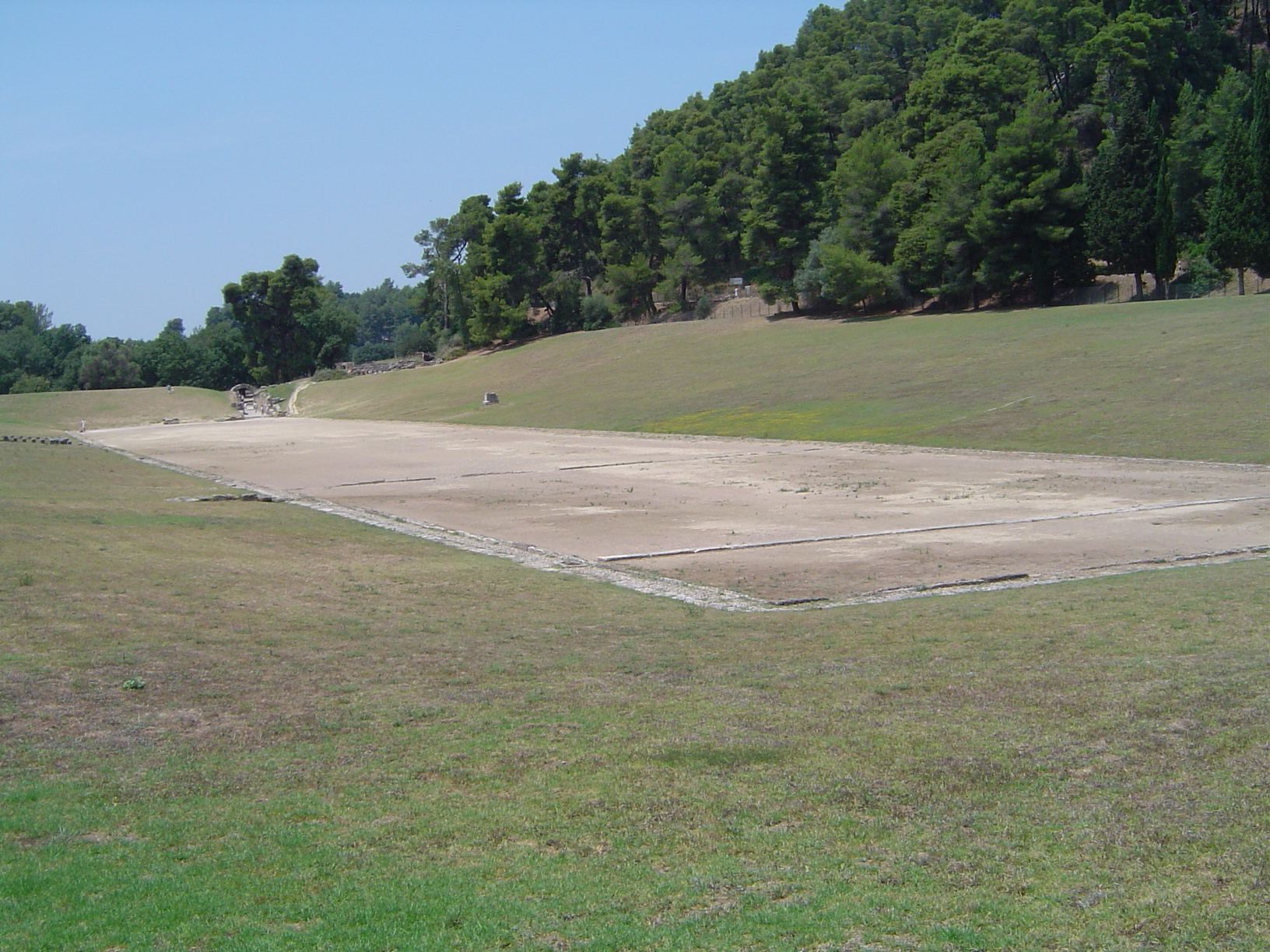
For the first 12 Olympics the stadion foot-race was the only event and remained the most prestigious; run over one length of the track, 600 ancient feet or 192 m; the word stade also came to refer to the track and is the origin of the modern word stadium.
Over time the programme grew to 18 events spread over five days, beginning with the diaulos two-stadium foot-race added in 724 BCE, the dolichos long-distance race in 720 BCE and wrestling in 708 BCE. In 648 BCE the pankration, a no-holds-barred combat combining wrestling, boxing and street fighting, was included; kicking and hitting a downed opponent were allowed, only biting and gouging were forbidden, and in some cases competitors died during matches.
In most events the athletes participated in the nude, and scholars have sought to explain the practice through a range of theories, from the eccentric to anthropological, religious and social explanations such as nudity as a rite of passage.
According to Smith's Dictionary of Greek and Roman Antiquities, boxing for men was introduced at the Olympic games in the 23rd Olympiad, and for boys in the 37th. The Greeks regarded Theseus as the inventor of the pancratium, who for want of a sword was said to have used this mode of fighting against the Minotaurus.
4. Religion, Truce and Politics in the Ancient Games
According to one tradition recorded by Plutarch, Lycurgus flourished at the same time as Iphitus and in concert with him established the Olympic truce, with Aristotle alleging as proof the discus at Olympia on which an inscription preserves the name of Lycurgus.
5. Women in the Ancient Games
Women were not permitted to participate in or watch the events, although young girls were allowed in the crowd, and the priestess of Demeter Chamyne was a single exception to the rule. The 2nd-century traveler Pausanias wrote that women were banned from Olympia during the actual Games under penalty of death, yet remarked that the law and penalty had never been invoked and that unmarried women were allowed as spectators.
Kallipateira, who had trained her son Peisirodos, revealed her sex while celebrating his victory and escaped the death penalty because she came from a family of great Olympic victors; from then on all trainers had to be naked like the athletes.
The first woman to win the crown of victory was Kyniska in 392 BCE; although women were not permitted to compete, they could own horses, and it was the owner who received the olive crown prize.
The Heraia Games for women were held every four years in honour of Hera, in which children, adolescents and young women ran separate foot-races over 500 feet of the stadium track, divided into three age groups.
Several women appear in the official lists of victors as owners of the stables of victorious chariot entries.
6. Revival and the Modern Movement
Athletic festivals were being held in ancient Greece almost 3,000 years ago, and the Olympic Games had achieved major importance by the end of the 6th century BCE.
The Wenlock Olympian Society was founded by Dr William Penny Brookes in 1850 as the Wenlock Olympian Class, to provide a Games benefiting the general public's mental and physical wellbeing by giving every man in every grade of life the opportunity to take part in annual sports and arts competitions.
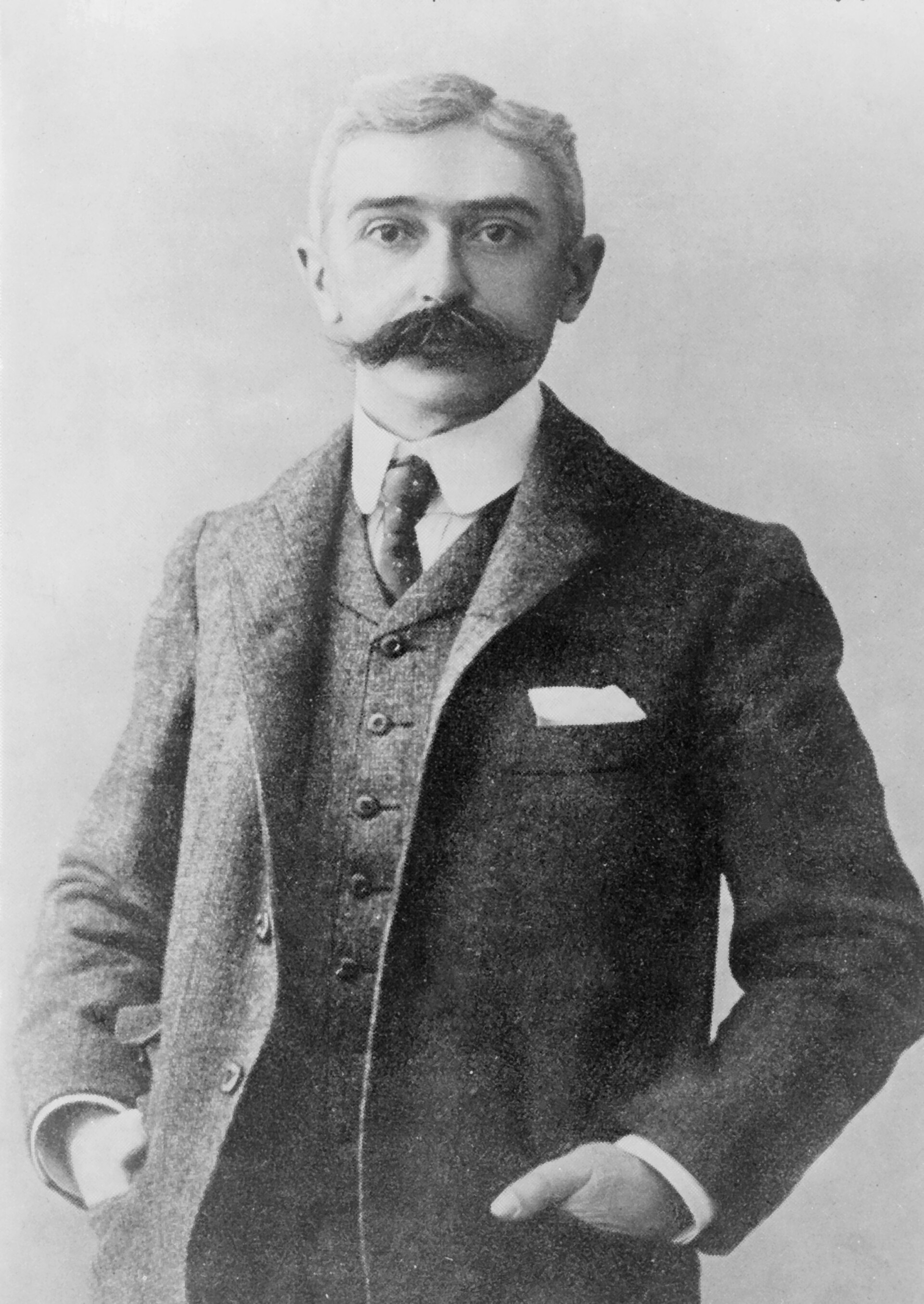
Pierre, baron de Coubertin is usually credited as the person most responsible for starting the modern Olympic Games; he made a public call for an Olympic revival in 1892 which initially fell on deaf ears, and a second Sorbonne congress resolved to hold an international Olympic Games, which duly took place in Athens as the first modern edition.
The International Olympic Committee was established on 23 June 1894 and is headquartered in Lausanne, Switzerland.
7. The First Modern Games: Athens 1896
The first celebration of the modern Olympic Games took place in its ancient birthplace, Greece, and attracted athletes from 14 nations, with the largest delegations coming from Greece, Germany, France and Great Britain.
On 6 April 1896 the American James Connolly won the triple jump to become the first Olympic champion in more than 1,500 years, and he also finished second in the high jump and third in the long jump.
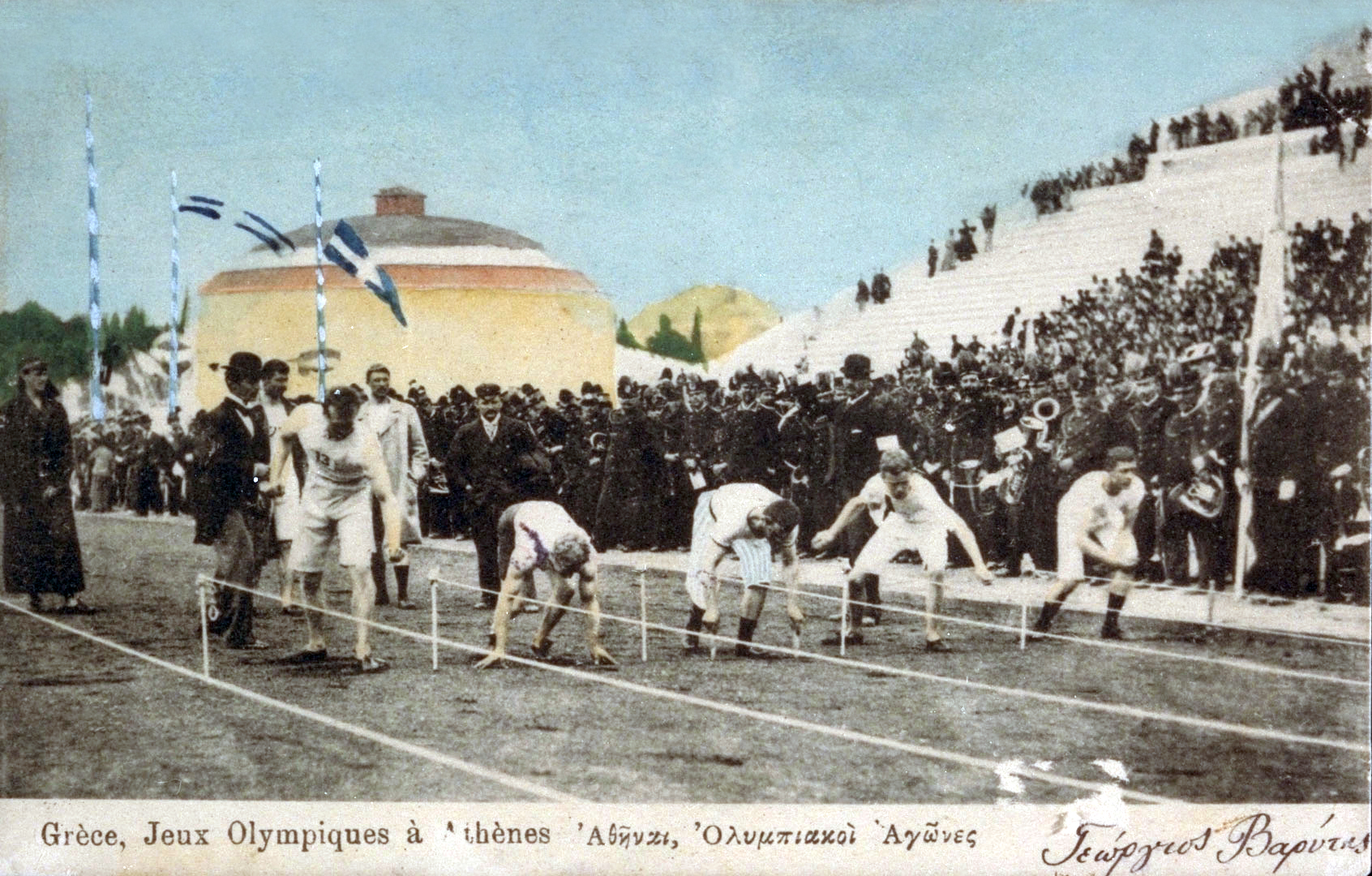
Spyridon Louis set off from the city of Marathon and took the lead four kilometres from the finish line, winning the race by more than seven minutes to the joy of the 100,000 spectators.
8. Structure, Cycle and Awards
The Summer and Winter Games are each held every four years; after 1992 both were held and the schedule moved to a staggered two-year cycle so that Games occur every two years, in either summer or winter.
In individual Olympic events the award for first place is a gold medal, for second place a silver medal and for third place a bronze medal, while diplomas are awarded for fourth through eighth places.
Britannica's history of the modern Summer Games lists every host city from Athens in 1896 through Rio de Janeiro in 2016 and on to later editions, with repeat hosts including Paris, London, Los Angeles and Athens.
The 1936 Games were the first to employ the torch run, in which each of 3,422 torch bearers ran one kilometer along the route of the torch relay from the site of the ancient Olympics in Olympia to Berlin, an idea modeled by former German Olympian Carl Diem on a relay run in Athens in 80 B.
9. Women in the Modern Games
Women athletes first competed at the modern Olympic Games in 1900 in Paris, where 22 women participated in croquet, equestrian, golf, sailing and tennis events.
Paris 2024 was the first Olympic Games in history to achieve gender parity on the field of play, with the International Olympic Committee distributing an equal number of the 10,500 athlete quotas to female and male athletes. The 2024 Games set a record with women making up 49.2 percent of all athletes.
The Paris 2024 Opening Ceremony saw 96 per cent of National Olympic Committees choose two athletes, one female and one male, to carry their flags, and 28 out of 32 sports reached full gender parity during the Games.
10. Politics, Boycotts and Tragedy
Nazi Germany used the 1936 Olympic Games for propaganda purposes, promoting an image of a new, strong and united Germany while masking the regime's targeting of Jews and Roma, and for the first time in modern Olympic history people in the United States and Europe called for a boycott.
Judge Jeremiah Mahoney, president of the Amateur Athletic Union, led efforts to boycott the 1936 Olympics, pointing out that Germany had broken Olympic rules forbidding discrimination based on race and religion and arguing that participation would endorse Hitler's Reich.
Avery Brundage maneuvered the Amateur Athletic Union to a close vote in favor of sending an American team to Berlin; once the United States voted for participation in December 1935 other countries fell in line, and forty-nine teams competed in the Berlin Games, more than in any previous Olympics.
Eight Palestinian terrorists of the group Black September broke into the Olympic Village in Munich in September of 1972; two members of the Israeli team were killed and nine were taken hostage, and in the ensuing battle all nine hostages were killed, along with five of the terrorists and one policeman. The Olympic Games were suspended for 34 hours and a mass was held in the main stadium to commemorate the victims. The Games continued at the insistence of IOC President Avery Brundage, who famously said the Games must go on.
The Moscow Games were disrupted by a boycott, even larger than earlier ones, led by U.S. President Jimmy Carter to protest the December 1979 Soviet invasion of Afghanistan. Some governments such as Great Britain and Australia supported the boycott but allowed their athletes to decide for themselves whether to go. In the end 67 nations did not participate, with 45 to 50 of them likely absent because of the U.S.-led boycott, while just eighty nations took part, the lowest number since 1956 and the clearest sign yet that Cold War politics had entered the Games.
11. Recent Editions and Global Reach
The Munich Games stood as the largest edition to that point, comprising 195 events and drawing 7,134 athletes from 121 National Olympic Committees. Men's indoor handball, slalom canoeing and kayaking all made their Olympic debuts at these Games. West German Liselott Linsenhoff became the first female equestrian to win a gold medal.
The Tokyo 2020 Games followed a historic one-year postponement and became an unprecedented demonstration of unity and solidarity, as the world came together for the first time following the onset of the COVID-19 pandemic.
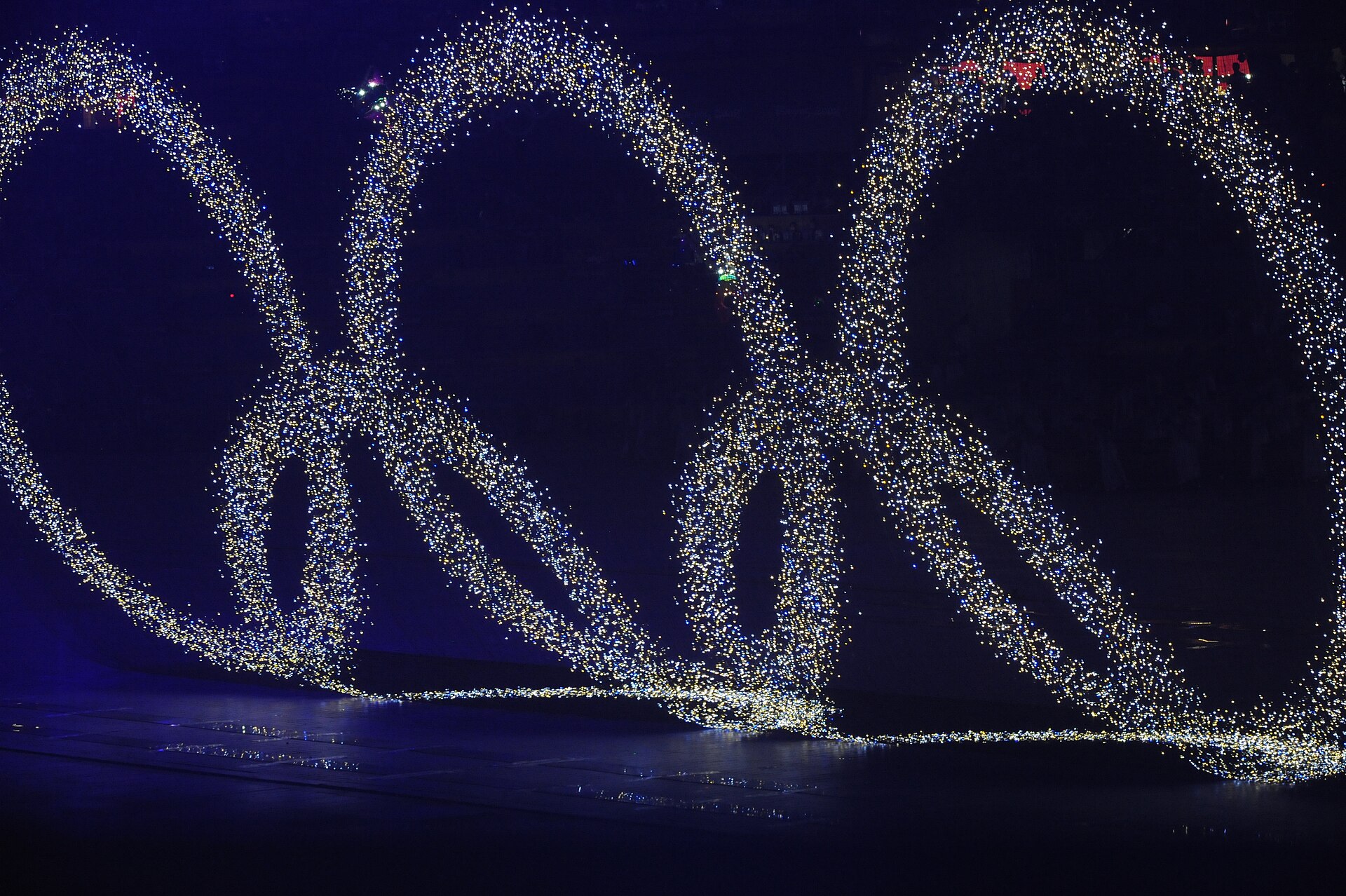
Paris 2024 transformed the most iconic landmarks of the City of Light into sporting arenas. Beach volleyball was staged beside the Eiffel Tower, equestrian events took place at the Chateau de Versailles, and fencing was held in the Grand Palais.
12. Timeline: from the first Olympiad to Paris 2024
- 776 BCEThe first OlympiadThe first Games were held at Olympia at the first full moon after the summer solstice, in honour of Zeus; Koroibos of Elis won the only event, the stadion foot-race.
- 724 BCEThe diaulos is addedA second event, the diaulos two-stadium foot-race, was added to the programme, followed four years later by the long-distance dolichos.
- 392 BCEKyniska wins the crownThe Spartan princess Kyniska became the first woman to win a victor's crown, as owner of a victorious chariot team.
- 393 CEThe last ancient GamesThe final Olympics was held after a run of 293 Games; the festival was abolished soon afterwards because of its pagan associations.
- 1850The Wenlock Olympian ClassDr William Penny Brookes founded the Wenlock Olympian Class in Much Wenlock, Shropshire, one of the forerunners of the modern Olympic movement.
- 1894The Sorbonne congressA second Sorbonne congress in Paris resolved to hold an international Olympic Games in Athens, acting on Pierre de Coubertin's campaign for a revival.
- 6-15 April 1896Athens 1896: the first modern GamesThe first celebration of the modern Olympic Games took place in its ancient birthplace; 241 athletes from 14 nations competed in 43 events, and Spyridon Louis won the marathon.
- 1900Women compete for the first timeAt the Paris Games 22 women participated in croquet, equestrian, golf, sailing and tennis events.
- 1924The Winter GamesThe Winter Games were sanctioned in 1924 for winter sports, beginning the separate Winter tradition.
- 1936Berlin and the first torch relayBerlin hosted the Games under Nazi rule with 49 nations competing, and the torch run from Olympia was introduced, with 3,422 bearers carrying the flame.
- 5 September 1972The Munich attackEight Palestinian terrorists broke into the Olympic Village, killing two members of the Israeli team and taking nine hostages; all nine hostages were killed in the ensuing battle, and the Games were suspended for 34 hours.
- 1980The Moscow boycottThe United States led a boycott of the Moscow Games over the Soviet invasion of Afghanistan; 67 nations stayed away, while just eighty participated.
- 2020 (held 2021)Tokyo postponementThe Tokyo Games were postponed for one year because of the COVID-19 pandemic, the first postponement in the history of the modern Games.
- 2024Paris 2024 and gender parityParis 2024 became the first Olympic Games in history to achieve gender parity on the field of play, with an equal number of athlete quotas for women and men.
References (21)
- 1Olympic Games — Encyclopaedia Britannica WebView source
- 2Olympic Games — International Olympic Committee (Olympics.com) WebView source
- 3Birthplace Of The Modern Olympics — Wenlock Olympian Society WebView source
- 4Olympia — World History Encyclopedia Web↩View source
- 5Ancient Olympic Games — World History Encyclopedia Web↩View source
- 6The Olympics: Ancient versus Modern — BBC History (Dr Stephen Instone) Web↩View source
- 7Ancient Olympic Games — Encyclopaedia Britannica Web↩View source
- 8Strabo, Geography, Book VIII, Chapter 3 (trans. H. L. Jones) — LacusCurtius, University of Chicago BookView source
- 9Pugilatus, A Dictionary of Greek and Roman Antiquities (Smith, 1875) — LacusCurtius, University of Chicago 1875 WebView source
- 10Pancratium, A Dictionary of Greek and Roman Antiquities (Smith, 1875) — LacusCurtius, University of Chicago 1875 WebView source
- 11Plutarch, Life of Lycurgus (trans. Bernadotte Perrin) — LacusCurtius, University of Chicago WebView source
- 12Wenlock Olympian Society — Wenlock Olympian Society WebView source
- 13Olympic Charter — International Olympic Committee (Olympics.com) WebView source
- 14Athens 1896 Summer Olympics — International Olympic Committee (Olympics.com) 1896 WebView source
- 15The Nazi Olympics Berlin 1936: Inauguration of the Olympic Torch Relay — United States Holocaust Memorial Museum 1936 WebView source
- 16Paris 2024 Summer Olympics — International Olympic Committee (Olympics.com) 2024 WebView source
- 17The Nazi Olympics: Berlin 1936 — United States Holocaust Memorial Museum 1936 WebView source
- 18The Movement to Boycott the Berlin Olympics of 1936 — United States Holocaust Memorial Museum 1936 WebView source
- 19Munich 1972 Summer Olympics — International Olympic Committee (Olympics.com) 1972 WebView source
- 20Moscow 1980 Summer Olympics — International Olympic Committee (Olympics.com) 1980 WebView source
- 21Tokyo 2020 Summer Olympics — International Olympic Committee (Olympics.com) 2020 WebView source