Guitar
The plucked string instrument of Spanish origin — its four-course and Baroque ancestors, the luthiers who reshaped it, the steel-string and electric guitars of the twentieth century, and its roles in classical, flamenco, country and rock music.
The guitar is a plucked string instrument that probably originated in Spain early in the sixteenth century, evolving from the four-course guitarra latina through the five-course Baroque guitar to the six single strings of the modern instrument. Nineteenth-century makers, above all Antonio Torres, enlarged and lightened the body to create the classical guitar, while twentieth-century inventions — the electromagnetic pickup, the solid-body electric guitar and models such as the Fender Telecaster and Stratocaster and the Gibson Les Paul — carried the instrument into jazz, country and rock music. Traditional guitar-centred traditions such as flamenco and fado are inscribed on UNESCO's Representative List of the Intangible Cultural Heritage of Humanity.
In this article
- 1Overview
- 2Early History and Construction
- 3The Baroque Guitar and Its Spread
- 4From Double Courses to the Classical Guitar
- 5Technique, Repertory and Performers
- 6Acoustics and String Physics
- 7The Electric Guitar
- 8Electric Guitar Models and Makers
- 9Les Paul: Inventor and Musician
- 10Cultural Impact and Playing Styles
- 11Guitar Traditions: Flamenco and Fado
- 12Notable Instruments and Collections
- 13Timeline
- 14Timeline: from the guitarra latina to the electric guitar
- 15Frequently asked questions
- 16Knowledge graph
Overview
The guitar is a plucked string instrument, sounded by plucking or strumming its strings, which run from the pegbox to a bridge glued to the soundboard. It probably originated in Spain early in the 16th century, deriving from the guitarra latina, a late-medieval instrument with a waisted body and four strings, and it was closely related to the vihuela.
1. Early History and Construction
The earliest recognizable guitars were small instruments strung with four double courses of gut, their frets tied from the same material and their tuning pegs worked by friction. A decorative rose ornamented the soundhole, while the bridge sat near the bottom of the body. The four-course instrument ran from a violin-like pegbox to a tension bridge, with the three lower courses doubled and the top course single. Its tuning was laid out in intervals of a fourth, a major third and a fourth, and the sixteenth-century repertory written for it embraced dances, fantasias, chansons and secular genres.
By the sixteenth century the guitar was tuned C–F–A–D, matching the centre four courses of the lute and the vihuela. The vihuela and the guitar coexisted until the seventeenth century, when the guitar superseded the vihuela.
2. The Baroque Guitar and Its Spread
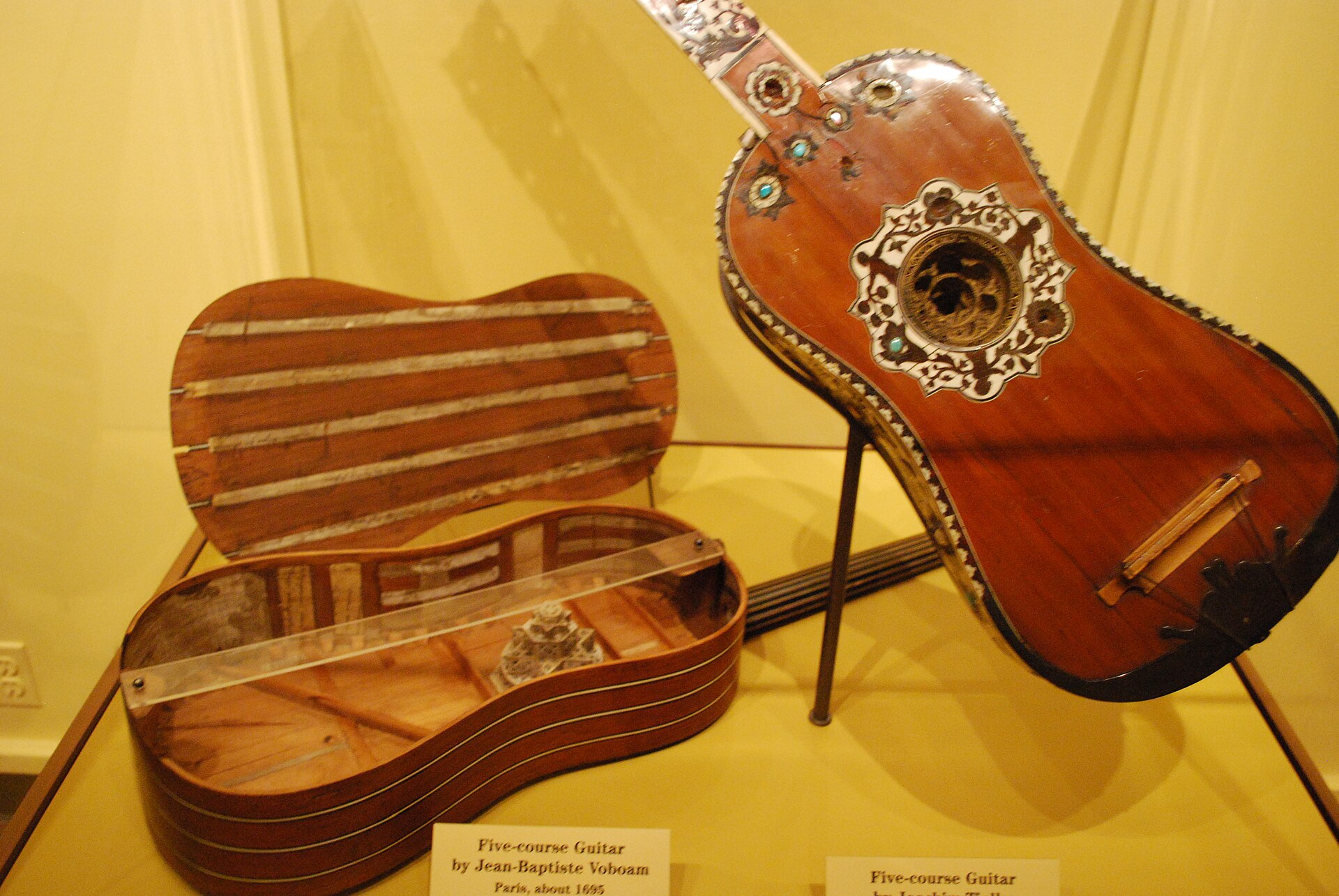
The Baroque guitar carried five double courses, and its body was slightly larger than that of its predecessors, averaging approximately 92 cm in length with string lengths of 63 to 70 cm. Its music was often written in a characteristic Italian notation called alfabeto, a letter system representing strummed block chords, which served both solos and accompaniments.
The five-course guitar was a Spanish favourite, and from Spain it spread to Italy, then to France, England, Germany and the Low Countries across the seventeenth and eighteenth centuries.
3. From Double Courses to the Classical Guitar
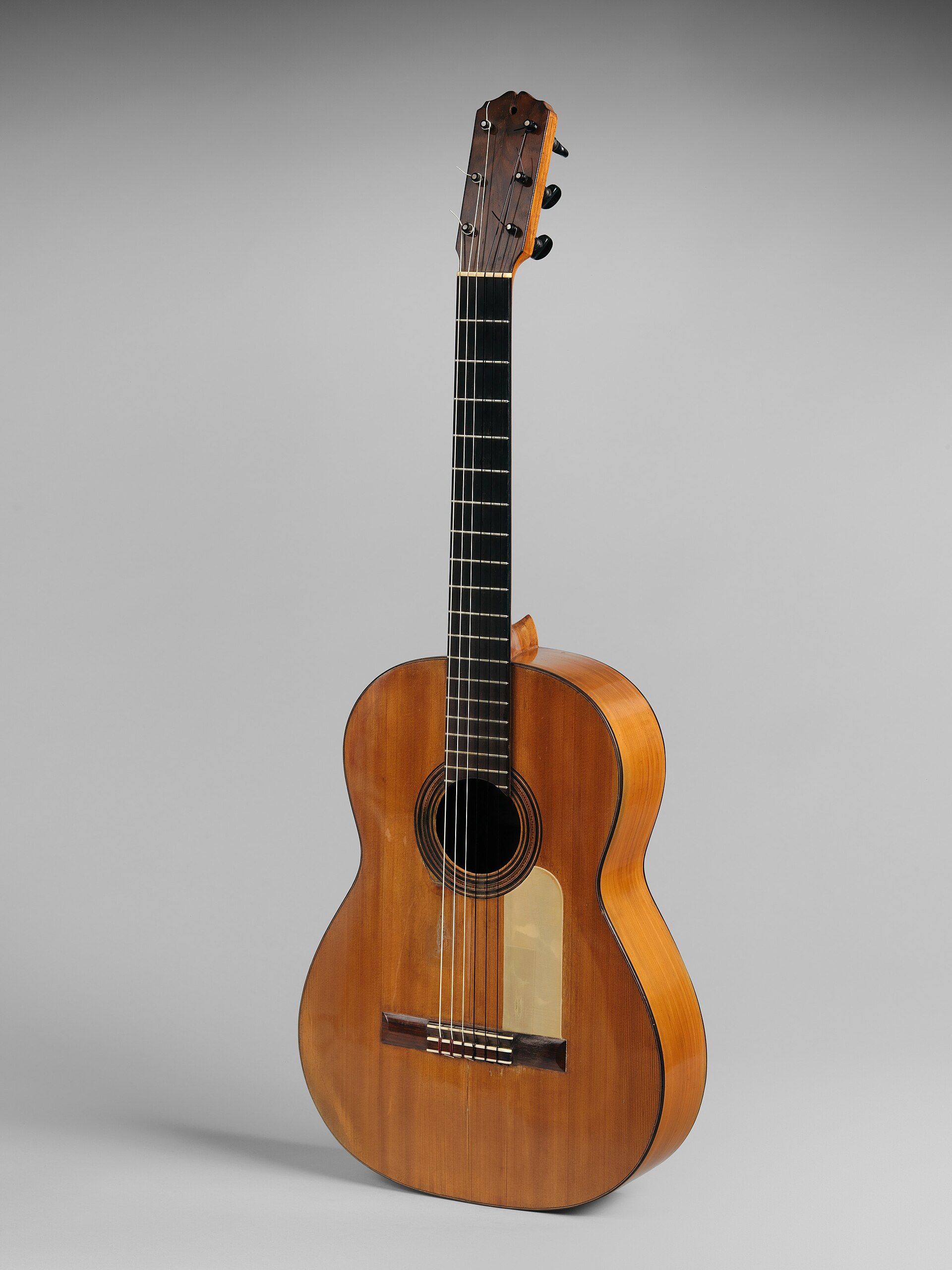
Before 1800 the guitar was strung in double courses, pairs of strings set close together and struck as one. That arrangement gave way to single strings tuned E-A-D-G-B-E, the tuning that remains standard today.
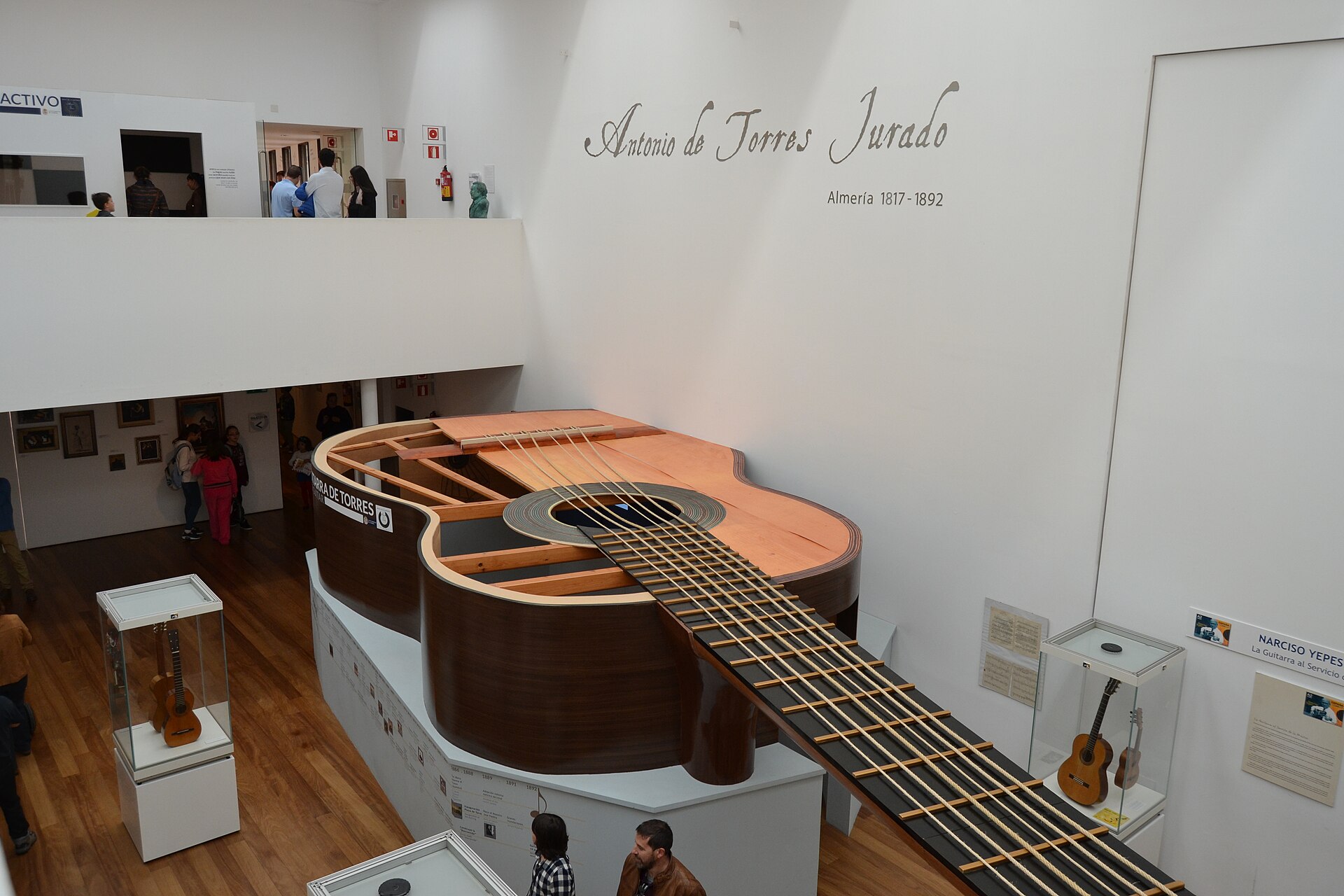
The innovations of the nineteenth century were largely the work of Antonio Torres, whose designs produced the classical guitar as it is now known. His instrument was strung with three gut strings and three metal-spun silk strings, a combination later revised when nylon replaced gut.
Variant forms of the instrument persist alongside the classical model. The twelve-stringed guitar retains the principle of double courses, while the Mexican jarana and the South American charango are both small five-course guitars.
4. Technique, Repertory and Performers
From the 17th to the early 19th century the guitar remained an amateur's instrument, though a few virtuoso guitarists became known in Europe, among them Gaspar Sanz, Fernando Sor and Joseph Kaspar Mertz.
Andrés Segovia was born in Linares in 1893 and died in Madrid in 1987. Largely self-taught because no competent teacher was available and the instrument was held in low repute, he gave his first public concert in 1909 while a student at the Granada Musical Institute, and by the time of his first Paris performance in 1924 his reputation was international. He produced more than 150 transcriptions from lute, vihuela and harpsichord, and encouraged the writing of works for the guitar by 20th-century composers, including Mario Castelnuovo-Tedesco, Heitor Villa-Lobos and Manuel Ponce.
5. Acoustics and String Physics
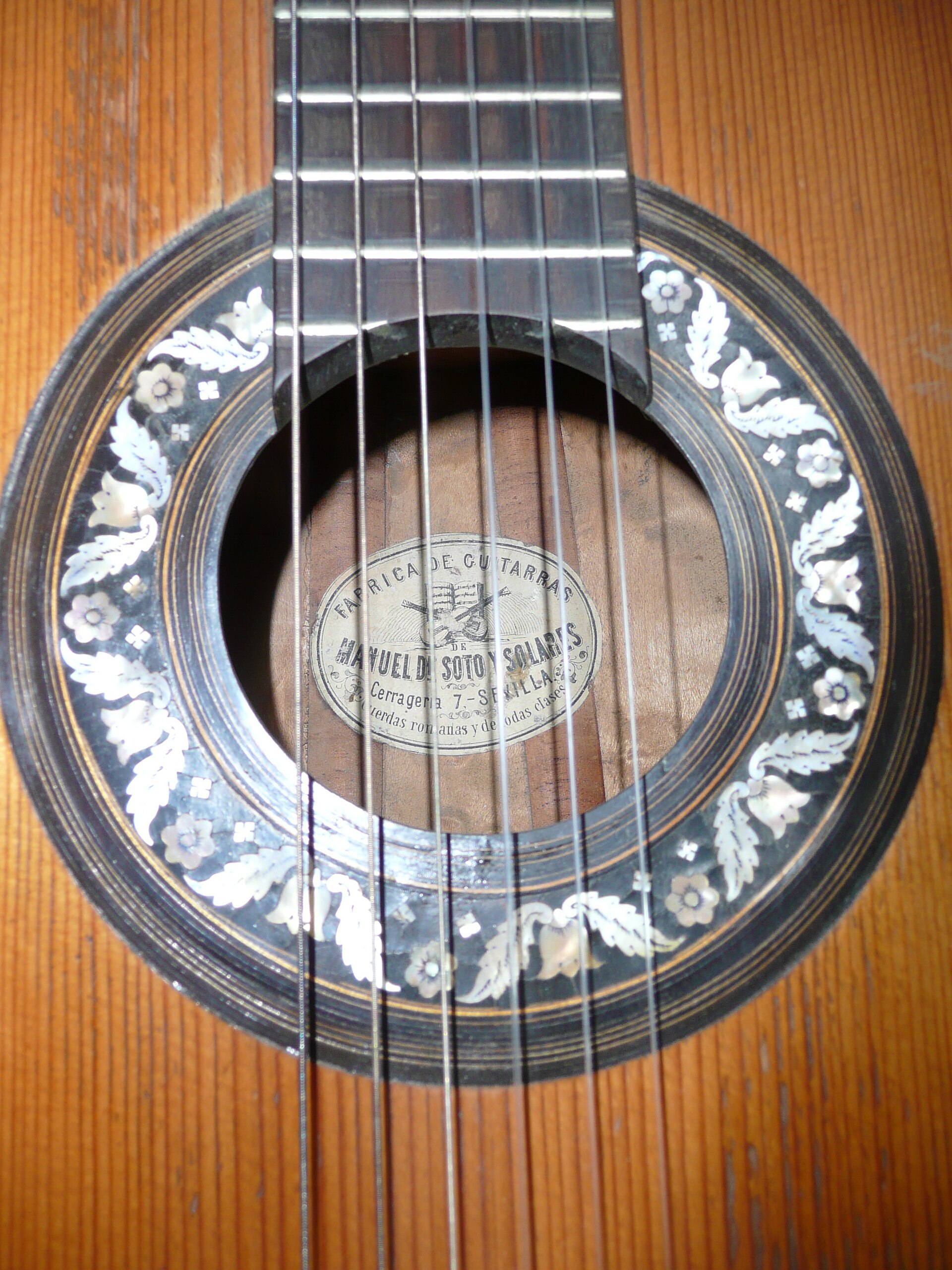
The strings of a guitar make hardly any noise on their own; in an acoustic instrument the vibration of the string is transferred via the bridge and saddle to the top plate of the guitar. An important function of the braces is to keep the top plate flat despite the action of the strings, and the braces also affect the way the top plate vibrates. The fat strings are usually composite, with a thin core wrapped with windings to make them more massive without making them harder to bend.
6. The Electric Guitar
An electric guitar is a plucked stringed instrument that relies on electronic amplification to be heard at a louder volume, translating the vibrations of its strings into electric signals that an external amplifier or speaker then amplifies. The instrument's lineage reaches back to the early 1930s, when George Beauchamp, working with Adolph Rickenbacker, produced an electromagnetic pickup. Introduced on a lap-steel known as the Frying Pan, that pickup made the guitar the first commercially viable electric.
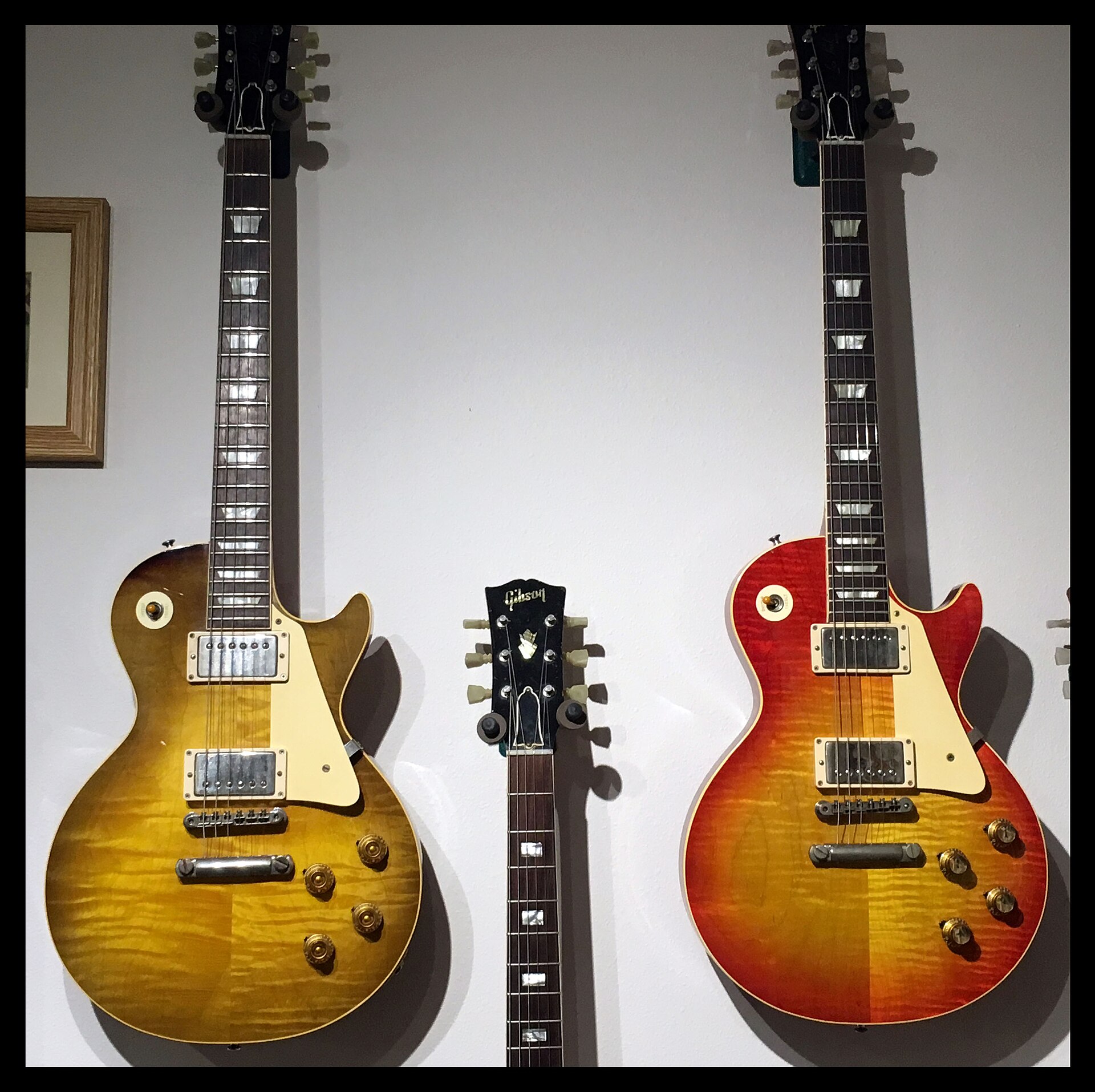
The Slingerland company commercially introduced a Spanish solid-body electric guitar in 1939, and around 1940 Les Paul mounted strings and pickups on a solid block of pine, on an instrument dubbed the Log. Pickups of this kind fall into two families, single-coil and double-coil, the latter also called humbucking. In a solid-body instrument the great mass has minimal response, so the pickup captures a cleaner signal of the strings' pure tone.
7. Electric Guitar Models and Makers
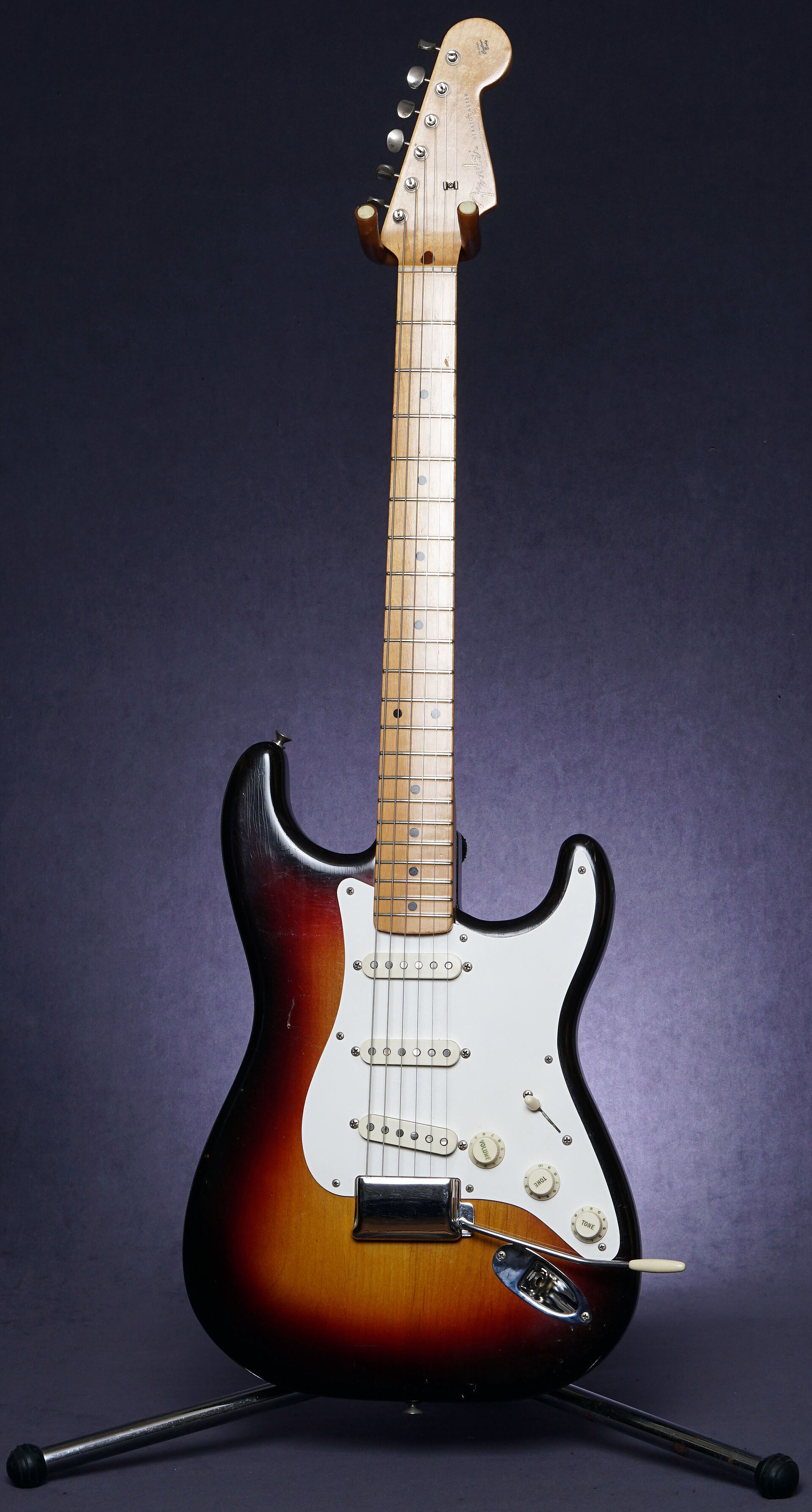
Fender's early business lay in lap steel guitars and amplifiers before it turned to the solid-body instrument, and the Broadcaster stands among the very first solid-body electric guitars. A trademark held by Gretsch obliged the company to drop the Broadcaster label, and the guitars shipped without a name acquired the nickname Nocaster; Don Randall proposed the name Telecaster in 1951. Introduced in 1950 as the Broadcaster and renamed in 1951, the Telecaster remains outwardly close to its earliest ancestors even 75 years on. At the trade show it was mocked as a boat paddle and a snow shovel.
The Telecaster became central to the Bakersfield Sound, pioneered in the later 1950s and popularized in the 1960s by Buck Owens and his band. The 1959 Custom Telecaster added a bound body and a rosewood fingerboard. Seth Lover, who had pioneered hum-cancelling pickups at Gibson in the mid-1950s, joined Fender in 1967 and developed the Fender Wide Range humbucking pickups.
Syd Barrett recorded Pink Floyd's debut with a Telecaster and an Esquire. Luther Perkins accompanied Johnny Cash from 1954 on a Telecaster and an Esquire, and Scotty Moore played a Telecaster during Elvis Presley's Sun Studios sessions.
The Les Paul Standard became available in 1952, and two years later Fender introduced the iconic Stratocaster, which featured three electric pickups instead of two. The Jazzmaster made its debut in 1958 but failed to take off with jazz artists, who preferred semi-hollow body guitars.
8. Les Paul: Inventor and Musician
Les Paul was an American jazz and country guitarist and inventor who was perhaps best known for his design of a solid-body electric guitar. He pioneered the development of multitrack recording and is credited with having invented the first eight-track tape recorder. His lifelong innovations included echo delay, overdubbing and multitracking.
9. Cultural Impact and Playing Styles
The electric guitar became a symbol and talisman for the youth culture of the 1950s. In the 1960s manufacturers started equipping preamplifiers with a range of effects, and guitarists used these innovations to explore new sounds and create new subgenres of rock music.
Because of their ability to make fuller and louder sounds, electric guitars lent themselves to use as solo instruments as well as rhythm instruments, and they allow techniques such as string-bending, hammering and sliding.Pickups are often attached to violins, lutes and other instruments as well as to guitars, making these instruments usable in noisy environments and vast amphitheaters.
Jazz soloist Charlie Christian, who gained prominence in the late 1930s with the Benny Goodman Sextet, was the electric guitar's first virtuoso player. Jimi Hendrix achieved spectacular effects by maneuvering the guitar's tremolo arm and playing close to the amplifier.
10. Guitar Traditions: Flamenco and Fado
Flamenco is an artistic expression that fuses cante, baile and toque, and it first emerged in Andalusia in the early 19th century with a great variety of styles. Andalusia is its heartland, though its roots also extend to Murcia and Extremadura. It is performed during religious festivals, rituals, church ceremonies and at private celebrations, and it serves as a badge of identity for numerous communities, in particular the Gitano (Roma) ethnic community.
Within flamenco, toque is the art of guitar playing, originally accompanying song and dance. The tradition sustains craft practices including guitar, shoe and costume making. Flamenco was inscribed on the UNESCO Representative List in 2010.
The Andalusian Centre for Flamenco was created in Jerez de la Frontera in 1989 and holds the largest flamenco archive in the world, with more than 300,000 records.
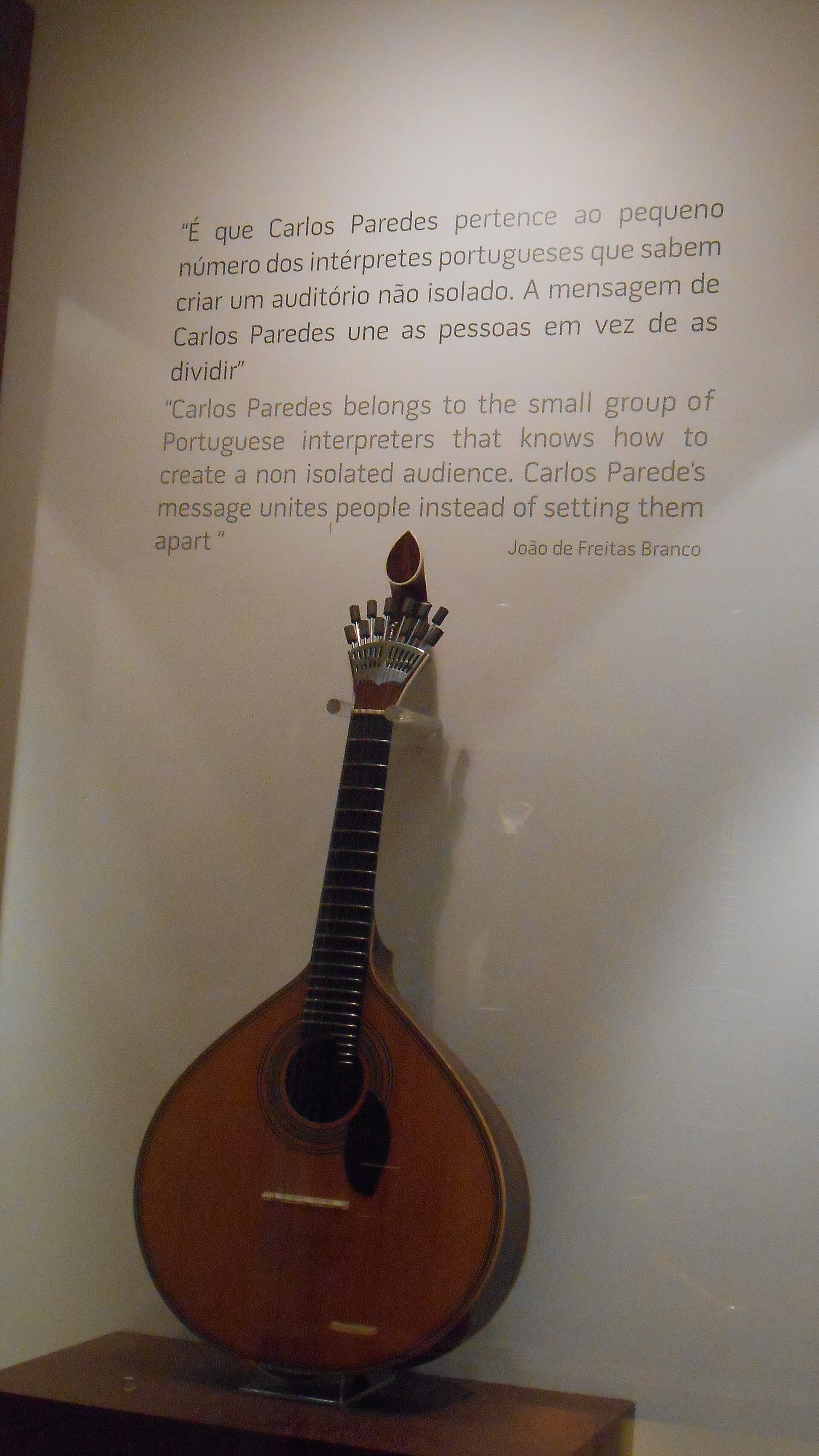
Fado is a performance genre incorporating music and poetry practised in Lisbon, usually sung by a solo singer traditionally accompanied by a wire-strung acoustic guitar and the Portuguese guitarra, a pear-shaped cittern with twelve wire strings unique to Portugal. Its dissemination through emigration and the world music circuit has reinforced its image as a symbol of Portuguese identity. Fado was inscribed on the UNESCO Representative List in 2011.
11. Notable Instruments and Collections
The Royal College of Music holds among its instruments the earliest dated guitar, made by Belchior Dias in Lisbon in 1581 and counted among the museum's highlights. Its collections also include Kurt Cobain's 1959 Martin D-18E, described as the most expensive guitar ever sold at auction, which was donated to the Royal College of Music.
The Martin family arrived in New York City from Germany and initially settled at 196 Hudson Street, where they opened the first Martin Guitar workshop in the New World. Since its founding in 1833 by Christian Frederick Martin, Martin Guitar has been a trailblazer in the world of acoustic guitar craftsmanship.
12. Timeline
-
1939Slingerland solid-bodyThe Slingerland company commercially introduced a Spanish solid-body electric guitar. 7The Invention of the Electric Guitar (Lemelson Center) · Smithsonian Institution, National Museum of American History ↗
-
c. 1940The LogLes Paul mounted strings and pickups on a solid block of pine, on an instrument dubbed the Log. 7
-
1941Les Paul solid-bodyThe guitarist Les Paul created the iconic solid-body electric guitar. 6Electric guitar · Encyclopaedia Britannica ↗
13. Timeline: from the guitarra latina to the electric guitar
- 1581The earliest dated guitarBelchior Dias of Lisbon builds the earliest dated guitar, today among the highlights of the Royal College of Music's instrument collection.
- About 1600The five-course Baroque guitarFive double courses become typical, and the guitar's popularity supplants both the four-course guitar and the six- or seven-course vihuela.
- Before 1800Six single strings and standard tuningA sixth course is added by the late 18th century, and before 1800 the double courses are replaced by single strings tuned E to A to D to G to B to E.
- 6 November 1833Martin opens in New YorkChristian Frederick Martin arrives from Germany with his family and opens the first Martin Guitar workshop at 196 Hudson Street.
- Mid-19th centuryTorres and the classical guitarThe 19th-century innovations of Antonio Torres produce the classical guitar, strung with three gut and three metal-spun silk strings.
- 1890sOrville Gibson's carved-body guitarsOrville Gibson's carved-body guitar increases the instrument's volume and blazes the trail for the archtop guitar.
- 1909Segovia's first public concertAndrés Segovia gives his first public concert while a student at the Granada Musical Institute; by 1924 his reputation is international.
- Around 1931The first commercially viable electric guitarGeorge Beauchamp's electromagnetic pickup is introduced on the Rickenbacker Frying Pan lap-steel guitar.
- 1939Slingerland's solid-body Spanish electricThe Slingerland company commercially introduces a Spanish solid-body electric guitar.
- 1941Les Paul's solid-body designLes Paul designs a solid-body electric guitar, the design that Gibson would mass-produce a decade later.
- 1950The Fender Broadcaster launchesOne of the very first solid-body electric guitars is launched; the model is renamed the Telecaster in 1951.
- 1952The Gibson Les Paul StandardGibson becomes Fender's first major competitor, introducing its own solid-body guitar with the help of celebrity endorser Les Paul.
- 1954The Stratocaster debutsFender introduces the Stratocaster, which features three electric pickups instead of two.
- 1958The Jazzmaster debutsFender launches the Jazzmaster, which fails to take off with jazz artists.
- 2010Flamenco inscribed by UNESCOFlamenco is inscribed on the Representative List of the Intangible Cultural Heritage of Humanity.
- 2011Fado inscribed by UNESCOFado joins the Representative List of the Intangible Cultural Heritage of Humanity, recognising the Portuguese song tradition and its guitars.
14. Frequently asked questions
What is the standard tuning of a guitar, and how does it relate to the instrument's earlier tunings?
What frequencies are associated with the guitar's strings?
How does a vibrating guitar string behave in physical terms?
The string is almost fixed at both ends, so any vibration must have nodes at each end; motionless points are called nodes, and the points of maximum motion halfway between them are antinodes.5Strings, standing waves and harmonics · University of New South Wales, School of Physics ↗ The speed of a wave in a string increases if the string is stretched more tightly and also depends on the string's weight, since the wave travels more slowly in a thick, heavy string than in a light one.5
Which strings of a standard-tuned guitar correspond to harmonics of the low E string?
On a guitar tuned in the usual way, the B string and the high E string are approximately tuned to the third and fourth harmonics of the low E string.5
Who was the first true electric guitar invented by, and when?
The first true electric guitar was invented in the early 1930s by George Beauchamp.6 The Rickenbacker guitar company, formed by Adolph Rickenbacker and George Beauchamp, made and sold Hawaiian guitars in the early 1930s, including an electric model now known as the Frying Pan and historically the first electric guitar.18Rickenbacker Frying Pan (Oral History Program) · NAMM ↗
How did the Les Paul model reach the market, and who favoured it?
In 1952 the Gibson Musical Instrument Co. began selling its popular Les Paul model electric guitar.19Les Paul · National Inventors Hall of Fame ↗ The Les Paul acquired a devoted following, and its versatility and balance made it the favoured instrument of such figures as Eric Clapton, Jimmy Page and Peter Frampton.10Les Paul · Encyclopaedia Britannica ↗
References (19)
- 1Guitar | History, Types, & Facts — Encyclopaedia Britannica Web↩View source
- 2The Guitar (Heilbrunn Timeline of Art History) — The Metropolitan Museum of Art WebView source
- 3Andrés Segovia — Encyclopaedia Britannica WebView source
- 4How does a guitar work? — University of New South Wales, School of Physics Web↩View source
- 5Strings, standing waves and harmonics — University of New South Wales, School of Physics Web↩View source
- 6Electric guitar — Encyclopaedia Britannica Web↩View source
- 7The Invention of the Electric Guitar (Lemelson Center) — Smithsonian Institution, National Museum of American History Web↩View source
- 8The One That Started It All: A Telecaster History — Fender Musical Instruments WebView source
- 9A Decade of Beginnings: Fender in the 1950s — Fender Musical Instruments WebView source
- 10Les Paul — Encyclopaedia Britannica Web↩View source
- 11Les Paul (Inductee) — Rock & Roll Hall of Fame WebView source
- 12Pickup | musical instrument device — Encyclopaedia Britannica WebView source
- 13Flamenco (Representative List, element 00363) — UNESCO Intangible Cultural Heritage WebView source
- 14Nomination file No. 00363 for inscription on the Representative List: Flamenco — UNESCO Intangible Cultural Heritage WebView source
- 15Fado (Representative List, element 00563) — UNESCO Intangible Cultural Heritage WebView source
- 16Our collections (Museum) — Royal College of Music WebView source
- 17C. F. Martin & Co. Celebrates 190 Years of Acoustic Excellence — C. F. Martin & Co. WebView source
- 18Rickenbacker Frying Pan (Oral History Program) — NAMM Web↩View source
- 19Les Paul — National Inventors Hall of Fame Web↩View source