Cape Verde
The ten-island volcanic archipelago off West Africa — Portuguese discovery in the 1450s, the first European colonial town in the tropics at Cidade Velha, PAIGC-led independence in 1975, the morna of Cesária Évora, and an economy carried by tourism and diaspora remittances.
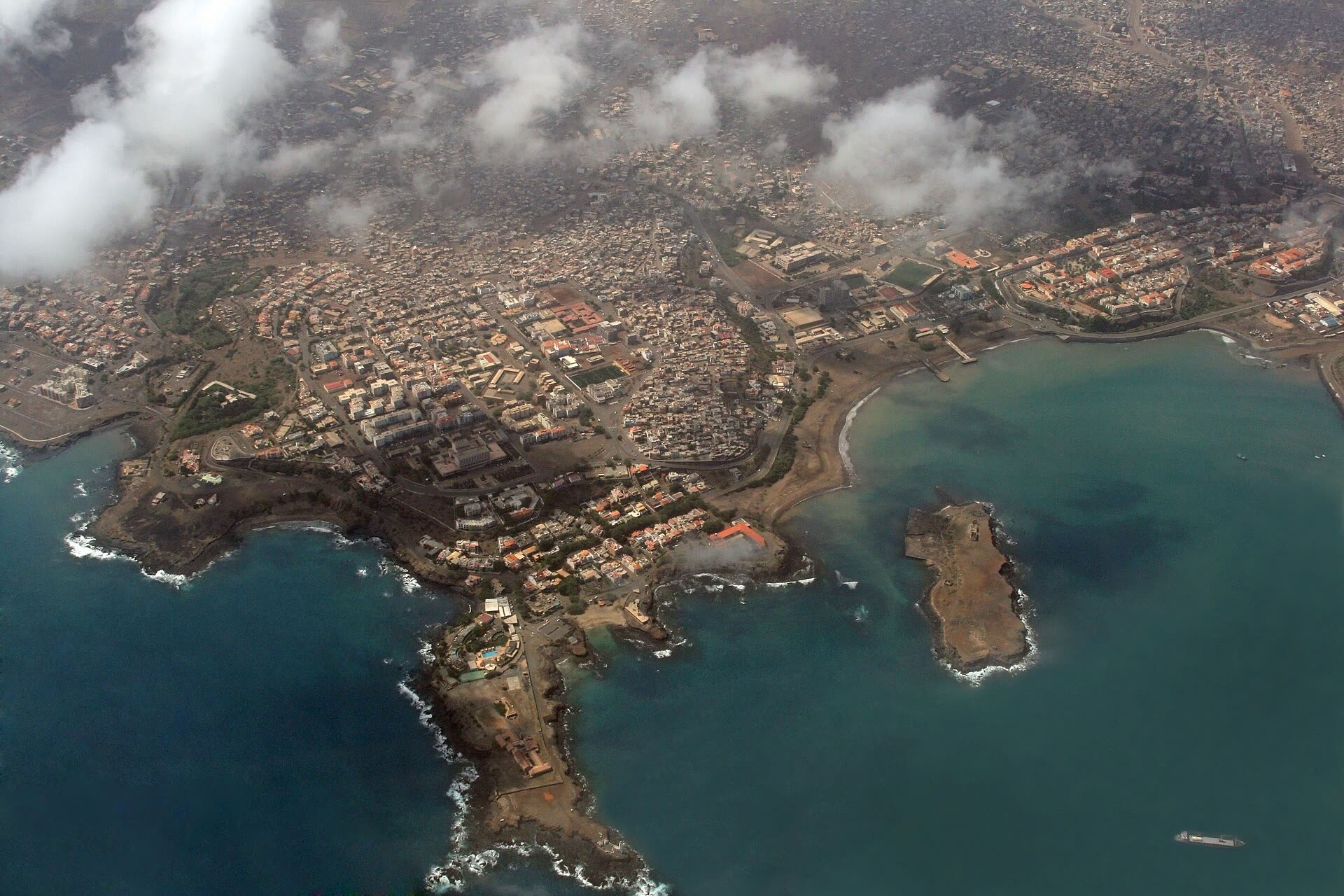
Cape Verde (officially Cabo Verde) is a volcanic archipelago of ten islands in the eastern Atlantic Ocean, about 455–620 km off the coast of Senegal in West Africa. Uninhabited until the mid-15th century, the islands were discovered in 1456–1460 by Portuguese captains in the service of Henry the Navigator; Ribeira Grande — today's Cidade Velha, inscribed on the UNESCO World Heritage List in 2009 — became the first European colonial town in the tropics, a key platform of the Atlantic trade in enslaved people, and the cradle of the first fully developed Creole society. After centuries of droughts, famines and mass emigration, Amílcar Cabral co-founded the PAIGC in 1956; following his assassination in 1973, independence from Portugal was negotiated and proclaimed on 5 July 1975, and since 1991 the country has been a stable multi-party democracy. Morna, proclaimed UNESCO Intangible Cultural Heritage in 2019 and carried to the world by Cesária Évora, is the national music, while about 1.5 million people of Cape Verdean descent live abroad — roughly triple the resident population — and their remittances, alongside tourism, underpin the economy.
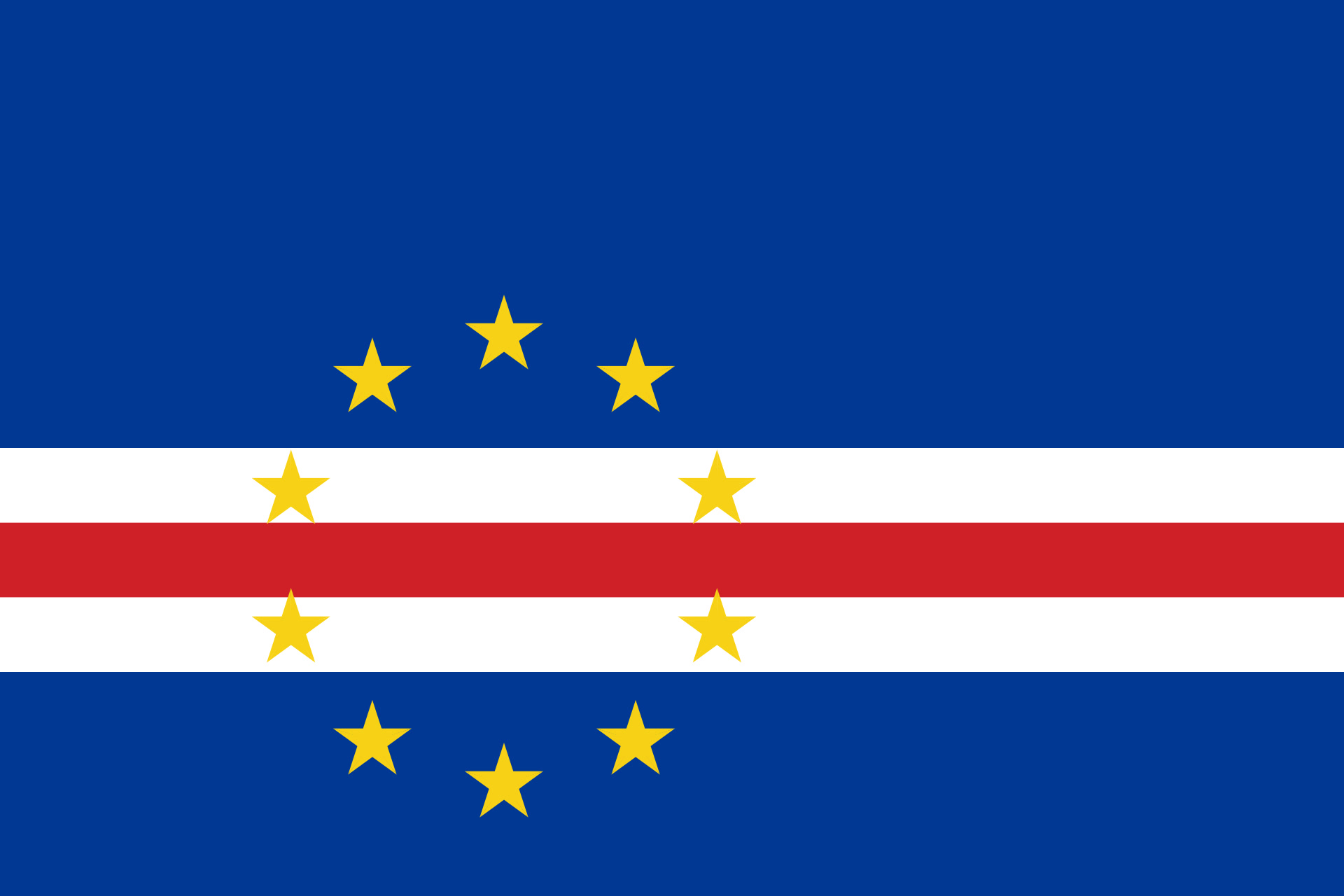
In this article
- 1Overview
- 2Geography and Climate
- 3History
- 4Colonial Era and Independence
- 5Government and Politics
- 6Economy
- 7Demographics and Diaspora
- 8Culture
- 9International Relations and Membership
- 10Sports
- 11Key Facts
- 12Timeline: from Portuguese discovery to a modern island republic
- 13Frequently asked questions
- 14Knowledge graph
Overview
Cape Verde is an archipelago of ten volcanic islands with a combined land area of about 4,033 square kilometres (1,557 sq mi). The country is made up of nine inhabited islands, one uninhabited island and various islets. The archipelago is divided into the Barlavento (Windward) group in the north and the Sotavento (Leeward) group in the south.
The capital is Praia, on the island of Santiago. Portuguese is the official language, while Cape Verdean Creole (Crioulo) is the national language. The national currency is the Cape Verdean escudo (CVE), pegged to the euro.
1. Geography and Climate
Cape Verde is an archipelago of ten volcanic islands with a combined land area of about 4,033 square kilometres (1,557 sq mi). The country is made up of nine inhabited islands, one uninhabited island and various islets, located between 14°30′ and 17°30′ N and 22°30′ and 25°30′ W. The islands are named after Cap-Vert, the westernmost cape of Africa in nearby Senegal — the nearest point on the continent. The archipelago is divided into the Barlavento (Windward) group in the north and the Sotavento (Leeward) group in the south.
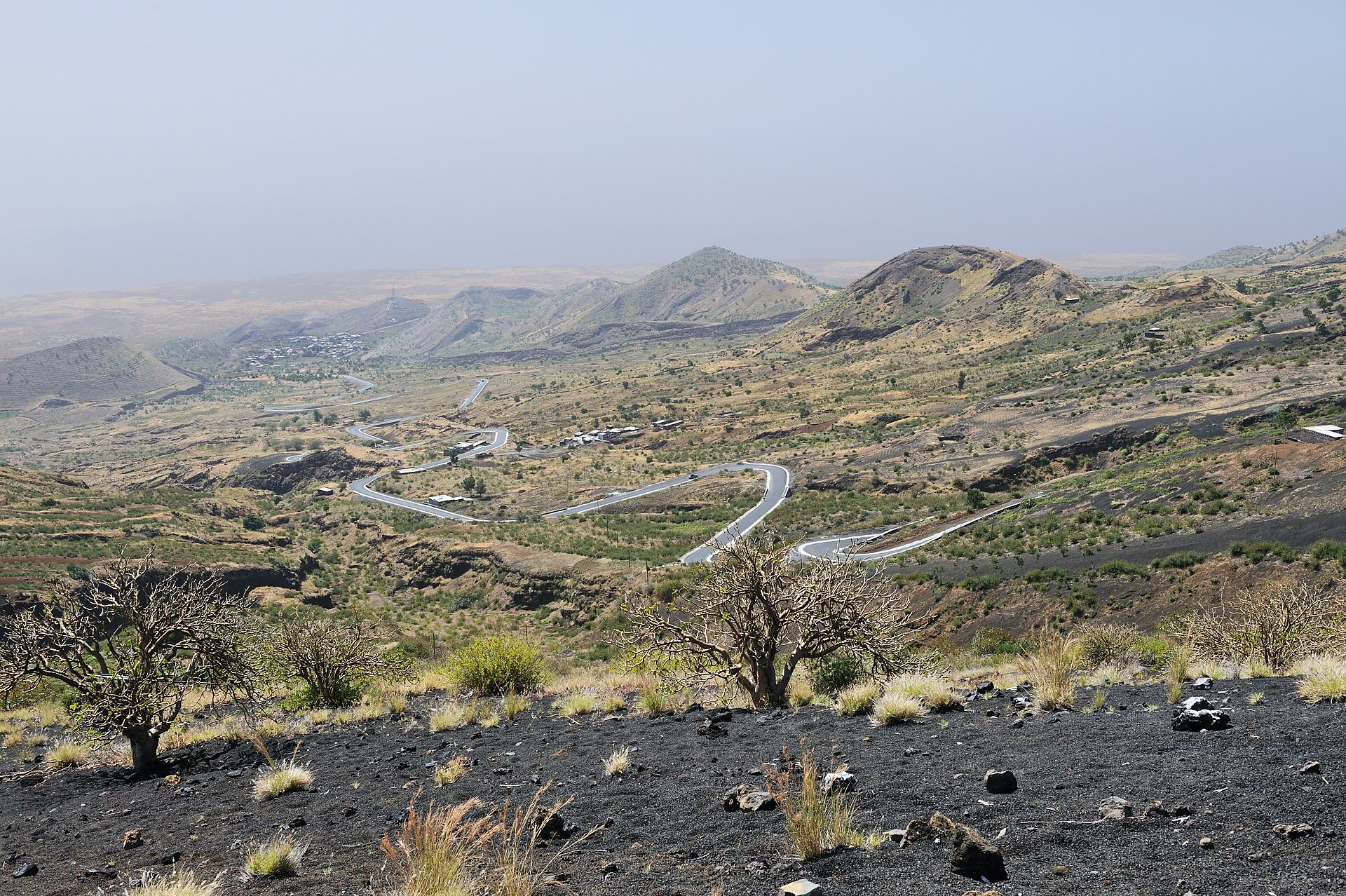
The eastern islands of Boa Vista, Maio and Sal are flat and sandy, heavily eroded by wind, while the western islands are rockier and mountainous. Pico do Fogo, the active volcano on Fogo island, rises to 2,829 metres (9,281 feet) — the highest point of the entire archipelago. Fogo island is essentially a single massive stratovolcano — the most prominent of the Cape Verde islands. Historical volcanic activity within the era of human settlement has been confined to Fogo; Pico do Fogo, the region's largest active volcano, erupted in 2014. The Cape Verdean government describes the islands as lying 455 km from the African coast and formed by the accumulation of rock from eruptions on submarine platforms.
Cape Verde lies in the Sahelian semi-arid belt, with far less rainfall than the nearby West African mainland. The climate is generally moderate but characterised by stable temperatures and extreme aridity. Because rainfall is so rare on non-mountainous terrain, less than two percent of the land is arable.
2. History
The Cape Verdean archipelago was uninhabited until the 15th century, when Portuguese explorers settled it, establishing one of the first European settlements in the tropics. In 1456, Alvise Cadamosto, Antoniotto Usodimare — Venetian and Genoese captains in the service of Prince Henry the Navigator — and an unnamed Portuguese captain discovered some of the islands. The government of Cabo Verde dates the discovery to 1460 by Italian and Portuguese navigators, with settlement beginning on Santiago in 1462, the island most suited to occupation. Over the following decade, Diogo Gomes and António de Noli, also captains in Henry the Navigator's service, discovered the remaining islands of the archipelago.
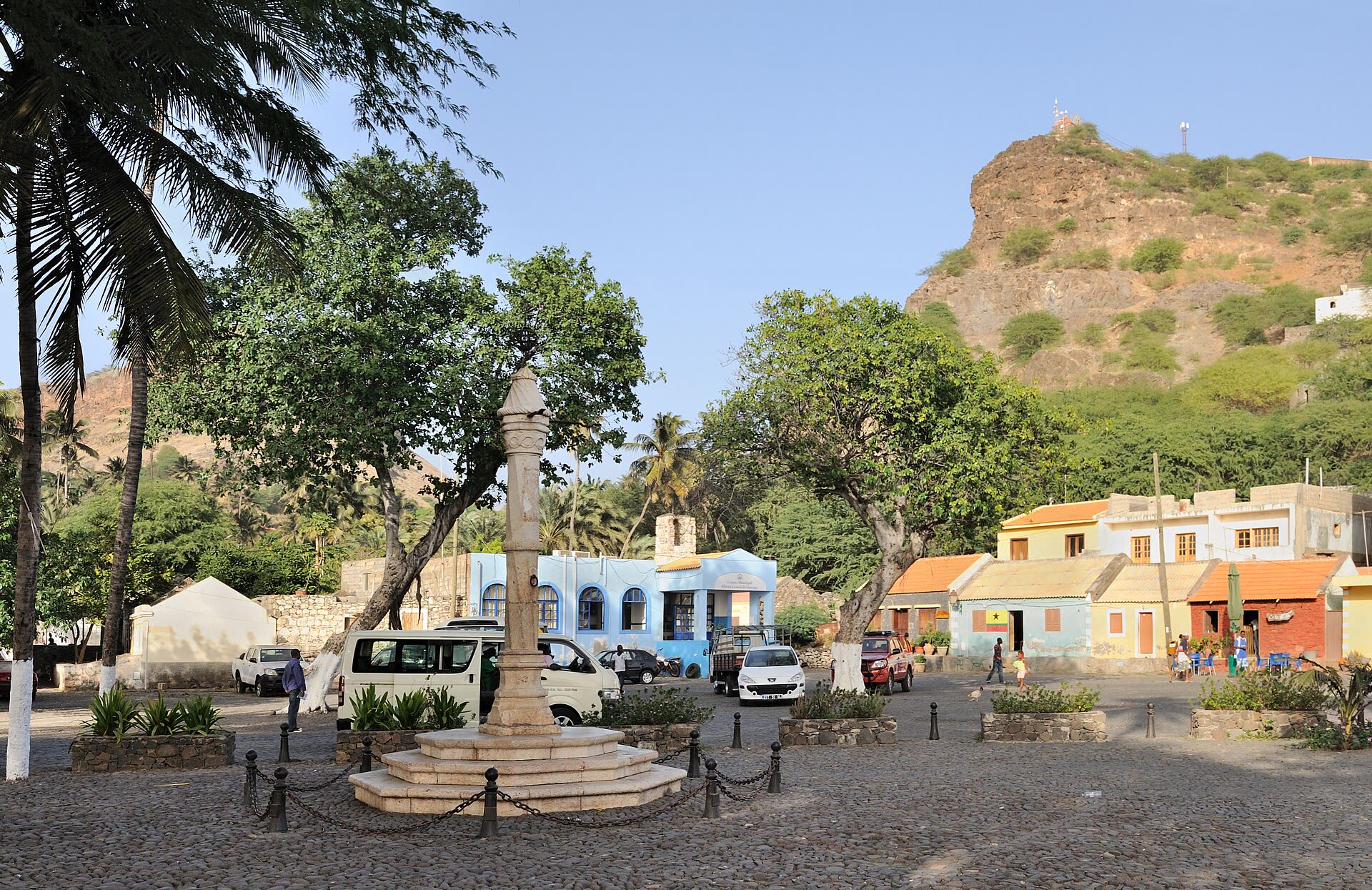
The Portuguese founded Ribeira Grande — today's Cidade Velha — in 1462 on Santiago, the first permanent European settlement in the tropics. UNESCO calls Ribeira Grande the first European colonial town built in the tropics and a decisive step in European expansion towards Africa and the Atlantic at the end of the 15th century. The Portuguese soon brought slaves from the West African coast; positioned on the trade routes between Africa, Europe and the New World, the archipelago prospered from the transatlantic slave trade in the 16th century. Its insular position — isolated yet close to the African coasts — made Ribeira Grande an essential platform for the Atlantic trade of enslaved people in the modern era. Ribeira Grande was also exceptional for the intercultural encounters that produced the first developed Creole society.
The wealth of Ribeira Grande attracted pirate attacks, including by Francis Drake in 1585 and Jacques Cassard in 1712. From 1747 the islands were struck by recurring droughts and famines that have returned at roughly five-year intervals ever since. Salt exploitation on Sal expanded from around 1800, and the port city of Mindelo grew rapidly after 1838, when a coal depot was established to supply Atlantic shipping. Slavery was abolished in Cape Verde in 1876.
Between 1900 and 1970, some 80,000 Cape Verdeans were shipped to plantations on São Tomé and Príncipe, and more than 7,000 to Angola and Mozambique, often as contract labour during famines. Two of Cape Verde's worst famines, in 1941–43 and 1947–48, killed an estimated 45,000 people. During the 20th century, severe droughts caused the deaths of 200,000 people and prompted heavy emigration. In 1956 Amílcar and Luís Cabral founded the African Party for the Independence of Guinea and Cape Verde.
On 5 July 1975, at Praia, Portuguese Prime Minister Vasco Gonçalves handed power to National Assembly President Abílio Duarte, and Cape Verde became independent. Independence came on 5 July 1975 from Portugal, a negotiated transfer with no armed conflict on the islands. The PAIGC governed Cape Verde from independence in 1975 until 1980, when, after the coup in Guinea-Bissau, its Cape Verdean branch became a separate party, the PAICV. In 1991, after growing pressure for a more pluralistic society, multi-party elections were held for the first time; the opposition MpD won the legislative elections and formed the government. On 24 October 2013 the Republic of Cabo Verde changed its official name — a request submitted to the UN Secretary-General by its Permanent Representative.
3. Colonial Era and Independence
The archipelago was uninhabited until the 15th century, when Portuguese explorers settled it, establishing one of the first European settlements in the tropics. The Portuguese founded Ribeira Grande — today's Cidade Velha — in 1462 on Santiago, the first permanent European settlement in the tropics. UNESCO calls Ribeira Grande the first European colonial town built in the tropics and a decisive step in European expansion towards Africa and the Atlantic at the end of the 15th century. Its insular position — isolated yet close to the African coasts — made Ribeira Grande an essential platform for the Atlantic trade of enslaved people in the modern era.
The Portuguese soon brought slaves from the West African coast; positioned on the trade routes between Africa, Europe and the New World, the archipelago prospered from the transatlantic slave trade in the 16th century. Santiago and Fogo hosted slave plantations growing sugar and cotton for Portugal, and produced panos — cotton cloth — for export to West Africa. Ribeira Grande was also exceptional for the intercultural encounters that produced the first developed Creole society. From 1747 the islands were struck by recurring droughts and famines that have returned at roughly five-year intervals ever since.
During the 20th century, severe droughts caused the deaths of 200,000 people and prompted heavy emigration. Two of Cape Verde's worst famines, in 1941–43 and 1947–48, killed an estimated 45,000 people. Between 1900 and 1970, some 80,000 Cape Verdeans were shipped to plantations on São Tomé and Príncipe, and more than 7,000 to Angola and Mozambique, often as contract labour during famines.
Amílcar Lopes Cabral was born on 12 September 1924 in Bafatá, Guinea-Bissau, to a Cape Verdean family. He studied agronomy during seven years in Portugal, graduating in 1952 before returning to Guinea-Bissau. In 1956 Amílcar and Luís Cabral founded the African Party for the Independence of Guinea and Cape Verde. The Pidjiguiti massacre of 1959, in which Portuguese soldiers shot 50 protesting dockworkers, pushed the PAIGC towards armed struggle.
Unlike Guinea-Bissau, Cape Verde saw no armed conflict on its soil: independence resulted from negotiation with Portugal after the April 1974 Carnation Revolution. On 5 July 1975, at Praia, Portuguese Prime Minister Vasco Gonçalves handed power to National Assembly President Abílio Duarte, and Cape Verde became independent.
4. Government and Politics
The African Party for the Independence of Guinea and Cape Verde, founded in 1956 by Amílcar and Luís Cabral, governed Cape Verde from independence in 1975 until 1980. After the coup in Guinea-Bissau, its Cape Verdean branch became a separate party, the PAICV. Cape Verde abandoned its hope of unity with Guinea-Bissau and formed the African Party for the Independence of Cape Verde (PAICV). Before 1991 the country was a single-party state.
In 1991, after growing pressure for a more pluralistic society, multi-party elections were held for the first time; the opposition MpD won the legislative elections and formed the government. Since then, politics has been characterised by competition between the PAICV and the MpD. In April 2021 the centre-right MpD of Prime Minister Ulisses Correia e Silva won the parliamentary election. In October 2021 opposition candidate José Maria Neves of the PAICV won the presidency.
Since the early 1990s Cape Verde has been a stable representative democracy and one of the most developed and democratic countries in Africa. On 24 October 2013 the Republic of Cabo Verde changed its official name — a request submitted to the UN Secretary-General by its Permanent Representative.
5. Economy
Cape Verde's economy is service-oriented, with commerce, transport and public services accounting for almost 70% of GDP. Its currency, the Cape Verdean escudo, is pegged to the euro, having been linked first to the Portuguese escudo and, in 1999, to the euro within a framework of deep economic cooperation with Portugal. The country graduated from the United Nations Least Developed Country category in 2007 and has been a member of the World Trade Organization since 23 July 2008. It is officially considered a country of average development, only the second African country to achieve that transition, after Botswana in 1994.
Tourism employs more than two-thirds of the country's population and contributes approximately 25% of GDP — up to 44% when indirect effects are counted. Real GDP expanded 6.3% in 2025, driven by record tourism arrivals, stronger private consumption and improved fiscal performance. The IMF likewise reported robust growth in the second quarter of 2025, at 6.2% year on year, reflecting strong tourism growth and record air passenger arrivals. To diversify private-sector development within and beyond tourism, the World Bank backs a $75 million Resilient Tourism and Blue Economy Development Project.
6. Demographics and Diaspora
Cape Verde's resident population is estimated at 491,200 for 2026, while a separate estimate places it at around 530,000 for the same year. The overwhelming majority of the population is of mixed European and African descent and is often referred to as mestiço or Crioulo. Portuguese is the official language, while Cape Verdean Creole, or Crioulo, holds the status of national language.
The diaspora is estimated at around 1.5 million people abroad, roughly triple the archipelago's resident population. Today more Cape Verdeans live abroad than in Cape Verde itself, and the country with the largest Cape Verdean population abroad is the United States. Cape Verdean migrant communities abroad, especially in New England, Portugal, the Netherlands and France, keep morna and other genres alive far from the islands.
Remittances reached a record in 2025, at around 31 billion escudos, or €284 million, with the largest share coming from Portugal, followed by the United States at 29% and France at 18%. Expatriate Cape Verdeans contribute an amount estimated at 20% of GDP to the domestic economy through remittances. Alongside tourism, these flows make remittances one of the main pillars of the economy.
7. Culture
Morna is widely considered the national music of Cape Verde, a music and dance genre that occupies the same role as Portuguese fado or Argentine tango. It was proclaimed Intangible Cultural Heritage of Humanity by UNESCO on 11 December 2019. In its most traditional form, morna has a lento tempo, a 2-beat bar, and a harmonic structure built on a cycle of fifths, with strophes alternating with a refrain. Cape Verdean migrant communities abroad — especially in New England, Portugal, the Netherlands and France — keep morna and other genres alive far from the islands.
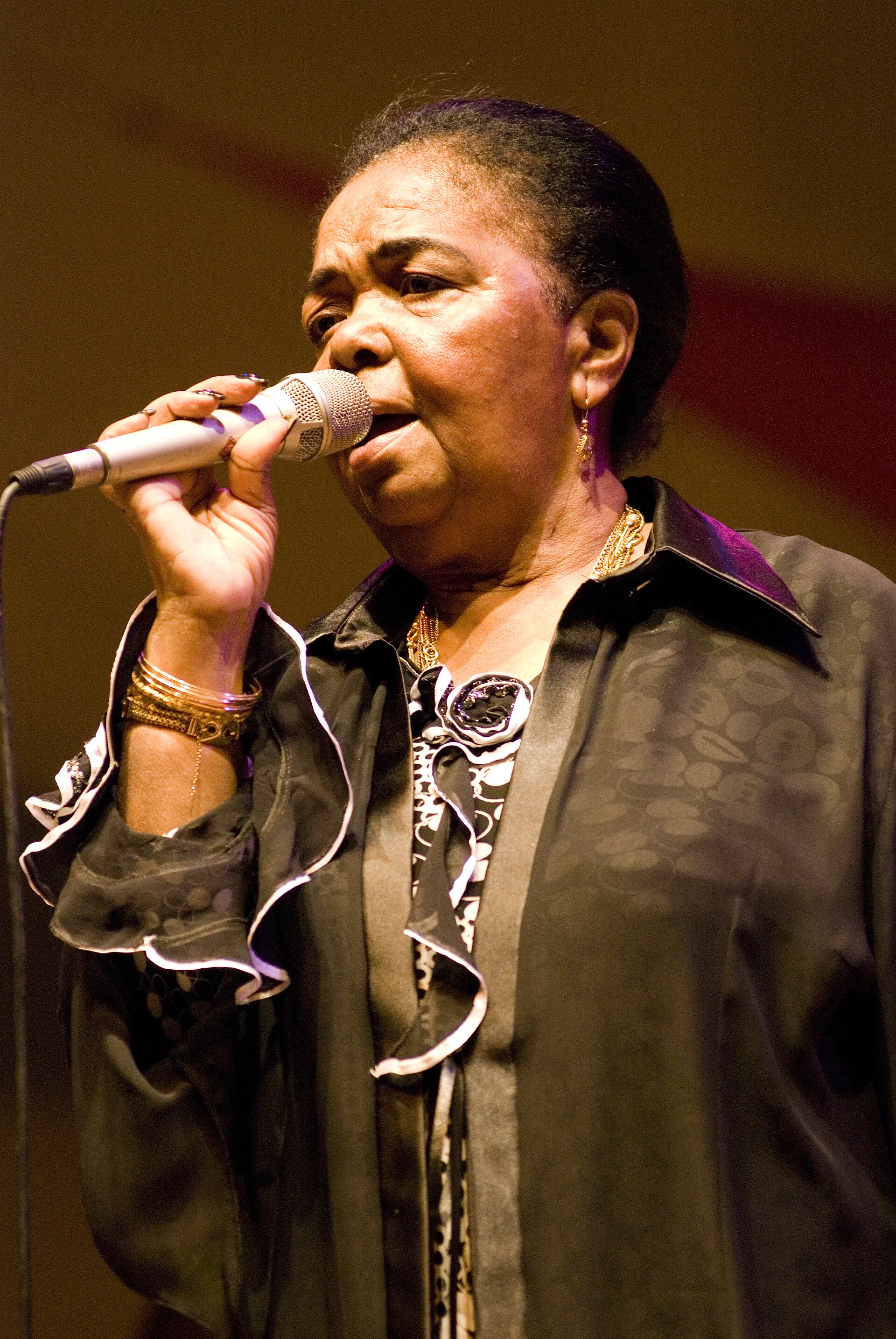
Cesária Évora began her career singing in the bars of Mindelo and did not start recording until 1988. She picked up several nicknames over her career, including the Barefoot Diva, Cize and the Queen of Morna. The BBC called her one of the world's greatest exponents of morna, the form of blues regarded as the national music of the Cape Verde islands, and she put the islands on the world-music map by performing their distinctive morna ballads with a mix of sweetness and melancholy. Her ninth album, Voz d'Amor (Voice of Love), won a Grammy Award in 2004.
Alongside morna, funaná is an accordion-based genre from Santiago that colonial authorities denigrated as African before independence. Cape Verdean Creole (Kabuverdianu) is a Portuguese-based creole spoken on the islands and the native language of virtually all Cape Verdeans.
8. International Relations and Membership
Cape Verde conducts its external affairs as a small archipelagic state whose formal standing in the international system has shifted markedly since the turn of the century. The country graduated from the United Nations Least Developed Country category in 2007, a transition that reclassified it among nations of average development 16Cabo Verde — LDC Portal (graduated country) · United Nations ↗. It is officially considered a country of average development, and only the second African country to achieve that transition, after Botswana in 1994 3Economy of Cape Verde · Wikipedia ↗. Membership in the World Trade Organization followed, with Cape Verde joining on 23 July 2008 17Cabo Verde — WTO member information · World Trade Organization (WTO) ↗.
Regionally, Cabo Verde is listed among the member states of the Economic Community of West African States 28Member States · Economic Community of West African States (ECOWAS) ↗. It is also a founding member state of the Community of Portuguese Language Countries, the Lusophone Commonwealth 1Cape Verde · Wikipedia ↗. These affiliations sit alongside a domestic political record that has been unusually stable: since the early 1990s Cape Verde has been a stable representative democracy and one of the most developed and democratic countries in Africa 1.
The country's diplomatic identity has also been expressed through its name. On 24 October 2013 the Republic of Cabo Verde changed its official name, a request submitted to the UN Secretary-General by its Permanent Representative 14Cabo Verde — Member States · United Nations ↗.
| Organization | Status | Date/Notes |
|---|---|---|
| United Nations Least Developed Country category | Graduated | 2007 16 |
| World Trade Organization | Member | Since 23 July 2008 17 |
| Economic Community of West African States (ECOWAS) | Listed member state | — 28 |
| Community of Portuguese Language Countries (CPLP) | Founding member state | — 1 |
| Official name change to Republic of Cabo Verde | Request submitted to the UN Secretary-General | 24 October 2013 14 |
9. Sports
The national football team of Cape Verde is known by the nickname the Blue Sharks, or Tubarões Azuis. Its most celebrated achievement came on the world stage, where the side reached the knockout stage of the 2026 World Cup. In doing so, Cape Verde became the smallest nation ever to advance that far in the tournament. The run was built from a population of just 525,000 inhabitants. Along the way, the team qualified ahead of Cameroon, a five-time African champion.
10. Key Facts
Cape Verde is an archipelago of ten volcanic islands, of which nine are inhabited, together with islets arranged in the Barlavento and Sotavento groups 2Cabo Verde · Encyclopaedia Britannica ↗. The islands lie between 14°30′ and 17°30′ N and 22°30′ and 25°30′ W, and take their name from Cap-Vert, the westernmost cape of Africa in nearby Senegal 2. The archipelago was uninhabited until the 15th century, when Portuguese explorers settled it, establishing one of the first European settlements in the tropics 1. The Portuguese founded Ribeira Grande — today's Cidade Velha — in 1462 on Santiago, the first permanent European settlement in the tropics 7History of Cape Verde · Wikipedia ↗.
The overwhelming majority of the population is of mixed European and African descent, often referred to as mestiço or Crioulo 2. Portuguese is the official language, while Cape Verdean Creole, or Crioulo, is the national language 2. Cape Verdean Creole, also known as Kabuverdianu, is a Portuguese-based creole spoken on the islands and the native language of virtually all Cape Verdeans 27Cape Verdean Creole · Wikipedia ↗. Today more Cape Verdeans live abroad than in Cape Verde itself, and the country with the largest Cape Verdean population abroad is the United States 21Cape Verdean diaspora · Wikipedia ↗.
Remittances reached a record in 2025 of around 31 billion escudos, equivalent to €284 million, with the largest share coming from Portugal, followed by the United States and France 20Remittances from Cape Verdean emigrants grow 3% in 2025 and reach record high · Plataforma Media ↗. The diaspora is estimated at around 1.5 million people, roughly triple the archipelago's resident population, making remittances one of the main pillars of the economy alongside tourism 20. Tourism employs more than two-thirds of the country's population and contributes approximately 25% of GDP, up to 44% when indirect effects are counted 18Cabo Verde Overview · World Bank ↗. The currency, the Cape Verdean escudo, was linked first to the Portuguese escudo and in 1999 to the euro, within a deep economic cooperation with Portugal 3.
On 5 July 1975, at Praia, Portuguese Prime Minister Vasco Gonçalves handed power to National Assembly President Abílio Duarte, and Cape Verde became independent 10Portuguese Cape Verde · Wikipedia ↗. Cabo Verde has been a member of the World Trade Organization since 23 July 2008 17. Morna, widely considered the national music of Cape Verde, was proclaimed Intangible Cultural Heritage of Humanity by UNESCO on 11 December 2019 22Morna (music) · Wikipedia ↗. Cidade Velha, the Historic Centre of Ribeira Grande, was inscribed as a World Heritage site in 2009 9Cidade Velha, Historic Centre of Ribeira Grande · UNESCO World Heritage Centre ↗.
| Fact | Value |
|---|---|
| Capital | Praia, on the island of Santiago |
| Area | 4,033 sq km (1,557 sq mi) |
| Population | 491,200 (2026 est., Britannica); around 530,000 (Wikipedia, 2026) |
| Islands | Ten volcanic islands — nine inhabited plus islets in the Barlavento and Sotavento groups |
| Highest point | Pico do Fogo, 2,829 m (9,281 ft), on the island of Fogo |
| Official language | Portuguese; Cape Verdean Creole (Crioulo) is the national language |
| Currency | Cape Verdean escudo (CVE), pegged to the euro |
| Independence | 5 July 1975, from Portugal |
| First World Heritage site | Cidade Velha, Historic Centre of Ribeira Grande — inscribed 2009 |
| UN LDC graduation | 2007 |
| WTO membership | since 23 July 2008 |
| Diaspora | around 1.5 million people abroad |
| Remittances (2025) | around 31 billion escudos (€284 million) |
| GDP growth | 6.3% in 2025 |
| Tourism | about 25% of GDP, up to 44% including indirect effects; employs more than two-thirds of the population |
| National music | Morna — UNESCO Intangible Cultural Heritage of Humanity on 11 December 2019 |
11. Timeline: from Portuguese discovery to a modern island republic
- 1456First Europeans reach the islandsAlvise Cadamosto and Antoniotto Usodimare, Venetian and Genoese captains serving Prince Henry the Navigator, together with an unnamed Portuguese captain, discover some of the Cape Verde islands; Diogo Gomes and António de Noli find the rest over the following decade.
- 1462Ribeira Grande founded — the first tropical European settlementPortuguese settlers establish Ribeira Grande, today's Cidade Velha, on the island of Santiago — the first permanent European settlement in the tropics, with the government dating the first settlement to 1462 after the archipelago's discovery in 1460.
- 1495Cape Verde becomes a Portuguese crown colonyThe islands are formally made a Portuguese crown colony, consolidating the archipelago's role as a stopover and trading hub on the routes between Portugal, Africa and the Americas.
- 1770Capital moves to PraiaAfter pirate attacks — including Francis Drake's raid in 1585 and Jacques Cassard's destruction of Ribeira Grande in 1712 — and Ribeira Grande's decline, the colonial capital is moved to Praia, whose natural harbour becomes the permanent seat of government.
- 1876Slavery abolished in Cape VerdeSlavery is abolished in Cape Verde, formally ending the system that had built Ribeira Grande's wealth; the decline of the slave trade had already dealt a heavy blow to the islands' economy.
- 1941–1948Deadly famines kill an estimated 45,000Two of Cape Verde's worst-ever famines, in 1941–43 and 1947–48, kill an estimated 45,000 people; severe 20th-century droughts caused some 200,000 deaths in total and drove heavy emigration.
- 19 September 1956PAIGC founded in BissauThe African Party for the Independence of Guinea and Cape Verde (PAIGC) is established in Bissau, with Amílcar Cabral as secretary-general; Cape Verde's and Guinea-Bissau's struggles for independence are fused into one binationalist movement.
- 1959Pidjiguiti massacrePortuguese soldiers shot 50 protesting dockworkers, pushing PAIGC toward armed struggle.
- 20 January 1973Amílcar Cabral assassinatedCabral is shot dead outside his home in Conakry, less than two years before the independence he had campaigned for; his party carries on the struggle and later governs both new states.
- August 1974Algiers agreement recognises Cape Verde's right to independenceAfter Portugal's Carnation Revolution in April 1974, the Portuguese government and the PAIGC sign an agreement in Algiers recognising the independence of Guinea-Bissau and Cape Verde's right to independence.
- 5 July 1975IndependenceAt Praia, Portugal's Prime Minister Vasco Gonçalves hands power to National Assembly President Abílio Duarte, and Cape Verde becomes independent — a negotiated transfer and one of the few Portuguese African colonies to win independence without guerrilla fighting on its own soil.
- 1980Unity with Guinea-Bissau abandonedFollowing the November 1980 coup in Guinea-Bissau, Cape Verde ditches plans for unity between the two countries; its branch of the PAIGC is converted into a separate party, the PAICV.
- 1991First multi-party electionsAfter growing pressure for a more pluralistic society, Cape Verde holds multi-party elections for the first time; the opposition Movement for Democracy (MpD) wins parliament and the presidency, beginning a democratic alternation with the PAICV.
- 2007Graduation from Least Developed Country statusCabo Verde graduates from the UN Least Developed Country category, the culmination of decades of fast growth fuelled by tourism, remittances and a service economy; WTO accession follows in 2008.
- 11 December 2019Morna proclaimed UNESCO Intangible Cultural HeritageThe morna, the national music of Cape Verde, is proclaimed Intangible Cultural Heritage of Humanity — a global recognition of the genre associated with Cesária Évora, the Barefoot Diva.
- June–July 2026World Cup debut reaches the knockout stageOn their first-ever World Cup appearance, Cape Verde finish as Group H runners-up and become the smallest nation to reach the knockout stage, where they face defending champions Argentina.
12. Frequently asked questions
Where is Cape Verde, and what does the country consist of?
Cape Verde is an archipelago of ten volcanic islands — nine inhabited plus islets — divided into the Barlavento (Windward) group in the north and the Sotavento (Leeward) group in the south 2. The islands lie in the Sahelian semi-arid belt, with far less rainfall than the nearby West African mainland 1. Its combined land area is about 4,033 square kilometres (1,557 sq mi) 2.
What is the capital of Cape Verde, and what language do people speak there?
How did Cape Verde become independent?
What is Cape Verde's national music?
How important is tourism to Cape Verde's economy?
How large is the Cape Verdean diaspora, and what role do remittances play?
References (30)
- 1Cape Verde — Wikipedia Web↩View source
- 2Cabo Verde — Encyclopaedia Britannica Web↩View source
- 3Economy of Cape Verde — Wikipedia Web↩View source
- 4Fogo, Cape Verde — Wikipedia WebView source
- 5Fogo — Global Volcanism Program — Smithsonian Institution (Global Volcanism Program) WebView source
- 6Geografia — O Arquipélago — Governo de Cabo Verde WebView source
- 7History of Cape Verde — Wikipedia Web↩View source
- 8História — O Arquipélago — Governo de Cabo Verde WebView source
- 9Cidade Velha, Historic Centre of Ribeira Grande — UNESCO World Heritage Centre Web↩View source
- 10Portuguese Cape Verde — Wikipedia Web↩View source
- 11Cape Verde country profile — BBC News WebView source
- 12African Party for the Independence of Guinea and Cape Verde — Wikipedia WebView source
- 13Politics of Cape Verde — Wikipedia WebView source
- 14Cabo Verde — Member States — United Nations Web↩View source
- 15Cabral, Amílcar — Encyclopedia.com (International Encyclopedia of the Social Sciences) WebView source
- 16Cabo Verde — LDC Portal (graduated country) — United Nations Web↩View source
- 17Cabo Verde — WTO member information — World Trade Organization (WTO) Web↩View source
- 18Cabo Verde Overview — World Bank Web↩View source
- 19Cabo Verde: 2025 Article IV Consultation, Seventh Review Under the Extended Credit Facility Arrangement (IMF Country Report) — International Monetary Fund (IMF eLibrary) 2025 WebView source
- 20Remittances from Cape Verdean emigrants grow 3% in 2025 and reach record high — Plataforma Media 2025 Web↩View source
- 21Cape Verdean diaspora — Wikipedia Web↩View source
- 22Morna (music) — Wikipedia Web↩View source
- 23Singer Cesaria Evora dies at the age of 70 — BBC News WebView source
- 24Cesária Évora — Wikipedia WebView source
- 25Cesária Évora obituary — The Guardian 2011 WebView source
- 26Music of Cape Verde — Wikipedia WebView source
- 27Cape Verdean Creole — Wikipedia Web↩View source
- 28Member States — Economic Community of West African States (ECOWAS) Web↩View source
- 29World Cup 2026: How Cape Verde made history on their tournament debut — BBC Sport 2026 WebView source
- 30Cape Verde profile - Timeline — BBC News WebView source