Argentina
The southernmost Spanish-speaking country of the Americas — from the Andes and the Pampas to Patagonia: independence, the Perón era, the 2001 crisis, tango and three World Cup titles.
Argentina, officially the Argentine Republic, is the eighth-largest country in the world, occupying the far south of South America between the Andes and the Atlantic Ocean. Independent from Spain since 1816, it grew wealthy on the grain and beef of the Pampas, passed through the Perón era and the 1976–1983 military dictatorship, and has kept its democracy through the 2001 crisis and repeated economic storms. Aconcagua, Patagonia and Iguazú anchor its geography; tango and football — from Maradona's 1986 triumph to Messi's 2022 World Cup — define its culture; and agriculture, energy and lithium drive its economy of 46 million people.
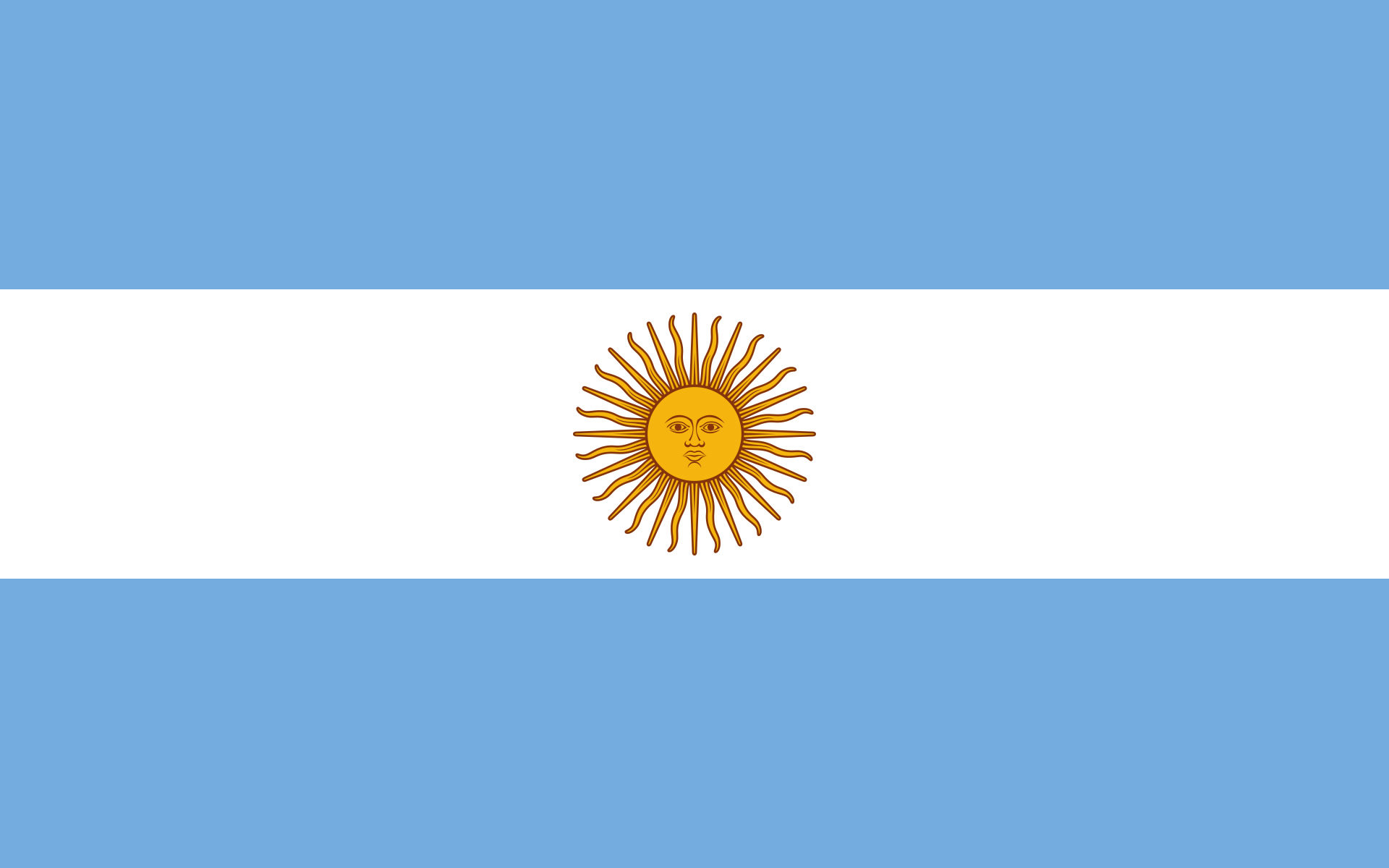
Overview
Argentina, officially the Argentine Republic (República Argentina), is a country in the far south of South America. Its official name is rendered in Spanish as República Argentina. The country's name derives from the Latin word argentum, meaning 'silver'.
The federal capital is Buenos Aires, which is also the country's largest city. Spanish is the official language. The national currency is the Argentine peso.
Argentina is a federal republic with a bicameral Congress, comprising a Senate of 72 members and a Chamber of Deputies of 257. As a federal state, it is divided into twenty-three provinces and one autonomous city, Buenos Aires. The World Bank classifies the country in the upper middle income group for Latin America and the Caribbean.
1. Geography and Regions
Argentina covers an area of 2,780,085 km2, a figure that makes it the eighth-largest country in the world. The country lies in the far south of South America and is officially known as the Argentine Republic. Its territory is divided into twenty-three provinces and one autonomous city, Buenos Aires, which serves as the federal capital and largest city.
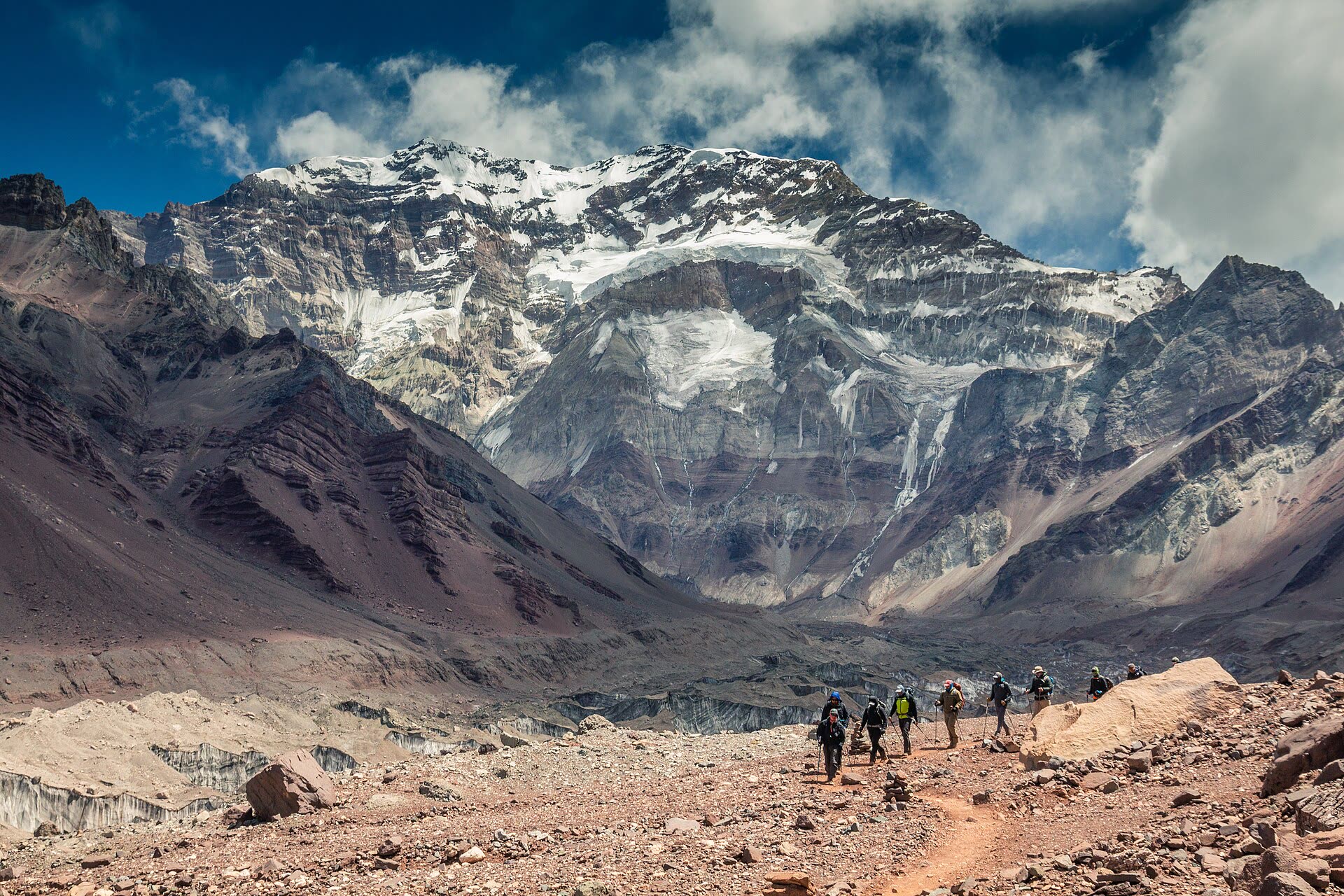
The main geographic regions of the country are the Andes, the North, the Pampas and Patagonia. The Andes extend through seven South American countries: Argentina, Chile, Bolivia, Peru, Ecuador, Colombia and Venezuela. They are the highest mountain range outside Asia. The Pampas are fertile low grasslands of southern South America covering more than 1,200,000 km2, including the Argentine provinces of Buenos Aires, La Pampa, Santa Fe, Entre Ríos and Córdoba, all of Uruguay and southernmost Brazil. Patagonia is a geographical region encompassing the southern end of South America, governed by Argentina and Chile.
The highest point in the country is Aconcagua, whose summit the Military Geographical Institute of Argentina documents at 22,831 feet (6,959 metres), a figure in general use. A 2001 GPS survey placed the peak at 6,962 m.
The Argentine government gives the country's surface area as 3,761,274 km2, a total that includes its Antarctic and South Atlantic claims.
2. People and Demographics
Argentina's population stood at 46,234,830 according to the official 2022 census figure. A 2026 estimate places the country's inhabitants at 47,914,000. The census count of 2022, recorded as 46,044,703, represented a 15.3% increase over the 40,117,096 counted in 2010.
At its peak, Argentina received the second-largest number of immigrants in the world, surpassed only by the United States. Greater Buenos Aires totals around 14 million people, making it one of the 15 largest urban areas in the world.
3. Government and Politics
Argentina is a federal republic with two legislative houses: a Senate of 72 members and a Chamber of Deputies of 257. The country is officially named the Argentine Republic, or República Argentina. Its capital is Buenos Aires.
Argentina is a federal state divided into twenty-three provinces and one autonomous city, Buenos Aires, which is the federal capital and largest city. The Congress of Tucumán formalised the Declaration of Independence on 9 July 1816, an event now celebrated as Argentina's Independence Day. With the declaration of independence on 9 July 1816 and the military defeat of Spain in 1824, a federal state formed in 1853–1861 that is today's Argentine Republic.
Argentina's democracy endured through the 2001–02 crisis and is regarded as more robust than its pre-1983 predecessors and other Latin American democracies. The December 2001 crisis, sometimes called the Cacerolazo or Argentinazo, was a period of civil unrest and rioting in Argentina during December 2001, most violently on 19 and 20 December. The crisis caused the resignation of president Fernando de la Rúa and gave way to a period of political instability during which five government officials successively performed the duties of the presidency.
4. History
The history of Argentina is divided into four main parts: pre-Columbian times, the colonial period from 1536 to 1809, nation-building from 1810 to 1880, and modern history from around 1880. In 1776 the Spanish Crown established the Viceroyalty of the Río de la Plata, from which the Revolution of May 1810 began the formation of independent states including the United Provinces of the Río de la Plata. The May Revolution of 1810 was not initially separatist: its supporters backed the legitimacy of the Juntas in the Americas and acted on behalf of Ferdinand VII.
On 9 July 1816 the Congress of Tucumán formalised the Declaration of Independence, now celebrated as Argentina's Independence Day. The Congress met at San Miguel de Tucumán in 1816 on behalf of the United Provinces of South America, comprising what is now Argentina, Uruguay and parts of Bolivia. The Argentine War of Independence was a set of military events from 1810 to 1825 that consolidated Argentina as an independent country from Spanish rule. With the declaration of independence on 9 July 1816 and the military defeat of Spain in 1824, a federal state formed in 1853-1861 that is today's Argentine Republic.
The 1970s brought a period of military dictatorship and repression in which thousands of presumed dissidents were 'disappeared' or murdered, ending in the disastrous Falklands Islands War of 1982. The Dirty War is the name used by the military junta, or civic-military dictatorship, of Argentina for the period of state-sponsored violence from 1974 to 1983. It is estimated that between 13,000 and 30,000 people were killed or disappeared during the Dirty War. ESMA was the Argentine Navy's principal secret detention centre during the civil-military dictatorship of 1976-1983.
The December 2001 crisis, sometimes called the Cacerolazo or Argentinazo, was a period of civil unrest and rioting in Argentina during December 2001, most violently on 19 and 20 December. The crisis was a direct response to the 'Corral' policies (corralito) imposed at the behest of economy minister Domingo Cavallo, which restricted people's ability to withdraw cash from banks. It caused the resignation of president Fernando de la Rúa and gave way to a period of political instability during which five government officials successively performed the duties of the presidency. Argentina's democracy endured through the 2001-02 crisis and is regarded as more robust than its pre-1983 predecessors and other Latin American democracies.
5. Economy
Argentina's gross domestic product stood at about US$683.1 billion in 2025, measured in current dollars. The World Bank classifies the country as an upper middle income economy within Latin America and the Caribbean. These figures place Argentina among the larger economies of its region, though its income classification remains a tier below the high-income group.
The country's economic standing rests on a long agricultural tradition. Its production of livestock and cereals once ranked it among the world's wealthiest nations. That heritage persists in the breadth of its agricultural exports. Argentina leads in exports of beef, citrus, grapes, honey, maize, sorghum, soybeans, squash, sunflower seeds, wheat and yerba mate.
Mining has added a further dimension to the export profile. In 2019 Argentina was the world's fourth-largest producer of lithium, ninth-largest producer of silver and seventeenth-largest producer of gold. The UN Human Development Index ranks Argentina 'very high', reflecting a literate population, export-oriented agriculture and diversified industry.
6. Culture
Tango is a partner and social dance that originated in the 1880s along the Río de la Plata, the natural border between Argentina and Uruguay. Britannica traces the dance to about 1880, when it evolved in the dance halls of the lower-class districts of Buenos Aires from a merge of the Spanish tango with the milonga. UNESCO describes tango as an Argentine and Uruguayan tradition, now familiar around the world, developed by the urban lower classes in Buenos Aires and Montevideo in the Rio de la Plata basin.
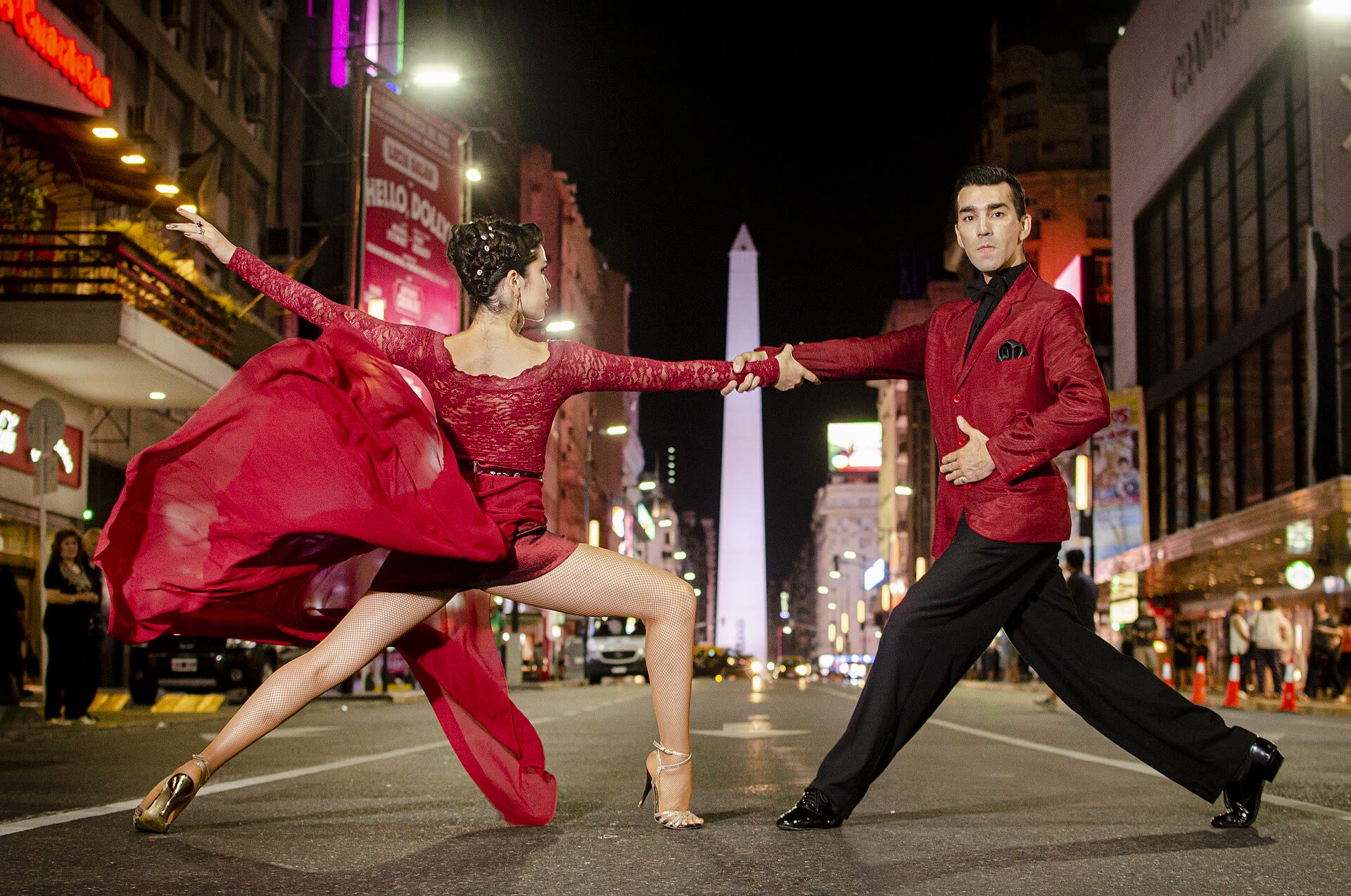
Tango was inscribed by UNESCO in 2009 on the Representative List of the Intangible Cultural Heritage of Humanity. On 31 August 2009 UNESCO approved a joint Argentine-Uruguayan proposal to include tango in its Intangible Cultural Heritage Lists.
After a decline, tango again became widely fashionable in the 1930s and a matter of national pride under the first Perón government.
7. Sports
Argentina has won three FIFA World Cup titles, in 1978, 1986 and 2022. The men's national football team is the only side to have won the World Cup, the Confederations Cup and Olympic gold, a distinction it shares with Brazil, Germany and France.
The 1978 FIFA World Cup was won by the host nation Argentina, who defeated the Netherlands 3-1 in the final after extra time. It was Argentina's first World Cup title, making them the fifth team to be both hosts and world champions. The tournament was marred by controversy and alleged interference and match-fixing by Argentina's military junta, which used it for nationalistic propaganda and legitimacy.
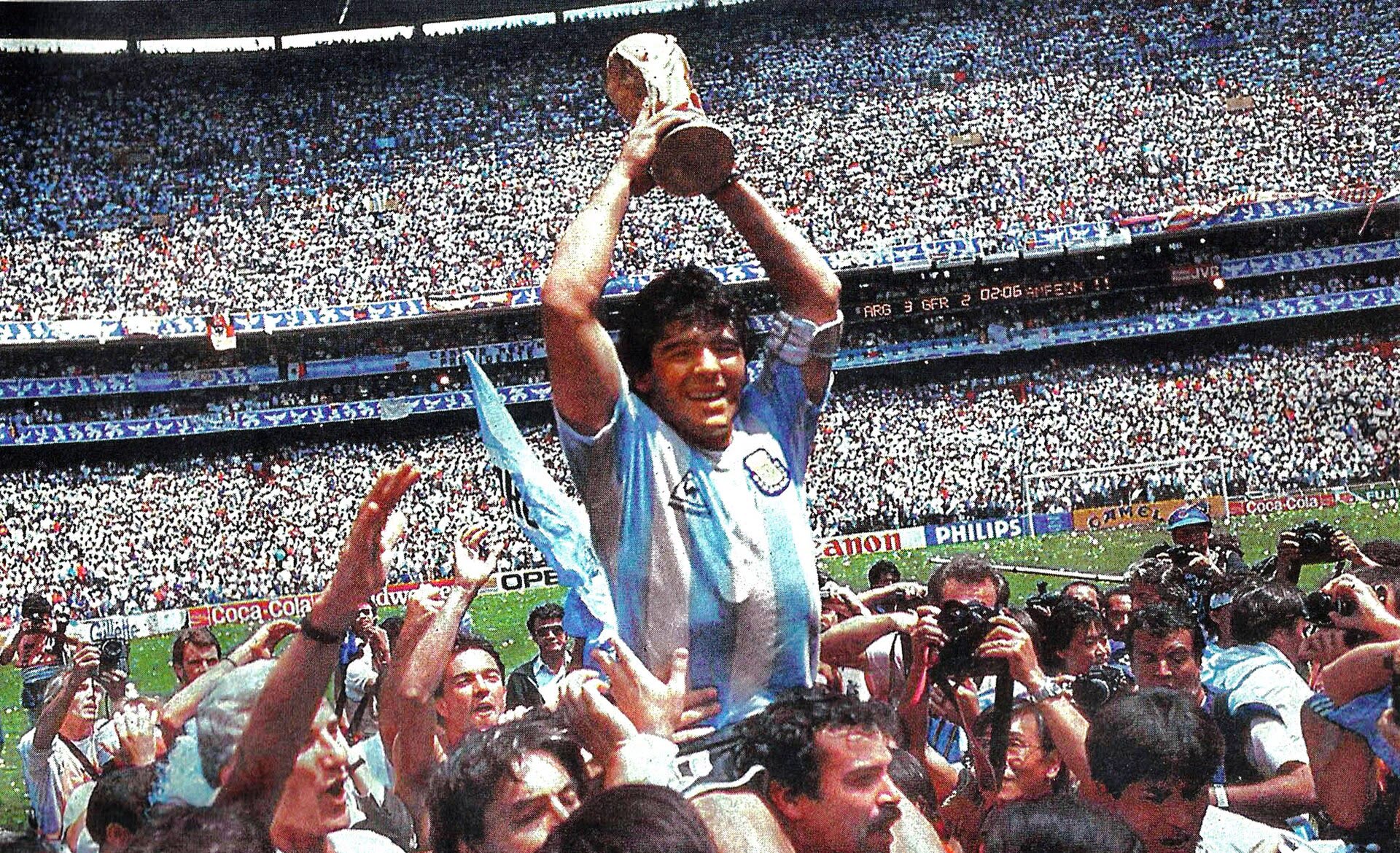
The 1986 World Cup was won by Argentina, their second title after 1978. Argentina beat West Germany 3-2 in the final at Mexico City's Estadio Azteca. Diego Maradona played in four FIFA World Cups, including 1986, where he led Argentina to victory as captain and won the Golden Ball as the tournament's best player. Maradona is widely regarded as one of the greatest players in history and was a joint winner of the FIFA Player of the Century award, alongside Pelé.
8. Key Figures
Juan Domingo Perón (8 October 1895 - 1 July 1974) was an Argentine military officer and politician, the 29th and 40th president, serving from 1946 to his overthrow in 1955 and from 1973 until his death. He returned from exile in 1973 amid the Ezeiza massacre, after the Peronist Héctor José Cámpora was elected president, and was himself elected for a third term (October 1973 - July 1974).
With his wife Eva Duarte (Evita), Perón's government granted women the right to vote, built half a million houses and provided charity, becoming immensely popular among the working class.
Diego Maradona was born on 30 October 1960 at the Policlínico Evita Hospital in Lanús, Buenos Aires Province, and died on 25 November 2020. He is widely regarded as one of the greatest players in history and was a joint winner of the FIFA Player of the Century award, alongside Pelé. He played in four FIFA World Cups, including 1986, where he led Argentina to victory as captain and won the Golden Ball as the tournament's best player. Argentina was captained by the 25-year-old Diego Maradona, who scored his 'Hand of God' goal and another voted the 'Goal of the Century' in the same quarter-final against England.
Lionel Andrés 'Leo' Messi (born 24 June 1987) is an Argentine footballer who plays for Inter Miami, which he captains, and the Argentina national team. He has won eight Ballons d'Or, six European Golden Shoes, and been named the world's best player by FIFA eight times. Messi led Argentina to victory at the 2021 Copa América, the 2022 World Cup (becoming the first player to win the World Cup Golden Ball twice) and the 2024 Copa América. He led Argentina to a second consecutive World Cup final at the 2026 World Cup, where he won the Silver Ball and his second consecutive Silver Boot.
9. UNESCO World Heritage and Intangible Heritage
Tango was inscribed by UNESCO in 2009 on the Representative List of the Intangible Cultural Heritage of Humanity. UNESCO describes the tradition as Argentine and Uruguayan, now familiar around the world, developed by the urban lower classes in Buenos Aires and Montevideo in the Rio de la Plata basin. On 31 August 2009 the organization approved a joint Argentine-Uruguayan proposal to include tango in its Intangible Cultural Heritage Lists. The dance itself is a partner and social form that originated in the 1880s along the Río de la Plata, the natural border between Argentina and Uruguay.
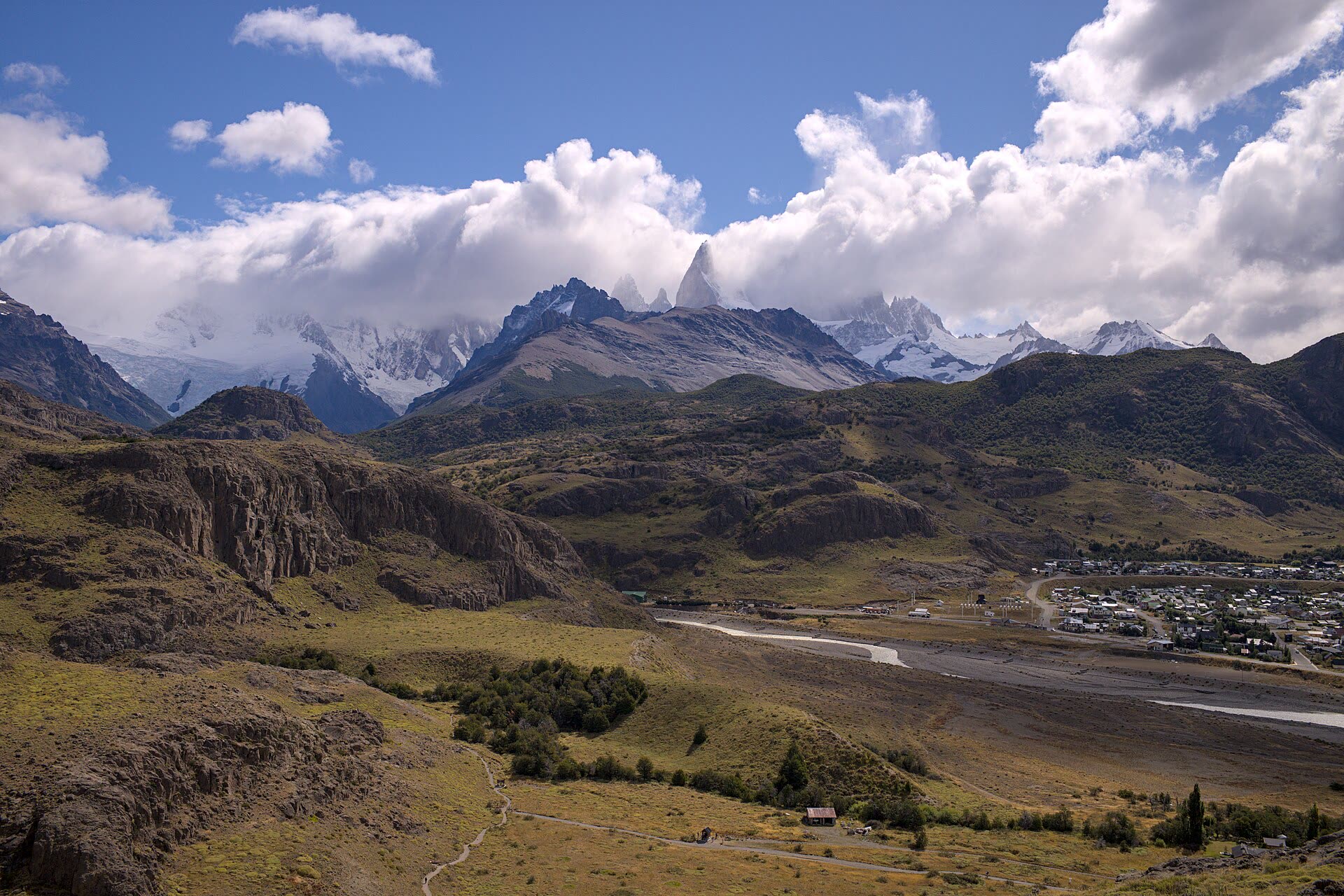
The semicircular waterfall at the heart of Iguazú National Park is some 80 m high and 2,700 m in diameter, on a basaltic line spanning the border between Argentina and Brazil. Los Glaciares National Park lies in the southwest of Santa Cruz Province, in the Argentine part of Patagonia.
ESMA was the Argentine Navy's principal secret detention centre during the civil-military dictatorship of 1976-1983.
10. Timeline: from the May Revolution to the 2022 World Cup
- 25 May 1810May Revolution in Buenos AiresA local government (the Primera Junta) is established in Buenos Aires in place of Spanish colonial rule, beginning Argentina's path to independence.
- 9 July 1816Independence declared at the Congress of TucumánAn assembly of provincial representatives meeting at San Miguel de Tucumán declares the Independence of the United Provinces in South America.
- 1853-1861The federal state takes shapeAfter the declaration of independence in 1816 and the military defeat of the Spanish Empire in 1824, a federal state is formed in 1853-1861 - today's Argentine Republic.
- 1946Juan Perón elected presidentPerón becomes president as the Labour candidate; with Eva Duarte (Evita) his government grants women the vote and builds half a million houses.
- 1955Perón overthrown by the militaryPerón's second term ends in a military coup; he goes into exile until 1973.
- 24 March 1976Military coup begins the 'Dirty War' eraThe armed forces overthrow Isabel Perón; the National Reorganization Process junta rules until 1983, with thousands killed or forcibly disappeared.
- 25 June 1978Argentina wins its first World CupHosts Argentina beat the Netherlands 3-1 after extra time in the final at Estadio Monumental, Buenos Aires; Mario Kempes is the tournament's top scorer.
- 1983Return to democracyRaúl Alfonsín wins the 1983 elections campaigning to prosecute human rights abuses; Argentine democracy has endured since.
- 29 June 1986Maradona captains Argentina to a second World CupArgentina beat West Germany 3-2 in the final at Estadio Azteca, Mexico City; Maradona's 'Hand of God' and 'Goal of the Century' against England define the tournament.
- February 1991Convertibility Law pegs the peso to the dollarThe peso is linked to the U.S. dollar at parity; inflation falls sharply and foreign investment flows in - the boom that preceded the 2001 crisis.
- 19-20 December 2001The 2001 crisis and the corralitoRioting and protests break out over the corralito's restrictions on cash withdrawals; President Fernando de la Rúa resigns and five officials perform the presidency within twelve days.
- 25 May 2003Néstor Kirchner takes officeThe new president inherits the crisis; the economy grows by an average of 9% for five years and GDP exceeds pre-crisis levels by 2005.
- 31 August 2009Tango joins UNESCO's Intangible Cultural Heritage listsUNESCO approves the joint Argentine-Uruguayan proposal to include tango in its Intangible Cultural Heritage Lists.
- December 2022Third World Cup title in QatarArgentina wins its third World Cup; Messi becomes the first player to win the World Cup Golden Ball twice.
- 10 December 2023Javier Milei sworn in as presidentThe run-off election winner takes office with Argentina suffering 143% annual inflation and four in ten Argentines in poverty.
11. Frequently asked questions
What is Argentina's official name, and what does the name mean?
What is Argentina's capital, and how is the country governed?
How large is Argentina, and how many people live there?
When did Argentina declare independence, and what language and currency are used?
What are Argentina's main geographic regions, and what is its highest point?
How many FIFA World Cup titles has Argentina won, and what is the status of tango?
References (27)
- 1Argentina — Wikipedia Web↩View source
- 2Argentina — Encyclopædia Britannica Web↩View source
- 3Argentina, nuestro país — Presidencia de la Nación Argentina (argentina.gob.ar) Web↩View source
- 4Argentina – country metadata (World Bank Open Data API) — World Bank WebView source
- 5Andes — Wikipedia WebView source
- 6Pampas — Wikipedia WebView source
- 7Patagonia — Wikipedia WebView source
- 8Mount Aconcagua — Encyclopædia Britannica Web↩View source
- 9Demographics of Argentina — Wikipedia WebView source
- 10History of Argentina — Wikipedia WebView source
- 11December 2001 riots in Argentina — Wikipedia 2001 WebView source
- 12Argentine War of Independence — Wikipedia WebView source
- 13Dirty War — Wikipedia WebView source
- 14ESMA Museum and Site of Memory – Former Clandestine Centre of Detention, Torture and Extermination — UNESCO World Heritage Centre 1681 WebView source
- 15GDP (current US$) – Argentina (World Bank Open Data API) — World Bank WebView source
- 16Economy of Argentina — Wikipedia WebView source
- 17Tango — Wikipedia WebView source
- 18Tango (Argentine dance) — Encyclopædia Britannica WebView source
- 19Tango — UNESCO Intangible Cultural Heritage Web↩View source
- 201978 FIFA World Cup — Wikipedia 1978 WebView source
- 211986 FIFA World Cup — Wikipedia 1986 WebView source
- 22Diego Maradona — Wikipedia WebView source
- 23Juan Perón — Wikipedia WebView source
- 24Lionel Messi — Wikipedia WebView source
- 25Iguazu National Park — UNESCO World Heritage Centre WebView source
- 26Los Glaciares National Park — UNESCO World Heritage Centre WebView source
- 271998–2002 Argentine great depression — Wikipedia 1998 WebView source
 Leonardo da Vinci
 World Wide Web
 YouTube