Violin
Four strings, a carved spruce belly and three centuries of Cremonese craft — how the violin works, who made the great ones, and why the world still measures violins against Stradivari.
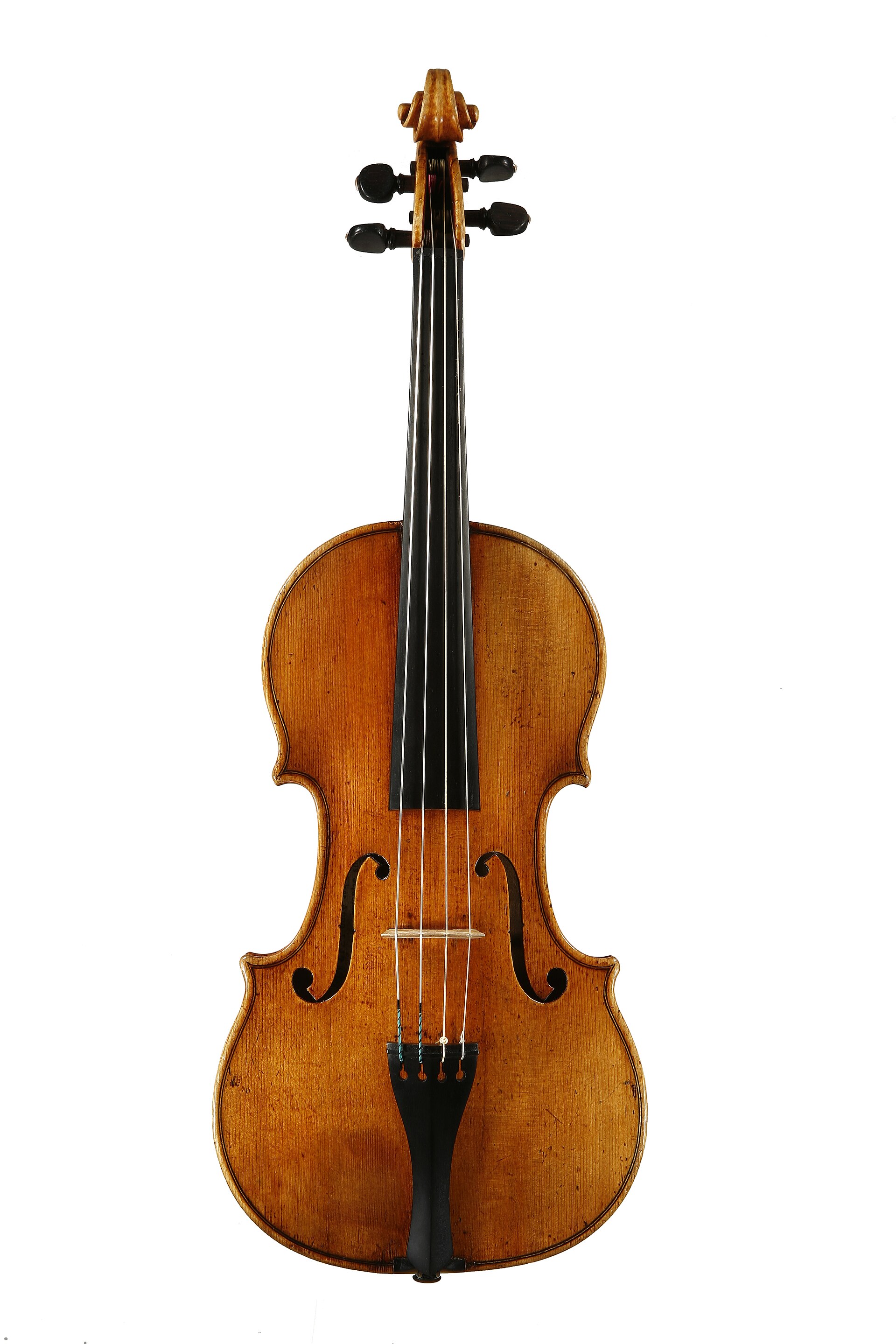
The violin is the smallest and highest-pitched member of the violin family, a bowed stringed instrument that emerged in northern Italy about 1550 and has since become the most widely distributed instrument in the world. Its sound depends on a hollow, hourglass-shaped body with a spruce top, maple back, soundpost and bass bar, on a bow of horsehair that drives the string through a stick-slip cycle, and on the skill of the player. Cremona in northern Italy became the centre of fine violin making by 1600: Andrea Amati and his descendants, Antonio Stradivari and Giuseppe Guarneri del Gesù set standards that later makers have imitated ever since, and instruments such as Stradivari's 1716 Messiah, 1714 Kneisel, Grün and 1721 Lady Blunt are among the most valuable objects ever made by hand. The modern bow was standardised by the Parisian maker François Xavier Tourte around 1800, and in 2012 UNESCO inscribed Cremonese violin craftsmanship on the Representative List of the Intangible Cultural Heritage of Humanity.
In this article
- 1Overview
- 2Construction and Acoustics
- 3Origins and Early History
- 4The Cremonese Tradition
- 5Stradivari's Instruments
- 6The Amati Legacy
- 7The Bow and Its Development
- 8Design Changes and Modern Setup
- 9Cultural Recognition and the Market
- 10Key Dates
- 11Frequently Asked Questions
- 12Timeline: from the first violins to the UNESCO listing
- 13Knowledge graph
Overview
The violin is a bowed stringed instrument and the smallest, highest-pitched member of the violin family, which also includes the viola, cello and double bass. It typically carries four strings tuned in perfect fifths to G, D, A and E. Sound is drawn from it either by drawing a bow across the strings or by plucking them with the fingers.
1. Construction and Acoustics
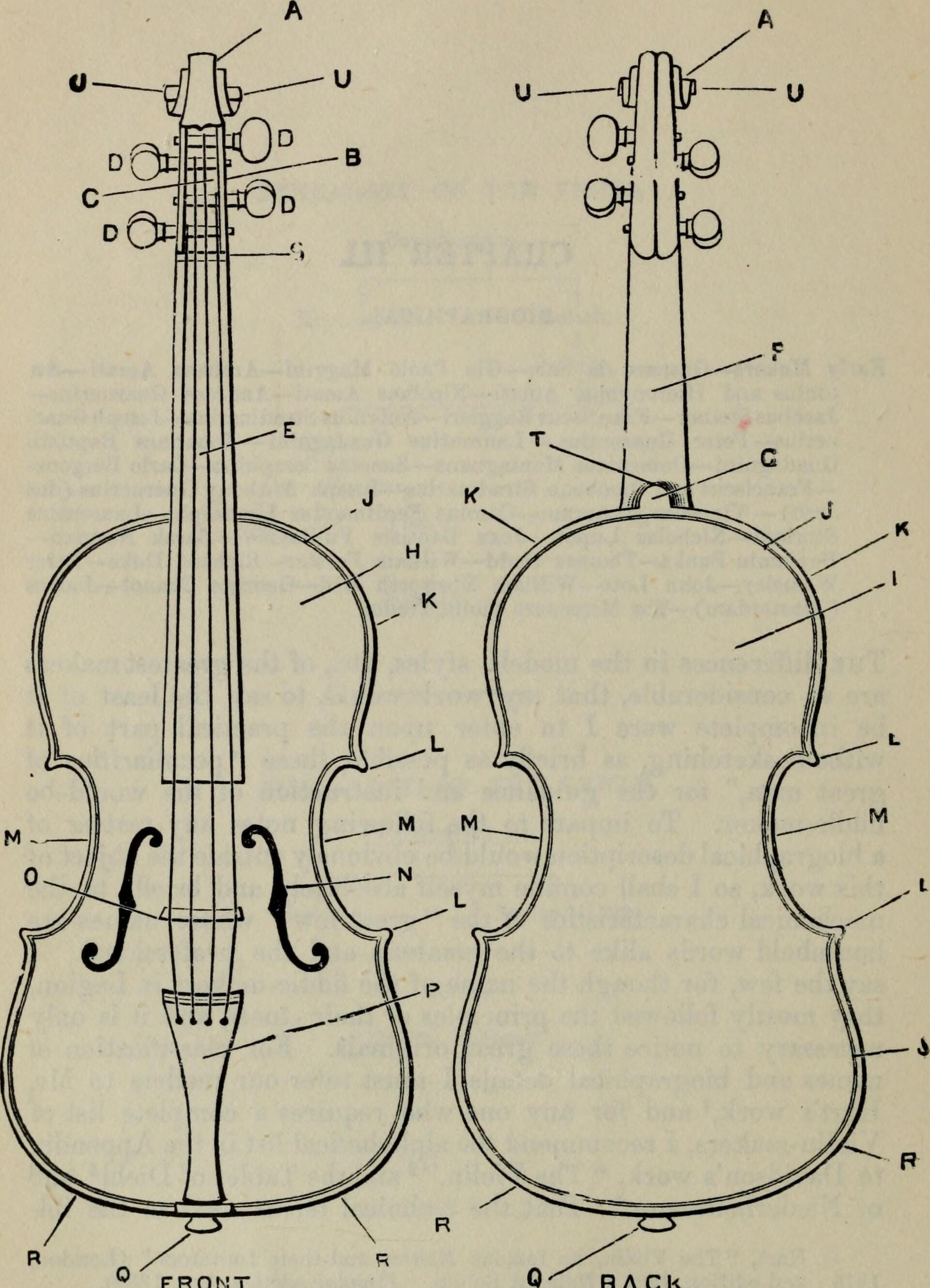
The violin's body is a hollow, hourglass-shaped wooden shell whose arched top, or soundboard, is usually of spruce, while the back is often of maple; two f-shaped sound holes pierce the top. A slender neck ends in a scroll, and the fretless fingerboard of hardwood is the surface on which the player stops the strings to change pitch.
Inside the body, the soundpost is a small friction-fit spruce cylinder that transmits high-frequency vibrations from the bridge and soundboard to the back of the instrument, producing its characteristic sound. Under the belly on the bass foot side of the bridge lies the bass bar, which extends beyond the f-holes and thus transmits the motion of the bass foot of the bridge over a large area of the belly.
A vibrating string can produce a motion rich in harmonics, and bowing the string supplies energy continuously and so maintains that harmonic richness. The interaction between bow and string is a stick-slip mechanism: the sticky rosin on the bow hair drags the string along until the restoring force due to string tension exceeds the static friction, at which point the string slips back toward equilibrium. As the cycle repeats, the string maintains a triangular shape whose apex races around an envelope shaped like half a sine function, making one round trip at the fundamental frequency of the string, so that a string playing an A at 440 Hz is driven 440 times per second. A vibration of 440 cycles per second, or 440 Hz, is heard as the note A in the treble clef, the pitch of the violin's A string.
For a given bowing speed and bowing position there is only a certain range of bow force that will maintain Helmholtz motion; the required force is a little higher as one bows closer to the bridge, and with more applied force more higher harmonics are excited, so the tone is brighter and richer. Because the bow acts on the surface of the string rather than at its centre, it also exerts a twisting or torsional force that excites additional torsional waves travelling up and down the string, though these waves exert only a small torque on the bridge and so produce little sound by themselves. During a pitch vibrato the harmonics of a note move from strong transmission at a resonance to weak transmission or vice versa, so the spectrum of the output note varies strongly, which makes the sound much more interesting and is one of the two most important features that help identify the sound of a violin.
2. Origins and Early History
The modern four-string violin is generally considered to have originated about 1550 in northern Italy. By 1600 Cremona was the undisputed center of violin making in Europe. The instrument was assimilated into the art music of the Middle East and South India and, as the fiddle, is played in the folk music of many countries.
Rich-toned, expressive and versatile, violins were both virtuoso solo instruments and the core of the new orchestras. A century of violin making in Cremona culminated in the instruments from the workshop of Antonio Stradivari; from his extraordinary seventy-year career as a luthier 650 instruments survive, a testament to his productivity and longevity and to the high value placed on his instruments. Stradivari's reputation rests on the unparalleled quality of the workmanship and design of his instruments as much as on the legendary varnish, made according to a long-lost secret recipe.
During Nicolò Amati's working life the Amati workshop was one of the finest violin ateliers in Europe, training many apprentices who became important instrument builders, possibly including the young Antonio Stradivari. Stradivari was once thought to have been a pupil of Nicolò Amati, but is now believed to have been apprenticed as a wood-carver in Cremona and to have turned to violin-making through acquaintance with the Amati household; his early violins from 1660 to 1684 follow Amati models.
The long-pattern violin is approximately one centimeter longer than the conventional violin, with a relatively flat arching, and represents a departure from the classic Amati model of Cremonese instruments.
3. The Cremonese Tradition
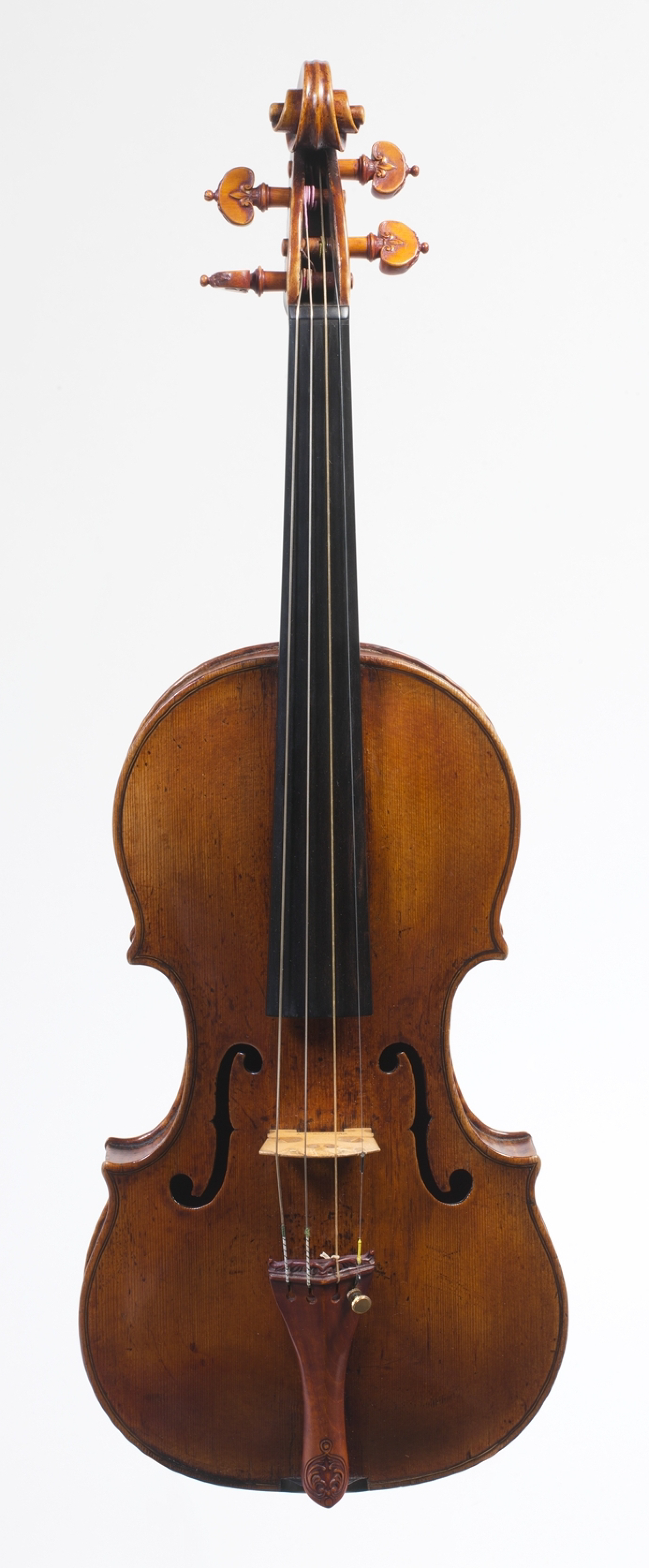
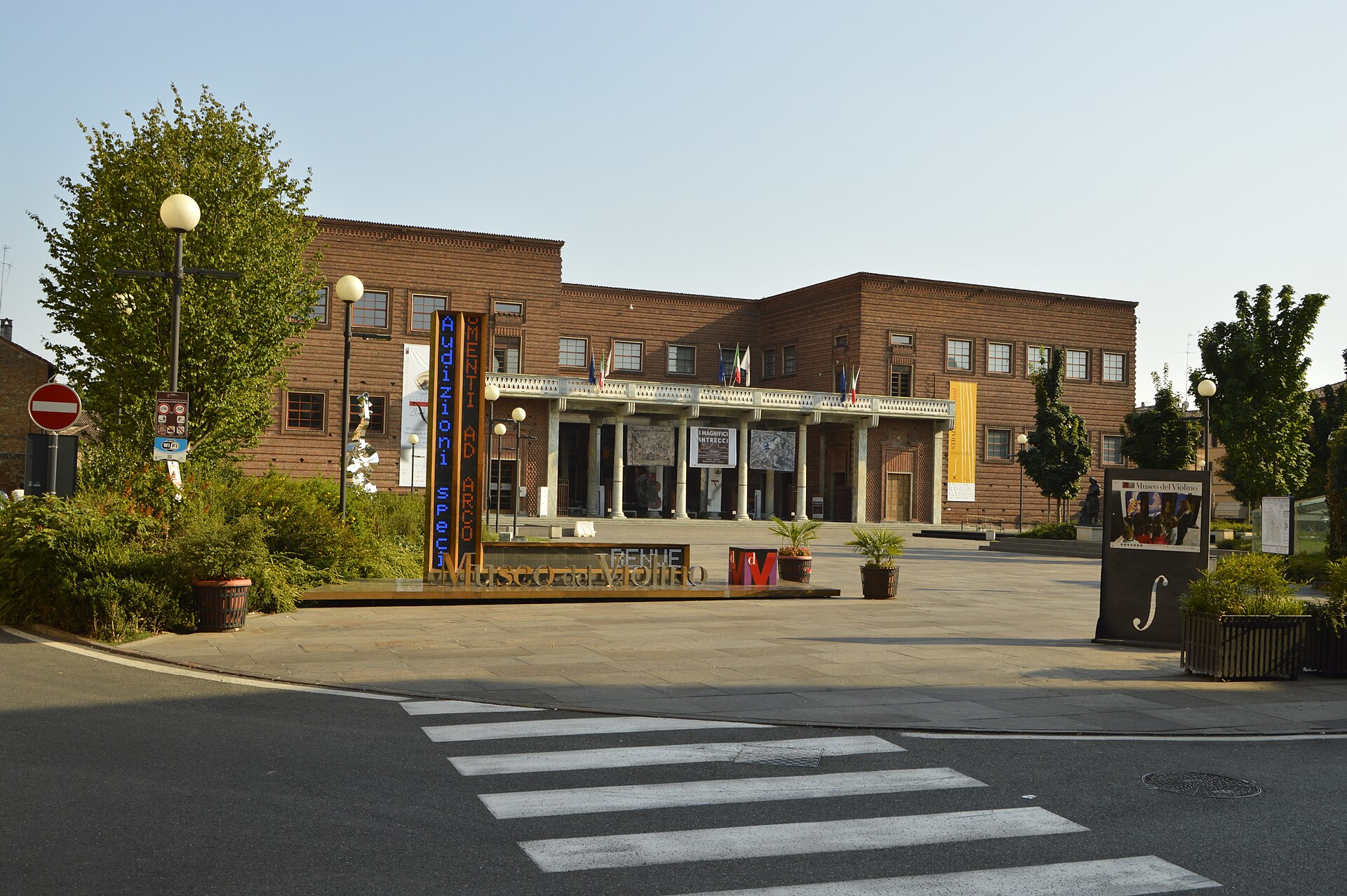
Antonio Stradivari of Cremona is widely regarded as the greatest violin maker of all time. His finest examples were made between about 1699 and about 1720. The Museo del Violino collection represents him through the Clisbee violin of 1669 and the violoncello Stauffer ex Cristiani of 1700, alongside the Il Cremonese violin of 1715 and the Vesuvius violin of 1727. The Harrison Stradivari belongs to the maker's Long Pattern instruments, made in the 1690s.
The Harrison Stradivari measures 598 mm in total length, with a back length of 363 mm and a vibrating string length of 330 mm. The 1721 Lady Blunt, one of the best-preserved Stradivari violins in existence, was sold in June 2011 in a Tarisio online auction for £9.8m (£8,750,000 hammer), equivalent to $15.9m. The buyer was an anonymous bidder who won a 90-minute bidding battle with one other bidder, and all the proceeds from the sale went to the Nippon Foundation's Northeastern Japan Earthquake and Tsunami Relief Fund. The Harrison is exceptionally well preserved, with its original neck and top block.
The violin owes its condition to the fact that it has always been a collector's piece: it was probably initially purchased by the collector Cozio di Salabue from one of Stradivari's sons, and in the 1820s Salabue sold it to Luigi Tarisio, a dealer and collector from Piedmont, which earned it the name by which it is now known. The Messiah is not entirely untouched: the neck was lengthened and the pegs, bridge and tailpiece were added in the 19th century, but the varnish is almost unworn and the carving is as crisp as the day it was made. In 1855 the Messiah was bought by Jean-Baptiste Vuillaume, a maker and dealer in violins, who kept it in a glass case.
The Museo del Violino describes the complementarity of skills and the integrated management of its laboratories as creating a research centre of excellence in diagnostics and acoustics that is a strength for the museum and the city of Cremona. Past and current efforts to safeguard the craftsmanship enjoy the participation and support of diverse stakeholders including the municipality and national government, local institutions and violin-makers' workshops and associations.
4. Stradivari's Instruments
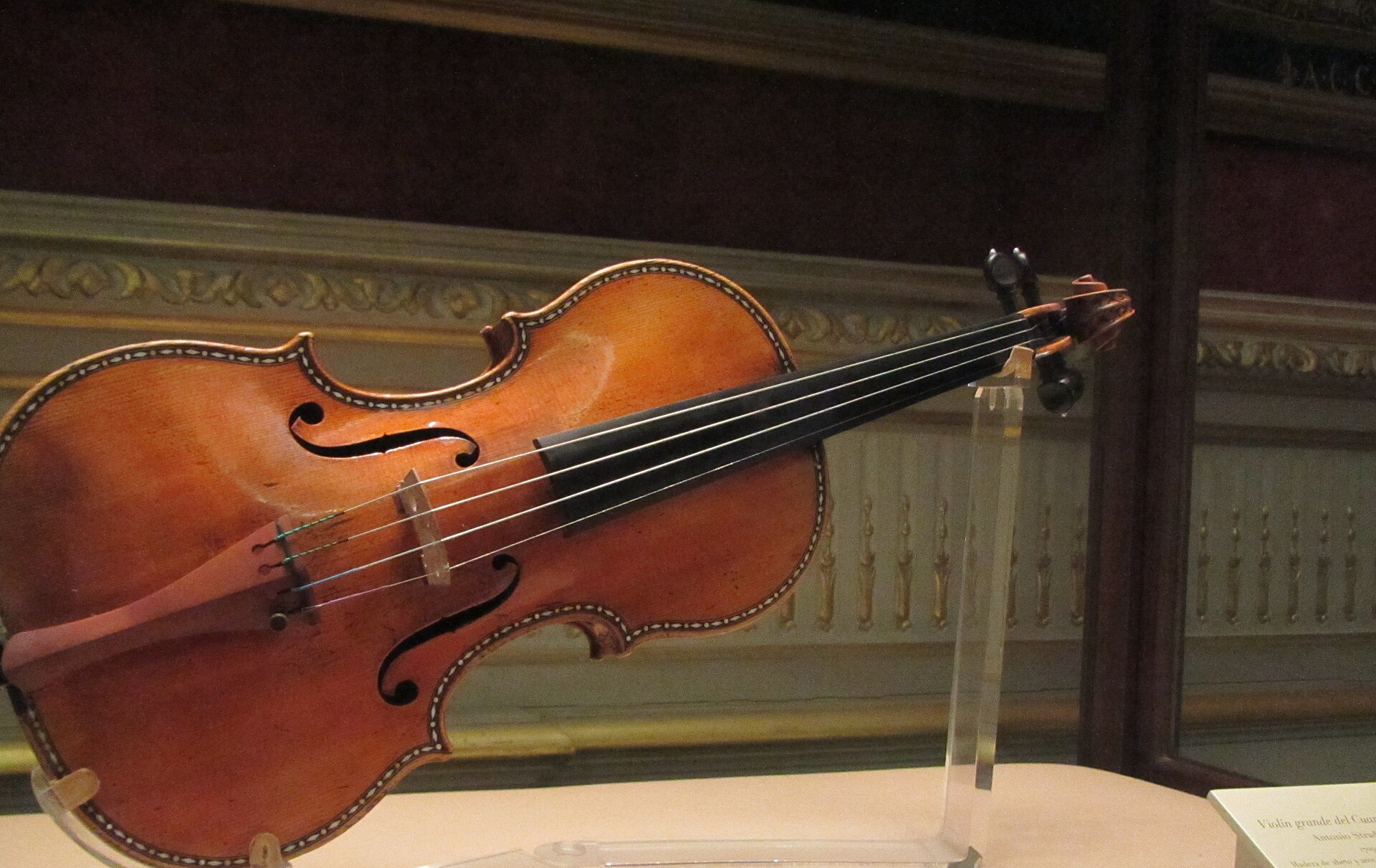
During his lifetime in Cremona, Stradivari created violins of several patterns that have been much imitated and are still the preferred instruments of many players.
The National Music Museum of Vermillion, South Dakota, owns one of only two existing mandolins and one of five existing guitars by Antonio Stradivari. These, together with a violin by Nicolò Amati also owned by the museum, journeyed to Italy for the year-long exhibition Reunion in Cremona at the Museo del Violino.
5. The Amati Legacy
The National Music Museum's Amati violin carries the date 1574 and is credited to Andrea Amati, with the making also attributed to his son Antonio; it was built in Cremona, Italy. The small-pattern violin was produced near the end of Andrea Amati's life, probably with a significant amount of handwork by his son Antonio, and it is one of the best-preserved violins of the period, with no evidence of regraduation of the interior. The violin was once part of the collection of William Corbett, the London composer and violin collector, and it passed through the workshop of John Betts in the early nineteenth century, which probably left it in much the state it is in today.
6. The Bow and Its Development
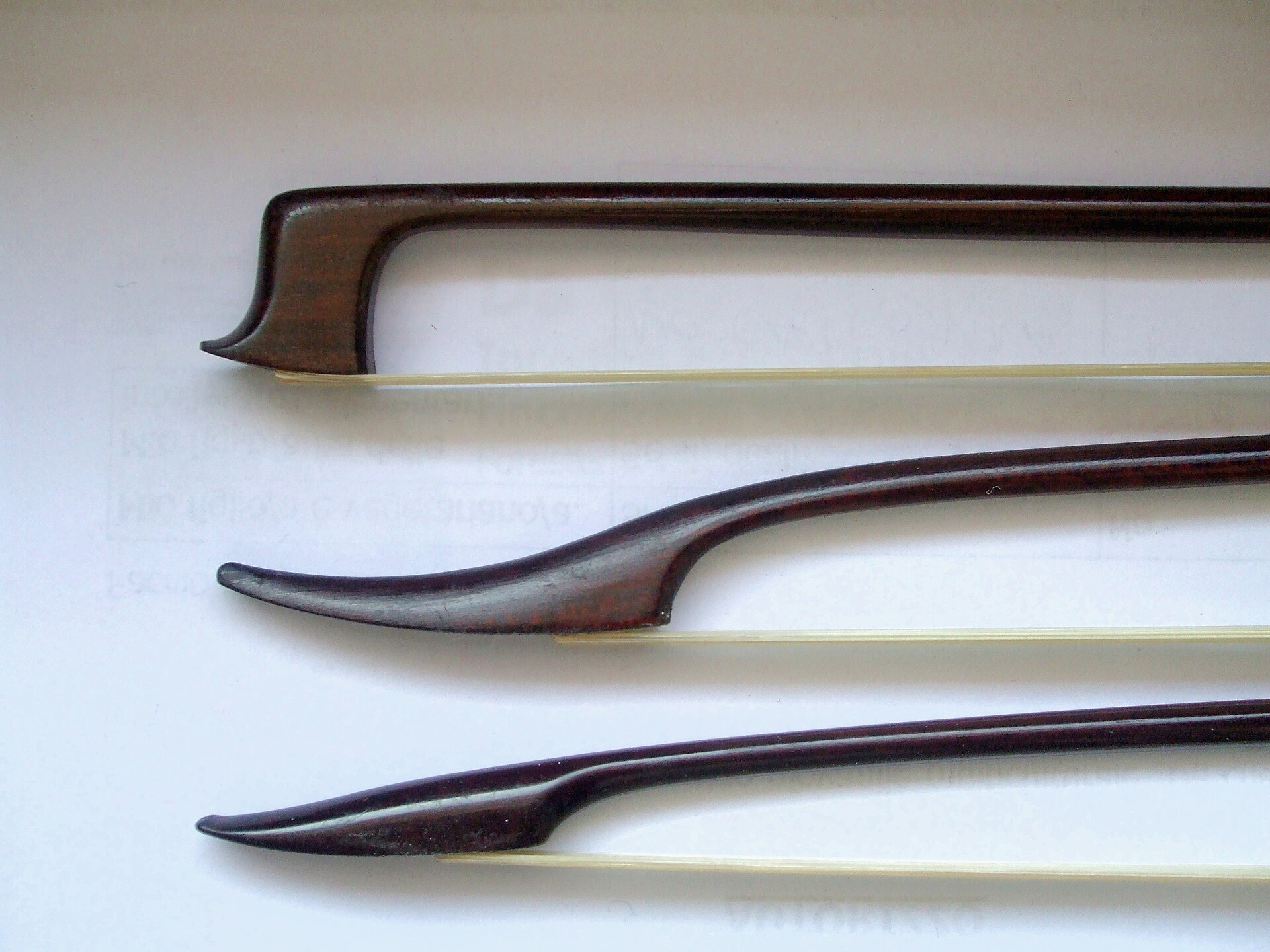
The modern bow is the work of François Xavier Tourte, called le Jeune, whose golden period after 1800 produced the definitive model that has been emulated ever since. Although little is known about his life, his bowmaking practice continued unabated through uprisings and social shifts of every kind, and examples of his work exist for every half-decade between 1770 and 1830 across six decades.
The innovations that define the modern bow originated primarily with the Tourte brothers and their father Nicolas Pierre Tourte, though François Xavier Tourte is considered the true author of the form. His stick has a screw mechanism that cannot be changed while playing and is made in a compound curve to which considerable tension can be applied, making it possible to apply much pressure to the strings.
7. Design Changes and Modern Setup
In the 19th century, with the advent of large auditoriums and the violin virtuoso, the violin underwent its last changes in design: the bridge was heightened, the sound post and bass bar were thickened, the body became flatter and the neck was angled back, giving a stronger, more brilliant tone in place of the delicate, intimate tone of the 18th-century violin.
While the body of a Baroque violin is essentially the same as a modern instrument, the Baroque neck is shorter and thicker and projects straight out of the body rather than bending back, and the fingerboard has gradually lengthened as the instrument's range has grown higher.
The tenor violin, known from the 16th century through the 18th century, was midway in size between the viola and cello and was tuned F, c, g and d'.
8. Cultural Recognition and the Market
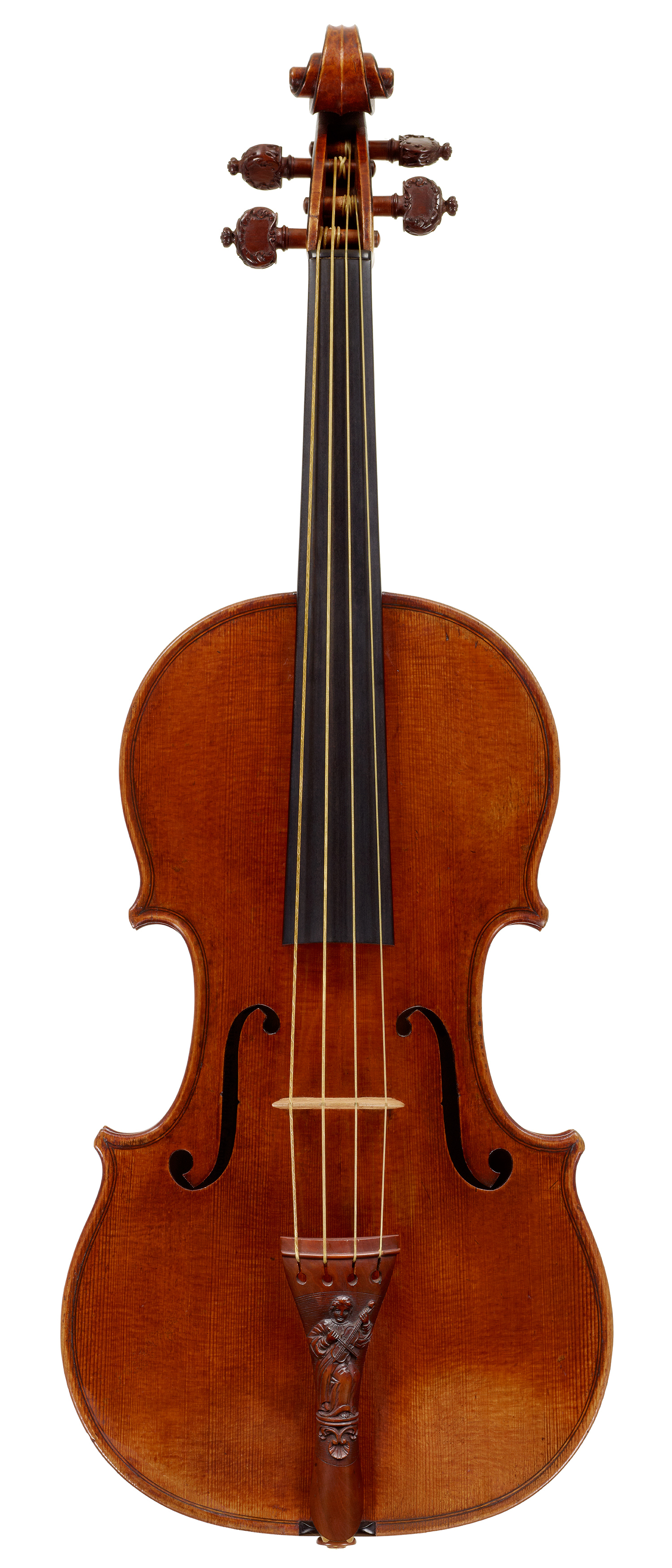
Traditional violin craftsmanship in Cremona was inscribed on the Representative List of the Intangible Cultural Heritage of Humanity in 2012, the committee having decided that the nomination satisfied the inscription criteria because that craftsmanship has been transmitted from generation to generation, both through apprenticeship and through formal education, playing an important role in the everyday life of people in Cremona and giving them a sense of identity. UNESCO recognized that the high degree of skills and manual inventiveness of traditional violin craftsmanship could testify to human creativity while contributing to intercultural dialogue and to the visibility of intangible cultural heritage as a whole. Cremonese violin-makers consider the sharing of knowledge fundamental to the growth of their craftsmanship, and dialogue with musicians is deemed essential to understanding their needs.
9. Key Dates
-
about 1550Origin in northern ItalyThe violin emerges in northern Italy.
-
1574Amati small-pattern violinThe small-pattern violin associated with Amati.
-
1600Cremona the undisputed centreCremona stands as the undisputed centre of violin making.
-
around 1630Plague and faminePlague and famine leave Nicolò Amati the sole survivor.
-
1626Les 24 violons du roiThe French royal ensemble of the twenty-four violins.
-
1660–1684Stradivari's early Amati-model violinsStradivari's early violins follow Amati models. 8Violin | Stradivari, Antonio (maker), Cremona 1699 · Victoria and Albert Museum, London ↗
-
1690sHarrison Long PatternThe Harrison Long Pattern.
-
about 1699 to about 1720Stradivari's golden periodStradivari's golden period.
-
1716The MessiahThe Messiah violin by Antonio Stradivari, of maple and spruce, with a length of 59.3 cm. 12MESSIAH VIOLIN, BY STRADIVARI · Ashmolean Museum, University of Oxford ↗
-
1721Lady BluntThe Lady Blunt violin.
-
1747 or 1748Tourte's birthBirth of Tourte.
-
1774–1775Tourte begins bowmakingTourte begins making bows. 17François Xavier Tourte ‘le Jeune’ · Tarisio Cozio Archive ↗
-
1800First evidence of the independent Tourte workshopThe first definitive evidence of an independent Tourte workshop on the Quai de l'Ecole. 17
-
1835Tourte's deathDeath of Tourte.
-
1939Messiah presented to the AshmoleanThe Messiah is presented to the Ashmolean by Alfred and Arthur Hill. 12
10. Frequently Asked Questions
How is the violin tuned and played?
The violin typically has four strings tuned in perfect fifths, G, D, A and E, and is played either by drawing a bow across the strings or by plucking them with the fingers.1Violin | Definition, Structure, History, & Facts · Encyclopædia Britannica ↗
Does the body of the violin amplify the sound?
Not in the technical sense of the word: all of the sound energy that is produced by the body originally comes from energy put into the string by the bow, and the purpose of the body is to make that conversion process more efficient.2An introduction to violin acoustics · Music Acoustics, University of New South Wales ↗
What does the bow contribute to the sound?
The bow drives the surface of the string rather than its centre of mass, and the resonances for torsional motion are unrelated to those from transverse motion.5Strong coupling of torsional and transverse waves in a bowed string · UNSW Music Acoustics, University of New South Wales ↗
Why is there so little jitter in the sound of a bowed string?
That question remains one of the open problems in the physics of the bowed string, precisely because the bow drives the surface of the string rather than its centre of mass and the torsional and transverse resonances are unrelated.5
What is the violin's place among the instruments of its family?
How does the player change pitch on a single string?
The frequency of a vibrating string depends on the length free to vibrate, which the player changes by holding the string firmly against the fingerboard with the fingers of the left hand, so shortening the string gives a higher pitch 2. Violin chin rests were not used until the nineteenth century, so shifting the left hand from position to position was audible 7Violin Makers: Nicolo Amati (1596-1684) and Antonio Stradivari (1644-1737) · The Metropolitan Museum of Art, Heilbrunn Timeline of Art History ↗.
What is the role of the air inside the body?
The air inside the body of the violin is also important, especially for the low range of the instrument, and can vibrate a little like the air in a bottle when you blow across the top; this resonance is called the Helmholtz resonance and its effect can be seen at around 300 Hz 2. A string on its own makes little sound; it is the bridge and body of the violin, and other related instruments, that serve to transmit some of the vibrational energy of the string into the air as sound 2.
How does the modern bow differ from the old bow in the force it can apply?
With the old bow, which curved away from the strings, pushing harder made the bow more curved so the force exerted on the string did not increase rapidly, whereas with the modern bow the wood straightens under pressure, pulling the hair tighter and allowing greater force on the string 4Bows and strings · Music Acoustics, University of New South Wales ↗. Another effect of the modern Tourte bow is the presence of the hatchet head, which distributes more weight to the tip and allows a more uniform application of force during the stroke, giving the modern bow a greater range of loudness 4.
What wood is used for a bow, and what does a Tourte bow cost?
How is a Cremonese violin made, and how many are produced?
Each Cremonese violin-maker builds three to six instruments a year, shaping more than 70 pieces of wood by hand 20Traditional violin craftsmanship in Cremona · UNESCO Intangible Cultural Heritage ↗. Every part of a Cremonese violin is made with a specific wood, carefully selected and naturally well seasoned, and no semi-industrial or industrial materials are used 20.
11. Timeline: from the first violins to the UNESCO listing
- About 1550The violin takes shape in northern ItalyThe modern four-string violin is generally considered to have originated about 1550 in northern Italy.
- About 1560Andrea Amati's earliest surviving violinsViolins by Andrea Amati of Cremona, eight of them bearing the coat of arms of Charles IX of France, are among the earliest surviving examples of the instrument.
- By 1600Cremona leads violin making in EuropeBy 1600 Cremona was the undisputed centre of violin making in Europe.
- 1607Violins in Monteverdi's OrfeoClaudio Monteverdi included violins in the orchestra of his opera Orfeo, first performed in 1607.
- 1626Les 24 violons du roiThe French king's orchestra, les 24 violons du roi, was organized in 1626.
- Around 1630Plague and famine in CremonaFamine and plague devastated Cremona around that year, and Nicolò Amati was the only violin maker in the city to survive them.
- 1693The Harrison StradivariStradivari made the long-pattern Harrison violin in 1693; the National Music Museum acquired it in 1984.
- 1699The V&A's Stradivari violinStradivari's finest examples date from about 1699, the year of the violin now in the Victoria and Albert Museum, until about 1720.
- 1714The Kneisel, Grün violinA Stradivari of 1714 from the maker's golden period, named after the violinist Franz Kneisel, was loaned to the Museum of Fine Arts in Boston.
- 1716The MessiahStradivari made the Messiah in 1716; the violin passed to the dealer Jean-Baptiste Vuillaume in 1855 and was presented to the Ashmolean Museum in 1939.
- About 1774Tourte turns to bow makingFrançois Xavier Tourte, trained as a clockmaker, began making bows around 1774-1775.
- 1800The Tourte bow establishedThe first definitive evidence of an independent Tourte workshop dates from 1800, and the work of his golden period after that year became the model for the modern bow.
- 1835Death of François TourteFrançois-Xavier Tourte, born in Paris in 1747 or 1748, died in 1835, making him 87 years old.
- June 2011The Lady Blunt saleThe 1721 Lady Blunt was sold in a Tarisio online auction for £9.8m, more than four times the previous auction record for a Stradivari violin.
- 2012UNESCO inscribes Cremonese violin makingTraditional violin craftsmanship in Cremona was inscribed in 2012 on the Representative List of the Intangible Cultural Heritage of Humanity.
- 2019Reunion in CremonaThe National Music Museum's Cremonese treasures went on show at the Museo del Violino from 21 September 2019 to 18 October 2020.
References (21)
- 1Violin | Definition, Structure, History, & Facts — Encyclopædia Britannica Archive↩View source
- 2An introduction to violin acoustics — Music Acoustics, University of New South Wales Web↩View source
- 3Bowed String — acoustics and vibration animations — Penn State Graduate Program in Acoustics (Dan Russell) WebView source
- 4Bows and strings — Music Acoustics, University of New South Wales Web↩View source
- 5Strong coupling of torsional and transverse waves in a bowed string — UNSW Music Acoustics, University of New South Wales Web↩View source
- 6Renaissance Violins — The Metropolitan Museum of Art, Heilbrunn Timeline of Art History WebView source
- 7Violin Makers: Nicolo Amati (1596-1684) and Antonio Stradivari (1644-1737) — The Metropolitan Museum of Art, Heilbrunn Timeline of Art History 1596 Web↩View source
- 8Violin | Stradivari, Antonio (maker), Cremona 1699 — Victoria and Albert Museum, London 1699 Web↩View source
- 9Violin, Antonio Stradivari, 1693 (‘Harrison’) — National Music Museum, University of South Dakota 1693 WebView source
- 10Room 5 | The treasure box — Museo del Violino, Cremona WebView source
- 111721 'Lady Blunt' Stradivari violin sells for £9.8m — The Strad 1721 WebView source
- 12MESSIAH VIOLIN, BY STRADIVARI — Ashmolean Museum, University of Oxford Book↩View source
- 13Scientific Labs — Museo del Violino, Cremona WebView source
- 14Decision of the Intergovernmental Committee: 7.COM 11.18 — UNESCO Intangible Cultural Heritage WebView source
- 15“Reunion in Cremona”: Famed NMM stringed instruments now on exhibit at Italy's Museo del Violino — National Music Museum, University of South Dakota WebView source
- 16Violin, Andrea Amati (attributed), 1574 — National Music Museum, University of South Dakota 1574 ArchiveView source
- 17François Xavier Tourte ‘le Jeune’ — Tarisio Cozio Archive Web↩View source
- 18Paris in the Time of Tourte — Tarisio Cozio Carteggio WebView source
- 19François Tourte | musical instrument maker — Encyclopædia Britannica Archive↩View source
- 20Traditional violin craftsmanship in Cremona — UNESCO Intangible Cultural Heritage Web↩View source
- 21Boston museum loaned 1714 ‘Kneisel, Grün’ Stradivari violin — The Strad 1714 WebView source