Flute
The flute family from the bone flutes of the Ice Age to the Boehm-system orchestral instrument: its acoustics, its types, its makers and its living traditions.
The flute is the oldest family of wind instruments, sounded when a stream of air is directed against a sharp edge; bone flutes from Hohle Fels and Divje Babe carry music back more than 35,000 years, and the Jiahu flutes of Neolithic China are the earliest playable instruments known. The transverse flute passed from Renaissance consorts through the one-keyed conical flute of the Hotteterres to Theobald Boehm's acoustically calculated designs of 1832 and 1847, which are essentially the modern orchestral flute. Related instruments such as the fife, the dizi and the Slovak fujara show how the same edge-tone principle serves military signalling, Chinese opera and a UNESCO-listed shepherd tradition.
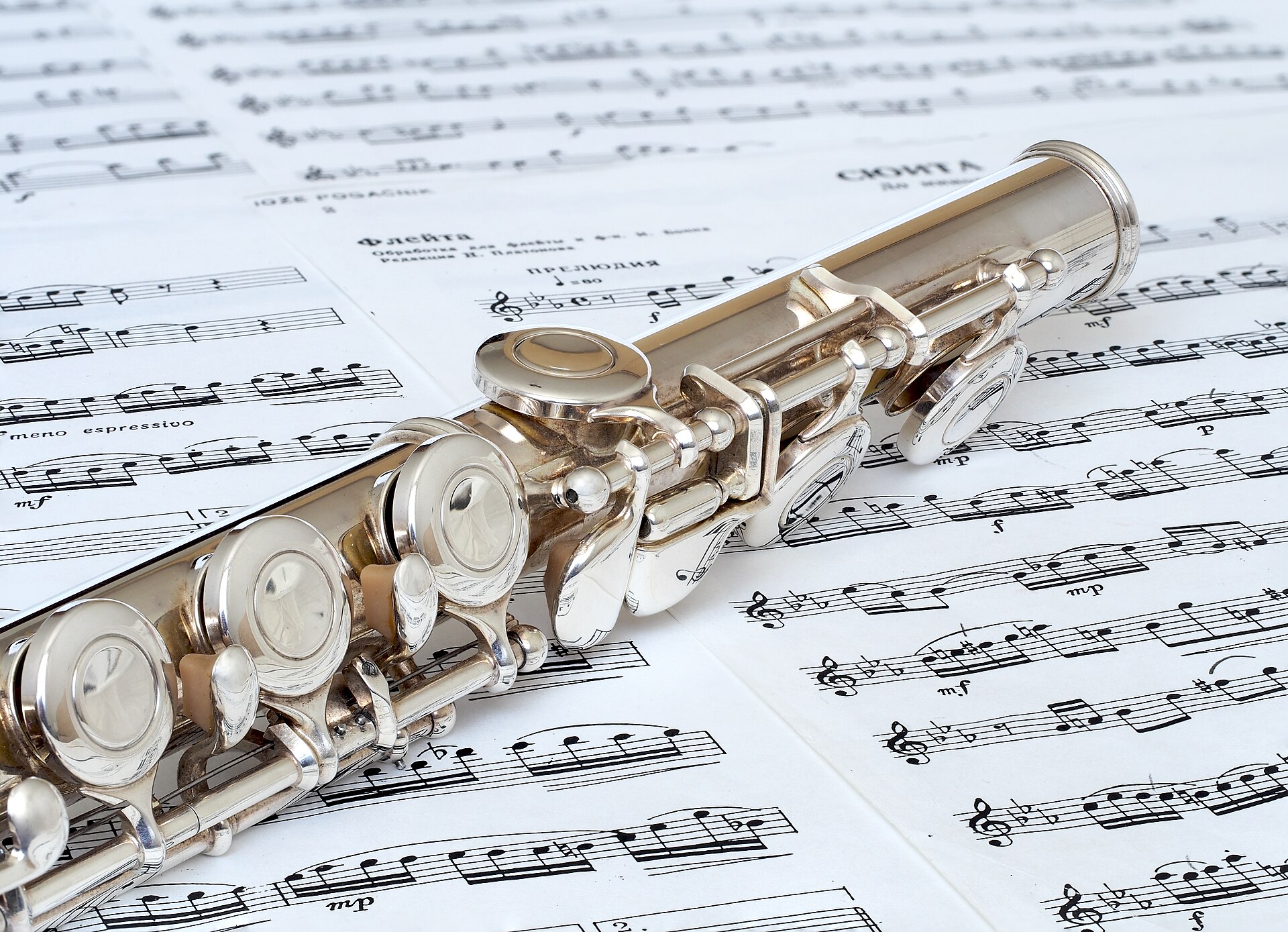
Overview
The flute is a wind instrument in which sound is produced by a stream of air directed against a sharp edge, upon which the air breaks up into eddies that set the air enclosed in the flute vibrating. Flutes are a diverse family, and their earliest examples are tens of thousands of years old.
1. Acoustics
The flute is an open pipe, open at the far end and at any open tone holes, and the player leaves a large part of the embouchure hole open to the atmosphere. Because the pressure is zero at the two open ends, the pressure nodes effectively lie past the end of the tube by about 0.6 times the radius, a distance called the end correction. Between the point where the embouchure riser meets the main bore and the cork in the closed end lies a small volume of air, and the cork is normally positioned about 17 mm from the centre of the embouchure hole.
The speed of the displacement wave on the jet is about half the air-speed of the jet itself, which is typically in the range 20 to 60 metres per second. To play a high note the travel time of waves on the jet must be reduced, which the player does by increasing blowing pressure and moving the lips forward to shorten the distance along the jet to the edge of the embouchure hole.
Opening tone holes starting from the far end makes the pressure node move closer up the pipe, rather like making the pipe shorter, and on the Boehm flute each opened tone hole raises the pitch by a semitone. A register hole placed halfway along the working length makes the played note one octave higher, because it permits the second harmonic of the fundamental, and a register hole at half the length is used for the standard fingerings for D5 and others.
On the modern or Boehm flute successive semitones are played by opening a tone hole dedicated to that purpose, and twelve semitones in an octave exceed the number of fingers on standard players, particularly when the right thumb supports the instrument. Low frequency waves are reflected at the first open tone hole, higher frequency waves travel further and sufficiently high frequency waves travel down the tube past the open holes, so an array of open tone holes acts as a high pass filter. The ocarina, by contrast, uses a Helmholtz resonator to drive the jet instead of a resonant duct.
2. Types and Construction
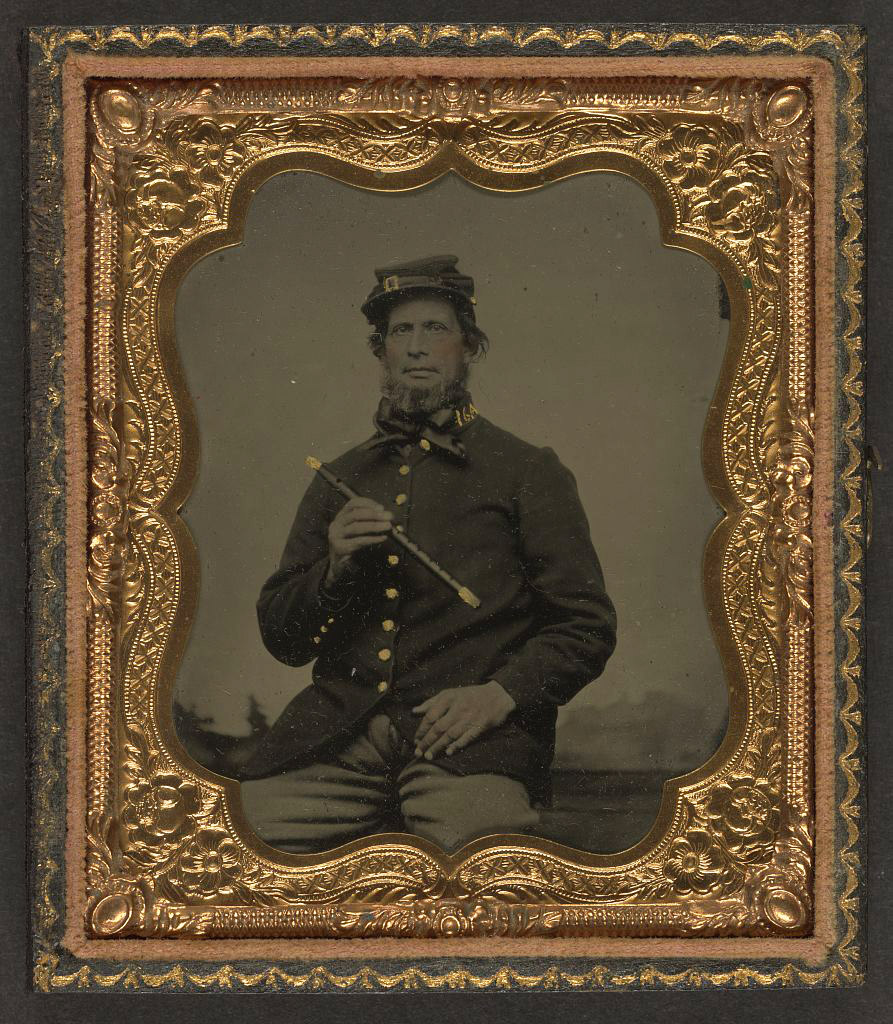
The fife is a side-blown or transverse edge aerophone of Europe and North America, long associated with the military, specifically the infantry, where it served as both a melodic instrument in marching music and a signal instrument on the battlefield.It is a small transverse side-blown flute with six finger holes and a narrow cylindrical bore that produces a high pitch and shrill tone. The modern fife is pitched to the A-flat above middle C, is about 15.5 inches or 39 cm long, and often has an added E-flat hole covered by a key, with a compass of about two octaves.
The Fujara, an extremely long flute with three finger holes traditionally played by Slovak shepherds, is regarded as an integral part of the traditional culture of Central Slovakia. Its main tube measures 160 to 200 cm in length and is connected to a shorter tube of 50 to 80 cm. The instrument is characterized by deep mumbling tones and very high overtones. In the course of the nineteenth and twentieth centuries the Fujara became known and appreciated beyond the shepherds' use, and through festivals it gained recognition and popularity throughout Slovakia.
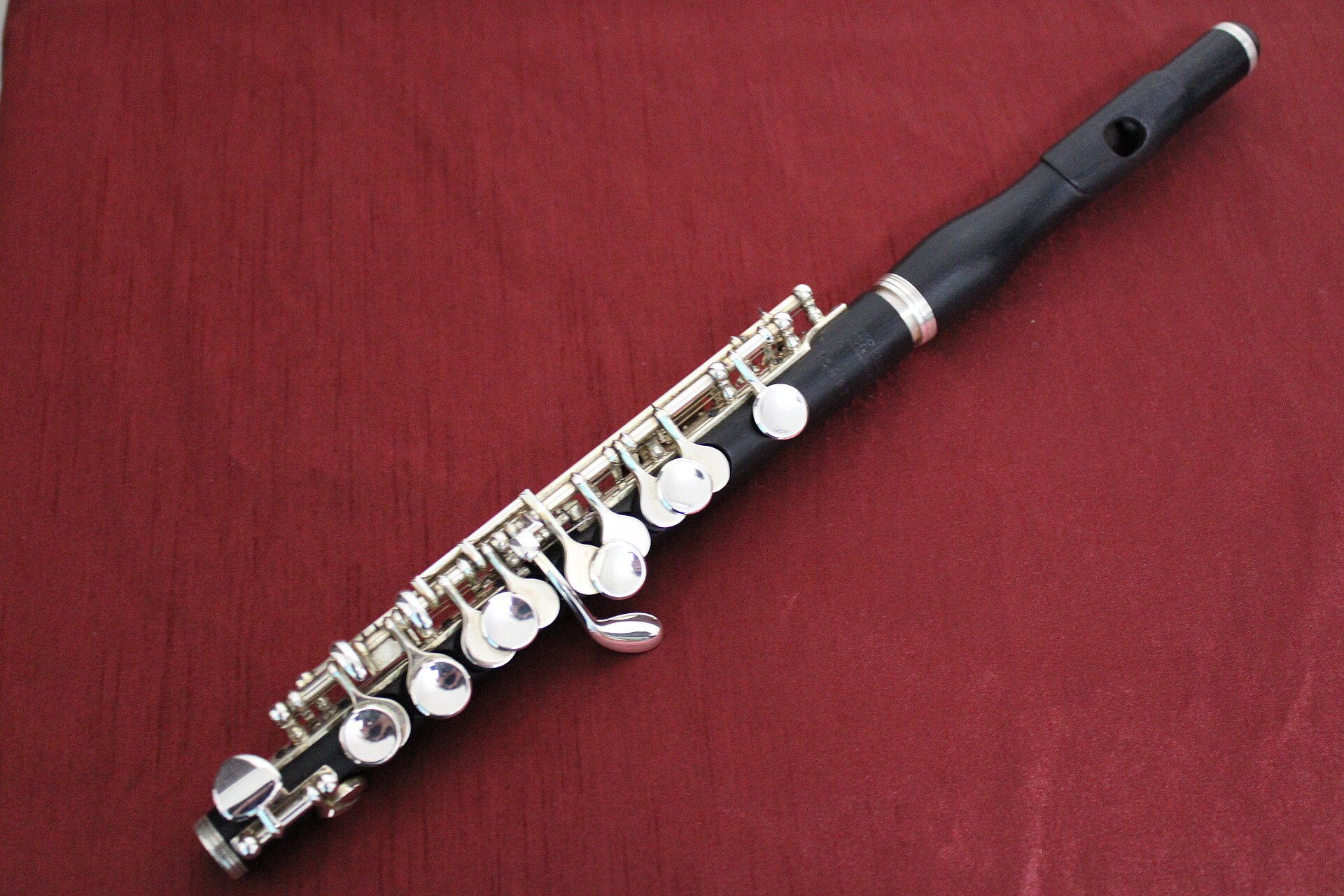
The dizi, or Chinese transverse flute, is a major Chinese musical instrument widely used in many genres of Chinese folk music, Chinese opera, and the modern Chinese orchestra. It is sometimes known as the di or hengdi, and it has varieties including Qudi, Bangdi and Xindi, most of them made of bamboo.
3. Prehistoric Flutes
The layer that contained the flute was deposited about 60 to 50 millennia ago, and its age was recently established with electron spin resonance used on bear teeth. The find was made in 1995 during archaeological excavations led by Ivan Turk and Janez Dirjec of the Institute of Archaeology at ZRC SAZU, in a Mousterian layer of the Divje Babe I cave site. The instrument measures 11.4 cm, is the only one that was definitely made by Neanderthals, and is about 20,000 years older than other known flutes made by anatomically modern humans. The discovery confirmed that Neanderthals were already creating music more than 60,000 years ago, demonstrating advanced creativity, symbolic expression and a rich cultural world. The original Neanderthal flute is preserved in the National Museum of Slovenia and remains one of the key symbols of prehistoric world heritage.
Hohle Fels is a cave formed in the White Jurassic period in the Ach valley near Schelklingen, important for its Middle and Upper Palaeolithic layers. The oldest known evidence for art and music stems from the archaeological layer Vb of Hohle Fels. Only 70 cm from where the Venus was found, twelve fragments of a flute crafted from the radius of a griffon were uncovered.
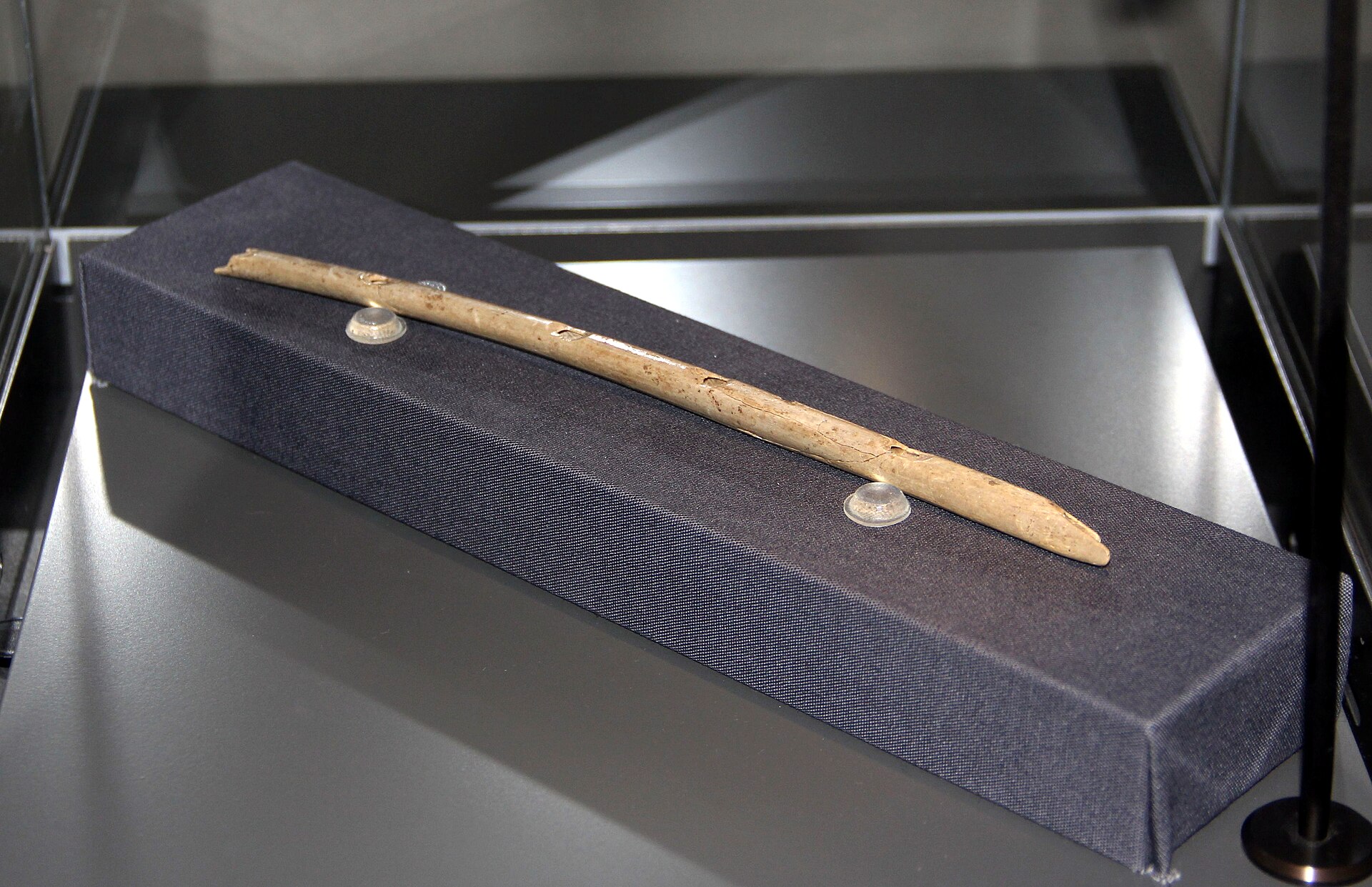
Outside the caves of the Swabian Jura, the earliest secure archaeological evidence for music comes from sites in France and Austria and post-dates 30,000 years ago. In central China, the archaeological site of Jiahu in the Yellow River basin of Henan Province is remarkable for the cultural and artistic remains uncovered there, and its flutes date to 7000 to 5700 BCE. The Hohle Fels study appeared as a Letter in Nature volume 460 in 2009 by Nicholas J. Conard, Maria Malina and Susanne C.
4. The Boehm System
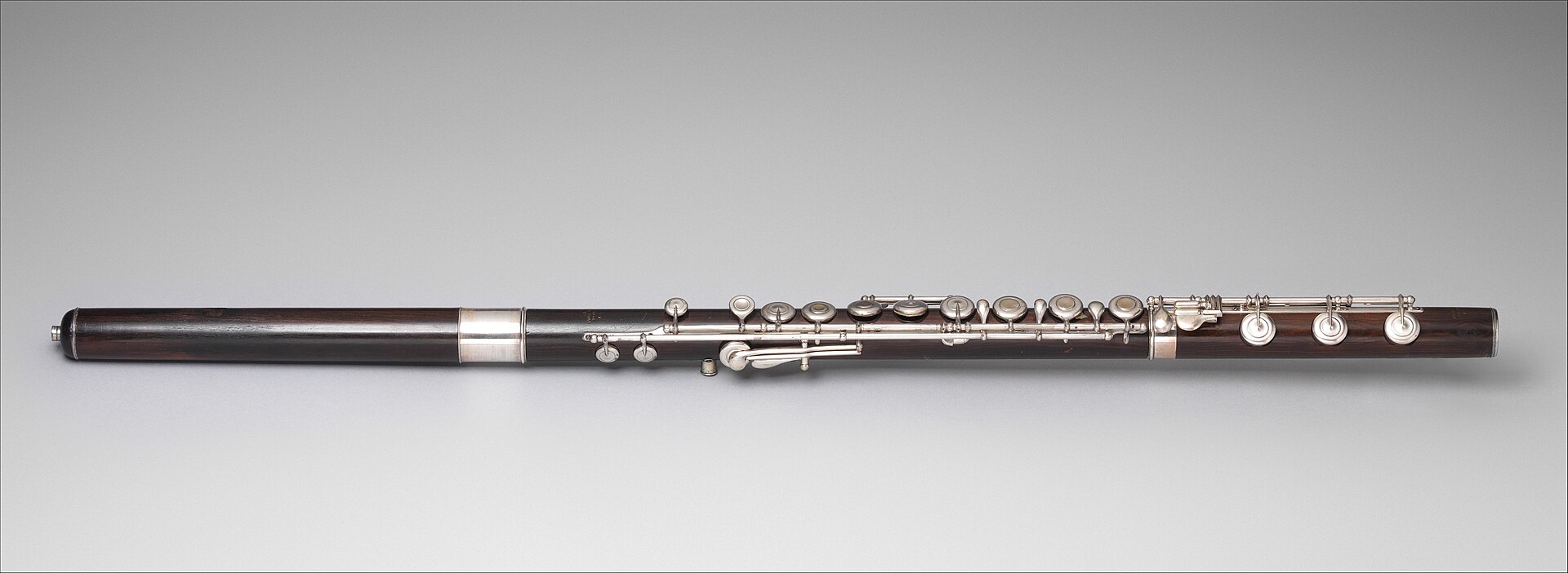
Theobald Boehm, a Munich flute player and inventor, was the son of a goldsmith who trained both as a goldsmith and as a flautist, studied the flute and became a Munich court musician in 1818, and in 1828 opened a factory.He created his new conical model in 1832; he replaced the traditional hole layout with an acoustically based one and devised a system of ring keys on longitudinal axles, and this flute was superseded in 1847 by his second design with its experimentally evolved cylindrical bore.
Boehm used his new knowledge of acoustics to calculate the ideal positions of the holes of his 1847 flute, recommended building it from metal rather than wood, and sold the English and French production rights to Rudall, Rose and Carte and to Clair Godfroy aine. The Carte 1867 flute may be considered one of the most complicated flutes to have been commercially produced on a large scale, combining two already complicated fingering systems.
5. Historical Development
The transverse flute was known in ancient Greece and Etruria by the 2nd century BCE, and was next recorded in India, then China and Japan, where it remains a leading wind instrument. Antedating the orchestral transverse flute, the fife is first attested in Europe during the 12th century, and from the time of the Crusades it has been played with cylindrical side drums as an infantry instrument, notably in Switzerland and Germany. In the 16th century the tenor flute pitched in G was played in consort with descant and bass flutes.
These 16th-century flutes were made obsolete late in the 17th century by the one-keyed conical flute, probably conceived by the celebrated Hotteterre family of makers and players in Paris, and made in separate joints with a cylindrical head joint. From 1760 three chromatic keys in addition to the original E-flat key began to be used in order to improve various semitones. By 1800 the typical orchestral flute had these keys plus a lengthened foot joint to C, making six keys altogether.
6. Notable Instruments and Collections
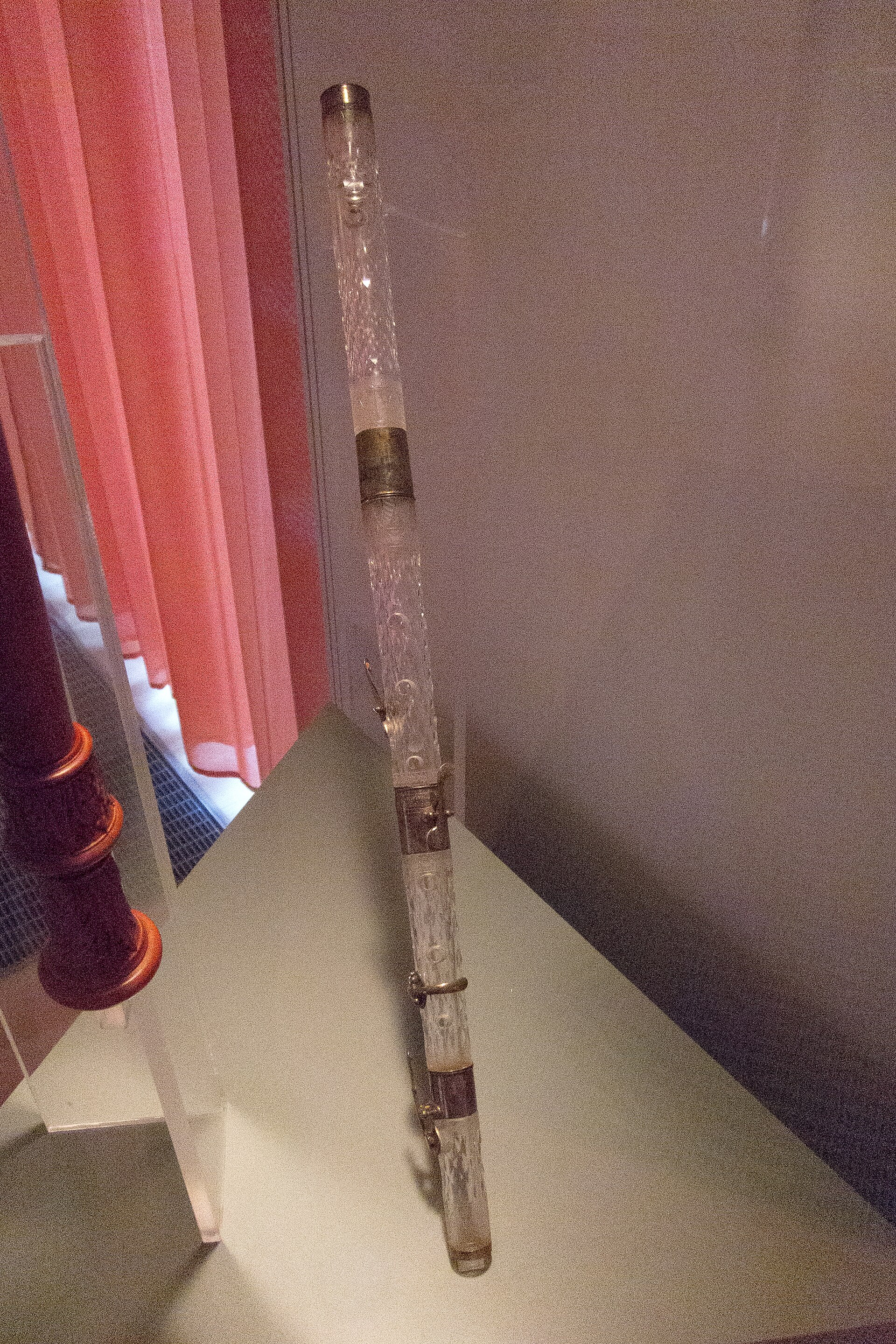
The Dayton C. Miller collection at the Library of Congress contains nearly 1,700 flutes and other wind instruments, statuary, iconography, books, music, trade catalogs, tutors and patents, mostly related to the flute.14About this Collection — Dayton C. Miller Collection · Library of Congress ↗ Its highlights include 40 flutes from the Munich workshops of Theobald Boehm, Rudolph Greve and Carl Mendler, and a flute that once belonged to King Frederick II of Prussia, designed by his teacher Joachim Quantz.15Dayton C. Miller Collection of Wind Instruments · Library of Congress ↗ The collection of the Germanisches Nationalmuseum in Nuremberg contains all types of instruments from the 16th to 20th century and stretches to more than 3000 objects 16Musical Instruments · Germanisches Nationalmuseum, Nuremberg ↗.
7. Milestones
The archaeological record for the flute is anchored in the caves of the Swabian Jura, where bone and ivory instruments from the early Aurignacian period of southwestern Germany demonstrate a well-established musical tradition at the time when modern humans colonized Europe more than 35,000 calendar years ago.
-
about 60 to 50 millennia agoDivje Babe layer depositedThe layer containing the disputed bone artefact was laid down.
-
at least 35,000 years oldHohle Fels fluteThe Hohle Fels flute is thought to be at least this old.
-
more than 35,000 calendar years agoEarly Aurignacian flutes reportedThe Nature report describes bone and ivory flutes from southwestern Germany, evidencing a musical tradition at the time modern humans colonized Europe.
-
by the 2nd century BCETransverse flute in Greece and EtruriaThe instrument was known in both regions.
-
12th centuryFife first attested in EuropeThe earliest European attestation of the fife.
-
16th centuryTenor flute in GPlayed in consort with descant and bass flutes.
-
late 17th centuryOne-keyed conical fluteSuperseded the flutes of the 16th century.
-
from 1760Chromatic keys in useChromatic keys came into use.
-
by 1800Six-key orchestral fluteThe six-key orchestral flute was established.
-
1794Boehm born in MunichTheobald Boehm was born in Munich.
-
1818Munich court postBoehm took up his post at the Munich court.
-
1828Factory openedBoehm opened his factory.
-
1831Journey to Paris and LondonBoehm travelled to Paris and London.
-
1832Conical modelBoehm produced his conical model.
-
1843Adoption in EnglandRichard Carte adopted the 1832 flute in England.
-
1847Cylindrical designBoehm introduced his cylindrical design.
-
1881Boehm dies in MunichTheobald Boehm died in Munich.
-
1995Divje Babe excavationExcavation of the Divje Babe site.
-
2005Fujara proclaimed by UNESCOThe fujara was proclaimed by UNESCO.
-
2008Hohle Fels discoveriesThe Hohle Fels discoveries were made.
-
2008Fujara inscribed by UNESCOThe fujara was inscribed by UNESCO.
8. FAQ
What is the oldest known musical instrument, and where is it kept?
The Neanderthal flute from Divje Babe is regarded as the world's oldest known musical instrument and as one of the most significant archaeological finds of global importance. 8The Neanderthal Flute · Divje Babe Archaeological Park / Cerkno Tourist Board ↗ It is held and presented by the National Museum of Slovenia, which describes it as a 60,000-year-old Neanderthal flute, the oldest musical instrument in the world and a treasure of global significance. 2Neanderthal flute — the oldest musical instrument in the world · National Museum of Slovenia ↗
How does a flute produce sound?
The air jet, working together with the resonances in the air inside the instrument, produces an oscillating component of the flow. Some of the energy of that oscillation is then radiated as sound out of the end of the flute and any open holes. 3Flute acoustics: an introduction · Music Acoustics, University of New South Wales ↗
How large is a modern flute, and how many holes does it have?
A modern Boehm-system flute pitched in C is 67 cm long with a bore of about 0.75 inch, built in three sections.1Flute | Definition, History, & Types · Encyclopaedia Britannica ↗ Its note holes, at least 13 of them, are controlled by an interlocking mechanism of padded key plates hinged on a longitudinal axis.1
What is the Hohle Fels flute made of, and how well has it survived?
It was carved from the bone of a griffin vulture and has five finger holes.1 With its intact mouthpiece, five fingerholes and a total length of 21,8 cm, it is the best-preserved Aurignacian instrument so far.9Hohle Fels · Institute for Prehistory and Archaeological Sciences, University of Tuebingen ↗
What is the Divje Babe flute made from, and how were its holes made?
What did the Jiahu excavations in China yield?
Fragments of thirty flutes were discovered in the burials at Jiahu, and six of these represent the earliest examples of playable musical instruments ever found.11Jiahu (ca. 7000-5700 B.C.) · The Metropolitan Museum of Art, Heilbrunn Timeline of Art History ↗ They were carved from the wing bone of the red-crowned crane, with five to eight holes capable of producing varied sounds in a nearly accurate octave.11
How did Boehm's 1847 design differ from his earlier one?
In place of the conical bore that had characterized his 1832 model, Boehm decided that the best combination of strong tone and good intonation came from a fully cylindrical-bore body and a head joint crafted to a particular conical bore that he called a parabola.13Boehm's Ghost: A Vicarious Portrait of a Flute Maker in London · Duke University Musical Instrument Collections ↗ This design was widely accepted and is essentially the modern orchestral flute.12Theobald Boehm | Flute inventor, Music innovator · Encyclopaedia Britannica ↗
9. Timeline: from cave-bear bone to the modern orchestra
- about 60,000 years agoThe Divje Babe fluteA cave bear bone pierced with four holes, found near Cerkno in Slovenia, is dated to about 60,000 to 50,000 years ago and is the only instrument reliably attributed to Neanderthals.
- about 40,000 years agoThe earliest flutesFlutes are a diverse family of instruments whose earliest examples are 40,000 years old, and researchers treat complex musical instruments as an indication of fully modern behaviour.
- more than 35,000 calendar years agoBone and ivory flutes in the Swabian JuraBone and ivory flutes from the early Aurignacian of southwestern Germany document a well-established musical tradition at the time when modern humans colonized Europe.
- at least 35,000 years oldThe griffin vulture flute of Hohle FelsTwelve fragments of a flute crafted from the radius of a griffon were found at Hohle Fels in 2008, and the reconstructed instrument, with its intact mouthpiece, five fingerholes and a total length of 21,8 cm, is the best-preserved Aurignacian instrument so far.
- 7000 to 5700 BCEThe Jiahu flutesFragments of thirty flutes were discovered in the burials at Jiahu in Henan, and six of them, carved from the wing bone of the red-crowned crane, are the earliest examples of playable musical instruments ever found.
- 12th centuryThe fife attested in EuropeAntedating the orchestral transverse flute, the fife is first attested in Europe during the 12th century, and from the time of the Crusades it was played with cylindrical side drums as an infantry instrument.
- 16th centuryThe flute consortIn the 16th century the tenor flute pitched in G was played in consort with descant and bass flutes, all typically of boxwood with six finger holes and no keys.
- late 17th centuryThe one-keyed conical fluteThe 16th-century flutes were made obsolete late in the 17th century by the one-keyed conical flute, probably conceived by the Hotteterre family of makers and players in Paris.
- from 1760Additional chromatic keysFrom 1760 three chromatic keys in addition to the original E-flat key began to be used to improve various semitones, and by 1800 the typical orchestral flute had six keys altogether.
- 9 April 1794Birth of Theobald BoehmTheobald Boehm, the German flutist, composer and flute maker whose key mechanism and fingering system were widely adopted by later makers, was born in Munich.
- 1831Boehm in LondonOn a tour that took him to Paris and London, Boehm found that he could not match the English flautist Charles Nicholson in power of tone, and he set to work to remodel his flute.
- 1832Boehm's first fluteIn 1832 Boehm developed the first so-called Boehm flute, characterized by a system of levers and rings for controlling the opening and closing of the tone holes.
- 1847The cylindrical Boehm fluteIn 1847 Boehm designed and applied his keywork system to the cylindrical flute body and parabolic head joint, a design that is essentially the modern orchestral flute.
- 1867Carte's combined-system fluteCarte's 1867 design refined his 1851 flute by keeping most of the same fingerings but adding additional keys that permit some Boehm fingerings on the same instrument as alternatives.
- 1940A gift for the Miller collectionIn 1940 the London firm Rudall Carte removed an 1815 Laurent glass flute from its own exhibit cases and turned it over to Dayton C. Miller for ten pounds sterling.
- 2005 and 2008UNESCO recognises the FujaraThe Fujara, an extremely long flute with three finger holes traditionally played by Slovak shepherds, was proclaimed in 2005 and inscribed in 2008 on the Representative List of the Intangible Cultural Heritage of Humanity.
References (17)
- 1Flute | Definition, History, & Types — Encyclopaedia Britannica Web↩View source
- 2Neanderthal flute — the oldest musical instrument in the world — National Museum of Slovenia Web↩View source
- 3Flute acoustics: an introduction — Music Acoustics, University of New South Wales Web↩View source
- 4Fife — Grinnell College Musical Instrument Collection 1799 WebView source
- 5Fife | Small, High-Pitched, Woodwind — Encyclopaedia Britannica WebView source
- 6Fujara and its music — UNESCO Intangible Cultural Heritage WebView source
- 7Dizi (di zi), Chinese transverse flute — Duke University Musical Instrument Collections WebView source
- 8The Neanderthal Flute — Divje Babe Archaeological Park / Cerkno Tourist Board Web↩View source
- 9Hohle Fels — Institute for Prehistory and Archaeological Sciences, University of Tuebingen Web↩View source
- 10New flutes document the earliest musical tradition in southwestern Germany — Nature (Conard, Malina & Muenzel) JournalView source
- 11Jiahu (ca. 7000-5700 B.C.) — The Metropolitan Museum of Art, Heilbrunn Timeline of Art History Web↩View source
- 12Theobald Boehm | Flute inventor, Music innovator — Encyclopaedia Britannica Web↩View source
- 13Boehm's Ghost: A Vicarious Portrait of a Flute Maker in London — Duke University Musical Instrument Collections Web↩View source
- 14About this Collection — Dayton C. Miller Collection — Library of Congress Web↩View source
- 15Dayton C. Miller Collection of Wind Instruments — Library of Congress Web↩View source
- 16Musical Instruments — Germanisches Nationalmuseum, Nuremberg Web↩View source
- 17Transverse Flute, Theobald Boehm, German, after 1832 — The Metropolitan Museum of Art 1832 WebView source