Dolphin
The toothed whales of the family Delphinidae — their biology, the species from the bottlenose and the orca to the river dolphins, their communication and tool use, and the fisheries and laws that reshaped their fortunes.
Dolphins are toothed whales of the family Delphinidae, joined by a handful of river-dolphin families, found in every ocean and in major river systems; most measure under 3 metres (10 feet), but the family also contains its largest member, the killer whale. They live in fission-fusion societies, feed on fish and squid, communicate with individually distinctive learned signature whistles, and in Shark Bay even use marine sponges as tools. Their modern history has been shaped by people: encircling nets in the Eastern Tropical Pacific killed over three million spotted dolphins between 1959 and 1972, an era that produced the U.S. Marine Mammal Protection Act of 1972, the Dolphin Protection Consumer Information Act of 1990, and a dolphin bycatch reduction of more than 99 percent in the yellowfin tuna fishery. The same waters now carry newer evidence of microplastic inhalation, while some species remain on the edge: only about 48 to 64 adult Māui dolphins survive off New Zealand, and the Chinese river dolphin has not been confirmed seen since 2001.
In this article
- 1Overview
- 2Classification and Diversity
- 3Form and Size
- 4Distribution and Habitat
- 5Behaviour and Social Life
- 6Diet and Predators
- 7Reproduction and Lifespan
- 8Conservation Status and Threats
- 9Human Interaction and Legal Protection
- 10Key Dates
- 11Timeline: from the Miocene oceans to dolphin-safe tuna
- 12Frequently asked questions
- 13Knowledge graph
Overview
Dolphins are mammalian toothed whales, or odontocetes, belonging to the family Delphinidae, the oceanic dolphins, or to the river dolphin families Platanistidae and Iniidae. They are swift swimmers with spindle-shaped bodies and beaklike snouts, and most measure less than 3 metres (10 feet) in length. Their distribution spans marine environments worldwide, from equatorial to subpolar waters, as well as several major river systems.
1. Classification and Diversity
Dolphins are toothed whales, or odontocetes, and the term covers the oceanic dolphins of the family Delphinidae together with the river dolphin families Platanistidae and Iniidae. Delphinidae contains nearly 40 species, six of which are commonly called whales, among them the killer whale and the pilot whales. The killer whale is the largest member of Delphinidae, reaching a length of up to 32 feet and a weight of up to 11 tons, with a lifespan of 30 to 90 years.
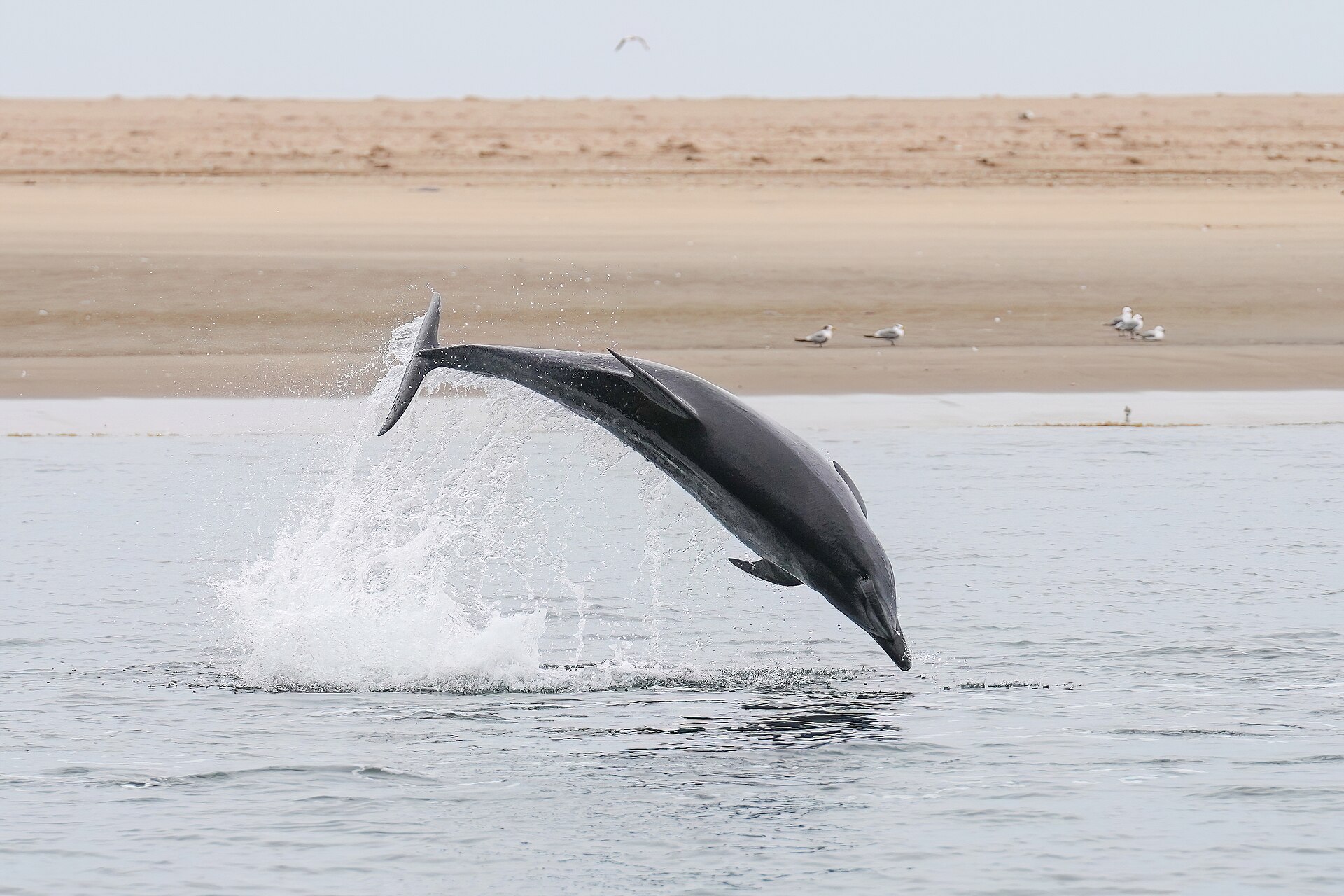
Two species of bottlenose dolphin are recognized: the common bottlenose dolphin (Tursiops truncatus) and the Indo-Pacific bottlenose dolphin (Tursiops aduncus), and both can occur in the same area. A third possible species, the Burrunan dolphin, has been proposed for inshore populations of bottlenose dolphins in Australia.
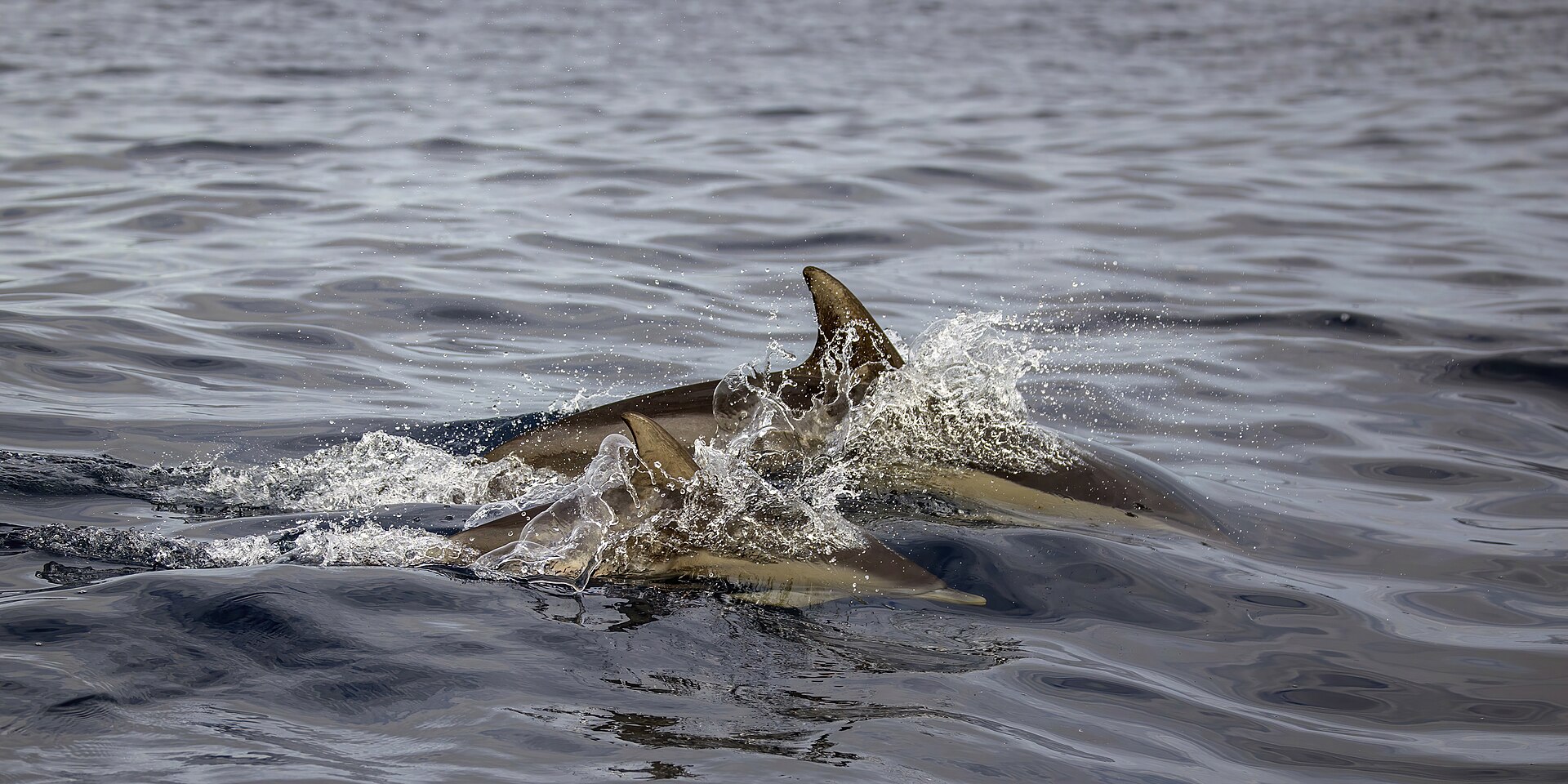
Dolphins first appear in the fossil record in the Early Miocene Epoch, between 23 million and 16 million years ago.
2. Form and Size
Dolphins are spindle-shaped animals with beaklike snouts, and the common bottlenose dolphin takes its name from its short, thick rostrum. The common bottlenose dolphin measures 6 to 13 feet in length and weighs 300 to 1,400 pounds, while the Indo-Pacific bottlenose dolphin tends to be smaller and more slender, reaching a maximum adult length of 2.6 m and a maximum weight of 230 kg for adult males. Spinner dolphins are relatively small, with slender bodies, thin recurved flippers, and dorsal fins usually ranging from slightly curved to erect and triangular.
Among the smallest dolphins are the Māui and Hector's dolphins, whose adults are about 1.5 m long. Hector's dolphins are one of the world's smallest dolphins and are mostly found around the coast of New Zealand's South Island, while Māui dolphins are one of the rarest and smallest dolphins in the world.
Coloration and anatomy vary considerably across species. Pantropical spotted dolphins have no spots at birth but accumulate them with age until almost completely covered with overlapping spots. The body color of Inia geoffrensis varies with age: young individuals are dark gray, while adults have a solid or blotched pink hue, and males are significantly pinker than females. None of the cervical vertebrae of Inia geoffrensis are fused, which allows it to move its head in all directions. A killer whale's ears are small openings behind the eyes without outer flaps, and it hears whistles and clicks through an auditory bulla, an earbone complex in its lower jaw.
3. Distribution and Habitat
Dolphins occur worldwide in tropical and temperate inshore, coastal, shelf and oceanic waters, and in several major river systems, ranging from equatorial to subpolar waters. Bottlenose dolphins inhabit harbors, bays, gulfs and estuaries, nearshore coastal waters, deeper waters over the continental shelf, and the open ocean far offshore. Killer whales are most abundant in colder waters such as Antarctica, the north Atlantic, and the north Pacific, but also occur in tropical and subtropical waters. The pantropical spotted dolphin occurs in the Pacific, Atlantic and Indian Oceans as well as the Persian Gulf and the Red Sea, while the Atlantic spotted dolphin is limited to warm-water regions of the Atlantic.
River and coastal populations show pronounced specializations. Botos (Inia geoffrensis) during the wet season navigate smaller tributaries and venture into river floodplains and flooded forests. The Hawaiian population of spinner dolphins spends daylight hours in coastal waters, generally in calm bays, used to rest, socialize, care for young, and avoid predators. Māui dolphins are only found on the west coast of the North Island in New Zealand, while Hector's dolphins are mostly found around the coast of New Zealand's South Island and are endemic to New Zealand.
4. Behaviour and Social Life
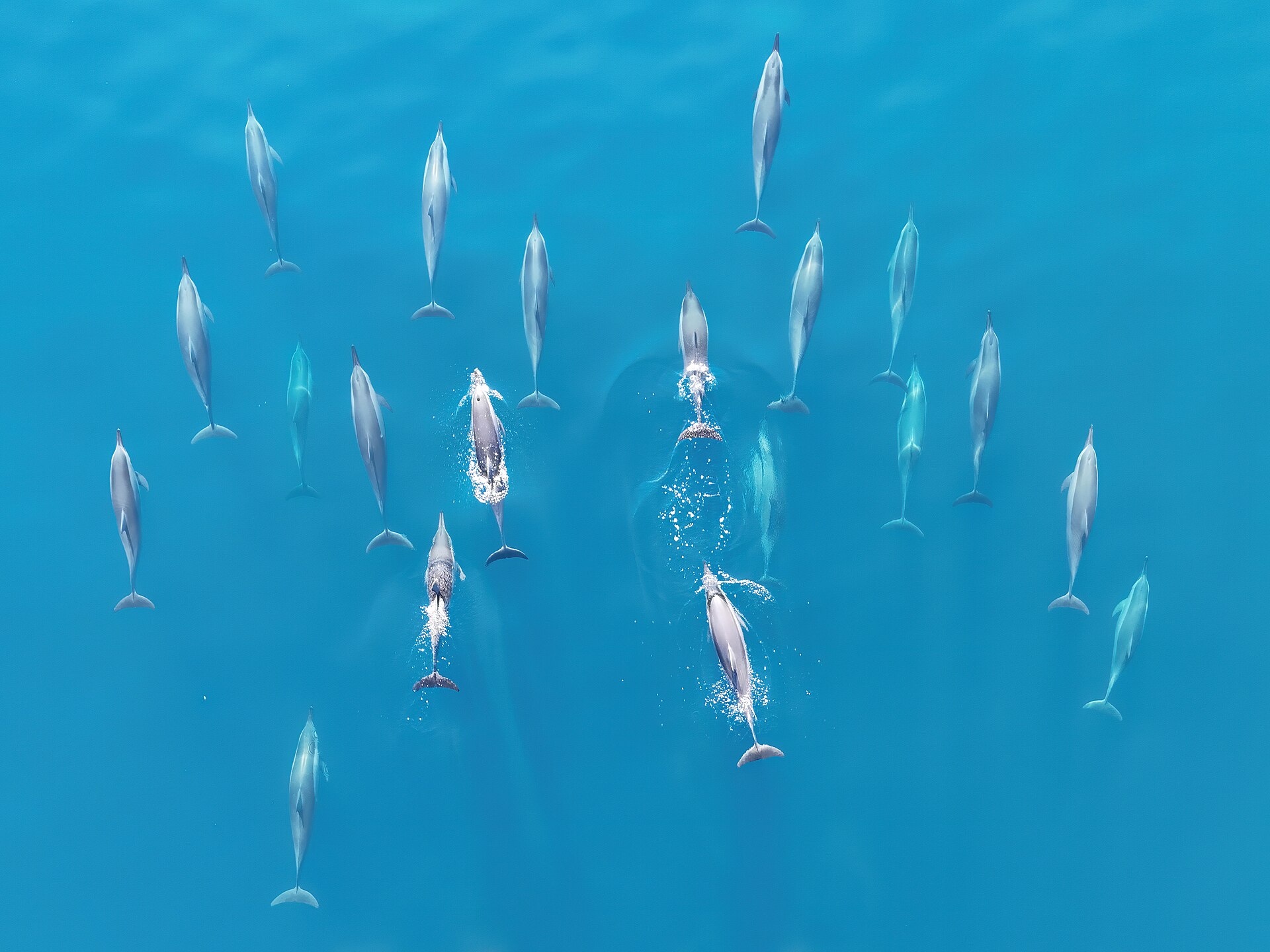
Spinner dolphins follow a fission-fusion social pattern, fusing into large schools of hundreds of animals when feeding at night and splitting into much smaller groups, sometimes of only a dozen individuals, when socializing and resting during the day.
At night pantropical spotted dolphins dive into deeper waters to search for prey, feeding primarily on mesopelagic cephalopods and fish.
Shark Bay's dolphin population has incredibly rich social lives and an intriguing repertoire of culturally transmitted foraging innovations that involve tool use.
Common bottlenose dolphins produce individually distinctive signature whistles that are learned early in life and that help animals recognize and maintain contact with conspecifics. By the operational definition used in this field, a signature whistle is the predominant whistle type produced when an animal is isolated from conspecifics. Beecher's Information Statistic, calculated to quantify the individual distinctiveness of signature whistles, was found to be higher than for any other animal signal studied so far. The Sarasota Dolphin Whistle Database now contains 926 recording sessions of 293 individual dolphins, most of known age, sex, and matrilineal relatedness, and the longest time span over which an individual has been recorded is 43 years.
5. Diet and Predators
Killer whales eat a wide variety of large prey, including seals, sea lions, smaller whales and dolphins, fish, sharks, squid, sea turtles, sea birds, and sea otters. One ecotype of killer whales in the U.S. Pacific Northwest called Residents exclusively eats fish, mainly salmon, while another ecotype, called Transients or Bigg's killer whales, primarily eats marine mammals and squid.
The most common predators of bottlenose dolphins are larger sharks such as bull, tiger, and dusky sharks, which prey on smaller dolphins, calves, and females more than on larger dolphins.
6. Reproduction and Lifespan
Female bottlenose dolphins typically reach sexual maturity between 5 and 10 years of age, while males mature between 8 and 13 years old.
Common dolphin gestation usually lasts 10 to 12 months, and the calf is born tail first at 3 feet long and 25 to 35 pounds. Females produce a calf once every two to three years.
7. Conservation Status and Threats
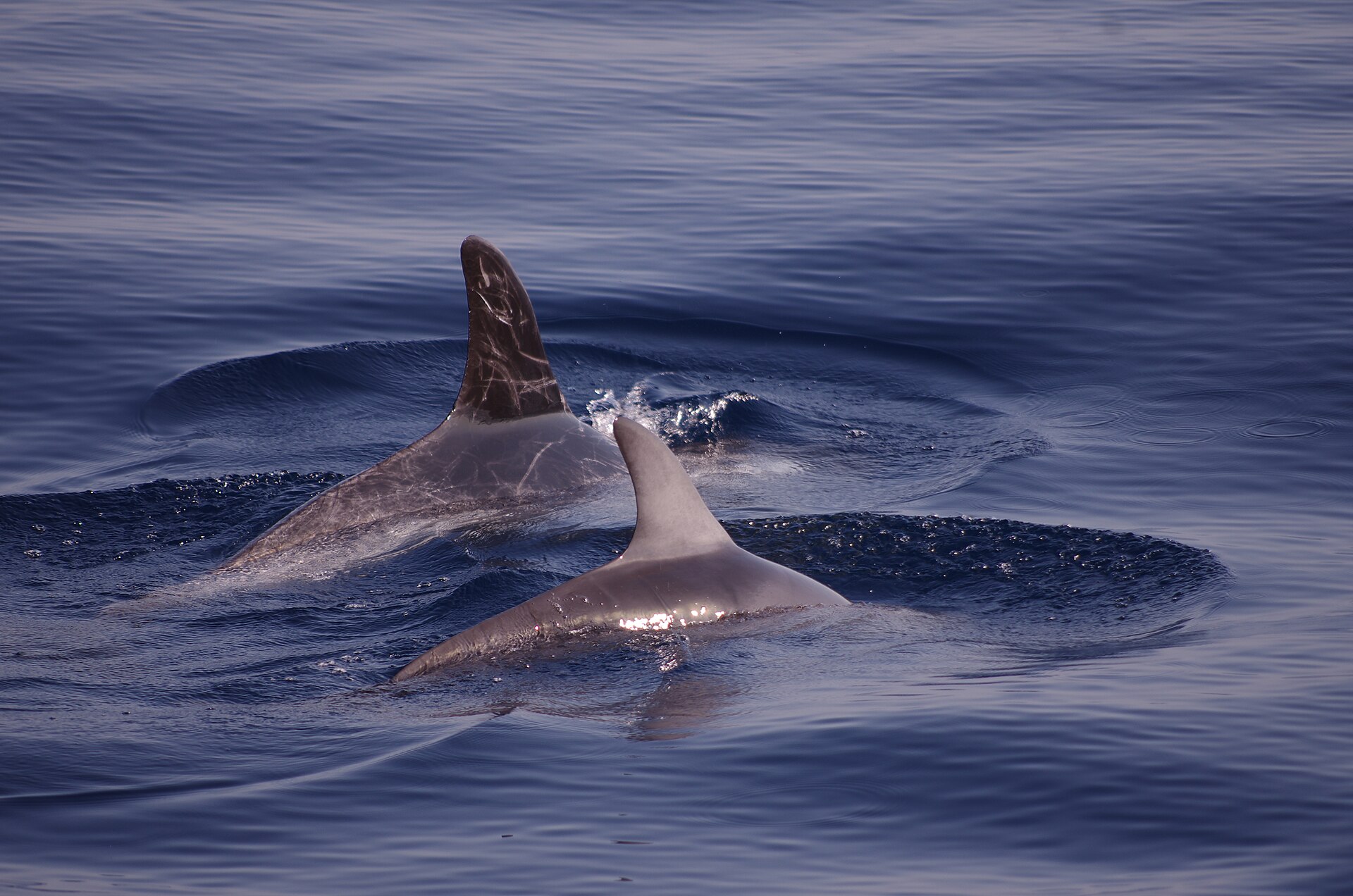
The common bottlenose dolphin is assessed as Least Concern on the IUCN Red List of Threatened Species, under version 3.1, in an assessment made in 2019 that retained the listing from 2008. It ranks among the most common cetacean species worldwide, and the sum of available abundance estimates is around 750,000, though most of the species' range has not been surveyed, so actual abundance is considerably higher. No evidence indicates that threats are producing a global population decline. Several populations nonetheless give cause for concern: the Fiordland subpopulation in New Zealand is Critically Endangered, the Mediterranean subpopulation is Vulnerable, and the Black Sea subspecies is Endangered. Mediterranean bottlenose dolphins are considered Vulnerable to extinction, and the Black Sea population carries an IUCN Endangered status. Bycatch in fishing gear occurs throughout the species' range, but quantitative data on bycatch rates are lacking in most areas. In the United States, bottlenose dolphins are not endangered or threatened under the Endangered Species Act, but they are protected under the Marine Mammal Protection Act.
The Indo-Pacific bottlenose dolphin is designated as Data Deficient in the IUCN Red List of Threatened Species because it occurs in fragmented coastal populations and its range includes countries where little research has taken place.
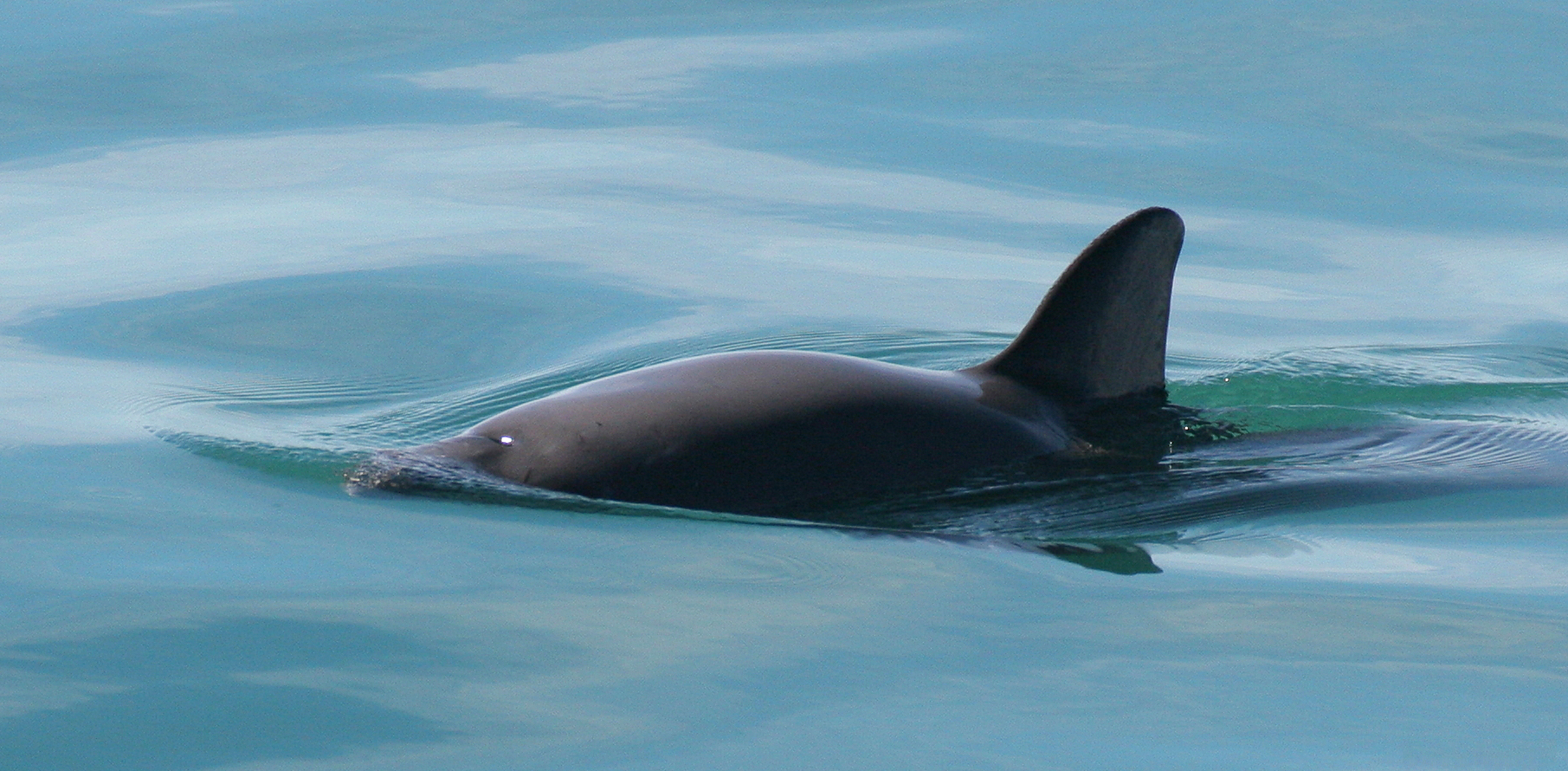
Southern Resident killer whales are the only endangered population of killer whales in the United States, ranging from central California to southeast Alaska.
Māui dolphins are among the rarest and smallest dolphins in the world, and number between 48 and 64 individuals older than one year. They are classified as Nationally critical and face threats including fishing, toxoplasmosis, oil and gas exploration and boat strike. Hector's dolphins, also among the world's smallest dolphins, number about 15,000 individuals older than one year and are classified as Nationally vulnerable.
The Chinese river dolphin faces threats including fisheries interactions, habitat degradation, habitat impediments, and pollution. During November and December 2006 an international research team conducted an intensive six-week multi-vessel visual and acoustic survey covering the entire historical range. By the end of the expedition the team failed to find any evidence that the species survives and concluded that the Chinese river dolphin may now be extinct. Periodic, undocumented sightings have occurred but none have been confirmed.
Because previous studies of bottlenose dolphins had reported exposure to plasticizing chemicals and particle loads in gastrointestinal tracts but not inhalation, the objective was to determine whether inhalation is a viable route of microplastic exposure for free-ranging dolphins. Exhalation samples were opportunistically collected from dolphins in Sarasota Bay, Florida, and Barataria Bay, Louisiana, during catch-and-release health assessments. All dolphin samples contained at least one suspected microplastic particle, and the polymer composition of a subset was determined. The study is the first to document microplastic exposure via inhalation in a free-ranging cetacean species, and further research is needed to understand whether this exposure route adds to or worsens the risk of adverse health impacts from microplastics alone or alongside other stressors.
8. Human Interaction and Legal Protection
Because of the unique association between tuna and dolphins in the eastern Pacific Ocean and the purse seine fishery it supports, protecting dolphin stocks became a priority for the United States, and the Dolphin Protection Consumer Information Act was passed in 1990 to address the issue. NOAA Fisheries' Tuna Tracking and Verification Program, established under the Dolphin Protection Consumer Information Act, monitors all domestic cannery production and imports of frozen or processed tuna and tuna products to ensure compliance with dolphin-safe certification and labeling requirements. In most fisheries, U.S. regulations require a written statement from the captain of a vessel certifying that no purse seine net or other fishing gear was intentionally deployed on or used to encircle dolphins during the fishing trip and that no dolphins were killed or seriously injured in those sets. The Marine Mammal Protection Act paved the way for domestic and international agreements that have helped reduce dolphin bycatch in the yellowfin tuna fishery by more than 99 percent.
9. Key Dates
-
1959–1972Eastern Tropical Pacific tuna fisheryOver three million pantropical spotted dolphins were killed in the fishery.16Spotted dolphin · International Whaling Commission ↗
-
1970The Sarasota study beginsBottlenose dolphins in Sarasota Bay, Florida, became the focus of health and population abundance studies, one of the longest-running research efforts on a wild dolphin population.13First evidence of microplastic inhalation among free-ranging small cetaceans · PLOS ONE ↗
-
December 21, 1972Marine Mammal Protection ActThe United States enacted the Marine Mammal Protection Act, which established a moratorium on the taking of marine mammals.17Marine Mammal Protection Act · NOAA Fisheries (U.S. National Oceanic and Atmospheric Administration) ↗
-
1989Chinese river dolphin listed as endangeredNOAA Fisheries listed Chinese river dolphins as endangered under the Endangered Species Act, by which time the species had already declined sharply in the Yangtze.18Chinese River Dolphin · NOAA Fisheries (U.S. National Oceanic and Atmospheric Administration) ↗
-
1990Dolphin Protection Consumer Information ActThe Dolphin Protection Consumer Information Act was passed.14Dolphin-Safe Tuna · NOAA Fisheries (U.S. National Oceanic and Atmospheric Administration) ↗
-
1994Marine Mammal Protection Act amendmentsMade several key changes to how bycatch of marine mammals in commercial fisheries is regulated, including a goal for reducing incidental mortality and serious injury to rates approaching zero.15Bycatch · NOAA Fisheries (U.S. National Oceanic and Atmospheric Administration) ↗
-
1999United States joins the AIDCPThe United States signed on as a Party to the Agreement on the International Dolphin Conservation Program.14
-
2000Tuna Tracking and Verification ProgramThe Tuna Tracking and Verification Program was implemented to monitor compliance with dolphin-safe certification and labeling requirements.14
-
2001Last confirmed baijiThe last confirmed occurrence of the Chinese river dolphin was recorded; every later report of the species remained unconfirmed.18
10. Timeline: from the Miocene oceans to dolphin-safe tuna
- 23-16 million years agoFirst dolphin fossilsDolphins first appear in the fossil record in the Early Miocene Epoch, at a time when the cetacean fauna was more diverse.
- 1959-1972Millions of spotted dolphins killed to catch tunaBetween 1959 and 1972 the tuna fishery in the Eastern Tropical Pacific killed over three million pantropical spotted dolphins, after fishers learned to set their nets around dolphin schools to capture the tuna below.
- 1970The Sarasota study beginsBottlenose dolphins in Sarasota Bay, Florida, became the focus of health and population abundance studies, one of the longest-running research efforts on a wild dolphin population.
- December 21, 1972Marine Mammal Protection ActThe United States enacted the Marine Mammal Protection Act, which took effect upon the expiration of a sixty-day period following its enactment and established a moratorium on the taking of marine mammals.
- 1989Chinese river dolphin listed as endangeredNOAA Fisheries listed Chinese river dolphins as endangered under the Endangered Species Act, by which time the species had already declined sharply in the Yangtze.
- 1990Dolphin-safe tuna labeling lawThe Dolphin Protection Consumer Information Act was passed, describing the conditions under which tuna products may be labeled dolphin-safe in the United States.
- 1994MMPA amendments target zero mortalityAmendments to the Marine Mammal Protection Act added a goal of reducing incidental mortality and serious injury of marine mammals to rates approaching zero and required take reduction plans for strategic stocks.
- 1999United States joins the AIDCPThe United States signed on as a Party to the Agreement on the International Dolphin Conservation Program, the agreement that grew out of the 1992 La Jolla accord.
- 2000Tuna Tracking and Verification ProgramThe Tuna Tracking and Verification Program was implemented to fulfill the AIDCP mandate for the United States and to monitor compliance with dolphin-safe certification and labeling requirements.
- 2001Last confirmed baijiThe last confirmed occurrence of the Chinese river dolphin was recorded; every later report of the species remained unconfirmed.
- 2005Southern Resident killer whales listed as endangeredSouthern Resident killer whales were listed as endangered under the Endangered Species Act, and a recovery plan followed in 2008.
- November-December 2006The survey that found no baijiAn international research team ran an intensive six-week multi-vessel visual and acoustic survey covering the entire historical range of the Chinese river dolphin and failed to find any evidence that the species survives.
- 2015Common dolphins consolidated into one speciesGenetic studies determined that all populations of common dolphins examined to date would be more logically grouped under one species, Delphinus delphis, with four recognized subspecies.
- 2019IUCN reassesses the common bottlenose dolphinThe IUCN Red List published its errata assessment of Tursiops truncatus, retaining Least Concern status and noting that the species is among the most common cetaceans globally.
- August 2022The Sarasota Dolphin Whistle DatabaseThe whistle database built from decades of recordings in Sarasota Bay was published, covering 926 recording sessions of 293 individual dolphins.
- October 2024Microplastics found in dolphin breathA study reported the first evidence of microplastic inhalation among free-ranging small cetaceans, finding suspected particles in exhalation samples from every dolphin tested.
11. Frequently asked questions
How fast can dolphins swim?
The bottlenose dolphin can attain speeds of nearly 30 km/hr in short bursts, and common dolphins are even faster.1Dolphin: Facts & Pictures · Encyclopaedia Britannica ↗
How do dolphins sleep without drowning?
Bottlenose dolphins rest one side of their brains while decreasing their activity level, which lets them stay conscious enough to breathe and carry on basic survival behaviors.9Tursiops truncatus (bottlenose dolphin) · Animal Diversity Web, University of Michigan Museum of Zoology ↗ Common dolphins do not sleep with both eyes closed; instead they close one eye for 5 to 10 minutes and then close the other eye.10Delphinus delphis (short-beaked common dolphin) · Animal Diversity Web, University of Michigan Museum of Zoology ↗
Do dolphins have individual names?
Common bottlenose dolphins produce individually distinctive signature whistles that are learned early in life and that help animals recognize and maintain contact with conspecifics.7The Sarasota Dolphin Whistle Database: A unique long-term resource for understanding dolphin communication · Frontiers in Marine Science ↗ Signature whistles were first described by Melba and David Caldwell in the 1960s.7
How long do dolphins live?
How do dolphins find their prey?
Echolocation calls in bottlenose dolphins pass through the melon and intramandibular fat body, which contain acoustic lipids and serve as acoustic lenses to focus sound.9
How do dolphins hunt together?
Bottlenose dolphins work together to herd fish into groups and then take turns charging through the school of fish to feed.12
References (21)
- 1Dolphin: Facts & Pictures — Encyclopaedia Britannica Web↩View source
- 2Killer Whale — NOAA Fisheries (U.S. National Oceanic and Atmospheric Administration) WebView source
- 3Bottlenose dolphin — International Whaling Commission WebView source
- 4Spinner Dolphin — NOAA Fisheries (U.S. National Oceanic and Atmospheric Administration) WebView source
- 5Pantropical Spotted Dolphin — NOAA Fisheries (U.S. National Oceanic and Atmospheric Administration) WebView source
- 6Shark Bay Dolphin Research — Shark Bay Dolphin Research (University of Zurich; Monkey Mia, Western Australia) WebView source
- 7The Sarasota Dolphin Whistle Database: A unique long-term resource for understanding dolphin communication — Frontiers in Marine Science 2022 Journal↩View source
- 8Orcinus orca (killer whale) — Animal Diversity Web, University of Michigan Museum of Zoology WebView source
- 9Tursiops truncatus (bottlenose dolphin) — Animal Diversity Web, University of Michigan Museum of Zoology Web↩View source
- 10Delphinus delphis (short-beaked common dolphin) — Animal Diversity Web, University of Michigan Museum of Zoology Web↩View source
- 11Common dolphin — International Whaling Commission WebView source
- 12Common Bottlenose Dolphin — NOAA Fisheries (U.S. National Oceanic and Atmospheric Administration) Web↩View source
- 13First evidence of microplastic inhalation among free-ranging small cetaceans — PLOS ONE Journal↩View source
- 14Dolphin-Safe Tuna — NOAA Fisheries (U.S. National Oceanic and Atmospheric Administration) Web↩View source
- 15Bycatch — NOAA Fisheries (U.S. National Oceanic and Atmospheric Administration) Web↩View source
- 16Spotted dolphin — International Whaling Commission Web↩View source
- 17Marine Mammal Protection Act — NOAA Fisheries (U.S. National Oceanic and Atmospheric Administration) Web↩View source
- 18Chinese River Dolphin — NOAA Fisheries (U.S. National Oceanic and Atmospheric Administration) Web↩View source
- 19Tursiops truncatus (Common Bottlenose Dolphin) — IUCN Red List assessment — International Union for Conservation of Nature (IUCN) Red List of Threatened Species WebView source
- 20Māui dolphin — New Zealand Department of Conservation (DOC) WebView source
- 21Hector's dolphin — New Zealand Department of Conservation (DOC) WebView source
 DNA
 The Internet
 World Wide Web
