Orca
The ocean's top predator — its size and senses, its fish-eating and mammal-eating ecotypes, its matrilineal societies, and the populations scientists race to protect.
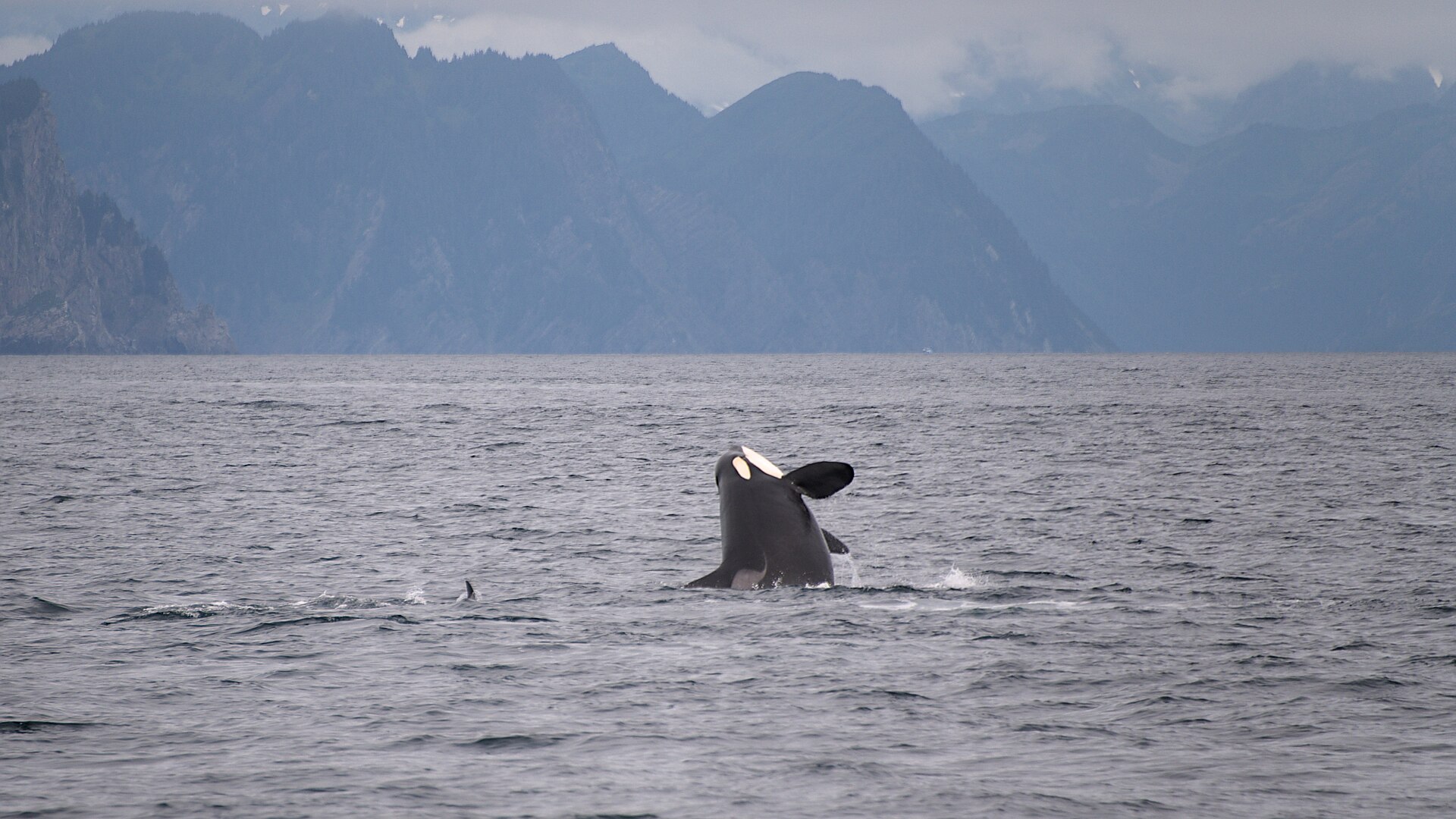
The orca, or killer whale (Orcinus orca), is the largest member of the dolphin family and the most widely distributed of all cetaceans, found in every ocean from the polar regions to the equator. It is a highly social, matrilineal predator whose populations specialise on fish, marine mammals or sharks, and it is studied through long-term photo-identification projects such as the Southern Resident community of the eastern North Pacific. The species is globally listed as Data Deficient by the IUCN, while some populations, including the Southern Residents and the Strait of Gibraltar subpopulation, are assessed as endangered or critically endangered.
In this article
- 1Overview
- 2Taxonomy and Naming
- 3Description and Anatomy
- 4Distribution and Ecotypes
- 5Diet and Hunting
- 6Social Structure and Communication
- 7Reproduction and Life Cycle
- 8Population and Conservation Status
- 9Threats and Protection
- 10Southern Resident Killer Whales
- 11Timeline
- 12Frequently Asked Questions
- 13Timeline: from Linnaeus to modern conservation
- 14Knowledge graph
Overview
The killer whale, also known as the orca, is the ocean's top predator and the largest member of the Delphinidae family, the dolphins. It is found in every ocean in the world and is the most widely distributed of all cetaceans. Technically it is the largest dolphin species, though it is called a whale because of its large size.
1. Taxonomy and Naming
The killer whale is still treated as a single species, yet there is extensive and growing evidence that it is in fact a complex of multiple forms with morphological, genetic, ecological and behavioural differences that merit subspecies, if not also species, designations. At least eight recognised forms differ in external colouring, appearance, feeding habits and ecology. Genetic studies show that orca populations have diverged primarily as a result of feeding specialization, with distinct mammal-eating and fish-eating populations. Numerous ecotypes have been identified on the basis of morphology and diet, including specialists that eat marine mammals, or fish and even sharks.
A team of NOAA Fisheries and university scientists published research in Royal Society Open Science showing that West Coast resident and Bigg's killer whales are different species. A review and new analyses indicate that species-level status is justified for eastern North Pacific Bigg's killer whales and resident killer whales. Resident and Bigg's killer whales are the first separately identified species of killer whales, breaking from the longstanding view that all killer whales belong to one worldwide species. Because the two binomials are described in the same publication with no prior names from the North Pacific, the authors proposed Orcinus ater and Orcinus rectipinnus for the resident and Bigg's species respectively.
The name Orcinus ater dates from Cope in Scammon during 1869, and in Latin ater means black or dark, which probably refers to the largely black colour of this species. Cope edited and then published Scammon's manuscript in 1869 in the Proceedings of the Academy of Natural Sciences of Philadelphia.
2. Description and Anatomy
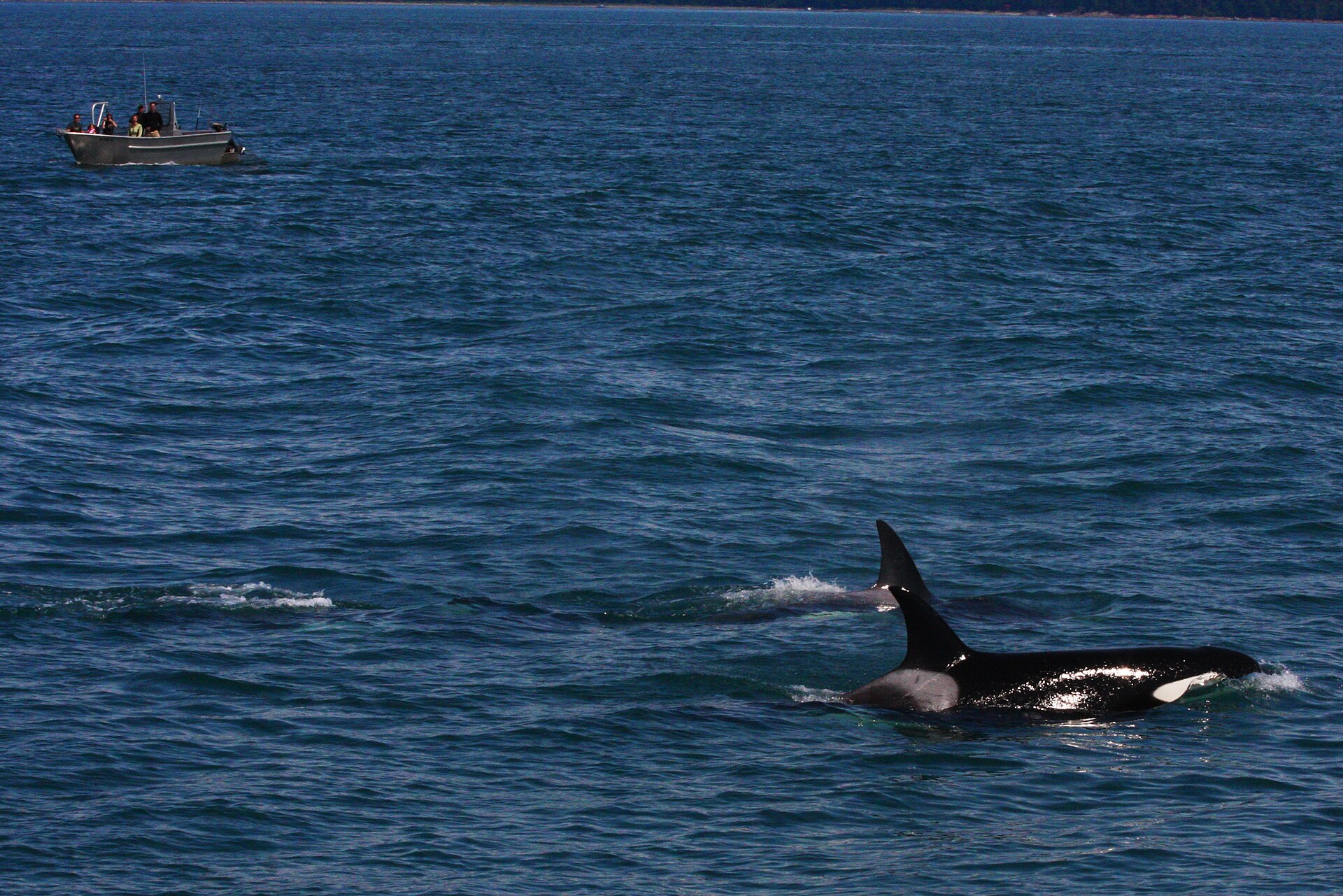
The killer whale, or orca, is a large dolphin whose maximum male length exceeds 10 metres, while females measure about 8.5 metres. One survey of Antarctic animals gives males a length of about 9.75 m and females 8.5 m, and notes that mature males are obvious because of their very tall dorsal fin. A separate account places the species at up to 9 metres in length, with the dorsal fins of males reaching higher than a metre.
In older males the dorsal fin is very tall, up to 1.8 metres, and straight, whereas females and young males carry a distinctly sickle-shaped fin about half that size. The skull holds the largest brain of all the dolphins. Newborn calves are from 2 to 2.4 metres long and weigh about 136 kilograms at birth.
3. Distribution and Ecotypes
Killer whales occupy every ocean from the Arctic to the Antarctic. In the North Pacific, three ecotypes are recognised — Resident, Transient and Offshore — which differ in appearance, diet, habitat, genetics and behaviour. Transient whales take a more varied diet that includes squid and marine mammals such as seals, sea lions, porpoises, dolphins and other whales. Offshore whales range more widely than any other community and often occur more than 9 miles from shore.
Antarctic waters hold five distinct forms — Types A, B1, B2, C and D — that differ markedly in phenotype, genetics and culture. Type A, which has a medium eyepatch parallel to the body axis and no dorsal cape, is circumpolar, occurs mainly offshore in ice-free water and preys chiefly on Antarctic minke whales. Type C, with its small forward-slanted eyepatch and dorsal cape, lives inshore, mainly in the pack ice off East Antarctica, and has been recorded feeding only on Antarctic toothfish. Type D, the subantarctic killer whale, is the rarest and least known of the forms and remains largely unstudied. Telemetry indicates that the ecotypes share a common long-distance migration, probably tied to physiological needs such as skin maintenance rather than to foraging alone.
Regional behaviour varies with local prey and terrain. Norwegian whales feed on herring and other fish, and large numbers gather each autumn in the Norwegian Tysk Fjord to prey on spawning herring. Patagonian whales beach themselves to take sea lion pups in shallow water. Orcas are common in Antarctic waters and can live deep in the pack ice even in winter, with rare sightings recorded deep inside the pack ice in midwinter.
4. Diet and Hunting
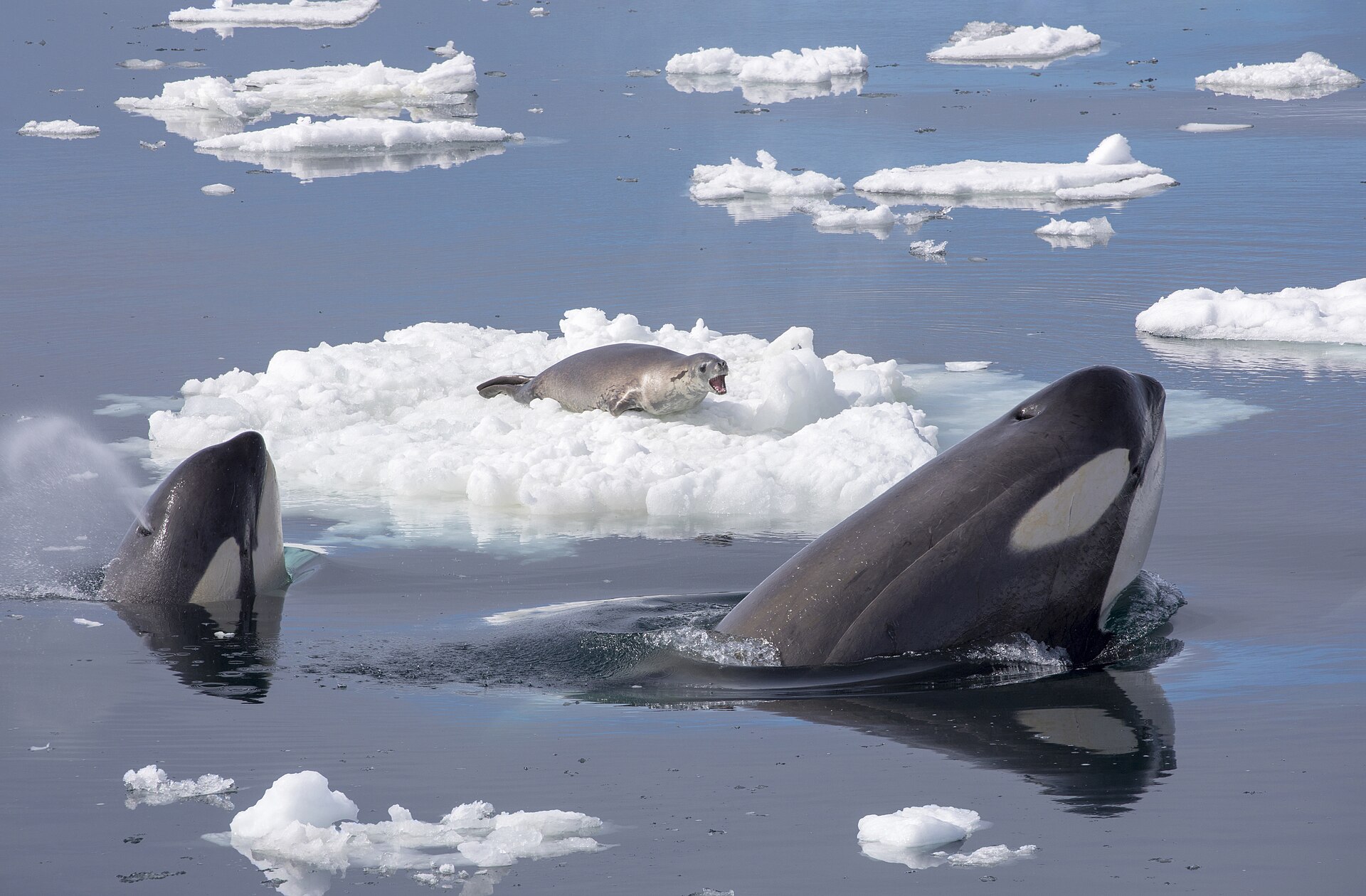
The killer whale has the most varied diet of all cetaceans, taking fish, squid, seabirds and marine mammals including other whales; the wider prey list covers most marine mammal species, seabirds, sea turtles, many fish such as sharks and rays, and cephalopods. It is the only known predator of great white sharks, and attacks or kills have been documented on more than 35 species, including blue whales. Average intake is about 45 kilograms of food a day, with capacity for much more.
Hunting methods are coordinated team strategies likened to a pack of wolves. Killer whale foraging tactics include intentional beaching to capture pinnipeds on shore, creating waves to wash seals off ice floes, and cooperative techniques to herd fish and attack large prey such as tuna and large whales. Hunting techniques are passed down through generations, so diets depend on the region and the pod's approach to hunting. Resident pods tend to prefer fish while transient pods target marine mammals. No records exist of deliberate fatal attacks on humans.
5. Social Structure and Communication
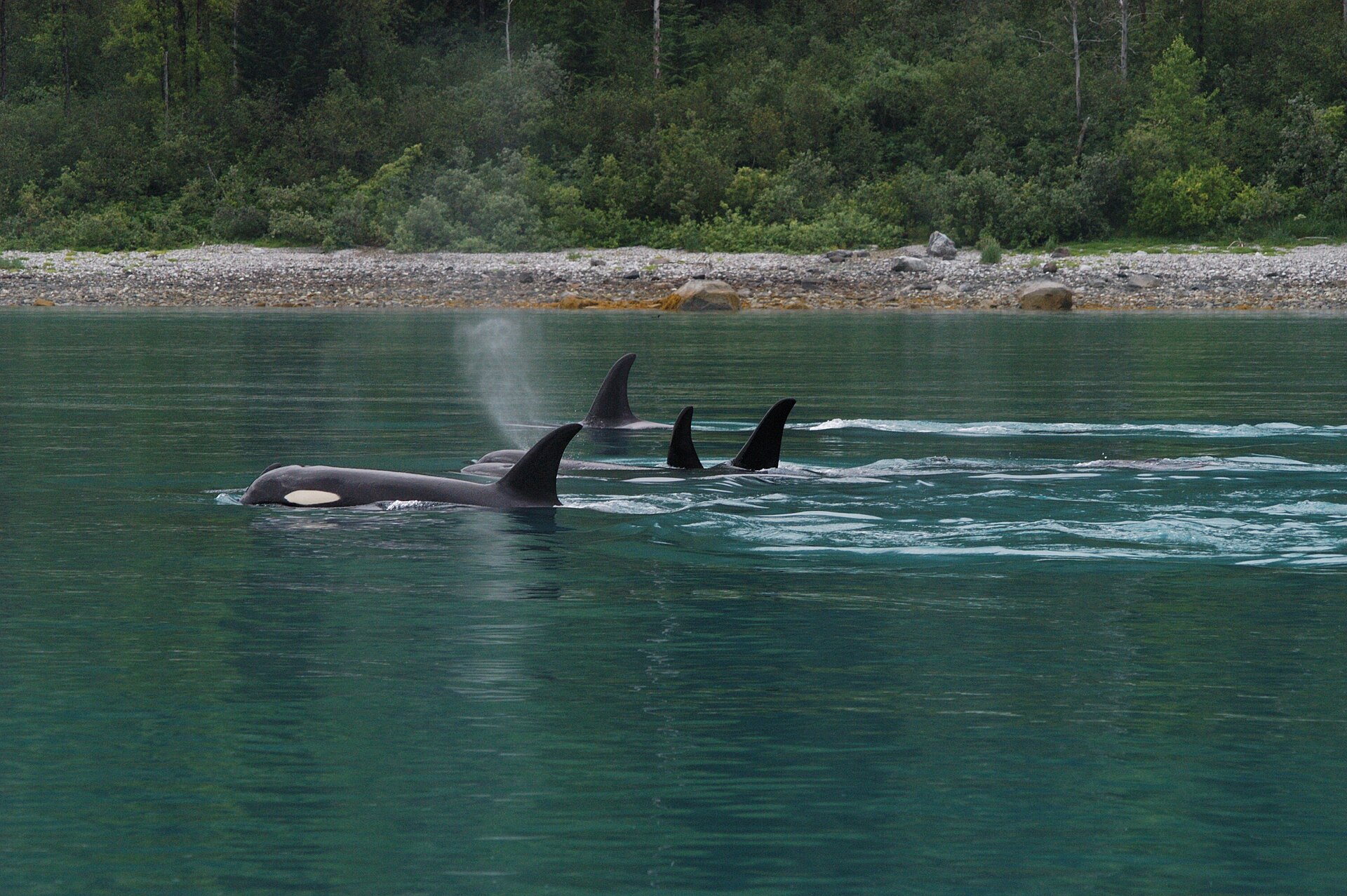
Killer whale society is built on matrilineal relationships, and when food is hard to find the oldest female leads the group, as she is likely to be the most experienced hunter. Highly organised clans maintain their own vocal communication dialects: pods have unique calls for their family group as well as calls they share with other groups, and pods that share at least one call type are called an acoustic clan. The social divisions between groups of killer whales with different hunting strategies and songs are so pronounced that scientists believe it is unlikely the groups socialise or interbreed.
The bond between mother and offspring carries consequences that extend well beyond the rearing years. Studies of killer whale lifespans found that when their mother dies, adult males have something like an eightfold likelihood of dying in the next couple of years.
6. Reproduction and Life Cycle
Gestation in the orca lasts about 17 months.
Among fish-eating killer whales, low availability of Chinook salmon appears to be an important stressor as well as a significant cause of late pregnancy failure, including unobserved perinatal loss. Southern Resident killer whales had a 69 percent pregnancy failure rate during the study, and an unprecedented half of those occurred at later stages of reproduction. The consistency of pregnancy-failure patterns on multiple endocrine and temporal measures across years strengthens the assertion that pregnancy failure is a major constraint on killer whale population growth triggered by insufficient prey.
7. Population and Conservation Status
Killer whales are widely distributed, but the precision of any global count is limited by uneven survey coverage. A minimum worldwide abundance estimate of about 50,000 killer whales of all types was derived for sampled areas, and the true total is likely higher because many high-latitude and South Pacific areas lack estimates 3Orcinus orca, Killer Whale — The IUCN Red List of Threatened Species (Reeves, Pitman & Ford 2017) · International Union for Conservation of Nature (IUCN) ↗. A comparable figure places around 50,000 killer whales globally, with approximately 2,500 in the eastern North Pacific Ocean, home to the most well-studied populations 17Killer Whale: Populations · NOAA Fisheries ↗. The global IUCN Red List status for the species is Data Deficient.
| Population or assessment | Figure or status | Notes |
|---|---|---|
| Global (all types) | about 50,000 | Minimum derived for sampled areas; true total likely higher because many high-latitude and South Pacific areas lack estimates 3 |
| Eastern North Pacific | approximately 2,500 | Home to the most well-studied populations 17 |
| Antarctic | about 70,000 | |
| Eastern North Atlantic (between Iceland and the Faeroes) | 3,500 to 12,500 | |
| New Zealand | estimated 150–200 individuals | Nationally Critical |
| Southern Resident | 73 individuals in 2024 | |
| AT1 Transient stock | 6 whales | Down from 22 before the Exxon Valdez spill |
| Strait of Gibraltar subpopulation | Critically Endangered | Provisionally proposed in 2006; far fewer than 50 mature individuals 18Orcinus orca (Strait of Gibraltar subpopulation), Killer Whale — IUCN Red List assessment (Esteban & Foote 2019) · International Union for Conservation of Nature (IUCN) ↗ |
| Global IUCN Red List status | Data Deficient |
8. Threats and Protection
Killer whales were once the direct object of human predation on a commercial scale. They were actively hunted in Norway, Japan, the Soviet Union and the Antarctic until the 1980s, after which the practice contracted sharply. Today they are taken only in small numbers, either for food or as a population control measure in coastal fisheries in Japan, Greenland, Indonesia and the Caribbean islands.
Capture for display has not ended everywhere: live capture of killer whales for aquarium display and marine parks still occurs outside the United States. Populations also face food limitation, chemical contaminants, and disturbance from vessel traffic and sound.
One population has received formal legal recognition of its peril. The Southern Resident killer whale was listed as endangered under the Endangered Species Act on 18 November 2005, and that listing was updated on 14 April 2014 following a status review.
9. Southern Resident Killer Whales
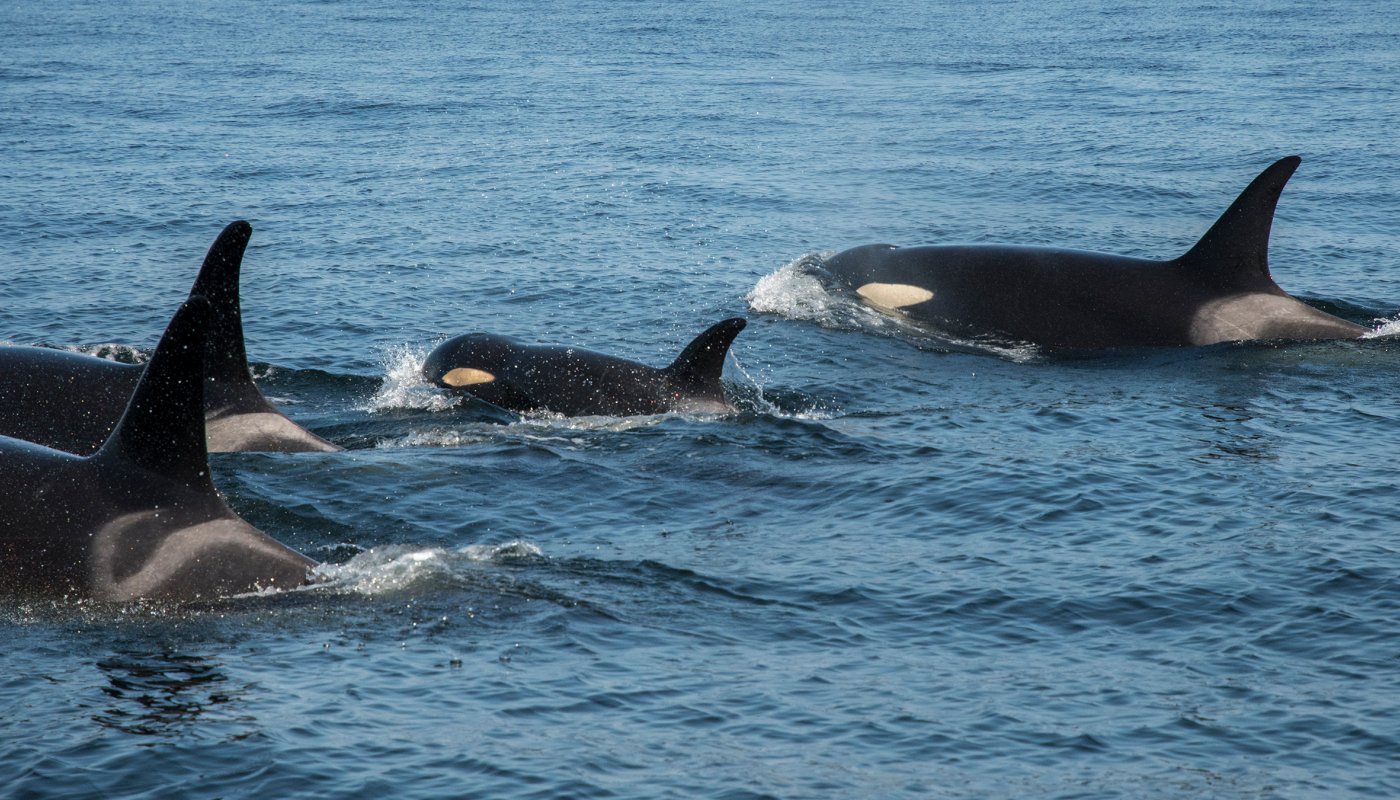
In the inland waters of Washington, two killer whale ecotypes occur: the Endangered Species Act-listed Southern Resident killer whale, a fish-eating population of 73 individuals in 2024, and the marine-mammal-eating Bigg's killer whales that prey on pinnipeds. Southern Resident killer whales spend several months of the summer and fall each year in Washington State's Puget Sound.
Since 1976 the Center for Whale Research in Washington State has run a long-term killer whale survey project whose demographic data support research on the species.
10. Timeline
-
1758Linnaeus describes Delphinus orcaThe species is first described under the name Delphinus orca.
-
1869Cope in ScammonOrigin of the name Orcinus ater.
-
1935–1979Soviet commercial whalingSoviet whalers take an average of 26 killer whales annually, primarily in the Antarctic. 3
-
1962–1977Live capturesAt least 65 killer whales are live-captured in British Columbia and Puget Sound.
-
1974Southern Resident populationPopulation stands at 71.
-
1976Center for Whale ResearchSurvey project begins.
-
1979/80Soviet Antarctic season916 animals taken. 3
-
1989Exxon Valdez oil spillThe AT1 stock of transient killer whales in the eastern North Pacific falls from 22 to 6 whales after the spill. 17
-
1996Southern Resident peakPopulation reaches 97.
-
2001Southern Resident declinePopulation declines to 79.
-
2004AT1 designated depletedNOAA Fisheries designates the AT1 stock as depleted under the MMPA. 17
-
18 November 2005Southern Resident listed as endangeredThe Southern Resident killer whale is listed as endangered under the Endangered Species Act. 19Southern Resident Killer Whale (Orcinus orca) · NOAA Fisheries ↗
-
2006Critical habitat and Gibraltar assessmentCritical habitat is designated, and the Gibraltar subpopulation is provisionally proposed as Critically Endangered.
-
14 April 2014Listing updatedThe Southern Resident listing is updated following a status review. 19
-
2019Gibraltar assessmentThe Gibraltar subpopulation is assessed as Critically Endangered.
-
2021Critical habitat revisedCritical habitat is revised.
-
2024Southern Resident populationPopulation stands at 73.
11. Frequently Asked Questions
Is the killer whale a whale or a dolphin?
It is the largest dolphin species; it is called a whale because of its size.
How fast and how far do orcas travel?
Orcas have evolved to swim up to 40 miles a day and dive 100 to 500 feet several times a day.15Orca (Killer Whale) — animals reference · National Geographic Society ↗
Do orcas attack humans?
Orcas are predators with a formidable reputation, but no records exist of deliberate fatal attacks on humans.10Killer whale/orca: New Zealand marine mammals · New Zealand Department of Conservation ↗
What is the global conservation status of the killer whale?
The killer whale is assessed as Data Deficient on the IUCN Red List of Threatened Species.2Killer whale · International Whaling Commission ↗
How long do orcas live, and does the two sexes' longevity differ?
In the wild, females average about 63 years with a maximum of 80 to 90 years, while males average around 36 years with a maximum of 50 to 60 years.11Orcinus orca (killer whale) · Animal Diversity Web, University of Michigan Museum of Zoology ↗ The longest living killer whale known to science, nicknamed Granny, was estimated to have lived to well over 90 years.14Killer whale behaviour shows granny knows best · Natural History Museum, London ↗
How often do female orcas reproduce, and how long does a calf depend on its mother?
Females give birth every three to ten years after a 17-month pregnancy, and the single calf may nurse for up to two years.15 Small calves have been sighted in mid winter, indicating that orcas are the only species of whale to breed in Antarctic waters.9Killer whale · Australian Antarctic Program, Australian Antarctic Division ↗
Which populations are formally protected or listed under international conventions?
What is the Strait of Gibraltar subpopulation's status and evidence for treating it separately?
How do killer whales interact with fishing operations?
Depredation of longline catches appears to be a recent and increasing phenomenon that now occurs in many regions, including the Aleutian Islands, Southeast Alaska, South Georgia and the Crozet Islands.3
Are killer whales still held in captivity, and how is that viewed?
Dozens of killer whales have been kept in captivity and trained as performers, a practice that in the 21st century was increasingly viewed as unethical.8Killer whale — Definition & Facts · Encyclopaedia Britannica ↗
12. Timeline: from Linnaeus to modern conservation
- 1758Linnaeus names the killer whaleCarl Linnaeus described killer whales as the single species Delphinus orca, which was later moved to the genus Orcinus.
- 1869Cope publishes Scammon's species namesCope edited and published Charles Melville Scammon's manuscript in the Proceedings of the Academy of Natural Sciences of Philadelphia, introducing the names Orca rectipinna and Orca ater.
- 1962 to 1977The live-capture eraAt least 65 killer whales were live-captured in British Columbia and Puget Sound during this period, supplying the aquarium and marine park trade.
- 1974First Southern Resident countThe Southern Resident population consisted of 71 whales in 1974, the first year that individuals were counted.
- 1976A long-term survey beginsThe Center for Whale Research in Washington State began a killer whale survey project whose demographic data still underpin research on the species.
- 1989Exxon Valdez spillAfter the Exxon Valdez oil spill the AT1 stock of transient killer whales fell from 22 to 6 whales.
- 1996Southern Residents peakThe Southern Resident population peaked at 97 animals in 1996.
- 2001Population declines againThe Southern Resident population declined again to 79 whales in 2001.
- 2003Canada lists the Southern ResidentsThe southern resident population of the eastern North Pacific resident subspecies was listed as Endangered under the Canadian Species at Risk Act.
- 18 November 2005Endangered under the U.S. Endangered Species ActThe Southern Resident distinct population segment was listed as endangered under the Endangered Species Act, with the listing updated in 2014.
- 29 November 2006Critical habitat designatedCritical habitat for the Southern Residents was designated on November 29, 2006, and later revised on August 2, 2021.
- 2008Final recovery planA final recovery plan for the Southern Resident killer whales was published in 2008, accompanied by a Federal Register notice.
- 20 June 2017IUCN keeps the species Data DeficientThe global Red List assessment of the killer whale was published and continued to list the species as Data Deficient because of unresolved taxonomy.
- 2019Strait of Gibraltar subpopulation assessed as Critically EndangeredThe Mediterranean subpopulation at the Strait of Gibraltar was assessed as Critically Endangered, with fewer than 50 mature individuals.
- 27 March 2024Two eastern North Pacific species describedA Royal Society Open Science study concluded that resident and Bigg's killer whales deserve species status and proposed the names Orcinus ater and Orcinus rectipinnus.
- 24 June 2026Bigg's expansion tracked against the Southern ResidentsA PLOS One study reported that Bigg's killer whales have increased in Washington waters since 2010, raising habitat overlap with the endangered Southern Residents, which numbered 73 individuals in 2024.
References (20)
- 1Killer Whale — NOAA Fisheries (U.S. National Oceanic and Atmospheric Administration) Web↩View source
- 2Killer whale — International Whaling Commission Web↩View source
- 3Orcinus orca, Killer Whale — The IUCN Red List of Threatened Species (Reeves, Pitman & Ford 2017) — International Union for Conservation of Nature (IUCN) 2017 Web↩View source
- 4Orcinus orca (Killer Whale) — Convention on the Conservation of Migratory Species of Wild Animals (UNEP/CMS) WebView source
- 5Who We Study — Marine Mammal Institute — Oregon State University Marine Mammal Institute WebView source
- 6Lost Skulls and Latin: How Scientists Chose Names for Newly Identified Killer Whale Species — NOAA Fisheries WebView source
- 7Revised taxonomy of eastern North Pacific killer whales (Orcinus orca): Bigg's and resident ecotypes deserve species status (Royal Society Open Science) — The Royal Society JournalView source
- 8Killer whale — Definition & Facts — Encyclopaedia Britannica Web↩View source
- 9Killer whale — Australian Antarctic Program, Australian Antarctic Division Web↩View source
- 10Killer whale/orca: New Zealand marine mammals — New Zealand Department of Conservation Web↩View source
- 11Orcinus orca (killer whale) — Animal Diversity Web, University of Michigan Museum of Zoology Web↩View source
- 12What do killer whales eat? — Natural History Museum, London WebView source
- 13Life in the pod: the social lives of whales — Natural History Museum, London WebView source
- 14Killer whale behaviour shows granny knows best — Natural History Museum, London Web↩View source
- 15Orca (Killer Whale) — animals reference — National Geographic Society Web↩View source
- 16Population growth is limited by nutritional impacts on pregnancy success in endangered Southern Resident killer whales (PLOS One, Wasser et al.) — PLOS One JournalView source
- 17Killer Whale: Populations — NOAA Fisheries Web↩View source
- 18Orcinus orca (Strait of Gibraltar subpopulation), Killer Whale — IUCN Red List assessment (Esteban & Foote 2019) — International Union for Conservation of Nature (IUCN) 2019 Web↩View source
- 19Southern Resident Killer Whale (Orcinus orca) — NOAA Fisheries Web↩View source
- 20Increasing presence of Bigg's killer whales and changing seasonality of Southern Resident killer whales in Washington waters (PLOS One) — PLOS One JournalView source
 World Wide Web
 YouTube
 Google

