Lion
The story of Panthera leo — the social big cat of Africa and India: prides and male coalitions, cooperative hunting, the collapse of its historic range, and the global effort to secure its future.
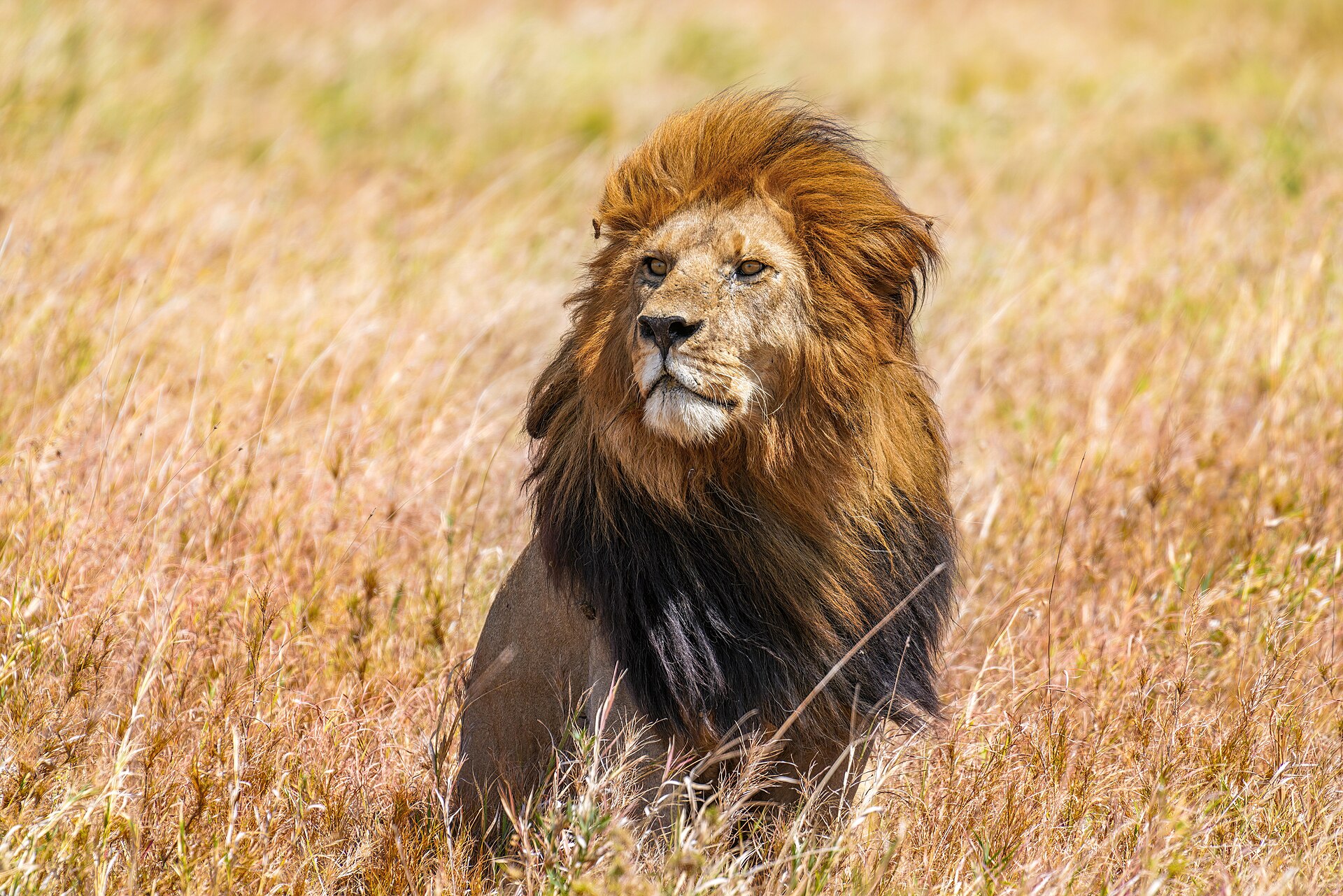
The lion (Panthera leo) is the most social of the cat family, living in prides and hunting cooperatively across sub-Saharan Africa and a single remaining population in India's Gir Forest. Once the most widely distributed large mammal, it has lost about 85% of its range since the year 1500 and an estimated 36% in the last three generations; the IUCN Red List assesses it as Vulnerable (A2abcd, February 1, 2023), with about 23,000 lions in Africa and about 670 in India. Habitat loss, prey depletion and human–lion conflict drive the decline, while protected areas and community-based programmes have stabilised or restored some populations.
In this article
- 1Overview
- 2Taxonomy and Subspecies
- 3Physical Description
- 4Social Structure and Pride Life
- 5Hunting and Diet
- 6Reproduction and Cub Survival
- 7Historical Range and Decline
- 8Current Distribution and Population
- 9Conservation Status and Threats
- 10Conservation Efforts and Recovery
- 11Timeline: from Linnaeus to the 2023 IUCN assessment
- 12Knowledge graph
Overview
The lion, Panthera leo (Linnaeus, 1758), is a member of the family Felidae within the order Carnivora.
1. Taxonomy and Subspecies
The lion was named by Carl Linnaeus in 1758, and the tenth edition of Systema Naturae is cited as the source of the name, with the type locality “Africa” later restricted to the Barbary coast region. Mammal Species of the World, in its third edition, lists eleven subspecies of Panthera leo: leo, azandica, bleyenberghi, hollisteri, kamptzi, krugeri, massaica, melanochaita, nyanzae, persica and senegalensis. The scientific name of the species is Panthera leo (Linnaeus, 1758).
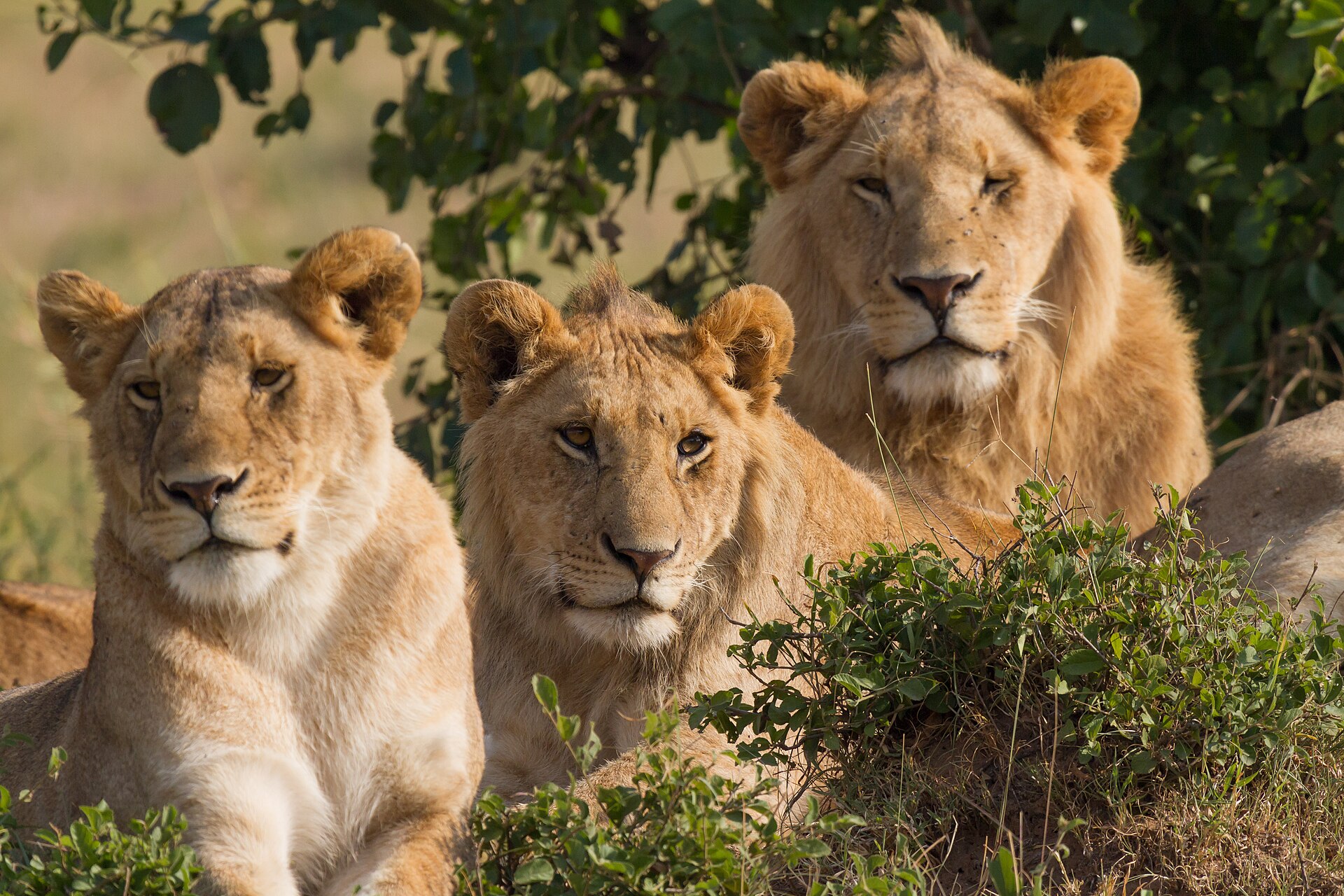
Based on recent genetic studies, two subspecies of the lion are recognised. Panthera leo leo occurs in Central and West Africa and India, while Panthera leo melanochaita occurs in Southern and Eastern Africa. The southern subspecies is classified as Vulnerable and the northern subspecies as Endangered, based on population reductions over the last three generations of over 30% and 50% respectively.
2. Physical Description
Its body measures between 137 and 250 centimetres, while the tail adds a further 60 to 100 centimetres 4Lion (Panthera leo) — Living Species · IUCN SSC Cat Specialist Group ↗. At the shoulder it stands about 1.2 metres, or 48 inches, tall 5Lion · African Wildlife Foundation ↗. Adults weigh between 110 and 272 kilograms 4.
In the wild, lions live for 12 to 18 years 4.
| Attribute | Value |
|---|---|
| Scientific name | Panthera leo (Linnaeus, 1758) |
| Family | Felidae (order Carnivora) |
| Weight | 110–272 kg |
| Body length | 137–250 cm |
| Tail length | 60–100 cm |
| Shoulder height | About 1.2 metres (48 inches) |
| Lifespan in the wild | 12–18 years |
3. Social Structure and Pride Life
The lion is the most social of all cat species, living in complex social systems called prides and exhibiting group territorial behaviour, with females engaging in cooperative behaviours unique among felids. Lions are the only cats that live in large social groups called prides, and these are described as fission-fusion social units with stable membership that sometimes divide into small groups. Prides vary in size but typically contain five to nine adult females, their dependent offspring, and a coalition of two to six immigrant males. The average pride consists of about 15 individuals — five to 10 females, their young and two or three territorial males, usually brothers or pride mates that formed a coalition.
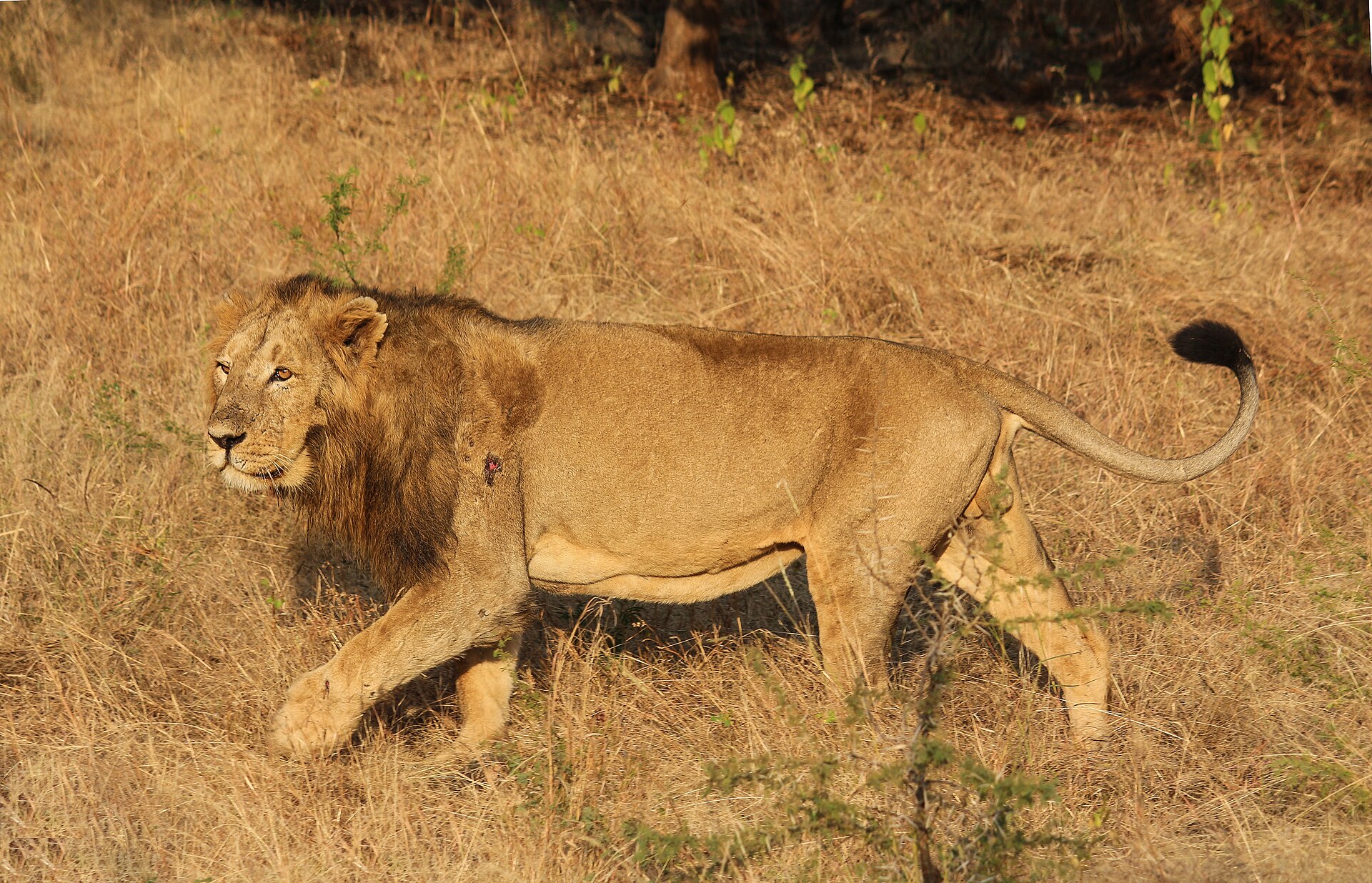
All of a pride's lionesses are related, and female cubs typically stay with the group as they age. Prides are typically defended by coalitions of two males, ranging from one to nine, and related or unrelated males form coalitions to compete for tenure, which typically lasts about 24 to 36 months.
In Kruger and Serengeti National Parks pride size averaged 13 lions, composed of about 1.7 adult males, 4.5 adult females, 3.8 subadults and 2.8 juveniles. Lion prides in India tend to be smaller than in Africa; most Indian prides contain an average of two females, the largest having five.
4. Hunting and Diet
The lion is a generalist hunter that will take almost any animal, though it shows a marked preference for medium to large ungulates of 100 to 300 kg such as wildebeest, zebra, buffalo, giraffe, kudu and waterbuck. Cooperative hunting further extends the range of prey it can bring down, allowing lions to take animals as large as buffaloes, rhinos, hippos and giraffes.
Lions usually hunt at night, particularly at dusk and dawn, and lionesses do most of the work. Their efforts are far from uniformly rewarded: only about 30% of attempts succeed. Because the hunt so often fails, scavenged food provides more than 50 percent of the lion's diet.
The division of labour within the pride is pronounced. Showy males have more difficulty hunting than females, so females in a pride do the majority of the hunting. Males eat more than lionesses but hunt less than 10% of the time.
5. Reproduction and Cub Survival
Reproduction in the lion is marked by a gestation of 100–119 days, a span of roughly three and a half months. A litter ordinarily contains 1–4 cubs, and the young nurse for about six months while beginning to take meat at three months.
Cub survival is precarious: up to 80 percent of lion cubs die within their first two years of life, whether from starvation when food is short or from attacks by male lions taking over prides. In the Gir forest, 33% of cubs die during their first year of life. The security of the group matters greatly, since cubs born in a pride are twice as likely to survive as those born to a lioness that is on her own.
Fierce competition among males, together with the social structure of a pride, leads to infanticide by both males and females. A successful male typically holds a pride for about two years before a younger, stronger coalition replaces him.
6. Historical Range and Decline
The lion was once the most globally widespread of all mammal species, with distinct populations distributed across Africa, Eurasia and America. That reach has contracted on a scale unmatched among carnivores, with roughly 85% of lion range lost since the year 1500 CE.
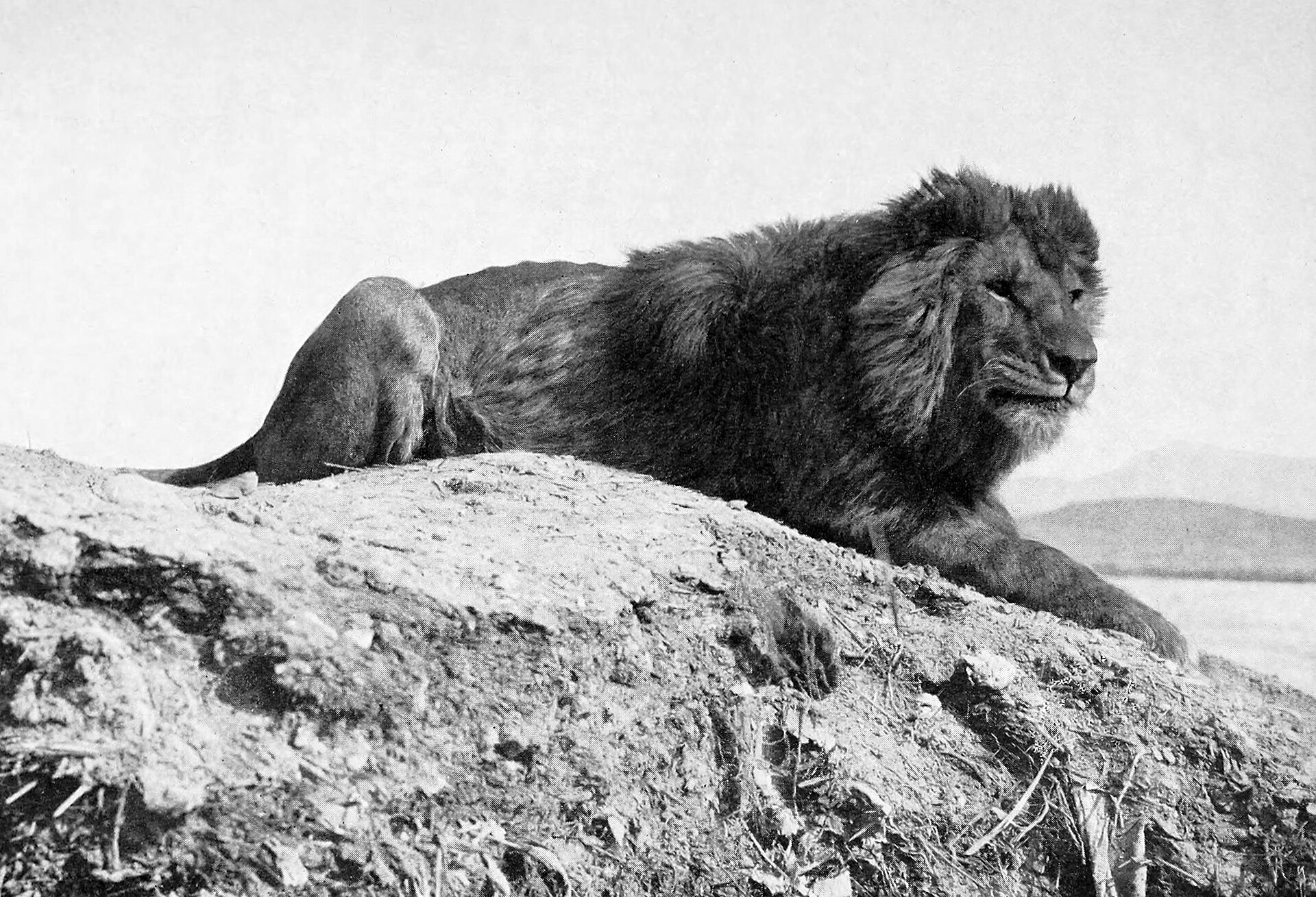
A Panthera–Oxford study estimates that the global lion population stood as high as 200,000 in 1900 and had fallen to some 90,000 animals by 1970. In the last 150 years lion populations went extinct in the wild in North Africa, in the form of the Barbary lion, in South Africa, in the form of the Cape lion, and across the Middle East.
7. Current Distribution and Population
The lion's presence in sub-Saharan Africa is spread across 34 range countries, or 35 when South Sudan is included, yet it has recently been extirpated from 12 of them, with four further countries potentially lost as well. The 2023 assessment records 12 recent extirpations and two suspected extirpations across the species' range, while noting that the number of extirpations had not increased since the previous assessment.
The only remainder of the once widespread northern population is a single isolated subpopulation in India's 1,400 km² Gir Forest National Park and Wildlife Sanctuary and the surrounding landscape. African lions live in most of sub-Saharan Africa except in desert and rainforest habitats.
Around half of the surviving lion populations number fewer than 50 animals, and only six places in the world still have at least 1,000 lions.
8. Conservation Status and Threats
The lion is classified as Vulnerable on the IUCN Red List under criteria A2abcd, an assessment dated 1 February 2023 and published in 2023. The classification rests on a population reduction of over 30 percent, driven by declines in habitat and habitat quality and in prey base from poaching, the bushmeat trade and habitat loss. Habitat loss is the most important driver of this decline, while prey base depletion linked to poaching and the bushmeat trade, and human–lion conflict, are also major threats.
The main threats to lions include continued habitat loss, retaliatory or indiscriminate killing, prey base depletion, bushmeat poaching, unsustainable trophy hunting, targeted poaching, and violent extremism and civil unrest. Large carnivores including lions are particularly threatened by habitat loss and fragmentation, reduction of wild prey, persecution in retaliation for killing livestock, illegal hunting and poaching. In Uganda, research shows that retaliatory poisoning of lions for livestock loss and snaring are the two main causes of adult lion deaths.
Endangered Species Act, Panthera leo leo is listed as endangered and P. melanochaita as threatened, with a final rule effective January 22, 2016.
9. Conservation Efforts and Recovery
Conservation effort has not been without result: despite declines, it has produced stable populations and even recovery, including reintroductions into the Zambezi Delta in Mozambique, Akagera in Rwanda and Zakouma National Park in Chad. In Senegal, national parks have helped double the population of Critically Endangered West African lions, from between 10 and 15 in 2017 to 30 in Niokolo-Koba National Park. These gains sit against a wider picture in which African lions have disappeared from 94 percent of their historic range and today live only in parts of sub-Saharan Africa. Lions occupy less than 8% of their historic range, and nearly 95% of lions are found in southern and eastern Africa.
Conservation succeeds in southern Africa partly because of reintroduced lions in small, fenced, intensively managed reserves. Bauer and colleagues found African lion populations declining everywhere except in four southern countries: Botswana, Namibia, South Africa and Zimbabwe. The Lion Recovery Fund's mission is to double the number of lions in Africa through strategic investments, regaining those lost over the past 25 years.
Research and monitoring underpin these efforts. WildCRU researchers have surveyed lion populations in 14 African countries, produced up-to-date maps of lion presence and trained hundreds of students from lion range countries in conservation research.
10. Timeline: from Linnaeus to the 2023 IUCN assessment
- 1758Linnaeus names the lionCarl Linnaeus described the lion in the tenth edition of Systema Naturae, the work cited for the name Panthera leo leo; the type locality “Africa” was later restricted to the Barbary coast region.
- 1880Gir lions at a low pointThe lion population in the Gir forests of India was estimated at only around 12 animals, before the isolated Asiatic population recovered under protection.
- 1898The man-eaters of TsavoTwo maneless male lions began killing workers building the railway bridge over the Tsavo River in Kenya; the attacks halted construction over nine months until Colonel Patterson shot the lions in late 1898.
- 1925Tsavo lions reach the Field MuseumPatterson sold the hides and skulls of the Tsavo lions to the Field Museum during a trip through Chicago, where staff taxidermied and displayed them.
- 1966Serengeti Lion Project beginsGeorge Schaller started the Serengeti Lion Project, the beginning of continuous monitoring of the Serengeti lions; his landmark book The Serengeti Lion won the National Book Award.
- 1978Packer and Pusey take overAnne Pusey and Craig Packer took over the Serengeti Lion Project and began testing hypotheses about the behaviour of this famously sociable species.
- 1994Canine distemper epidemicA large-scale die-off struck the Serengeti lions in 1994 and the Ngorongoro Crater in 2001; researchers later determined that canine distemper virus was lethal when co-occurring with high levels of the tick-borne parasite Babesia.
- 1996IUCN lists the lion as VulnerableThe lion appears as Vulnerable (VU) in the published Red List assessments from 1996 onward, including the 2016 editions.
- 2014West African lions critically endangeredA survey confirmed lions in only four protected areas and estimated only 406 lions, fewer than 250 mature individuals, remaining in West Africa, with confirmed range put at 1.1% of the historical range there.
- 2015Continental decline quantifiedBauer and colleagues compiled repeated surveys of 47 lion populations and found declines everywhere except Botswana, Namibia, South Africa and Zimbabwe, projecting a 50% decline in West, Central and East Africa over two decades.
- December 23, 2015United States lists two lion subspeciesThe U.S. Fish and Wildlife Service published a final rule listing Panthera leo leo as endangered and P. l. melanochaita as threatened under the Endangered Species Act; the rule took effect January 22, 2016.
- 2020Lion genomes chart the species' historyA genomic study of 20 specimens found that cave and modern lions diverged about 500,000 years ago and that the two modern lineages split about 70,000 years ago, with historic extinctions of the Barbary, Cape and Middle Eastern lions.
- 2023New IUCN assessmentThe lion was reassessed as Vulnerable under criteria A2abcd on February 1, 2023, based on an estimated 36% range decline over three generations, with about 23,000 lions in Africa and 670 in India.
References (21)
- 1Panthera leo — Mammal Species of the World (3rd edition) — Bucknell University WebView source
- 2Panthera leo (lion) — Animal Diversity Web, University of Michigan WebView source
- 3Panthera — Mammal Species of the World (3rd edition) — Bucknell University WebView source
- 4Lion (Panthera leo) — Living Species — IUCN SSC Cat Specialist Group Web↩View source
- 5Lion — African Wildlife Foundation Web↩View source
- 6Lion — San Diego Zoo Wildlife Alliance WebView source
- 7Endangered and Threatened Wildlife and Plants; Listing Two Lion Subspecies (80 FR 80000) — Federal Register, U.S. Fish and Wildlife Service 2015 WebView source
- 8African lion, facts and photos — National Geographic WebView source
- 9Lion — Smithsonian's National Zoo and Conservation Biology Institute WebView source
- 10The evolutionary history of extinct and living lions (PNAS, 2020) — de Manuel et al., via PubMed Central (NIH/NLM); Proceedings of the National Academy of Sciences 2020 WebView source
- 11Panthera leo, Lion (The IUCN Red List of Threatened Species 2023: e.T15951A231696234) — IUCN (International Union for Conservation of Nature) 2023 WebView source
- 12Lion — Panthera WebView source
- 13Lions — Wildlife Conservation Research Unit (WildCRU), University of Oxford BookView source
- 14Lions — Wildlife Conservation Society (WCS) WebView source
- 15African Lion — WWF-UK (World Wide Fund for Nature) WebView source
- 16Lion (Panthera leo) populations are declining rapidly across Africa, except in intensively managed areas (PNAS, 2015) — Bauer et al., via PubMed Central (NIH/NLM); Proceedings of the National Academy of Sciences 2015 WebView source
- 17Lion Recovery Fund — Lion Recovery Fund (Wildlife Conservation Network) WebView source
- 18KopeLion — Enabling lasting coexistence between people and lions — KopeLion WebView source
- 19Tsavo Lions — Field Museum of Natural History, Chicago WebView source
- 20The African Lion: A Long History of Interdisciplinary Research (Frontiers in Ecology and Evolution, 2019) — Packer, via Frontiers 2019 JournalView source
- 21The Lion in West Africa Is Critically Endangered (PLOS ONE, 2014) — Henschel et al., via PubMed Central (NIH/NLM); PLOS ONE 2014 WebView source
 Megalodon
 Penguin
 Orca
