Giraffe
The world's tallest land animal - its anatomy and physiology, its four species and their shrinking ranges, and the conservation effort to reverse a silent extinction.
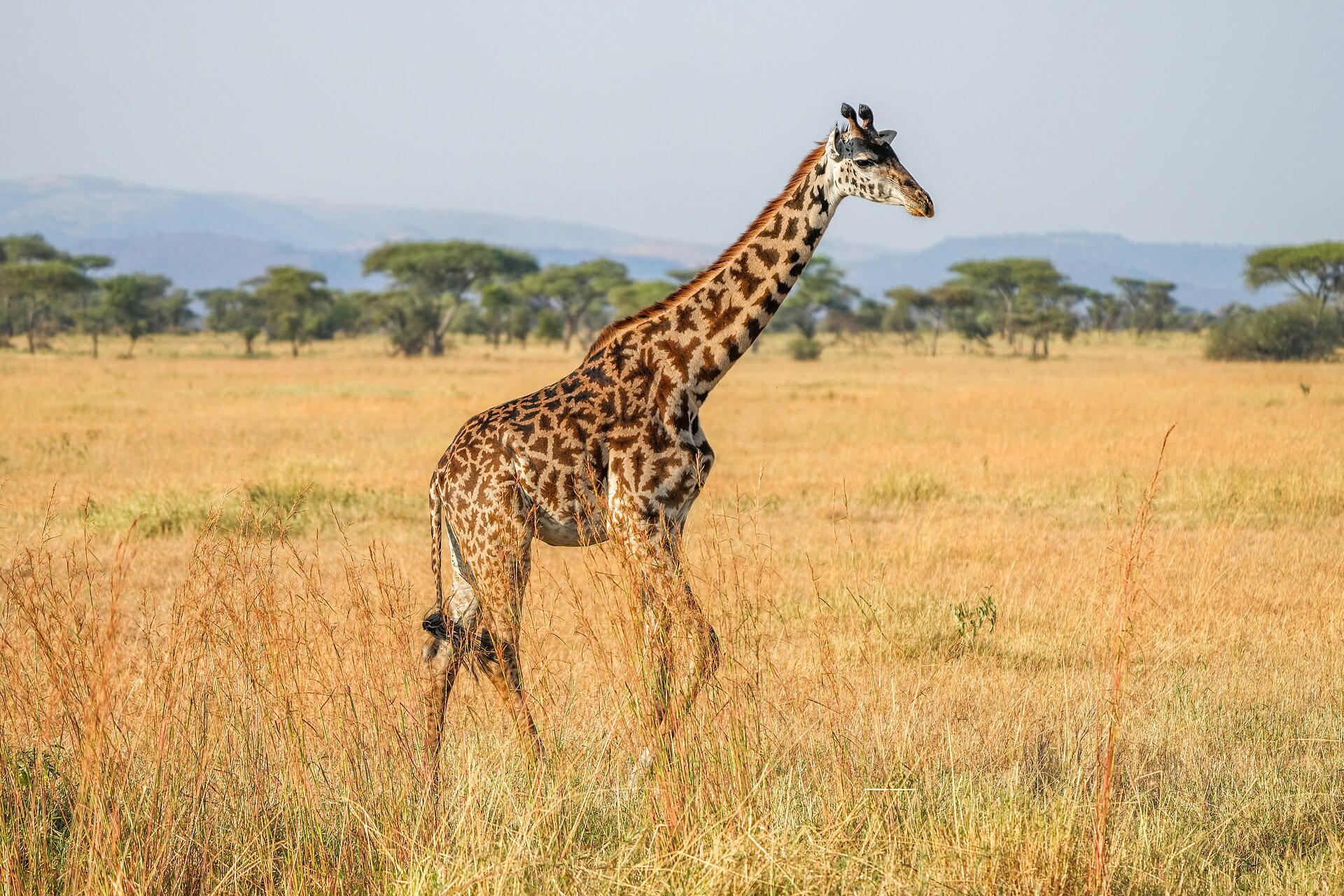
The giraffe is the tallest living land mammal, an African browser whose neck contains the same seven vertebrae as a human's, extended to extraordinary length. Long treated as a single species, giraffes are now recognised as four distinct species - Masai, northern, reticulated and southern - whose combined wild population of roughly 140,000 is smaller than previously counted and heavily skewed, with the northern giraffe among the most threatened large mammals on Earth. Listed as Vulnerable on the IUCN Red List in 2016, giraffes continue to lose habitat to agriculture and development, and depend on protected areas, translocations and national conservation strategies.
In this article
- 1Overview
- 2Taxonomy and Classification
- 3Anatomy and Physiology
- 4Size, Weight and Life History
- 5Habitat and Distribution
- 6Behaviour and Diet
- 7Reproduction and Development
- 8Species and Populations
- 9Conservation Status and Threats
- 10Research and Scientific Significance
- 11Timeline
- 12Timeline: from Linnaeus to modern conservation
- 13Knowledge graph
Overview
The giraffe is a genus of long-necked, cud-chewing hoofed mammals native to Africa, distinguished by long legs and a coat pattern of irregular brown patches set against a light background. It is the tallest of all land animals. The genus comprises four recognised species: the Masai, northern, reticulated and southern giraffe.
1. Taxonomy and Classification
The giraffe is classified as Giraffa camelopardalis (Linnaeus, 1758), placed in the family Giraffidae within the order Cetartiodactyla.
Until recently, giraffe were widely recognised as a single species with several subspecies. A collaborative study by GCF, the Senckenberg Biodiversity and Climate Research Centre and partners first introduced the concept of four distinct species of giraffe.
A 3D morphometric analysis shows that the four genetically distinct Giraffa species also have distinct cranial morphologies, largely attributable to features of display such as the ossicones. Differences in skull shape and size between the northern and southern giraffe clades are apparent across the dataset, and the two forms follow different ontogenetic trajectories that lead to distinct adult morphotypes.
2. Anatomy and Physiology
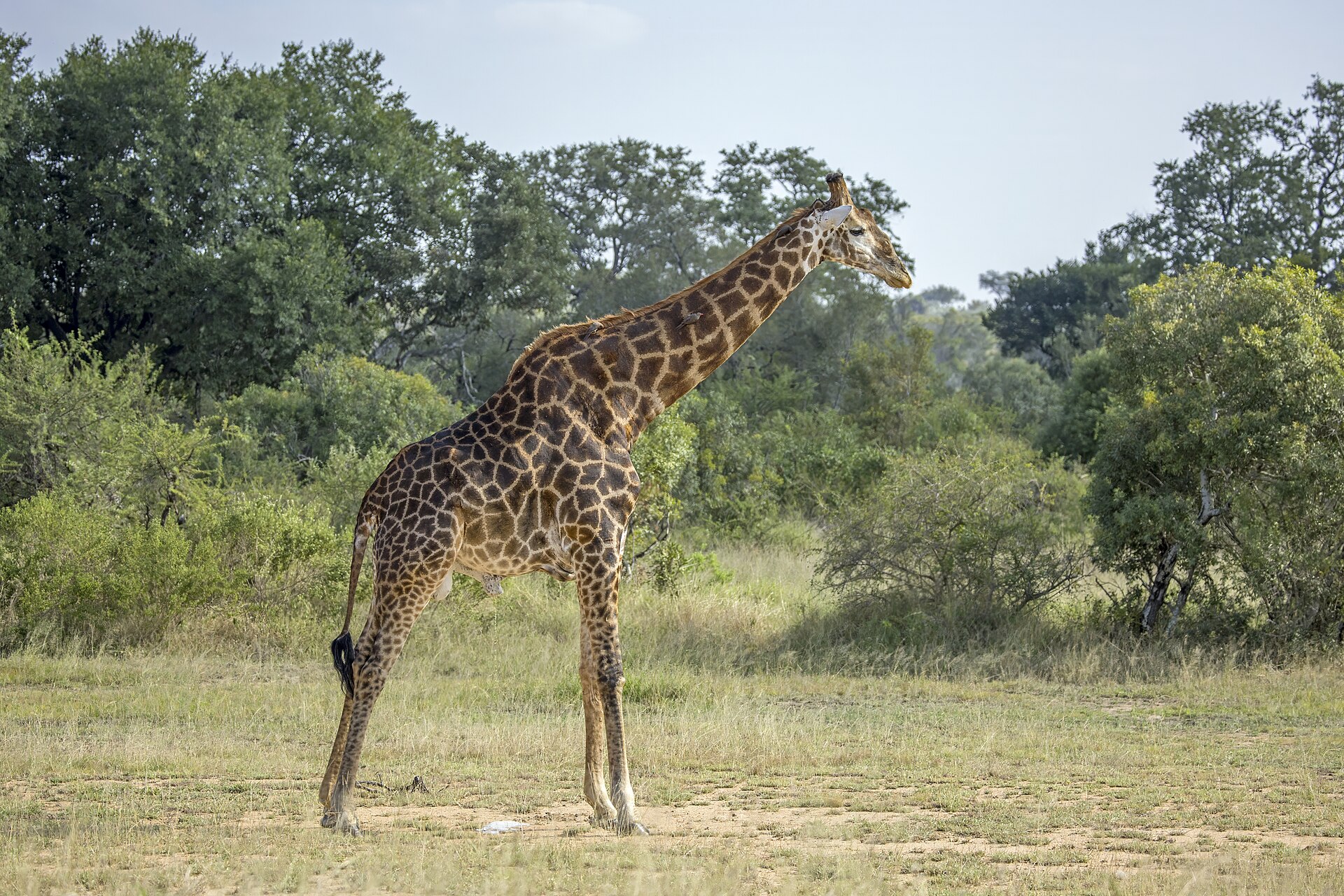
The giraffe is the tallest living land animal. Adult bulls may exceed 5.5 metres (18 feet) in height. Males weigh about 1,930 kilograms (4,254 pounds), while females are considerably lighter at about 1,180 kilograms (2,601 pounds).
The giraffe's neck contains only seven cervical vertebrae, the same number found in humans and almost all other mammals, including mice. The great length of the neck therefore results from the vertical extension of each vertebra rather than from the addition of new ones.
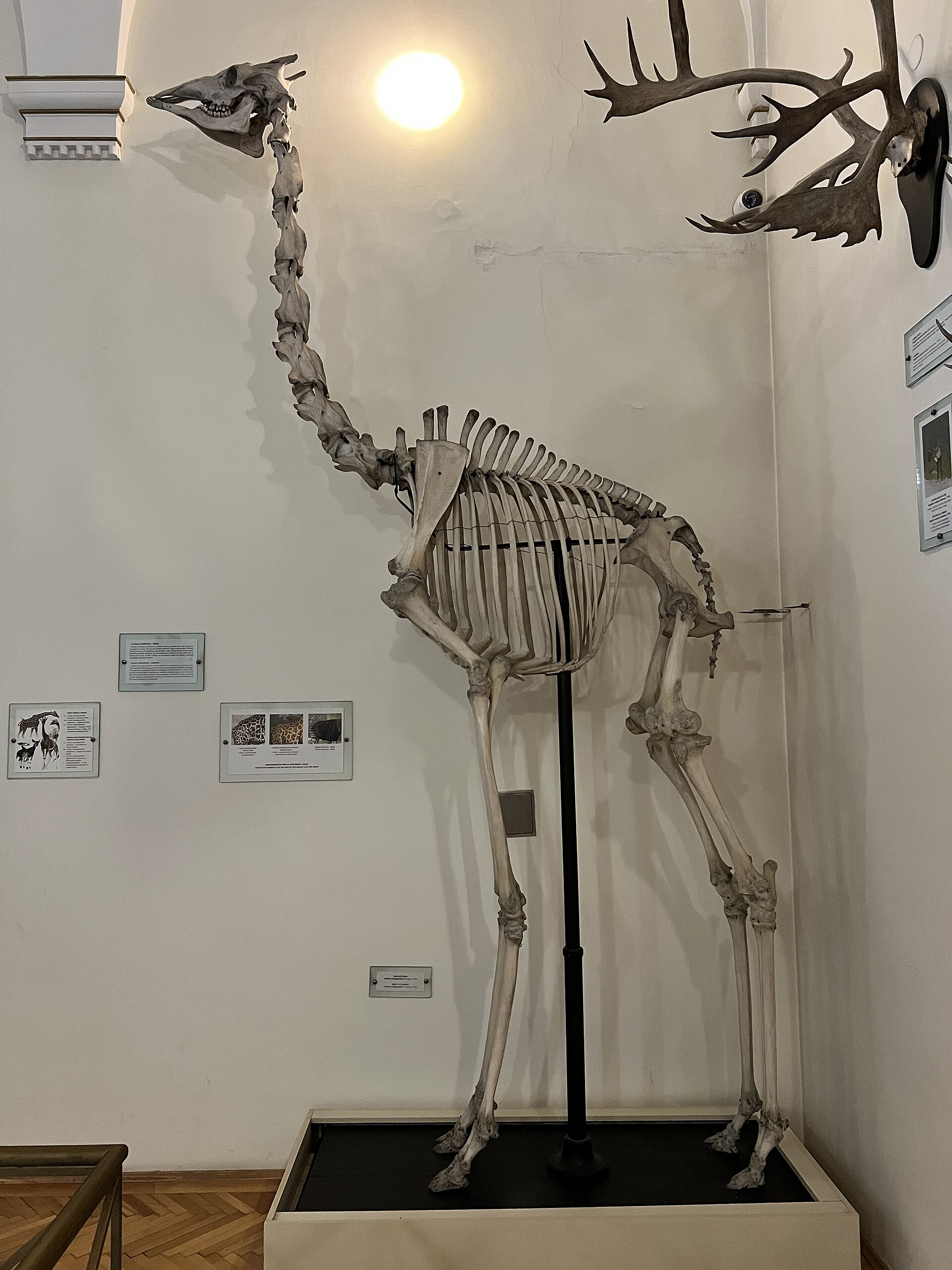
The chunky bumps on a giraffe's head are neither horns nor antlers but ossicones, hard knobs of cartilage that fuse into the skull as the giraffe grows. Both males and females have them, and females use theirs to head-butt predators away. Ossicones are like cartilage and are flat when the animal is born; they fold out, become bone and fuse to the skull, and those of males grow increasingly massive over their lives.
A giraffe's thick, resistant tongue is ideal for clasping spiky, thorny plants and measures up to half a metre in length. Being prehensile, it can reach, roll up and twist off leaves and twigs with dexterity.
Giraffe blood pressure is about 2.5 times higher than that of humans, the left ventricle of the heart is enlarged, and the walls of the blood vessels in the lower extremities are greatly thickened. The heart itself is 2 feet long and weighs about 25 pounds, while the lungs can hold 12 gallons of air.
The giraffe's genome has been assembled at a draft length of about 2.9 gigabases. Comparing the genomes of the Masai giraffe and the okapi with those of other eutherian mammals identified 70 genes that show multiple signs of adaptation in the giraffe, and several of these genes are known regulators of skeletal, cardiovascular and neural development. The divergence of the giraffe FGFRL1 gene is particularly striking, carrying a cluster of seven unique amino acid substitutions in the domain that interacts with FGF ligands.
3. Size, Weight and Life History
| Attribute | Value | Source |
|---|---|---|
| Height | Adult bulls may exceed 5.5 m; males 5.7 m ground to horns; tallest females about 4.5 m | britannica-giraffe |
| Weight | Males about 1,930 kg; females about 1,180 kg | britannica-giraffe |
| Life span in the wild | About 10 to 15 years | adw-giraffe |
| Life expectancy in zoos | 20 to 27 years | sdz-giraffe |
| Gestation | About 13 to 15 months; about 457 days | awf-giraffe |
| Top speed | Around 35 miles/56 km per hour for short distances | britannica-giraffe |
Giraffes are diurnal animals whose sleep is polyphasic, marked by few sleep events and a total REM sleep time averaging only 8.6 minutes per night 12Accelerometry reveals nocturnal biphasic sleep behavior in wild giraffe · Frontiers in Mammal Science (Burger-Schulz, A. L. et al., 2023) ↗. Their nights follow a clear biphasic profile, with peaks of inactivity and sleep events in the hours after sunset and again in the early morning hours before sunrise 12. Moonlight and sunlight play a decisive role in the movement behaviour and sleep onset of wild Angolan giraffe, and studies of captive giraffe likewise confirm a biphasic sleep profile influenced by light 12. Because giraffes show only two periods of inactivity during which they fall asleep, and because ongoing sleep deprivation would reduce fitness, they need protection from human threats especially during these two sensitive periods 12. Wild Angolan giraffe are inactive for about 491 minutes between 19:00 and 7:00.12
Feeding occupies most of the animal's waking hours: giraffes feed for 16 to 20 hours a day, taking in only about 30 kilograms of foliage during that time 6Giraffe · African Wildlife Foundation ↗. Their diet can contain up to 93 plant species, yet acacia trees are their favorite food source 6.
4. Habitat and Distribution
Giraffes inhabit arid, dry land and seek out areas enriched with Acacia growth. They are found in savannas, grasslands or open woodlands.
Giraffes appear to have gone extinct in at least seven countries, among them Burkina Faso, Eritrea, Guinea, Mali, Mauritania, Nigeria and Senegal.
The remaining major threats involve civil unrest from rebel militias and military operations, illegal hunting, and ecological changes such as mining, habitat conversion and climate-induced processes.
5. Behaviour and Diet
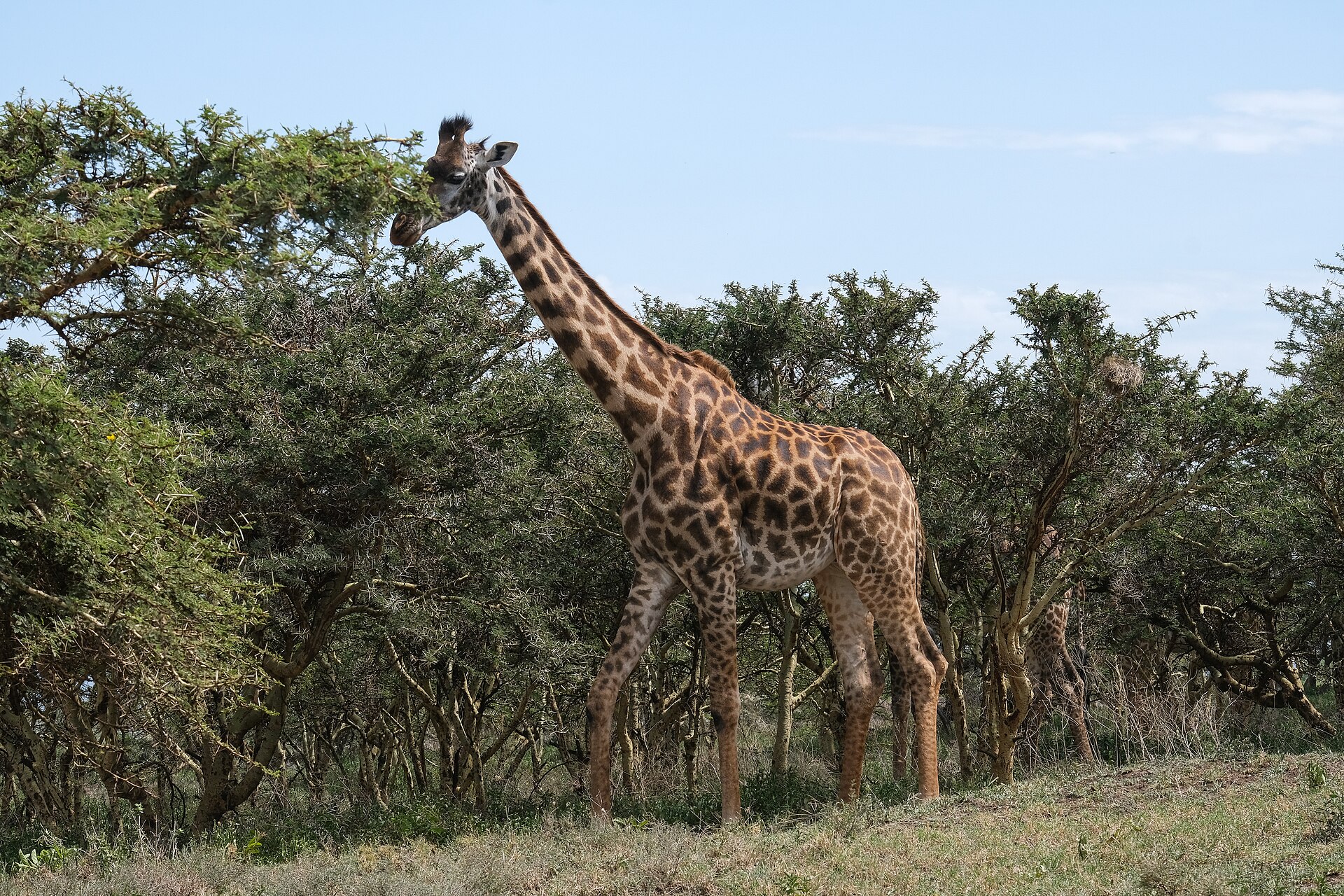
Their height and long neck allow them to browse treetop leaves and buds that few other animals can reach, almost six metres from the ground.
Giraffes are ruminants with a four-chambered stomach. They regurgitate cud and chew it again. Chewing cud while travelling maximises feeding opportunities.
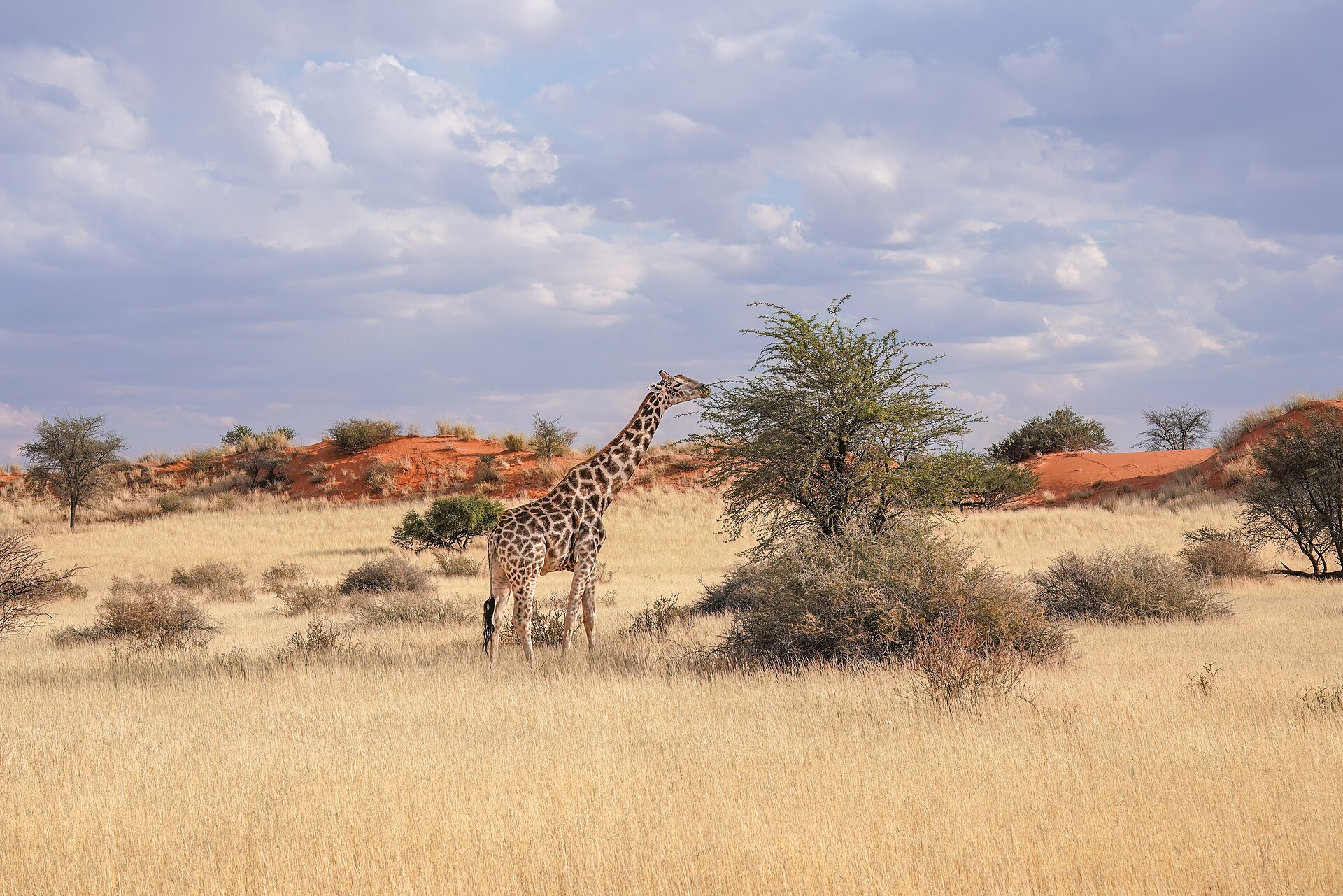
Most of the giraffe's water is obtained from plants, and it drinks only a couple of times a week. To drink at a water hole, a giraffe must spread its legs and bend down awkwardly, which makes it vulnerable to predators, so it needs to drink only once every several days.
Giraffes live in loose, open herds of 10 to 20 individuals, and herds of as many as 70 have been observed.
A giraffe can sprint as fast as 60 km/h and run at length at about 40 km/h. It paces by moving both right legs and then both left legs, in the manner of camels and elephants. Over longer distances it can cruise comfortably at 10 miles an hour.
Giraffes are not voiceless: they produce moos, roars, snorts, hisses and grunts, though they do so very rarely. An alarmed giraffe snorts, for example when lions are nearby.
Giraffes have few predators other than humans and lions. They fend off attacks with head-butting and lethal karate-style kicks from any of their four legs.
6. Reproduction and Development
Female giraffes give birth standing up, which means the calf falls more than 5 feet to the ground at birth. The drop is about 2 metres. A calf emerges front feet first, followed by the head, neck and shoulders. Its umbilical cord, only about 3 feet long, breaks midway through the birth as the calf drops to the ground. Most births produce a single calf.
Newborns stand and suckle within fifteen minutes, and they can stand within half an hour of birth. Ten hours later they are able to run with their mothers.
7. Species and Populations
The giraffe is not a single uniform animal but a set of distinct populations whose coats, ranges and fortunes differ sharply. The reticulated giraffe is the one most people picture, its sharp-edged liver-red patches separated by crisp white lines like cracked tiles 2Are there different types of giraffe? · Giraffe Conservation Foundation ↗. The northern giraffe is marked by large, rectangular, chestnut-brown patches and by the absence of markings on its lower legs, a feature often described as white socks 15Northern Giraffe · Giraffe Conservation Foundation ↗.
That northern species is also the most precarious, though numbers are gradually recovering in critical areas 15.
| Species | Estimated population | Notes | Source |
|---|---|---|---|
| Northern giraffe | about 7,037 individuals | One of the most threatened large mammals; large rectangular chestnut-brown patches; no markings on lower legs, described as white socks | gcf-northern |
| Southern giraffe | about 68,837 individuals | Most populous species, widely distributed through Southern Africa | gcf-state |
| Reticulated giraffe | about 20,901 individuals | Mainly Kenya and the Horn of Africa; sharp-edged liver-red patches separated by crisp white lines | gcf-types |
| Masai giraffe | about 43,926 individuals | gcf-species |
8. Conservation Status and Threats
The giraffe is assessed as Vulnerable on the IUCN Red List under criterion A2, a status assigned in 2016, and the species' population trend is decreasing. Over three generations of 30 years, between 1985 and 2015, the decline amounted to 36-40%.
About 140,000 remain in the wild today, a figure higher than the under-100,000 reported in the 2016 assessment because counting improved, not because giraffes multiplied. For every three elephants in the wild in Africa, only one giraffe remains.
Habitat loss through deforestation, land conversion and agricultural expansion is among the principal threats.
Averages hide emergencies: some populations have fallen by 90% or more in decades when others held steady. An assessment of the four Giraffa species separately would likely lead to increased conservation efforts, because three of them would probably be listed as endangered or critically endangered on the IUCN Red List.
GCF's State of Giraffe 2025 report shows three of the four species with positive population trends due to effective conservation and growing awareness. The northern giraffe's nearly 20% increase offers hope amid ongoing insecurity, while the southern giraffe's 50% increase in five years largely reflects improved survey coverage and awareness.
The West African giraffe once roamed from Nigeria to Senegal. Today their numbers have rebounded to almost 670 animals thanks to formal protection by the Niger government and conservation partners.
The Natural History Museum warns careful management is needed to prevent extinction geographically, at subspecies level, or of the species. Richard Sabin attributes decimation to expansion of human populations, illegal hunting and wars. The African Wildlife Foundation has reforested acacia trees in West Africa to provide more food and allow habitat expansion.
9. Research and Scientific Significance
The largest known dataset of giraffe skulls, comprising 515 specimens, was subjected to three-dimensional morphometric analysis, and the results showed statistically significant cranial shape differences between all four species and, in some cases, between subspecies. The principal cranial differences concern the ossicones and especially the median ossicone, which is much more developed in the northern clade and, in the northern giraffe, is very high with a relatively small dorsal surface and a pointy outline.
The solutions giraffes have evolved for the physiological and structural problems imposed by their towering height, in particular the turbocharged circulatory system, may be instructive for treating cardiovascular disease and hypertension in humans.
10. Timeline
-
1758Linnaeus describes the giraffeCarl Linnaeus formally describes Giraffa camelopardalis. 3Giraffa camelopardalis (Giraffe) · IUCN Red List of Threatened Species (Muller, Z. et al. 2016 assessment) ↗
-
18th centuryA continent-wide abundanceHistorical estimates suggest more than one million giraffe roam Africa. 17How many giraffe are there - and are they endangered? · Giraffe Conservation Foundation ↗
-
1985Population baselineEstimates indicate a total population of 151,702–163,452 giraffes. 3
-
Late 1980sA diminished figureThe continental total had fallen to about 155,000. 17
-
Mid-1990sWest African remnantOnly 49 West African giraffe remain in Niger. 15
-
1999Onset of a steep declineThe start of a decline of about 40 per cent, from 140,000 to around 80,000. 19Could giraffes become extinct? · Natural History Museum, London ↗
-
2015Census and mature individuals97,562 giraffes are counted, of which 68,293 are mature individuals. 3
-
2016Red List assessment and taxonomic revision
-
2025State of Giraffe reportThe State of Giraffe report is issued. 18State of Giraffe 2025 · Giraffe Conservation Foundation ↗
11. Timeline: from Linnaeus to modern conservation
- 1758Linnaeus names the giraffeCarl Linnaeus described the giraffe as Cervus camelopardalis, the name still cited today as Giraffa camelopardalis (Linnaeus, 1758).
- since 1973Luangwa giraffe numbers stabiliseThe Luangwa Valley population in Zambia stabilised at close to 600 individuals, following an increase from approximately 300 giraffes in the early 1970s.
- 1979/1981Nubian giraffe decline documentedAn historic estimate put the Nubian giraffe of Eastern Africa at 20,577 individuals, a population that later fell to an estimated 650.
- 1985Population baseline estimatedThe best available estimates placed Africa's total giraffe population at 151,702 to 163,452 animals, of which 106,191 to 114,416 were considered mature individuals.
- mid-1990sWest African giraffe down to 49 animalsWest African giraffe, which had once roamed from Nigeria to Senegal, were reduced to only 49 individuals in Niger.
- since 1999A forty per cent decline is measuredThe giraffe population in Africa decreased by about 40 per cent, falling from 140,000 to 80,000 animals.
- 2008West African giraffe listed as EndangeredThe West African giraffe, isolated in the south-western corner of Niger, was categorised as Endangered on the IUCN Red List.
- 2015Total of 97,562 giraffes countedThe 2015 estimate of 97,562 giraffes, including 68,293 mature individuals, completed the three-generation comparison used for the Red List assessment.
- 9 July 2016Giraffe assessed as VulnerableThe IUCN assessment dated 9 July 2016 classified the giraffe as Vulnerable under criterion A2, based on a decline of 36 to 40% over three generations.
- 2016Four giraffe species proposedCollaborative research by the Giraffe Conservation Foundation, the Senckenberg Biodiversity and Climate Research Centre and partners first introduced the concept of four distinct species of giraffe.
- 17 May 2016The giraffe genome is sequencedThe giraffe genome sequence was published, identifying 70 genes showing multiple signs of adaptation and highlighting the animal's cardiovascular and skeletal specialisations.
- 2018-2022West African giraffe translocated to GadabedjiTwelve West African giraffe were moved to the Gadabedji Biosphere Reserve in Niger, establishing the first satellite population of the subspecies.
- 2023Wild giraffe sleep measuredAccelerometer tracking of free-ranging giraffe showed about 8.6 minutes of sleep per night on average, in a clear biphasic pattern.
- 19 December 2024Skull study confirms four speciesA study of 515 giraffe skulls published in PLOS ONE found statistically significant cranial shape differences between all four Giraffa species.
- 2025State of Giraffe 2025 reports recoveryThe Giraffe Conservation Foundation's State of Giraffe 2025 report found three of the four species showing positive population trends, with the southern giraffe up 50% in five years.
References (19)
- 1Giraffe (mammal) — Encyclopaedia Britannica WebView source
- 2Are there different types of giraffe? — Giraffe Conservation Foundation Web↩View source
- 3Giraffa camelopardalis (Giraffe) — IUCN Red List of Threatened Species (Muller, Z. et al. 2016 assessment) Web↩View source
- 44 giraffe species confirmed — Giraffe Conservation Foundation Web↩View source
- 5Heads up - Four Giraffa species have distinct cranial morphology — PLOS ONE (Kargopoulos, N. et al., 19 December 2024) JournalView source
- 6Giraffe — African Wildlife Foundation Web↩View source
- 7How is a mouse like a giraffe? — Natural History Museum, London WebView source
- 8Giraffe Facts | Mammals — BBC Earth WebView source
- 9Giraffe Anatomy 101 (Giraffes: Africa's Gentle Giants) — PBS Nature / WNET WebView source
- 10Giraffe genome sequence reveals clues to its unique morphology and physiology — Nature Communications (Agaba, M. et al., 2016) JournalView source
- 11Giraffe — San Diego Zoo Wildlife Alliance WebView source
- 12Accelerometry reveals nocturnal biphasic sleep behavior in wild giraffe — Frontiers in Mammal Science (Burger-Schulz, A. L. et al., 2023) 2023 Journal↩View source
- 13Giraffa camelopardalis (giraffe) — Animal Diversity Web, University of Michigan Museum of Zoology WebView source
- 14Giraffe — National Geographic Society WebView source
- 15Northern Giraffe — Giraffe Conservation Foundation Web↩View source
- 16Giraffe species — Giraffe Conservation Foundation WebView source
- 17How many giraffe are there - and are they endangered? — Giraffe Conservation Foundation Web↩View source
- 18State of Giraffe 2025 — Giraffe Conservation Foundation 2025 Web↩View source
- 19Could giraffes become extinct? — Natural History Museum, London Web↩View source