Nigeria
Africa's most populous country — its geography from the Niger Delta to the Sahel, its peoples, economy and heritage, and its course from precolonial kingdoms and British rule to independence and the modern republic.
Nigeria is a country on the western coast of Africa, bordered by Niger, Chad, Cameroon, Benin and the Gulf of Guinea, and the most populous country in Africa with an estimated population of about 239 million in 2026 and a capital at Abuja. Petroleum has dominated its economy since the late 1960s, while agriculture, services and a fast-growing labour force shape its prospects. Modern Nigeria dates from the 1914 union of the British Northern and Southern Protectorates, gained independence on 1 October 1960, weathered a civil war over Biafra and decades of military rule, and returned to civilian rule in 1999.
In this article
- 1Overview
- 2Key Facts
- 3Geography and Landscape
- 4Population and Society
- 5Government and Administration
- 6History
- 7Economy
- 8Poverty and Living Standards
- 9Food Security and Displacement
- 10Security Challenges
- 11Recent Politics
- 12International Membership
- 13Culture and Heritage
- 14Health
- 15Timeline: from the Nok culture to the 2023 elections
- 16Knowledge graph
Overview
Hausa is the most widely spoken language of Nigeria, although English is the official language. Nigeria is a federal republic, and it comprises 36 states and the Federal Capital Territory.
The modern state took its present territorial shape as a result of 19th-century British colonialisation. A republican constitution followed in 1963.
1. Key Facts
| Attribute | Detail |
|---|---|
| Capital | Abuja |
| Largest city | Lagos |
| Population (2026 est.) | 239,430,000 |
| Government | Federal republic |
| Official language | English |
| Independence | 1 October 1960 |
| Republican constitution | 1963 |
| States | 36 states and the Federal Capital Territory |
| Highest point | Chappal Waddi, 2,419 metres |
2. Geography and Landscape
Nigeria covers a total area of 923,768 square kilometres, or 356,669 square miles. A separate country profile places the figure at 924,000 square kilometres. By either measure the country is larger in area than the U.S. It lies on the western coast of Africa, bordered by Niger to the north, Chad and Cameroon to the east, the Gulf of Guinea of the Atlantic Ocean to the south, and Benin to the west.
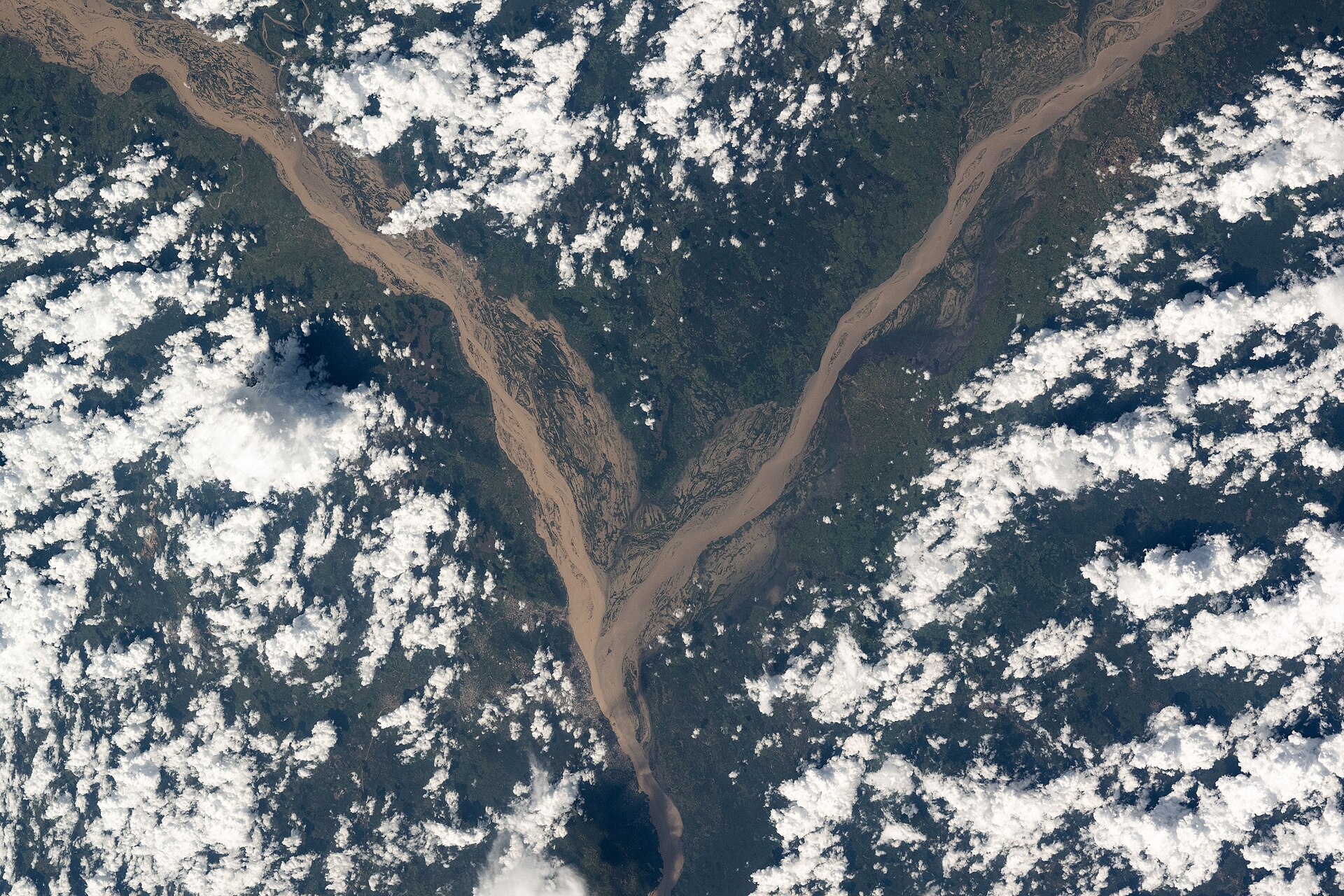
The Niger River, for which the country is named, and the Benue, its largest tributary, are the principal rivers of Nigeria. The Niger delta is a vast low-lying region through which the waters of the Niger River drain into the Gulf of Guinea.

The most mountainous area of Nigeria lies along the southeastern border with Cameroon, where the Cameroon Highlands rise to the highest points in the country. Chappal Waddi is the highest of these.
3. Population and Society
The 2026 population estimate for Nigeria stands at 239,430,000 people, a figure that placed the country sixth in the world by population that year; the projection for 2030 is 263,839,000 people. For 2025 the World Bank put Nigeria's total population at 237,527,782 people. The Commonwealth's country profile lists Nigeria's population as 206.1 million in 2022.
Nigeria is a multinational state inhabited by more than 250 ethnic groups speaking over 500 distinct languages, the three largest being the Hausa in the north, the Yoruba in the west and the Igbo in the east.
The languages of Nigeria are classified into three broad linguistic groups: Niger-Congo, Nilo-Saharan and Afro-Asiatic. Modern linguistic research suggests that the great majority of Nigerian languages, specifically the Kwa subgroup, have been spoken in roughly the same locations for some 4,000 years. Hausa was an official language of the northern states from 1951 to 1967.
At the beginning of the 21st century about half of Nigeria's population was Muslim, slightly less than half was Christian, and only a small number followed traditional religions. The state has no official religion, and its official name is the Federal Republic of Nigeria.
For 2024 World Bank data list life expectancy at birth in Nigeria at 54.635 years. Britannica lists gross national income per capita at 1,700 U.S. A persistent challenge for Nigeria is absorbing the 3.5 million people entering its labour force annually.
4. Government and Administration
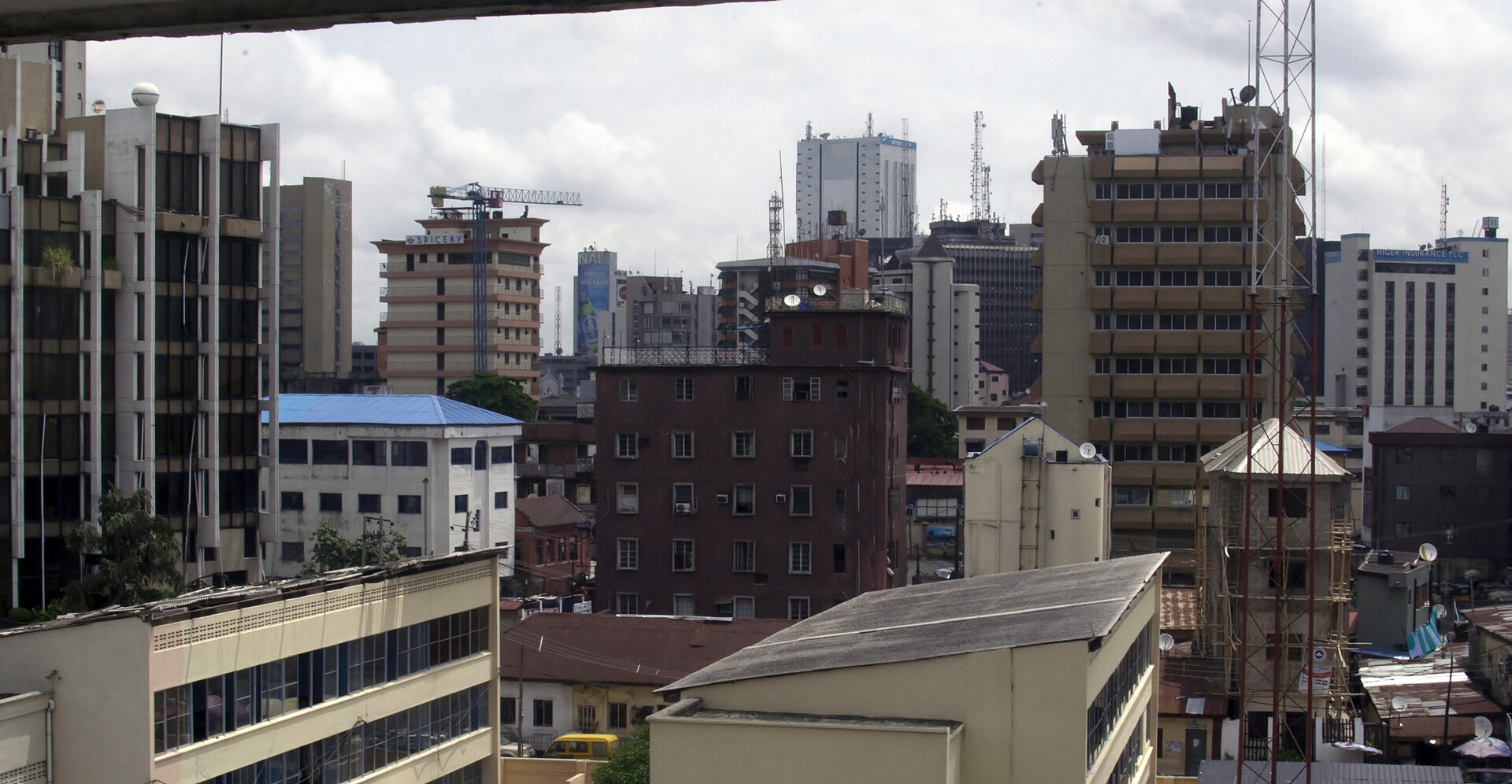
Nigeria is a federal republic with two legislative houses: a Senate of 109 members and a House of Representatives of 360 members. The national capital is Abuja, in the Federal Capital Territory created by decree in 1976. Lagos, the former capital, retains its standing as the country's leading commercial and industrial city, and it is the largest city in Nigeria and one of the largest in sub-Saharan Africa.
The Nigeria Independence Act 1960 provided that on the first day of October 1960 the Colony and the Protectorate should together constitute part of Her Majesty's dominions under the name of Nigeria. The Act further provided that no Act of the Parliament of the United Kingdom passed on or after the appointed day should extend to Nigeria as part of its law.
The objects of the Central Bank of Nigeria are to ensure monetary and price stability, issue legal tender currency, maintain external reserves, promote a sound financial system and act as banker and provide economic and financial advice to the Federal Government.
5. History
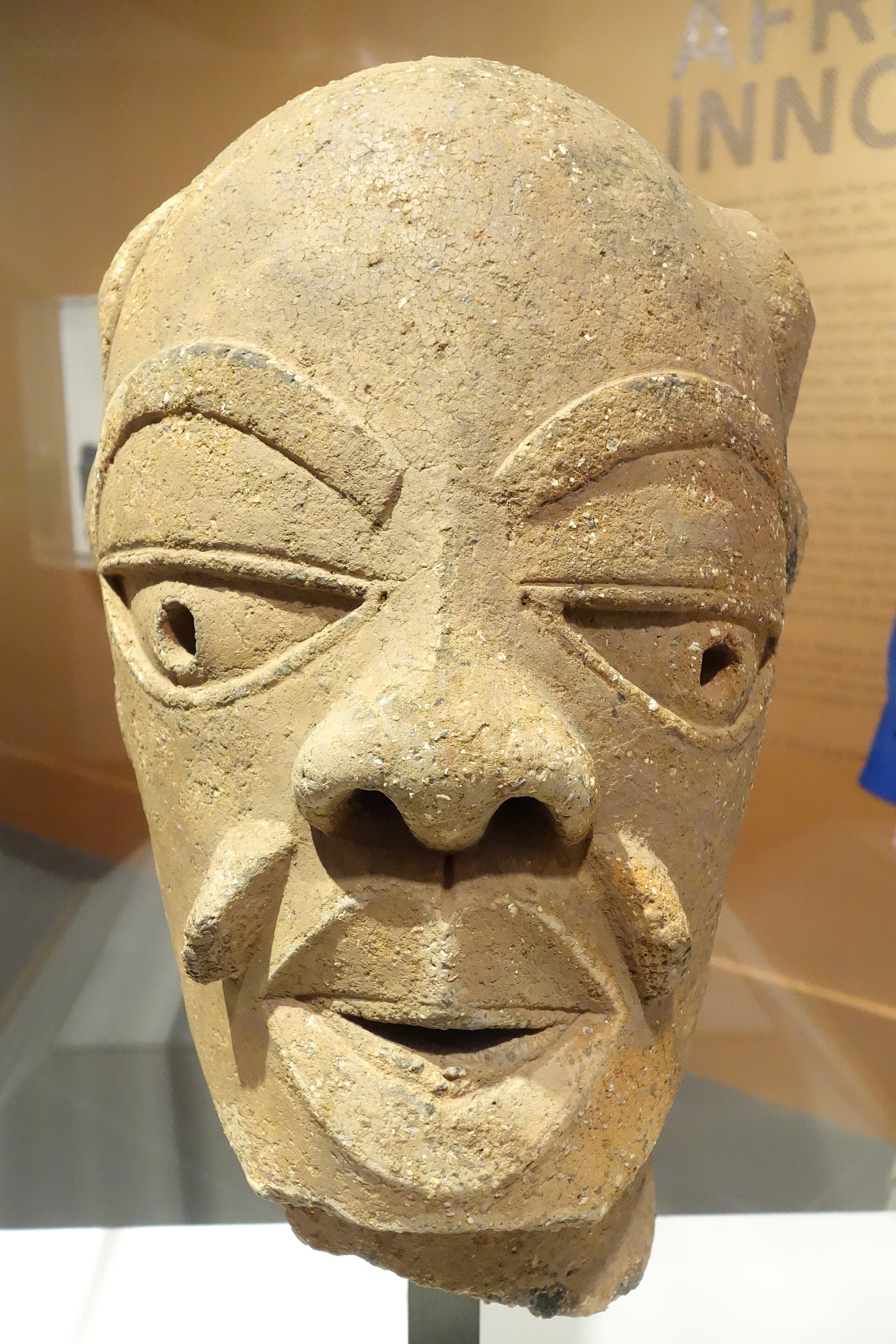
The oldest fossil remains found by archaeologists in south-western Nigeria, at Iwo Eleru near Akure, have been dated to about 9000 BCE. From around 800 BCE the Jos plateau was settled by the Nok, a Neolithic and Iron Age civilisation. Named for the village of Nok, this ancient culture produced fine terra-cotta figurines first discovered by tin miners on the Jos Plateau in the 1930s, and made the transition from the Neolithic to the Iron Age. Bronzes dated to about the 9th century CE were discovered at Igbo Ukwu near Onitsha and reveal both a high artistic tradition and a well-structured society with wide-ranging economic relationships.
The history of Borno antedates the 9th century, when Arabic writers in North Africa first noted the kingdom of Kanem east of Lake Chad. For centuries the Hausa have occupied the northern plains beyond the Jos Plateau, a crossroads open to Borno, the states of Mali and Songhai and the trans-Saharan routes. Ife, which flourished between the 11th and 15th centuries, emerged as a major power in the forested areas west of the Niger and south of Hausaland. When the Portuguese arrived in the kingdom of Benin in the 15th century they found a monarchy dating back many centuries, with a complex structure of chiefs and palace officials.
In 1472 Portuguese navigators reached the Nigerian coast; from the 16th to the 18th centuries the slave trade saw Nigerians forcibly sent to the Americas. Many indigenous polities emerged in Nigeria before the British took control in the late 19th century; in the north there were large and developed systems, including the Hausa states of Kano, Katsina, Zaria and Gobir, Kanem-Borno and the Jukun states of Kwararafa, Kona, Pinduga and Wukari.
Nigeria became independent in 1960 with Prime Minister Sir Abubakar Tafawa Balewa leading a coalition government. In January 1966 Prime Minister Balewa was killed in a coup and Major-General Johnson Aguiyi-Ironsi formed a military government; a counter-coup in July replaced him with Lieutenant-Colonel Yakubu Gowon. Nigeria saw a civil war from 1967 to 1970 when the breakaway state of Biafra declared its independence.
In 1995 Ken Saro-Wiwa, a writer and campaigner against oil industry damage to his Ogoni homeland, was executed after a hasty trial. In July 2009 hundreds died in northeastern Nigeria after the Boko Haram Islamist movement launched an enduring campaign of violence. In April 2014 Boko Haram kidnapped more than 200 girls from a boarding school in the northern town of Chibok, drawing major national and international outrage.
6. Economy
The Nigerian economy is one of the largest in Africa and since the late 1960s has been based primarily on the petroleum industry. Nigeria is one of the world's largest oil producers, but few Nigerians, including those in oil-producing areas, have benefited.
The oil-led influx of rural people into urban centres made agricultural production stagnate, so that cash crops such as palm oil, peanuts and cotton ceased to be significant export commodities. Cocoa beans, from the cacao tree, are the major agricultural export of Nigeria.
In the late 1990s the government began to privatize many state-run enterprises, especially in communications, power and transportation, to improve service quality and reduce dependence on the state. Under a 2005 debt-relief plan the majority of Nigeria's debt to the Paris Club of creditor countries was forgiven once it had repaid a certain amount, and the country met the condition in 2006 and settled the debt. Helped by record oil prices, Nigeria became in April 2006 the first African nation to pay off its debt to the Paris Club of rich lenders.
Nigeria entered a recession in 2016 partly because of falling global oil prices, but saw progress with recovery within the next couple of years. In June 2016 the naira currency was floated in an attempt to stave off a financial crisis caused by low oil prices.
For 2025 the World Bank lists Nigeria's GDP at 290.79 billion current U.S. Britannica lists Nigeria's gross national income at 396,179 million U.S. dollars and gross national income per capita at 1,700 U.S. The IMF projected Nigeria's real GDP to grow 4.1% in 2026 and consumer prices to rise 16.0%.
Headline inflation in Nigeria fell from 27.4% in March 2025 to 15.1% in February 2026 while food inflation reached 20.3% in July. In 2022 Nigeria launched its most extensive national measure of multidimensional poverty. On 23 May 2024 the National Bureau of Statistics held a sensitisation workshop for stakeholders on its GDP and CPI rebasing exercise.
7. Poverty and Living Standards
Poverty remains widespread despite recent reforms: over 60% of Nigerians were estimated to live below the national poverty line in 2025, with food inflation hitting poor households hardest. 2Nigeria | World Bank Group · World Bank Group ↗
In 2025 an estimated 69.6% of Nigerians lived below the lower-middle-income poverty line of $4.20 per day, while 50.8%, or 123 million people, lived in extreme poverty. 2
In 2018 Nigeria earned the unenviable distinction of having the most people in extreme poverty in the world. 14Nigeria under Buhari · Encyclopaedia Britannica ↗
8. Food Security and Displacement
As of early August 2026, over 3.7 million people were internally displaced nationwide, with about two-thirds of them located in Borno State, where humanitarian needs are particularly high.
The World Food Programme reports 4.8 million children and women requiring nutrition assistance annually in the northeast. The latest Cadre Harmonise analysis estimated that nearly 36.3 million people, 17 percent of the analysed population, faced severe acute food insecurity during the June to August 2026 lean season.
To sustain its Nigeria operations until July 2026 under its country plan, the agency needs at least US$129 million.
9. Security Challenges
Nigeria faces multiple security challenges: a jihadist insurgency in the north, clashes between herders and farmers, widespread banditry and kidnappings, a separatist insurgency in the southeast and militants in the Niger delta demanding a greater share of oil profits.
10. Recent Politics
Muhammadu Buhari served as president of Nigeria from 2015 to 2023 across two terms. On 29 May 2019 he was inaugurated for a second term after winning the 2019 election with 56 percent of the vote against Atiku Abubakar's 41 percent.
The 2023 elections were the first in which Nigeria's electoral commission relied solely on biometric data for voter verification and on electronic transmission of the results. Problems with the new election system likely contributed to a turnout of only 27 percent in the 2023 presidential election.
In September 2023 the presidential election tribunal upheld Tinubu's victory, and appeals were dismissed by the Supreme Court the following month.
11. International Membership
Nigeria's engagement with the multilateral system dates from the first years of its independence, which it attained on 1 October 1960 4Nigeria | History, Population, Flag, Map, Languages, Capital, & Facts · Encyclopaedia Britannica ↗. Membership of the International Monetary Fund followed on 30 March 1961, carrying a quota of 2454.5 million special drawing rights 12Nigeria and the IMF · International Monetary Fund ↗. In the same period the country acceded to the General Agreement on Tariffs and Trade on 18 November 1960, and it has been a member of the World Trade Organization since that body's establishment on 1 January 1995 17Nigeria - Member information · World Trade Organization ↗.
Nigeria became a UNESCO member state in 1960 and has remained one since 18Nigeria | UNESCO · UNESCO ↗.
Under the World Heritage Convention, two properties have been inscribed on the World Heritage List 19Nigeria - UNESCO World Heritage Convention · UNESCO World Heritage Centre ↗.
| Organisation | Membership date or status |
|---|---|
| International Monetary Fund | 30 March 1961; quota of 2454.5 million special drawing rights |
| World Trade Organization | Since 1 January 1995; GATT member from 18 November 1960 |
| Commonwealth | Joined 1960 following independence; suspended 1995–1999, then restored |
| UNESCO | Member state since 1960 |
| World Heritage Convention | Ratified 23 October 1974 |
12. Culture and Heritage
Its tentative list contains 13 properties that the state party intends to consider for nomination.
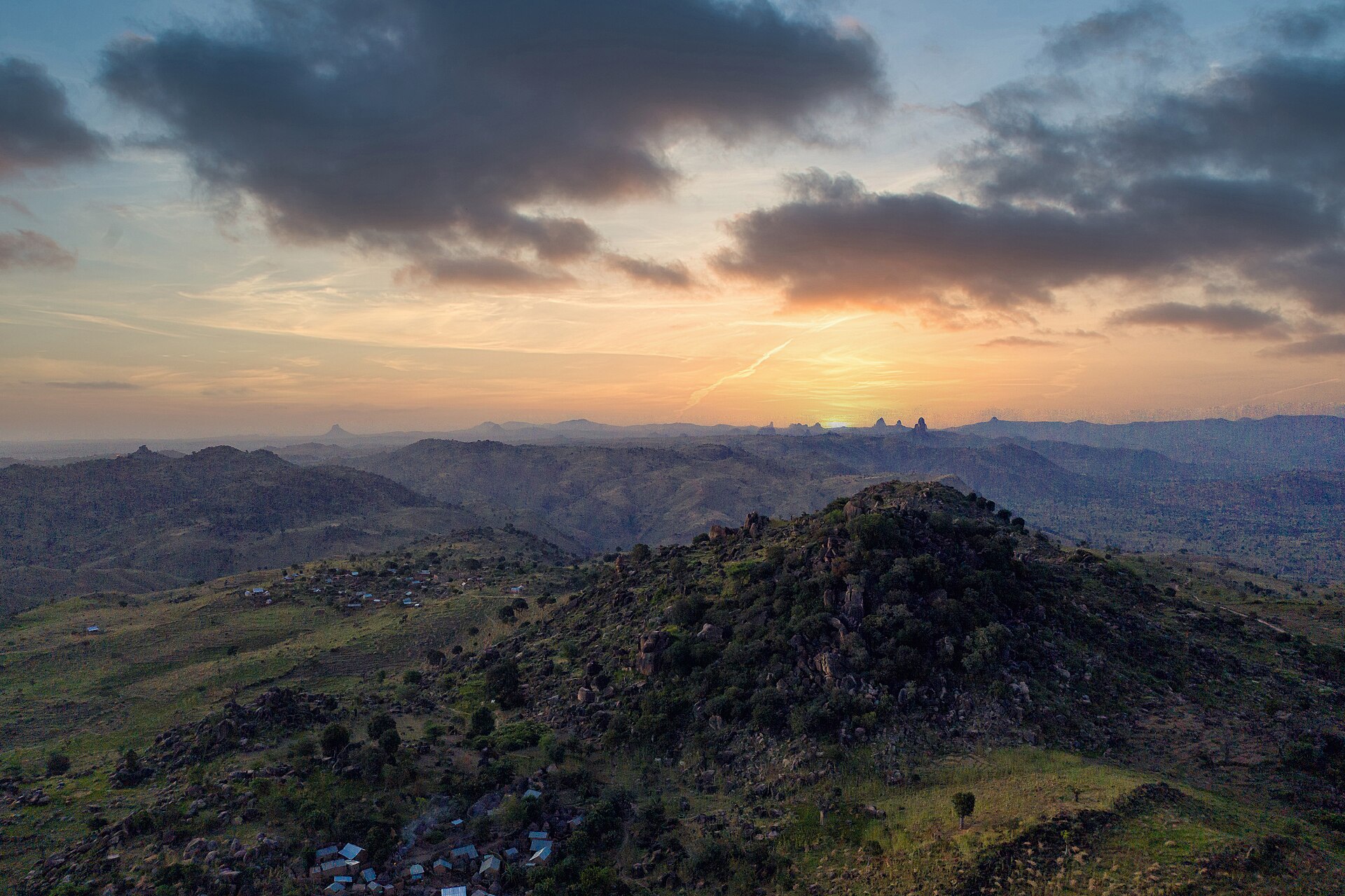
The Sukur Cultural Landscape, with the palace of the Hidi on a hill above the villages, terraced fields and their sacred symbols, and extensive remains of a former flourishing iron industry, is a remarkably intact physical expression of a society and its spiritual and material culture. Sukur lies in the area of Adamawa State on the Nigeria-Cameroon border, is a hilltop settlement at an elevation of 1045 m, and covers a total land area of 1942.50 hectares.
The dense forest of the Osun Sacred Grove on the outskirts of Osogbo is one of the last remnants of primary high forest in southern Nigeria. The grove is regarded as the abode of the goddess of fertility Osun, one of the pantheon of Yoruba gods, and its landscape is dotted with sanctuaries, shrines, sculptures and art works in her honour.
UNESCO's Representative List of the Intangible Cultural Heritage of Humanity includes Nigeria's Durbar in Kano, the Sango Festival in Oyo, and midwifery knowledge and practices. The oral heritage of Gelede and the Ifa divination system are both inscribed on the Representative List. The Argungu international fishing and cultural festival and the Kwagh-Hir theatrical performance are among Nigeria's entries on the list.
13. Health
A national survey whose results were announced in March 2019 indicated that Nigeria had an HIV prevalence of 1.4%. In March 2025 UNAIDS welcomed Nigeria to the Global Partnership for Action to Eliminate all Forms of HIV-Related Stigma and Discrimination.
Nigeria volunteered for a second Joint External Evaluation of its core capacities under the International Health Regulations. The country had held a first evaluation in 2017 and an internal mid-term review afterwards.
14. Timeline: from the Nok culture to the 2023 elections
- c. 500 BCEThe Nok cultureThe Nok culture produced fine terra-cotta figurines and made the transition from the Neolithic to the Iron Age on the Jos Plateau.
- 9th century CEIgbo Ukwu bronzesBronzes dated to about the 9th century CE were discovered at Igbo Ukwu near Onitsha, revealing a well-structured society with wide-ranging economic relationships.
- 11th-15th centuriesIfe flourishesIfe emerged as a major power in the forested areas west of the Niger and south of Hausaland, a period in which characteristic features of Yoruba culture took shape.
- 1472Portuguese reach the Nigerian coastPortuguese navigators reached the Nigerian coast; over the following centuries the slave trade carried Nigerians to the Americas.
- 1809Sokoto caliphate foundedThe Islamic Sokoto caliphate was founded in northern Nigeria.
- 1914Northern and Southern Protectorates joinedModern Nigeria dates from 1914, when the British Protectorates of Northern and Southern Nigeria were joined.
- 1 October 1960IndependenceNigeria became independent with Prime Minister Sir Abubakar Tafawa Balewa leading a coalition government.
- 1963Republican constitution adoptedNigeria adopted a republican constitution but elected to stay a member of the Commonwealth.
- January 1966Military coupPrime Minister Balewa was killed in a coup; Major-General Johnson Aguiyi-Ironsi formed a military government before a counter-coup brought Lieutenant-Colonel Yakubu Gowon to power.
- 1967Biafra and civil warThree eastern states seceded as the Republic of Biafra, sparking a three-year civil war.
- 1975The capital to move to AbujaGeneral Gowon was overthrown by Brigadier Murtala Ramat Mohammed, who began the process of moving the federal capital to Abuja.
- 1991Abuja becomes the capitalUntil 1991 Lagos was the federal capital; Abuja then became the official capital.
- 1995Ken Saro-Wiwa executedKen Saro-Wiwa was executed after a hasty trial; the European Union imposed sanctions and the Commonwealth suspended Nigeria's membership until 1998.
- 1999Return to civilian ruleParliamentary and presidential elections were held and Olusegun Obasanjo was sworn in as president.
- March 2015Buhari elected presidentMuhammadu Buhari won the presidential election, becoming the first opposition candidate to do so in Nigeria's history.
- February-May 2023Tinubu elected presidentBola Tinubu was declared the winner of the February 2023 presidential election and was sworn in as president on May 29, 2023.
References (24)
- 1Nigeria - Languages, Dialects, Ethnicities — Encyclopaedia Britannica WebView source
- 2Nigeria | World Bank Group — World Bank Group Web↩View source
- 3Nigeria country profile — BBC News WebView source
- 4Nigeria | History, Population, Flag, Map, Languages, Capital, & Facts — Encyclopaedia Britannica Web↩View source
- 5Nigeria | Commonwealth — Commonwealth Secretariat WebView source
- 6Nigeria | Data — World Bank Group WebView source
- 7Nigeria Independence Act 1960 — legislation.gov.uk (The National Archives) 1960 WebView source
- 8About CBN — Central Bank of Nigeria WebView source
- 9Nigeria - Colonialism, Independence, Civil War (History) — Encyclopaedia Britannica WebView source
- 10Nigeria profile - Timeline — BBC News WebView source
- 11Nigeria - Oil, Agriculture, Trade (Economy) — Encyclopaedia Britannica WebView source
- 12Nigeria and the IMF — International Monetary Fund Web↩View source
- 13Home | National Bureau of Statistics — National Bureau of Statistics (Nigeria) WebView source
- 14Nigeria under Buhari — Encyclopaedia Britannica Web↩View source
- 15FAO GIEWS Country Brief on Nigeria — FAO Global Information and Early Warning System WebView source
- 16Nigeria | World Food Programme — World Food Programme WebView source
- 17Nigeria - Member information — World Trade Organization Web↩View source
- 18Nigeria | UNESCO — UNESCO Web↩View source
- 19Nigeria - UNESCO World Heritage Convention — UNESCO World Heritage Centre Web↩View source
- 20Sukur Cultural Landscape — UNESCO World Heritage Centre WebView source
- 21Osun-Osogbo Sacred Grove — UNESCO World Heritage Centre WebView source
- 22Nigeria - UNESCO Intangible Cultural Heritage — UNESCO WebView source
- 23Nigeria | UNAIDS — UNAIDS WebView source
- 24Nigeria | World Health Organization — World Health Organization WebView source