Benin Bronzes
Thousands of brass plaques looted in 1897 and still disputed.
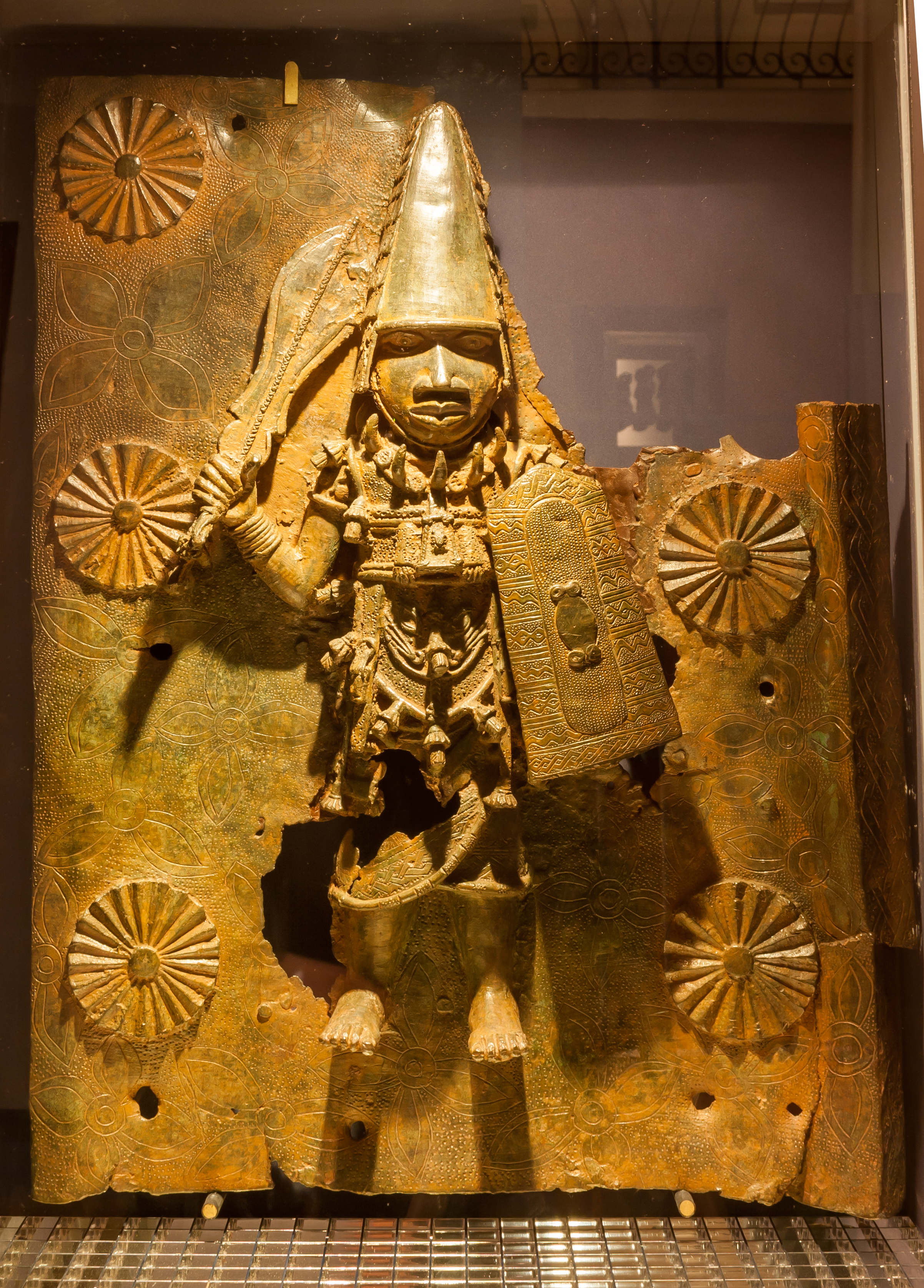
Overview
The Benin Bronzes are a group of several thousand metal plaques and sculptures that decorated the royal palace of the Kingdom of Benin, in what is now Edo State, Nigeria 1Benin Bronzes — wiki · Wikipedia ↗. Collectively they form the best examples of Benin art and were created from the fourteenth century by artists of the Edo people 1. The Kingdom of Benin, also called Great Benin, is a traditional kingdom in southern Nigeria whose capital was Edo, now Benin City in Edo State 2Benin Bronzes — benin · Reference ↗. It has no historical relation to the modern Republic of Benin, which was known as Dahomey from the 17th century until 1975 2.
Art in the kingdom took many forms, of which bronze and brass reliefs and the heads of kings and queen mothers are the best known 3Benin Bronzes — sec2 · Wikipedia ↗. Many of the dramatic sculptures date to the thirteenth century, and a large part of the collection dates to the fifteenth and sixteenth centuries 3. The metal plaques were produced by the Guild of Benin Bronze Casters, now located in Igun Street, also known as Igun-Eronmwon Quarters 1. The Oba, or king, is the traditional ruler and custodian of the culture of the Edo people and all Edoid people 4Benin Bronzes — benin · Reference ↗, and the Oba's palace in Benin City was the site of production for the royal ancestral altars and of an elaborate court ceremonial life in which warriors, chiefs and titleholders, priests, palace societies and their guilds, foreign merchants and mercenaries, and numerous retainers and attendants all took part 3.
Few examples of African art had been collected by Europeans prior to the nineteenth century, though European printed books already included images of Benin City and of the oba's palace from the early 1600s onward 5Benin Bronzes — sec4 · Wikipedia ↗. Most of the plaques and other objects were taken by British forces during the Benin Expedition of 1897 as the British Empire's control was being consolidated in Southern Nigeria 1. Many Benin works of art entered the European art market after that expedition 6Benin Bronzes — idia · Reference ↗, and the Foreign Office gave a large quantity of bronze wall plaques to the British Museum, which illustrated the history of the Benin Kingdom in the fifteenth and sixteenth century 7Benin Bronzes — sec5 · Wikipedia ↗.
The two largest collections of Benin Bronzes are located in the Ethnological Museum of Berlin and in the British Museum in London, while the third largest collection is located in several museums in Nigeria, principally the Nigerian National Museum in Lagos 8Benin Bronzes — sec6 · Wikipedia ↗. Beginning in 1950 the British Museum sold more than 30 Benin Bronzes to the Nigerian government 8. Since gaining independence in 1960 Nigeria has sought the return of the bronzes on several occasions 8. In April 2021 the German government declared the restitution of looted Benin Bronzes in Germany's public collections by 2022 9Benin Bronzes — sec7 · Wikipedia ↗, and in the same month the Church of England promised to return two Benin bronzes that were given as gifts to the then-Archbishop of Canterbury Robert Runcie 9. In February 2025 Nigeria and the Netherlands concluded an agreement for the return of 119 bronzes housed in Leiden's collections 10Benin Bronzes — sec8 · Wikipedia ↗.
The Bronze Head of Queen Idia is a commemorative bronze head from the medieval Kingdom of Benin in West Africa that probably represents Idia, mother of Oba Esigie, made during the early sixteenth century at the Benin court 6. Four cast bronze heads of the queen are known and are currently in the collections of the British Museum in London, the World Museum in Liverpool, the Nigerian National Museum in Lagos, and the Ethnological Museum of Berlin 6.
The kingdom that produced these works has continued to be mostly populated by the Edo, also known as the Benin ethnic group 4. An idealised depiction of Benin City by a Dutch artist appeared in the 1686 French edition of Olfert Dapper's Description of Africa, first published in 1668 5.
Hartmut Dorgerloh, the director of the Humboldt Forum, which incorporates the Ethnological Museum of Berlin, said at a press event that a previous plan to exhibit the bronzes in a new museum complex in Berlin was "now not imaginable" 9. The return of the bronzes from the Netherlands forms part of that government's plan for cultural restitution and historical justice 10. Nigeria's museum has agreed with the royal ruler on custody of the Benin Bronzes 7.
1. The Kingdom of Benin and the Oba
The Benin Kingdom ranks among the oldest and most developed states of the West African coastal hinterland2. Its prosperity peaked in the 15th and 16th centuries, when it widened its territory, traded with European powers, and produced a celebrated artistic legacy in cast bronze, iron, brass, carved ivory and other materials2. At the centre of this courtly culture stood the Oba, the divine king, whom bronze and ivory works were chiefly made to glorify, together with the history of his imperial power, or to honour the Iyoba of Benin, the queen mother311Benin Bronzes — sec3 · Wikipedia ↗. Such objects served a variety of functions in the ritual and courtly life of the kingdom311.
Beyond the plaques, the sculptural output of the kingdom included portrait heads, jewellery and smaller pieces in brass or bronze1. The capital of the kingdom was Edo, the city the British force would later capture4. European curiosity about the kingdom is documented as early as an idealised depiction of Benin City by a Dutch artist in the 1686 French edition of Olfert Dapper's Description of Africa of 16685.
The end of the kingdom's independence came through a British military force of approximately 1,200 men under the command of Sir Harry Rawson, which mounted the Benin punitive Expedition in 18974. The force was dispatched in retaliation for the ambush of a British party at Ugbine village near Gwato on 4 January 1897 by a group of Benin soldiers acting without orders from the Oba, an attack that left all but two of the British party dead4. The expedition captured Edo, sacking and burning the city while forcing the reigning Oba, Ovonramwen, into a six-month exile4.
The disputed character of the British approach is part of the record: in 1897 the vice consul general James Robert Phillips of the Niger Coast Protectorate, with six other British officials, two businessmen, translators and 215 porters, set off toward Benin from the small port of Sapele in Nigeria, and the true intention of the visit remains contested5. The delegation's stated aim was to negotiate with the Oba of Benin, while some historians contend that it was a reconnaissance mission disguised as a peaceful diplomatic delegation with the goal of ultimately overthrowing the king of Benin5.
The monarchy endured as an institution. The repatriated Benin Bronzes are to be taken to Benin City to be received by the Oba of Benin and then kept in a gallery to be made available following a partnership between the museum commission and Coronation Group10. The handover ceremony took place on the 21st of June 2025, attended by the Minister for Arts, Culture, and the Creative Economy, the Director General of the National Commission for Museums and Monuments, Benin Chiefs, and other cultural and heritage professionals in Nigeria10.
The kingdom is a traditional state of southern Nigeria, also called Great Benin, and it bears no historical relation to the modern Republic of Benin, which was known as Dahomey from the 17th century until 19752. Its population has remained largely Edo, also called the Benin ethnic group4. The Oba, the king, is the traditional ruler and custodian of the culture of the Edo people and all Edoid people4. The capital was Edo, now Benin City in Edo State, Nigeria2, and the Oba's palace there was the site of production for the royal ancestral altars and of an elaborate court ceremonial life in which the Oba, his warriors, chiefs and titleholders, priests, members of the palace societies and their constituent guilds, foreign merchants and mercenaries, and numerous retainers and attendants all took part3.
The bronzes themselves are a group of several thousand metal plaques and sculptures that decorated the royal palace of the Kingdom of Benin, in what is now Edo State, Nigeria1. Art in the kingdom took many forms, of which bronze and brass reliefs and the heads of kings and queen mothers are the best known3. Many of the dramatic sculptures date to the thirteenth century, and a large part of the collection dates to the fifteenth and sixteenth centuries3. The Foreign Office gave a large quantity of bronze wall plaques to the British Museum; these plaques illustrated the history of the Benin Kingdom in the fifteenth and sixteenth century7. A commemorative bronze head from the medieval kingdom probably represents Idia, mother of Oba Esigie, and was made during the early sixteenth century at the Benin court6.
Few examples of African art had been collected by Europeans prior to the nineteenth century, though European printed books already included images of Benin City and of the oba's palace from the early 1600s onward5. The two largest collections of Benin Bronzes are located in the Ethnological Museum of Berlin and in the British Museum in London, while the third largest collection is located in several museums in Nigeria, principally the Nigerian National Museum in Lagos8. In April 2021 the German government declared the restitution of looted Benin Bronzes in Germany's public collections by 20229, and a 2022 agreement was signed in Cologne, Germany, to transfer the Benin Bronzes of the city's museum to Nigeria9. Also in April 2021 the Church of England promised to return two Benin bronzes that were given as gifts to the then-Archbishop of Canterbury Robert Runcie9.
The market for these objects is documented in the auction record: in 1953 Sotheby's sold a Benin Bronze head for £5,500 when the previous record sale had been £7808, and in 1968 Christie's sold a Benin head that was discovered by a police officer in his neighbour's greenhouse for £21,0008.
2. Creation and Social Context
The palace of the Oba in Benin City was a vast sprawling agglomeration of buildings and courtyards3. Within this setting stood hundreds of rectangular brass plaques whose relief images portray the persons and events that animated the court11. The plaques belong to a wider sculptural output that also includes portrait heads, jewellery and smaller pieces in brass or bronze11. The metal plaques were produced by the Guild of Benin Bronze Casters, now located in Igun Street, also known as the Igun-Eronmwon Quarters11.
The courtly art of Benin served ritual and ceremonial ends, and its imagery was closely bound to the prestige of the monarchy and the memory of its history3. Among the most admired works is a very realistic representation of a young woman from the Benin court, who wears a high pointed ukpe-okhue crown of lattice-shaped red coral beads6. Such a head honours the Iyoba, the queen mother, whose position the sculpture commemorates6.
The dispersal of these works far from their place of origin has been the subject of extensive debate8. The removal followed the events of 1897, when a British military force of approximately 1,200 men under the command of Sir Harry Rawson mounted the Benin punitive Expedition4. News of the incident reached London eight days later and a naval punitive expedition was organized immediately, which was to be directed by Admiral Harry Rawson5. The market for such material has since been demonstrated at auction, as in 1968 when Christie's sold a Benin head that was discovered by a police officer in his neighbour's greenhouse for £21,0008.
The Benin Bronzes are a group of several thousand metal plaques and sculptures that decorated the royal palace of the Kingdom of Benin, in what is now Edo State, Nigeria1. Collectively the objects form the best examples of Benin art and were created from the fourteenth century by artists of the Edo people1. Many of the dramatic sculptures date to the thirteenth century, and a large part of the collection dates to the fifteenth and sixteenth centuries3.
The Oba's palace in Benin City was the site of production for the royal ancestral altars and also the setting for an elaborate court ceremonial life in which the Oba of Benin, his warriors, chiefs and titleholders, priests, members of the palace societies and their constituent guilds, foreign merchants and mercenaries, and numerous retainers and attendants all took part11. The Oba, as king, is the traditional ruler and custodian of the culture of the Edo people and all Edoid people4. The Kingdom of Benin, also known as Great Benin, is a traditional kingdom in southern Nigeria and has no historical relation to the modern Republic of Benin, which was known as Dahomey from the 17th century until 19752. The territory of the former kingdom has continued to be mostly populated by the Edo, also known as the Benin ethnic group4.
The Bronze Head of Queen Idia is a commemorative bronze head from the medieval Kingdom of Benin in West Africa that probably represents Idia, mother of Oba Esigie, and was made during the early sixteenth century at the Benin court6. Four cast bronze heads of the queen are known and are currently in the collections of the British Museum in London, the World Museum in Liverpool, the Nigerian National Museum in Lagos, and the Ethnological Museum of Berlin6.
Few examples of African art had been collected by Europeans prior to the nineteenth century, though European printed books already included images of Benin City and of the oba's palace from the early 1600s onward5; an idealised depiction of Benin City by a Dutch artist appeared in the 1686 French edition of Olfert Dapper's Description of Africa (1668)5. Many Benin works of art entered the European art market after the Benin Expedition of 18976. The Foreign Office gave a large quantity of bronze wall plaques to the British Museum; these plaques illustrated the history of the Benin Kingdom in the fifteenth and sixteenth century7.
The two largest collections of Benin Bronzes are located in the Ethnological Museum of Berlin and in the British Museum in London, while the third largest collection is located in several museums in Nigeria, principally the Nigerian National Museum in Lagos8. Since gaining independence in 1960 Nigeria has sought the return of the bronzes on several occasions8. In April 2021 the German government declared the restitution of looted Benin Bronzes in Germany's public collections by 20229, and a 2022 agreement was signed in Cologne, Germany, to transfer the Benin Bronzes of the city's museum to Nigeria9. Hartmut Dorgerloh, director of the Humboldt Forum, which incorporates the Ethnological Museum of Berlin, said at a press event that a previous plan to exhibit the bronzes in a new museum complex in Berlin was "now not imaginable"9. Nigeria received 119 bronzes from the Netherlands after a series of meetings between both governments, a return described as part of the Dutch government's plan for cultural restitution and historical justice10.
3. European Interest and the Benin Expedition of 1897
Few examples of African art had been collected by Europeans prior to the nineteenth century, though European printed books already included images of Benin City and of the oba's palace from the early 1600s onward 5.
In 1897 the vice consul general James Robert Phillips of the Niger Coast Protectorate together with six other British officials, two businessmen, translators, and 215 porters set off toward Benin from the small port of Sapele, Nigeria 5. The true intention of the visit is disputed 5.
News of the incident reached London eight days later and a naval punitive expedition was organized immediately, which was to be directed by Admiral Harry Rawson 5.
The punitive force numbered approximately 1,200 men and was commanded by Sir Harry Rawson 4. It was dispatched in retaliation for the ambush of a British party at Ugbine village near Gwato on 4 January 1897 by a group of Benin soldiers acting without orders from the Oba; the ambush had left all but two of the British party dead 4.
Most of the plaques and other objects were taken by British forces during the Benin Expedition of 1897, at a time when the British Empire's control was being consolidated in Southern Nigeria 1. Many Benin works of art entered the European art market after the expedition 6. The Foreign Office gave a large quantity of bronze wall plaques to the British Museum; these plaques illustrated the history of the Benin Kingdom in the fifteenth and sixteenth century 7.
Four cast bronze heads of the queen are known and are currently held by the British Museum in London, the World Museum in Liverpool, the Nigerian National Museum in Lagos, and the Ethnological Museum of Berlin 6. The two largest collections of Benin Bronzes are located in the Ethnological Museum of Berlin and in the British Museum in London, while the third largest is dispersed across several museums in Nigeria, principally the Nigerian National Museum in Lagos 8.
The market for Benin works has drawn record prices. In 1953 Sotheby's sold a Benin Bronze head for £5,500 when the previous record sale had been £780 8. In 1968 Christie's sold a Benin head, discovered by a police officer in his neighbour's greenhouse, for £21,000 8.
In April 2021 the German government declared the restitution of looted Benin Bronzes in Germany's public collections by 2022 9.
4. Notable Works: The Bronze Head of Queen Idia
The Bronze Head of Queen Idia is a commemorative bronze head from the medieval Kingdom of Benin in West Africa that probably represents Idia, mother of Oba Esigie, made during the early sixteenth century at the Benin court 6. It is a very realistic representation of a young woman from the Benin court, who wears a high pointed ukpe-okhue crown of lattice-shaped red coral beads 6.
Many Benin works of art entered the European art market after the Benin Expedition of 1897 6. Four cast bronze heads of the queen are known and are currently in the collections of the British Museum in London, the World Museum in Liverpool, the Nigerian National Museum in Lagos, and the Ethnological Museum of Berlin 6.
Bronze and brass reliefs and the heads of kings and queen mothers count among the best known forms taken by art in the Kingdom of Benin 3. Beyond the plaques, sculptors in brass or bronze produced portrait heads, jewellery and smaller pieces 1, and such bronze and ivory objects served a variety of functions in the ritual and courtly life of the kingdom 3. The metal plaques themselves were produced by the Guild of Benin Bronze Casters, now located in Igun Street, also known as Igun-Eronmwon Quarters 1.
The market for such works has been dramatic. In 1953 Sotheby's sold a Benin Bronze head for £5,500 when the previous record sale had been £780 8. In 1968 Christie's sold a Benin head that was discovered by a police officer in his neighbour's greenhouse for £21,000 8. Beginning in 1950 the British Museum sold more than 30 Benin Bronzes to the Nigerian government 8, and since gaining independence in 1960 Nigeria has sought the return of the bronzes on several occasions 8. There has been extensive debate over the location of the bronzes being distant from their place of origin 8.
The two largest collections of Benin Bronzes are located in the Ethnological Museum of Berlin and in the British Museum in London, while the third largest collection is located in several museums in Nigeria, principally the Nigerian National Museum in Lagos 8. The Foreign Office gave a large quantity of bronze wall plaques to the British Museum; these plaques illustrated the history of the Benin Kingdom in the fifteenth and sixteenth century 7.
5. Collections and the Art Market
The two largest collections of Benin Bronzes are located in the Ethnological Museum of Berlin and in the British Museum in London, while the third largest collection is located in several museums in Nigeria (principally the Nigerian National Museum in Lagos) 8. Many Benin works of art entered the European art market after the Benin Expedition of 1897 6. Four cast bronze heads of the queen are known and are currently in the collections of the British Museum in London, the World Museum in Liverpool, the Nigerian National Museum in Lagos, and the Ethnological Museum of Berlin 6. Dalton and Charles Hercules Read erroneously concluded that Benin knowledge of metallurgy came from the Portuguese traders, who were in contact with Benin in the early modern period 1.
Beginning in 1950 the British Museum sold more than 30 Benin Bronzes to the Nigerian government 8. In 1953 Sotheby's sold a Benin Bronze head for £5,500 when the previous record sale had been £780 8. In 1968 Christie's sold a Benin head discovered by a police officer in his neighbour's greenhouse for £21,000 8. Since gaining independence in 1960 Nigeria has sought the return of the bronzes on several occasions, and there has been extensive debate over the location of the bronzes being distant from their place of origin 8.
The objects that make up the corpus are collectively the best examples of Benin art, created from the fourteenth century by artists of the Edo people 1. Many of the dramatic sculptures date to the thirteenth century, and a large part of the collection dates to the fifteenth and sixteenth centuries 3. Art in the Kingdom of Benin took many forms, of which bronze and brass reliefs and the heads of kings and queen mothers are the best known 3. Apart from the plaques, other sculptures in brass or bronze include portrait heads, jewellery, and smaller pieces 1. The metal plaques were produced by the Guild of Benin Bronze Casters, now located in Igun Street, also known as Igun-Eronmwon Quarters 1.
As a courtly art, the principal objective of these works was to glorify the Oba, the divine king, and the history of his imperial power or to honour the Iyoba of Benin (the queen mother) 3. The Oba's palace in Benin City, the site of production for the royal ancestral altars, was also the site for an elaborate court ceremonial life in which the Oba of Benin, his warriors, chiefs and titleholders, priests, members of the palace societies and their constituent guilds, foreign merchants and mercenaries, and numerous retainers and attendants all took part 3. In the 15th and 16th centuries the empire reached the height of its prosperity, expanding its territory, trading with European powers, and creating a remarkable artistic legacy in cast bronze, iron, brass, carved ivory, and other materials 2.
Few examples of African art had been collected by Europeans prior to the nineteenth century, though European printed books already included images of Benin City and of the oba's palace from the early 1600s onward 5. An idealised depiction of Benin City by a Dutch artist appeared in the 1686 French edition of Olfert Dapper's Description of Africa (1668) 5. The force that seized the works was dispatched in retaliation to the ambush of a British party, at Ugbine village near Gwato on 4 January 1897 by a group of Benin soldiers who were acting without orders from the Oba; the ambush had led to the deaths of all but two of the British party 4.
In April 2021 the German government declared the restitution of looted Benin Bronzes in Germany's public collections by 2022 9. Hartmut Dorgerloh, the director of the Humboldt Forum, which incorporates the Ethnological Museum of Berlin, said at a press event that a previous plan to exhibit the bronzes in a new museum complex in Berlin was "now not imaginable" 9. In February 2025 Nigeria and the Netherlands concluded an agreement for the return of 119 bronzes housed in Leiden's collections, marking the largest single restitution to date 10. This return is part of the plan by the government of the Netherlands for cultural restitution and historical justice 10. The handover ceremony took place on the 21st of June 2025, with the Minister for Arts, Culture, and the Creative Economy; the Director General of the National Commission for Museums and Monuments; Benin Chiefs; and other cultural and heritage professionals in Nigeria 10. The repatriated Benin Bronzes will be taken to Benin City to be received by the Oba of Benin and then kept in a gallery that will be made available following a partnership between the museum commission and Coronation Group 10.
6. Restitution and Repatriation
In April 2021 the German government declared the restitution of looted Benin Bronzes in Germany's public collections by 2022 9. A 2022 agreement was signed in Cologne, Germany, to transfer the Benin Bronzes of the city's museum to Nigeria 9. Hartmut Dorgerloh, the director of the Humboldt Forum, which incorporates the Ethnological Museum of Berlin, said at a press event that a previous plan to exhibit the bronzes in a new museum complex in Berlin was "now not imaginable" 9.
Also in April 2021 the Church of England promised to return two Benin bronzes given as gifts to the then-Archbishop of Canterbury Robert Runcie in 1982 9. In the same month the Horniman Museum in South London said it was considering legal advice on repatriation and restitution of 49 works from Benin City, including 15 Benin Bronzes, in its possession 9.
In February 2025 Nigeria and the Netherlands concluded an agreement for the return of 119 bronzes housed in Leiden's collections, marking the largest single restitution to date 10. Nigeria received 119 bronzes from the Netherlands after a series of meetings between both governments 10. This return is part of the Netherlands government's plan for cultural restitution and historical justice 10. The handover ceremony took place on the 21st of June 2025, with the Minister for Arts, Culture, and the Creative Economy; the Director General of the National Commission for Museums and Monuments; Benin Chiefs; and other cultural and heritage professionals in Nigeria 10. The repatriated Benin Bronzes will be taken to Benin City to be received by the Oba of Benin and then kept in a gallery made available following a partnership between the museum commission and Coronation Group 10.
The scale of the holdings at stake is unevenly distributed. The two largest collections of Benin Bronzes are held by the Ethnological Museum of Berlin and the British Museum in London, while the third largest is dispersed across several museums in Nigeria, principally the Nigerian National Museum in Lagos 8. Nigeria has pursued the return of the bronzes on several occasions since gaining independence in 1960 8.
The objects themselves are a group of several thousand metal plaques and sculptures that decorated the royal palace of the Kingdom of Benin, in what is now Edo State, Nigeria 1. The metal plaques were produced by the Guild of Benin Bronze Casters, now located in Igun Street, also known as Igun-Eronmwon Quarters 1. Many of the dramatic sculptures date to the thirteenth century, and a large part of the collection dates to the fifteenth and sixteenth centuries 3. The Oba's palace in Benin City, the site of production for the royal ancestral altars, was also the setting for an elaborate court ceremonial life in which the Oba of Benin, his warriors, chiefs and titleholders, priests, members of the palace societies and their constituent guilds, foreign merchants and mercenaries, and numerous retainers and attendants all took part 3.
The Kingdom of Benin, also known as Great Benin, is a traditional kingdom in southern Nigeria 2. It has no historical relation to the modern Republic of Benin, which was known as Dahomey from the 17th century until 1975 2. The Oba, or king, of the Kingdom of Benin is the traditional ruler and the custodian of the culture of the Edo people and all Edoid people 4. The kingdom has continued to be mostly populated by the Edo, also known as the Benin ethnic group 4.
Among the works whose dispersal is documented is the Bronze Head of Queen Idia, a commemorative bronze head from the medieval Kingdom of Benin in West Africa that probably represents Idia, mother of Oba Esigie, made during the early sixteenth century at the Benin court 6. Four cast bronze heads of the queen are known and are currently in the collections of the British Museum in London, the World Museum in Liverpool, the Nigerian National Museum in Lagos, and the Ethnological Museum of Berlin 6. Many Benin works of art entered the European art market after the Benin Expedition of 1897 6. The Foreign Office gave a large quantity of bronze wall plaques to the British Museum; these plaques illustrated the history of the Benin Kingdom in the fifteenth and sixteenth century 7.
7. Key dates
- 1897European interest and the Benin Expedition of 1897 An idealised depictionEuropean interest and the Benin Expedition of 1897 An idealised depiction of Benin City by a Dutch artist in the 1686 French edition of Olfert Dapper 's Description of Africa .
- 1950Beginning in 1950, the British Museum sold more than 30 Benin BronzesBeginning in 1950, the British Museum sold more than 30 Benin Bronzes to the Nigerian government.
- 1953In 1953, Sotheby's sold a Benin Bronze head for £5,500 when theIn 1953, Sotheby's sold a Benin Bronze head for £5,500 when the previous record sale had been £780.
- 1960Since gaining independence in 1960, Nigeria has sought the return of theSince gaining independence in 1960, Nigeria has sought the return of the bronzes on several occasions.
- 1968In 1968, Christie's sold a Benin head that was discovered by aIn 1968, Christie's sold a Benin head that was discovered by a police officer in his neighbour's greenhouse for £21,000.
- 1975It has no historical relation to the modern Republic of Benin, whichIt has no historical relation to the modern Republic of Benin, which was known as Dahomey from the 17th century until 1975.
- 2021Also in April 2021, the Church of England promised to return twoAlso in April 2021, the Church of England promised to return two Benin bronzes that were given as gifts to the then- Archbishop of Canterbury Robert Runcie in 1982.
- 2022Germany The signing of a 2022 agreement in Cologne, Germany, to transferGermany The signing of a 2022 agreement in Cologne, Germany, to transfer the Benin Bronzes of the city's museum to Nigeria In April 2021, the German government declared the restitution of looted Benin Bronzes in Germany 's public collections by 2022.
- 2025In February 2025, Nigeria and the Netherlands concluded an agreement for tIn February 2025, Nigeria and the Netherlands concluded an agreement for the return of 119 bronzes housed in Leiden 's collections, marking the largest single restitution to date.
8. Frequently asked questions
Where were the plaques that make up the Benin Bronzes made?
The metal plaques were produced by the Guild of Benin Bronze Casters, now located in Igun Street, also known as Igun-Eronmwon Quarters 1. The Oba's palace in Benin City, the site of production for the royal ancestral altars, was also the setting for an elaborate court ceremonial life in which the Oba, his warriors, chiefs and titleholders, priests, members of the palace societies and their constituent guilds, foreign merchants and mercenaries, and numerous retainers and attendants all took part 11.
What did the relief plaques on the palace depict?
The palace, a vast sprawling agglomeration of buildings and courtyards, was the setting for hundreds of rectangular brass plaques whose relief images portray the persons and events that animated the court 3.
Was the Kingdom of Benin the same as the modern Republic of Benin?
Who was the Bronze Head of Queen Idia thought to represent?
The Bronze Head of Queen Idia is a commemorative bronze head from the medieval Kingdom of Benin in West Africa that probably represents Idia, mother of Oba Esigie, made during the early sixteenth century at the Benin court 6.
What happened to Benin City after the British force arrived?
The British force captured Edo, the capital of the Kingdom of Benin, sacking and burning the city while forcing the reigning Oba, Ovonramwen, into a six-month exile 4.
What did the Horniman Museum say about the works it holds?
In the same month as the German declaration, the Horniman Museum in South London said it was considering legal advice in terms of repatriation and restitution of 49 works from Benin City, including 15 Benin Bronzes, in its possession 9.
References (11)
- 1Benin Bronzes — wiki — Wikipedia Web↩View source
- 2Benin Bronzes — benin — Reference Web↩View source
- 3Benin Bronzes — sec2 — Wikipedia Web↩View source
- 4Benin Bronzes — benin — Reference Web↩View source
- 5Benin Bronzes — sec4 — Wikipedia Web↩View source
- 6Benin Bronzes — idia — Reference Web↩View source
- 7Benin Bronzes — sec5 — Wikipedia Web↩View source
- 8Benin Bronzes — sec6 — Wikipedia Web↩View source
- 9Benin Bronzes — sec7 — Wikipedia Web↩View source
- 10Benin Bronzes — sec8 — Wikipedia Web↩View source
- 11Benin Bronzes — sec3 — Wikipedia Web↩View source
 Jupiter
 International Space Station
 Ancient Egypt