Hummingbird
The New World family Trochilidae — hovering flight, an extreme metabolism, nocturnal torpor and the plants that depend on hummingbird pollination.
Hummingbirds are the roughly 320 species of the family Trochilidae, small New World birds that hover in place by beating their wings dozens of times a second and that live on a diet of nectar and tiny arthropods. Their metabolism is among the highest of any vertebrate, forcing them into nightly torpor in which body temperature and heart rate plunge and metabolic cost falls by as much as 95 percent. They pollinate thousands of plant species across the Americas, and they appear in culture as far back as Aztec Mexico, where the god Huitzilopochtli took the hummingbird as his emblem.
In this article
Overview
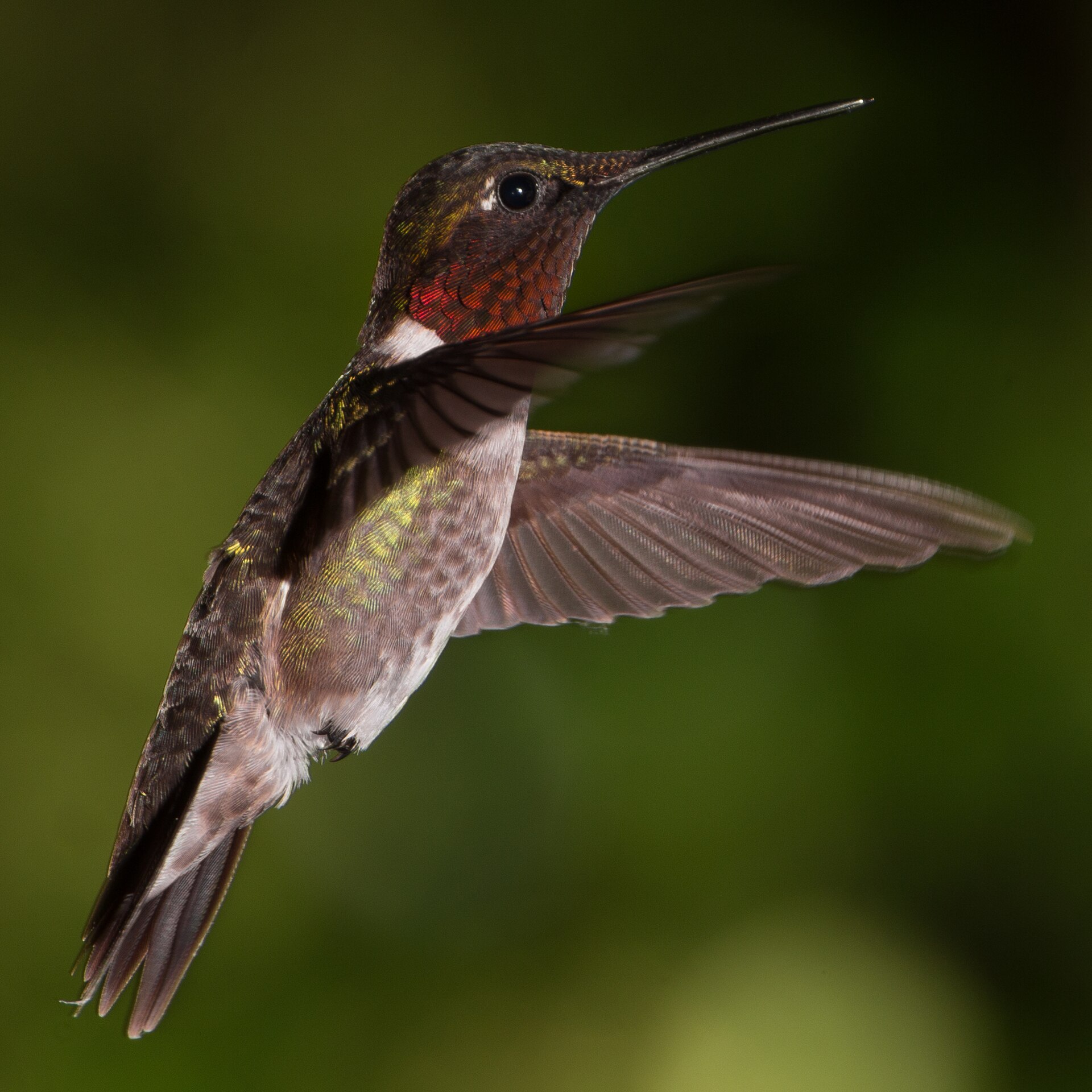
Hummingbirds are about 320 species of small, often brightly coloured birds in the family Trochilidae, usually placed with the swifts in the order Apodiformes. They are restricted to the New World, where their greatest variety occurs in South America, and about 12 species are found regularly in the United States and Canada.
1. Size and Form
| Measure | Value |
|---|---|
| Smallest species (bee hummingbird of Cuba) | about 2 g; slightly more than 5.5 cm; smallest living bird |
| Largest species (giant hummingbird of western South America) | about 20 cm and 20 g; less than most sparrows |
| Typical body mass | 2.5 to 6.5 g |
| Typical length | 6 to 12 cm |
| Giant hummingbird weight range | 19 to 21 g |
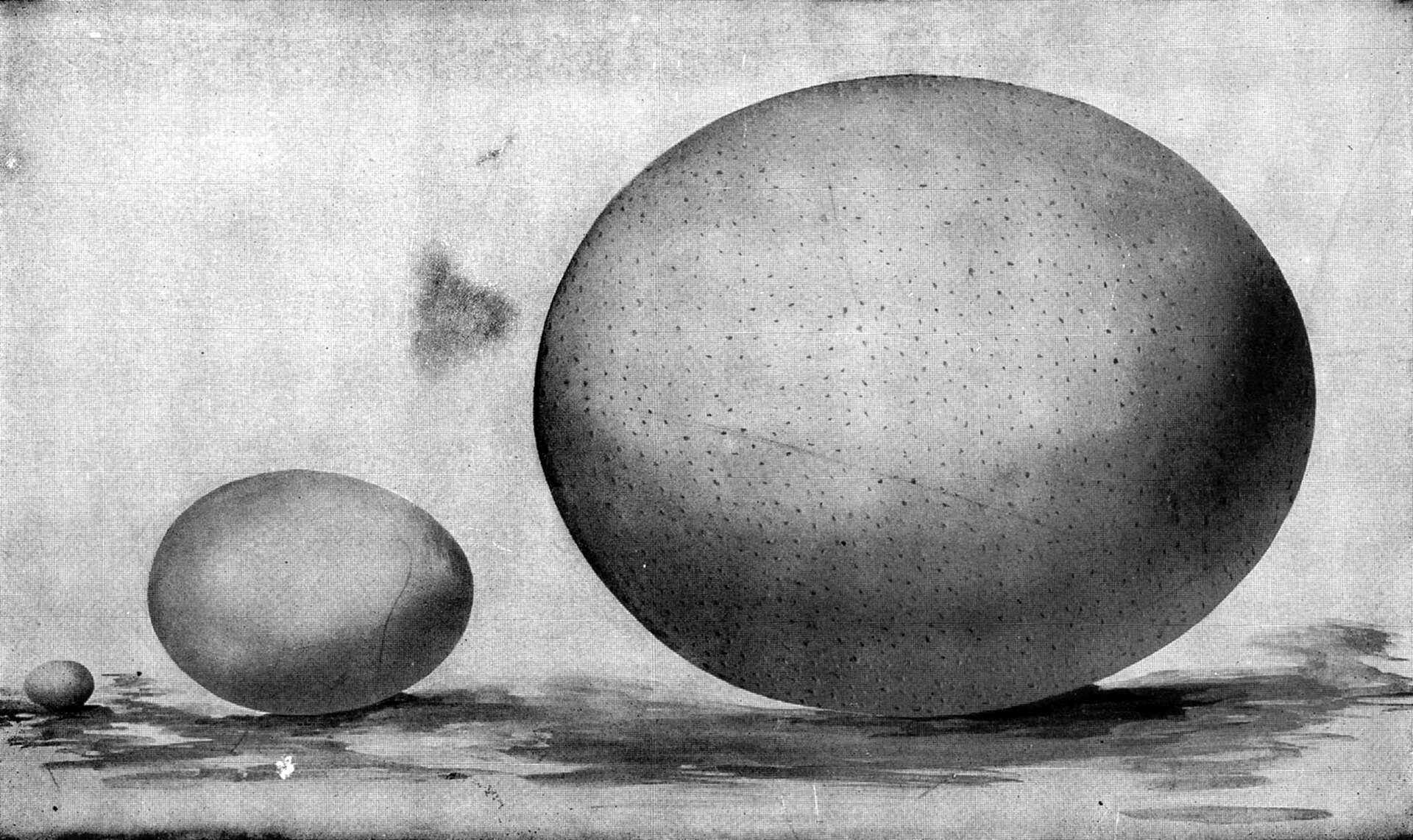
Hummingbirds are defined by smallness, and the extremes of the family are extremes of miniature scale. The bee hummingbird of Cuba and the Isle of Pines measures slightly more than 5.5 cm, weighs about 2 g, and is the smallest living bird 1Hummingbird · Encyclopaedia Britannica ↗. Even the largest hummingbird, the giant hummingbird of western South America, is only about 20 cm long and weighs about 20 g, less than most sparrows 1. Across the family, typical body mass falls between 2.5 and 6.5 g 2Trochilidae (hummingbirds) · Animal Diversity Web, University of Michigan Museum of Zoology ↗.
The giant hummingbird's size is matched by the altitude it tolerates. It can live in the Andes Mountains at elevations over 14,000 feet, higher than many helicopters can fly, and has evolved hemoglobin-rich blood 3Uncovering the Secrets Behind Hummingbirds' Extreme Lifestyle · Smithsonian Magazine ↗. The bee hummingbird, at the other pole, weighs only 1.95 grams, so theoretically 16 of them could be mailed first-class using just one stamp 4Hummingbirds · Smithsonian's National Zoo and Conservation Biology Institute ↗.
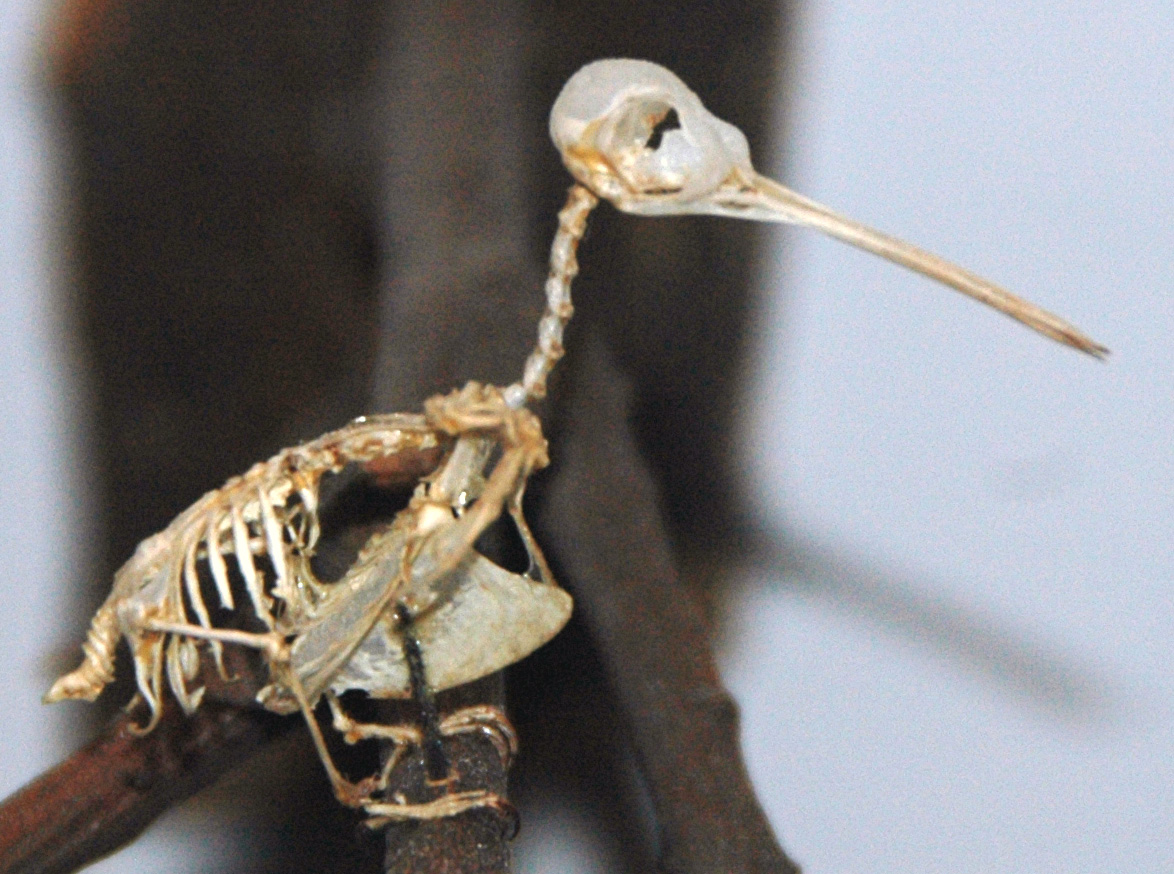
Form follows function in the bill and the wing. Hummingbird bills vary widely in shape, and bill length and shape often indicate which flowers a species feeds on, while extendable bifurcated tongues extract the nectar 2. The wings connect to the body only at the shoulder joint, an architecture that lets them fly straight up and down, sideways and backward and to hover at flowers 1. In most hummingbird species the sexes look different, and the male's most typical badge is the gorget, a bib of iridescent feathers whose colour depends on the viewing angle 1.
2. Anatomy and Flight
Hummingbirds possess numerous skeletal and flight muscle adaptations for hovering and high maneuverability, and they are the only birds that truly hover and fly both forward and backward. Their wings beat about 70 times per second in direct flight, and while diving the rate rises above 200 times per second. This fast, darting flight can generate G-forces high enough to black out a fighter pilot.
Nectar cannot be too concentrated and sticky because hummingbirds rely on a long, tube-like tongue that draws it into their mouths through wicking action, like water rising in a straw. They gain extra amino acids from pollen and protein from insects, which they catch by hawking or hover-gleaning.
3. Metabolism and Torpor
Because hummingbirds cannot feed at night, they depend on endogenous body fat stores, and torpor is the state that carries them through. It is a very deep, sleep-like condition of minimal metabolism and very low body temperature, available to them on any night of the year, and it differs from hibernation, a longer form of torpor lasting days or weeks. Torpor is not sleep, because animals in torpor do not get the benefits of sleep: they are not clearing toxins from the brain or repairing tissue, so the state is a much deeper energy saving.
On cold nights torpor saves up to 95 percent of hourly metabolic cost. Heart rate falls from more than 1,200 beats per minute in flight to as low as about 40 beats per minute in torpor.
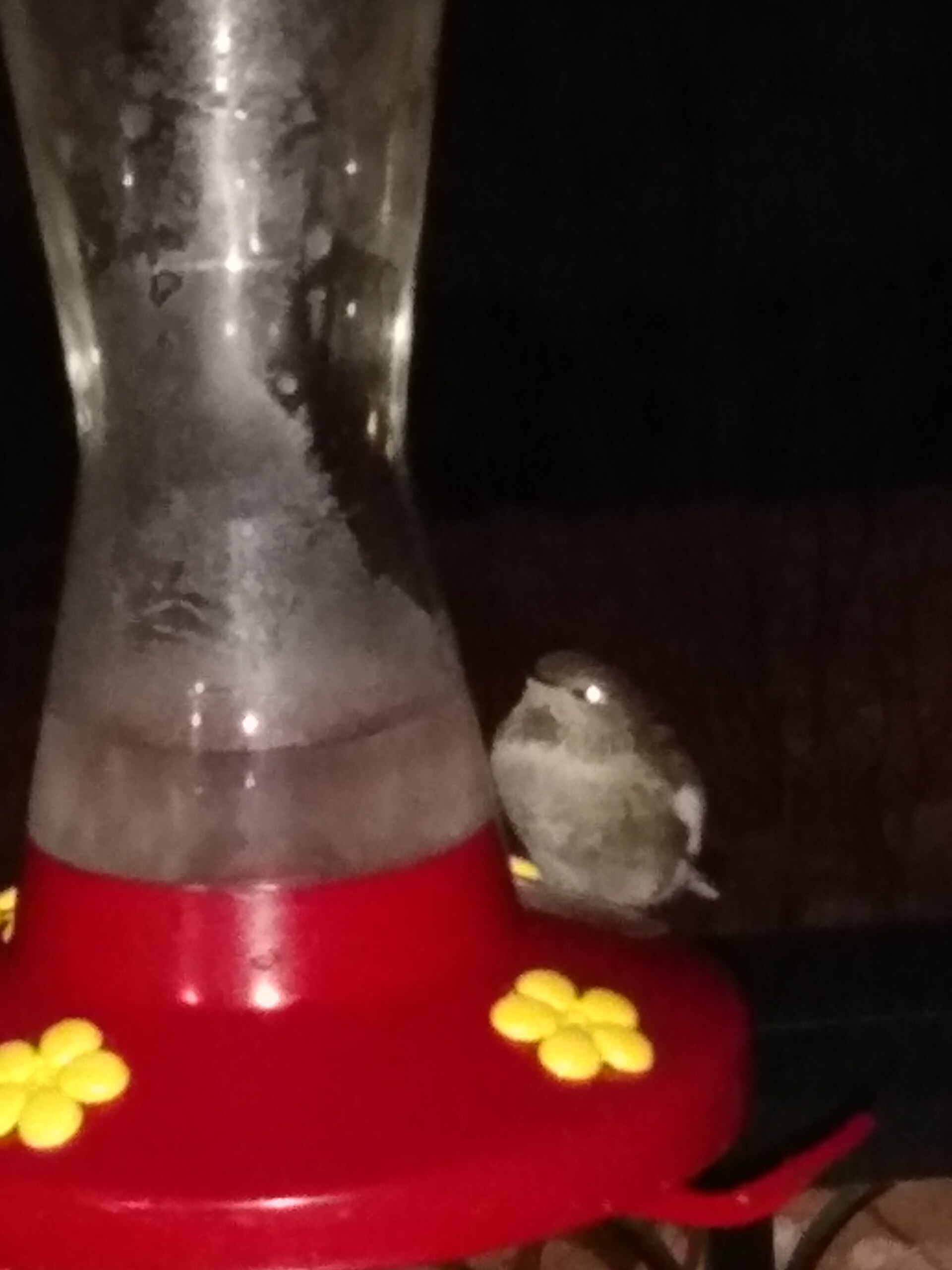
Studies found that larger species use torpor less often because they can carry more fat and dominate feeders, chasing smaller species away. In summertime the birds entered torpor at very consistent fat levels, about 6% body fat, which supports the idea that hitting a critically low fat threshold triggers torpor. Across 108 nights of recording at roughly 10 nests, only one nesting hummingbird used torpor, and only on two nights.
4. Diet and Feeding
Hummingbirds are nectivores and insectivores, taking roughly 90 percent of their diet from nectar and 10 percent from arthropods such as flies, wasps, spiders, beetles and ants.
They drink up to twice their body weight per day.
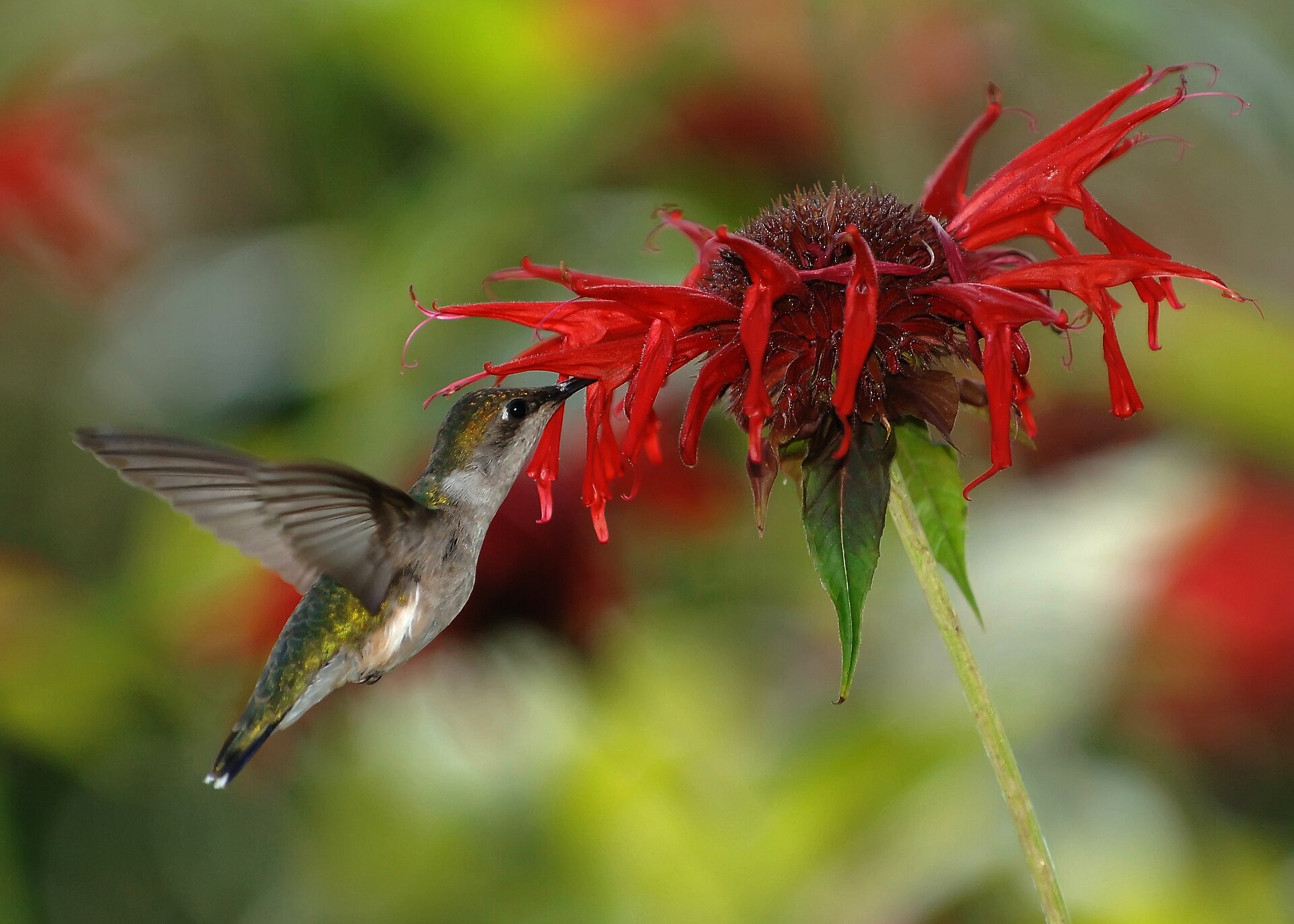
A nectar-rich diet gives them blood-sugar levels that would put a person in a coma. Hummingbirds cope with a huge sugar onslaught by having leaky guts that let sugars pass between cells, allowing blood sugar levels as much as six times higher than those seen in people. They are remarkably nimble at switching their metabolism from burning sugar to burning fat, an enormous biochemical shift that happens in mere minutes, far faster than other organisms manage.
5. Reproduction and Nesting
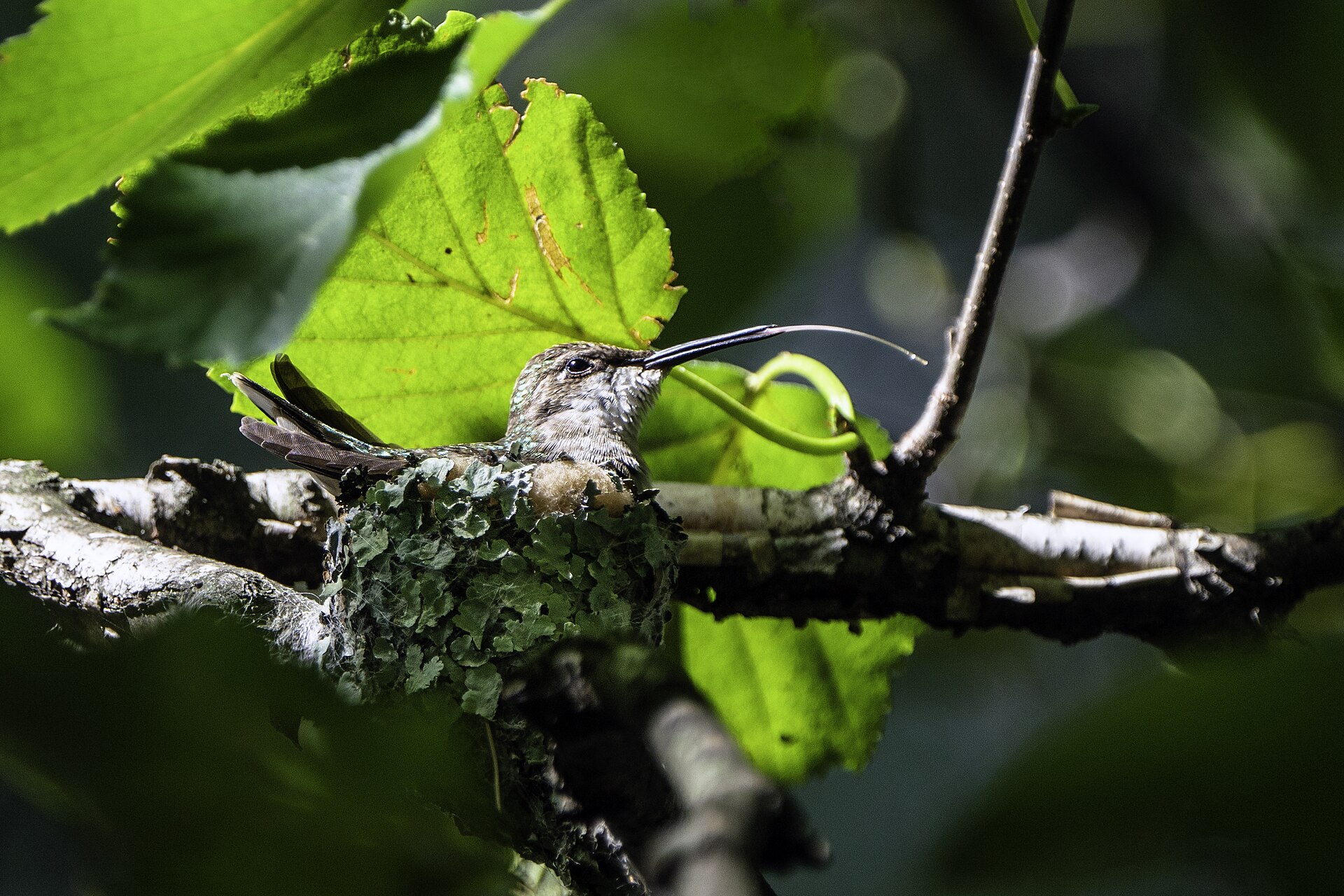
Female Ruby-throated Hummingbirds build their nests on a slender, often descending branch, usually of deciduous trees, and place them 10-40 feet above the ground. The nest is made of thistle or dandelion down held together with strands of spider silk and sometimes pine resin, and the female stamps its base to stiffen it while the walls stay pliable as the chicks grow.
A male Ruby-throated Hummingbird performs a looping U-shaped courtship dive that can start from 50 feet above the female, then switches to fast side-to-side flights if she perches.
6. Migration and Range
Hummingbirds that breed in North America overwinter in Mexico, following migration corridors along the coasts, the Rockies or across the Gulf of Mexico in non-stop flights of 18 to 22 hours timed to spring flowering.
Ruby-throated Hummingbirds keep body mass low during the breeding season for aerial agility, then fatten up in late summer to fuel their long migration south as far as Central America.
Ruby-throated Hummingbirds are commonly associated with old fields, forest edges, meadows, orchards and backyards, and on their tropical wintering grounds they live in dry forests, citrus groves, hedgerows and scrub.
7. Pollination and Ecology
Hummingbirds are amazingly adapted pollinators whose long slender bills and tube-like tongues let them drink nectar from brightly-colored flowers, fueling the energy needs of their high metabolism. Plants that rely on hummingbirds for pollination instead of insects have often acquired sucrose-rich nectar and flowers that are brightly colored but unscented. Adult hummingbirds have few predators, though snakes, forest falcons and pygmy-owls take them, while nest predators such as jays, toucans and some bats are the biggest threat.
8. Conservation
The International Union for Conservation of Nature's Red List of Threatened Species lists 20 hummingbird species as endangered or critically endangered and 54 species in high-risk categories.
Ruby-throated Hummingbird populations increased every year between 1966 and 2019 while Partners in Flight estimates a global breeding population of 36 million, rating the species of low conservation concern.
National parks make ideal hummingbird refuges because they hold large expanses of forest for breeding and nesting, and their pesticide-free native plants are excellent food sources.
9. Cultural Significance
Huitzilopochtli, also called Hummingbird of the South and Blue Hummingbird on the Left, was the supreme god of the Mexica and the Aztec god of the sun and war. Aztec belief held that the spirits of fallen warriors returned to earth as hummingbirds and accompanied Huitzilopochtli on the first half of his journey across the sky. In Aztec art he was symbolised by the hummingbird, called huitzilin, whose feathers he wore in his helmet, or by an eagle on a prickly pear cactus.
10. Timeline: from Aztec emblems to hummingbird metabolism research
- c. 1345-1521Aztec civilization flourishesThe Mexica and their neighbours built an empire in central Mexico whose supreme god, Huitzilopochtli, was identified with the hummingbird.
- c. 1473The Coyolxauhqui Stone is carvedThe great stone disc at Tenochtitlan depicts the goddess Coyolxauhqui dismembered by the god Huitzilopochtli, whose emblem was the hummingbird.
- 1487The Templo Mayor is completedThe main temple of Tenochtitlan, dedicated in part to Huitzilopochtli, was completed and inaugurated at the Aztec capital.
- 1899Haeckel illustrates the hummingbird familyErnst Haeckel's Kunstformen der Natur presented the diversity of hummingbirds to a wide European readership.
- winter of 1965-6Louisiana counts no Rufous HummingbirdsThe Christmas Bird Count season in Louisiana recorded zero rufous hummingbirds, the start of a record that later counts reversed.
- 1966Breeding Bird Survey tracking beginsThe North American Breeding Bird Survey began monitoring Ruby-throated Hummingbird numbers, a series that later showed a steady increase.
- November 2001A Rufous Hummingbird is banded in VirginiaA rufous hummingbird captured and banded at Richmond, Virginia in November 2001 was later recovered far to the west.
- August 2002The banded bird is recaptured in MontanaThe Virginia-banded rufous hummingbird was recaptured in Montana in August 2002, documenting a long-distance movement across the continent.
- 15 January 2003Smithsonian reviews how hummingbirds gain weightThe Smithsonian Migratory Bird Center published an account of how the rufous hummingbird doubles its body weight for migration and uses torpor at night.
- 16 June 2015Hummingbird and plant coevolution datedA study summarised by the BMC Series blog used genetic data to date when hummingbird groups and the plants they pollinate first evolved together.
- 2019Ruby-throated Hummingbird numbers keep risingThe Breeding Bird Survey series running from 1966 to 2019 showed the Ruby-throated Hummingbird population increasing year on year.
- 11 September 2020Andean hummingbirds set a torpor recordResearch reported in Smithsonian Magazine described hummingbirds in the Peruvian Andes letting body temperature fall to about 38 degrees Fahrenheit overnight.
- 3 August 2021Cornell Lab hosts a hummingbird energy webinarResearchers studying hummingbird metabolism and torpor answered questions on how the birds meet their calorie needs.
- 27 May 2022An artificial move to high elevation is studiedScientists relocated 26 Anna's hummingbirds to a site 12,467 feet above sea level and measured how their metabolism and flight responded.
- 9 October 2024The extreme hummingbird lifestyle revisitedA Knowable Magazine feature published by Smithsonian Magazine surveyed the sugar diet, torpor and high-altitude life of hummingbirds.
11. Frequently asked questions
How fast does a hummingbird's heart beat at rest?
How long does a hummingbird live?
The ruby-throated hummingbird has an average life span of 5 to 9 years in the wild 12Ruby-Throated Hummingbird · National Geographic ↗.
How long do hummingbird eggs take to hatch, and how long do the young stay in the nest?
How many plant species depend on hummingbirds for pollination?
Which hummingbird species are most at risk?
The critically endangered Chilean Woodstar, which lives in a high Chilean desert, has declined from 1500 individuals to fewer than 500 in 20 years 10Conservation · International Hummingbird Society ↗. The Rufous Hummingbird is still widespread and very common, but it faces continuing declines in numbers, and it may be especially vulnerable to climate change 13Rufous Hummingbird · National Audubon Society ↗.
How can ordinary observers help track hummingbirds?
Journey North is a volunteer project that tracks hummingbird migration across North America and asks observers to keep reporting their sightings 14Hummingbirds · Journey North ↗.
References (16)
- 1Hummingbird — Encyclopaedia Britannica Web↩View source
- 2Trochilidae (hummingbirds) — Animal Diversity Web, University of Michigan Museum of Zoology Web↩View source
- 3Uncovering the Secrets Behind Hummingbirds' Extreme Lifestyle — Smithsonian Magazine Web↩View source
- 4Hummingbirds — Smithsonian's National Zoo and Conservation Biology Institute Web↩View source
- 5How High-Energy Hummingbirds Survive — a Q&A with the Experts — Cornell Lab of Ornithology, Bird Academy WebView source
- 6Hummingbirds in the Andes Go to Chilly Extremes for a Good Night's Sleep — Smithsonian Magazine WebView source
- 7Ruby-throated Hummingbird — Life History — Cornell Lab of Ornithology, All About Birds WebView source
- 8Pollinators — U.S. National Park Service WebView source
- 9Hummingbirds and plants: an evolutionary love affair? — BMC Series blog, Springer Nature 2015 Web↩View source
- 10Conservation — International Hummingbird Society Web↩View source
- 11Huitzilopochtli — World History Encyclopedia WebView source
- 12Ruby-Throated Hummingbird — National Geographic Web↩View source
- 13Rufous Hummingbird — National Audubon Society Web↩View source
- 14Hummingbirds — Journey North Web↩View source
- 15The Hummingbird Diet: How To Gain Weight And Keep It — Smithsonian Migratory Bird Center WebView source
- 16Scientists Moved Hummingbirds to High Elevations to See How Climate Change Might Affect Them — Smithsonian Magazine WebView source