Gray Wolf
The Holarctic apex predator of the dog family — its pack life, prey and howls, its decline and recovery, and the Yellowstone reintroduction of 1995.
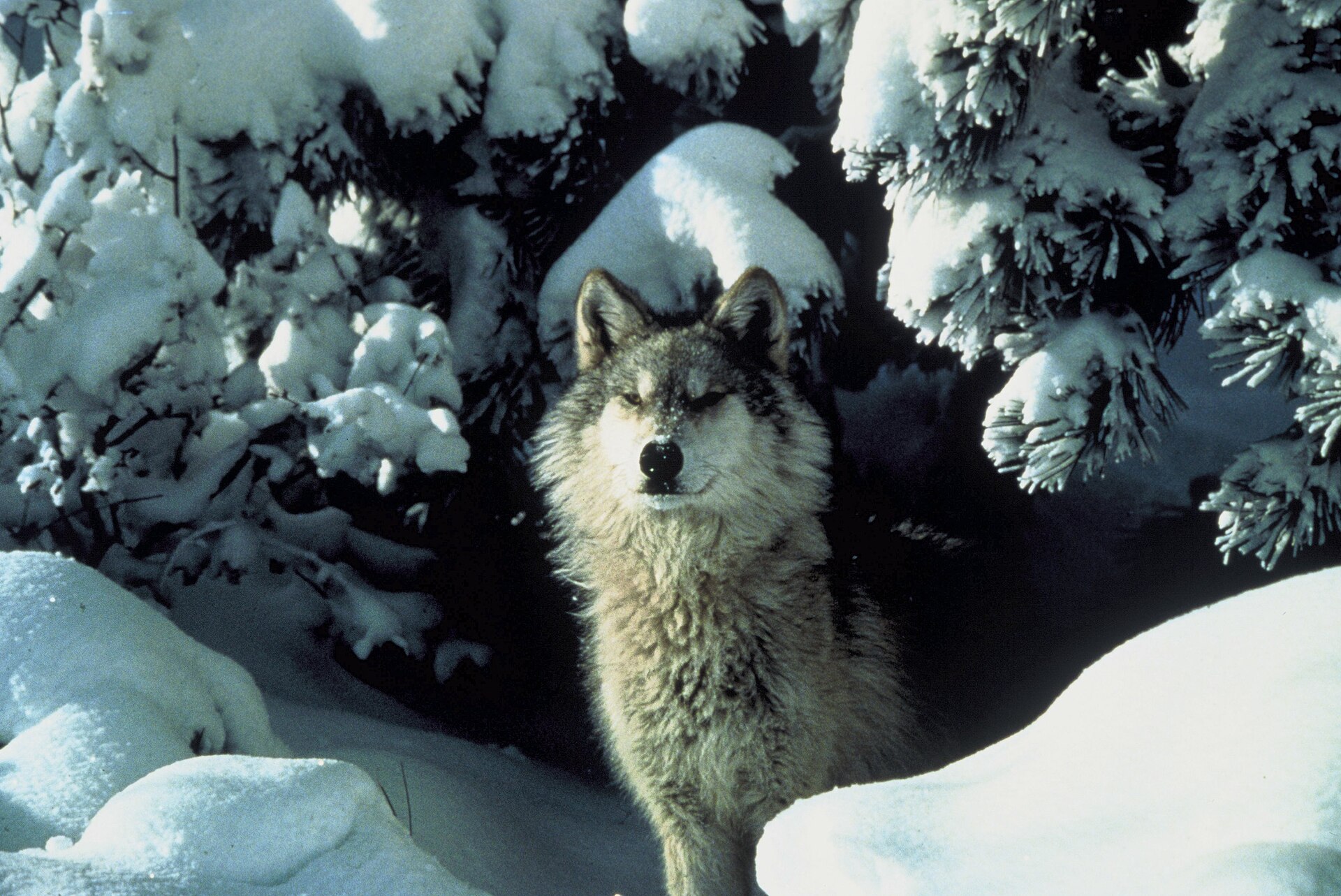
The gray wolf (Canis lupus) is the largest wild member of the dog family, a highly social carnivore that hunts in family packs across the Northern Hemisphere. Once the world's most widely distributed land mammal, it was eradicated from much of the United States and Western Europe by the mid-20th century; legal protection, natural recolonization and reintroduction — above all the 1995 release of wolves into Yellowstone — have since restored it across parts of its range. The species is assessed as Least Concern globally, with a population estimated in the order of 145,000 to 200,000 and country-level protections that remain contested.
In this article
- 1Overview
- 2Naming and Subspecies
- 3Physical Description
- 4Social Structure and Pack Life
- 5Communication
- 6Reproduction and Life Cycle
- 7Diet and Hunting
- 8Historical Range and Decline
- 9Yellowstone: Extirpation and Reintroduction
- 10Yellowstone Population Since Reintroduction
- 11Legal Status and Conservation
- 12Regional Populations and Management
- 13Timeline: from 1758 to the 2023 reinstatement
- 14Knowledge graph
Overview
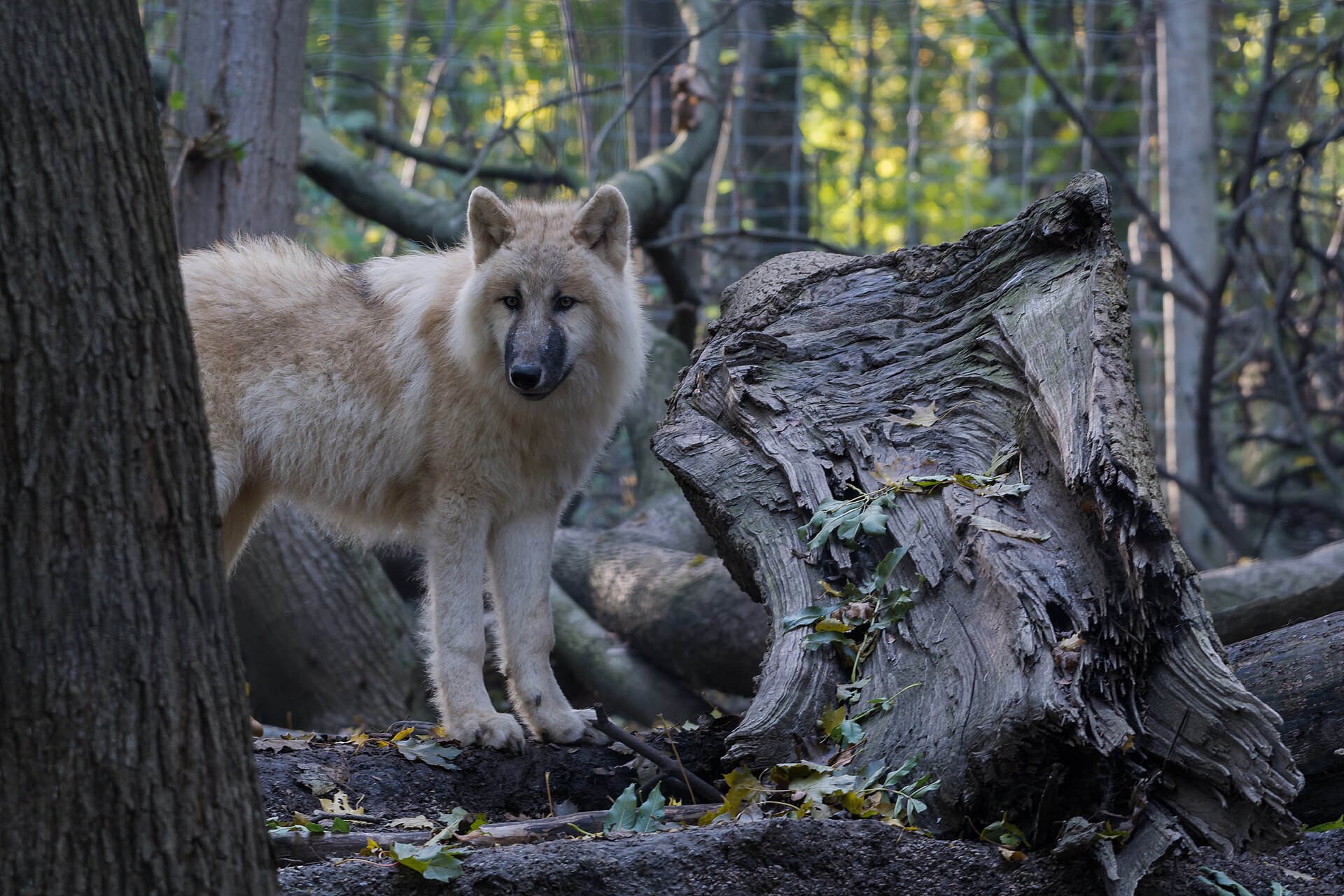
The gray wolf is the largest wild member of the dog family, Canidae, which sits within the order Carnivora. Its scientific name is Canis lupus Linnaeus, 1758. It is also known by a range of common names, among them grey wolf, timber wolf, Arctic wolf, tundra wolf, plains wolf and Mexican wolf.
The species has a circumpolar range spanning North America, Europe and Asia. It occupies an unusually broad array of habitats, from temperate forests and mountains to tundra, taiga, grasslands and deserts, and ranks among the most wide-ranging of land animals, found from arctic tundra to forest, prairie and arid landscapes.
Globally, the gray wolf is assessed as Least Concern under version 3.1 of the IUCN criteria, an assessment made on 29 November 2025 and published in 2026. The global population is estimated in the order of 145,000 to 200,000 individuals, a figure carrying high uncertainty. Although the species still faces threats, its relatively widespread range and stable population trend mean it does not meet the criteria for the threatened categories at global level.
1. Naming and Subspecies
The number of recognized gray wolf subspecies is not fixed. Two are recognized in Europe, C. signatus in Iberia and C. italicus in Italy, France and Switzerland, while two are recognized in Asia, C. arabs, and five are often recognized in North America. Broader tallies place the count between 5 and 24 subspecies in North America, 7 to 12 in Eurasia, and one in Africa.
The dingo is sometimes considered a wolf subspecies, but in this assessment it is treated as a feral dog population derived from a domesticate.
2. Physical Description
| Measurement | Value | Source |
|---|---|---|
| Weight | Males 30–80 kg (average 55 kg); females 23–55 kg (average 45 kg) | adw-wolf |
| Body length (nose to tail tip) | 1,000–1,300 mm in males; 870–1,170 mm in females | adw-wolf |
| Shoulder height | Generally 60–90 cm | adw-wolf |
| Top running speed | 55–70 km/h | adw-wolf |
Adults range in weight from 18 to 80 kilograms (40 to 175 pounds), depending on sex and geographic locale 4Gray Wolf (Canis lupus) · U.S. Fish and Wildlife Service ↗. The black coat seen in many Yellowstone wolves is caused by a single beta defensin gene, the K-locus, a mutation that likely entered wolves through hybridization with domestic dogs in northwest North America within the last 7,000 years 1Wolf Ecology · U.S. National Park Service, Yellowstone National Park ↗.
3. Social Structure and Pack Life
The gray wolf's pack is essentially a family group built around an adult breeding pair and their offspring, including young of previous years. Most packs are made up of 5 to 9 wolves, though a pack can comprise two to thirty-six individuals depending on habitat and prey abundance, with 6 to 10 most common.
Within a gray wolf pack only the dominant pair breeds, and the pair is monogamous, though a new alpha male or female will take over as mate if one dies. Wolves begin mating at 2 to 3 years of age, sometimes forming lifelong mates.
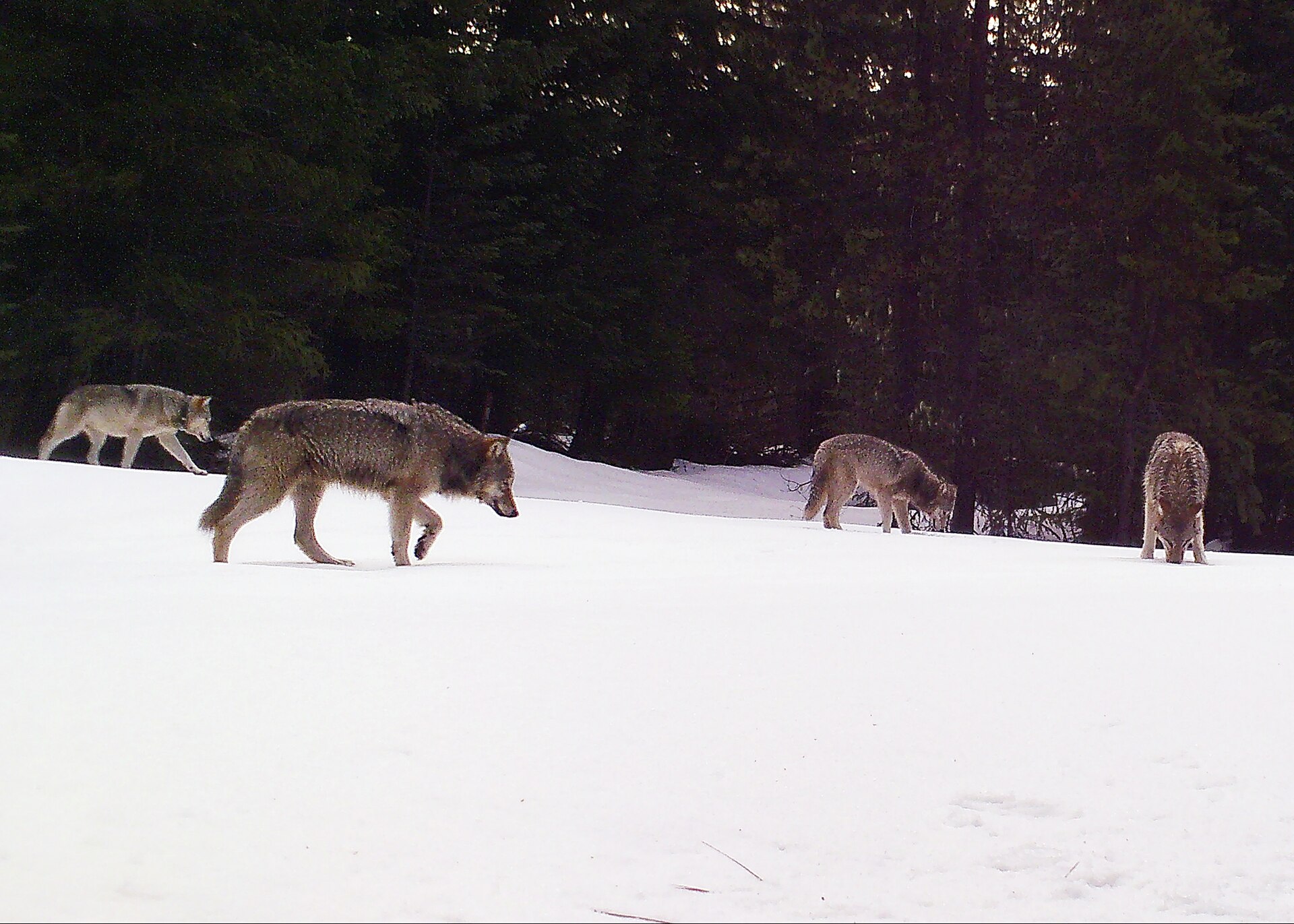
A pack's territory ranges from 130 to 13,000 square kilometers and is defended against intruders. Within Yellowstone, a pack's home range is 185 to 310 square miles (300 to 500 square kilometers), varying with pack size, food availability and season.
Often after 1 or 2 years of age a young wolf leaves the area where it was born. The distance wolves disperse depends on many factors, but the goal is typically to find a mate and a vacant territory, and wolves that leave their packs have been known to travel as far as 886 km (550 miles).
4. Communication
The howl of the gray wolf is a long-range harmonic call serving territorial advertising and social cohesion, and its acoustic structure varies across individual wolves, groups and subspecies. Through howling, pack members communicate about where they are, when to assemble for group hunts and where their territory boundaries lie. The call carries far: it can be heard up to 11 km in forest and 16 km in open areas.
A lone wolf howls to attract the attention of its pack, communal howls may send territorial messages from one pack to another, and wolves may simply begin howling because a nearby wolf has already begun. Wolves respond to simulated howls by emitting group vocalizations known as chorus howls, a response researchers use to determine the status of wolf populations.
Scent plays a complementary role: marking territory with urine and feces tells neighbouring packs not to intrude, while scent marking by the alpha male communicates with other packs. Packs defend their territory from invading packs by howling and scent-marking with urine.
5. Reproduction and Life Cycle
Gray wolves breed between February and April, and after a gestation period of 60 to 63 days — roughly two months — a litter is born in the spring. Litters range from one to fourteen pups, with an average size of six or seven.
Wolves rear their pups in dens for the first six weeks. By 7 to 8 months of age, the pups begin traveling with the adults.
In the wild, gray wolves may live thirteen years, though the average lifespan is only 5 to 6 years; in captivity they can live to be fifteen. In Yellowstone, the average lifespan is four to five years in the park and two to three years outside it, and the oldest known wolf in the park reached 12.5 years.
6. Diet and Hunting
Wolves hunt in packs when they take large prey such as moose, elk, bison, musk oxen and reindeer, singling out the weak, the old and the immature. A single wolf can consume up to 9 kg of meat at one meal, and after a kill the pack gorges on some 3 to 9 kg of meat per animal, often reducing the carcass to hair and a few bones.
The diet is not limited to big game: wolves also eat smaller mammals, birds, fish, lizards, snakes and fruit. In most of mainland Alaska, moose and caribou form the primary food of wolves, supplemented by Dall sheep, squirrels, hares, beaver and occasionally birds and fish.
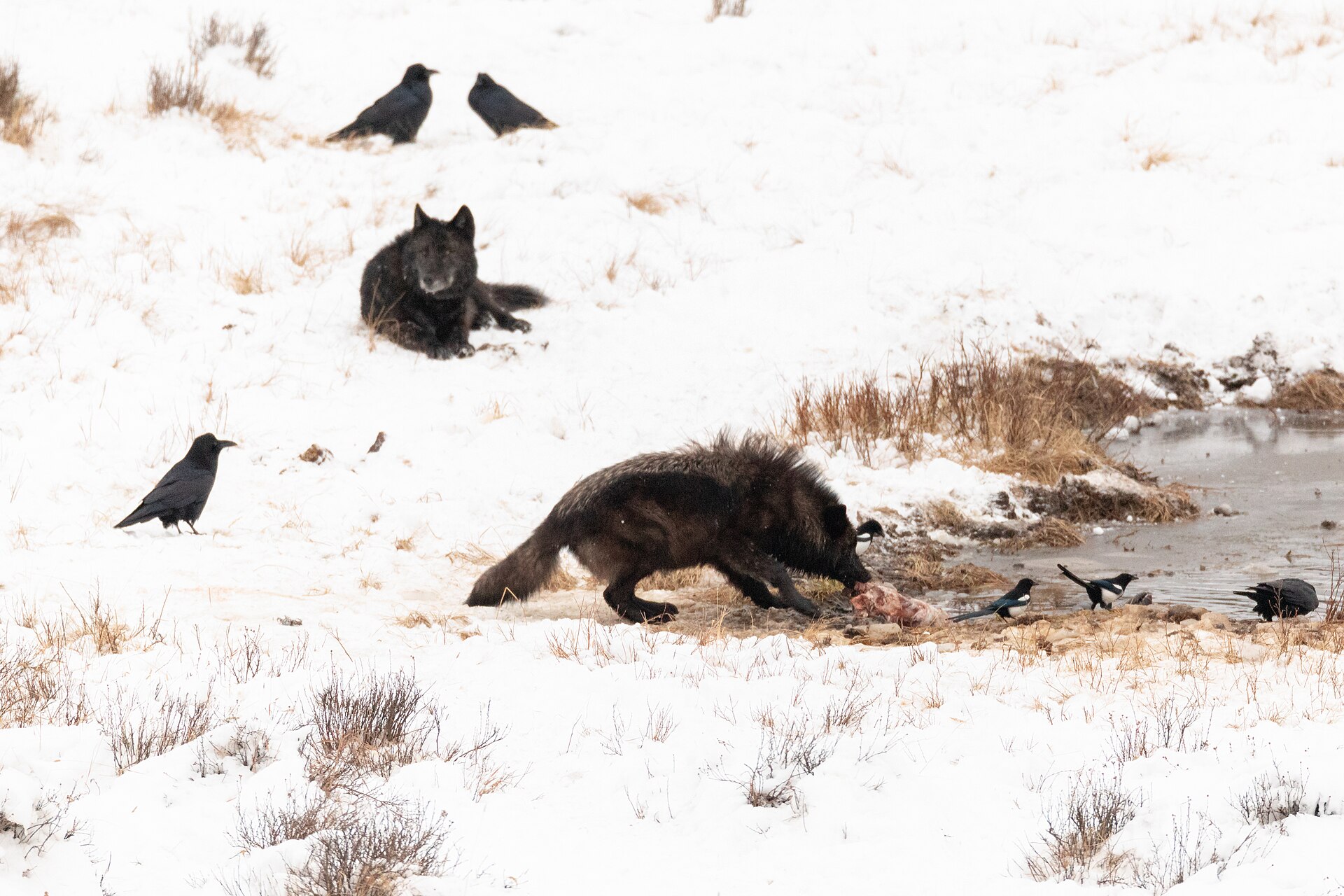
In Yellowstone, 90% of wolves' winter prey is elk and 10 to 15% of their summer prey is deer; they also kill bison. From 1995 to 2000 elk calves made up 50% of wolf prey in early winter and bull elk 25%, a ratio that reversed between 2001 and 2007 as prey vulnerability and availability changed. In a study of 46 wolf pack study periods from 2004 to 2012, only elk density influenced how often wolves encountered elk.
7. Historical Range and Decline
The gray wolf's original range covered the majority of the Northern Hemisphere, extending from the Arctic south to a latitude of 20° S that runs through southern Central Mexico, northern Africa and southern Asia. This original Holarctic range, the Indian subcontinent included, has since been reduced by about one-third through deliberate persecution driven by livestock depredation and fear of attacks on humans.
By the middle of the 20th century the grey wolf had been exterminated in much of Western Europe, Mexico and the USA, and it was only in the late 20th century that wolves began returning from populations that had survived in Italy, Spain and Eastern Europe. Populations are now found only in a few areas of the contiguous United States, Alaska, Canada, a small part of Mexico and Eurasia, following habitat destruction, environmental change and human persecution.
The species is native and possibly extinct in Bangladesh, and native but extinct in Ireland, Japan and the United Kingdom. Across what remains of the range, wolf densities vary from about one individual per 12 km² to one per 120 km², with populations ranging from extinct to relatively pristine.
Between 1914 and 1926 at least 136 wolves were killed in the park as part of predator control, and by the 1940s wolf packs were nearly extinct in the area.
8. Yellowstone: Extirpation and Reintroduction
Yellowstone's wolves were destroyed before they could be studied. The park's last resident wolves were killed in 1926, and essentially no functional wolf population remained in Yellowstone after that. An intensive survey in the 1970s found no evidence of a wolf population in Yellowstone.
Recovery began with federal law and a regional plan. During the 1980s wolves began to reestablish breeding packs in northwestern Montana, with 50 to 60 wolves reported by 1994 in that state. The 1987 Northern Rocky Mountain Wolf Recovery Plan proposed reintroducing an experimental population of wolves into Yellowstone under section 10(j) of the Endangered Species Act, allowing greater management flexibility.
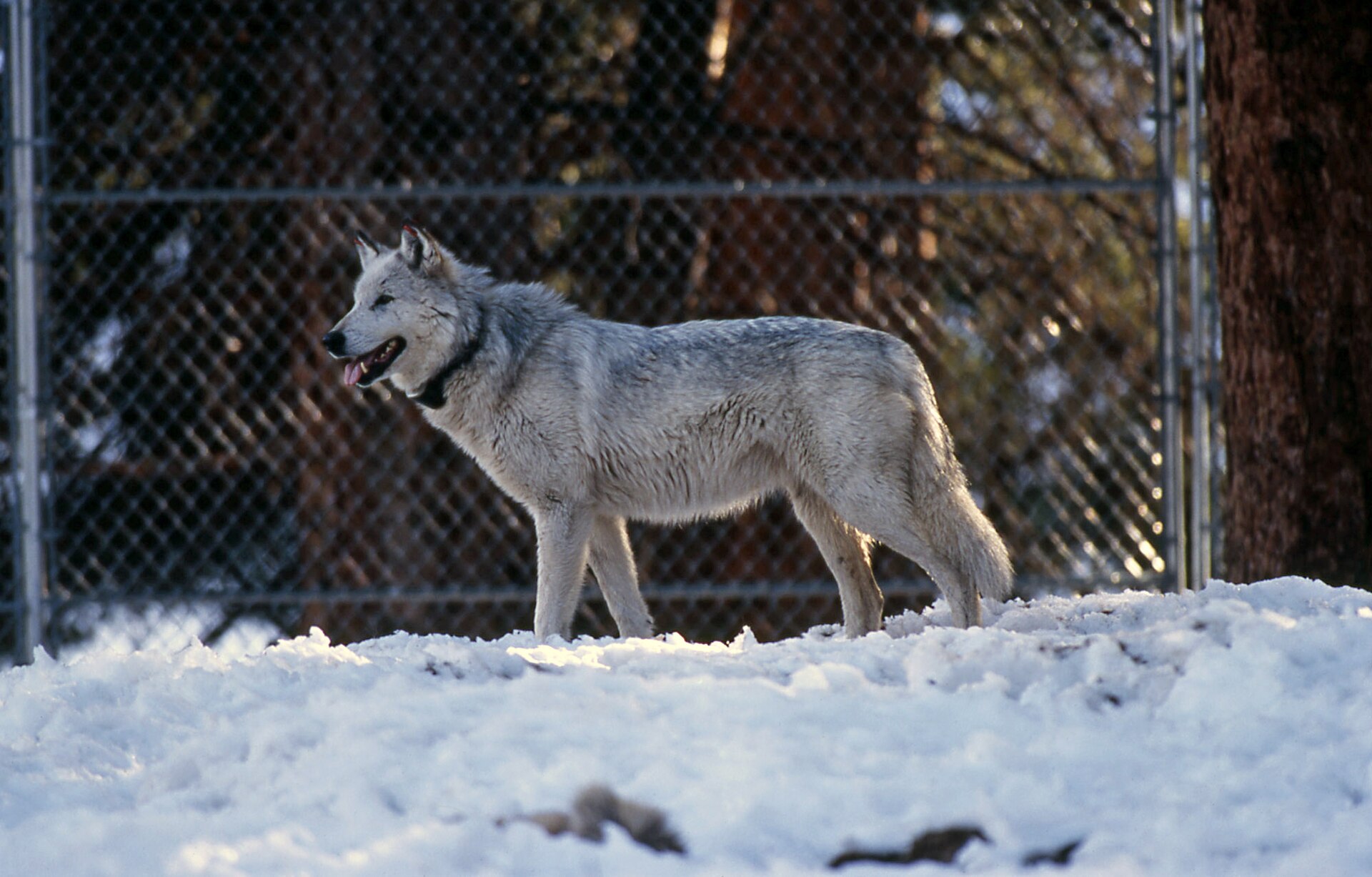
The reintroduction itself was authorized after years of procedure. After Congress funded an environmental impact statement in 1991, the Secretary of the Interior signed the Record of Decision in June 1994 approving gray wolf reintroduction to Yellowstone and central Idaho.
The first animals arrived in midwinter. The first shipment of eight wolves arrived in the park on 12 January 1995 followed by six more eight days later; the fourteen animals, flown in from western Canada, came from four packs, weighed 72 to 122 pounds (33 to 55 kg) and were held for about ten weeks in pens to acclimate them before release. Wolves unexpectedly bred in the acclimation pens in both years, with two litters born in 1995 and two the following year.
The program survived a legal challenge. The restoration strategy set a goal of 30 breeding pairs across the Northern Rockies region with approved management plans from Idaho, Montana and Wyoming. The biological requirements for delisting the wolf were at least 300 wolves and 30 breeding pairs sustained for three consecutive years across three recovery areas.
Wolves in Montana, Idaho, Wyoming, the eastern third of Washington and Oregon and north-central Utah — collectively the Northern Rocky Mountains — retain their delisted status and continue to be managed by the states and tribes.
-
January 1996Second group arrivesA second group of 17 wolves arrived before release 14History of Wolf Management · U.S. National Park Service, Yellowstone National Park ↗.
-
December 1997Court rulingA judge ruled that the reintroduction program violated section 10(j) of the Endangered Species Act and ordered the wolves' removal, but stayed the order pending appeal 14.
9. Yellowstone Population Since Reintroduction
At the end of 1995 the park held 21 wolves in three packs, and by the end of 1996 that figure had risen to 51 wolves in nine packs. Since 2009 wolf numbers in Yellowstone have generally fluctuated between 83 and 123 animals. Over the past dozen years the park has averaged about 100 wolves in ten packs, and the most recent official count stood at around 80 wolves, a level biologists regard as a healthy, stable population.
In Yellowstone the average pack size is 11.8 individuals. The population has persisted for more than 20 years despite canine distemper, mange and other diseases.
The leading cause of death for wolves inside Yellowstone is other wolves, while outside the park it is human-caused mortality. Sixty-five percent of collared Yellowstone wolves are ultimately killed by rival packs.
In 2000 the subordinate females of Yellowstone's Druid pack killed their own alpha female and then carried her pups to a central den and raised them with their own litters.
10. Legal Status and Conservation
International controls on the gray wolf operate through two principal instruments. The species is listed in CITES Appendix II, except for populations from Bhutan, India, Nepal and Pakistan, which are listed on Appendix I. In Europe the species is strictly protected under the Bern Convention and the EU Habitats Directive, though there are national exceptions and enforcement is variable.
In the United States the 1973 Endangered Species Act required the restoration of endangered species, and by 1978 all wolf subspecies except those in Minnesota were federally listed as endangered.
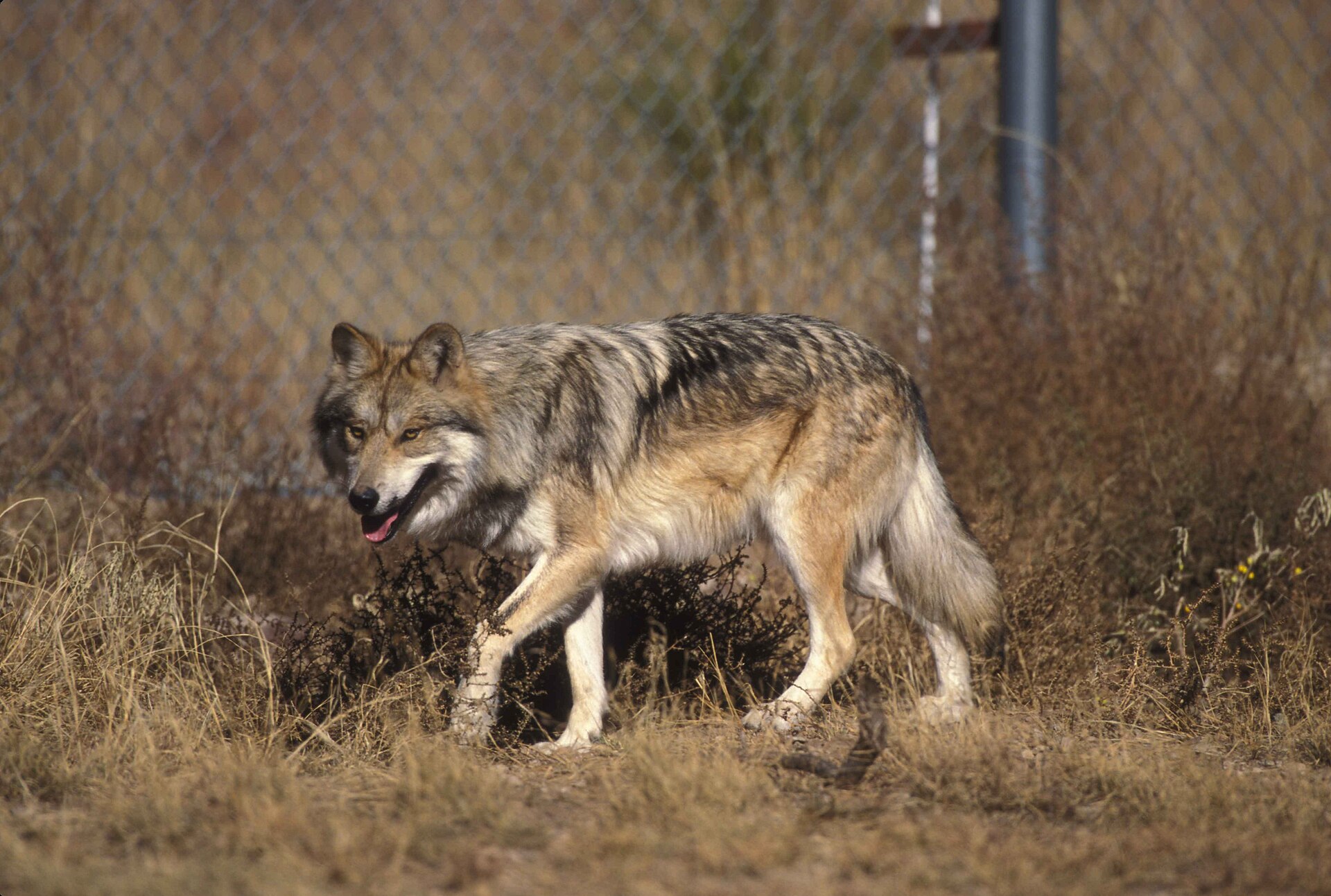
On 3 November 2020 the U. Fish and Wildlife Service published a final rule removing the gray wolf entities in the lower 48 United States and Mexico from the federal list of endangered and threatened wildlife. As a result of a February 10 2022 district court order, gray wolves in Minnesota are listed as threatened and gray wolves in all or portions of 44 U. states and Mexico are listed as endangered.
11. Regional Populations and Management
| Region | Population estimate | Notes |
|---|---|---|
| North America | 67,100–74,100 animals, including 53,600–57,600 in Canada | Regional estimate for the continent 1 |
| Global | 145,000–200,000 individuals, with North America about 80,000 and Eurasia about 65,000 | High uncertainty in the estimate 2Canis lupus (Grey Wolf) — global assessment (e.T3746A226161232) · IUCN Red List of Threatened Species ↗ |
| Alaska | 7,000–11,000 wolves | Never threatened or endangered in the state 12Wolf (Canis lupus) Species Profile · Alaska Department of Fish and Game ↗ |
| Minnesota | Goal of 2,200–3,000 wolves; enhanced monitoring and research if the population falls below 2,000 | As low as 350 in the 1960s; peaked at about 3,000 between 2002 and 2005; settled near 2,700, with 2,699 wolves in the 2019 estimate 19Wolf management · Minnesota Department of Natural Resources ↗ 8Monitoring Minnesota's wolf population · Minnesota Department of Natural Resources ↗ |
Before 2012 Minnesota had never held a regulated wolf hunting and trapping season 19. From 2012 through 2014 state law allowed hunting and trapping under highly regulated conditions 19.
12. Timeline: from 1758 to the 2023 reinstatement
- 1758The wolf is named Canis lupusCarl Linnaeus publishes the scientific name Canis lupus for the gray wolf.
- 1872Yellowstone establishedYellowstone National Park is established with gray wolves present; the fossil record shows their presence in the region going back thousands of years.
- 1926Last resident wolves killedThe park's last resident wolves are killed, and essentially no functional wolf population remains in Yellowstone.
- 1973Endangered Species ActThe 1973 Endangered Species Act requires the restoration of endangered species, setting the stage for wolf recovery.
- 1974Gray wolf listed as endangeredThe gray wolf is listed as endangered, initiating recovery efforts under the Endangered Species Act.
- 1987Northern Rocky Mountain recovery planThe USFWS recovery plan proposes reintroducing an experimental population of wolves into Yellowstone under section 10(j) of the Endangered Species Act.
- June 1994Record of Decision signedAfter an environmental impact statement that drew over 160,000 public comments, the Secretary of the Interior approves wolf reintroduction to Yellowstone and central Idaho.
- 12 January 1995First wolves return to YellowstoneThe first shipment of eight wolves arrives at the park; fourteen wolves are penned in Yellowstone that winter.
- January 1996Second group of wolves releasedSeventeen more wolves arrive in January 1996; both years' wolves are held about ten weeks in acclimation pens before release.
- December 1997Reintroduction challenged in courtA judge rules the program violated section 10(j) and orders the reintroduced wolves removed, but stays the order pending appeal.
- January 2000Appeal reverses the rulingThe decision is reversed on appeal, allowing the wolf reintroduction program to continue.
- 2011Northern Rockies delistingCongress delists wolves in Montana and Idaho; the USFWS proposes delisting in Wyoming.
- 25 April 2017Wyoming wolves delistedFollowing an appeal, wolves in Wyoming are delisted and managed under regulated hunting seasons.
- 4 January 2021Nationwide delistingAll gray wolves in the lower 48 states are removed from the list of species protected under the Endangered Species Act — a decision later overturned in court.
- 10 February 2022Protections reinstated by court orderA district court order vacates the 2020 delisting rule, reinstating endangered status across 44 states and Mexico and threatened status in Minnesota.
- 3 November 2023Reinstatement final ruleThe U.S. Fish and Wildlife Service issues a final rule formally reinstating protections; Northern Rocky Mountain wolves keep their delisted status.
References (19)
- 1Wolf Ecology — U.S. National Park Service, Yellowstone National Park Web↩View source
- 2Canis lupus (Grey Wolf) — global assessment (e.T3746A226161232) — IUCN Red List of Threatened Species Web↩View source
- 3Grey wolf (Canis lupus) — IUCN SSC Canid Specialist Group WebView source
- 4Gray Wolf (Canis lupus) — U.S. Fish and Wildlife Service Web↩View source
- 5Canis lupus (gray wolf) — Animal Diversity Web, University of Michigan Museum of Zoology WebView source
- 6Gray wolf | Size, Habitat, Diet, Predators, & Facts — Encyclopaedia Britannica WebView source
- 7Wolf Ecology Basics (Life of a Wolf) — U.S. National Park Service WebView source
- 8Monitoring Minnesota's wolf population — Minnesota Department of Natural Resources Web↩View source
- 9Characterising the harmonic vocal repertoire of the Indian wolf (Canis lupus pallipes) — PLOS ONE (Sadhukhan, Hennelly & Habib 2019) JournalView source
- 10Gray wolf — National Geographic WebView source
- 11Decoding Group Vocalizations: The Acoustic Energy Distribution of Chorus Howls Is Useful to Determine Wolf Reproduction — PLOS ONE (Palacios et al. 2016) JournalView source
- 12Wolf (Canis lupus) Species Profile — Alaska Department of Fish and Game Web↩View source
- 13Yellowstone wolf restoration — U.S. Geological Survey, Northern Prairie Wildlife Research Center WebView source
- 14History of Wolf Management — U.S. National Park Service, Yellowstone National Park Web↩View source
- 15Yellowstone Is Among the World's Best Places to See Wild Wolves. Here's the Story of the Animal Called Both 'Public Enemy' and Cultural Icon — Smithsonian Magazine WebView source
- 16Yellowstone Wolf Project Biennial Report 1995-1996 — U.S. National Park Service 1995 WebView source
- 17Wolf Restoration in Yellowstone: Reintroduction to Recovery — U.S. National Park Service (Yellowstone Science) WebView source
- 18Endangered and Threatened Wildlife and Plants; Reinstatement of Endangered Species Act Protections for the Gray Wolf (Canis lupus) in Compliance With Court Order (88 FR 75506) — Federal Register / U.S. Fish and Wildlife Service 2023 WebView source
- 19Wolf management — Minnesota Department of Natural Resources Web↩View source