Obsidian
The story of obsidian, the volcanic glass that carried the ancient world's sharpest edges: how rhyolitic lava cooled into glass, the knappers who turned it into tools and the mirrors of Çatalhöyük and Aztec Mexico, obsidian hydration dating and chemical fingerprinting, and the trade networks that moved Anatolian, Mediterranean, Mesoamerican and Andean glass across continents.
Obsidian is a natural volcanic glass formed when silica-rich lava cools too quickly to crystallise, giving it a glassy, dark and sharply fracturing structure. Prehistoric people worked it into blades, projectile points and mirrors by knapping, and because each volcanic source has a distinct chemical fingerprint, trace-element analysis can trace a finished tool back to the flow it came from. Obsidian artefacts record some of the earliest long-distance exchange in human history, from the Anatolian sources that supplied Çatalhöyük and the Melian glass traded through the Aegean to the Pachuca and Ucareo quarries behind Aztec mirrors and the Macusani and Chivay sources of the Andes. Its hydrated surface layer also provides one of archaeology's dating methods, obsidian hydration dating, which measures the rim of water-diffused glass on ancient tools.
In this article
- 1Overview
- 2Formation and Volcanic Setting
- 3Appearance and Composition
- 4Fracture, Sharpness and Early Tool Use
- 5Obsidian Cliff and the Yellowstone Source
- 6Sourcing and Chemical Fingerprinting
- 7Mediterranean and Anatolian Distribution
- 8Çatalhöyük
- 9Mesoamerica
- 10Mirrors and Symbolism
- 11Surgical Use
- 12Hydration Dating
- 13Key Figures
- 14Timeline: from the first obsidian tools to the laboratories of modern archaeology
- 15Knowledge graph
Overview
Chemically obsidian stands close to rhyolite and is extremely rich in silica, with values commonly quoted between about 65 and 80 percent. As a glass it holds very little water, generally under 1 percent by weight.
1. Formation and Volcanic Setting
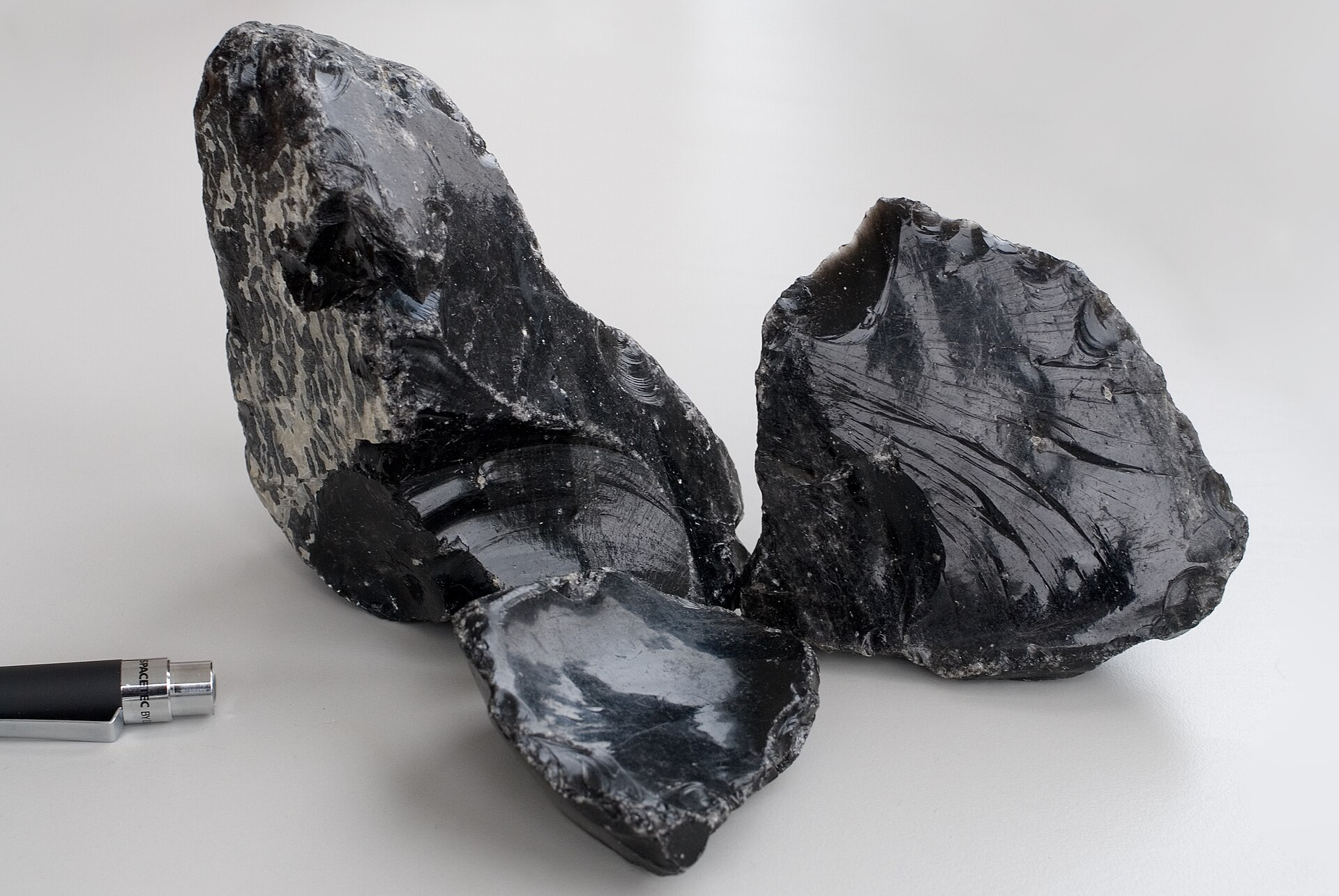
Obsidian is an igneous rock that occurs as a natural glass, formed when viscous lava from a volcano cools too quickly for crystals to grow; under high pressure at depth the parent rhyolitic lavas can hold up to 10 percent water, and when the lava erupts and the pressure drops the water escapes, the melt grows far more viscous, and it solidifies as glass instead of rock.
As a rhyolitic flow emerges at the surface, its exterior quenches quickly into a glassy carapace because the hot magma meets much cooler air, and the unfragmented part of that chilled carapace is the glassy zone called the obsidian zone.Spherulites are circular features of radially growing crystals that form when volcanic glass loses gases during cooling, a process known as devitrification.
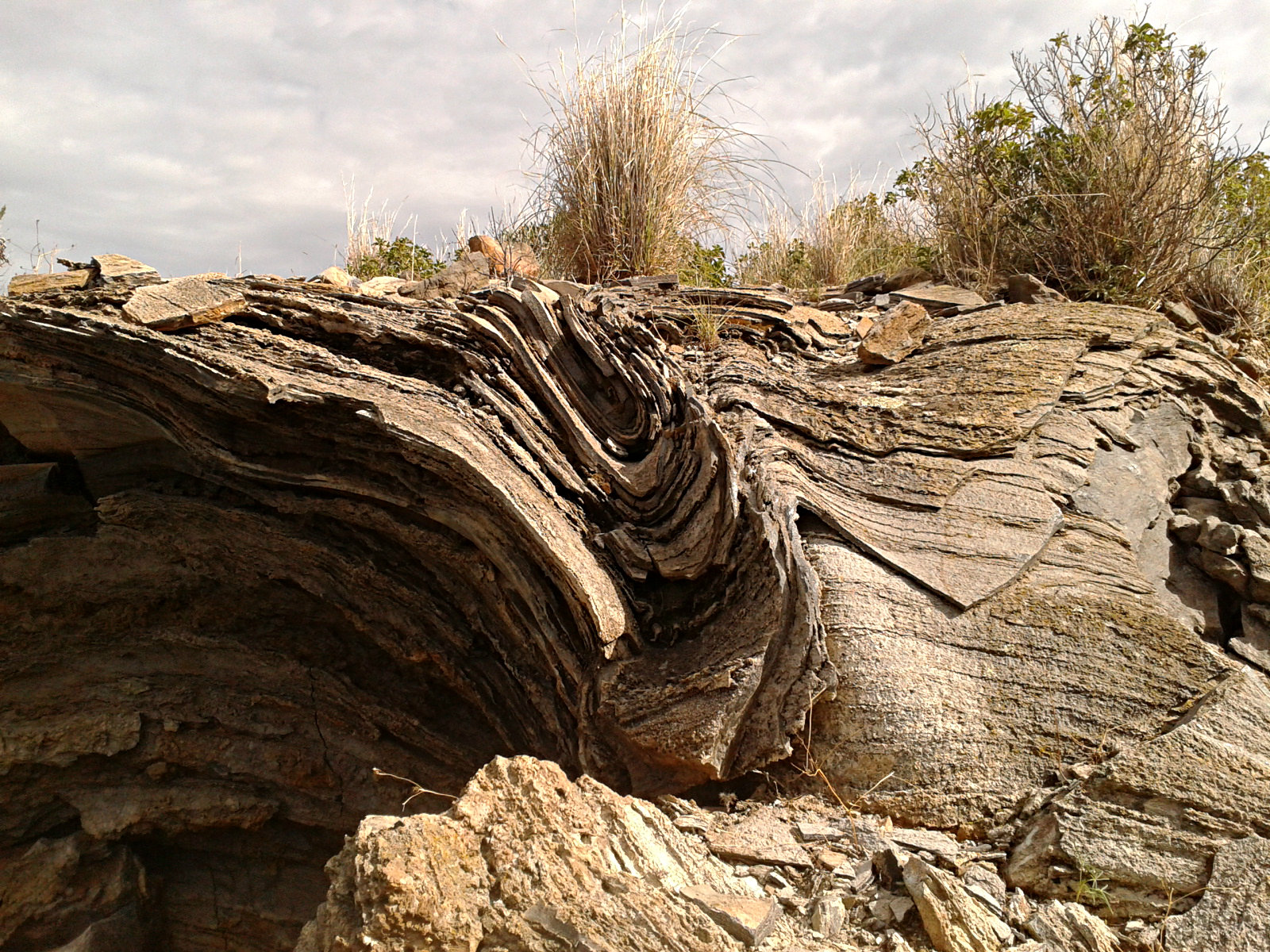
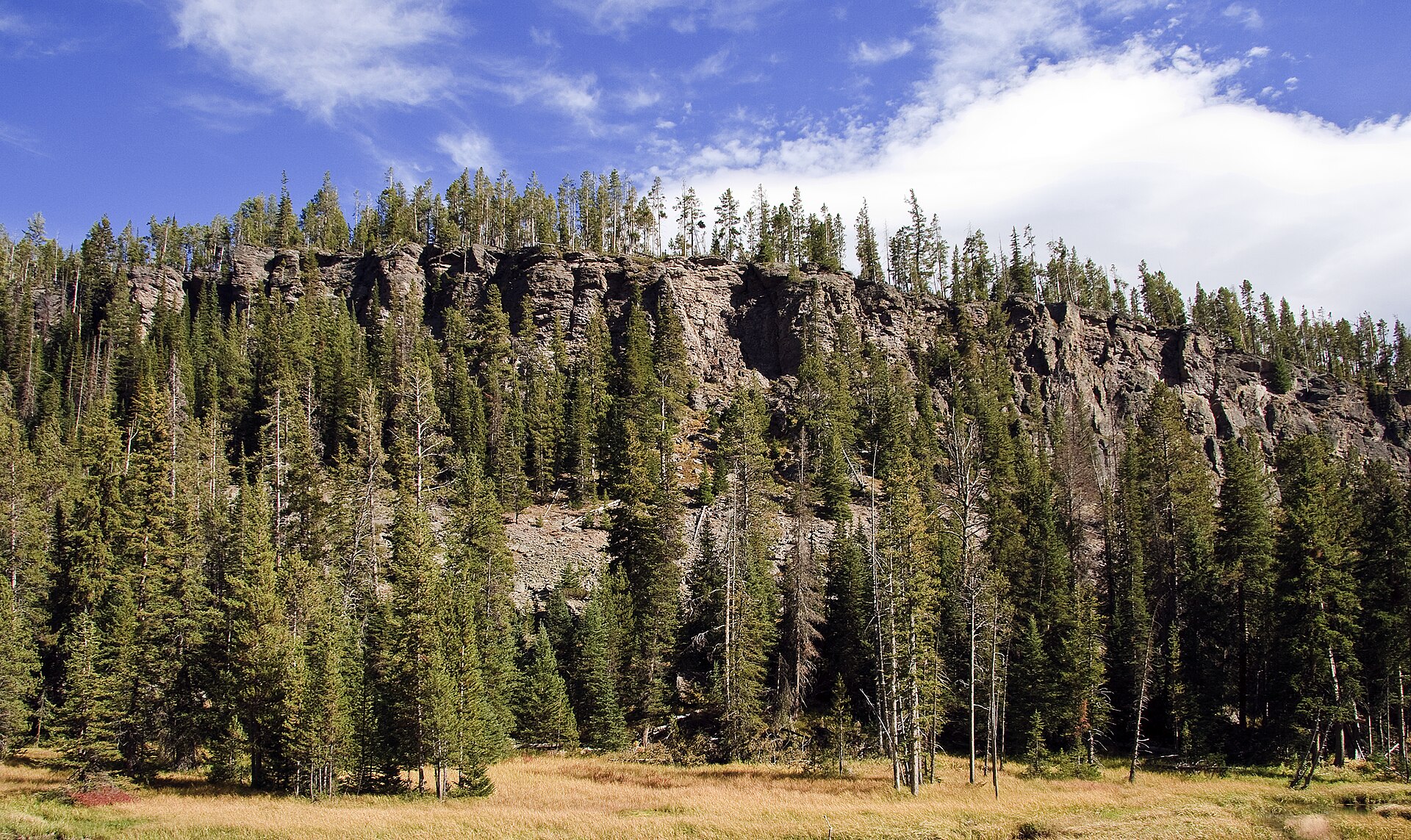
Well-known occurrences of obsidian include Mount Hekla in Iceland, the Eolie Islands off the coast of Italy and Obsidian Cliff in Yellowstone National Park in the United States. The Aeolian Islands, which include the obsidian island of Lipari, preserve an outstanding record of volcanic island-building and destruction and of ongoing volcanic phenomena.The Yellowstone Plateau Volcanic Field is one of the largest rhyolite fields on the planet, known for its voluminous high-silica lava flows and thick ignimbrites.
2. Appearance and Composition
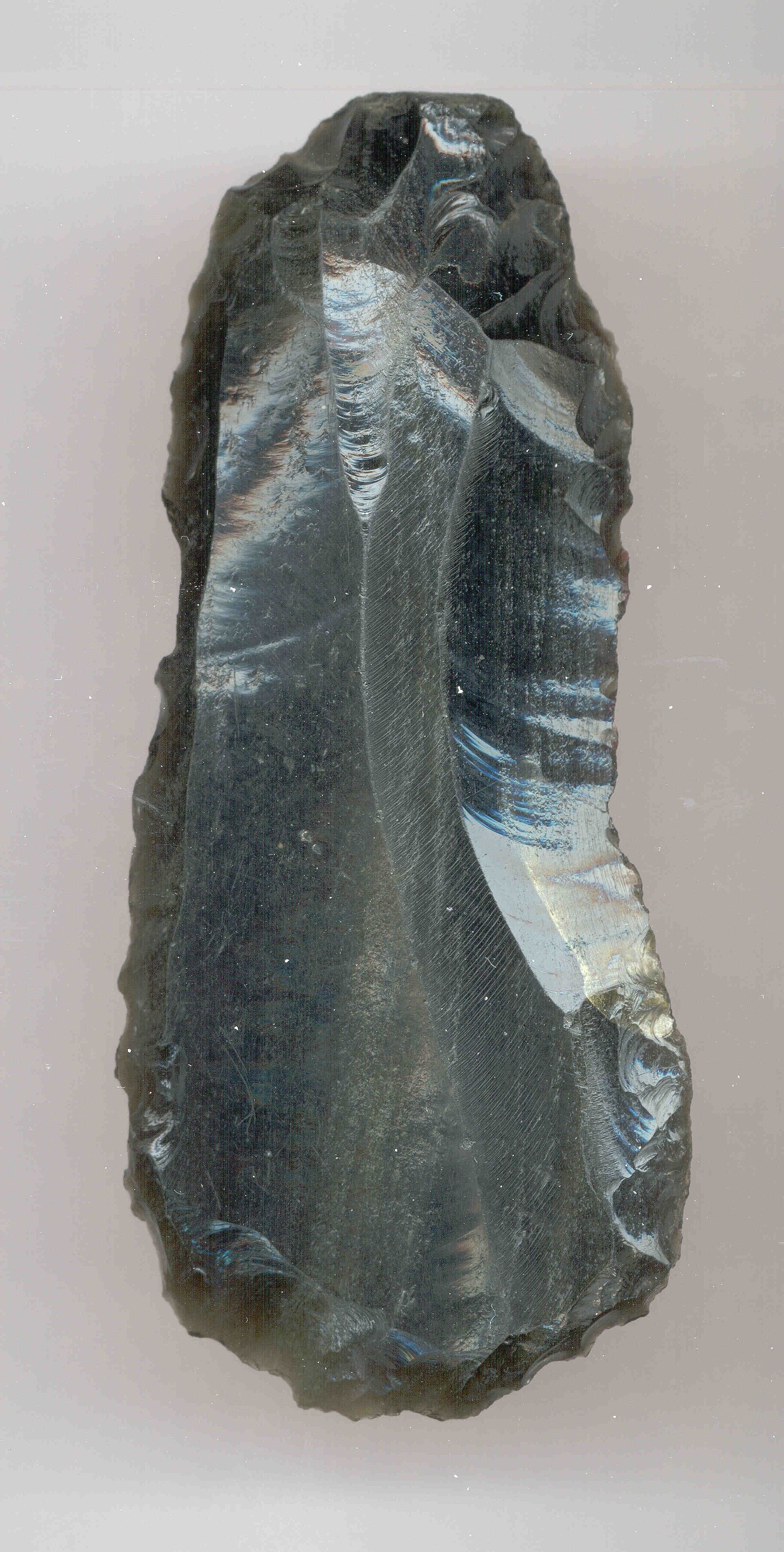
Obsidian is usually black but ranges through blue-black, peacock and mahogany shades to much lighter greenish ones, and can carry white flecks of cristobalite in the variety known as snowflake obsidian. Attractively coloured obsidian is sometimes cut and used as a semiprecious stone.
3. Fracture, Sharpness and Early Tool Use
Obsidian's disordered atomic structure leaves it with no preferred direction of fracture, which produces the conchoidal fracture pattern that allows easy flaking and edges up to ten times sharper than surgical steel.
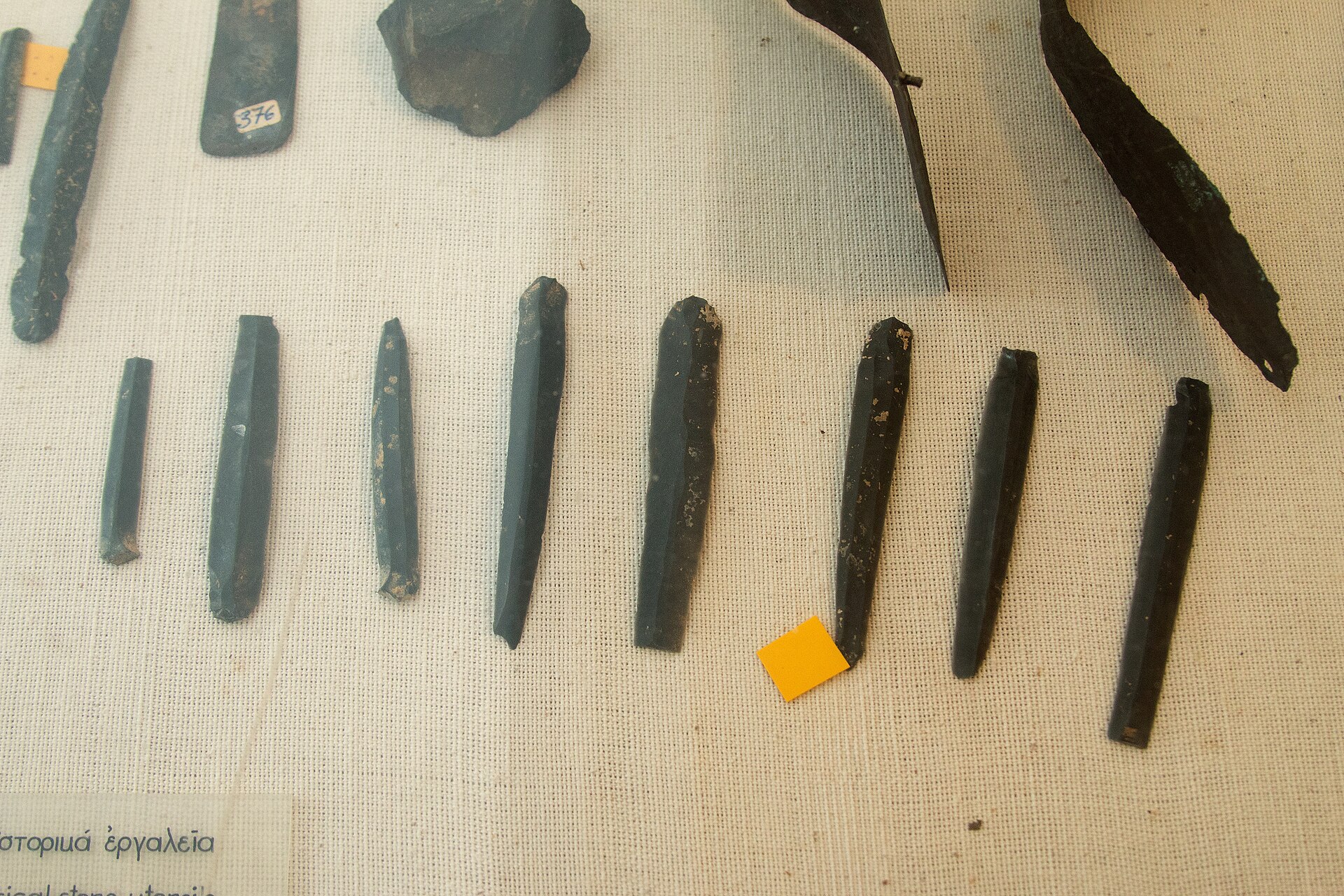
The Gona study area in the Afar region of Ethiopia has produced the oldest lithic industry in the world, dated to about 2.6 million years ago.Excavations at Gona have recovered Levallois lithic cores and flakes alongside obsidian and rhyolite knives, and seven further localities found at Kilaitoli in northwest Gona yielded obsidian and rhyolite blades together with refined points and pyramidal cores.
4. Obsidian Cliff and the Yellowstone Source
The Obsidian Cliff exposure keeps a vertical thickness of roughly 98 feet, or about 30 meters, and the lithic source area has been regarded as a prominent prehistoric quarry since it was recognised in the 19th century. Archeological surveys after the 1988 fire added substantially to knowledge of how obsidian was mined from the bedrock and collected as cobbles from the overlying glacial till. People began quarrying obsidian from the cliff for toolmaking more than 11,000 years ago. Obsidian Cliff glass supplied about 90 percent of the obsidian found in Hopewell mortuary sites of the Ohio River Valley, and artefacts made from it have been found as far away as Texas, Washington and southern Alberta.
5. Sourcing and Chemical Fingerprinting
Because obsidian and other rhyolites can be analysed for their chemical composition, each source acquires a distinctive fingerprint, and a finished tool can therefore be traced back to the flow from which its material came; such evidence is used to reconstruct trade and travel routes. In the Yellowstone region the diagnostic trace elements used to distinguish sources are rubidium, strontium, yttrium and zirconium (Rb, Sr, Y, Zr).
The Macusani case shows how far such tracing can reach. Instrumental neutron activation analysis and portable X-ray fluorescence established that Macusani obsidian, or macusanite, comprises at least two chemical groups. Artefacts of Macusani obsidian were recovered more than 120 km from the source. At Macusani itself a third of the obsidian artefacts encountered came from the nonlocal Chivay source, 215 km to the southwest.
6. Mediterranean and Anatolian Distribution
Obsidian appears in Mesolithic levels of Franchthi Cave in the Greek Peloponnese, and analysis has identified its source with great precision as the Cycladic island of Melos, which had never been attached to the mainland during the Holocene, so the glass must have been brought by sea. In the Upper Mesolithic the amount of obsidian at Franchthi increased thirtyfold, yet it still made up only 3.15 percent of the lithic material, imported as unworked blocks and worked on the site.
The Maroulas finds suggest Franchthi lay near the end of an obsidian transport route running from Melos through Kimolos, Siphnos, Seriphos, Kythnos and Keos towards Attica and the Argolid, and at the island site of Maroulas on Kythnos obsidian from Melos made up 16.87 percent of the lithic assemblage. During the seventh to sixth millennium large quantities of Cappadocian obsidian, including over a thousand worked blades, reached Akanthou-Arkosyko on the northern coast of Cyprus, and the seaborne distribution of Anatolian obsidian even reached Minoan levels at Knossos on Crete.
7. Çatalhöyük
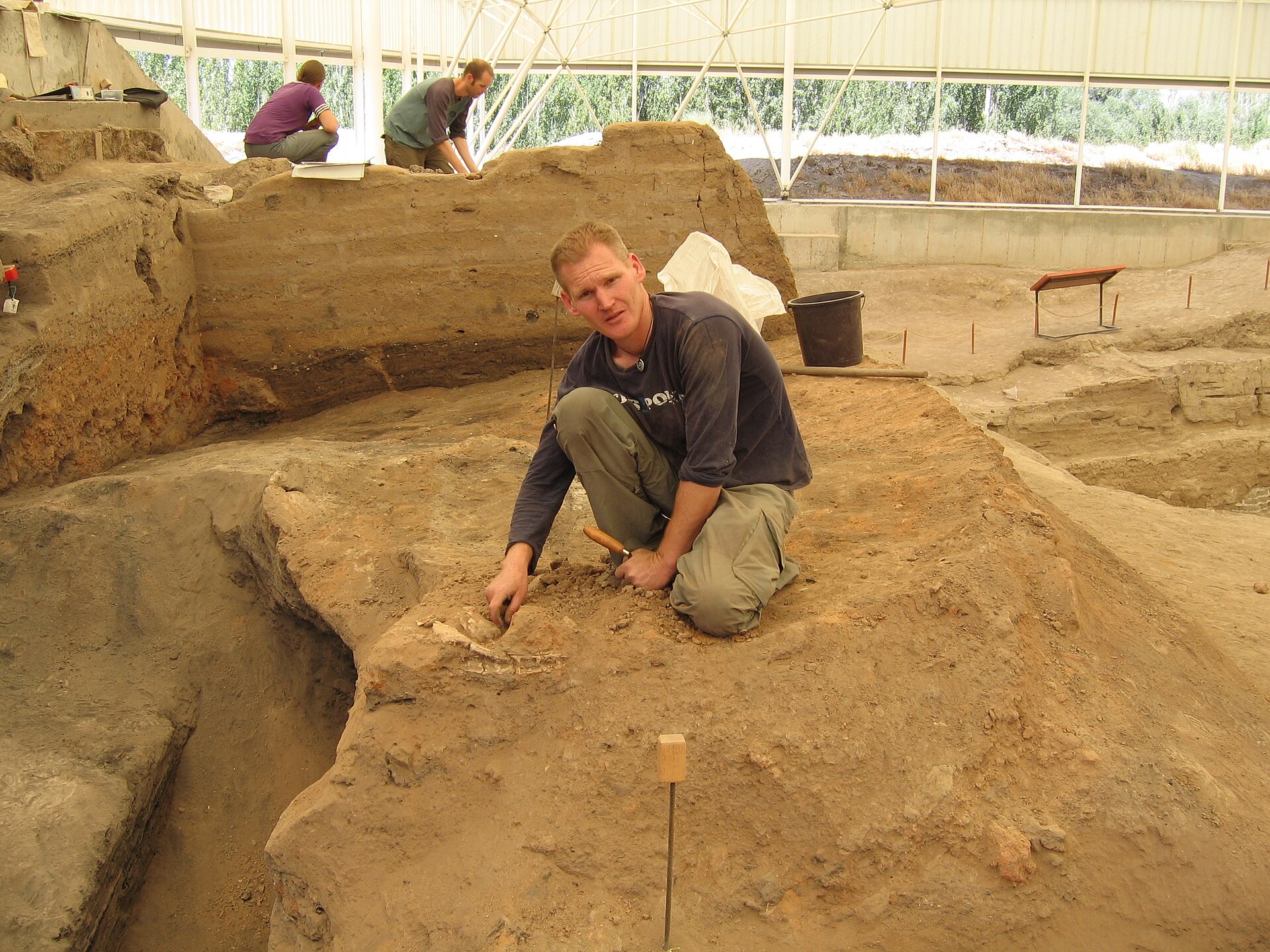
UNESCO's inscription credits Çatalhöyük with a unique testimony to the moment when the first agrarian settlements were established in central Anatolia and grew over centuries from villages into urban centres, largely on egalitarian principles. The taller eastern mound holds eighteen levels of Neolithic occupation between 7400 BC and 6200 BC, including wall paintings, reliefs, sculptures and other symbolic features, in a streetless settlement of houses clustered back to back with roof access.
A burial in Building 42 contained a long, complete obsidian prismatic blade placed vertically beside a limnoquartzite end-scraper and a large obsidian side-scraper made on a flat quarry flake. In the 2004 season the team recorded the first obsidian mirror found at Çatalhöyük since the 1960s, recovered from the fill of a Byzantine grave cut into a Neolithic midden. The mirror is roughly 4 cm across and 2 cm thick, making it one of the smallest known, and its reflective surface was produced by a single flat flake scar.
8. Mesoamerica
The Sierra de las Navajas was the source of the green obsidian supplied to Teotihuacán, Tula and the Aztec Triple Alliance. At Teotihuacan some obsidian workshops sat in apartment compounds making utilitarian tools, while a workshop near the Moon Pyramid specialised in weapons and ceremonial items exported as far as Maya cities, organised under state oversight. The number of obsidian workshops at Tula has led historians to estimate that around 40 percent of the city's population of 30,000 to 40,000 people worked obsidian for the city's needs and for trade.
The Aztec macuahuitl combined sword and club, with worked obsidian blades inserted along both sides of a long wooden paddle.
Decades of fieldwork in the Sierra de las Navajas documented the mining, knapping and transport of the glass in a cold, humid forest at 2,500 to 3,180 metres above sea level.
9. Mirrors and Symbolism
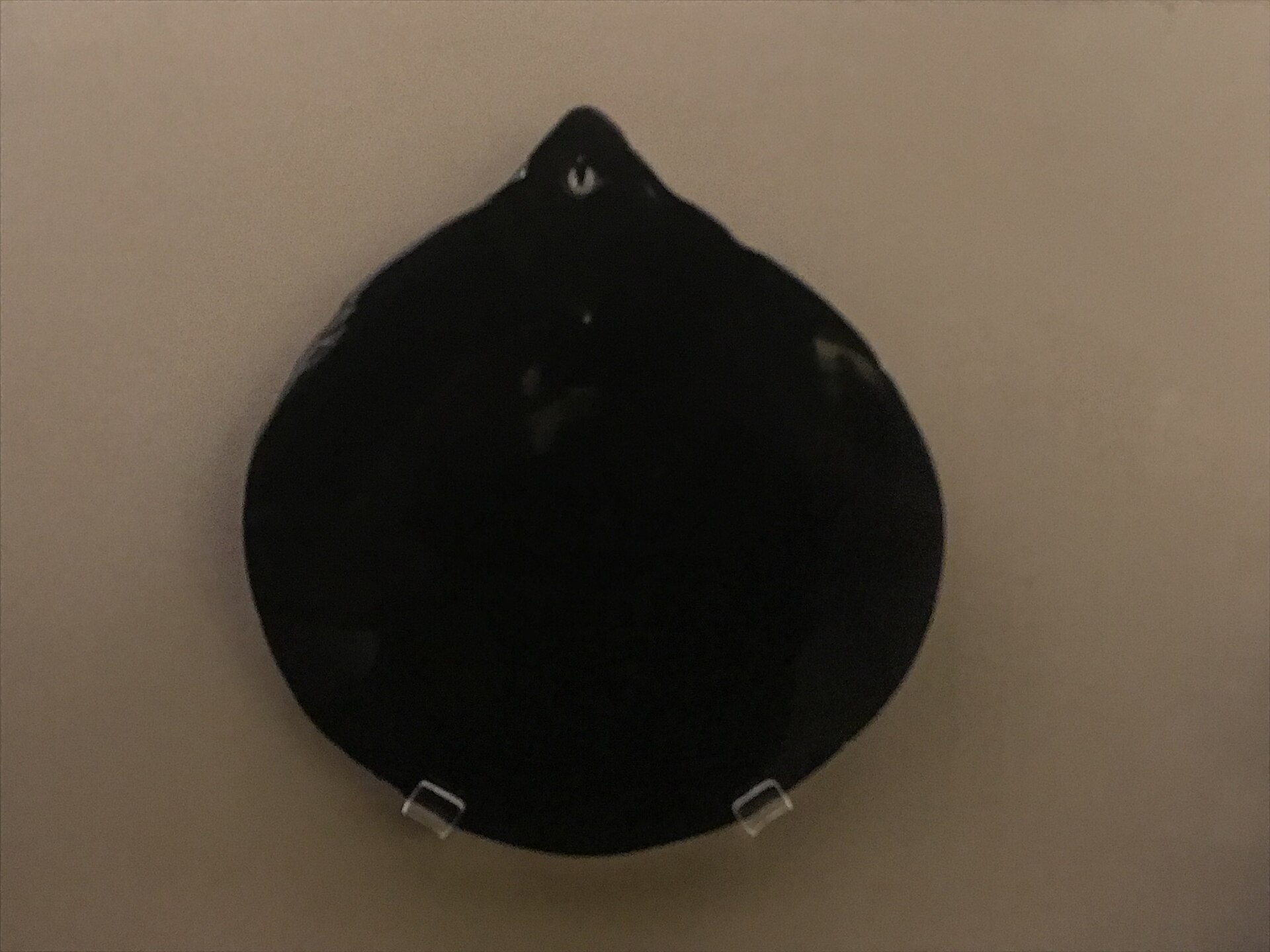
The earliest known manufactured mirrors, roughly 8000 years old, were found in Anatolia in what is now south-central Turkey; they were made from obsidian, had a convex surface and remarkably good optical quality. Highly polished obsidian served as the material for mirrors across Mesoamerican history, and these mirrors were commonly set in wooden frames or edged with exotic feathers and pierced so that a cord could be threaded through.The same material carried symbolic weight: the Aztec and Toltec god Tezcatlipoca was considered the personification of a polished obsidian mirror, and his name in Nahuatl means Smoking Mirror.In an Aztec legend told of Motecuhzoma II, fishermen found a crane-like bird with a mirror on its head.
John Dee's mirror is situated as an Aztec artefact brought to Europe soon after the Spanish conquest, an object whose iconic status rests on a complex cultural history. Using portable X-ray fluorescence, researchers matched the mirror to the geological obsidian of Pachuca, and a second circular mirror to Ucareo. Of the Aztec obsidian sources, Pachuca was the most heavily exploited. The Metropolitan Museum of Art holds a Mexican obsidian mirror dated before the 16th century and standing 5-7/16 inches high.
10. Surgical Use
Archaeologists have shown that ancient knappers produced cutting blades of an extreme degree of sharpness from volcanic glass, with the finest prismatic blades made in Mesoamerica about 2,500 years ago. Don Crabtree rediscovered the technique of producing such blades and suggested their use in surgery.
In animal experiments the tensile strength of wounds cut with obsidian was equal to or greater than that of wounds produced by steel scalpels after fourteen days of healing. Researchers found neither flaking of glass blades into the wounds nor any foreign body reaction in healed wounds, and skin incisions in human patients also healed well without complications.Carefully chipped obsidian provides a cutting edge as sharp as a modern razor blade, and obsidian-edged scalpels are still used in some surgical procedures today.
11. Hydration Dating
Obsidian hydration dating was initiated by Friedman and Smith in 1960 after they noticed that the exposed surfaces of ancient artifacts had absorbed water. The hydration rims formed in this way were visible under high-power magnification. Rim width depended on time, glass chemistry and temperature. To relate a hydration thickness to an age, researchers must know the composition of the volcanic glass, obtainable from chemical analysis or its refractive index, and the exposure-temperature history of the material.
Obsidian hydration dating served as one of the chronological indicators for the Hopewell culture earthworks in central Ohio. Depth profiling with SIMS suggested that long-distance obsidian exchange ran throughout the Hopewell period. The SIMS-SS variant has been applied to obsidian from Greece, Chile, Turkey, Japan and Hungary, with ages from a few hundred to 30,000 years before present.
USGS researchers compared obsidian hydration ages for volcanic events with ages obtained by radiocarbon and potassium-argon methods at localities ranging from 1,200 to more than 1 million years old. Among the localities studied were Newberry Craters in Oregon, Coso Hot Springs and Salton Sea in California, Yellowstone National Park and the Mineral Range in Utah.
Critics note that laboratory hydration experiments did not secure safe extrapolation to much lower temperatures, and that simulated hydration does not always reproduce the behaviour of obsidian from the same source. Because computed hydration ages carry substantial uncertainties, great caution is needed before using them to infer how long a site was occupied, and since hydration records only processes that happened after an artifact was made, obsidian hydration dating can never match radiocarbon or dendrochronology in reliability and should always remain a secondary source of chronology.
12. Key Figures
| Measure | Value | Context |
|---|---|---|
| Obsidian Cliff quarry pits and workshop locations | fifty-nine | documented by surveys of the Obsidian Cliff Plateau, together with thousands of flakes and tools 5Obsidian: The MVP of Yellowstone’s “Stones” · U.S. National Park Service ↗ |
| Obsidian Cliff share of Hopewell mortuary obsidian | about 90% | obsidian found in Hopewell mortuary sites of the Ohio River Valley 7Obsidian Cliff · U.S. National Park Service, Yellowstone National Park ↗ |
13. Timeline: from the first obsidian tools to the laboratories of modern archaeology
- c. 2.6 million years agoThe world’s oldest lithic industryStone tools from Gona in Ethiopia’s Afar region are dated to about 2.6 million years ago, the oldest known lithic industry.
- c. 13,000–11,000 BCEBoats reach Melos for obsidianExcavations at Franchthi Cave showed that boats were already sailing to Melos for obsidian by about 13,000-11,000 BCE, among the earliest indications of seafaring anywhere.
- tenth to ninth millennium BCEEarliest evidence of Mediterranean seafaringObsidian in Mesolithic levels of Franchthi Cave, carried by sea from Melos, provides the earliest evidence of seafaring in the Mediterranean.
- 7400–6200 BCEÇatalhöyük on the southern Anatolian plainThe eastern mound of Çatalhöyük holds eighteen levels of Neolithic occupation marking the transition from settled villages to an urban agglomeration.
- about 8000 years agoEarliest manufactured mirrorsConvex, finely polished obsidian discs placed in graves in Anatolia count as the earliest known manufactured mirrors.
- seventh to sixth millennium BCECappadocian obsidian crosses to CyprusMore than a thousand worked blades of Cappadocian obsidian reached Akanthou-Arkosyko on the north coast of Cyprus, an early marker of seaborne connections.
- about 2,500 years agoThe finest prismatic blades of MesoamericaKnappers in Mesoamerica produced prismatic blades of extraordinary sharpness, later rediscovered for use in modern surgery.
- 10th–12th centuries CETula, city of obsidianTula, capital of the Toltec civilization, became a major trading centre for obsidian, with workshops estimated to employ around 40 percent of its population.
- 1960Obsidian hydration dating proposedFriedman and Smith noted that hydration rims on ancient obsidian surfaces widen with time, founding obsidian hydration dating.
- 1974Systematic study of Mexico’s obsidian minesAlejandro Pastrana began research at the National Institute of Anthropology and History (INAH) on the mining, knapping and distribution of obsidian in Central Mesoamerica.
- 1982Obsidian blades enter modern surgeryA West J Med paper reported that obsidian blades had been used in experimental microsurgery and that wounds healed as well as those cut with steel scalpels.
- 1996Obsidian Cliff becomes a National Historic LandmarkObsidian Cliff in Yellowstone National Park was designated a National Historic Landmark, recognising more than eleven millennia of quarrying.
- 2000The Aeolian Islands join the World Heritage ListThe Aeolian Islands, source of the Lipari obsidian that fed early Mediterranean networks, were inscribed under natural criterion (viii).
- 2004A new obsidian mirror at ÇatalhöyükThe excavation team recorded an obsidian mirror found in the fill of a Byzantine grave cut into a Neolithic midden, the first discovered at the site since the 1960s.
- 2012Çatalhöyük inscribed by UNESCOThe Neolithic site of Çatalhöyük was added to the World Heritage List under criteria (iii) and (iv).
- 2021John Dee's mirror traced to PachucaA study in Antiquity used portable X-ray fluorescence to match John Dee's obsidian mirror to the Pachuca source in Mexico, confirming its Aztec origin.
References (20)
- 1Obsidian — Encyclopaedia Britannica WebView source
- 2Rock, Glass, and Flowbands: Yellowstone’s Rhyolite Anatomy — U.S. Geological Survey, Yellowstone Volcano Observatory WebView source
- 3Isole Eolie (Aeolian Islands) — UNESCO World Heritage Centre WebView source
- 4Obsidian in Mesoamerica — World History Encyclopedia WebView source
- 5Obsidian: The MVP of Yellowstone’s “Stones” — U.S. National Park Service Web↩View source
- 6Gona (Ethiopia) — CENIEH, Centro Nacional de Investigacion sobre la Evolucion Humana WebView source
- 7Obsidian Cliff — U.S. National Park Service, Yellowstone National Park Web↩View source
- 8Obsidian Cliff National Historic Landmark — Wyoming State Historic Preservation Office WebView source
- 9Macusani obsidian source study (Smithsonian repository record) — Smithsonian Institution WebView source
- 10Seafaring in the Mesolithic Mediterranean (The Mediterranean Context of Early Greek History) — Wiley-Blackwell BookView source
- 11Neolithic Site of Çatalhöyük — UNESCO World Heritage Centre WebView source
- 12Çatalhöyük Newsletter 11: Chipped Stone — Çatalhöyük Research Project WebView source
- 13Prehispanic green obsidian mining in Hidalgo — Mexicolore WebView source
- 14History of mirrors dating back 8000 years (Enoch, Optom Vis Sci 2006) — National Library of Medicine 2006 WebView source
- 15The mirror, the magus and more: reflections on John Dee’s obsidian mirror (Antiquity) — Antiquity / Cambridge University Press BookView source
- 16Mirror (Mexican, obsidian) — The Metropolitan Museum of Art WebView source
- 17Ancient technology in contemporary surgery (Buck, West J Med 1982) — National Library of Medicine 1982 WebView source
- 18Obsidian Hydration Dating (Encyclopedia of Scientific Dating Methods) — Springer / University of the Aegean 2019 WebView source
- 19Obsidian hydration dating of volcanic events — U.S. Geological Survey WebView source
- 20Aegean civilizations: Paleolithic and Neolithic — Encyclopaedia Britannica WebView source