Troy
The city behind the Iliad, and the archaeology that found nine of them.
Overview
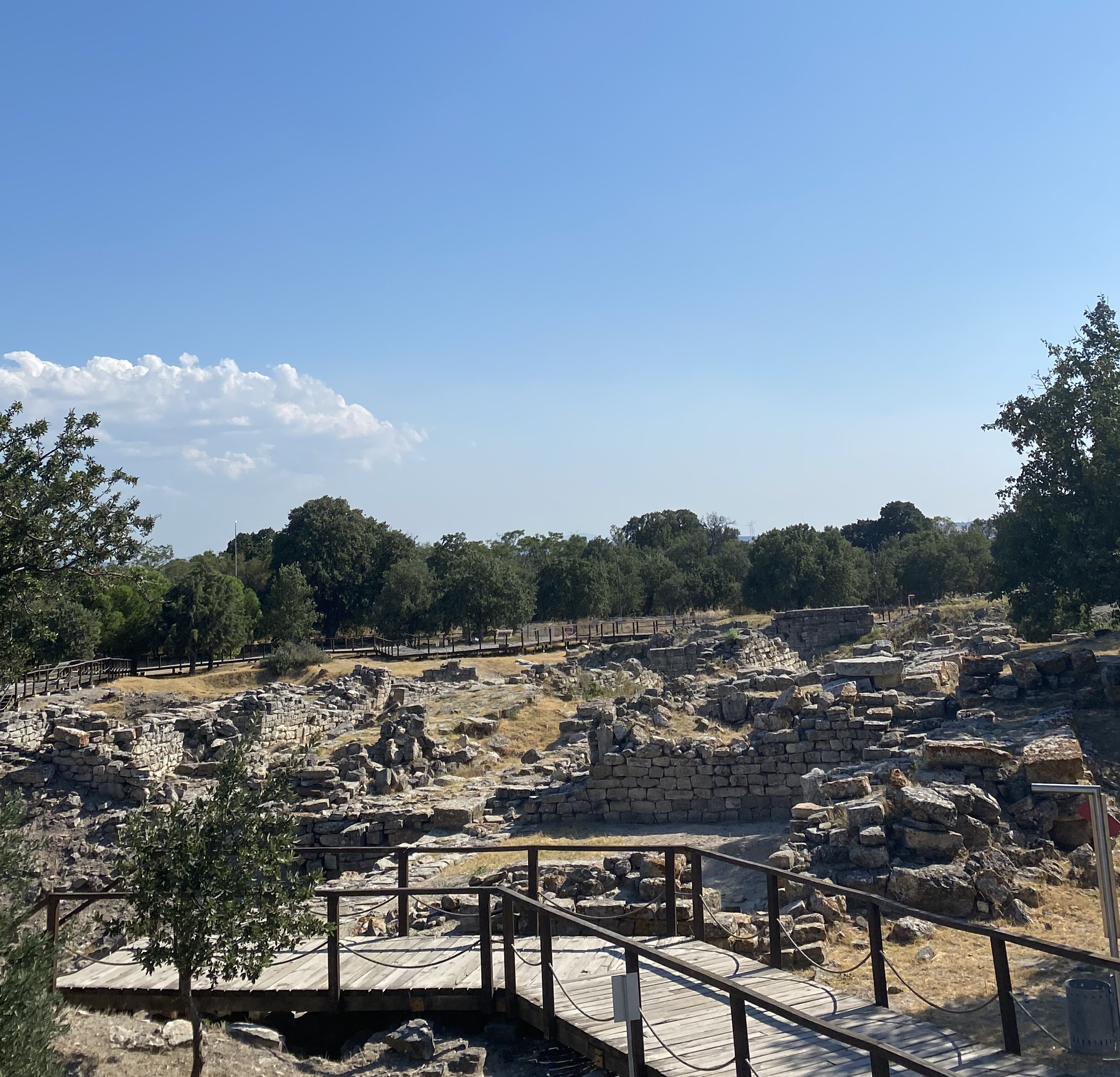
Troy or Ilion was an ancient city located in present-day Çanakkale, Turkey. The city is notable for its identification with the archaeological site of Troy, and thus its potential connection to the legendary Trojan War. Troy was repeatedly destroyed and rebuilt during its 4000 years of settlement. Archaeologists refer to these layers using Roman numerals, Troy I being the earliest and Troy IX being the latest.
In Classical Greek the city carried two names, Troia (Τροία) and Ilion (Ἴλιον) or Ilios (Ἴλιος), and it is from the latter that the epic poem the Iliad takes its title. Metrical evidence drawn from the Iliad and the Odyssey indicates that the second of these poems was originally pronounced Wilios. Wilusa has been identified with the archaeological site of Troy.
The principal literary work set at Troy is the Iliad, an Archaic-era epic poem recounting the final year of the Trojan War. Within the poem the city appears as the capital of a rich and powerful kingdom, while the Achaeans establish their camp near the mouth of the Scamander river and beach their ships there.
Early modern travellers of the 16th and 17th centuries, among them Pierre Belon and Pietro Della Valle, wrongly identified Troy with Alexandria Troas, a ruined Hellenistic town approximately 20 kilometres (12 mi) south of Hisarlık. In 1868 the German businessman Heinrich Schliemann visited Calvert and obtained permission to excavate Hisarlık. In April 1870 he began by cutting a trench across the mound of Hisarlık down to the level of the settlements, a feature now known as "Schliemann's Trench". He was planning another excavation season in 1891 when he died in December 1890.
Wilhelm Dörpfeld began working the site alongside Schliemann in 1893–1894, later inherited the excavation and published his own independent work. His chief contributions concerned Troy VI and Troy VII, which Schliemann had overlooked through his focus on Troy II; during the work Dörpfeld came across a section of the Troy VI wall that was weaker than the rest. The archaeologists who followed Schliemann's lead brought a professional approach that had not been available to him. A post hoc correspondence analysis of Blegen's pottery sequence revealed a 100-year gap between Troy III and Troy IV, and combined with a similar analysis of the pottery sequences of Korfmann and Schliemann it suggests that for a time in the late Early Bronze Age occupation contracted to the western end of the citadel mound.
1. Name
The city known in English as Troy carries two classical Greek names: Troia and Ilion or Ilios. The second of these names stands behind the title of the Iliad.
Metrical evidence drawn from the Iliad and the Odyssey suggests that the name was originally pronounced Wilios. On this reading Troy or Ilios (or Wilios) is most probably identical with Wilusa or Truwisa.
The identification bears on the city's place in the wider Bronze Age world: during the Late Bronze Age Troy was called Wilusa and was a vassal of the Hittite Empire.
Troy or Ilion was an ancient city located in present-day Çanakkale, Turkey. The city is notable for its identification with the archaeological site of Troy, and thus its potential connection to the legendary Trojan War. Wilusa has been identified with the archaeological site of Troy. Troy was repeatedly destroyed and rebuilt during its 4000 years of settlement. Archaeologists refer to these layers using Roman numerals, Troy I being the earliest and Troy IX being the latest.
The main literary work set at Troy is the Iliad, an Archaic-era epic poem which tells the story of the final year of the Trojan War. The Iliad portrays Troy as the capital of a rich and powerful kingdom. In the Iliad the Achaeans set up their camp near the mouth of the Scamander river, where they beached their ships.
Early modern travellers in the 16th and 17th centuries, including Pierre Belon and Pietro Della Valle, had mistakenly identified Troy with Alexandria Troas, a ruined Hellenistic town approximately 20 kilometres (12 mi) south of Hisarlık.
In 1868 German businessman Heinrich Schliemann visited Calvert, and secured permission to excavate Hisarlık. As with Calvert and others, in April 1870 Schliemann began by excavating a trench across the mound of Hisarlık to the depth of the settlements, today called "Schliemann's Trench". Schliemann was planning for another excavation season in 1891 when he died in December 1890. Wilhelm Dörpfeld (1893–1894) began working the site alongside Schliemann and later inherited excavation at the site and published his own independent work. His chief contributions were to the study of Troy VI and VII, which Schliemann had overlooked due to his focus on Troy II. During his excavation, Dörpfeld came across a section of the Troy VI wall which was weaker than the rest.
These archaeologists, though following Schliemann's lead, added a professional approach not available to Schliemann. A post hoc correspondence analysis of Blegen's pottery sequence showed a 100-year gap between Troy III and Troy IV. Combined with a similar analysis of the pottery sequences of Korfmann and Schliemann this suggests that for a time in the late Early Bronze Age occupation contracted to the western end of the citadel mound.
2. Literary Troy
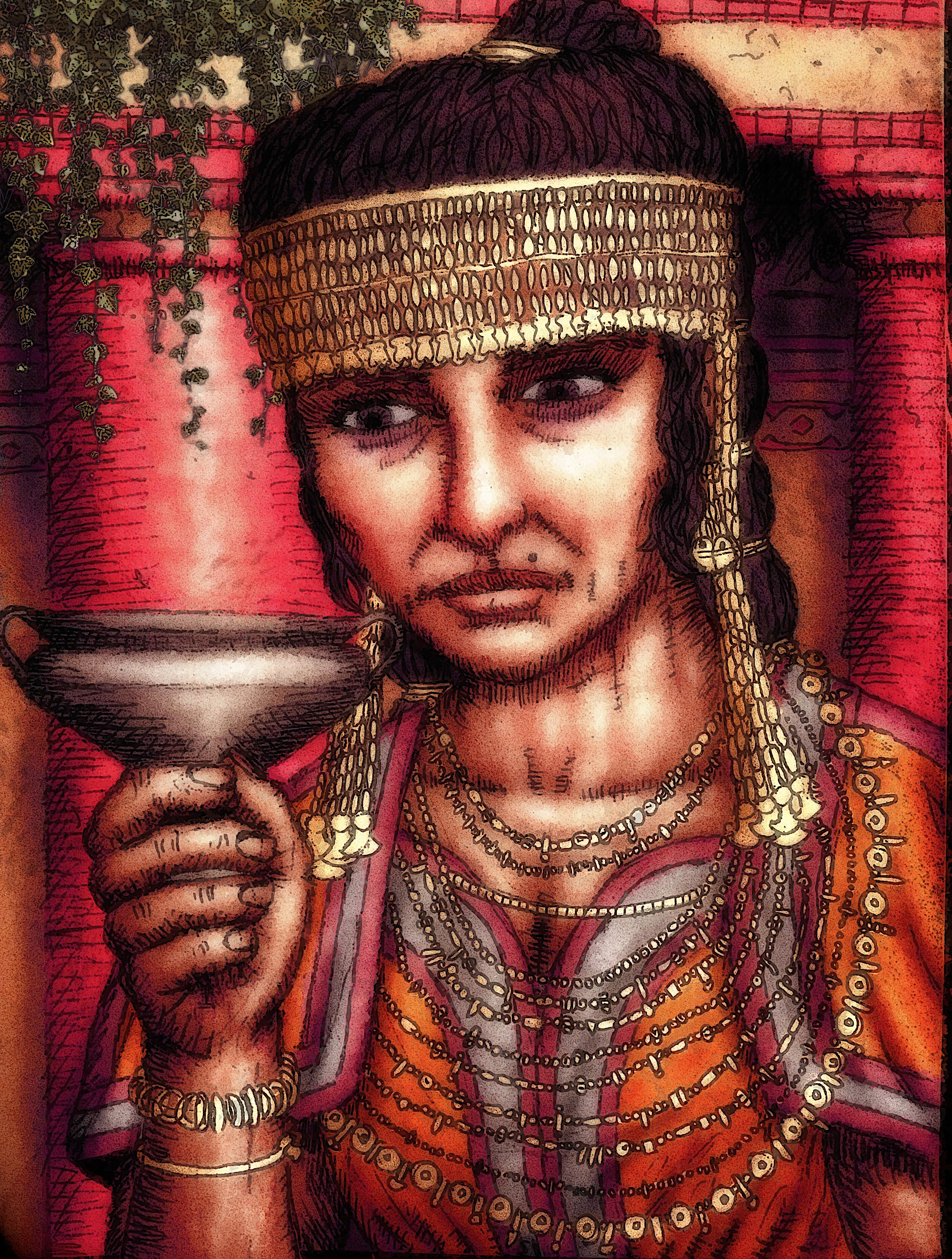
The Iliad is the principal literary work set at Troy, an Archaic-era epic that takes as its subject the final year of the Trojan War. In its portrayal Troy appears as the capital of a rich and powerful kingdom. The Achaeans camp near the mouth of the Scamander river, where they have beached their ships.
The city also figures in the Odyssey and in Aeschylus's Oresteia. Virgil's Aeneid elaborated the legend further. The fall of Troy, the Trojan Horse and the sacrifice of Polyxena, Priam's youngest daughter, were treated in a later Greek epic by Quintus Smyrnaeus.
Troy or Ilion was an ancient city located in present-day Çanakkale, Turkey. It was first settled around 3600 BC and grew into a small fortified city around 3000 BC (Troy I). Over its 4000 years of settlement the site was repeatedly destroyed and rebuilt. Archaeologists refer to these layers using Roman numerals, Troy I being the earliest and Troy IX being the latest. Among the early layers, Troy II is notable for its wealth and imposing architecture.
The city is notable for its identification with the archaeological site of Troy, and thus its potential connection to the legendary Trojan War. Wilusa has been identified with the archaeological site of Troy. Several of these layers resemble literary depictions of Troy, leading some scholars to conclude that there is a kernel of truth underlying the legends.
Early modern travellers in the 16th and 17th centuries, including Pierre Belon and Pietro Della Valle, had mistakenly identified Troy with Alexandria Troas, a ruined Hellenistic town approximately 20 kilometres (12 mi) south of Hisarlık.
3. Identification with Troy
The Greeks and Romans took for a fact the historicity of the Trojan War and the identity of Homeric Troy with a site in Anatolia on a peninsula called the Troad (Biga Peninsula).
Early modern travellers in the 16th and 17th centuries, including Pierre Belon and Pietro Della Valle, had mistakenly identified Troy with Alexandria Troas, a ruined Hellenistic town approximately 20 kilometres (12 mi) south of Hisarlık.
Wilusa has been identified with the archaeological site of Troy, and the city is notable for that identification and for its potential connection to the legendary Trojan War. Troy or Ilios, also written Wilios, is most probably identical with Wilusa or Truwisa.
The main literary work set at Troy is the Iliad, an Archaic-era epic poem telling the story of the final year of the Trojan War. It portrays Troy as the capital of a rich and powerful kingdom. References to Troy appear also in the Odyssey, the other major work attributed to Homer, and in other ancient Greek literature such as Aeschylus's Oresteia. The Homeric legend was later elaborated by the Roman poet Virgil in his Aeneid.
This identification convinced Heinrich Schliemann that Homeric Troy should be sought beneath the classical-era remains and led to their subsequent partnership. Schliemann proposed that the second layer, Troy II, corresponded to the city of legend, though later research has shown that it predated the Mycenaean era by several hundred years. Among the early layers, Troy II is notable for its wealth and imposing architecture. His chief contributions were to the study of Troy VI and VII, which Schliemann had overlooked due to his focus on Troy II. During his excavation, Dörpfeld came across a section of the Troy VI wall which was weaker than the rest; since the mythic city had likewise had a weak section of its walls, he became convinced that this layer corresponded to Homeric Troy.
Troy was first settled around 3600 BC and grew into a small fortified city around 3000 BC (Troy I). It was repeatedly destroyed and rebuilt during its 4000 years of settlement. Archaeologists refer to these layers using Roman numerals, Troy I being the earliest and Troy IX being the latest. A post hoc correspondence analysis of Blegen's pottery sequence showed a 100-year gap between Troy III and Troy IV.
4. Archaeological layers
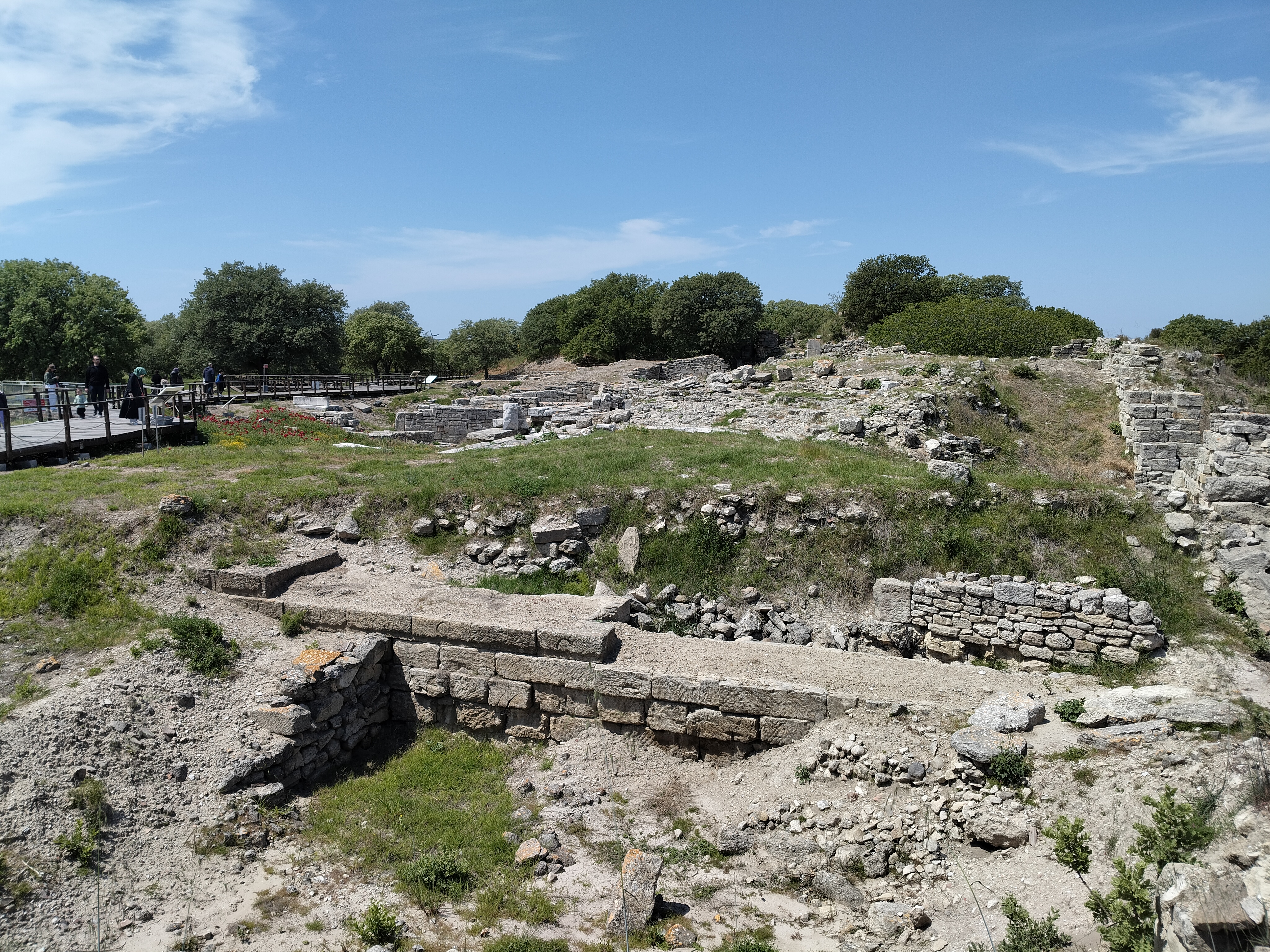
Troy was first settled around 3600 BC and grew into a small fortified city around 3000 BC (Troy I).
The final layers (Troy VIII–IX) were Greek and Roman cities which served as tourist attractions and religious centers because of their link to mythic tradition. Several of these layers resemble literary depictions of Troy, leading some scholars to conclude that there is a kernel of truth underlying the legends.
Archaeologists refer to these layers using Roman numerals, Troy I being the earliest and Troy IX being the latest. Among the early layers, Troy II is notable for its wealth and imposing architecture.
The city is notable for its identification with the archaeological site of Troy, and thus its potential connection to the legendary Trojan War. Wilusa has been identified with the archaeological site of Troy.
5. Excavation history
The site was excavated by Frank Calvert and Heinrich Schliemann from 1871 onward. In 1868 the German businessman Heinrich Schliemann visited Calvert and secured permission to excavate Hisarlık. In April 1870 Schliemann began by excavating a trench across the mound of Hisarlık to the depth of the settlements, today called Schliemann's Trench.
Schliemann proposed that the second layer, Troy II, corresponded to the city of legend, though later research has shown that it predated the Mycenaean era by several hundred years. He privately agreed that Troy VI was more likely the Homeric city but never published anything stating so. Schliemann was controversial even in his own time because of excavation methods that included removing features he considered insignificant without first studying and documenting them. He was planning another excavation season in 1891 when he died in December 1890.
Wilhelm Dörpfeld began working the site alongside Schliemann in 1893–1894 and later inherited excavation at the site and published his own independent work. His chief contributions were to the study of Troy VI and VII, which Schliemann had overlooked due to his focus on Troy II. Dörpfeld came across a section of the Troy VI wall weaker than the rest and, since the mythic city had likewise had a weak section of its walls, became convinced this layer corresponded to Homeric Troy.
Later archaeologists, though following Schliemann's lead, added a professional approach not available to him. A post hoc correspondence analysis of Blegen's pottery sequence showed a 100-year gap between Troy III and Troy IV. Combined with a similar analysis of the pottery sequences of Korfmann and Schliemann this suggests that for a time in the late Early Bronze Age occupation contracted to the western end of the citadel mound.
Schliemann was planning for another excavation season in 1891 when he died in December 1890. Even in his own time Schliemann was controversial because of his excavation methods which included removing features he considered insignificant without first studying and documenting them.
6. Priam's Treasure
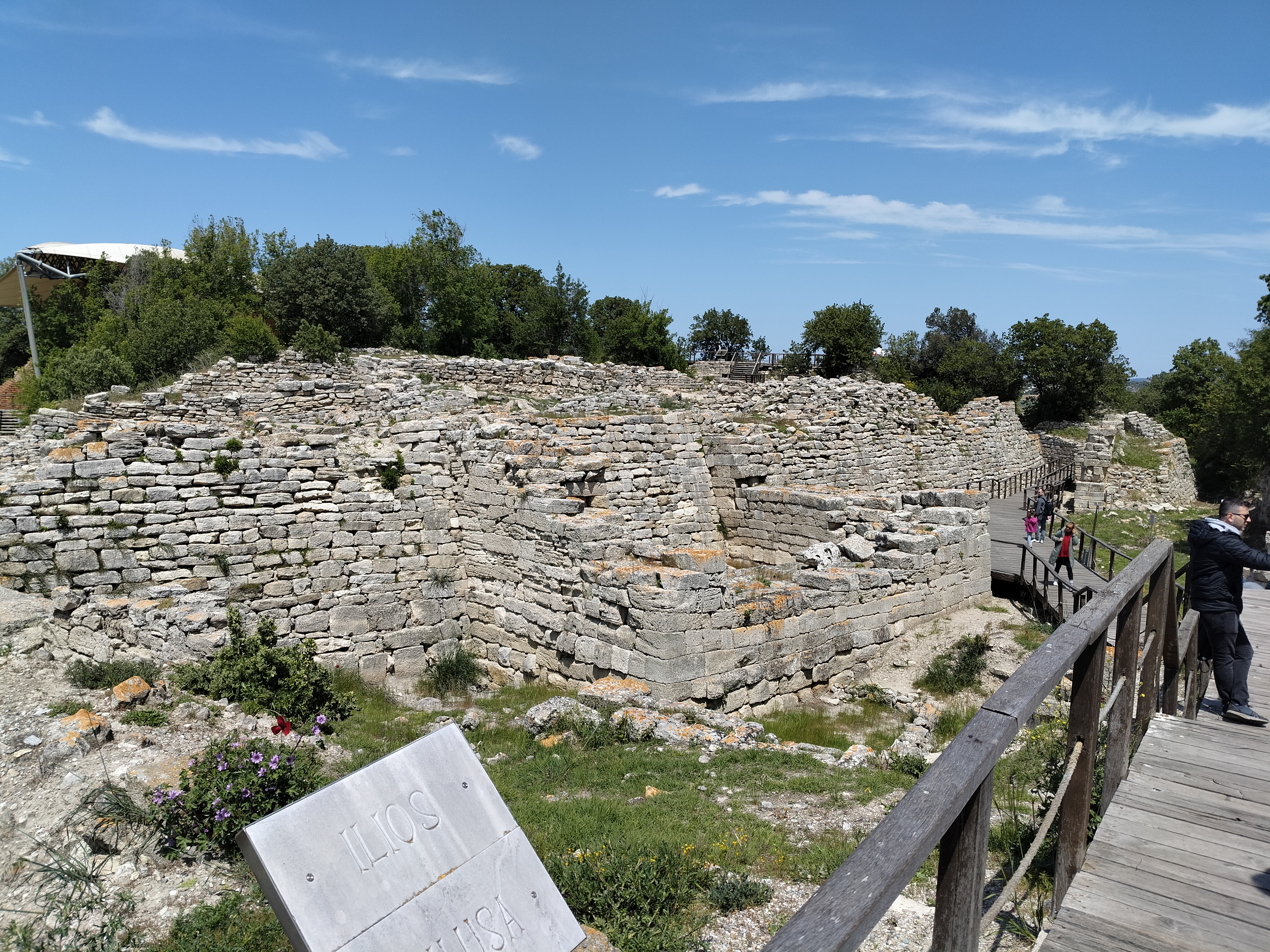
Some of the most notable artefacts found by Schliemann are known as Priam's Treasure, after the legendary Trojan king. Schliemann and his wife stole almost all the precious metal objects and ancient jewelry. Later Schliemann traded some of the treasure to the government of the Ottoman Empire in exchange for permission to dig at Troy again.
The assemblage Schliemann dubbed Priam's Treasure is associated with Hisarlık, where it was pictured in 1880. Among the pieces recovered were a golden bottle and goblets, later held in the Pushkin Museum.
7. Key references
| Source | Citation detail |
|---|---|
| Pavel, Cătălin | "Recording the Excavations in Troy, 1855–2010", Studia Troica, 19, pp. 431–51 5Troy — sec4 · Wikipedia ↗ |
| Blegen, Carl W. | "Excavations at Troy 1932", American Journal of Archaeology 8Troy — sec8 · Wikipedia ↗ |
| Blegen, Carl W. | "Excavations at Troy 1933", American Journal of Archaeology 8 |
| Blegen, Carl W. | "Excavations at Troy, 1936" |
| Blegen, Carl W. | "Excavations at Troy, 1937" |
In Classical Greek the city carried two names, Troia (Τροία) and Ilion (Ἴλιον) or Ilios (Ἴλιος), and it is from the second that the epic poem takes its title3Troy — sec1 · Wikipedia ↗. Metrical evidence drawn from the Iliad and the Odyssey indicates that the latter name was originally pronounced Wilios3. The identification of Wilusa with the archaeological site of Troy rests on this connection, and the city's importance lies in that identification and in its potential link to the legendary Trojan War2Troy — a · Reference ↗.
The principal literary work set at Troy is the Iliad, an Archaic-era epic poem narrating the final year of the Trojan War4Troy — sec2 · Wikipedia ↗. In its account the Achaeans pitched camp near the mouth of the Scamander river and beached their ships there4, while the city itself is portrayed as the capital of a rich and powerful kingdom4. Troy also appears in the Odyssey, the other major work attributed to Homer, and in other ancient Greek literature such as Aeschylus's Oresteia4.
Early modern travellers of the 16th and 17th centuries, among them Pierre Belon and Pietro Della Valle, mistakenly placed Troy at Alexandria Troas, a ruined Hellenistic town roughly 20 kilometres (12 mi) south of Hisarlık5. In 1868 the German businessman Heinrich Schliemann visited Calvert and obtained permission to excavate Hisarlık6Troy — sec6 · Wikipedia ↗. In April 1870 he opened work by cutting a trench across the mound down to the level of the settlements, a cutting still known as "Schliemann's Trench"6. He was planning another excavation season in 1891 when he died in December 18906.
Wilhelm Dörpfeld worked at the site alongside Schliemann from 1893 to 1894, later inherited the excavation and published his own independent work7Troy — sec7 · Wikipedia ↗; his chief contributions concerned Troy VI and Troy VII, which Schliemann had overlooked in his focus on Troy II7. Later archaeologists followed Schliemann's lead but brought a professional approach that had not been available to him8. A post hoc correspondence analysis of Blegen's pottery sequence revealed a 100-year gap between Troy III and Troy IV8, and a comparable analysis of the Korfmann and Schliemann sequences suggests that for a time in the late Early Bronze Age occupation contracted to the western end of the citadel mound8.
8. Key dates
- 1855^ [1] Archived 16 March 2023 at the Wayback Machine Pavel, Cătălin, "Recording…^ [1] Archived 16 March 2023 at the Wayback Machine Pavel, Cătălin, "Recording the Excavations in Troy, 1855–2010", Studia Troica, 19, pp.
- 1868Heinrich Schliemann Heinrich Schliemann In 1868, German businessman Heinrich S…Heinrich Schliemann Heinrich Schliemann In 1868, German businessman Heinrich Schliemann visited Calvert, and secured permission to excavate Hisarlık.
- 1870As with Calvert and others, in April 1870 Schliemann began by excavating a tre…As with Calvert and others, in April 1870 Schliemann began by excavating a trench across the mound of Hisarlık to the depth of the settlements, today called " Schliemann's Trench ".
- 1871The site was excavated by Frank Calvert and Heinrich Schliemann from 1871.The site was excavated by Frank Calvert and Heinrich Schliemann from 1871.
- 1880Artifacts which Schliemann dubbed Priam's Treasure Hisarlık, pictured in 1880.Artifacts which Schliemann dubbed Priam's Treasure Hisarlık, pictured in 1880.
- 1890Schliemann was planning for another excavation season in 1891 when he died in…Schliemann was planning for another excavation season in 1891 when he died in December 1890.
- 1893Wilhelm Dörpfeld Wilhelm Dörpfeld (1893–1894) began working the site alongside…Wilhelm Dörpfeld Wilhelm Dörpfeld (1893–1894) began working the site alongside Schliemann and later inherited excavation at the site and published his own independent work.
- 1932^ Blegen, Carl W., "Excavations at Troy 1932", American Journal of Archaeology…^ Blegen, Carl W., "Excavations at Troy 1932", American Journal of Archaeology, vol.
9. Frequently asked questions
What did the earliest excavators of Hisarlık get wrong about the site's identity?
Before the mound was properly excavated, 16th- and 17th-century travellers including Pierre Belon and Pietro Della Valle had placed Troy at Alexandria Troas, a ruined Hellenistic town roughly 20 kilometres (12 mi) south of Hisarlık 4. That mistaken identification convinced Heinrich Schliemann that Homeric Troy should be sought beneath the classical-era remains and led to their subsequent partnership 4.
Which layer of the mound stands out among the early phases?
Among the early layers, Troy II is notable for its wealth and imposing architecture 1Troy — wiki · Wikipedia ↗.
What happened to the gold and jewellery Schliemann found?
How was the excavation of the mound documented?
Cătălin Pavel's study "Recording the Excavations in Troy, 1855–2010" appeared in Studia Troica, 19 5.
References (8)
- 1Troy — wiki — Wikipedia Web↩View source
- 2Troy — a — Reference Web↩View source
- 3Troy — sec1 — Wikipedia Web↩View source
- 4Troy — sec2 — Wikipedia Web↩View source
- 5Troy — sec4 — Wikipedia Web↩View source
- 6Troy — sec6 — Wikipedia Web↩View source
- 7Troy — sec7 — Wikipedia Web↩View source
- 8Troy — sec8 — Wikipedia Web↩View source