Crusades
The Latin crusading movement from the Council of Clermont in 1095 to the fall of Acre in 1291 — the campaigns, the Crusader states and a contested legacy.
The Crusades were a series of religiously sanctioned military expeditions launched by western European Christians between 1095 and 1291 to take and hold the Holy Land. The First Crusade captured Jerusalem in 1099 and founded the Crusader states, but later campaigns failed, while Saladin's victory at Hattin in 1187 and the Fourth Crusade's sack of Constantinople in 1204 reshaped the movement. The fall of Acre in 1291 ended Crusader rule in the Middle East, leaving a contested legacy and centuries of historiography.
In this article
- 1Overview
- 2Origins and the Council of Clermont
- 3The First Crusade and the Crusader States
- 4The Second Crusade
- 5Saladin, Hattin, and the Third Crusade
- 6The Fourth Crusade and Later Crusades
- 7The Fall of the Crusader States
- 8Military Orders and Architecture
- 9Timeline: from the Council of Clermont to the fall of Acre
- 10Knowledge graph
Overview
The Crusades were military expeditions organized by western European Christians beginning in the late 11th century in response to centuries of Muslim wars of expansion. Their conventional span runs from 1095 to 1291, though crusading continued for several centuries afterwards. Between those two dates there were numerous crusading expeditions to the Holy Land, to Spain, and even to the Baltic. Approximately two-thirds of the ancient Christian world had been conquered by Muslims by the end of the 11th century, including the important regions of Palestine, Syria, Egypt, and Anatolia.
Historians now see the Crusades as one significant factor among several in Europe's development, although there was a time when the changes in European society during the 12th and 13th centuries were attributed largely to them.
1. Origins and the Council of Clermont
The Council of Clermont was an assembly for church reform called by Pope Urban II and held on 18 November 1095, and it became the occasion for initiating the First Crusade. At that gathering Urban exhorted the French knights to rescue the Holy Land from the Turks, closing his speech with the words "God wills it," which became a battle cry of the Crusaders. Much important ecclesiastical business was transacted there as well, including a canon that renewed the Peace of God and another that granted a plenary indulgence to those who undertook to aid Christians in the East. The First Crusade itself was proclaimed by Pope Urban II on 27 November 1095 in a field outside the French town of Clermont.
The response to Urban's call was immediate and overwhelming, with cries of "Deus le volt" — "God wills it" — heard everywhere. It was not only warrior knights who answered but also a popular element that was apparently unexpected and probably not desired. Urban emphasized the need for penance along with the acceptance of suffering, and taught that no one should undertake the pilgrimage for any but the most exalted of motives. In the version of his speech recorded by Fulcher of Chartres, the pope granted immediate remission of sins to all who died on the way, whether by land or by sea, or in battle against the pagans.
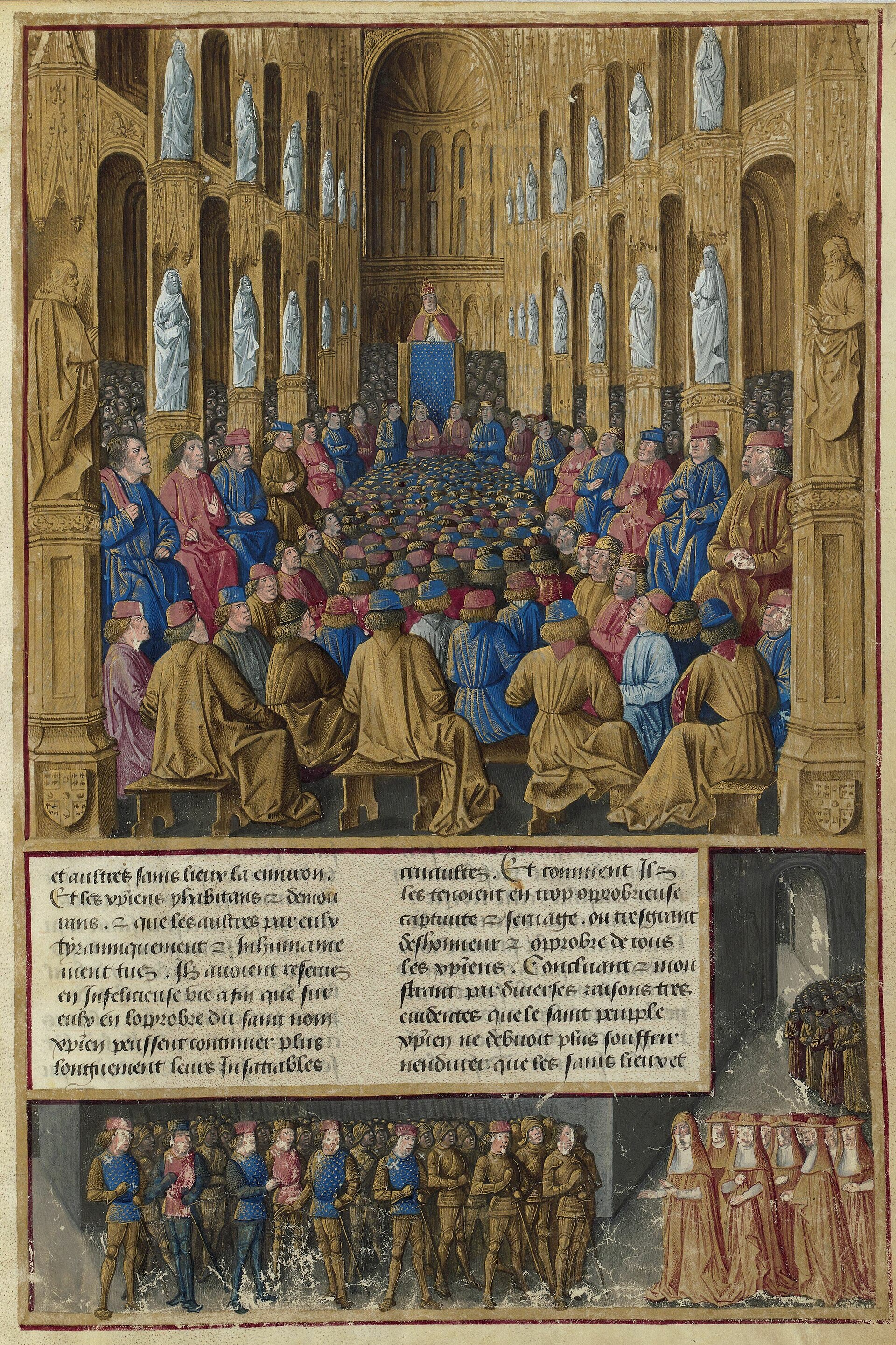

The impulse behind the expedition lay in the danger to Constantinople, which prompted the emperor Alexius Comnenus to seek aid from the West, and by 1095 the West was ready to respond. Urban also called on his hearers to end their quarrels and private wars, saying: "Enter upon the road to the Holy Sepulchre; wrest that land from the wicked race, and subject it to yourselves".
2. The First Crusade and the Crusader States
The First Crusade unfolded between 1096 and 1099, summoned in response to a request for help from the Byzantine emperor Alexius Comnenus. Its principal leaders were Raymond of Saint-Gilles, Godfrey of Bouillon, Bohemond of Otranto and Peter the Hermit. The expedition conquered Nicaea and Antioch and then seized Jerusalem, after which the crusaders established a string of Crusader-ruled states. Antioch was recaptured in June 1098, and Jerusalem fell on 15 July 1099 during a five-week siege.
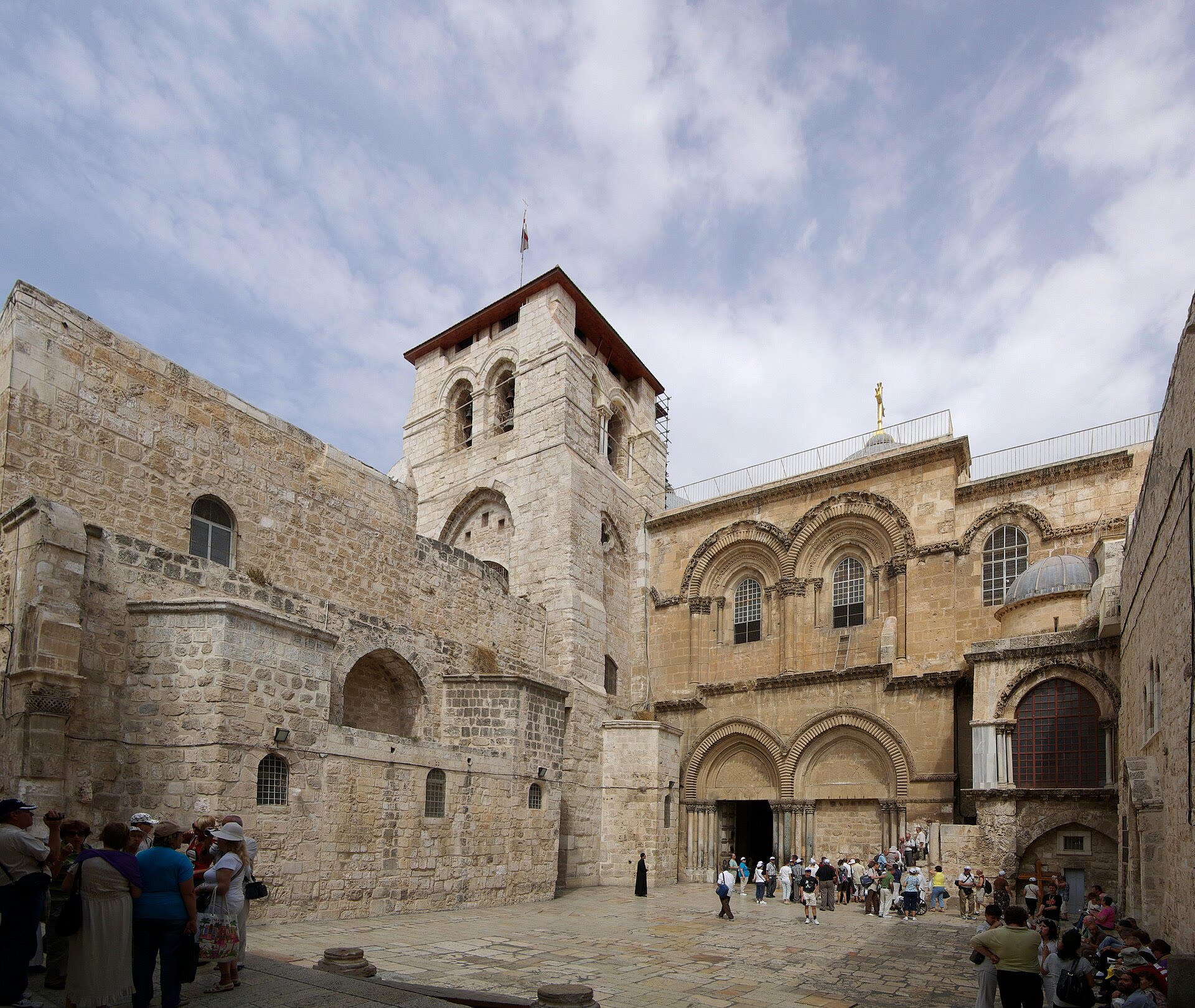
The states founded by the crusaders were the Kingdom of Jerusalem, the County of Edessa, the County of Tripoli and the Principality of Antioch, a group of territories known as the Latin East, or Outremer. On the eighth day after the city was captured, the leaders chose Godfrey as head of the city to fight the pagans and guard the Christians. The Latin kingdom of Jerusalem established by the crusaders boasted fifteen cathedral churches, and in 1110 the Church of the Nativity in Bethlehem became the seat of a Western Christian bishop.
3. The Second Crusade
The Second Crusade unfolded between 1147 and 1149, and unlike its predecessor it was led by two of Europe's greatest rulers, King Louis VII of France and Emperor Conrad III of Germany. It also differed from the First Crusade in scope, carrying three objectives rather than one. The shock of the fall of Edessa reached both Eastern and Western Christians, and urgent pleas for aid arrived in Europe. In 1145 Pope Eugenius III responded by issuing a formal Crusade bull, Quantum praedecessores, the first of its kind.
The preaching of the campaign was entrusted to St. Bernard of Clairvaux, who asserted that the Crusade was not merely an act of charity or a war to secure the holy places but a means of redemption. The enterprise against Damascus, however, was poorly conceived and badly executed. On 28 July, after a four-day siege, the besiegers withdrew.
4. Saladin, Hattin, and the Third Crusade
Saladin, sultan of Egypt and Syria, began his military career as a soldier in his uncle's Egyptian campaign, and in 1169 he became vizier of Egypt's Fatimid caliphate. From that position he set out to unite under him the Muslim territories in Syria, northern Mesopotamia, Palestine, and Egypt. His victory against a Latin East army at the Battle of Hattin on 4 July 1187, followed immediately by the taking of Jerusalem, brought on the Third Crusade of 1189 to 1192 in the Latin East.
At Hattin, near Tiberias in northern Palestine, Saladin trapped and destroyed the crusader army on the fourth of July in 1187, aided by his own military good sense and by a phenomenal lack of it on the part of his enemy. His crowning achievement and the most disastrous blow to the whole crusading movement came on the second of October in 1187, when the city of Jerusalem, holy to both Muslim and Christian alike, surrendered to him. His sudden success was marred by his failure to capture Tyre, an almost impregnable coastal fortress to which the scattered Christian survivors flocked and which became the rallying point of the Latin counterattack.
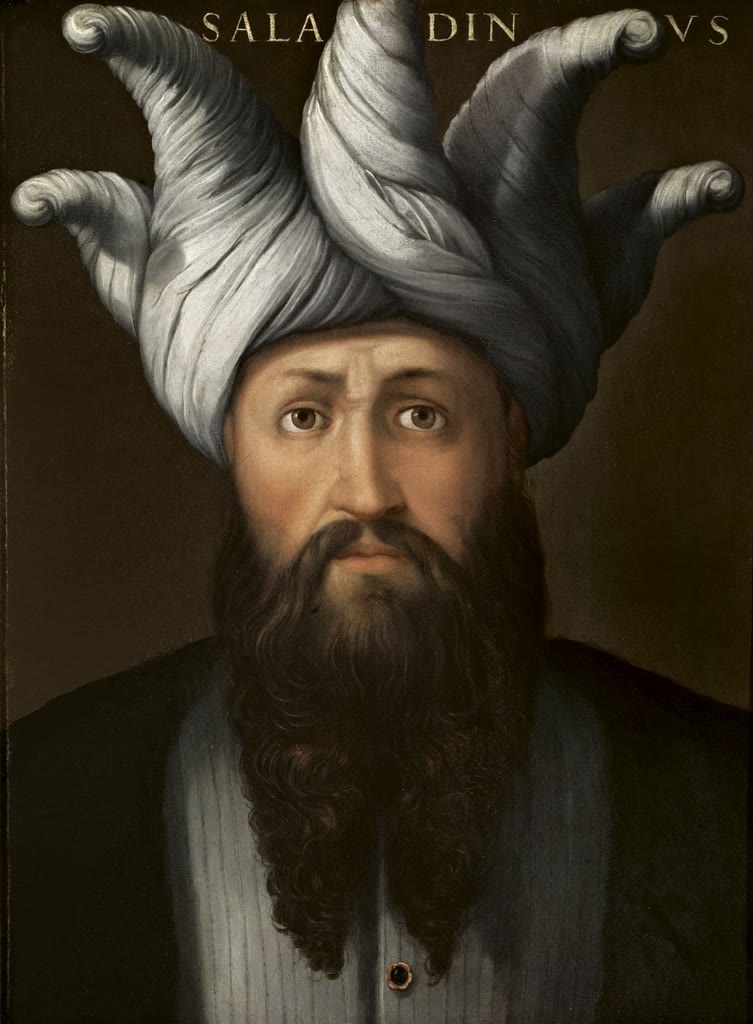

The Third Crusade, which ran from 1189 to 1192, was led by Frederick Barbarossa, Philip II Augustus, and Richard I. By its end crusader forces had gained Cyprus and the coastal city of Acre, and Saladin guaranteed access to Jerusalem to European pilgrims and welcomed Jews back to the city as well. When King Richard left the Middle East in October 1192 the battle was over, and Saladin withdrew to his capital at Damascus.
5. The Fourth Crusade and Later Crusades
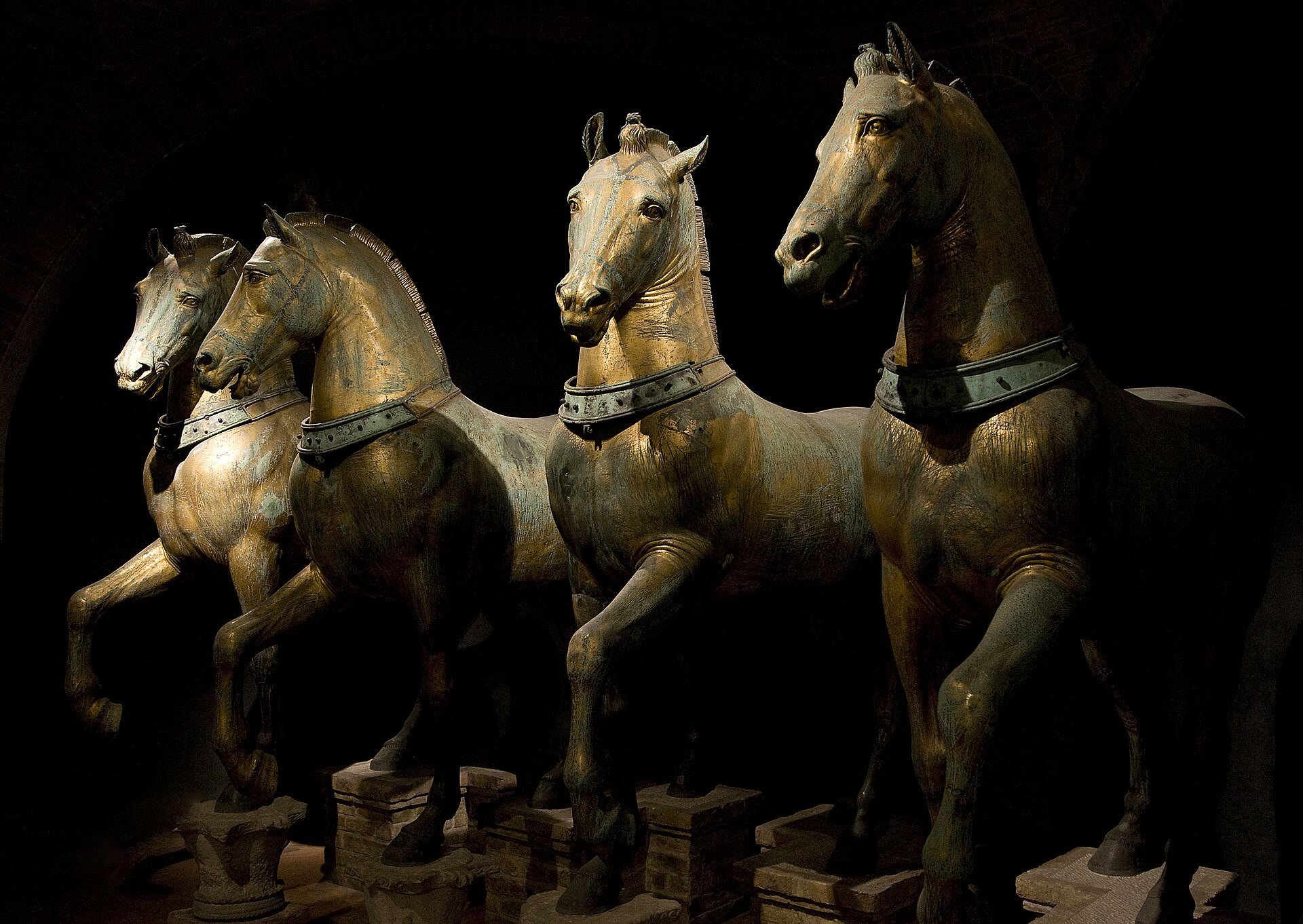
The Fourth Crusade unfolded between 1202 and 1204, and instead of striking Egypt, then the center of Muslim power, it sacked the Byzantine Christian city of Constantinople. Its rich treasures were divided between the Venetians, the French, and other crusaders, and the Latin Empire of Constantinople was established with Baldwin of Flanders as emperor. The episode so embittered the Greeks that any real reunion of the Eastern and Western churches was, as a result, out of the question.
The Fifth Crusade, dated 1217 to 1221, opened with the first contingents, led by King Andrew of Hungary, reaching Acre in the fall of 1217; Andrew accomplished little before departing in January 1218 for home. The campaign failed largely because of divided leadership and the frequently unwise decisions of Pelagius. In July 1221 the papal legate Pelagius ordered an advance on Cairo; the Egyptian sultan al-Malik al-Kamil opened the sluice gates, and the crusade army was hopelessly bogged down and forced to surrender. The Sixth Crusade of 1228 to 1229 saw negotiation achieve what warfare had not, when Emperor Frederick II managed to strike a deal with al-Kamil, then the sultan of Egypt and Syria.
The Seventh Crusade ran from 1248 to 1254 and the Eighth from 1270, both led by Louis IX. In 1270 King Louis IX died of dysentery while attacking Tunis, and with him so too did the Eighth Crusade.
6. The Fall of the Crusader States
The Latin East did not collapse in a single stroke but was worn down stronghold by stronghold.In 1271 Sultan Baibars captured Montfort Castle, and in 1278 Lattakioh fell; in 1289 Tripoli was lost, and 1291 Acre was captured by the Mamluk sultan al-Ashraf Khalil.The pressure on the kingdom had become so severe that by 1276 the King of Jerusalem withdrew from Palestine altogether to take up his abode on the island of Cyprus.
The decisive blow came at Acre, the last major Latin city left in Palestine, where in 1291 the Egyptian sultan al-Ashraf began an assault. The capture of Acre in 1291 by the Mamluk sultan al-Ashraf Khalil marked the end of Crusader rule in the Middle East. With that, the Crusader-created states in the Middle East were absorbed into the Mamluk Sultanate.
7. Military Orders and Architecture
The impact of the Crusades may be summarized as including the development of military orders, such as the Knights Templar, a military and religious order founded in the 12th century during the Crusades. The order was eventually suppressed in 1312. Alongside them stood the Knights Hospitaller, the other great crusading order of the period. The Hospitallers' roots lay in charitable work: by 1080 a hospital had been established in Jerusalem by a group of monks under the guidance of Brother Gerard, its purpose being to care for the many pilgrims who had become ill on their travels.
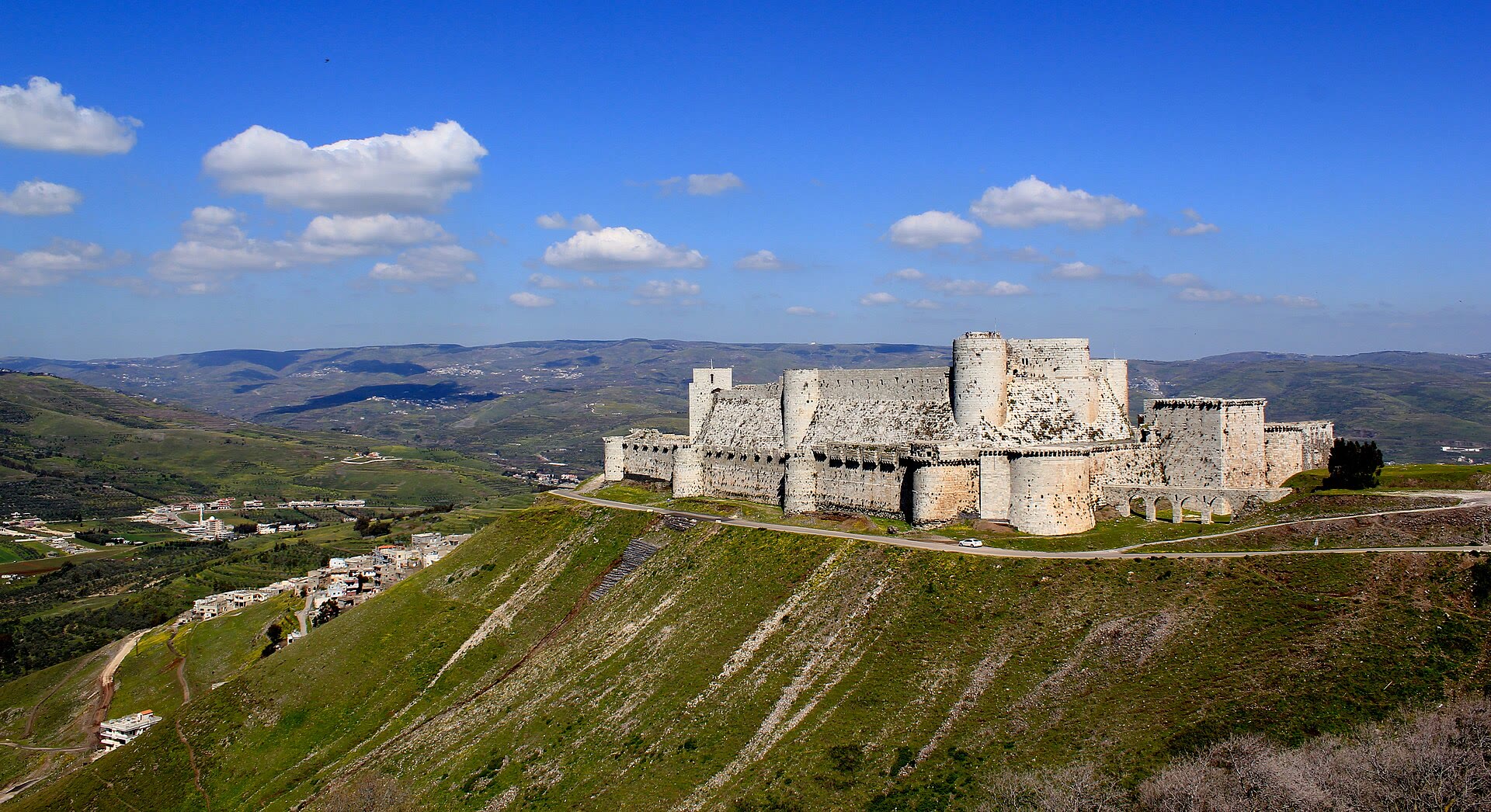
The Crac des Chevaliers was built by the Hospitaller Order of Saint John of Jerusalem from 1142 to 1271 and, with further construction by the Mamluks in the late thirteenth century, ranks among the best-preserved examples of the Crusader castles. The Qal'at Salah El-Din, even though partly in ruins, represents an outstanding example of fortified architecture of the Crusader period, with quality of construction and survival of historical stratigraphy.
Sacred architecture carried the memory of Jerusalem into western Europe. The form of the Templar chapel at Dover mirrors that of the Church of the Holy Sepulchre in Jerusalem, and it is this association that has suggested the link with the Templars.
8. Timeline: from the Council of Clermont to the fall of Acre
- 27 November 1095Council of ClermontAt the Council of Clermont, Pope Urban II called for the First Crusade to form and retake Jerusalem for Christendom.
- March 1096The People's Crusade sets outThe people's army led by Peter the Hermit departed for Constantinople during the First Crusade; it was wiped out by a Seljuk army near Nicaea in October 1096.
- 1097Nicaea capturedThe First Crusaders arrived at Constantinople and captured Nicaea from the Seljuks.
- 3 June 1098Antioch capturedThe First Crusaders captured Antioch after an eight-month siege and then defeated a large Muslim army sent to recapture it.
- 15 July 1099Jerusalem capturedJerusalem was captured during the First Crusade, and later that year the crusader state of the Kingdom of Jerusalem was created.
- 1145Crusade bull Quantum praedecessoresAfter the fall of Edessa, Pope Eugenius III issued the first formal Crusade bull, Quantum praedecessores, and the Second Crusade was preached by St. Bernard of Clairvaux.
- 1147–1149The Second CrusadeLed by Louis VII of France and Conrad III of Germany, the Second Crusade failed in its attempt to take Damascus.
- 4 July 1187Battle of HattinSaladin trapped and destroyed the crusader army at Hattin near Tiberias, after which the Muslims quickly overran nearly the entire kingdom of Jerusalem.
- 2 October 1187Jerusalem surrenders to SaladinJerusalem, holy to both Muslims and Christians alike, surrendered to Saladin, prompting the Third Crusade.
- October 1192End of the Third CrusadeAfter King Richard left the Middle East the fighting was over, and Saladin withdrew to his capital at Damascus.
- 12 April 1204Sack of ConstantinopleThe Fourth Crusade took Constantinople; Villehardouin bears witness that never since the world was created had so much booty been won in any city.
- 1217–1221The Fifth CrusadeThe Fifth Crusade reached Acre in 1217 and ended disastrously in July 1221 when the army, bogged down before Cairo, was forced to surrender.
- 6 June 1249Damietta taken by Louis IXAl-Maqrizi records that the French came before Damietta on the Monday morning of 6 June 1249 and took possession of the town and its stores without striking a blow.
- 1291Fall of AcreThe Egyptian sultan al-Ashraf began an assault upon Acre, the last major Latin city left in Palestine; its fall ended the era of Latin Crusader kingdoms.
References (19)
- 1Crusades | Definition, History, Map, Significance, & Legacy — Encyclopaedia Britannica WebView source
- 2Crusades — The results of the Crusades — Encyclopaedia Britannica WebView source
- 3Council of Clermont | Description, History, Importance, & Facts — Encyclopaedia Britannica WebView source
- 4Source Exercise 2: The First Crusade — Faculty of History, University of Cambridge BookView source
- 5Crusades — The First Crusade and the establishment of the Latin states — Encyclopaedia Britannica WebView source
- 6Urban II: Speech at Clermont 1095 (five versions) — Internet Medieval Sourcebook, Fordham University WebView source
- 7Crusades — World History Encyclopedia WebView source
- 8The Siege and Capture of Jerusalem: Collected Accounts (June–July 1099) — Internet Medieval Sourcebook, Fordham University WebView source
- 9The Crusades (1095–1291) — The Metropolitan Museum of Art, Heilbrunn Timeline of Art History WebView source
- 10Crusades — The era of the Second and Third Crusades — Encyclopaedia Britannica WebView source
- 11Saladin | Biography, Achievements, Crusades, & Facts — Encyclopaedia Britannica WebView source
- 12Crusades — The Fifth Crusade — Encyclopaedia Britannica WebView source
- 13The Fall of Acre, 1291 — Internet Medieval Sourcebook, Fordham University WebView source
- 14The Crusades: Consequences & Effects — World History Encyclopedia WebView source
- 15History of Knights Templar Church, Dover — English Heritage WebView source
- 16History of the Order — Museum of the Order of St John WebView source
- 17Crac des Chevaliers and Qal'at Salah El-Din — UNESCO World Heritage Centre WebView source
- 18Memoirs or Chronicle of the Fourth Crusade and the Conquest of Constantinople — Project Gutenberg (Geoffroi de Villehardouin, trans. Frank T. Marzials) BookView source
- 19Al-Makrisi: Account of the Crusade of St. Louis — Internet Medieval Sourcebook, Fordham University WebView source