Volcanic Lightning
How an ash plume makes its own thunderstorm, and why it now serves as an eruption monitor.
Volcanic lightning is electrical discharge inside an ash plume, produced in three regions: the gas-thrust zone just above the vent, the convection-driven column several kilometres higher, and the neutrally buoyant umbrella region. Charging comes from particle clustering, fractoemission and the formation of hydrometeors, with ash acting as an ice-nucleation catalyst below about minus 20 degrees Celsius. Lightning has been documented in nearly 200 eruptions over 200 years, and since the Augustine 2006, Redoubt 2009 and Eyjafjallajokull 2010 eruptions instrumental detection has turned it into an eruption-monitoring tool that reports onset, source parameters and ash-cloud direction in near-real time.
In this article
- 1Overview
- 2Occurrence and Record
- 3Regions of Discharge in the Plume
- 4Charge Separation and Discharge
- 5Charging Mechanisms
- 6Detection and Monitoring
- 7Case Study: Tajogaite 2021
- 8Hazards and Atmospheric Effects
- 9Research Challenges
- 10Key Terms
- 11Timeline: from witnessed flashes to instrumented monitoring
- 12Frequently asked questions
- 13Knowledge graph
Overview
Volcanic lightning is electrical discharge generated within volcanic plumes, and it is often contained within, or very close to, the ash plume itself. A growing decade of studies has shown that electrification is ubiquitous in volcanic plumes. The phenomenon has been witnessed and documented in nearly 200 eruptions over the last 200 years.
Discharges are produced in three regions of a plume: the gas-thrust region immediately above the vent, the convection-driven rising column several kilometres above it, and the neutrally buoyant umbrella region. Clustering of particles is proposed as an efficient mechanism for both charge generation and lightning discharge inside volcanic plumes, and clustering is especially effective with predominantly fine ash-laden jets leaving the volcanic conduit. Cooling in the plume caused water to condense on the ash particles, and volcanic ash becomes an effective ice-nucleation catalyst below about minus 20 degrees Celsius.
Instrumental detection after Augustine in 2006, Redoubt in 2009 and Eyjafjallajokull in 2010 showed that electrification is ubiquitous in ash plumes. Images of volcanic lightning at Eyjafjallajokull let people witness the phenomenon for the first time in real time and high definition. Social media lets photographs and videos of visible electrical activity in volcanic plumes be shared globally even where no dedicated instruments exist. Even when scientists get a close view of an eruption, the murky interior of the volcanic cloud hides most of the lightning from sight.
Volcanic lightning is more than a striking feature of explosive eruptions: it gives a new way to quantify the dynamics of those eruptions and their plumes. It can be a near-real-time indicator of explosive ash emissions because remote instruments, including satellites, detect it quickly even in poor visibility. Its detection has proven useful for monitoring, carrying information on eruption onset, source parameters and ash cloud direction. The most complete and detailed measurements of volcanic lightning yet made are yielding insight into the roots of these discharges and could help avert threats to global air traffic.
Most volcanic lightning studies used global lightning networks such as Vaisala GLD360, the Earth Networks Total Lightning Network and the WWLLN Global Volcanic Lightning Monitor. The 2021 Tajogaite eruption on La Palma gave the rare chance to monitor electrical activity continuously for weeks with an electrostatic lightning detector. During Tajogaite the discharges were generated almost continuously across the whole monitoring period, and silicate particle charging was the main driver of plume electrification. That eruption passed under the radar of global lightning networks because no sensors were nearby and its lightning was low amplitude, which showed that local electrical detectors are needed. The unknown and constantly changing height of the discharges, and the height and movement of the charged plume itself, also affect the amplitude of the electric field a detector measures.
A 2022 perspective piece summarises the state of the art in plume electrification and volcanic lightning and sets out goals for volcano monitoring within the wider context of explosive eruptions. Unlike sulfur dioxide, volcanic ash has no long-range or long-term climate effect because it settles rapidly out of the atmosphere. In an ordinary thunderstorm the rising hot air does not come from a volcanic eruption, so it carries no volcanic ash.
Lightning of any kind requires a single essential condition: a large separation of charge between two masses. Once that separation grows large enough it overpowers the resistance of the air, carves a path of ionised air and conducts electricity as lightning. In a plume the charge itself is generated by several routes. Fractoemission is the generation of charge through the break-up of rock particles, while additional charging comes from magma fragmentation, convection and particle buoyancy in the upper plume, together with the formation of hydrometeors.
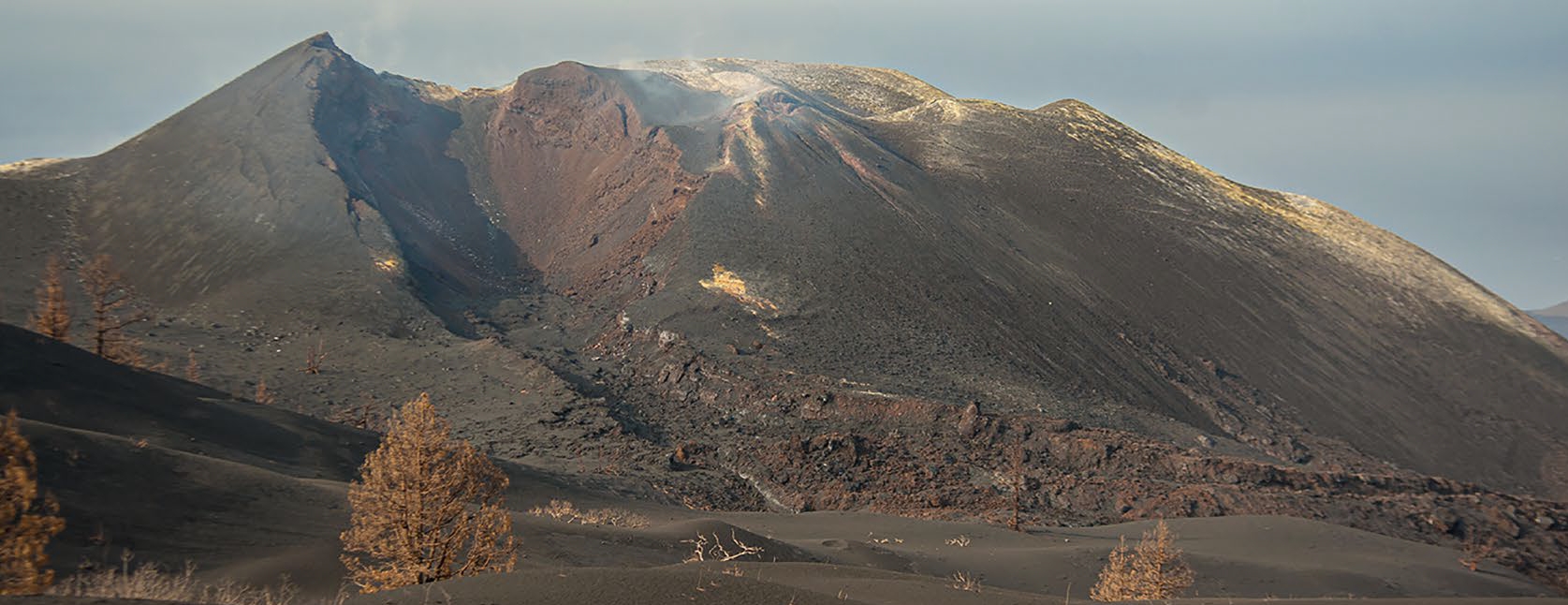
The 2021 Tajogaite eruption on La Palma produced a 12 square kilometre compound a'a and pahoehoe lava flow field that destroyed whole villages, infrastructure and plantations, and built a 187 metre scoria cone later named Volcan de Tajogaite. Throughout the eruption explosive activity varied on timescales of hours to days, from mild to strong ash emission, gas jetting, Strombolian activity and lava fountaining.
In an eruption column the turbulent surge incorporated air that expanded as it was heated by hot ash, so the cloud became buoyant and lifted off the ground while still raining ash from its base. Ash does have localised short-term effects on weather even though it lacks the long-range climate impact of sulfur dioxide. Increased lightning during eruptions raises the hazard to power generation sites, substations, and transmission and distribution lines.
1. Occurrence and Record
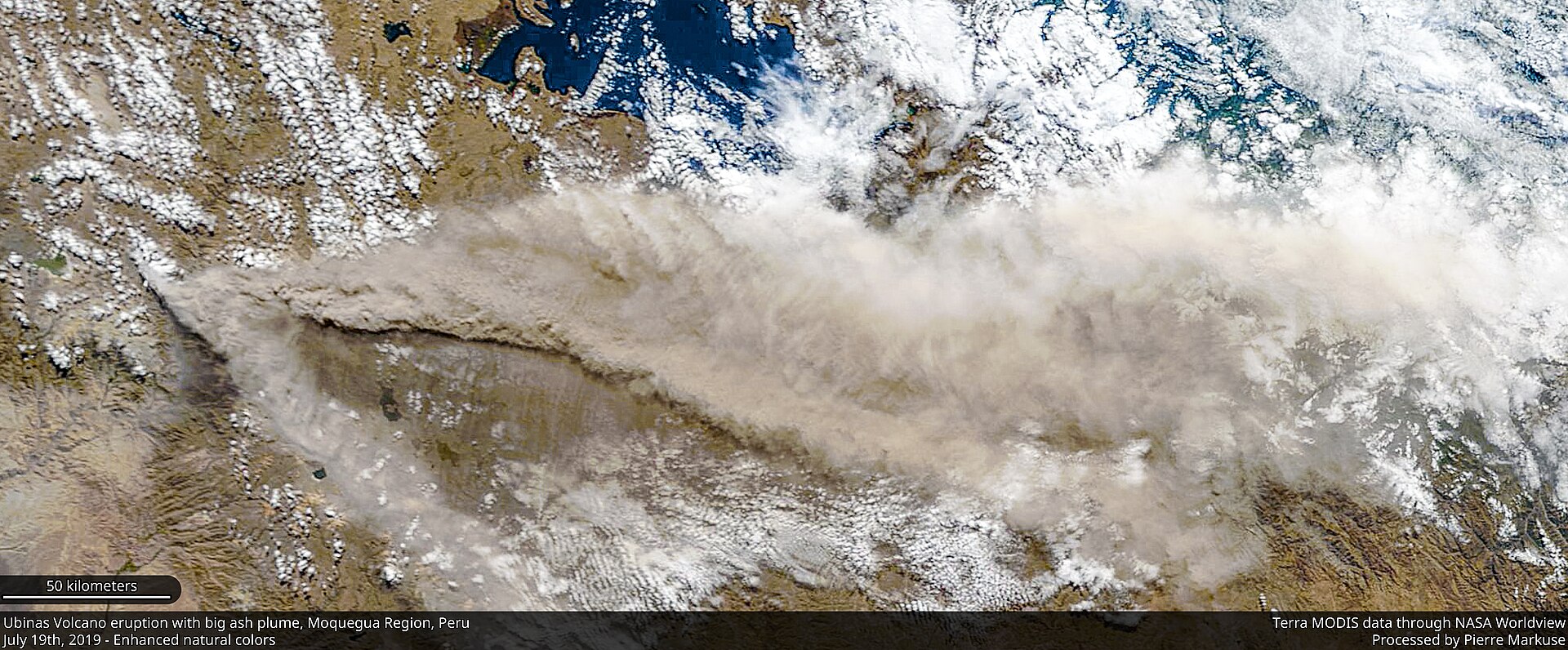
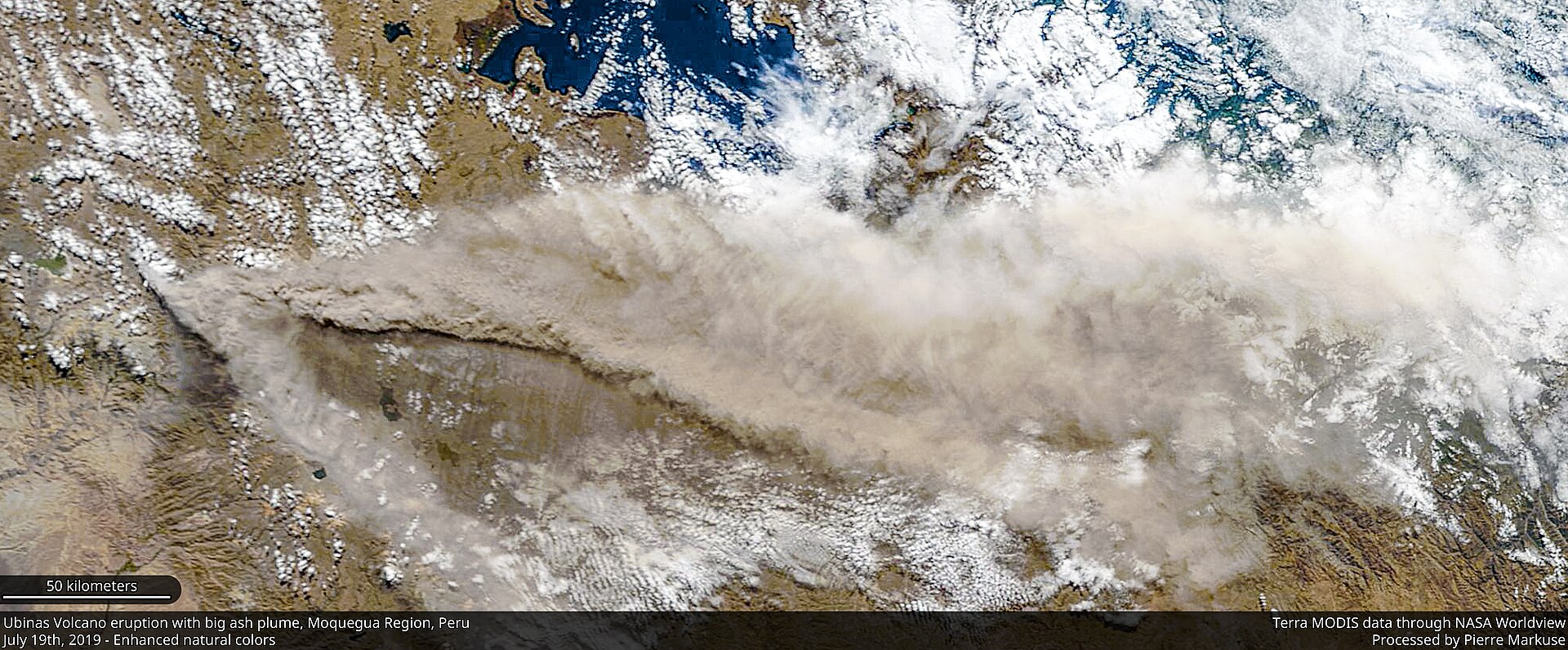
Volcanic lightning has been documented in nearly 200 eruptions over the last 200 years. Imagery of Eyjafjallajokull provided the first real-time high-definition witness of the phenomenon.
Lightning requires one essential condition: a large separation of charge between two masses. Once that separation becomes large enough it overpowers the resistance of the air, opens a path of ionised air and conducts electricity as lightning. Within a volcanic plume, discharges arise in three regions — the gas-thrust region just above the vent, the convection-driven column rising several kilometres above it, and the neutrally buoyant umbrella region. Clustering of particles is proposed as an efficient means of both generating charge and triggering discharge in plumes, and it works especially well in fine-ash-laden jets leaving the conduit. Further charging comes from magma fragmentation, convection and particle buoyancy in the upper plume, along with the formation of hydrometeors. Charge is also generated by fractoemission, the break-up of rock particles. Volcanic ash becomes an effective ice-nucleation catalyst below about minus 20 degrees Celsius.
A growing decade of studies indicates that electrification is ubiquitous in volcanic plumes. Instrumental detection following Augustine in 2006, Redoubt in 2009 and Eyjafjallajokull in 2010 confirmed that ash plumes are electrified as a matter of course. The phenomenon is more than a striking feature of explosive eruptions: it offers a new way to quantify the dynamics of those eruptions and their plumes, and lightning detection is emerging as a tool among eruption monitoring techniques. Because remote instruments, satellites among them, detect lightning quickly even in poor visibility, it can serve as a near-real-time indicator of explosive ash emissions. Detection has proved useful for monitoring, carrying information on eruption onset, source parameters and ash cloud direction.
The 2021 Tajogaite eruption on La Palma offered the rare chance to monitor electrical activity continuously for weeks with an electrostatic lightning detector. That eruption produced a 12 square kilometre compound a'a and pahoehoe lava flow field that destroyed whole villages, infrastructure and plantations, and built a 187 metre scoria cone later named Volcan de Tajogaite. Throughout, explosive activity varied on timescales of hours to days, from mild to strong ash emission through gas jetting, Strombolian activity and lava fountaining. The eruption nonetheless passed under the radar of global lightning networks, because no sensors were nearby and its lightning was low amplitude — a result that showed local electrical detectors are needed.
In an eruption column the turbulent surge incorporates air that expands as hot ash heats it, so the cloud becomes buoyant and lifts off the ground while still raining ash from its base. Unlike sulfur dioxide, volcanic ash has no long-range or long-term climate effect, since it settles rapidly out of the atmosphere, though it does have localised short-term effects on weather. Increased lightning during eruptions raises the hazard to power generation sites, substations, and transmission and distribution lines.
2. Regions of Discharge in the Plume
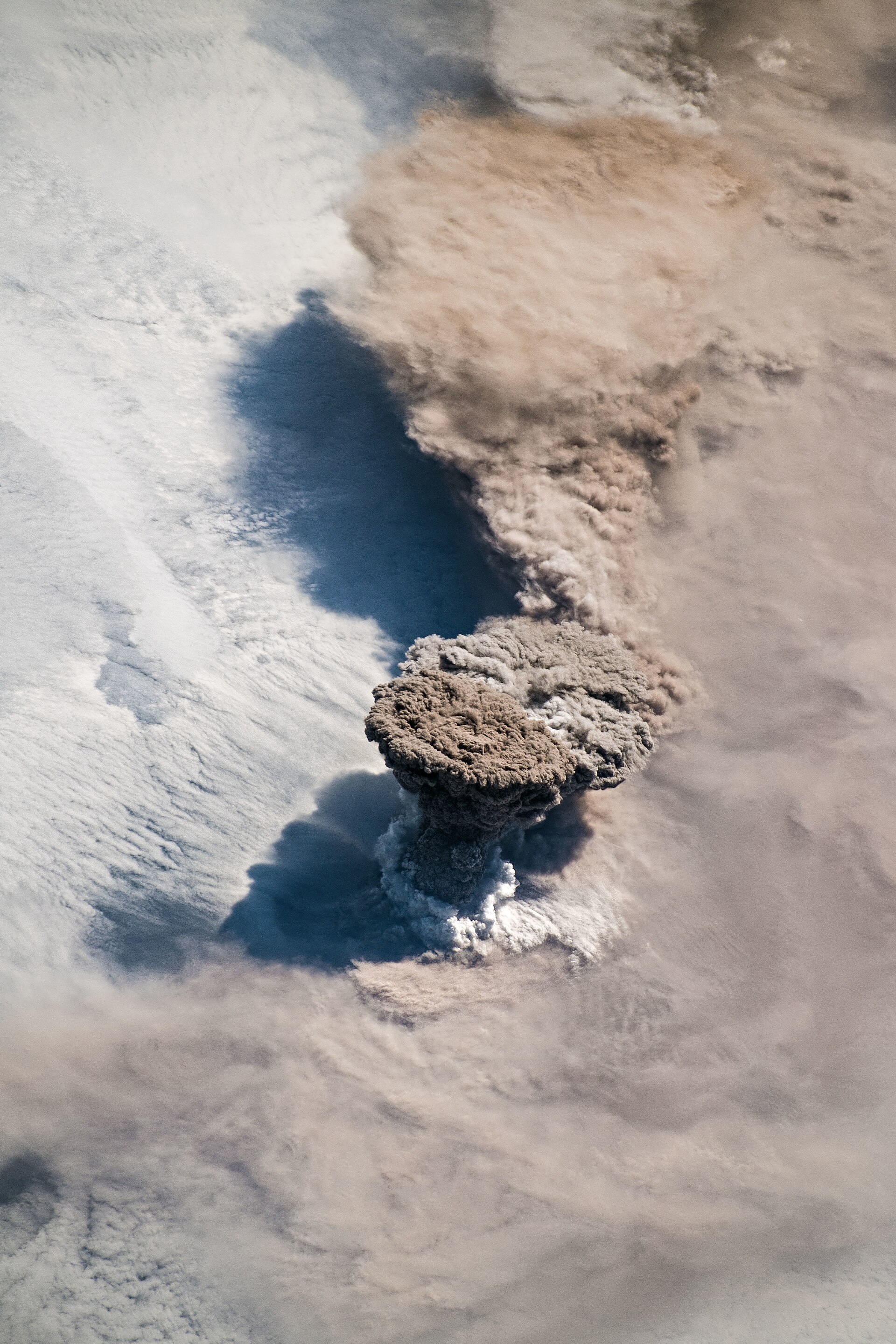
The lightning of an eruption column is not distributed uniformly through the plume. Three regions are distinguished: the gas-thrust region directly above the vent, a convection-driven column rising several kilometres above it, and a neutrally buoyant umbrella region at the top.
Triboelectrification acts alongside it, both charging particles and separating surfaces of opposite polarity through size-dependent bipolar charging.
Higher in the plume additional charging comes from magma fragmentation, convection and particle buoyancy in the upper plume, together with the formation of hydrometeors. As the column matures at altitude ice is likely to catalyse electrification in the same way it does inside meteorological thunderclouds. The turbulent surge of the column incorporated air that expanded as it was heated by hot ash, so the cloud became buoyant and lifted off the ground while still raining ash from its base.
Whatever the region, the underlying requirement is the same: for lightning to form there is one key component, a large charge separation between two masses. When charge separation grows large enough it overpowers air resistance, creates a path of ionised air and conducts electricity as lightning. The study of these discharges is itself constrained, because active volcanoes are often remote from civilisation and erupt suddenly and unpredictably, which is why the origins of the lightning have rarely been studied in detail. Lightning detection is nonetheless emerging as a new tool among eruption monitoring techniques.
The meteorological reach of the plume is limited. At low emission rates the pollutants a volcano produces — gases, ash and heat — are dissipated by wind and do not significantly affect the weather. Ash does have localised short-term effects on weather even though it lacks the long-range climate impact of sulfur dioxide. The 2021 Tajogaite eruption on La Palma produced a 12 square kilometre compound a'a and pahoehoe lava flow field that destroyed whole villages, infrastructure and plantations, and built a 187 metre scoria cone later named Volcan de Tajogaite.
Particle clustering has been proposed as an efficient mechanism for both the generation of charge and the discharge of lightning within volcanic plumes. The discharges tend to remain contained within, or very close to, the ash plume itself. Because the height of the discharges is unknown and constantly changing, and because the charged plume itself shifts in height and position, the amplitude of the electric field recorded by a detector is affected accordingly.
Instrumental detection following Augustine in 2006, Redoubt in 2009 and Eyjafjallajokull in 2010 established that electrification is ubiquitous in ash plumes, and a growing body of work over the following decade confirmed the same for volcanic plumes generally. During the Tajogaite eruption the discharges were generated almost continuously across the whole monitoring period, with silicate particle charging identified as the main driver of plume electrification. Cooling within the plume caused water to condense on the ash particles.
The most complete and detailed measurements of volcanic lightning yet made are yielding insight into the roots of these discharges and could help avert threats to global air traffic. Volcanic lightning is more than a striking feature of explosive eruptions, since it offers a new way to quantify the dynamics of those eruptions and their plumes. A 2022 perspective piece summarised the state of the art in plume electrification and volcanic lightning and set out goals for volcano monitoring within the wider context of explosive eruptions. Where no dedicated instruments exist, social media allows photographs and videos of visible electrical activity in volcanic plumes to be shared globally.
3. Charge Separation and Discharge
For lightning to form there is one key component: a large charge separation between two masses. When charge separation grows large enough it overpowers air resistance, creates a path of ionised air and conducts electricity as lightning.
The charge mechanism behind this separation is described through particle clustering and fractoemission.
The most complete and detailed measurements of volcanic lightning yet made are yielding insight into the roots of these discharges and could help avert threats to global air traffic.
Fractoemission supplies part of that charge by generating it as rock particles break apart. Charging is already under way at the fragmentation level, where material first acquires charge through fractoelectric processes. Triboelectrification can likewise charge particles and separate surfaces of opposite polarity through size-dependent bipolar charging. Clustering of particles has been proposed as an efficient mechanism for both charge generation and lightning discharge inside volcanic plumes.
Discharges occur in three regions of a plume: the gas-thrust region immediately above the vent, the convection-driven rising column several kilometres above it, and the neutrally buoyant umbrella region. During Tajogaite the discharges were generated almost continuously across the whole monitoring period, and silicate particle charging was the main driver of plume electrification. The unknown and constantly changing height of the discharges, together with the height and movement of the charged plume itself, also affects the amplitude of the electric field a detector measures.
4. Charging Mechanisms
Charging begins at the fragmentation level through fractoelectric processes. Fractoemission is the release of charge when rock particles break apart. Triboelectrification arises from contact and frictional interactions between particles, and it can both charge particles and separate surfaces of opposite polarity through size-dependent bipolar charging.
The clustering of particles is proposed as an efficient mechanism for both charge generation and lightning discharge inside volcanic plumes. This process is especially relevant in fine ash-laden jets. Additional charging comes from magma fragmentation, convection and particle buoyancy in the upper plume, together with the formation of hydrometeors.
At altitude the plume can charge through ice catalysis of the kind seen in meteorological thunderclouds. Ash becomes an effective ice-nucleation catalyst below about -20 C. As the plume cools, water condenses onto the ash particles.
The field's working vocabulary is explicit: volcanic eruptions, lightning, fractoemission, tribocharging and particle aggregation. For lightning to form there is one key component, a large charge separation between two masses. When that separation grows large enough it overpowers air resistance, creates a path of ionised air and conducts electricity as lightning.
Discharges are produced in three regions of a volcanic plume: the gas-thrust region immediately above the vent, the convection-driven rising column several kilometres above it, and the neutrally buoyant umbrella region. An increasing decade of studies shows that electrification is ubiquitous in volcanic plumes. Instrumental detection after Augustine in 2006, Redoubt in 2009 and Eyjafjallajokull in 2010 showed that electrification is ubiquitous in ash plumes. Images of volcanic lightning at Eyjafjallajokull let people witness the phenomenon for the first time in real time and high definition.
The 2021 Tajogaite eruption on La Palma gave the rare chance to monitor electrical activity continuously for weeks with an electrostatic lightning detector. During that eruption the discharges were generated almost continuously across the whole monitoring period, and silicate particle charging was the main driver of plume electrification. Throughout the eruption, explosive activity varied on timescales of hours to days, from mild to strong ash emission, gas jetting, Strombolian activity and lava fountaining. The eruption passed under the radar of global lightning networks because no sensors were nearby and its lightning was low amplitude, which showed that local electrical detectors are needed.
Volcanic lightning has been witnessed and documented in nearly 200 eruptions over the last 200 years. It is more than a striking feature of explosive eruptions: it gives a new way to quantify the dynamics of those eruptions and their plumes. Lightning detection is emerging as a new tool among eruption monitoring techniques, and has proven useful for monitoring because it carries information on eruption onset, source parameters and ash cloud direction. It can be a near-real-time indicator of explosive ash emissions because remote instruments, including satellites, detect it quickly even in poor visibility. Increased lightning during eruptions raises the hazard to power generation sites, substations, and transmission and distribution lines.
5. Detection and Monitoring
Instrumental detection following Augustine in 2006, Redoubt in 2009 and Eyjafjallajokull in 2010 demonstrated that electrification is ubiquitous in ash plumes. This recognition has helped establish lightning detection as a monitoring tool in its own right. Because remote instruments, including satellites, register volcanic lightning quickly even where visibility is poor, the signal can serve as a near-real-time indicator of explosive ash emissions.
Detection has proven useful for monitoring because the lightning carries information on eruption onset, source parameters and ash cloud direction. It also offers a way to quantify eruption and plume dynamics.
Most studies have relied on global networks such as the Vaisala GLD360, the Earth Networks Total Lightning Network and the WWLLN Global Volcanic Lightning Monitor. Interpretation is complicated by the unknown changing discharge height and by plume height and movement, all of which affect the measured electric-field amplitude. Low-amplitude lightning therefore requires local detectors to be captured. Where no instruments exist, social media shares of visible electrical activity can supply a record.
The 2021 Tajogaite eruption on La Palma offered a rare opportunity to follow electrical activity continuously for weeks with an electrostatic lightning detector. Discharges were generated almost without interruption across the whole monitoring period, and silicate particle charging emerged as the principal driver of plume electrification. Explosive activity during the eruption shifted on timescales of hours to days, ranging from mild to strong ash emission through gas jetting, Strombolian activity and lava fountaining. The eruption nonetheless passed beneath the notice of global lightning networks, since no sensors stood nearby and its lightning was of low amplitude — a shortfall that made plain the need for local electrical detectors.
Discharges arise in three regions of a volcanic plume: the gas-thrust region immediately above the vent, the convection-driven rising column several kilometres higher, and the neutrally buoyant umbrella region. Clustering of particles is proposed as an efficient mechanism for both charge generation and lightning discharge within plumes, and is especially effective where predominantly fine ash-laden jets leave the conduit. Magma fragmentation, convection and particle buoyancy in the upper plume add further charging, as does the formation of hydrometeors. Ash itself becomes an effective ice-nucleation catalyst below about minus 20 degrees Celsius. Fractoemission — the generation of charge through the break-up of rock particles — supplies another route to electrification.
Heightened lightning during eruptions raises the hazard to power generation sites, substations, and transmission and distribution lines. Volcanic lightning has been witnessed and documented in nearly 200 eruptions over the last 200 years. Images of the phenomenon at Eyjafjallajokull let people observe it for the first time in real time and high definition. A 2022 perspective piece summarises the state of the art in plume electrification and volcanic lightning and sets out goals for volcano monitoring within the wider context of explosive eruptions.
6. Case Study: Tajogaite 2021
The 2021 Tajogaite eruption on La Palma was monitored continuously for weeks with an electrostatic lightning detector, giving researchers an unusually complete electrical record of a single sustained event. Discharges were generated almost continuously across the monitoring period, rather than in isolated bursts. Charging by silicate particles emerged as the main driver of that activity.
Despite this sustained electrical output the eruption passed under the radar of global lightning networks. Two conditions explain the gap: no sensors were nearby, and the lightning itself was of low amplitude. The case demonstrated that local electrical detectors are needed to capture such signals. The eruption's explosive behaviour shifted on timescales of hours to days, ranging from mild to strong ash emission through gas jetting and Strombolian activity to lava fountaining.
The eruption produced a 12 square kilometre compound a'a and pahoehoe lava flow field that destroyed whole villages, infrastructure and plantations. It also built a 187 metre scoria cone later named Volcan de Tajogaite. Among the infrastructure at risk in ash-producing eruptions are transmission and distribution lines.
Electrification is not confined to one level of an erupting column: discharges arise in the gas-thrust region immediately above the vent, in the convection-driven rising column several kilometres higher, and in the neutrally buoyant umbrella region at the top. Particle clustering is proposed as an efficient route to both charge generation and discharge within such plumes, and it works especially well where fine ash-laden jets leave the conduit. Magma fragmentation, convection and particle buoyancy in the upper plume add further charging, as does the formation of hydrometeors. The underlying requirement is a large separation of charge between two masses; once that separation outgrows air resistance it opens a path of ionised air and conducts electricity as lightning.
Instrumental detection after Augustine in 2006, Redoubt in 2009 and Eyjafjallajokull in 2010 established that electrification is ubiquitous in ash plumes, and a growing decade of studies has extended that conclusion to volcanic plumes generally. Imagery from Eyjafjallajokull allowed the phenomenon to be seen for the first time in real time and high definition. Across the last 200 years volcanic lightning has been witnessed and documented in nearly 200 eruptions.
Detection has moved from spectacle to instrument. Lightning is emerging as a monitoring tool in its own right, and it can serve as a near-real-time indicator of explosive ash emissions because remote instruments, satellites among them, pick it up quickly even in poor visibility. The signal carries information on eruption onset, source parameters and ash cloud direction, and it offers a way to quantify the dynamics of explosive eruptions and their plumes rather than merely to record them. Heightened lightning during an eruption in turn raises the hazard to power generation sites, substations, and transmission and distribution lines.
Two further properties of ash shape what lightning can and cannot do as a climate and weather signal. Below about minus 20 degrees Celsius volcanic ash becomes an effective ice-nucleation catalyst. Unlike sulfur dioxide it has no long-range or long-term climate effect, settling rapidly out of the atmosphere, though it does exert localised short-term effects on weather.
7. Hazards and Atmospheric Effects
Increased lightning during eruptions raises the hazard to power generation sites, substations, and transmission and distribution lines. Ash itself has no long-range or long-term climate effect because it settles rapidly, unlike sulfur dioxide. Its influence on weather is instead localised and short-term.
An eruption column can be pictured as a water fountain more than 5 miles high, with a mixture of ash, pumice, rock fragments and hot gas instead of water. Within the column the turbulent surge incorporated air that expanded as it was heated by hot ash, so the cloud became buoyant and lifted off the ground while still raining ash from its base. At low emission rates gases, ash and heat are dissipated by wind without significant weather effect.
Electrification within a plume is distributed rather than uniform: lightning discharges arise in three regions — the gas-thrust region immediately above the vent, the convection-driven rising column several kilometres above it, and the neutrally buoyant umbrella region. Clustering of particles is proposed as an efficient mechanism for both charge generation and lightning discharge inside volcanic plumes, and clustering is especially effective with predominantly fine ash-laden jets leaving the volcanic conduit. Additional charging comes from magma fragmentation, convection and particle buoyancy in the upper plume, together with the formation of hydrometeors. Fractoemission — the generation of charge through the break-up of rock particles — is one route by which such charge arises. For lightning to form there is one key component: a large charge separation between two masses; when that separation grows large enough it overpowers air resistance, creates a path of ionised air and conducts electricity as lightning.
Volcanic lightning has been witnessed and documented in nearly 200 eruptions over the last 200 years. An increasing decade of studies shows that electrification is ubiquitous in volcanic plumes, and instrumental detection after Augustine in 2006, Redoubt in 2009 and Eyjafjallajokull in 2010 showed that electrification is ubiquitous in ash plumes. Images of volcanic lightning at Eyjafjallajokull let people witness the phenomenon for the first time in real time and high definition.
The phenomenon is more than a striking feature of explosive eruptions: it gives a new way to quantify the dynamics of those eruptions and their plumes. Lightning detection is emerging as a new tool among eruption monitoring techniques, and can serve as a near-real-time indicator of explosive ash emissions because remote instruments, including satellites, detect it quickly even in poor visibility. Detection has proven useful for monitoring because it carries information on eruption onset, source parameters and ash cloud direction.
The 2021 Tajogaite eruption on La Palma gave the rare chance to monitor electrical activity continuously for weeks with an electrostatic lightning detector. That eruption produced a 12 square kilometre compound a'a and pahoehoe lava flow field that destroyed whole villages, infrastructure and plantations, and built a 187 metre scoria cone later named Volcan de Tajogaite. Throughout the eruption, explosive activity varied on timescales of hours to days, from mild to strong ash emission, gas jetting, Strombolian activity and lava fountaining. The eruption passed under the radar of global lightning networks because no sensors were nearby and its lightning was low amplitude, which showed that local electrical detectors are needed.
Volcanic ash becomes an effective ice-nucleation catalyst below about minus 20 degrees Celsius.
8. Research Challenges
Active volcanoes are often remote from civilisation and erupt suddenly and unpredictably, which is why the origins of the lightning have rarely been studied in detail. The murky interior of an eruption cloud hides most of the lightning from sight, so observation is difficult even when an eruption is under watch. The most complete and detailed measurements of volcanic lightning yet made are yielding insight into the roots of these discharges and could help avert threats to global air traffic. A 2022 perspective piece summarises the state of the art in plume electrification and volcanic lightning and sets out goals for volcano monitoring within the wider context of explosive eruptions.
Discharges arise in three distinct zones of a volcanic plume: the gas-thrust region just above the vent, the convection-driven column that rises several kilometres higher, and the neutrally buoyant umbrella region at the top. Particle clustering is put forward as an efficient means of both generating charge and driving discharge within plumes, and it works especially well in jets laden with fine ash streaming out of the conduit. Magma fragmentation, convection and particle buoyancy in the upper plume add further charging, as does the formation of hydrometeors. The underlying requirement is a large separation of charge between two masses; once that separation outgrows air resistance it opens a path of ionised air and electricity flows as lightning. Charge can also be produced by fractoemission, the breaking up of rock particles.
The record is longer than instrumental science: volcanic lightning has been witnessed and documented in nearly 200 eruptions over the last 200 years. Instrumental detection after Augustine in 2006, Redoubt in 2009 and Eyjafjallajokull in 2010 established that electrification is ubiquitous in ash plumes, capping a growing decade of studies to that effect. Images of the lightning at Eyjafjallajokull allowed the phenomenon to be seen for the first time in real time and high definition.
Lightning is more than a spectacle of explosive eruptions; it offers a new way to quantify the dynamics of those eruptions and their plumes, and its detection is emerging as a tool among eruption monitoring techniques. Because remote instruments, satellites included, pick it up quickly even in poor visibility, it can serve as a near-real-time indicator of explosive ash emissions. Monitoring has already drawn on it for information on eruption onset, source parameters and ash cloud direction. Heightened lightning during eruptions also raises the hazard to power generation sites, substations, and transmission and distribution lines.
The 2021 Tajogaite eruption on La Palma offered the rare chance to monitor electrical activity continuously for weeks with an electrostatic lightning detector. That eruption built a 12 square kilometre compound a'a and pahoehoe lava flow field that destroyed whole villages, infrastructure and plantations, and raised a 187 metre scoria cone later named Volcan de Tajogaite. Explosive activity shifted throughout on timescales of hours to days, ranging from mild to strong ash emission, gas jetting, Strombolian activity and lava fountaining. The eruption passed under the radar of global lightning networks, with no sensors nearby and lightning of low amplitude, which demonstrated the need for local electrical detectors.
Ash itself is an effective ice-nucleation catalyst below about minus 20 degrees Celsius. Unlike sulfur dioxide it has no long-range or long-term climate effect, settling rapidly out of the atmosphere, though it does have localised short-term effects on weather. Within an eruption column the turbulent surge took in air that expanded as hot ash heated it, making the cloud buoyant so that it lifted off the ground while still raining ash from its base.
9. Key Terms
| Term | Definition |
|---|---|
| Fractoemission | The release of charge when particles fracture during collisions in a volcanic plume 7Volcanic lightning · Wikipedia ↗ |
| Triboelectrification | Charge transfer produced by friction between particles as they collide within the plume 2Volcanic lightning: a review · PMC / NIH ↗ |
| Particle clustering | The aggregation of particles, proposed as an efficient mechanism for both charge generation and lightning discharge inside volcanic plumes 3Lightning and volcanic ash · USGS Volcano Hazards Program ↗ |
| Ice nucleation threshold | The temperature below about minus 20 degrees Celsius at which volcanic ash becomes an effective ice-nucleation catalyst 5Electrical activity during the 2021 Tajogaite eruption · Communications Earth & Environment (PMC) ↗ |
| Umbrella region | The neutrally buoyant upper region of a volcanic plume, one of the three regions in which lightning discharges are produced 3 |
For lightning to form there is one key component: a large charge separation between two masses 1Volcanic Lightning · Oregon State University Volcano World ↗. When that separation grows large enough it overpowers air resistance, creates a path of ionised air and conducts electricity as lightning 1. Inside volcanic plumes the clustering of particles is proposed as an efficient mechanism for both charge generation and lightning discharge 3, and clustering is especially effective with predominantly fine ash-laden jets leaving the volcanic conduit 3. Additional charging comes from magma fragmentation, convection and particle buoyancy in the upper plume, together with the formation of hydrometeors 3. Fractoemission is the generation of charge through the break-up of rock particles 7. Volcanic ash becomes an effective ice-nucleation catalyst below about minus 20 degrees Celsius 5.
Discharges are produced in three regions of a volcanic plume: the gas-thrust region immediately above the vent, the convection-driven rising column several kilometres above it, and the neutrally buoyant umbrella region 3. In an eruption column, the turbulent surge incorporated air that expanded as it was heated by hot ash, so the cloud became buoyant and lifted off the ground while still raining ash from its base 4Volcano Watch: When thunderstorms get down and dirty · USGS Hawaiian Volcano Observatory ↗. Unlike sulfur dioxide, volcanic ash has no long-range or long-term climate effect because it settles rapidly out of the atmosphere 4, though it does have localised short-term effects on weather 4.
Volcanic lightning has been witnessed and documented in nearly 200 eruptions over the last 200 years 1. Images of volcanic lightning at Eyjafjallajokull let people witness the phenomenon for the first time in real time and high definition 1. An increasing decade of studies shows that electrification is ubiquitous in volcanic plumes 2, and instrumental detection after Augustine in 2006, Redoubt in 2009 and Eyjafjallajokull in 2010 showed that electrification is ubiquitous in ash plumes 2.
Volcanic lightning is more than a striking feature of explosive eruptions: it gives a new way to quantify the dynamics of those eruptions and their plumes 2. Lightning detection is emerging as a new tool among eruption monitoring techniques 2, and it can be a near-real-time indicator of explosive ash emissions because remote instruments, including satellites, detect it quickly even in poor visibility 2. Detection has proven useful for monitoring: it carries information on eruption onset, source parameters and ash cloud direction 5. Increased lightning during eruptions raises the hazard to power generation sites, substations, and transmission and distribution lines 3.
The 2021 Tajogaite eruption on La Palma gave the rare chance to monitor electrical activity continuously for weeks with an electrostatic lightning detector 5. That eruption produced a 12 square kilometre compound a'a and pahoehoe lava flow field that destroyed whole villages, infrastructure and plantations, and built a 187 metre scoria cone later named Volcan de Tajogaite 5. Throughout the eruption, explosive activity varied on timescales of hours to days, from mild to strong ash emission, gas jetting, Strombolian activity and lava fountaining 5. The eruption passed under the radar of global lightning networks because no sensors were nearby and its lightning was low amplitude, which showed that local electrical detectors are needed 5.
10. Timeline: from witnessed flashes to instrumented monitoring
- 2006Augustine eruption detected instrumentallyInstrumental lightning detection during the 2006 Augustine eruption in Alaska showed electrification is ubiquitous in ash plumes.
- 2009Redoubt adds another caseRedoubt in 2009 joined the record of instrumentally detected volcanic lightning.
- 17 April 2010Eyjafjallajokull photographed in high definitionImages let the public witness volcanic lightning in real time and high definition for the first time.
- 19 September 2021Tajogaite monitored week by weekLa Palma's eruption was monitored continuously with a local electrostatic detector, revealing activity invisible to global networks.
- 2022The field reviewed as a monitoring toolA decade of studies is summarised, positioning lightning detection as an eruption monitoring technique.
11. Frequently asked questions
What exactly has to happen inside a plume for lightning to strike?
Which charging processes are named in the scientific vocabulary of the field?
The terminology is explicit: volcanic eruptions, lightning, fractoemission, tribocharging and particle aggregation8Volcanic lightning and plume dynamics · Space Science Reviews (Springer) ↗. Non-disruptive pyroclast interactions add contact and frictional electrification, collectively called triboelectrification2.
Why do global lightning networks sometimes miss an eruption altogether?
Does volcanic lightning pose a risk to the power grid?
Increased lightning during eruptions raises the hazard to power generation sites, substations, and transmission and distribution lines3.
How does an eruption column stay aloft while shedding ash?
The turbulent surge incorporated air that expanded as it was heated by hot ash, so the cloud became buoyant and lifted off the ground while still raining ash from its base4. An eruption column can be pictured as a water fountain more than 5 miles high, with a mixture of ash, pumice, rock fragments and hot gas instead of water4.
Why has the lightning inside eruption clouds been so hard to study directly?
Active volcanoes are often remote from civilisation and erupt suddenly and unpredictably, which is why the origins of the lightning have rarely been studied in detail6Secrets of volcano lightning probed during Alaska eruption · Live Science ↗. Even when scientists get a close view of an eruption, the murky interior of the volcanic cloud hides most of the lightning from sight6.
References (8)
- 1Volcanic Lightning — Oregon State University Volcano World Web↩View source
- 2Volcanic lightning: a review — PMC / NIH Web↩View source
- 3Lightning and volcanic ash — USGS Volcano Hazards Program Web↩View source
- 4Volcano Watch: When thunderstorms get down and dirty — USGS Hawaiian Volcano Observatory Web↩View source
- 5Electrical activity during the 2021 Tajogaite eruption — Communications Earth & Environment (PMC) 2021 Web↩View source
- 6Secrets of volcano lightning probed during Alaska eruption — Live Science Web↩View source
- 7Volcanic lightning — Wikipedia Web↩View source
- 8Volcanic lightning and plume dynamics — Space Science Reviews (Springer) Journal↩View source